 plumi
Planning experiments: OCR A‑Level Physics B questions
OCR A-Level Physics B past-paper questions on 2.0.1 Planning experiments, 2016–2025, with mark schemes and examiner’s reports where available.
Paper
All papers
Exam
All years
Calculations
Q4(d)(ii)
The whole paper ↗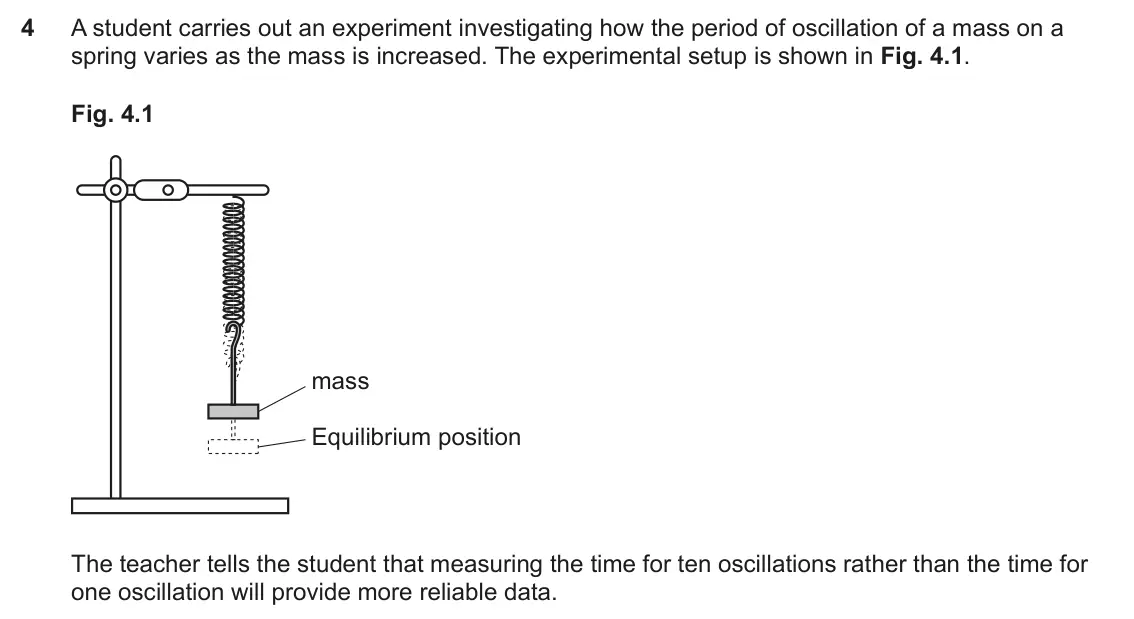
Q2(a)
The whole paper ↗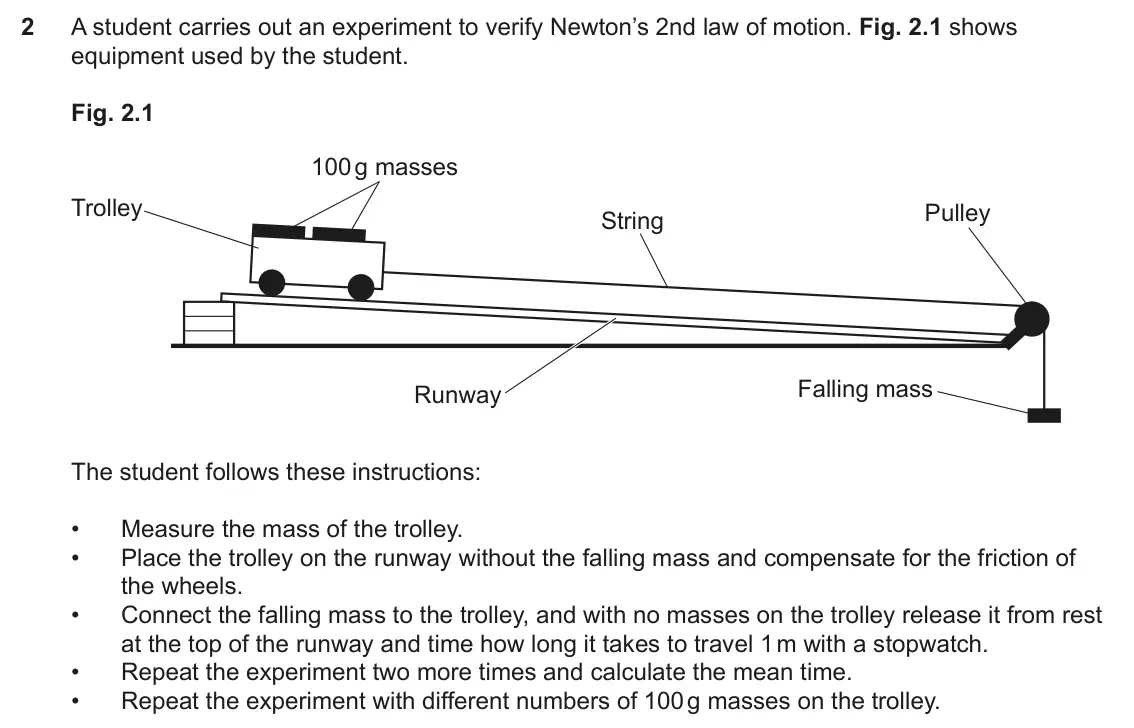
Q2(b)
The whole paper ↗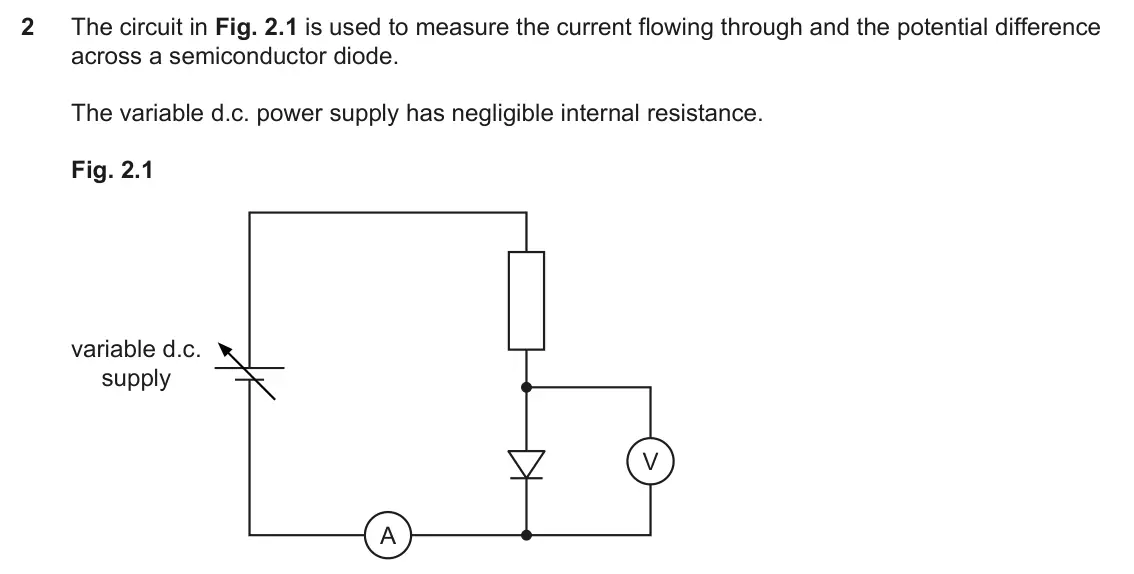
Q4(b)
The whole paper ↗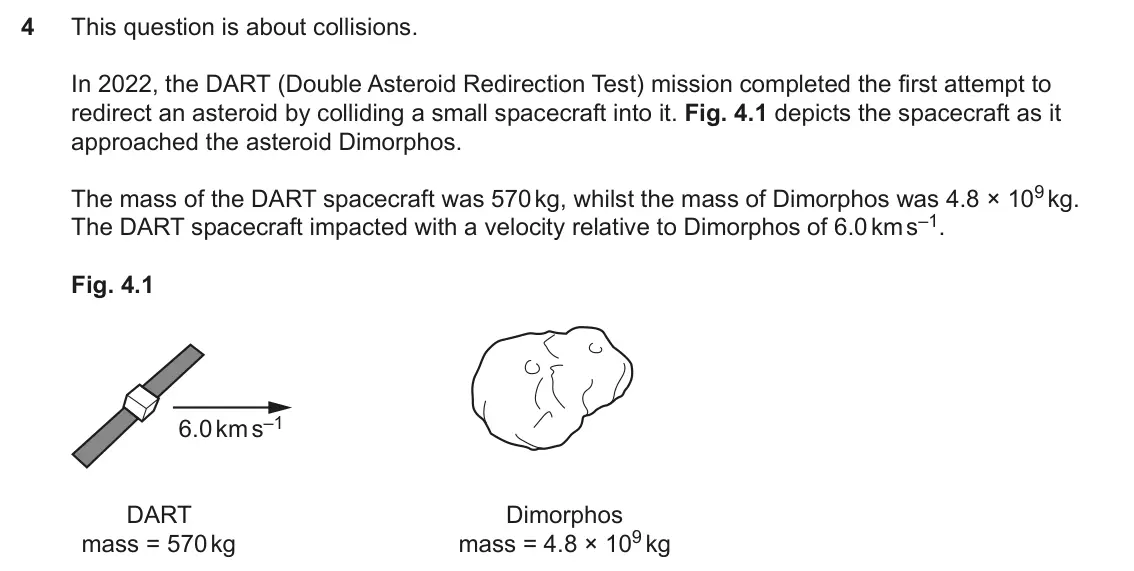
Q4(e)
The whole paper ↗Q25(a)
The whole paper ↗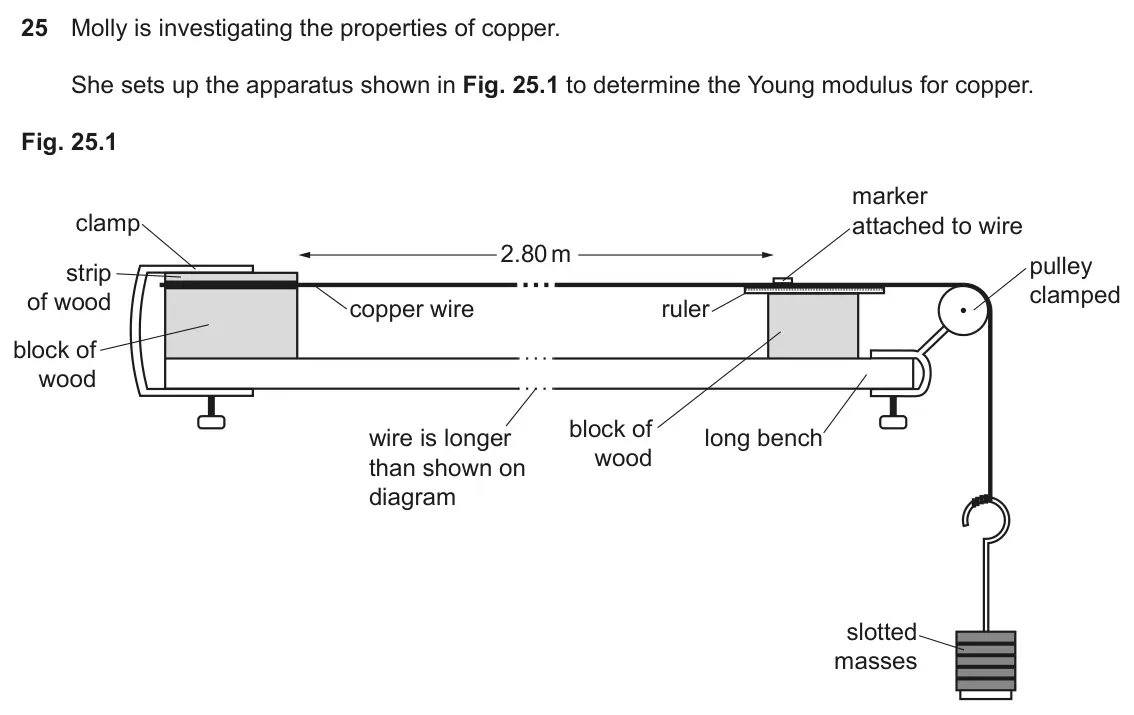
Q26(a)
The whole paper ↗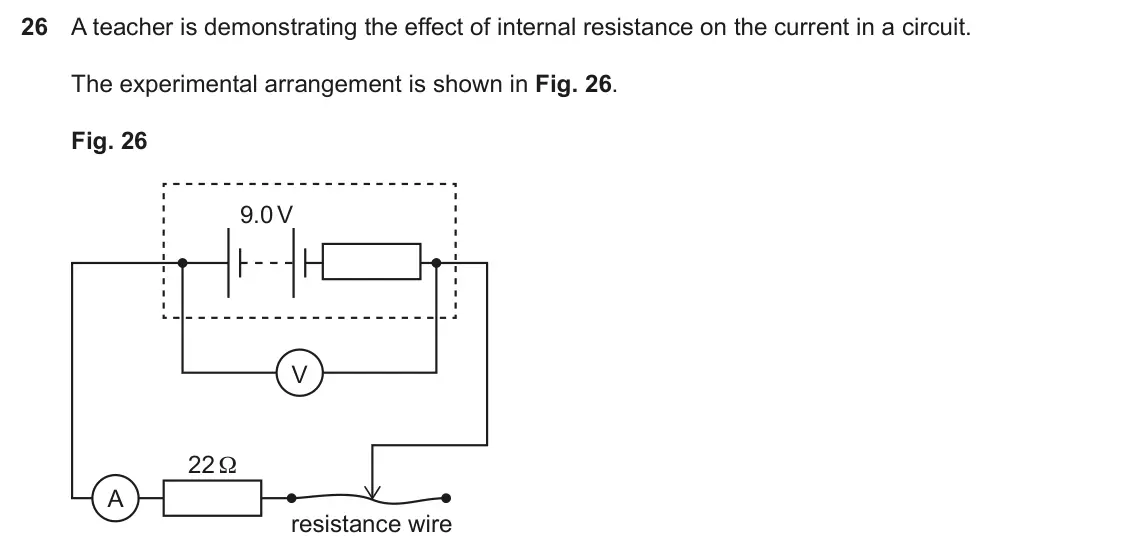
Q38(a)
The whole paper ↗Q3(a)
The whole paper ↗
Q27(d)(ii)
The whole paper ↗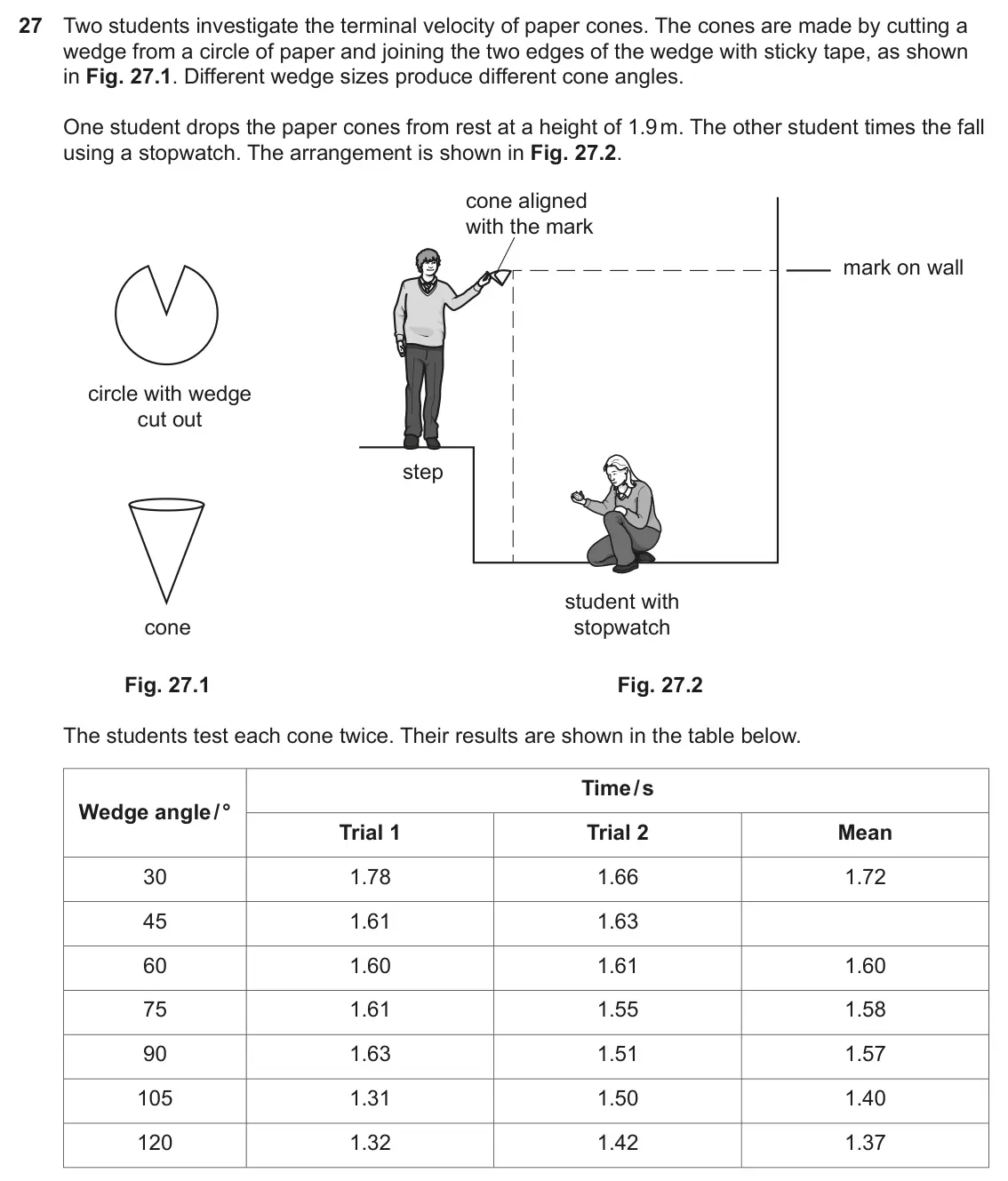
Q8(b)(i)
The whole paper ↗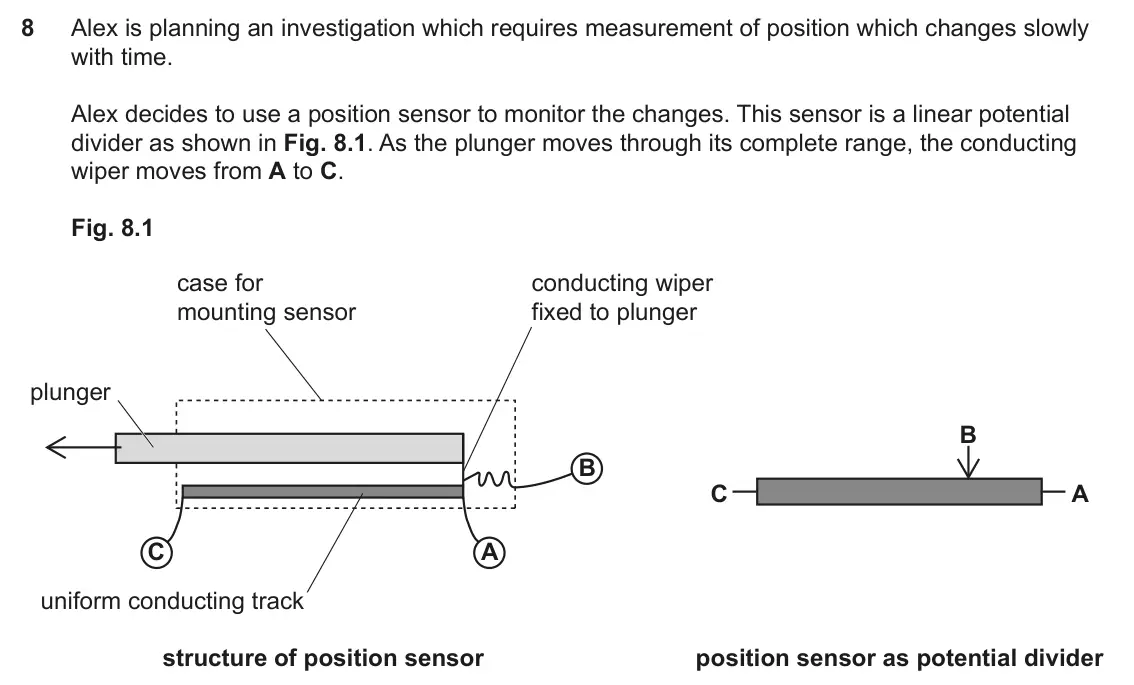
Q36(c)(i)
The whole paper ↗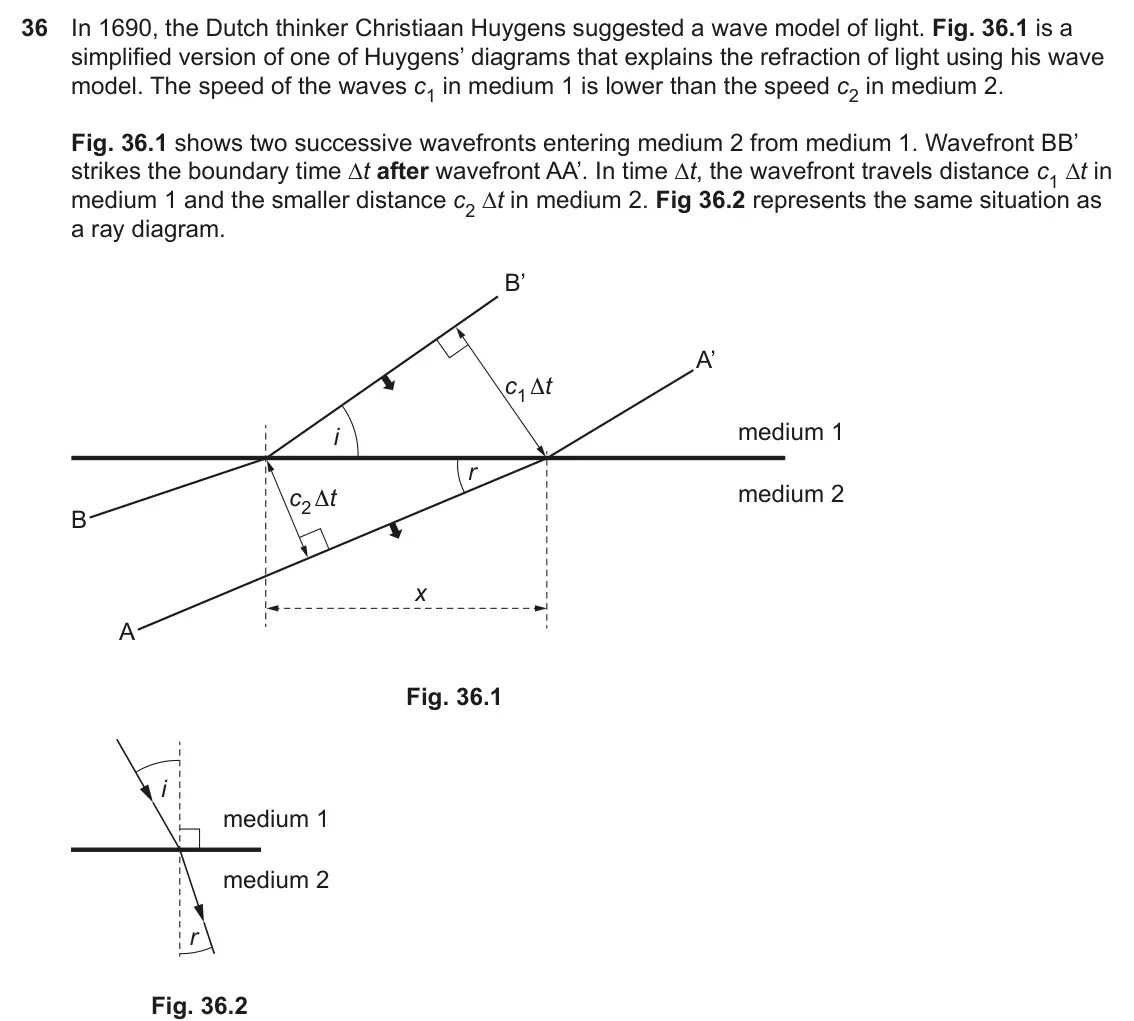
Q38(a)
The whole paper ↗
Q2(a)(i)
The whole paper ↗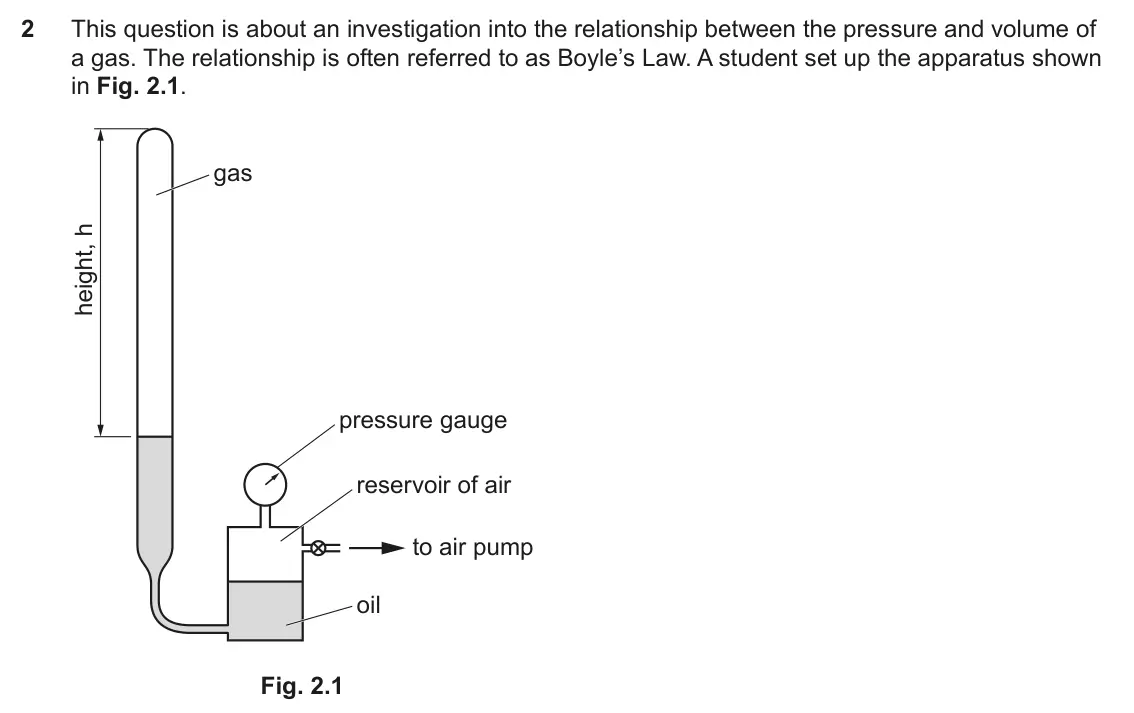
Q3(c)(i)
The whole paper ↗
Q4(a)(i)
The whole paper ↗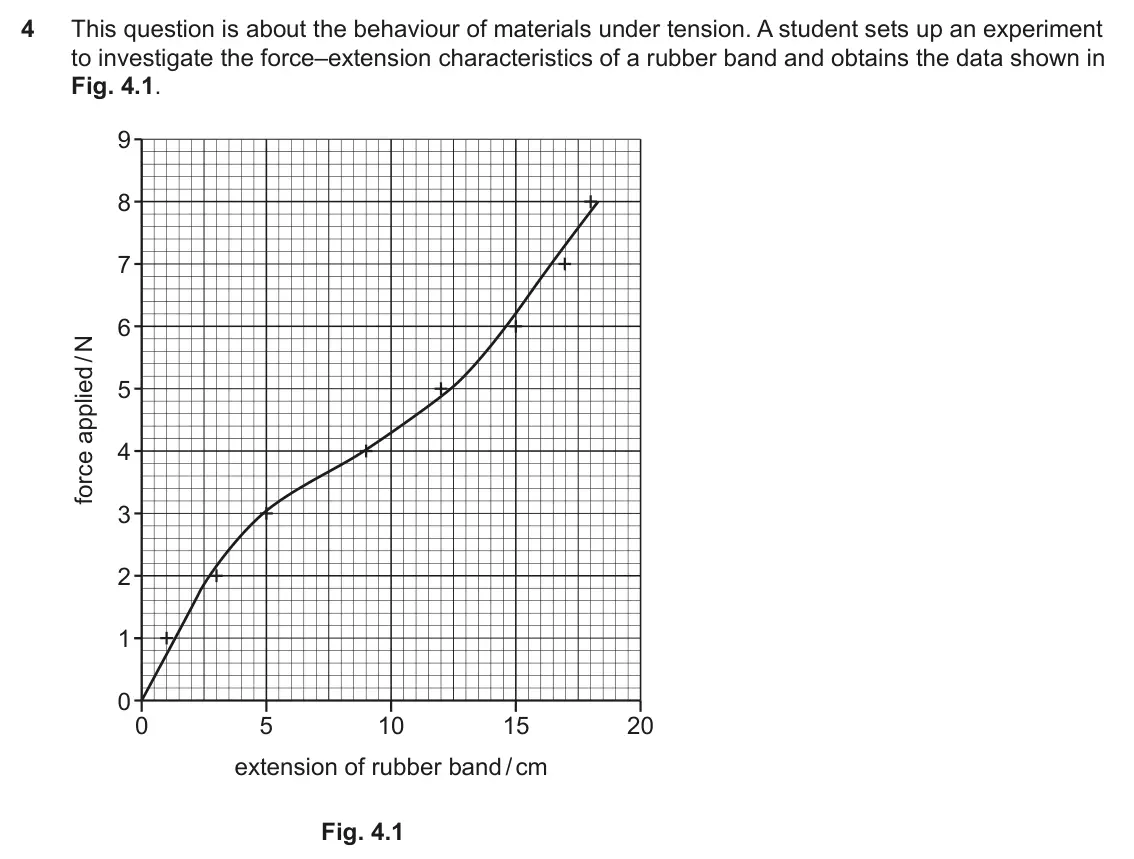
Q36(a)
The whole paper ↗
Q37(a)
The whole paper ↗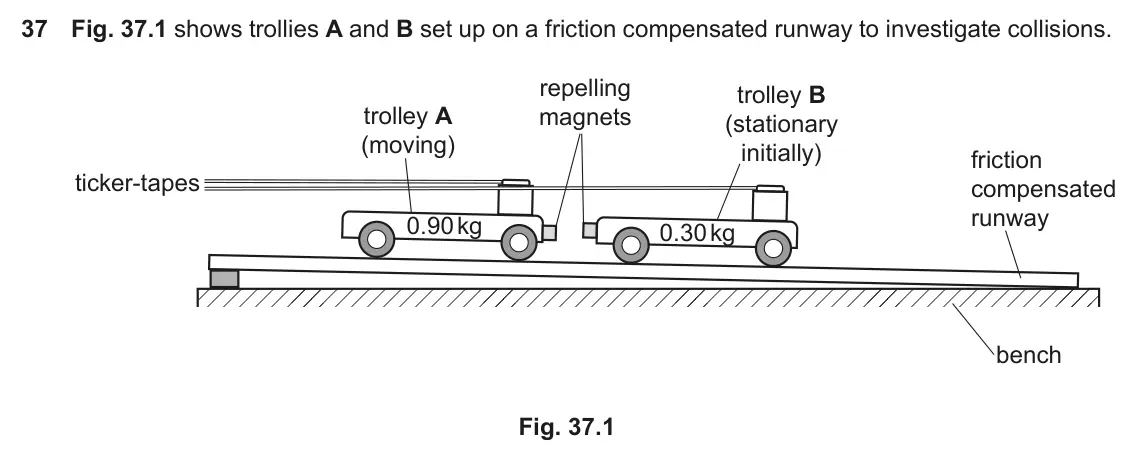
Q6(a)
The whole paper ↗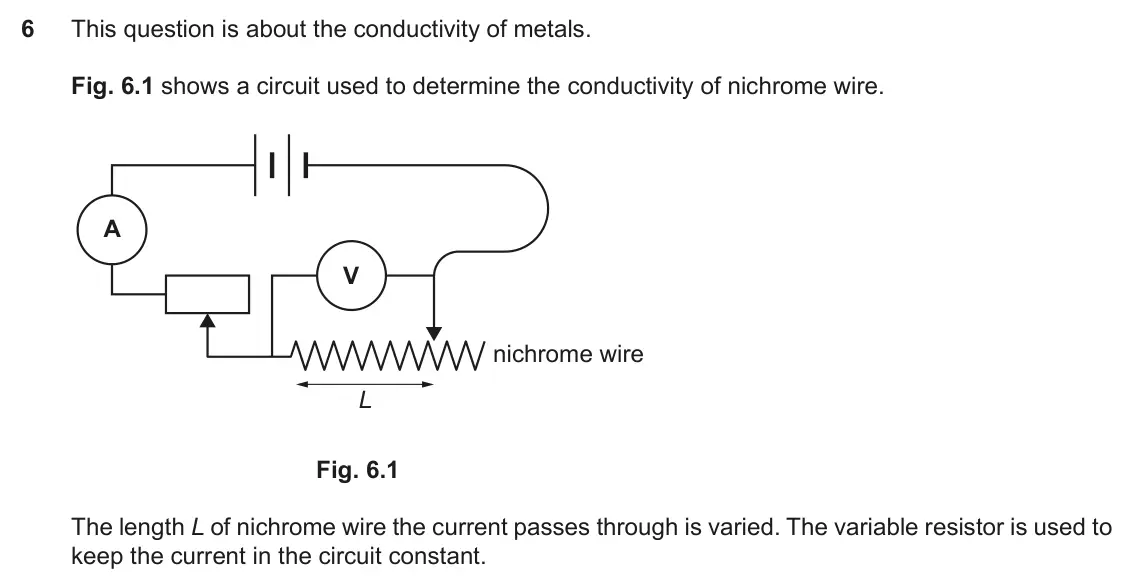
Q3(b)(iii)
The whole paper ↗
All 30 questions on Planning experiments, as a list
- June 2025, Paper 3, Q4(d)(ii) (3 marks): Measurements of mass in space can be challenging. Suggest briefly how to adapt the method shown in Fig. 4.3 to measure mass in zero g environments. Estimate a r
- June 2025, AS Paper 2, Q2(a) (2 marks): Explain how the student compensates for the friction of the wheels. [2]
- June 2024, Paper 3, Q2(b) (3 marks): Describe how the circuit could be used to obtain values of current at different emfs in order to plot a graph of I against V. Explain the purpose of the fixed r
- June 2024, Paper 3, Q4(b) (2 marks): A student attempts to model this collision using an air track (see Fig. 4.2). One of the riders available to use has a mass of 150 g. Fig. 4.2 riders air track
- June 2024, Paper 3, Q4(e) (6 marks): This question is about collisions. In 2022, the DART (Double Asteroid Redirection Test) mission completed the first attempt to redirect an asteroid by colliding
- June 2024, AS Paper 1, Q25(a) (4 marks): Molly’s teacher has asked her to plan how to carry out her investigation safely. Suggest two hazards from using the apparatus shown in Fig. 25.1. For each hazar
- June 2024, AS Paper 1, Q26(a) (3 marks): Identify the independent variable, the dependent variable and the most significant variable that must be controlled in this experiment. Tick one box in each col
- June 2023, Paper 1, Q38(a) (6 marks): (a)* Fig. 38.1 shows equipment used to determine the Young Modulus of a wire. Fig. 38.1 Describe how the equipment can be used to determine the Young Modulus. D
- June 2023, Paper 3, Q3(a) (4 marks): You are provided with the following apparatus: variable power supply (0 – 12 V) capacitor of unknown capacitance resistor of value 4.7 kΩ multimeter leads and s
- June 2023, AS Paper 1, Q27(d)(ii) (3 marks): State and explain which one student’s suggestion will provide the best measurements to prove or disprove their hypothesis. [3]
- June 2023, AS Paper 2, Q8(b)(i) (2 marks): Alex did not take readings of VAB at uniform intervals of d. By referring to the data in the table, explain why this was an appropriate decision. [2]
- June 2022, Paper 1, Q36(c)(i) (1 mark): Suggest why a monochromatic light source is used in the experiment. [1]
- June 2022, Paper 1, Q38(a) (6 marks): This question is about the relationship between the volume V of a fixed mass of gas at constant pressure and the absolute temperature T of the gas. The relation
- June 2022, Paper 3, Q2(a)(i) (1 mark): Identify a variable which needs to be controlled in the investigation. [1]
- June 2022, Paper 3, Q3(c)(i) (2 marks): Explain why 10‑second intervals over a period of a few minutes are suitable for this experiment. [2]
- June 2022, Paper 3, Q4(a)(i) (4 marks): Describe the experimental technique the student could use to gather reliable data. Include in your answer how BOTH experimental uncertainties and risks can be m
- November 2021, Paper 1, Q36(a) (6 marks): This question considers the internal resistance of chemical cells. (a)* Explain how you would practically measure the internal resistance of a 1.5 V cell. Inclu
- November 2021, Paper 1, Q37(a) (1 mark): State what is meant by a friction compensated runway. [1]
- November 2021, Paper 2, Q6(a) (2 marks): State and explain why it is important to keep the current constant when determining the resistivity of the nichrome wire. [2]
- November 2021, Paper 3, Q3(b)(iii) (6 marks): This question is about the oscillations of hacksaw blades. (iii)* To investigate how damping affects resonance, two different sized pieces of card can be stuck
- November 2021, Paper 3, Q4(b)(i) (2 marks): Suggest and explain one safety precaution required when handling a source of ionising radiation. [2]
- November 2021, AS Paper 2, Q8(a) (6 marks): A student is doing an experiment to determine the velocity of sound in air using a resonance tube as shown in Fig. 8.1. small loudspeaker connected to signal cl
- November 2020, AS Paper 1, Q27(e) (2 marks): Suggest and explain one reason why the student chose to use two other LEDs of the same colour rather than re-using the same LED for each trial. [2] The student
- November 2020, AS Paper 2, Q8(b) (6 marks): Sam is attempting to find the Young modulus of copper. She uses a very long piece of wire cut from a new roll, so that the metal has not been twisted or bent be
- June 2019, Paper 1, Q40(b) (6 marks): Fig. 40.1 shows the voltage–current characteristic for an illuminated solar cell. 3.5 p.d. / V 3.0 2.5 2.0 1.5 1.0 0.5 0 0 10 20 30 40 50 60 70 80 I / mA Fig. 4
- June 2019, Paper 3, Q3(a) (6 marks): This question is about the electrical conductivity of a metal. (a)* Describe a suitable experimental procedure which could be used to determine the electrical c
- June 2019, AS Paper 1, Q26(c)(iii) (1 mark): State one other variable, apart from temperature, that should be controlled in this investigation. [1] Another student repeats the experiment. The crocodile cli
- June 2018, AS Paper 2, Q6(a) (6 marks): Fig. 6.1 represents a cell of e.m.f. f and internal resistance r. A and B are the positive and negative terminals of the cell. f r A B + – Fig. 6.1 (a)* Complet
- June 2017, Paper 1, Q37(c)(i) (2 marks): The investigation is extended to see how the terminal velocity vT varies with ball bearing diameter D. Identify and justify one other variable that you would co
- June 2017, AS Paper 2, Q8(c) (6 marks): Carol and Jason are investigating momentum and energy changes in collisions. They are using two trolleys on a table and measuring velocities with light gates co
Questions, mark schemes and examiner’s reports are © OCR, from their published past papers. Plumi isn’t affiliated with any exam board. Want whole papers? OCR A-Level Physics B past papers.
The Plumi iPad app also offers exam-style questions with AI feedback on your handwritten working.