 plumi
Accuracy, precision and uncertainty: OCR A‑Level Physics B questions
OCR A-Level Physics B past-paper questions on 2.0.5 Accuracy, precision and uncertainty, 2016–2025, with mark schemes and examiner’s reports where available.
Paper
All papers
Exam
All years
Calculations
Q4(b)(ii)
The whole paper ↗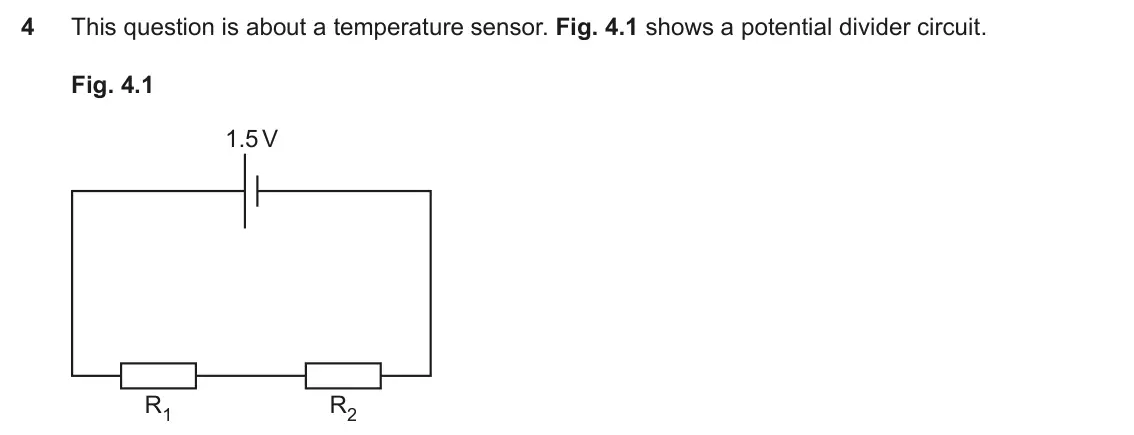
Q6(a)(ii)
The whole paper ↗
Q4(b)
The whole paper ↗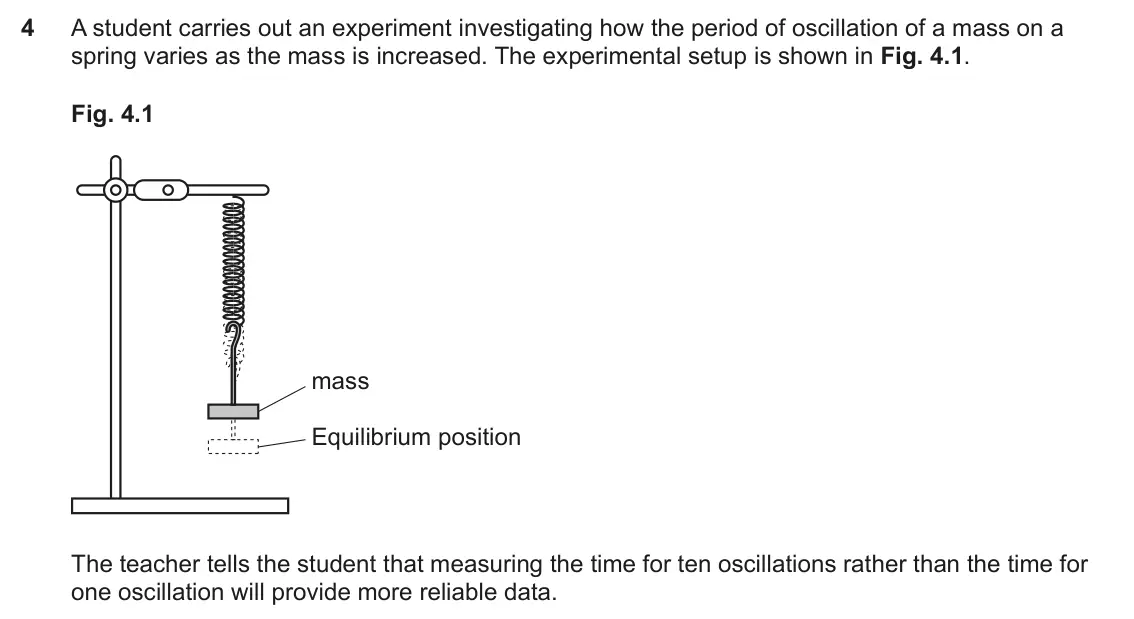
- Your answer
- Your answer
Q27(e)
The whole paper ↗
- Your answer
Q26(c)
The whole paper ↗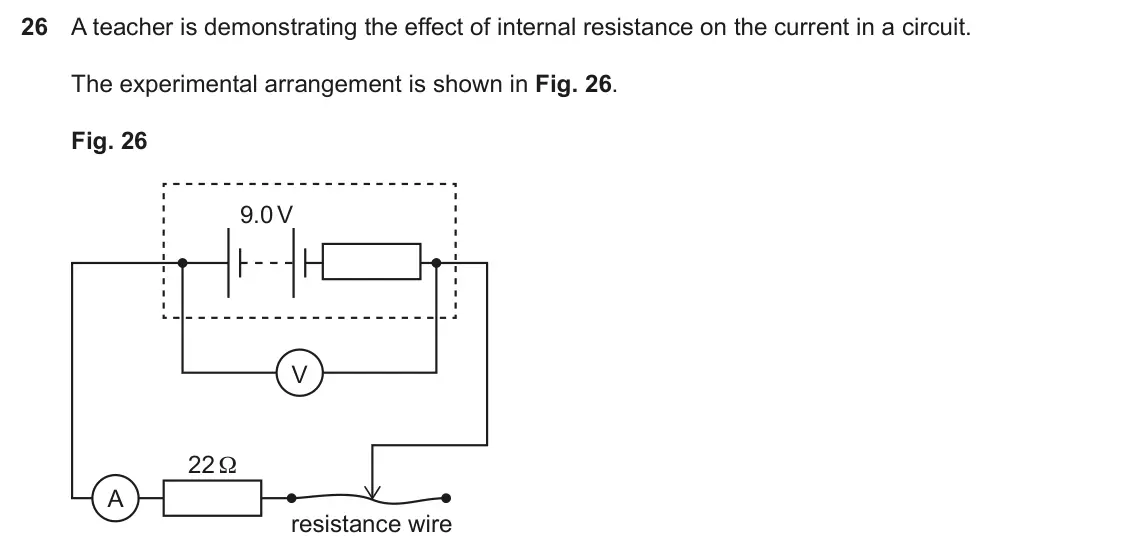
Q27(g)
The whole paper ↗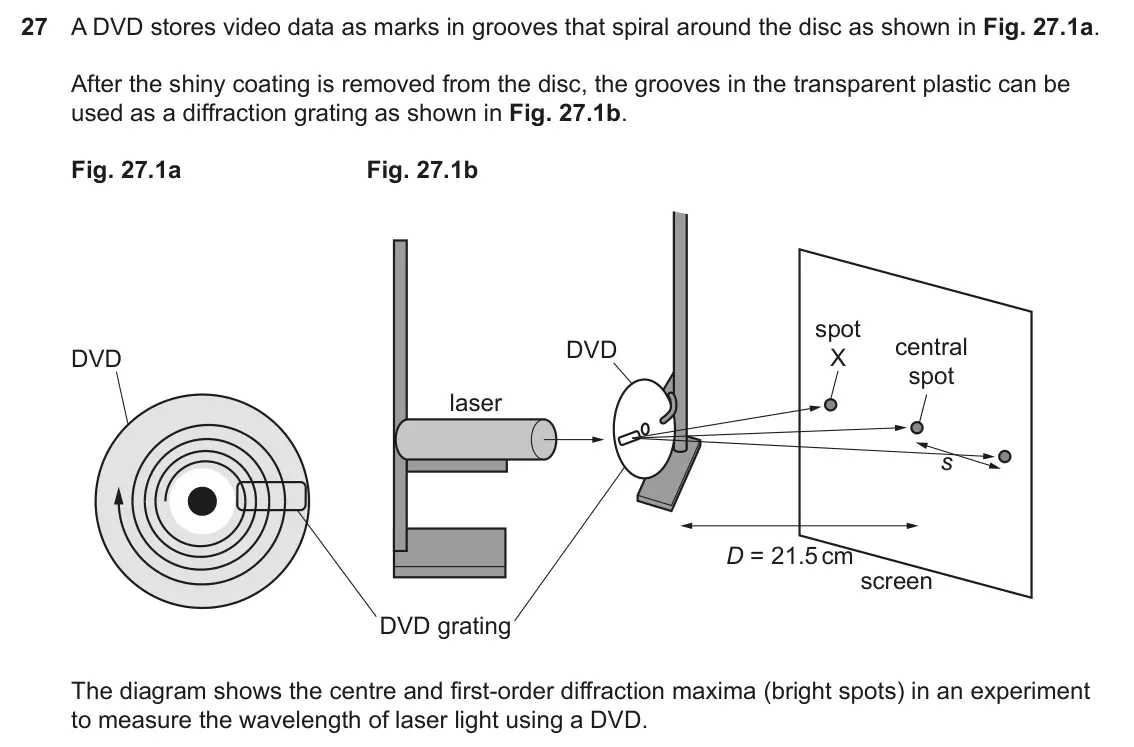
Q37(a)(ii)
The whole paper ↗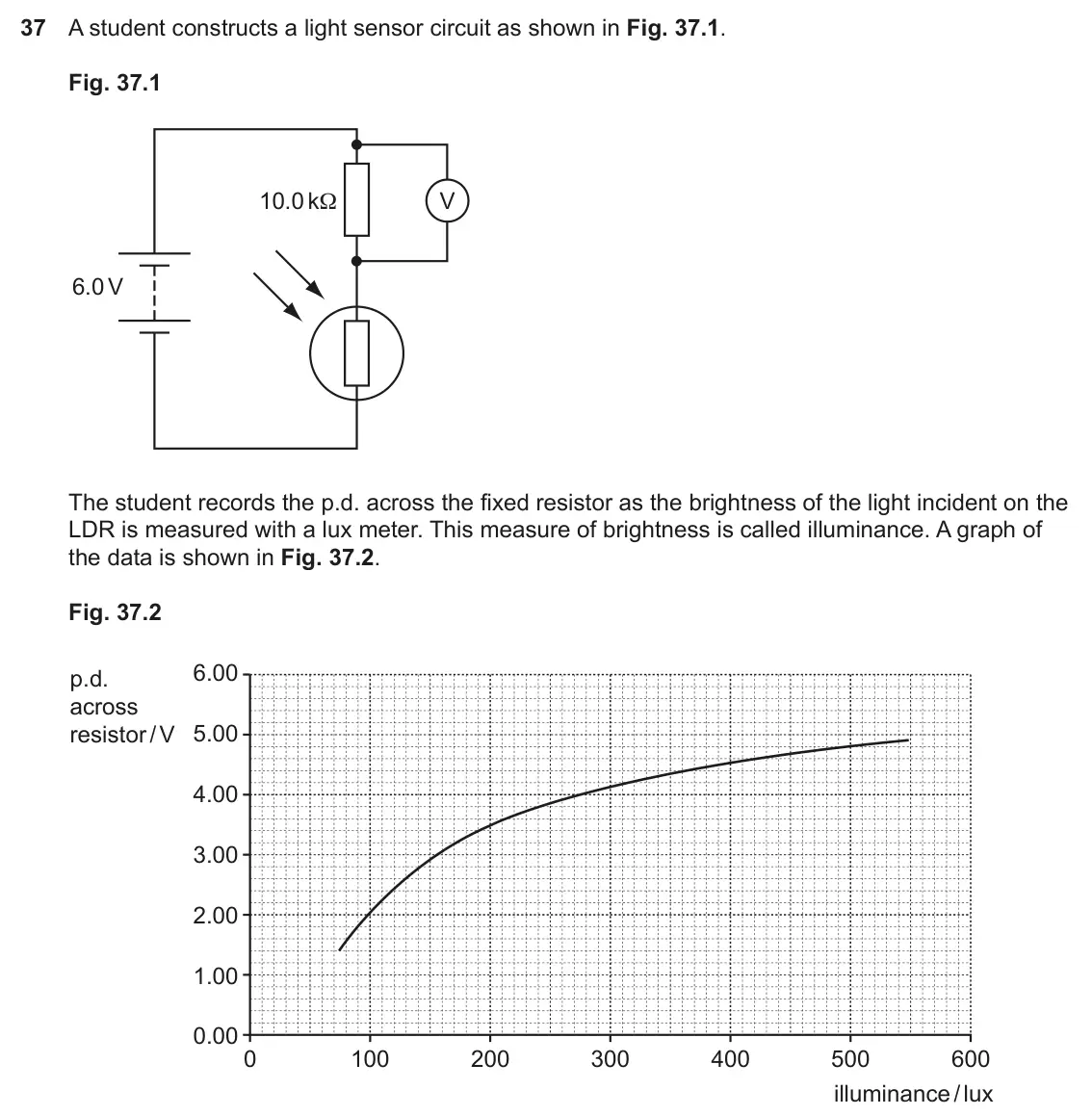
Q4(b)(ii)
The whole paper ↗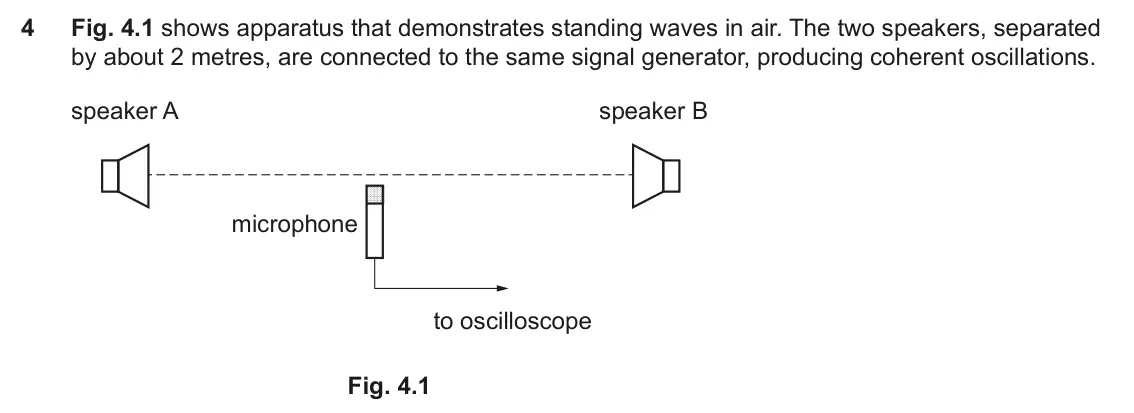
Q2(a)(ii)
The whole paper ↗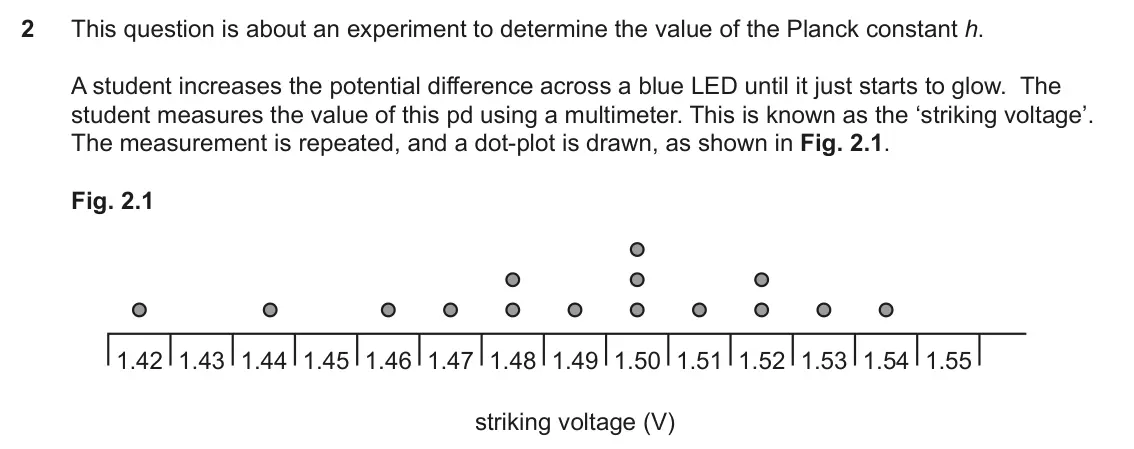
- Your answer
- Your answer
- Your answer
Q8(b)(ii)
The whole paper ↗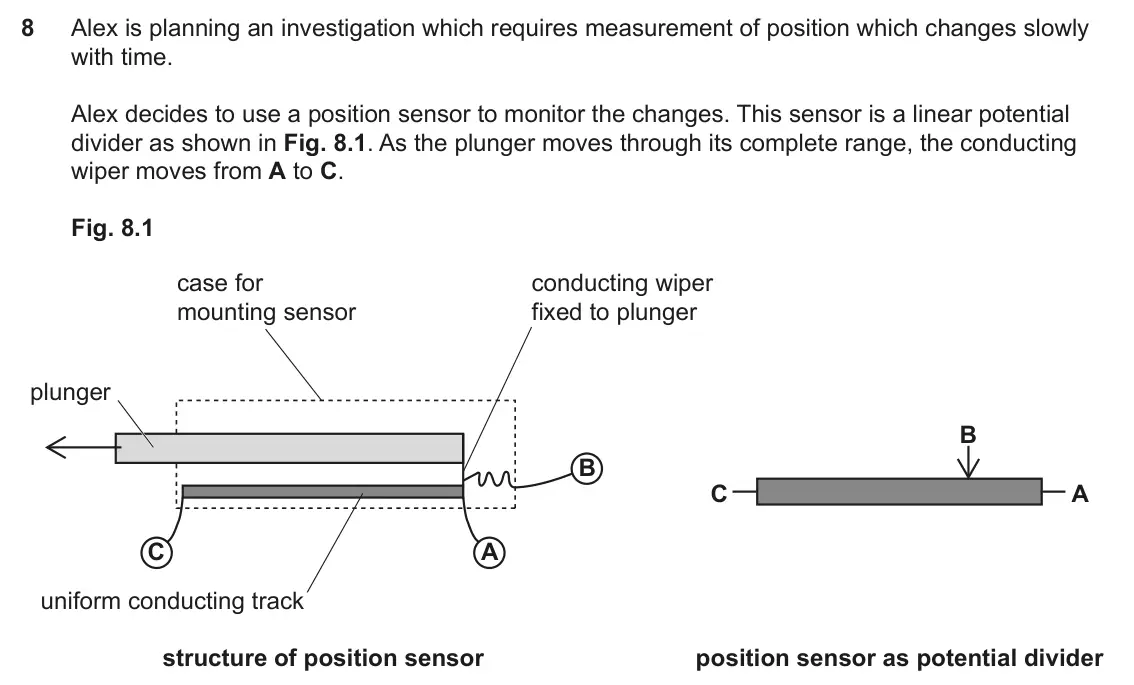
Q36(c)(ii)
The whole paper ↗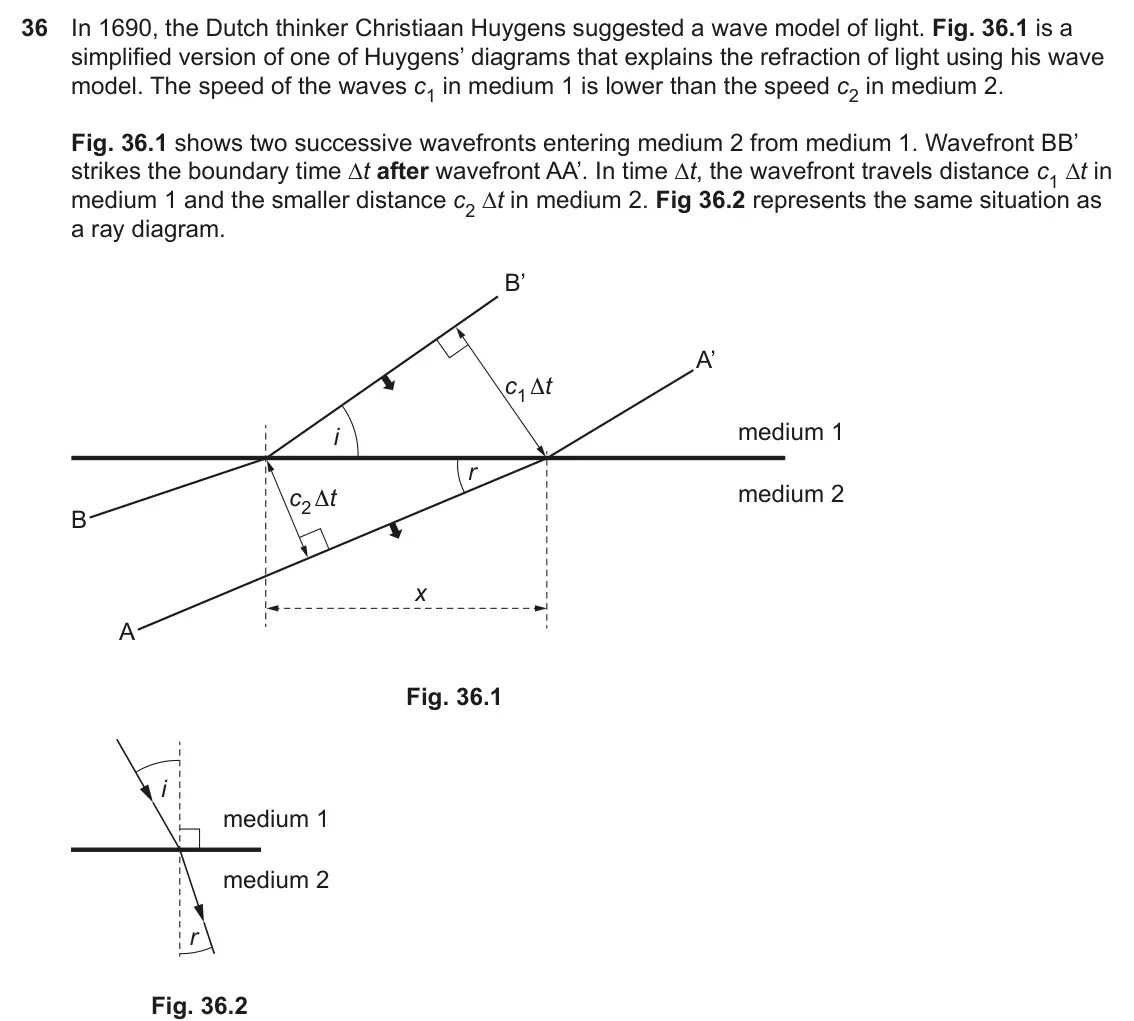
Q2(a)(iii)
The whole paper ↗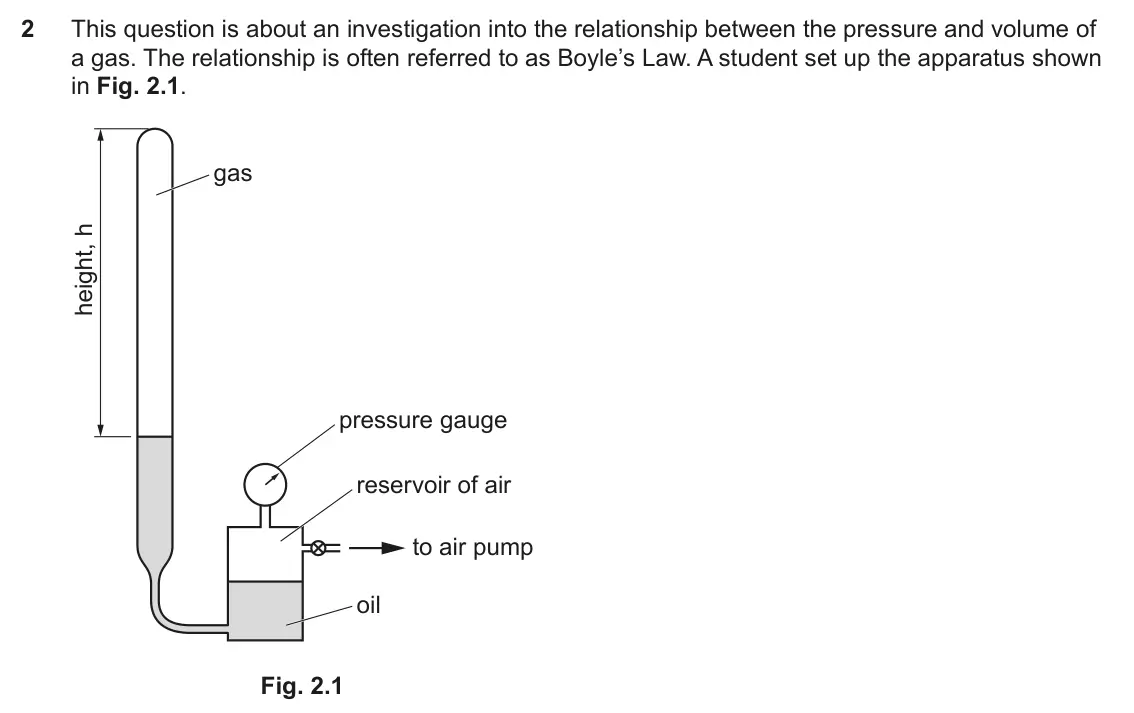
Q27(c)(iii)
The whole paper ↗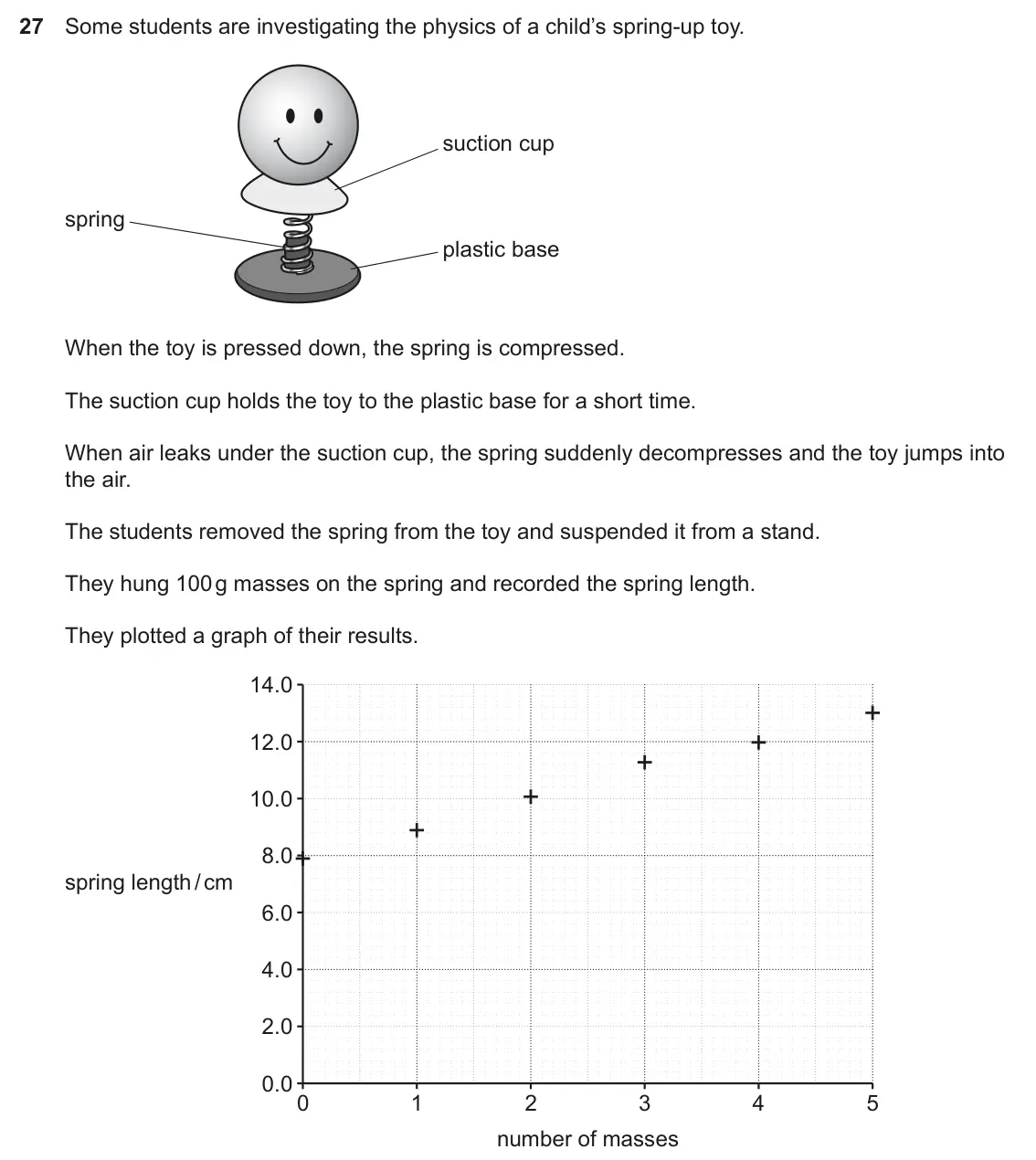
All 38 questions on Accuracy, precision and uncertainty, as a list
- June 2025, Paper 2, Q4(b)(ii) (6 marks): This question is about a temperature sensor. Fig. 4.1 shows a potential divider circuit. Fig. 4.1 1.5 V R1 R2 (ii)* The ideal temperature for a baby bath is 37
- June 2025, Paper 2, Q6(a)(ii) (2 marks): Suggest and explain why the graph is a straight line with a positive y intercept. [2]
- June 2025, Paper 3, Q4(b) (2 marks): One pair of data points is shown below. Time for ten oscillations = 10.4 s ± 0.5 s Mass = 0.50 kg ± 0.01 kg The student decides to ignore the uncertainty in the
- June 2025, AS Paper 1, Q13 (1 mark): Two groups of students measure the speed of sound in air using a resonance tube method. Their results and the accepted true value are shown below. (335 ± 10) m
- June 2025, AS Paper 1, Q17 (1 mark): In an experiment to determine the acceleration due to gravity g, a paper cone takes time t to fall distance s. A student measures t and s and calculates the acc
- June 2025, AS Paper 1, Q27(e) (4 marks): Two students discuss the experiment: When we know what a material is we can check whether our result is accurate by looking-up the refractive index of the mater
- June 2025, AS Paper 2, Q4 (4 marks): Fig. 4.1 shows apparatus used to determine the acceleration of free fall. A millisecond timer begins timing when the steel ball is released from the electromagn
- June 2024, AS Paper 1, Q1 (1 mark): Which device is most accurate for measuring the time taken for a glider to travel a short distance along an air track? A Analogue stopwatch B Digital stopwatch
- June 2024, AS Paper 1, Q26(c) (2 marks): Two of the teacher’s students are discussing the uncertainty in the mean value of the internal resistance. The mean value of the internal Mean values of the int
- June 2024, AS Paper 1, Q27(g) (2 marks): The wavelength calculation uses the measurements of s, D and d. D was measured once using a metre ruler. Explain why taking more measurements of s will not redu
- June 2023, Paper 1, Q37(a)(ii) (2 marks): Use Fig. 37.2 to determine the sensitivity of the sensor at an illuminance of 200 lux. sensitivity = V / lux [2]
- June 2023, Paper 2, Q4(b)(ii) (3 marks): A student suggests that a more accurate determination of the velocity of sound could be made if the distance between several nodes was measured instead of the d
- June 2023, Paper 3, Q2(a)(ii) (2 marks): Describe one significant cause of uncertainty in this measurement and suggest a method which would reduce the uncertainty. [2]
- June 2023, AS Paper 1, Q10 (1 mark): A scale is marked on a thermometer by first placing it in ice at 0 °C and then steam at 100 °C. This process is an example of: A accuracy B calibration C precis
- June 2023, AS Paper 1, Q13 (1 mark): The graph shows the output p.d. of a temperature sensor at different temperatures, θ. 5 p.d. / V 4 3 2 1 0 0 10 20 30 40 50 60 70 80 90 100 θ/ °C Estimate the s
- June 2023, AS Paper 1, Q14 (1 mark): In an experiment to measure the refractive index of plastic using a rectangular block, ray box and protractor, the largest source of error is probably best redu
- June 2023, AS Paper 2, Q8(b)(ii) (1 mark): Alex rounded the p.d. values to the nearest 10 mV. By comparing the precision available in the two measuring instruments, state why this was appropriate. [1]
- June 2022, Paper 1, Q36(c)(ii) (1 mark): Suggest why the student estimated the uncertainty in sin r to be greater than the uncertainty in sin i. [1]
- June 2022, Paper 3, Q2(a)(iii) (2 marks): The height, h, of the column of air is measured using a standard laboratory metre rule. Estimate the absolute uncertainty in the measurement and justify your an
- June 2022, AS Paper 1, Q27(c)(iii) (2 marks): Explain why the students did not need to use a sensitive balance to find the mass of the toy. [2]
- November 2021, Paper 2, Q6(b)(i) (2 marks): State how the graph shows that there is a systematic error in the data and suggest a possible cause of the error. [2]
- November 2021, AS Paper 1, Q26(e) (1 mark): Suggest one way the student could improve the precision of their measurements. [1]
- November 2021, AS Paper 2, Q8(c)(ii) (1 mark): State why uncertainties in frequency were not considered in the analysis. [1]
- November 2020, Paper 1, Q11 (1 mark): The diagram shows a trap-door method to measure the acceleration due to gravity g of a steel ball. It uses a millisecond timer to measure the time t of fall h.
- November 2020, AS Paper 1, Q26(e) (1 mark): What is the absolute uncertainty in the measurement of angle? absolute uncertainty = [1]
- June 2019, Paper 3, Q2(c) (2 marks): The student is considering the uncertainty in her value for g. She thinks that data collected for the shorter pendulums have greater percentage uncertainty than
- June 2019, Paper 3, Q4(c)(i) (2 marks): Fifteen apparently identical thermometers are available. Describe how the student can determine the uncertainty in the reading of the temperature by using all t
- June 2019, Paper 3, Q4(d) (4 marks): The student notices that the top of the round-bottom flask is above the level of the liquid in the water bath and suggests that this will produce a systematic e
- June 2019, AS Paper 2, Q8(a) (3 marks): The lens is made up of several different parts fixed inside a plastic case, and Lizzie cannot tell exactly where the centre of the lens is. She decides to make
- June 2018, Paper 1, Q38(a) (1 mark): Suggest a reason why only uncertainties in the fringe spacing are shown on the graph. [1]
- June 2018, AS Paper 1, Q29(c)(i) (2 marks): The sensitivity of the sensor is the ratio change in temperature. Describe how the sensitivity of the sensor varies between 0 °C and 100 °C. Explain your reason
- June 2018, AS Paper 1, Q29(c)(ii) (3 marks): Use Fig. 29.2 to estimate the sensitivity of the sensor at 50 °C. Make your method clear. sensitivity = V °C−1 [3]
- June 2017, Paper 2, Q9(a)(ii) (2 marks): A student suggests that the uncertainty in the distance values can be ignored when calculating the minimum angle that can be resolved because of the uncertainty
- June 2017, Paper 3, Q4(a)(i) (1 mark): State which measurement, u or v, has the greatest absolute uncertainty and suggest why this is the case. [1] 16 To assess the reliability of the experiment, the
- June 2017, AS Paper 1, Q18 (1 mark): A student uses an ohmmeter and obtains five readings all of 1.89 kΩ. The student changes the range from 0–20 kΩ to 0–2 kΩ. The student takes five new readings a
- June 2017, AS Paper 1, Q28(b)(ii) (2 marks): Another student suggests a method for improving the wavelength measurement. He suggests using a laser to measure the distance between the speakers and microphon
- June 2017, AS Paper 2, Q8(a)(i) (2 marks): Explain in terms of percentage uncertainty why the timing uncertainty can be ignored in this experiment. [2]
- June 2016, AS Paper 1, Q29(a)(iv) (2 marks): Suggest one systematic error that exists in this method of finding the terminal velocity, and how it affects the estimate. [2] Question 29 continues on page 26
Questions, mark schemes and examiner’s reports are © OCR, from their published past papers. Plumi isn’t affiliated with any exam board. Want whole papers? OCR A-Level Physics B past papers.
The Plumi iPad app also offers exam-style questions with AI feedback on your handwritten working.