 plumi
Carrying out experiments and using apparatus: OCR A‑Level Physics B questions
OCR A-Level Physics B past-paper questions on 2.0.2 Carrying out experiments and using apparatus, 2016–2025, with mark schemes and examiner’s reports where available.
Paper
All papers
Exam
All years
Calculations
Q2(a)(i)
The whole paper ↗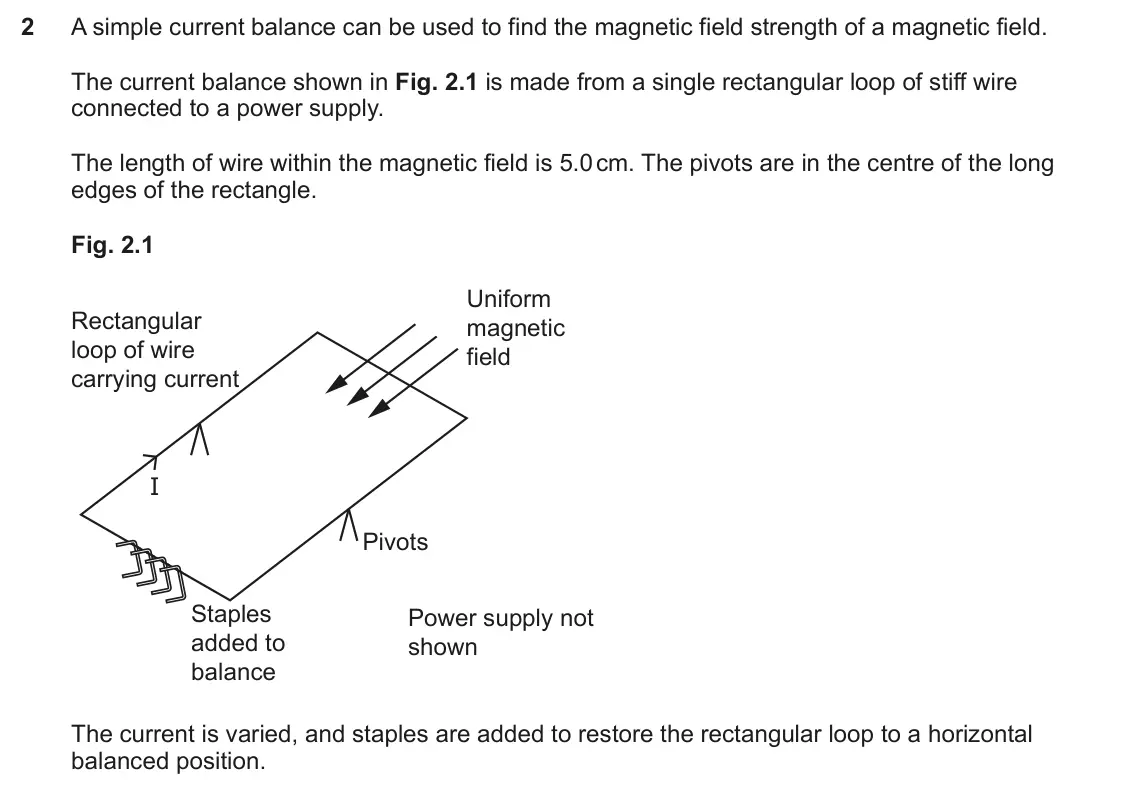
Q4(a)
The whole paper ↗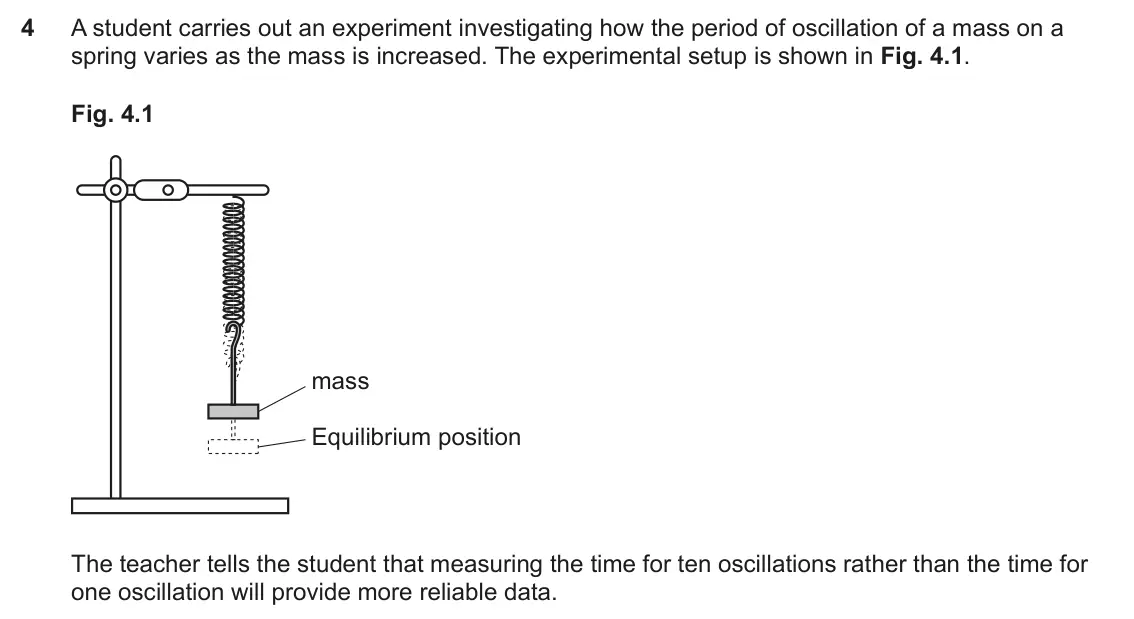
Q3(a)
The whole paper ↗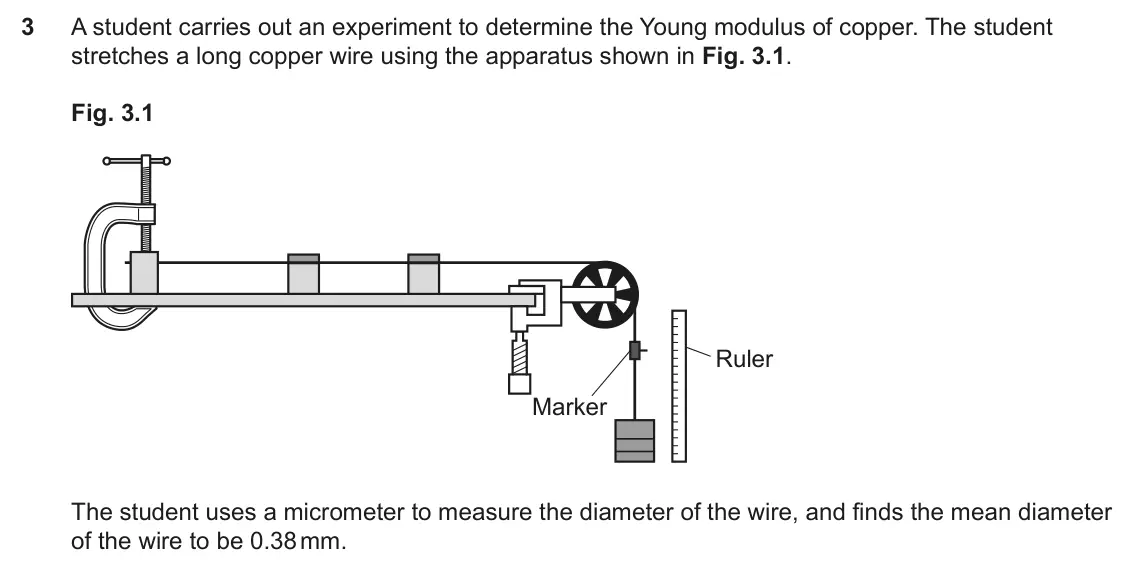
Q34(a)
The whole paper ↗Q34(b)
The whole paper ↗Q1(a)
The whole paper ↗
Q2(d)
The whole paper ↗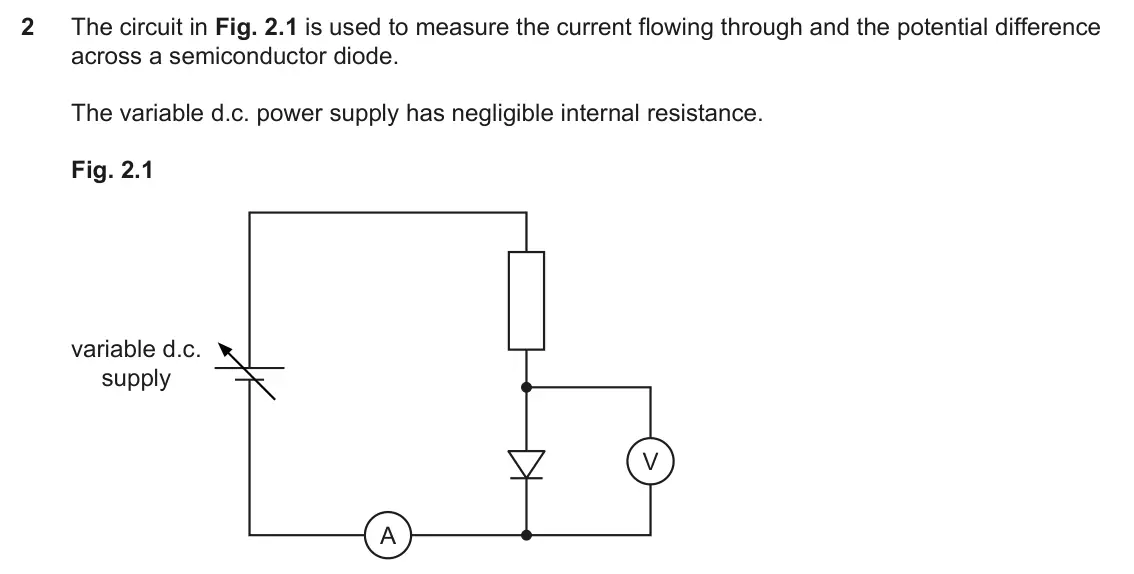
- Your answer
Q4(a)(iii)
The whole paper ↗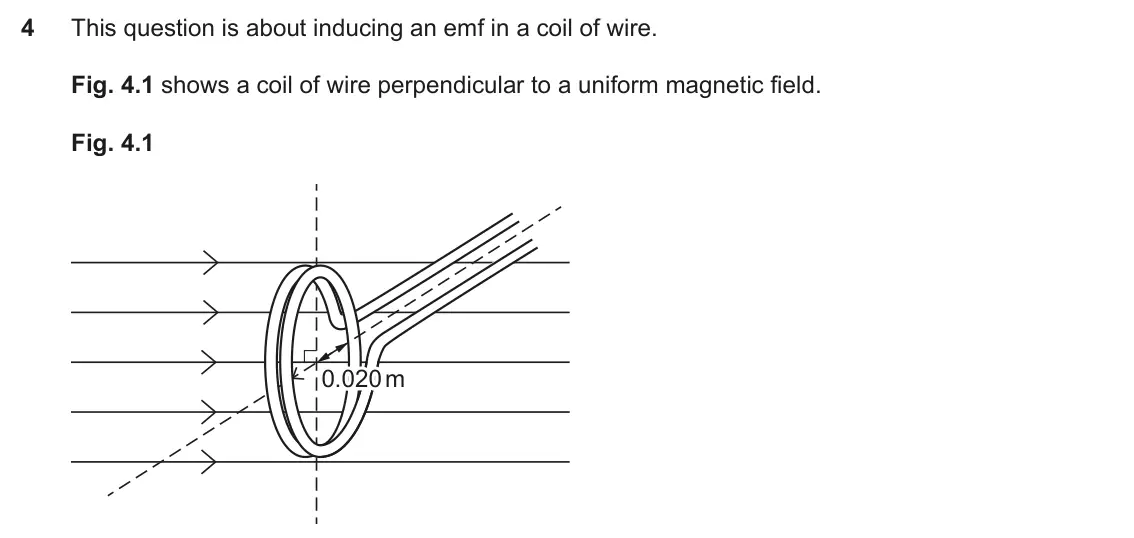
Q7(a)(i)
The whole paper ↗
- Your answer
Q4(c)(i)
The whole paper ↗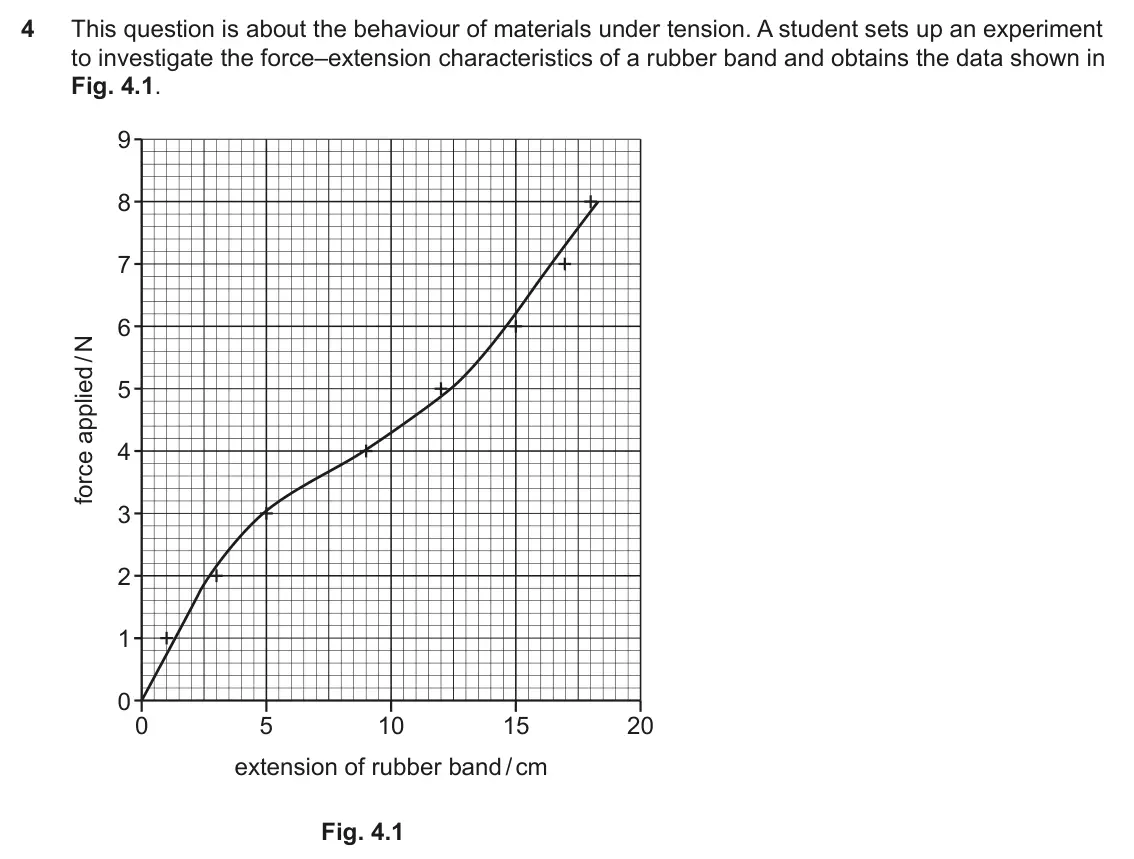
Q4(c)(ii)
The whole paper ↗Q24(b)
The whole paper ↗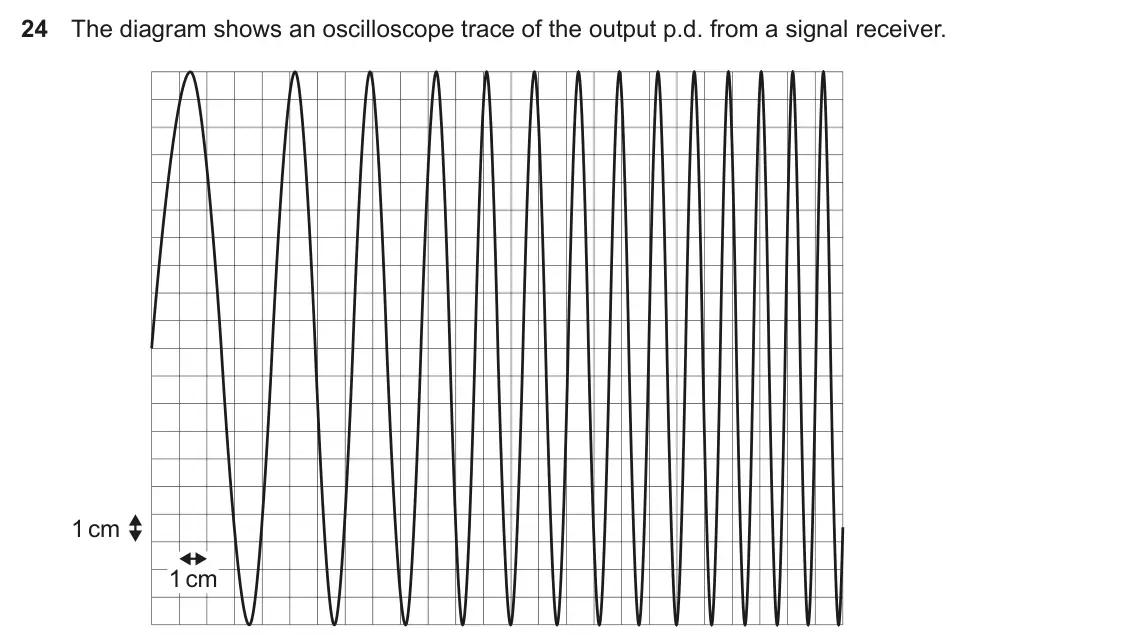
Q24(c)(i)
The whole paper ↗Q1(b)(i)
The whole paper ↗
Q2(a)
The whole paper ↗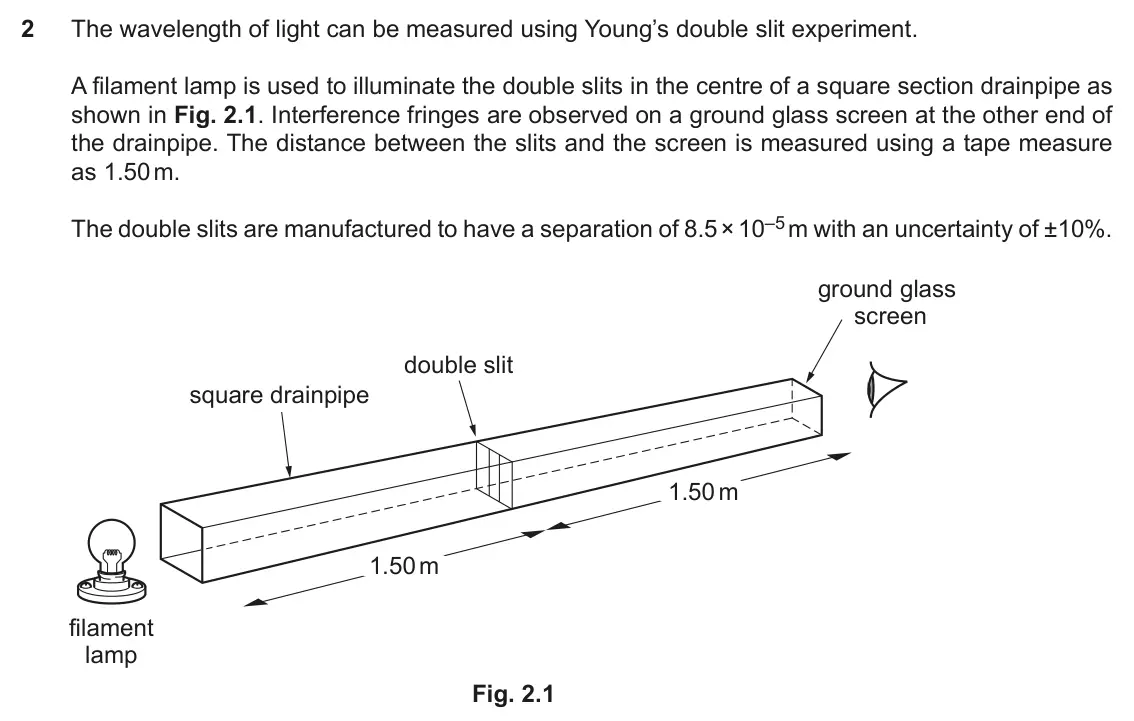
Q4(b)(ii)
The whole paper ↗
Q25(b)
The whole paper ↗
Q26(a)
The whole paper ↗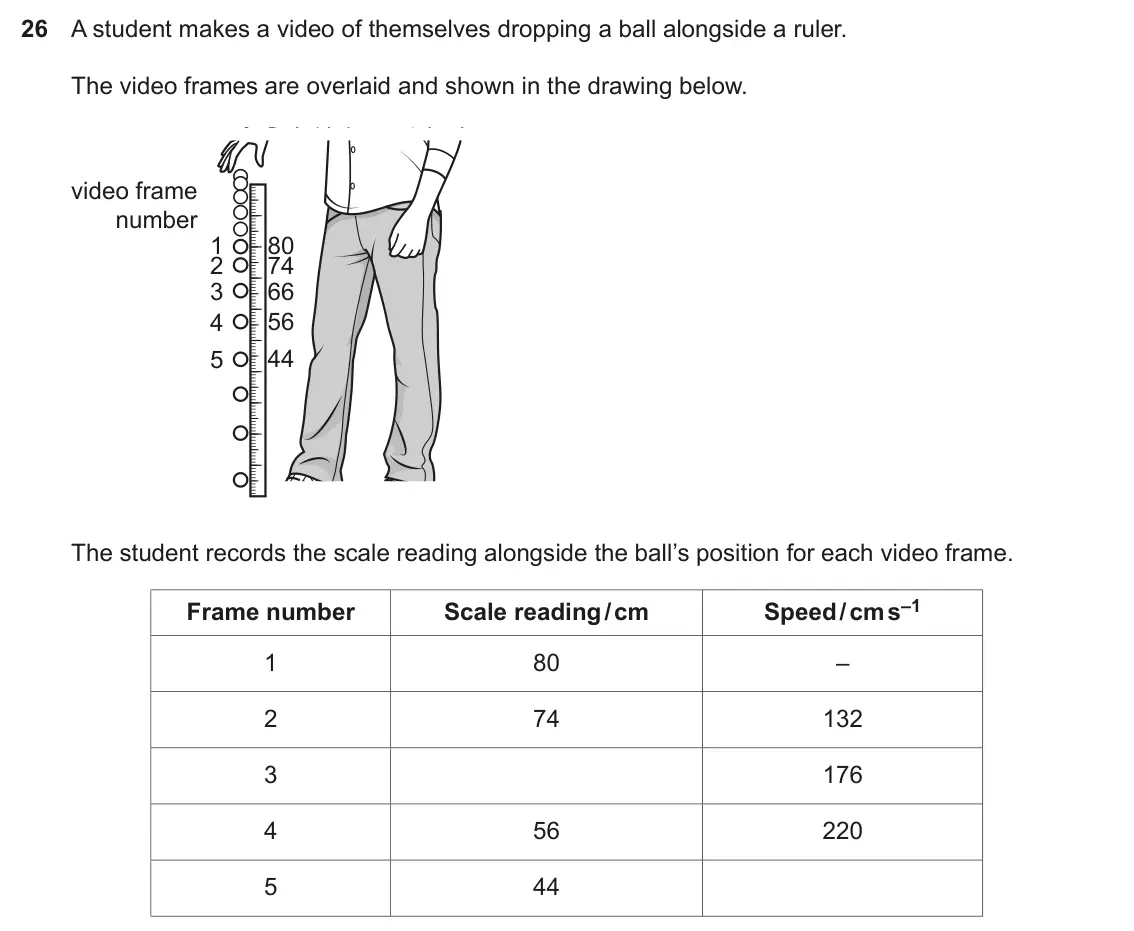
All 34 questions on Carrying out experiments and using apparatus, as a list
- June 2025, Paper 3, Q2(a)(i) (2 marks): Describe how the mass of one staple could be found using a standard laboratory balance with a precision of 0.1 g and a maximum of 2000.0 g. [2]
- June 2025, Paper 3, Q4(a) (1 mark): State why measuring ten oscillations provides a more reliable measurement of the time period. [1]
- June 2025, AS Paper 2, Q3(a) (2 marks): Describe how the student makes the measurements to calculate the mean diameter. [2]
- June 2024, Paper 1, Q34(a) (2 marks): Fig. 34.1 shows a dual-trace oscilloscope being used to display two electrical signals. The horizontal time-base of the oscilloscope is set at 50 ms per divisio
- June 2024, Paper 1, Q34(b) (2 marks): Fig. 34.2 shows a circuit containing a source of alternating emf, a resistor and a component, X. A dual-trace oscilloscope is used to observe the potential diff
- June 2024, Paper 3, Q1(a) (1 mark): Suggest a practical technique to improve the thermal connection between the thermometer and the block. [1]
- June 2024, Paper 3, Q2(d) (2 marks): Explain any changes you might make to the instrumentation in the circuit in order to obtain an accurate graph. [2]
- June 2024, AS Paper 1, Q1 (1 mark): Which device is most accurate for measuring the time taken for a glider to travel a short distance along an air track? A Analogue stopwatch B Digital stopwatch
- June 2023, Paper 3, Q4(a)(iii) (3 marks): The horizontal divisions on the trace representing time are set at 0.625 s/div. Using the trace shown in Fig. 4.3, calculate the angular frequency, ω, of the co
- June 2023, AS Paper 2, Q7(a)(i) (4 marks): Use data from Fig. 7.1 to make as accurate an estimate as possible of the frequency f of the musical note together with the uncertainty Δf of the value. Show yo
- June 2022, Paper 1, Q5 (1 mark): A student is asked to construct a circuit to investigate the electrical characteristics of a resistor R. Which is the correct circuit? A V A V R R A B A V V A R
- June 2022, Paper 3, Q4(c)(i) (1 mark): Give the resolution of the micrometer with the correct unit. Resolution = unit [1]
- June 2022, Paper 3, Q4(c)(ii) (2 marks): Suggest how the student could use multiple measurements to find the uncertainty of the diameter of the wire. [2]
- June 2022, AS Paper 1, Q24(b) (1 mark): The voltage (y-) sensitivity of the oscilloscope is set to 25 mV cm–1. Calculate the amplitude of the signal. amplitude = mV [1]
- June 2022, AS Paper 1, Q24(c)(i) (2 marks): Estimate the frequency of the first cycle of the signal. frequency = Hz [2]
- November 2021, Paper 3, Q1(b)(i) (1 mark): State the minimum initial data you would need to have in order to obtain a value of g by this method. [1]
- November 2021, Paper 3, Q2(a) (2 marks): Describe how the fringe separation could be measured in a school laboratory. [2]
- November 2021, Paper 3, Q4(b)(ii) (2 marks): Before taking any measurements with the absorber and source in place, the student takes several readings of the count rate. Explain why they do this. [2]
- November 2021, AS Paper 1, Q25(b) (1 mark): Why did the student use the pointer to read the scale? [1] 16 The student’s results are shown in the table below. Mass in tray / g Pointer reading / cm Compress
- November 2021, AS Paper 1, Q26(a) (1 mark): Use the drawing to complete the missing scale reading in the table. [1]
- November 2020, Paper 2, Q1(a)(i) (1 mark): Suggest why the student chooses to use a data logger rather than a digital meter. [1]
- November 2020, Paper 2, Q5(a)(iv) (2 marks): Suggest and explain how the student could reliably measure, to the nearest centimetre, the maximum extension of the cord at the instant the tennis ball stops de
- November 2020, Paper 3, Q1(b)(i) (2 marks): Draw a circuit diagram to represent the apparatus used to calculate the power of the electrical heater. This symbol may be used for the electrical heater. [2]
- November 2020, Paper 3, Q4(a)(i) (1 mark): peak potential difference V V = V [1]
- November 2020, Paper 3, Q4(a)(ii) (1 mark): frequency f f = Hz [1]
- June 2019, Paper 3, Q2(b)(i) (2 marks): State and explain the advantage of determining the period T by measuring the time for 10 oscillations. [2]
- June 2019, AS Paper 1, Q20 (1 mark): The diagram shows an oscilloscope trace of the p.d. from a signal generator. The time base of the oscilloscope is set to 0.50 ms cm–1. 1 cm What is the frequenc
- June 2019, AS Paper 1, Q23(a) (1 mark): Explain one advantage of using video capture to collect these data. [1]
- June 2019, AS Paper 1, Q26(a) (2 marks): Explain why the voltmeter should have a very high resistance. [2] 22 The cell has an e.m.f. of 1.0 V and negligible internal resistance. The wire has a resistan
- June 2018, AS Paper 1, Q11 (1 mark): The oscilloscope trace shows the variation in p.d of a signal. The time base of the oscilloscope is set at 0.25 ms cm−1. 1 cm What is the frequency of the signa
- June 2018, AS Paper 1, Q29(a) (4 marks): State suitable apparatus (other than indicated in Fig. 29.1) and describe how to use it to obtain the calibration graph shown in Fig. 29.2. You may wish to incl
- June 2017, Paper 3, Q1(a) (2 marks): The resistance of the thermistor can be measured with a multimeter on the resistance range. Suggest how you might vary and measure the temperature of the thermi
- June 2016, AS Paper 1, Q29(b)(ii) (3 marks): Describe an experiment that could give the data in Fig. 29.3 and justify one way in which this method is better than that in (a). [3]
- June 2016, AS Paper 2, Q6(e) (6 marks): This question is about an experiment performed in AS physics to determine the acceleration due to gravity, g. Two students have chosen to do this experiment in
Questions, mark schemes and examiner’s reports are © OCR, from their published past papers. Plumi isn’t affiliated with any exam board. Want whole papers? OCR A-Level Physics B past papers.
The Plumi iPad app also offers exam-style questions with AI feedback on your handwritten working.