 plumi
Carboxylic acids and derivatives: AQA A‑Level Chemistry questions
Every AQA A-Level Chemistry exam question on 3.3.9 Carboxylic acids and derivatives, 2016–2025, with its mark scheme and examiner’s report.
Find questions2,301
Calculations
Q03.4
The whole paper ↗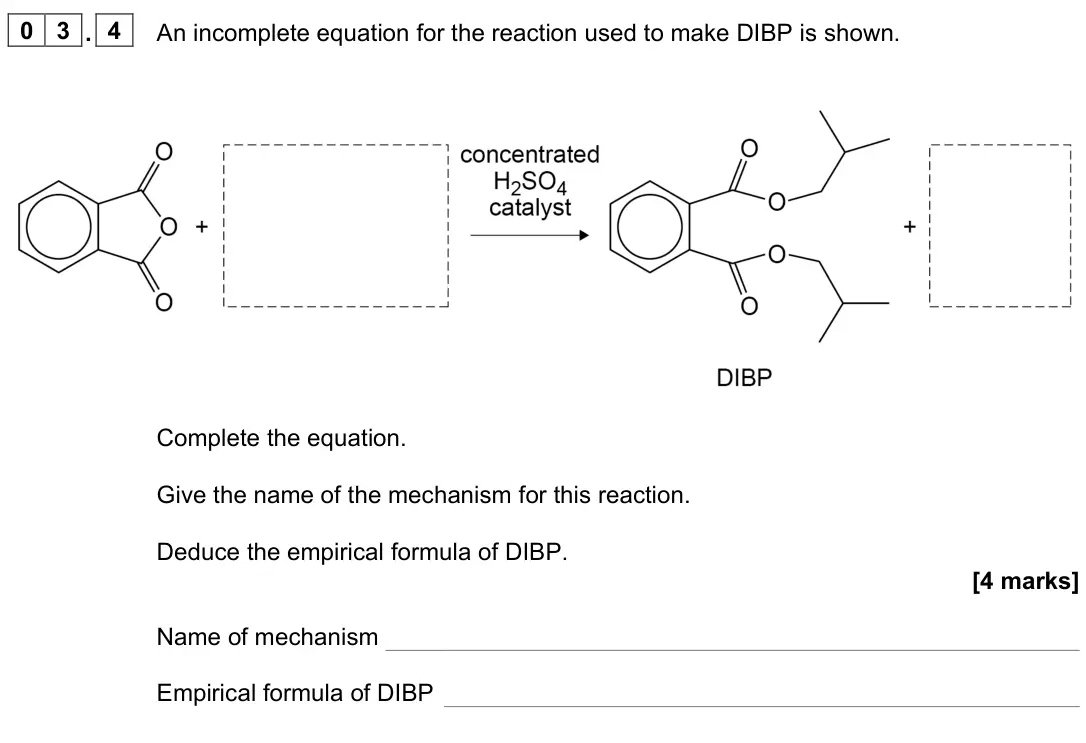
Q03.5
The whole paper ↗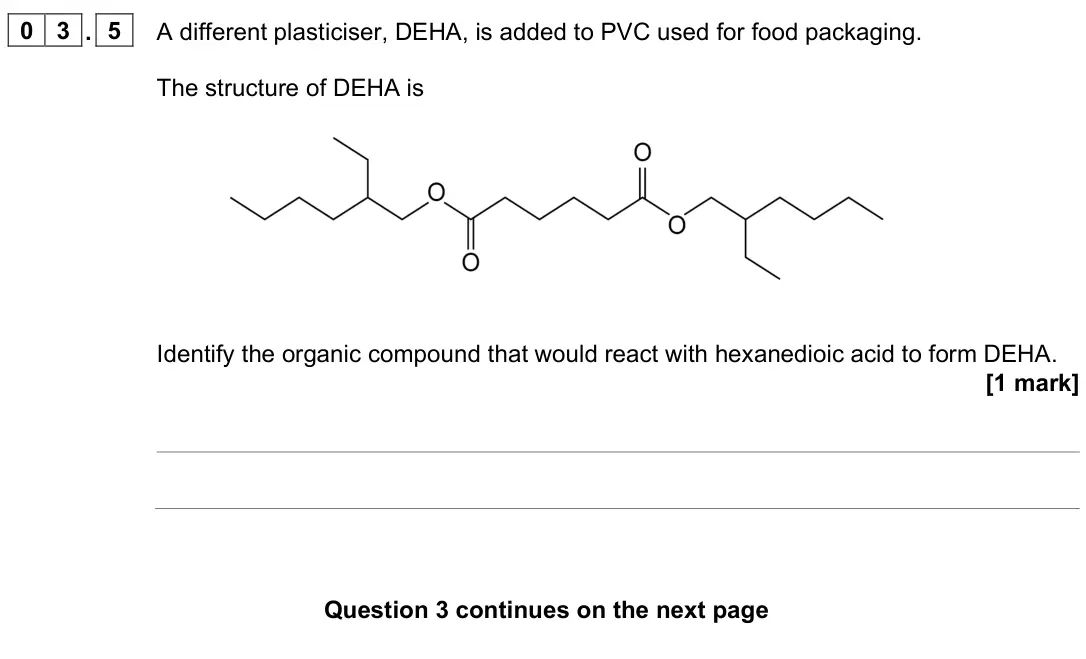
Q03.6
The whole paper ↗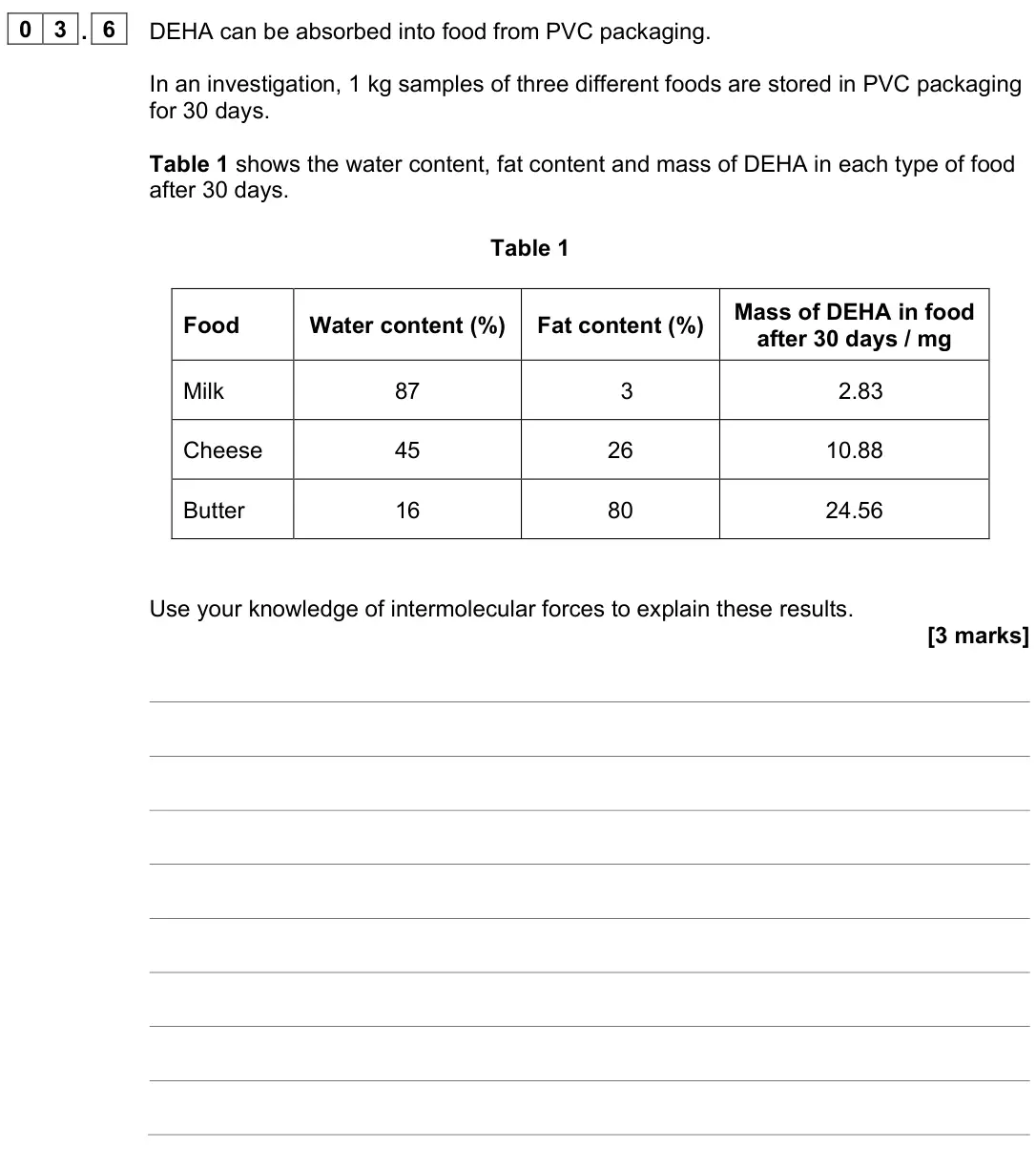
Q03.7
The whole paper ↗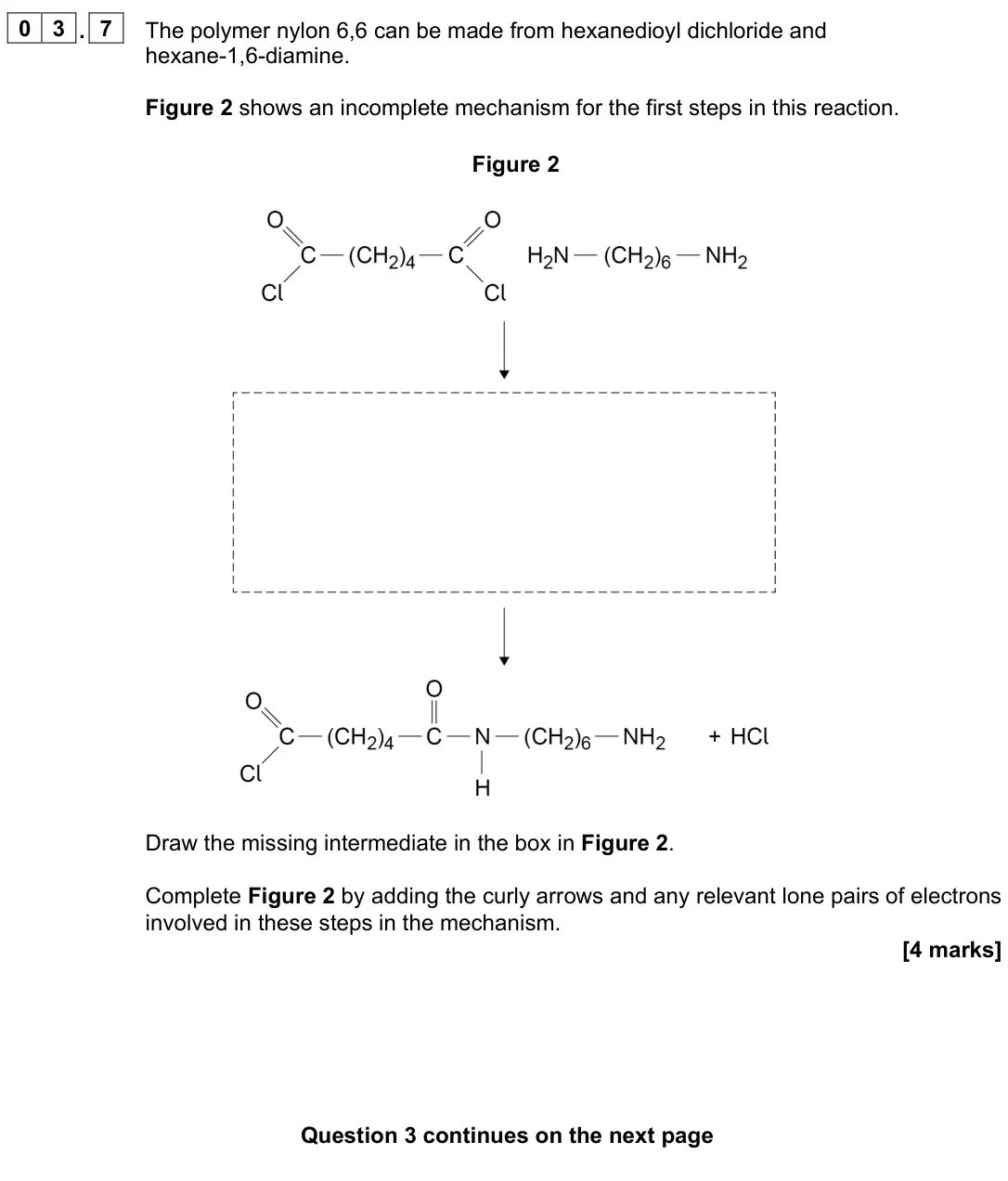
Q06.2
The whole paper ↗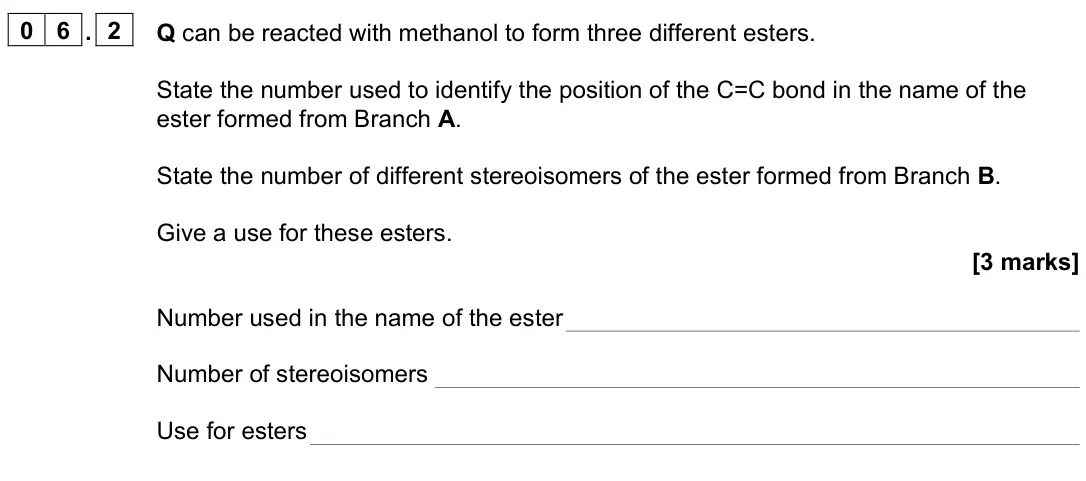
Q06.3
The whole paper ↗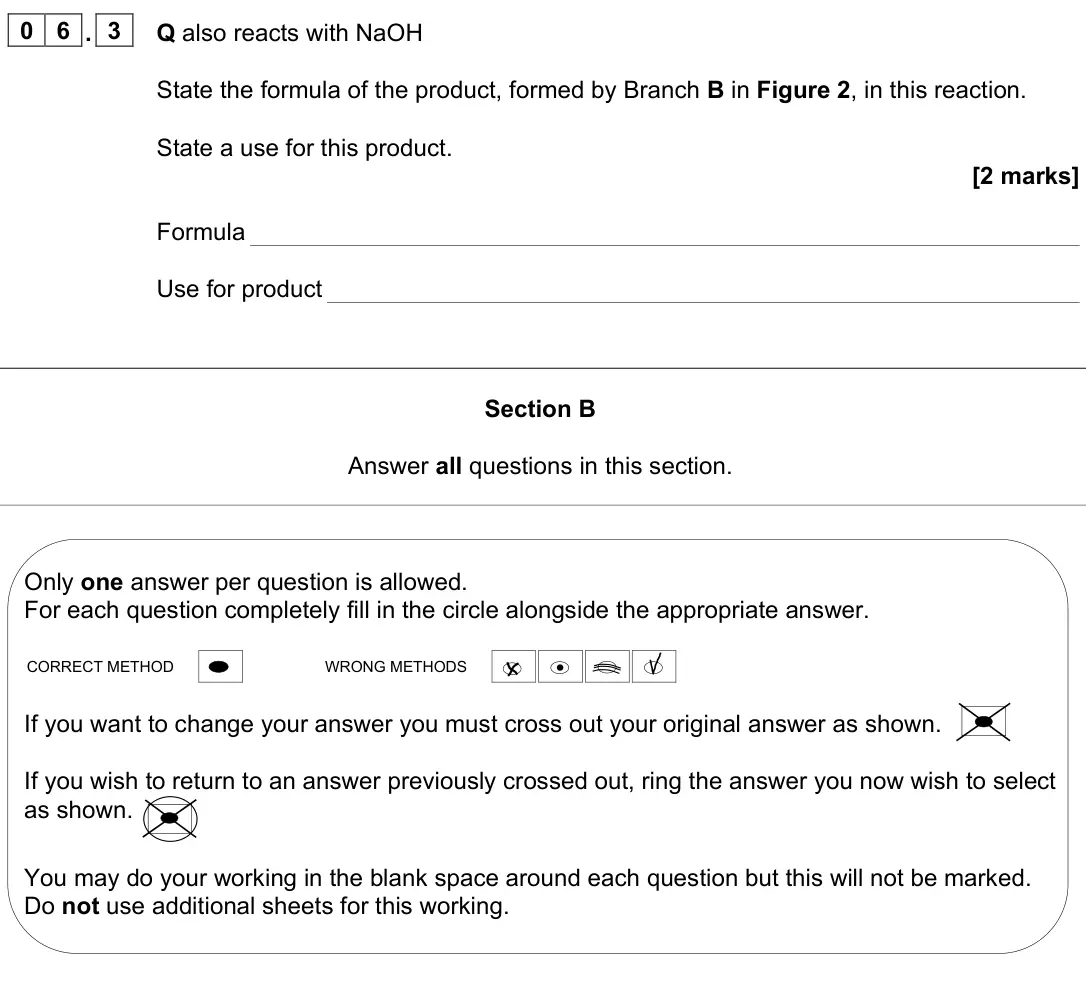
Q04.1
The whole paper ↗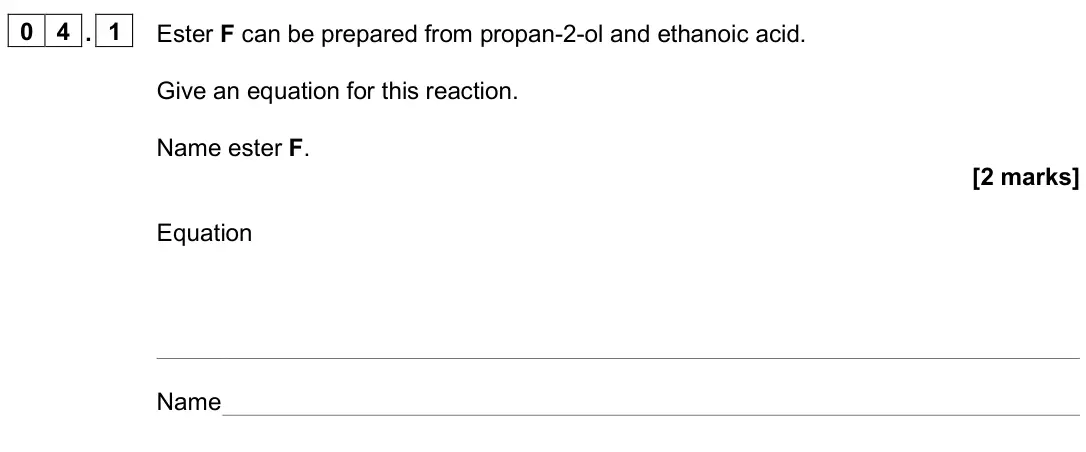
Q04.2
The whole paper ↗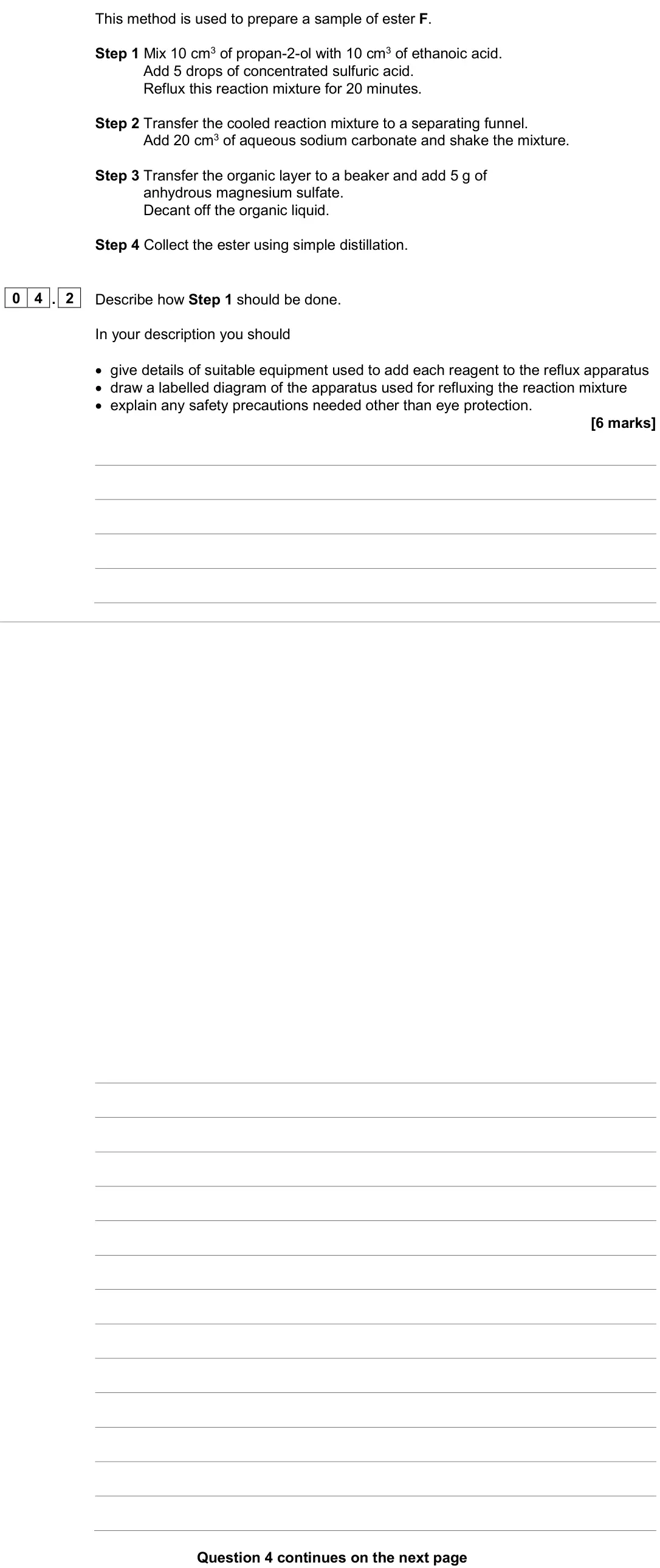
Q04.3
The whole paper ↗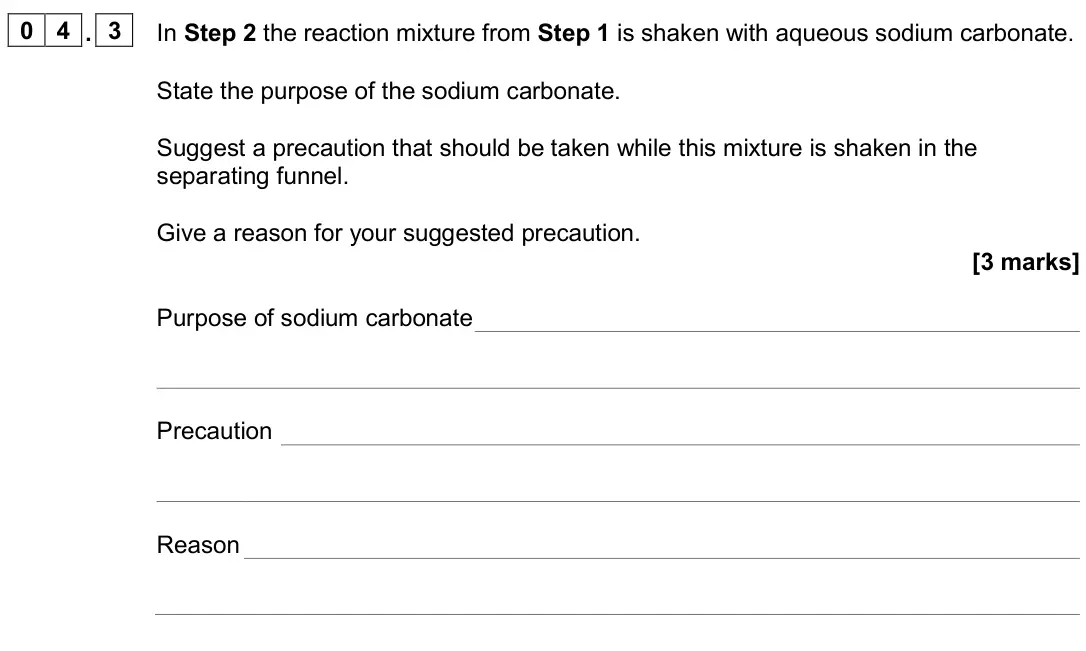
Q04.4
The whole paper ↗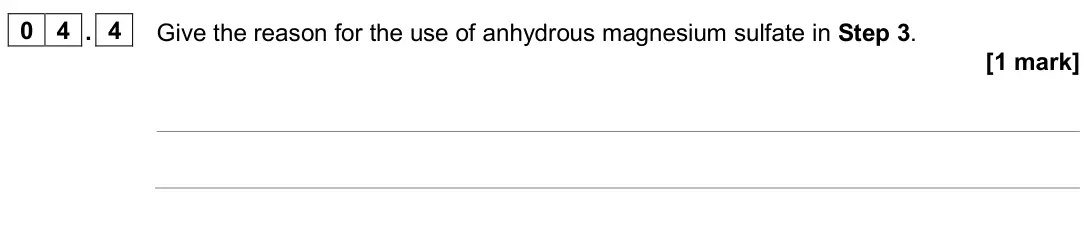
Q04.5
The whole paper ↗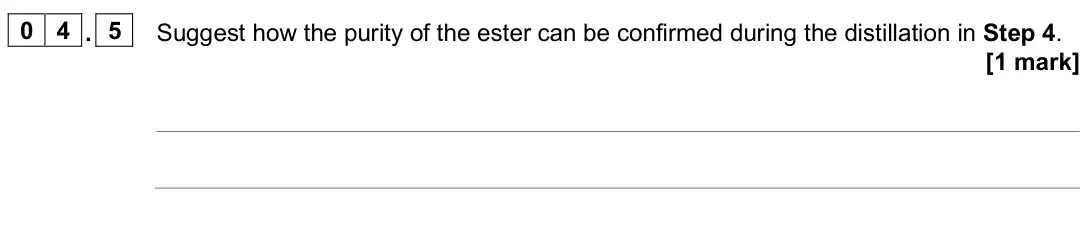
Q05.1
The whole paper ↗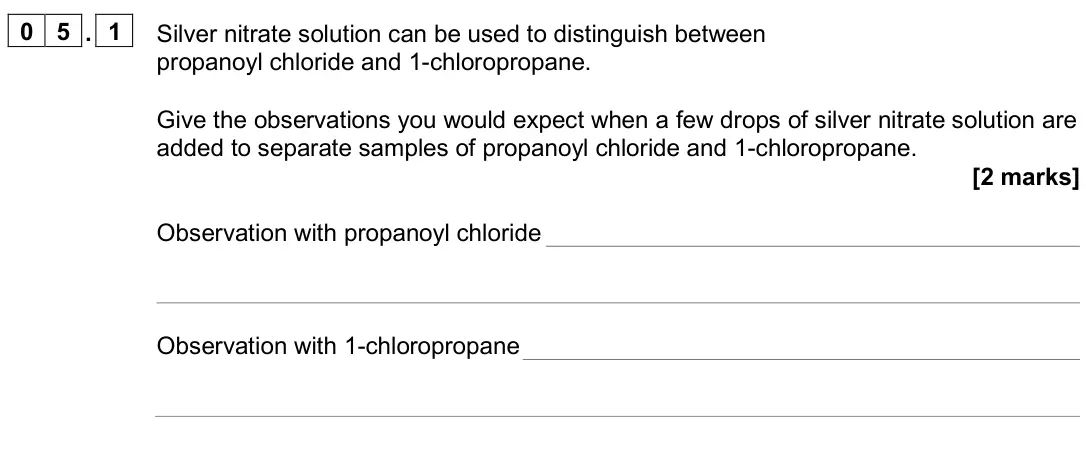
Q06.1
The whole paper ↗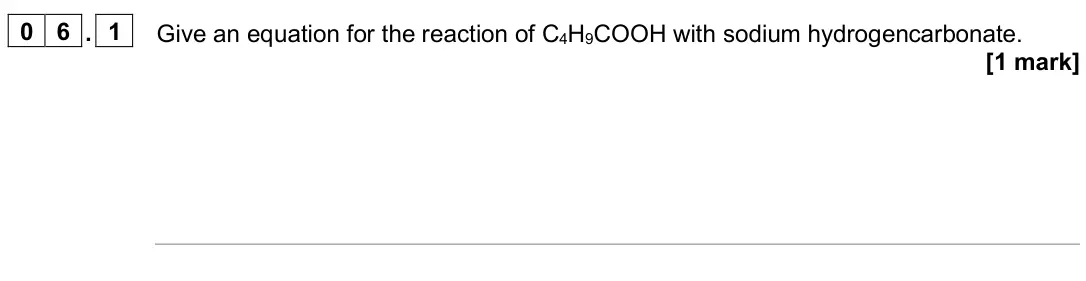
Q01.1
The whole paper ↗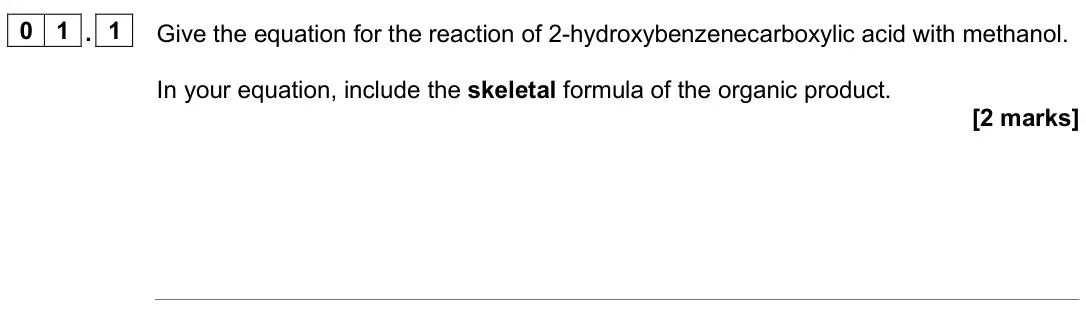
Q01.2
The whole paper ↗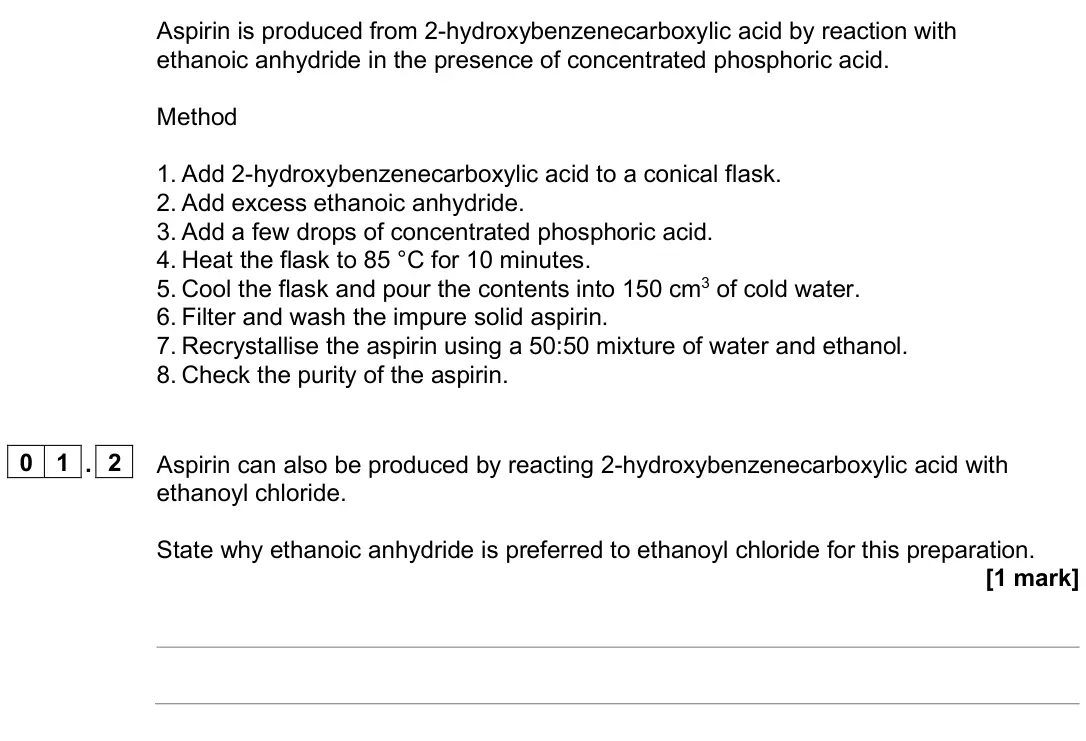
Q01.3
The whole paper ↗
Q01.4
The whole paper ↗
Q01.5
The whole paper ↗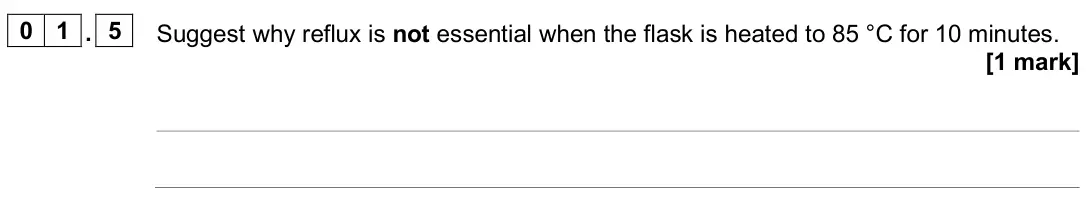
Q03.1
The whole paper ↗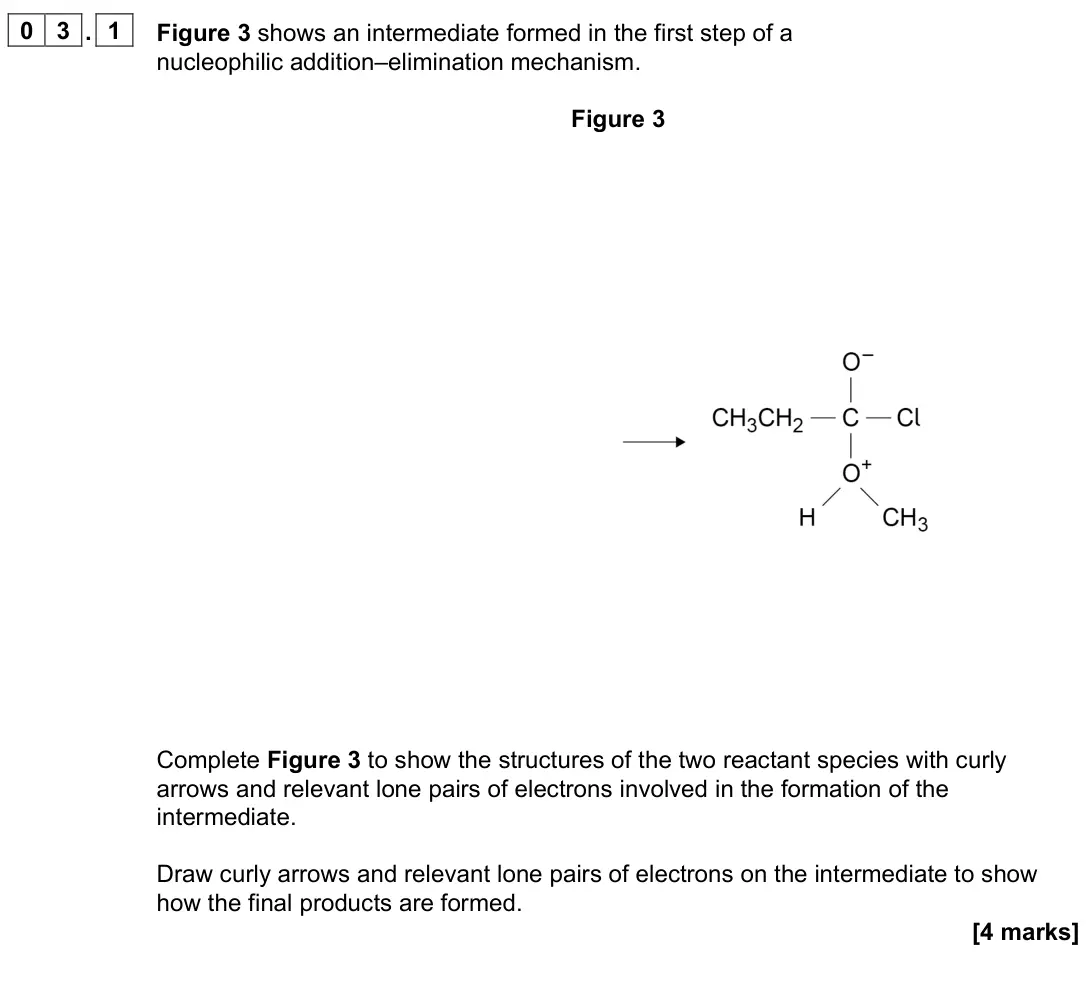
All 72 questions on Carboxylic acids and derivatives, as a list
- June 2025, Paper 2, Q03.4 (4 marks): An incomplete equation for the reaction used to make DIBP is shown. Complete the equation. Give the name of the mechanism for this reaction. Deduce the empirica
- June 2025, Paper 2, Q03.5 (1 mark): A different plasticiser, DEHA, is added to PVC used for food packaging. The structure of DEHA is Identify the organic compound that would react with hexanedioic
- June 2025, Paper 2, Q03.6 (3 marks): DEHA can be absorbed into food from PVC packaging. In an investigation, 1 kg samples of three different foods are stored in PVC packaging for 30 days. Table 1 s
- June 2025, Paper 2, Q03.7 (4 marks): The polymer nylon 6,6 can be made from hexanedioyl dichloride and hexane-1,6-diamine. Figure 2 shows an incomplete mechanism for the first steps in this reactio
- June 2025, Paper 3, Q06.2 (3 marks): Q can be reacted with methanol to form three different esters. State the number used to identify the position of the C=C bond in the name of the ester formed fr
- June 2025, Paper 3, Q06.3 (2 marks): Q also reacts with NaOH State the formula of the product, formed by Branch B in Figure 2, in this reaction. State a use for this product. [2 marks] Formula Use
- June 2024, Paper 2, Q04.1 (2 marks): Ester F can be prepared from propan-2-ol and ethanoic acid. Give an equation for this reaction. Name ester F. [2 marks] Equation Name
- June 2024, Paper 2, Q04.2 (6 marks): Describe how Step 1 should be done. In your description you should • give details of suitable equipment used to add each reagent to the reflux apparatus • draw
- June 2024, Paper 2, Q04.3 (3 marks): In Step 2 the reaction mixture from Step 1 is shaken with aqueous sodium carbonate. State the purpose of the sodium carbonate. Suggest a precaution that should
- June 2024, Paper 2, Q04.4 (1 mark): Give the reason for the use of anhydrous magnesium sulfate in Step 3. [1 mark]
- June 2024, Paper 2, Q04.5 (1 mark): Suggest how the purity of the ester can be confirmed during the distillation in Step 4. [1 mark]
- June 2024, Paper 2, Q05.1 (2 marks): Silver nitrate solution can be used to distinguish between propanoyl chloride and 1-chloropropane. Give the observations you would expect when a few drops of si
- June 2024, Paper 2, Q06.1 (1 mark): Give an equation for the reaction of C4H9COOH with sodium hydrogencarbonate. [1 mark]
- June 2024, Paper 3, Q01.1 (2 marks): Give the equation for the reaction of 2-hydroxybenzenecarboxylic acid with methanol. In your equation, include the skeletal formula of the organic product. [2 m
- June 2024, Paper 3, Q01.2 (1 mark): Aspirin can also be produced by reacting 2-hydroxybenzenecarboxylic acid with ethanoyl chloride. State why ethanoic anhydride is preferred to ethanoyl chloride
- June 2024, Paper 3, Q01.3 (1 mark): Give the name of the mechanism for the reaction of 2-hydroxybenzenecarboxylic acid with ethanoic anhydride. [1 mark]
- June 2024, Paper 3, Q01.4 (1 mark): Suggest the role of the concentrated phosphoric acid. [1 mark]
- June 2024, Paper 3, Q01.5 (1 mark): Suggest why reflux is not essential when the flask is heated to 85 °C for 10 minutes. [1 mark]
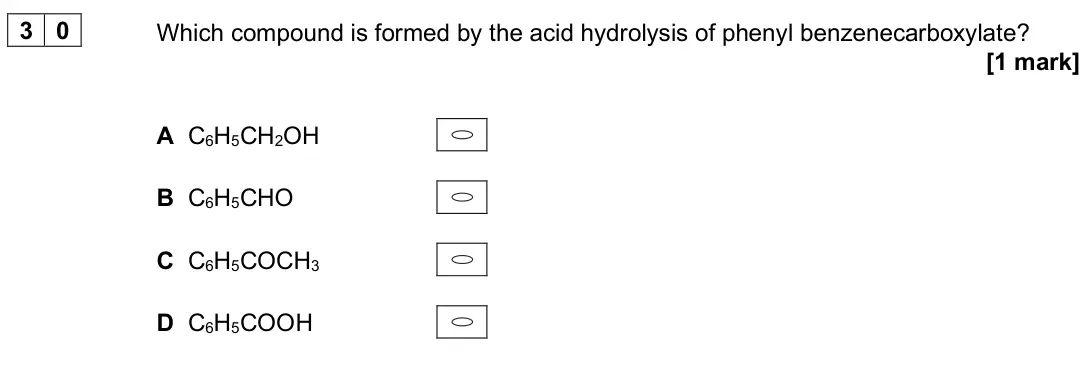
- June 2024, Paper 3, Q30 (1 mark): Which compound is formed by the acid hydrolysis of phenyl benzenecarboxylate? [1 mark] A C6H5CH2OH B C6H5CHO C C6H5COCH3 D C6H5COOH
- June 2023, Paper 2, Q03.1 (4 marks): Figure 3 shows an intermediate formed in the first step of a nucleophilic addition–elimination mechanism. Figure 3 Complete Figure 3 to show the structures of t
- June 2023, Paper 2, Q08.1 (2 marks): Complete the equation for the hydrolysis of the triester in palm oil under acidic conditions. [2 marks]
- June 2023, Paper 2, Q09.2 (3 marks): Figure 11 shows an incomplete suggested mechanism for the decomposition of ethanoic anhydride. Figure 11 Complete the mechanism in Figure 11 by adding three cur
- June 2023, Paper 3, Q01.1 (1 mark): State the role of concentrated sulfuric acid in this reaction. [1 mark]
- June 2023, Paper 3, Q01.2 (1 mark): The reaction mixture is flammable. Suggest how the reaction mixture should be heated in step 1. [1 mark]
- June 2023, Paper 3, Q01.3 (4 marks): Figure 1 shows how a student set up the apparatus for reflux in step 1. You should assume that the apparatus is clamped correctly. Figure 1 Identify two mistake
- June 2023, Paper 3, Q01.4 (2 marks): State why sodium carbonate is added to the distillate in step 4. Explain why there is a build-up of pressure in the separating funnel. [2 marks]
- June 2023, Paper 3, Q01.5 (2 marks): Give a reason why two layers form in the separating funnel. Suggest why ethyl ethanoate forms the upper layer. [2 marks] Reason Suggestion
- June 2023, Paper 3, Q01.6 (1 mark): State why anhydrous calcium chloride is added in step 6. [1 mark]
- June 2023, Paper 3, Q01.8 (1 mark): Suggest a reason why the percentage yield is not 100%. [1 mark]
- June 2022, Paper 2, Q07.1 (3 marks): Add three curly arrows to complete the mechanism in Figure 4. [3 marks]
- June 2022, Paper 2, Q07.2 (1 mark): Name the type of reaction shown in Figure 4. [1 mark]
- June 2022, Paper 2, Q07.3 (1 mark): Deduce the role of the CH3O− ion in step 3 shown in Figure 4. [1 mark]
- June 2022, Paper 2, Q07.4 (1 mark): A triester in vegetable oil reacts with sodium hydroxide in a similar way. Give a use for a product of this reaction. [1 mark]
- June 2022, Paper 2, Q10.2 (1 mark): Give the name of the mechanism for the reaction in step 3. [1 mark]
- June 2022, Paper 3, Q25 (1 mark): Which compound is an isomer of ethyl ethanoate? [1 mark] A butyl methanoate B methyl propanoate C methyl butanoate D propanoic acid
- June 2022, Paper 3, Q26 (1 mark): Which compound is an amide? [1 mark] A CH3CH2CH2CN B CH3CONHCH2CH3 C CH3COOCH2CH3 D CH3NHCH2CH2CH3
- November 2021, Paper 2, Q01.1 (3 marks): Complete the equation by drawing the structure of the other product of this reaction in the box. Name the type of compound shown by the formula RCOOK Give one u
- November 2021, Paper 2, Q01.2 (3 marks): The triester in coconut oil has a relative molecular mass, Mr = 638.0 In the equation shown at the start of Question 01, R represents an alkyl group that can be
- November 2021, Paper 2, Q01.4 (3 marks): Suggest why aqueous ethanol is a suitable solvent when heating the coconut oil with KOH. Give a safety precaution used when heating the mixture. Justify your ch
- November 2021, Paper 2, Q05.2 (1 mark): Deduce the structure of the diester in Question 05.1 [1 mark]
- November 2021, Paper 2, Q08.3 (5 marks): Cyclohexane-1,2-diol reacts with ethanedioyl dichloride. Give the name of the mechanism for this reaction. Complete the mechanism to show the formation of one e
- November 2021, Paper 3, Q06.6 (3 marks): State a simple chemical test that distinguishes the propanoic acid from the propan-1-ol. Give one observation for the test with each substance. [3 marks] Test P
- November 2021, Paper 3, Q28 (1 mark): Which compound forms a white precipitate when added to aqueous silver nitrate? [1 mark] A bromoethane B ethanal C ethanoic anhydride D ethanoyl chloride
- November 2021, Paper 3, Q31 (1 mark): Which compound reacts with warm dilute aqueous sodium hydroxide? [1 mark] A C6H6 B CH3CH=CH2 C CH3CH2CH2NH2 D (CH3CO)2O
- November 2020, Paper 2, Q02.3 (3 marks): Prilocaine is completely hydrolysed in the human body to give a mixture of products. Draw the structures of the two organic products formed in the complete hydr
- November 2020, Paper 2, Q03.3 (3 marks): Separate samples of each isomer are warmed with ethanoic acid and a few drops of concentrated sulfuric acid. In each case the mixture is then poured into a solu
- November 2020, Paper 2, Q04.4 (1 mark): Complete the equation for the reaction of salicylic acid with ethanoic anhydride to produce aspirin. [1 mark]
- November 2020, Paper 3, Q27 (1 mark): Which reaction involves addition-elimination? [1 mark] A (CH3)2CHBr + KOH → CH3CH=CH2 + KBr + H2O B CH3COCl + C6H5OH → CH3COOC6H5 + HCl C CH3CH=CH2 + Cl2 → CH3C
- November 2020, Paper 3, Q35 (1 mark): Which compound is formed when phenyl benzenecarboxylate is hydrolysed under acidic conditions? [1 mark] A C6H5CH2OH B C6H5CHO C C6H5COCH3 D C6H5COOH
- November 2020, AS Paper 2, Q07.1 (1 mark): Draw the skeletal formula of ethanedioic acid. [1 mark]
- June 2019, Paper 2, Q08.3 (2 marks): In theory, either ethanoyl chloride or ethanoic anhydride could be used in Step 3. Complete the mechanism for the reaction of 4-aminophenol with ethanoyl chlori
- June 2019, Paper 2, Q08.4 (1 mark): In practice, ethanoic anhydride is used in the industrial synthesis rather than ethanoyl chloride. Give one reason why ethanoyl chloride is not used in the indu
- June 2019, Paper 2, Q08.5 (1 mark): In Step 3 other aromatic products are formed as well as paracetamol. Draw the structure of one of these other aromatic products. [1 mark]
- June 2019, Paper 2, Q08.6 (1 mark): Chemists have recently developed a two-step process to produce paracetamol from phenol. In the first step, phenol is oxidised to hydroquinone. In the second ste
- June 2019, Paper 2, Q11.1 (3 marks): An ester is formed by the reaction of an acid anhydride with CH3CH2OH Complete the equation. In your answer show clearly the structure of the ester. Give the IU
- June 2019, Paper 2, Q11.2 (2 marks): In a reaction to form biodiesel, one mole of a vegetable oil reacts with an excess of methanol to form two moles of an ester with molecular formula C19H34O2 and
- June 2019, Paper 3, Q24 (1 mark): Which compound is formed by acid hydrolysis of phenylmethyl ethanoate? [1 mark] A C6H5CH2OH B C6H5CHO C C6H5COCH3 D C6H5COOH
- June 2019, Paper 3, Q25 (1 mark): A student is required to dry a liquid sample of pentanoic acid. Which drying agent is suitable? [1 mark] A Calcium oxide B Calcium sulfate C Potassium hydroxide
- June 2019, AS Paper 2, Q07.1 (1 mark): Draw the skeletal formula of propanedioic acid. [1 mark]
- June 2018, Paper 2, Q03.3 (2 marks): Describe how you would carry out a simple test-tube reaction to confirm that the sample of propanal obtained by distillation does not contain any propanoic acid
- June 2018, Paper 2, Q07.3 (3 marks): The alcohol shown in Question 07.2 reacts with ethanoyl chloride to form an ester. Describe what would be observed when the alcohol reacts with ethanoyl chlorid
- June 2017, Paper 2, Q05.1 (1 mark): Draw a structural formula for the diester C6H10O4 [1 mark
- June 2017, Paper 2, Q06.4 (6 marks): An amide link is also formed when an acyl chloride reacts with a primary amine. Name and outline a mechanism for the reaction between CH3CH2COCl and CH3CH2NH2 G
- June 2017, Paper 3, Q03.1 (1 mark): Suggest how the anti-bumping granules prevent bumping during reflux. [1 mark]
- June 2017, Paper 3, Q03.3 (1 mark): Suggest why an excess of sodium hydroxide is used. [1 mark]
- June 2017, Paper 3, Q03.4 (1 mark): Suggest why an electric heater is used rather than a Bunsen burner in this hydrolysis. [1 mark]
- June 2017, Paper 3, Q03.5 (1 mark): State why reflux is used in this hydrolysis. [1 mark]
- June 2017, Paper 3, Q03.6 (1 mark): Write an equation for the reaction between sodium benzoate and hydrochloric acid. [1 mark]
- June 2017, Paper 3, Q03.7 (2 marks): Suggest why sodium benzoate is soluble in cold water but benzoic acid is insoluble in cold water. [2 marks] 11
- Specimen, Paper 2, Q09.1 (5 marks): Name of mechanism Mechanism 3
- Specimen, Paper 2, Q09.7 (1 mark): Suggest the type of reaction occurring in step 3. [1 mark] 0 9 . 7
- Specimen, Paper 3, Q04.1 (6 marks): Ethanedioic acid is a weak acid. Ethanedioic acid acts, initially, as a monoprotic acid. 4 – Use the concept of electronegativity to justify why the acid streng
Questions, mark schemes and examiner’s reports are © AQA, from their published past papers. Plumi isn’t affiliated with any exam board. Want whole papers? Every AQA A-Level Chemistry paper.
Rather write your answers by hand on iPad? Plumi marks them against the same mark schemes.