 plumi
Motion graphs and constant acceleration: OCR A‑Level Physics B questions
OCR A-Level Physics B past-paper questions on 4.2.4 Motion graphs and constant acceleration, 2016–2025, with mark schemes and examiner’s reports where available.
Paper
All papers
Exam
All years
Calculations
Q31(a)(i)
The whole paper ↗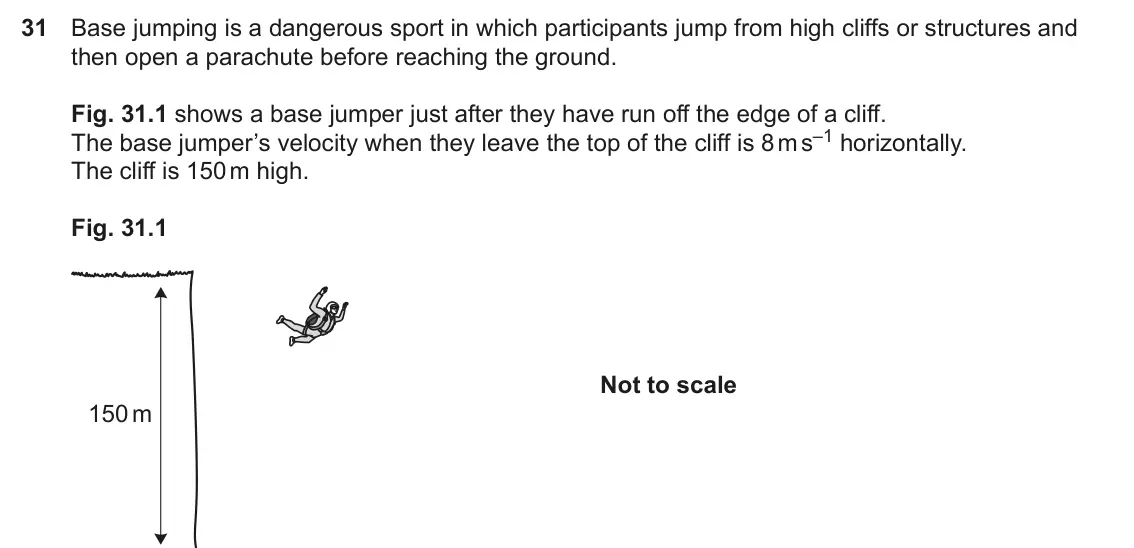
Q34(a)(ii)
The whole paper ↗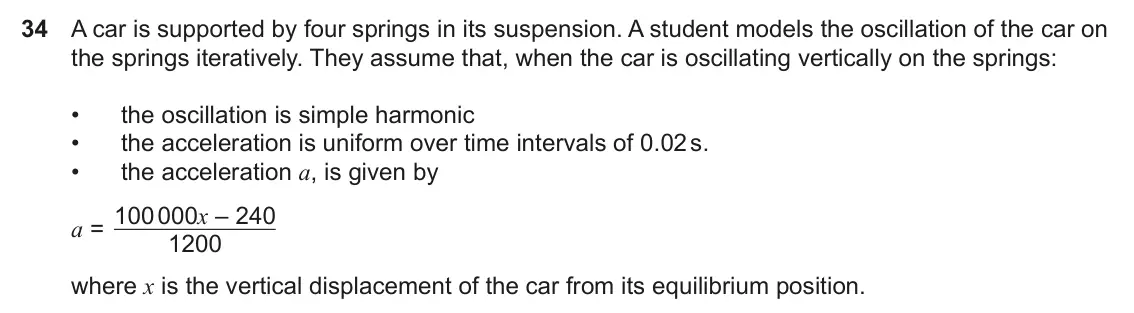
- Your answer
Q2(b)
The whole paper ↗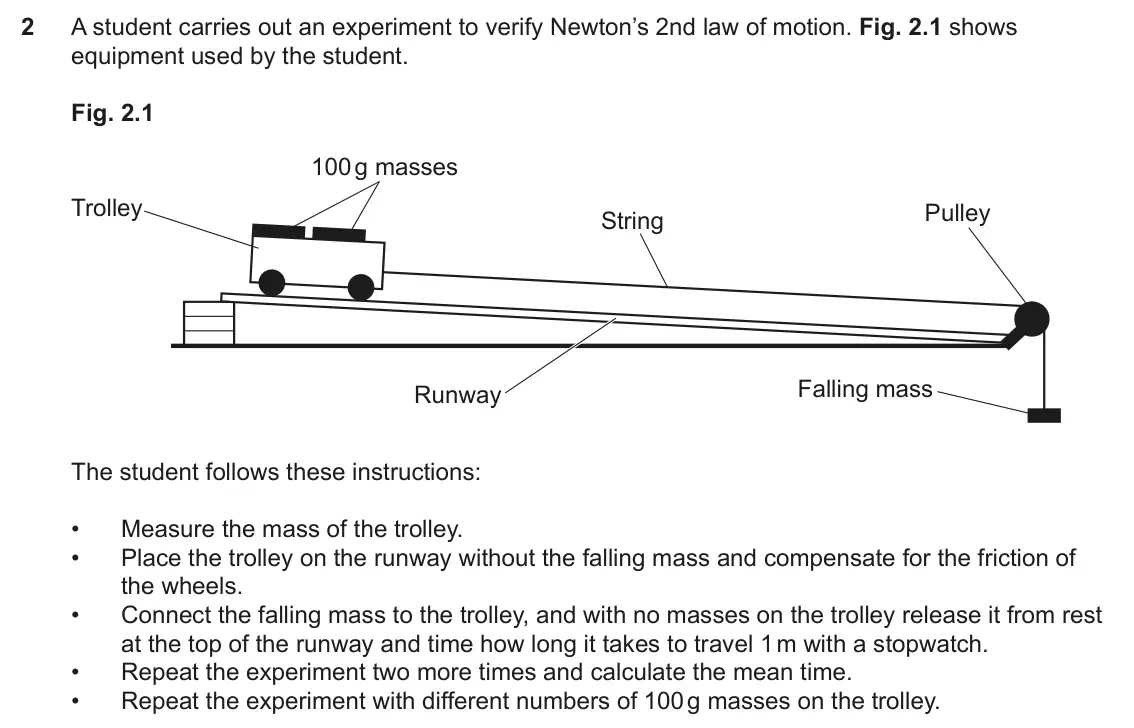
- Your answer
Q33(a)
The whole paper ↗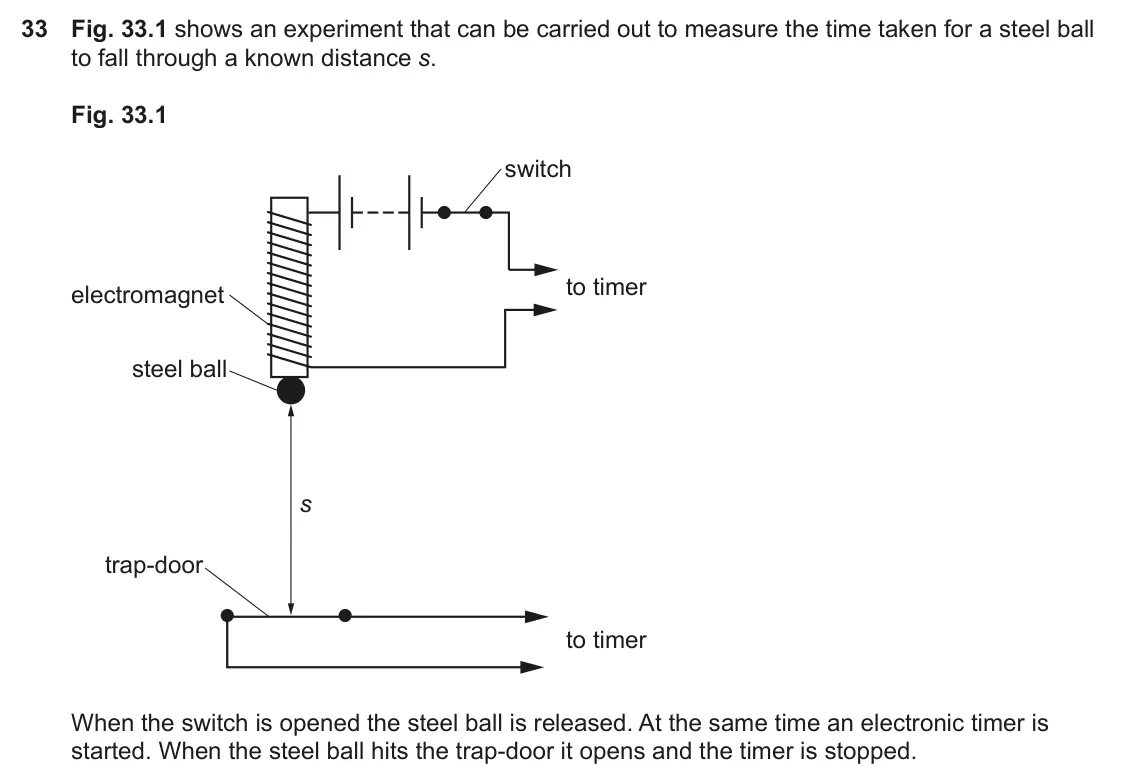
Q33(b)
The whole paper ↗Q4(c)(i)
The whole paper ↗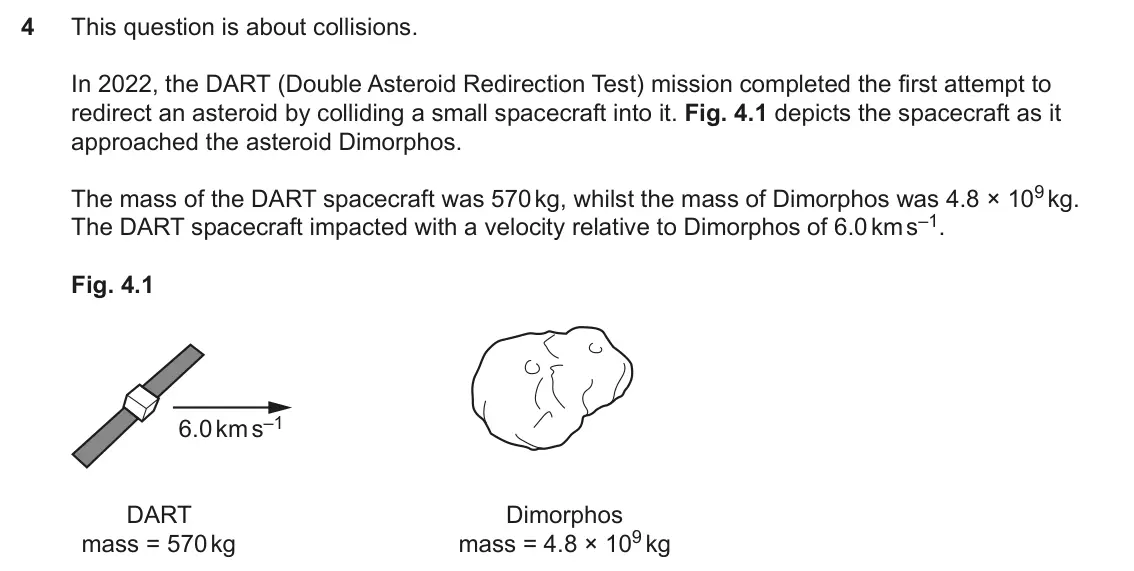
Q4(c)(ii)
The whole paper ↗Q4(d)
The whole paper ↗- Your answer
Q7(a)(i)
The whole paper ↗
Q8(b)(i)
The whole paper ↗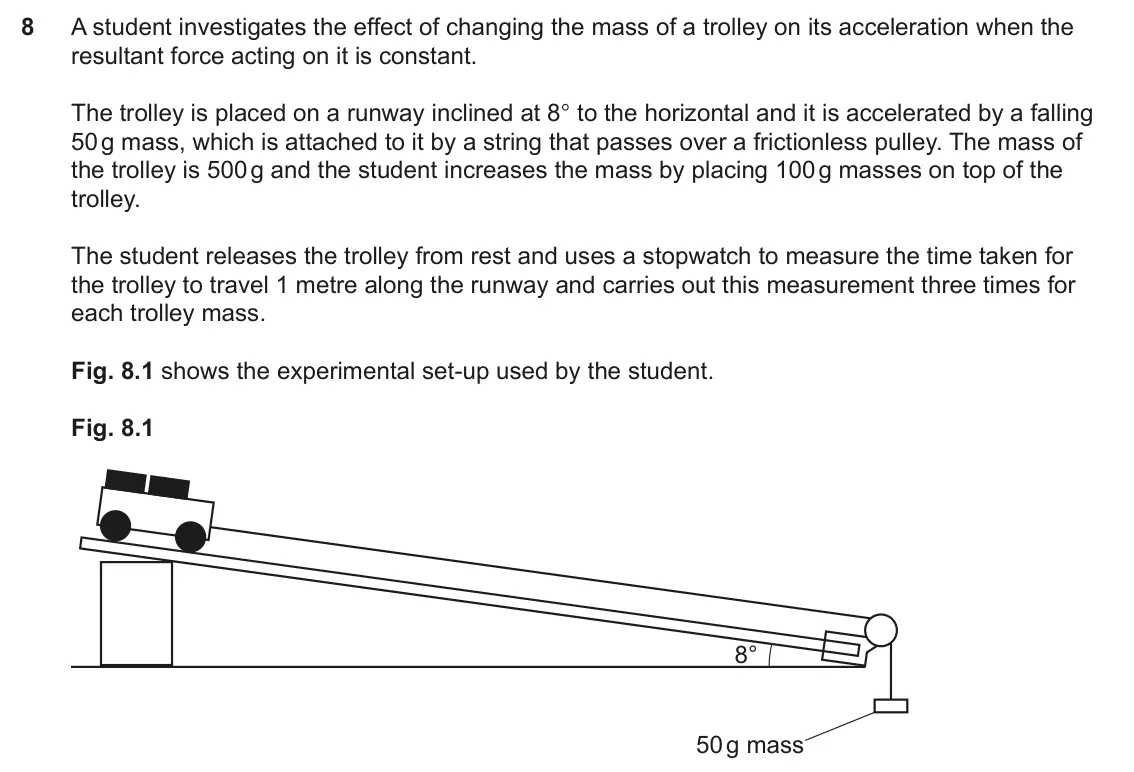
Q2(b)
The whole paper ↗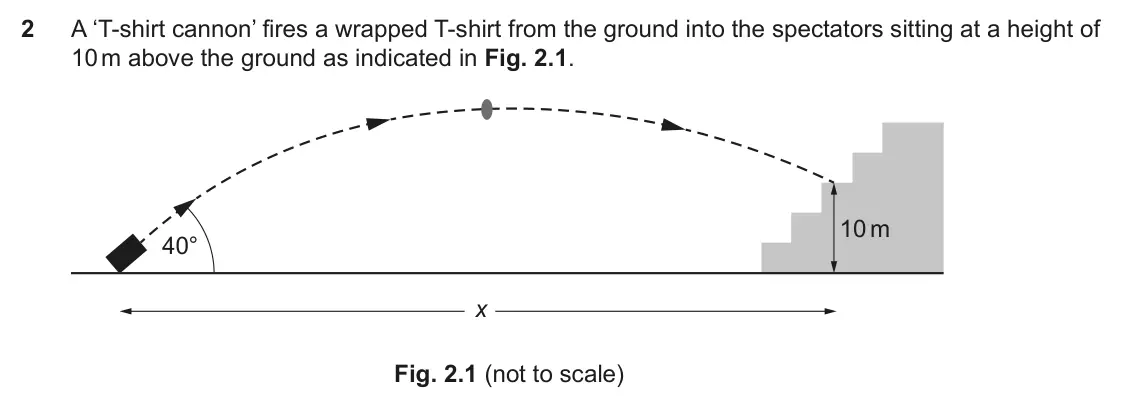
Q9(b)(i)
The whole paper ↗
Q27(b)
The whole paper ↗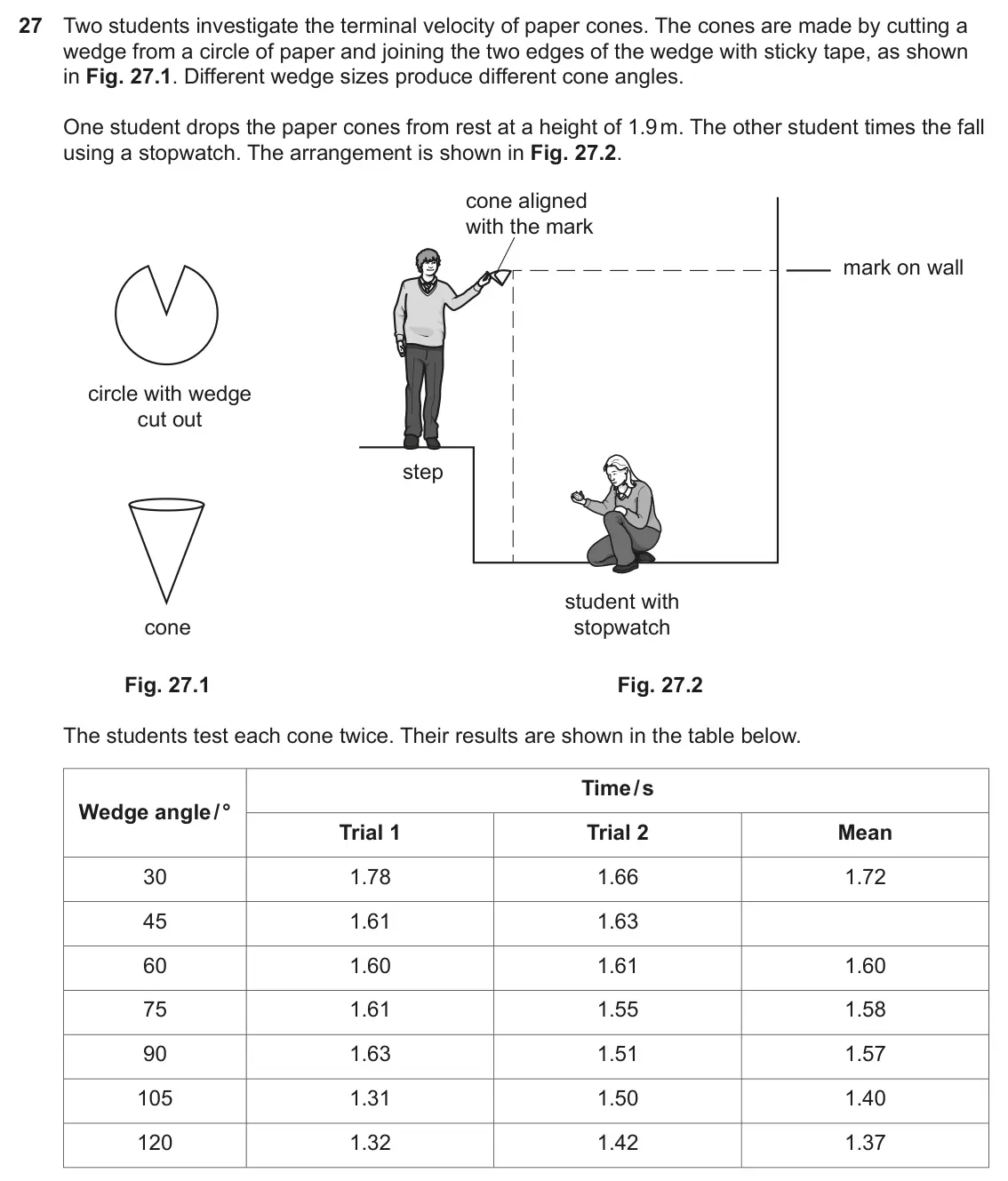
Q27(c)
The whole paper ↗Q1(b)
The whole paper ↗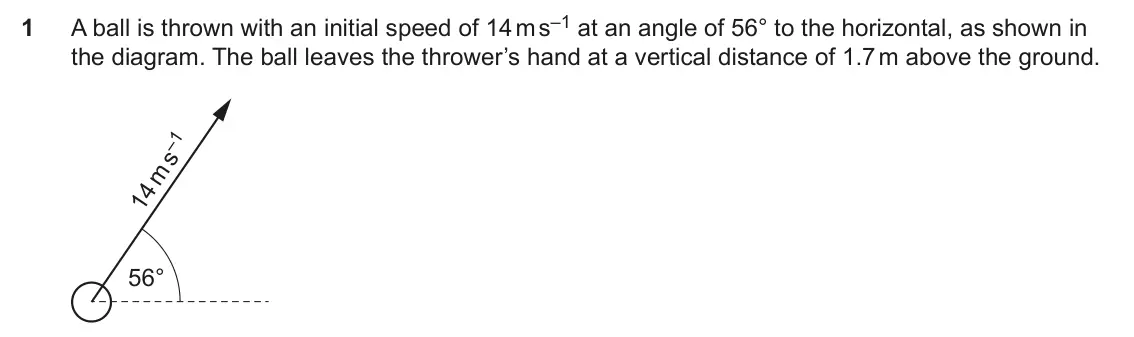
Q37(a)(i)
The whole paper ↗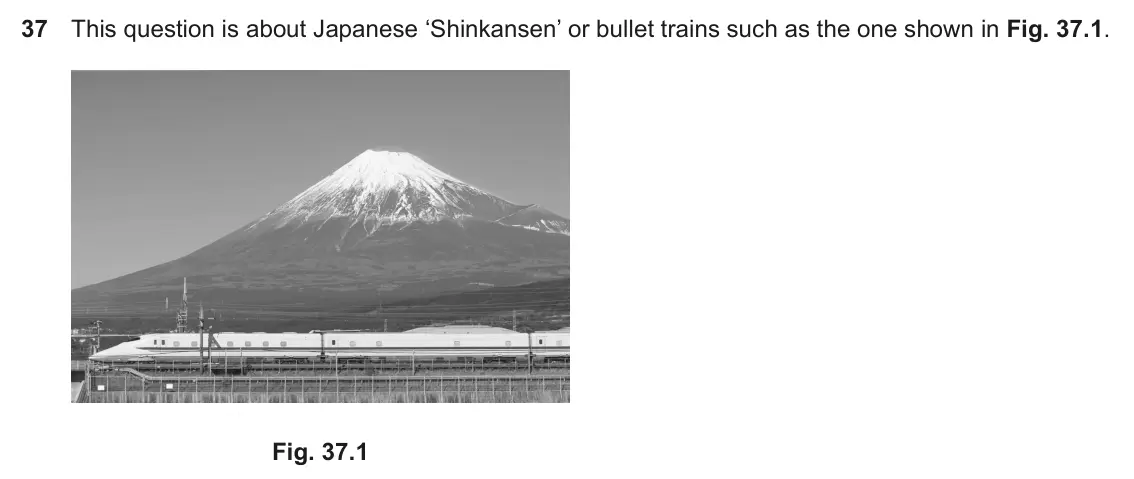
All 62 questions on Motion graphs and constant acceleration, as a list
- June 2025, Paper 1, Q31(a)(i) (2 marks): Calculate the vertical component of the velocity 1.5 s after the base jumper leaves the edge of the cliff. vertical component = m s–1 [2]
- June 2025, Paper 1, Q34(a)(ii) (2 marks): Show that the change of displacement over the initial 0.02 s is approximately 0.0008 m. [2]
- June 2025, AS Paper 1, Q12 (1 mark): The graph below shows the journey of a car. The points P–W represent the times when the car changes its speed or accelerates. 40 R S 30 Q U Velocity / m s–1 20
- June 2025, AS Paper 2, Q2(b) (1 mark): The mass of the trolley is 750 g. With 200 g placed on top of it, the mean time taken for the trolley to travel 1.00 m from rest is 2.2 s. Show that the acceler
- June 2025, AS Paper 2, Q4 (4 marks): Fig. 4.1 shows apparatus used to determine the acceleration of free fall. A millisecond timer begins timing when the steel ball is released from the electromagn
- June 2024, Paper 1, Q18 (1 mark): A car comes to rest after the brakes have been applied. The graph shows how the velocity of the car varies with time. 15 velocity / m s–1 0 20 0 time / s The ma
- June 2024, Paper 1, Q33(a) (1 mark): In one experiment the ball falls through a height of 0.75 m in 0.41 s. Calculate the acceleration due to gravity based on this result. acceleration = m s–2 [1]
- June 2024, Paper 1, Q33(b) (2 marks): In another experiment the time t taken for the steel ball to fall from the electromagnet to the trap-door is measured for several values of s. A graph of t 2 ag
- June 2024, Paper 3, Q4(c)(i) (1 mark): Calculate the maximum initial velocity of the first rider, assuming it comes to rest immediately following the collision. maximum velocity = m s–1 [1]
- June 2024, Paper 3, Q4(c)(ii) (3 marks): The graph suggests there is a drag or frictional force acting on the rider as it decelerates. Use the graph to estimate the magnitude of this force. magnitude o
- June 2024, Paper 3, Q4(d) (2 marks): The DART spacecraft did not have to contend with atmospheric drag. The student decides to investigate the effect of drag on velocity of the rider following a co
- June 2024, AS Paper 1, Q19 (1 mark): Which graph shows the relationship between the distance, s, fallen by an object and its final speed, v, before hitting the ground? Ignore the effects of air res
- June 2024, AS Paper 2, Q7(a)(i) (4 marks): Use the graph to calculate the acceleration of the cone at 0.40 s. acceleration = m s–2 [4]
- June 2024, AS Paper 2, Q8(b)(i) (5 marks): Use data from Table 8.1 to calculate the value of the acceleration when the trolley mass is 0.800 kg. Include the uncertainty in your answer.
- June 2023, Paper 2, Q2(b) (2 marks): The wrapped t-shirt is accelerated by a release of compressed gas into the barrel of the cannon. The barrel is 1.4 m long as shown in Fig. 2.2. Calculate the av
- June 2023, Paper 2, Q9(b)(i) (1 mark): Consider water flowing from a pipe of cross-sectional area 7.9 × 10⁻³ m2. Water flows out of the pipe at a rate of 55 × 10–3 m3 s–1. Show that the velocity of t
- June 2023, AS Paper 1, Q27(b) (2 marks): Calculate the average speed of the cone with wedge angle 45°. Give an appropriate number of significant figures. average speed = m s–1 [2]
- June 2023, AS Paper 1, Q27(c) (2 marks): Explain why the instantaneous speed of the cone during its fall cannot be calculated using the equation: v2 = u2 + 2as. [2] The students form the hypothesis tha
- June 2023, AS Paper 2, Q1(b) (2 marks): Calculate the maximum height above the ground reached by the ball. You can assume that air resistance is negligible. height = m [2]
- June 2022, Paper 1, Q37(a)(i) (1 mark): A bullet train without passengers has a uniform acceleration of 1.9 km h–1 s–1. Show that it will take about 160 s for the train to reach its top speed of 300 k
- June 2022, AS Paper 1, Q3 (1 mark): The graph below shows the journey of a car. The points A to H represent the times when the car changes its speed. 40 velocity / ms–1 C D 30 B F 20 E G 10 A H 0.
- June 2022, AS Paper 1, Q9 (1 mark): A large object falls vertically through the atmosphere. Which graph would be obtained by plotting: • velocity of the object on the y-axis • time on the x-axis?
- June 2022, AS Paper 2, Q1(a) (2 marks): Show that the height reached by the packet is approximately 60 m, assuming that air resistance is negligible and that the packet was fired from ground level. [2
- November 2021, Paper 1, Q15 (1 mark): A ball is thrown vertically upwards with an initial velocity of 24 m s–1 and is caught by the thrower a time t later. To an appropriate number of significant fi
- November 2021, Paper 1, Q37(c)(i) (2 marks): Explain why v2 = 9 v1. [2]
- November 2021, Paper 1, Q37(c)(ii) (2 marks): The hose can deliver 0.020 m3 s–1 of water. Calculate the velocity v1 of water entering the nozzle. v1 = m s–1 [2]
- November 2021, Paper 3, Q1(a)(iv) (4 marks): Use the gradient to calculate the value for the acceleration of free fall. Include the uncertainty in your answer. acceleration of free fall = ± m s–2 [4]
- November 2021, Paper 3, Q1(b)(i) (1 mark): State the minimum initial data you would need to have in order to obtain a value of g by this method. [1]
- November 2021, Paper 3, Q1(b)(ii) (3 marks): Describe the sources of error in this method. Discuss whether you consider the g-ball or the light-gate method would give a more accurate value for g, the accel
- November 2021, AS Paper 1, Q4 (1 mark): Which section of this velocity-time graph shows the part of the journey where the acceleration has the greatest magnitude? v B C A D t Your answer [1]
- November 2021, AS Paper 1, Q26(a) (1 mark): Use the drawing to complete the missing scale reading in the table. [1]
- November 2021, AS Paper 1, Q26(b) (2 marks): The video was captured at 22 frames per second. Show that the time between each video frame is 0.045 s to 2 significant figures. [2]
- November 2021, AS Paper 1, Q26(c) (2 marks): Calculate the average speed of the ball between positions 4 and 5. speed = cm s–1 [2]
- November 2021, AS Paper 1, Q26(d) (3 marks): Use the data in the table to estimate the average acceleration of the ball. acceleration = cm s–2 [3]
- November 2021, AS Paper 2, Q6(a)(ii) (2 marks): The lunar module was programmed to rise vertically for at least 10 m before changing direction, to make sure that it would be well clear of the launch platform.
- November 2021, AS Paper 2, Q6(b) (2 marks): Fig. 6.2 shows the trajectory of the lunar module as it left the surface of the Moon. 20 lunar module vertical enters orbit displacement around Moon from surfac
- November 2020, Paper 1, Q11 (1 mark): The diagram shows a trap-door method to measure the acceleration due to gravity g of a steel ball. It uses a millisecond timer to measure the time t of fall h.
- November 2020, Paper 1, Q27 (1 mark): At which point A, B, C or D does the rocket run out of fuel? Your answer [1]
- November 2020, Paper 1, Q28 (1 mark): At which point A, B, C or D does the rocket experience the greatest force of air resistance? Your answer [1] 17 The following information is for use in question
- November 2020, AS Paper 1, Q25(a) (2 marks): Calculate the average speed in m s−1 of the ball between frame number n = 2 and n = 3. average speed = m s−1 [2]
- November 2020, AS Paper 1, Q25(b) (2 marks): Explain why your answer is greater than the instantaneous speed of the ball at t = 1 s. [2] 17 The ball has reached terminal speed after frame n = 5.
- November 2020, AS Paper 1, Q25(d) (2 marks): Determine as precisely as possible a value for the terminal speed of the ball. terminal speed = m s−1 [2]
- November 2020, AS Paper 2, Q1(a) (3 marks): The electric motor provides an initial force of 260 kN. Use this value to calculate the minimum time taken for the train to reach its maximum speed, starting fr
- November 2020, AS Paper 2, Q7(a)(i) (1 mark): Calculate the time that the opponent has to react before the ball reaches him, assuming that the frictional forces from the air are negligible. time = s [1]
- June 2019, Paper 1, Q15 (1 mark): At which point labelled on the graph does the rocket have the greatest acceleration? Your answer [1]
- June 2019, Paper 1, Q16 (1 mark): At which point labelled on the graph does the rocket have the greatest altitude? Your answer [1]
- June 2019, AS Paper 1, Q5 (1 mark): A large object falls vertically through the atmosphere. Write down the letter of the graph that would be obtained by plotting: • velocity v of the object on the
- June 2019, AS Paper 1, Q23(a) (1 mark): Explain one advantage of using video capture to collect these data. [1]
- June 2019, AS Paper 1, Q23(b) (2 marks): Use the graph to show that the acceleration due to gravity is approximately 10 m s–2. [2]
- June 2019, AS Paper 2, Q7(c)(i) (3 marks): Calculate, as accurately as the data allow, the velocity v of the ball after it has fallen for 1 s. Show your working. v = m s–1 [3]
- June 2018, Paper 2, Q4(a)(i) (2 marks): The height of the Leaning Tower is 56 m. Calculate the time for a mass to fall to the ground when released from rest at the top of the tower. Ignore the effects
- June 2018, AS Paper 1, Q7 (1 mark): Here is a velocity-time graph for a car. 40 velocity / ms–1 R S 30 U 20 Q T V 10 P 0 W 0 20 40 60 80 time / s Between which points does the car have the largest
- June 2018, AS Paper 1, Q8 (1 mark): An object falls freely from rest. Which graph represents distance fallen (y-axis) against time (x-axis)? y y 0 0 0 x 0 x A B y y 0 0 0 x 0 x C D Your answer [1]
- June 2017, Paper 1, Q12 (1 mark): A car travelling at 10 m s–1 is brought to rest in a braking distance of 10 m. Using the same average braking force, in what distance can the car be brought to
- June 2017, Paper 2, Q3(c) (4 marks): A constant force of 300 N strikes the sail of a land yacht at an angle of 50° to the direction of motion of the vehicle as shown in Fig. 3.2. The mass of the ya
- June 2017, AS Paper 1, Q1 (1 mark): Which graph, A, B, C or D, best represents the relationship between the variables x and y where: y is the velocity of an object falling freely from rest x is th
- June 2017, AS Paper 1, Q2 (1 mark): Which graph, A, B, C or D, best represents the relationship between the variables x and y where: y is the velocity of an object falling freely from rest x is th
- June 2016, AS Paper 1, Q10 (1 mark): A golf ball is dropped from rest onto a hard floor. The graph shows how the velocity of the ball varies with time as it bounces, from the time of release. At wh
- June 2016, AS Paper 1, Q29(b)(i) (2 marks): Use the data from the table or the graph to make a new estimate for the terminal velocity. The table has a blank column for you to use, if required. Make your m
- June 2016, AS Paper 2, Q6(b) (2 marks): Anna repeats the experiment for different values of s. She intends to plot a graph of v2 – u2 (y-axis) against s (x-axis). Explain why this should result in a s
- June 2016, AS Paper 2, Q6(d) (3 marks): Anna repeats her measurements for five further values of s and plots the graph of Fig. 6.4. Draw suitable lines on the graph and use them to determine the value
- June 2016, AS Paper 2, Q6(e) (6 marks): This question is about an experiment performed in AS physics to determine the acceleration due to gravity, g. Two students have chosen to do this experiment in
Questions, mark schemes and examiner’s reports are © OCR, from their published past papers. Plumi isn’t affiliated with any exam board. Want whole papers? OCR A-Level Physics B past papers.
The Plumi iPad app also offers exam-style questions with AI feedback on your handwritten working.