 plumi
DNA and protein synthesis: Edexcel A‑Level Biology B questions
Every Edexcel A-Level Biology B exam question on 1.4 DNA and protein synthesis, 2016–2025, with its mark scheme and examiner’s report.
Find questions1,826
Calculations
Q9(a)
The whole paper ↗
Q1(b)(i)
The whole paper ↗
Q1(b)(ii)
The whole paper ↗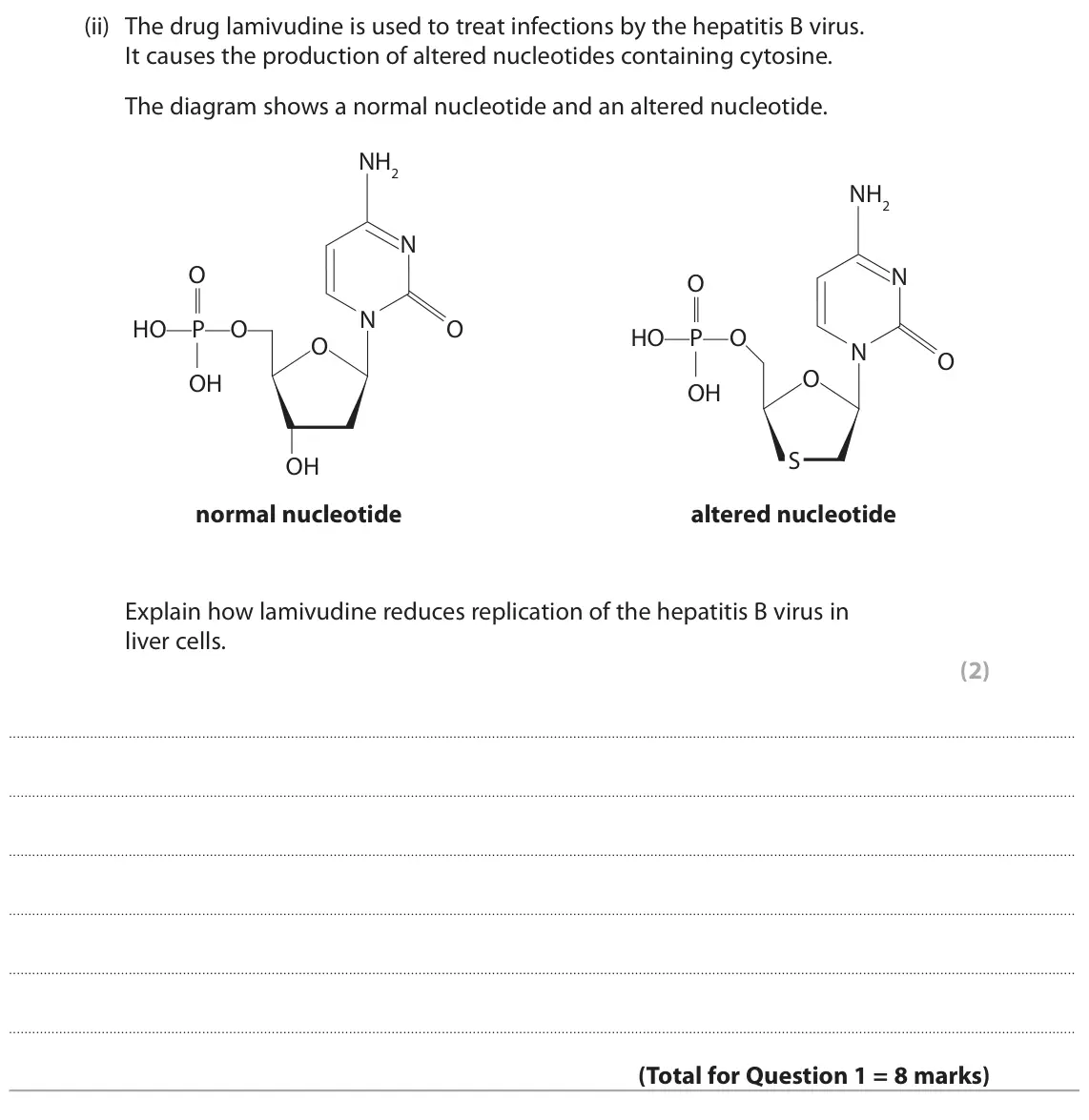
Q4(a)(ii)
The whole paper ↗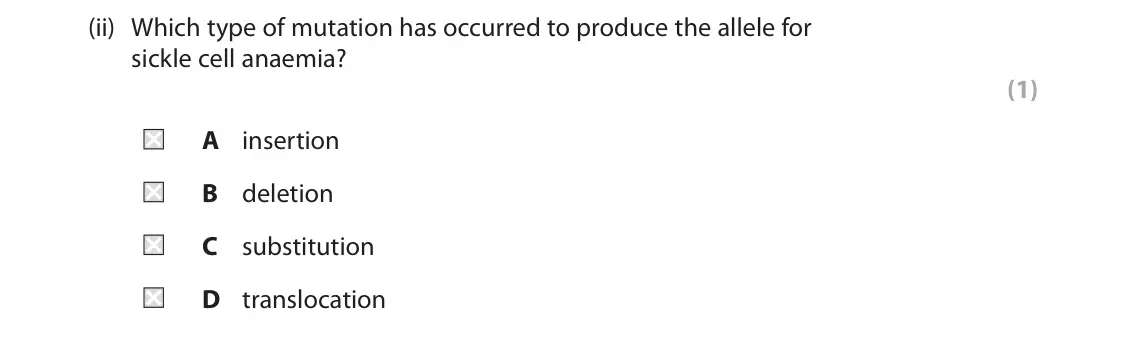
Q2(a)(i)
The whole paper ↗
Q2(a)(ii)
The whole paper ↗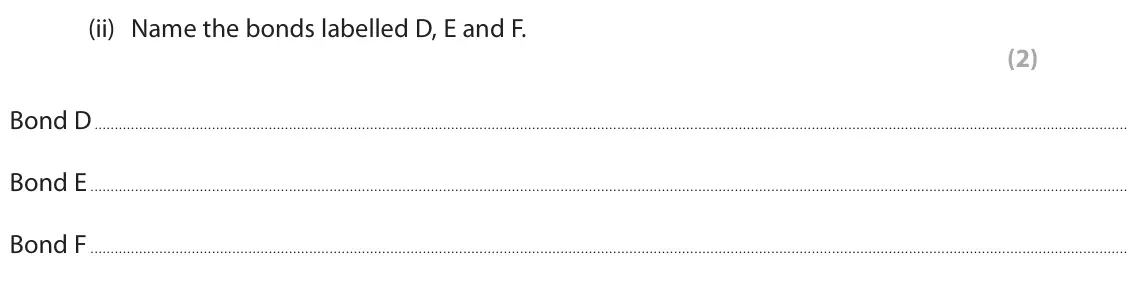
Q2(a)(iii)
The whole paper ↗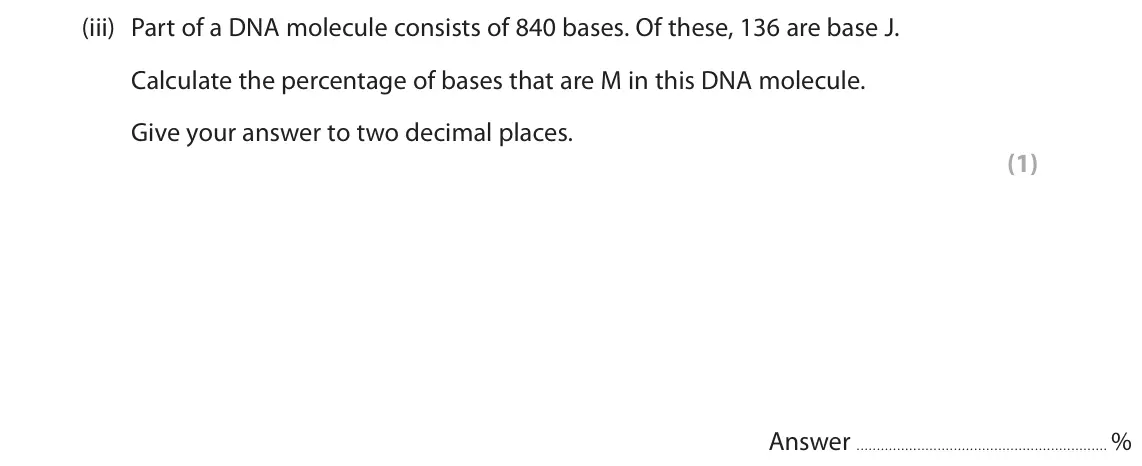
Q2(b)
The whole paper ↗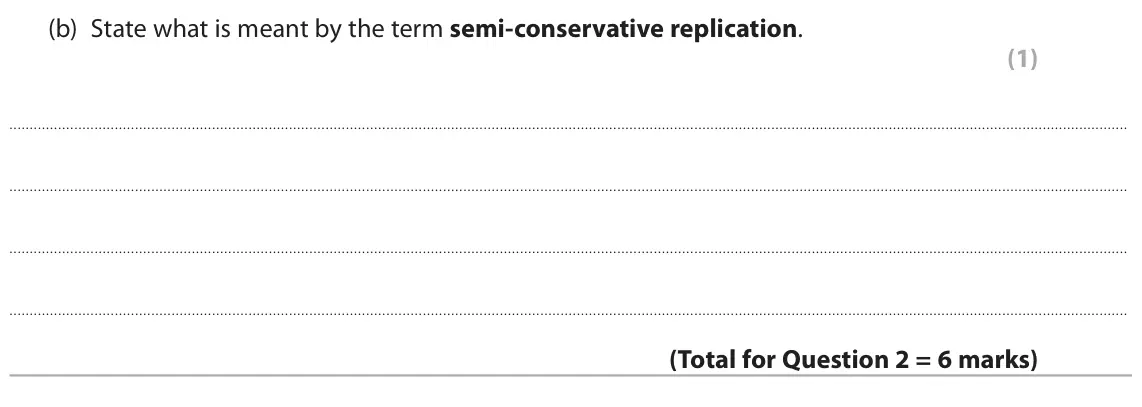
Q6(b)
The whole paper ↗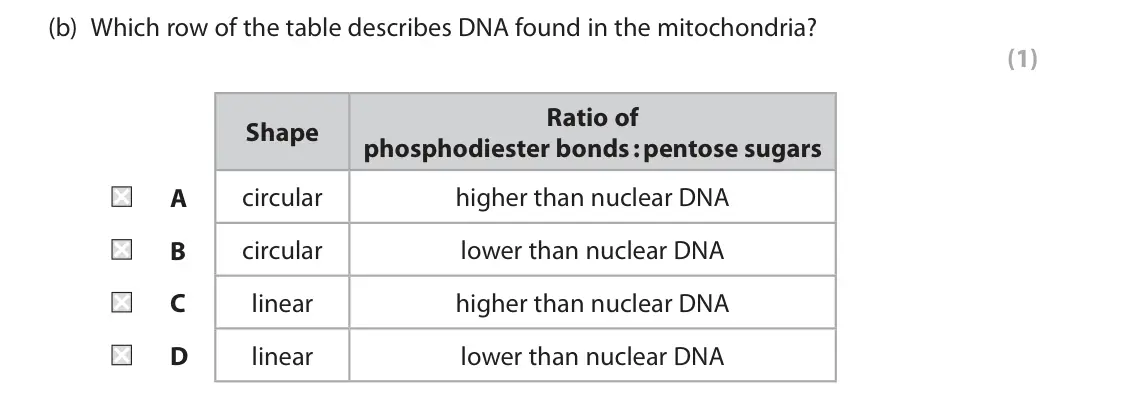
Q6(d)(i)
The whole paper ↗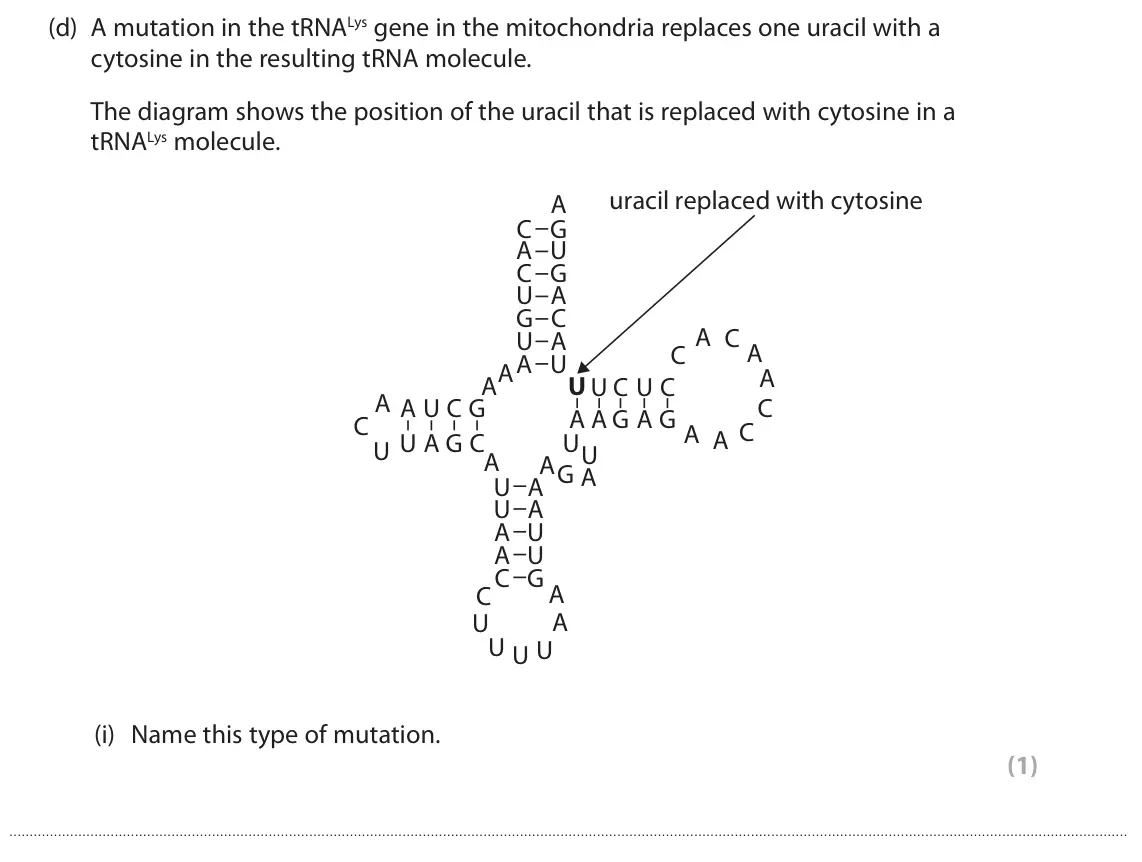
Q6(d)(ii)
The whole paper ↗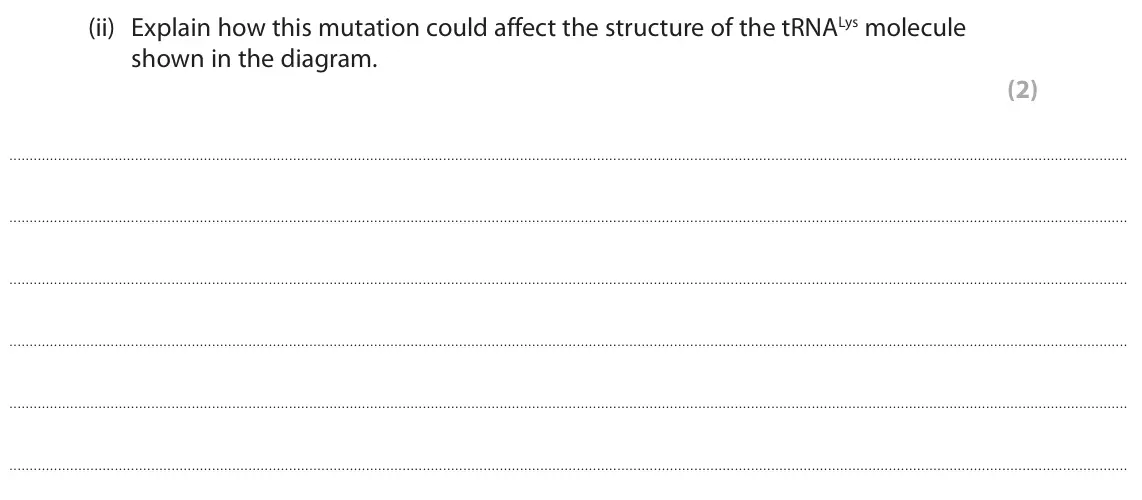
Q6(d)(iii)
The whole paper ↗
Q9(b)(i)
The whole paper ↗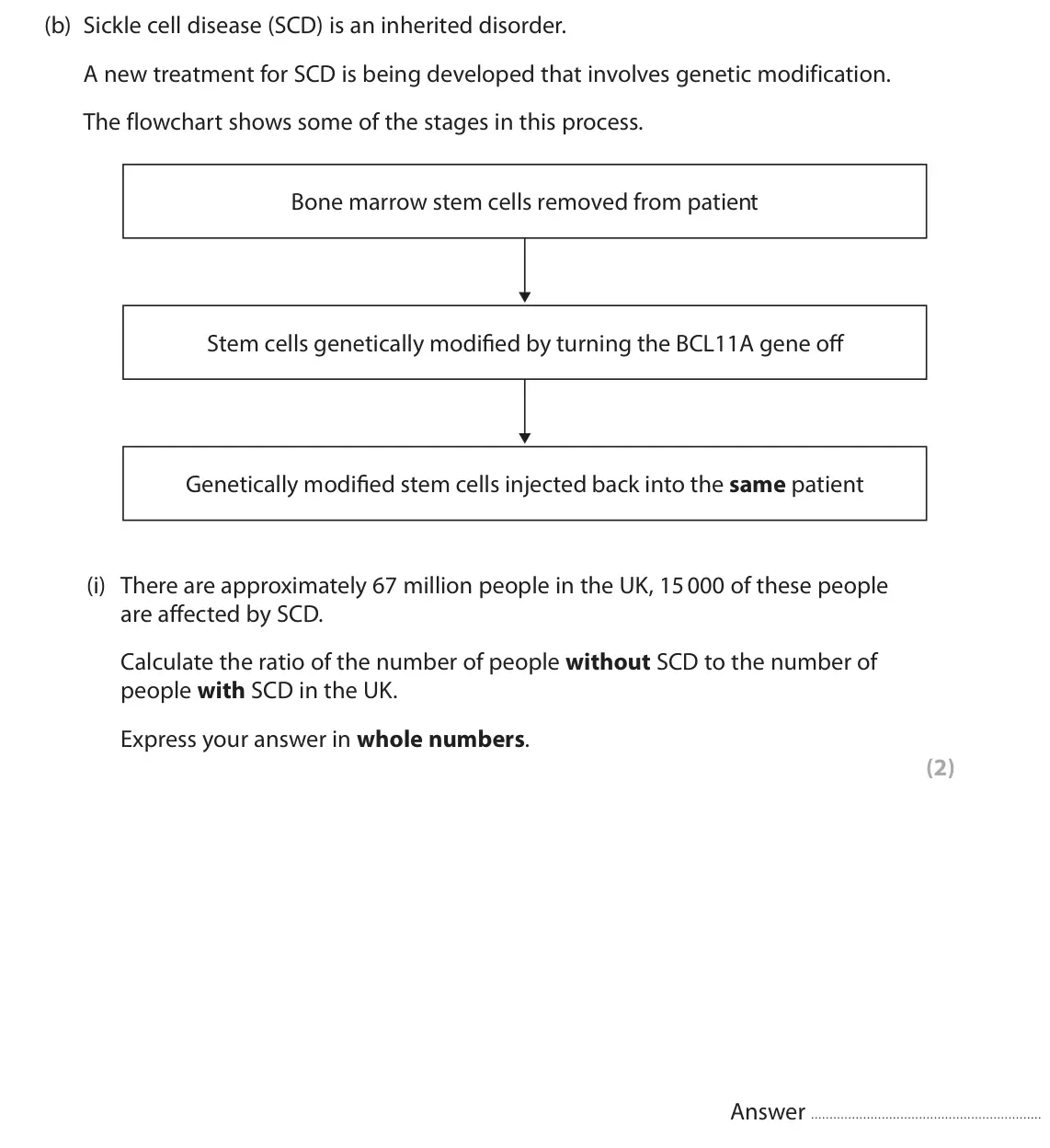
Q9(b)(ii)
The whole paper ↗
Q7(b)
The whole paper ↗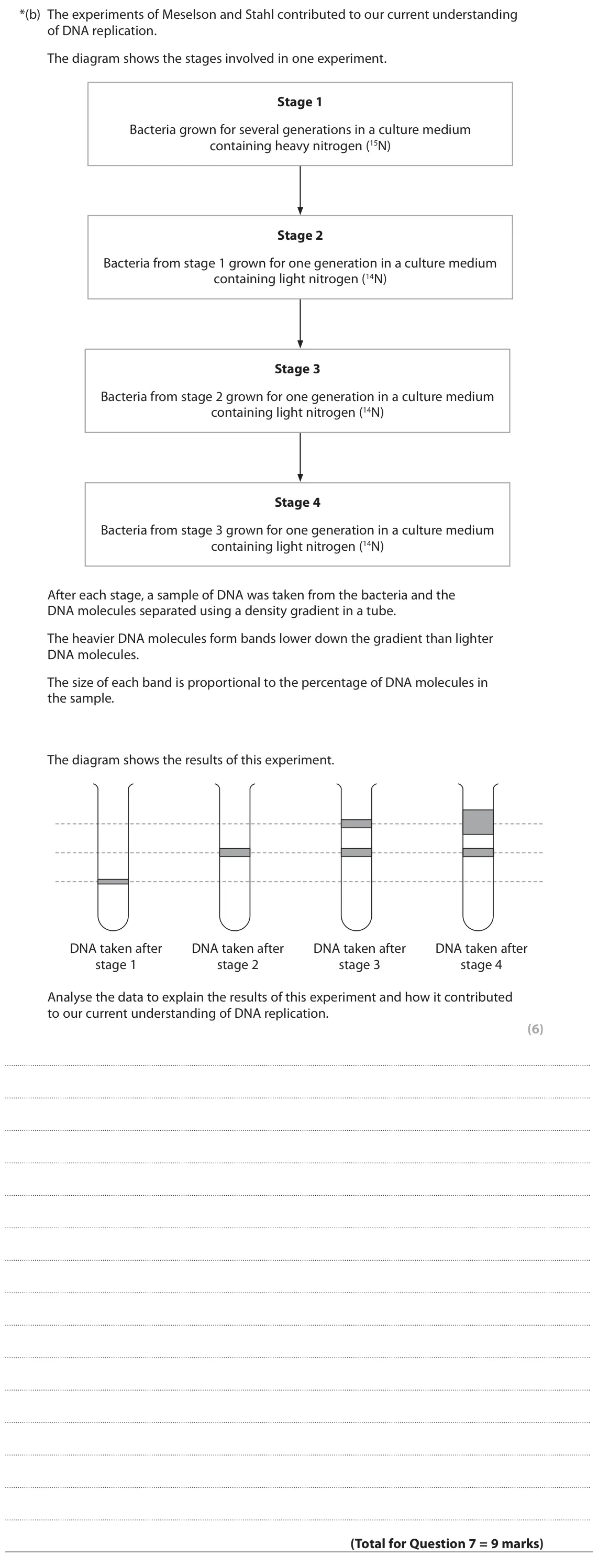
Q7(b)(i)
The whole paper ↗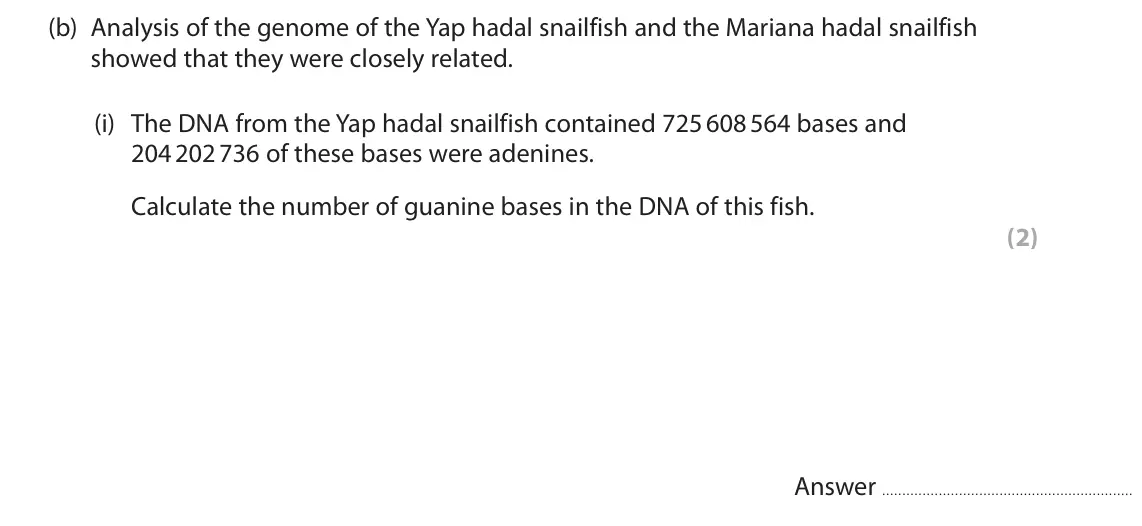
Q8(a)
The whole paper ↗
Q7(a)(i)
The whole paper ↗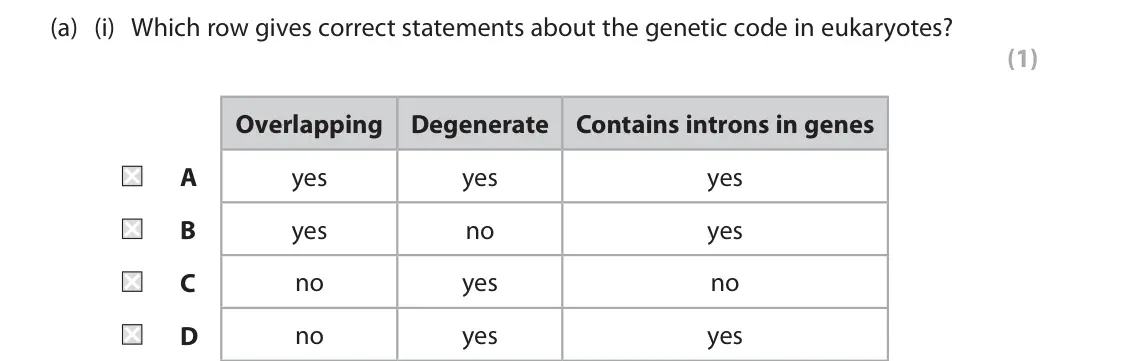
Q7(a)(ii)
The whole paper ↗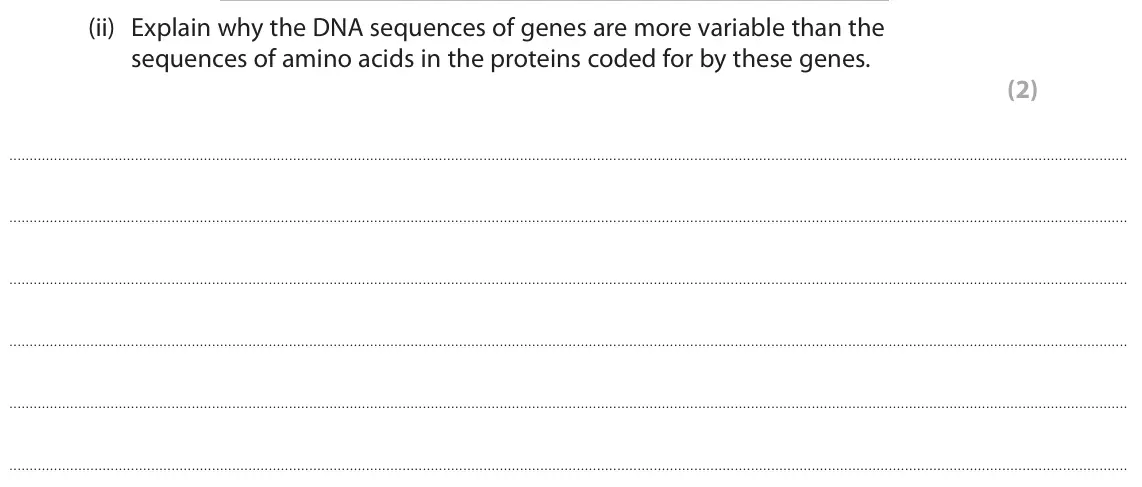
Q2(b)
The whole paper ↗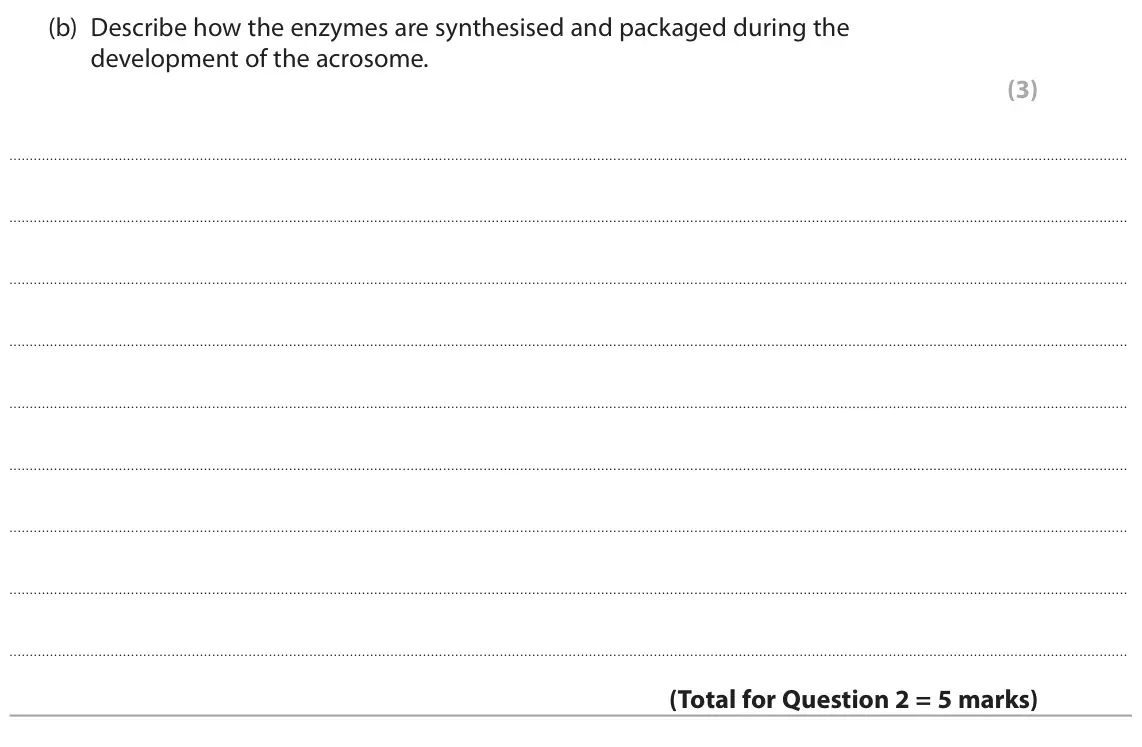
All 78 questions on DNA and protein synthesis, as a list
- June 2025, Paper 1, Q9(a) (3 marks): Compare and contrast the structure of single-stranded DNA with that of single- stranded RNA. (3)
- June 2025, Paper 2, Q1(b)(i) (3 marks): Describe the process of DNA replication. (3)
- June 2025, Paper 2, Q1(b)(ii) (2 marks): The drug lamivudine is used to treat infections by the hepatitis B virus. It causes the production of altered nucleotides containing cytosine. The diagram shows
- June 2025, Paper 2, Q4(a)(ii) (1 mark): Which type of mutation has occurred to produce the allele for sickle cell anaemia? (1) A insertion B deletion C substitution D translocation
- June 2025, AS Paper 1, Q2(a)(i) (2 marks): Name the base pairs labelled J and K, L and M. (2) J and K L and M .
- June 2025, AS Paper 1, Q2(a)(ii) (2 marks): Name the bonds labelled D, E and F. (2) Bond D Bond E Bond F
- June 2025, AS Paper 1, Q2(a)(iii) (1 mark): Part of a DNA molecule consists of 840 bases. Of these, 136 are base J. Calculate the percentage of bases that are M in this DNA molecule. Give your answer to t
- June 2025, AS Paper 1, Q2(b) (1 mark): State what is meant by the term semi‑conservative replication. (1)
- June 2024, Paper 1, Q6(b) (1 mark): Which row of the table describes DNA found in the mitochondria? (1) Ratio of Shape phosphodiester bonds : pentose sugars A circular higher than nuclear DNA B ci
- June 2024, Paper 1, Q6(d)(i) (1 mark): Name this type of mutation. (1)
- June 2024, Paper 1, Q6(d)(ii) (2 marks): Explain how this mutation could affect the structure of the tRNALys molecule shown in the diagram. (2)
- June 2024, Paper 1, Q6(d)(iii) (2 marks): Explain how this mutation could affect the role of the tRNALys molecule. (2)
- June 2024, Paper 1, Q9(b)(i) (2 marks): There are approximately 67 million people in the UK, 15 000 of these people are affected by SCD. Calculate the ratio of the number of people without SCD to the
- June 2024, Paper 1, Q9(b)(ii) (6 marks): The product of the BCL11A gene regulates the switch from the synthesis of fetal to adult globin subunits. Analyse all the information in this question to discus
- June 2024, AS Paper 1, Q7(b) (6 marks): The experiments of Meselson and Stahl contributed to our current understanding of DNA replication. The diagram shows the stages involved in one experiment. Stag
- June 2023, Paper 1, Q7(b)(i) (2 marks): The DNA from the Yap hadal snailfish contained 725 608 564 bases and 204 202 736 of these bases were adenines. Calculate the number of guanine bases in the DNA
- June 2023, Paper 1, Q8(a) (4 marks): These vaccines deliver the mRNA into antigen presenting cells, such as macrophages. Describe how the delivery of mRNA into macrophages results in antigen presen
- June 2023, Paper 2, Q7(a)(i) (1 mark): Which row gives correct statements about the genetic code in eukaryotes? (1) Overlapping Degenerate Contains introns in genes A yes yes yes B yes no yes C no ye
- June 2023, Paper 2, Q7(a)(ii) (2 marks): Explain why the DNA sequences of genes are more variable than the sequences of amino acids in the proteins coded for by these genes. (2)
- June 2023, AS Paper 1, Q2(b) (3 marks): Describe how the enzymes are synthesised and packaged during the development of the acrosome. (3)
- June 2022, Paper 1, Q5(a)(iii) (1 mark): Where does translation take place? (1) A Q B R C S D U
- June 2022, Paper 2, Q1(a) (1 mark): Which of the following is the name of the bond labelled X on the diagram? (1) A ester B glycosidic C hydrogen D phosphodiester
- June 2022, Paper 2, Q1(b) (3 marks): Describe the roles of three named enzymes involved in DNA replication. (3)
- June 2022, Paper 2, Q1(c) (2 marks): A section of double-stranded DNA has a total number of 10 000 nucleotides. Adenine makes up 35% of the nucleotides in this section of double‑stranded DNA. Calcu
- June 2022, AS Paper 1, Q7(b)(ii) (3 marks): Explain why the DNA base sequences coding for these three nonapeptides are more variable than their amino acid sequences. (3)
- November 2021, Paper 1, Q5(a)(ii) (2 marks): Describe the role of ribosomes in protein synthesis. (2)
- November 2021, Paper 2, Q5(a)(i) (1 mark): Which bonds join the nucleotides in a single strand of DNA? (1) A peptide B disulfide C glycosidic D phosphodiester
- November 2021, Paper 2, Q5(a)(ii) (4 marks): Describe how the process of DNA replication produces two identical DNA molecules. (4)
- November 2021, Paper 2, Q5(b)(ii) (3 marks): Comment on the relationship between genome size and mutation rate of the organisms shown in the graph. (3)
- November 2021, AS Paper 1, Q4(b)(i) (1 mark): Complete the diagram to show one base sequence in the antisense DNA strand (template strand) coding for the five amino acids numbered in the diagram of insulin.
- November 2021, AS Paper 1, Q4(b)(ii) (6 marks): Analyse the information to deduce how gene mutations in the DNA base sequence for Cys (amino acid number 2) could affect the structure of insulin. (6)
- October 2020, Paper 3, Q4(b) (1 mark): Prothrombin is involved in the blood clotting process. The F2 gene codes for the synthesis of prothrombin. This gene is located from base pair 46 719 191 to bas
- October 2020, Paper 3, Q4(c)(i) (1 mark): Name this type of mutation. (1)
- October 2020, Paper 3, Q5(b)(i) (2 marks): Describe the process of transcription in the nucleus of this cell. (2)
- October 2020, Paper 3, Q5(b)(ii) (5 marks): Describe the processes occurring after transcription that result in the release of amylase from the cell shown in the diagram. (5)
- October 2020, Paper 3, Q6(a) (1 mark): Name the bonds that are lost when thymine dimers are formed. (1)
- October 2020, AS Paper 1, Q1(a)(i) (1 mark): The type of bonds that hold the two strands of a DNA molecule together in a double helix are (1) A glycosidic bonds B hydrogen bonds C phosphodiester bonds D pe
- October 2020, AS Paper 1, Q1(a)(ii) (1 mark): Antisense drugs inhibit protein synthesis by interfering with (1) A protein folding B replication C transcription D translation
- October 2020, AS Paper 1, Q1(a)(iii) (1 mark): Triplex drugs inhibit protein synthesis by interfering with (1) A protein folding B replication C transcription D translation
- October 2020, AS Paper 1, Q1(b)(i) (1 mark): the corresponding coding strand of DNA that produced this mRNA sequence (1)
- October 2020, AS Paper 1, Q1(b)(ii) (1 mark): the base sequence of an antisense drug that will bind to this mRNA. (1) Base sequence on the DNA coding strand Base sequence on mRNA C A U G C A U A U C G G Bas
- October 2020, AS Paper 1, Q1(b)(iii) (1 mark): State the number of amino acids that would be coded for by the part of mRNA shown in this table. (1)
- October 2020, AS Paper 1, Q1(c) (1 mark): Which of the following statements is true for the total number of bases in a double-stranded DNA molecule? (1) + A T A = 1 + C G A C = B T G C A × T = C × G A G
- October 2020, AS Paper 1, Q4(c) (3 marks): Explain how a gene mutation can prevent the production of catalase in potato cells. (3)
- October 2020, AS Paper 1, Q5(b) (3 marks): The styles of some plants secrete RNAase enzymes when pollen from the same flower germinates on the stigma. Explain how these RNAase enzymes affect the growth o
- October 2020, AS Paper 1, Q7(a)(i) (2 marks): Explain why the R‑strain bacteria are not able to produce the capsule present in the S‑strain bacteria. (2)
- October 2020, AS Paper 1, Q7(a)(ii) (3 marks): In an investigation, mice were injected with either the S‑strain or the R‑strain. The results are shown in the table. Strain of Streptococcus pneumoniae Injecte
- October 2020, AS Paper 1, Q7(b) (3 marks): In another investigation, heat killed S‑strain bacteria were treated with one type of enzyme: protein digesting enzymes (proteases) RNA‑digesting enzymes (R
- October 2020, AS Paper 1, Q7(c)(i) (1 mark): State why radioactive carbon, nitrogen or oxygen were not used in this experiment. (1)
- October 2020, AS Paper 1, Q7(c)(ii) (1 mark): Separate cultures of the bacteria E. coli were infected with either type A or type B phage. After infection the empty phage heads (phage ghosts) were separated
- June 2019, Paper 1, Q1(a) (4 marks): The table shows some components that may be found in a molecule of these nucleic acids. For each component, put one cross in the appropriate box, in each row, t
- June 2019, Paper 1, Q9(a) (5 marks): Cancer is caused when cells divide uncontrollably. This drug works in two ways: • it becomes inserted into the DNA and holds the two strands together. • it bind
- June 2019, Paper 2, Q1(a)(i) (1 mark): The diagram shows part of the DNA for the TYR gene. A C C C C A A G G C T C Complete the diagram to show the messenger RNA produced by the transcription of this
- June 2019, Paper 2, Q1(a)(ii) (1 mark): Some amino acids have more than one codon. Which term describes this property of the genetic code? (1) A degenerate B non‑overlapping C triplet code D universal
- June 2019, AS Paper 1, Q1(a)(i) (1 mark): Name the stage of protein synthesis shown in the diagram. (1)
- June 2019, AS Paper 1, Q1(a)(ii) (1 mark): The stage shown in the diagram takes place in the (1) A cytoplasm B Golgi apparatus C nucleus D smooth endoplasmic reticulum
- June 2019, AS Paper 1, Q1(a)(iii) (1 mark): The part labelled X on the diagram represents (1) A an ester bond B a glycosidic bond C a hydrogen bond D a peptide bond
- June 2019, AS Paper 1, Q1(a)(iv) (1 mark): The part labelled Y on the diagram represents (1) A an anticodon B a base pair C a codon D a DNA triplet
- June 2019, AS Paper 1, Q1(a)(v) (1 mark): Name the molecule represented by the part labelled Z on the diagram. (1)
- June 2019, AS Paper 1, Q1(b) (3 marks): The table shows the number of bases in the DNA strand used in the synthesis of mRNA. Complete the table to show the percentage of bases in the mRNA synthesised.
- June 2019, AS Paper 1, Q2(a)(ii) (3 marks): Explain the role of the enzyme ligase in DNA replication. (3)
- June 2018, Paper 1, Q2(a) (1 mark): Which bond is labelled Z? (1) A glycosidic B hydrogen C peptide D phosphodiester
- June 2018, Paper 1, Q2(c)(i) (1 mark): Which of the following base sequences is the mRNA code for proline? (1) A A A T B C C A C C C T D C C U
- June 2018, Paper 1, Q2(c)(ii) (1 mark): Which of the following base sequences is the DNA code for proline? (1) A A C C B C C A C G G T D U G G
- June 2018, Paper 1, Q6(b)(ii) (2 marks): Explain how radioactive thymidine becomes incorporated into the DNA. (2)
- June 2017, Paper 1, Q7(b)(i) (1 mark): What type of mutation is this? (1) A insertion B monosomy C substitution D translocation
- June 2017, Paper 1, Q7(b)(ii) (3 marks): Explain how this mutation could affect oxidative phosphorylation. (3)
- June 2017, Paper 1, Q7(c) (2 marks): Leigh syndrome can also be due to a mutation in the SURF1 gene. This mutation results in a shortened protein. Explain how a mutation can result in a shortened p
- June 2017, Paper 2, Q3(b)(ii) (4 marks): Analyse the data to comment on the effects of chemical A and chemical B on the roles of transcription and translation in pollen tube growth. (4)
- June 2017, Paper 2, Q9(b)(ii) (3 marks): The base sequence of this polyphenol oxidase gene is different in this grape variety. Explain how this leads to the production of inactive enzyme. (3)
- June 2017, Paper 3, Q6(c)(i) (1 mark): State how many bases are needed to code for the capsid protein. (1)
- June 2017, AS Paper 1, Q5(b)(i) (3 marks): Describe the structure of a DNA molecule. (3)
- June 2017, AS Paper 1, Q5(b)(ii) (3 marks): Explain the effect of Actinomycin D on protein synthesis. (3)
- June 2017, AS Paper 1, Q5(b)(iii) (3 marks): Explain the effect of Rifamycin and α‑Amanitin on protein synthesis. (3)
- June 2017, AS Paper 1, Q8(b) (4 marks): The β, δ and γ polypeptide chains have similar amino acid sequences. The table shows the sequence of nine amino acids in a part of each of these polypeptide cha
- June 2017, AS Paper 1, Q8(c)(i) (1 mark): State what is meant by the term gene mutation. (1)
- June 2016, AS Paper 1, Q7(b)(i) (2 marks): Actinomycin D (act D) inhibits transcription. Explain why pollen tubes could still grow in the presence of act D. (2)
- June 2016, AS Paper 1, Q7(b)(ii) (4 marks): Cycloheximide inhibits translation. Describe the process of translation. (4)
Questions, mark schemes and examiner’s reports are © Pearson Edexcel, from their published past papers. Plumi isn’t affiliated with any exam board. Want whole papers? Every Edexcel A-Level Biology B paper.
Rather write your answers by hand on iPad? Plumi marks them against the same mark schemes.