 plumi
Proteins: Edexcel A‑Level Biology B questions
Every Edexcel A-Level Biology B exam question on 1.3 Proteins, 2016–2025, with its mark scheme and examiner’s report.
Find questions1,826
Calculations
Q4(a)(i)
The whole paper ↗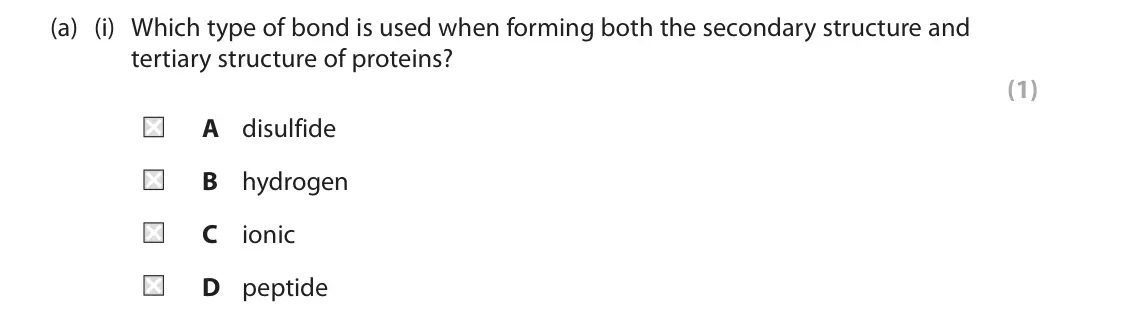
Q4(a)(iii)
The whole paper ↗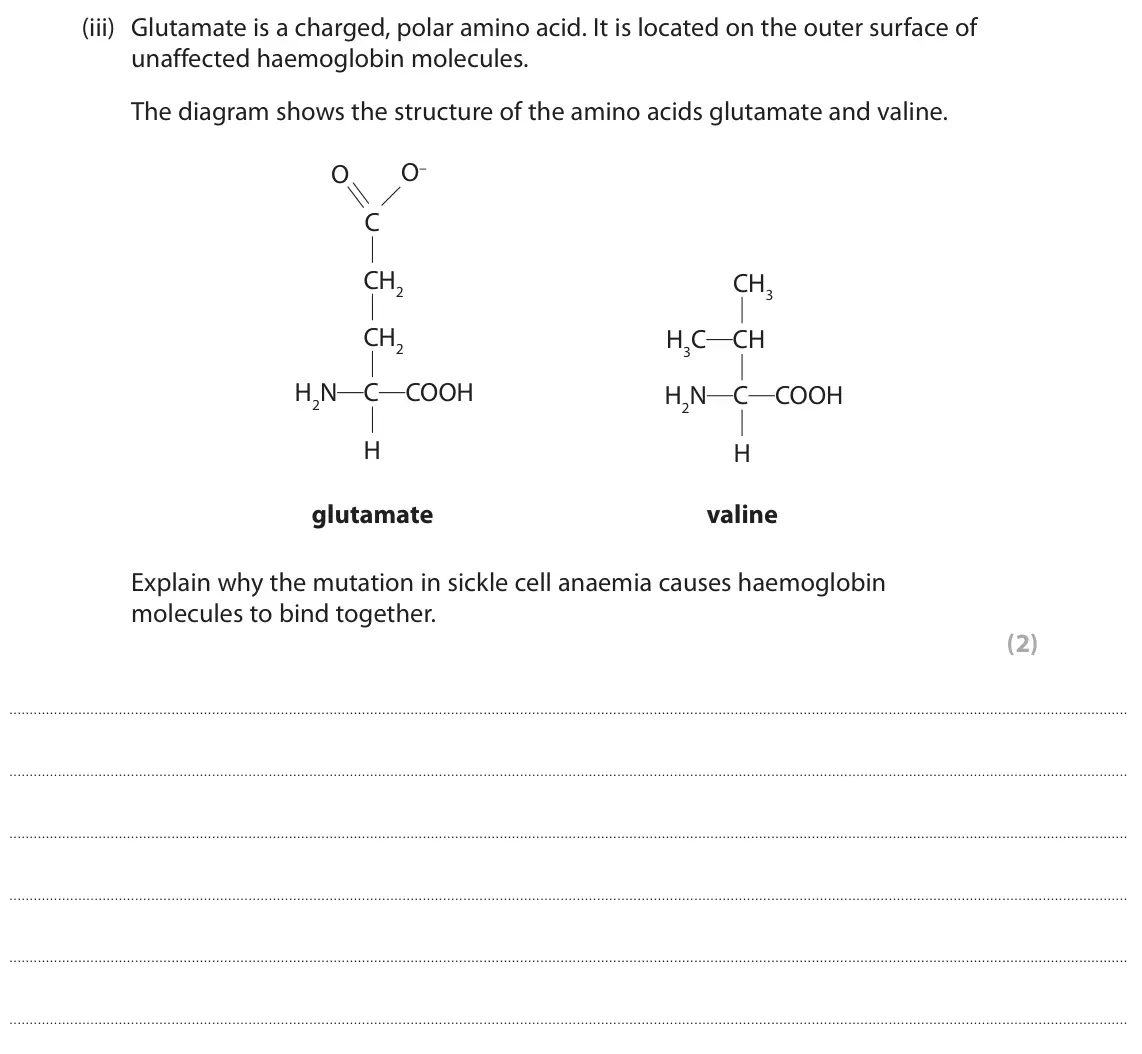
Q8(a)
The whole paper ↗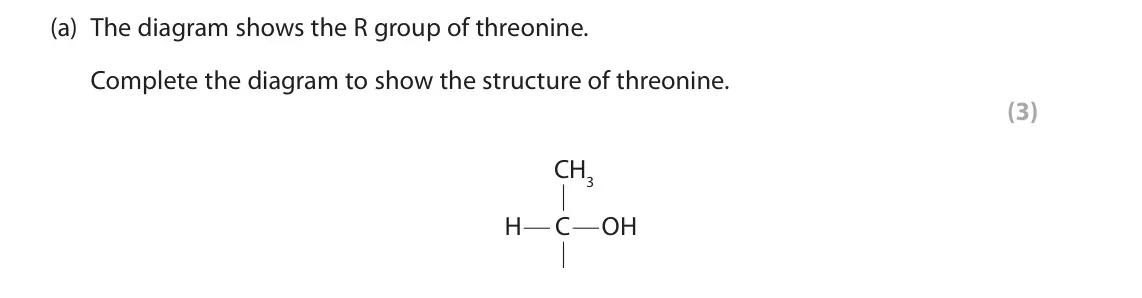
Q8(c)(i)
The whole paper ↗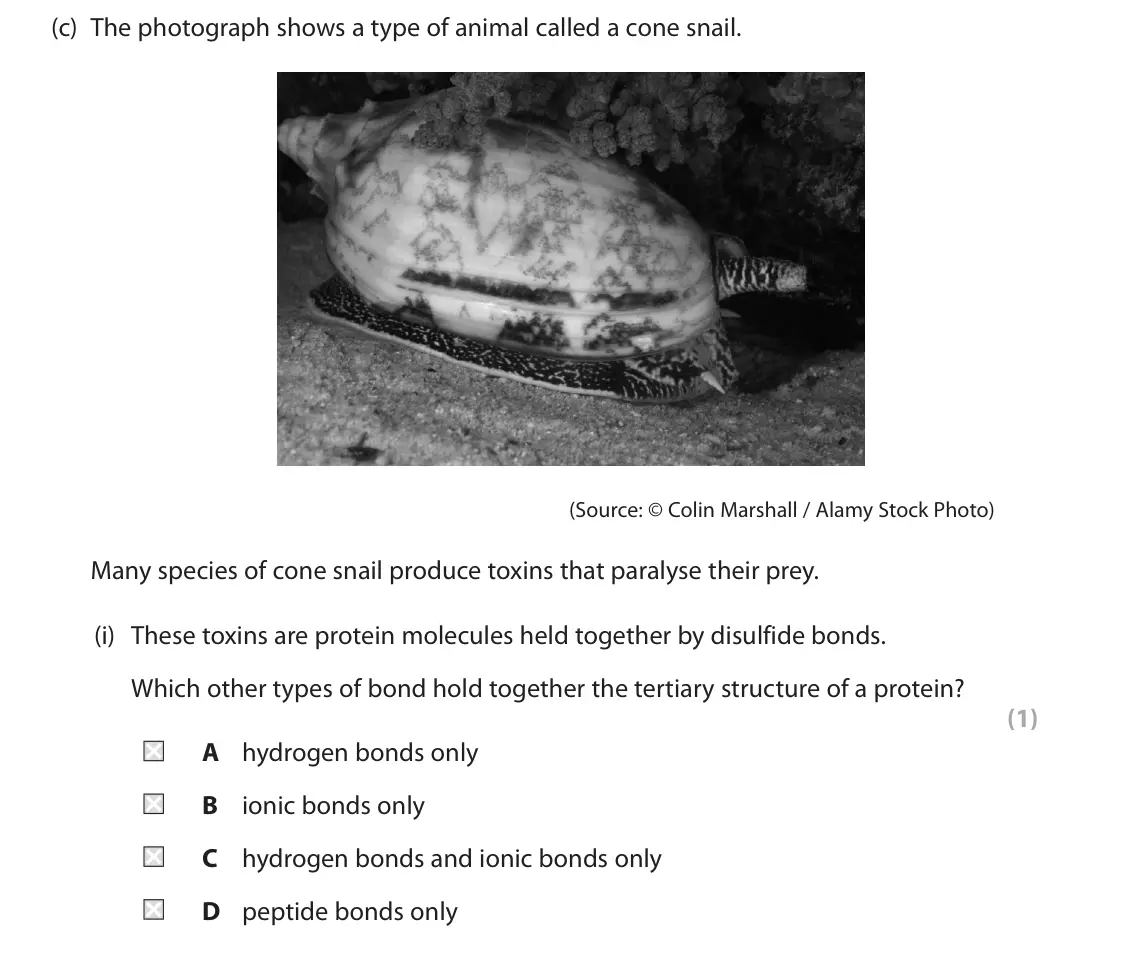
Q1(a)(ii)
The whole paper ↗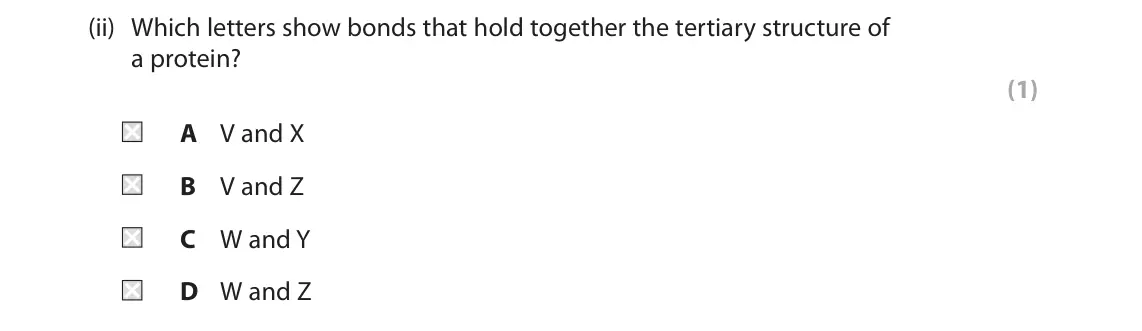
Q1(b)
The whole paper ↗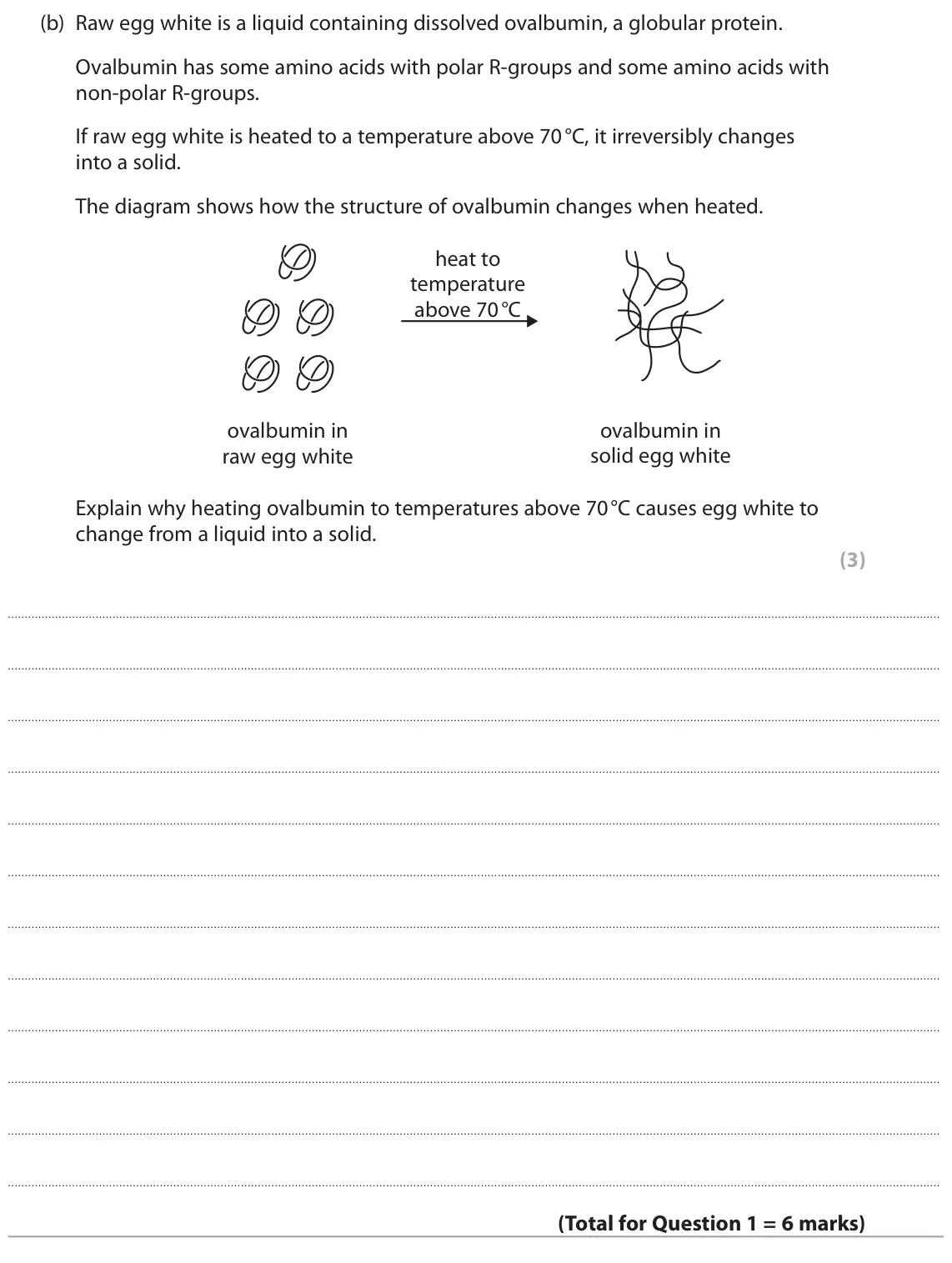
Q4(b)
The whole paper ↗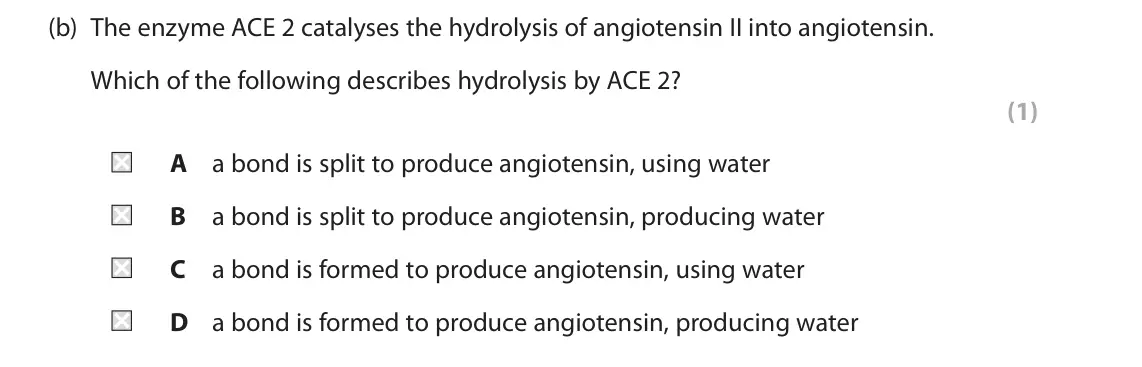
Q4(c)(i)
The whole paper ↗
Q7(a)(ii)
The whole paper ↗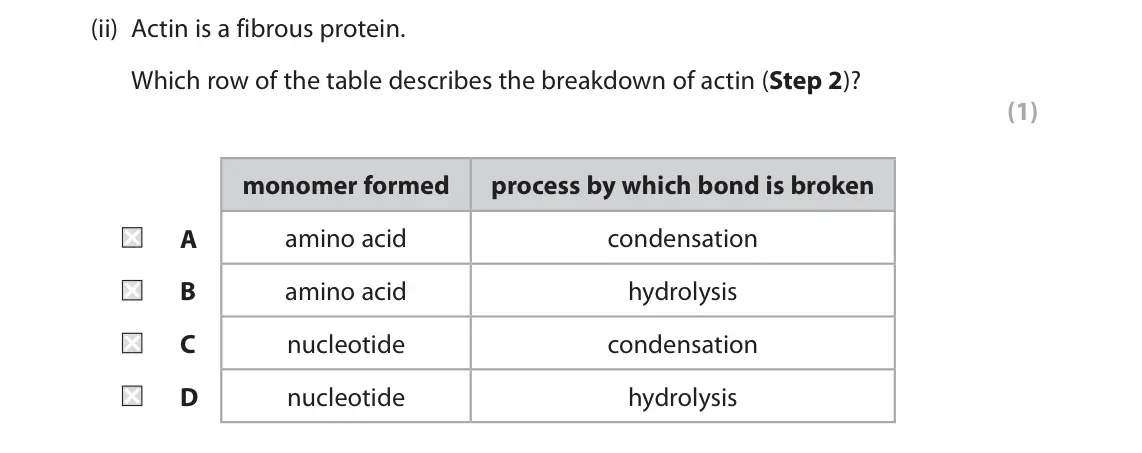
Q7(a)
The whole paper ↗
Q7(b)(i)
The whole paper ↗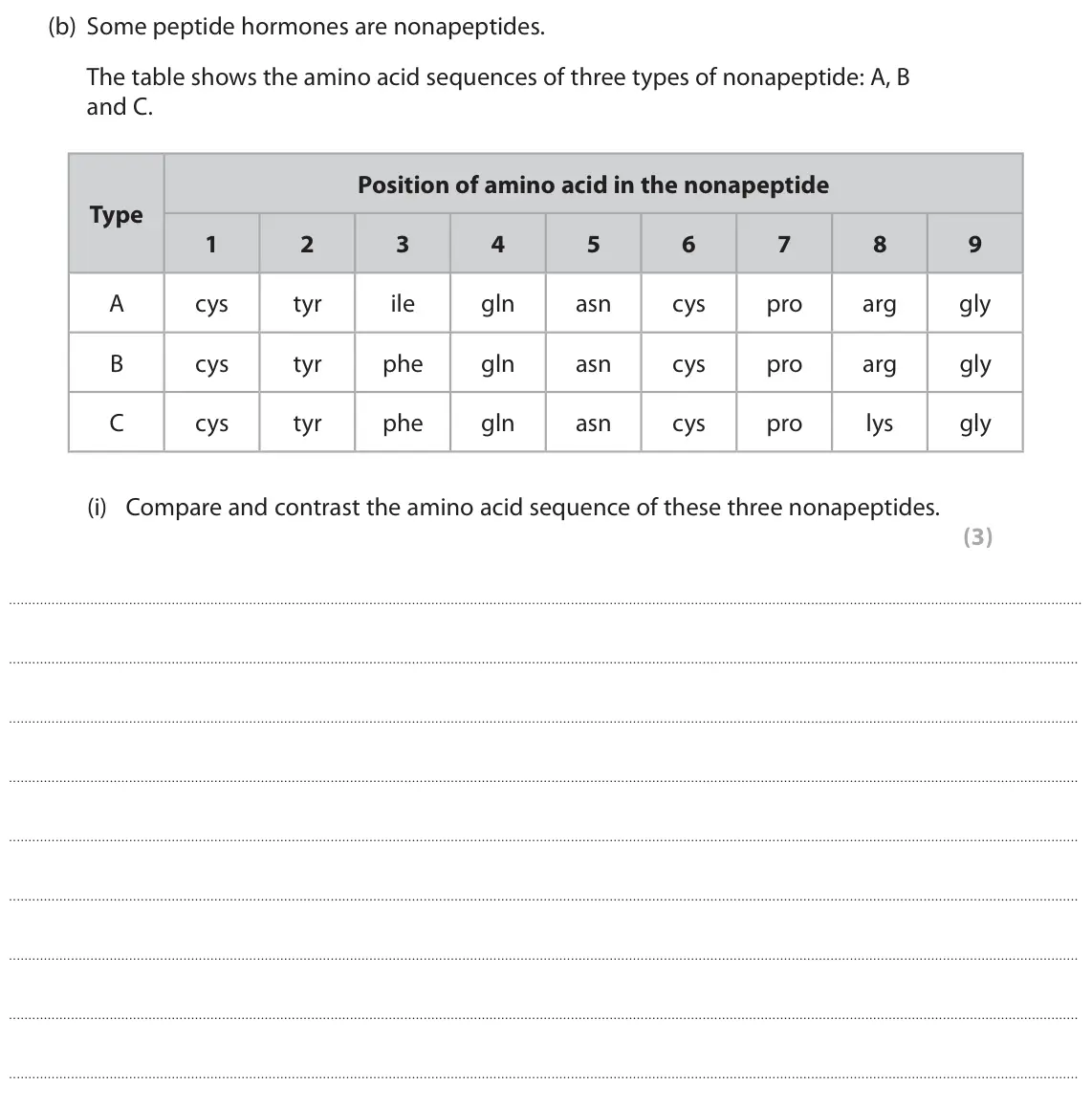
Q3(a)(i)
The whole paper ↗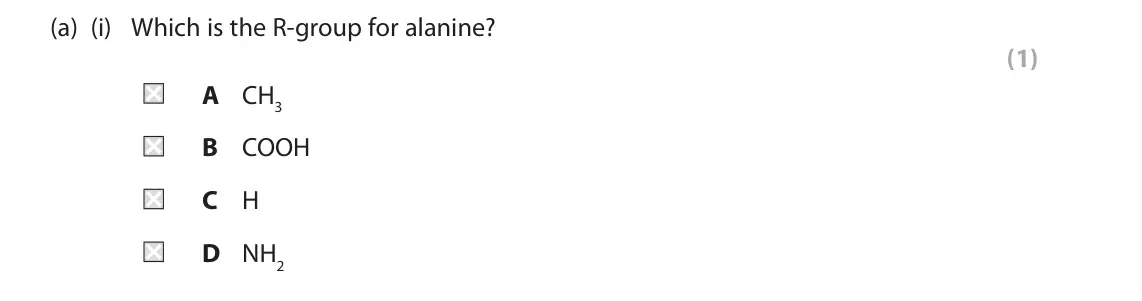
Q3(a)(ii)
The whole paper ↗
Q3(a)(iii)
The whole paper ↗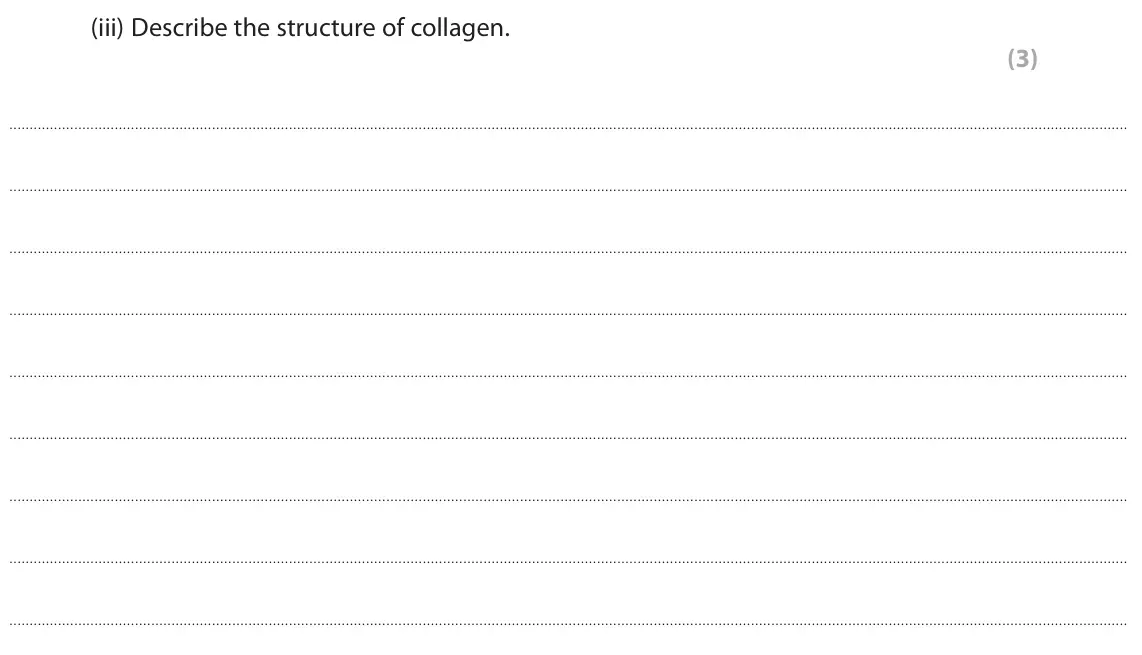
Q3(b)(i)
The whole paper ↗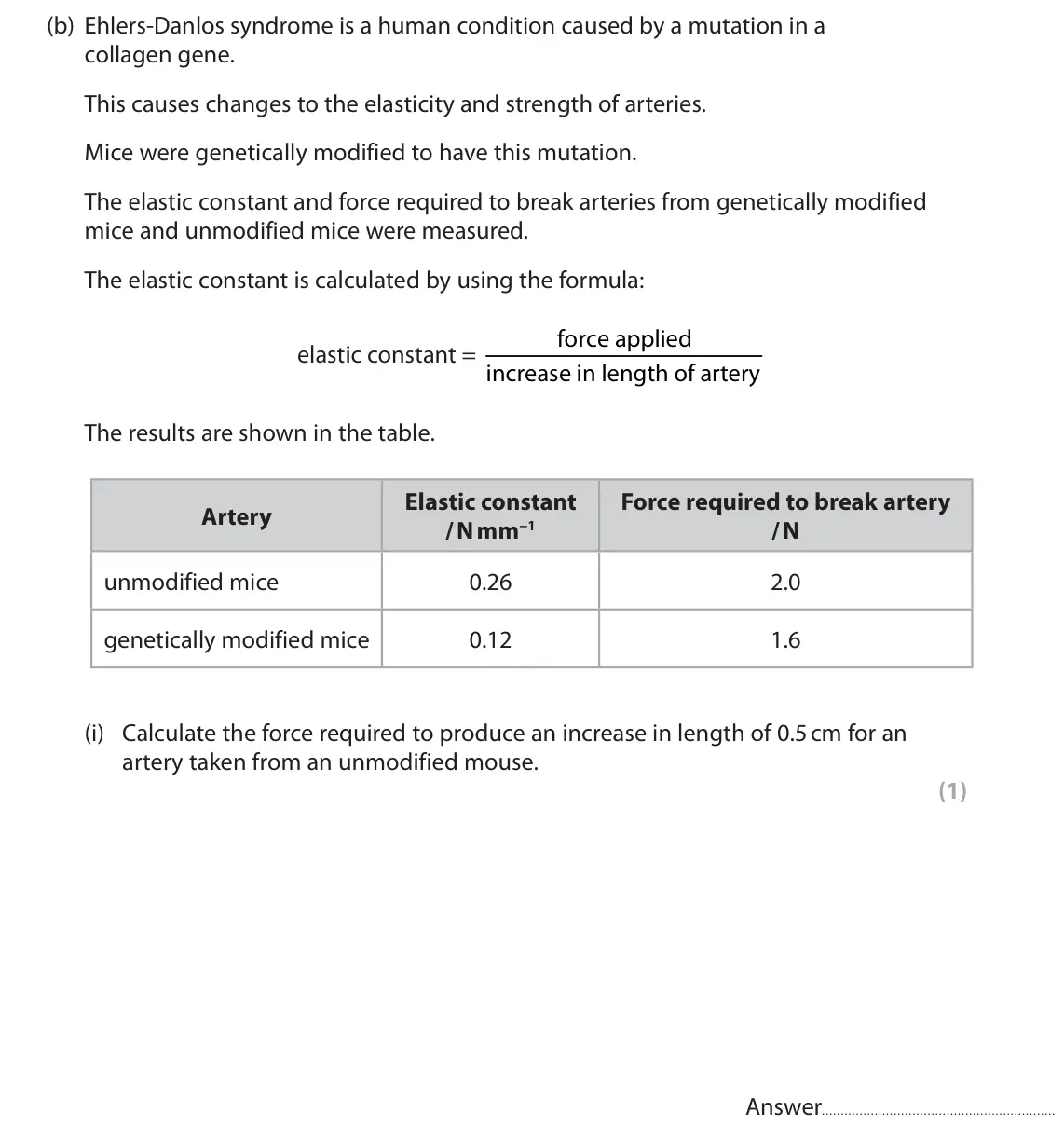
Q3(b)(ii)
The whole paper ↗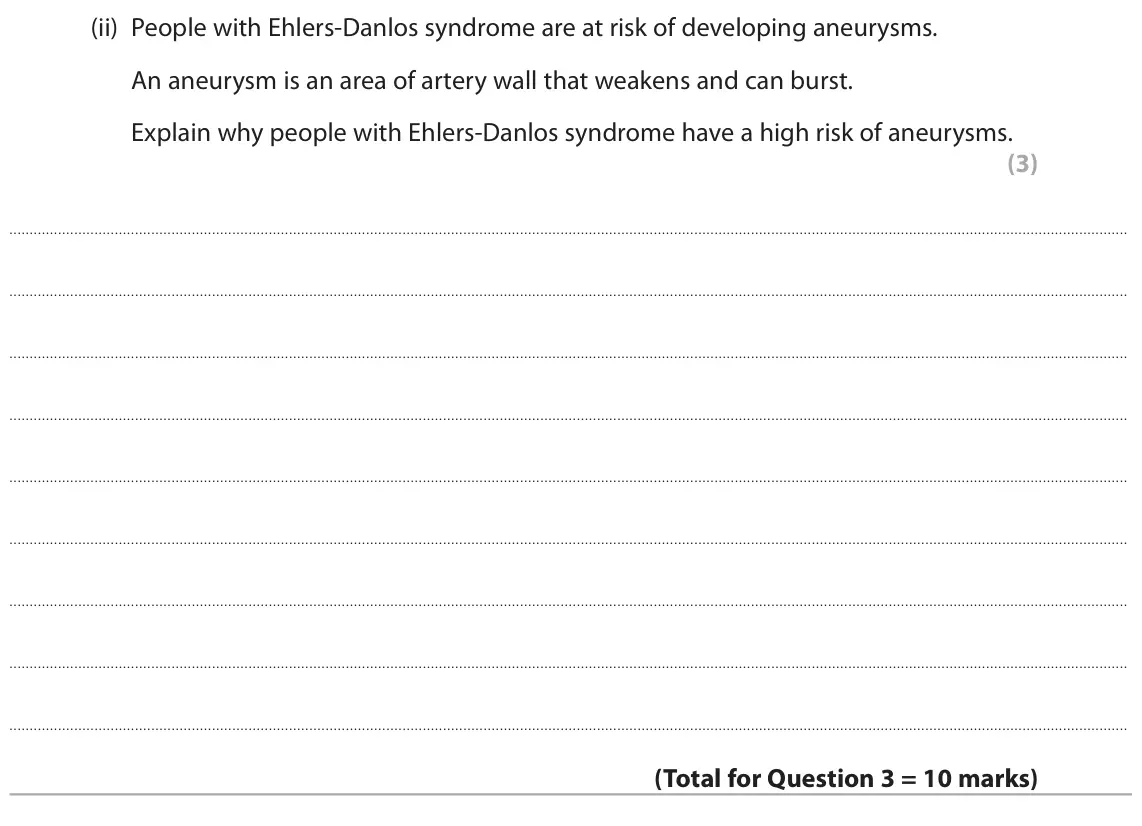
Q4(a)(i)
The whole paper ↗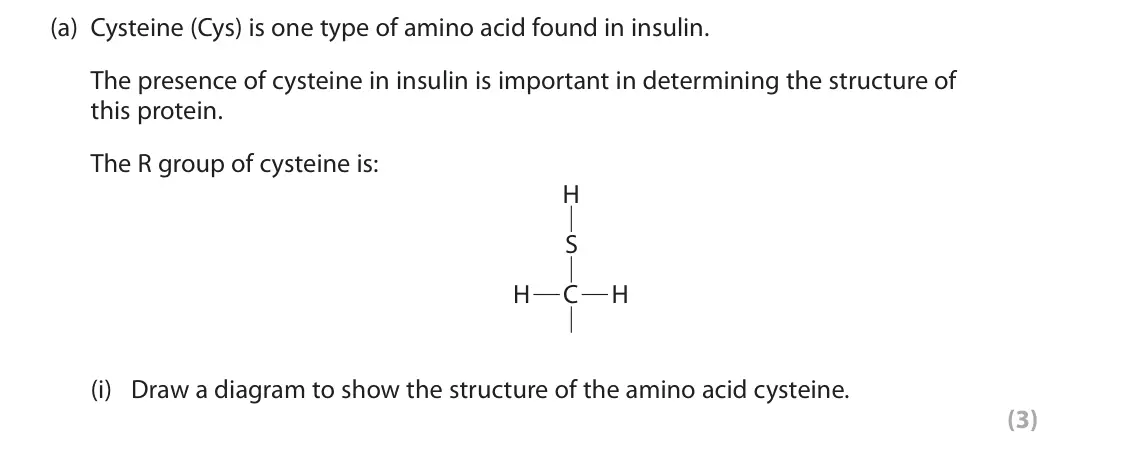
Q4(a)(ii)
The whole paper ↗
Q7(a)
The whole paper ↗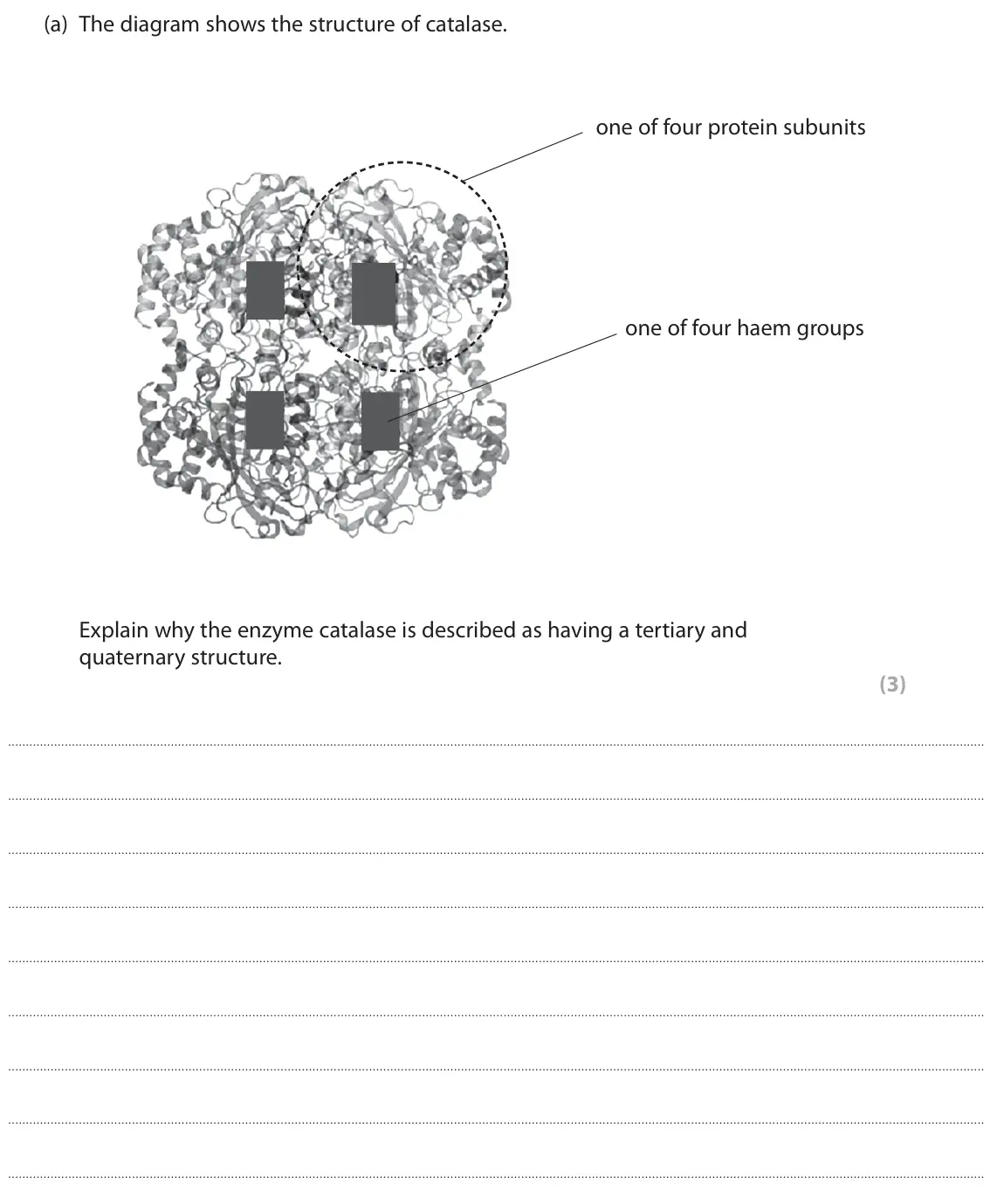
Q2(a)
The whole paper ↗
All 40 questions on Proteins, as a list
- June 2025, Paper 2, Q4(a)(i) (1 mark): Which type of bond is used when forming both the secondary structure and tertiary structure of proteins? (1) A disulfide B hydrogen C ionic D peptide
- June 2025, Paper 2, Q4(a)(iii) (2 marks): Glutamate is a charged, polar amino acid. It is located on the outer surface of unaffected haemoglobin molecules. The diagram shows the structure of the amino a
- June 2025, AS Paper 1, Q8(a) (3 marks): The diagram shows the R group of threonine. Complete the diagram to show the structure of threonine. (3) CH3 H C OH
- June 2024, Paper 2, Q8(c)(i) (1 mark): These toxins are protein molecules held together by disulfide bonds. Which other types of bond hold together the tertiary structure of a protein? (1) A hydrogen
- June 2023, Paper 2, Q1(a)(ii) (1 mark): Which letters show bonds that hold together the tertiary structure of a protein? (1) A V and X B V and Z C W and Y D W and Z
- June 2023, Paper 2, Q1(b) (3 marks): Raw egg white is a liquid containing dissolved ovalbumin, a globular protein. Ovalbumin has some amino acids with polar R-groups and some amino acids with non‑p
- June 2023, AS Paper 1, Q4(b) (1 mark): The enzyme ACE 2 catalyses the hydrolysis of angiotensin II into angiotensin. Which of the following describes hydrolysis by ACE 2? (1) A a bond is split to pro
- June 2023, AS Paper 1, Q4(c)(i) (3 marks): Compare and contrast the structure of polysaccharides with the primary structure of proteins. (3)
- June 2022, Paper 1, Q7(a)(ii) (1 mark): Actin is a fibrous protein. Which row of the table describes the breakdown of actin (Step 2)? (1) monomer formed process by which bond is broken A amino acid co
- June 2022, AS Paper 1, Q7(a) (4 marks): Explain how the primary structure of a peptide hormone determines its properties. (4)
- June 2022, AS Paper 1, Q7(b)(i) (3 marks): Compare and contrast the amino acid sequence of these three nonapeptides. (3)
- November 2021, Paper 2, Q3(a)(i) (1 mark): Which is the R-group for alanine? (1) A CH3 B COOH C H D NH2
- November 2021, Paper 2, Q3(a)(ii) (2 marks): Draw the products of a condensation reaction between glycine and alanine. (2)
- November 2021, Paper 2, Q3(a)(iii) (3 marks): Describe the structure of collagen. (3)
- November 2021, Paper 2, Q3(b)(i) (1 mark): Calculate the force required to produce an increase in length of 0.5 cm for an artery taken from an unmodified mouse. (1) Answer
- November 2021, Paper 2, Q3(b)(ii) (3 marks): People with Ehlers-Danlos syndrome are at risk of developing aneurysms. An aneurysm is an area of artery wall that weakens and can burst. Explain why people wit
- November 2021, AS Paper 1, Q4(a)(i) (3 marks): Draw a diagram to show the structure of the amino acid cysteine. (3)
- November 2021, AS Paper 1, Q4(a)(ii) (1 mark): Name the covalent bond labelled C in the diagram. (1)
- November 2021, AS Paper 1, Q7(a) (3 marks): The diagram shows the structure of catalase. one of four protein subunits one of four haem groups Explain why the enzyme catalase is described as having a terti
- October 2020, Paper 3, Q2(a) (3 marks): Describe the tertiary structure of a globular protein. (3)
- June 2019, Paper 1, Q9(b)(i) (6 marks): Analyse the information to determine the effect of Dox on the concentration of these types of amino acid in cardiac muscle. (6)
- June 2019, Paper 1, Q9(b)(ii) (2 marks): Explain why a change in the concentration of amino acids results in the weakening of cardiac muscle. (2)
- June 2019, Paper 2, Q1(b)(i) (1 mark): Which of the following shows the type of bonding involved in both the secondary and tertiary structures of a protein? (1) A hydrogen only B hydrogen and ionic C
- June 2019, AS Paper 1, Q3(a)(i) (1 mark): Which chemical group is found at position X? (1) A amino B carboxyl C hydroxyl D nitrate
- June 2019, AS Paper 1, Q3(a)(ii) (2 marks): Give the meaning of the term tertiary structure of a protein. (2)
- June 2019, AS Paper 1, Q8(a)(i) (2 marks): Describe the differences between a fibrous protein and an individual tubulin molecule. (2)
- June 2019, AS Paper 1, Q8(a)(ii) (2 marks): A microtubule is 40 µm in length. Calculate how many times longer this microtubule is than a single tubulin molecule. (2) Answer
- June 2019, AS Paper 1, Q8(b)(ii) (4 marks): Explain why the centriole fragments and tubulin were each in a buffer solution at 35 °C before being used in these experiments. (4)
- June 2018, Paper 1, Q4(a) (2 marks): Describe the structure of a globular protein. (2)
- June 2018, AS Paper 1, Q3(a) (3 marks): Explain why this protein is soluble in water. (3)
- June 2018, AS Paper 1, Q5(b)(i) (2 marks): Describe what is meant by the secondary structure of a protein. (2)
- June 2018, AS Paper 1, Q6(b) (3 marks): The secreted proteins are made from amino acids. Two amino acids join together to form a dipeptide. Draw a diagram to show the structure of a dipeptide. (3)
- June 2017, Paper 2, Q9(b)(i) (1 mark): Which of the following bonds are used to form the tertiary structure of enzymes? (1) A hydrogen, glycosidic and ester B hydrogen, ionic and disulfide C ionic, g
- June 2017, Paper 3, Q6(d) (2 marks): During the replication of the Zika virus, the ten proteins that are coded for in the RNA are produced as a single polyprotein molecule. Explain how this polypro
- June 2017, AS Paper 1, Q7(a)(i) (2 marks): Explain the significance of repeating sequences of amino acids in the formation of tropocollagen. (2)
- June 2017, AS Paper 1, Q7(a)(ii) (1 mark): Which of the following bonds holds the 3 polypeptide chains together in the tropocollagen? (1) A ester B glycosidic C hydrogen D peptide
- June 2017, AS Paper 1, Q7(b)(i) (2 marks): Analyse the data to explain the importance of hydroxyproline in the structure of collagen. (2)
- June 2017, AS Paper 1, Q7(b)(ii) (4 marks): The table shows information about the skin collagen of three animals and the body temperature of each animal. Percentage of proline Body Animal and hydroxyproli
- June 2017, AS Paper 1, Q8(a) (3 marks): The table shows information about these types of haemoglobin. Percentage Types of Type of present in the polypeptide chain haemoglobin blood (%) present 2α and
- June 2016, AS Paper 1, Q7(b)(iii) (2 marks): Cytochalasin B prevents the addition of monomers in the synthesis of the protein actin. Describe how monomers are bonded to a polypeptide chain during the synth
Questions, mark schemes and examiner’s reports are © Pearson Edexcel, from their published past papers. Plumi isn’t affiliated with any exam board. Want whole papers? Every Edexcel A-Level Biology B paper.
Rather write your answers by hand on iPad? Plumi marks them against the same mark schemes.