 plumi
Carbohydrates: Edexcel A‑Level Biology B questions
Every Edexcel A-Level Biology B exam question on 1.1 Carbohydrates, 2016–2025, with its mark scheme and examiner’s report.
Find questions1,826
Calculations
Q7(a)(i)
The whole paper ↗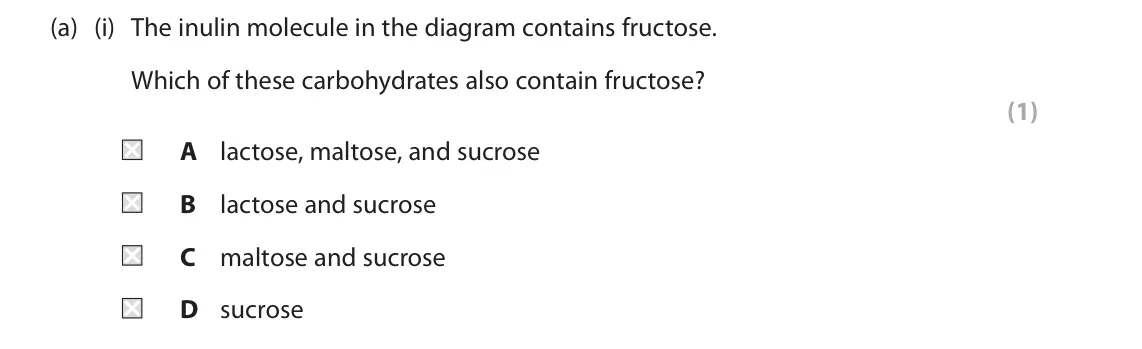
Q7(a)(ii)
The whole paper ↗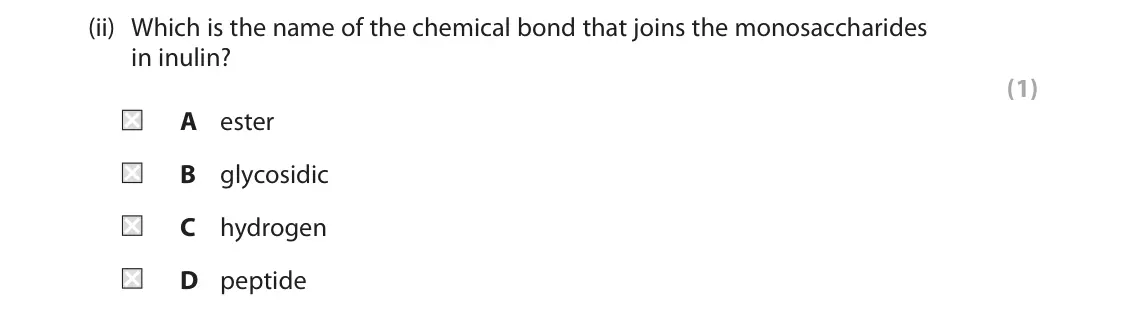
Q7(a)(iii)
The whole paper ↗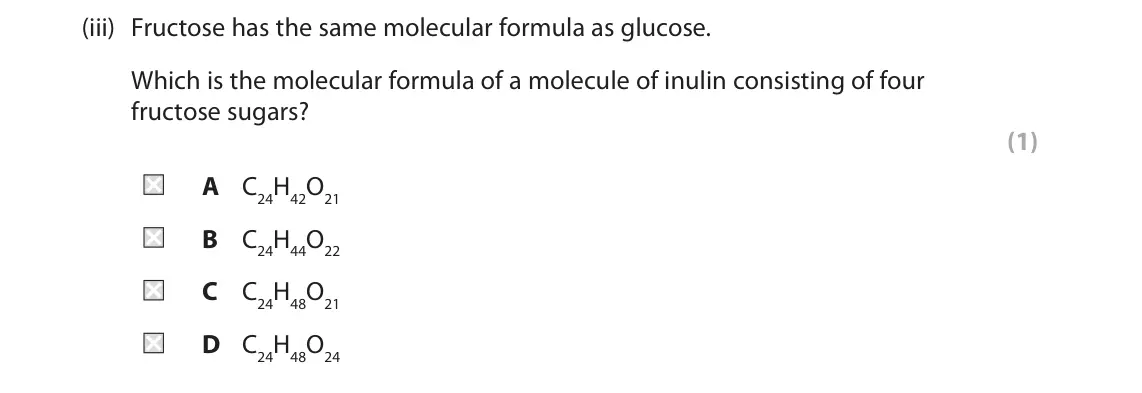
Q1(a)
The whole paper ↗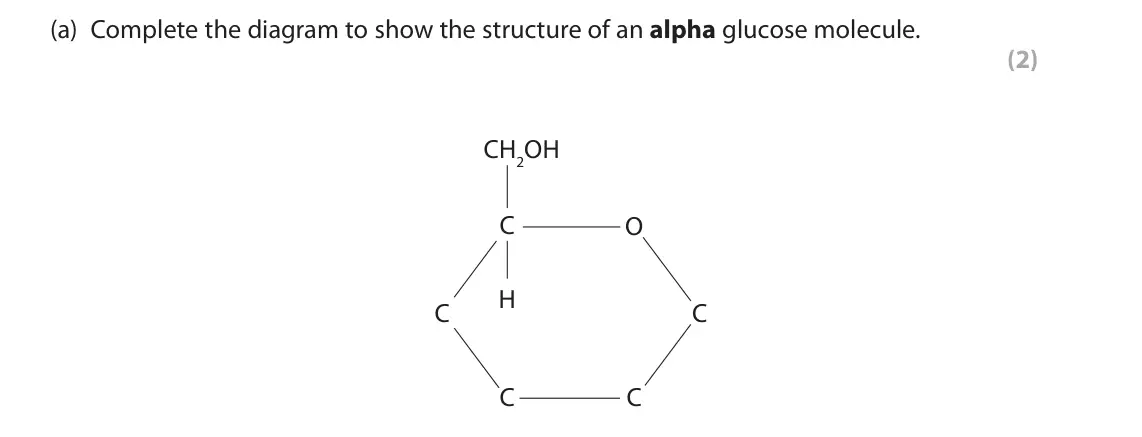
Q1(b)
The whole paper ↗
Q1(c)
The whole paper ↗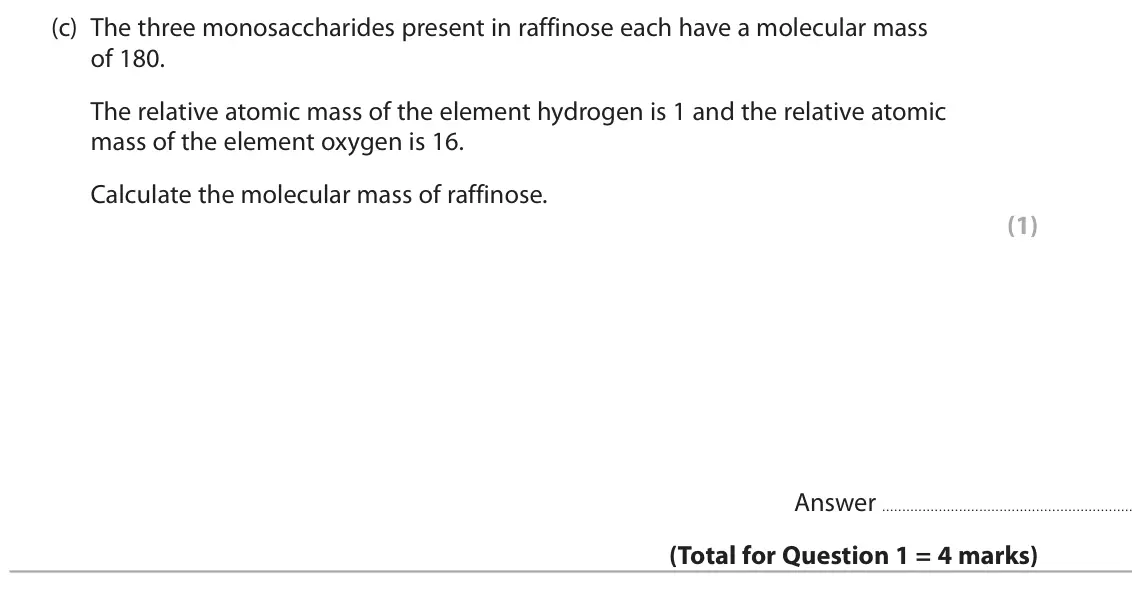
Q2(a)
The whole paper ↗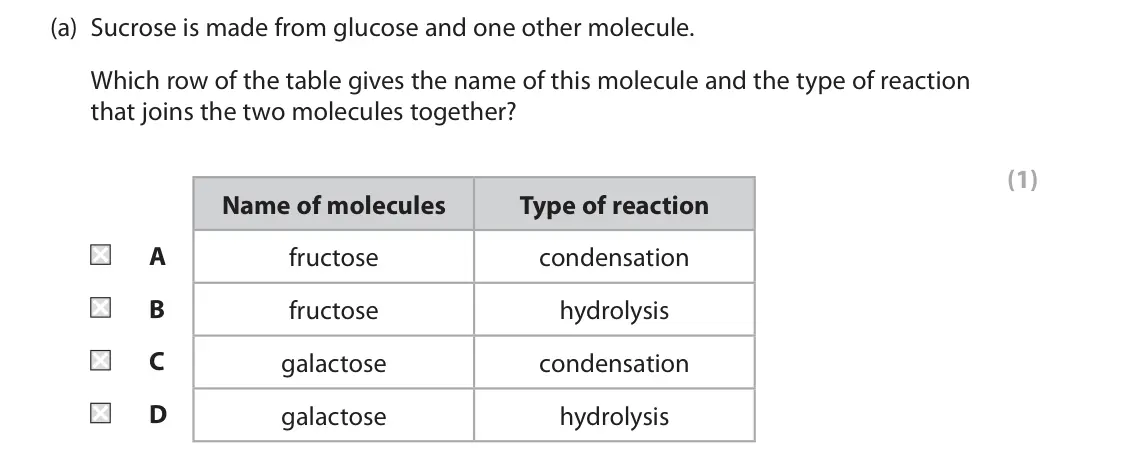
Q2(b)
The whole paper ↗
Q10(a)(iii)
The whole paper ↗
Q8(a)
The whole paper ↗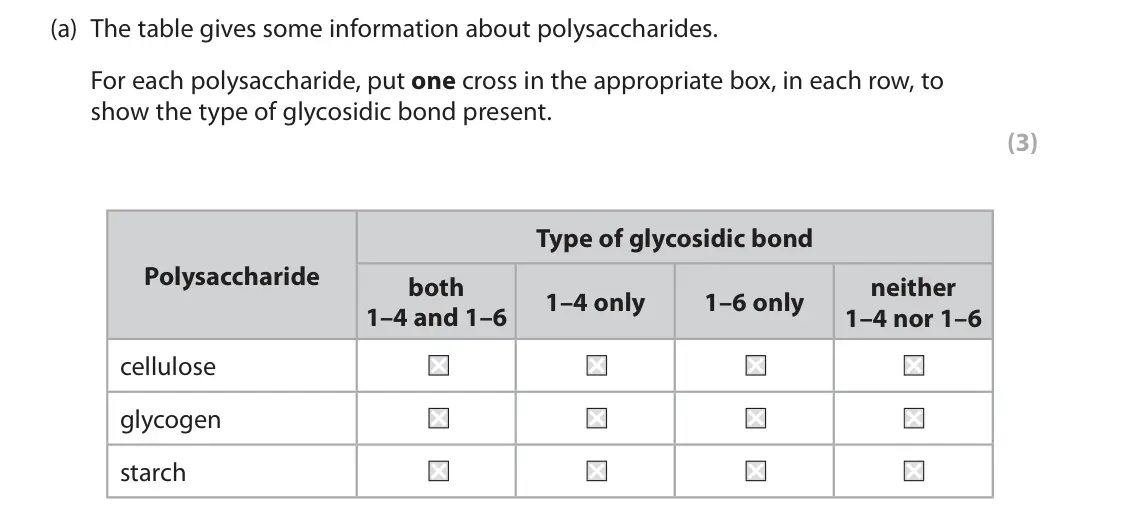
Q8(b)(i)
The whole paper ↗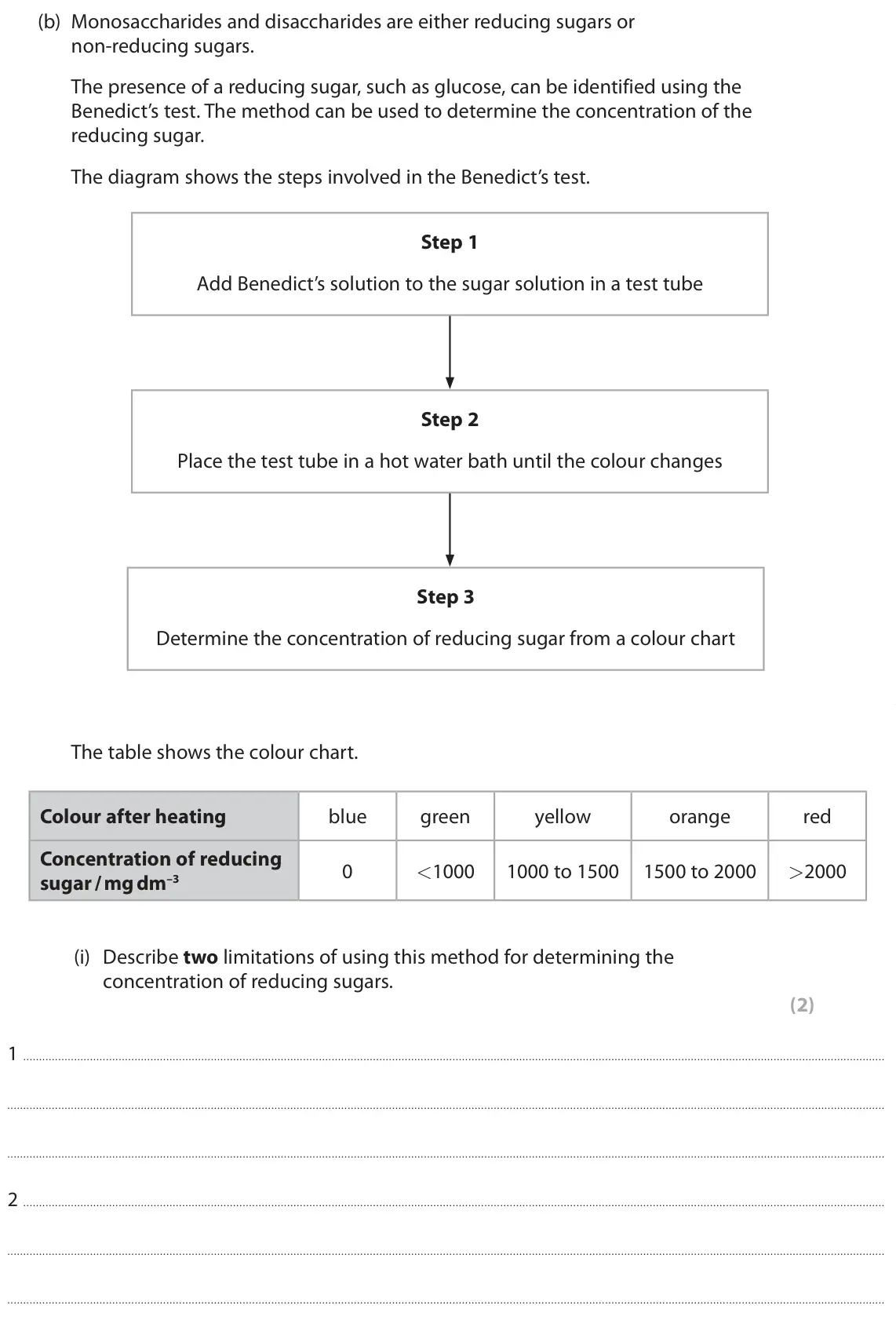
Q8(b)(ii)
The whole paper ↗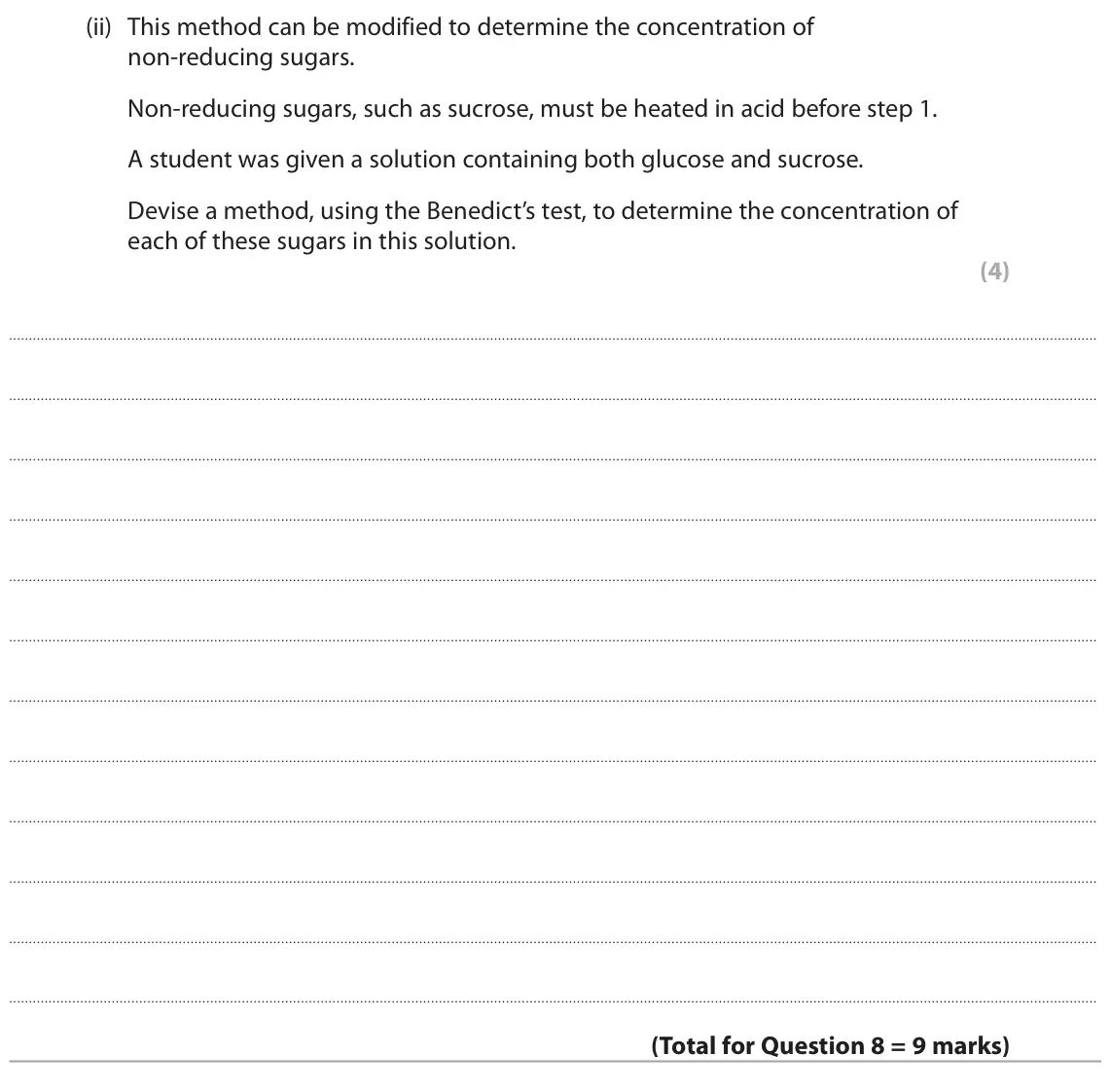
Q3(c)(i)
The whole paper ↗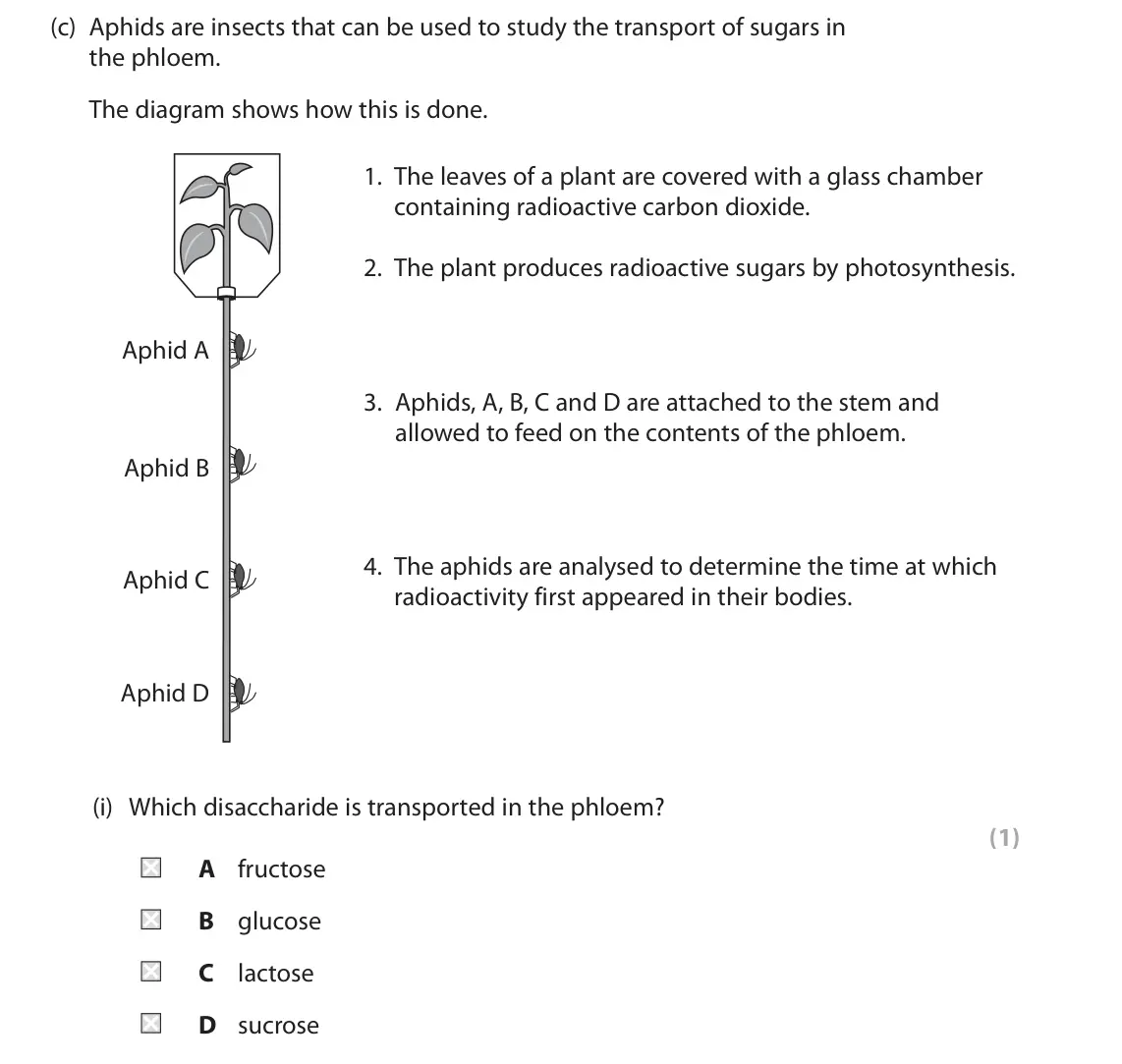
Q1(a)(i)
The whole paper ↗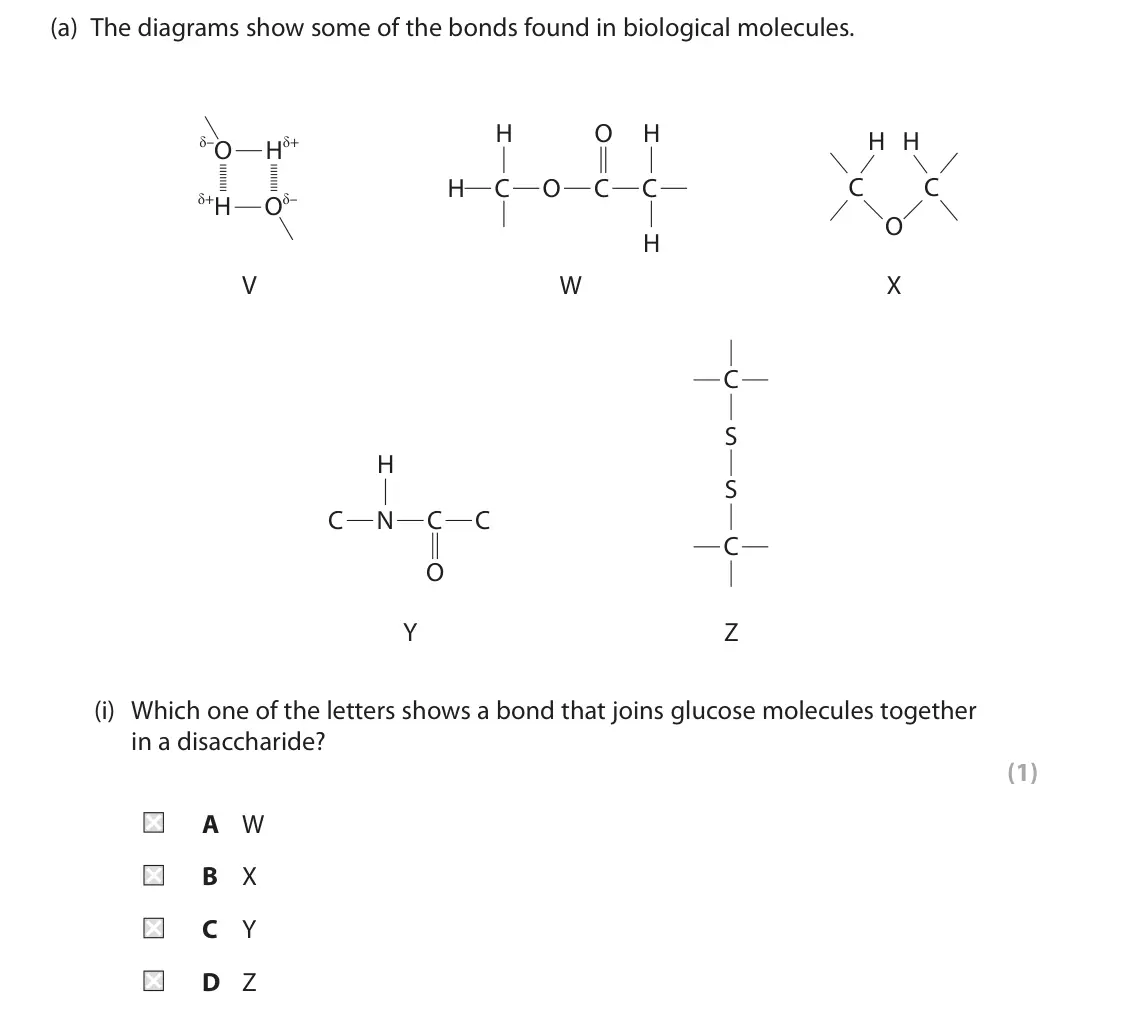
Q1(a)(iii)
The whole paper ↗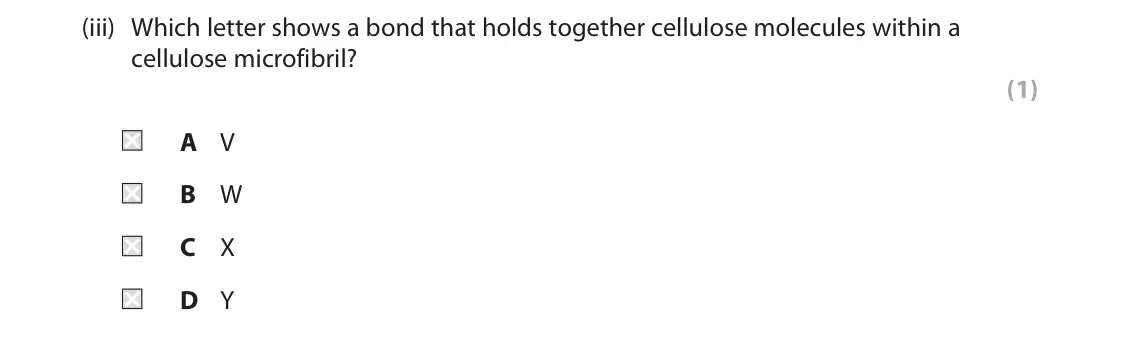
Q1(a)
The whole paper ↗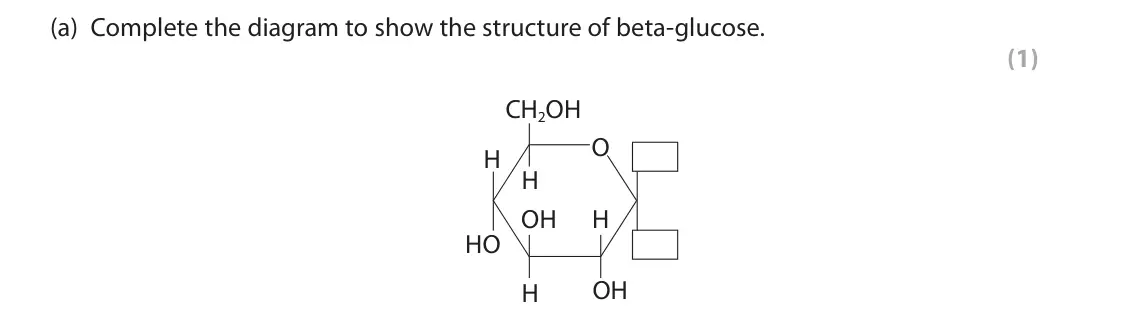
Q1(b)
The whole paper ↗
Q1(c)
The whole paper ↗
Q3(a)
The whole paper ↗
Q4(c)(i)
The whole paper ↗
All 53 questions on Carbohydrates, as a list
- June 2025, Paper 2, Q7(a)(i) (1 mark): The inulin molecule in the diagram contains fructose. Which of these carbohydrates also contain fructose? (1) A lactose, maltose, and sucrose B lactose and sucr
- June 2025, Paper 2, Q7(a)(ii) (1 mark): Which is the name of the chemical bond that joins the monosaccharides in inulin? (1) A ester B glycosidic C hydrogen D peptide
- June 2025, Paper 2, Q7(a)(iii) (1 mark): Fructose has the same molecular formula as glucose. Which is the molecular formula of a molecule of inulin consisting of four fructose sugars? (1) A C24H42O21 B
- June 2025, AS Paper 1, Q1(a) (2 marks): Complete the diagram to show the structure of an alpha glucose molecule. (2) CH2OH C O H C C C C
- June 2025, AS Paper 1, Q1(b) (1 mark): Name the bond that joins monosaccharides together. (1)
- June 2025, AS Paper 1, Q1(c) (1 mark): The three monosaccharides present in raffinose each have a molecular mass of 180. The relative atomic mass of the element hydrogen is 1 and the relative atomic
- June 2024, Paper 1, Q2(a) (1 mark): Sucrose is made from glucose and one other molecule. Which row of the table gives the name of this molecule and the type of reaction that joins the two molecule
- June 2024, Paper 1, Q2(b) (3 marks): Compare and contrast the structure of amylose and amylopectin. (3)
- June 2024, Paper 3, Q10(a)(iii) (3 marks): Explain the effect of lactase on the respiration rate of yeast during the first 400 minutes. (3)
- June 2024, AS Paper 1, Q8(a) (3 marks): The table gives some information about polysaccharides. For each polysaccharide, put one cross in the appropriate box, in each row, to show the type of glycosid
- June 2024, AS Paper 1, Q8(b)(i) (2 marks): Describe two limitations of using this method for determining the concentration of reducing sugars. (2) 1 2
- June 2024, AS Paper 1, Q8(b)(ii) (4 marks): This method can be modified to determine the concentration of non‑reducing sugars. Non-reducing sugars, such as sucrose, must be heated in acid before step 1. A
- June 2023, Paper 1, Q3(c)(i) (1 mark): Which disaccharide is transported in the phloem? (1) A fructose B glucose C lactose D sucrose
- June 2023, Paper 2, Q1(a)(i) (1 mark): Which one of the letters shows a bond that joins glucose molecules together in a disaccharide? (1) A W B X C Y D Z
- June 2023, Paper 2, Q1(a)(iii) (1 mark): Which letter shows a bond that holds together cellulose molecules within a cellulose microfibril? (1) A V B W C X D Y
- June 2023, Paper 3, Q1(a) (1 mark): Complete the diagram to show the structure of beta‑glucose. (1) CH2OH O H H OH H HO OH H
- June 2023, Paper 3, Q1(b) (3 marks): Glucose molecules can be joined to form the polysaccharides starch and cellulose. Give three differences between the structures of starch and cellulose. (3)
- June 2023, Paper 3, Q1(c) (2 marks): Explain how the properties of starch make it suitable as an energy store in cells. (2)
- June 2023, AS Paper 1, Q3(a) (2 marks): Describe the structure of lactose. (2)
- June 2023, AS Paper 1, Q4(c)(i) (3 marks): Compare and contrast the structure of polysaccharides with the primary structure of proteins. (3)
- June 2022, Paper 2, Q9(a)(i) (1 mark): Which of the following is the name of the monomer labelled X on the diagram? (1) A α glucose B β glucose C α ribose D β ribose
- June 2022, Paper 2, Q9(a)(ii) (2 marks): Draw one of the products of the hydrolysis of this part of the cellulose molecule. (2)
- June 2022, Paper 2, Q9(a)(iii) (3 marks): Explain how the structure of cellulose is adapted for its function in plant cell walls. (3)
- June 2022, AS Paper 1, Q8(a)(i) (1 mark): Which row of the table shows the sugars that are monosaccharides and the sugars that are disaccharides? (1) Monosaccharides Disaccharides A fructose and glucose
- June 2022, AS Paper 1, Q8(a)(ii) (1 mark): How are two monosaccharides joined together to form a disaccharide? (1) A by an ester bond formed during a condensation reaction B by an ester bond formed durin
- June 2022, AS Paper 1, Q8(b) (3 marks): The relative sweetness of a sugar solution can be determined by a taste test. Devise an investigation, that a student could do, to confirm the relative sweetnes
- June 2022, AS Paper 1, Q8(c)(i) (1 mark): Determine the ratio of the proportion of sugars in mangos. (1) Answer
- June 2022, AS Paper 1, Q8(c)(ii) (6 marks): Analyse the data to discuss the relationship between the sugar content, the relative sweetness and the energy content of these fruits. (6)
- November 2021, Paper 1, Q2(a)(i) (1 mark): Give one difference between the structure of glucose and the structure of maltose. (1)
- October 2020, Paper 1, Q7(a) (3 marks): The table shows bonds that may be found in carbohydrates and lipids. Which box in each row shows whether the bond may be found in these molecules? (3) Molecule
- October 2020, Paper 1, Q8(b)(i) (3 marks): Compare and contrast the structure of fructose with the structure of glucose. (3)
- October 2020, Paper 1, Q8(b)(ii) (3 marks): Explain the advantages of the presence of fructose in seminal fluid. (3)
- October 2020, AS Paper 1, Q4(a) (3 marks): The diagram represents the structure of a maltose molecule. 6CH2OH 6CH2OH H H H OH O O 5 5 H H 4 1 4 1 OH H OH H O 3 2 3 2 HO H H OH H OH Draw a diagram to show
- June 2019, Paper 1, Q2(a) (1 mark): Which row of the table identifies these sugars? (1) Glucose Sucrose A monosaccharide monosaccharide B monosaccharide disaccharide disaccharide disaccharide C di
- June 2019, Paper 2, Q7(a)(i) (1 mark): Which of the following describes this breakdown? (1) A condensation reaction breaking glycosidic bonds B condensation reaction breaking phosphodiester bonds C h
- June 2019, Paper 2, Q7(a)(ii) (1 mark): Which diagram shows the structure of the glucose produced? (1) A C CH2OH O CH2OH OH O H H H H H OH H H H HO OH OH OH H OH B D CH2OH O CH2OH OH O H OH H H H OH H
- June 2019, Paper 2, Q7(a)(iii) (3 marks): Explain how the structure of glycogen is related to its function. (3)
- June 2018, Paper 2, Q2(a)(i) (1 mark): Which type of reaction does sucrase catalyse? (1) A condensation B hydrolysis C phosphorylation D translocation
- June 2018, Paper 2, Q2(a)(ii) (1 mark): Name the monosaccharides produced from the breakdown of sucrose. (1)
- June 2018, Paper 2, Q2(a)(iii) (1 mark): The diagram shows one of these monosaccharides. Draw the structure of the other monosaccharide. (1) CH2OH O H H H OH H OH OH OH H
- June 2018, Paper 2, Q2(b) (1 mark): The enzyme amylase breaks down the polysaccharide amylose into maltose. How many of these statements are true for amylose? (1) • It contains 1,6 glycosidic bond
- June 2018, Paper 3, Q3(a) (1 mark): Complete the diagram to show the structure of alpha glucose. (1) CH2OH O H H OH HO H
- June 2018, Paper 3, Q3(b)(i) (2 marks): Explain a possible health benefit of converting glucose into fructose for use in sweet tasting drinks. (2)
- June 2018, AS Paper 1, Q7(a) (1 mark): Identify the row that shows the correct results after heating three carbohydrates, maltose, amylose and fructose, with Benedict’s reagent. (1) maltose amylose f
- June 2018, AS Paper 1, Q7(b)(i) (4 marks): Analyse the data to explain the relationship between the glucose concentration and the mass of precipitate formed. (4)
- June 2018, AS Paper 1, Q7(b)(ii) (1 mark): When the investigation was repeated, the mean error for each measurement was calculated. The mean error for each measurement was 0.05 g. Calculate the percentag
- June 2018, AS Paper 1, Q7(b)(iii) (2 marks): Explain one way in which the mean error in measuring the mass of precipitate could be reduced. (2)
- June 2017, Paper 1, Q6(a)(ii) (3 marks): Digalactosyldiacylglycerol (DGDG) is synthesised from galactose and monogalactosyldiacylglycerol (MGDG). The galactose forms a 1,6 glycosidic bond with the MGDG
- June 2017, Paper 2, Q1(a)(i) (1 mark): Which of the following statements about cellulose molecules is correct? (1) A they are branched polymers B they contain α-glucose C they are bonded to each othe
- June 2017, AS Paper 1, Q4(a) (2 marks): Explain why glycogen releases energy more slowly than glucose. (2)
- June 2016, AS Paper 1, Q2(a)(i) (2 marks): Explain why the molecular mass of one glucose molecule is 180. (2)
- June 2016, AS Paper 1, Q2(a)(ii) (2 marks): Calculate the molecular mass of maltose. (2) Answer
- June 2016, AS Paper 1, Q2(b) (2 marks): Give two differences between the structure of a ribose molecule and the structure of a glucose molecule. (2)
Questions, mark schemes and examiner’s reports are © Pearson Edexcel, from their published past papers. Plumi isn’t affiliated with any exam board. Want whole papers? Every Edexcel A-Level Biology B paper.
Rather write your answers by hand on iPad? Plumi marks them against the same mark schemes.