 plumi
Thermochemistry: WJEC A‑Level Chemistry questions
Every WJEC A-Level Chemistry exam question on 2.1 Thermochemistry, 2016–2025, with its mark scheme and examiner’s report.
Find questions1,204
Calculations
Q9(a)
The whole paper ↗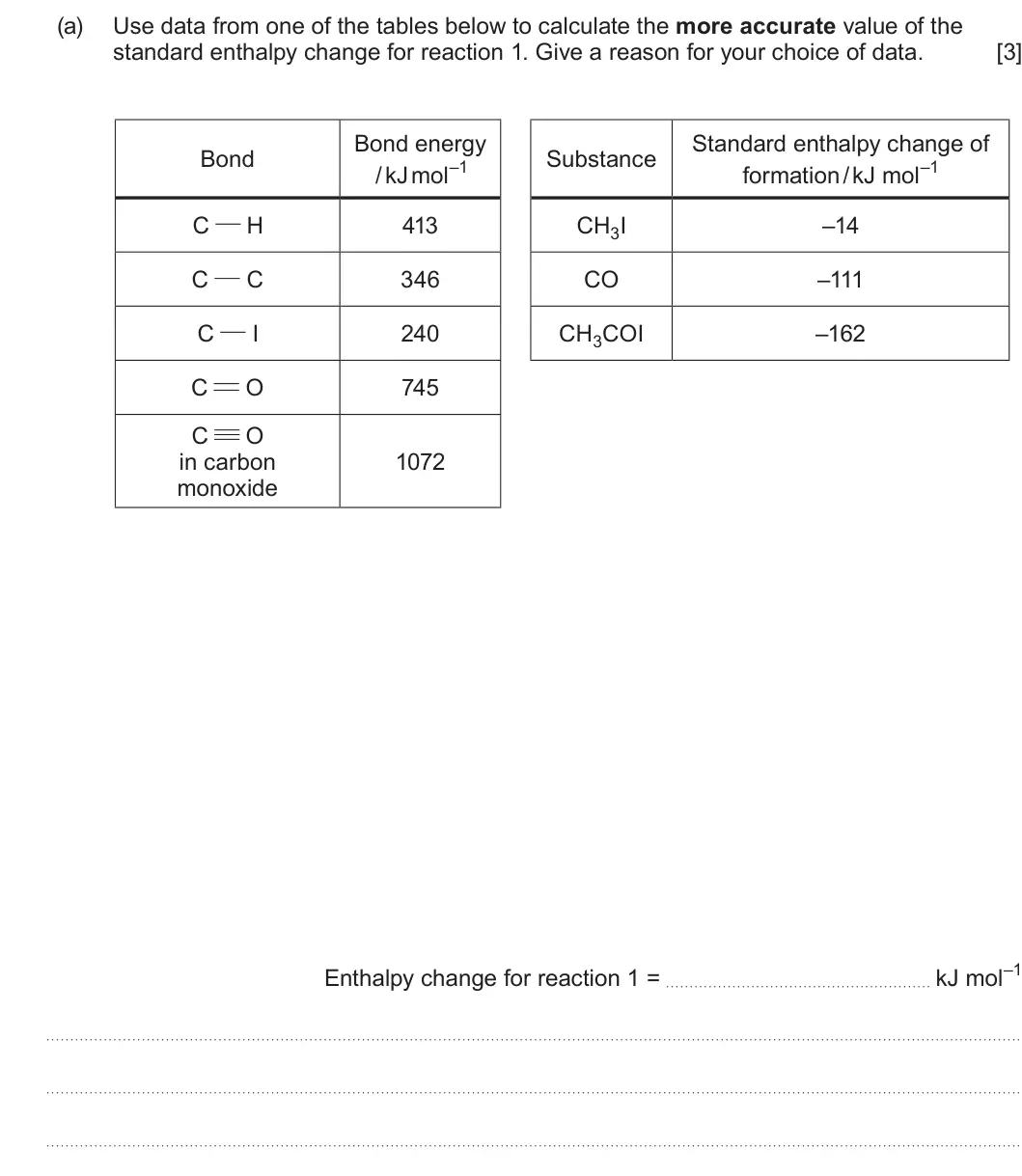
Q6(a)
The whole paper ↗
Q6(b)
The whole paper ↗
Q8(b)(i)
The whole paper ↗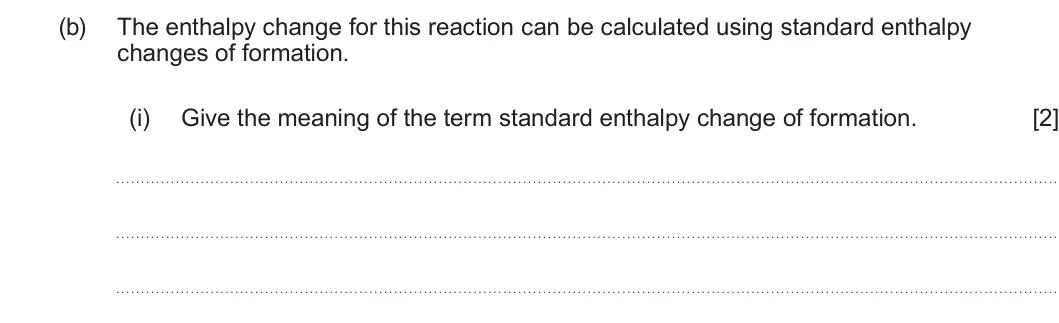
Q8(b)(ii)
The whole paper ↗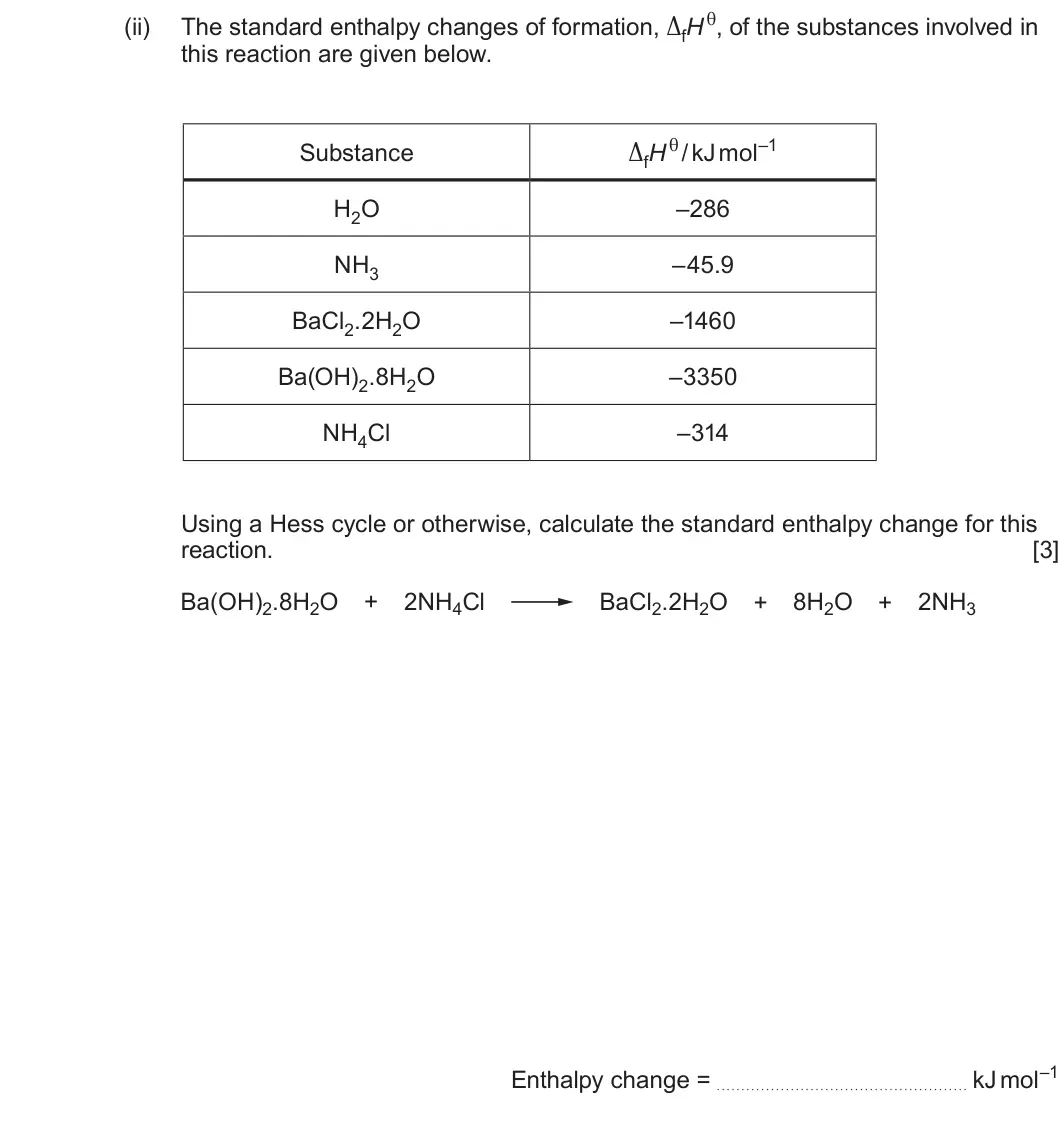
Q8(c)(i)
The whole paper ↗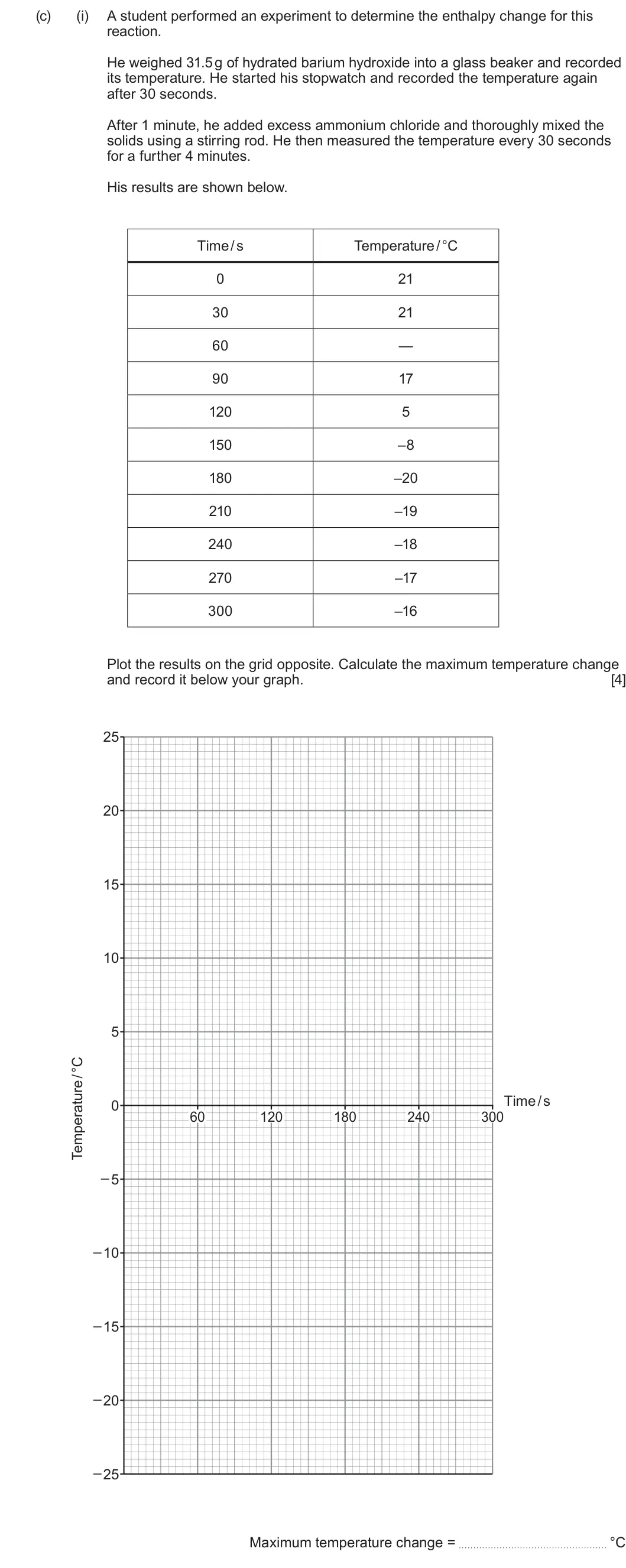
Q8(c)(ii)
The whole paper ↗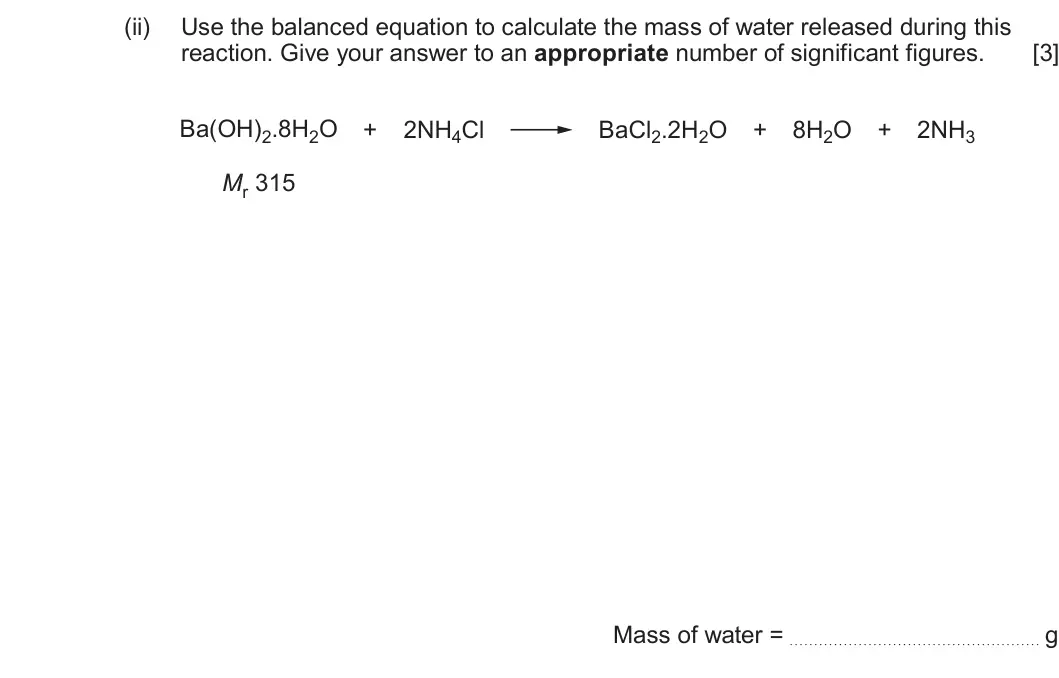
Q8(c)(iii)
The whole paper ↗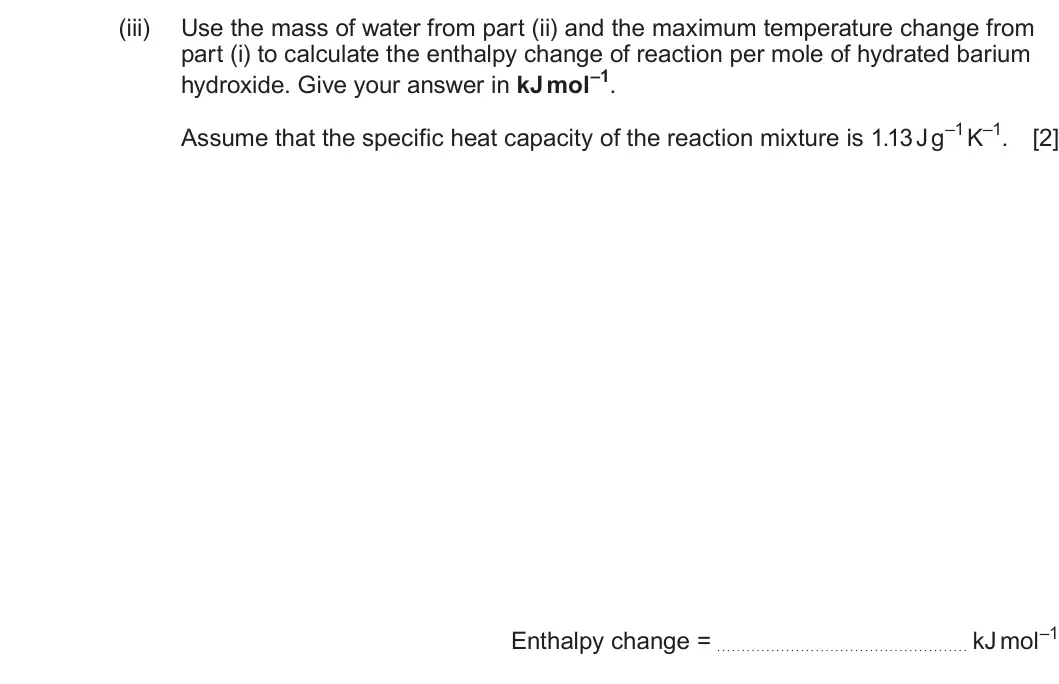
Q8(d)(i)
The whole paper ↗
Q8(d)(ii)
The whole paper ↗
Q8(d)(ii)
The whole paper ↗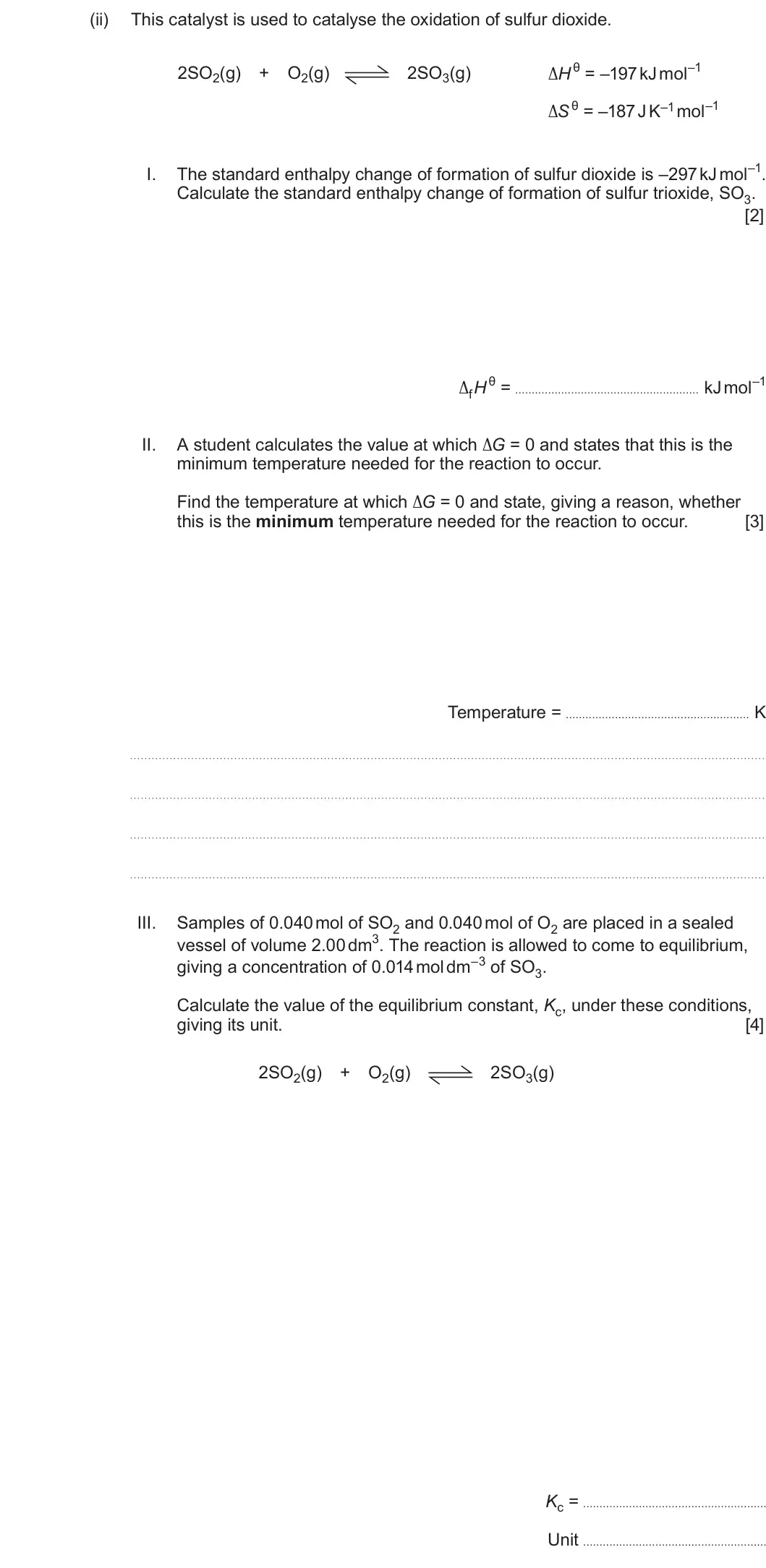
Q9(a)(ii)
The whole paper ↗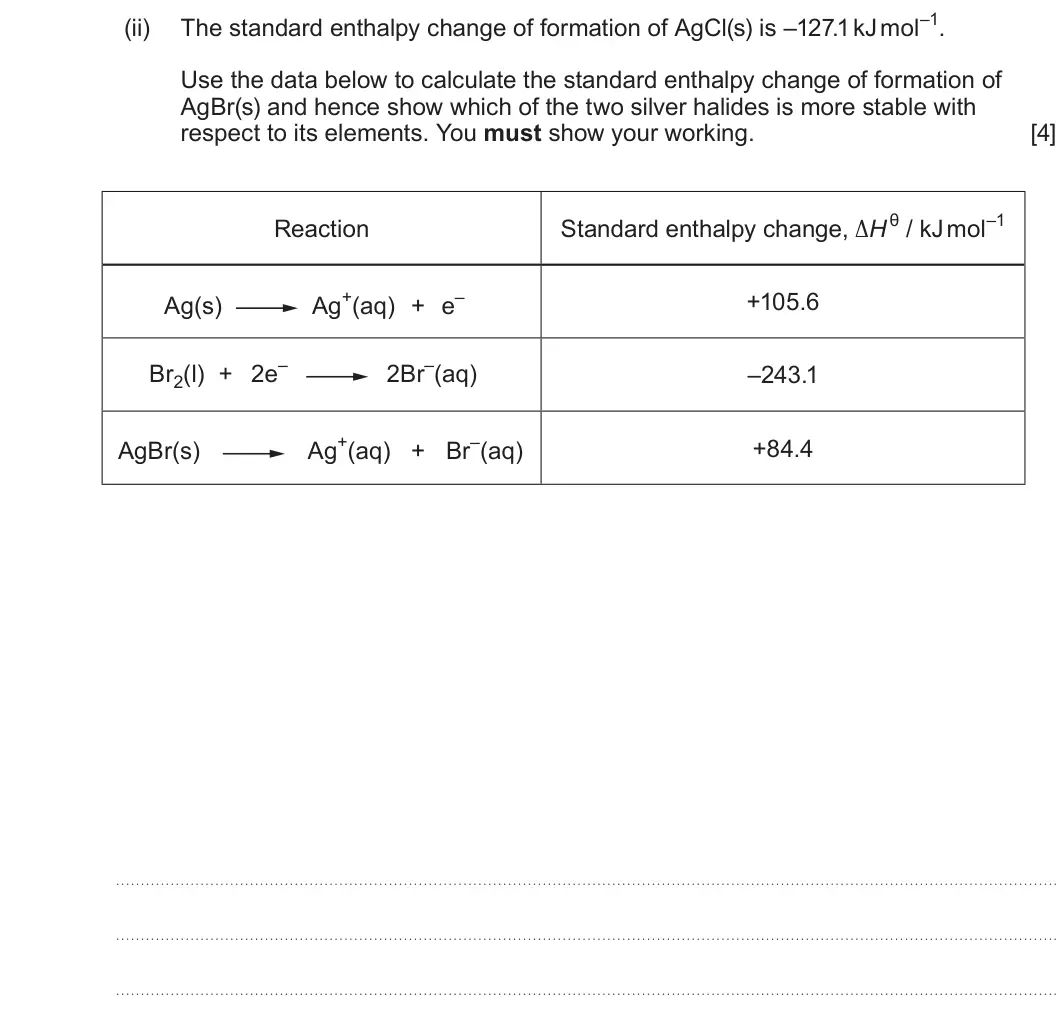
Q12(a)
The whole paper ↗
Q12(b)(i)
The whole paper ↗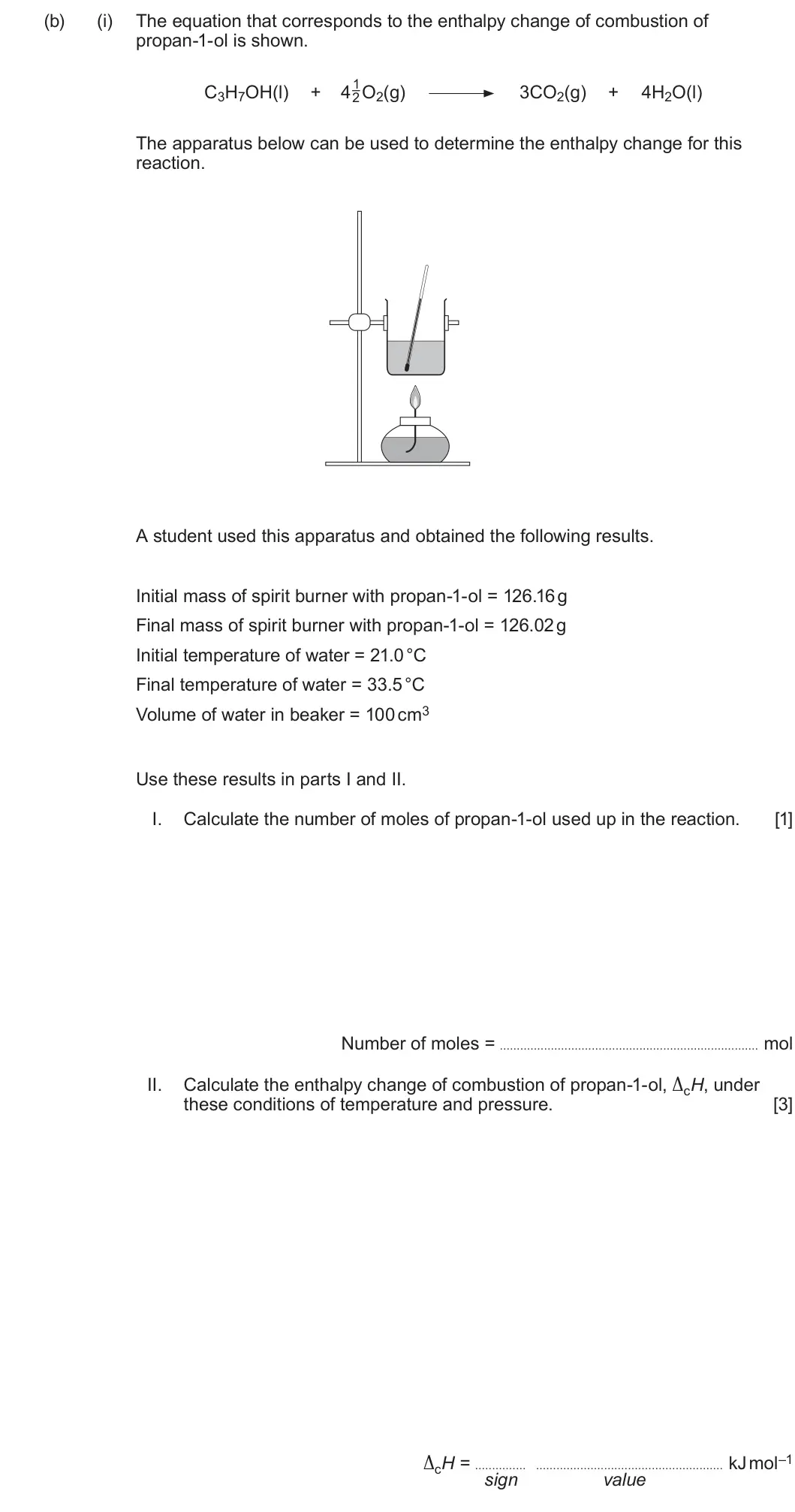
Q12(b)(ii)
The whole paper ↗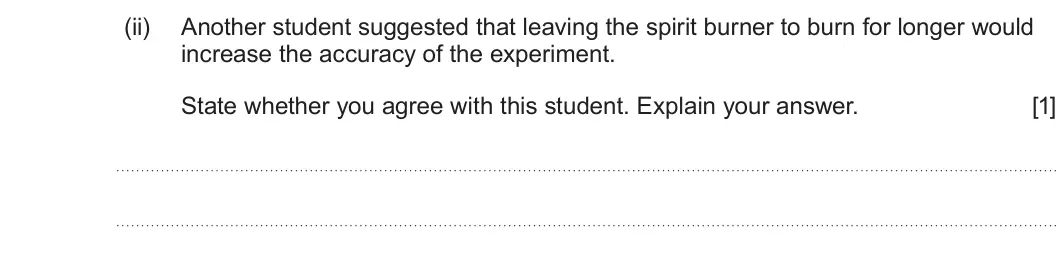
Q12(c)
The whole paper ↗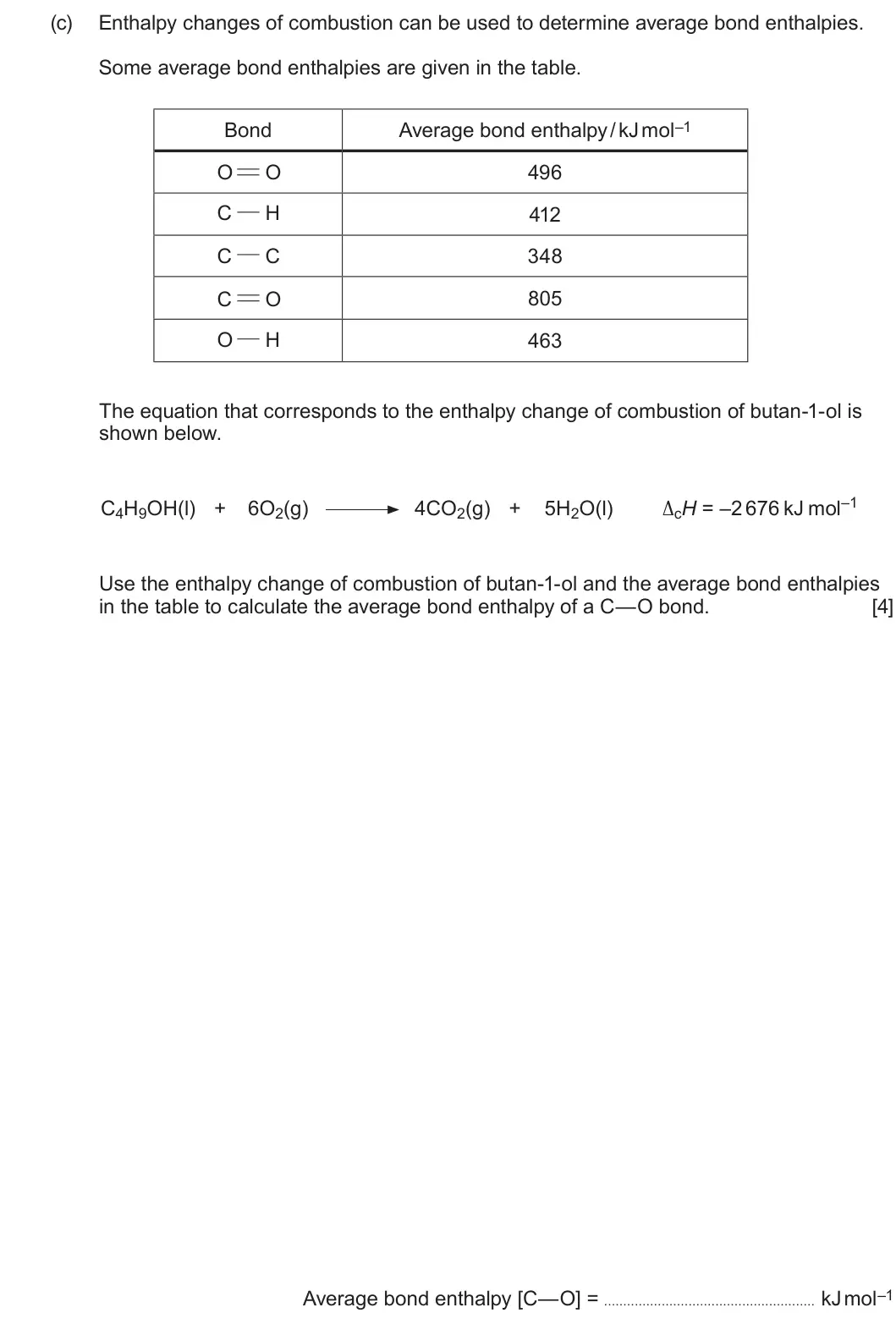
Q8(d)(i)
The whole paper ↗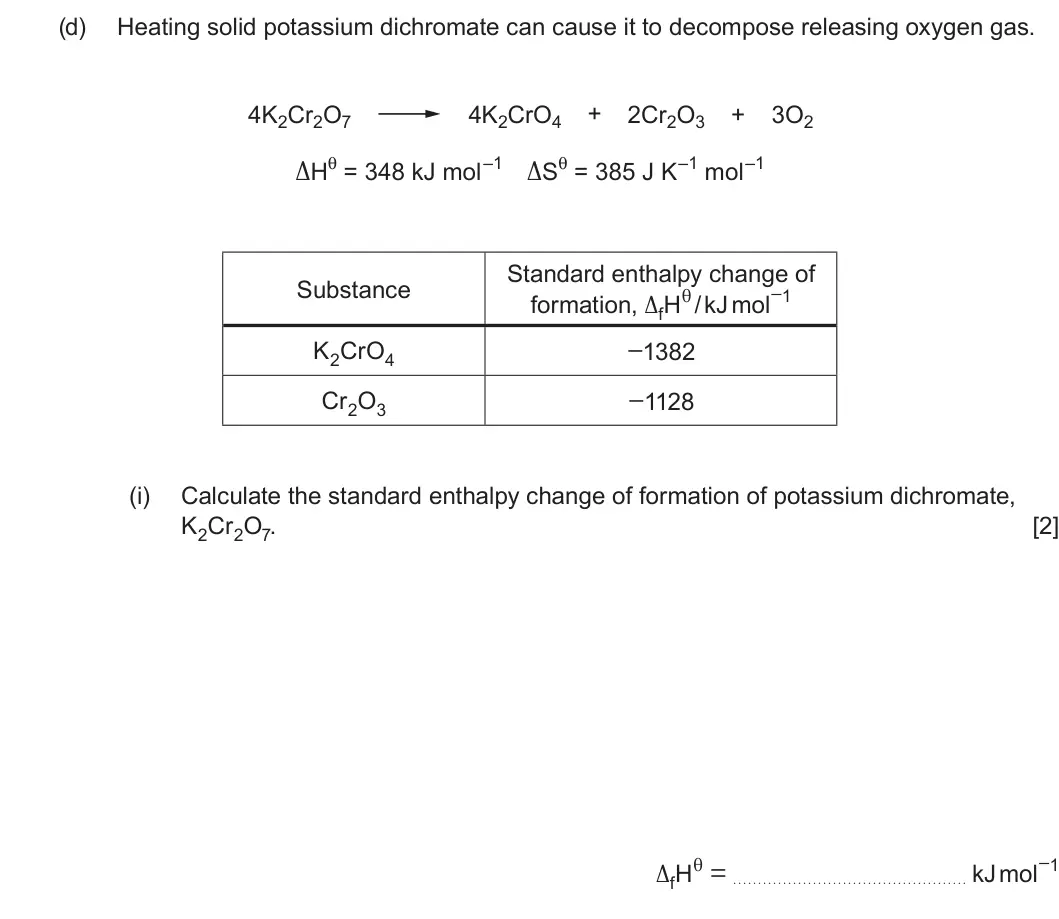
Q10(a)(i)
The whole paper ↗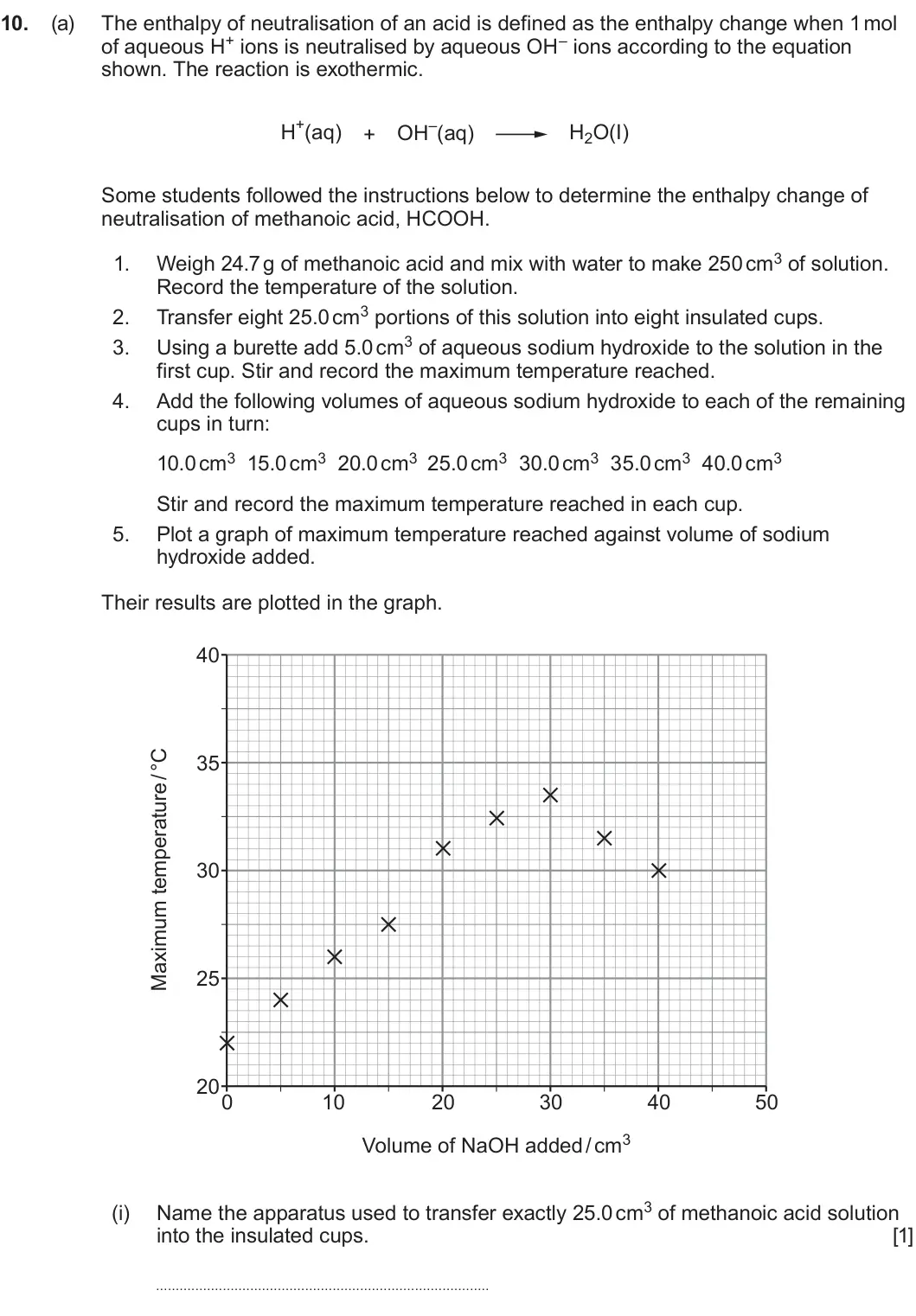
Q10(a)(ii)
The whole paper ↗
All 66 questions on Thermochemistry, as a list
- Summer 2025, Unit 3, Q9(a) (3 marks): Use data from one of the tables below to calculate the more accurate value of the standard enthalpy change for reaction 1 Give a reason for your choice of data.
- Summer 2025, AS Unit 2, Q6(a) (1 mark): X + Y V + W [1] ΔHθ = kJ mol–1
- Summer 2025, AS Unit 2, Q6(b) (1 mark): V + W Z [1] ΔHθ = kJ mol–1
- Summer 2025, AS Unit 2, Q8(b)(i) (2 marks): Give the meaning of the term standard enthalpy change of formation. [2]
- Summer 2025, AS Unit 2, Q8(b)(ii) (3 marks): this reaction are given below. ΔfHθ / kJ mol–1 Substance H2O –286 NH3 –45.9 BaCl2.2H2O –1460 Ba(OH)2.8H2O –3350 NH4Cl –314 Using a Hess cycle or otherwise, calc
- Summer 2025, AS Unit 2, Q8(c)(i) (4 marks): A student performed an experiment to determine the enthalpy change for this reaction. He weighed 31.5 g of hydrated barium hydroxide into a glass beaker and rec
- Summer 2025, AS Unit 2, Q8(c)(ii) (3 marks): Use the balanced equation to calculate the mass of water released during this reaction. Give your answer to an appropriate number of significant figures. [3] Ba
- Summer 2025, AS Unit 2, Q8(c)(iii) (2 marks): Use the mass of water from part (ii) and the maximum temperature change from part (i) to calculate the enthalpy change of reaction per mole of hydrated barium h
- Summer 2025, AS Unit 2, Q8(d)(i) (1 mark): Explain why the experimental value calculated in part (c)(iii) is much lower than the theoretical value calculated in part (b)(ii). [1]
- Summer 2025, AS Unit 2, Q8(d)(ii) (1 mark): Suggest a possible change to the method that would improve the accuracy of the experimentally determined value. [1]
- Summer 2024, Unit 3, Q8(d)(ii) (9 marks): This catalyst is used to catalyse the oxidation of sulfur dioxide. ΔHθ = –197 kJ mol–1 2SO2(g) + O2(g) 2SO3(g) ΔSθ = –187 J K–1 mol–1 The standard enthalpy chan
- Summer 2024, Unit 3, Q9(a)(ii) (4 marks): Use the data below to calculate the standard enthalpy change of formation of AgBr(s) and hence show which of the two silver halides is more stable with respect
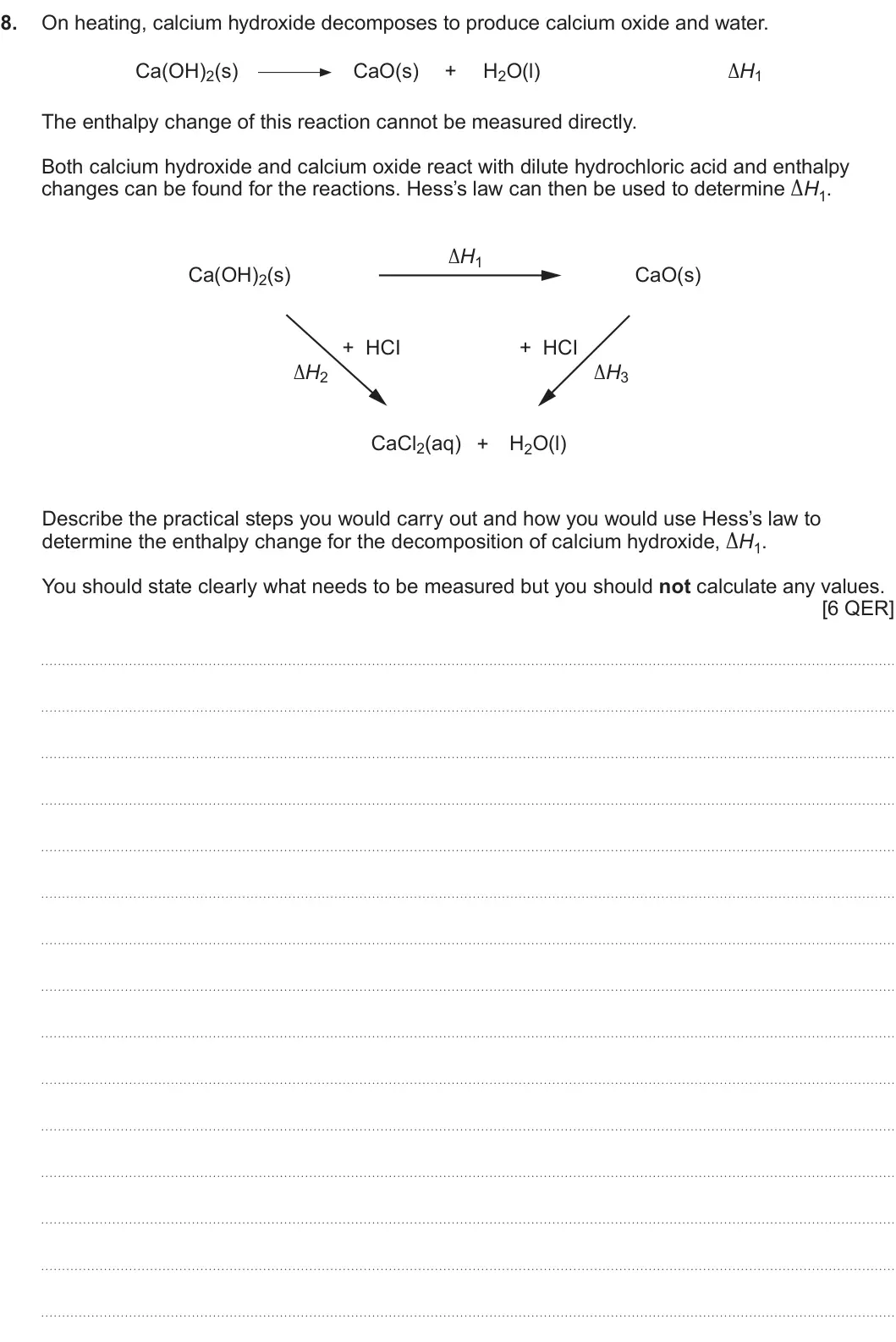
- Summer 2024, AS Unit 2, Q8 (6 marks): On heating, calcium hydroxide decomposes to produce calcium oxide and water. Ca(OH)2(s) CaO(s) + H2O(l) ΔH1 The enthalpy change of this reaction cannot be measu
- Summer 2024, AS Unit 2, Q12(a) (2 marks): State what is meant by the enthalpy change of combustion. [2]
- Summer 2024, AS Unit 2, Q12(b)(i) (4 marks): The equation that corresponds to the enthalpy change of combustion of propan-1-ol is shown. 1 C3H7OH(l) + 4 O2(g) 3CO2(g) + 4H2O(l) 2 The apparatus below can be
- Summer 2024, AS Unit 2, Q12(b)(ii) (1 mark): Another student suggested that leaving the spirit burner to burn for longer would increase the accuracy of the experiment. State whether you agree with this stu
- Summer 2024, AS Unit 2, Q12(c) (4 marks): Enthalpy changes of combustion can be used to determine average bond enthalpies. Some average bond enthalpies are given in the table. Bond Average bond enthalpy
- Summer 2023, Unit 3, Q8(d)(i) (2 marks): Calculate the standard enthalpy change of formation of potassium dichromate, K2Cr2O7. [2] ∆fHθ = kJ mol−1
- Summer 2023, AS Unit 2, Q10(a)(i) (1 mark): into the insulated cups. [1]
- Summer 2023, AS Unit 2, Q10(a)(ii) (1 mark): State why a higher maximum temperature is recorded when increasing volumes of sodium hydroxide are added. [1]
- Summer 2023, AS Unit 2, Q10(a)(iii) (2 marks): Explain why the maximum temperature recorded decreases when more than 30 cm3 of sodium hydroxide is added. [2]
- Summer 2023, AS Unit 2, Q10(a)(iv) (1 mark): On the graph, draw one straight line through the points that show an increase in maximum temperature and another straight line through the points that show a de
- Summer 2023, AS Unit 2, Q10(a)(v) (2 marks): From the graph, deduce the volume of sodium hydroxide needed to neutralise 25.0 cm3 of the methanoic acid solution and the temperature increase at that point. A
- Summer 2023, AS Unit 2, Q10(a)(vi) (2 marks): Use your answers to part (v) to calculate the amount of heat released by the neutralisation reaction. [2] Heat released = J
- Summer 2023, AS Unit 2, Q10(a)(vii) (3 marks): hence the enthalpy change of neutralisation of methanoic acid. [3] Enthalpy change of neutralisation = kJ mol–1
- Summer 2023, AS Unit 2, Q10(b) (2 marks): The experiment is repeated using hydrochloric acid instead of methanoic acid and a more negative value of the enthalpy change of neutralisation is calculated. S
- Summer 2022, AS Unit 2, Q5 (2 marks): State the meaning of the term ‘standard enthalpy change of formation’. [2] SECTION B Answer all questions.
- Summer 2022, AS Unit 2, Q7(b)(ii) (2 marks): The enthalpy change of combustion (ΔcHθ) for hexane is approximately –4160 kJ mol–1. Explain why the enthalpy change of combustion for the isomers of hexane sho
- Summer 2022, AS Unit 2, Q7(b)(iv) (6 marks): When hexane burns in a limited supply of oxygen it undergoes a different reaction known as incomplete combustion: C6H14 + 6.5O2 6CO + 7H2O The bond enthalpy val
- Summer 2022, AS Unit 2, Q10(a)(i) (2 marks): Plot the results on the graph paper below. [2] Time /s
- Summer 2022, AS Unit 2, Q10(a)(ii) (2 marks): Use your graph to calculate the maximum temperature change for this crystallisation. [2] maximum temperature change = °C
- Summer 2022, AS Unit 2, Q10(a)(iii) (4 marks): Use the total mass of the sodium ethanoate solution and the temperature change from the graph to calculate the enthalpy change of crystallisation per mole of so
- Summer 2022, AS Unit 2, Q10(a)(iv) (1 mark): Suggest a reason why the experimental enthalpy change is often lower than the theoretical enthalpy change. [1]
- Summer 2019, AS Unit 2, Q2 (2 marks): Write the equation that corresponds to the standard molar enthalpy change of formation of magnesium carbonate, MgCO3. [2]
- Summer 2019, AS Unit 2, Q7(a)(i) (3 marks): The equation for the reaction of calcium oxide with hydrochloric acid is shown. CaO(s) + 2HCl(aq) CaCl2(aq) + H2O(l) Use this equation to show that the hydrochl
- Summer 2019, AS Unit 2, Q7(a)(ii) (1 mark): Calculate the energy released in this reaction between calcium oxide and hydrochloric acid. [1] Energy released = J
- Summer 2019, AS Unit 2, Q7(a)(iii) (2 marks): Calculate the molar enthalpy change for the reaction between calcium oxide and hydrochloric acid. [2] CaO(s) + 2HCl(aq) CaCl2(aq) + H2O(l) Enthalpy change = kJ
- Summer 2019, AS Unit 2, Q7(a)(iv) (2 marks): The value of the molar enthalpy change of reaction for the reaction between calcium hydroxide and hydrochloric acid is –196 kJ mol–1. Use Hess’s Law and your an
- Summer 2019, AS Unit 2, Q7(a)(v) (2 marks): Suggest two changes to the apparatus shown that would give a more accurate value for the enthalpy changes of the reactions. Give a reason for your answer in bot
- Summer 2019, AS Unit 2, Q7(b)(i) (1 mark): Write the equation corresponding to the standard enthalpy change of combustion of methanol. [1]
- Summer 2019, AS Unit 2, Q7(b)(ii) (2 marks): Draw and label suitable apparatus as it is being used in an experiment to determine the enthalpy change of combustion of methanol. [2]
- Summer 2019, AS Unit 2, Q7(c)(i) (4 marks): Use this and the values of the average bond enthalpies in the table to calculate the average bond enthalpy of C—H. [4] Average bond enthalpy / kJ mol–1 Bond — C
- Summer 2019, AS Unit 2, Q7(c)(ii) (1 mark): State why the apparatus you have drawn in part (b) cannot be used to determine the enthalpy change of combustion of ethene. [1]
- Summer 2018, Unit 3, Q11(c) (2 marks): Use this information and the graph to calculate the standard enthalpy change of formation of hydrogen peroxide. [2] ΔfHθ(H2O2) = kJ mol–1
- Summer 2018, AS Unit 2, Q9(a)(i) (2 marks): The average bond enthalpy of a C Explain what is meant by bond enthalpy. [2]
- Summer 2018, AS Unit 2, Q9(a)(ii) (3 marks): Ethyne, C2H2, contains a C C. It reacts with hydrogen in a similar way to ethene. H C C H + 2H2 C2H6 Some average bond enthalpies are given in the table. Averag
- Summer 2018, AS Unit 2, Q9(b) (3 marks): Enthalpy changes of reaction are often found indirectly. The enthalpy change for the reaction of ethyne with hydrogen, as shown in part (a), can be determined b
- Summer 2018, AS Unit 2, Q9(c) (1 mark): The theoretical values that you have calculated in parts (a)(ii) and (b) are both the enthalpy change for the reaction between ethyne and hydrogen. Suggest a re
- Summer 2017, Unit 3, Q10(b) (1 mark): State why the enthalpy change of formation of Cl2(g) is zero. [1]
- Summer 2017, Unit 3, Q10(c) (2 marks): Calculate the standard enthalpy change of formation of HCl(g). [2] ΔfHθ = kJ mol−1
- Summer 2017, AS Unit 2, Q7(a) (2 marks): Ethanol, C2H5OH, is a liquid at room temperature. Write the equation that corresponds to the standard enthalpy change of formation of ethanol. [2]
- Summer 2017, AS Unit 2, Q7(b) (1 mark): Why is it difficult to measure the standard enthalpy change of formation of ethanol directly? [1]
- Summer 2017, AS Unit 2, Q7(c)(i) (3 marks): Explain how the enthalpy change of combustion is calculated from the results collected using this apparatus. [3]
- Summer 2017, AS Unit 2, Q7(c)(ii) (1 mark): Why is it difficult to use this apparatus to determine the enthalpy change of combustion of ethane, C2H6? [1]
- Summer 2017, AS Unit 2, Q7(d) (2 marks): Two students carried out an experiment using the apparatus in part (c). Neither followed the given method correctly. Euan extinguished the flame after only 10 s
- Summer 2017, AS Unit 2, Q7(e)(i) (3 marks): Use these data to calculate the standard enthalpy change of formation of ethanol. Show clearly how you carried out your calculation. [3] ΔfHθ = kJ mol–1
- Summer 2017, AS Unit 2, Q7(e)(ii) (2 marks): Amir said that hydrogen is the best fuel of these three in terms of the energy released by burning equal masses. Is he correct? Justify your answer. [2]
- Summer 2016, AS Unit 2, Q7(a) (3 marks): Draw a labelled diagram showing how the apparatus is set up to carry out this experiment. You should show how the heat losses could be minimised. [3]
- Summer 2016, AS Unit 2, Q7(b) (3 marks): Sian recorded the following data. Mass of magnesium strip = 0.1 g Initial temperature of acid = 21.0 °C Highest temperature reached = 35.5 °C Use these data to
- Summer 2016, AS Unit 2, Q7(c) (2 marks): hydrochloric acid. Although he used his data correctly to calculate the enthalpy change of reaction for 1 mol of magnesium, his answer was numerically much less
- Summer 2016, AS Unit 2, Q7(d) (2 marks): Sian used a one-decimal place balance to weigh the magnesium. Calculate the maximum percentage error in the mass of magnesium she used. Show clearly how you obt
- Summer 2016, AS Unit 2, Q7(e) (1 mark): Burning magnesium, when placed in a gas-jar containing chlorine, forms magnesium chloride and energy is released. Mg(s) + Cl2(g) MgCl2(s) Suggest why this react
- Summer 2016, AS Unit 2, Q8(a)(i) (2 marks): Define the term standard enthalpy change of combustion, ΔcH . [2]
- Summer 2016, AS Unit 2, Q8(a)(ii) (4 marks): The values of some average bond enthalpies are shown in the table below. Average bond enthalpy / kJ mol–1 Bond C C 348 O O 495 C O 799 O H 463 C2H6 + O2 2CO2 +
- Summer 2016, AS Unit 2, Q8(a)(iii) (1 mark): Suggest a reason why bond enthalpies are described as being average bond enthalpies. [1]
- Summer 2016, AS Unit 2, Q8(b) (6 marks): Charcoal consists mainly of carbon. It has been produced for many centuries by heating wood in the absence of oxygen. Natural gas consists mainly of methane and
Questions, mark schemes and examiner’s reports are © WJEC CBAC Ltd, from their published past papers. Plumi isn’t affiliated with any exam board. Want whole papers? Every WJEC A-Level Chemistry paper.
Rather write your answers by hand on iPad? Plumi marks them against the same mark schemes.