 plumi
Instrumental analysis: WJEC A‑Level Chemistry questions
Every WJEC A-Level Chemistry exam question on 2.8 Instrumental analysis, 2016–2025, with its mark scheme and examiner’s report.
Find questions1,204
Calculations
Q9(a)(vi)
The whole paper ↗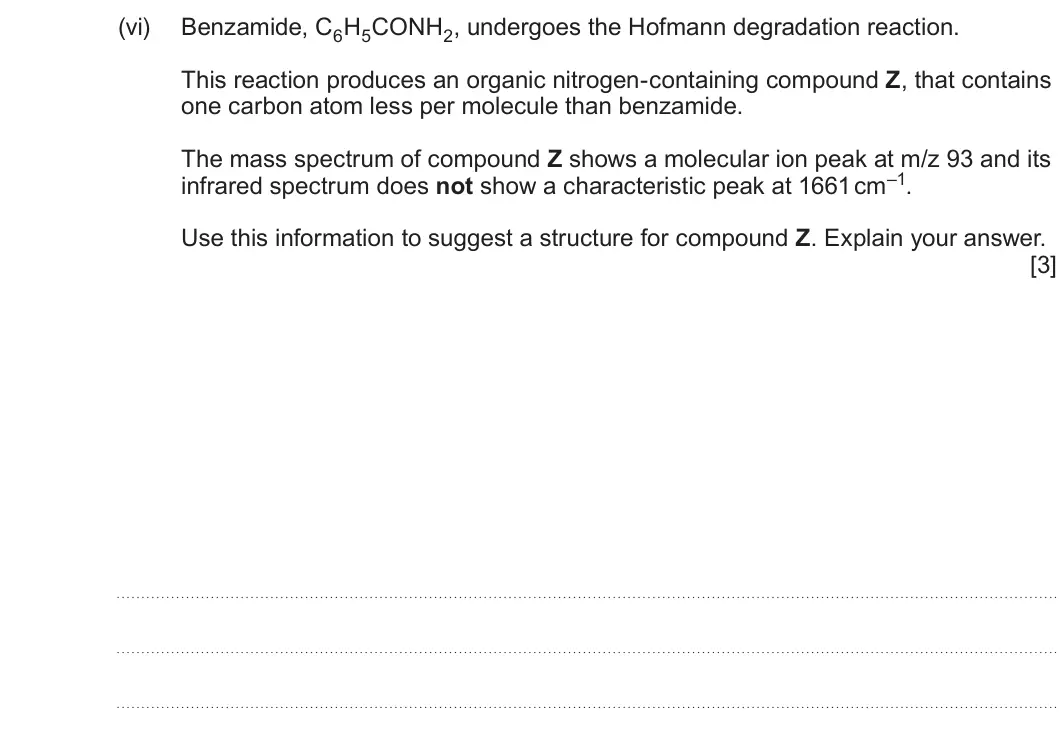
Q9(a)
The whole paper ↗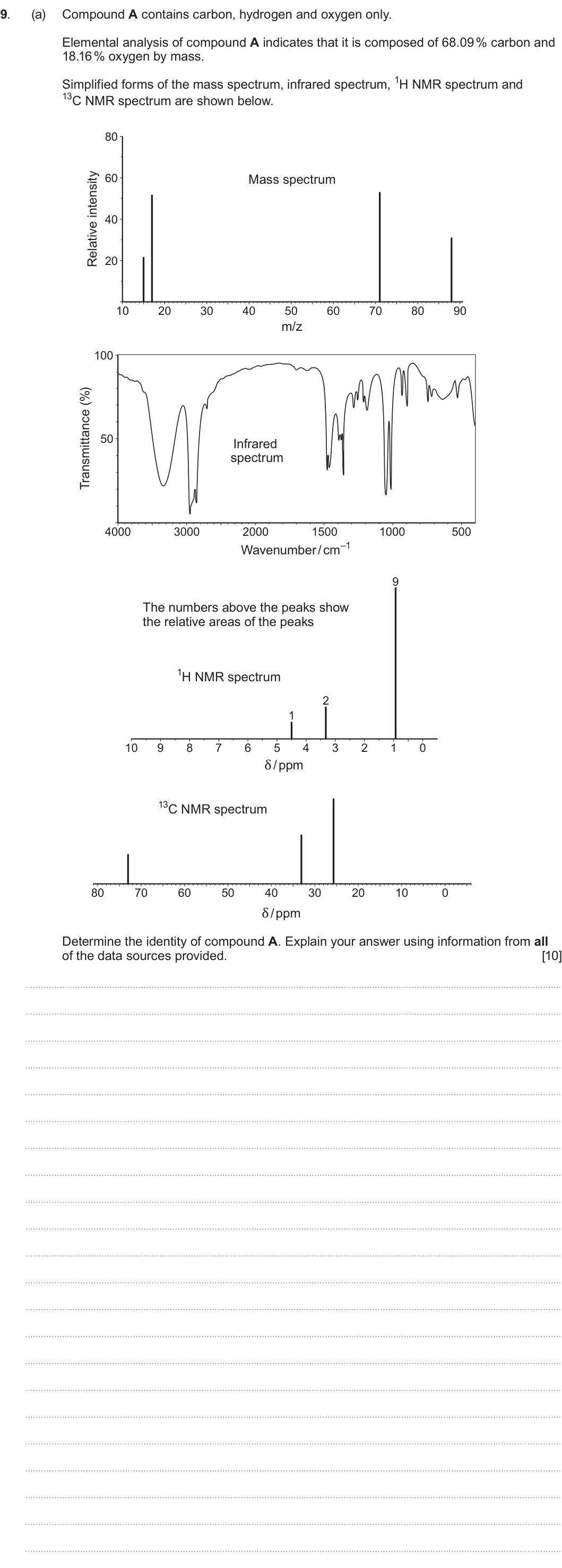
Q11(b)
The whole paper ↗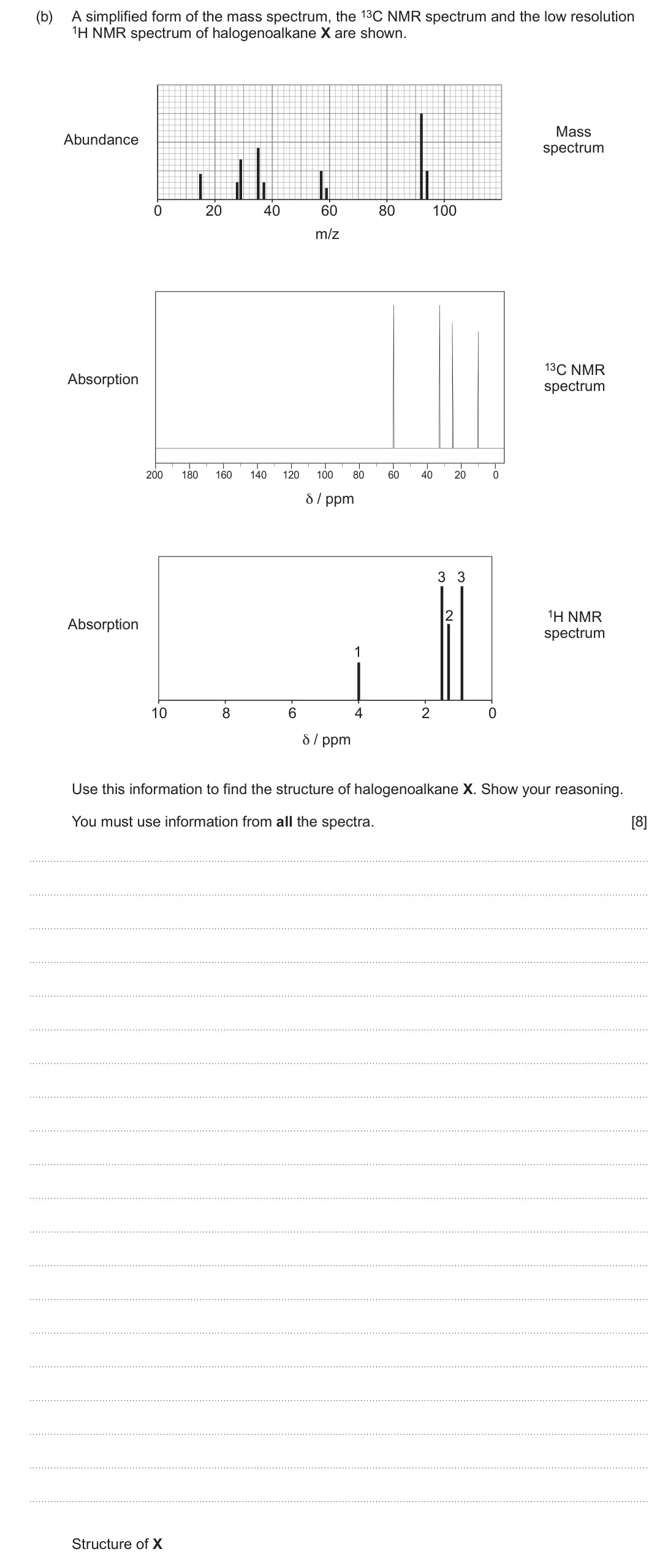
Q11(b)(ii)
The whole paper ↗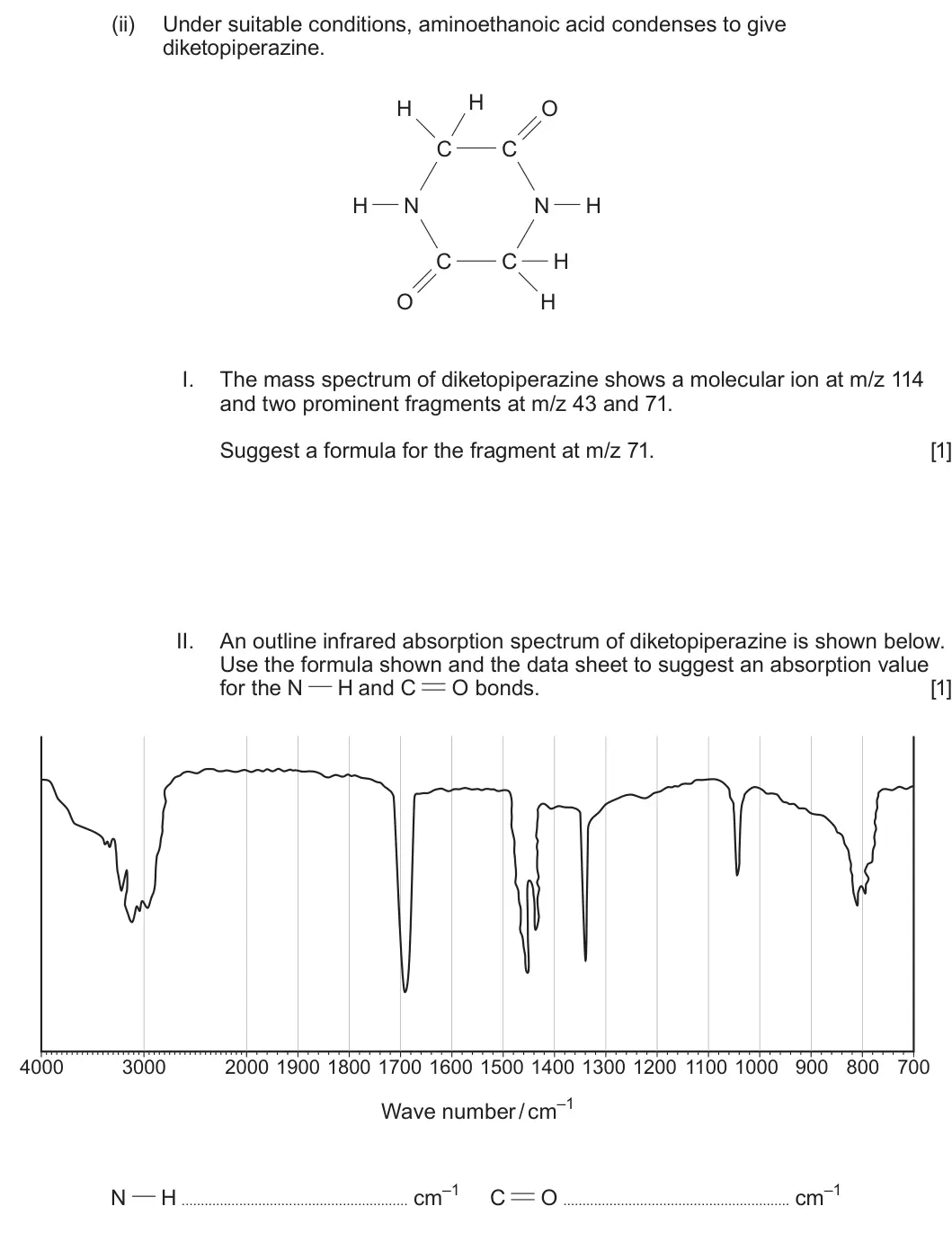
Q11(a)
The whole paper ↗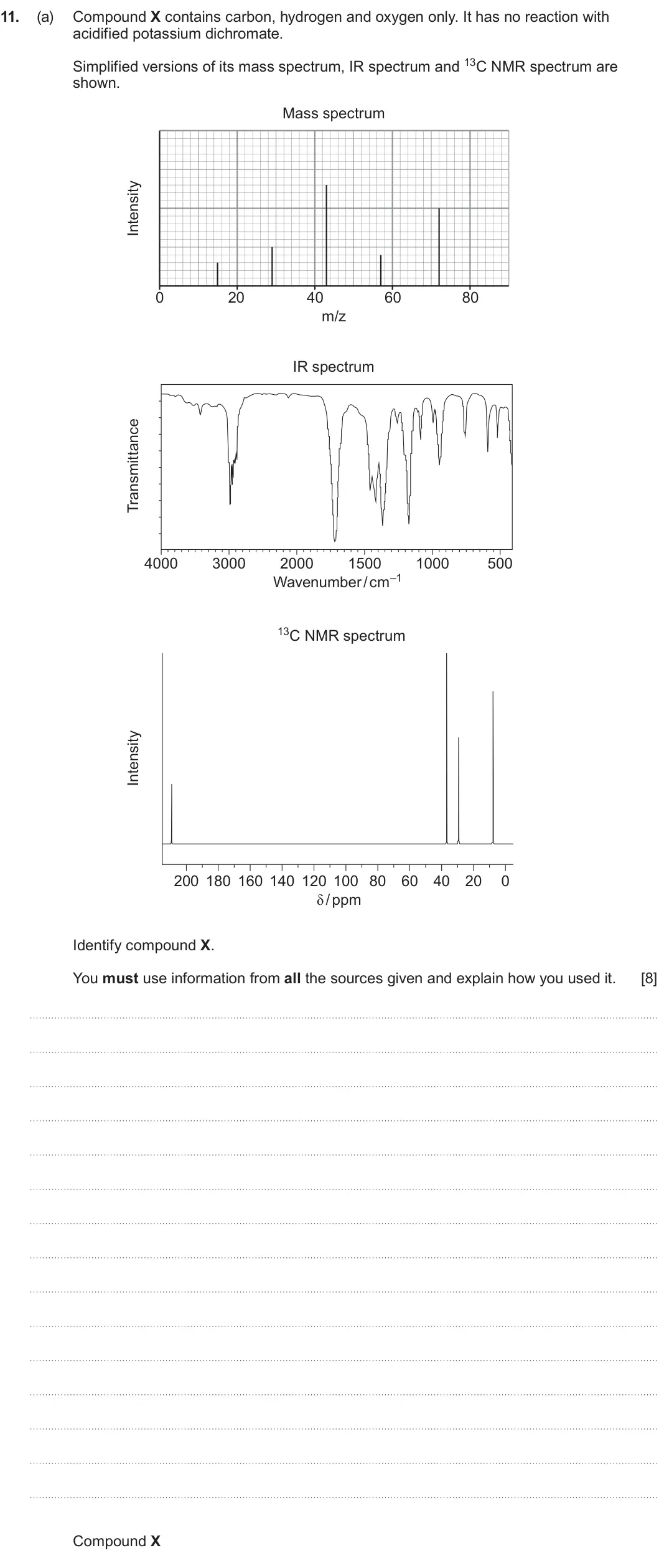
Q11(b)
The whole paper ↗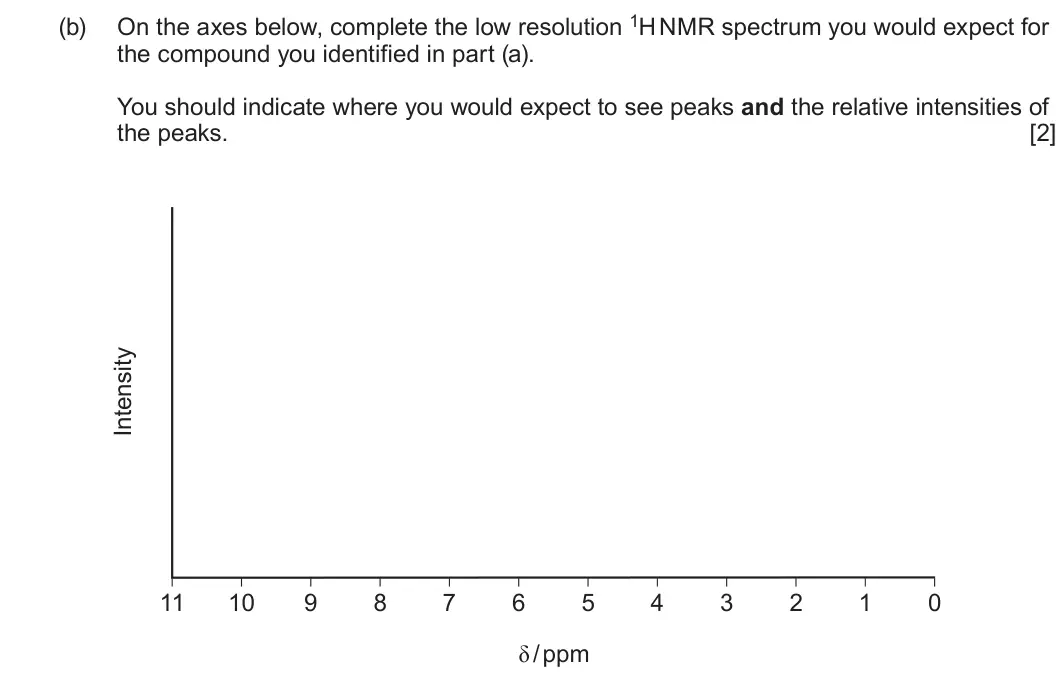
Q13(b)(iv)
The whole paper ↗

Q8(a)(ii)
The whole paper ↗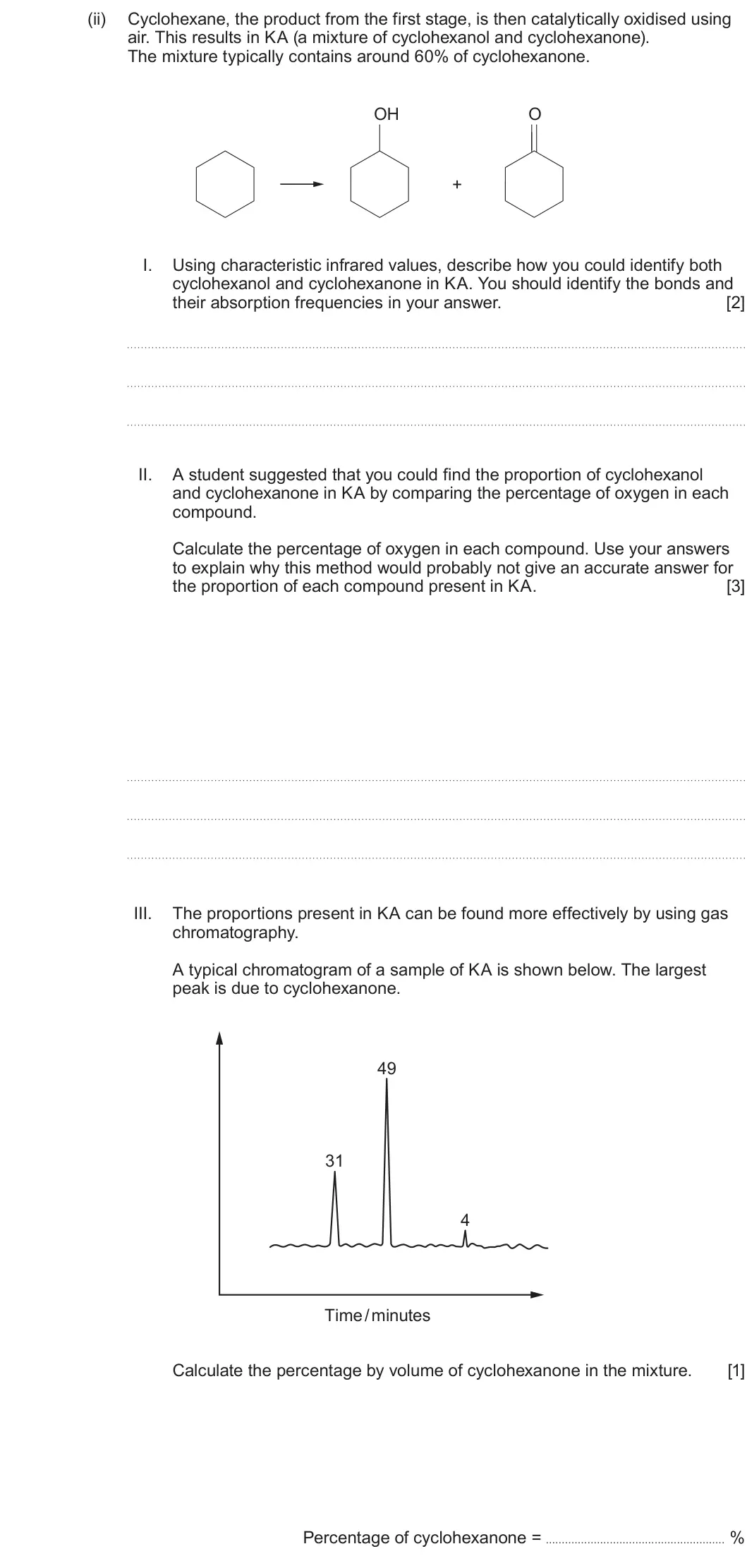
Q10(b)
The whole paper ↗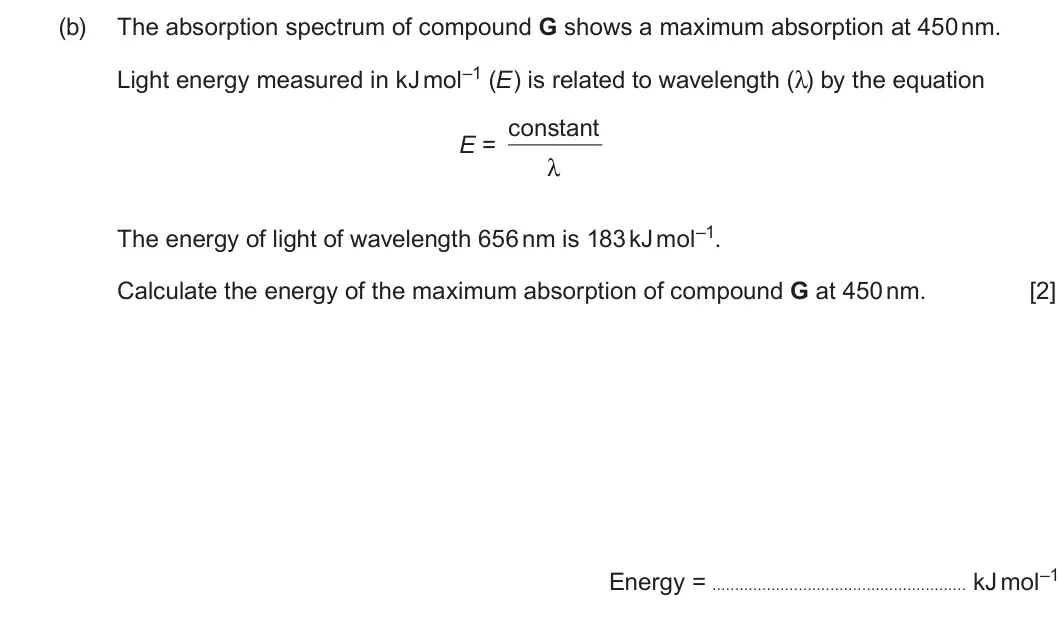
Q11(c)
The whole paper ↗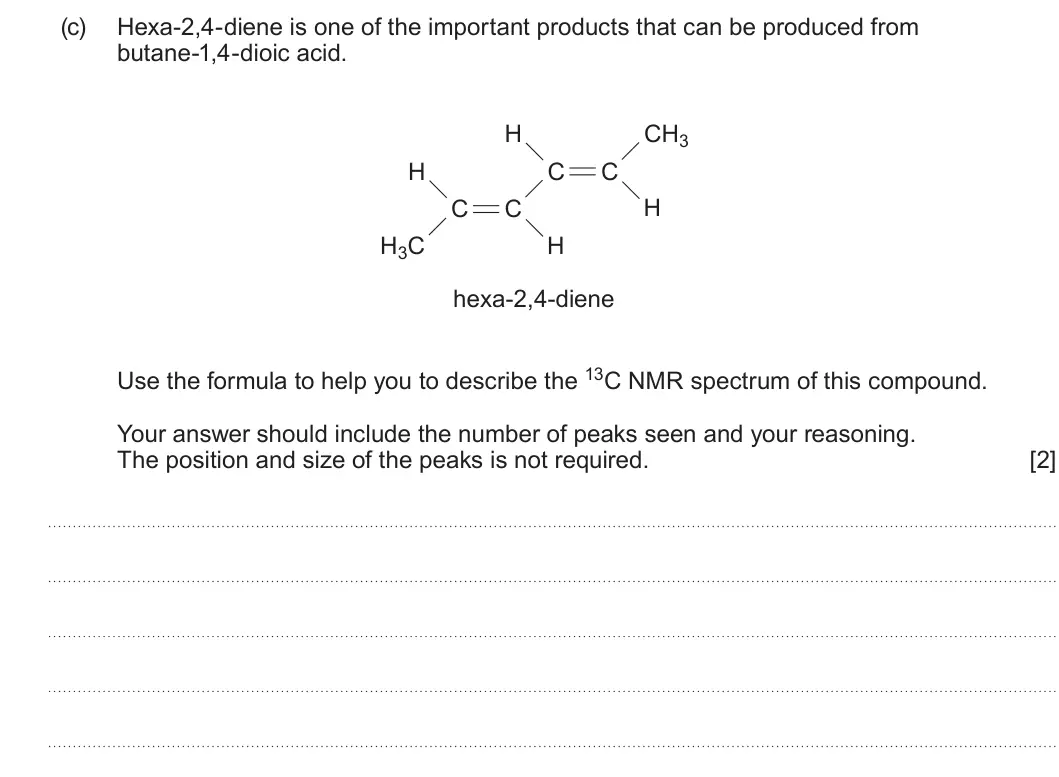
Q12(a)(i)
The whole paper ↗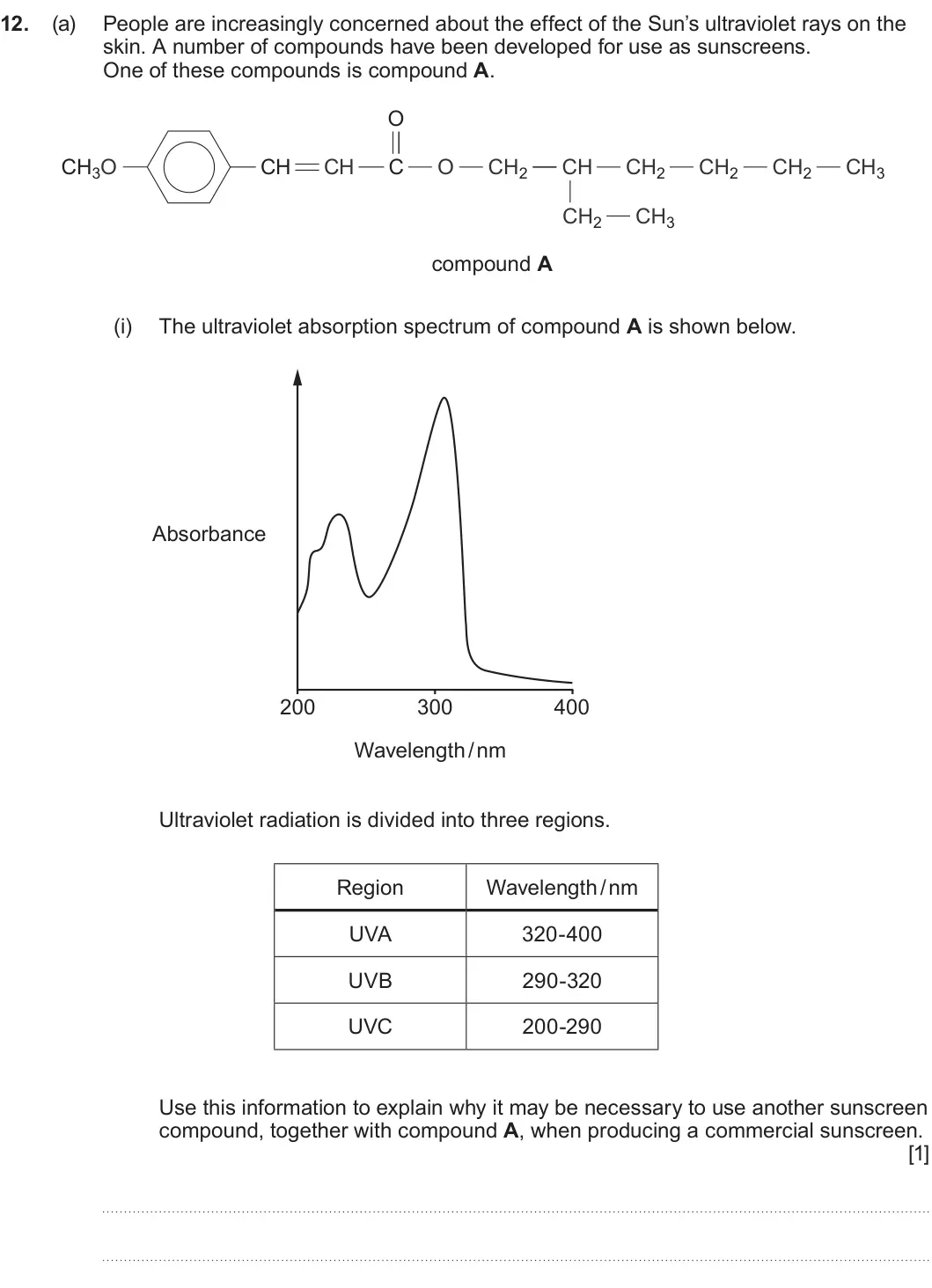
Q10(c)(iii)
The whole paper ↗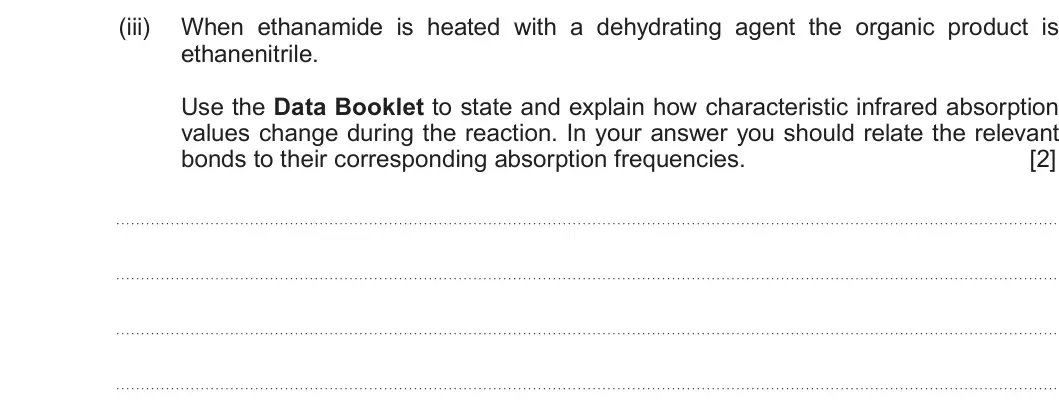
Q11(a)
The whole paper ↗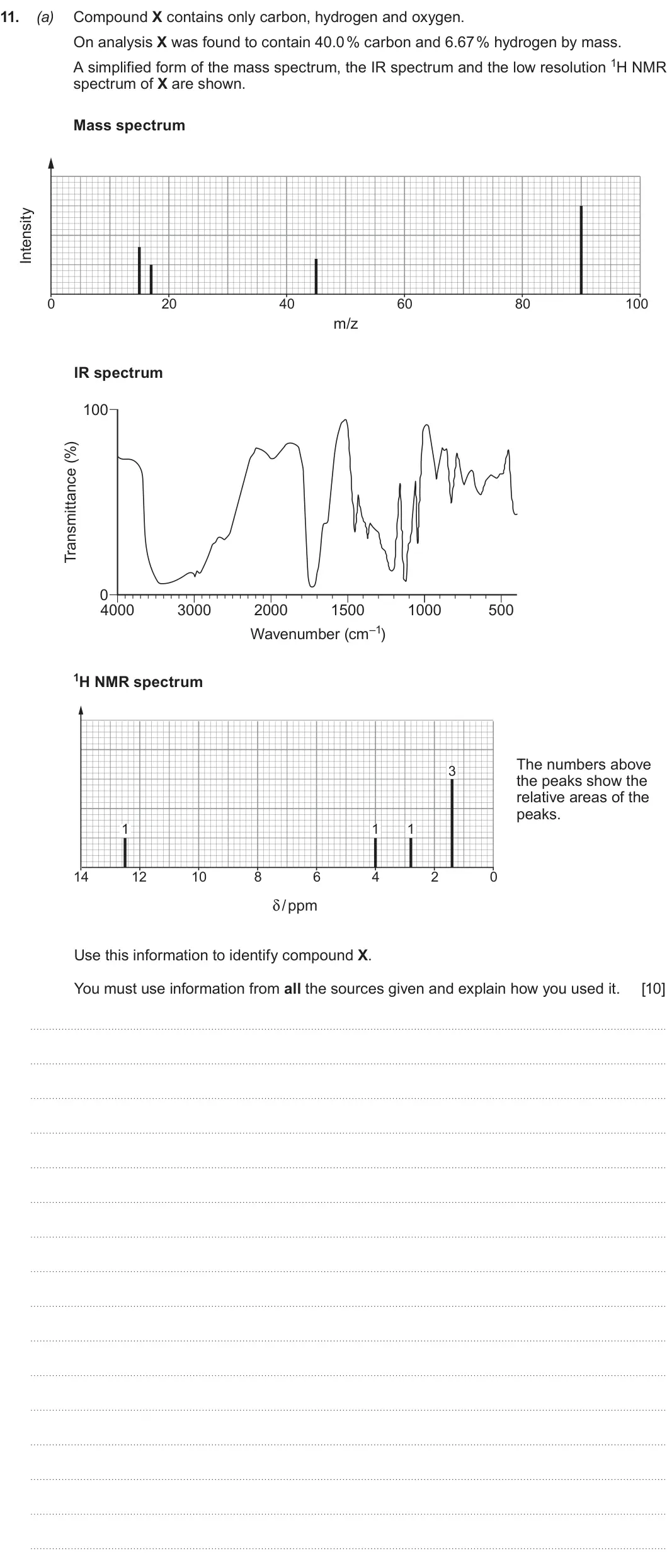
Q11(b)(i)
The whole paper ↗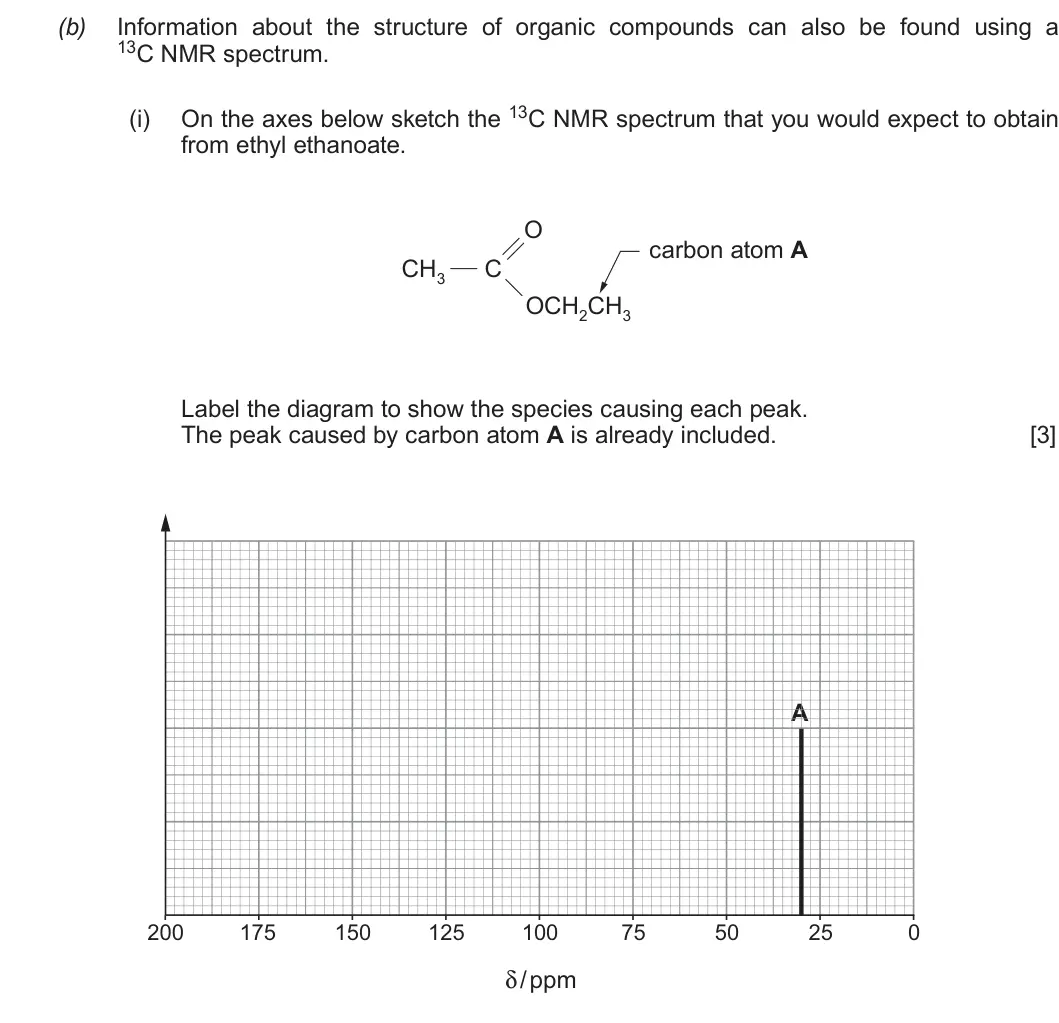
Q11(b)(ii)
The whole paper ↗
Q6(d)
The whole paper ↗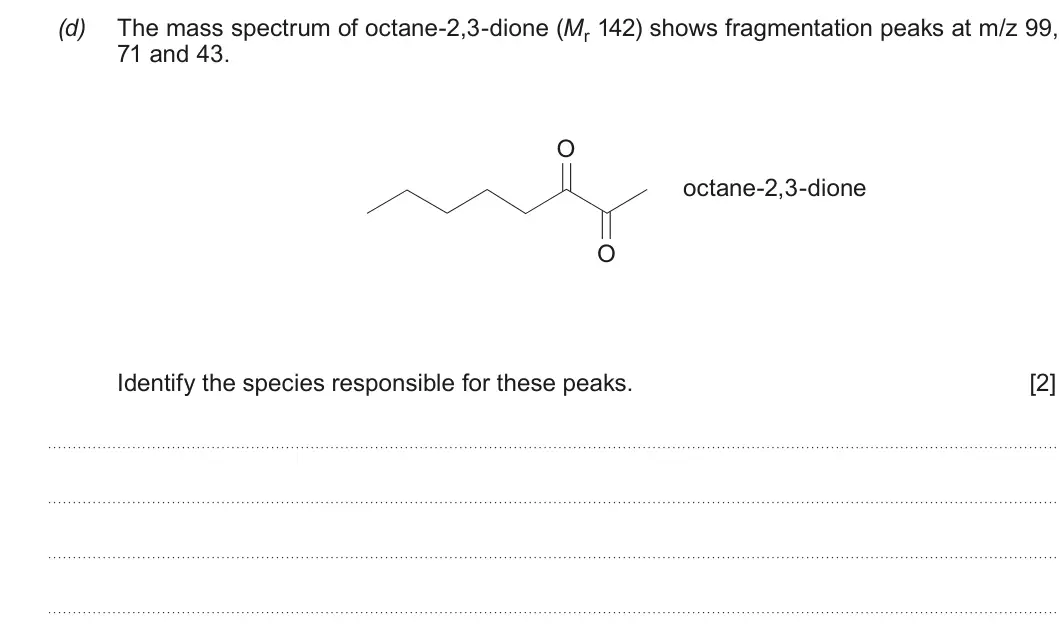
All 27 questions on Instrumental analysis, as a list
- Summer 2025, Unit 4, Q9(a)(vi) (3 marks): Benzamide, C6H5CONH2, undergoes the Hofmann degradation reaction. This reaction produces an organic nitrogen-containing compound Z, that contains one carbon ato
- Summer 2025, AS Unit 2, Q9(a) (10 marks): Compound A contains carbon, hydrogen and oxygen only. Elemental analysis of compound A indicates that it is composed of 68.09 % carbon and 18.16 % oxygen by mas
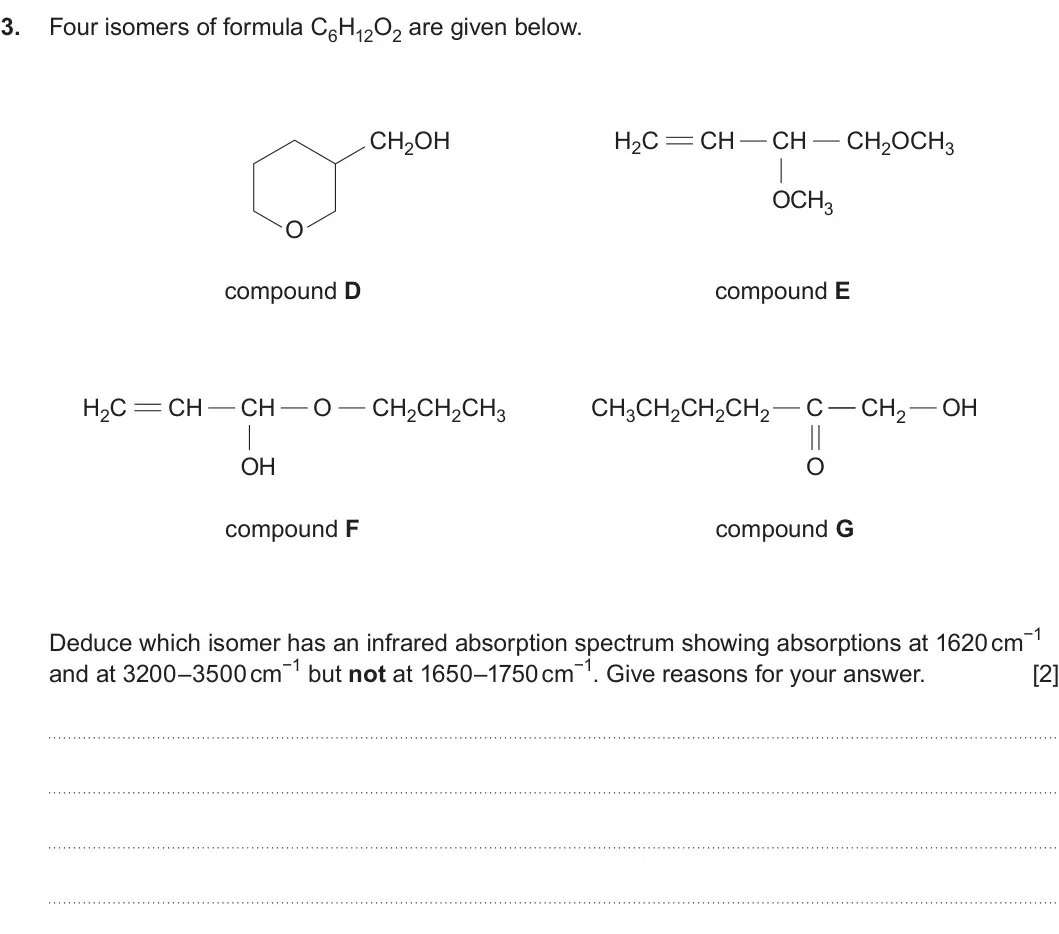
- Summer 2024, Unit 4, Q3 (2 marks): Four isomers of formula C6H12O2 are given below. CH2OH H2C CH CH CH2OCH3 OCH3 O compound D compound E H2C CH CH O CH2CH2CH3 CH3CH2CH2CH2 C CH2 OH OH O compound
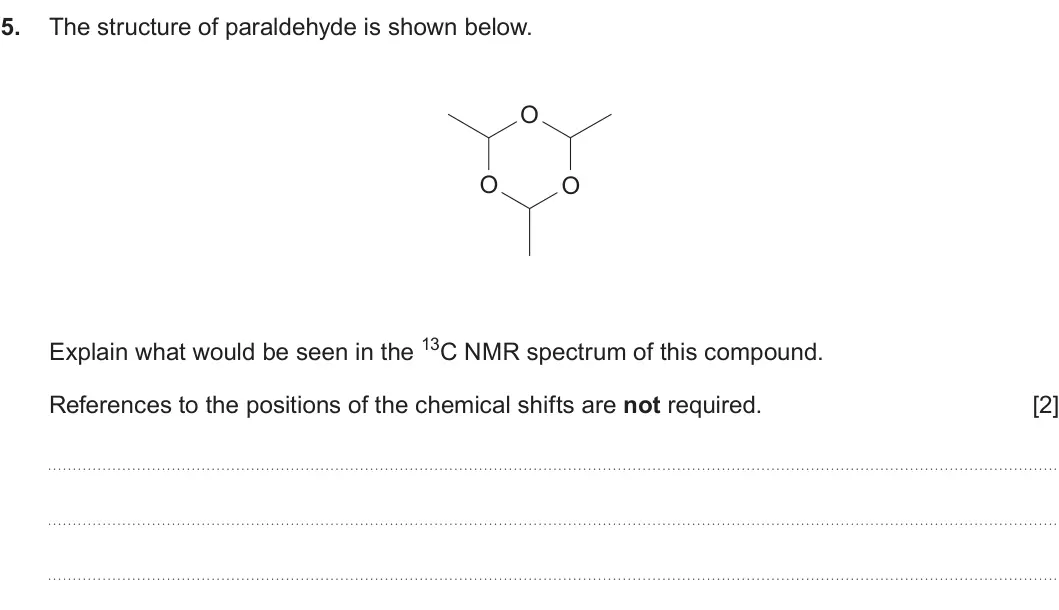
- Summer 2024, Unit 4, Q5 (2 marks): The structure of paraldehyde is shown below. O O O Explain what would be seen in the 13C NMR spectrum of this compound. References to the positions of the chemi
- Summer 2024, AS Unit 2, Q11(b) (8 marks): A simplified form of the mass spectrum, the 13C NMR spectrum and the low resolution 1H NMR spectrum of halogenoalkane X are shown. Mass Abundance spectrum 0 20
- Summer 2023, Unit 4, Q11(b)(ii) (2 marks): Under suitable conditions, aminoethanoic acid condenses to give diketopiperazine. H H O C C H N N H C C H O H I. The mass spectrum of diketopiperazine shows a m
- Summer 2023, AS Unit 2, Q11(a) (8 marks): Compound X contains carbon, hydrogen and oxygen only. It has no reaction with acidified potassium dichromate. Simplified versions of its mass spectrum, IR spect
- Summer 2023, AS Unit 2, Q11(b) (2 marks): the compound you identified in part (a). You should indicate where you would expect to see peaks and the relative intensities of the peaks. [2] 11 10 9 8 7 6 5
- Summer 2023, AS Unit 2, Q13(b)(iv) (1 mark): A sample of the reacting mixture was taken during the reflux process and a mass spectrum was produced. One of the peaks recorded was at m/z 58 Suggest the ident
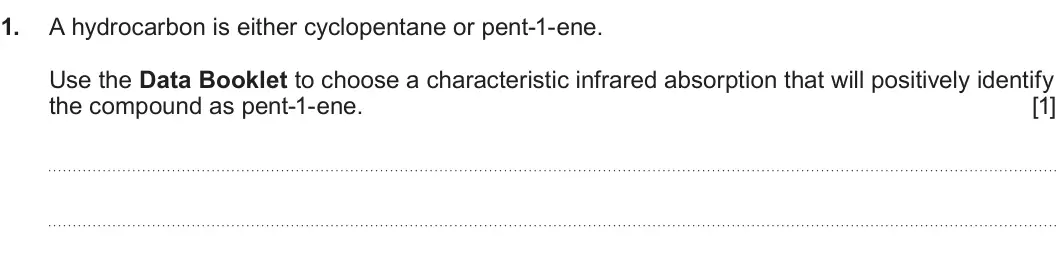
- Summer 2022, Unit 4, Q1 (1 mark): A hydrocarbon is either cyclopentane or pent-1-ene. Use the Data Booklet to choose a characteristic infrared absorption that will positively identify the compou
- Summer 2022, Unit 4, Q4 (1 mark): Give the structure of a compound of molecular formula C4H8Br2 whose low resolution 1H NMR 4 spectrum consists of three peaks. [1]
- Summer 2022, Unit 4, Q8(a)(ii) (6 marks): Cyclohexane, the product from the first stage, is then catalytically oxidised using air. This results in KA (a mixture of cyclohexanol and cyclohexanone). The m
- Summer 2022, Unit 4, Q10(b) (2 marks): The absorption spectrum of compound G shows a maximum absorption at 450 nm. Light energy measured in kJ mol–1 (E) is related to wavelength (λ) by the equation E
- Summer 2022, Unit 4, Q11(c) (2 marks): Hexa-2,4-diene is one of the important products that can be produced from butane-1,4-dioic acid. H CH3 C C H H C C H3C H hexa-2,4-diene Use the formula to help
- Summer 2022, Unit 4, Q12(a)(i) (1 mark): The ultraviolet absorption spectrum of compound A is shown below. Absorbance 200 300 400 Wavelength / nm Ultraviolet radiation is divided into three regions. Re
- Summer 2019, Unit 4, Q10(c)(iii) (2 marks): When ethanamide is heated with a dehydrating agent the organic product is ethanenitrile. Use the Data Booklet to state and explain how characteristic infrared a
- Summer 2019, AS Unit 2, Q11(a) (10 marks): Compound X contains only carbon, hydrogen and oxygen. On analysis X was found to contain 40.0 % carbon and 6.67 % hydrogen by mass. A simplified form of the mas
- Summer 2019, AS Unit 2, Q11(b)(i) (3 marks): from ethyl ethanoate. O carbon atom A CH3 C OCH2CH3 Label the diagram to show the species causing each peak. The peak caused by carbon atom A is already include
- Summer 2019, AS Unit 2, Q11(b)(ii) (1 mark): A student said that valuable information about the nature of a sample being analysed could be obtained from the peak heights in both the 13C and 1H NMR spectra.
- Summer 2018, Unit 4, Q6(d) (2 marks): The mass spectrum of octane-2,3-dione (Mr 142) shows fragmentation peaks at m/z 99, 71 and 43 O octane-2,3-dione O Identify the species responsible for these pe
- Summer 2018, Unit 4, Q7(e) (3 marks): Under suitable conditions diphenylmethanone oxime undergoes a rearrangement. C6H5 O C N OH C6H5 C N C6H5 C6H5 H diphenylmethanone oxime N-phenylbenzamide Descri
- Summer 2018, AS Unit 2, Q8(a) (2 marks): State an instrumental method by which the sample could be analysed. Explain how this would show that chlorination had occurred. [2]
- Summer 2018, AS Unit 2, Q11(a) (10 marks): Use all the data given to find the structure of compound X. Explain what information can be found from each piece of data. [10] Structure of X
- Summer 2017, Unit 4, Q9(a)(ii) (1 mark): DEET is a colourless liquid in white light. Explain, in terms of the electromagnetic spectrum, why DEET is colourless. [1]
- Summer 2017, Unit 4, Q9(a)(iii) (2 marks): The mass spectrum of DEET shows a molecular ion at m/z 191. It also shows a prominent peak at m/z 91 Suggest a formula for the fragment that is lost so that the
- Summer 2017, AS Unit 2, Q8(b) (6 marks): Compound Y is a halogenoalkane. A simplified form of the IR spectrum, the mass spectrum, the 13C NMR spectrum and the low resolution 1H NMR spectrum of Y are sh
- Summer 2016, AS Unit 2, Q12 (10 marks): Chemists are investigating an unknown compound X. They obtain information from a variety of sources. Compound X contains 61.2 % carbon, 6.1 % hydrogen and 32.7
Questions, mark schemes and examiner’s reports are © WJEC CBAC Ltd, from their published past papers. Plumi isn’t affiliated with any exam board. Want whole papers? Every WJEC A-Level Chemistry paper.
Rather write your answers by hand on iPad? Plumi marks them against the same mark schemes.