 plumi
Variation and evolution: WJEC A‑Level Biology questions
Every WJEC A-Level Biology exam question on 4.4 Variation and evolution, 2016–2025, with its mark scheme and examiner’s report.
Find questions1,223
Calculations
Q2(a)(ii)
The whole paper ↗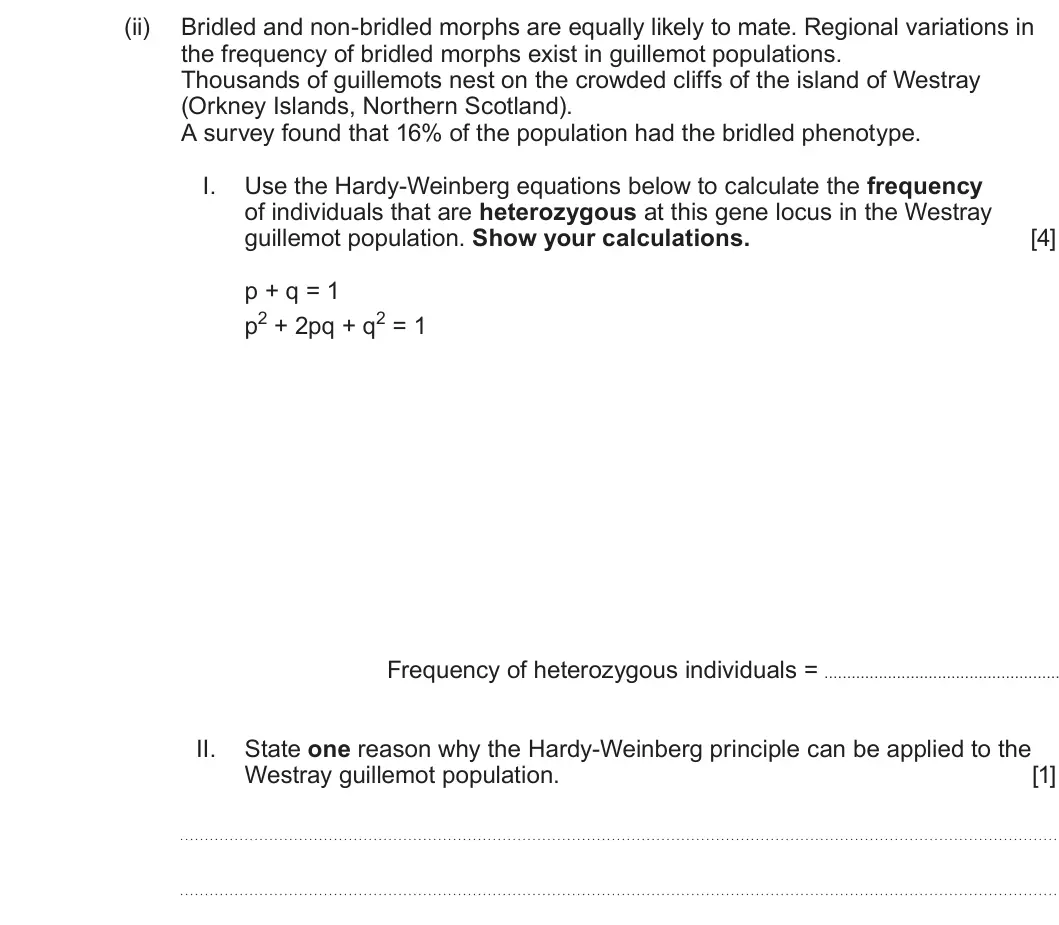
Q2(a)(iii)
The whole paper ↗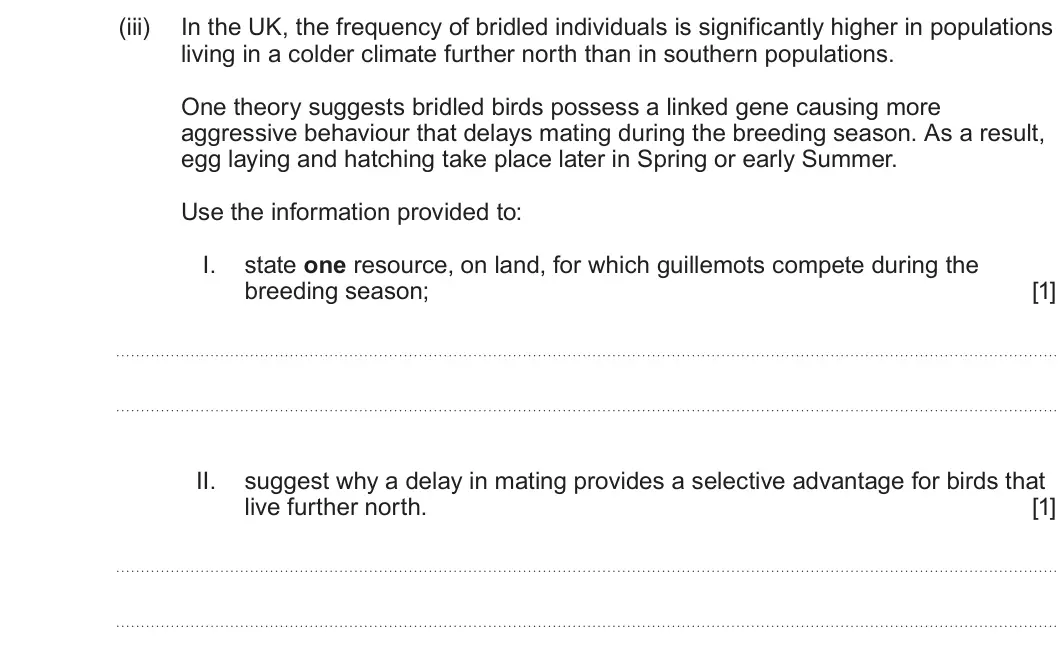
Q2(b)(i)
The whole paper ↗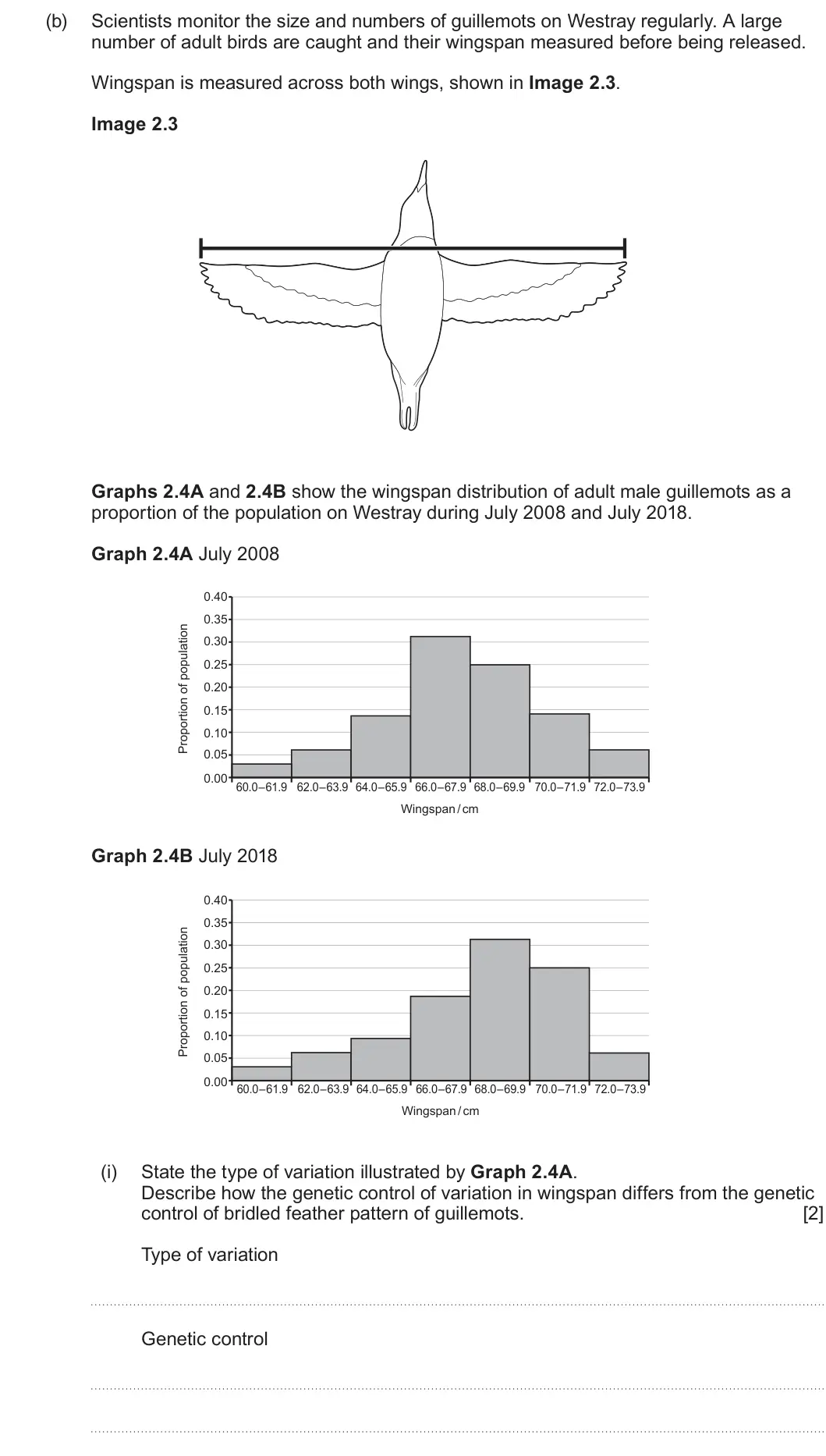
Q2(b)(ii)
The whole paper ↗
Q2(b)(iii)
The whole paper ↗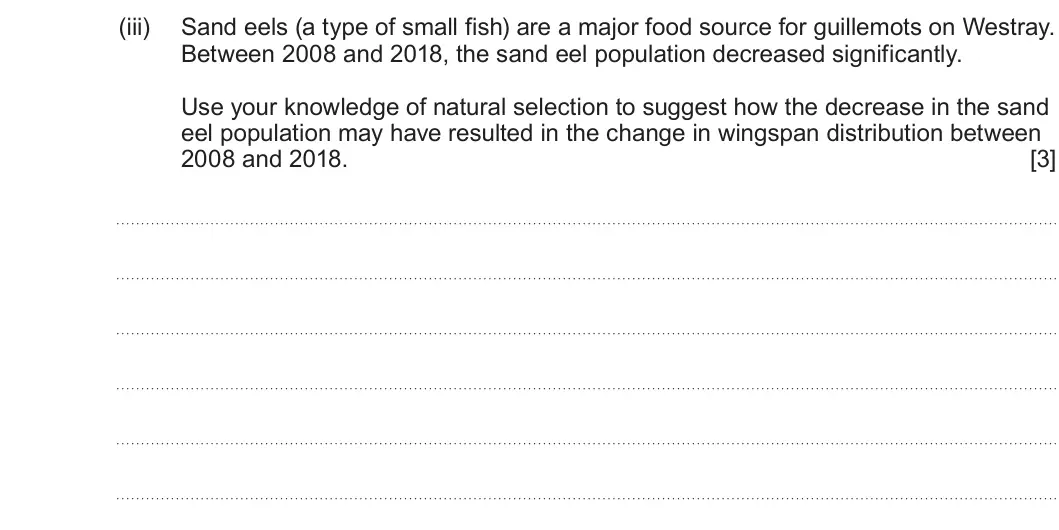
Q3(a)
The whole paper ↗
Q3(c)(ii)
The whole paper ↗
Q6(c)(ii)
The whole paper ↗
Q6(c)(iii)
The whole paper ↗
Q4(a)
The whole paper ↗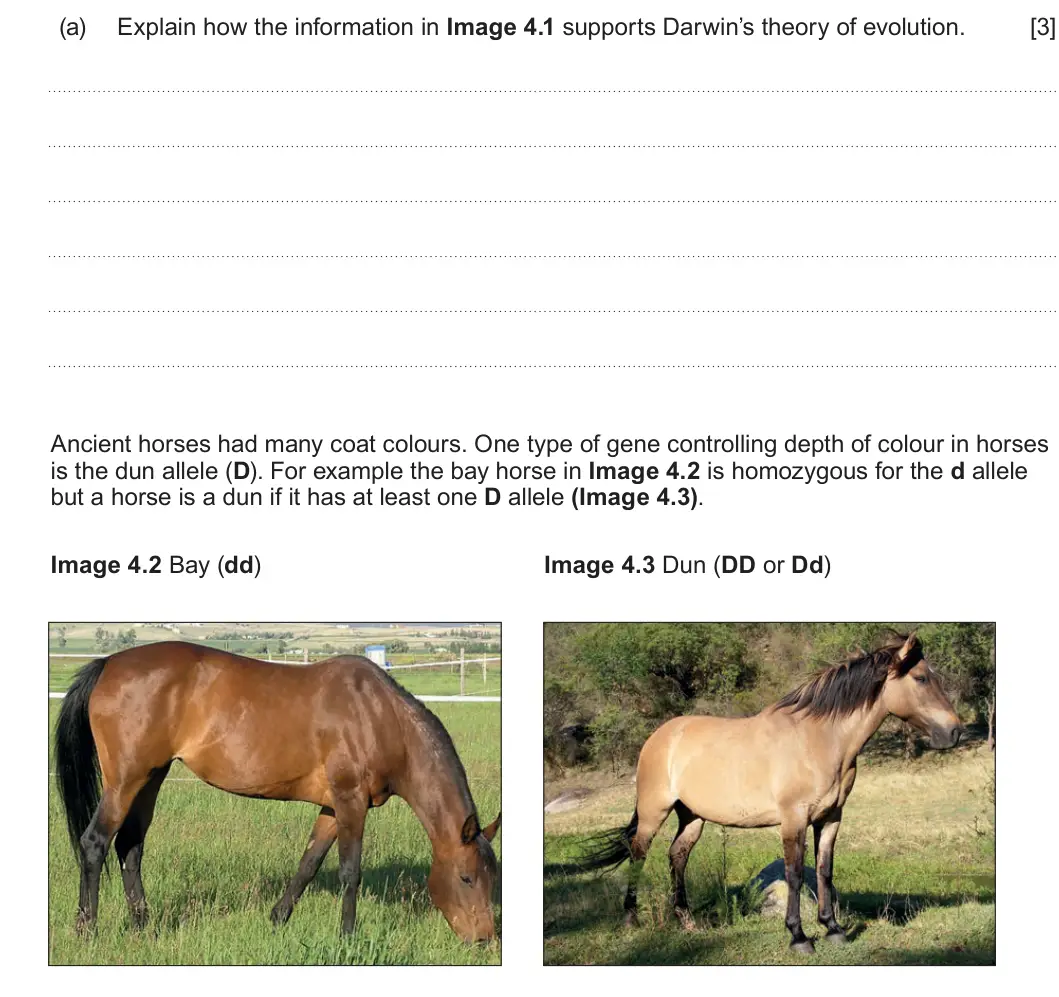
Q4(b)(i)
The whole paper ↗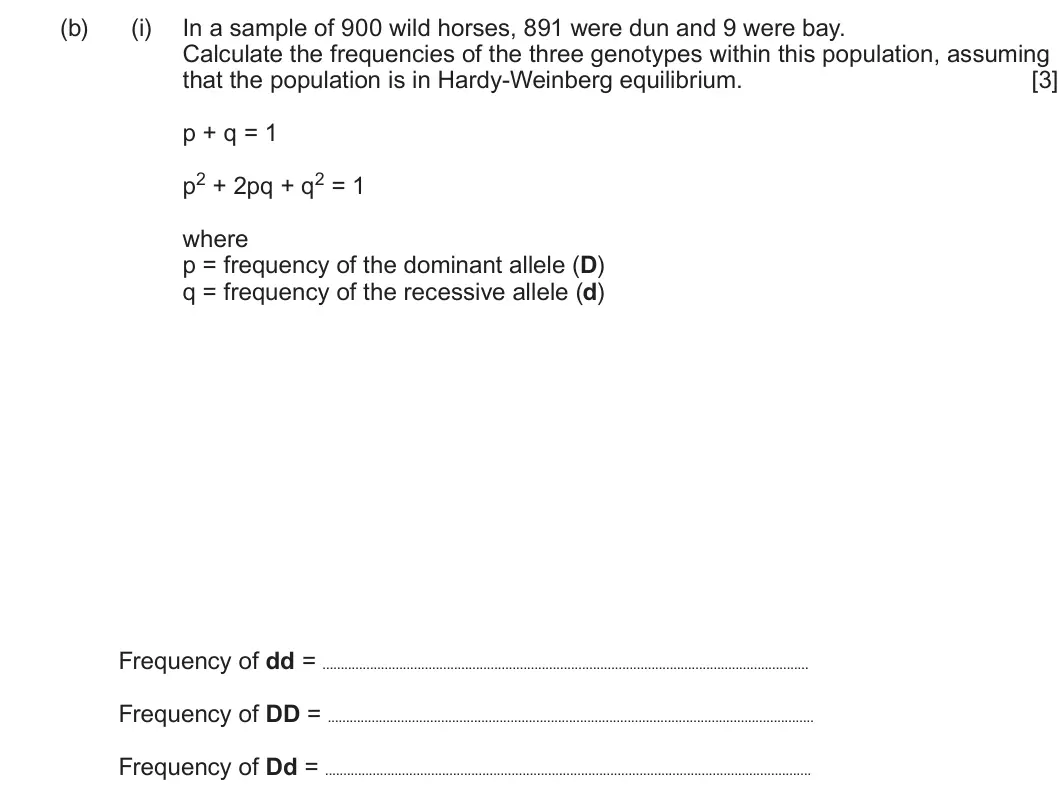
Q4(b)(ii)
The whole paper ↗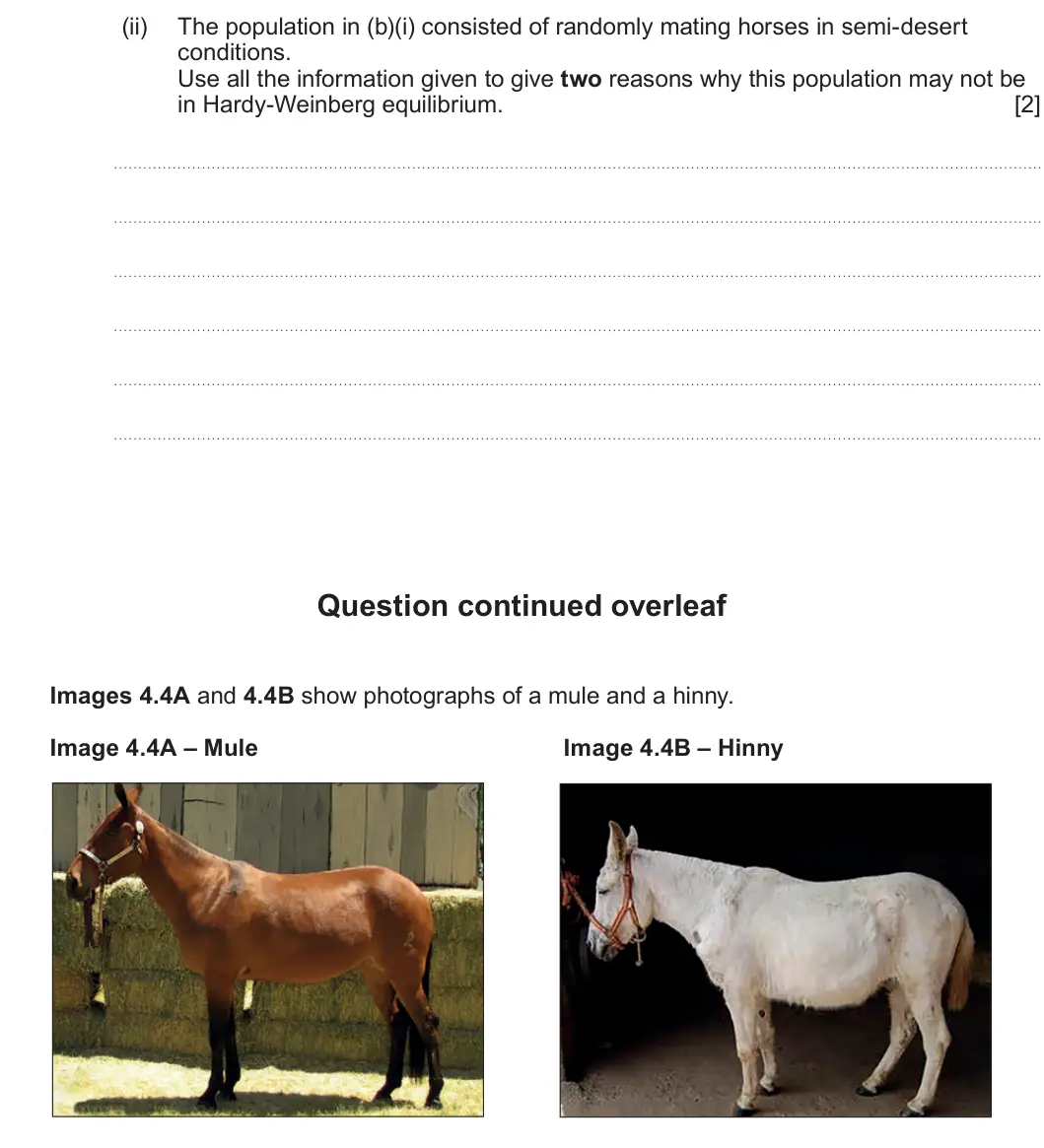
Q4(c)(i)
The whole paper ↗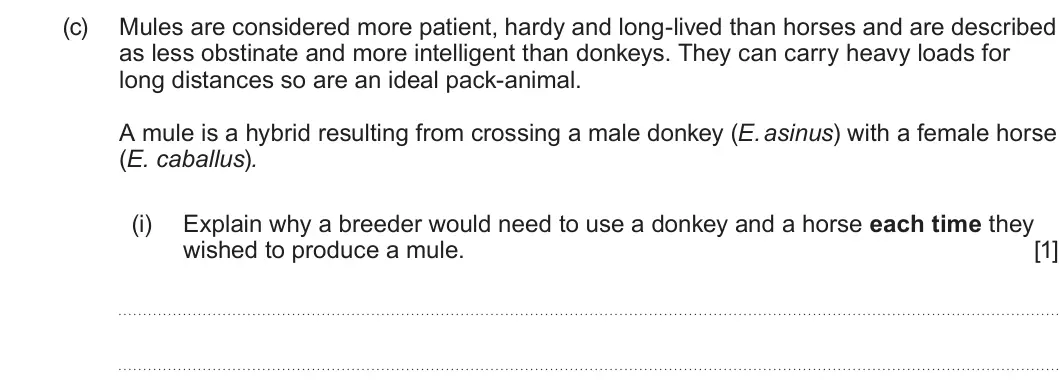
Q4(c)(ii)
The whole paper ↗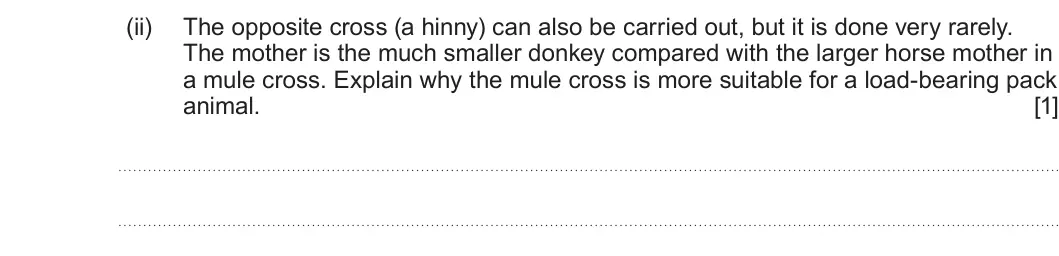
Q5(b)
The whole paper ↗
Q5(c)
The whole paper ↗
Q5(d)
The whole paper ↗
Q2(c)(i)
The whole paper ↗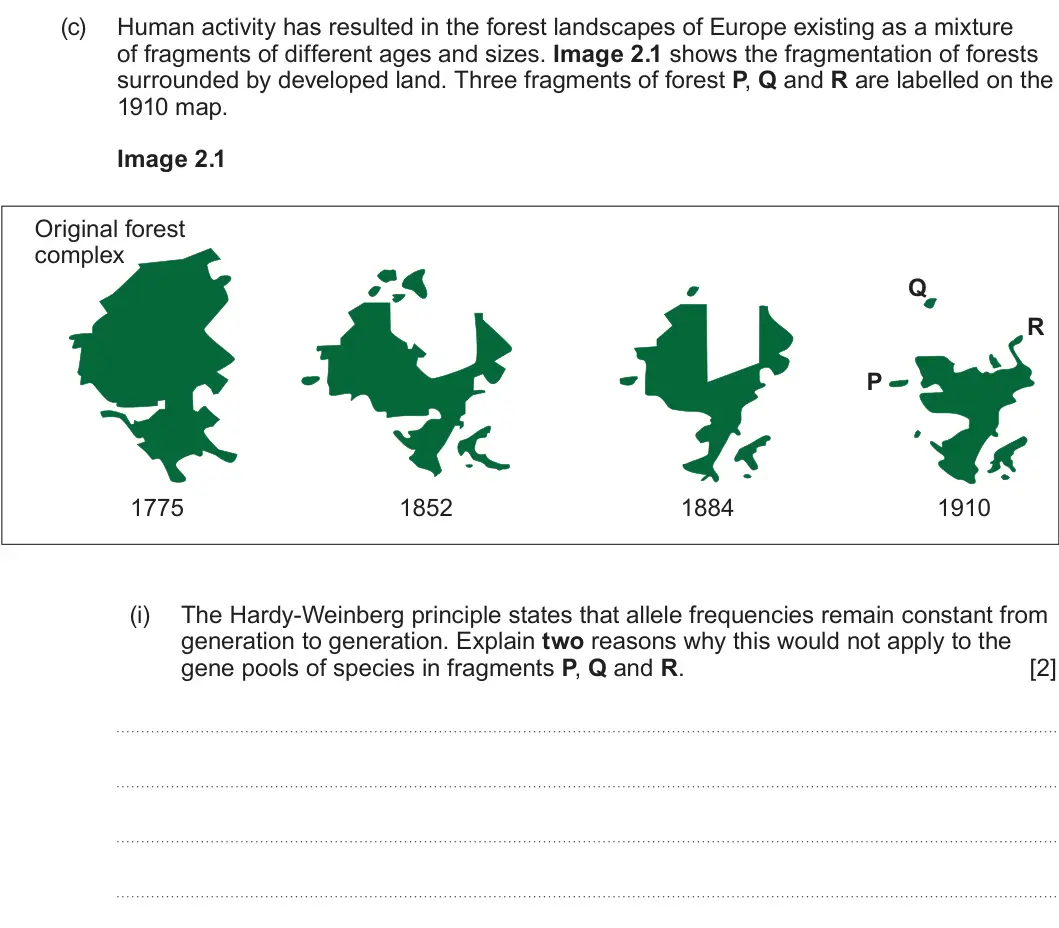
Q3(a)(i)
The whole paper ↗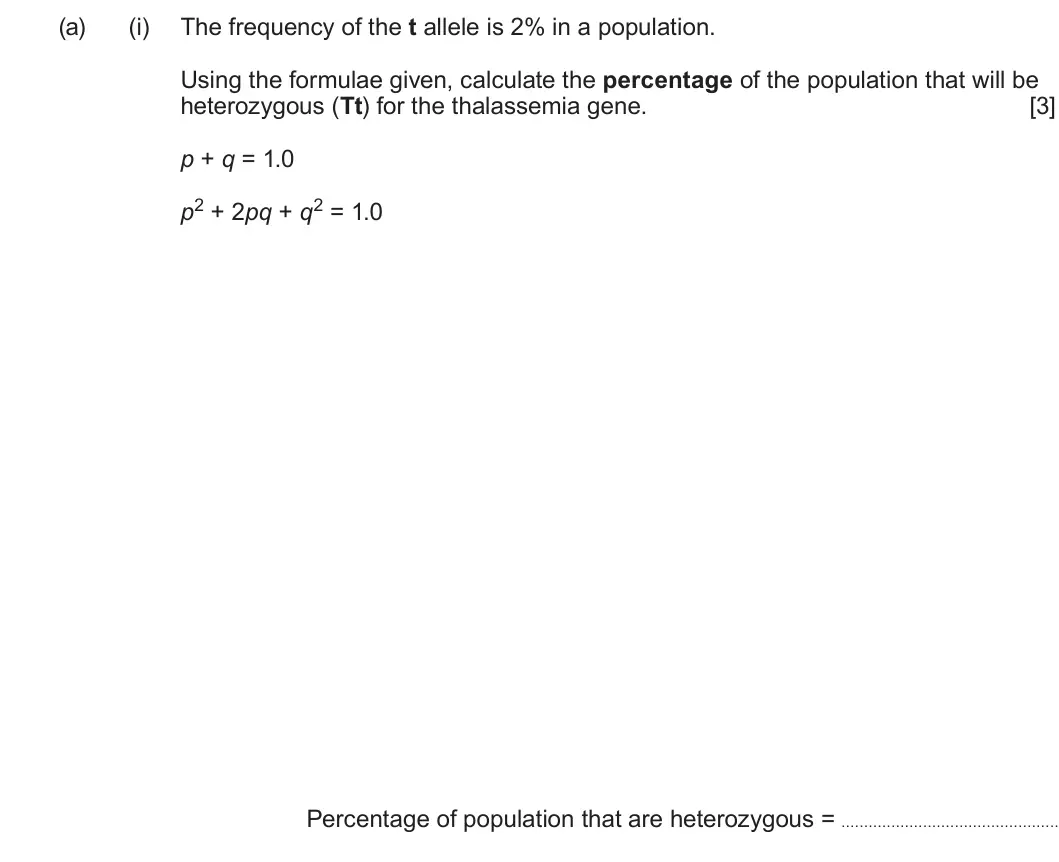
Q3(a)(ii)
The whole paper ↗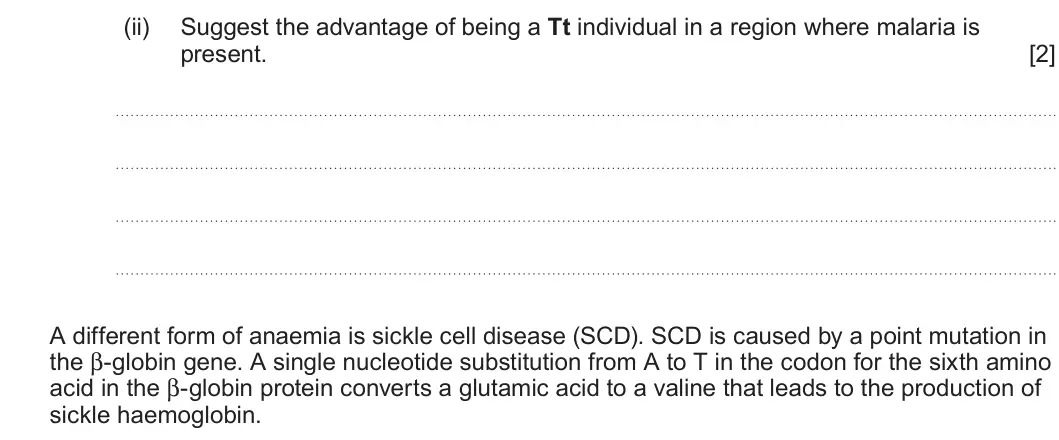
All 36 questions on Variation and evolution, as a list
- Summer 2025, Unit 4, Q2(a)(ii) (5 marks): Bridled and non-bridled morphs are equally likely to mate. Regional variations in the frequency of bridled morphs exist in guillemot populations. Thousands of g
- Summer 2025, Unit 4, Q2(a)(iii) (2 marks): In the UK, the frequency of bridled individuals is significantly higher in populations living in a colder climate further north than in southern populations. On
- Summer 2025, Unit 4, Q2(b)(i) (2 marks): State the type of variation illustrated by Graph 2.4A. Describe how the genetic control of variation in wingspan differs from the genetic control of bridled fea
- Summer 2025, Unit 4, Q2(b)(ii) (1 mark): Use Graphs 2.4A and 2.4B to describe the change in the distribution of guillemot wingspan on Westray between 2008 and 2018. [1]
- Summer 2025, Unit 4, Q2(b)(iii) (3 marks): Sand eels (a type of small fish) are a major food source for guillemots on Westray. Between 2008 and 2018, the sand eel population decreased significantly. Use
- Summer 2025, Unit 4, Q3(a) (3 marks): Use the above information to explain how, over time, the two subspecies of Pediculus could evolve into two separate species. [3]
- Summer 2025, Unit 4, Q3(c)(ii) (2 marks): Scientists concluded that the origin of body lice can be correlated with the use of clothing by humans. Use the information in Image 3.2 to: I. explain one piec
- Summer 2024, Unit 3, Q6(c)(ii) (1 mark): Give the term used for the type of variation shown in Image 6.3. [1]
- Summer 2024, Unit 3, Q6(c)(iii) (2 marks): Suggest the advantage of bands to snails which live amongst twigs and leaves on the floor of the birch wood. [2]
- Summer 2024, Unit 4, Q4(a) (3 marks): Explain how the information in Image 4.1 supports Darwin’s theory of evolution. [3] Ancient horses had many coat colours. One type of gene controlling depth of
- Summer 2024, Unit 4, Q4(b)(i) (3 marks): In a sample of 900 wild horses, 891 were dun and 9 were bay. Calculate the frequencies of the three genotypes within this population, assuming that the populati
- Summer 2024, Unit 4, Q4(b)(ii) (2 marks): The population in (b)(i) consisted of randomly mating horses in semi-desert conditions. Use all the information given to give two reasons why this population ma
- Summer 2024, Unit 4, Q4(c)(i) (1 mark): Explain why a breeder would need to use a donkey and a horse each time they wished to produce a mule. [1]
- Summer 2024, Unit 4, Q4(c)(ii) (1 mark): The opposite cross (a hinny) can also be carried out, but it is done very rarely. The mother is the much smaller donkey compared with the larger horse mother in
- Summer 2023, Unit 4, Q5(b) (2 marks): The different patterned dots ( ) on Image 5 indicate where closely matching genetic profiles were found by the researchers. Explain the distribution of the gene
- Summer 2023, Unit 4, Q5(c) (3 marks): Using your knowledge of evolution, explain the high incidence of elephants without tusks in the Gorongosa elephant population. [3]
- Summer 2023, Unit 4, Q5(d) (2 marks): Suggest how the trend toward increased lack of tusks in a population with heavy poaching will affect African elephant population sizes in the future. Explain yo
- Summer 2022, Unit 3, Q2(c)(i) (2 marks): The Hardy-Weinberg principle states that allele frequencies remain constant from generation to generation. Explain two reasons why this would not apply to the g
- Summer 2022, Unit 4, Q3(a)(i) (3 marks): The frequency of the t allele is 2% in a population. Using the formulae given, calculate the percentage of the population that will be heterozygous (Tt) for the
- Summer 2022, Unit 4, Q3(a)(ii) (2 marks): Suggest the advantage of being a Tt individual in a region where malaria is present. [2] A different form of anaemia is sickle cell disease (SCD). SCD is caused
- Summer 2022, Unit 4, Q4(a)(i) (3 marks): Using data from Graph 4.2, state the conclusions you could draw about the distribution of the phenotypes in each of the three habitats. [3] Wood Meadow Hedge
- Summer 2022, Unit 4, Q4(a)(ii) (1 mark): Explain why the snails might be distributed in the three habitats in such a way. [1]
- Summer 2022, Unit 4, Q4(b) (3 marks): The snails collected from the sample areas shown in Section A of Graph 4.2 were mainly brown and unbanded. The data suggests that there is an uneven distributio
- Summer 2022, Unit 4, Q4(c) (3 marks): Table 4.3 shows a range of Chi-squared values. Using two degrees of freedom and the Chi-squared values shown in Table 4.3, state whether you would accept or rej
- Summer 2022, Unit 4, Q6 (9 marks): “Call it a ‘pizzly’ or a ‘grolar bear’, this new hybrid may be here to stay, say scientists. But is this the end to the polar bear as we know it or the start of
- Summer 2019, Unit 4, Q2(a) (4 marks): Using the equations below, calculate the frequency of alleles HbA and HbS in African-Americans living in America where 1 in 625 suffers from sickle cell anaemia
- Summer 2019, Unit 4, Q2(b) (5 marks): Malaria is the most serious and wide-spread parasitic disease in humans; the vast majority of global malaria cases are in Africa. Sickle red blood cells are les
- Summer 2018, Unit 4, Q2(a)(i) (1 mark): State the type of variation shown by the plants taken from the unpolluted soil. Explain your answer. [1]
- Summer 2018, Unit 4, Q2(a)(ii) (3 marks): With reference to the graph, state which letter (A, B or C) identifies the mode for sweet vernal grass taken from the mine site and state the difference between
- Summer 2018, Unit 4, Q2(b) (4 marks): One hundred years ago the sweet vernal grass was unable to survive on the mine sites but now colonises them. Use your understanding of natural selection to expl
- Summer 2018, Unit 4, Q2(c) (4 marks): Sweet vernal grass plants which are tolerant to high copper concentration in the soil flower at a different time of year from the non-tolerant plants in adjacen
- Summer 2017, Unit 4, Q1(b)(ii) (5 marks): S.xbaxteri has three copies of each chromosome. Describe the change that has resulted in the formation of the hybrid S.cambrensis and explain why it is fertile.
- Summer 2017, Unit 4, Q1(b)(iii) (1 mark): S.cambrensis appeared independently in Edinburgh in 1974. Originally there were 102 plants in three populations surrounded by parental plants growing on derelic
- Summer 2017, Unit 4, Q4(a)(i) (3 marks): The Hardy-Weinberg principle states that allele frequencies in a population remain constant from generation to generation providing certain conditions exist. St
- Summer 2017, Unit 4, Q4(a)(ii) (4 marks): The frequency of allele N in Germany is 45%. Calculate the following given that: p = frequency of allele M, q = frequency of allele N, p + q = 1 p2 + 2pq + q2 =
- Summer 2017, Unit 4, Q4(b) (3 marks): During the eighteenth century, some groups of people emigrated from Germany to America. Since then, these people have married almost exclusively within their ow
Questions, mark schemes and examiner’s reports are © WJEC CBAC Ltd, from their published past papers. Plumi isn’t affiliated with any exam board. Want whole papers? Every WJEC A-Level Biology paper.
Rather write your answers by hand on iPad? Plumi marks them against the same mark schemes.