 plumi
Immunology and disease: WJEC A‑Level Biology questions
Every WJEC A-Level Biology exam question on 4.A Immunology and disease, 2016–2025, with its mark scheme and examiner’s report.
Find questions1,223
Calculations
Q7(a)(i)
The whole paper ↗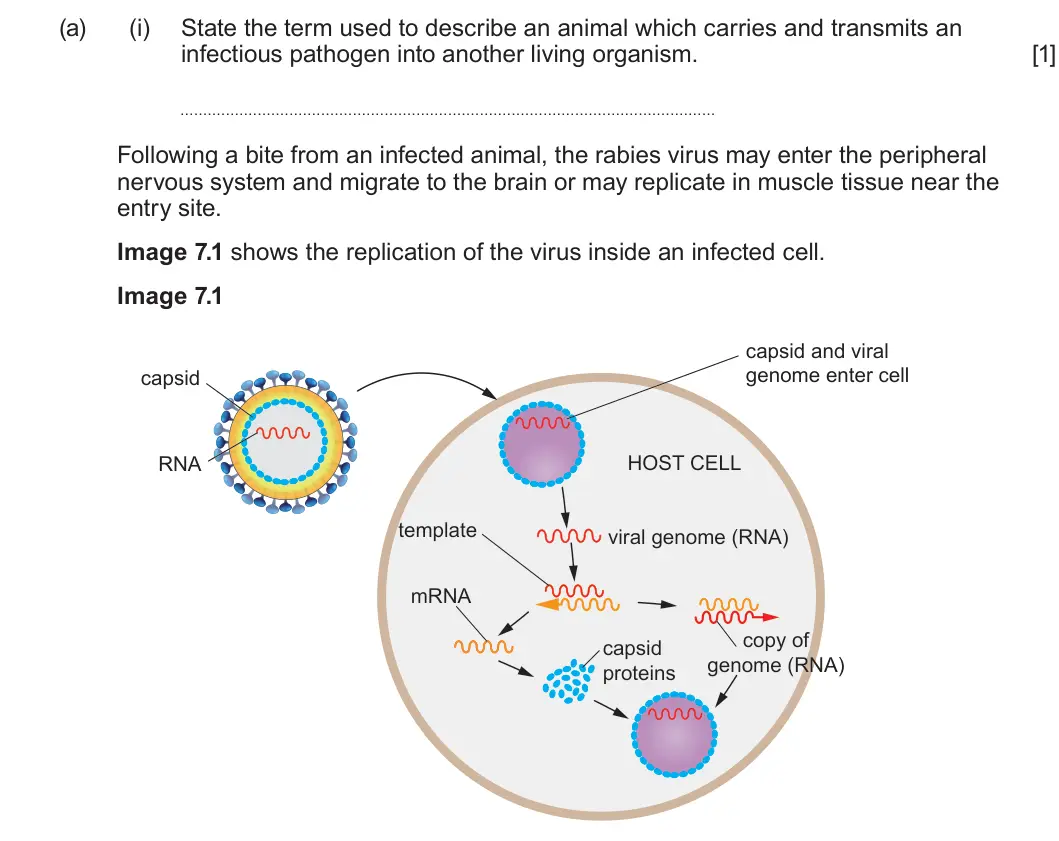
Q7(a)(ii)
The whole paper ↗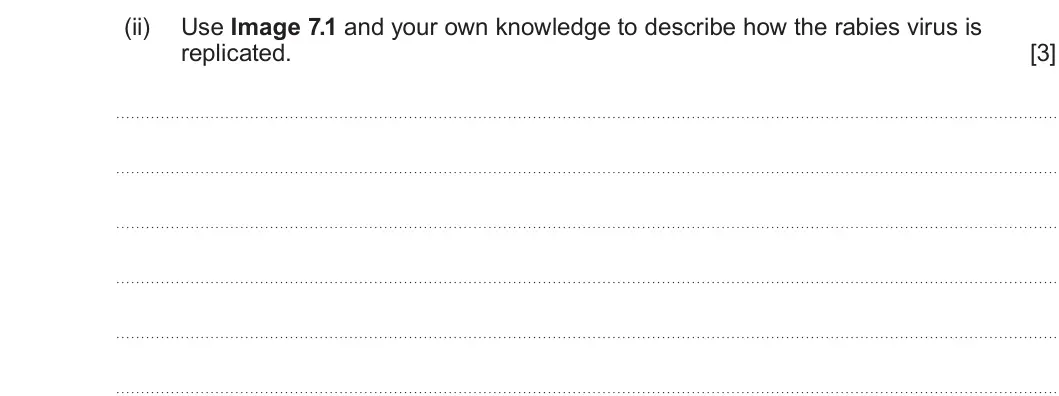
Q7(b)(i)
The whole paper ↗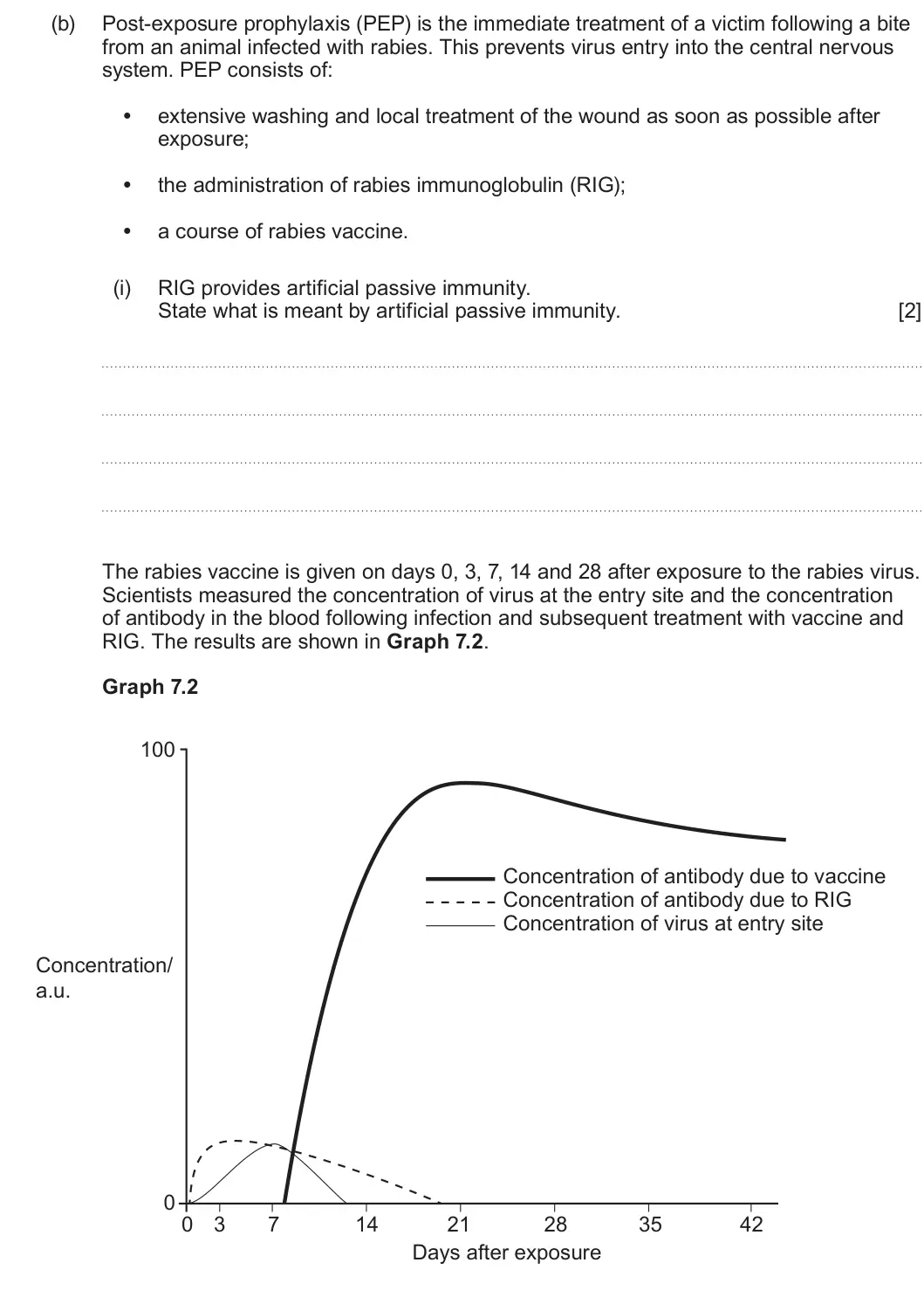
Q7(b)(ii)
The whole paper ↗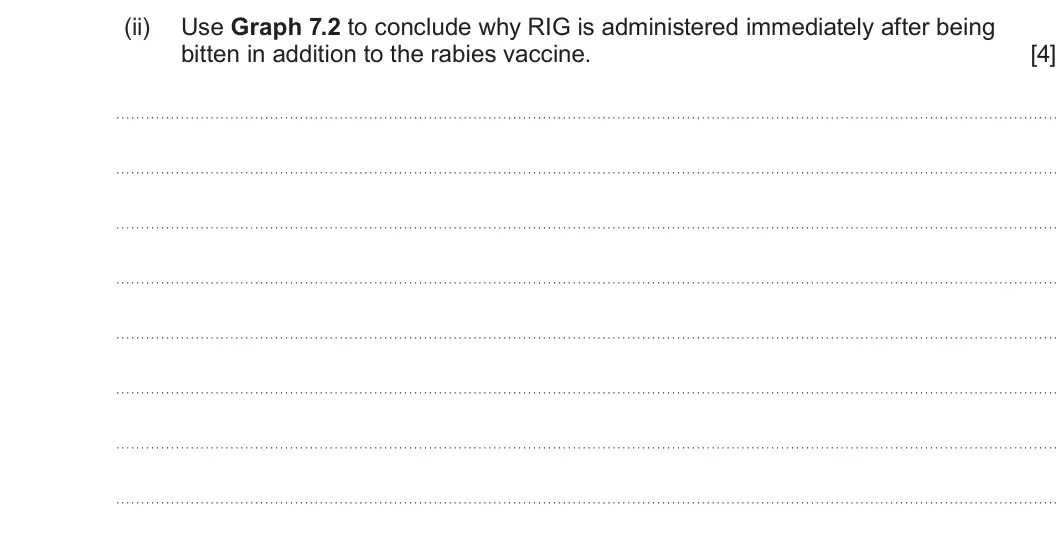
Q7(b)(iii)
The whole paper ↗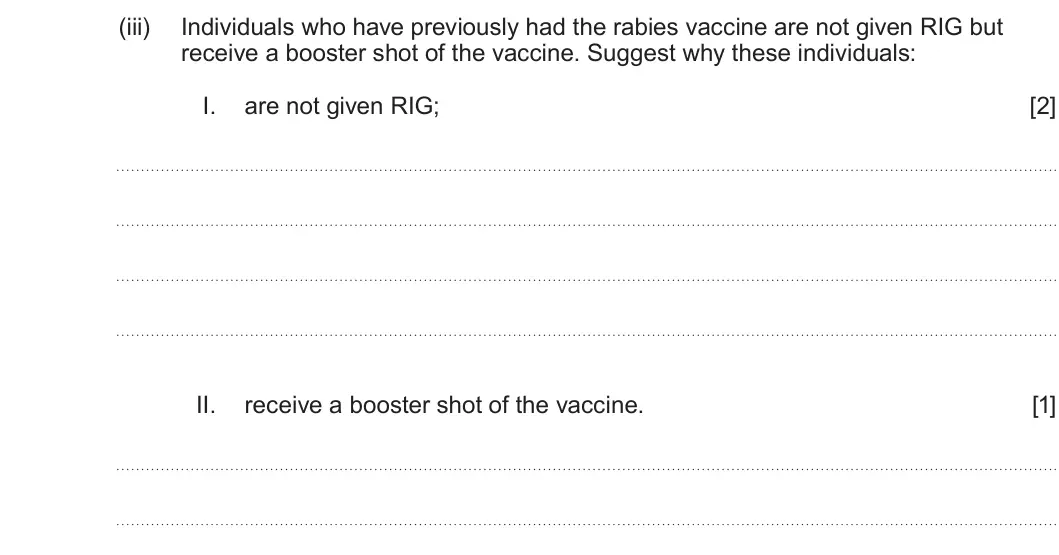
Q7(c)(i)
The whole paper ↗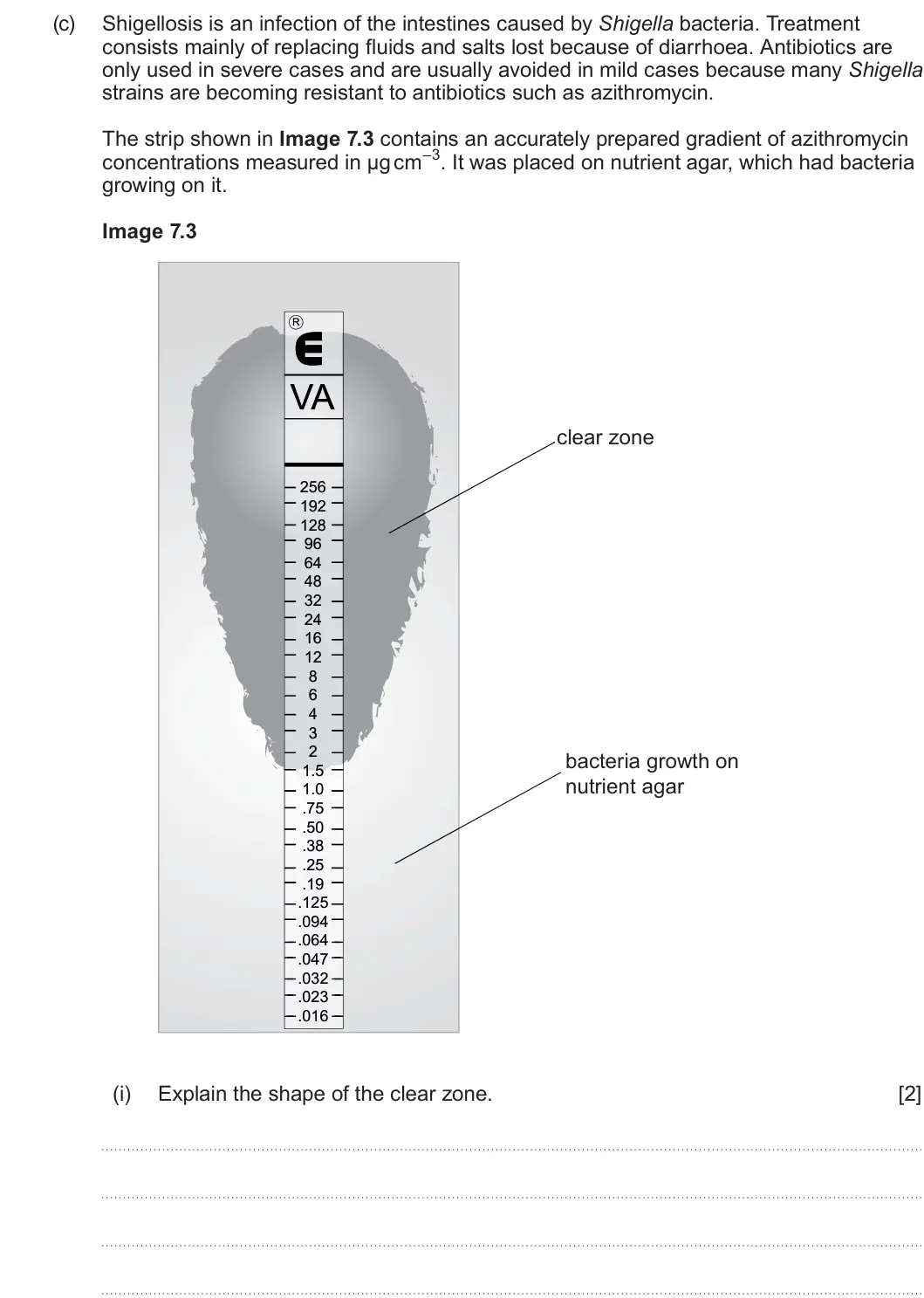
Q7(c)(ii)
The whole paper ↗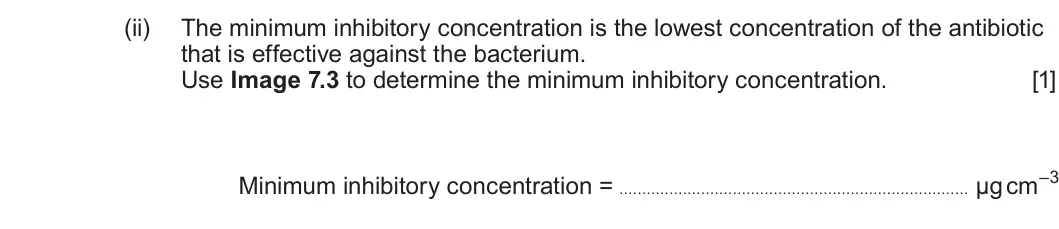
Q7(c)(iii)
The whole paper ↗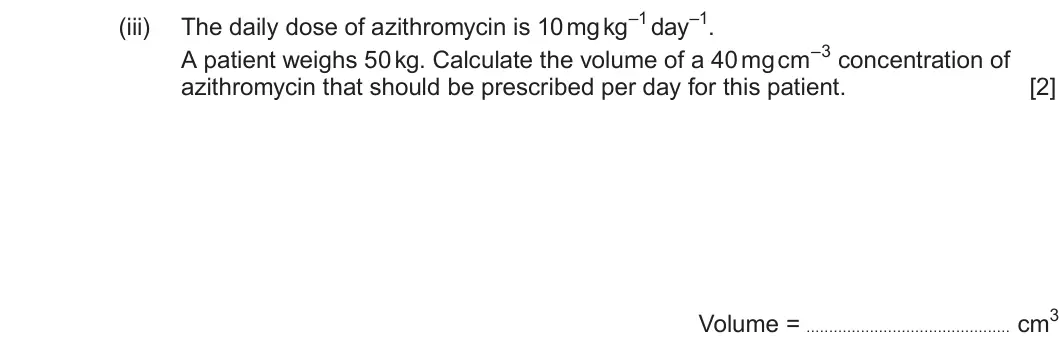
Q7(c)(iv)
The whole paper ↗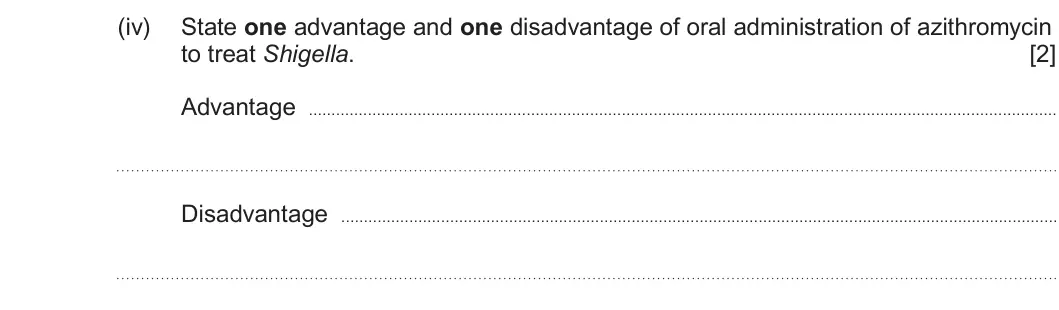
Q7(a)(i)
The whole paper ↗
Q7(a)(ii)
The whole paper ↗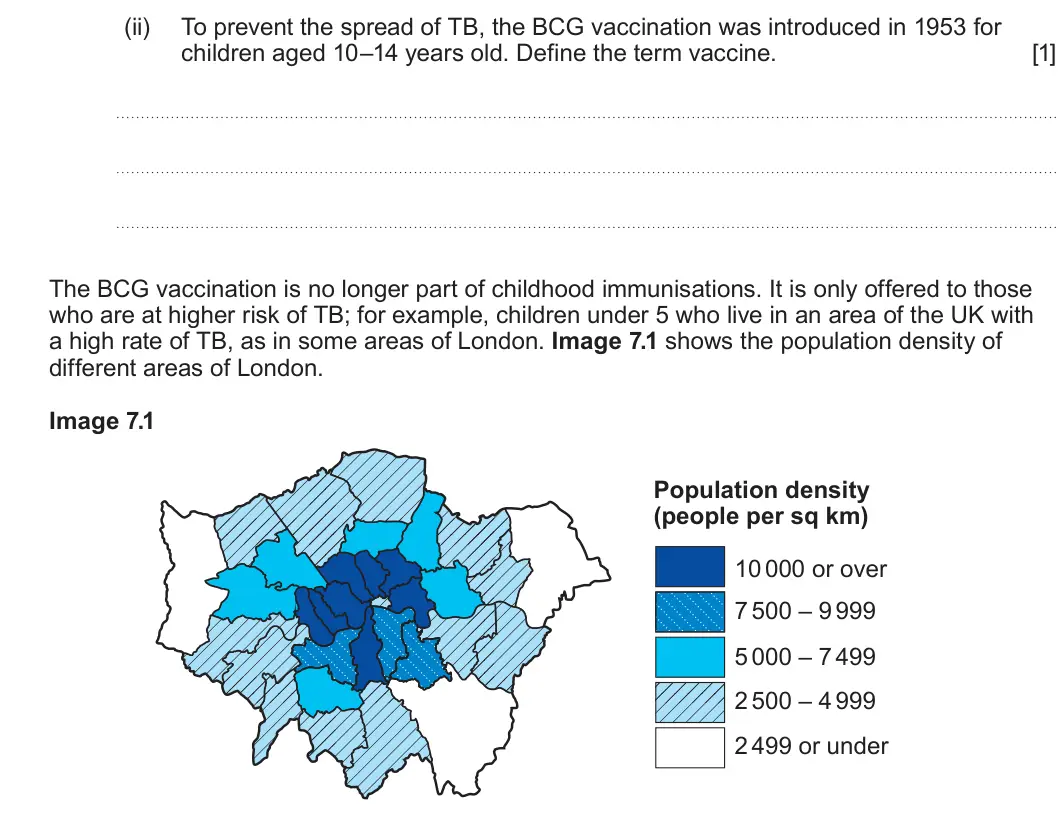
Q7(a)(iii)
The whole paper ↗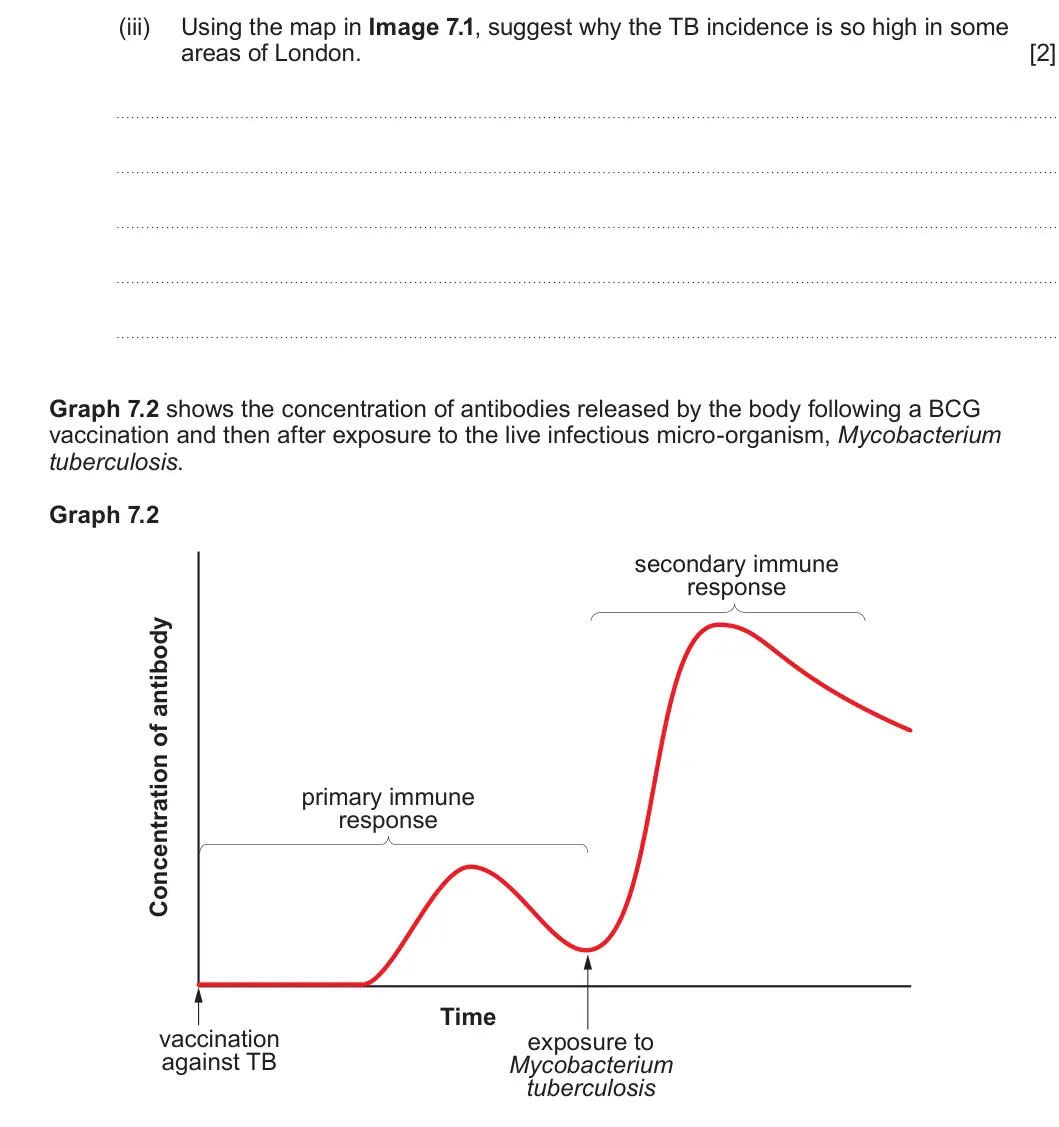
Q7(b)(i)
The whole paper ↗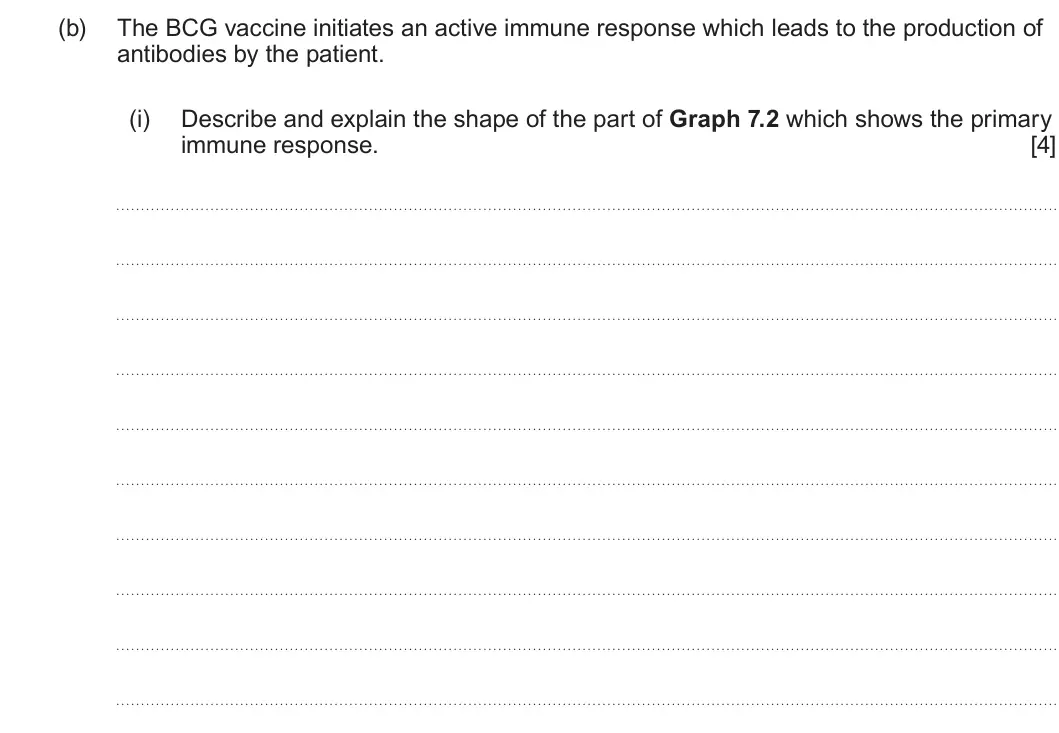
Q7(b)(ii)
The whole paper ↗
Q7(c)(i)
The whole paper ↗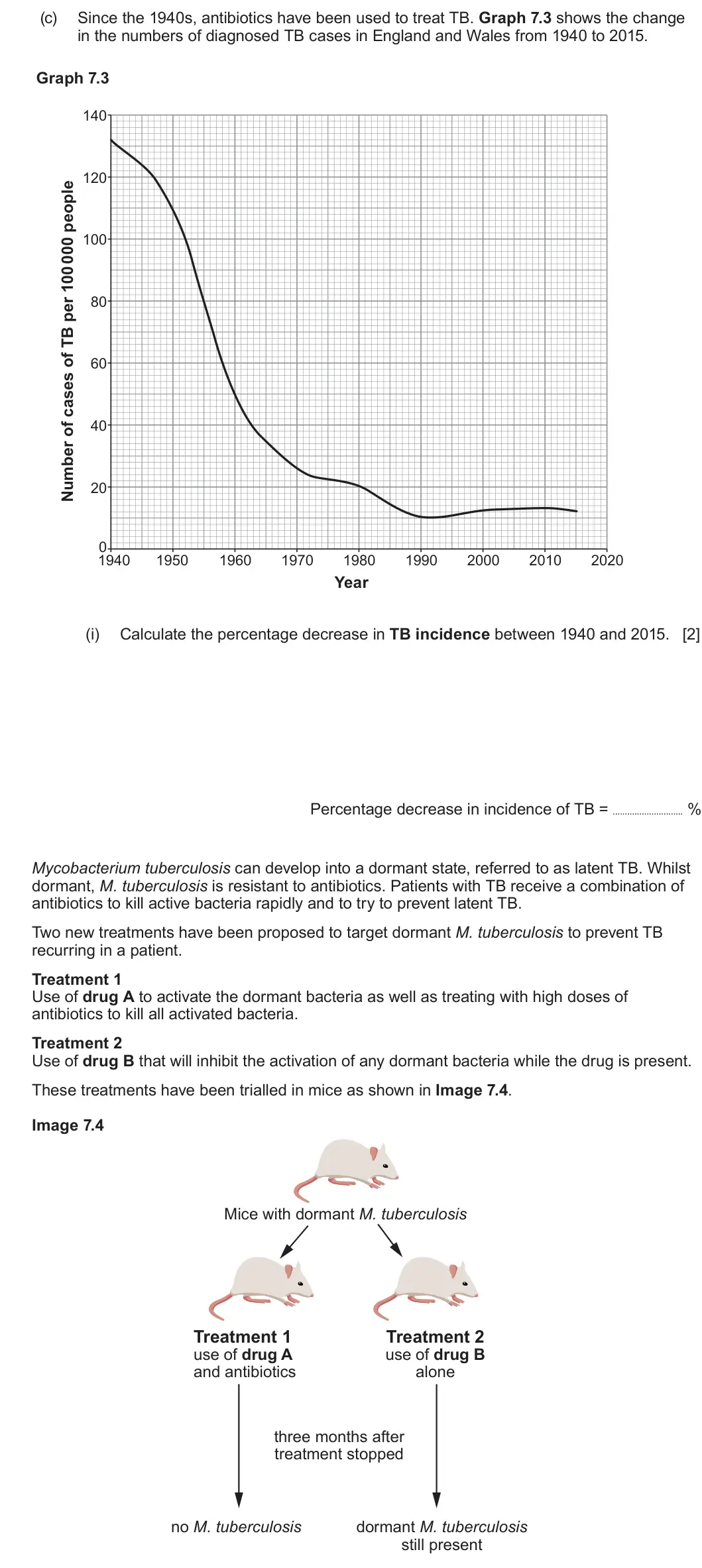
Q7(c)(ii)
The whole paper ↗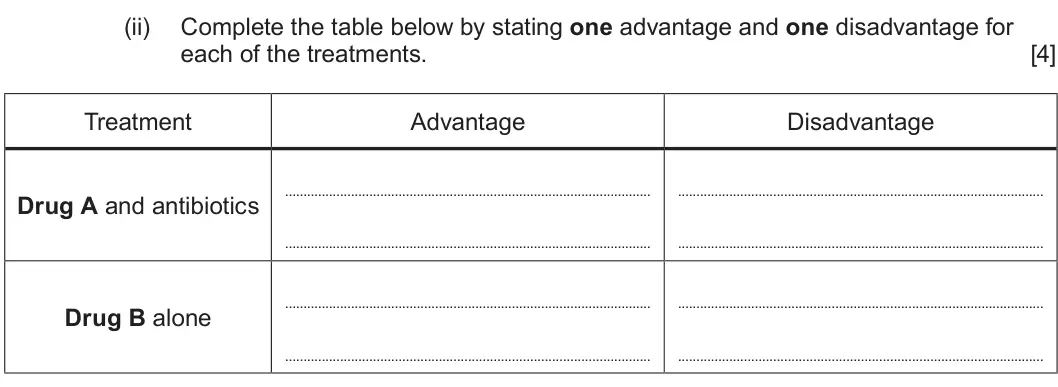
Q7(d)
The whole paper ↗
Q7(a)(i)
The whole paper ↗
Q7(a)(ii)
The whole paper ↗
Q7(a)(iii)
The whole paper ↗
All 38 questions on Immunology and disease, as a list
- Summer 2025, Unit 4, Q7(a)(i) (1 mark): State the term used to describe an animal which carries and transmits an infectious pathogen into another living organism. [1] Following a bite from an infected
- Summer 2025, Unit 4, Q7(a)(ii) (3 marks): Use Image 7.1 and your own knowledge to describe how the rabies virus is replicated. [3]
- Summer 2025, Unit 4, Q7(b)(i) (2 marks): RIG provides artificial passive immunity. State what is meant by artificial passive immunity. [2] The rabies vaccine is given on days 0, 3, 7, 14 and 28 after e
- Summer 2025, Unit 4, Q7(b)(ii) (4 marks): Use Graph 7.2 to conclude why RIG is administered immediately after being bitten in addition to the rabies vaccine. [4]
- Summer 2025, Unit 4, Q7(b)(iii) (3 marks): Individuals who have previously had the rabies vaccine are not given RIG but receive a booster shot of the vaccine. Suggest why these individuals: I. are not gi
- Summer 2025, Unit 4, Q7(c)(i) (2 marks): Explain the shape of the clear zone. [2]
- Summer 2025, Unit 4, Q7(c)(ii) (1 mark): The minimum inhibitory concentration is the lowest concentration of the antibiotic that is effective against the bacterium. Use Image 7.3 to determine the minim
- Summer 2025, Unit 4, Q7(c)(iii) (2 marks): A patient weighs 50 kg. Calculate the volume of a 40 mg cm–3 concentration of azithromycin that should be prescribed per day for this patient. [2] Volume = cm3
- Summer 2025, Unit 4, Q7(c)(iv) (2 marks): State one advantage and one disadvantage of oral administration of azithromycin to treat Shigella. [2] Advantage Disadvantage
- Summer 2024, Unit 4, Q7(a)(i) (1 mark): State why tuberculosis is called an infectious disease. [1]
- Summer 2024, Unit 4, Q7(a)(ii) (1 mark): To prevent the spread of TB, the BCG vaccination was introduced in 1953 for children aged 10–14 years old. Define the term vaccine. [1] The BCG vaccination is n
- Summer 2024, Unit 4, Q7(a)(iii) (2 marks): Using the map in Image 7.1, suggest why the TB incidence is so high in some areas of London. [2] Graph 7.2 shows the concentration of antibodies released by the
- Summer 2024, Unit 4, Q7(b)(i) (4 marks): Describe and explain the shape of the part of Graph 7.2 which shows the primary immune response. [4]
- Summer 2024, Unit 4, Q7(b)(ii) (4 marks): With reference to Graph 7.2, explain how vaccination prevents development of TB when exposed to M. tuberculosis. [4]
- Summer 2024, Unit 4, Q7(c)(i) (2 marks): Calculate the percentage decrease in TB incidence between 1940 and 2015. [2] Percentage decrease in incidence of TB = % Mycobacterium tuberculosis can develop i
- Summer 2024, Unit 4, Q7(c)(ii) (4 marks): Complete the table below by stating one advantage and one disadvantage for each of the treatments. [4] Treatment Advantage Disadvantage Drug A and antibiotics D
- Summer 2024, Unit 4, Q7(d) (2 marks): The methods of treating TB can also be used to treat malarial infections. Explain why these methods are less effective when they are used in the treatment of ma
- Summer 2023, Unit 4, Q7(a)(i) (1 mark): State what is meant by the term bactericidal. [1]
- Summer 2023, Unit 4, Q7(a)(ii) (4 marks): Streptococcus and Staphylococcus are types of Gram-positive bacteria. Suggest how and why flucloxacillin has a bactericidal effect on these types of bacteria. [
- Summer 2023, Unit 4, Q7(a)(iii) (3 marks): Flucloxacillin has become ineffective against some species of Staphylococcus. Suggest why. [3]
- Summer 2023, Unit 4, Q7(a)(iv) (1 mark): Suggest how infection following the insect bite could be prevented. [1]
- Summer 2023, Unit 4, Q7(b)(i) (2 marks): Describe the difference between the terms endemic and epidemic. Suggest why malaria could be considered pandemic. [2]
- Summer 2023, Unit 4, Q7(b)(ii) (2 marks): State why there is no current effective vaccine against Plasmodium. [2]
- Summer 2023, Unit 4, Q7(c)(i) (1 mark): Conclude why the number of cases of measles increased between 2016 and 2020. [1]
- Summer 2023, Unit 4, Q7(c)(ii) (2 marks): In 2018 there were 700 000 children born. Calculate the number of children that had not been vaccinated by the time they were two years old. [2] Number of child
- Summer 2023, Unit 4, Q7(c)(iii) (3 marks): The MMR vaccine contains antigens of the three pathogens. Explain why a child who is exposed to the measles virus after being vaccinated does not develop the me
- Summer 2023, Unit 4, Q7(c)(iv) (1 mark): Use Graph 7.2 to suggest which year the report was published. [1]
- Summer 2019, Unit 4, Q8(a)(i) (1 mark): State three other natural barriers to infection in the body. [1]
- Summer 2019, Unit 4, Q8(a)(ii) (1 mark): Explain why the body is sometimes described as a host to other living organisms. [1]
- Summer 2019, Unit 4, Q8(a)(iii) (1 mark): Rhinovirus uses the metabolic pathways of a host cell to produce many copies of the virus. Explain how infection with rhinovirus could cause cell death. [1]
- Summer 2019, Unit 4, Q8(a)(iv) (3 marks): In cells infected with rhinovirus, the cell-mediated immune response involves the activation of B and T lymphocytes, and phagocytes. Explain how phagocytes and
- Summer 2019, Unit 4, Q8(b)(i) (3 marks): With reference to the diagram, explain why antibiotics can be used to treat colds caused by S. pyogenes but not those caused by rhinovirus. [3]
- Summer 2019, Unit 4, Q8(b)(ii) (2 marks): Patients infected with S. pyogenes can be treated with the antibiotic amoxycillin which has a similar mode of action to penicillin. The recommended dosage is at
- Summer 2019, Unit 4, Q8(b)(iii) (2 marks): Using the graph, identify the mode of action of these two antibiotics and explain how you reached this conclusion. [2]
- Summer 2019, Unit 4, Q8(b)(iv) (2 marks): State two factors that would need to be controlled to increase confidence in the results. [2]
- Summer 2019, Unit 4, Q8(b)(v) (1 mark): Explain why S. pyogenes was cultured at 35 °C. [1]
- Summer 2019, Unit 4, Q8(c)(i) (3 marks): Using your own knowledge of immunisation, suggest and explain why it is unlikely that a vaccine for the common cold will ever be developed. [3]
- Summer 2019, Unit 4, Q8(c)(ii) (1 mark): The flu virus causes many similar symptoms to the common cold. There is a vaccine against the flu virus which can provide protection. It is offered to certain ‘
Questions, mark schemes and examiner’s reports are © WJEC CBAC Ltd, from their published past papers. Plumi isn’t affiliated with any exam board. Want whole papers? Every WJEC A-Level Biology paper.
Rather write your answers by hand on iPad? Plumi marks them against the same mark schemes.