 plumi
Inheritance: WJEC A‑Level Biology questions
Every WJEC A-Level Biology exam question on 4.3 Inheritance, 2016–2025, with its mark scheme and examiner’s report.
Find questions1,223
Calculations
Q3(d)(ii)
The whole paper ↗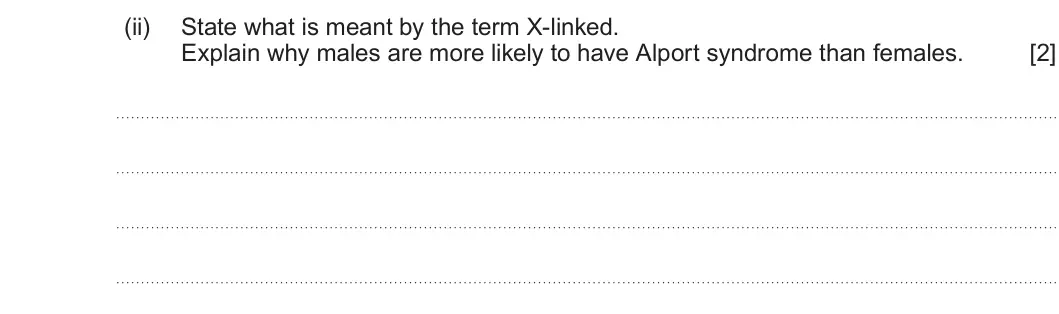
Q2(a)(i)
The whole paper ↗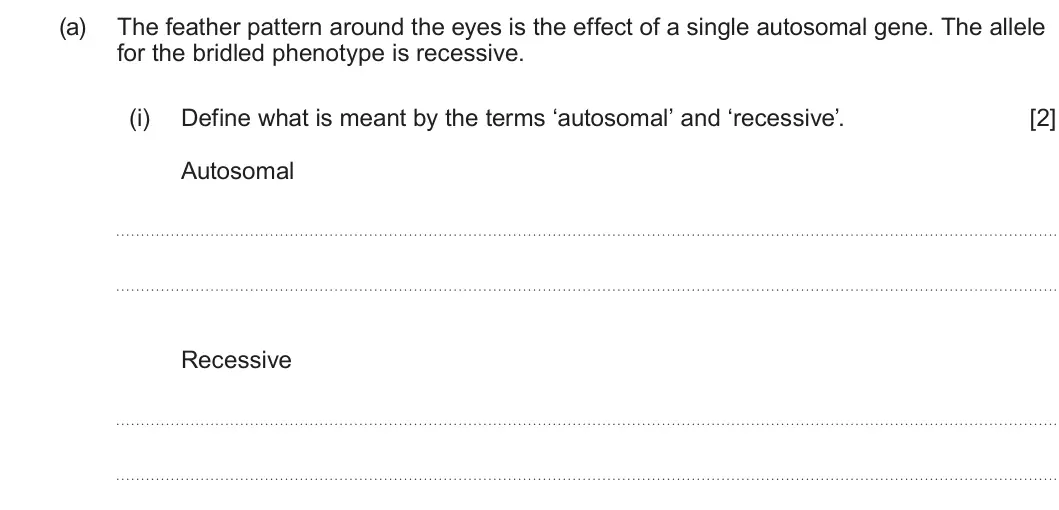
Q4(a)(i)
The whole paper ↗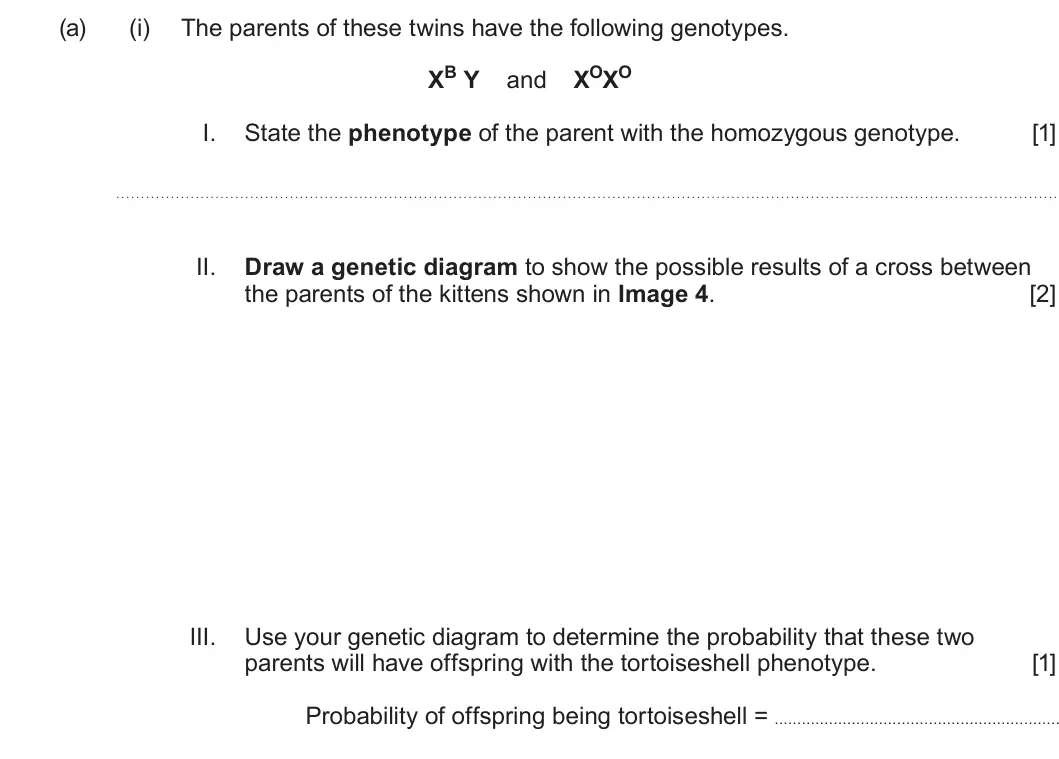
Q4(a)(ii)
The whole paper ↗
Q4(b)(i)
The whole paper ↗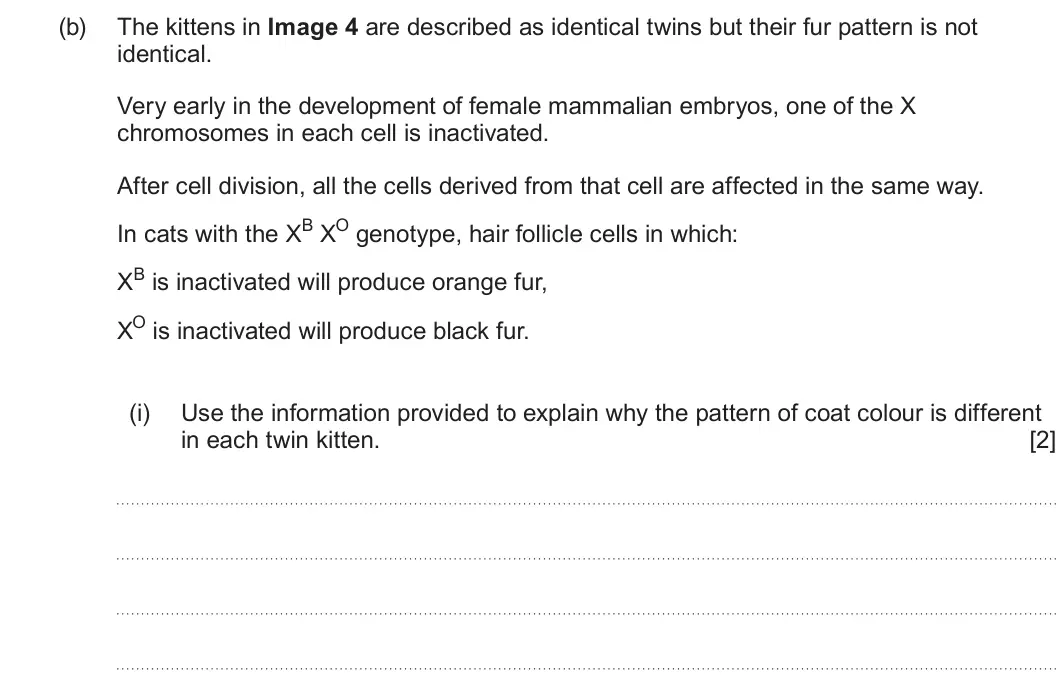
Q4(b)(ii)
The whole paper ↗
Q4(b)(iii)
The whole paper ↗
Q5(a)(i)
The whole paper ↗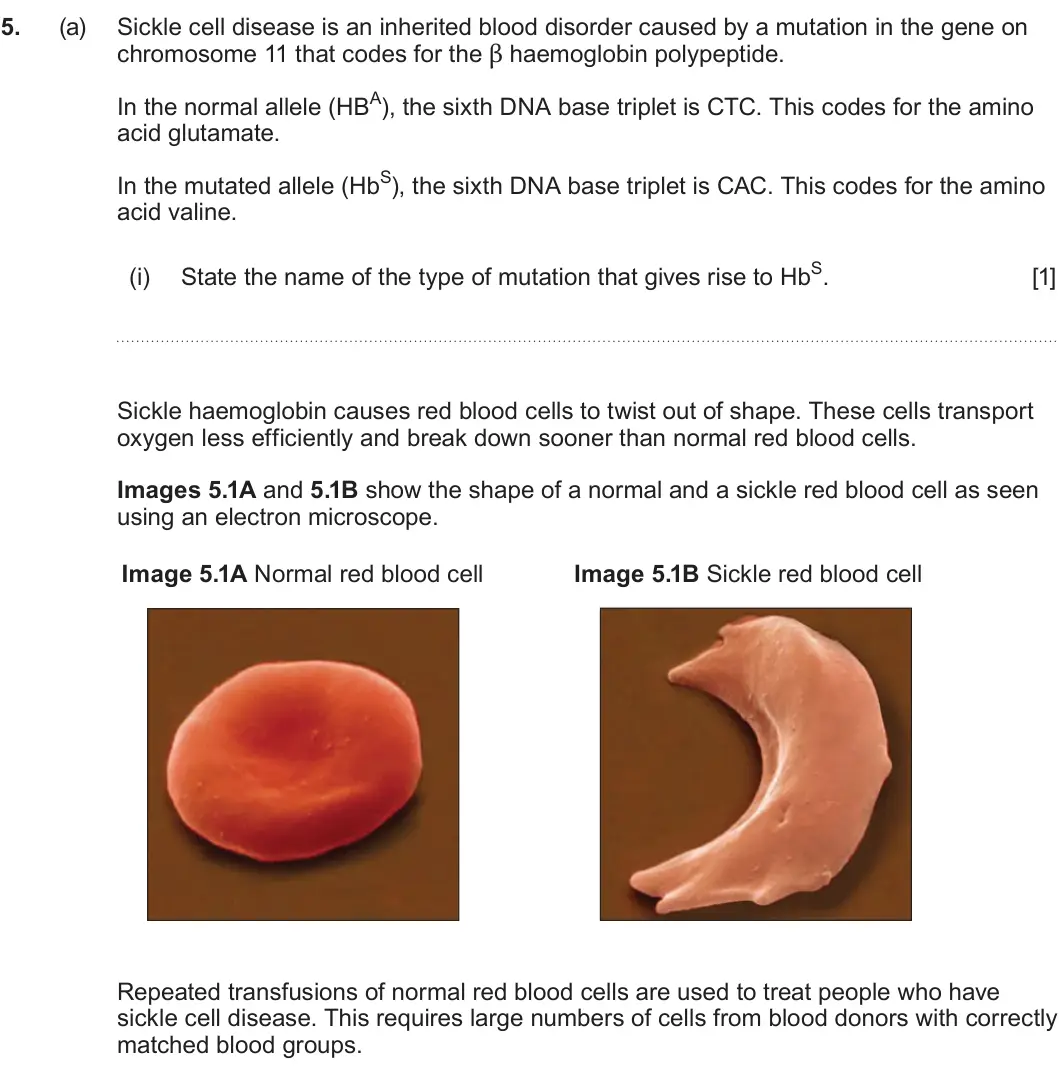
Q5(a)(i)
The whole paper ↗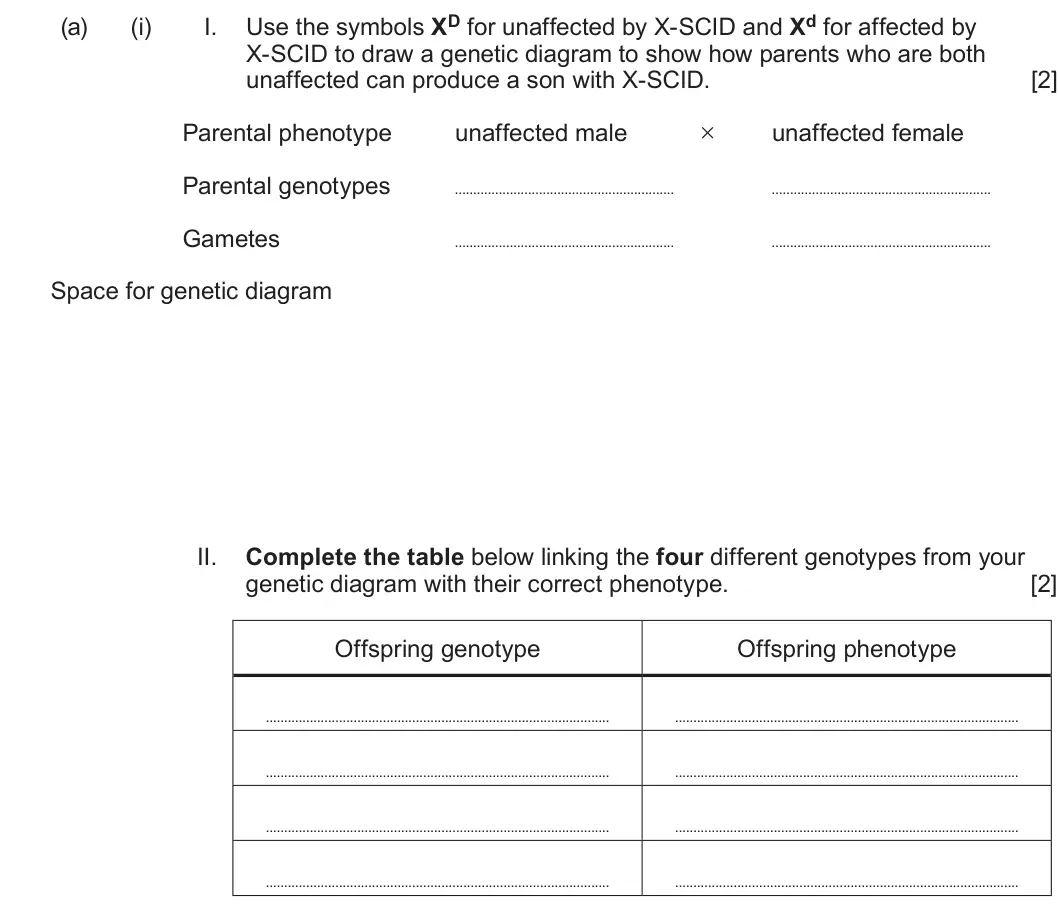
Q5(a)(ii)
The whole paper ↗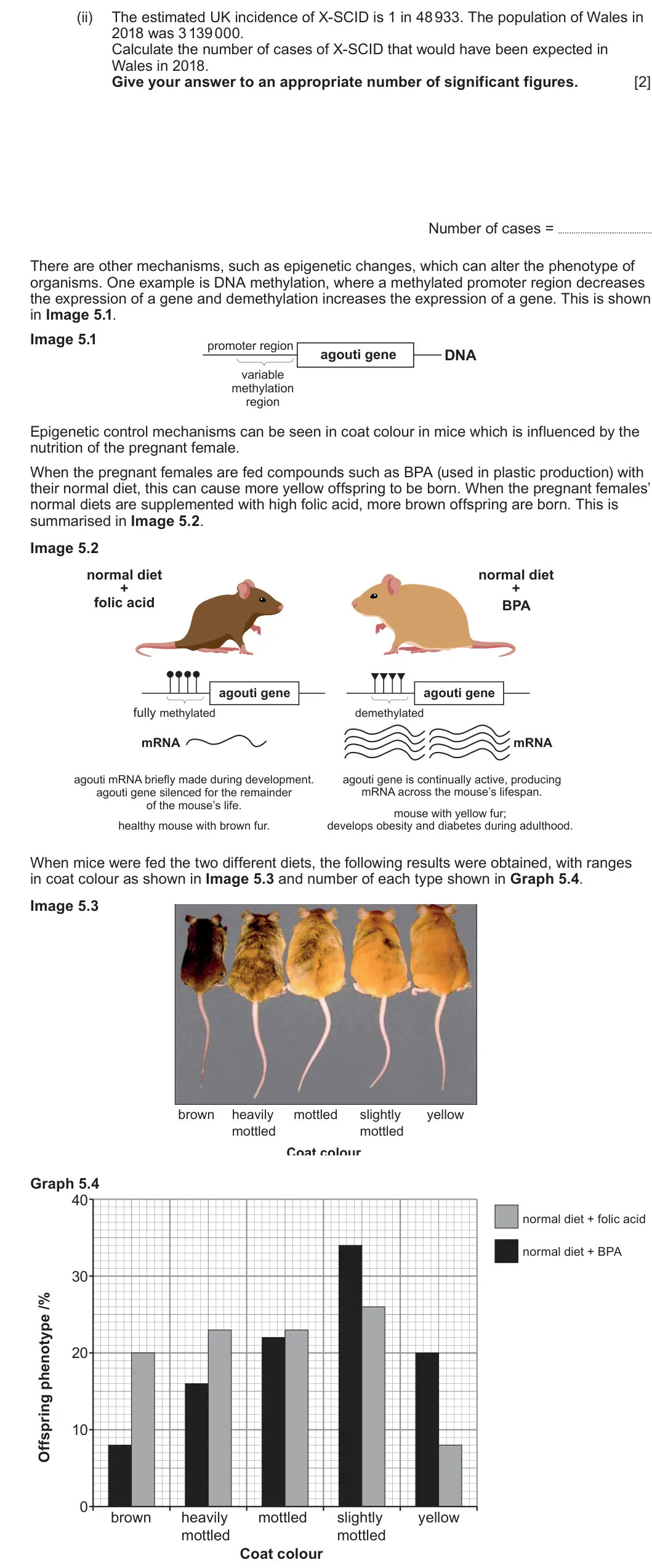
Q5(b)(i)
The whole paper ↗
Q5(b)(ii)
The whole paper ↗
Q3(a)(i)
The whole paper ↗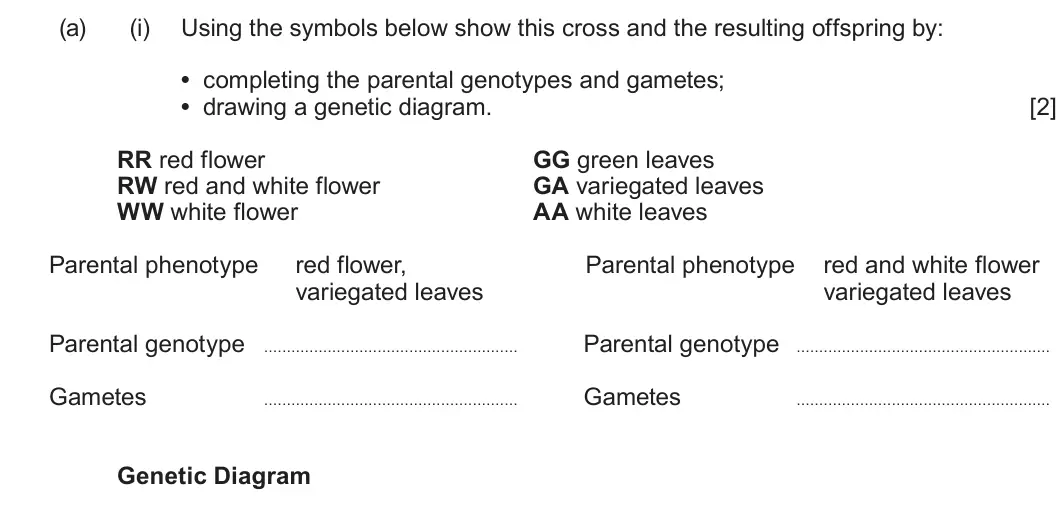
Q3(a)(ii)
The whole paper ↗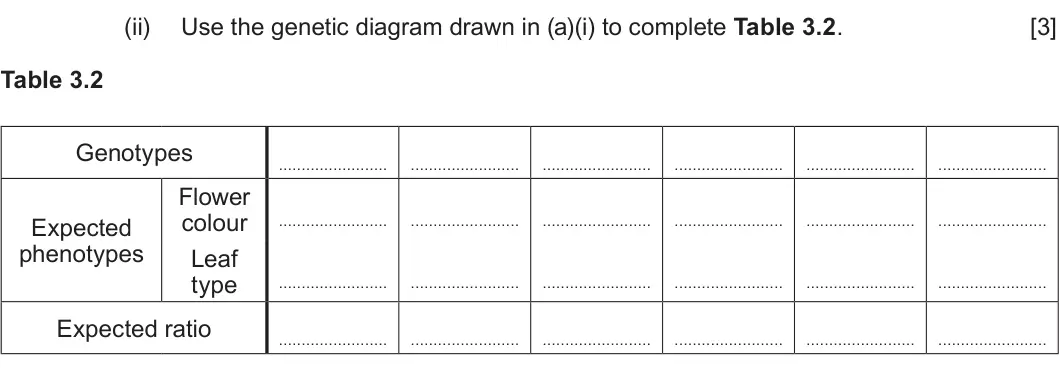
Q3(b)
The whole paper ↗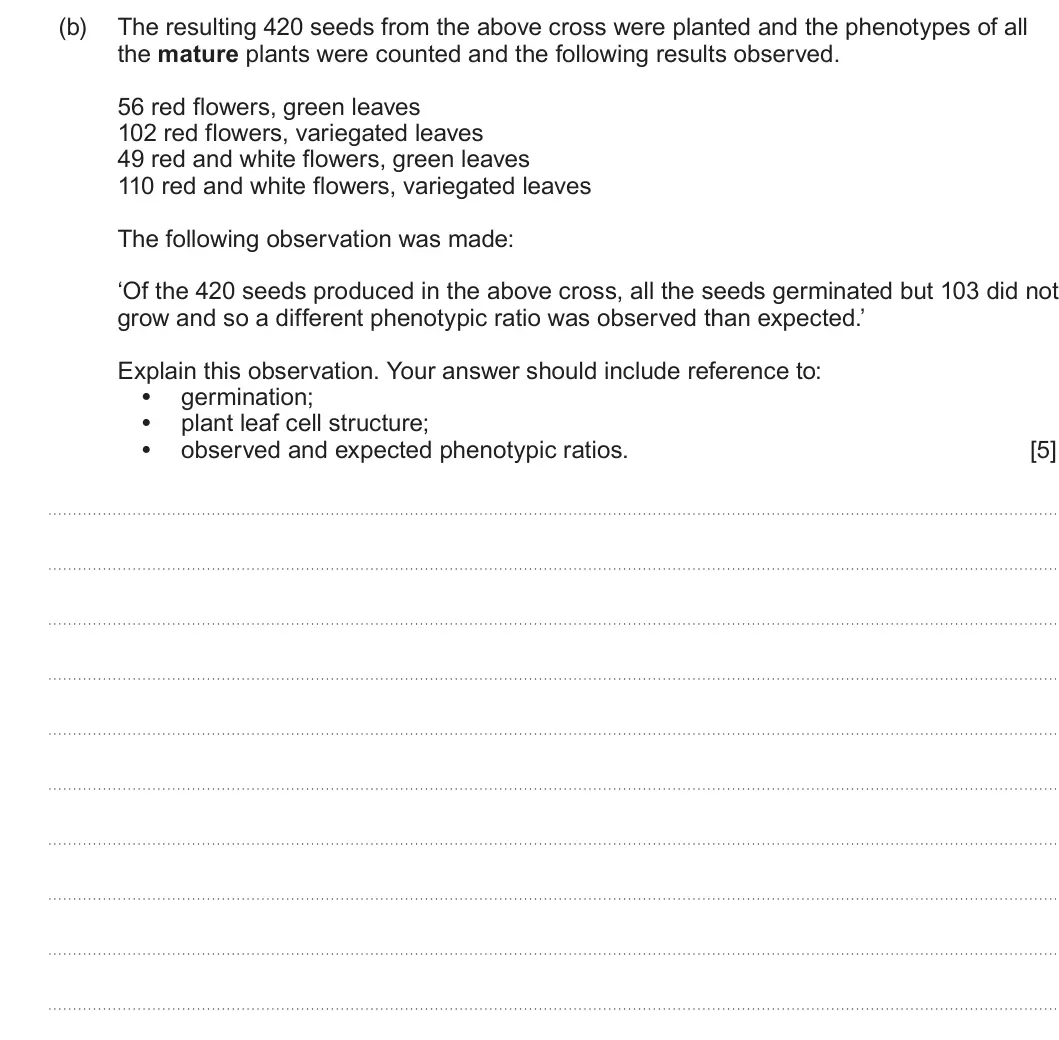
Q2(d)
The whole paper ↗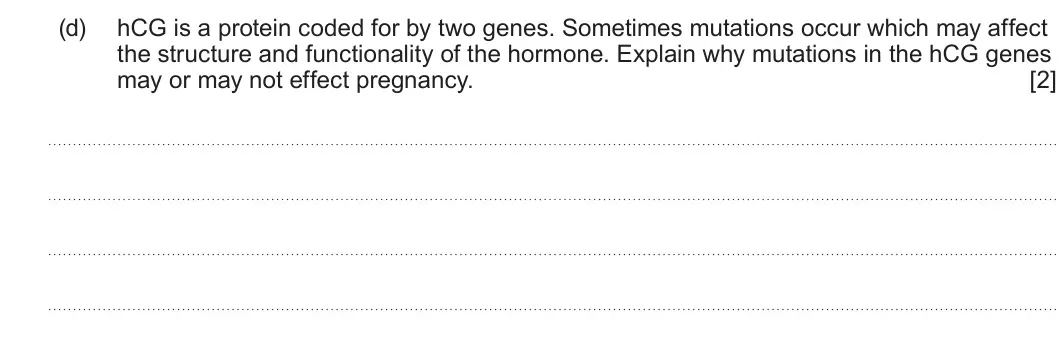
Q5(c)(ii)
The whole paper ↗
Q4(a)(ii)
The whole paper ↗
Q4(b)(ii)
The whole paper ↗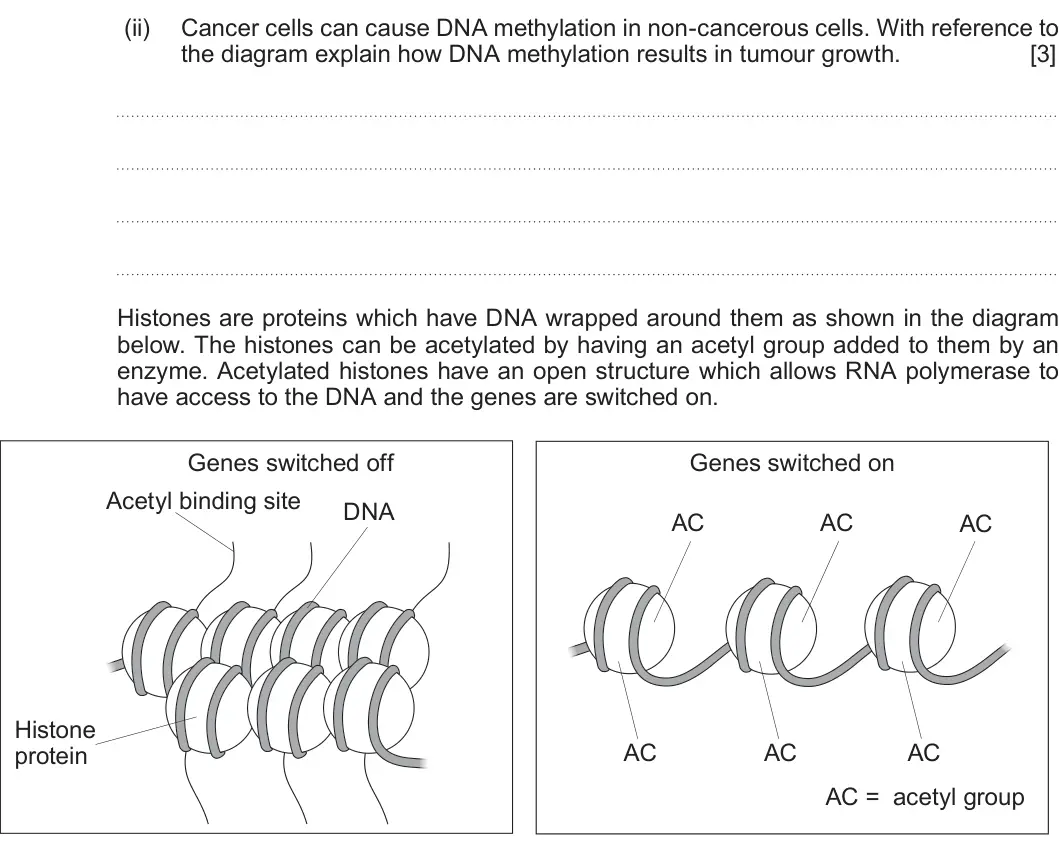
All 36 questions on Inheritance, as a list
- Summer 2025, Unit 3, Q3(d)(ii) (2 marks): State what is meant by the term X-linked. Explain why males are more likely to have Alport syndrome than females. [2]
- Summer 2025, Unit 4, Q2(a)(i) (2 marks): Define what is meant by the terms ‘autosomal’ and ‘recessive’. [2] Autosomal Recessive
- Summer 2025, Unit 4, Q4(a)(i) (4 marks): The parents of these twins have the following genotypes. XB Y and XOXO I. State the phenotype of the parent with the homozygous genotype. [1] II. Draw a genetic
- Summer 2025, Unit 4, Q4(a)(ii) (1 mark): Explain why it is not possible to produce male tortoiseshell kittens. [1]
- Summer 2025, Unit 4, Q4(b)(i) (2 marks): Use the information provided to explain why the pattern of coat colour is different in each twin kitten. [2]
- Summer 2025, Unit 4, Q4(b)(ii) (1 mark): The DNA of the inactivated X chromosome is coiled more tightly around histone proteins. Explain how this prevents gene expression. [1]
- Summer 2025, Unit 4, Q4(b)(iii) (1 mark): Explain why the coat pattern of these two kittens can be described as epigenetic. [1]
- Summer 2025, Unit 4, Q5(a)(i) (1 mark): [1] Sickle haemoglobin causes red blood cells to twist out of shape. These cells transport oxygen less efficiently and break down sooner than normal red blood c
- Summer 2024, Unit 4, Q5(a)(i) (4 marks): I. X-SCID to draw a genetic diagram to show how parents who are both unaffected can produce a son with X-SCID. [2] Parental phenotype unaffected male × unaffect
- Summer 2024, Unit 4, Q5(a)(ii) (2 marks): The estimated UK incidence of X-SCID is 1 in 48 933. The population of Wales in 2018 was 3 139 000. Calculate the number of cases of X-SCID that would have been
- Summer 2024, Unit 4, Q5(b)(i) (4 marks): Using Images 5.1, 5.2, 5.3 and Graph 5.4, explain the effect of the two different supplements on gene expression and coat colour in mice. [4]
- Summer 2024, Unit 4, Q5(b)(ii) (2 marks): Use all of the information to suggest how the results of this study might influence the use of BPA in the production of food containers and packaging. [2]
- Summer 2024, Unit 4, Q6 (9 marks): Mutations in the DNA of an organism may have a profound effect on the phenotype. There are two main types of mutations; gene and chromosome. Explain what is mea
- Summer 2023, Unit 4, Q3(a)(i) (2 marks): Using the symbols below show this cross and the resulting offspring by: • completing the parental genotypes and gametes; • drawing a genetic diagram. [2] RR red
- Summer 2023, Unit 4, Q3(a)(ii) (3 marks): Use the genetic diagram drawn in (a)(i) to complete Table 3.2. [3] Table 3.2 Genotypes Flower colour Expected phenotypes Leaf type Expected ratio
- Summer 2023, Unit 4, Q3(b) (5 marks): The resulting 420 seeds from the above cross were planted and the phenotypes of all the mature plants were counted and the following results observed. 56 red fl
- Summer 2022, Unit 4, Q2(d) (2 marks): hCG is a protein coded for by two genes. Sometimes mutations occur which may affect the structure and functionality of the hormone. Explain why mutations in the
- Summer 2019, Unit 3, Q5(c)(ii) (1 mark): State two possible causes of increased DNA mutation rate. [1]
- Summer 2019, Unit 4, Q4(a)(ii): Epigenetics
- Summer 2019, Unit 4, Q4(b)(ii) (3 marks): Cancer cells can cause DNA methylation in non-cancerous cells. With reference to the diagram explain how DNA methylation results in tumour growth. [3] Histones
- Summer 2019, Unit 4, Q4(b)(iii) (3 marks): In relation to the diagram, suggest how cancer cells switch the suppressor genes off. [3]
- Summer 2019, Unit 4, Q4(b)(iv) (2 marks): In some humans, tumour suppressor genes can become permanently switched off in all cells in the body. Explain the consequences of such a change. [2]
- Summer 2019, Unit 4, Q5(a)(i) (2 marks): The alleles are arranged as shown in the diagram below. State the genotypes of the gametes produced and the expected phenotype ratio of the offspring in the F1
- Summer 2019, Unit 4, Q5(a)(ii) (2 marks): The alleles could be arranged as shown below. A a B b Explain why a cross between AaBb and AaBb in the above could produce a phenotype ratio of 3:1. [2]
- Summer 2019, Unit 4, Q5(b) (1 mark): Explain why two individuals, both with genotype AaBb, may not be phenotypically identical for these characteristics. [1]
- Summer 2018, Unit 4, Q3(a)(i) (2 marks): Construct a genetic diagram to show the genotypes and phenotypes of the parents of this cross. Use the letters A and a to represent the alleles of this gene. [2
- Summer 2018, Unit 4, Q3(a)(ii) (4 marks): Based on the first hypothesis, the F1 would be expected to contain equal numbers of plants producing purple flowers compared to white flowers. When the cross wa
- Summer 2018, Unit 4, Q3(a)(iii) (4 marks): Use the table of chi-squared values below to state whether you would accept or reject the null hypothesis stated in (a)(ii). Explain your answer. [4] Probabilit
- Summer 2018, Unit 4, Q3(b)(i) (3 marks): Complete the Punnett square to determine the phenotype ratios expected on the basis of this second hypothesis, given that the genotype of the purple flower is A
- Summer 2018, Unit 4, Q3(b)(ii) (1 mark): The value of chi-squared for the second hypothesis was calculated as 0.044. Using the data conclude which hypothesis is more likely to be correct, the first or
- Summer 2018, Unit 4, Q3(c) (1 mark): Explain how a cross between two white flowered parents which produced purple flowered offspring would confirm that hypothesis 2 is correct. [1]
- Summer 2017, Unit 3, Q3(d) (3 marks): A heterozygous sufferer with this condition has a partner who is a non-sufferer. Draw a suitable genetic diagram and use this to determine the probability of th
- Summer 2017, Unit 4, Q2(b)(i) (4 marks): alleles, construct a genetic diagram to show the genotypes and phenotypes of the parents A and B and the possible genotypes of their offspring. [4] Parental phe
- Summer 2017, Unit 4, Q2(b)(ii) (1 mark): Explain why it is not possible to determine the genotype of child 2 [1]
- Summer 2017, Unit 4, Q2(e) (5 marks): The pedigree chart below shows the transmission of another form of muscular dystrophy caused by a gene mutation. Key unaffected male affected male unaffected 1
- Summer 2017, Unit 4, Q3(a)(iii) (2 marks): A woman has inherited a mutation in her mitochondrial DNA resulting in mitochondrial disease. Her husband and father do not have this disease. Complete the tabl
Questions, mark schemes and examiner’s reports are © WJEC CBAC Ltd, from their published past papers. Plumi isn’t affiliated with any exam board. Want whole papers? Every WJEC A-Level Biology paper.
Rather write your answers by hand on iPad? Plumi marks them against the same mark schemes.