 plumi
Sexual reproduction in humans: WJEC A‑Level Biology questions
Every WJEC A-Level Biology exam question on 4.1 Sexual reproduction in humans, 2016–2025, with its mark scheme and examiner’s report.
Find questions1,223
Calculations
Q1(a)
The whole paper ↗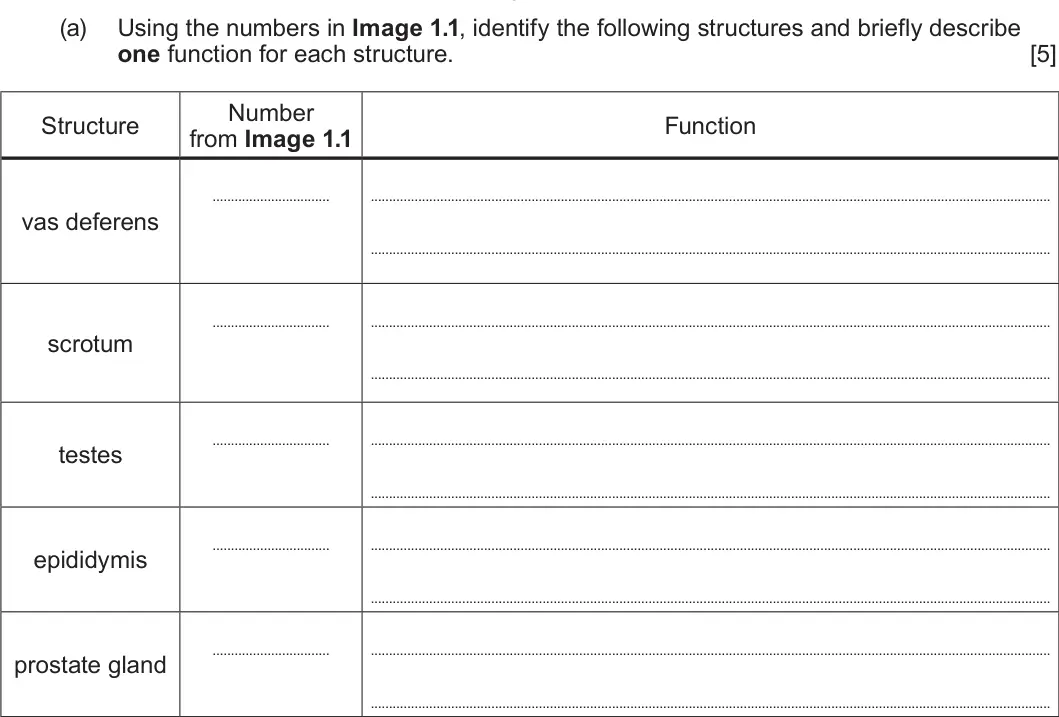
Q1(b)
The whole paper ↗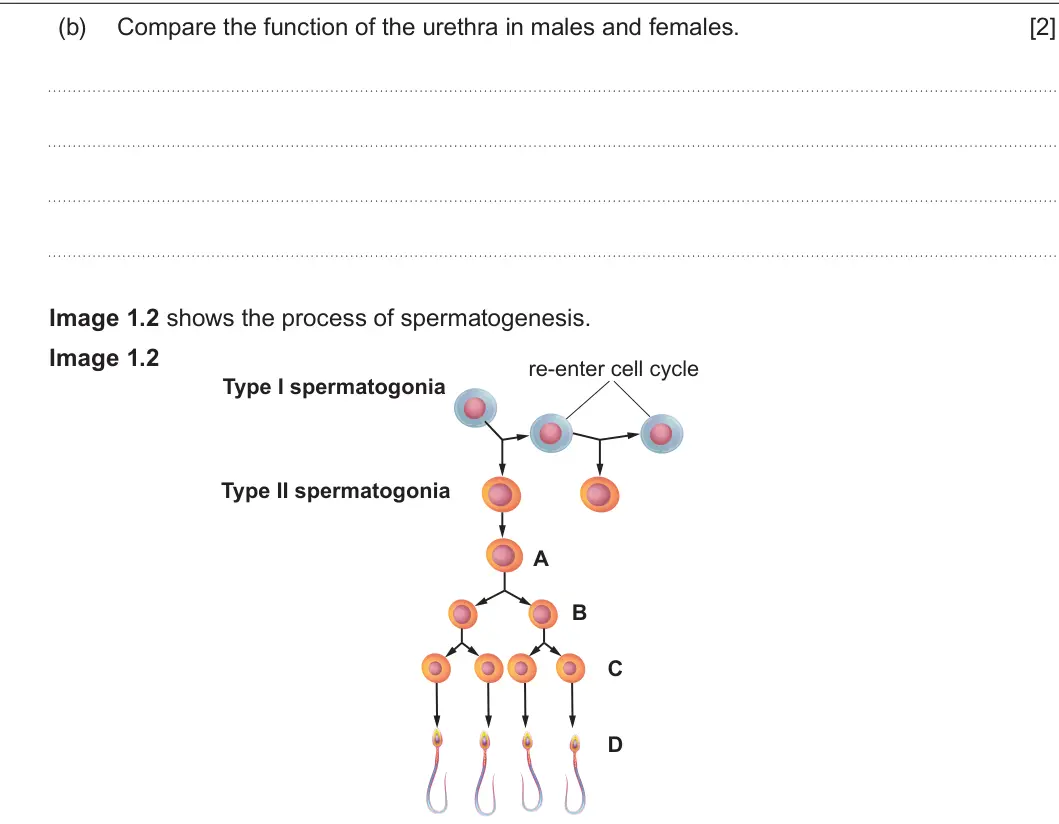
Q1(c)(i)
The whole paper ↗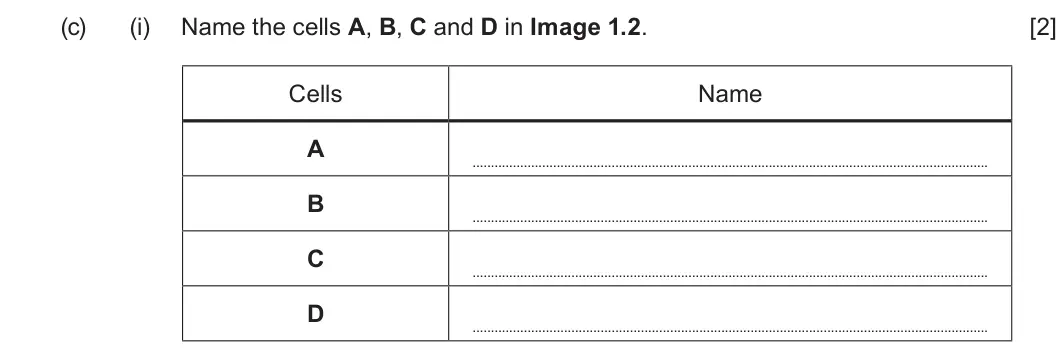
Q1(c)(ii)
The whole paper ↗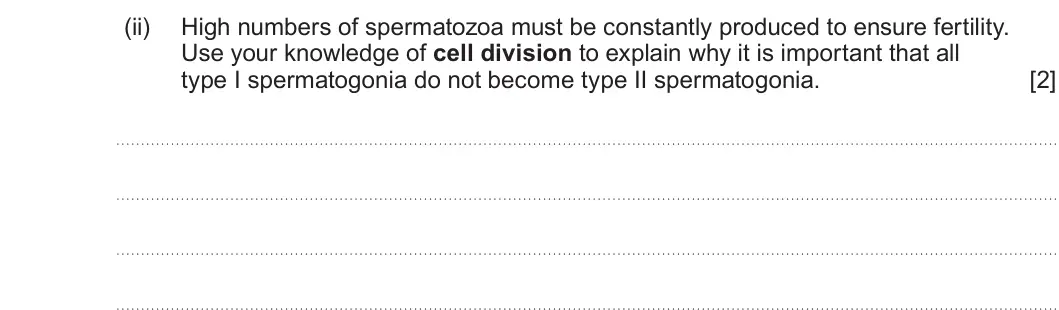
Q1(a)(i)
The whole paper ↗
Q1(a)(ii)
The whole paper ↗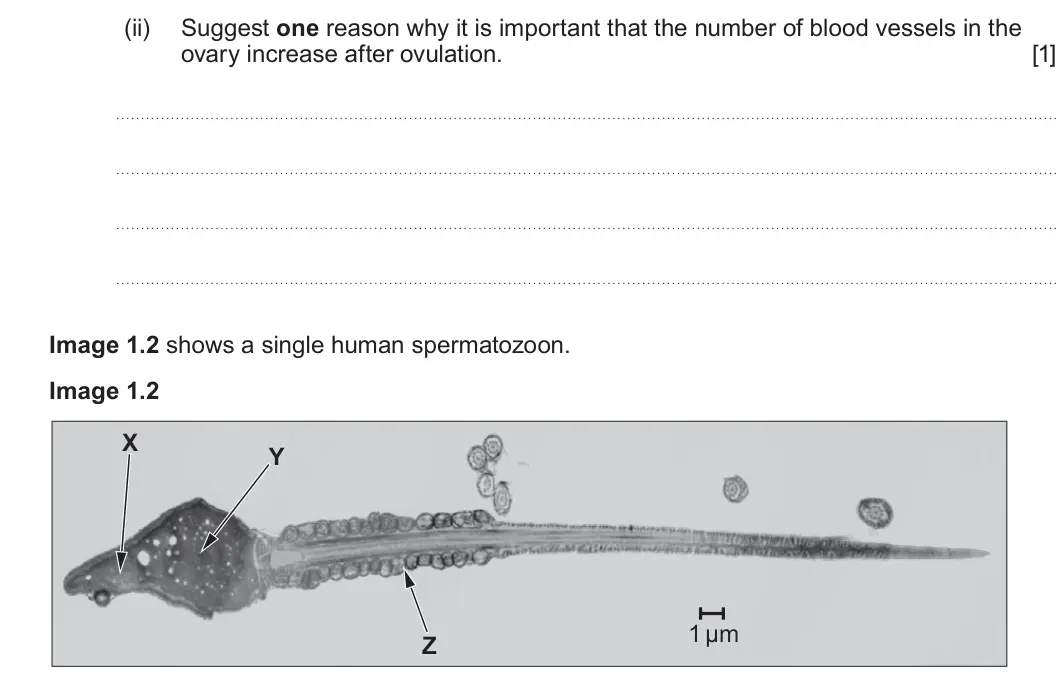
Q1(b)(i)
The whole paper ↗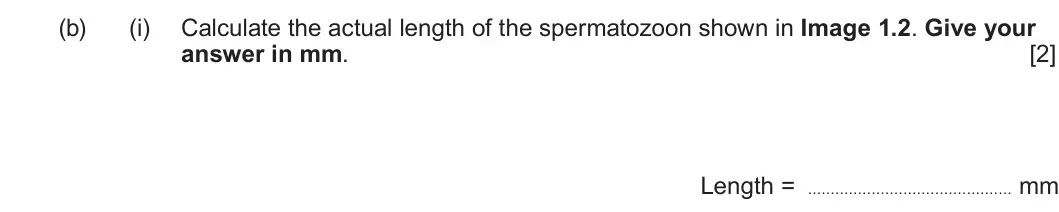
Q1(b)(ii)
The whole paper ↗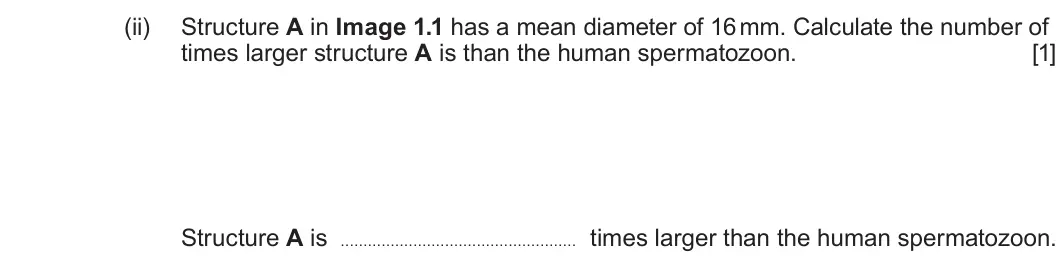
Q1(c)(i)
The whole paper ↗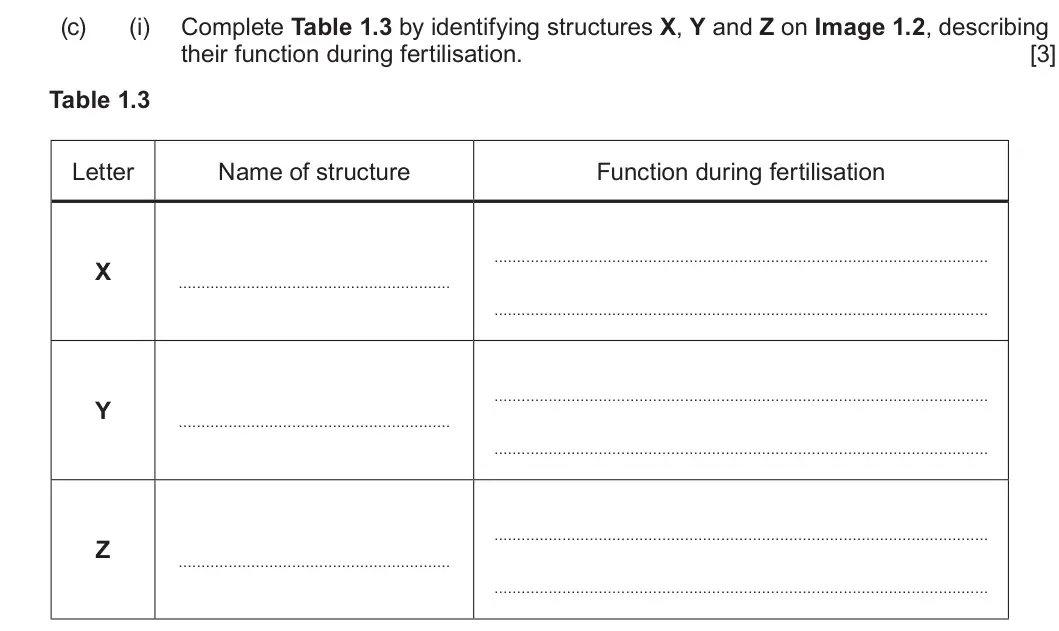
Q1(c)(ii)
The whole paper ↗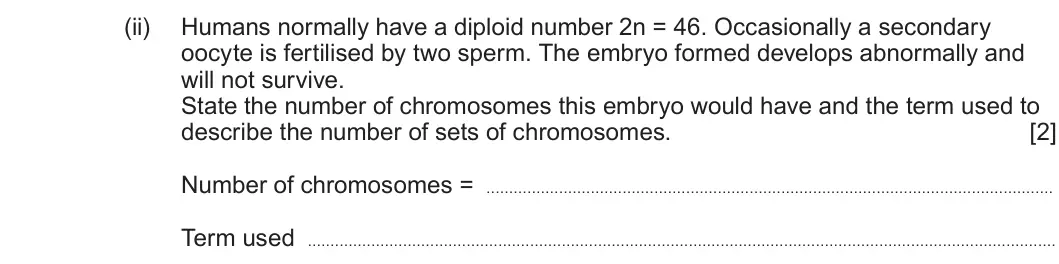
Q1(d)
The whole paper ↗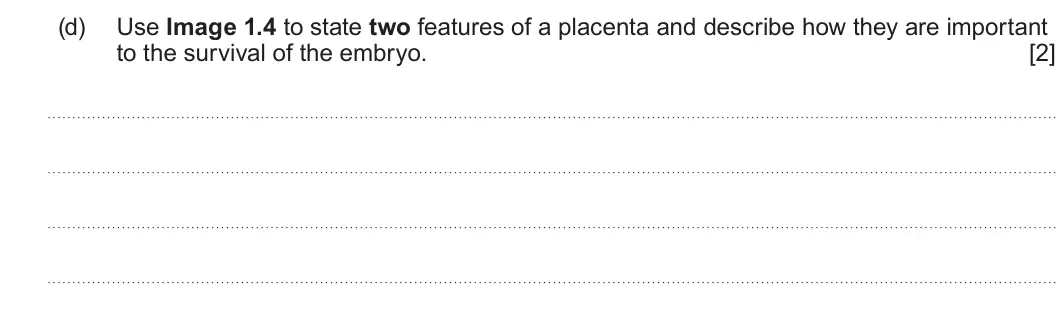
Q1(a)(i)
The whole paper ↗
Q1(a)(ii)
The whole paper ↗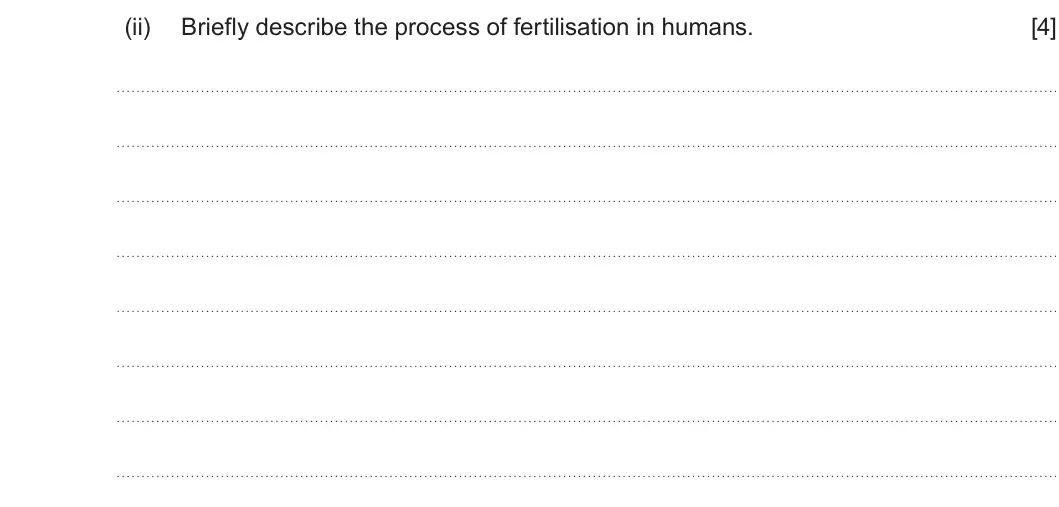
Q1(a)(iii)
The whole paper ↗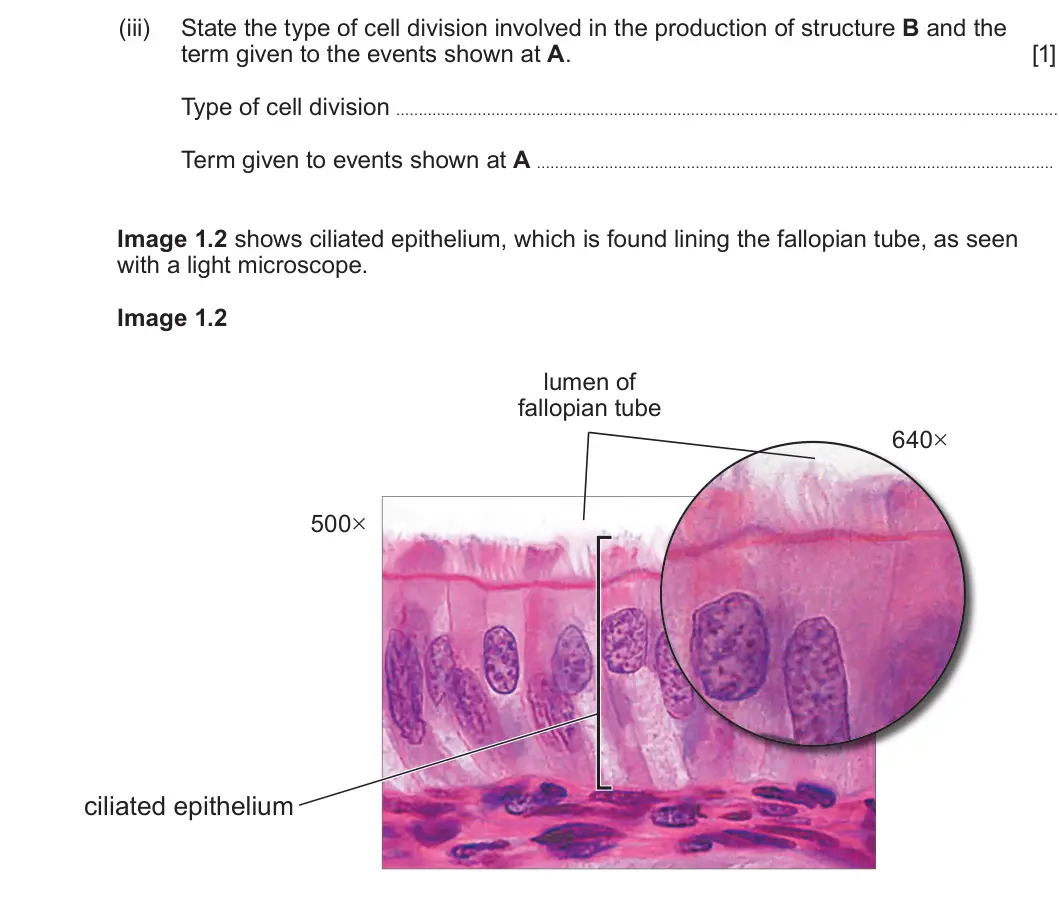
Q1(b)
The whole paper ↗
Q1(c)(i)
The whole paper ↗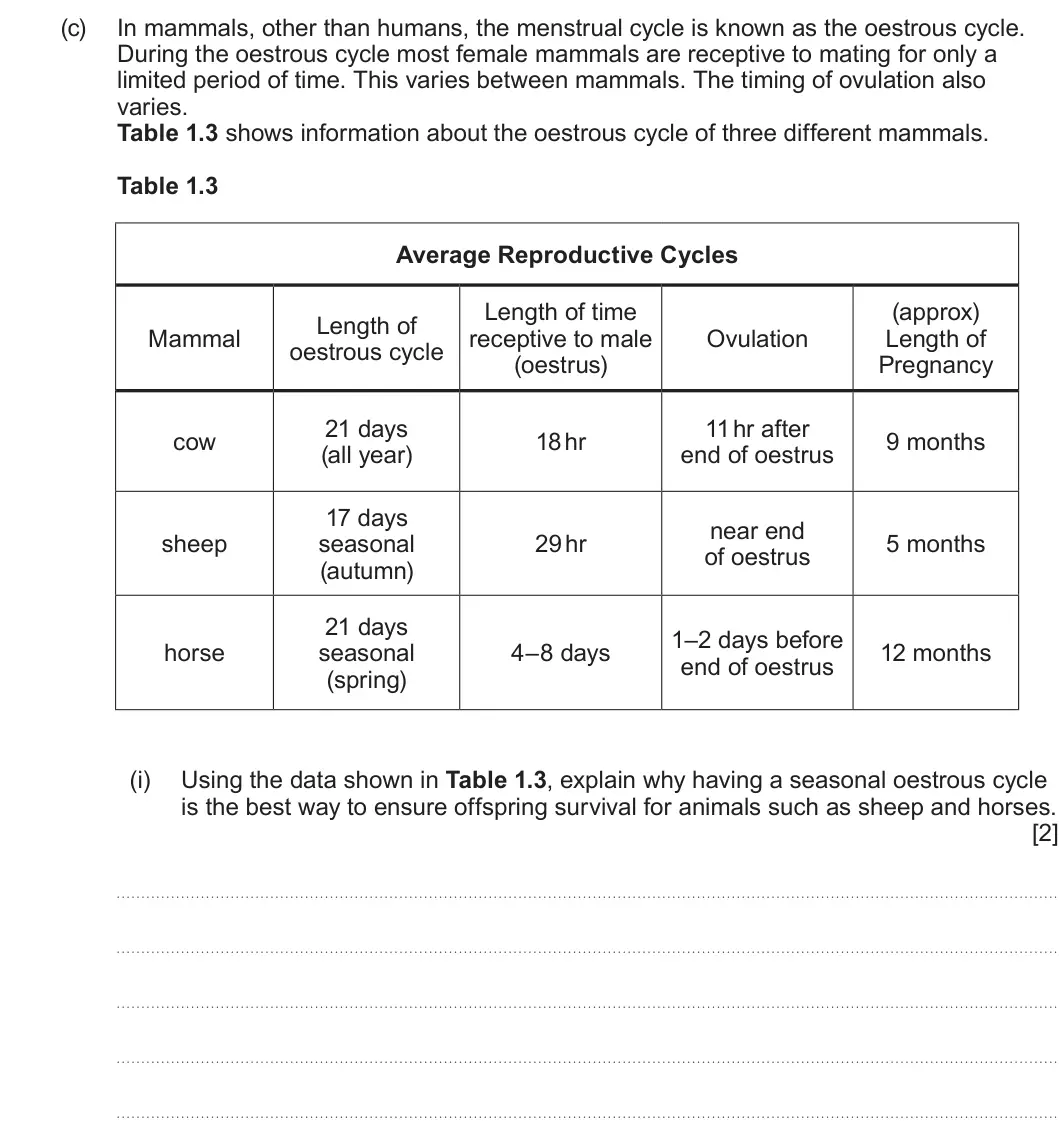
Q1(c)(ii)
The whole paper ↗
Q2(a)
The whole paper ↗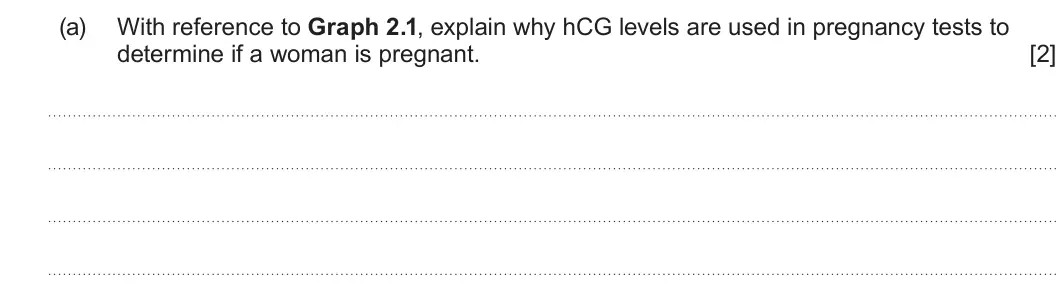
Q2(b)(i)
The whole paper ↗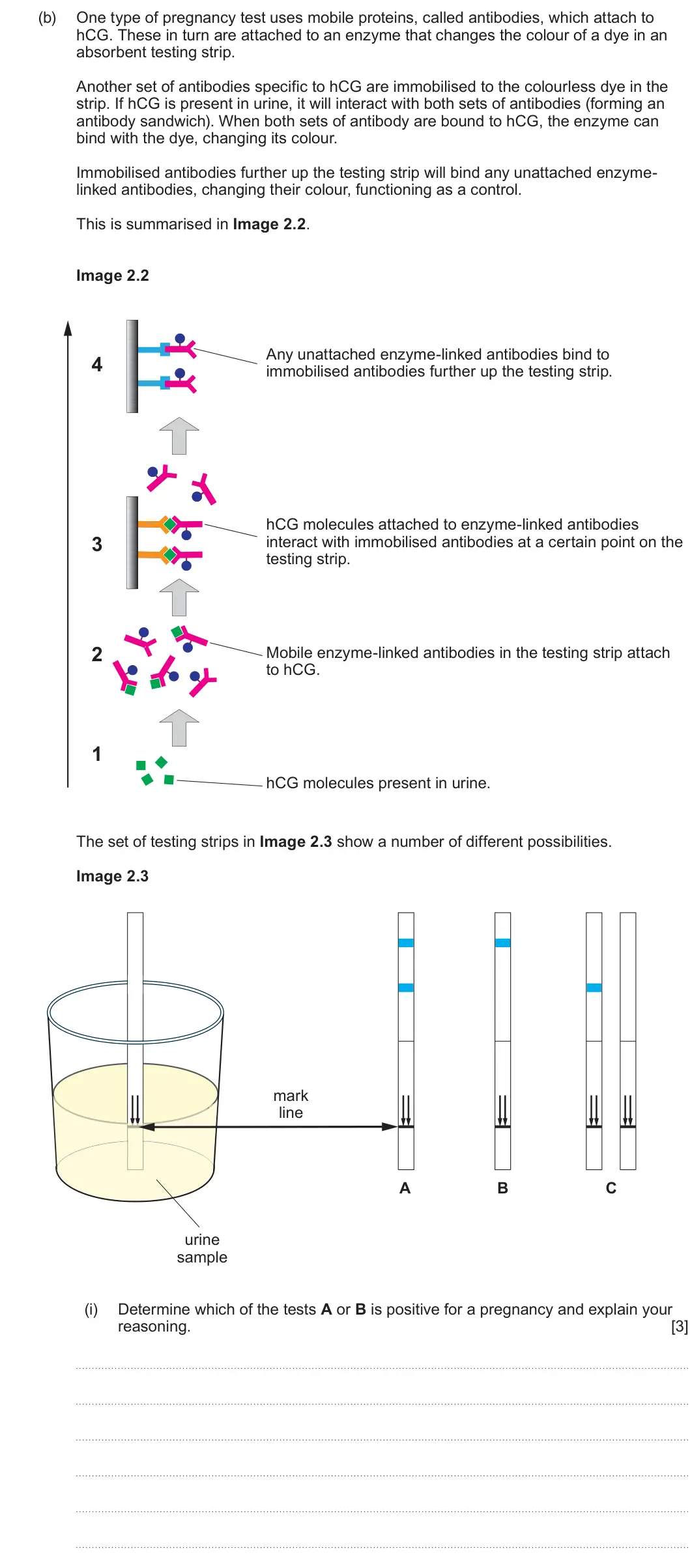
All 42 questions on Sexual reproduction in humans, as a list
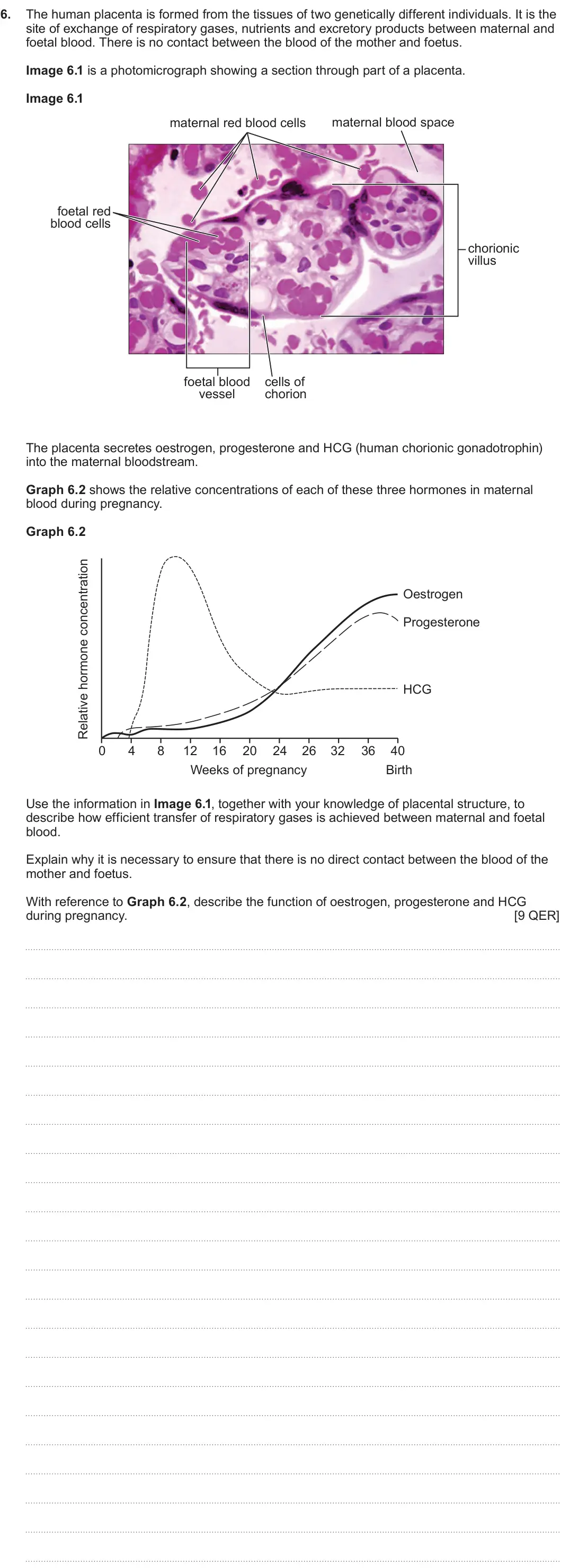
- Summer 2025, Unit 4, Q6 (9 marks): The human placenta is formed from the tissues of two genetically different individuals. It is the site of exchange of respiratory gases, nutrients and excretory
- Summer 2024, Unit 4, Q1(a) (5 marks): Using the numbers in Image 1.1, identify the following structures and briefly describe one function for each structure. [5] Number Structure Function from Image
- Summer 2024, Unit 4, Q1(b) (2 marks): Compare the function of the urethra in males and females. [2] Image 1.2 shows the process of spermatogenesis. Image 1.2 re-enter cell cycle Type I spermatogonia
- Summer 2024, Unit 4, Q1(c)(i) (2 marks): Name the cells A, B, C and D in Image 1.2. [2] Cells Name A B C D
- Summer 2024, Unit 4, Q1(c)(ii) (2 marks): High numbers of spermatozoa must be constantly produced to ensure fertility. Use your knowledge of cell division to explain why it is important that all type I
- Summer 2023, Unit 4, Q1(a)(i) (2 marks): Name structure A and state its function. [2]
- Summer 2023, Unit 4, Q1(a)(ii) (1 mark): Suggest one reason why it is important that the number of blood vessels in the ovary increase after ovulation. [1] Image 1.2 shows a single human spermatozoon.
- Summer 2023, Unit 4, Q1(b)(i) (2 marks): Calculate the actual length of the spermatozoon shown in Image 1.2. Give your answer in mm. [2] Length = mm
- Summer 2023, Unit 4, Q1(b)(ii) (1 mark): Structure A in Image 1.1 has a mean diameter of 16 mm. Calculate the number of times larger structure A is than the human spermatozoon. [1] Structure A is times
- Summer 2023, Unit 4, Q1(c)(i) (3 marks): Complete Table 1.3 by identifying structures X, Y and Z on Image 1.2, describing their function during fertilisation. [3] Table 1.3 Letter Name of structure Fun
- Summer 2023, Unit 4, Q1(c)(ii) (2 marks): Humans normally have a diploid number 2n = 46 Occasionally a secondary oocyte is fertilised by two sperm. The embryo formed develops abnormally and will not sur
- Summer 2023, Unit 4, Q1(d) (2 marks): Use Image 1.4 to state two features of a placenta and describe how they are important to the survival of the embryo. [2]
- Summer 2022, Unit 4, Q1(a)(i) (1 mark): State the process which has recently occurred in the ovary in Image 1.1. [1] Process
- Summer 2022, Unit 4, Q1(a)(ii) (4 marks): Briefly describe the process of fertilisation in humans. [4]
- Summer 2022, Unit 4, Q1(a)(iii) (1 mark): State the type of cell division involved in the production of structure B and the term given to the events shown at A. [1] Type of cell division Term given to e
- Summer 2022, Unit 4, Q1(b) (3 marks): Explain why ciliated epithelium is important in the sequence of events shown in Image 1.1. [3]
- Summer 2022, Unit 4, Q1(c)(i) (2 marks): Using the data shown in Table 1.3, explain why having a seasonal oestrous cycle is the best way to ensure offspring survival for animals such as sheep and horse
- Summer 2022, Unit 4, Q1(c)(ii) (2 marks): Explain why ovulation in the three species shown in Table 1.3 occurs towards the end of oestrus (when the female is receptive to the male). [2]
- Summer 2022, Unit 4, Q2(a) (2 marks): With reference to Graph 2.1, explain why hCG levels are used in pregnancy tests to determine if a woman is pregnant. [2]
- Summer 2022, Unit 4, Q2(b)(i) (3 marks): One type of pregnancy test uses mobile proteins, called antibodies, which attach to hCG. These in turn are attached to an enzyme that changes the colour of a dy
- Summer 2022, Unit 4, Q2(b)(ii) (2 marks): Explain why both of tests C are invalid. [2]
- Summer 2022, Unit 4, Q2(c) (3 marks): State the function of hCG in pregnancy and what happens if levels of hCG fall or are too low at the start of the pregnancy. [3]
- Summer 2022, Unit 4, Q2(e) (4 marks): With reference to Graph 2.1, explain the functions of the hormones oestrogen and progesterone during pregnancy. [4]
- Summer 2019, Unit 4, Q6(a) (2 marks): Clomifene is a medication used to treat some forms of infertility. It leads to increased release of FSH and LH. Suggest how clomifene increases the chance of co
- Summer 2019, Unit 4, Q6(b)(i) (3 marks): Prolactin concentrations stay higher in women who are breastfeeding. Prolactin inhibits the production of FSH. Describe the role of prolactin in women who are b
- Summer 2019, Unit 4, Q6(b)(ii) (3 marks): Explain why oxytocin production during birth is an example of positive feedback. [3]
- Summer 2018, Unit 4, Q1(a)(i) (2 marks): Name the structures A and B. [2] A B
- Summer 2018, Unit 4, Q1(a)(ii) (3 marks): Graafian follicle is 4.19 × 103 mm3. By how many times is the volume of the Graafian follicle bigger than the volume of the primary follicle? Express your answe
- Summer 2018, Unit 4, Q1(b) (1 mark): Structure X contains the secondary oocyte. Name the two outer layers of structure X. [1] The scanning electron micrograph shows a sperm penetrating the surface
- Summer 2018, Unit 4, Q1(c) (2 marks): Describe how the sperm is able to penetrate the outer layers of this structure. [2]
- Summer 2018, Unit 4, Q1(d)(i) (2 marks): There is a risk that during fertilisation more than one sperm enters the secondary oocyte. The risk is increased if the secondary oocyte is not fully mature. Th
- Summer 2018, Unit 4, Q1(d)(ii) (3 marks): The developing embryo is not transferred into the uterus until three days after IVF. Using your knowledge of fertilisation and implantation explain why this del
- Summer 2018, Unit 4, Q4(a) (2 marks): State four differences between the composition of the blood in the umbilical arteries and the umbilical vein. [2]
- Summer 2018, Unit 4, Q4(b) (2 marks): Give two reasons why there must be a barrier between foetal and maternal blood systems. [2]
- Summer 2018, Unit 4, Q4(c)(i) (1 mark): intervillus space is exchanged three times per minute. [1]
- Summer 2018, Unit 4, Q4(c)(ii) (1 mark): The pressure in the uterine arteries is ten times greater than the pressure in the intervillus space. [1]
- Summer 2018, Unit 4, Q4(c)(iii) (1 mark): The length of the capillaries in the placenta is about 320 km. [1]
- Summer 2017, Unit 4, Q3(a)(i) (2 marks): Calculate the actual length of the sperm cell. [2] µm
- Summer 2017, Unit 4, Q3(a)(ii) (1 mark): The mitochondria in the sperm do not enter the secondary oocyte at fertilisation. What does this suggest about the origin of all mitochondria in an organism? [1
- Summer 2017, Unit 4, Q3(b)(i) (1 mark): Explain why this technique is not suitable for counting live sperm. [1]
- Summer 2017, Unit 4, Q3(b)(ii) (3 marks): The number of sperm cells in the diluted sample in the counting area was 40 The counting area is 1 mm2 with a depth of 0.1 mm. Calculate the number of mm3 in 1
- Summer 2017, Unit 4, Q6 (9 marks): Mammals have evolved different patterns of ovulation which are controlled by changes in hormone concentrations and affected by copulation (sexual intercourse).
Questions, mark schemes and examiner’s reports are © WJEC CBAC Ltd, from their published past papers. Plumi isn’t affiliated with any exam board. Want whole papers? Every WJEC A-Level Biology paper.
Rather write your answers by hand on iPad? Plumi marks them against the same mark schemes.