 plumi
Human musculoskeletal anatomy: WJEC A‑Level Biology questions
Every WJEC A-Level Biology exam question on 4.B Human musculoskeletal anatomy, 2016–2025, with its mark scheme and examiner’s report.
Find questions1,223
Calculations
Q8(a)(i)
The whole paper ↗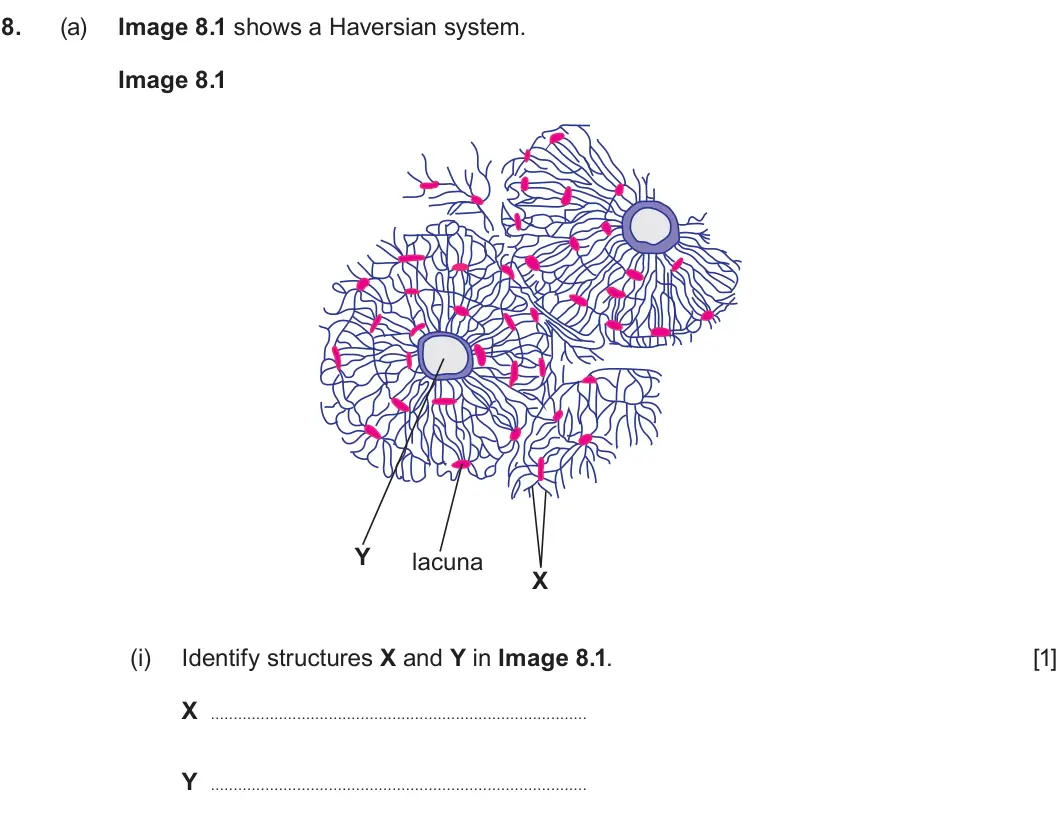
Q8(a)(ii)
The whole paper ↗
Q8(b)(i)
The whole paper ↗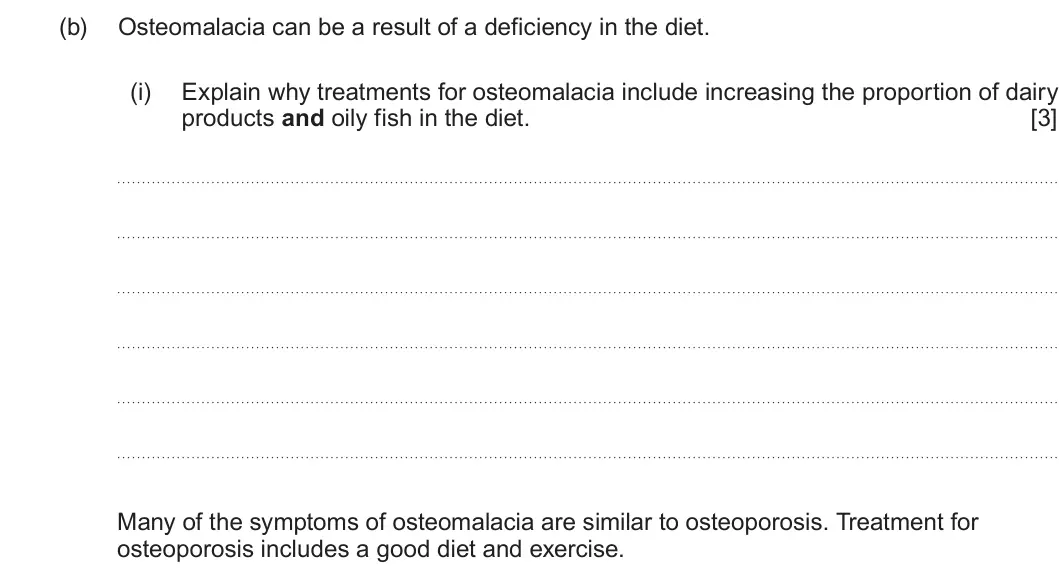
Q8(b)(ii)
The whole paper ↗
Q8(b)(iii)
The whole paper ↗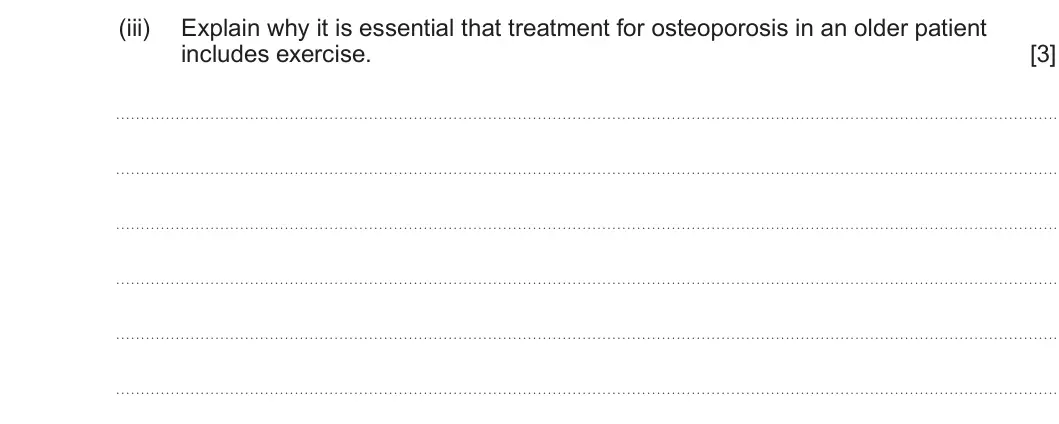
Q8(b)(iv)
The whole paper ↗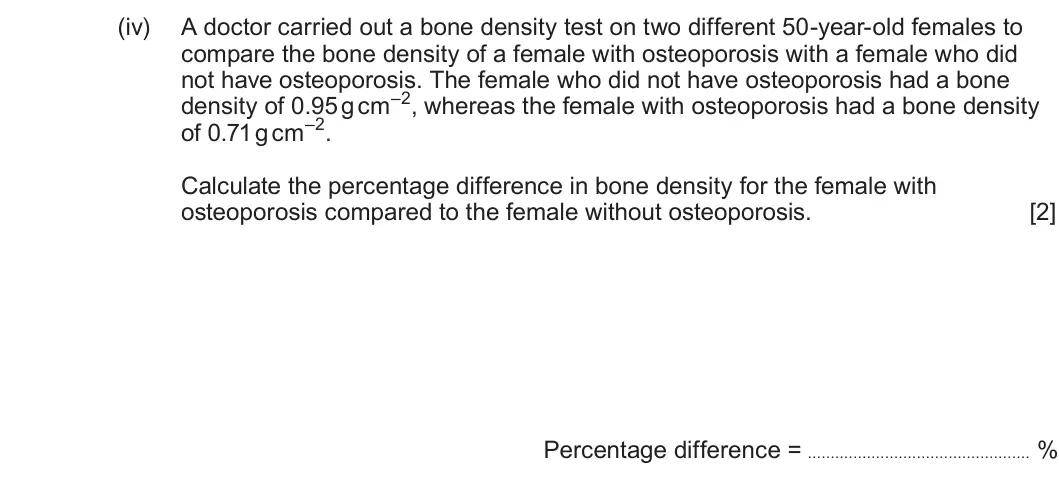
Q8(c)(i)
The whole paper ↗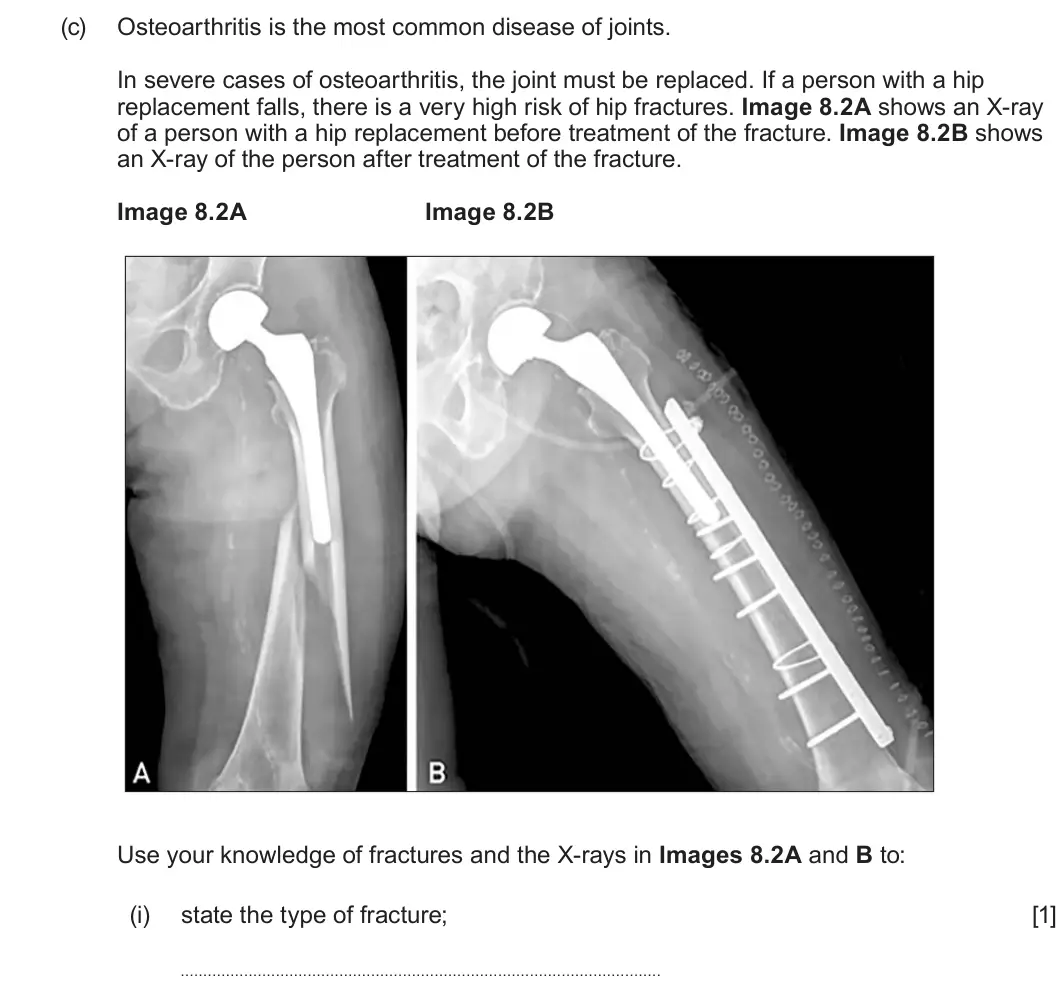
Q8(c)(ii)
The whole paper ↗
Q8(c)(iii)
The whole paper ↗
Q8(d)(i)
The whole paper ↗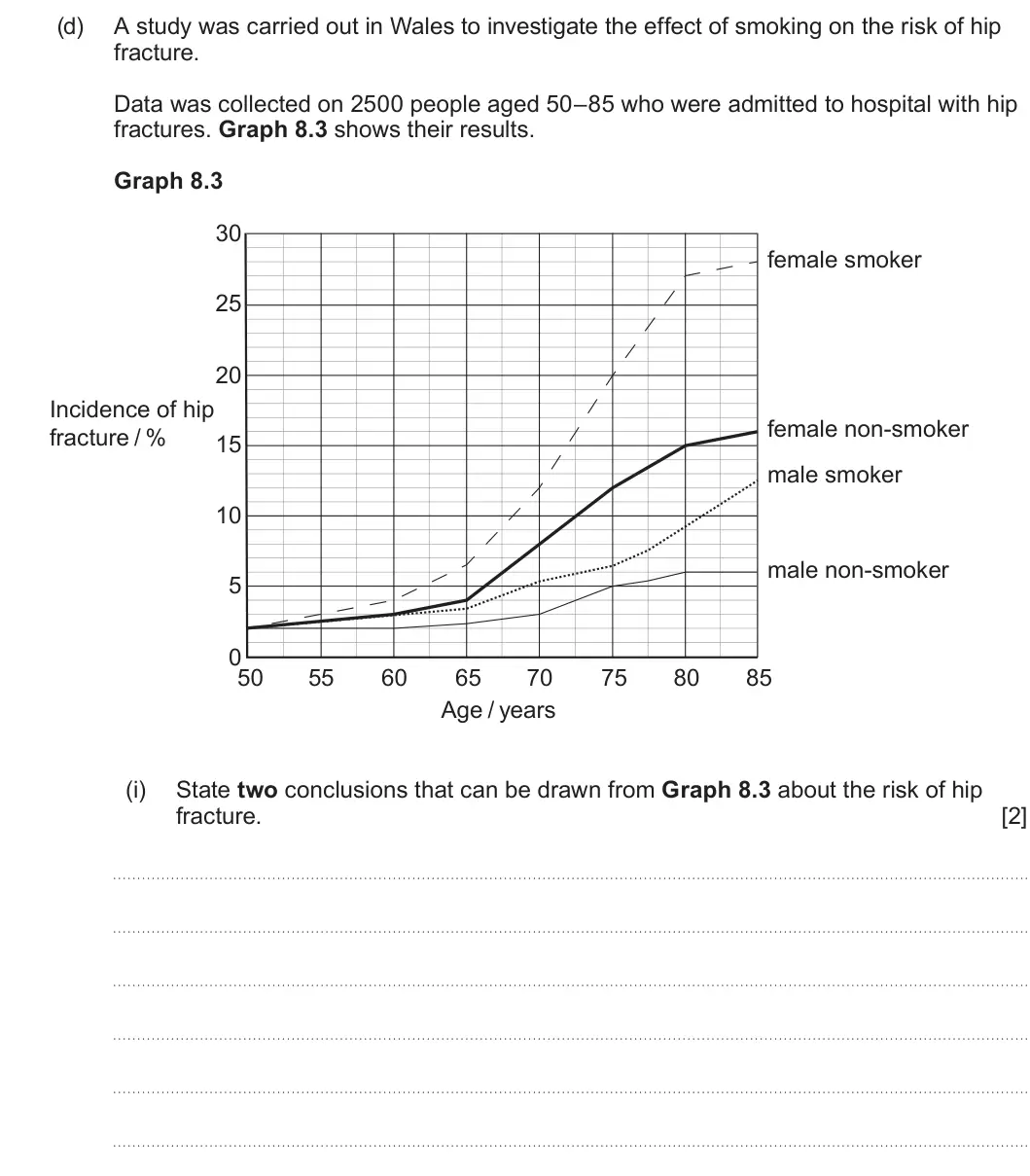
Q8(d)(ii)
The whole paper ↗
Q8(a)(i)
The whole paper ↗
Q8(a)(ii)
The whole paper ↗
Q8(a)(iii)
The whole paper ↗
Q8(a)(iv)
The whole paper ↗
Q8(b)(i)
The whole paper ↗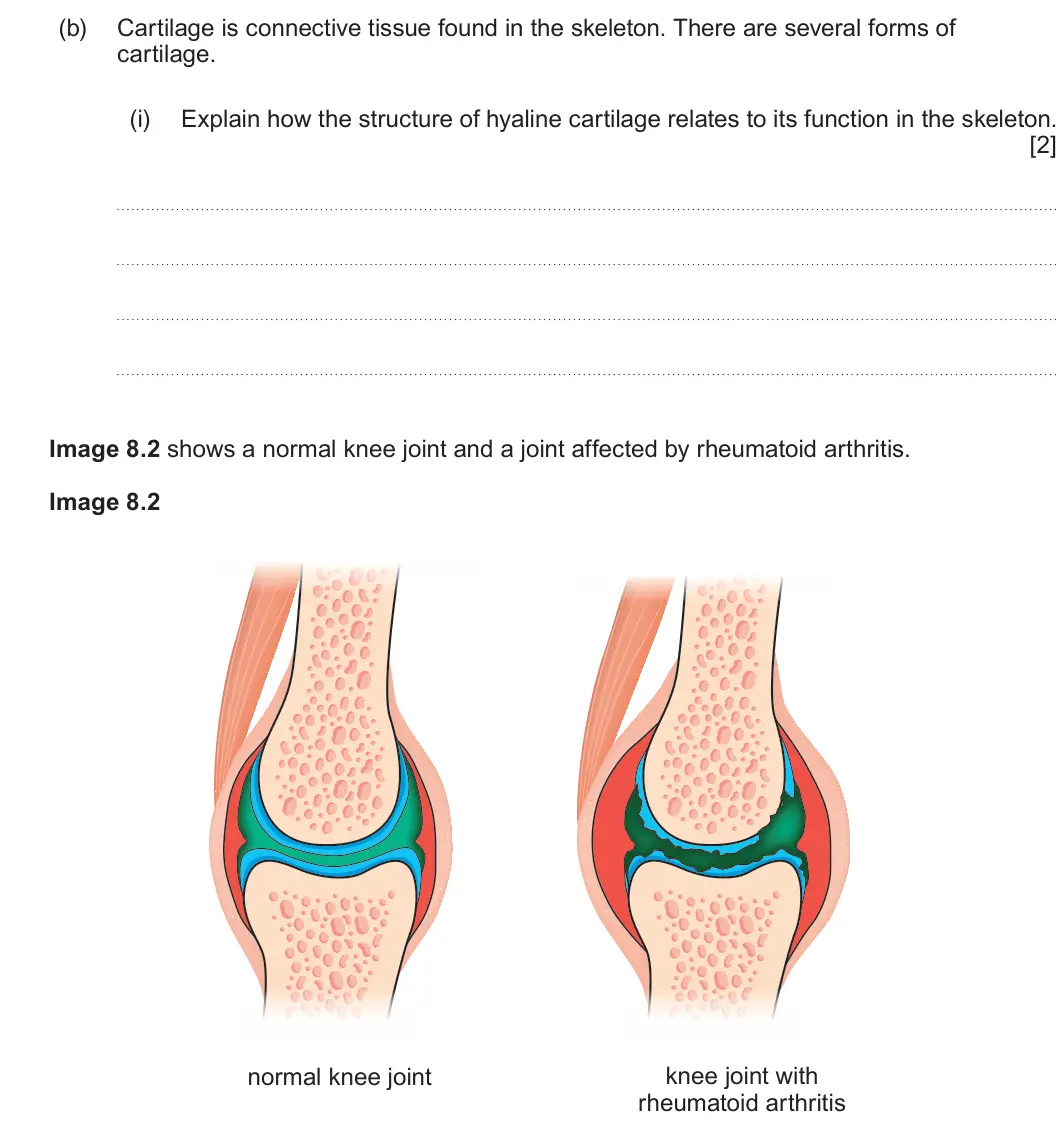
Q8(b)(ii)
The whole paper ↗
Q8(c)(i)
The whole paper ↗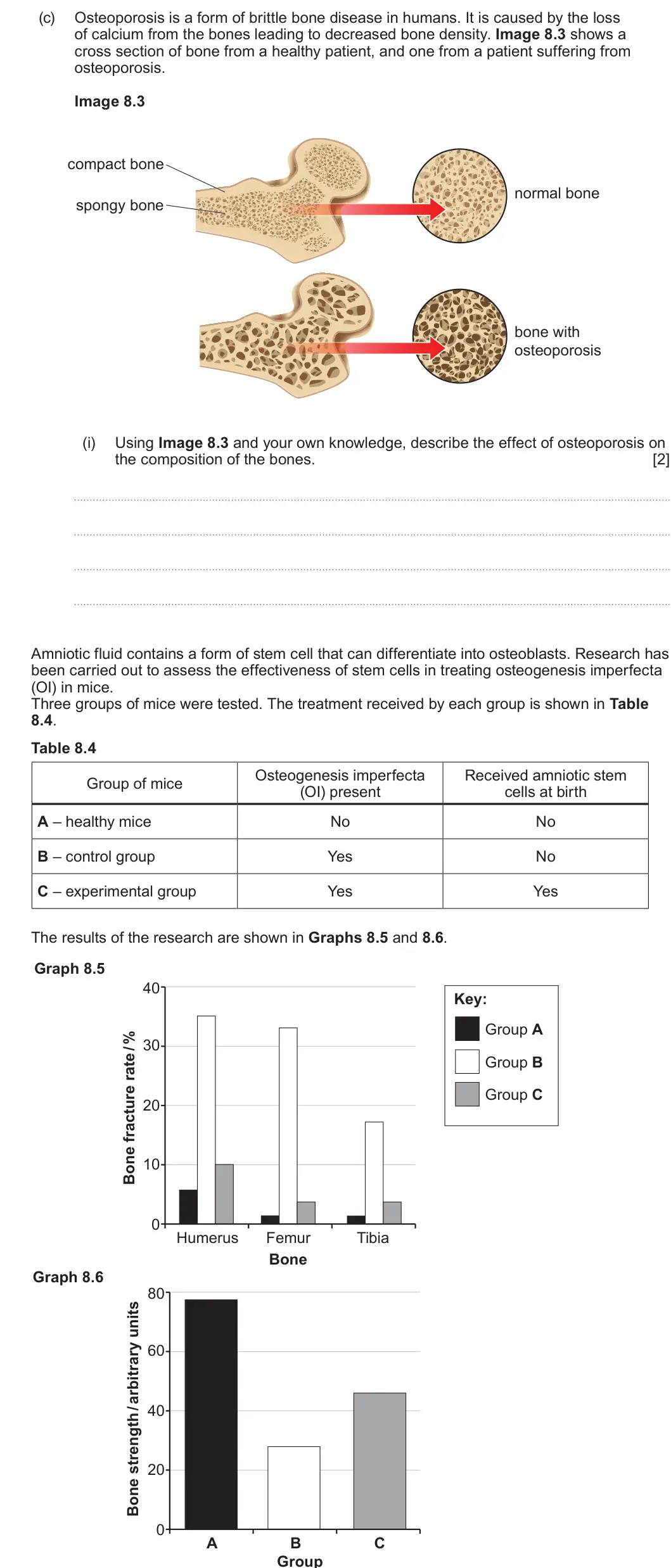
Q8(c)(ii)
The whole paper ↗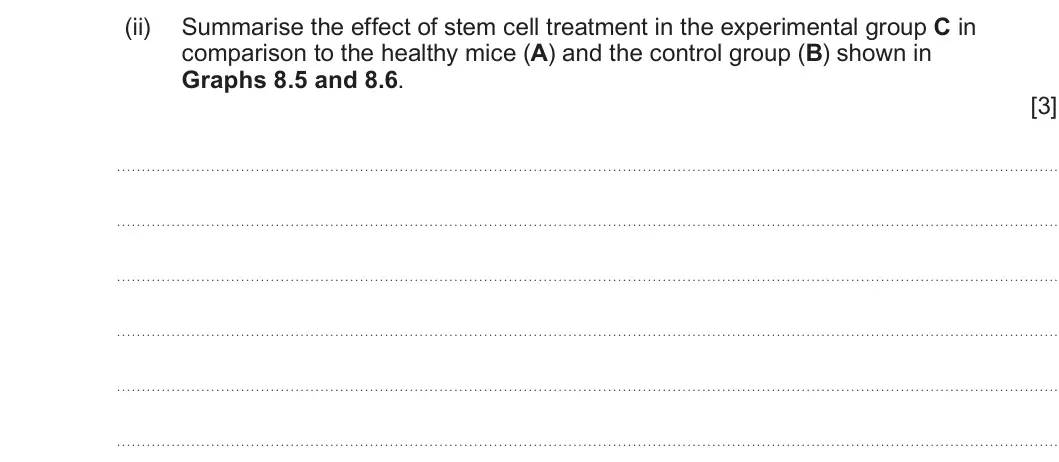
Q8(c)(iii)
The whole paper ↗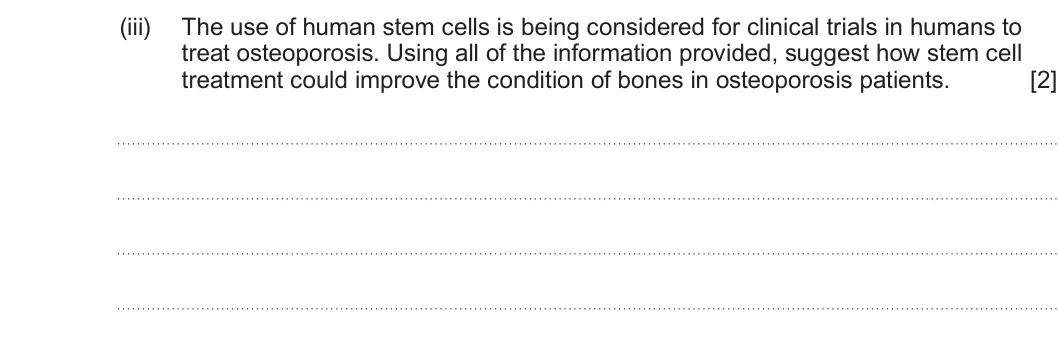
All 43 questions on Human musculoskeletal anatomy, as a list
- Summer 2025, Unit 4, Q8(a)(i) (1 mark): Identify structures X and Y in Image 8.1. [1] X Y
- Summer 2025, Unit 4, Q8(a)(ii) (1 mark): State two structures found in Y. [1]
- Summer 2025, Unit 4, Q8(b)(i) (3 marks): Explain why treatments for osteomalacia include increasing the proportion of dairy products and oily fish in the diet. [3] Many of the symptoms of osteomalacia
- Summer 2025, Unit 4, Q8(b)(ii) (1 mark): State what is meant by osteoporosis. [1]
- Summer 2025, Unit 4, Q8(b)(iii) (3 marks): Explain why it is essential that treatment for osteoporosis in an older patient includes exercise. [3]
- Summer 2025, Unit 4, Q8(b)(iv) (2 marks): A doctor carried out a bone density test on two different 50-year-old females to compare the bone density of a female with osteoporosis with a female who did no
- Summer 2025, Unit 4, Q8(c)(i) (1 mark): state the type of fracture; [1]
- Summer 2025, Unit 4, Q8(c)(ii) (1 mark): describe how it was treated; [1]
- Summer 2025, Unit 4, Q8(c)(iii) (2 marks): give two reasons why this treatment is necessary for hip fractures in particular. [2]
- Summer 2025, Unit 4, Q8(d)(i) (2 marks): State two conclusions that can be drawn from Graph 8.3 about the risk of hip fracture. [2]
- Summer 2025, Unit 4, Q8(d)(ii) (3 marks): A similar study investigated the effect of smoking on the incidence of hip fracture across Europe. Data were collected from a number of hospitals and included 1
- Summer 2024, Unit 4, Q8(a)(i) (1 mark): Complete the appearance of transverse Section 3 shown on Image 8.1. [1]
- Summer 2024, Unit 4, Q8(a)(ii) (4 marks): During contraction of the muscle, the sarcomere shortens. Describe and explain what happens to the H zone and A band. [4]
- Summer 2024, Unit 4, Q8(a)(iii) (2 marks): When the sarcomere is contracted, its length is 1.5 μm long. Use Image 8.1 to calculate the percentage decrease in length when the sarcomere contracts. [2] Perc
- Summer 2024, Unit 4, Q8(a)(iv) (2 marks): Describe how the structure of actin allows cross bridges to form during contraction of the muscle and explain why cross bridges are unable to form in a resting
- Summer 2024, Unit 4, Q8(b)(i) (2 marks): Explain how the structure of hyaline cartilage relates to its function in the skeleton. [2] Image 8.2 shows a normal knee joint and a joint affected by rheumato
- Summer 2024, Unit 4, Q8(b)(ii) (2 marks): Describe what is meant by rheumatoid arthritis and name two types of tissues affected by rheumatoid arthritis as shown in Image 8.2. [2]
- Summer 2024, Unit 4, Q8(c)(i) (2 marks): Using Image 8.3 and your own knowledge, describe the effect of osteoporosis on the composition of the bones. [2] Amniotic fluid contains a form of stem cell tha
- Summer 2024, Unit 4, Q8(c)(ii) (3 marks): Summarise the effect of stem cell treatment in the experimental group C in comparison to the healthy mice (A) and the control group (B) shown in Graphs 8.5 and
- Summer 2024, Unit 4, Q8(c)(iii) (2 marks): The use of human stem cells is being considered for clinical trials in humans to treat osteoporosis. Using all of the information provided, suggest how stem cel
- Summer 2023, Unit 4, Q8(a)(i) (1 mark): With reference to the names of the muscles involved, state how the muscles work together to lift the weight. [1]
- Summer 2023, Unit 4, Q8(a)(ii) (2 marks): Image 8.1 represents a third order lever. Use Image 8.1 and your knowledge of levers to identify the effort, load and fulcrum and explain why it is a third orde
- Summer 2023, Unit 4, Q8(b)(i) (2 marks): Suggest what causes the muscle to fatigue. [2] Image 8.2 shows an electromyogram (EMG) which is used to measure fatigue over time. The amplitude (mV) of the sig
- Summer 2023, Unit 4, Q8(b)(ii) (3 marks): Use the equation to calculate the rate of fatigue for Gabriel. Suggest a unit for rate of fatigue. [3] Rate of fatigue = Unit =
- Summer 2023, Unit 4, Q8(b)(iii) (3 marks): It was concluded that females had better endurance than males. With reference to the data in Table 8.3 comment on the validity of this conclusion. [3]
- Summer 2023, Unit 4, Q8(c)(i) (1 mark): Use the letters X, Y and Z to label the following proteins on the sarcomere in Image 8.4. [1] X actin Y myosin Z tropomyosin
- Summer 2023, Unit 4, Q8(c)(ii) (4 marks): Low blood calcium increased the rate of muscle fatigue. Use your knowledge of sliding filament theory to explain the reason for this. [4]
- Summer 2023, Unit 4, Q8(d)(i) (2 marks): State what spinal region the vertebra in Image 8.5 is from and explain your answer. [2] Scheuermann’s kyphosis is a medical condition similar to scoliosis which
- Summer 2023, Unit 4, Q8(d)(ii) (1 mark): Suggest which way the spine would curve in the body of a person with Scheuermann’s kyphosis. [1]
- Summer 2023, Unit 4, Q8(d)(iii) (1 mark): Suggest a possible treatment for Scheuermann’s kyphosis. [1]
- Summer 2019, Unit 4, Q9(a)(i) (1 mark): Name the bone shown within the thigh. [1]
- Summer 2019, Unit 4, Q9(a)(ii) (2 marks): At point X-X on the image the thigh has an actual width of 150 mm. Calculate the magnification of the image. [2] magnification =
- Summer 2019, Unit 4, Q9(a)(iii) (1 mark): Bones have an outer layer of compact bone. State which inorganic components strengthen the bone. [1]
- Summer 2019, Unit 4, Q9(a)(iv) (2 marks): Explain how the structure of the thigh bone enables nutrients to be supplied to the osteoblasts and osteoclasts. [2] The proportion of fast and slow twitch musc
- Summer 2019, Unit 4, Q9(a)(v) (2 marks): Investigators observed a difference in colour between fast and slow twitch fibres. Suggest what this difference may be and explain your answer. [2]
- Summer 2019, Unit 4, Q9(a)(vi) (2 marks): Explain why the percentage of fibres was calculated rather than using the total number of each fibre type. [2]
- Summer 2019, Unit 4, Q9(a)(vii) (1 mark): Explain why the athletes chosen were of the same age, gender and ethnicity. [1]
- Summer 2019, Unit 4, Q9(a)(viii) (3 marks): It was concluded that Athlete B was a weightlifter as further analysis of the tissue found high lactate levels. With reference to the graph and your own knowled
- Summer 2019, Unit 4, Q9(b)(i) (1 mark): State two functions of this part of the skeleton. [1]
- Summer 2019, Unit 4, Q9(b)(ii) (1 mark): With reference to the X-ray, state which region of the vertebral column contains a fracture. [1]
- Summer 2019, Unit 4, Q9(b)(iii) (1 mark): If fractures of the vertebral column are not treated correctly they can lead to problems with posture. Apart from surgery, suggest one other type of treatment t
- Summer 2019, Unit 4, Q9(c)(i) (1 mark): State the type of joint shown. [1]
- Summer 2019, Unit 4, Q9(c)(ii) (2 marks): Using all the information provided, conclude what type of degenerative disease is affecting the patient. Describe the evidence that supports your diagnosis. [2]
Questions, mark schemes and examiner’s reports are © WJEC CBAC Ltd, from their published past papers. Plumi isn’t affiliated with any exam board. Want whole papers? Every WJEC A-Level Biology paper.
Rather write your answers by hand on iPad? Plumi marks them against the same mark schemes.