 plumi
Sexual reproduction in plants: WJEC A‑Level Biology questions
Every WJEC A-Level Biology exam question on 4.2 Sexual reproduction in plants, 2016–2025, with its mark scheme and examiner’s report.
Find questions1,223
Calculations
Q1(a)(i)
The whole paper ↗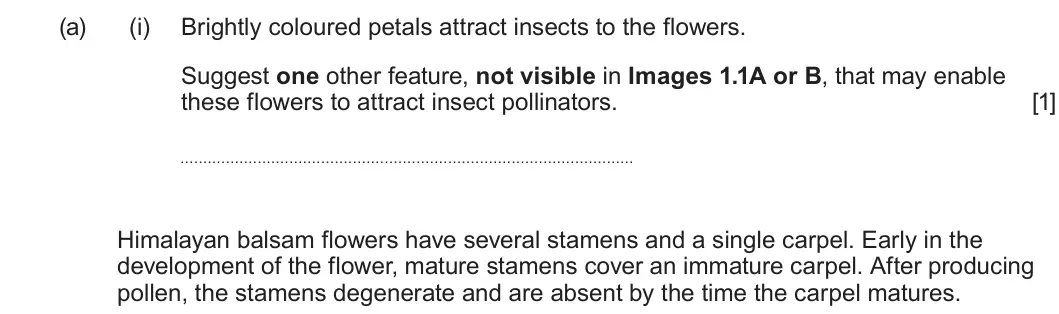
Q1(a)(ii)
The whole paper ↗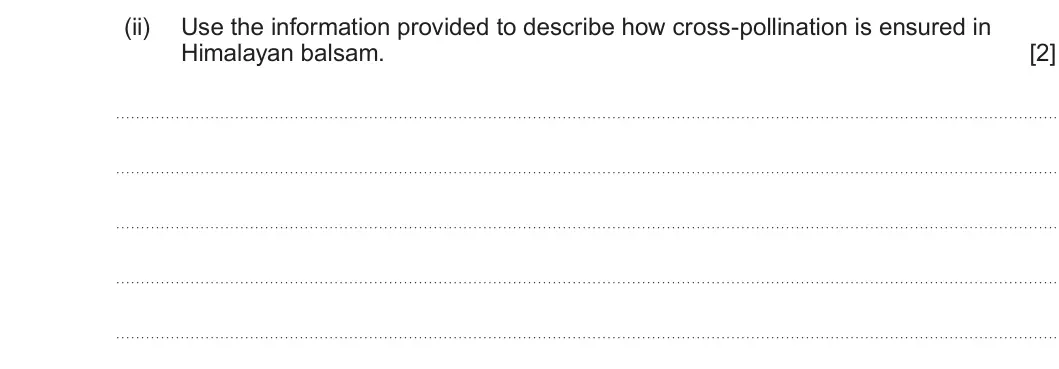
Q1(a)(iii)
The whole paper ↗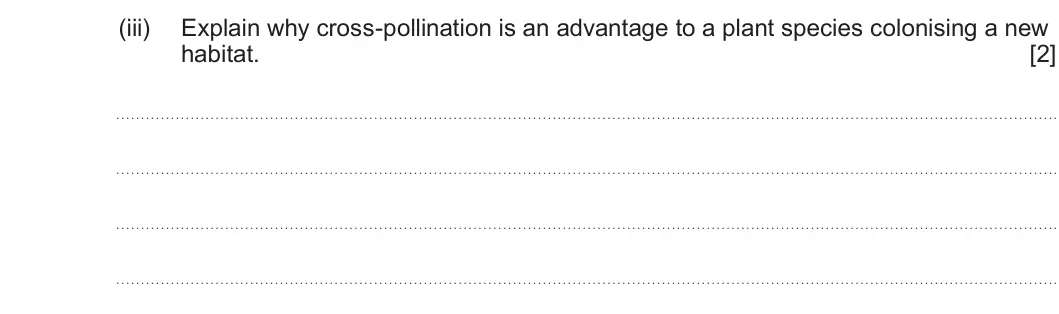
Q1(b)(i)
The whole paper ↗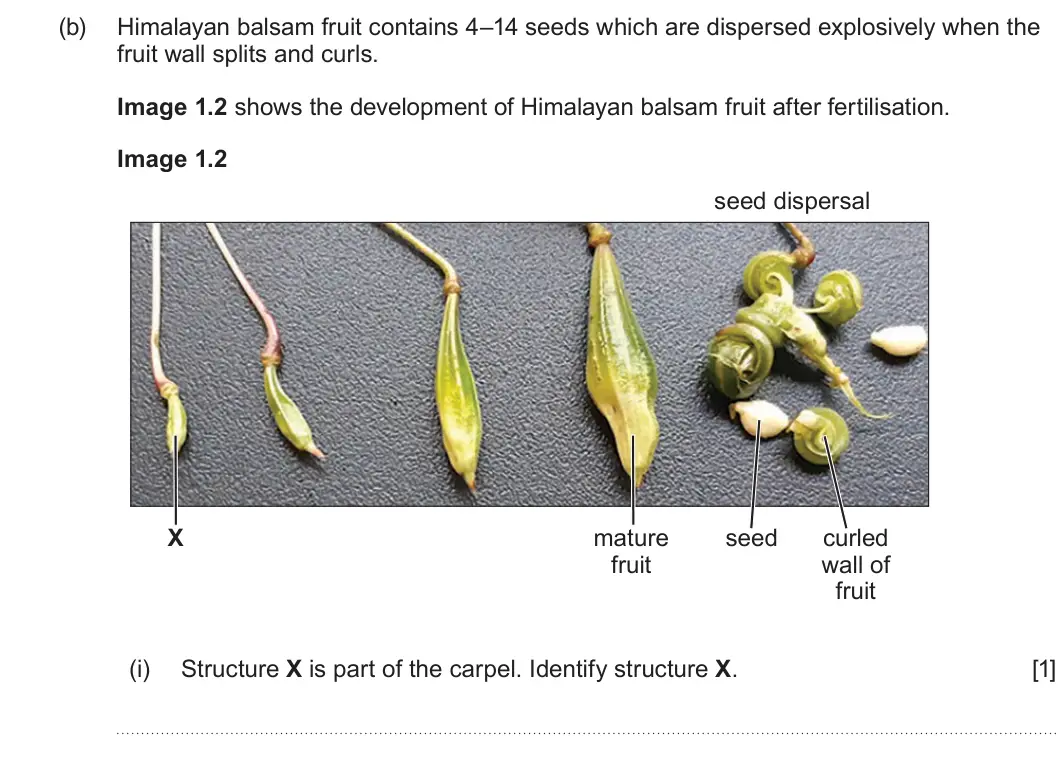
Q1(b)(ii)
The whole paper ↗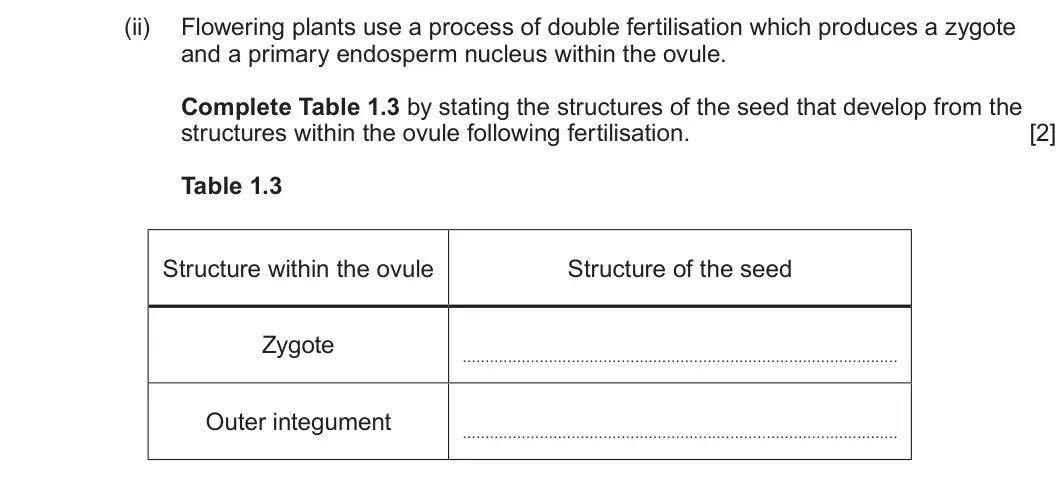
Q1(b)(iii)
The whole paper ↗
Q1(c)(i)
The whole paper ↗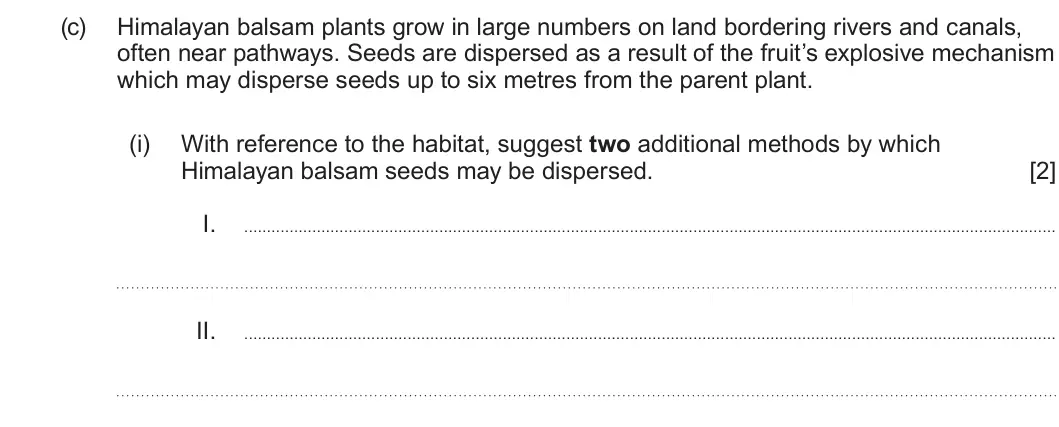
Q1(c)(ii)
The whole paper ↗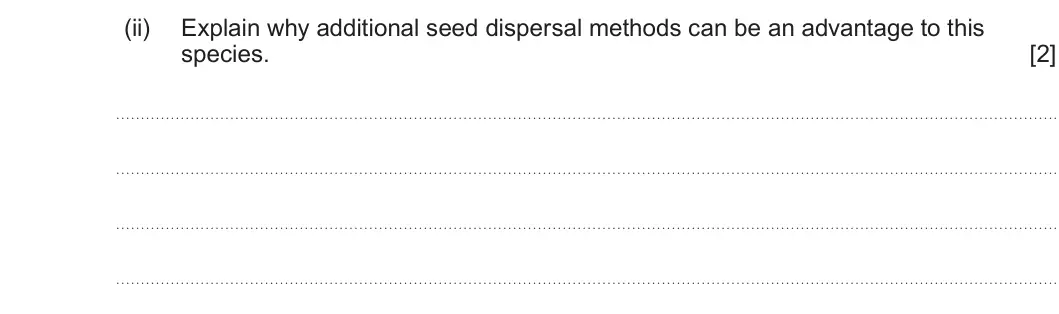
Q2(a)(i)
The whole paper ↗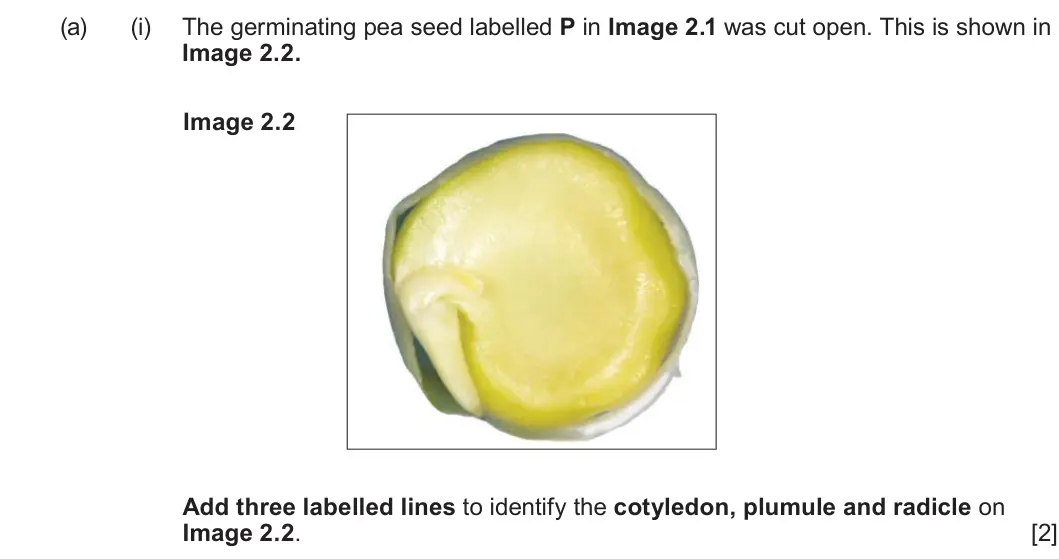
Q2(a)(ii)
The whole paper ↗
Q2(b)
The whole paper ↗
Q2(c)
The whole paper ↗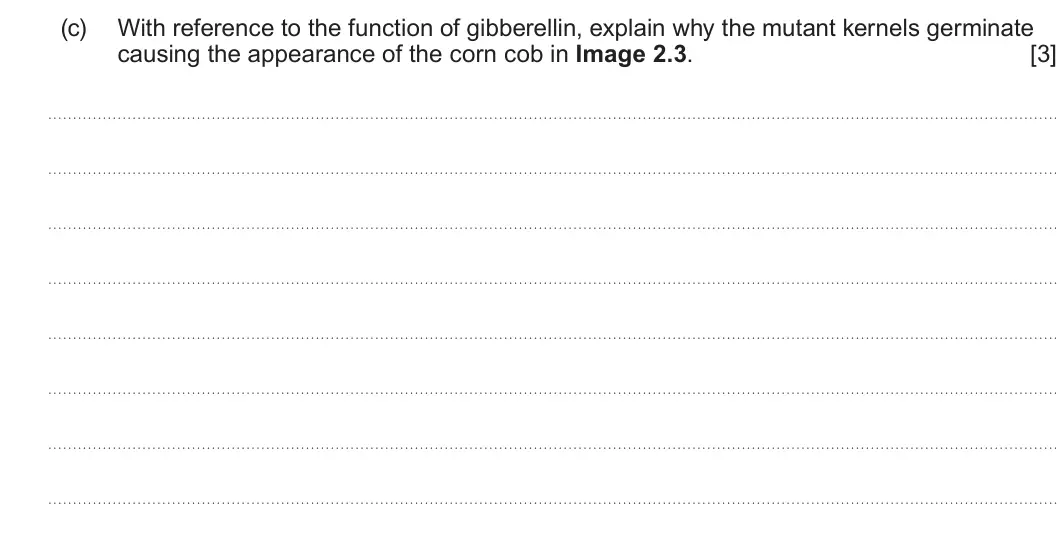
Q1(c)(iii)
The whole paper ↗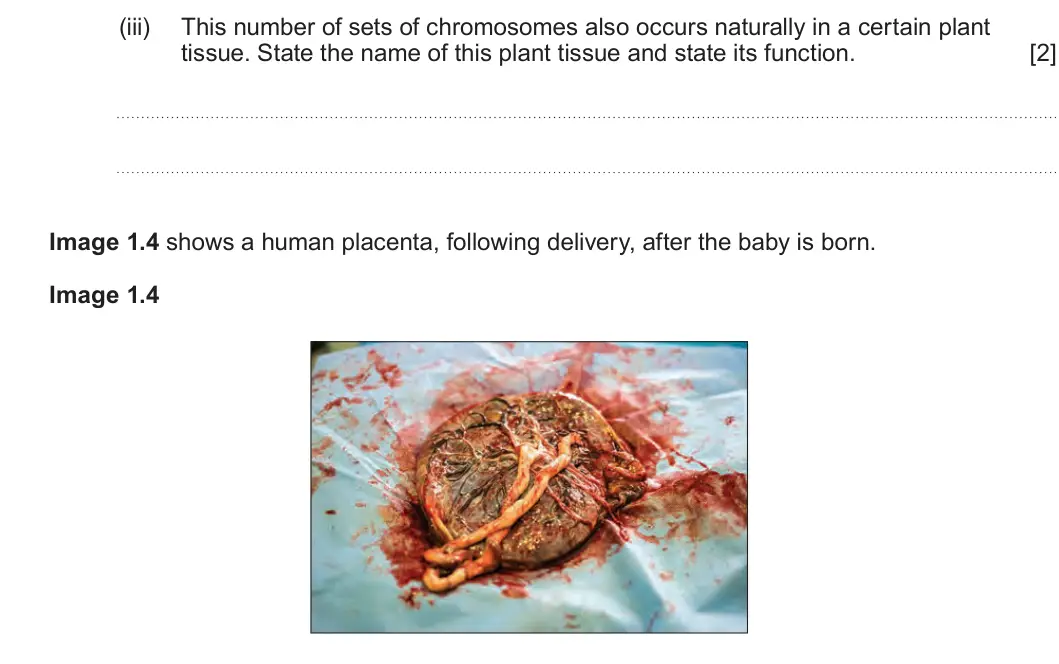
Q2(a)
The whole paper ↗
Q2(b)
The whole paper ↗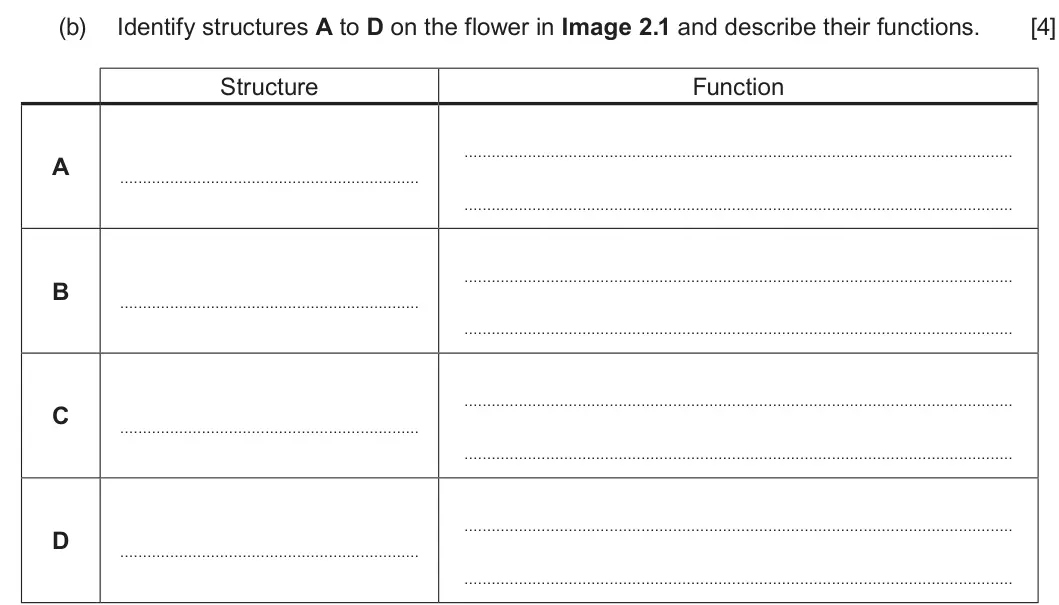
Q2(c)
The whole paper ↗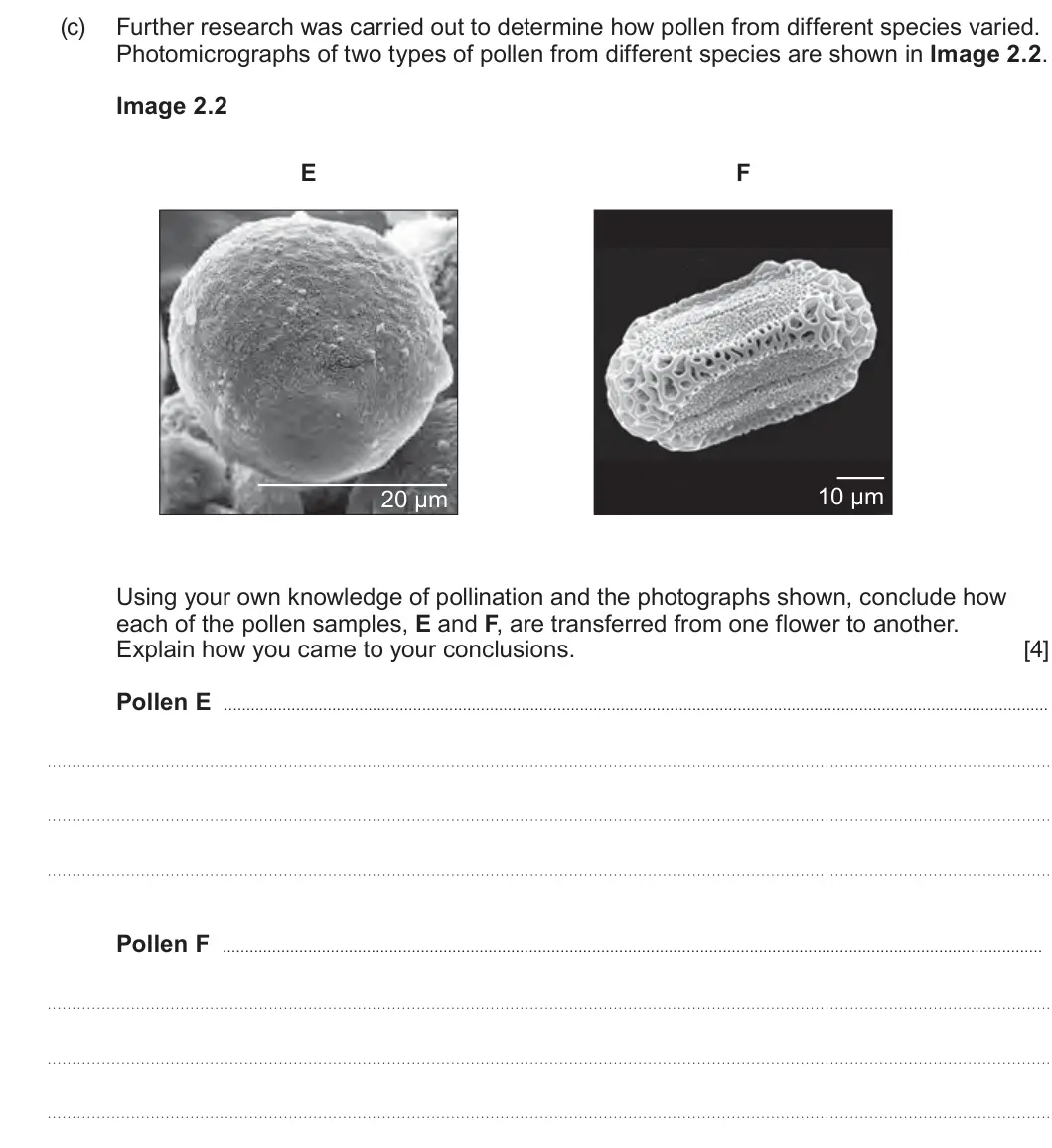
Q3(c)
The whole paper ↗
Q5(a)(i)
The whole paper ↗
Q5(a)(ii)
The whole paper ↗
Q5(b)
The whole paper ↗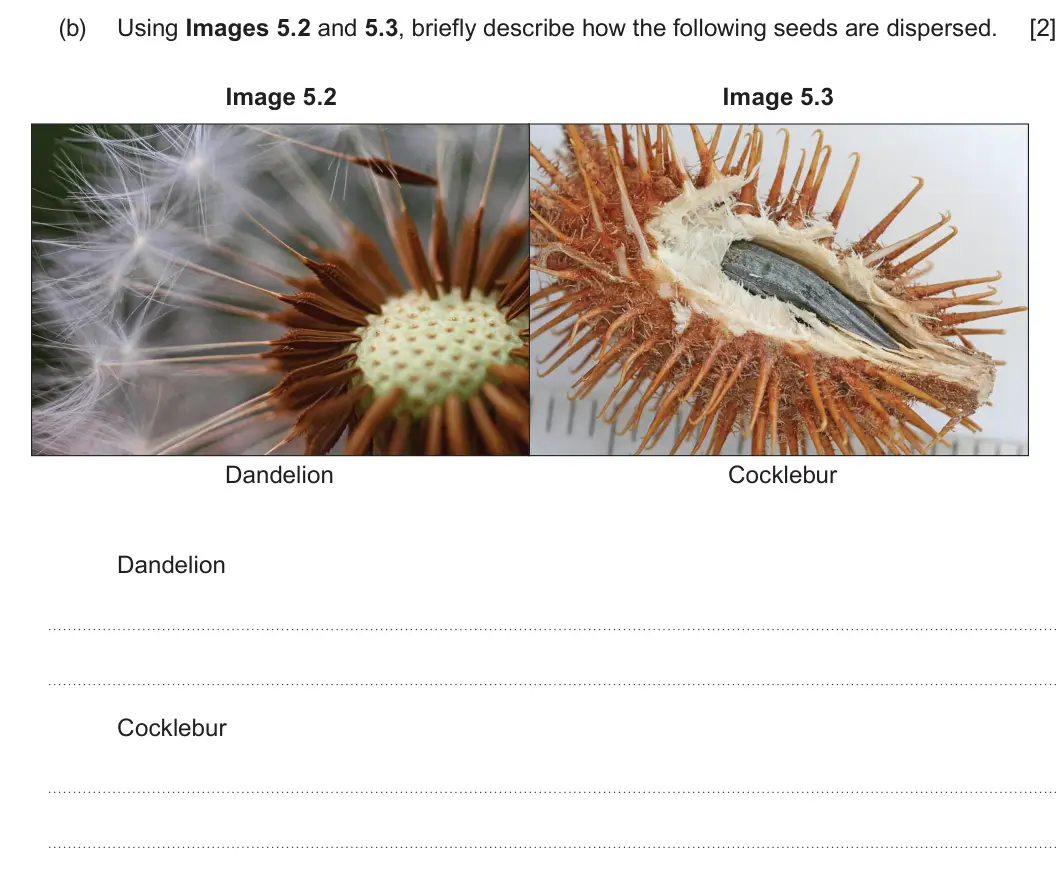
All 41 questions on Sexual reproduction in plants, as a list
- Summer 2025, Unit 4, Q1(a)(i) (1 mark): Brightly coloured petals attract insects to the flowers. Suggest one other feature, not visible in Images 1.1A or B, that may enable these flowers to attract in
- Summer 2025, Unit 4, Q1(a)(ii) (2 marks): Use the information provided to describe how cross-pollination is ensured in Himalayan balsam. [2]
- Summer 2025, Unit 4, Q1(a)(iii) (2 marks): Explain why cross-pollination is an advantage to a plant species colonising a new habitat. [2]
- Summer 2025, Unit 4, Q1(b)(i) (1 mark): Structure X is part of the carpel. Identify structure X. [1]
- Summer 2025, Unit 4, Q1(b)(ii) (2 marks): Flowering plants use a process of double fertilisation which produces a zygote and a primary endosperm nucleus within the ovule. Complete Table 1.3 by stating t
- Summer 2025, Unit 4, Q1(b)(iii) (1 mark): The primary endosperm nucleus becomes endosperm in the seeds of many flowering plants. State one function of endosperm in seeds. [1]
- Summer 2025, Unit 4, Q1(c)(i) (2 marks): With reference to the habitat, suggest two additional methods by which Himalayan balsam seeds may be dispersed. [2] I. II.
- Summer 2025, Unit 4, Q1(c)(ii) (2 marks): Explain why additional seed dispersal methods can be an advantage to this species. [2]
- Summer 2024, Unit 4, Q2(a)(i) (2 marks): The germinating pea seed labelled P in Image 2.1 was cut open. This is shown in Image 2.2. Image 2.2 Add three labelled lines to identify the cotyledon, plumule
- Summer 2024, Unit 4, Q2(a)(ii) (2 marks): State two reasons why it is important that the radicle emerges prior to the plumule. [2]
- Summer 2024, Unit 4, Q2(b) (3 marks): Briefly describe the stages of germination in a non-endospermic seed such as the pea. [3] Question continued overleaf Gibberellin is required for maize kernel (
- Summer 2024, Unit 4, Q2(c) (3 marks): With reference to the function of gibberellin, explain why the mutant kernels germinate causing the appearance of the corn cob in Image 2.3. [3]
- Summer 2023, Unit 4, Q1(c)(iii) (2 marks): This number of sets of chromosomes also occurs naturally in a certain plant tissue. State the name of this plant tissue and state its function. [2] Image 1.4 sh
- Summer 2023, Unit 4, Q2(a) (1 mark): The technician requested a materials list prior to the investigation. Apart from safety glasses, list three items of apparatus which would be needed to carry ou
- Summer 2023, Unit 4, Q2(b) (4 marks): Identify structures A to D on the flower in Image 2.1 and describe their functions. [4] Structure Function A B C D
- Summer 2023, Unit 4, Q2(c) (4 marks): Further research was carried out to determine how pollen from different species varied. Photomicrographs of two types of pollen from different species are shown
- Summer 2023, Unit 4, Q3(c) (3 marks): The production of seeds requires sexual reproduction which involves meiosis. One way for a plant grower to produce plants with the same phenotype as the parent
- Summer 2022, Unit 4, Q5(a)(i) (2 marks): Describe double fertilisation in plants. [2]
- Summer 2022, Unit 4, Q5(a)(ii) (2 marks): Explain why only the fertilised ovules develop into kernels. State the advantage to the plant of this. [2]
- Summer 2022, Unit 4, Q5(b) (2 marks): Using Images 5.2 and 5.3, briefly describe how the following seeds are dispersed. [2] Image 5.2 Image 5.3 Dandelion Cocklebur Dandelion Cocklebur
- Summer 2022, Unit 4, Q5(c)(i) (2 marks): State the following variables in this experiment: [2] Independent variable Dependent variable
- Summer 2022, Unit 4, Q5(c)(ii) (3 marks): State the conclusion you can draw from the experimental results shown in Image 5.4. Use your knowledge of plant hormones to explain your answer. [3]
- Summer 2019, Unit 4, Q1(a)(i) (1 mark): State the function of the tapetum. [1]
- Summer 2019, Unit 4, Q1(a)(ii) (2 marks): Explain the appearance of the tetrad. [2]
- Summer 2019, Unit 4, Q1(b)(i) (2 marks): Describe the function of the tube nucleus in the growth of the pollen tube. [2]
- Summer 2019, Unit 4, Q1(b)(ii) (3 marks): In maize, the distance between the stigma and the micropyle is 20 cm. It takes 20 hours for the pollen tube to grow and reach the micropyle. Calculate the rate
- Summer 2019, Unit 4, Q1(b)(iii) (1 mark): Use clearly drawn label lines to show the following: A = Female gamete. B = Polar nuclei. [1]
- Summer 2019, Unit 4, Q1(b)(iv) (3 marks): Describe the role of mitosis and meiosis in the formation of the female gamete. [3]
- Summer 2019, Unit 4, Q1(b)(v) (3 marks): With reference to the photomicrograph, explain why fertilisation in plants is referred to as double fertilisation. [3]
- Summer 2019, Unit 4, Q3(a) (2 marks): State how the appearance of the flower would be different if the tomato flower was wind-pollinated. [2]
- Summer 2019, Unit 4, Q3(b)(i) (2 marks): State three ways in which you would ensure that the extracts from both varieties of tomato were comparable. [2] To compare the concentration of inhibitor the fo
- Summer 2019, Unit 4, Q3(b)(ii) (1 mark): Explain why the seeds need to be washed before placing on the filter paper. [1]
- Summer 2019, Unit 4, Q3(b)(iii) (1 mark): Explain why the extracts from both varieties of tomato were tested on seeds from both varieties. [1]
- Summer 2019, Unit 4, Q3(b)(iv) (2 marks): Describe and explain a suitable control for this experiment. [2]
- Summer 2018, Unit 4, Q5 (9 marks): The diagrams below show a peanut seed (Arachis hypogaea) and a barley seed (Hordeum vulgare). seed coat seed coat cotyledon cotyledon endosperm plumule aleurone
- Summer 2017, Unit 4, Q1(a)(i) (2 marks): State whether the florets shown in the diagram are genetically identical or genetically different. Explain your answer. [2]
- Summer 2017, Unit 4, Q1(a)(ii) (1 mark): State one way shown in the diagram in which the structure of a floret reduces the chance of self-pollination. [1]
- Summer 2017, Unit 4, Q1(a)(iii) (2 marks): Explain the advantage of preventing self-pollination. [2]
- Summer 2017, Unit 4, Q1(b)(i) (2 marks): Leaf cells of S.squalidus contain 20 chromosomes. For this plant, state the number of chromosomes found in the following: [2] I. Female gamete II. Primary endos
- Summer 2017, Unit 4, Q5(a) (4 marks): Describe how you would develop and refine this practical procedure to determine whether treatment of seeds with a 0.1 mmol dm–3 solution of gibberellic acid inc
- Summer 2017, Unit 4, Q5(b) (2 marks): The following experiment was carried out to test the hypothesis that gibberellic acid stimulates amylase synthesis which then causes germination. Oat seeds were
Questions, mark schemes and examiner’s reports are © WJEC CBAC Ltd, from their published past papers. Plumi isn’t affiliated with any exam board. Want whole papers? Every WJEC A-Level Biology paper.
Rather write your answers by hand on iPad? Plumi marks them against the same mark schemes.