 plumi
Neurobiology and behaviour: WJEC A‑Level Biology questions
Every WJEC A-Level Biology exam question on 4.C Neurobiology and behaviour, 2016–2025, with its mark scheme and examiner’s report.
Find questions1,223
Calculations
Q9(a)(i)
The whole paper ↗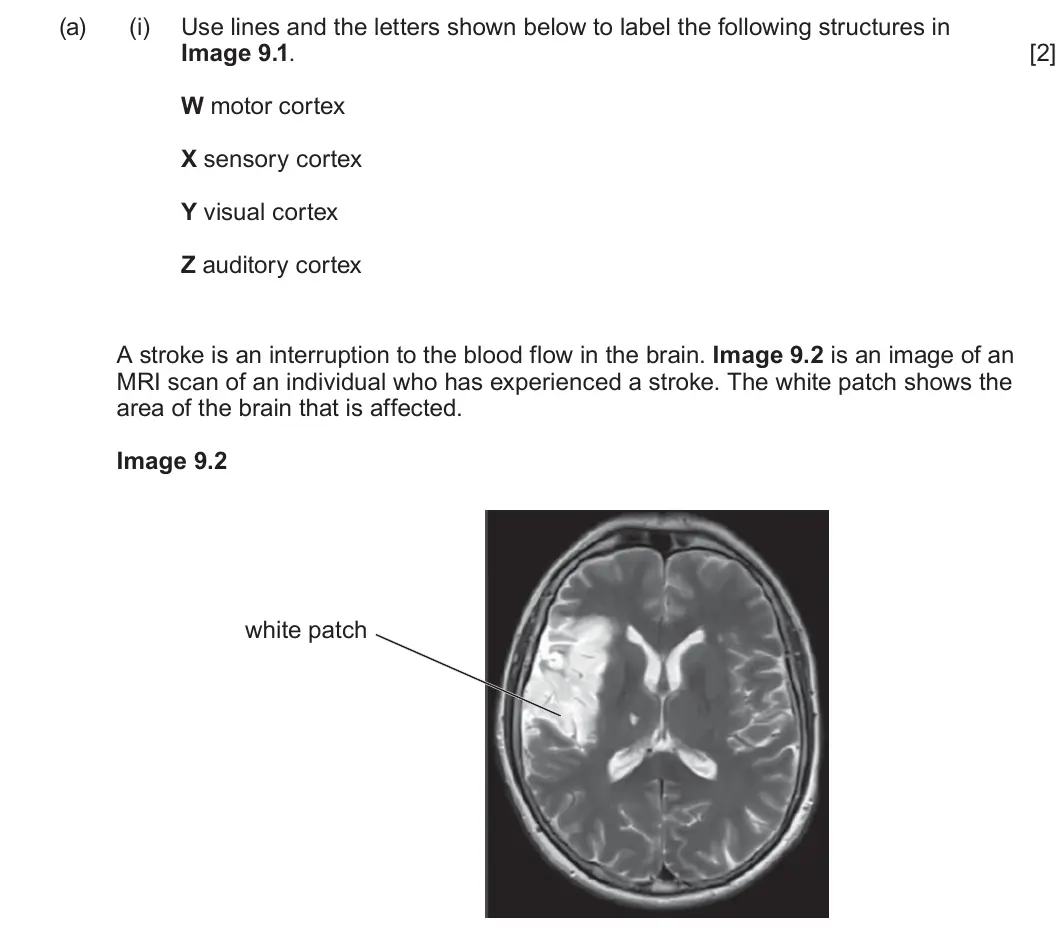
Q9(a)(ii)
The whole paper ↗
Q9(a)(iii)
The whole paper ↗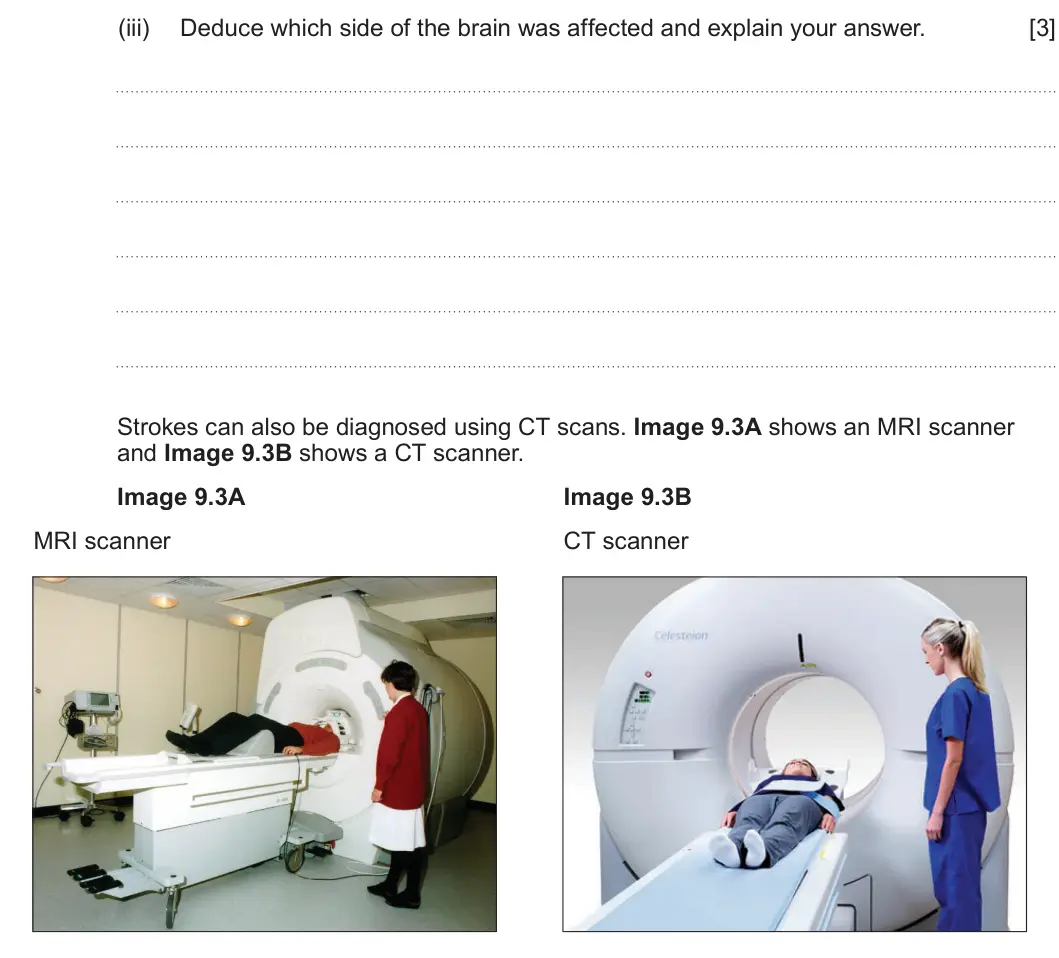
Q9(a)(iv)
The whole paper ↗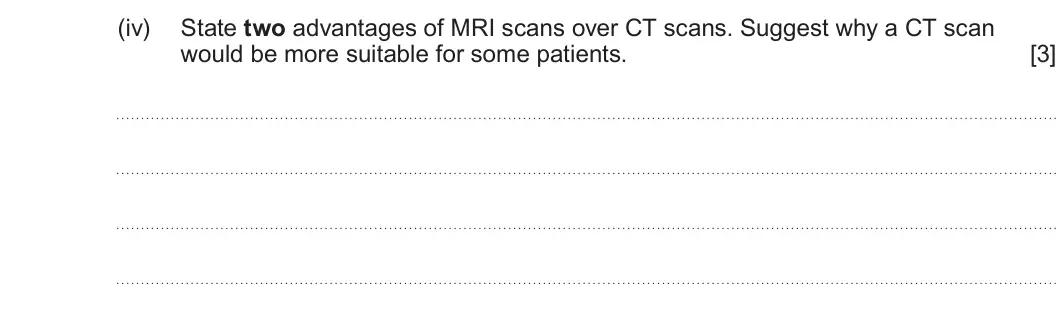
Q9(a)(v)
The whole paper ↗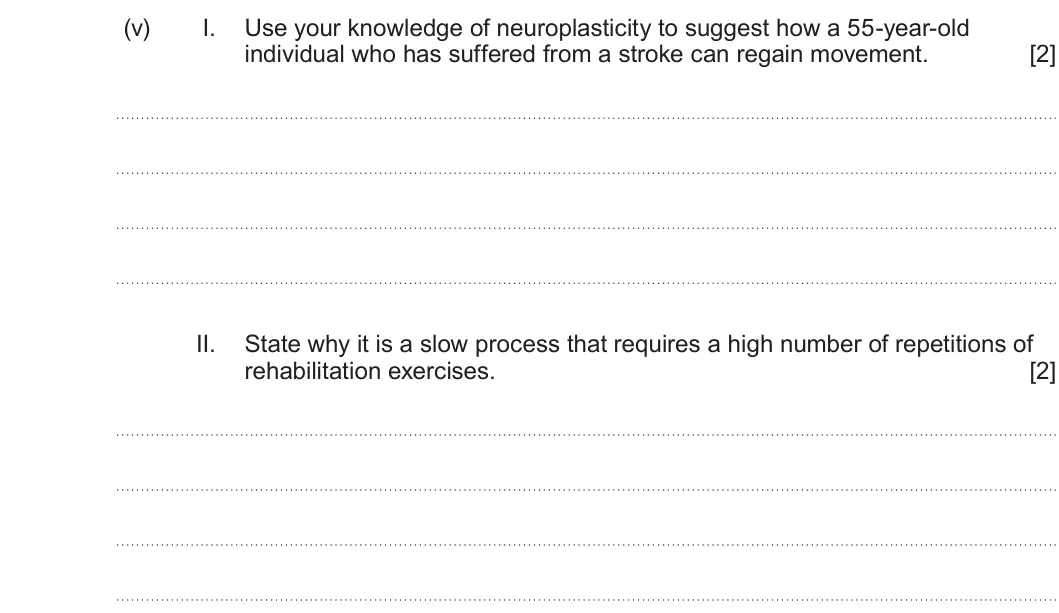
Q9(b)(i)
The whole paper ↗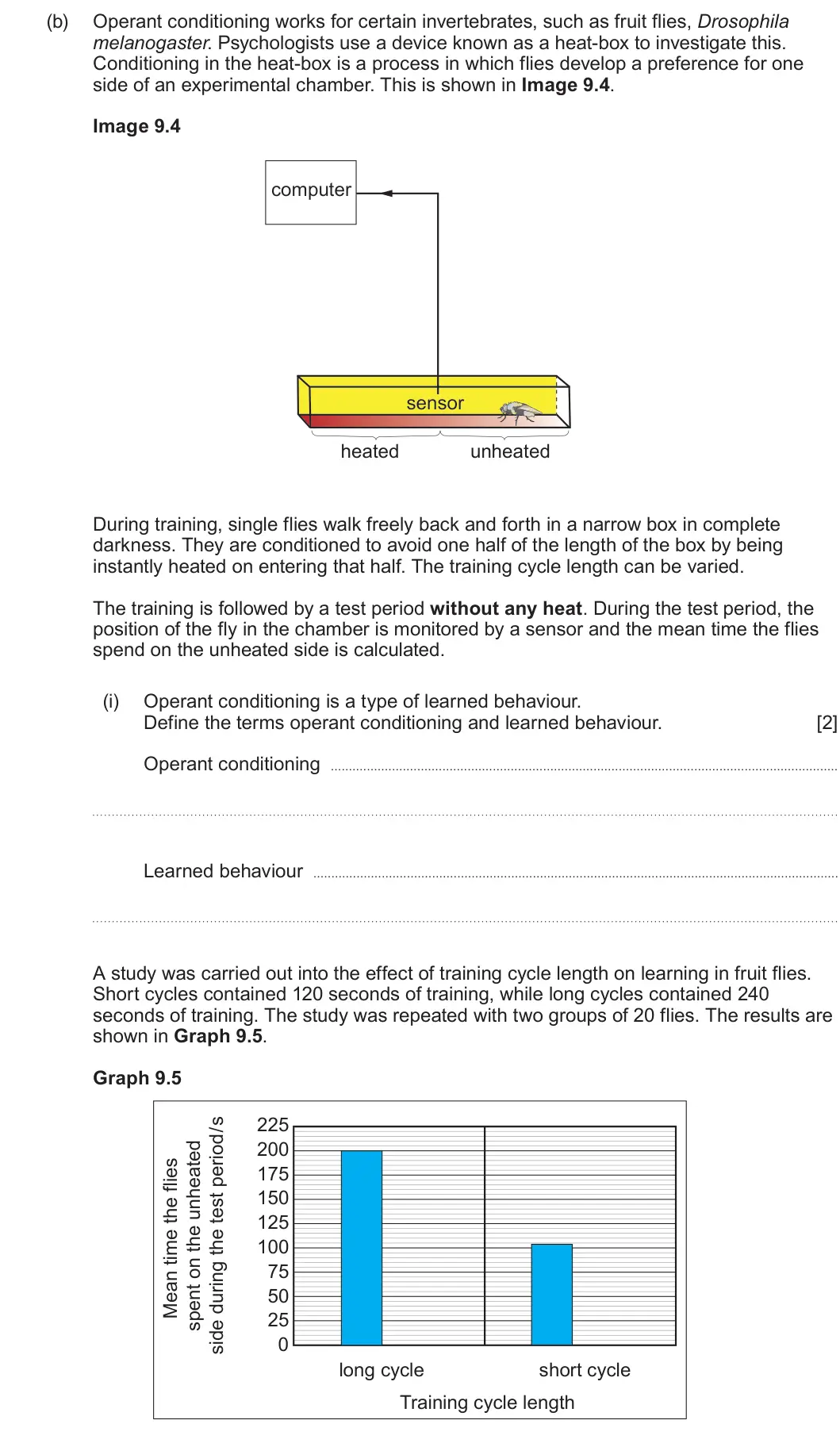
Q9(b)(ii)
The whole paper ↗
Q9(b)(iii)
The whole paper ↗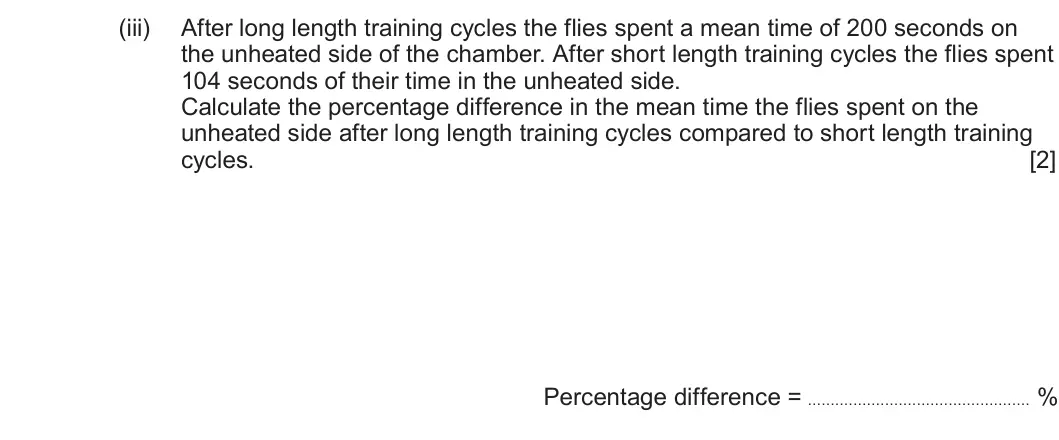
Q9(b)(iv)
The whole paper ↗
Q9(a)(i)
The whole paper ↗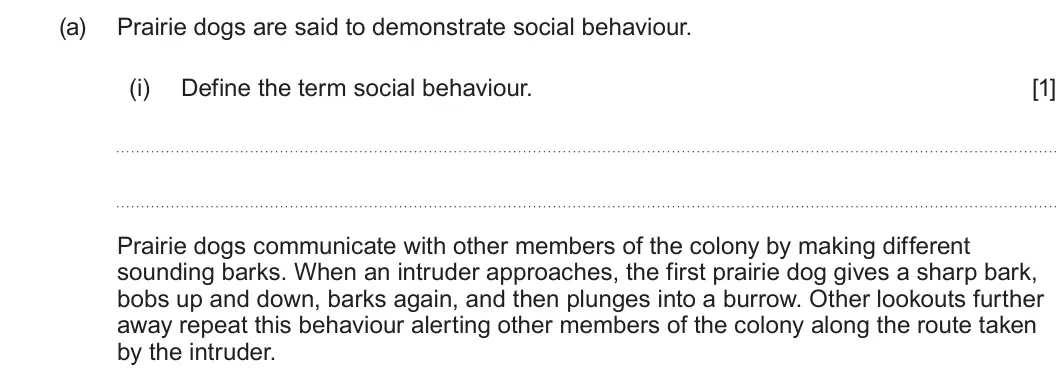
Q9(a)(ii)
The whole paper ↗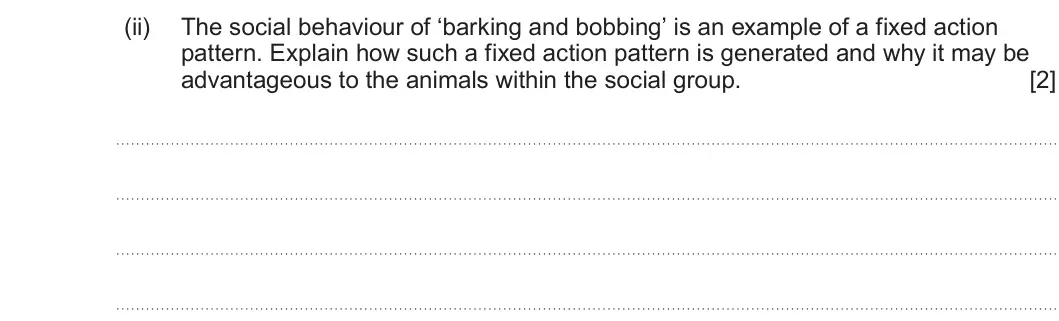
Q9(a)(iii)
The whole paper ↗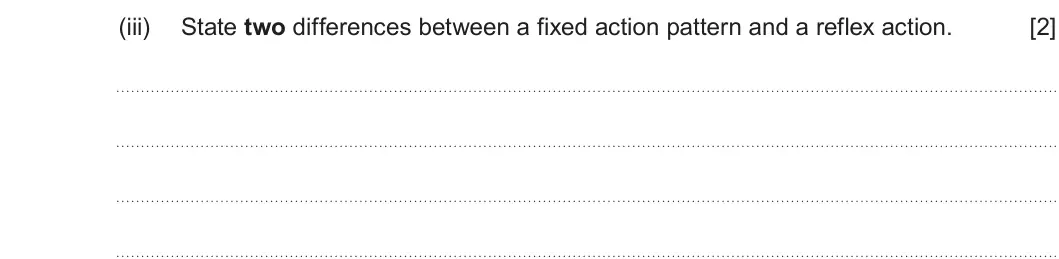
Q9(b)(i)
The whole paper ↗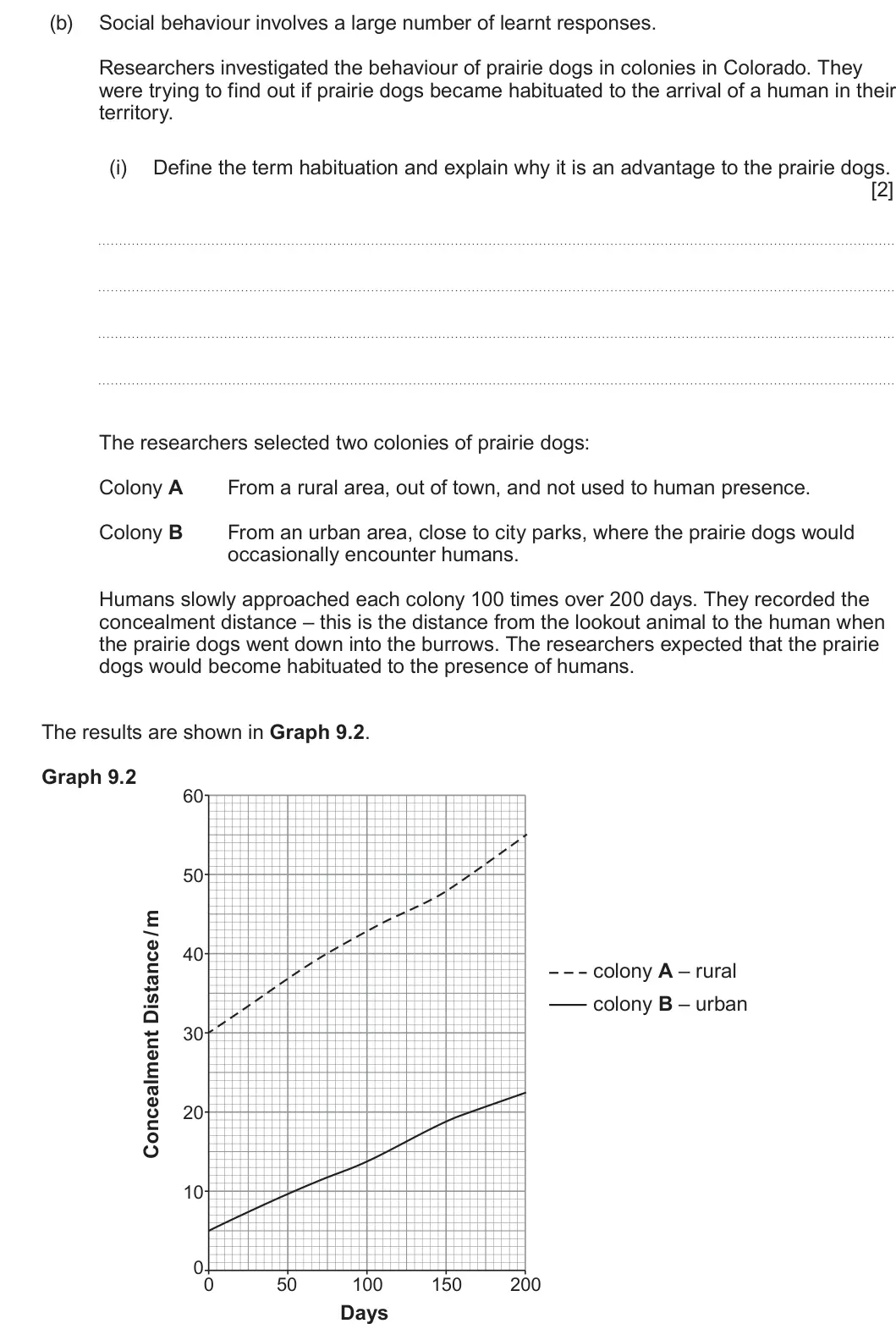
Q9(b)(ii)
The whole paper ↗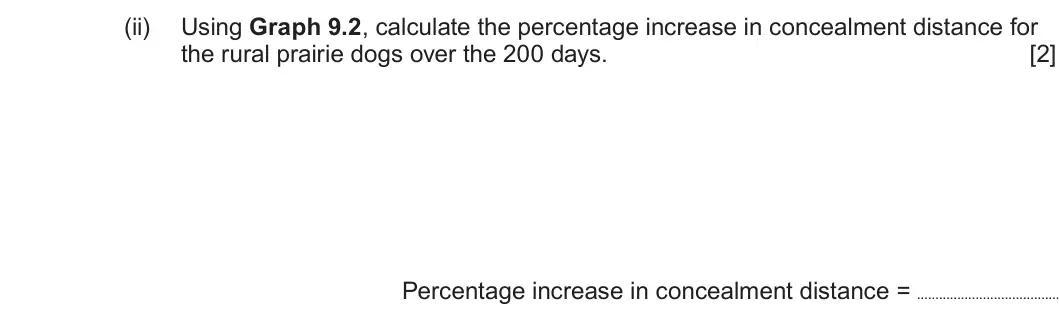
Q9(b)(iii)
The whole paper ↗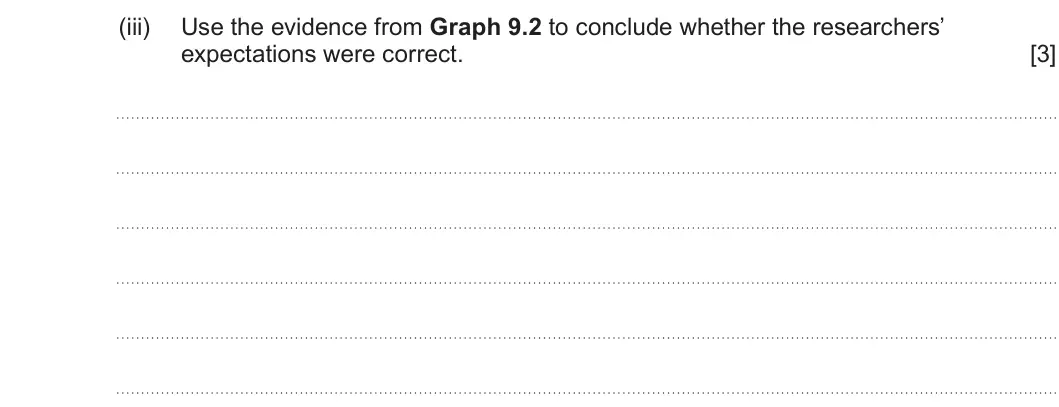
Q9(c)(i)
The whole paper ↗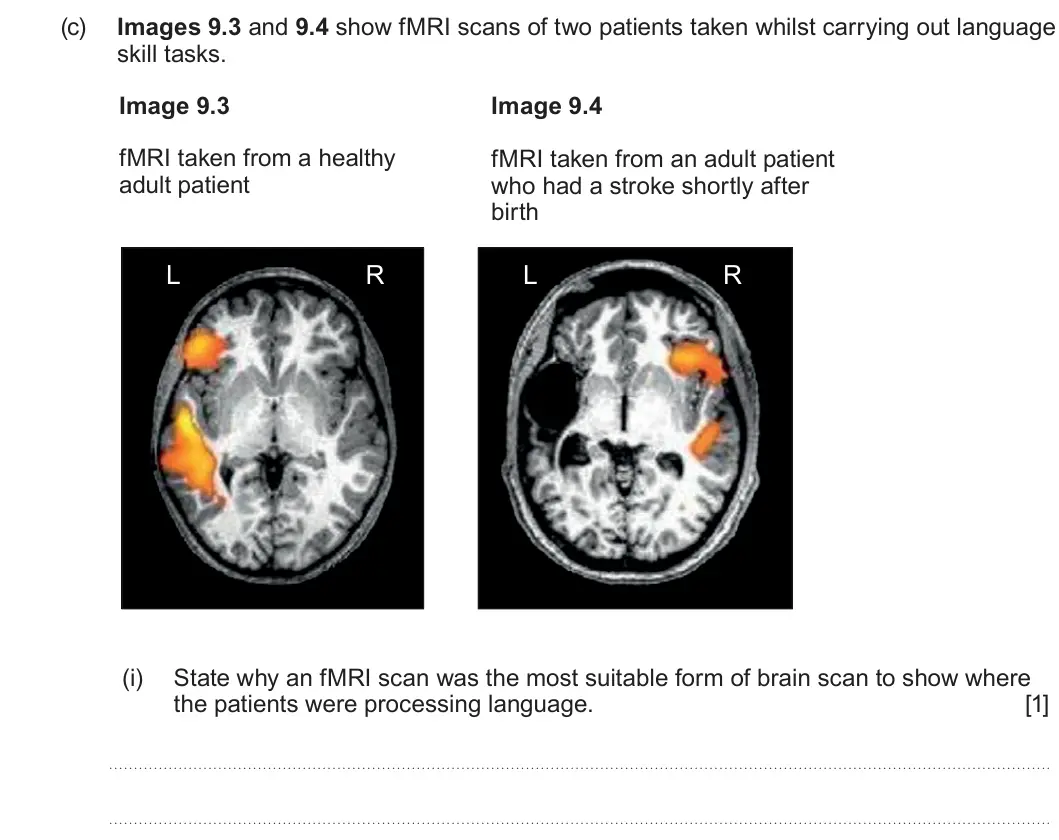
Q9(c)(ii)
The whole paper ↗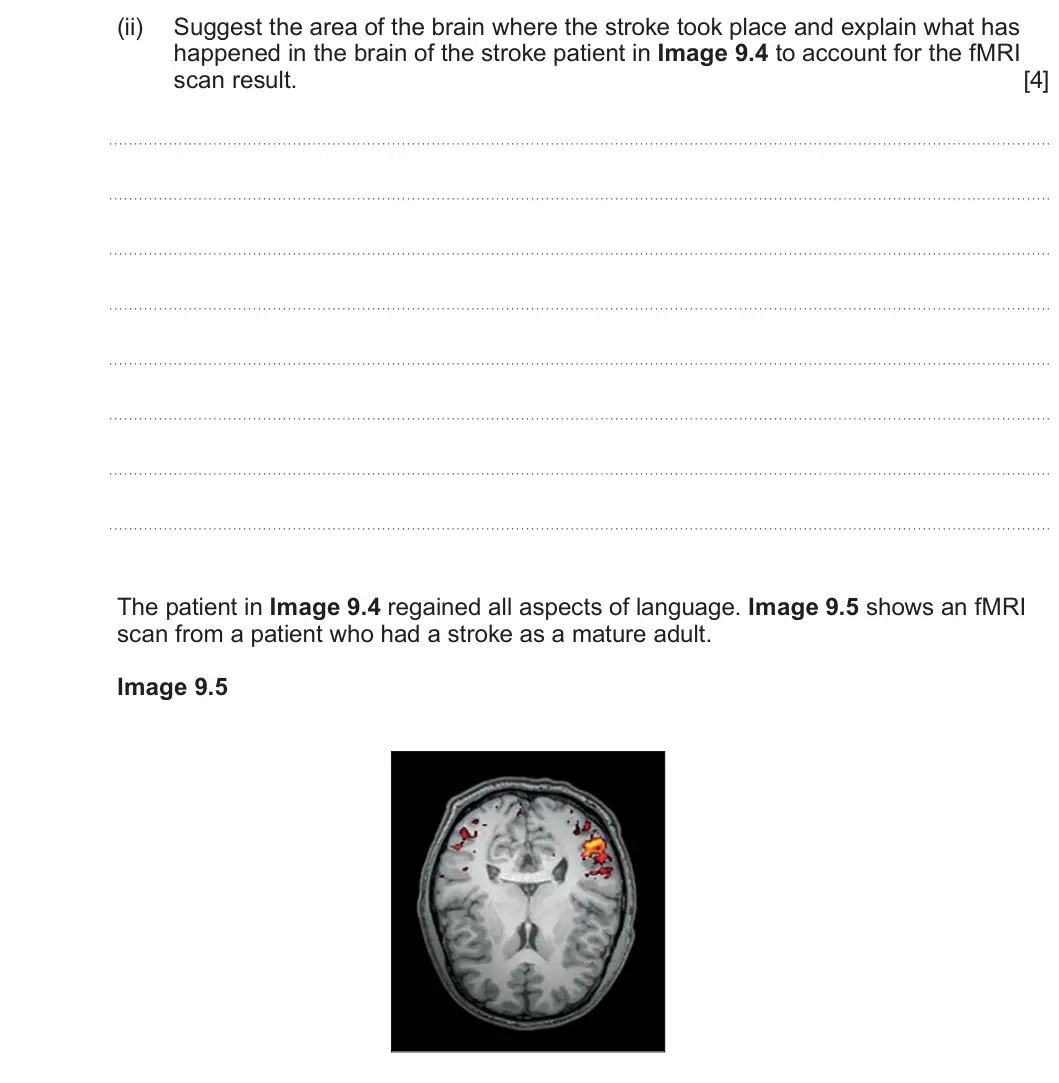
Q9(c)(iii)
The whole paper ↗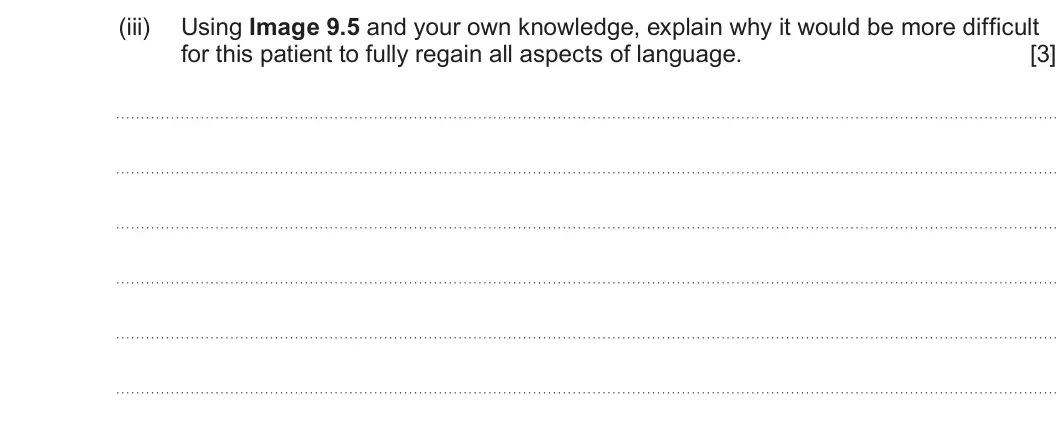
Q9(a)(i)
The whole paper ↗
Q9(a)(ii)
The whole paper ↗
All 38 questions on Neurobiology and behaviour, as a list
- Summer 2025, Unit 4, Q9(a)(i) (2 marks): Use lines and the letters shown below to label the following structures in Image 9.1. [2] W motor cortex X sensory cortex Y visual cortex Z auditory cortex A st
- Summer 2025, Unit 4, Q9(a)(ii) (2 marks): The individual presented with the following symptoms: paralysis of the right arm and an inability to speak. Conclude which two areas of the frontal lobe of the
- Summer 2025, Unit 4, Q9(a)(iii) (3 marks): Deduce which side of the brain was affected and explain your answer. [3] Strokes can also be diagnosed using CT scans. Image 9.3A shows an MRI scanner and Image
- Summer 2025, Unit 4, Q9(a)(iv) (3 marks): State two advantages of MRI scans over CT scans. Suggest why a CT scan would be more suitable for some patients. [3]
- Summer 2025, Unit 4, Q9(a)(v) (4 marks): I. Use your knowledge of neuroplasticity to suggest how a 55-year-old individual who has suffered from a stroke can regain movement. [2] II. State why it is a s
- Summer 2025, Unit 4, Q9(b)(i) (2 marks): Operant conditioning is a type of learned behaviour. Define the terms operant conditioning and learned behaviour. [2] Operant conditioning Learned behaviour A s
- Summer 2025, Unit 4, Q9(b)(ii) (1 mark): State the conclusion that can be drawn from Graph 9.5. [1]
- Summer 2025, Unit 4, Q9(b)(iii) (2 marks): After long length training cycles the flies spent a mean time of 200 seconds on the unheated side of the chamber. After short length training cycles the flies s
- Summer 2025, Unit 4, Q9(b)(iv) (1 mark): State how you could improve confidence in your conclusion. [1]
- Summer 2024, Unit 4, Q9(a)(i) (1 mark): Define the term social behaviour. [1] Prairie dogs communicate with other members of the colony by making different sounding barks. When an intruder approaches,
- Summer 2024, Unit 4, Q9(a)(ii) (2 marks): The social behaviour of ‘barking and bobbing’ is an example of a fixed action pattern. Explain how such a fixed action pattern is generated and why it may be ad
- Summer 2024, Unit 4, Q9(a)(iii) (2 marks): State two differences between a fixed action pattern and a reflex action. [2]
- Summer 2024, Unit 4, Q9(b)(i) (2 marks): Define the term habituation and explain why it is an advantage to the prairie dogs. [2] The researchers selected two colonies of prairie dogs: Colony A From a r
- Summer 2024, Unit 4, Q9(b)(ii) (2 marks): Using Graph 9.2, calculate the percentage increase in concealment distance for the rural prairie dogs over the 200 days. [2] Percentage increase in concealment
- Summer 2024, Unit 4, Q9(b)(iii) (3 marks): Use the evidence from Graph 9.2 to conclude whether the researchers’ expectations were correct. [3]
- Summer 2024, Unit 4, Q9(c)(i) (1 mark): State why an fMRI scan was the most suitable form of brain scan to show where the patients were processing language. [1]
- Summer 2024, Unit 4, Q9(c)(ii) (4 marks): Suggest the area of the brain where the stroke took place and explain what has happened in the brain of the stroke patient in Image 9.4 to account for the fMRI
- Summer 2024, Unit 4, Q9(c)(iii) (3 marks): Using Image 9.5 and your own knowledge, explain why it would be more difficult for this patient to fully regain all aspects of language. [3]
- Summer 2023, Unit 4, Q9(a)(i) (1 mark): State the meaning of the term ‘dominance hierarchy’. [1]
- Summer 2023, Unit 4, Q9(a)(ii) (2 marks): State and explain an advantage of dominance hierarchy in chacma baboons. [2]
- Summer 2023, Unit 4, Q9(a)(iii) (1 mark): Suggest an advantage of maintaining hierarchy by aggressive displays rather than fighting. [1]
- Summer 2023, Unit 4, Q9(a)(iv) (4 marks): With reference to the appropriate branches of the nervous system, explain how the hypothalamus prepares the baboons for the ‘fight or flight response’ during th
- Summer 2023, Unit 4, Q9(b)(i) (2 marks): Calculate the percentage change in mean testosterone levels when the chacma baboon moves up one rank from 0 to 1 [2] Percentage change =
- Summer 2023, Unit 4, Q9(b)(ii) (1 mark): Suggest an advantage for the change in testosterone levels. [1]
- Summer 2023, Unit 4, Q9(c)(i) (1 mark): State the meaning of the term innate behaviour. [1]
- Summer 2023, Unit 4, Q9(c)(ii) (3 marks): Courtship behaviour, as seen in peafowl, is an example of the male handicap model. With reference to Image 9.2, state the evidence that this is an example of th
- Summer 2023, Unit 4, Q9(d)(i) (2 marks): State two reasons why the scientists studied the hippocampus region of the brain in this research. [2] Graph 9.3 shows the percentage differences between the vo
- Summer 2023, Unit 4, Q9(d)(ii) (3 marks): State the trend shown in Graph 9.3 and use your knowledge of brain structure and neuroplasticity to state two conclusions that can be drawn. [3]
- Summer 2019, Unit 4, Q10(a)(i) (3 marks): Complete the table below to show the differences between the divisions of the autonomic nervous system. [3] Sympathetic Parasympathetic Neurotransmitter General
- Summer 2019, Unit 4, Q10(a)(ii) (1 mark): Explain what the motor homunculus represents. [1]
- Summer 2019, Unit 4, Q10(a)(iii) (1 mark): Suggest why the sensory homunculus would differ from the motor homunculus. [1]
- Summer 2019, Unit 4, Q10(b)(i) (3 marks): Using the information above, and your own knowledge, suggest why mental illness has been linked with Cushing’s disease. [3]
- Summer 2019, Unit 4, Q10(b)(ii) (2 marks): The gene for cortisol is expressed in the cells of the adrenal gland. Suggest how the expression of this gene could be affected in children who have experienced
- Summer 2019, Unit 4, Q10(c)(i) (2 marks): State the advantages to the ants of living in a colony. [2]
- Summer 2019, Unit 4, Q10(c)(ii) (1 mark): Suggest how ants may communicate with each other. [1] Sexual selection has played a role in the evolution of courtship behaviours in vertebrates. Male elephant
- Summer 2019, Unit 4, Q10(c)(iii) (2 marks): State the type of sexual selection displayed by the male elephant seals. Explain the consequence of this type of selection. [2]
- Summer 2019, Unit 4, Q10(c)(iv) (1 mark): Students carried out the following experiment to investigate behaviour in insects. Twenty Tribolium castaneum beetles were placed in a Petri dish which had dry
- Summer 2019, Unit 4, Q10(c)(v) (4 marks): The null hypothesis for this experiment was that there was no significant difference between the observed and expected number of Tribolium beetles found in the
Questions, mark schemes and examiner’s reports are © WJEC CBAC Ltd, from their published past papers. Plumi isn’t affiliated with any exam board. Want whole papers? Every WJEC A-Level Biology paper.
Rather write your answers by hand on iPad? Plumi marks them against the same mark schemes.