 plumi
Respiration releases chemical energy in biological processes: WJEC A‑Level Biology questions
Every WJEC A-Level Biology exam question on 3.3 Respiration releases chemical energy in biological processes, 2016–2025, with its mark scheme and examiner’s report.
Find questions1,223
Calculations
Q1(a)
The whole paper ↗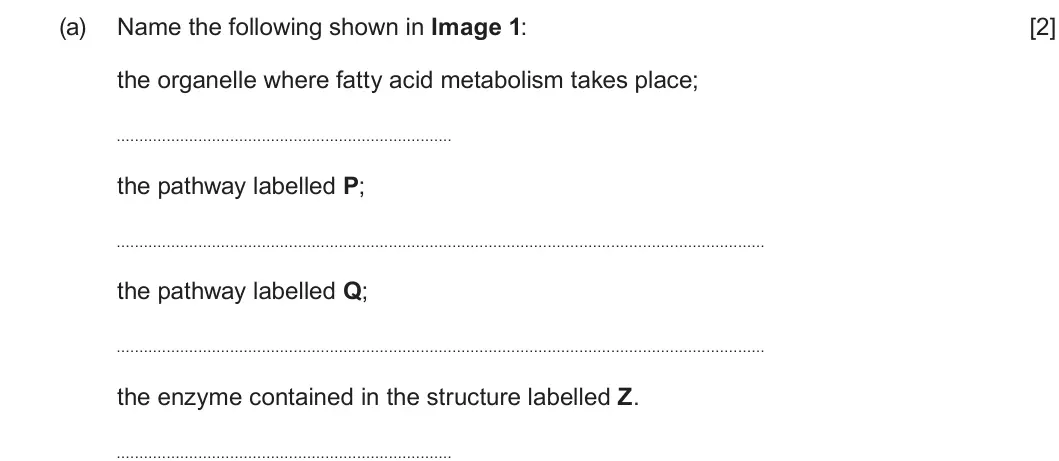
Q1(b)
The whole paper ↗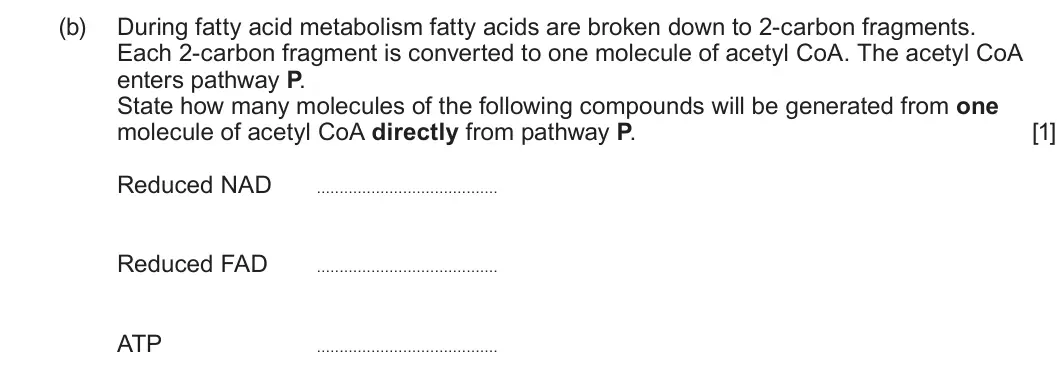
Q1(c)(ii)
The whole paper ↗
Q1(a)(i)
The whole paper ↗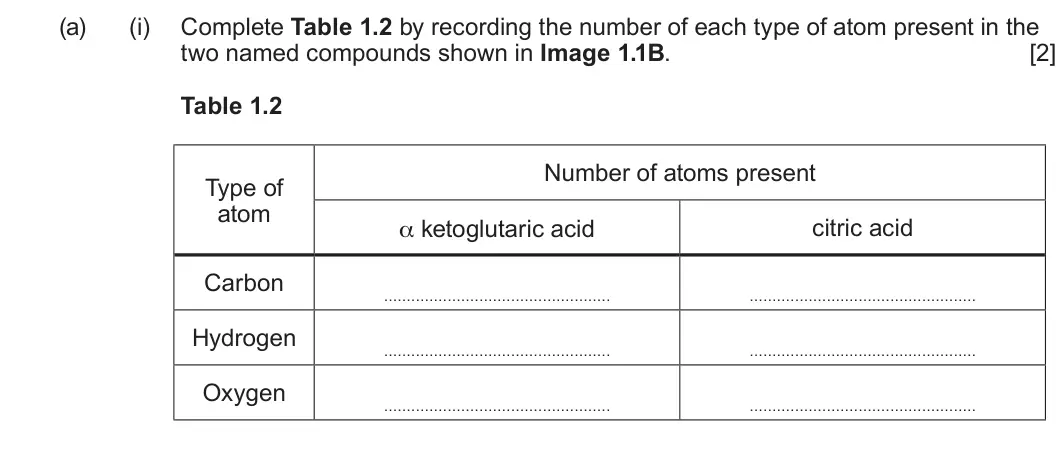
Q1(a)(ii)
The whole paper ↗
Q1(a)(iii)
The whole paper ↗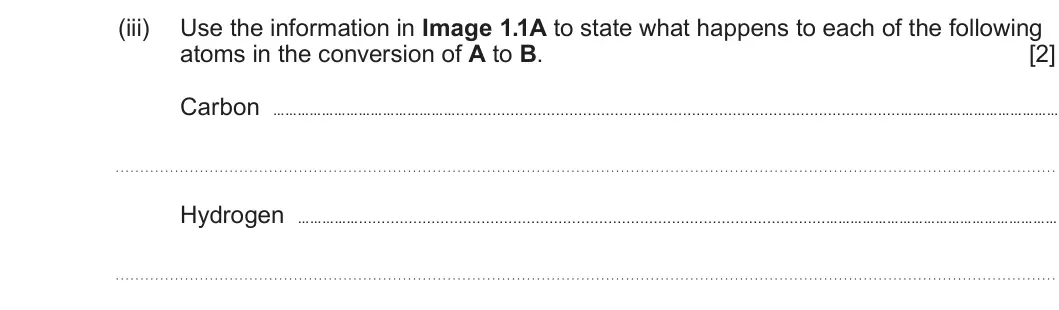
Q1(b)(i)
The whole paper ↗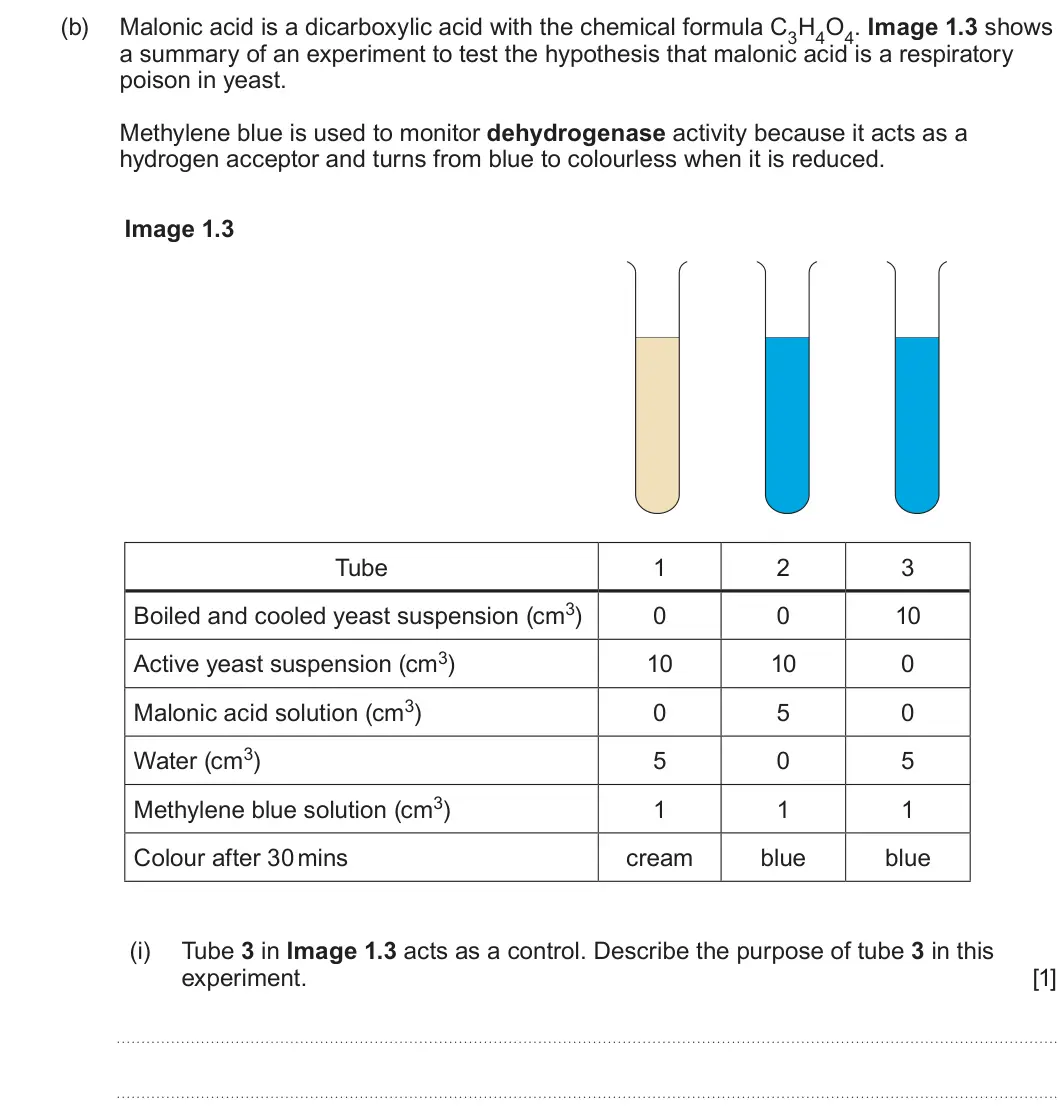
Q1(b)(ii)
The whole paper ↗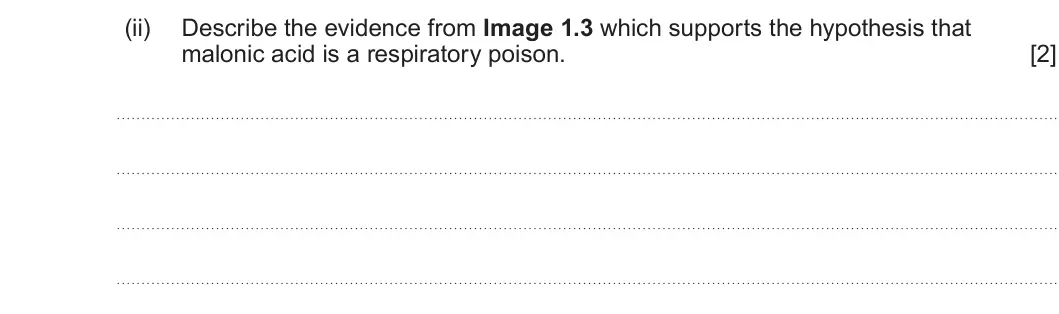
Q1(a)
The whole paper ↗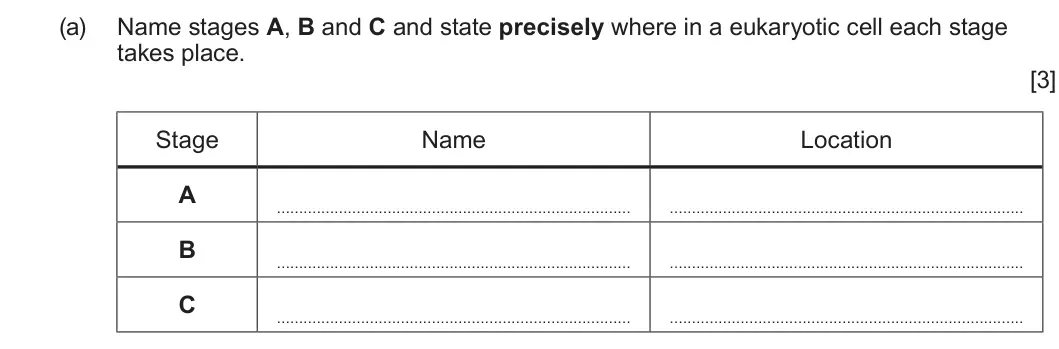
Q1(b)
The whole paper ↗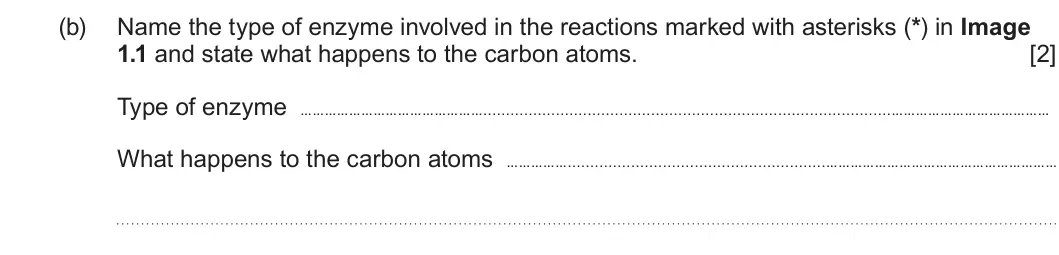
Q1(c)(i)
The whole paper ↗
Q1(c)(ii)
The whole paper ↗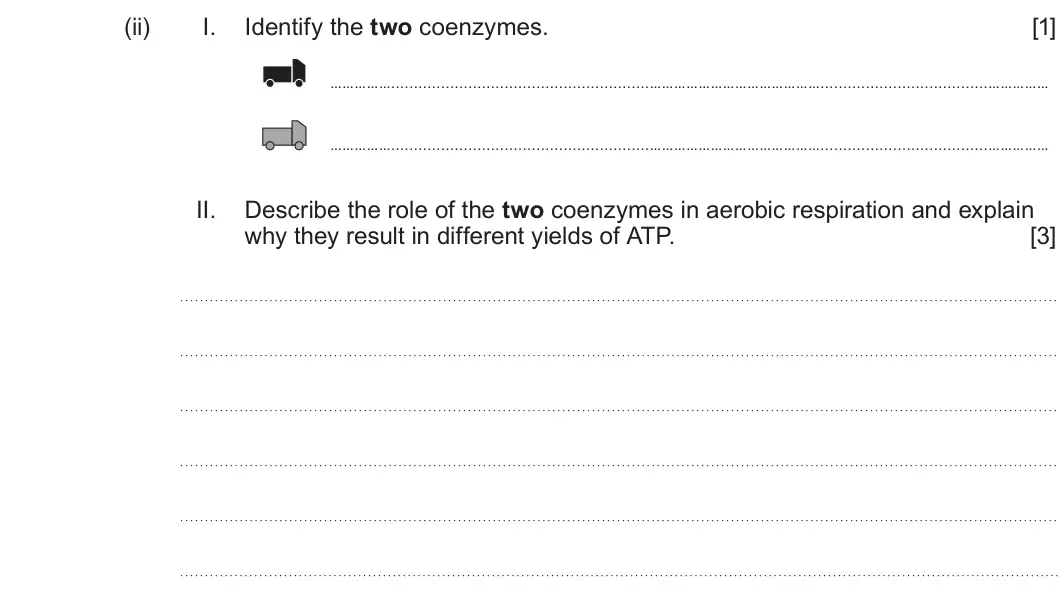
Q1(c)(iii)
The whole paper ↗
Q3(a)(ii)
The whole paper ↗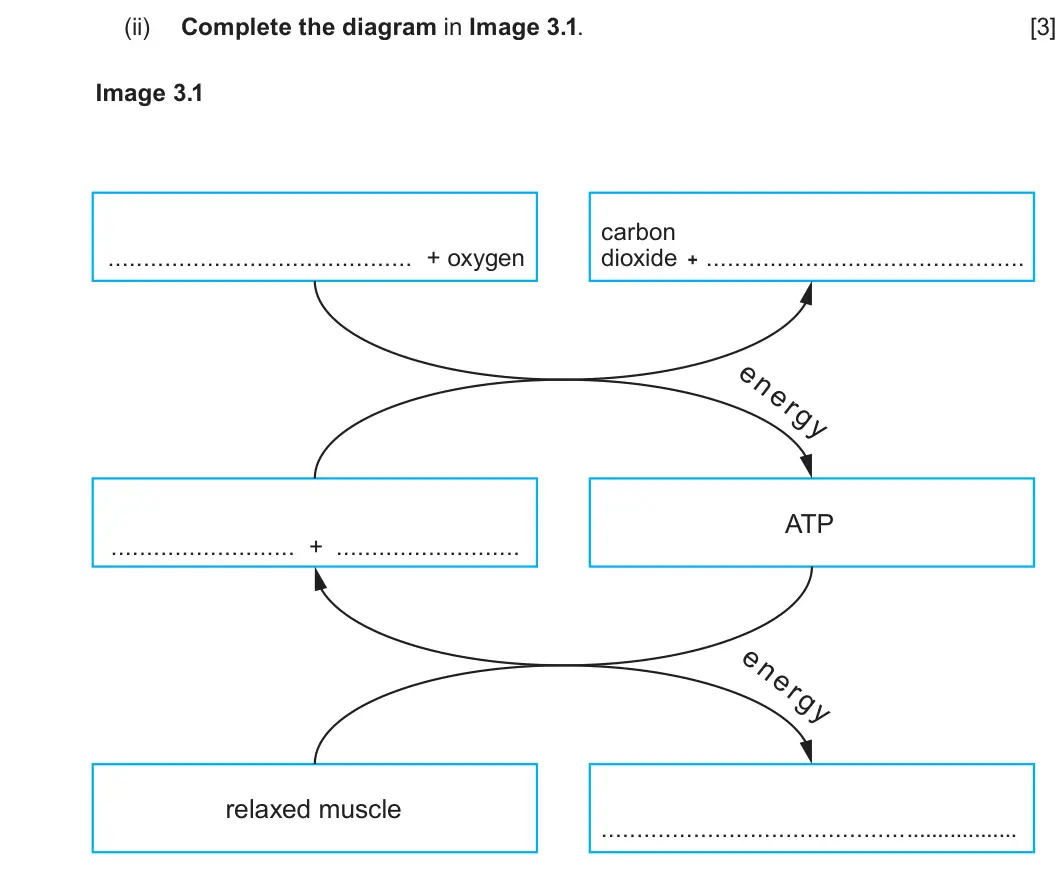
Q6(a)
The whole paper ↗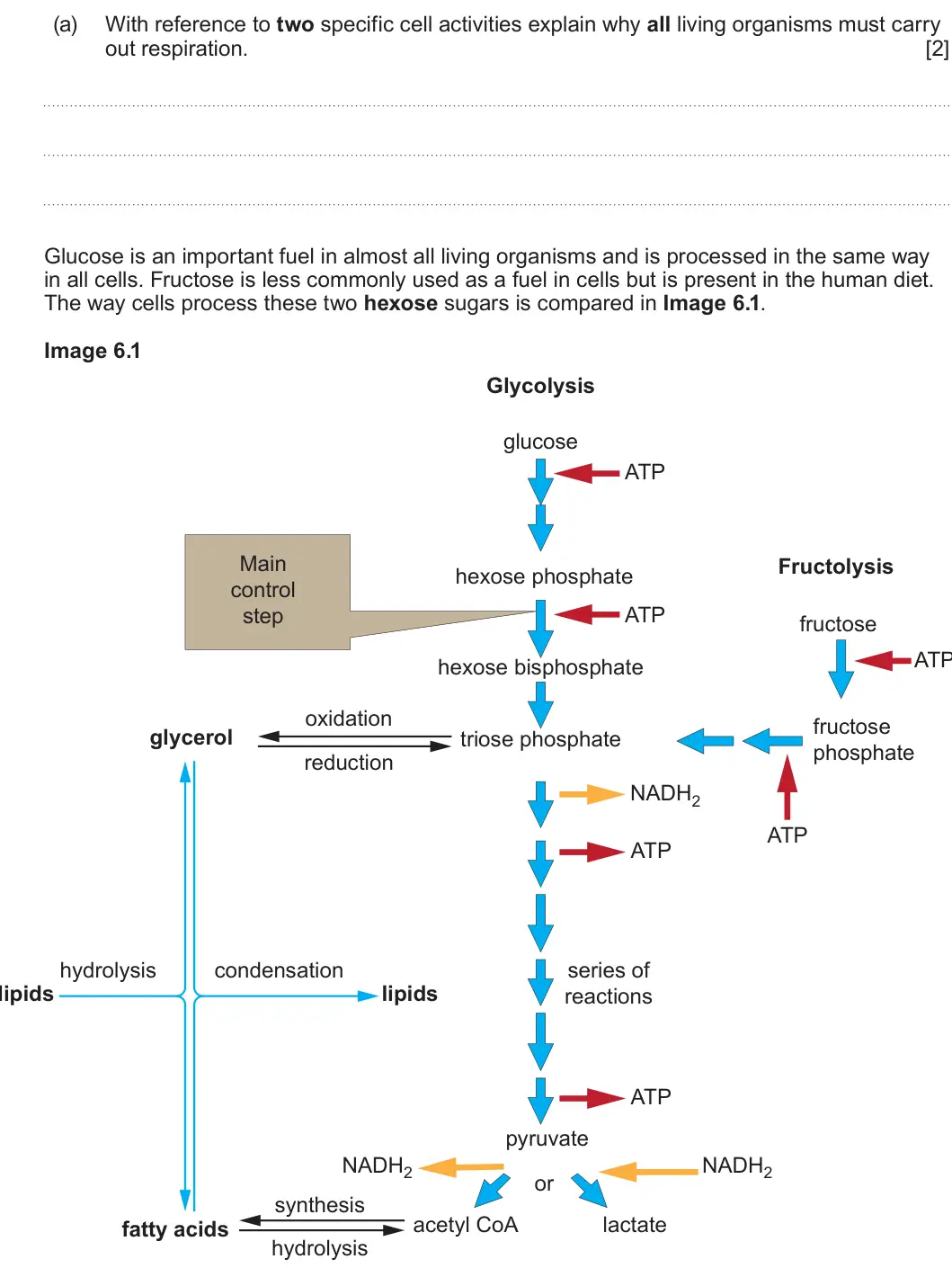
Q6(b)
The whole paper ↗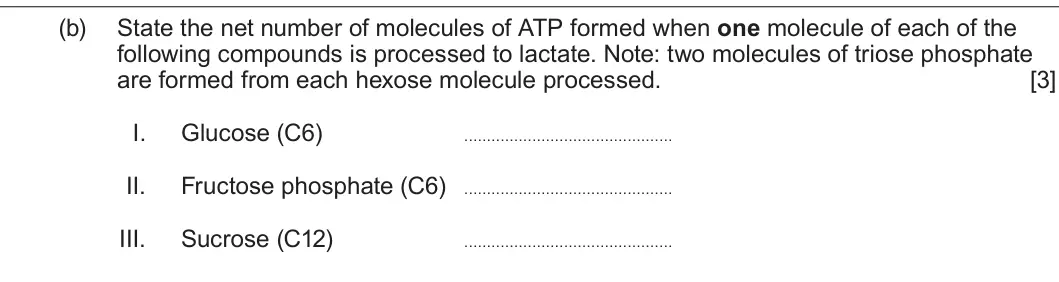
Q6(c)(i)
The whole paper ↗
Q6(c)(ii)
The whole paper ↗
Q6(d)(i)
The whole paper ↗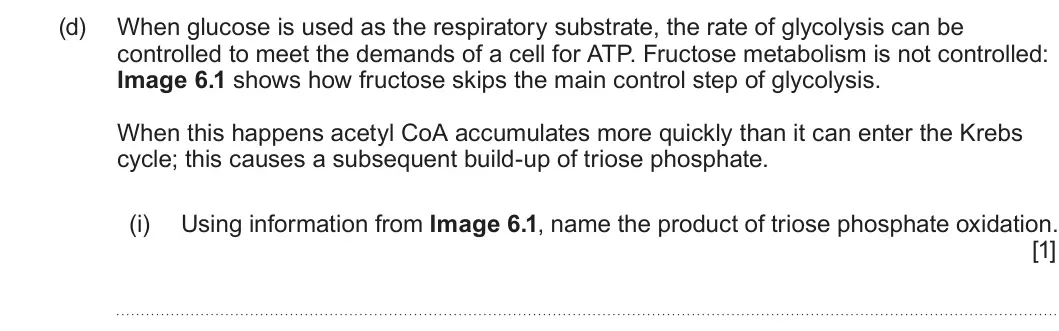
Q6(d)(ii)
The whole paper ↗
All 38 questions on Respiration releases chemical energy in biological processes, as a list
- Summer 2025, Unit 3, Q1(a) (2 marks): Name the following shown in Image 1: [2] the organelle where fatty acid metabolism takes place; the pathway labelled P; the pathway labelled Q; the enzyme conta
- Summer 2025, Unit 3, Q1(b) (1 mark): During fatty acid metabolism fatty acids are broken down to 2-carbon fragments. Each 2-carbon fragment is converted to one molecule of acetyl CoA. The acetyl Co
- Summer 2025, Unit 3, Q1(c)(ii) (1 mark): Water is formed as part of pathway Q. State the role of oxygen in this pathway. [1]
- Summer 2024, Unit 3, Q1(a)(i) (2 marks): Complete Table 1.2 by recording the number of each type of atom present in the two named compounds shown in Image 1.1B. [2] Table 1.2 Number of atoms present Ty
- Summer 2024, Unit 3, Q1(a)(ii) (1 mark): Using the information provided in Images 1.1A and 1.1B, identify which of the intermediates labelled A–E on the drawing of the Krebs cycle is α ketoglutaric aci
- Summer 2024, Unit 3, Q1(a)(iii) (2 marks): Use the information in Image 1.1A to state what happens to each of the following atoms in the conversion of A to B. [2] Carbon Hydrogen
- Summer 2024, Unit 3, Q1(b)(i) (1 mark): Tube 3 in Image 1.3 acts as a control. Describe the purpose of tube 3 in this experiment. [1]
- Summer 2024, Unit 3, Q1(b)(ii) (2 marks): Describe the evidence from Image 1.3 which supports the hypothesis that malonic acid is a respiratory poison. [2]
- Summer 2023, Unit 3, Q1(a) (3 marks): Name stages A, B and C and state precisely where in a eukaryotic cell each stage takes place. [3] Stage Name Location A B C
- Summer 2023, Unit 3, Q1(b) (2 marks): Name the type of enzyme involved in the reactions marked with asterisks (*) in Image 1.1 and state what happens to the carbon atoms. [2] Type of enzyme What hap
- Summer 2023, Unit 3, Q1(c)(i) (1 mark): State the term given to the chemical change occurring in the coenzymes shown in Image 1.1. [1]
- Summer 2023, Unit 3, Q1(c)(ii) (4 marks): I. Identify the two coenzymes. [1] II. Describe the role of the two coenzymes in aerobic respiration and explain why they result in different yields of ATP. [3]
- Summer 2023, Unit 3, Q1(c)(iii) (1 mark): State the term used to describe the role of oxygen in aerobic respiration. [1]
- Summer 2023, Unit 3, Q3(a)(ii) (3 marks): Complete the diagram in Image 3.1. [3] Image 3.1 carbon dioxide + + oxygen ATP + relaxed muscle
- Summer 2022, Unit 3, Q6(a) (2 marks): With reference to two specific cell activities explain why all living organisms must carry out respiration. [2] Glucose is an important fuel in almost all livin
- Summer 2022, Unit 3, Q6(b) (3 marks): State the net number of molecules of ATP formed when one molecule of each of the following compounds is processed to lactate. Note: two molecules of triose phos
- Summer 2022, Unit 3, Q6(c)(i) (1 mark): Describe the conditions inside a cell which would determine whether pyruvate is converted to lactate or acetyl CoA. [1]
- Summer 2022, Unit 3, Q6(c)(ii) (3 marks): Answer the following questions about the conversion of pyruvate to lactate. [3] I. Name the type of chemical reaction the pyruvate undergoes. II. Describe the p
- Summer 2022, Unit 3, Q6(d)(i) (1 mark): Using information from Image 6.1, name the product of triose phosphate oxidation. [1]
- Summer 2022, Unit 3, Q6(d)(ii) (2 marks): With reference to Image 6.1, explain why accumulation of acetyl CoA might lead to obesity. [2]
- Summer 2019, Unit 3, Q4(a)(i) (1 mark): State the dependent variable in this experiment. [1]
- Summer 2019, Unit 3, Q4(a)(ii) (1 mark): Explain why the number of bubbles may decrease if a fresh yeast suspension with glucose was not used for each repeat. [1]
- Summer 2019, Unit 3, Q4(a)(iii) (2 marks): When investigating the rate of respiration, counting the number of bubbles is a limitation. Explain this limitation and suggest how it can be overcome. [2]
- Summer 2019, Unit 3, Q4(a)(iv) (2 marks): State the effect of respiration at 30 ºC on the pH of the yeast suspension in the absence of a buffer. Explain your answer. [2]
- Summer 2019, Unit 3, Q4(a)(v) (2 marks): The students then carried out the procedure with sucrose replacing the glucose in the yeast suspension. The initial rate of respiration was found to be lower wh
- Summer 2019, Unit 3, Q4(b)(i) (3 marks): Explain why pyruvate was used as a respiratory substrate rather than glucose. [3]
- Summer 2019, Unit 3, Q4(c)(i) (2 marks): State what happens to the energy that is not incorporated into ATP during respiration and the benefit of this to a newborn baby. [2] Adipose tissue samples can
- Summer 2019, Unit 3, Q4(c)(ii) (3 marks): Explain how the data in the table above shows that having a higher proportion of brown fat is of benefit to the baby. [3]
- Summer 2018, Unit 3, Q6(d)(ii) (2 marks): Suggest why lactate begins to accumulate in the blood if high levels of reduced NAD form. [2]
- Summer 2017, Unit 3, Q5(a)(i) (1 mark): Suggest why the maggots were placed in the wire cage. [1]
- Summer 2017, Unit 3, Q5(a)(ii) (2 marks): Give two reasons why the apparatus was left in the water bath with the tap open for ten minutes before readings were taken. [2]
- Summer 2017, Unit 3, Q5(a)(iii) (2 marks): Suggest a suitable control for these experiments. Give a reason for your answer. [2] Each student carried out both experiments and the class results were combin
- Summer 2017, Unit 3, Q5(b)(i) (3 marks): Explain why the coloured liquid moved in experiment 1 but did not move in experiment 2 [3]
- Summer 2017, Unit 3, Q5(b)(ii) (2 marks): Explain the advantages of collecting results from the whole class. [2]
- Summer 2017, Unit 3, Q5(b)(iii) (3 marks): In these experiments the diameter of the lumen of the capillary tube was 1.2 mm and the total mass of maggots was 0.5 g. Calculate the rate of oxygen consumptio
- Summer 2017, Unit 3, Q5(c)(i) (1 mark): Calculate the RQ for tripalmitin. [1] RQ =
- Summer 2017, Unit 3, Q5(c)(ii) (2 marks): Use the equation for respiration of tripalmitin to suggest why desert animals such as camels use fat as a substrate for respiration. [2]
- Summer 2017, Unit 3, Q5(c)(iii) (2 marks): The respiration of fat releases more energy than the respiration of glucose produced by the breakdown of glycogen. Explain why muscles use glycogen as an energy
Questions, mark schemes and examiner’s reports are © WJEC CBAC Ltd, from their published past papers. Plumi isn’t affiliated with any exam board. Want whole papers? Every WJEC A-Level Biology paper.
Rather write your answers by hand on iPad? Plumi marks them against the same mark schemes.