 plumi
Photosynthesis uses light energy to synthesise organic molecules: WJEC A‑Level Biology questions
Every WJEC A-Level Biology exam question on 3.2 Photosynthesis uses light energy to synthesise organic molecules, 2016–2025, with its mark scheme and examiner’s report.
Find questions1,223
Calculations
Q2(a)(i)
The whole paper ↗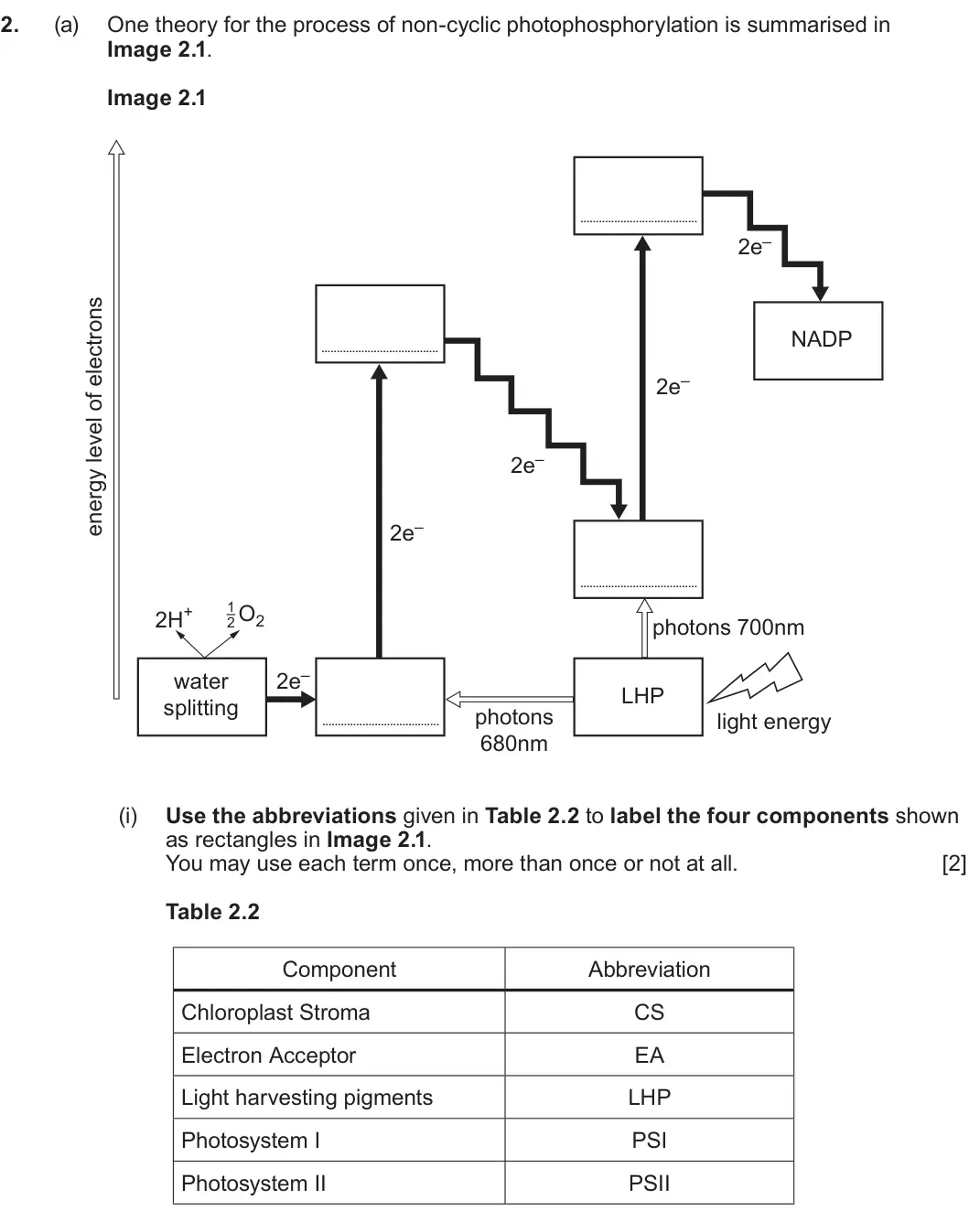
Q2(a)(ii)
The whole paper ↗
Q2(a)(iii)
The whole paper ↗
Q2(a)(iv)
The whole paper ↗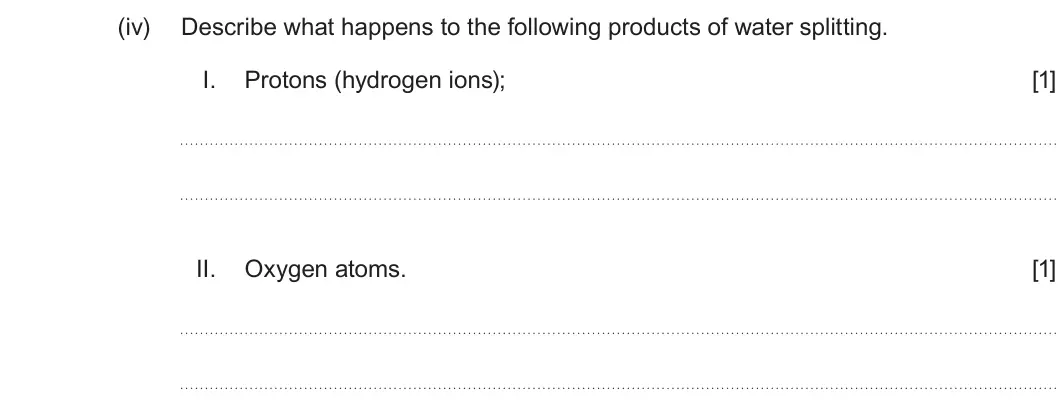
Q2(a)(v)
The whole paper ↗
Q2(b)
The whole paper ↗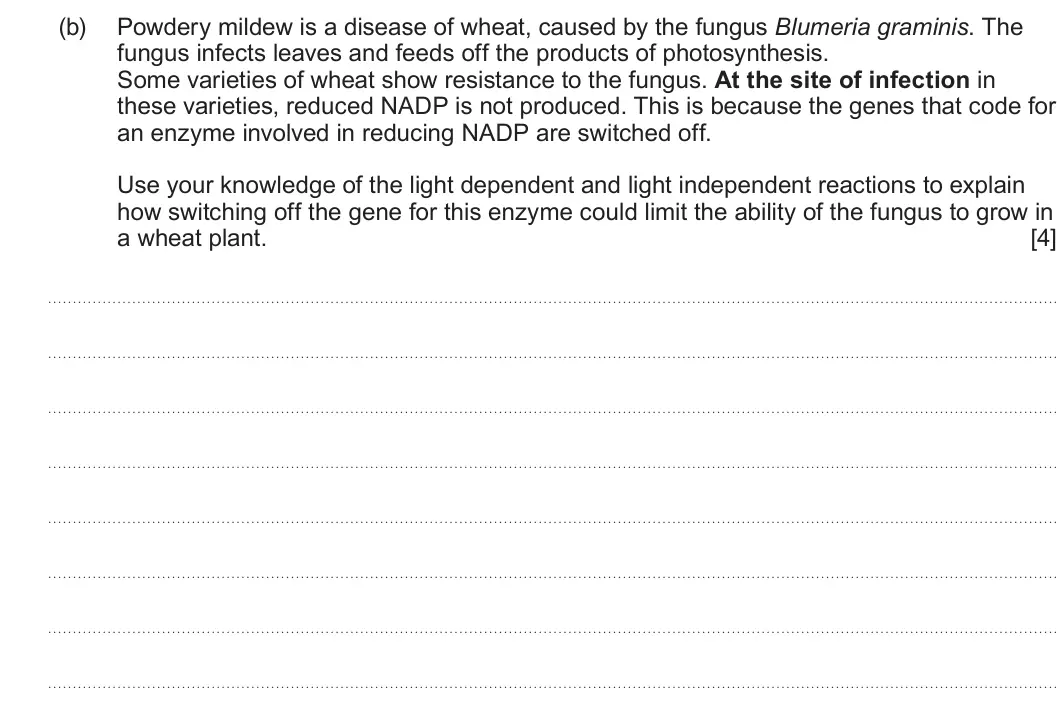
Q2(a)(i)
The whole paper ↗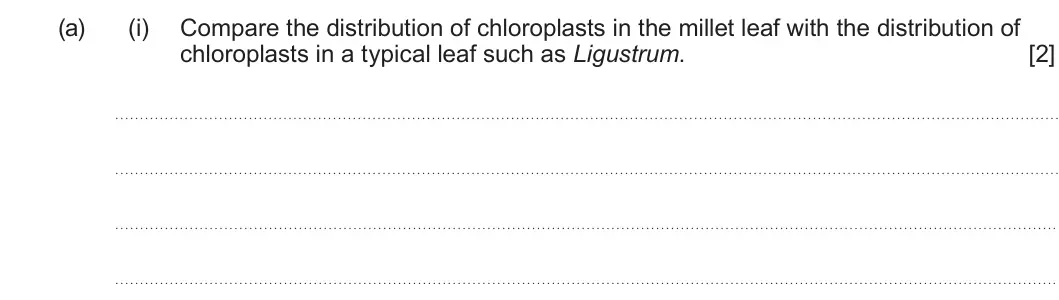
Q2(a)(ii)
The whole paper ↗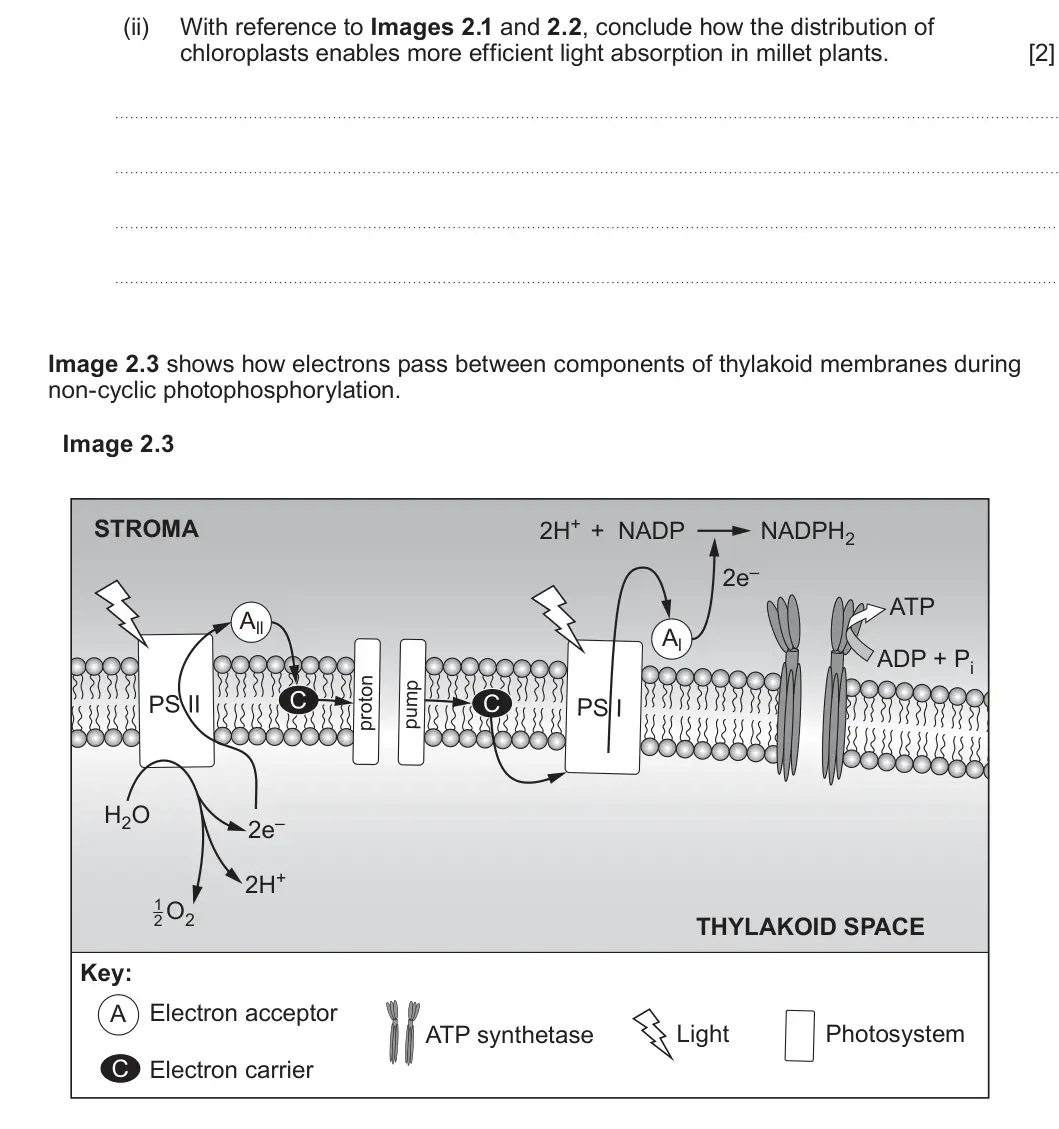
Q2(b)(i)
The whole paper ↗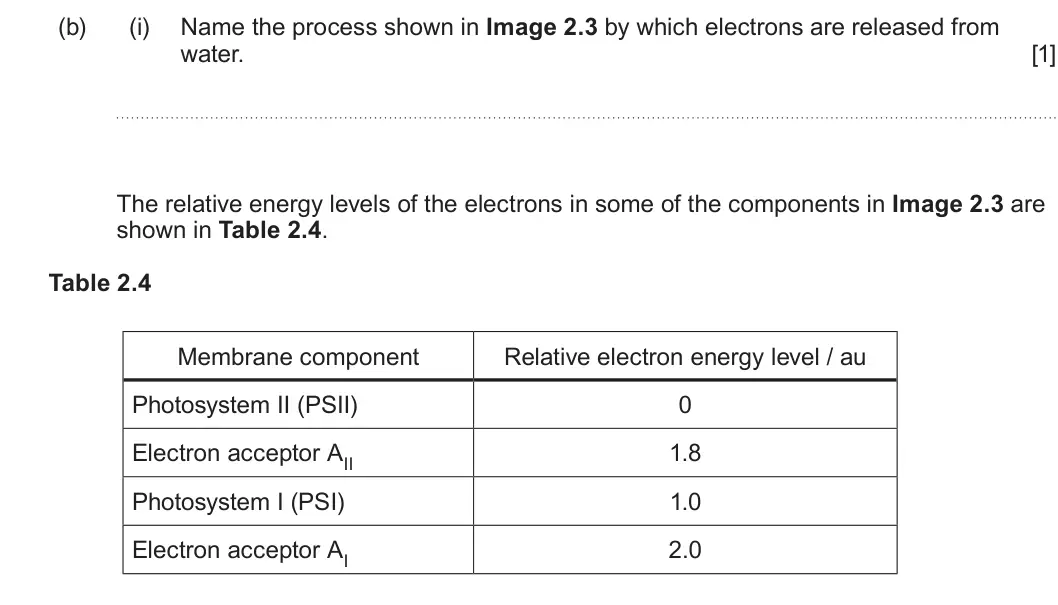
Q2(b)(ii)
The whole paper ↗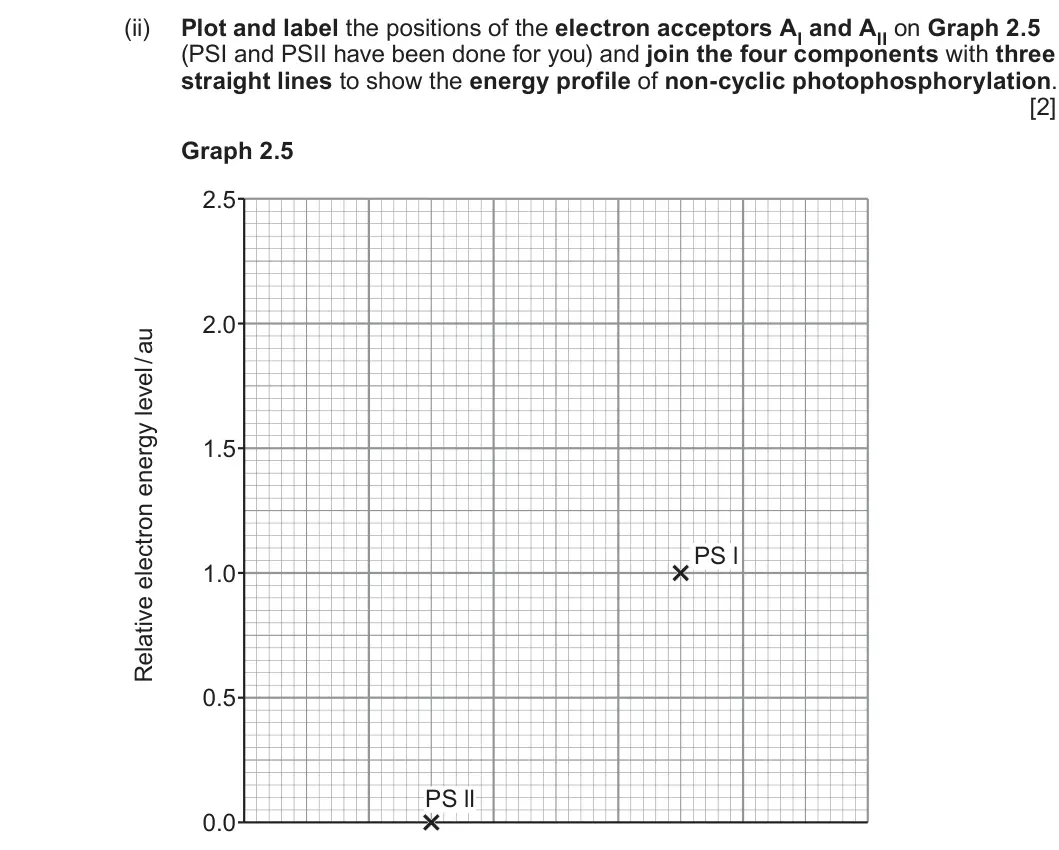
Q2(b)(iii)
The whole paper ↗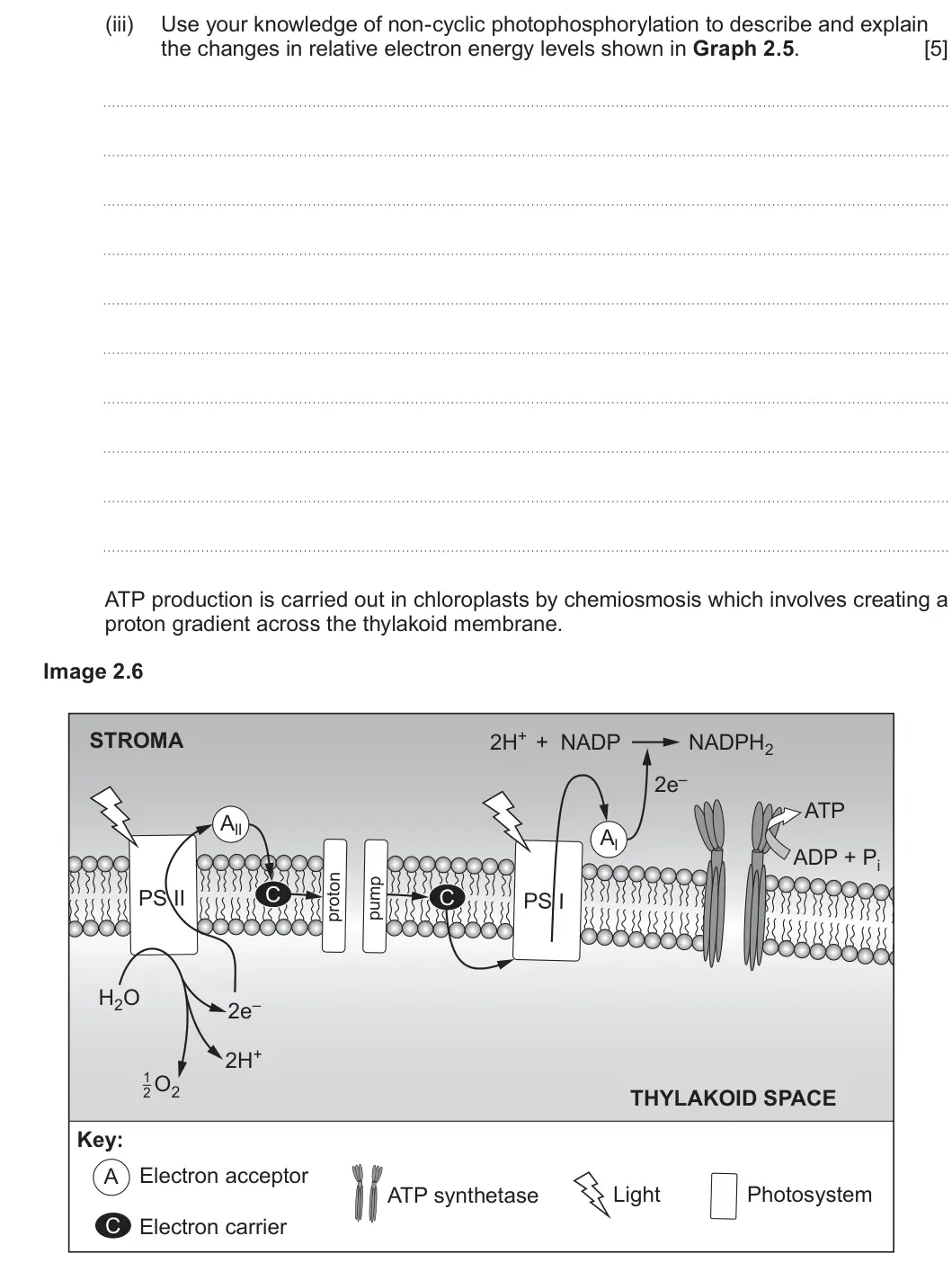
Q2(c)(i)
The whole paper ↗
Q2(c)(ii)
The whole paper ↗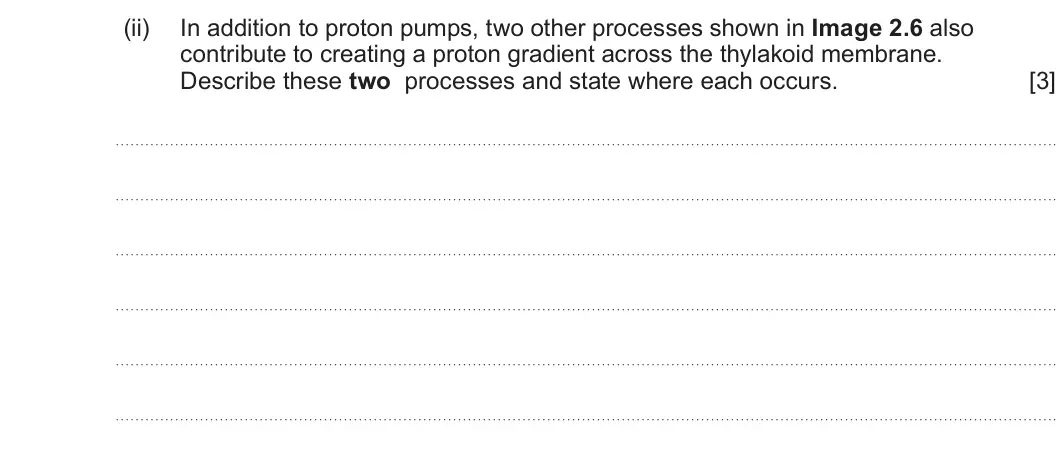
Q2(a)
The whole paper ↗
Q2(b)(i)
The whole paper ↗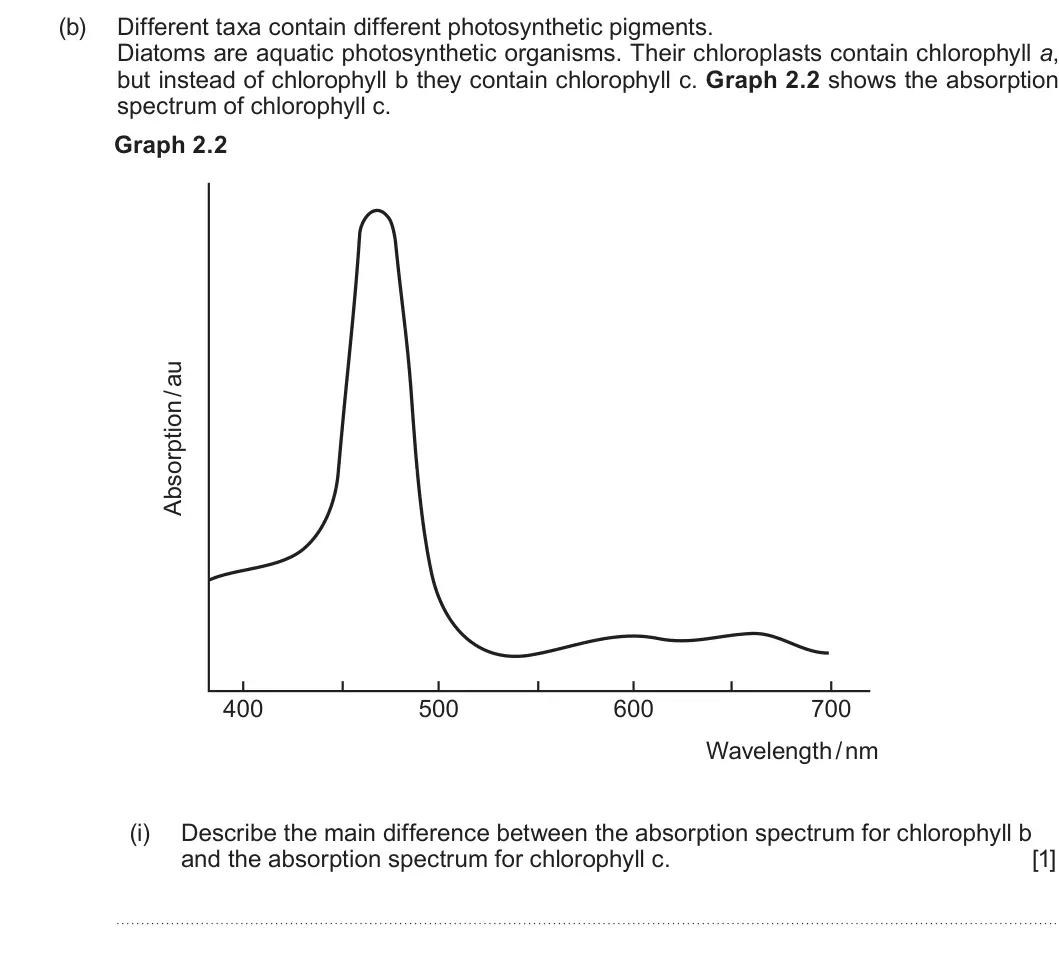
Q2(b)(ii)
The whole paper ↗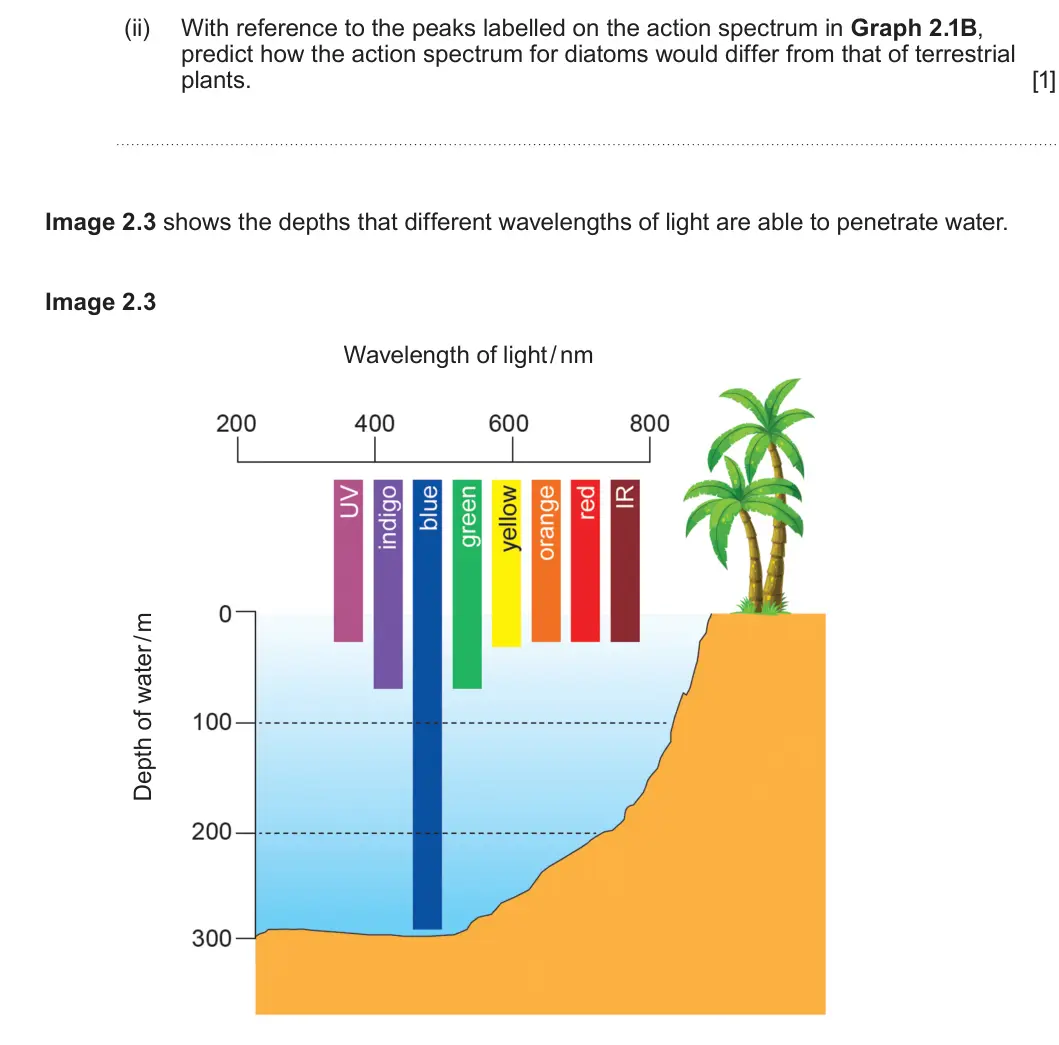
Q2(c)
The whole paper ↗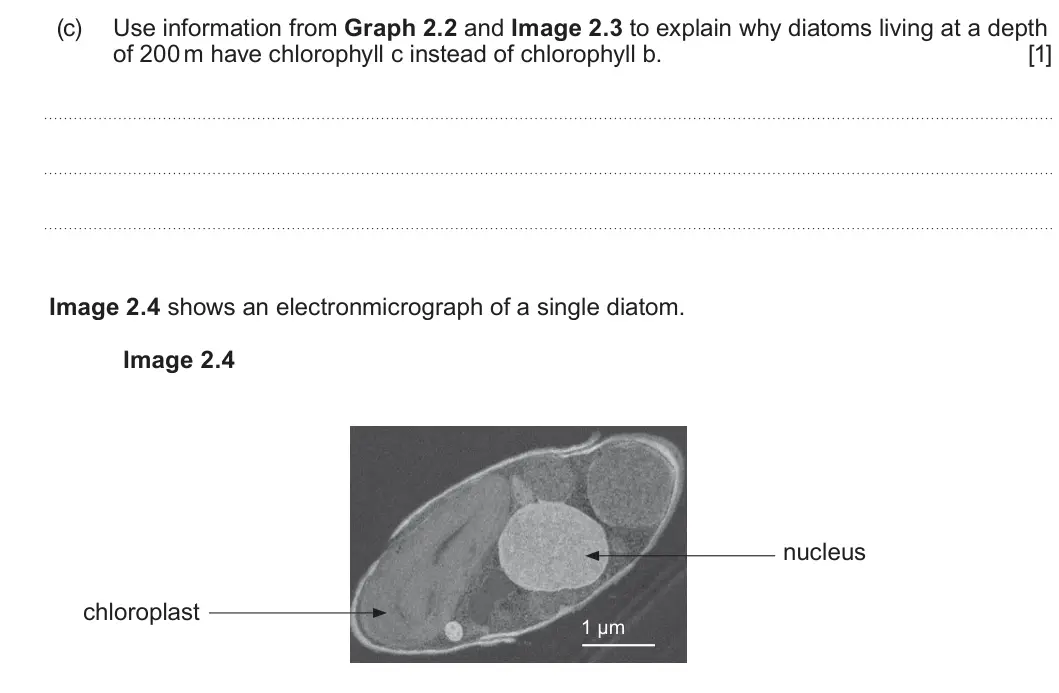
Q6(a)(i)
The whole paper ↗
Q3(a)
The whole paper ↗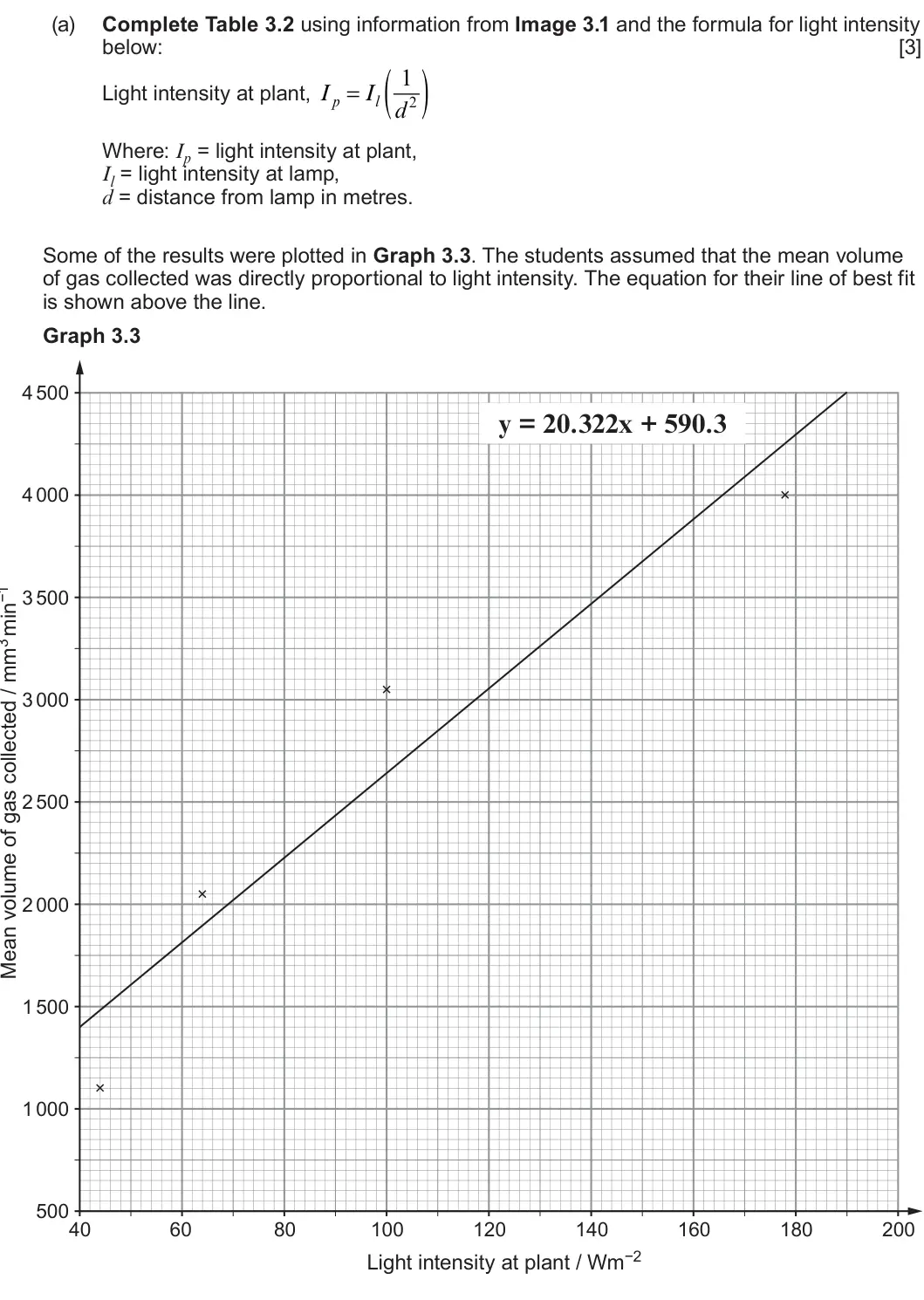
Q3(b)(i)
The whole paper ↗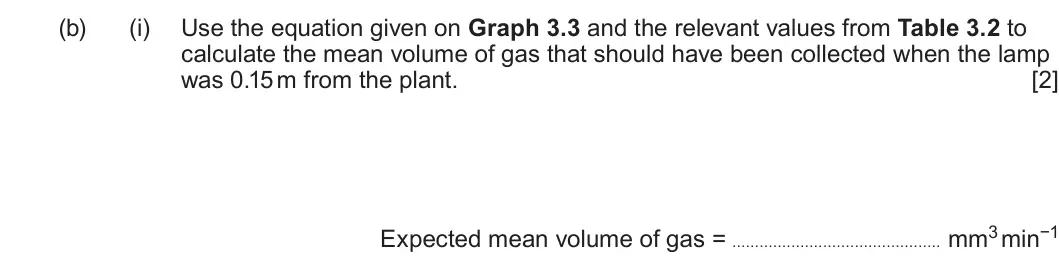
All 41 questions on Photosynthesis uses light energy to synthesise organic molecules, as a list
- Summer 2025, Unit 3, Q2(a)(i) (2 marks): Use the abbreviations given in Table 2.2 to label the four components shown as rectangles in Image 2.1. You may use each term once, more than once or not at all
- Summer 2025, Unit 3, Q2(a)(ii) (2 marks): For each pair of electrons passing through the process two molecules of ATP are produced. Draw and label an arrow on Image 2.1 to show where and how ATP is prod
- Summer 2025, Unit 3, Q2(a)(iii) (1 mark): State the biological term for the process labelled water splitting in Image 2.1. [1]
- Summer 2025, Unit 3, Q2(a)(iv) (2 marks): Describe what happens to the following products of water splitting. I. Protons (hydrogen ions); [1] II. Oxygen atoms. [1]
- Summer 2025, Unit 3, Q2(a)(v) (1 mark): Describe how the energy from the photons shown in Image 2.1 would be used in photophosphorylation. [1]
- Summer 2025, Unit 3, Q2(b) (4 marks): Powdery mildew is a disease of wheat, caused by the fungus Blumeria graminis. The fungus infects leaves and feeds off the products of photosynthesis. Some varie
- Summer 2024, Unit 3, Q2(a)(i) (2 marks): Compare the distribution of chloroplasts in the millet leaf with the distribution of chloroplasts in a typical leaf such as Ligustrum. [2]
- Summer 2024, Unit 3, Q2(a)(ii) (2 marks): With reference to Images 2.1 and 2.2, conclude how the distribution of chloroplasts enables more efficient light absorption in millet plants. [2] Image 2.3 show
- Summer 2024, Unit 3, Q2(b)(i) (1 mark): Name the process shown in Image 2.3 by which electrons are released from water. [1] The relative energy levels of the electrons in some of the components in Ima
- Summer 2024, Unit 3, Q2(b)(ii) (2 marks): Plot and label the positions of the electron acceptors AI and AII on Graph 2.5 (PSI and PSII have been done for you) and join the four components with three str
- Summer 2024, Unit 3, Q2(b)(iii) (5 marks): Use your knowledge of non-cyclic photophosphorylation to describe and explain the changes in relative electron energy levels shown in Graph 2.5. [5] ATP product
- Summer 2024, Unit 3, Q2(c)(i) (1 mark): On Image 2.6: draw an arrow labelled P through the proton pump to show the direction in which protons are pumped; draw an arrow labelled D through the ATP synth
- Summer 2024, Unit 3, Q2(c)(ii) (3 marks): In addition to proton pumps, two other processes shown in Image 2.6 also contribute to creating a proton gradient across the thylakoid membrane. Describe these
- Summer 2023, Unit 3, Q2(a) (2 marks): Describe the relationship between the absorption spectrum and the action spectrum and state a suitable conclusion which explains the relationship. [2]
- Summer 2023, Unit 3, Q2(b)(i) (1 mark): Describe the main difference between the absorption spectrum for chlorophyll b and the absorption spectrum for chlorophyll c. [1]
- Summer 2023, Unit 3, Q2(b)(ii) (1 mark): With reference to the peaks labelled on the action spectrum in Graph 2.1B, predict how the action spectrum for diatoms would differ from that of terrestrial pla
- Summer 2023, Unit 3, Q2(c) (1 mark): Use information from Graph 2.2 and Image 2.3 to explain why diatoms living at a depth of 200 m have chlorophyll c instead of chlorophyll b. [1] Image 2.4 shows
- Summer 2023, Unit 3, Q6(a)(i) (2 marks): Process W involves the fixation of carbon in green plants. Name the two reactants involved and the enzyme that catalyses this process. [2] Reactants Enzyme
- Summer 2022, Unit 3, Q3(a) (3 marks): Complete Table 3.2 using information from Image 3.1 and the formula for light intensity below: [3] ( ) 1 Light intensity at plant, I p = Il d2 Where: Ip = light
- Summer 2022, Unit 3, Q3(b)(i) (2 marks): Use the equation given on Graph 3.3 and the relevant values from Table 3.2 to calculate the mean volume of gas that should have been collected when the lamp was
- Summer 2022, Unit 3, Q3(b)(ii) (1 mark): State one environmental factor that should have been maintained at a constant value during the experiment. [1]
- Summer 2022, Unit 3, Q3(b)(iii) (2 marks): The expected mean volume of gas collected (calculated from the equation on Graph 3.3), when the lamp was 0.05 m from the plant, was 33 105.5 mm3 min−1. Explain
- Summer 2022, Unit 3, Q5(a) (2 marks): Calvin placed the lollipop apparatus in bright light, even though he was studying ‘light-independent’ reactions. Using your knowledge of how the products of the
- Summer 2022, Unit 3, Q5(b)(i) (2 marks): Using evidence from Image 5.2, identify which of the following sequences of reactions is most likely to be correct. Explain your answer. [2] → → A Ribulose Bisp
- Summer 2022, Unit 3, Q5(b)(ii) (2 marks): Interpret the results of Experiment 2 to explain the difference between the 15-second autoradiograms from Experiments 1 and 2 and suggest the nature of compound
- Summer 2022, Unit 3, Q5(c)(i) (1 mark): With reference to Image 5.4, describe precisely where the carboxysome is located. [1]
- Summer 2022, Unit 3, Q5(c)(ii) (2 marks): Use the scale bar to calculate the length, X–X, of the carboxysome in μm. [2] Length = . μm In addition to RuBisCO, carboxysomes contain the enzyme carbonic anh
- Summer 2022, Unit 3, Q5(d)(i) (2 marks): Suggest an advantage to farmers of introducing carboxysomes into crop plants. Explain your answer. [2]
- Summer 2019, Unit 3, Q6(a)(i) (1 mark): Which wavelength of light is most effectively absorbed by Chlorophyll b? [1]
- Summer 2019, Unit 3, Q6(a)(ii) (1 mark): Why are accessory pigments present in the chloroplast? [1]
- Summer 2019, Unit 3, Q6(c) (4 marks): Using the information above and your own knowledge, describe the differences between the light-dependent reaction in green plants compared with green sulfur bac
- Summer 2018, Unit 3, Q4(a)(i) (2 marks): Explain why ice-cold, isotonic solution was used when extracting the chloroplasts. [2]
- Summer 2018, Unit 3, Q4(a)(ii) (1 mark): Explain why the students repeated the experiment three times. [1]
- Summer 2018, Unit 3, Q4(a)(iii) (3 marks): Explain why the students set up tubes 3 and 4 as controls. [3]
- Summer 2018, Unit 3, Q4(b) (3 marks): Explain the results seen in tube 1 [3]
- Summer 2018, Unit 3, Q4(c) (3 marks): When the chloroplasts are isolated, there may also be mitochondria present in the sample. Explain how the results show that mitochondria are not responsible for
- Summer 2018, Unit 3, Q4(d) (2 marks): Explain why, when students increased the carbon dioxide concentration present in the sample of chloroplasts, the results of the experiment were unchanged. [2]
- Summer 2017, Unit 3, Q1(a)(i) (1 mark): Identify substances X and Y. [1] X Y
- Summer 2017, Unit 3, Q1(a)(ii) (1 mark): Name enzyme Z. [1]
- Summer 2017, Unit 3, Q1(b) (5 marks): In the absence of light, the concentration of glycerate-3-phosphate (GP) in the chloroplast stroma increases. This is shown on the graph below. light dark conce
- Summer 2017, Unit 3, Q1(c) (3 marks): With reference to the graph, explain why tomato plants grown in a greenhouse at 27°C produce sweeter tasting fruit than those grown at 40°C. [3]
Questions, mark schemes and examiner’s reports are © WJEC CBAC Ltd, from their published past papers. Plumi isn’t affiliated with any exam board. Want whole papers? Every WJEC A-Level Biology paper.
Rather write your answers by hand on iPad? Plumi marks them against the same mark schemes.