 plumi
Homeostasis and the kidney: WJEC A‑Level Biology questions
Every WJEC A-Level Biology exam question on 3.7 Homeostasis and the kidney, 2016–2025, with its mark scheme and examiner’s report.
Find questions1,223
Calculations
Q3(a)(i)
The whole paper ↗
Q3(a)(ii)
The whole paper ↗
Q3(a)(iii)
The whole paper ↗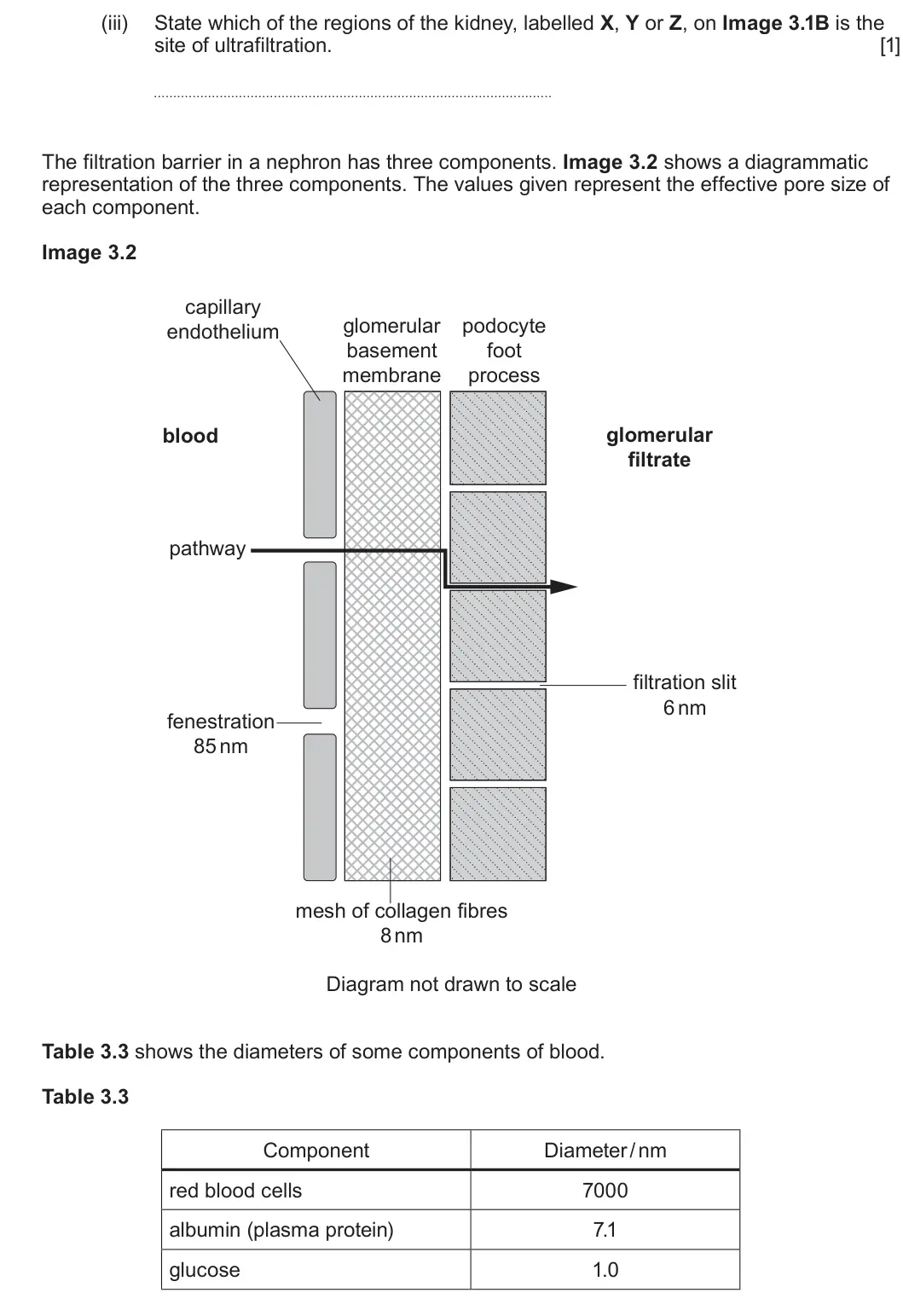
Q3(b)
The whole paper ↗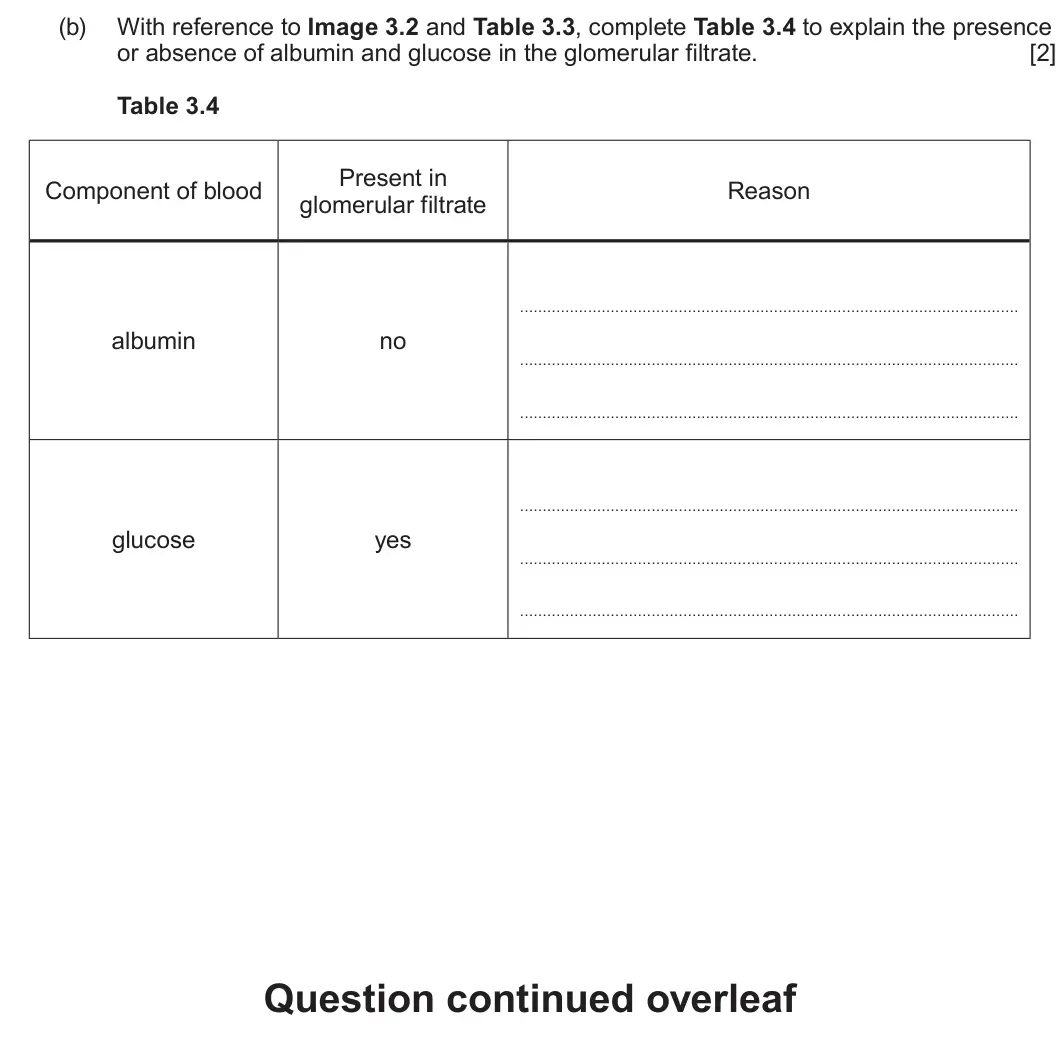
Q3(c)(i)
The whole paper ↗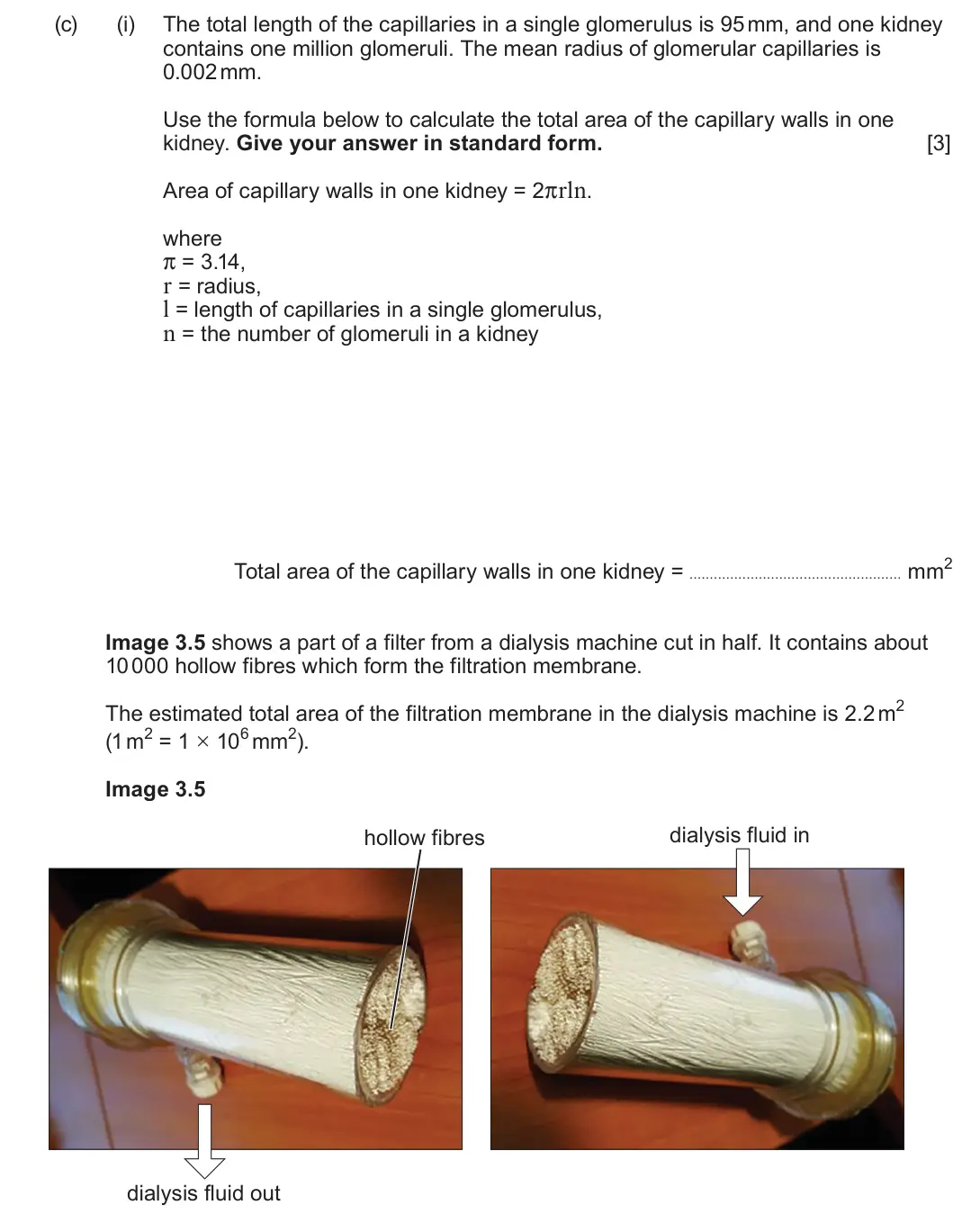
Q3(c)(ii)
The whole paper ↗
Q3(c)(iii)
The whole paper ↗
Q3(d)(i)
The whole paper ↗
Q5(a)(i)
The whole paper ↗
Q5(a)(ii)
The whole paper ↗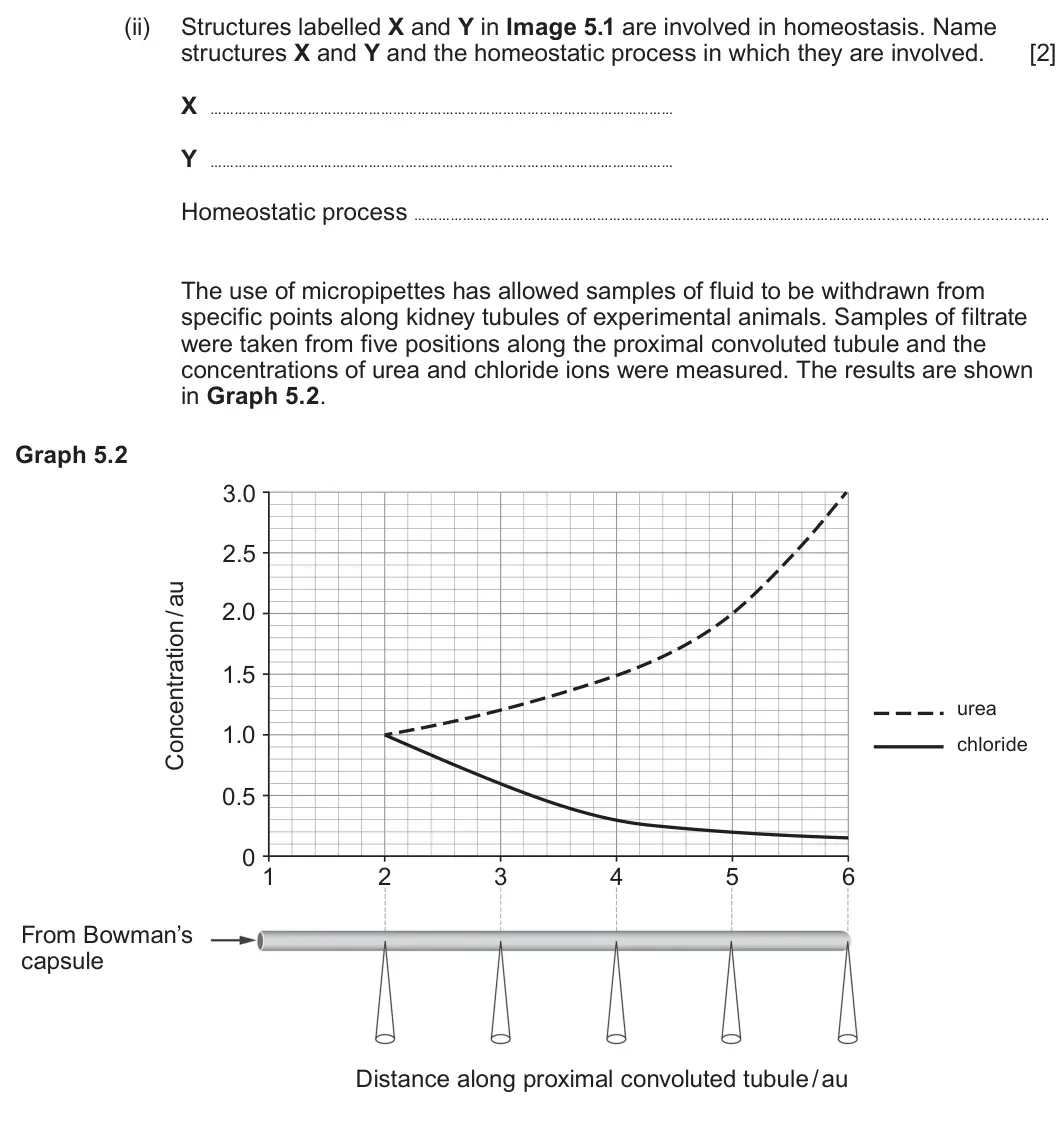
Q5(b)(i)
The whole paper ↗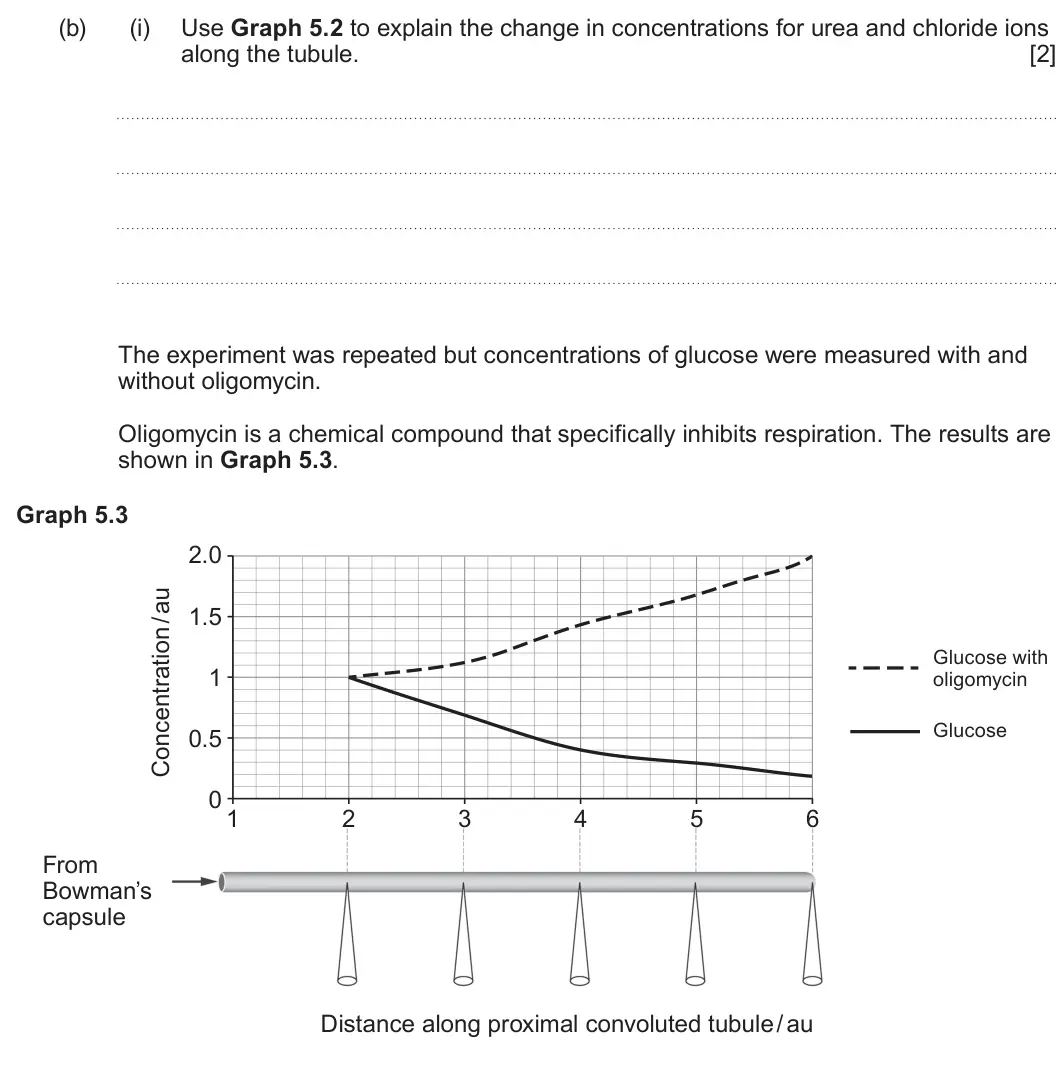
Q5(b)(ii)
The whole paper ↗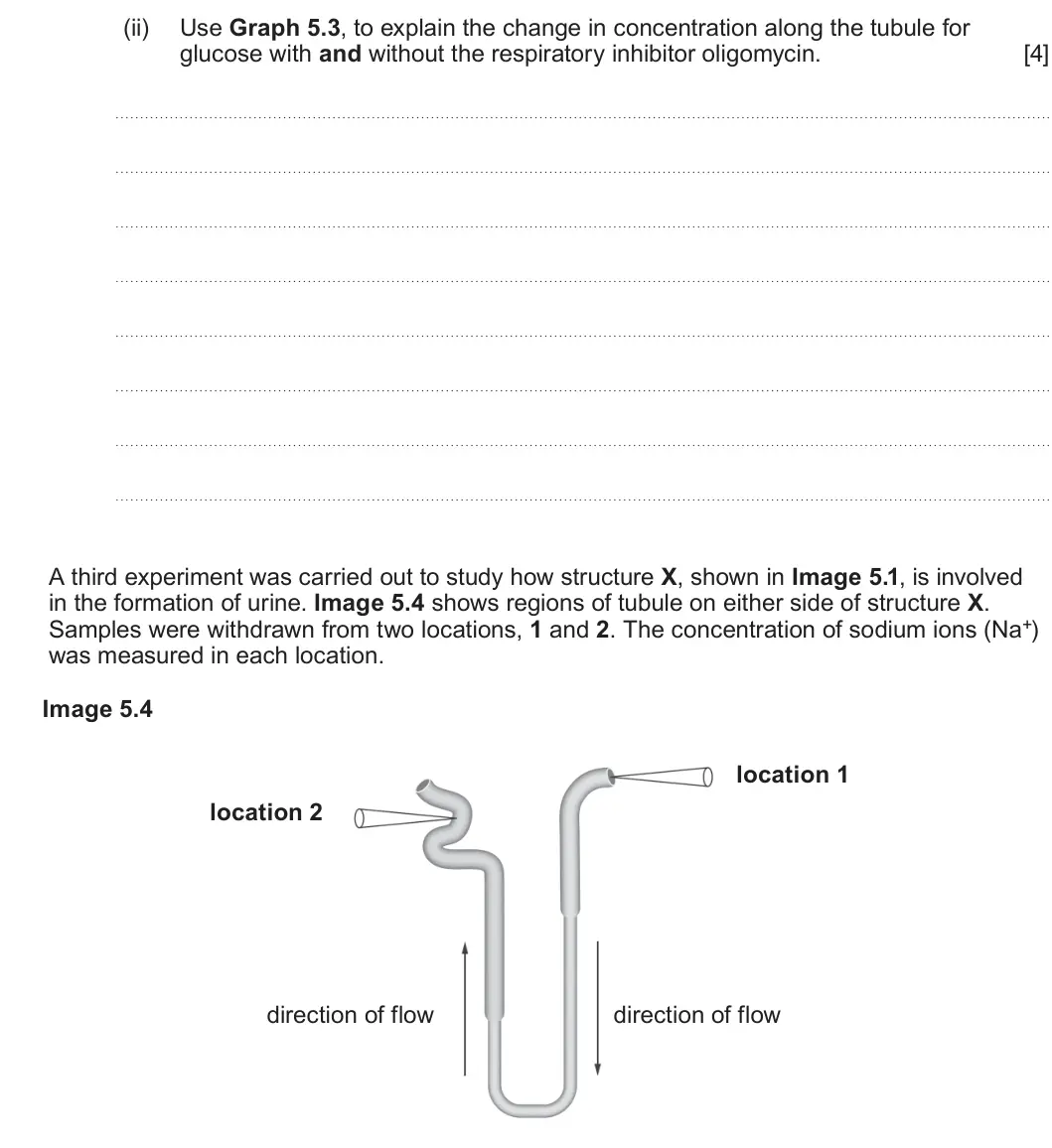
Q5(c)(i)
The whole paper ↗
Q5(c)(ii)
The whole paper ↗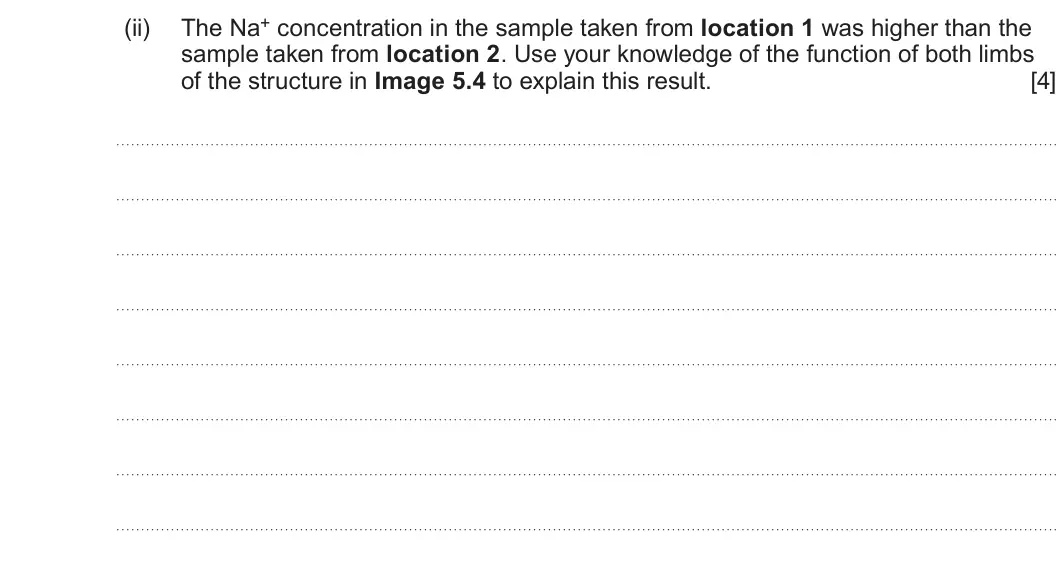
Q4(a)(i)
The whole paper ↗
Q4(a)(ii)
The whole paper ↗
Q4(a)(iii)
The whole paper ↗
Q4(a)(iv)
The whole paper ↗
Q4(b)
The whole paper ↗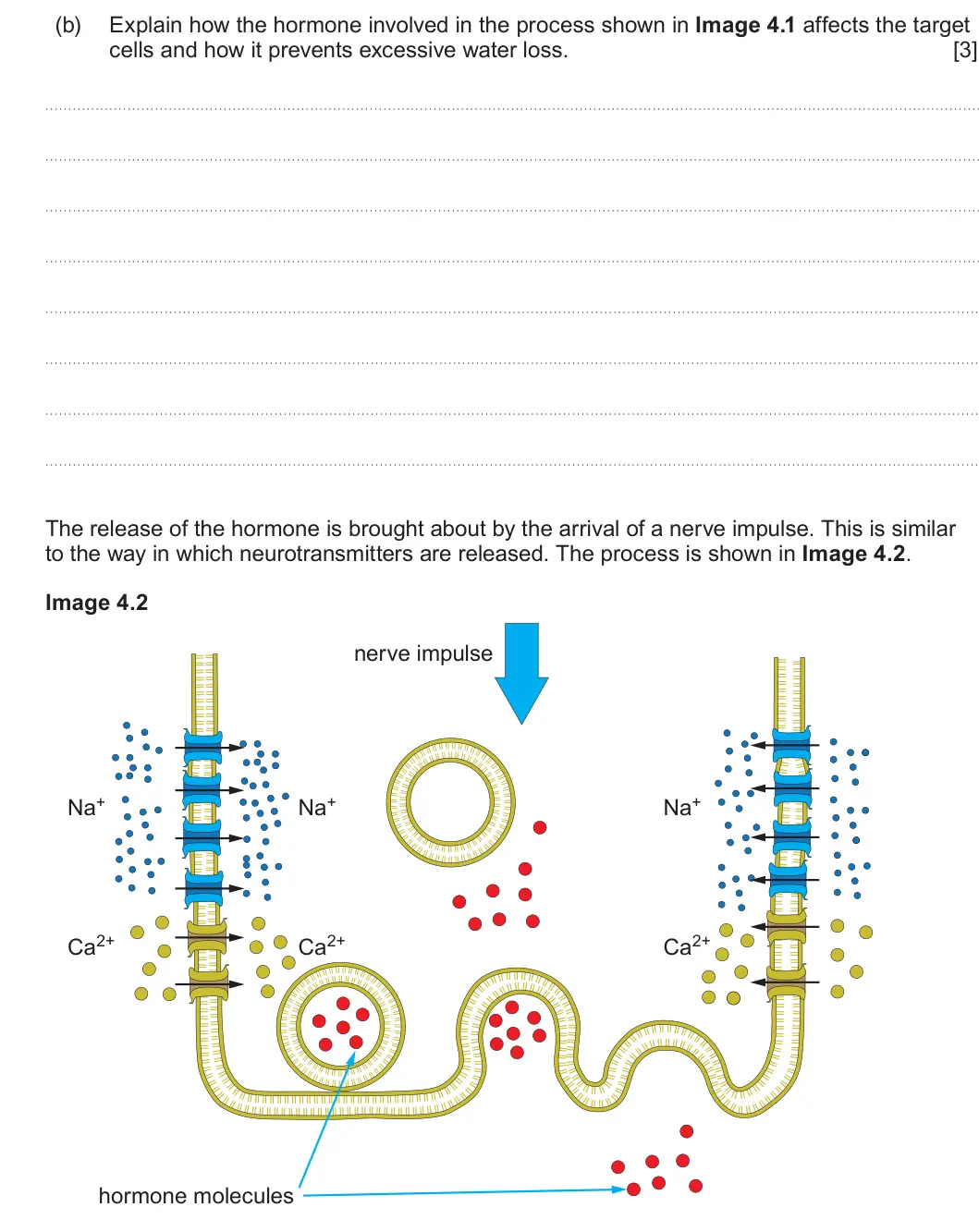
All 42 questions on Homeostasis and the kidney, as a list
- Summer 2025, Unit 3, Q3(a)(i) (1 mark): Identify the plane of the section shown in Image 3.1B. [1]
- Summer 2025, Unit 3, Q3(a)(ii) (1 mark): Name the two blood vessels labelled in Image 3.1B. [1]
- Summer 2025, Unit 3, Q3(a)(iii) (1 mark): State which of the regions of the kidney, labelled X, Y or Z, on Image 3.1B is the site of ultrafiltration. [1] The filtration barrier in a nephron has three co
- Summer 2025, Unit 3, Q3(b) (2 marks): With reference to Image 3.2 and Table 3.3, complete Table 3.4 to explain the presence or absence of albumin and glucose in the glomerular filtrate. [2] Table 3.
- Summer 2025, Unit 3, Q3(c)(i) (3 marks): The total length of the capillaries in a single glomerulus is 95 mm, and one kidney contains one million glomeruli. The mean radius of glomerular capillaries is
- Summer 2025, Unit 3, Q3(c)(ii) (1 mark): Give one reason why the estimate of the area for the dialysis filter is likely to be more accurate than the calculated area for the capillary walls of the kidne
- Summer 2025, Unit 3, Q3(c)(iii) (1 mark): Explain why having a large surface area is important in ultrafiltration. [1]
- Summer 2025, Unit 3, Q3(d)(i) (1 mark): Suggest how the filtration rate would be affected in Alport syndrome. Explain your answer. [1]
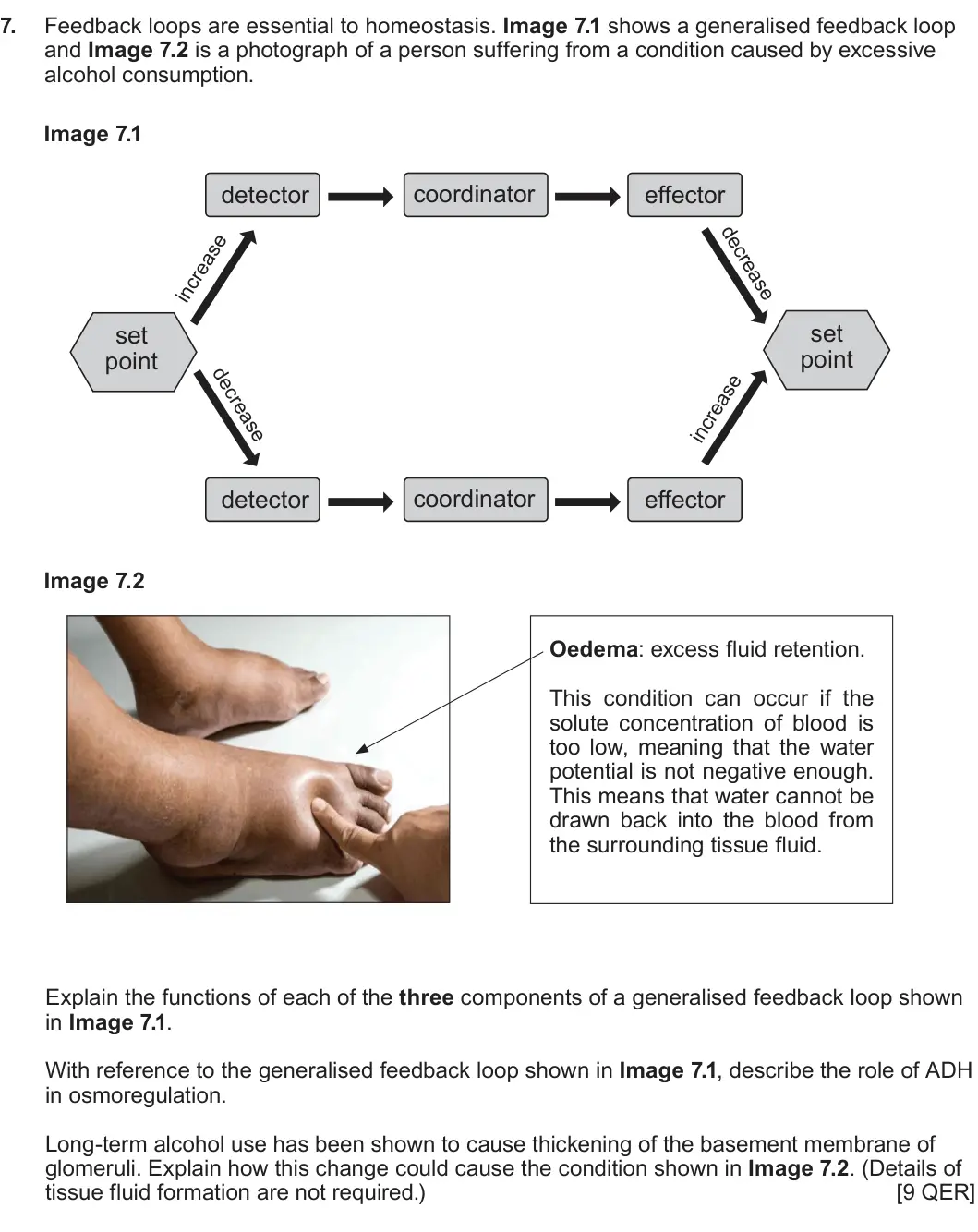
- Summer 2024, Unit 3, Q7 (9 marks): Feedback loops are essential to homeostasis. Image 7.1 shows a generalised feedback loop and Image 7.2 is a photograph of a person suffering from a condition ca
- Summer 2023, Unit 3, Q5(a)(i) (2 marks): Use labelled lines on Image 5.1 to show the sites of: [2] I. ultrafiltration II. selective reabsorption
- Summer 2023, Unit 3, Q5(a)(ii) (2 marks): Structures labelled X and Y in Image 5.1 are involved in homeostasis. Name structures X and Y and the homeostatic process in which they are involved. [2] X Y Ho
- Summer 2023, Unit 3, Q5(b)(i) (2 marks): Use Graph 5.2 to explain the change in concentrations for urea and chloride ions along the tubule. [2] The experiment was repeated but concentrations of glucose
- Summer 2023, Unit 3, Q5(b)(ii) (4 marks): Use Graph 5.3, to explain the change in concentration along the tubule for glucose with and without the respiratory inhibitor oligomycin. [4] A third experiment
- Summer 2023, Unit 3, Q5(c)(i) (1 mark): Explain why these locations were chosen for sampling. [1]
- Summer 2023, Unit 3, Q5(c)(ii) (4 marks): The Na+ concentration in the sample taken from location 1 was higher than the sample taken from location 2 Use your knowledge of the function of both limbs of t
- Summer 2022, Unit 3, Q4(a)(i) (4 marks): the source of the nerve impulses;
- Summer 2022, Unit 3, Q4(a)(ii): the endocrine gland;
- Summer 2022, Unit 3, Q4(a)(iii): the hormone;
- Summer 2022, Unit 3, Q4(a)(iv): the precise location of the target cells.
- Summer 2022, Unit 3, Q4(b) (3 marks): Explain how the hormone involved in the process shown in Image 4.1 affects the target cells and how it prevents excessive water loss. [3] The release of the hor
- Summer 2022, Unit 3, Q4(d) (2 marks): Explain why it is important to remove excess fluid during haemodialysis. [2]
- Summer 2019, Unit 3, Q7 (9 marks): The kidneys have an important role to play in the removal of urea and homeostasis in the body. Along the length of a nephron there are mechanisms which regulate
- Summer 2018, Unit 3, Q7(a)(i) (1 mark): On Image 1, label with a P the part of the nephron where the structures shown in Image 2 would be found. [1]
- Summer 2018, Unit 3, Q7(a)(ii) (2 marks): Using the scale bar on Image 2 only, calculate the magnification of this electron micrograph. [2] magnification = x
- Summer 2018, Unit 3, Q7(b)(i) (1 mark): Calculate the pressure forming the glomerular filtrate. [1]
- Summer 2018, Unit 3, Q7(b)(ii) (3 marks): Use the information provided to suggest how a low protein diet could affect the rate at which glomerular filtrate is formed. [3]
- Summer 2018, Unit 3, Q7(b)(iii) (2 marks): The pressure forming the glomerular filtrate can be regulated. The muscles in the walls of the afferent and efferent arterioles are under hormonal and nervous c
- Summer 2018, Unit 3, Q7(c) (2 marks): In diseases such as diabetes mellitus and glomerulonephritis the membranes in the glomerulus and Bowman’s capsule are damaged and they become more permeable to
- Summer 2018, Unit 3, Q7(d)(i) (1 mark): Explain why the urea concentration increases. [1]
- Summer 2018, Unit 3, Q7(d)(ii) (2 marks): If the concentration of urea along the proximal convoluted tubule is plotted on a graph, the line of best fit would follow the equation shown below: y = mx + c
- Summer 2018, Unit 3, Q7(e)(i) (2 marks): Explain why there are many of the organelles labelled X in the cells shown. [2]
- Summer 2018, Unit 3, Q7(e)(ii) (1 mark): Explain the presence of structures Z on the cell surface. [1]
- Summer 2018, Unit 3, Q7(f) (4 marks): Lungfish survive the drying out of their habitats by burrowing into the mud and decreasing their metabolic rate. Explain why, when in water, they release the pr
- Summer 2018, Unit 4, Q7(b)(ii) (2 marks): Explain why oestrogen treatment might be given to Turners Syndrome patients. [2]
- Summer 2018, Unit 4, Q7(b)(iii) (2 marks): Turners Syndrome patients have a DEXA scan to assess Bone Mineral Density (BMD). The scan compares density to that of a healthy person of the same age. The diff
- Summer 2018, Unit 4, Q7(b)(iv) (2 marks): With reference to the graph, explain why is it difficult to confidently diagnose a 10-year-old girl with Turners Syndrome using the BMD test alone. [2]
- Summer 2018, Unit 4, Q7(b)(vi) (1 mark): It is estimated that there is a 25% increase in the risk of fractures in Turners Syndrome patients, especially of the long bones of the forearm. What would be t
- Summer 2018, Unit 4, Q7(c)(iii) (1 mark): When testing patients, state the factor that would need to be taken into account to make a valid conclusion. [1] Option C: Neurobiology and Behaviour
- Summer 2017, Unit 3, Q3(a) (4 marks): With reference to the diagram above, describe and explain how the dialysis machine makes filtration more efficient. [4]
- Summer 2017, Unit 3, Q3(b)(ii) (1 mark): State precisely from where ADH is released into the blood stream of a human. [1] collecting duct lumen permanent aquaporin H2O H2O H2O vesicle blood capillary e
- Summer 2017, Unit 3, Q3(b)(iii) (5 marks): Using the diagram above and your own knowledge explain how the release of more ADH causes a smaller volume of concentrated urine to be produced. [5] Diabetes in
- Summer 2017, Unit 3, Q3(c) (1 mark): Suggest how this causes diabetes insipidus. [1] Another form of diabetes insipidus is nephrogenic diabetes insipidus. This is a genetic condition caused by a do
Questions, mark schemes and examiner’s reports are © WJEC CBAC Ltd, from their published past papers. Plumi isn’t affiliated with any exam board. Want whole papers? Every WJEC A-Level Biology paper.
Rather write your answers by hand on iPad? Plumi marks them against the same mark schemes.