 plumi
Human impact on the environment: WJEC A‑Level Biology questions
Every WJEC A-Level Biology exam question on 3.6 Human impact on the environment, 2016–2025, with its mark scheme and examiner’s report.
Find questions1,223
Calculations
Q6(c)(iii)
The whole paper ↗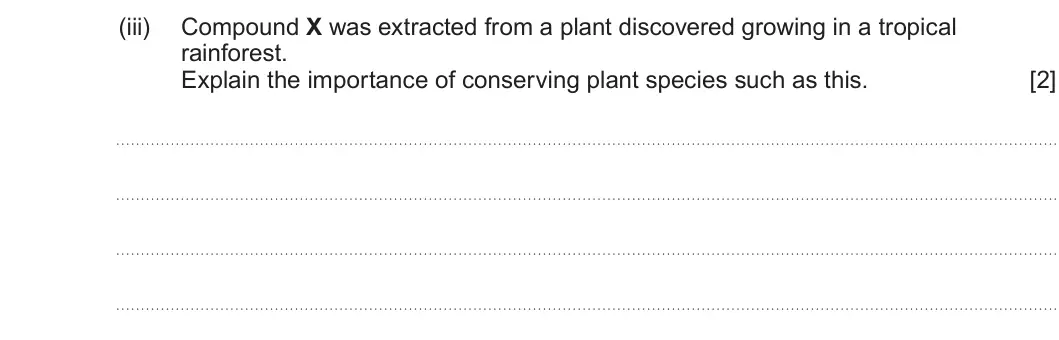
Q3(a)(i)
The whole paper ↗
Q3(a)(ii)
The whole paper ↗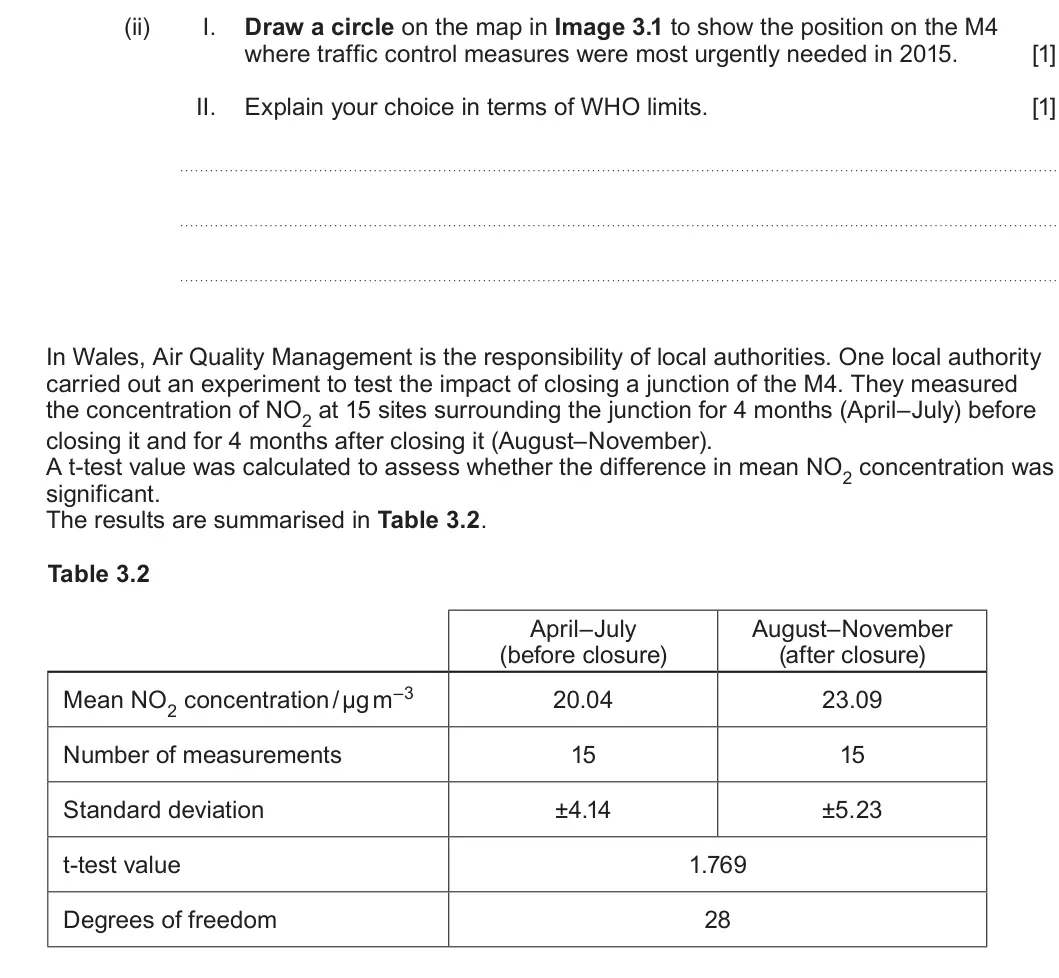
Q3(b)(i)
The whole paper ↗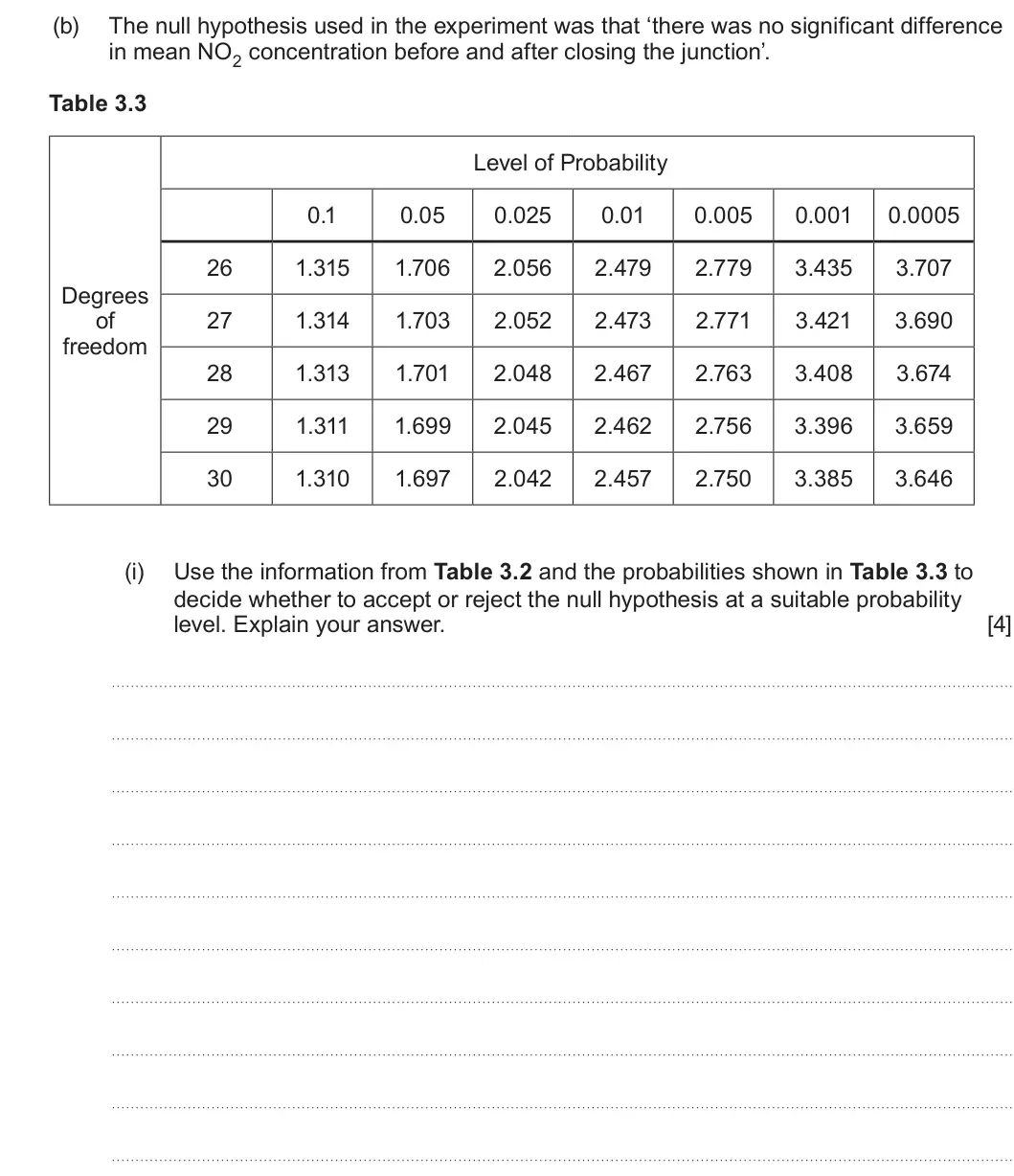
Q3(b)(ii)
The whole paper ↗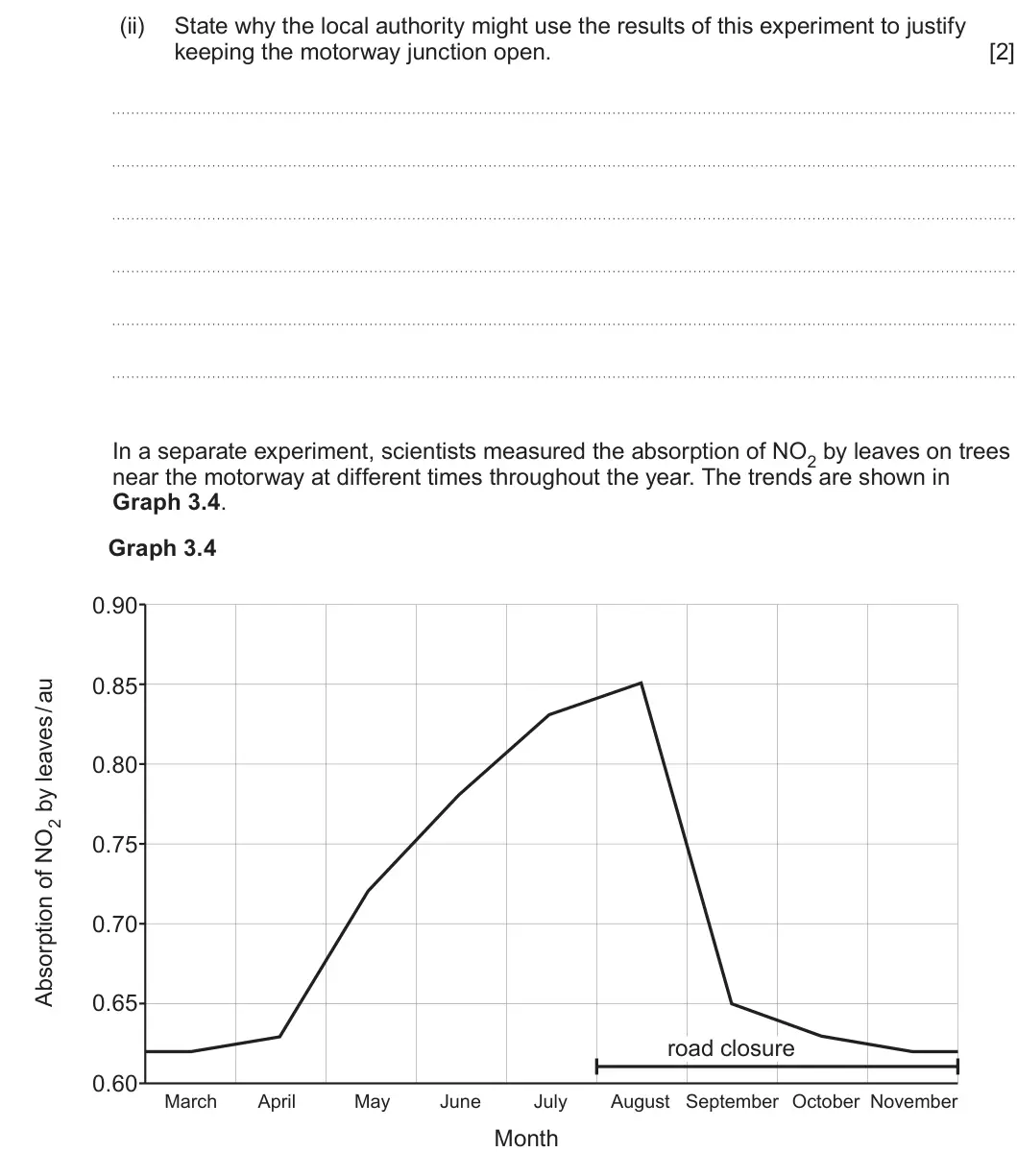
Q3(b)(iii)
The whole paper ↗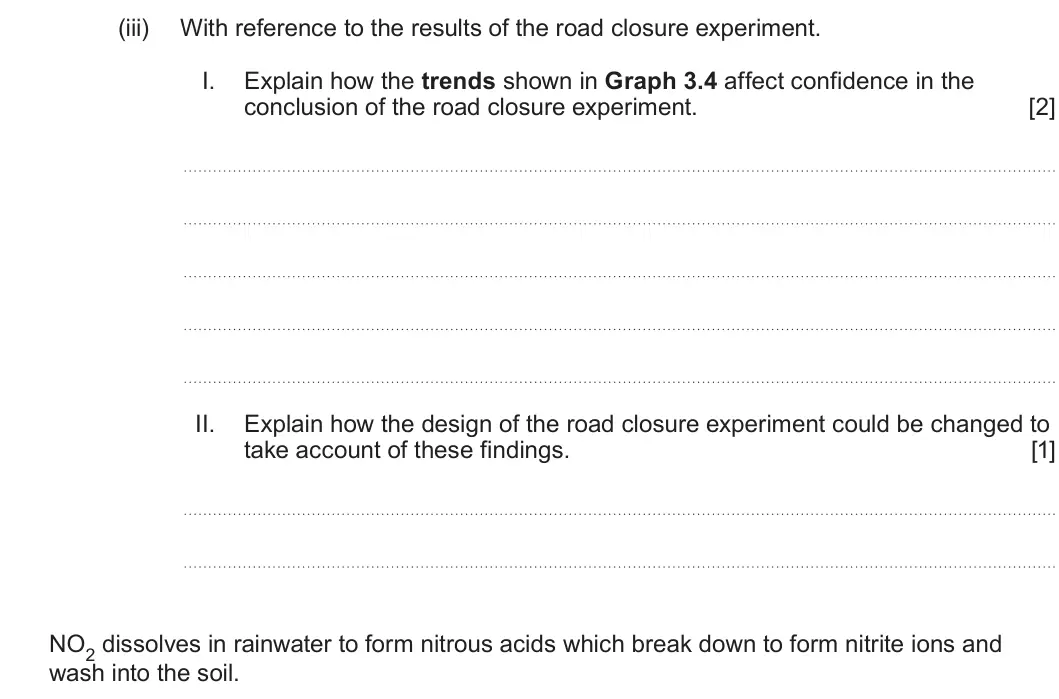
Q2(d)(ii)
The whole paper ↗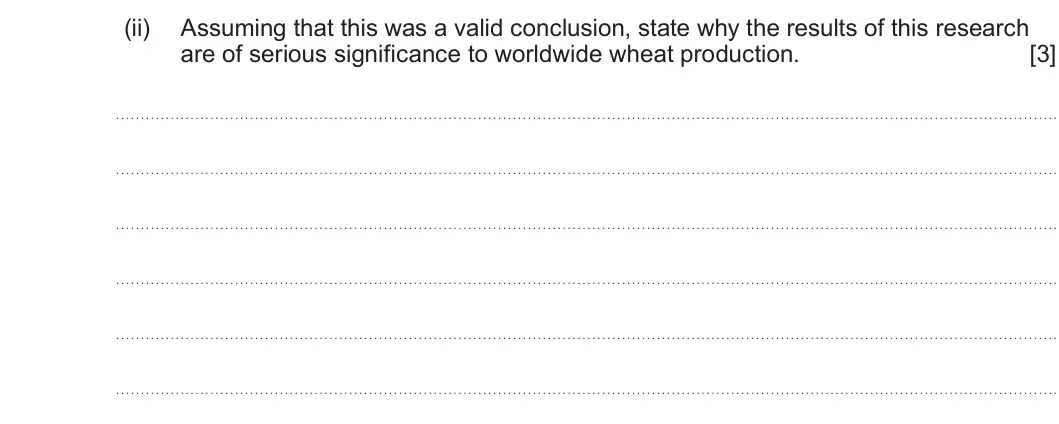
Q6(a)(iii)
The whole paper ↗
Q6(b)(i)
The whole paper ↗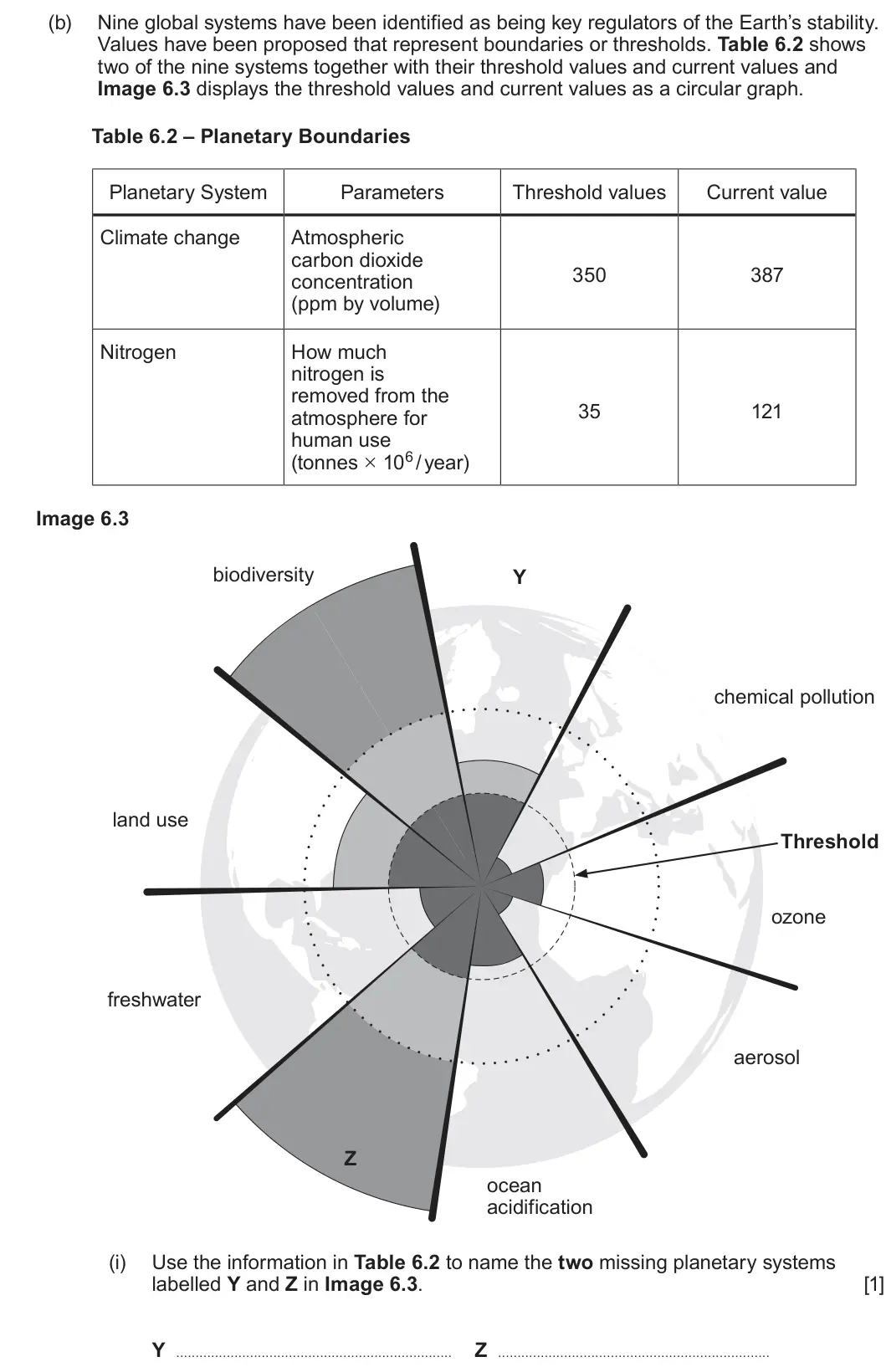
Q6(b)(ii)
The whole paper ↗
Q6(c)
The whole paper ↗
Q2(a)(i)
The whole paper ↗
Q2(a)(ii)
The whole paper ↗
Q2(c)(ii)
The whole paper ↗
Q2(d)(i)
The whole paper ↗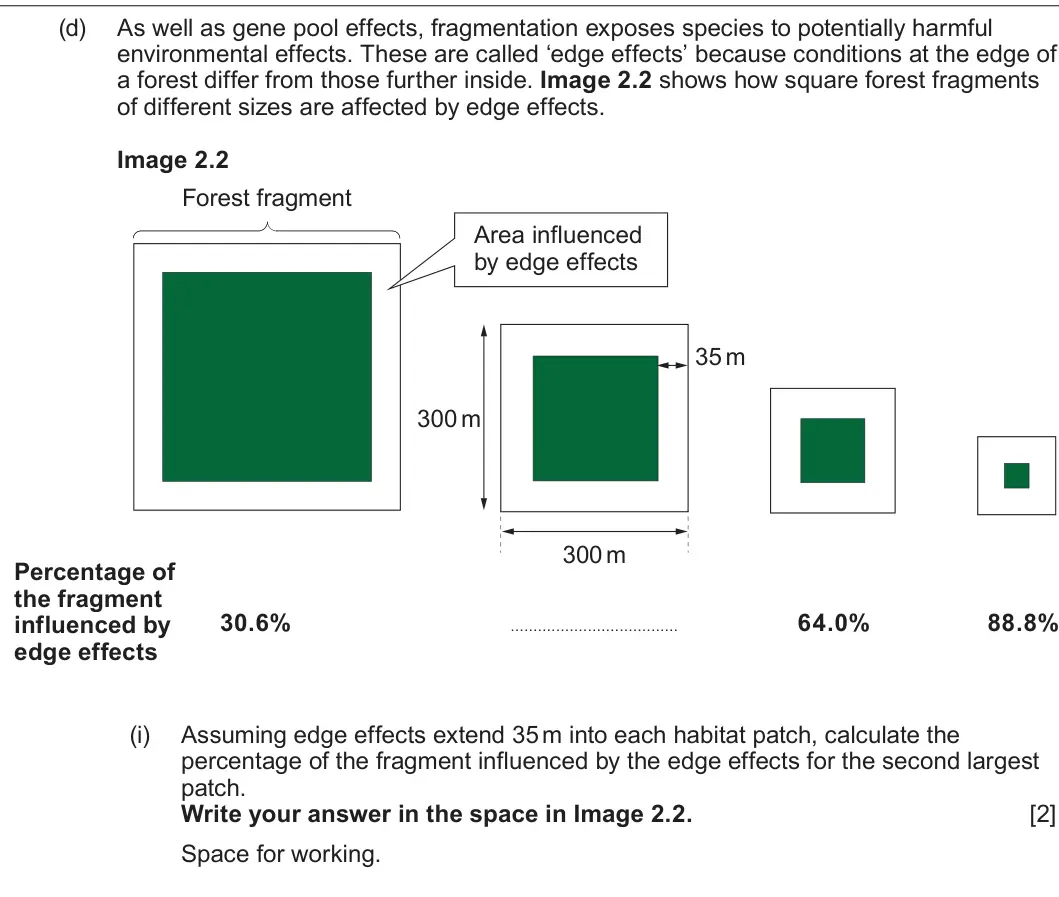
Q2(d)(ii)
The whole paper ↗
Q5(d)(ii)
The whole paper ↗
Q2(b)
The whole paper ↗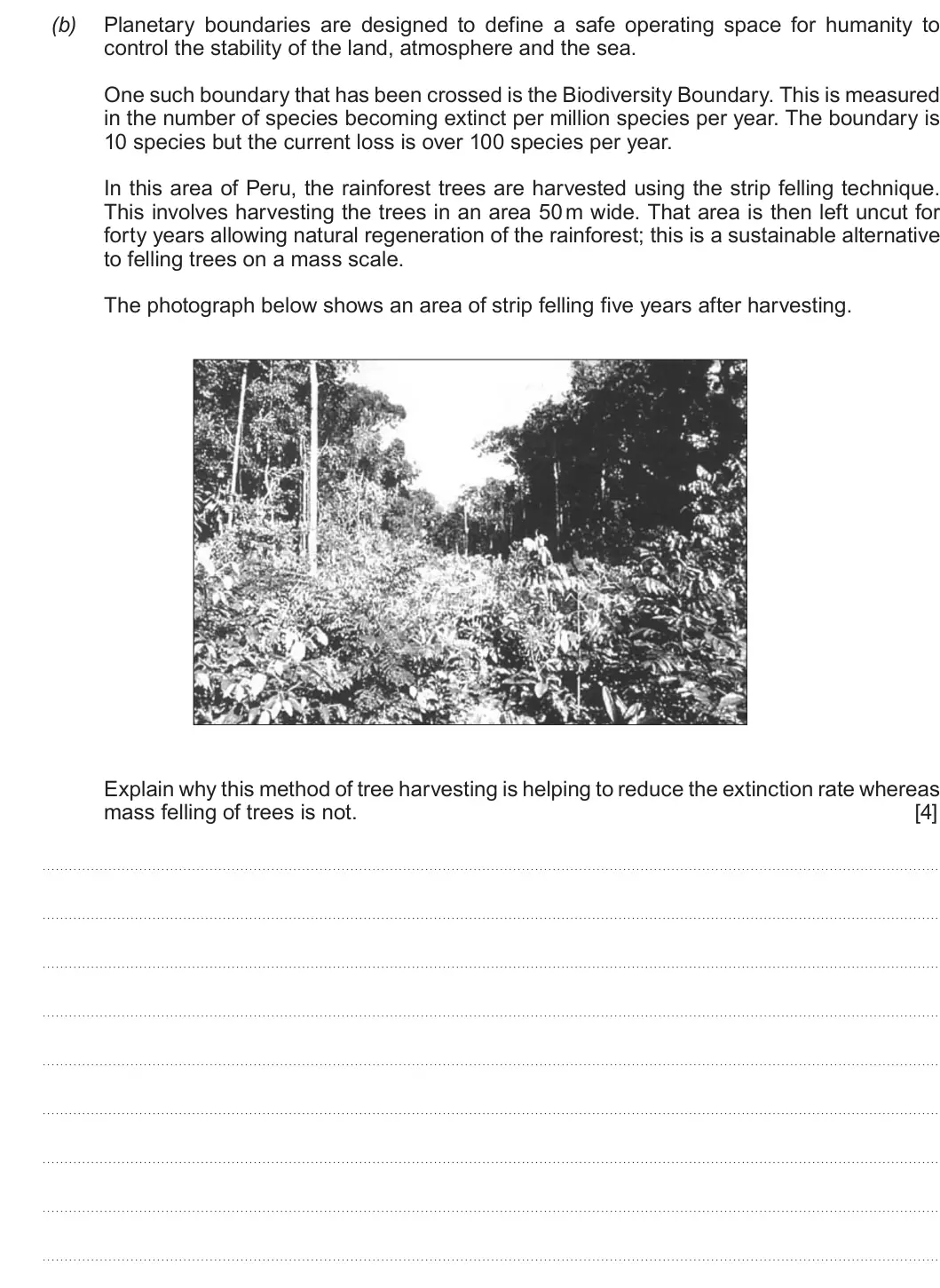
All 24 questions on Human impact on the environment, as a list
- Summer 2025, Unit 3, Q6(c)(iii) (2 marks): Compound X was extracted from a plant discovered growing in a tropical rainforest. Explain the importance of conserving plant species such as this. [2]
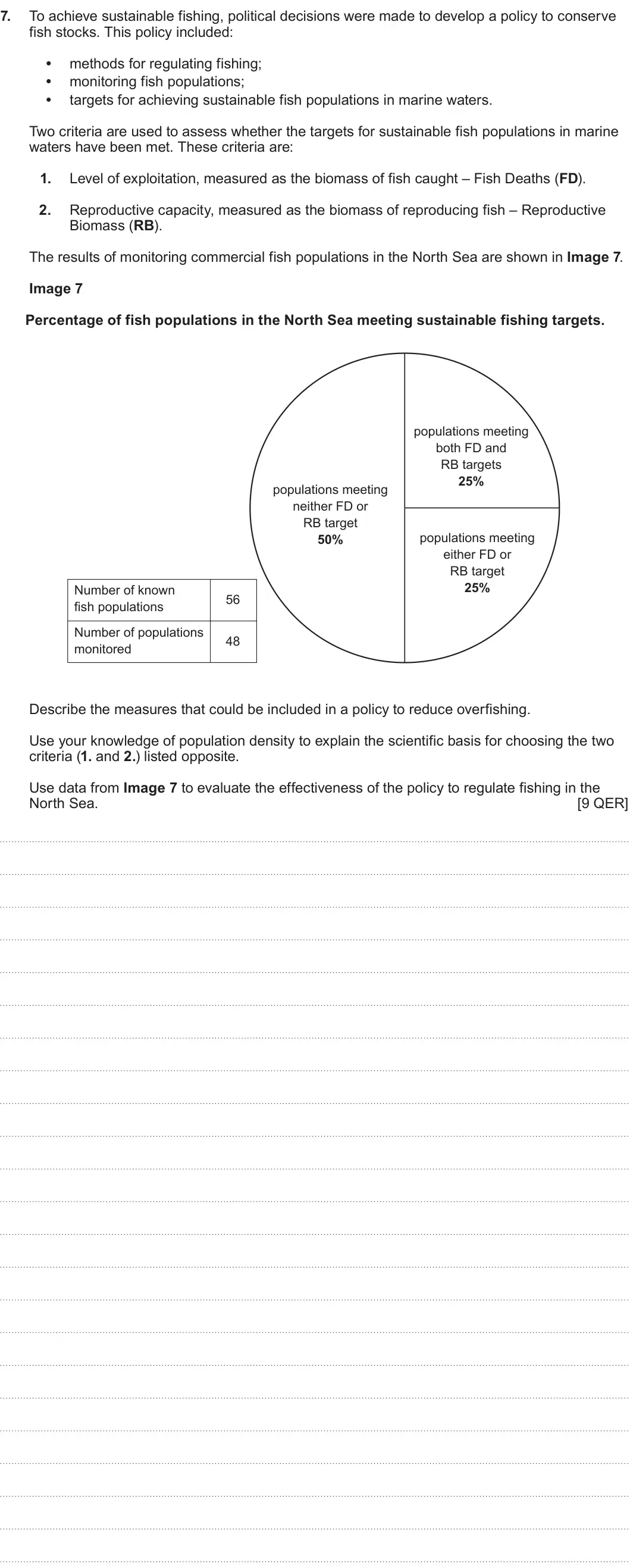
- Summer 2025, Unit 3, Q7 (9 marks): To achieve sustainable fishing, political decisions were made to develop a policy to conserve fish stocks. This policy included: • methods for regulating fishin
- Summer 2024, Unit 3, Q3(a)(i) (1 mark): Describe how the distribution of measured NO2 levels supports the hypothesis that motor vehicle exhausts are the main source of airborne NO2. [1]
- Summer 2024, Unit 3, Q3(a)(ii) (2 marks): I. Draw a circle on the map in Image 3.1 to show the position on the M4 where traffic control measures were most urgently needed in 2015. [1] II. Explain your c
- Summer 2024, Unit 3, Q3(b)(i) (4 marks): Use the information from Table 3.2 and the probabilities shown in Table 3.3 to decide whether to accept or reject the null hypothesis at a suitable probability
- Summer 2024, Unit 3, Q3(b)(ii) (2 marks): State why the local authority might use the results of this experiment to justify keeping the motorway junction open. [2] In a separate experiment, scientists m
- Summer 2024, Unit 3, Q3(b)(iii) (3 marks): With reference to the results of the road closure experiment. I. Explain how the trends shown in Graph 3.4 affect confidence in the conclusion of the road closu
- Summer 2024, Unit 4, Q2(d)(ii) (3 marks): Assuming that this was a valid conclusion, state why the results of this research are of serious significance to worldwide wheat production. [3]
- Summer 2023, Unit 3, Q6(a)(iii) (1 mark): Add an arrow labelled C to Image 6.1 to represent the transfer of carbon as a result of human activity. [1]
- Summer 2023, Unit 3, Q6(b)(i) (1 mark): Use the information in Table 6.2 to name the two missing planetary systems labelled Y and Z in Image 6.3. [1] Y Z
- Summer 2023, Unit 3, Q6(b)(ii) (1 mark): Use Image 6.3 to state what the two planetary systems in Table 6.2 have in common with each other and with the Land-use system. [1]
- Summer 2023, Unit 3, Q6(c) (3 marks): Explain what is meant by a safe operating space for humanity, describe where that is shown in Image 6.3, and describe the consequences of exceeding planetary bo
- Summer 2022, Unit 3, Q2(a)(i) (1 mark): Distinguish between the terms endangered and extinct. [1]
- Summer 2022, Unit 3, Q2(a)(ii) (2 marks): Apart from habitat loss, name two other causes of species extinction. [2] Following a forest fire, given time, the forest will regenerate.
- Summer 2022, Unit 3, Q2(c)(ii) (4 marks): List fragments P, Q and R in order of risk of species extinction, from most to least. Explain your answer. [4] Most risk Least risk Explanation
- Summer 2022, Unit 3, Q2(d)(i) (2 marks): Assuming edge effects extend 35 m into each habitat patch, calculate the percentage of the fragment influenced by the edge effects for the second largest patch.
- Summer 2022, Unit 3, Q2(d)(ii) (3 marks): Describe the trend in the data and suggest two abiotic conditions that would differ in the area affected by edge effects. [3]
- Summer 2022, Unit 3, Q5(d)(ii) (3 marks): Predict the effect that widespread use of crops engineered to contain carboxysomes might have on the carbon cycle and explain the impact this effect might have
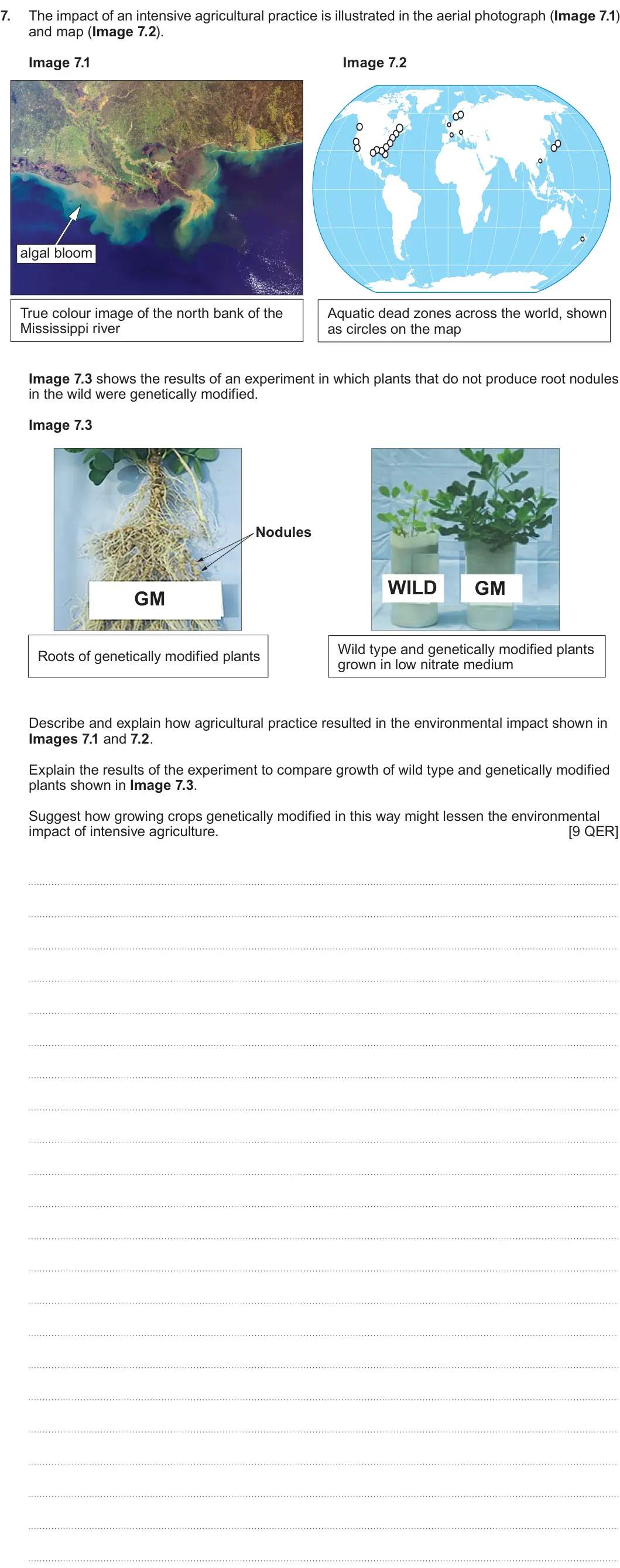
- Summer 2022, Unit 3, Q7 (9 marks): The impact of an intensive agricultural practice is illustrated in the aerial photograph (Image 7.1) and map (Image 7.2). Image 7.1 Image 7.2 algal bloom True c
- Summer 2019, Unit 3, Q2(b) (4 marks): Planetary boundaries are designed to define a safe operating space for humanity to control the stability of the land, atmosphere and the sea. One such boundary
- Summer 2019, Unit 3, Q5(d) (4 marks): Austrominius modestus is a species of barnacle that was found only in Australasia up to 100 years ago. The first recorded sighting of it in the UK was in 1946.
- Summer 2018, Unit 3, Q3(b)(i) (2 marks): Explain how this deforestation could increase the concentration of carbon dioxide in the atmosphere in the area. [2]
- Summer 2018, Unit 3, Q3(b)(ii) (1 mark): Explain how this deforestation could decrease the concentration of carbon dioxide in the atmosphere in the area. [1]
- Summer 2017, Unit 3, Q7 (9 marks): Fish farming is an important industry in Scotland, producing almost 180 000 tonnes of fish in 2014. It provides employment and financial gain for the areas wher
Questions, mark schemes and examiner’s reports are © WJEC CBAC Ltd, from their published past papers. Plumi isn’t affiliated with any exam board. Want whole papers? Every WJEC A-Level Biology paper.
Rather write your answers by hand on iPad? Plumi marks them against the same mark schemes.