Skip to content
Android waitlistTry on iPad
Get started

OxfordAQA International A Level Physics questions by topic

Official specimen papers for Units 1–5

Topics Pick as many as you like. Open one to choose its sub-topics.
Past paper difficulty
Paper
All papers
Exam
All years
Calculations

Loading the full question list…

219 questions

  1. Q01.1

    Specimen · Unit 1 · ★★

    2 marks
    The whole paper ↗
    1
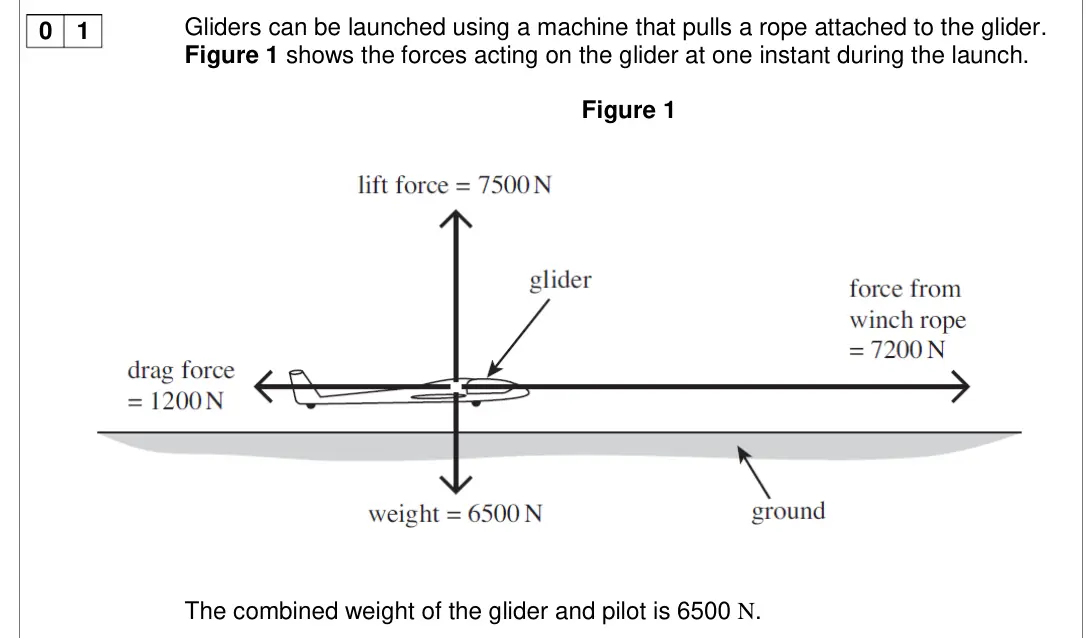
    Setup for original question 01.1

    Loading the question setup…

    Original question 01.1: Gliders can be launched using a machine that pulls a rope attached to the glider. Figure 1 shows the forces acting on the glider at one instant during the launch. Figure 1 The comb

    Loading the question…

  2. Q01.2

    Specimen · Unit 1 · ★★

    2 marks
    The whole paper ↗
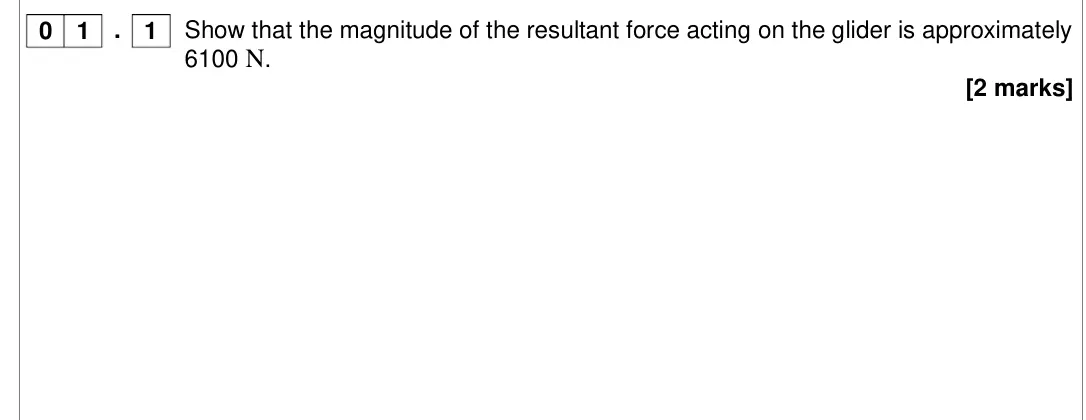
    2
    Setup for original question 01.2

    Loading the question setup…

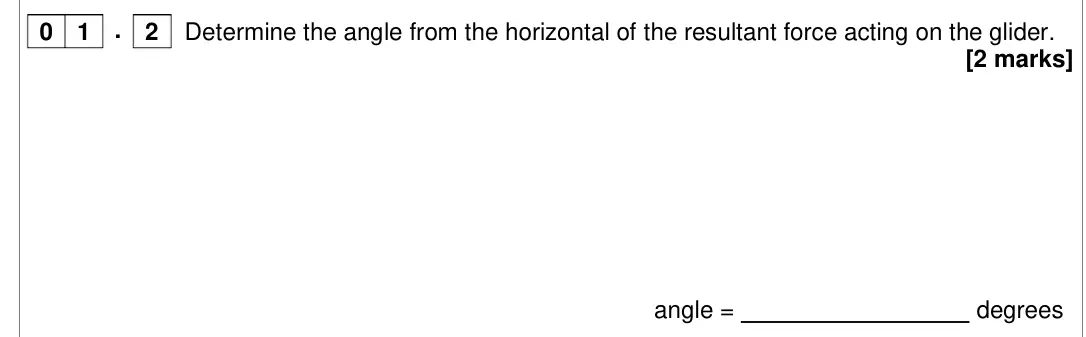
    Original question 01.2: Gliders can be launched using a machine that pulls a rope attached to the glider. Figure 1 shows the forces acting on the glider at one instant during the launch. Figure 1 The comb

    Loading the question…

  3. Q02.1

    Specimen · Unit 1 · ★★

    2 marks
    The whole paper ↗

    3
    Setup for original question 02.1

    Loading the question setup…

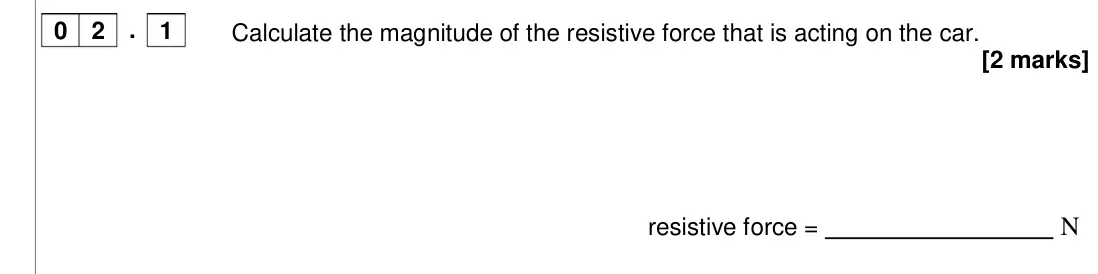
    Original question 02.1: An engineer tests a car by measuring the time taken for it to travel 1500 m at a constant speed. When delivering its maximum output power of 35 kW the time recorded is 28 s. 0 2 Ca

    Loading the question…

  4. Q02.2

    Specimen · Unit 1 · ★

    1 mark
    The whole paper ↗
    4
    Setup for original question 02.2

    Loading the question setup…

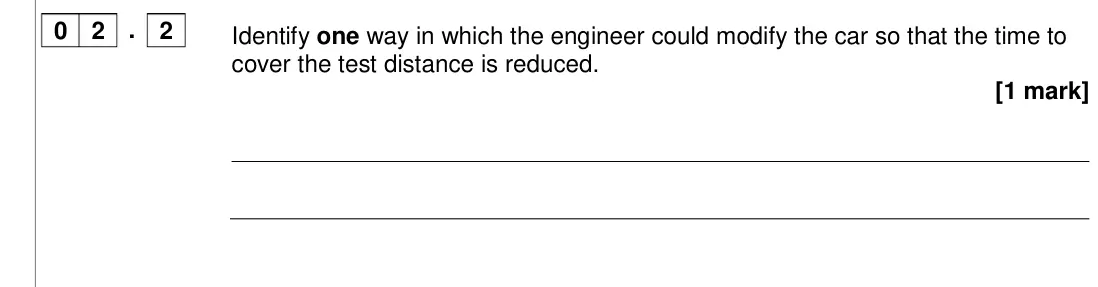
    Original question 02.2: An engineer tests a car by measuring the time taken for it to travel 1500 m at a constant speed. When delivering its maximum output power of 35 kW the time recorded is 28 s. 0 2 Id

    Loading the question…

  5. Q03.1

    Specimen · Unit 1 · ★

    1 mark
    The whole paper ↗
    5
    Setup for original question 03.1

    Loading the question setup…

    Original question 03.1: A neutron decays by emitting a β− particle. 0 3 Identify the other particle that is emitted in the decay. [1 mark] 0 3 . 1

    Loading the question…

  6. Q03.2

    Specimen · Unit 1 · ★★

    2 marks
    The whole paper ↗
    6
    Setup for original question 03.2

    Loading the question setup…

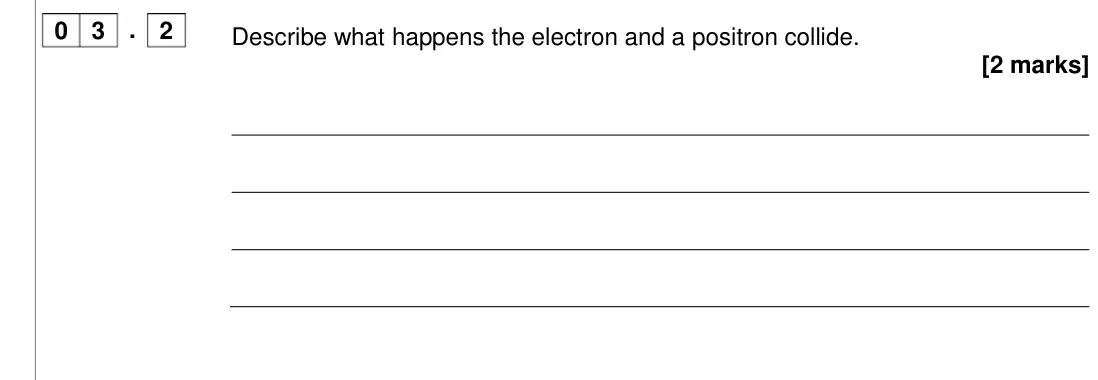
    Original question 03.2: A neutron decays by emitting a β− particle. 0 3 Describe what happens the electron and a positron collide. [2 marks] 0 3 . 2

    Loading the question…

  7. Q04

    Specimen · Unit 1 · ★★

    2 marks
    The whole paper ↗
    7
    Original question 04: A radioactive nucleus decays with the emission of an alpha particle. Describe the changes that occur in the proton number and the nucleon number of the nucleus. [2 marks] 0 4 Proto

    Loading the question…

  8. Q05.1

    Specimen · Unit 1 · ★★

    1 mark
    The whole paper ↗
    8
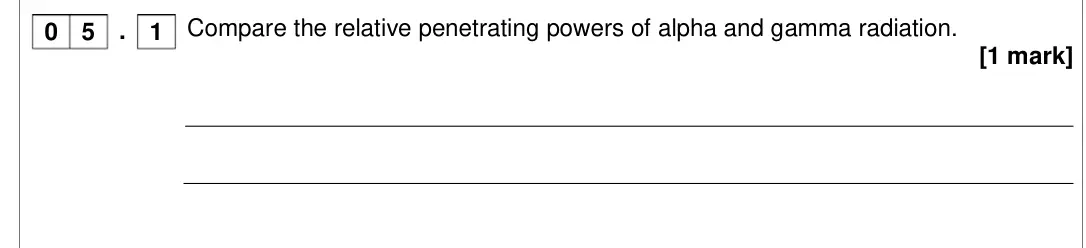
    Original question 05.1: Compare the relative penetrating powers of alpha and gamma radiation. [1 mark] 0 5 . 1

    Loading the question…

  9. Q05.2

    Specimen · Unit 1 · ★★

    2 marks
    Sources (insert) ↗
    The whole paper ↗
    9
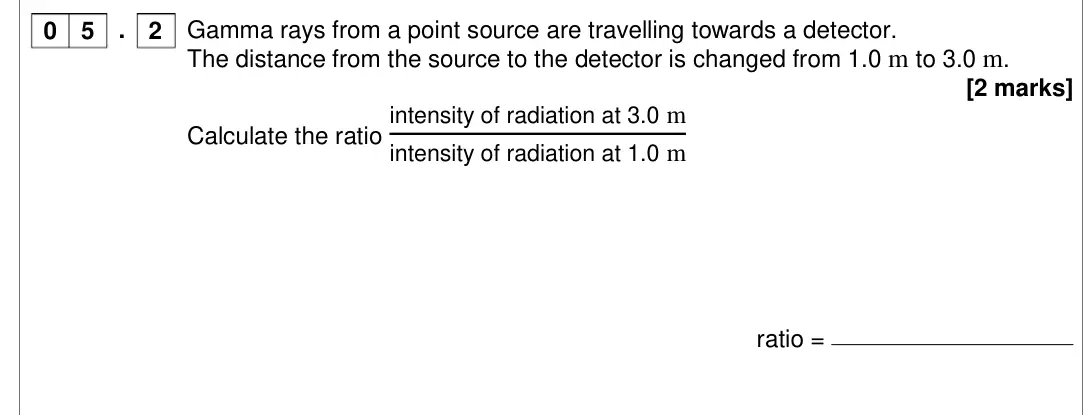
    Original question 05.2: Gamma rays from a point source are travelling towards a detector. The distance from the source to the detector is changed from 1.0 m to 3.0 m. [2 marks] Calculate the ratio intensi

    Loading the question…

  10. Q06.1

    Specimen · Unit 1 · ★★

    2 marks
    The whole paper ↗
    10
    Setup for original question 06.1

    Loading the question setup…

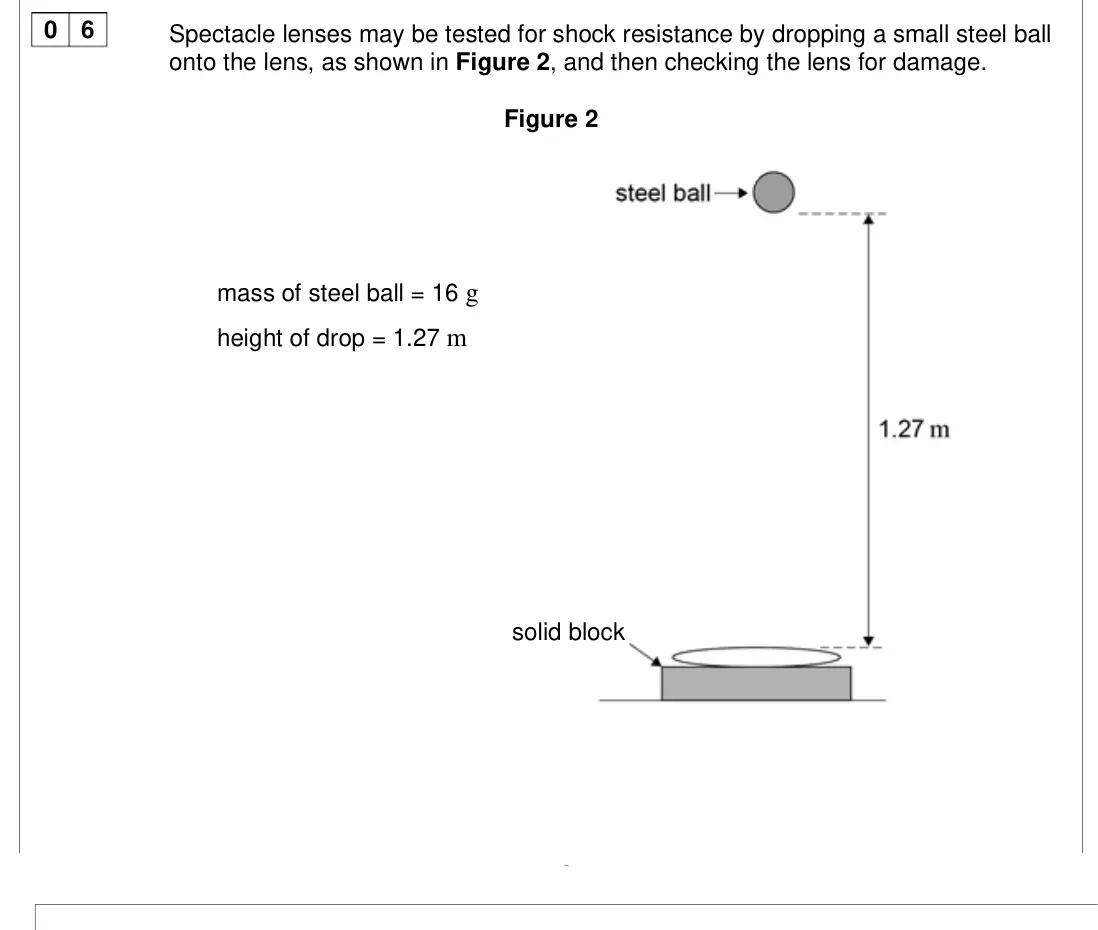
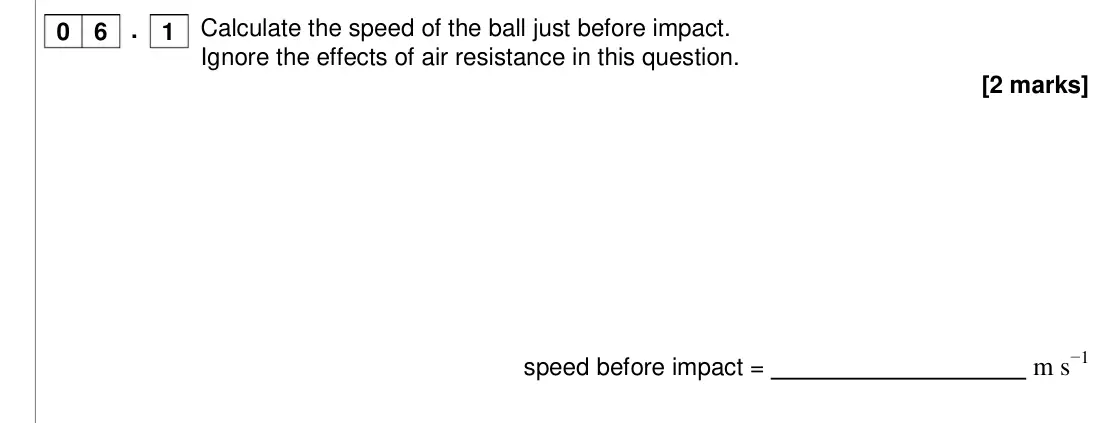
    Original question 06.1: Spectacle lenses may be tested for shock resistance by dropping a small steel ball onto the lens, as shown in Figure 2, and then checking the lens for damage. Figure 2 0 6 diameter

    Loading the question…

  11. Q06.2

    Specimen · Unit 1 · ★★

    2 marks
    The whole paper ↗
    11
    Setup for original question 06.2

    Loading the question setup…

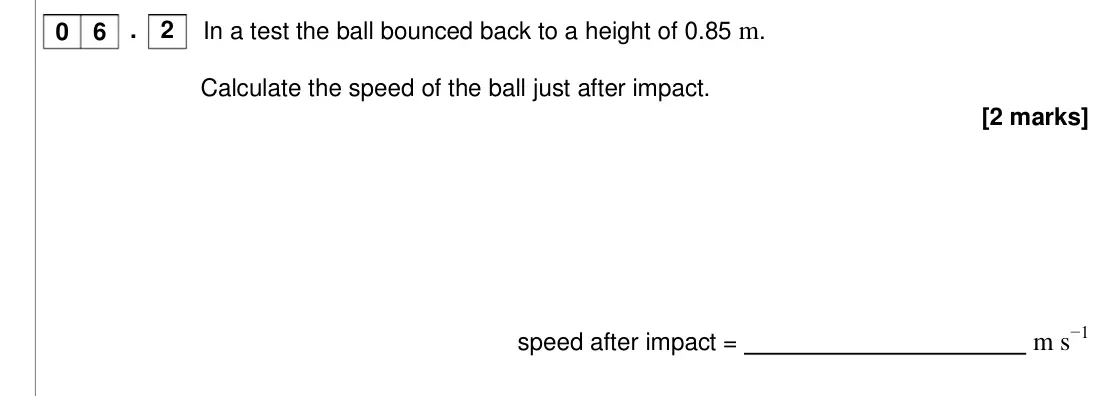
    Original question 06.2: Spectacle lenses may be tested for shock resistance by dropping a small steel ball onto the lens, as shown in Figure 2, and then checking the lens for damage. Figure 2 0 6 diameter

    Loading the question…

  12. Q06.3

    Specimen · Unit 1 · ★★

    2 marks
    The whole paper ↗
    12
    Setup for original question 06.3

    Loading the question setup…

    Original question 06.3: Spectacle lenses may be tested for shock resistance by dropping a small steel ball onto the lens, as shown in Figure 2, and then checking the lens for damage. Figure 2 0 6 diameter

    Loading the question…

  13. Q06.4

    Specimen · Unit 1 · ★

    1 mark
    The whole paper ↗
    13
    Setup for original question 06.4

    Loading the question setup…

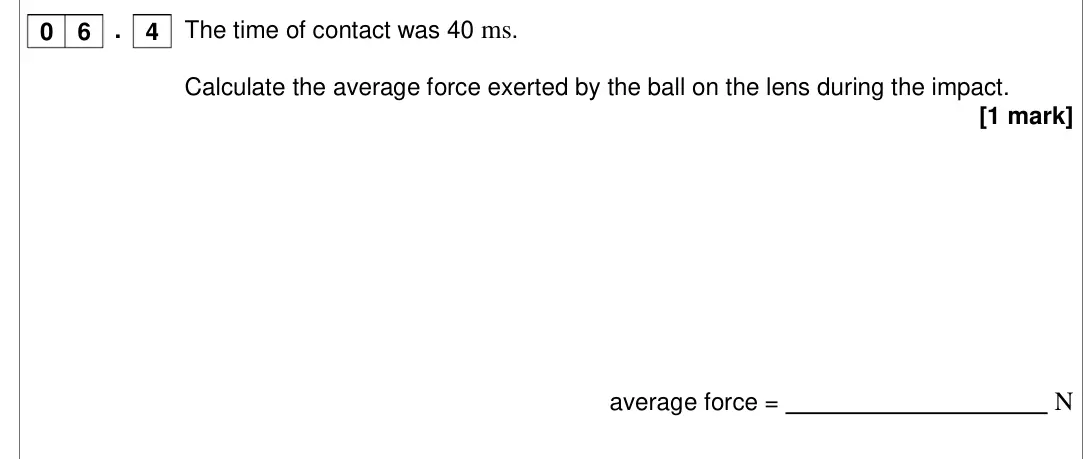
    Original question 06.4: Spectacle lenses may be tested for shock resistance by dropping a small steel ball onto the lens, as shown in Figure 2, and then checking the lens for damage. Figure 2 0 6 diameter

    Loading the question…

  14. Q06.5

    Specimen · Unit 1 · ★★

    2 marks
    The whole paper ↗
    14
    Setup for original question 06.5

    Loading the question setup…

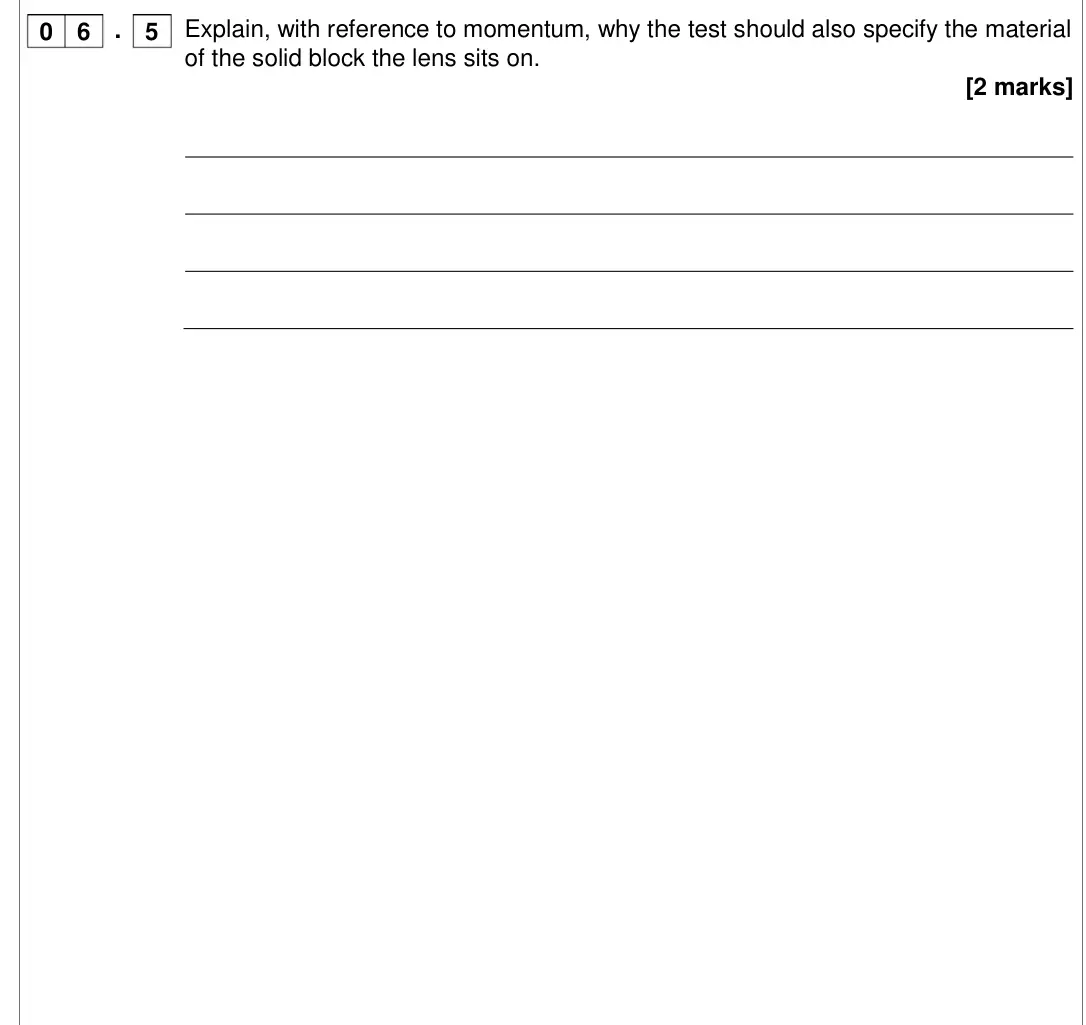
    Original question 06.5: Spectacle lenses may be tested for shock resistance by dropping a small steel ball onto the lens, as shown in Figure 2, and then checking the lens for damage. Figure 2 0 6 diameter

    Loading the question…

  15. Q07.1

    Specimen · Unit 1 · ★★★

    3 marks
    The whole paper ↗
    15
    Setup for original question 07.1

    Loading the question setup…

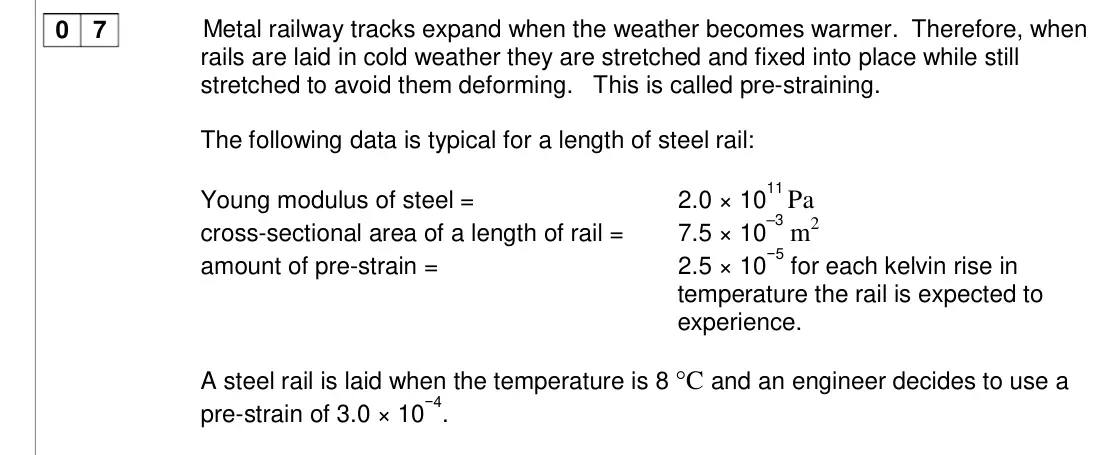
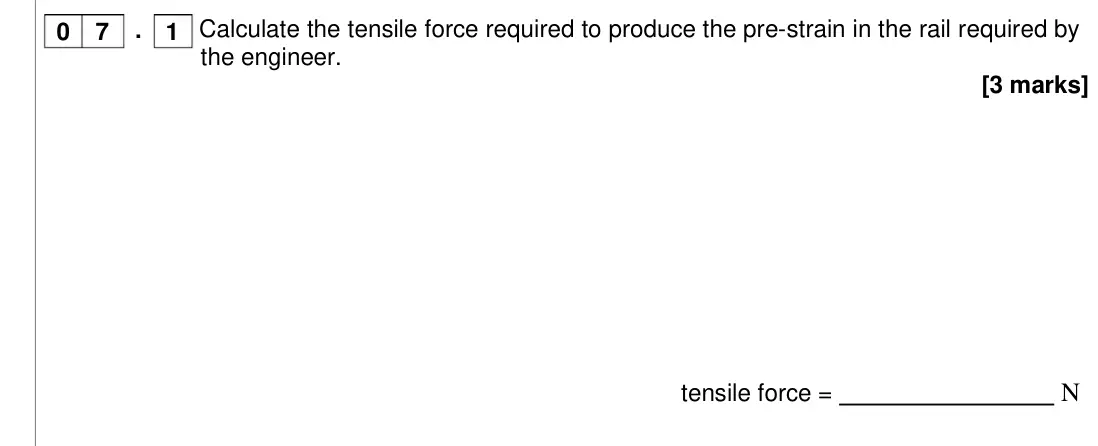
    Original question 07.1: Metal railway tracks expand when the weather becomes warmer. Therefore, when rails are laid in cold weather they are stretched and fixed into place while still stretched to avoid t

    Loading the question…

  16. Q07.2

    Specimen · Unit 1 · ★★

    2 marks
    The whole paper ↗
    16
    Setup for original question 07.2

    Loading the question setup…

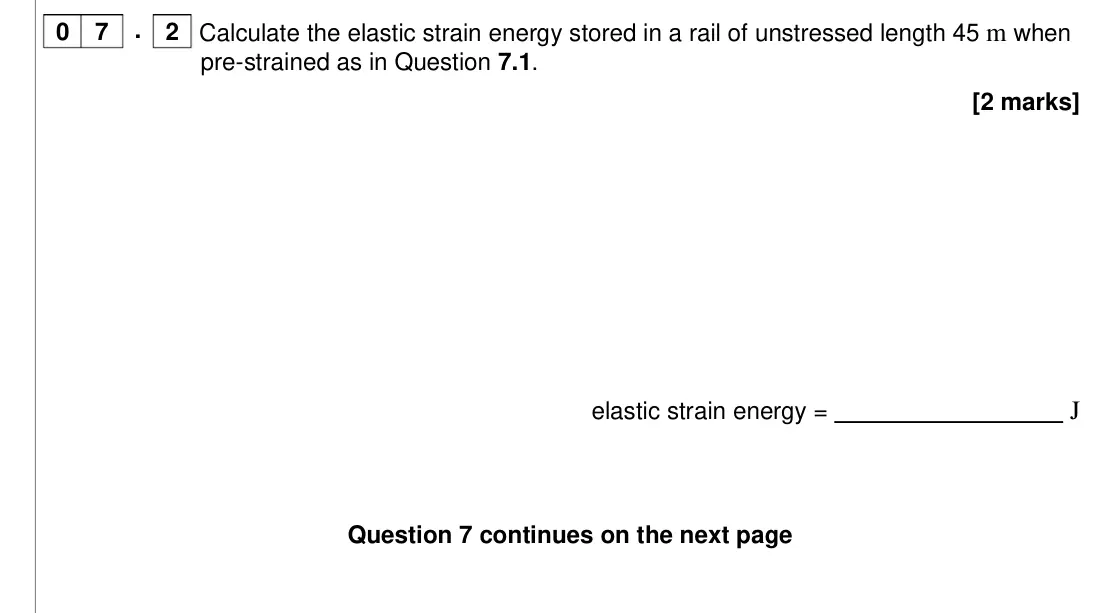
    Original question 07.2: Metal railway tracks expand when the weather becomes warmer. Therefore, when rails are laid in cold weather they are stretched and fixed into place while still stretched to avoid t

    Loading the question…

  17. Q07.3

    Specimen · Unit 1 · ★★

    2 marks
    The whole paper ↗
    17
    Setup for original question 07.3

    Loading the question setup…

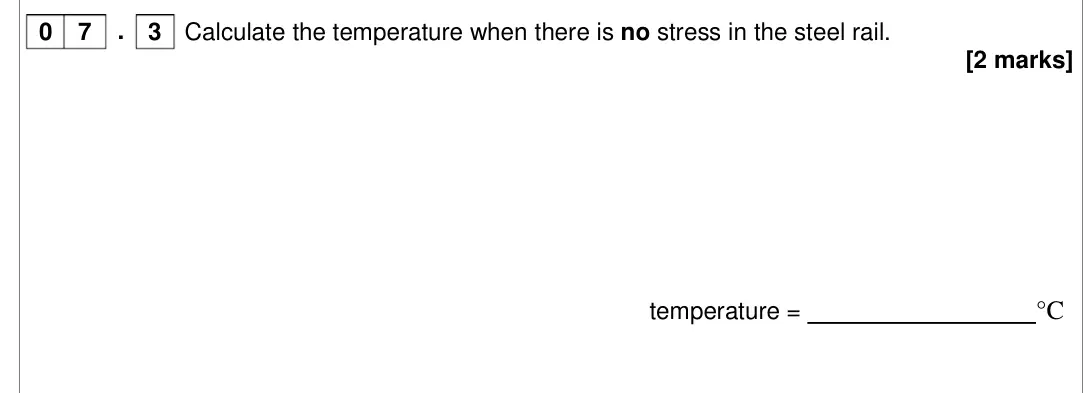
    Original question 07.3: Metal railway tracks expand when the weather becomes warmer. Therefore, when rails are laid in cold weather they are stretched and fixed into place while still stretched to avoid t

    Loading the question…

  18. Q07.4

    Specimen · Unit 1 · ★★

    2 marks
    The whole paper ↗
    18
    Setup for original question 07.4

    Loading the question setup…

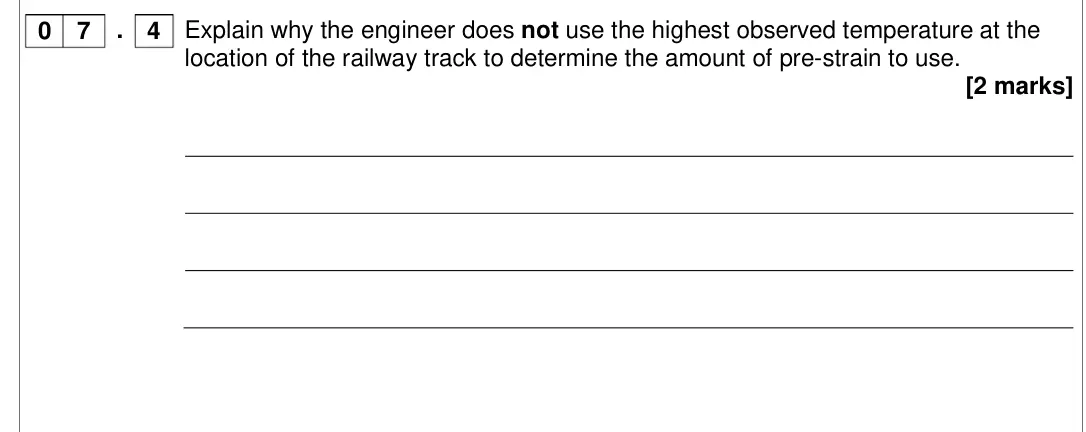
    Original question 07.4: Metal railway tracks expand when the weather becomes warmer. Therefore, when rails are laid in cold weather they are stretched and fixed into place while still stretched to avoid t

    Loading the question…

  19. Q08.1

    Specimen · Unit 1 · ★★

    2 marks
    The whole paper ↗
    19
    Setup for original question 08.1

    Loading the question setup…

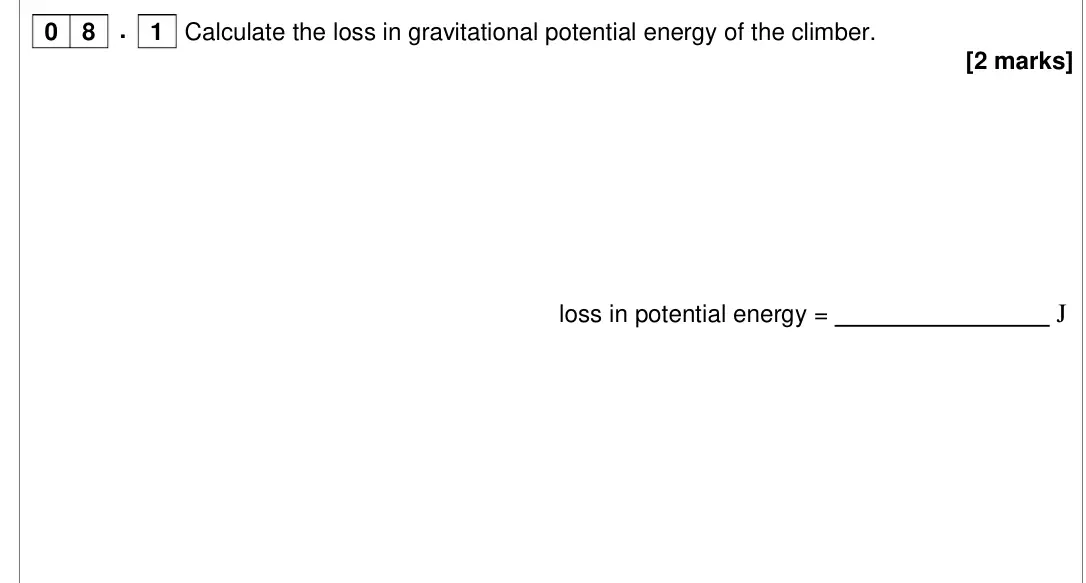
    Original question 08.1: A climber falls 2.3 m before being stopped by his climbing rope that is secured above him. The weight of the climber is 840 N. 0 8 Calculate the loss in gravitational potential ene

    Loading the question…

  20. Q08.2

    Specimen · Unit 1 · ★★

    2 marks
    The whole paper ↗
    20
    Setup for original question 08.2

    Loading the question setup…

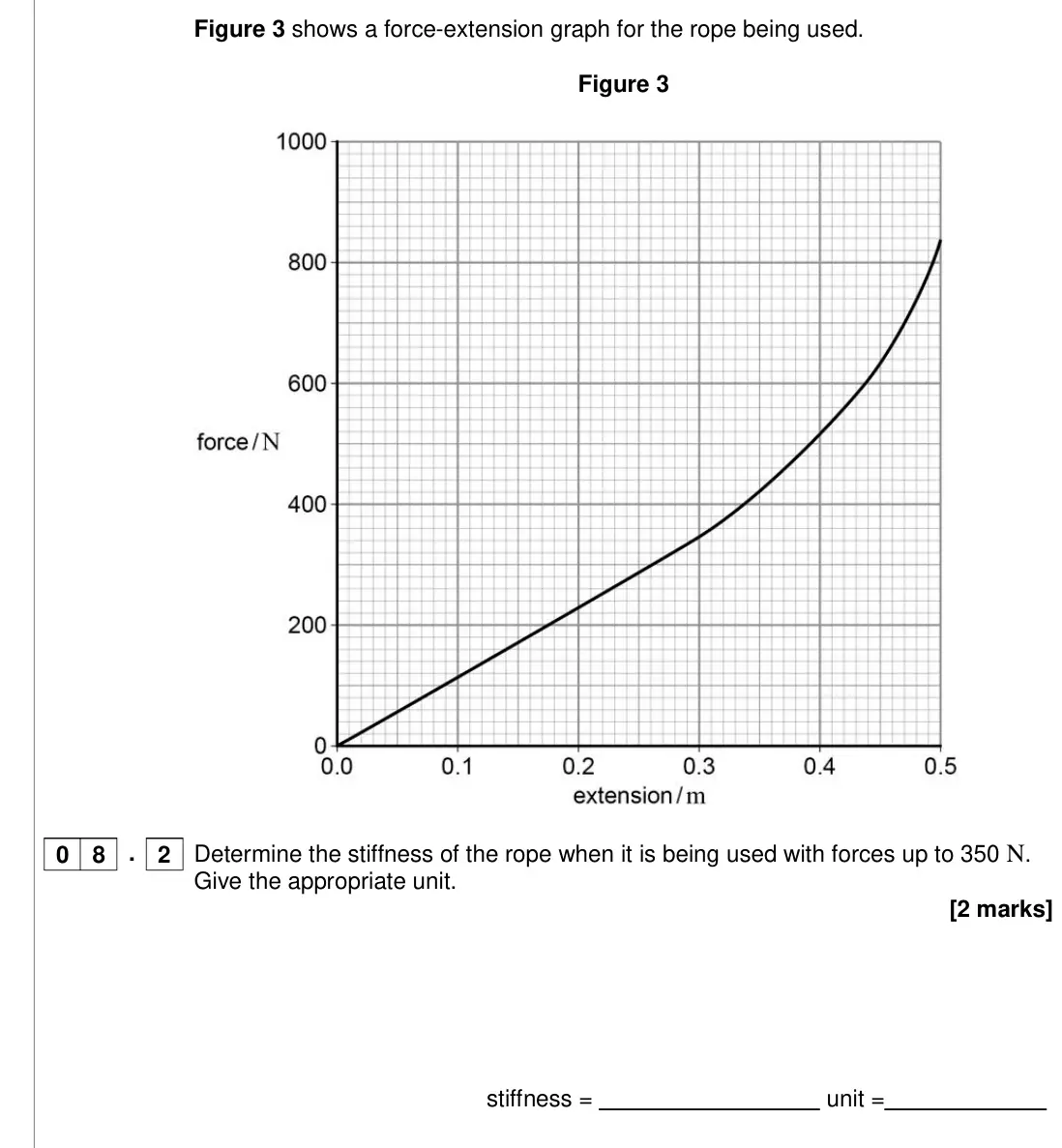
    Original question 08.2: A climber falls 2.3 m before being stopped by his climbing rope that is secured above him. The weight of the climber is 840 N. 0 8 Figure 3 shows a force-extension graph for the ro

    Loading the question…

Questions, mark schemes and examiner’s reports are © OxfordAQA, from their published past papers. Plumi isn’t affiliated with any exam board. Want whole papers? OxfordAQA International A Level Physics past papers.

The Plumi iPad app also offers exam-style questions with AI feedback on your handwritten working.