 plumi
Mechanics and materials: OxfordAQA International A Level Physics questions
OxfordAQA International A Level Physics past-paper questions on 3.2 Mechanics and materials, Official specimen papers for Units 1–5, with mark schemes and examiner’s reports where available.
Past paper difficulty
Paper
All papers
Exam
All years
Calculations
Loading the full question list…
Q01.1
The whole paper ↗Q01.2
The whole paper ↗Q02.1
The whole paper ↗Q02.2
The whole paper ↗Q06.1
The whole paper ↗Q06.2
The whole paper ↗Q06.3
The whole paper ↗Q06.4
The whole paper ↗Q06.5
The whole paper ↗Q07.1
The whole paper ↗Q07.2
The whole paper ↗Q07.3
The whole paper ↗Q07.4
The whole paper ↗Q08.1
The whole paper ↗Q08.2
The whole paper ↗Q08.3
The whole paper ↗Q11.1
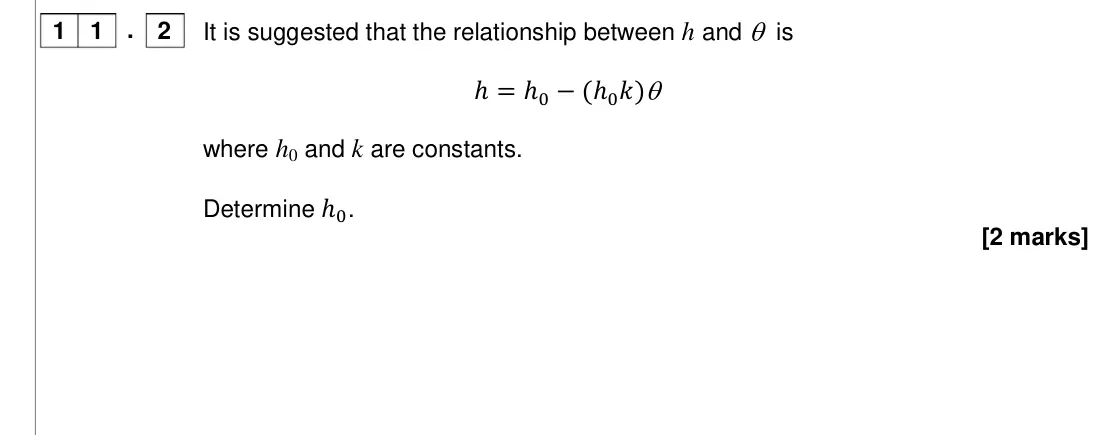
The whole paper ↗Q11.2
The whole paper ↗Q11.3
The whole paper ↗Q11.4
The whole paper ↗



All 44 questions on Mechanics and materials, as a list
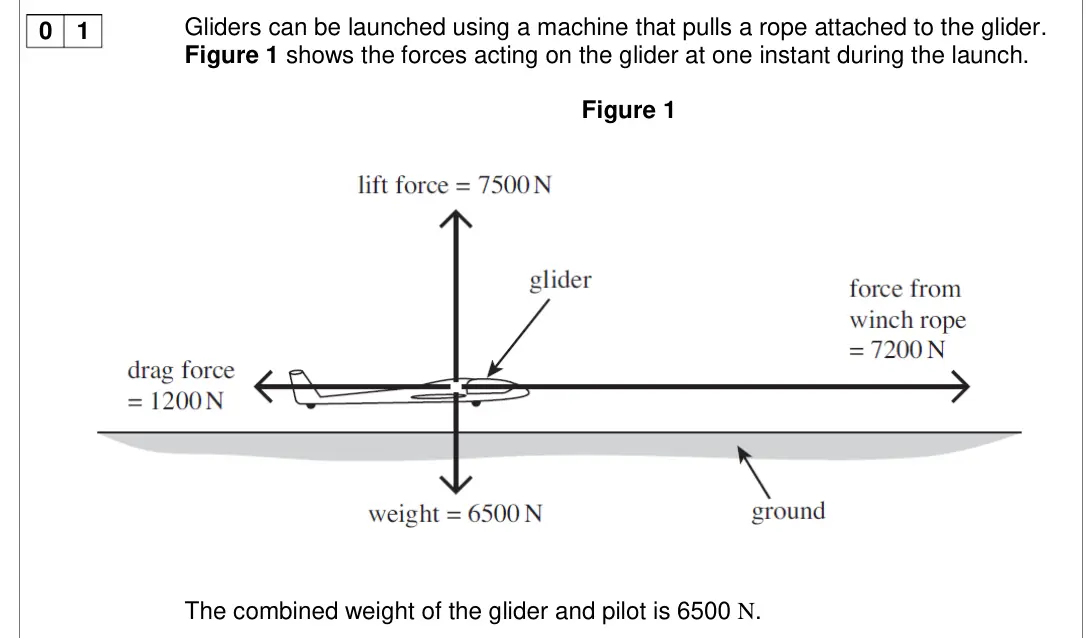
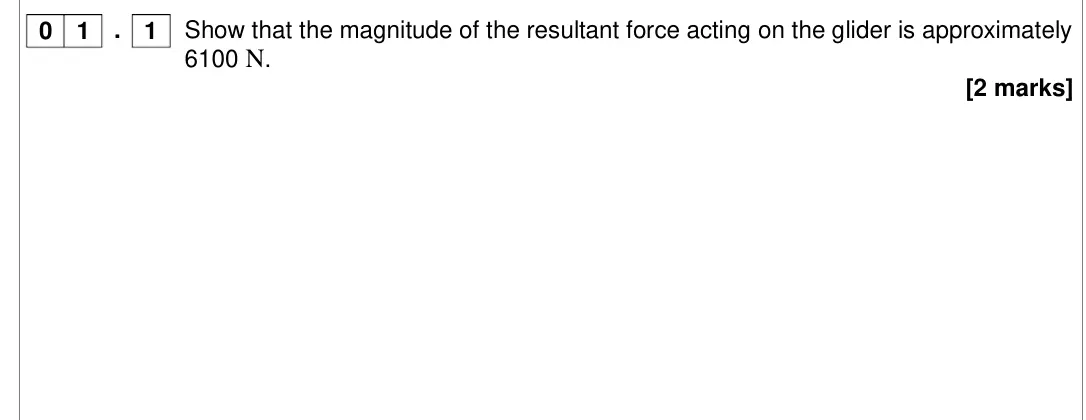
- Specimen, Unit 1, Q01.1 (2 marks): Gliders can be launched using a machine that pulls a rope attached to the glider. Figure 1 shows the forces acting on the glider at one instant during the launch. Figure 1 The comb
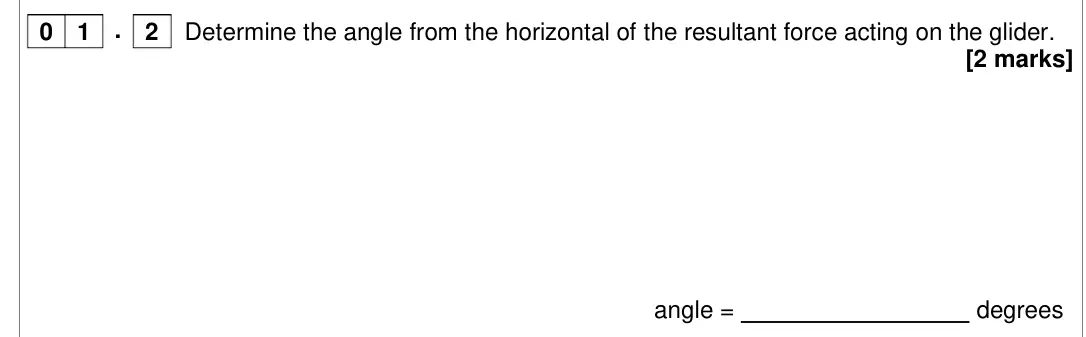
- Specimen, Unit 1, Q01.2 (2 marks): Gliders can be launched using a machine that pulls a rope attached to the glider. Figure 1 shows the forces acting on the glider at one instant during the launch. Figure 1 The comb
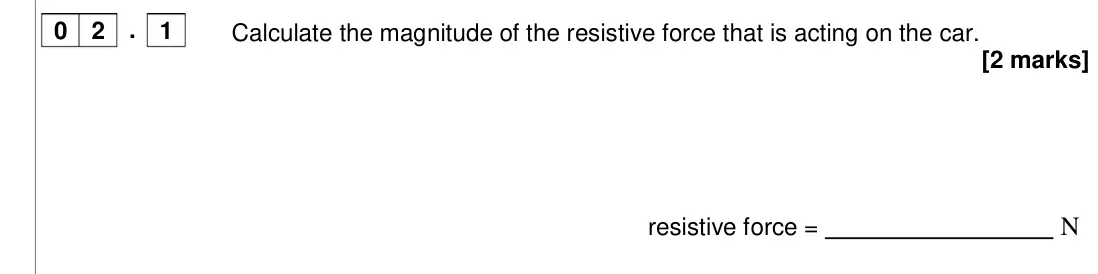
- Specimen, Unit 1, Q02.1 (2 marks): An engineer tests a car by measuring the time taken for it to travel 1500 m at a constant speed. When delivering its maximum output power of 35 kW the time recorded is 28 s. 0 2 Ca
- Specimen, Unit 1, Q02.2 (1 mark): An engineer tests a car by measuring the time taken for it to travel 1500 m at a constant speed. When delivering its maximum output power of 35 kW the time recorded is 28 s. 0 2 Id
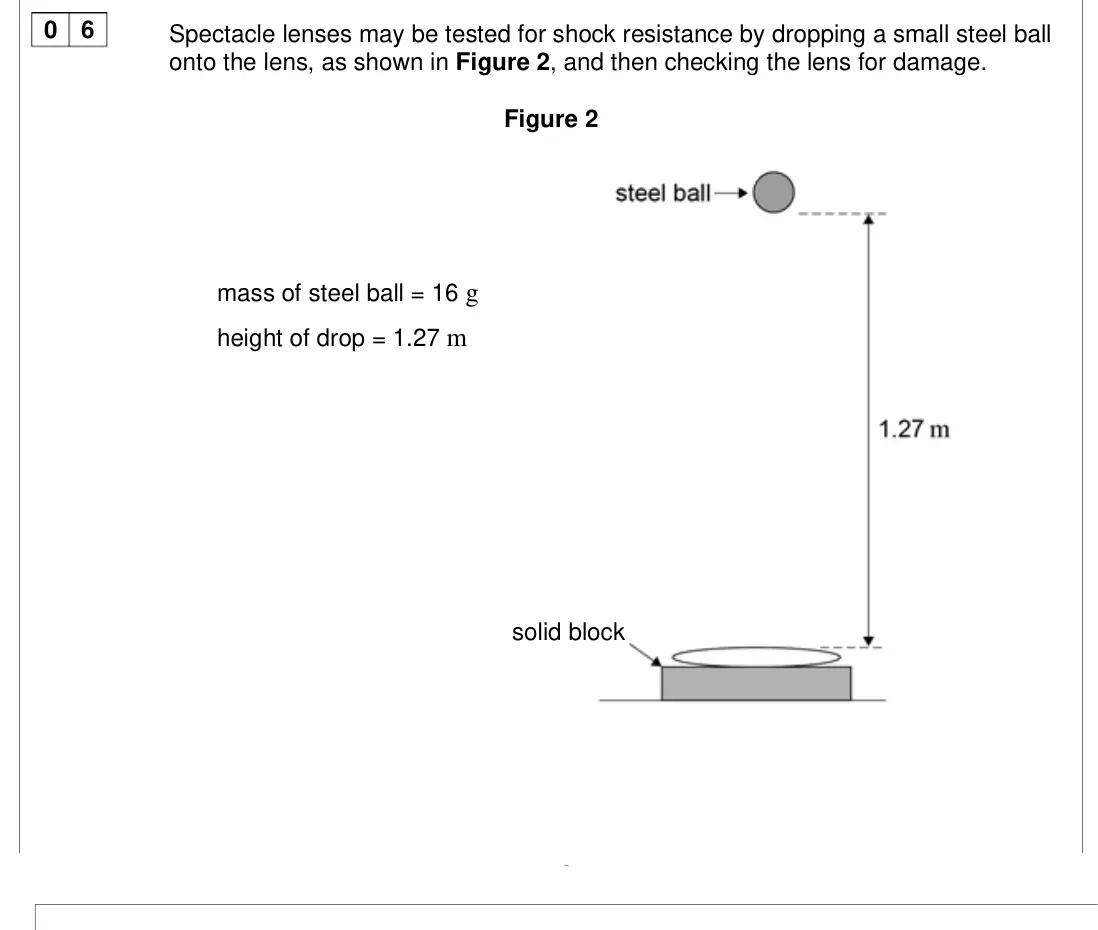
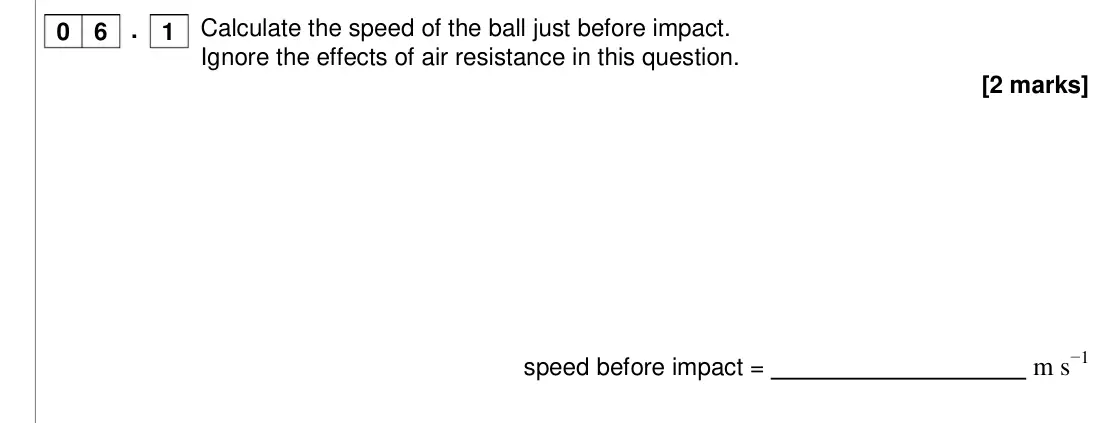
- Specimen, Unit 1, Q06.1 (2 marks): Spectacle lenses may be tested for shock resistance by dropping a small steel ball onto the lens, as shown in Figure 2, and then checking the lens for damage. Figure 2 0 6 diameter
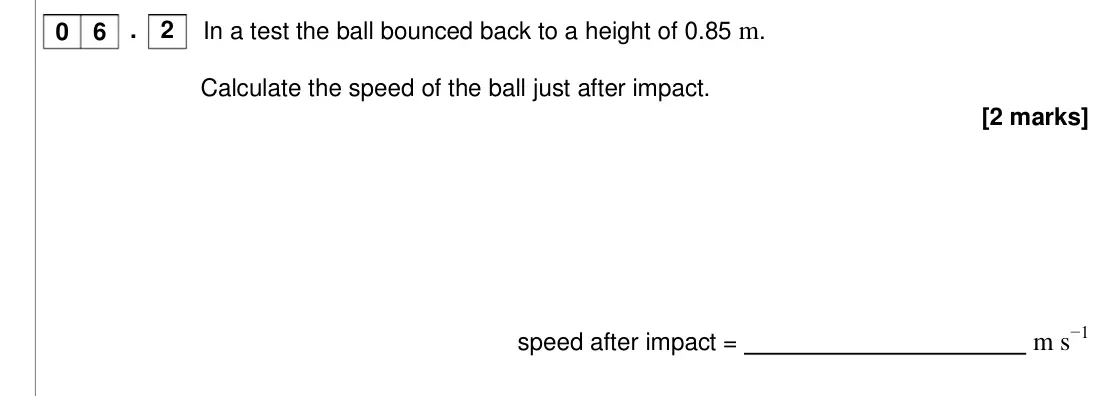
- Specimen, Unit 1, Q06.2 (2 marks): Spectacle lenses may be tested for shock resistance by dropping a small steel ball onto the lens, as shown in Figure 2, and then checking the lens for damage. Figure 2 0 6 diameter
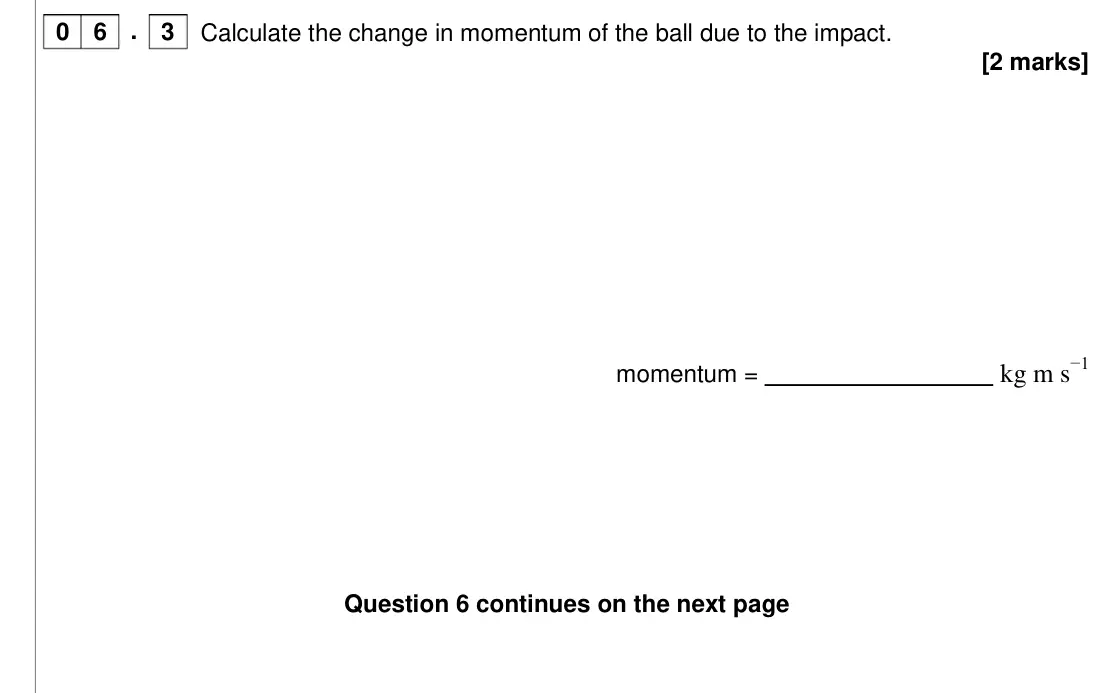
- Specimen, Unit 1, Q06.3 (2 marks): Spectacle lenses may be tested for shock resistance by dropping a small steel ball onto the lens, as shown in Figure 2, and then checking the lens for damage. Figure 2 0 6 diameter
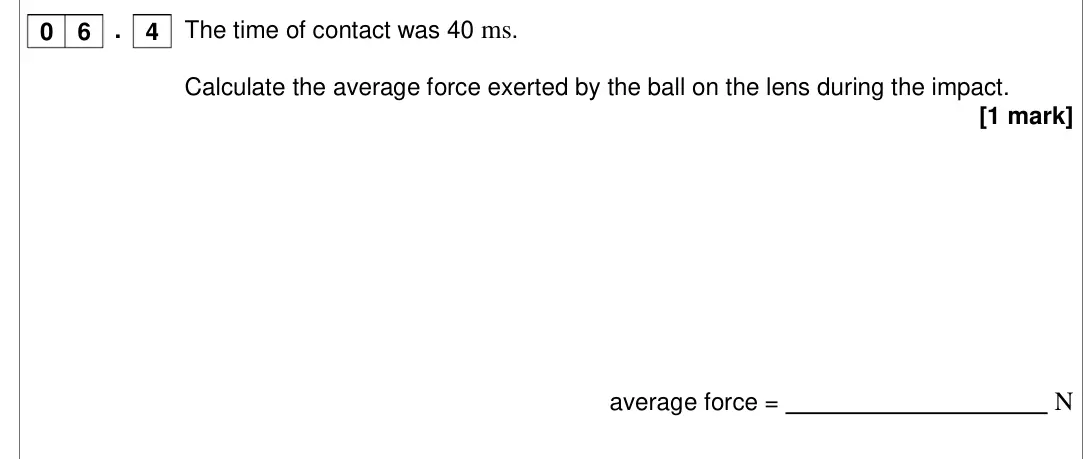
- Specimen, Unit 1, Q06.4 (1 mark): Spectacle lenses may be tested for shock resistance by dropping a small steel ball onto the lens, as shown in Figure 2, and then checking the lens for damage. Figure 2 0 6 diameter
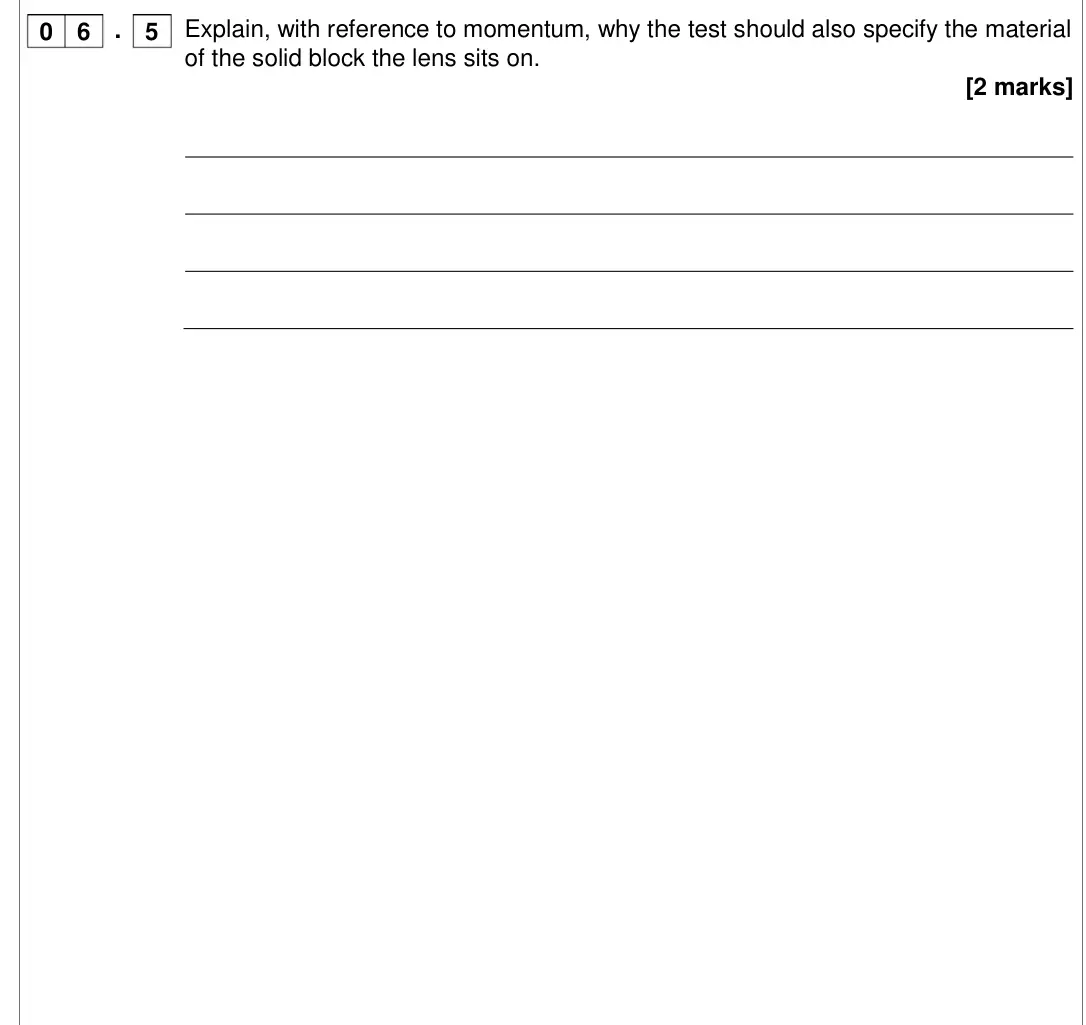
- Specimen, Unit 1, Q06.5 (2 marks): Spectacle lenses may be tested for shock resistance by dropping a small steel ball onto the lens, as shown in Figure 2, and then checking the lens for damage. Figure 2 0 6 diameter
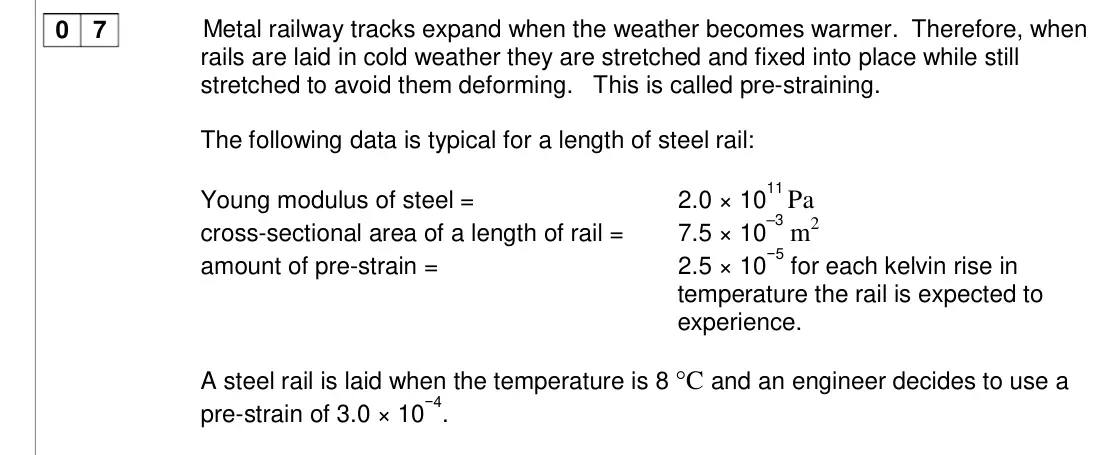
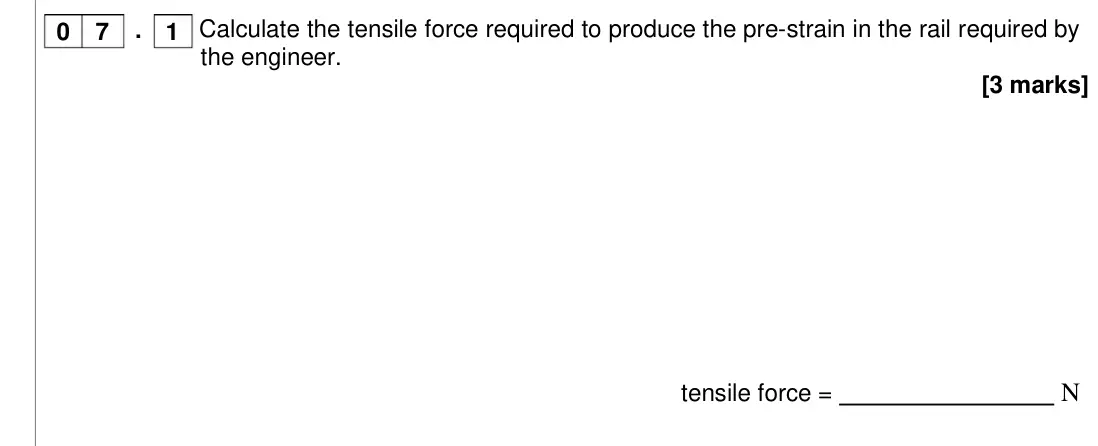
- Specimen, Unit 1, Q07.1 (3 marks): Metal railway tracks expand when the weather becomes warmer. Therefore, when rails are laid in cold weather they are stretched and fixed into place while still stretched to avoid t
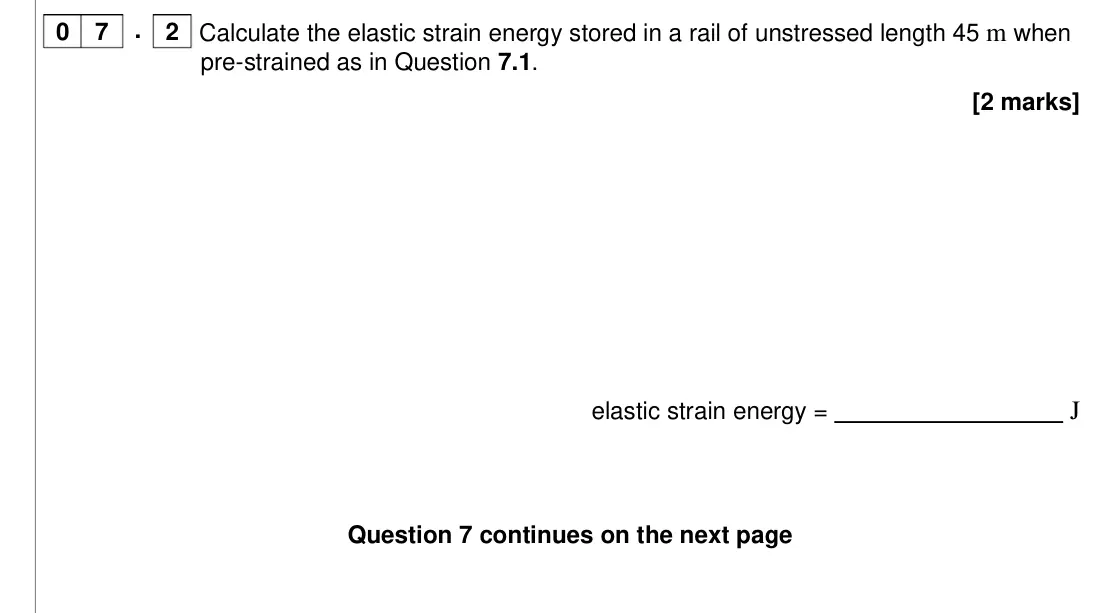
- Specimen, Unit 1, Q07.2 (2 marks): Metal railway tracks expand when the weather becomes warmer. Therefore, when rails are laid in cold weather they are stretched and fixed into place while still stretched to avoid t
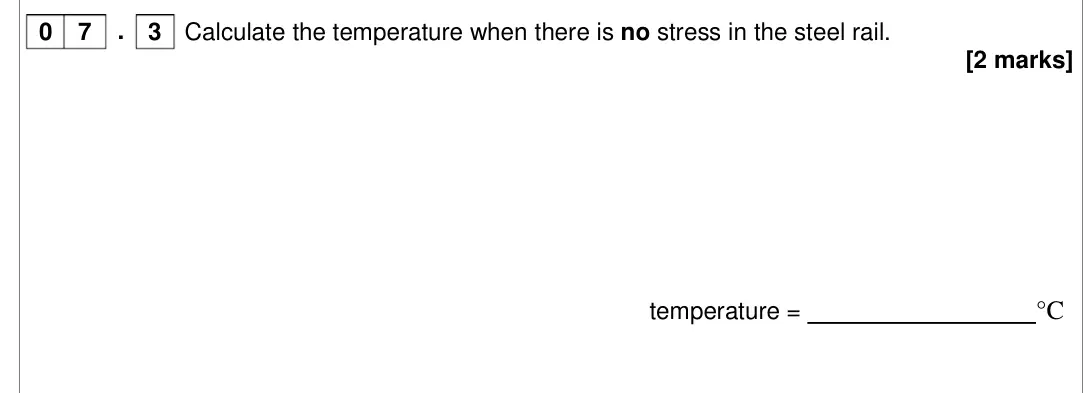
- Specimen, Unit 1, Q07.3 (2 marks): Metal railway tracks expand when the weather becomes warmer. Therefore, when rails are laid in cold weather they are stretched and fixed into place while still stretched to avoid t
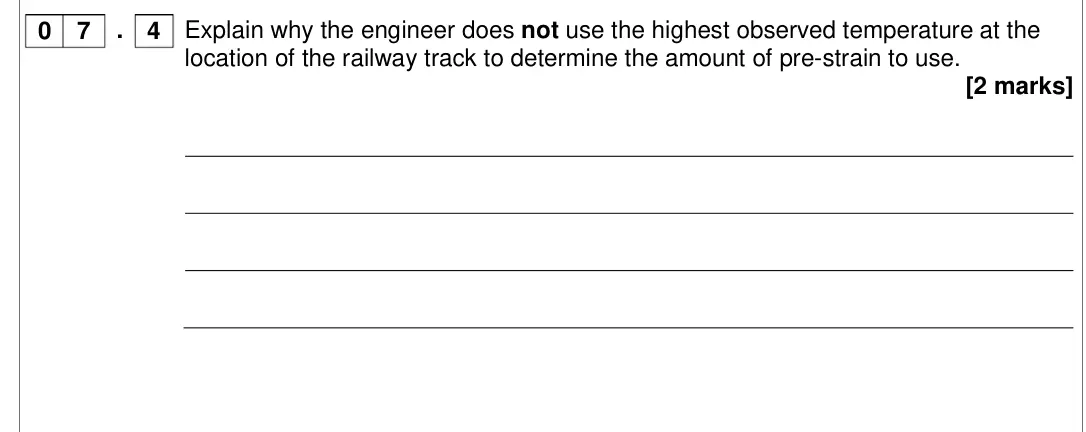
- Specimen, Unit 1, Q07.4 (2 marks): Metal railway tracks expand when the weather becomes warmer. Therefore, when rails are laid in cold weather they are stretched and fixed into place while still stretched to avoid t
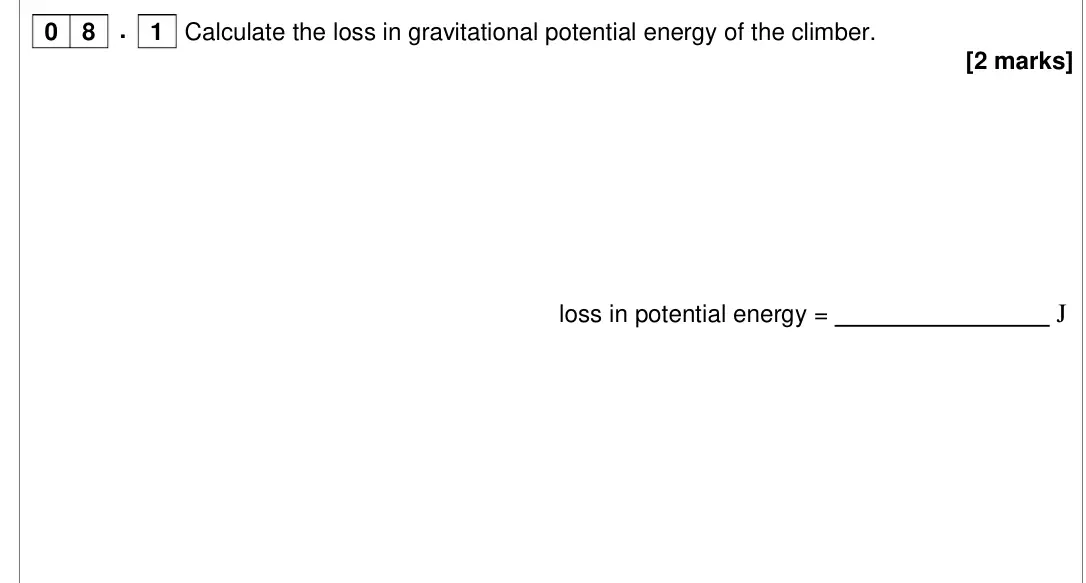
- Specimen, Unit 1, Q08.1 (2 marks): A climber falls 2.3 m before being stopped by his climbing rope that is secured above him. The weight of the climber is 840 N. 0 8 Calculate the loss in gravitational potential ene
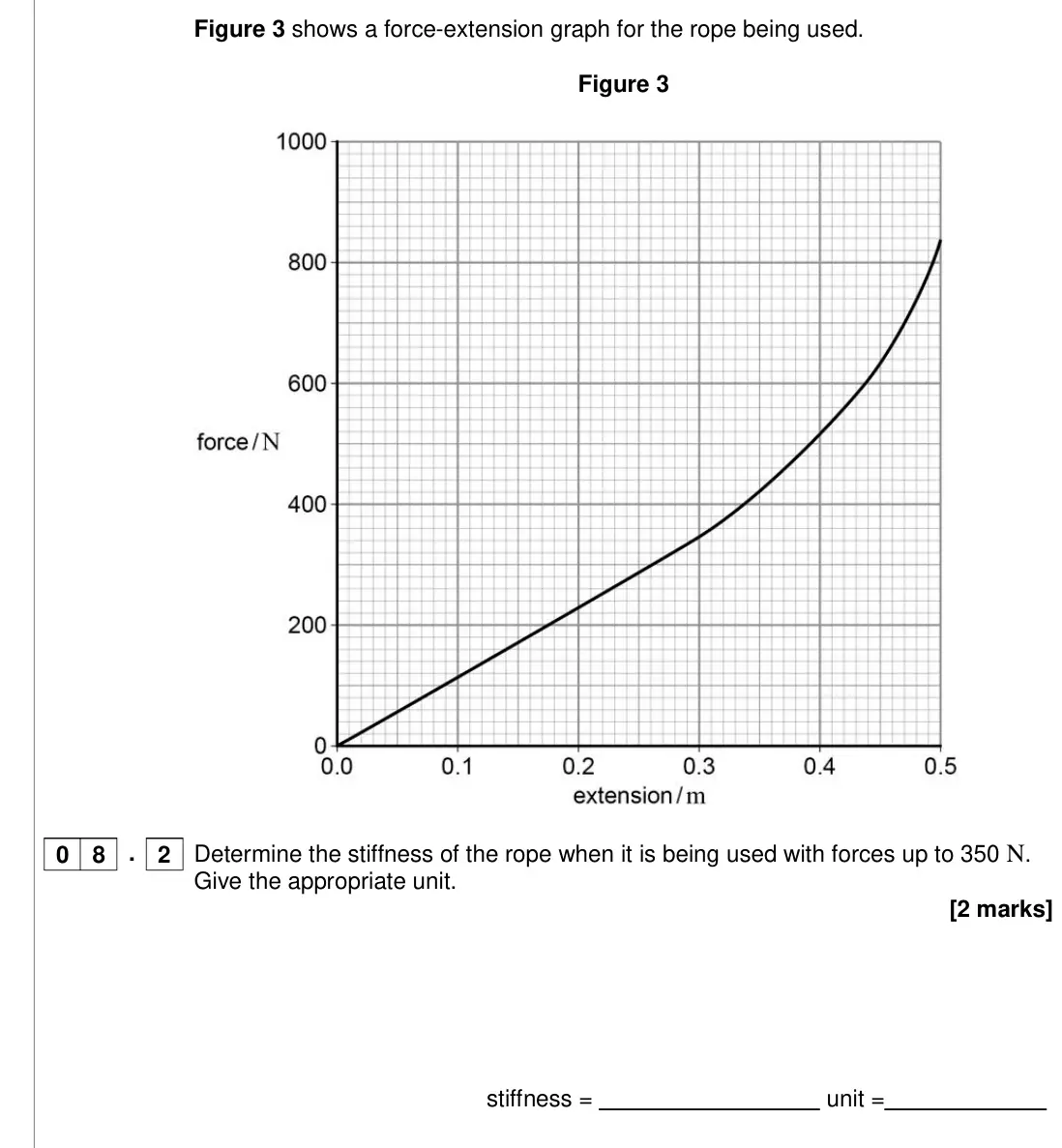
- Specimen, Unit 1, Q08.2 (2 marks): A climber falls 2.3 m before being stopped by his climbing rope that is secured above him. The weight of the climber is 840 N. 0 8 Figure 3 shows a force-extension graph for the ro
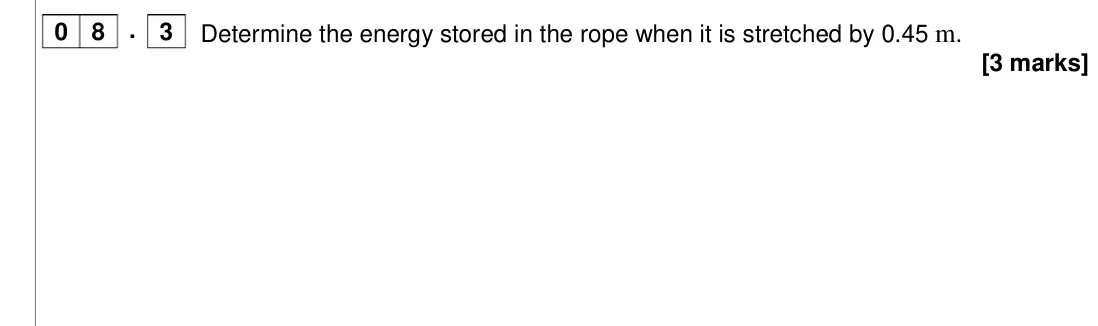
- Specimen, Unit 1, Q08.3 (3 marks): A climber falls 2.3 m before being stopped by his climbing rope that is secured above him. The weight of the climber is 840 N. 0 8 Determine the energy stored in the rope when it i
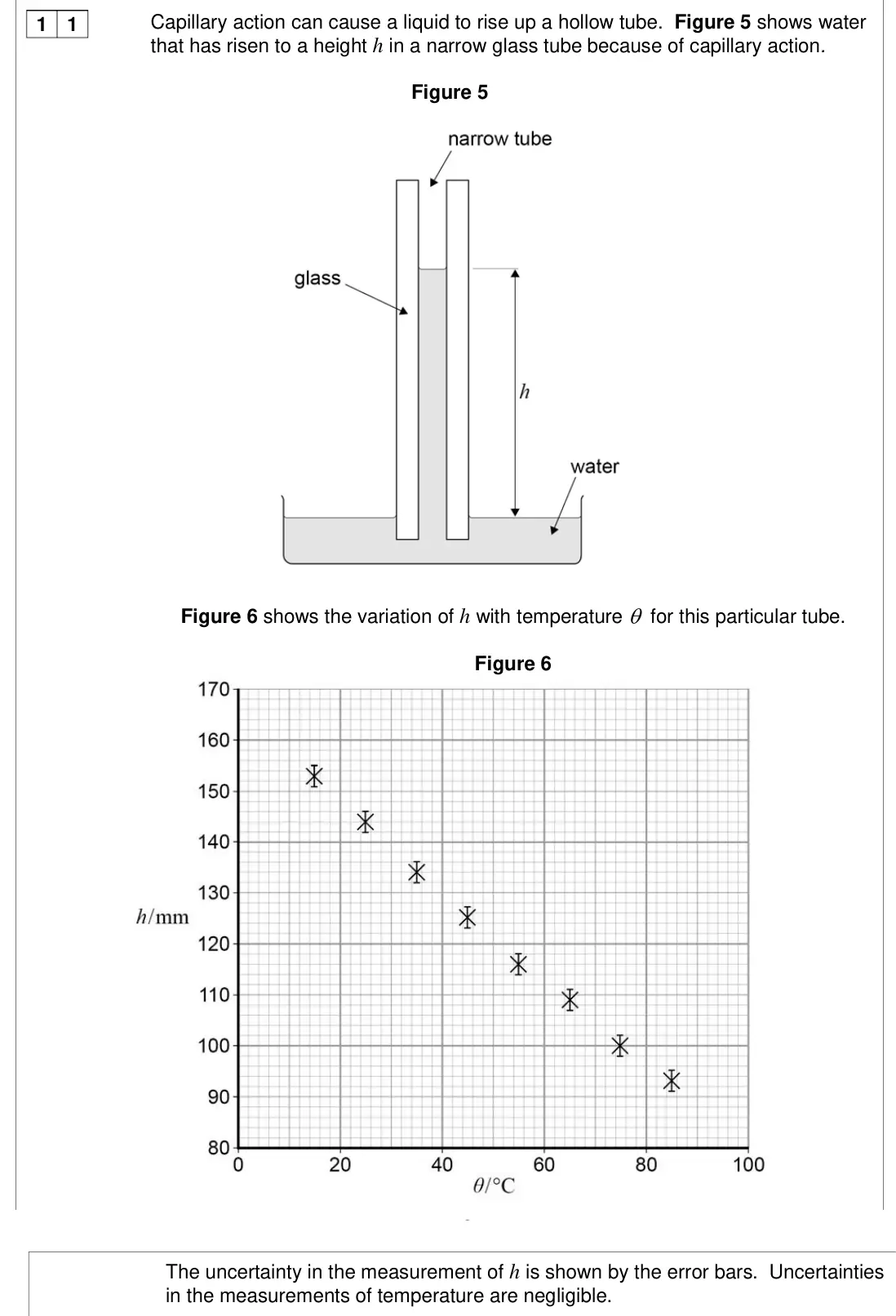
- Specimen, Unit 1, Q11.1 (2 marks): Capillary action can cause a liquid to rise up a hollow tube. Figure 5 shows water that has risen to a height h in a narrow glass tube because of capillary action. Figure 5 Figure
- Specimen, Unit 1, Q11.2 (2 marks): Capillary action can cause a liquid to rise up a hollow tube. Figure 5 shows water that has risen to a height h in a narrow glass tube because of capillary action. Figure 5 Figure
- Specimen, Unit 1, Q11.3 (3 marks): Capillary action can cause a liquid to rise up a hollow tube. Figure 5 shows water that has risen to a height h in a narrow glass tube because of capillary action. Figure 5 Figure
- Specimen, Unit 1, Q11.4 (2 marks): Capillary action can cause a liquid to rise up a hollow tube. Figure 5 shows water that has risen to a height h in a narrow glass tube because of capillary action. Figure 5 Figure
- Specimen, Unit 1, Q11.5 (2 marks): Capillary action can cause a liquid to rise up a hollow tube. Figure 5 shows water that has risen to a height h in a narrow glass tube because of capillary action. Figure 5 Figure
- Specimen, Unit 1, Q11.6 (1 mark): Capillary action can cause a liquid to rise up a hollow tube. Figure 5 shows water that has risen to a height h in a narrow glass tube because of capillary action. Figure 5 Figure
- Specimen, Unit 1, Q12 (1 mark): Only one answer per question is allowed. For each answer completely fill in the circle alongside the appropriate answer. If you want to change your answer you must cross out your o
- Specimen, Unit 1, Q13 (1 mark): An object is accelerated from rest by a constant force F for a time t. Which graphs represent the variation of time with the change in the kinetic energy and the change in momentum
- Specimen, Unit 1, Q14 (1 mark): An object is dropped from a cliff. How far does the object fall in the third second? Assume that g = 10 m s−2. [1 mark] A 10 m B 20 m C 25 m 1 4 9
- Specimen, Unit 1, Q15 (1 mark): A body falls freely, with negligible air resistance. Which quantity is its rate of change of momentum? [1 mark] A kinetic energy B mass C power D weight 1 5
- Specimen, Unit 1, Q16 (1 mark): A firework rocket is fired vertically into the air and explodes at its highest point. What are the changes to the total kinetic energy of the rocket and the total momentum of the r
- Specimen, Unit 1, Q17 (1 mark): A lift and its passengers with a total mass of 500 kg accelerates upwards at 2 m s−2 as shown. Assume that g = 10 m s−2. What is the tension in the cable? [1 mark] A 1000 N B 4000
- Specimen, Unit 1, Q19 (1 mark): A car accelerates uniformly from rest along a straight road. Which graph shows the variation of displacement x of the car with time t? [1 mark] 1 9 A B C D x t A x t x t x t B C D
- Specimen, Unit 1, Q20 (1 mark): Which of the following statements is correct? [1 mark] The force acting on an object is equivalent to: A its change of momentum. B the impulse it receives per second. C the energy
- Specimen, Unit 1, Q21 (1 mark): A load of 3.0 N is attached to a spring of negligible mass and spring constant 15 N m−1. What is the energy stored in the spring? [1 mark] A 0.3 J B 0.6 J C 0.9 J D 1.2 J 2 1
- Specimen, Unit 1, Q22 (1 mark): The diagram shows how the stress varies with strain for metal specimens X and Y which are different. Both specimens were stretched until they broke. Which of the following is not c
- Specimen, Unit 1, Q23 (1 mark): Two vertical copper wires X and Y of equal length are joined as shown. Y has a greater diameter than X. A weight W is hung from the lower end of Y. Which of the following is correc
- Specimen, Unit 1, Q24 (1 mark): What is the relationship between the distance y travelled by an object falling freely from rest and the time x the object has been falling? [1 mark] A y is proportional to x² B y i
- Specimen, Unit 5, Q04.1 (2 marks): A Simplified Aid for Extravehicular activity Rescue (a SAFER), is a device to rescue astronauts if they are accidently detached from their safety line when performing tasks outside
- Specimen, Unit 5, Q04.2 (3 marks): A Simplified Aid for Extravehicular activity Rescue (a SAFER), is a device to rescue astronauts if they are accidently detached from their safety line when performing tasks outside
- Specimen, Unit 5, Q04.3 (3 marks): A Simplified Aid for Extravehicular activity Rescue (a SAFER), is a device to rescue astronauts if they are accidently detached from their safety line when performing tasks outside
- Specimen, Unit 5, Q04.4 (2 marks): A Simplified Aid for Extravehicular activity Rescue (a SAFER), is a device to rescue astronauts if they are accidently detached from their safety line when performing tasks outside
- Specimen, Unit 5, Q04.5 (3 marks): A Simplified Aid for Extravehicular activity Rescue (a SAFER), is a device to rescue astronauts if they are accidently detached from their safety line when performing tasks outside
- Specimen, Unit 5, Q04.6 (3 marks): A Simplified Aid for Extravehicular activity Rescue (a SAFER), is a device to rescue astronauts if they are accidently detached from their safety line when performing tasks outside
- Specimen, Unit 5, Q04.7 (3 marks): A Simplified Aid for Extravehicular activity Rescue (a SAFER), is a device to rescue astronauts if they are accidently detached from their safety line when performing tasks outside
- Specimen, Unit 5, Q04.8 (1 mark): A Simplified Aid for Extravehicular activity Rescue (a SAFER), is a device to rescue astronauts if they are accidently detached from their safety line when performing tasks outside
- Specimen, Unit 5, Q07.2 (3 marks): 22 Figure 7 shows a ride in a theme park. Figure 7 The harness in which three riders are strapped is supported by four steel cables. An advertisement for the ride states that the r
- Specimen, Unit 5, Q07.3 (3 marks): 22 Figure 7 shows a ride in a theme park. Figure 7 The harness in which three riders are strapped is supported by four steel cables. An advertisement for the ride states that the r
Questions, mark schemes and examiner’s reports are © OxfordAQA, from their published past papers. Plumi isn’t affiliated with any exam board. Want whole papers? OxfordAQA International A Level Physics past papers.
The Plumi iPad app also offers exam-style questions with AI feedback on your handwritten working.