Skip to content
Android waitlistTry on iPad
Get started

Exponential change: OxfordAQA International A Level Physics questions

OxfordAQA International A Level Physics past-paper questions on 3.9 Exponential change, Official specimen papers for Units 1–5, with mark schemes and examiner’s reports where available.

Past paper difficulty
Paper
All papers
Exam
All years
Calculations

Loading the full question list…

219 questions

  1. Q07.1

    Specimen · Unit 3 · ★

    The whole paper ↗
    1
    Setup for original question 07.1

    Loading the question setup…

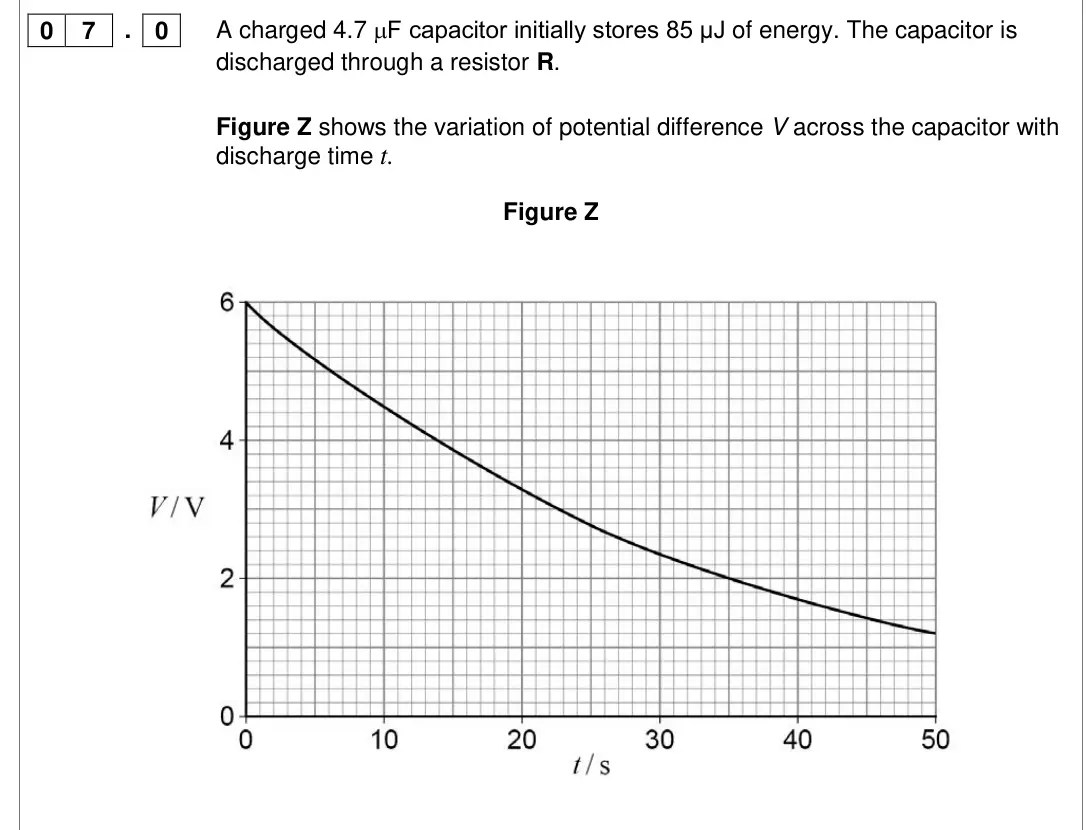
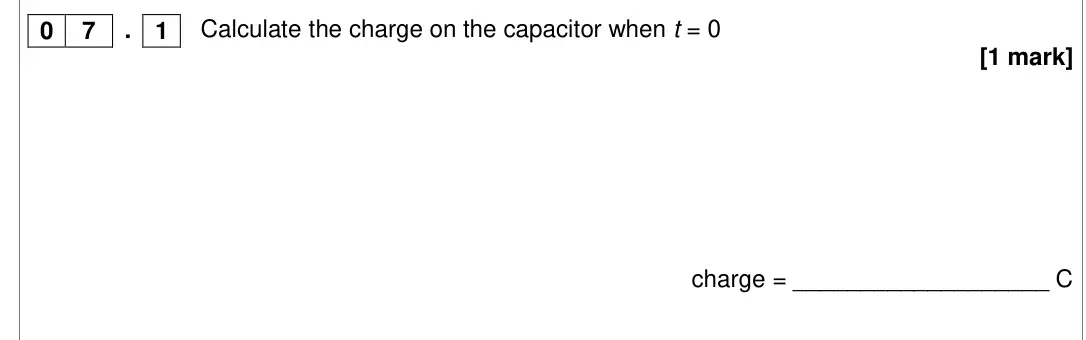
    Original question 07.1: A charged 4.7 µF capacitor initially stores 85 μJ of energy. The capacitor is discharged through a resistor R. Figure Z shows the variation of potential difference V across the cap

    Loading the question…

  2. Q07.2

    Specimen · Unit 3 · ★★★

    The whole paper ↗
    2
    Setup for original question 07.2

    Loading the question setup…

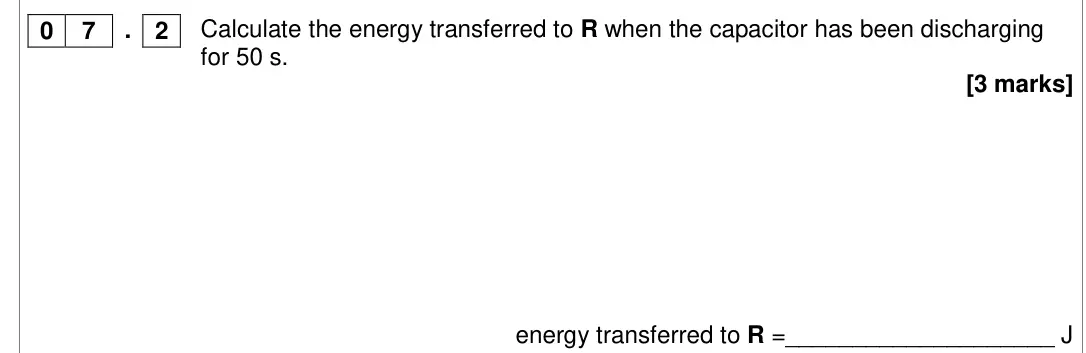
    Original question 07.2: A charged 4.7 µF capacitor initially stores 85 μJ of energy. The capacitor is discharged through a resistor R. Figure Z shows the variation of potential difference V across the cap

    Loading the question…

  3. Q07.3

    Specimen · Unit 3 · ★★★★

    The whole paper ↗
    3
    Setup for original question 07.3

    Loading the question setup…

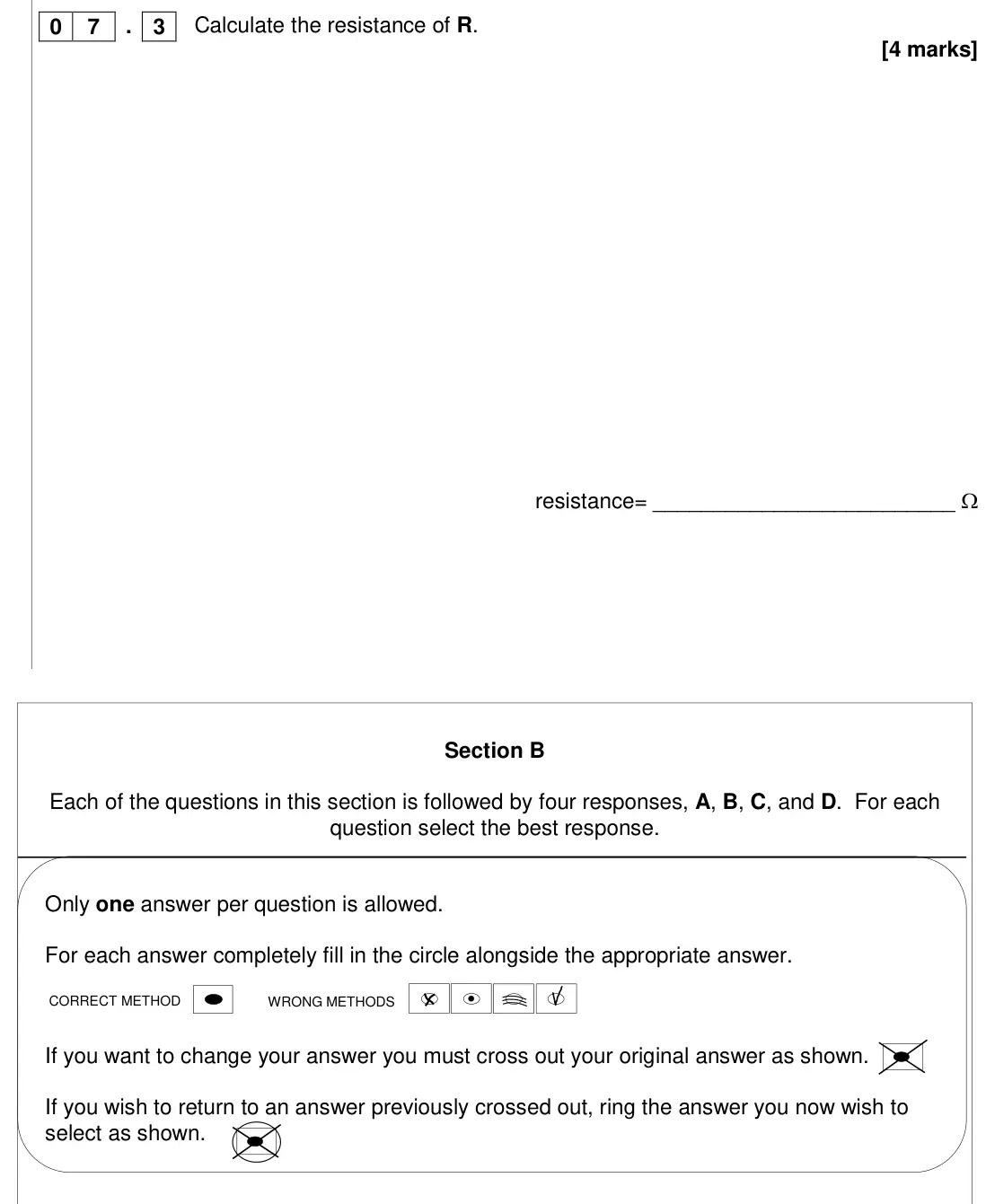
    Original question 07.3: A charged 4.7 µF capacitor initially stores 85 μJ of energy. The capacitor is discharged through a resistor R. Figure Z shows the variation of potential difference V across the cap

    Loading the question…

  4. Q18

    Specimen · Unit 3 · ★★

    The whole paper ↗
    4
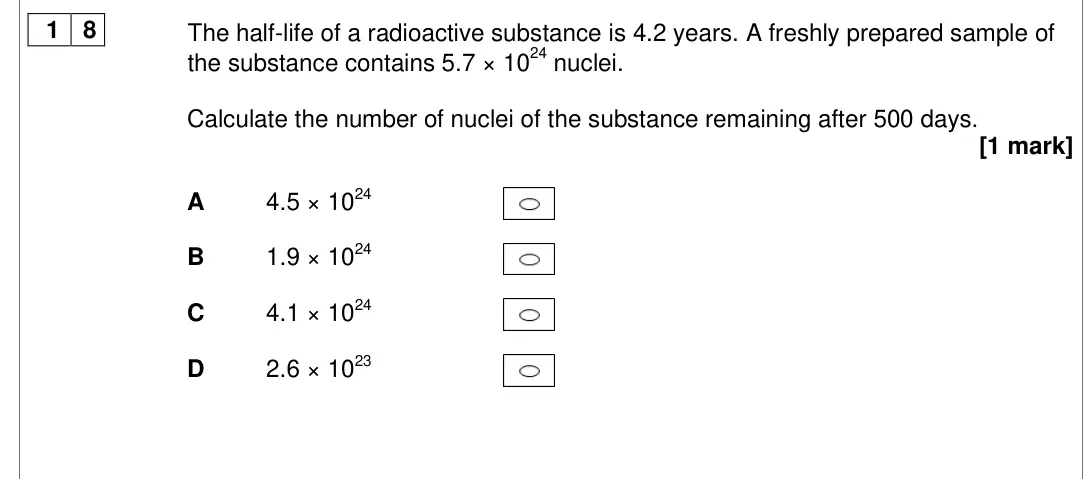
    Original question 18: The half-life of a radioactive substance is 4.2 years. A freshly prepared sample of the substance contains 5.7 × 10 24 nuclei. Calculate the number of nuclei of the substance remai

    Loading the question…

    Your answer
  5. Q02.2

    Specimen · Unit 5 · ★

    The whole paper ↗
    5
    Setup for original question 02.2

    Loading the question setup…

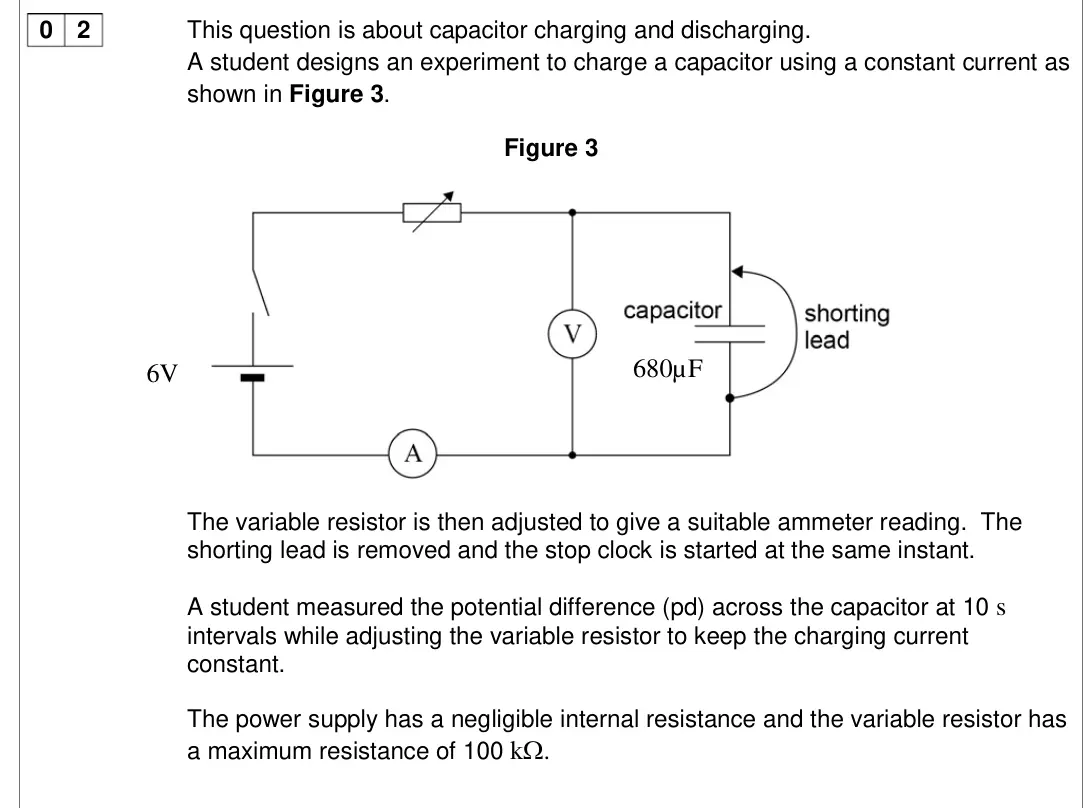
    Original question 02.2: This question is about capacitor charging and discharging. A student designs an experiment to charge a capacitor using a constant current as shown in Figure 3. Figure 3 The variabl

    Loading the question…

  6. Q02.3

    Specimen · Unit 5 · ★★★

    The whole paper ↗
    6
    Setup for original question 02.3

    Loading the question setup…

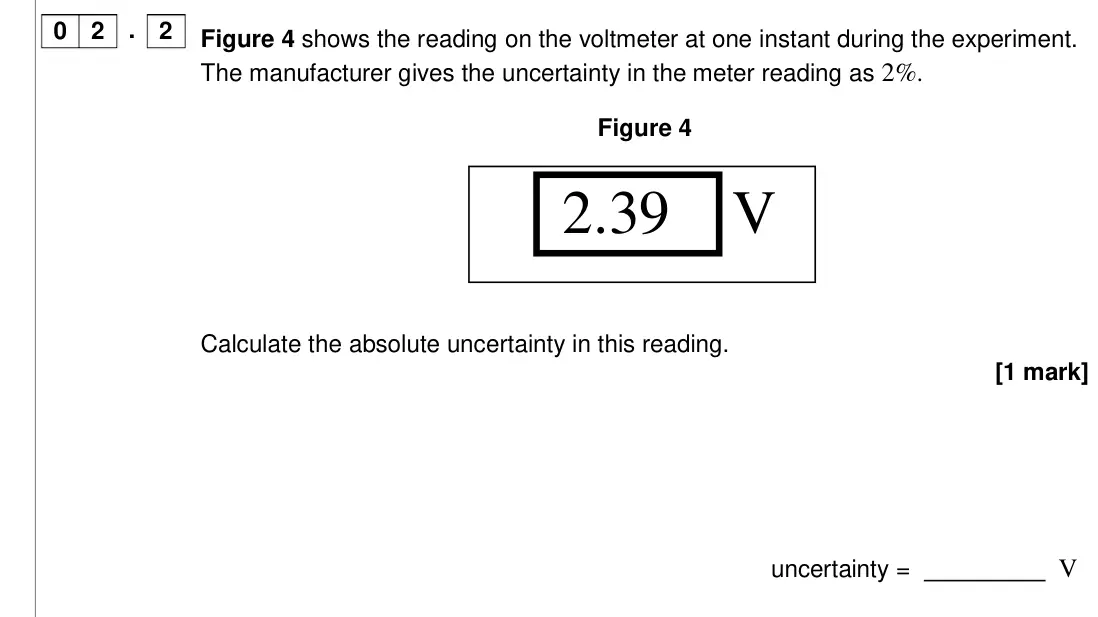
    Original question 02.3: This question is about capacitor charging and discharging. A student designs an experiment to charge a capacitor using a constant current as shown in Figure 3. Figure 3 The variabl

    Loading the question…

  7. Q02.4

    Specimen · Unit 5 · ★★

    The whole paper ↗
    7
    Setup for original question 02.4

    Loading the question setup…

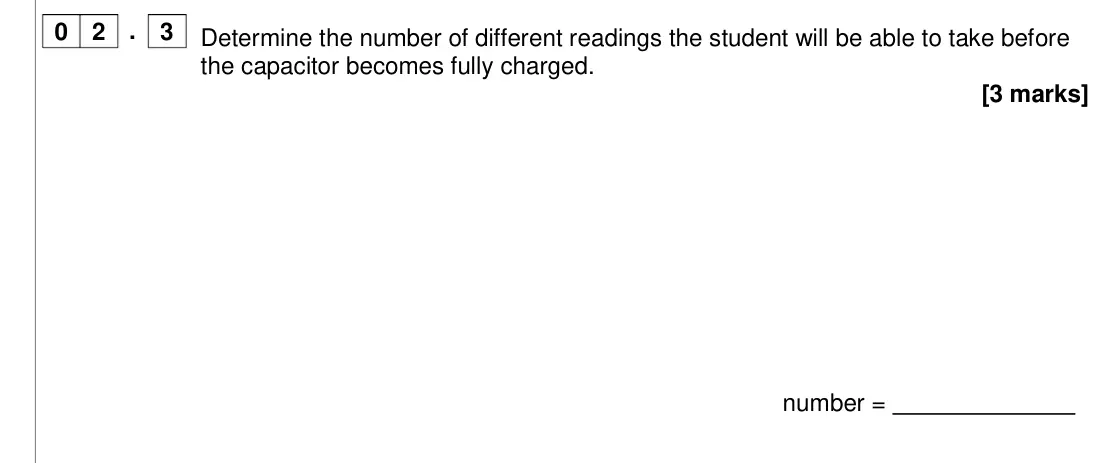
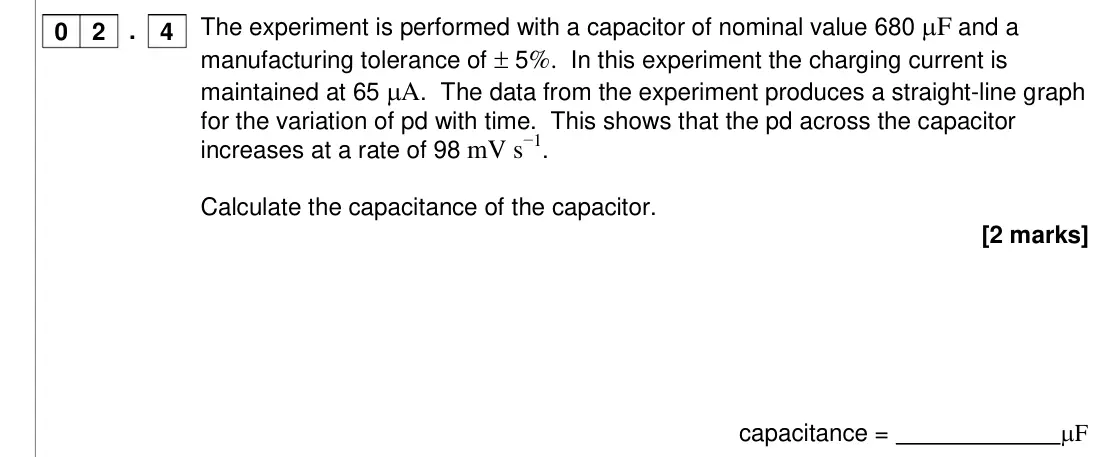
    Original question 02.4: This question is about capacitor charging and discharging. A student designs an experiment to charge a capacitor using a constant current as shown in Figure 3. Figure 3 The variabl

    Loading the question…

  8. Q02.5

    Specimen · Unit 5 · ★★

    The whole paper ↗
    8
    Setup for original question 02.5

    Loading the question setup…

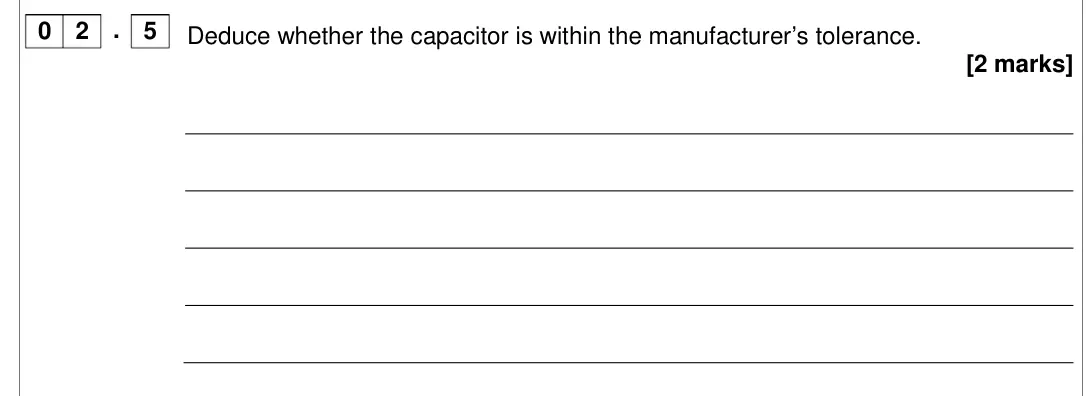
    Original question 02.5: This question is about capacitor charging and discharging. A student designs an experiment to charge a capacitor using a constant current as shown in Figure 3. Figure 3 The variabl

    Loading the question…

  9. Q02.6

    Specimen · Unit 5 · ★★★★

    The whole paper ↗
    9
    Setup for original question 02.6

    Loading the question setup…

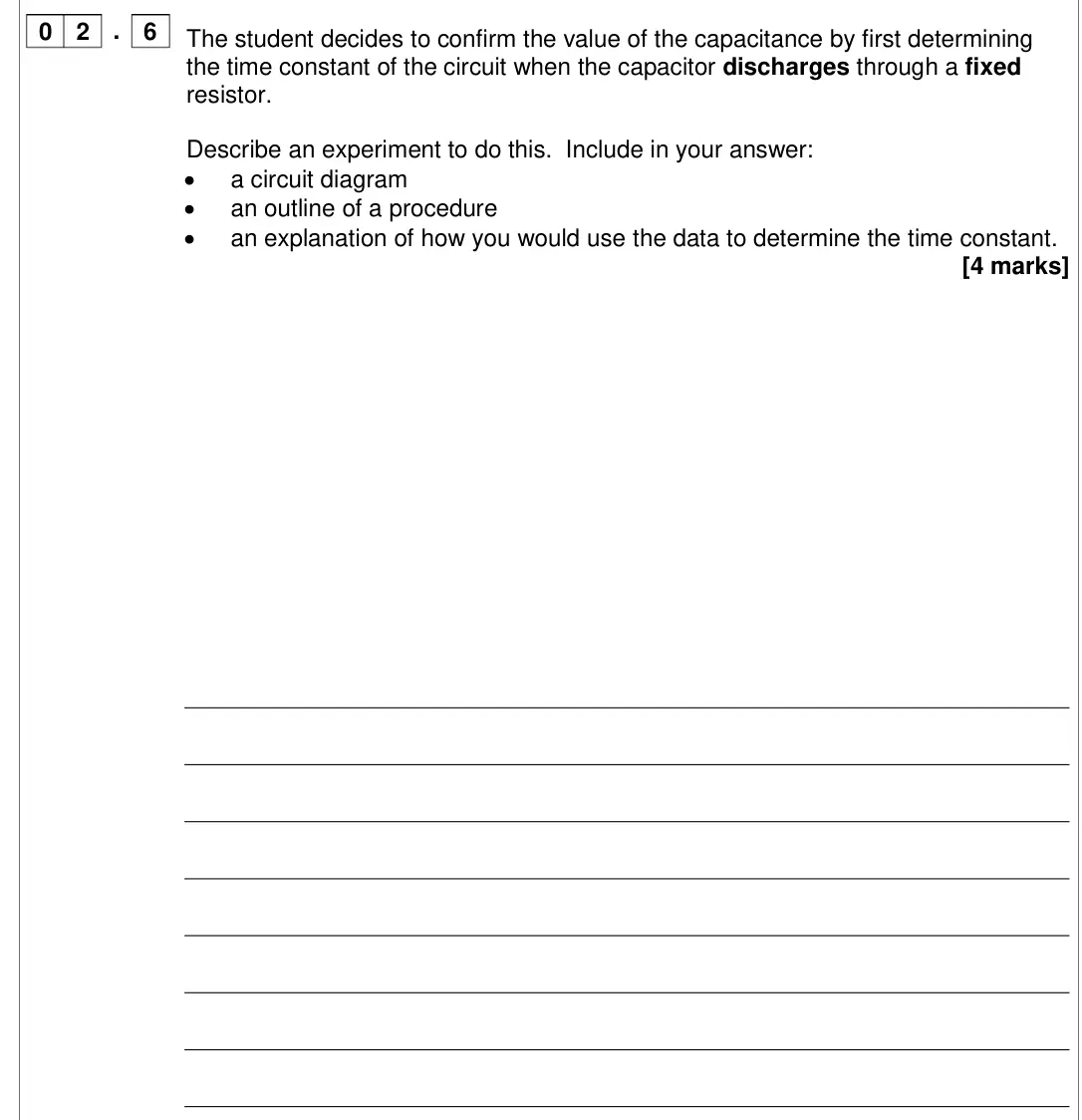
    Original question 02.6: This question is about capacitor charging and discharging. A student designs an experiment to charge a capacitor using a constant current as shown in Figure 3. Figure 3 The variabl

    Loading the question…

All 9 questions on Exponential change, as a list
  1. Specimen, Unit 3, Q07.1 (1 mark): A charged 4.7 µF capacitor initially stores 85 μJ of energy. The capacitor is discharged through a resistor R. Figure Z shows the variation of potential difference V across the cap
  2. Specimen, Unit 3, Q07.2 (3 marks): A charged 4.7 µF capacitor initially stores 85 μJ of energy. The capacitor is discharged through a resistor R. Figure Z shows the variation of potential difference V across the cap
  3. Specimen, Unit 3, Q07.3 (4 marks): A charged 4.7 µF capacitor initially stores 85 μJ of energy. The capacitor is discharged through a resistor R. Figure Z shows the variation of potential difference V across the cap
  4. Specimen, Unit 3, Q18 (1 mark): The half-life of a radioactive substance is 4.2 years. A freshly prepared sample of the substance contains 5.7 × 10 24 nuclei. Calculate the number of nuclei of the substance remai
  5. Specimen, Unit 5, Q02.2 (1 mark): This question is about capacitor charging and discharging. A student designs an experiment to charge a capacitor using a constant current as shown in Figure 3. Figure 3 The variabl
  6. Specimen, Unit 5, Q02.3 (3 marks): This question is about capacitor charging and discharging. A student designs an experiment to charge a capacitor using a constant current as shown in Figure 3. Figure 3 The variabl
  7. Specimen, Unit 5, Q02.4 (2 marks): This question is about capacitor charging and discharging. A student designs an experiment to charge a capacitor using a constant current as shown in Figure 3. Figure 3 The variabl
  8. Specimen, Unit 5, Q02.5 (2 marks): This question is about capacitor charging and discharging. A student designs an experiment to charge a capacitor using a constant current as shown in Figure 3. Figure 3 The variabl
  9. Specimen, Unit 5, Q02.6 (4 marks): This question is about capacitor charging and discharging. A student designs an experiment to charge a capacitor using a constant current as shown in Figure 3. Figure 3 The variabl

Questions, mark schemes and examiner’s reports are © OxfordAQA, from their published past papers. Plumi isn’t affiliated with any exam board. Want whole papers? OxfordAQA International A Level Physics past papers.

The Plumi iPad app also offers exam-style questions with AI feedback on your handwritten working.