CAIE A‑Level Physics questions by topic
Every question from the CAIE AS & A Level Physics (9702) papers Cambridge International publishes, June 2024 and the specimen papers, part by part. Cambridge keeps its other papers on its School Support Hub, for schools. Filter by topic or paper, open the mark scheme under any question, and download a set as a PDF.
Find questions266
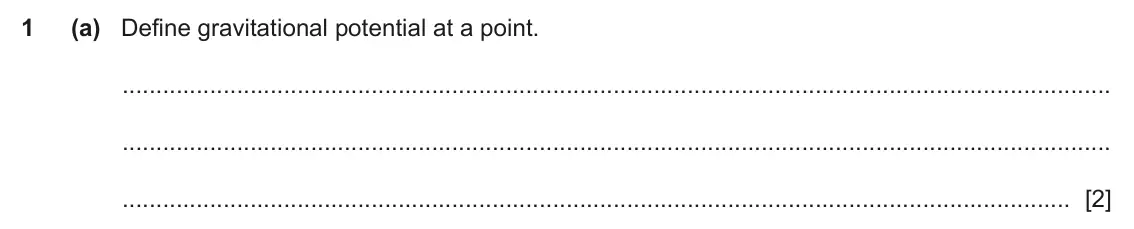
Q1(a)
The whole paper ↗![June 2024 Paper 4, question 1(a): Define gravitational potential at a point. [2]](https://pub-e8a9dbab8e2a4d089f52b2a45e0d0b50.r2.dev/bank/970241-jun24-01-a-qp.webp)
Q1(b)(i)
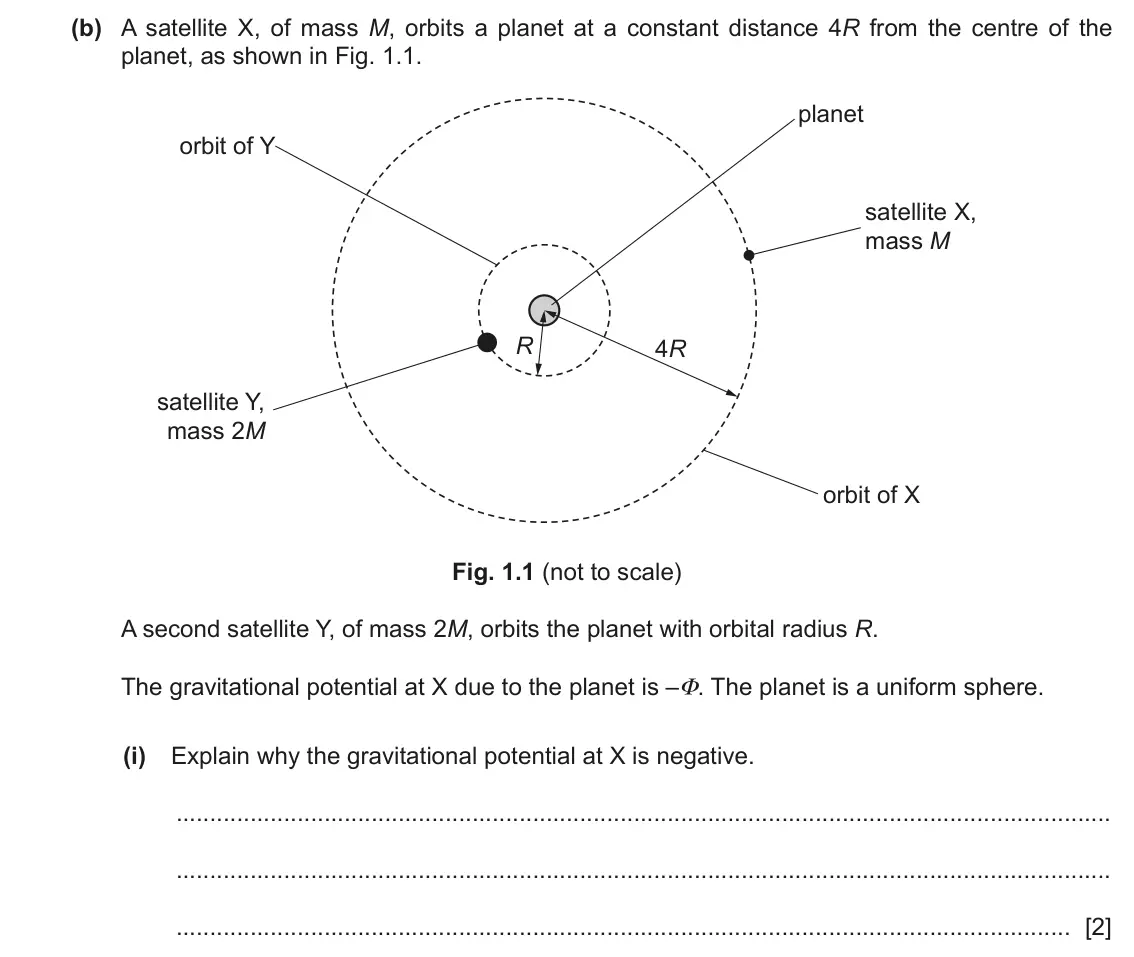
The whole paper ↗![June 2024 Paper 4, question 1(b)(i): Explain why the gravitational potential at X is negative. [2]](https://pub-e8a9dbab8e2a4d089f52b2a45e0d0b50.r2.dev/bank/970241-jun24-01-bi-qp.webp)
Q1(b)(ii)
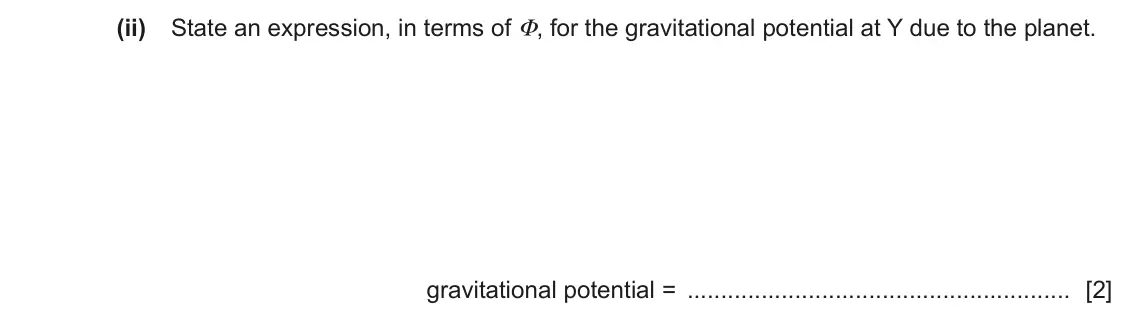
The whole paper ↗![June 2024 Paper 4, question 1(b)(ii): State an expression, in terms of Φ, for the gravitational potential at Y due to the planet. gravitational potential = [2]](https://pub-e8a9dbab8e2a4d089f52b2a45e0d0b50.r2.dev/bank/970241-jun24-01-bii-qp.webp)
Q1(b)(iii)
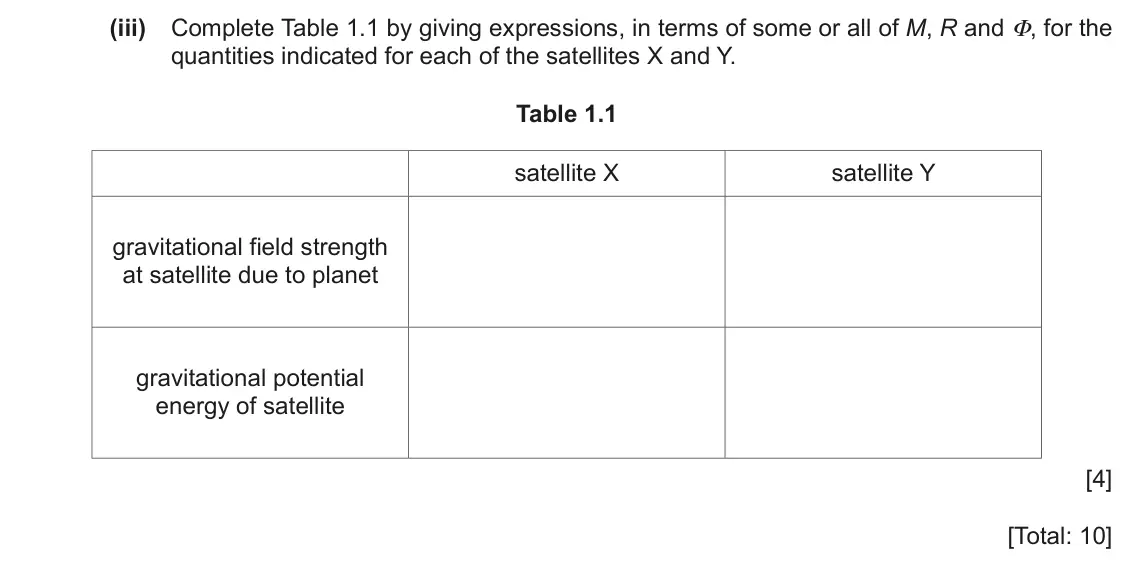
The whole paper ↗
Q2(a)(i)
The whole paper ↗![June 2024 Paper 4, question 2(a)(i): State the magnitude and unit of absolute zero on the thermodynamic temperature scale. [1]](https://pub-e8a9dbab8e2a4d089f52b2a45e0d0b50.r2.dev/bank/970241-jun24-02-ai-qp.webp)

Q2(a)(ii)
The whole paper ↗![June 2024 Paper 4, question 2(a)(ii): Explain why temperature measured using a laboratory liquid-in-glass thermometer does not give a measurement of thermodynamic temperature. [1]](https://pub-e8a9dbab8e2a4d089f52b2a45e0d0b50.r2.dev/bank/970241-jun24-02-aii-qp.webp)
Q2(b)(i)
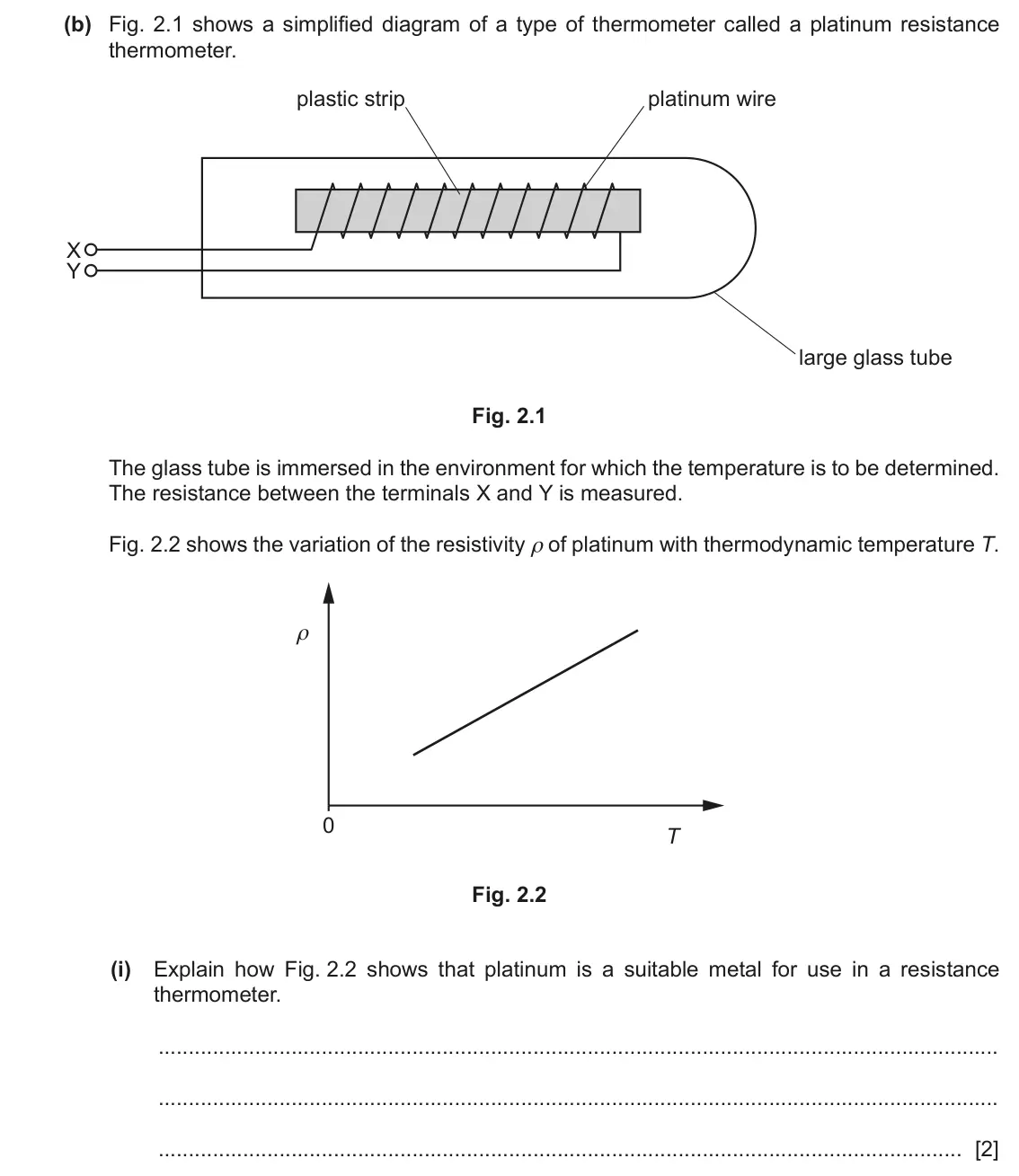
The whole paper ↗![June 2024 Paper 4, question 2(b)(i): Explain how Fig. 2.2 shows that platinum is a suitable metal for use in a resistance thermometer. [2]](https://pub-e8a9dbab8e2a4d089f52b2a45e0d0b50.r2.dev/bank/970241-jun24-02-bi-qp.webp)
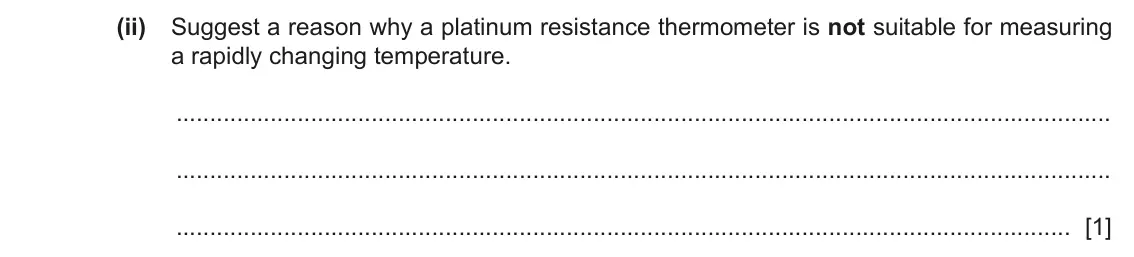
Q2(b)(ii)
The whole paper ↗![June 2024 Paper 4, question 2(b)(ii): Suggest a reason why a platinum resistance thermometer is not suitable for measuring a rapidly changing temperature. [1]](https://pub-e8a9dbab8e2a4d089f52b2a45e0d0b50.r2.dev/bank/970241-jun24-02-bii-qp.webp)
Q2(b)(iii)
The whole paper ↗![June 2024 Paper 4, question 2(b)(iii): Suggest a type of thermometer that is suitable for measuring a rapidly changing temperature. [1]](https://pub-e8a9dbab8e2a4d089f52b2a45e0d0b50.r2.dev/bank/970241-jun24-02-biii-qp.webp)
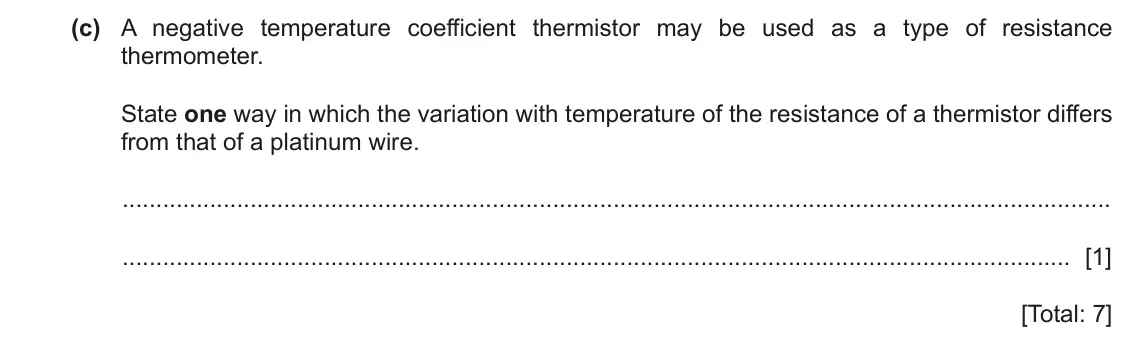
Q2(c)
The whole paper ↗
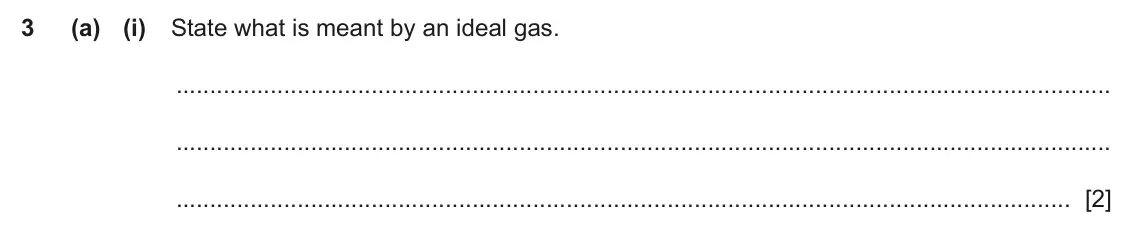
Q3(a)(i)
The whole paper ↗![June 2024 Paper 4, question 3(a)(i): State what is meant by an ideal gas. [2]](https://pub-e8a9dbab8e2a4d089f52b2a45e0d0b50.r2.dev/bank/970241-jun24-03-ai-qp.webp)
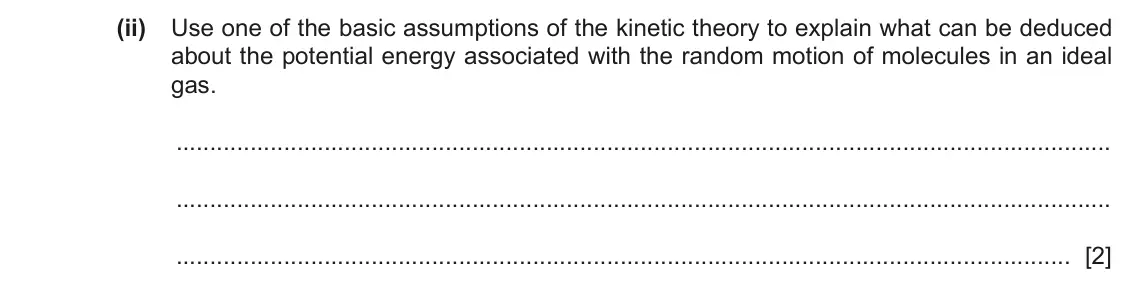
Q3(a)(ii)
The whole paper ↗
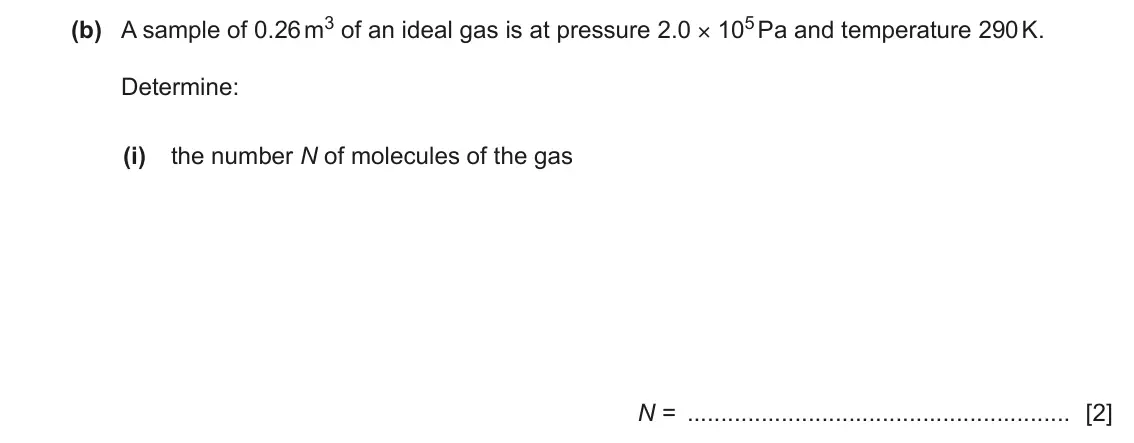
Q3(b)(i)
The whole paper ↗![June 2024 Paper 4, question 3(b)(i): the number N of molecules of the gas N = [2]](https://pub-e8a9dbab8e2a4d089f52b2a45e0d0b50.r2.dev/bank/970241-jun24-03-bi-qp.webp)
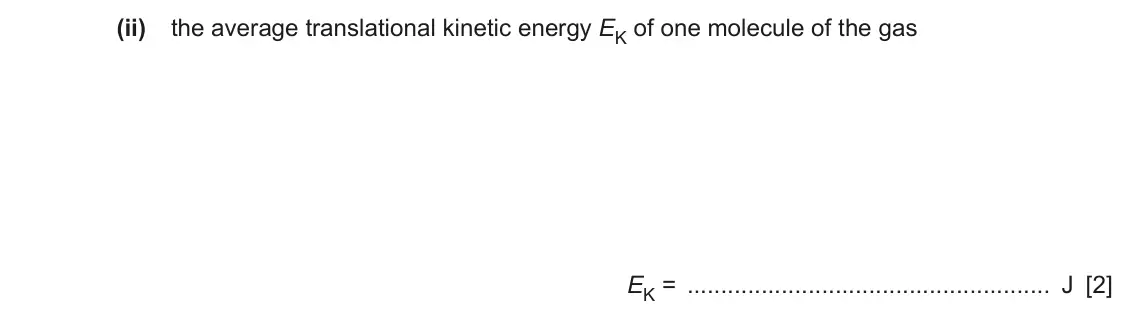
Q3(b)(ii)
The whole paper ↗![June 2024 Paper 4, question 3(b)(ii): the average translational kinetic energy EK of one molecule of the gas EK = J [2]](https://pub-e8a9dbab8e2a4d089f52b2a45e0d0b50.r2.dev/bank/970241-jun24-03-bii-qp.webp)
Q3(b)(iii)
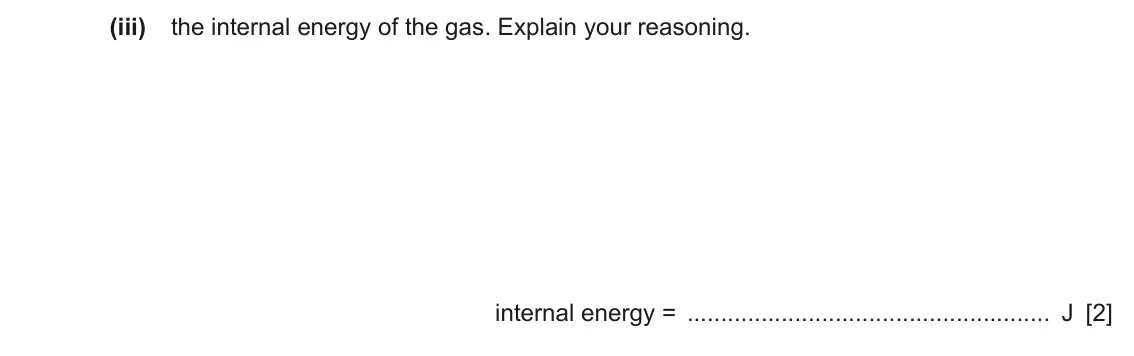
The whole paper ↗![June 2024 Paper 4, question 3(b)(iii): the internal energy of the gas. Explain your reasoning. internal energy = J [2]](https://pub-e8a9dbab8e2a4d089f52b2a45e0d0b50.r2.dev/bank/970241-jun24-03-biii-qp.webp)
Q3(c)
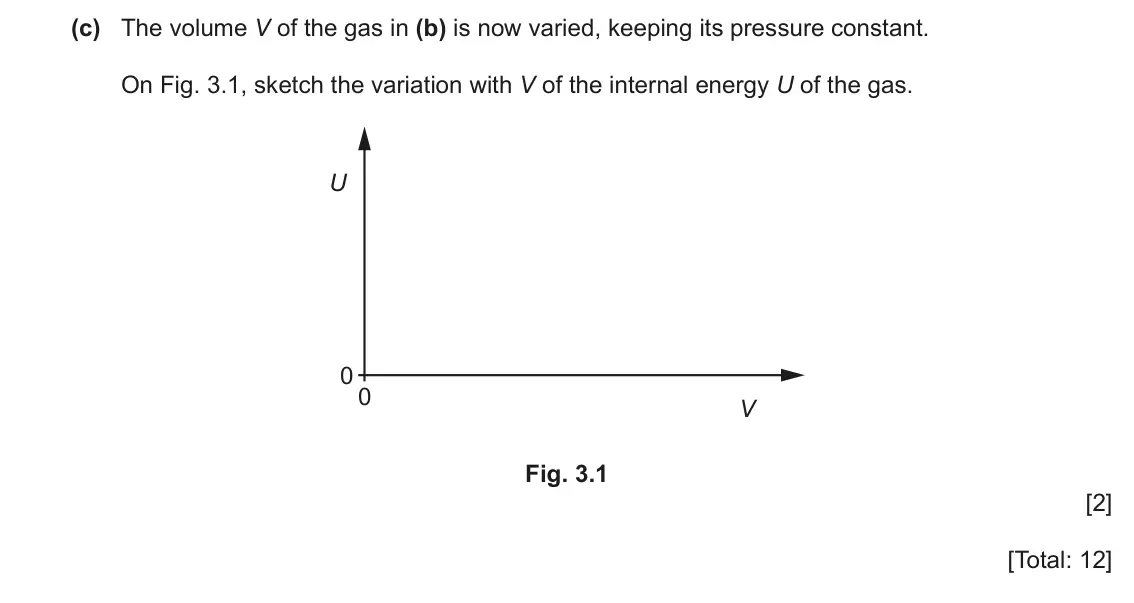
The whole paper ↗
Q4(a)
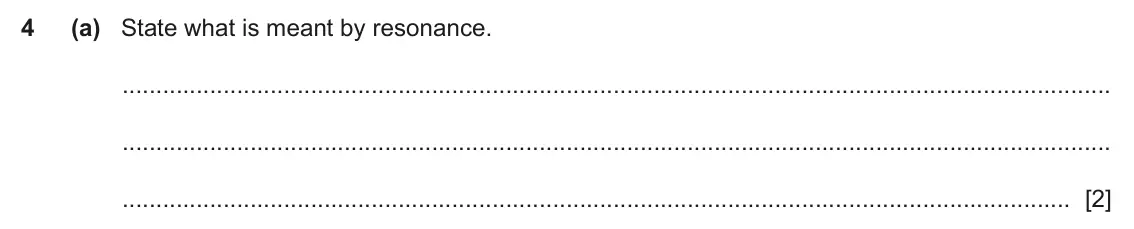
The whole paper ↗![June 2024 Paper 4, question 4(a): State what is meant by resonance. [2]](https://pub-e8a9dbab8e2a4d089f52b2a45e0d0b50.r2.dev/bank/970241-jun24-04-a-qp.webp)
Q4(b)(i)
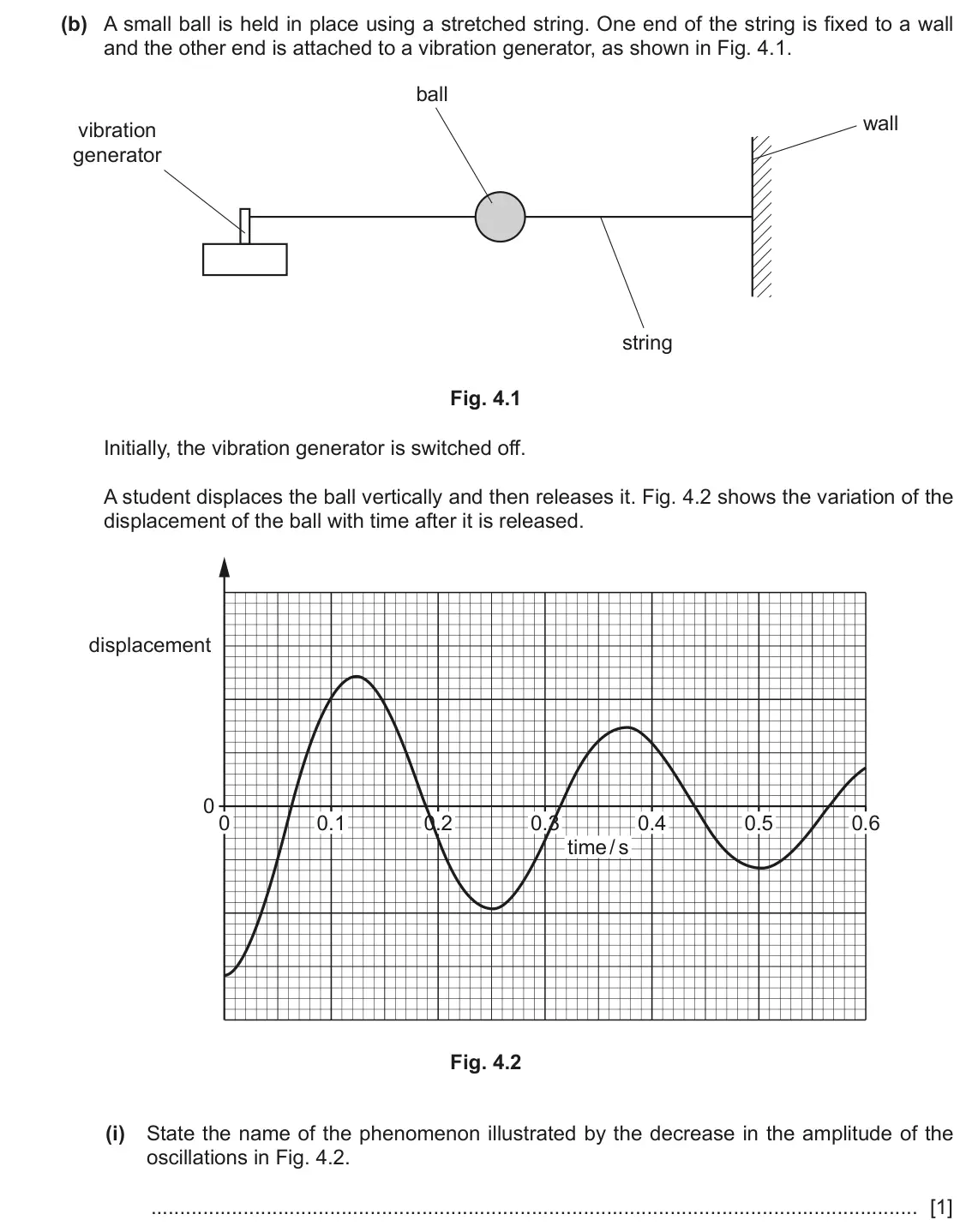
The whole paper ↗![June 2024 Paper 4, question 4(b)(i): State the name of the phenomenon illustrated by the decrease in the amplitude of the oscillations in Fig. 4.2. [1]](https://pub-e8a9dbab8e2a4d089f52b2a45e0d0b50.r2.dev/bank/970241-jun24-04-bi-qp.webp)
Q4(b)(ii)
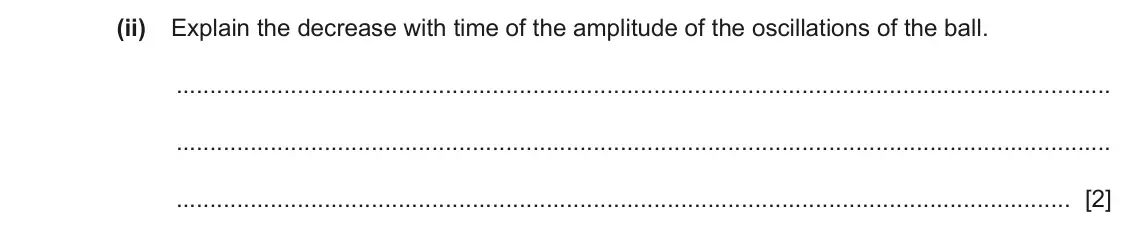
The whole paper ↗![June 2024 Paper 4, question 4(b)(ii): Explain the decrease with time of the amplitude of the oscillations of the ball. [2]](https://pub-e8a9dbab8e2a4d089f52b2a45e0d0b50.r2.dev/bank/970241-jun24-04-bii-qp.webp)
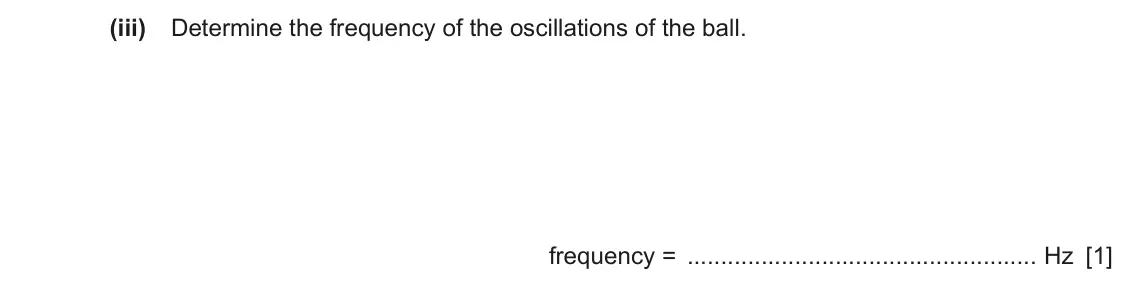
Q4(b)(iii)
The whole paper ↗![June 2024 Paper 4, question 4(b)(iii): Determine the frequency of the oscillations of the ball. frequency = Hz [1]](https://pub-e8a9dbab8e2a4d089f52b2a45e0d0b50.r2.dev/bank/970241-jun24-04-biii-qp.webp)
Questions, mark schemes and examiner’s reports are © Cambridge University Press & Assessment, from their published past papers. Plumi isn’t affiliated with any exam board. Want whole papers? Every CAIE A-Level Physics paper.
Rather write your answers by hand on iPad? Plumi marks them against the same mark schemes.