 plumi
Electric fields and capacitance: OxfordAQA International A Level Physics questions
OxfordAQA International A Level Physics past-paper questions on 3.8 Electric fields and capacitance, Official specimen papers for Units 1–5, with mark schemes and examiner’s reports where available.
Past paper difficulty
Paper
All papers
Exam
All years
Calculations
Loading the full question list…
Q03.1
The whole paper ↗Q03.2
The whole paper ↗Q03.3
The whole paper ↗Q03.4
The whole paper ↗Q03.5
The whole paper ↗Q05.1
The whole paper ↗Q05.2
The whole paper ↗Q05.3
The whole paper ↗Q05.4
The whole paper ↗Q05.5
The whole paper ↗
All 15 questions on Electric fields and capacitance, as a list
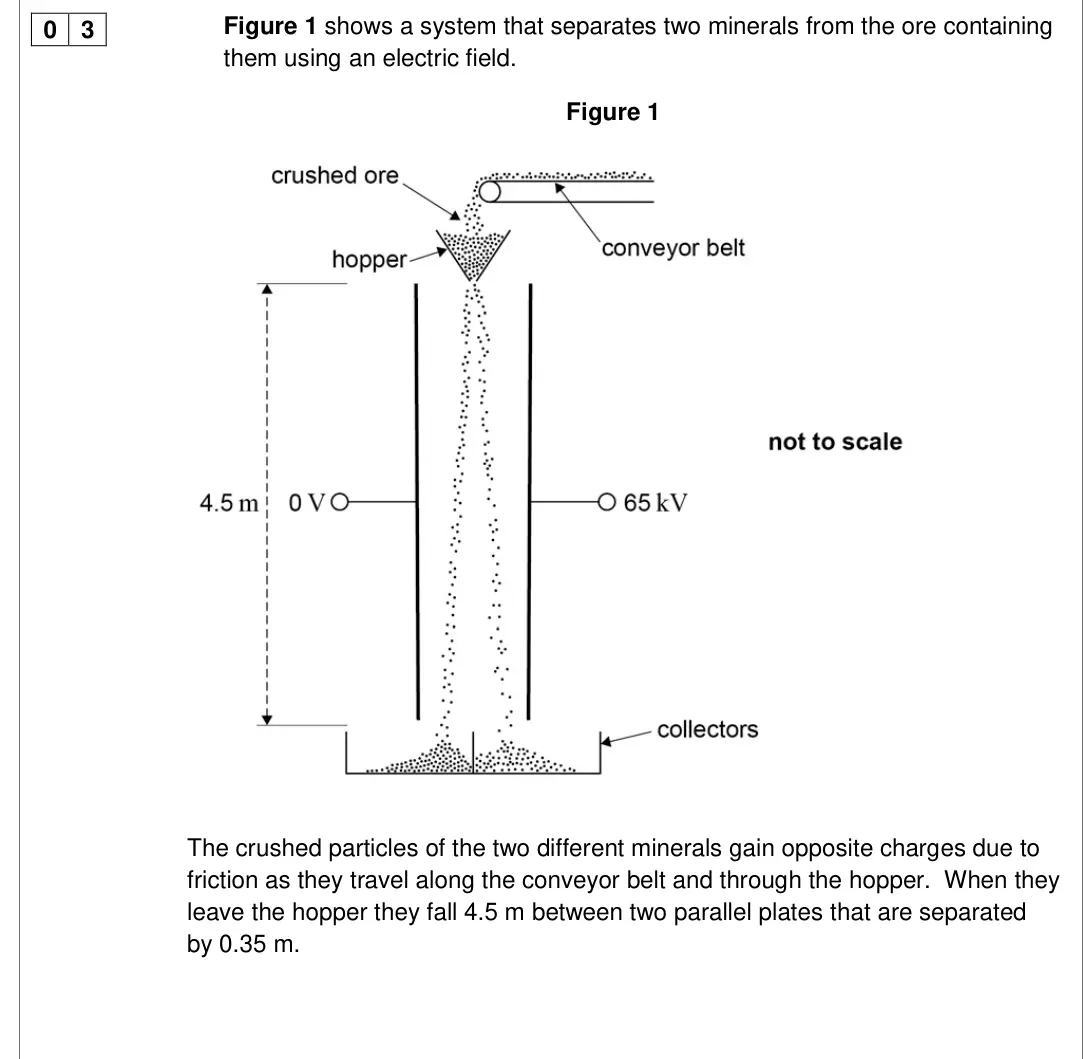
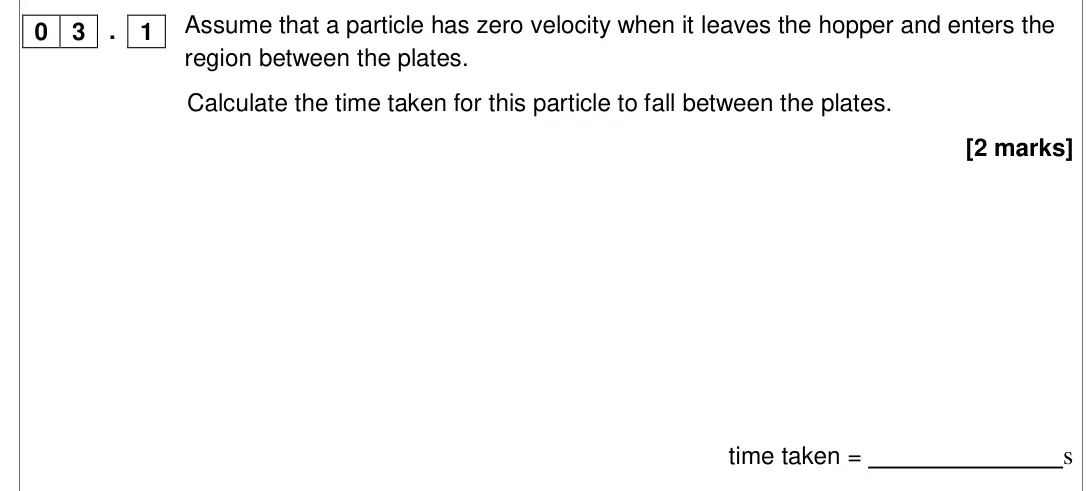
- Specimen, Unit 3, Q03.1 (2 marks): Figure 1 shows a system that separates two minerals from the ore containing them using an electric field. Figure 1 The crushed particles of the two different minerals gain opposite
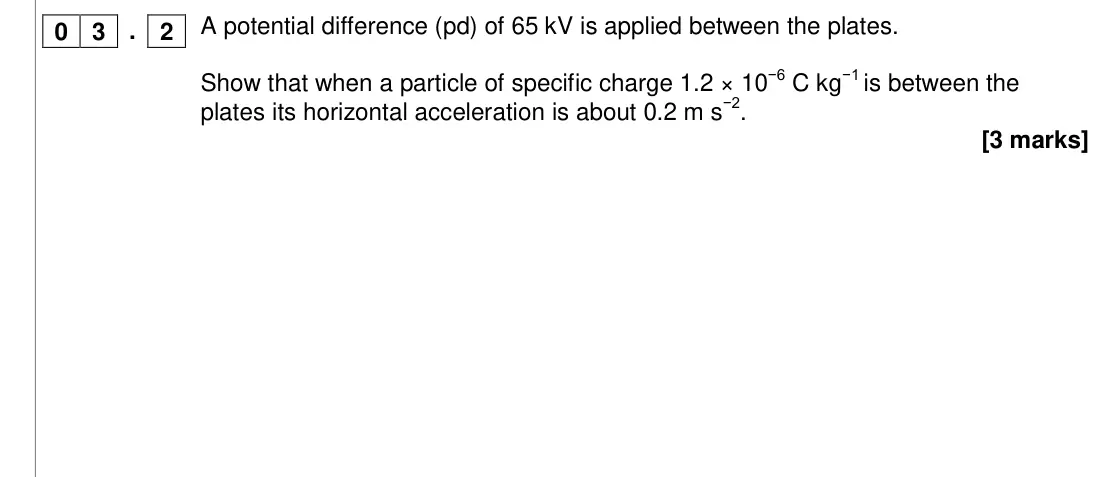
- Specimen, Unit 3, Q03.2 (3 marks): Figure 1 shows a system that separates two minerals from the ore containing them using an electric field. Figure 1 The crushed particles of the two different minerals gain opposite
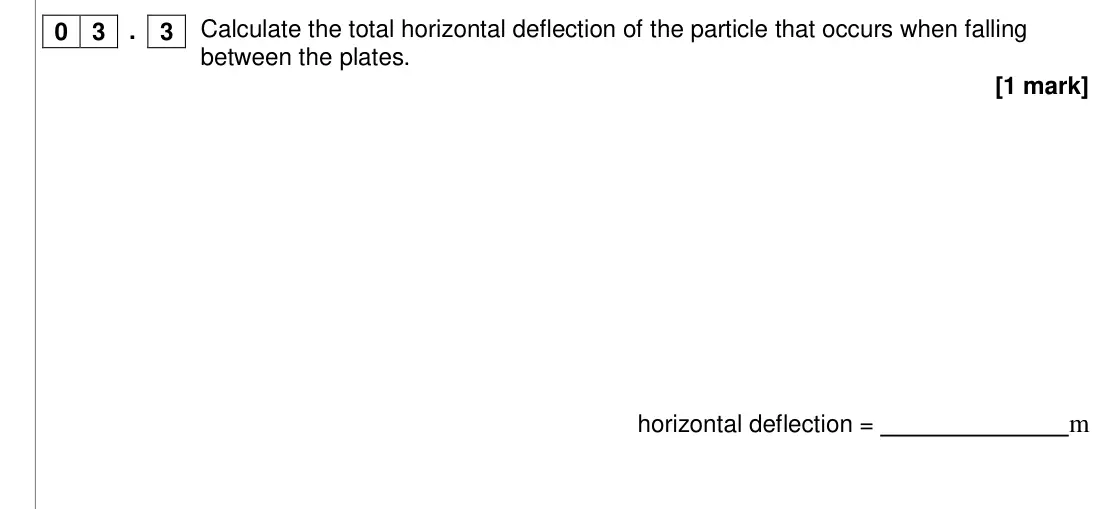
- Specimen, Unit 3, Q03.3 (1 mark): Figure 1 shows a system that separates two minerals from the ore containing them using an electric field. Figure 1 The crushed particles of the two different minerals gain opposite
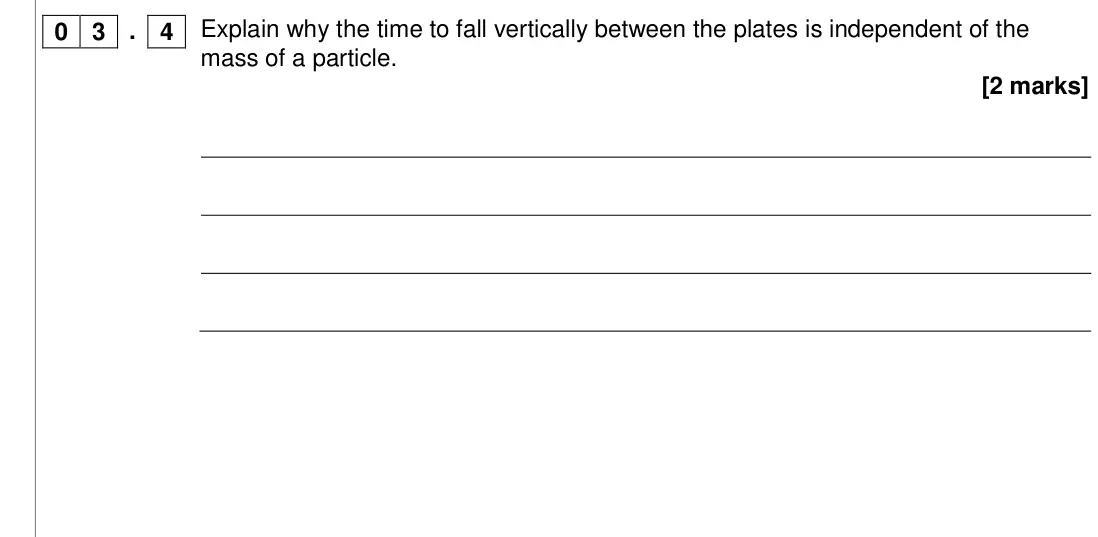
- Specimen, Unit 3, Q03.4 (2 marks): Figure 1 shows a system that separates two minerals from the ore containing them using an electric field. Figure 1 The crushed particles of the two different minerals gain opposite
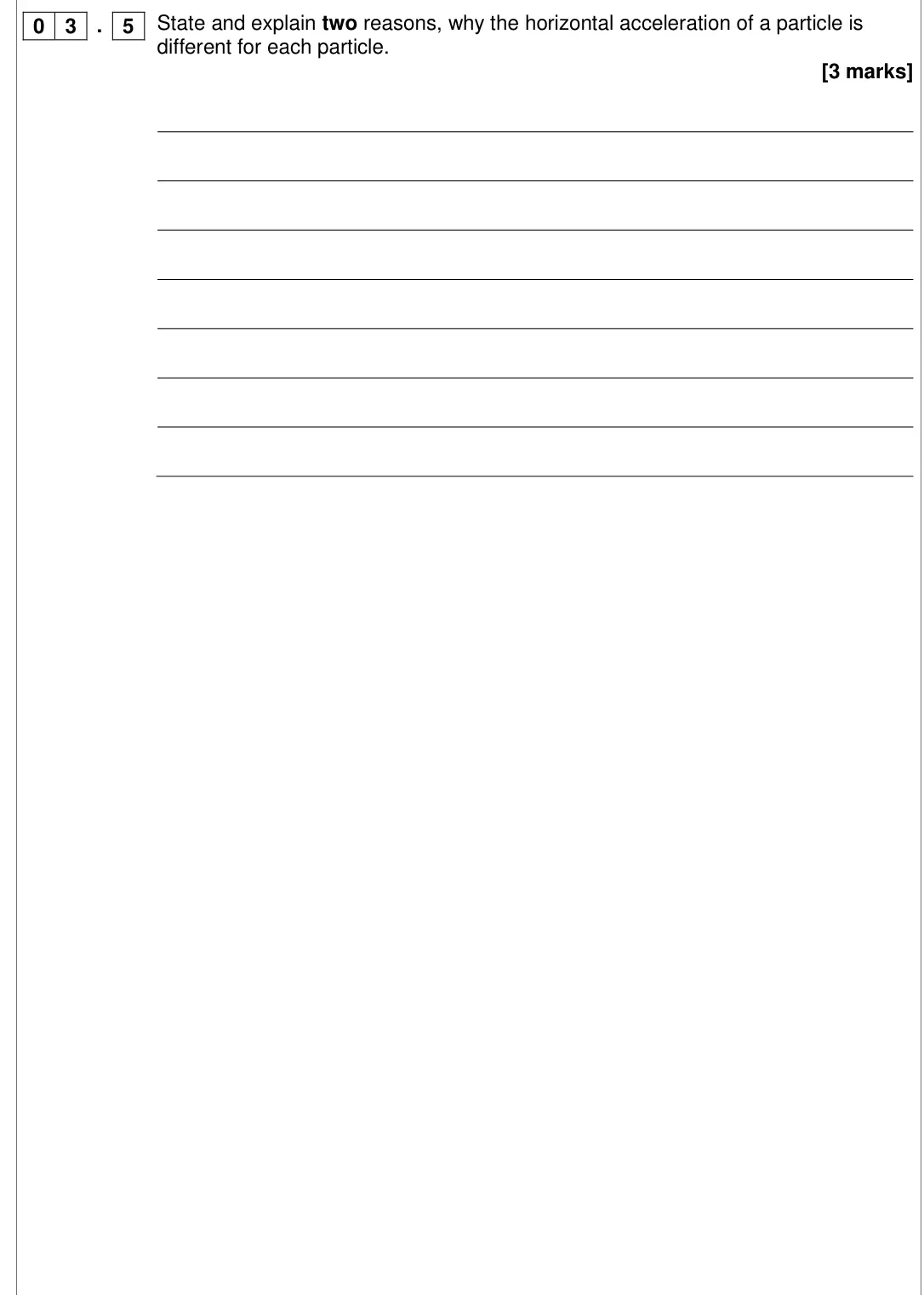
- Specimen, Unit 3, Q03.5 (3 marks): Figure 1 shows a system that separates two minerals from the ore containing them using an electric field. Figure 1 The crushed particles of the two different minerals gain opposite
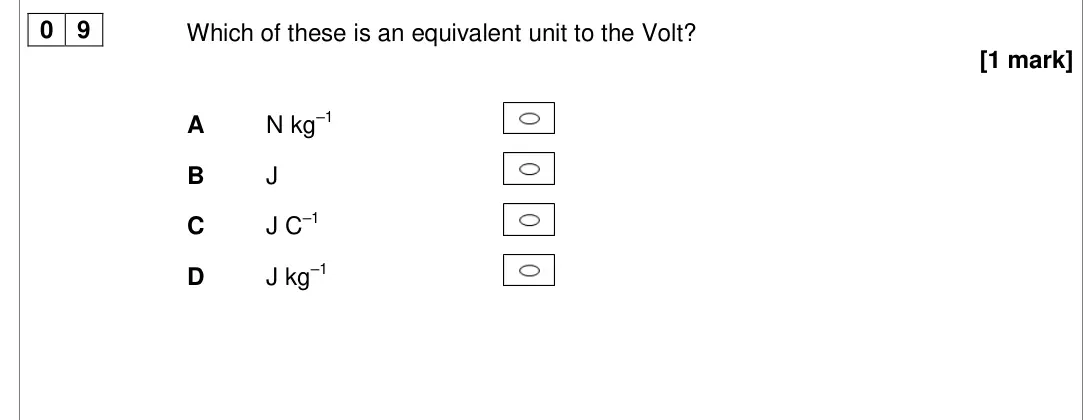
- Specimen, Unit 3, Q09 (1 mark): Which of these is an equivalent unit to the Volt? [1 mark] A N kg–1 B J C J C–1 D J kg–1 0 9
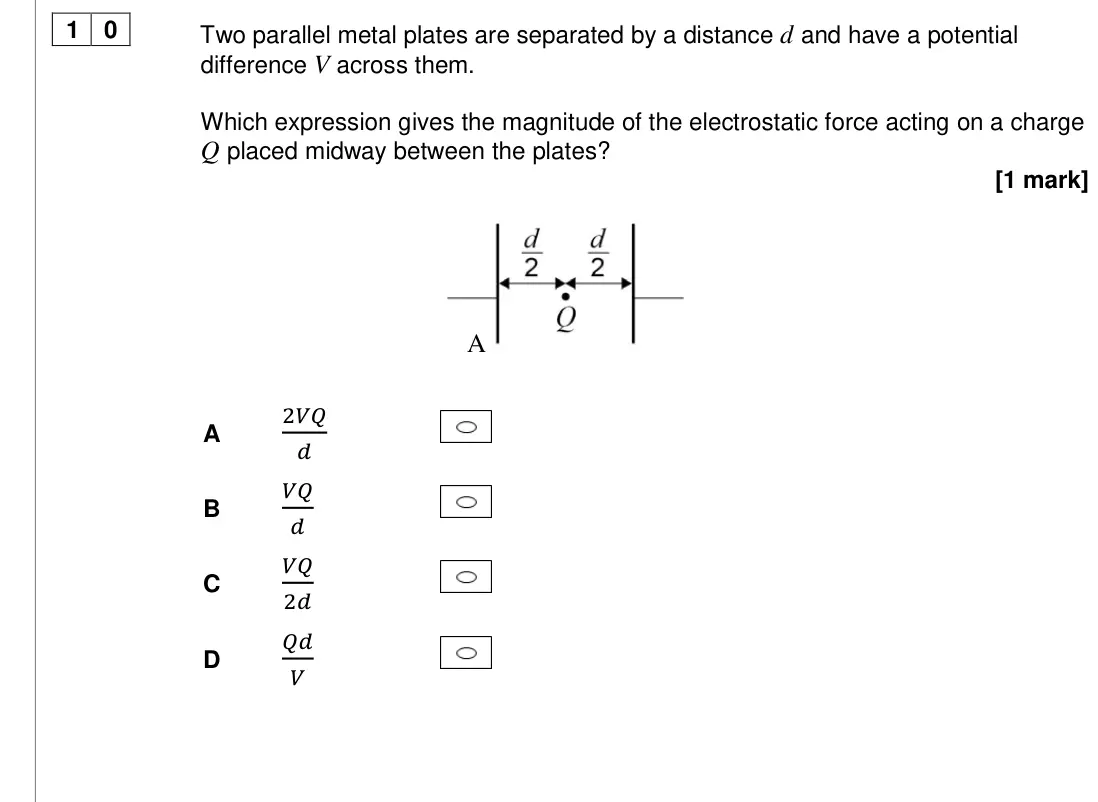
- Specimen, Unit 3, Q10 (1 mark): Two parallel metal plates are separated by a distance d and have a potential difference V across them. Which expression gives the magnitude of the electrostatic force acting on a c
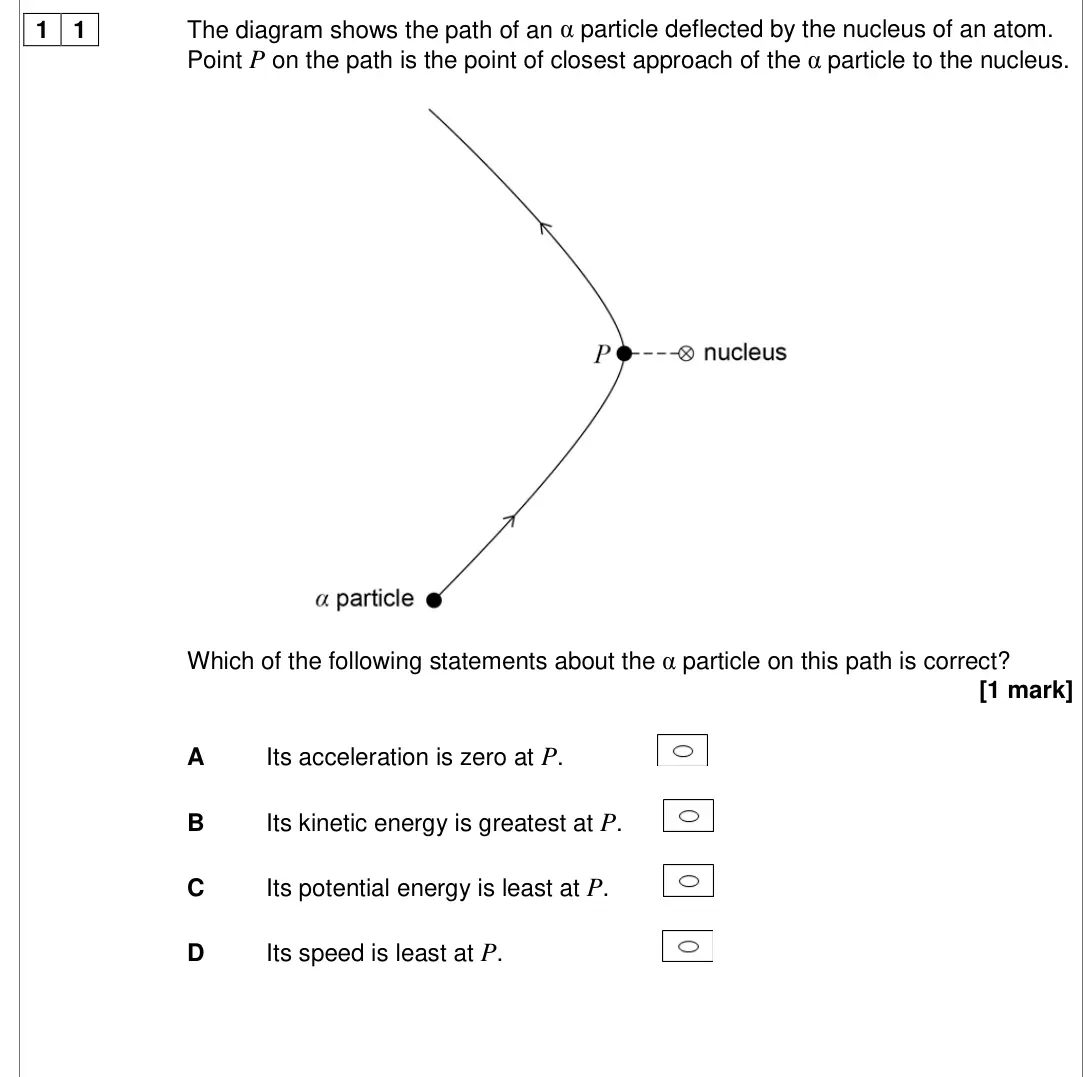
- Specimen, Unit 3, Q11 (1 mark): The diagram shows the path of an α particle deflected by the nucleus of an atom. Point P on the path is the point of closest approach of the α particle to the nucleus. Which of the
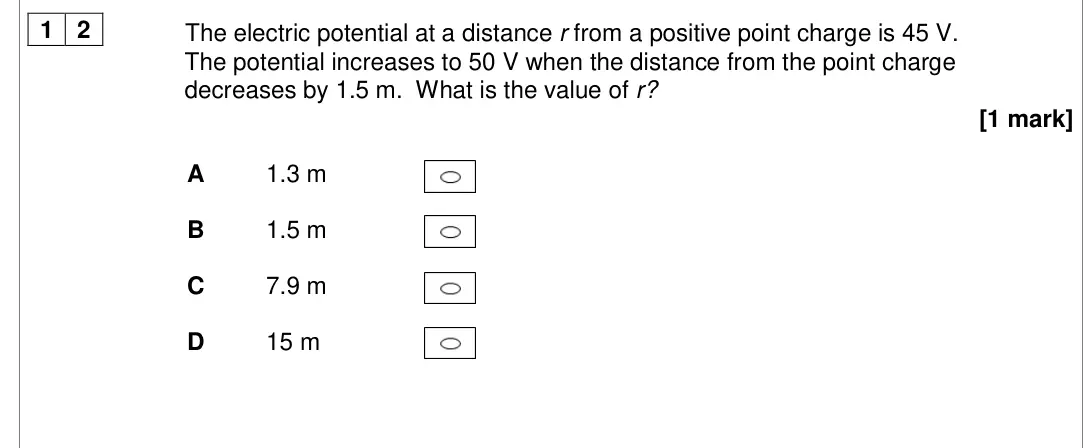
- Specimen, Unit 3, Q12 (1 mark): The electric potential at a distance r from a positive point charge is 45 V. The potential increases to 50 V when the distance from the point charge decreases by 1.5 m. What is the
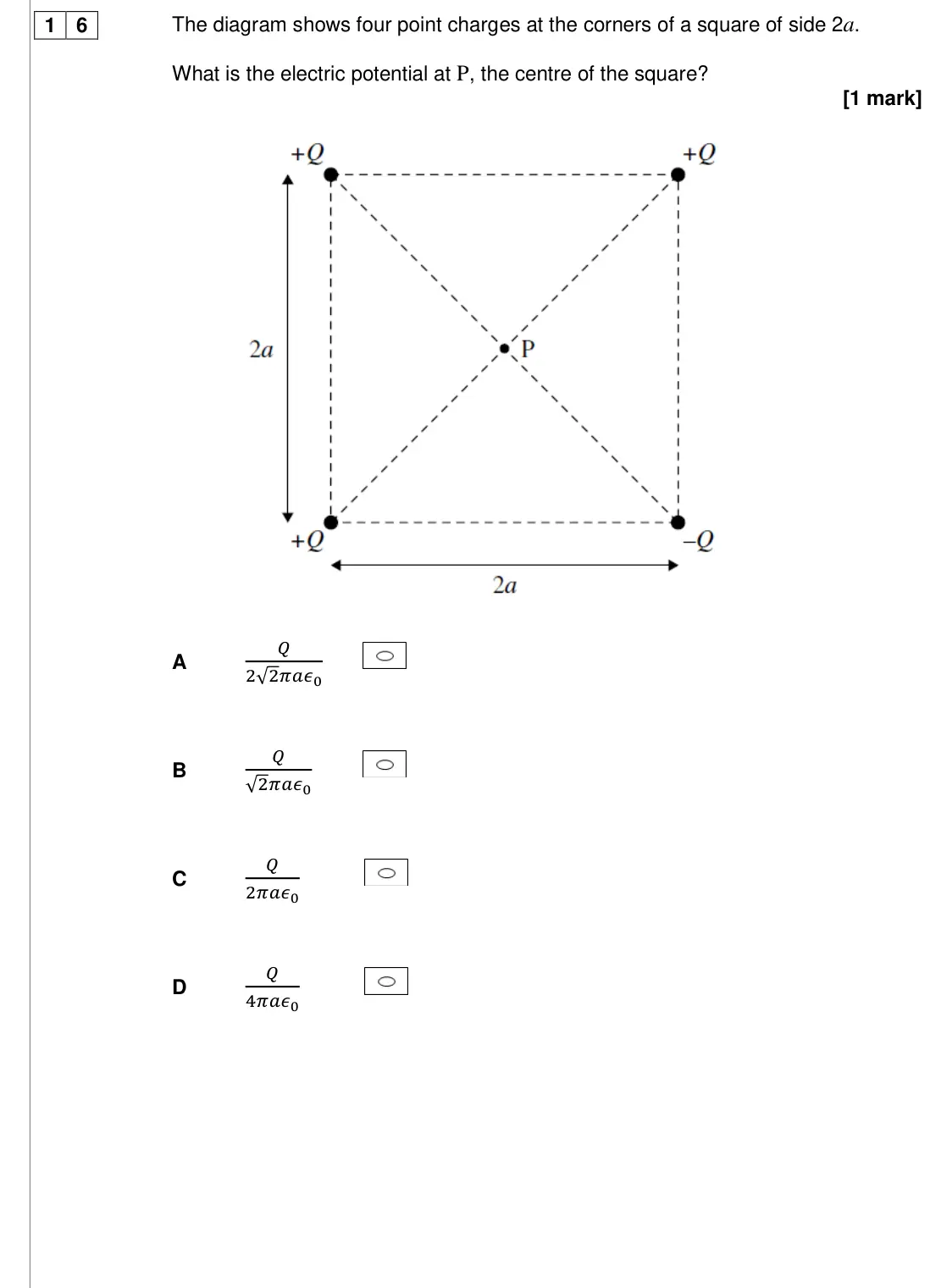
- Specimen, Unit 3, Q16 (1 mark): The diagram shows four point charges at the corners of a square of side 2a. What is the electric potential at P, the centre of the square? [1 mark] A 𝑄𝑄 2√2𝜋𝜋𝑎𝑎𝑎𝑎0 B 𝑄𝑄 √2𝜋𝜋𝑎𝑎𝑎𝑎0 C
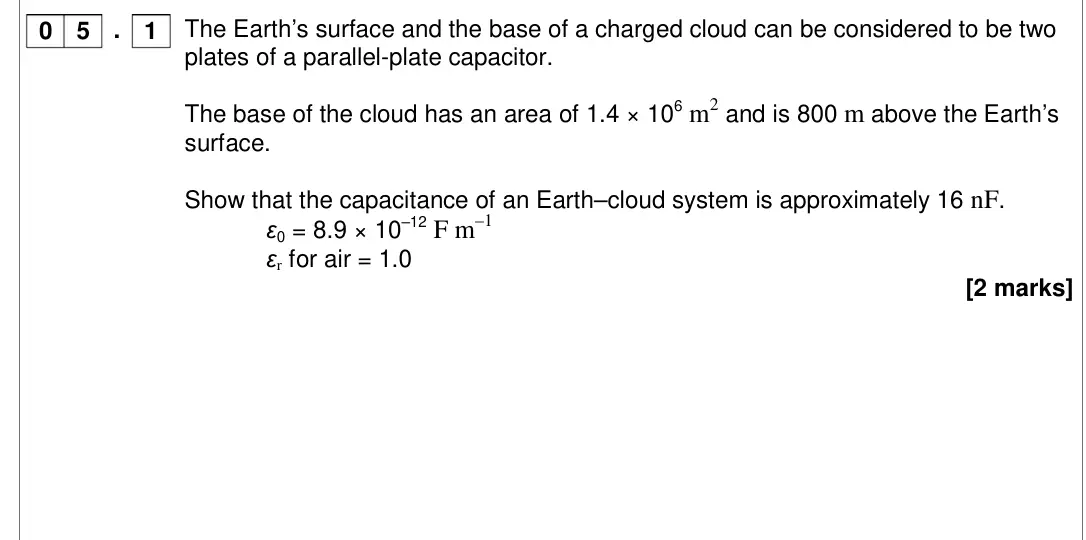
- Specimen, Unit 5, Q05.1 (2 marks): The Earth’s surface and the base of a charged cloud can be considered to be two plates of a parallel-plate capacitor. The base of the cloud has an area of 1.4 × 10⁶ m2 and is 800 m
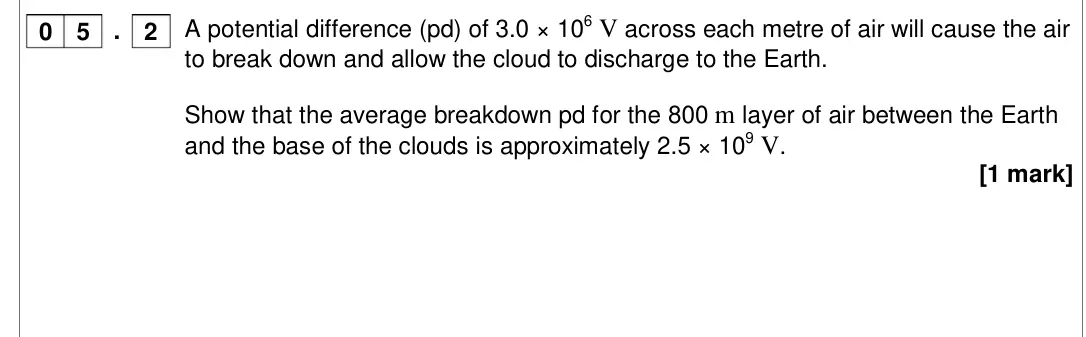
- Specimen, Unit 5, Q05.2 (1 mark): A potential difference (pd) of 3.0 × 10⁶ V across each metre of air will cause the air to break down and allow the cloud to discharge to the Earth. Show that the average breakdown
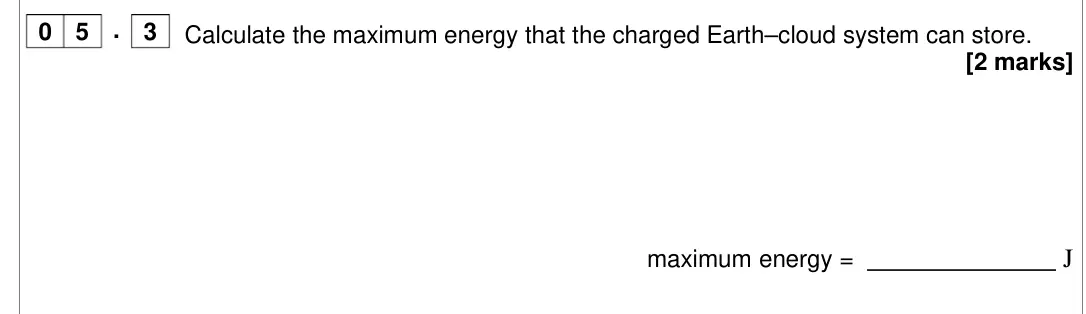
- Specimen, Unit 5, Q05.3 (2 marks): Calculate the maximum energy that the charged Earth–cloud system can store. [2 marks] maximum energy = J 0 5 . 3
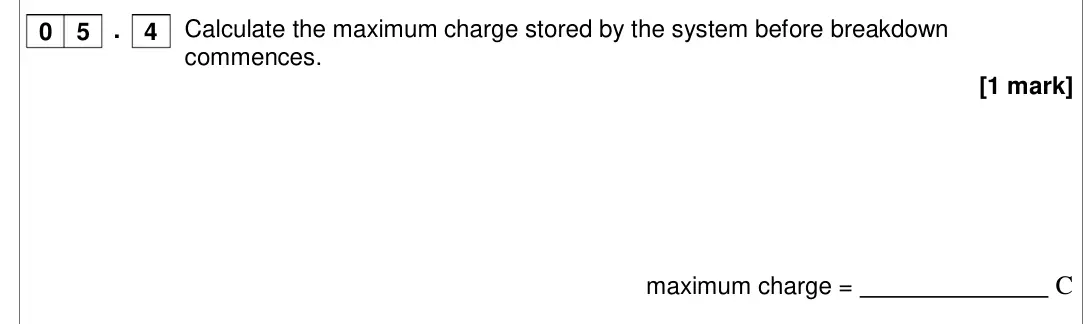
- Specimen, Unit 5, Q05.4 (1 mark): Calculate the maximum charge stored by the system before breakdown commences. [1 mark] maximum charge = C 0 5 . 4 9
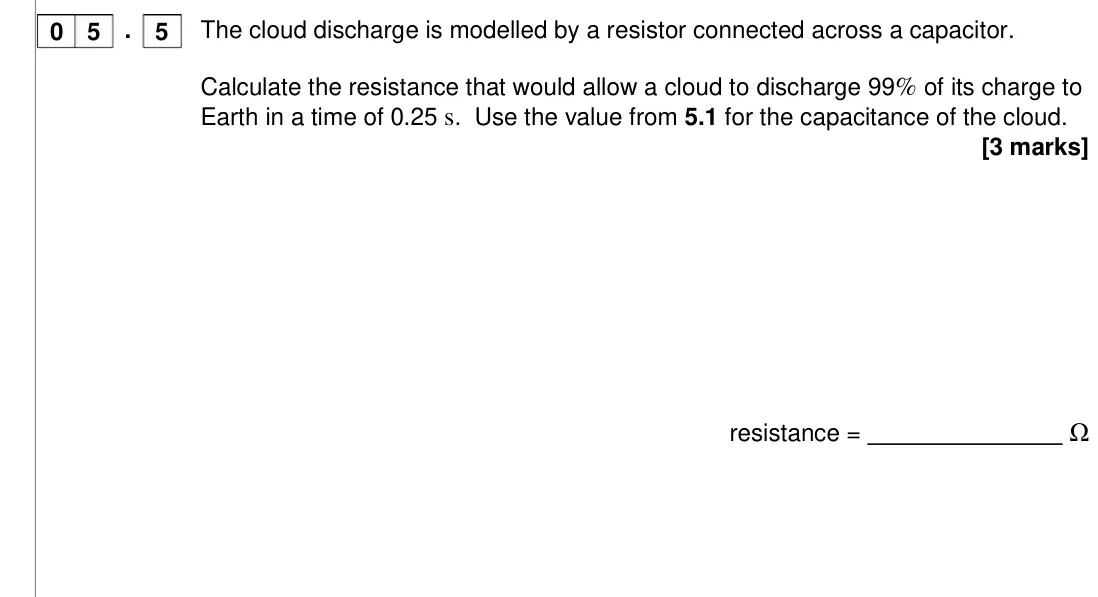
- Specimen, Unit 5, Q05.5 (3 marks): The cloud discharge is modelled by a resistor connected across a capacitor. Calculate the resistance that would allow a cloud to discharge 99% of its charge to Earth in a time of 0
Questions, mark schemes and examiner’s reports are © OxfordAQA, from their published past papers. Plumi isn’t affiliated with any exam board. Want whole papers? OxfordAQA International A Level Physics past papers.
The Plumi iPad app also offers exam-style questions with AI feedback on your handwritten working.