Skip to content
Android waitlistTry on iPad
Get started

Circular and periodic motion: OxfordAQA International A Level Physics questions

OxfordAQA International A Level Physics past-paper questions on 3.6 Circular and periodic motion, Official specimen papers for Units 1–5, with mark schemes and examiner’s reports where available.

Past paper difficulty
Paper
All papers
Exam
All years
Calculations

Loading the full question list…

219 questions

  1. Q06.1

    Specimen · Unit 3 · ★★

    The whole paper ↗
    1
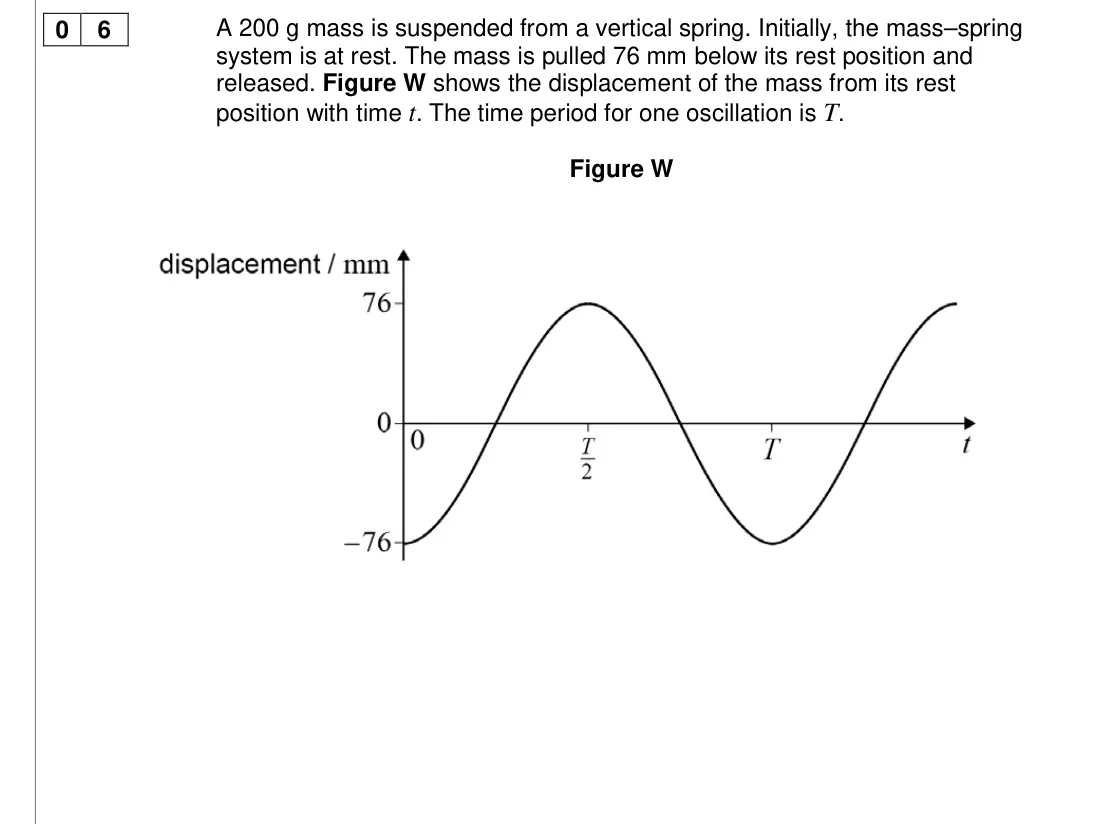
    Setup for original question 06.1

    Loading the question setup…

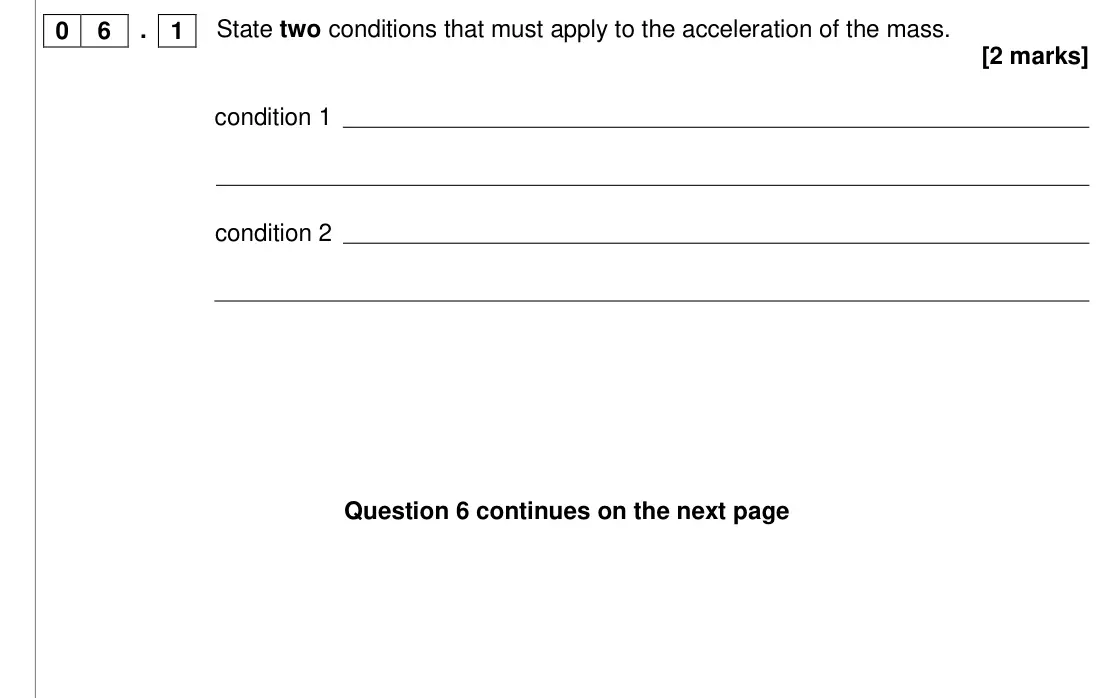
    Original question 06.1: A 200 g mass is suspended from a vertical spring. Initially, the mass–spring system is at rest. The mass is pulled 76 mm below its rest position and released. Figure W shows the di

    Loading the question…

  2. Q06.2

    Specimen · Unit 3 · ★

    The whole paper ↗
    2
    Setup for original question 06.2

    Loading the question setup…

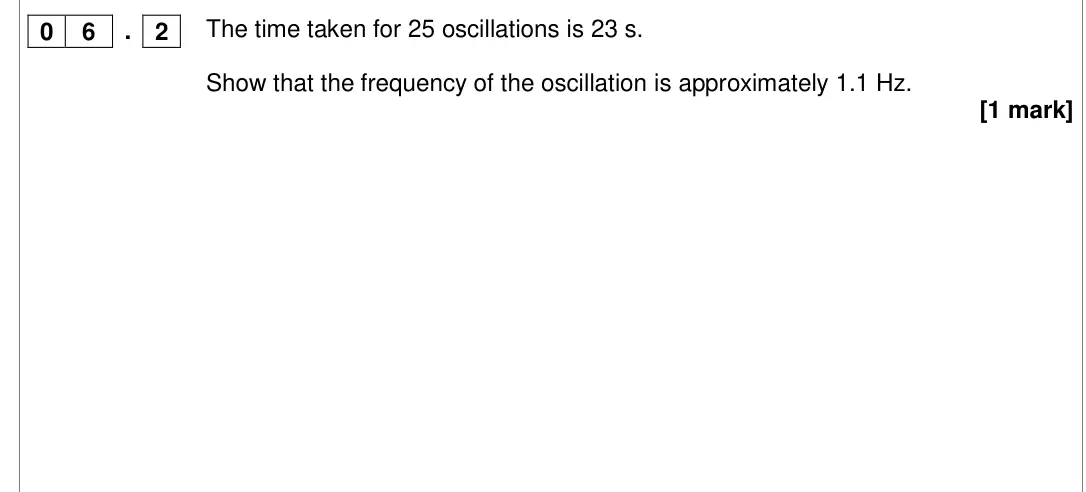
    Original question 06.2: A 200 g mass is suspended from a vertical spring. Initially, the mass–spring system is at rest. The mass is pulled 76 mm below its rest position and released. Figure W shows the di

    Loading the question…

  3. Q06.3

    Specimen · Unit 3 · ★★

    The whole paper ↗
    3
    Setup for original question 06.3

    Loading the question setup…

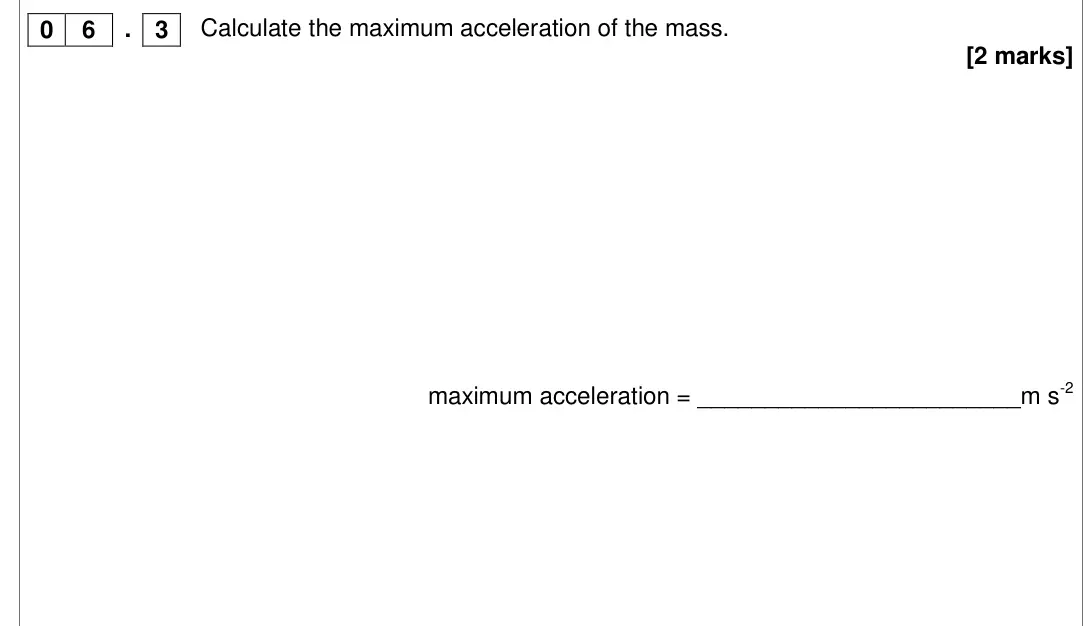
    Original question 06.3: A 200 g mass is suspended from a vertical spring. Initially, the mass–spring system is at rest. The mass is pulled 76 mm below its rest position and released. Figure W shows the di

    Loading the question…

  4. Q06.4

    Specimen · Unit 3 · ★★

    The whole paper ↗
    4
    Setup for original question 06.4

    Loading the question setup…

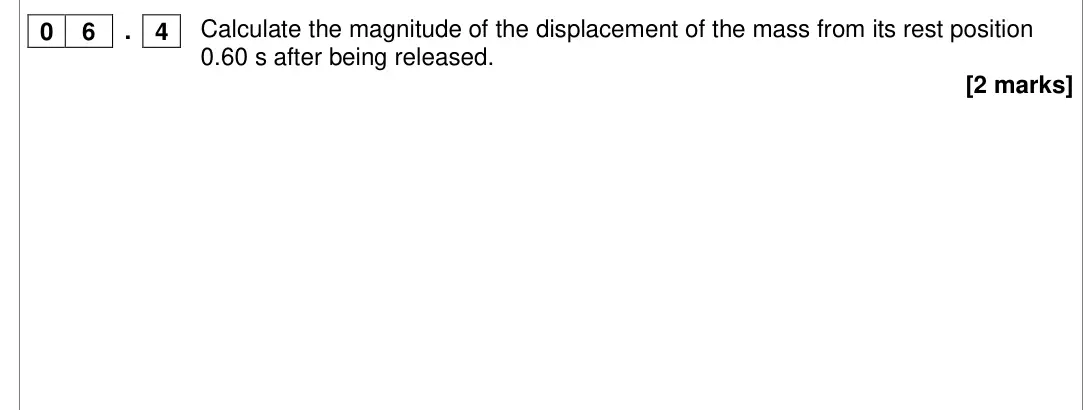
    Original question 06.4: A 200 g mass is suspended from a vertical spring. Initially, the mass–spring system is at rest. The mass is pulled 76 mm below its rest position and released. Figure W shows the di

    Loading the question…

  5. Q06.5

    Specimen · Unit 3 · ★★

    The whole paper ↗
    5
    Setup for original question 06.5

    Loading the question setup…

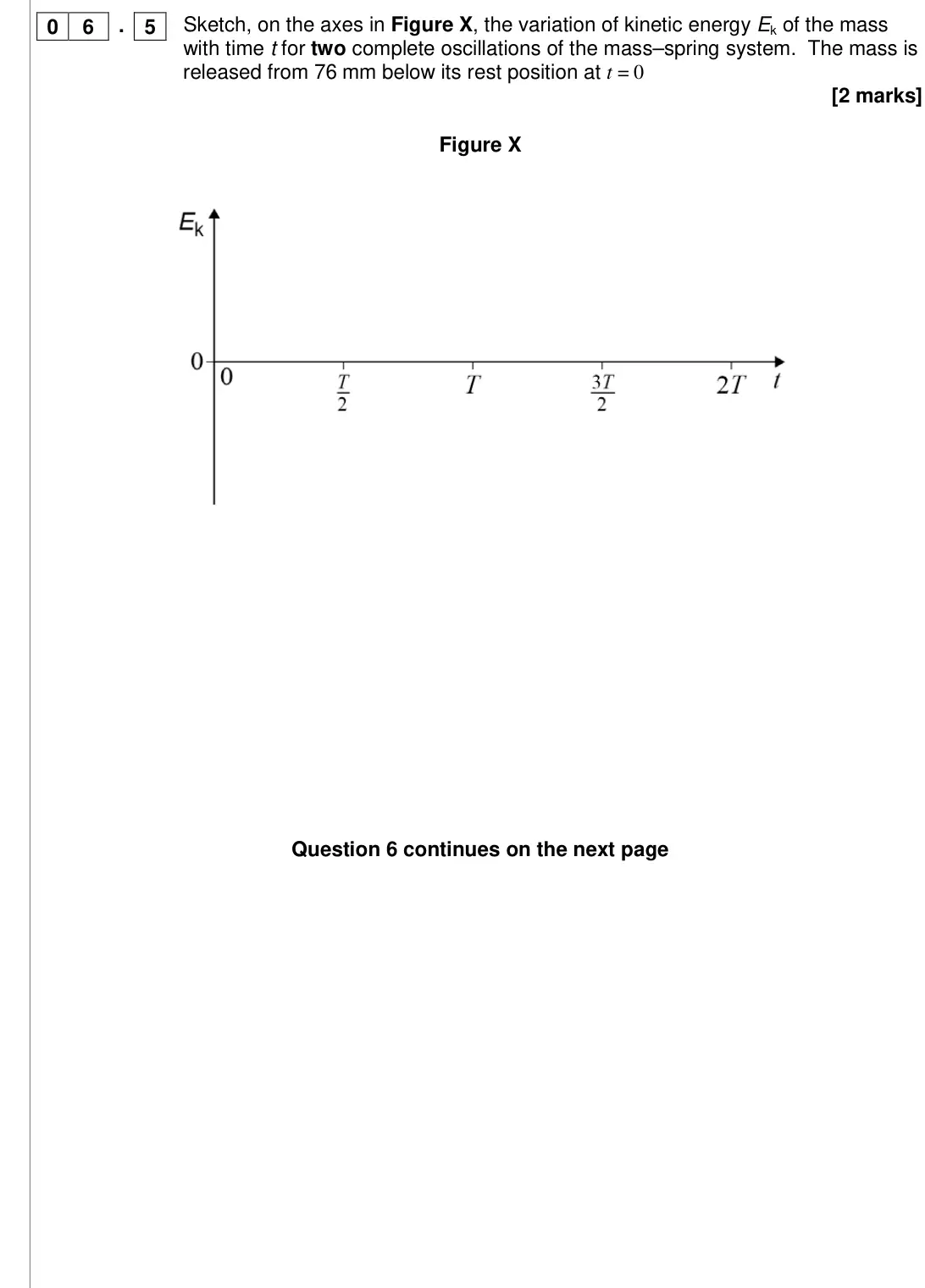
    Original question 06.5: A 200 g mass is suspended from a vertical spring. Initially, the mass–spring system is at rest. The mass is pulled 76 mm below its rest position and released. Figure W shows the di

    Loading the question…

  6. Q06.6

    Specimen · Unit 3 · ★★★

    The whole paper ↗
    6
    Setup for original question 06.6

    Loading the question setup…

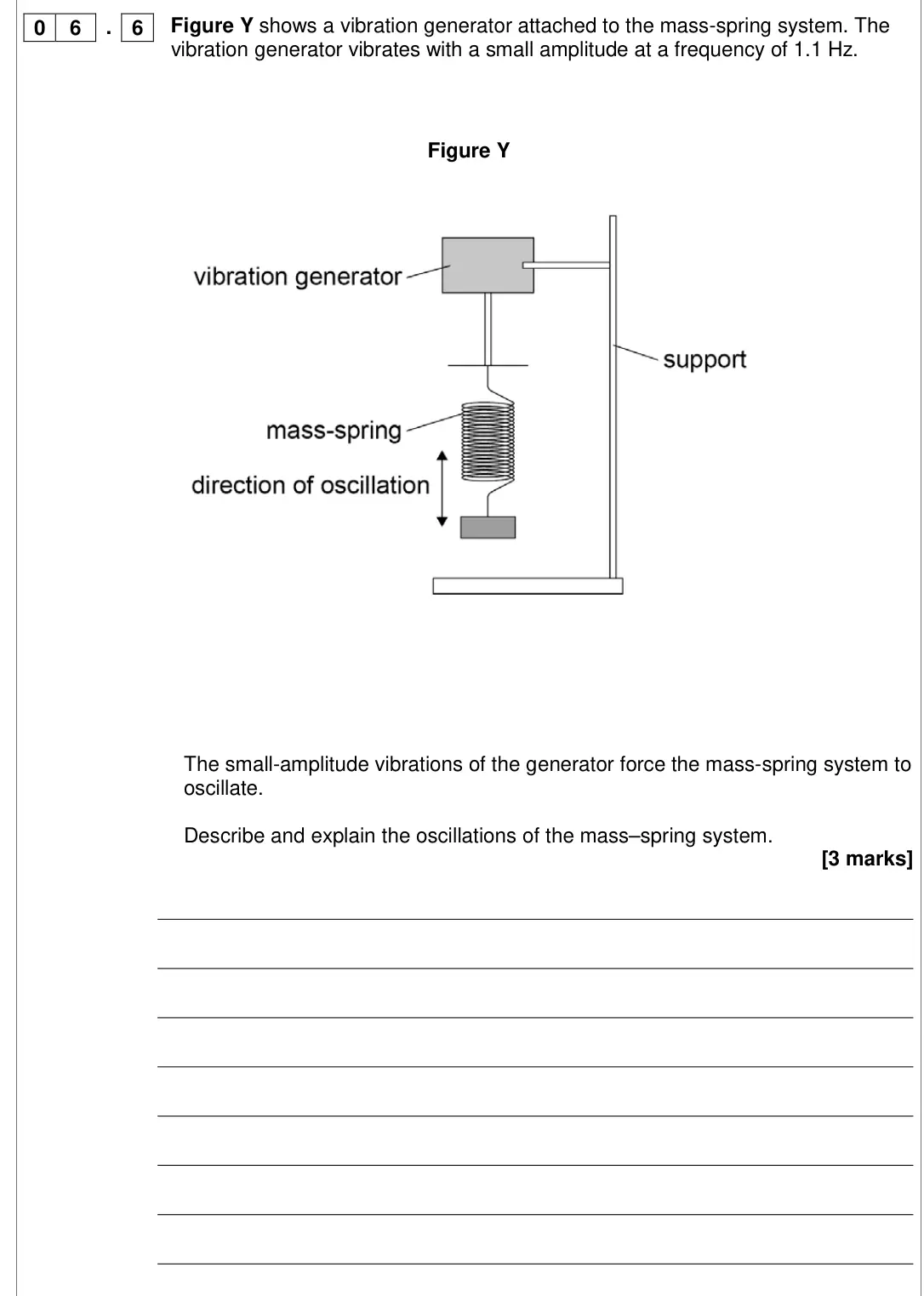
    Original question 06.6: A 200 g mass is suspended from a vertical spring. Initially, the mass–spring system is at rest. The mass is pulled 76 mm below its rest position and released. Figure W shows the di

    Loading the question…

  7. Q06.7

    Specimen · Unit 3 · ★★

    The whole paper ↗
    7
    Setup for original question 06.7

    Loading the question setup…

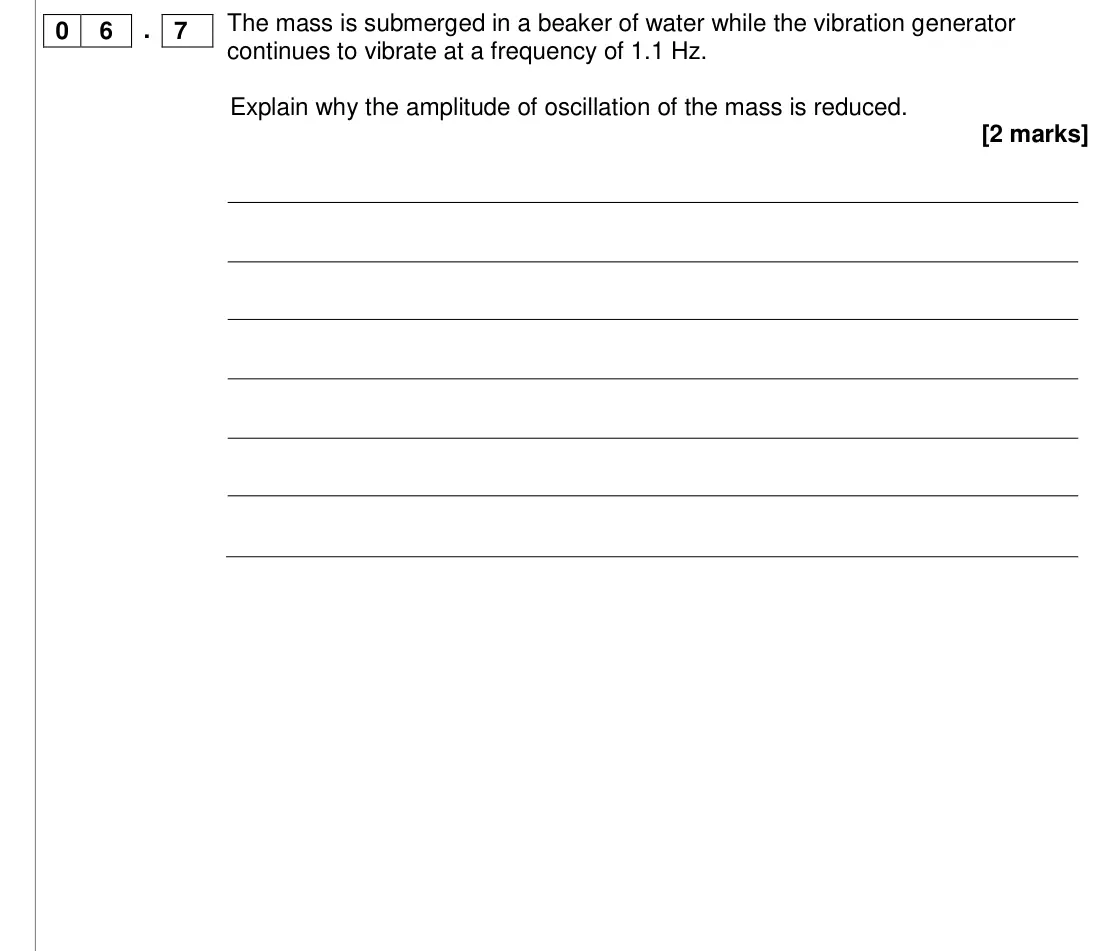
    Original question 06.7: A 200 g mass is suspended from a vertical spring. Initially, the mass–spring system is at rest. The mass is pulled 76 mm below its rest position and released. Figure W shows the di

    Loading the question…

  8. Q08

    Specimen · Unit 3 · ★

    The whole paper ↗
    8
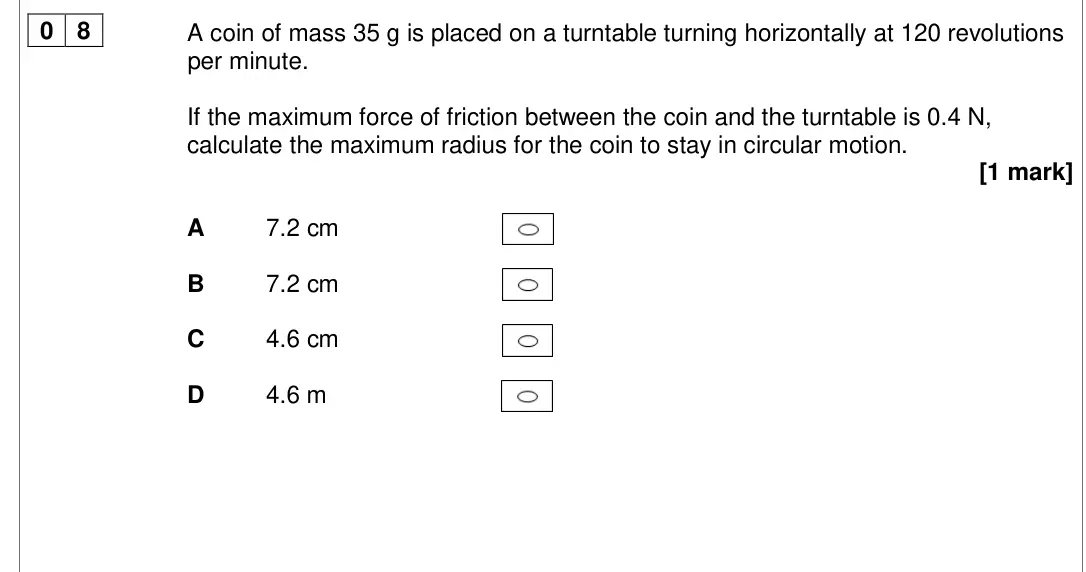
    Original question 08: A coin of mass 35 g is placed on a turntable turning horizontally at 120 revolutions per minute. If the maximum force of friction between the coin and the turntable is 0.4 N, calcu

    Loading the question…

    Your answer
  9. Q02.1

    Specimen · Unit 4 · ★★★

    The whole paper ↗
    9
    Setup for original question 02.1

    Loading the question setup…

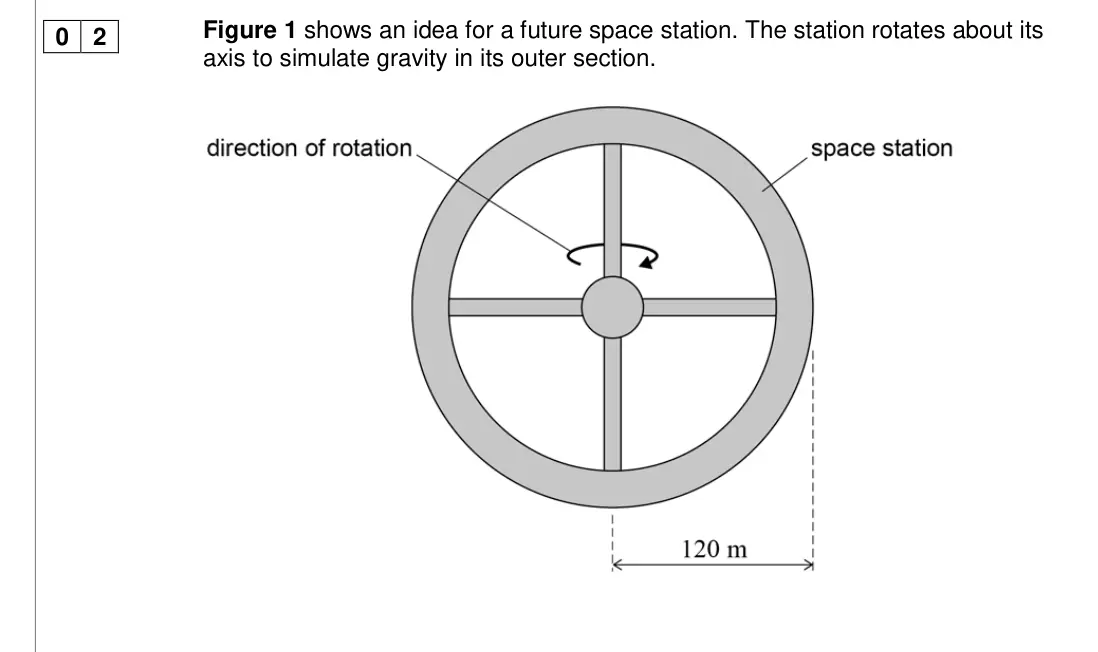
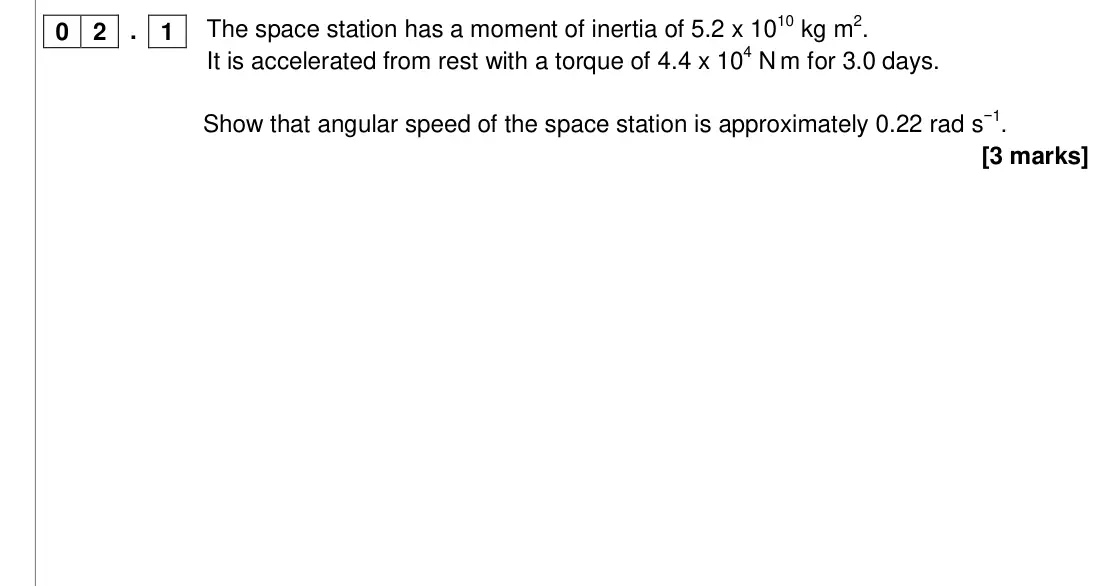
    Original question 02.1: Figure 1 shows an idea for a future space station. The station rotates about its axis to simulate gravity in its outer section. 0 2 The space station has a moment of inertia of 5.2

    Loading the question…

  10. Q02.2

    Specimen · Unit 4 · ★

    The whole paper ↗
    10
    Setup for original question 02.2

    Loading the question setup…

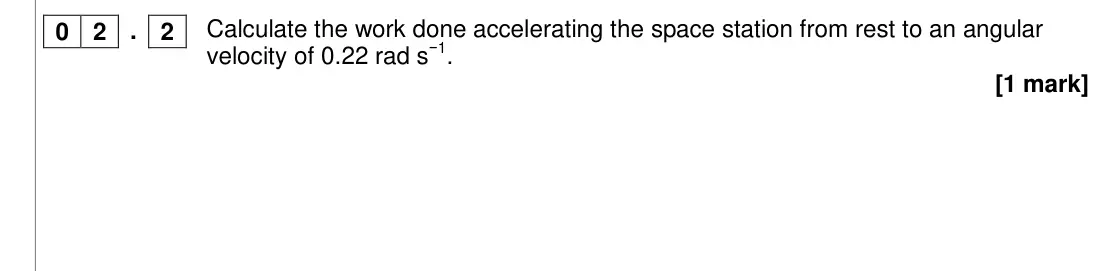
    Original question 02.2: Figure 1 shows an idea for a future space station. The station rotates about its axis to simulate gravity in its outer section. 0 2 Calculate the work done accelerating the space s

    Loading the question…

  11. Q02.3

    Specimen · Unit 4 · ★★★

    The whole paper ↗
    11
    Setup for original question 02.3

    Loading the question setup…

    Original question 02.3: Figure 1 shows an idea for a future space station. The station rotates about its axis to simulate gravity in its outer section. 0 2 An astronaut moves from the centre of the space

    Loading the question…

All 11 questions on Circular and periodic motion, as a list
  1. Specimen, Unit 3, Q06.1 (2 marks): A 200 g mass is suspended from a vertical spring. Initially, the mass–spring system is at rest. The mass is pulled 76 mm below its rest position and released. Figure W shows the di
  2. Specimen, Unit 3, Q06.2 (1 mark): A 200 g mass is suspended from a vertical spring. Initially, the mass–spring system is at rest. The mass is pulled 76 mm below its rest position and released. Figure W shows the di
  3. Specimen, Unit 3, Q06.3 (2 marks): A 200 g mass is suspended from a vertical spring. Initially, the mass–spring system is at rest. The mass is pulled 76 mm below its rest position and released. Figure W shows the di
  4. Specimen, Unit 3, Q06.4 (2 marks): A 200 g mass is suspended from a vertical spring. Initially, the mass–spring system is at rest. The mass is pulled 76 mm below its rest position and released. Figure W shows the di
  5. Specimen, Unit 3, Q06.5 (2 marks): A 200 g mass is suspended from a vertical spring. Initially, the mass–spring system is at rest. The mass is pulled 76 mm below its rest position and released. Figure W shows the di
  6. Specimen, Unit 3, Q06.6 (3 marks): A 200 g mass is suspended from a vertical spring. Initially, the mass–spring system is at rest. The mass is pulled 76 mm below its rest position and released. Figure W shows the di
  7. Specimen, Unit 3, Q06.7 (2 marks): A 200 g mass is suspended from a vertical spring. Initially, the mass–spring system is at rest. The mass is pulled 76 mm below its rest position and released. Figure W shows the di
  8. Specimen, Unit 3, Q08 (1 mark): A coin of mass 35 g is placed on a turntable turning horizontally at 120 revolutions per minute. If the maximum force of friction between the coin and the turntable is 0.4 N, calcu
  9. Specimen, Unit 4, Q02.1 (3 marks): Figure 1 shows an idea for a future space station. The station rotates about its axis to simulate gravity in its outer section. 0 2 The space station has a moment of inertia of 5.2
  10. Specimen, Unit 4, Q02.2 (1 mark): Figure 1 shows an idea for a future space station. The station rotates about its axis to simulate gravity in its outer section. 0 2 Calculate the work done accelerating the space s
  11. Specimen, Unit 4, Q02.3 (3 marks): Figure 1 shows an idea for a future space station. The station rotates about its axis to simulate gravity in its outer section. 0 2 An astronaut moves from the centre of the space

Questions, mark schemes and examiner’s reports are © OxfordAQA, from their published past papers. Plumi isn’t affiliated with any exam board. Want whole papers? OxfordAQA International A Level Physics past papers.

The Plumi iPad app also offers exam-style questions with AI feedback on your handwritten working.