 plumi
Surface area to volume ratio: Edexcel A‑Level Biology B questions
Every Edexcel A-Level Biology B exam question on 4.1 Surface area to volume ratio, 2016–2025, with its mark scheme and examiner’s report.
Find questions1,826
Calculations
Q6(b)(i)
The whole paper ↗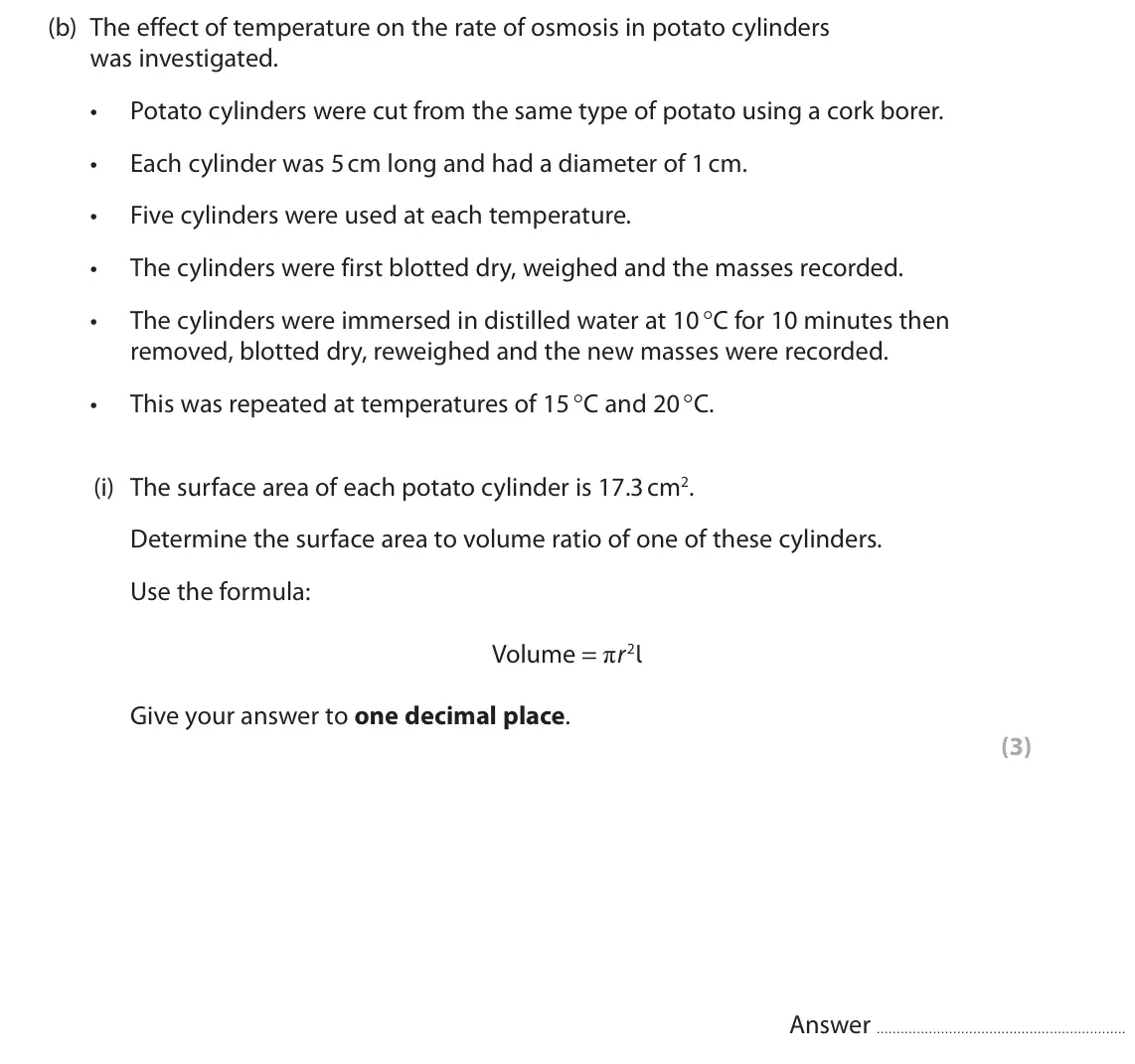
Q8(a)
The whole paper ↗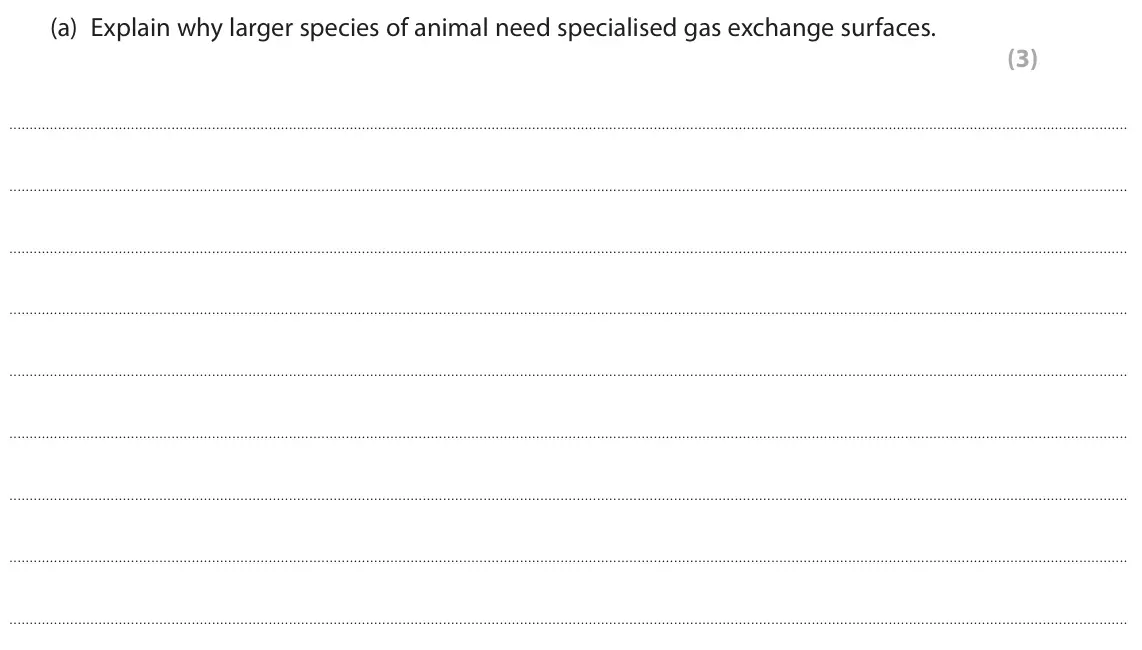
Q7(b)(ii)
The whole paper ↗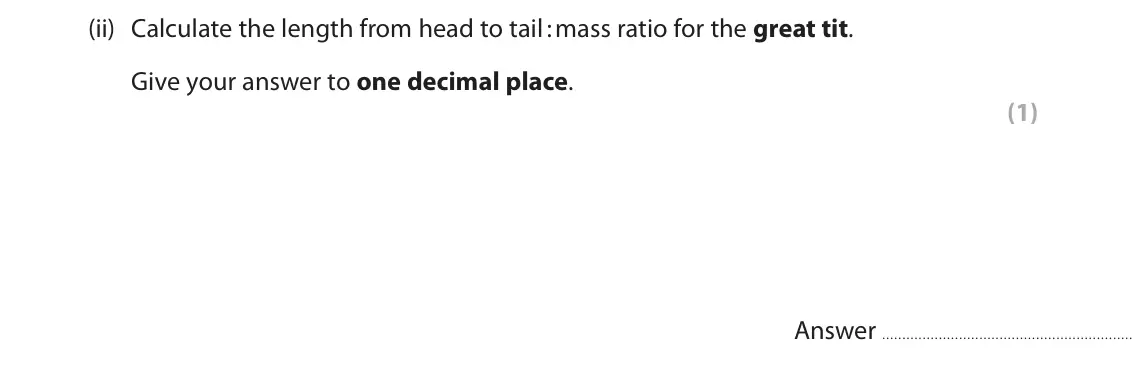
Q1(a)
The whole paper ↗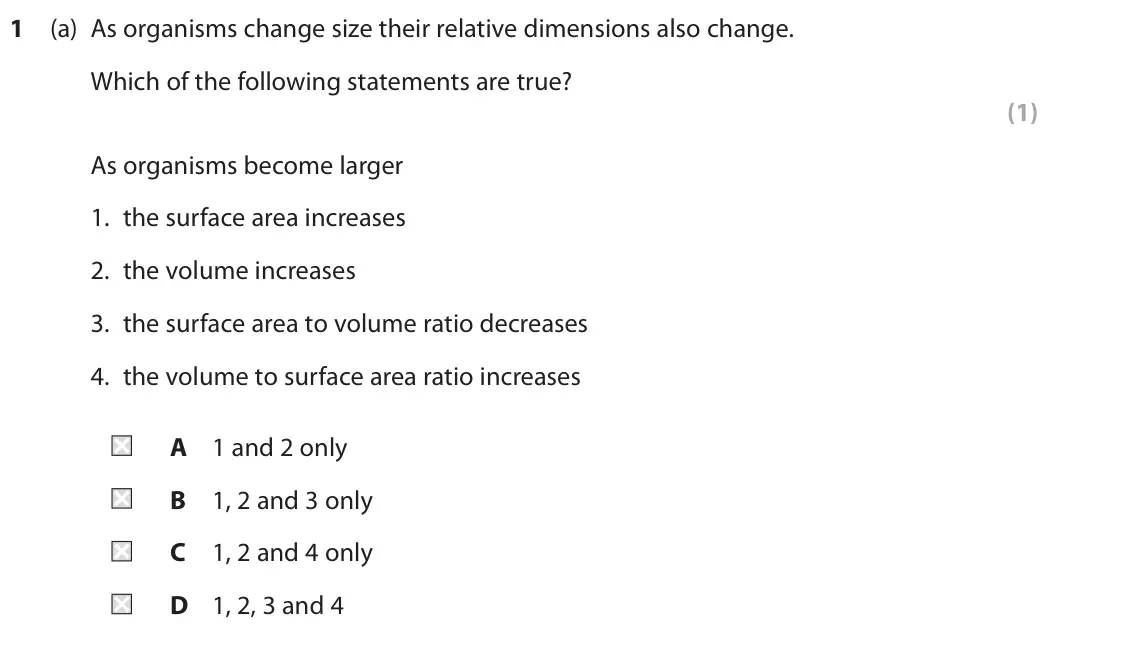
Q1(b)
The whole paper ↗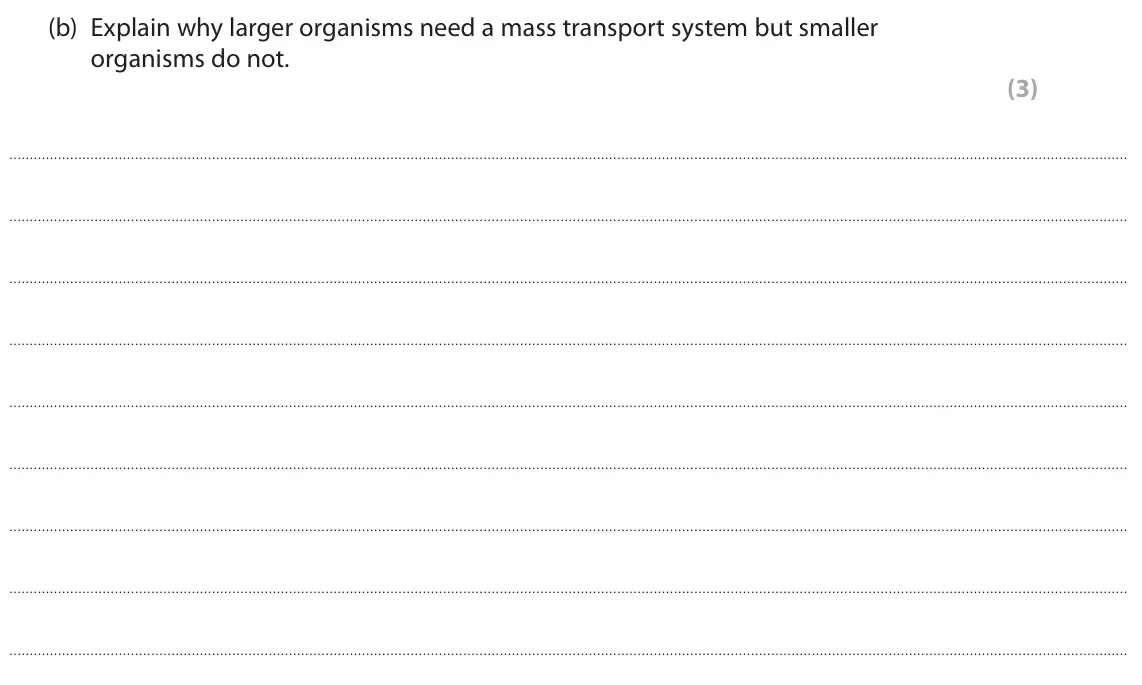
Q1(b)(i)
The whole paper ↗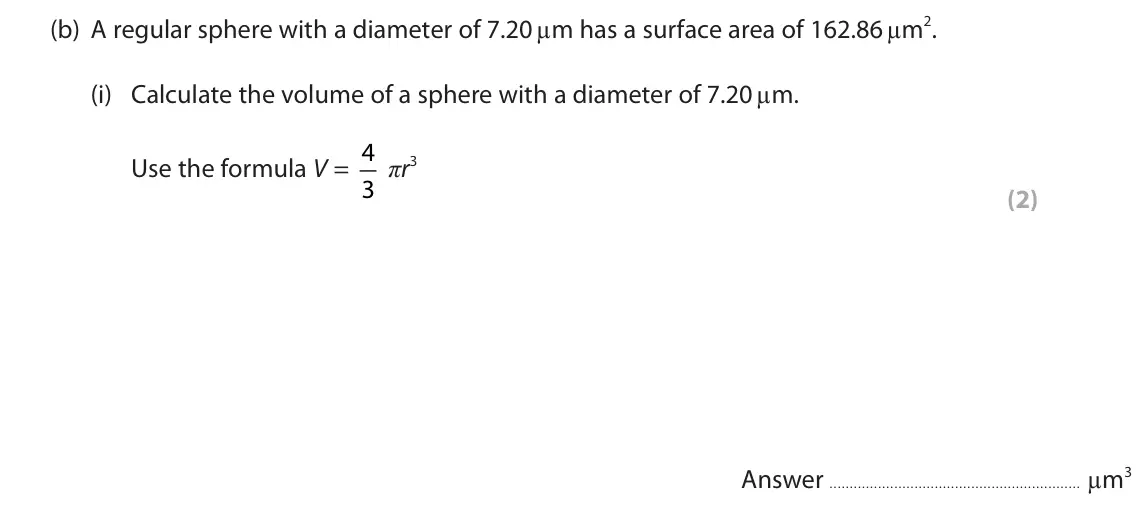
Q1(b)(ii)
The whole paper ↗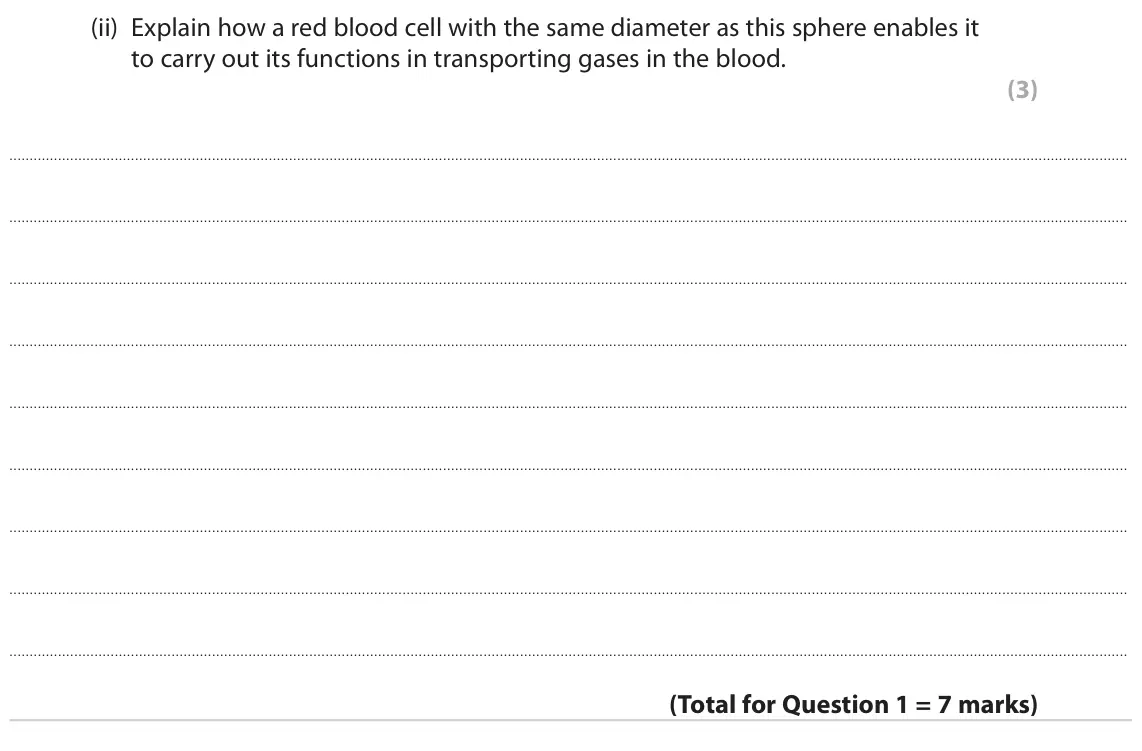
Q3(b)(ii)
The whole paper ↗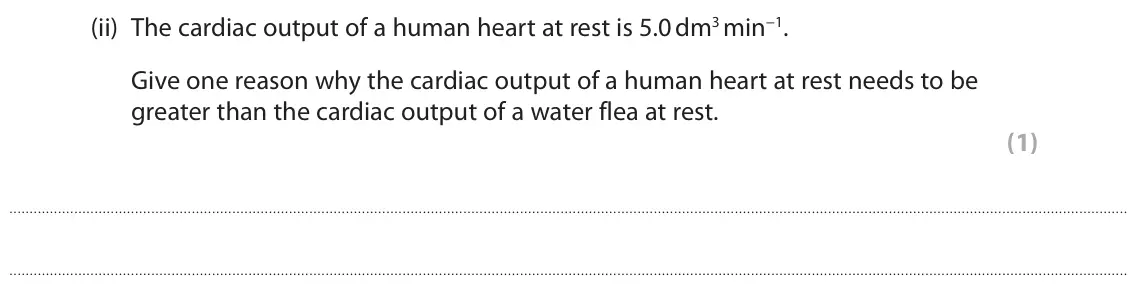
Q7(c)
The whole paper ↗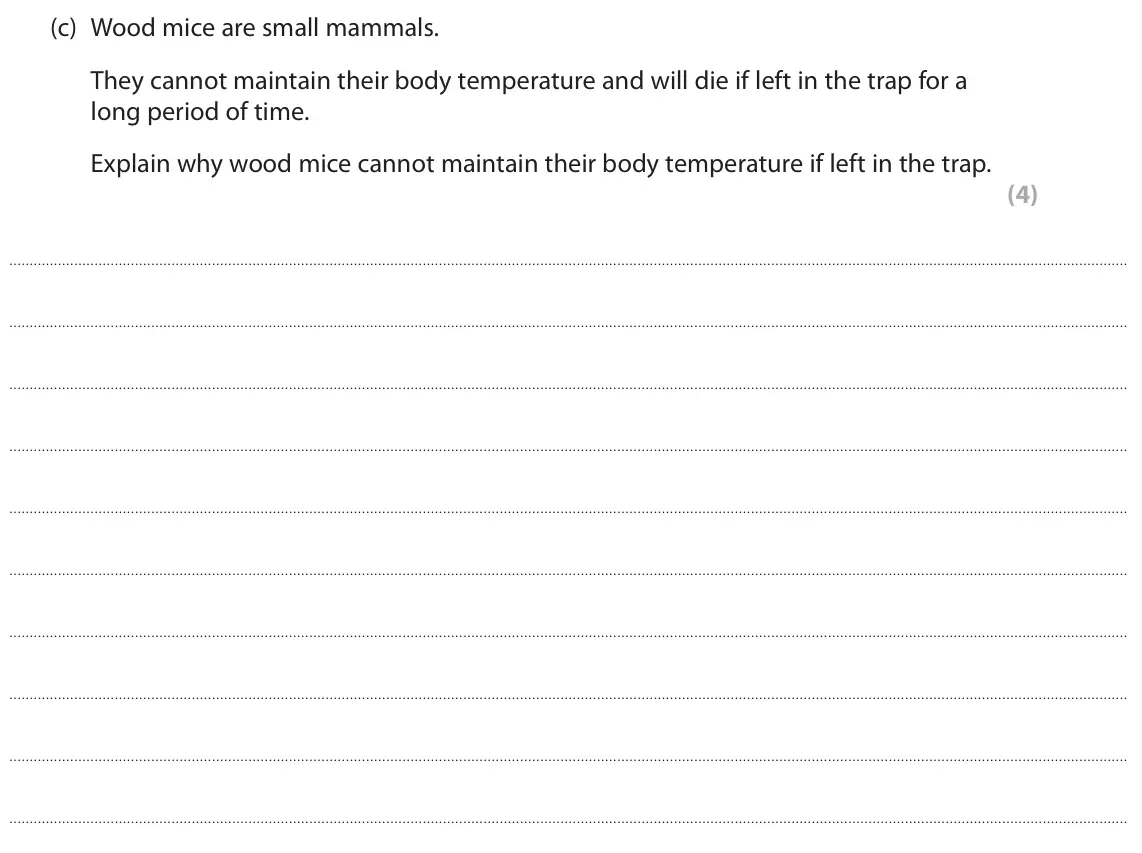
Q2(c)
The whole paper ↗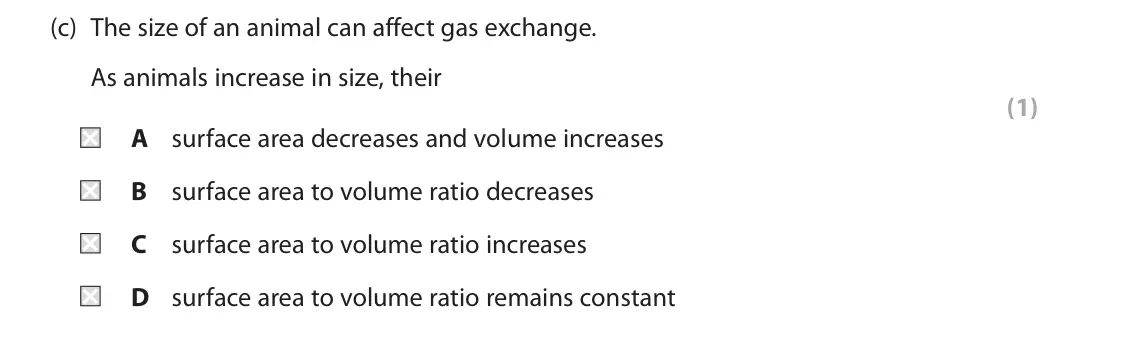
Q8(b)(i)
The whole paper ↗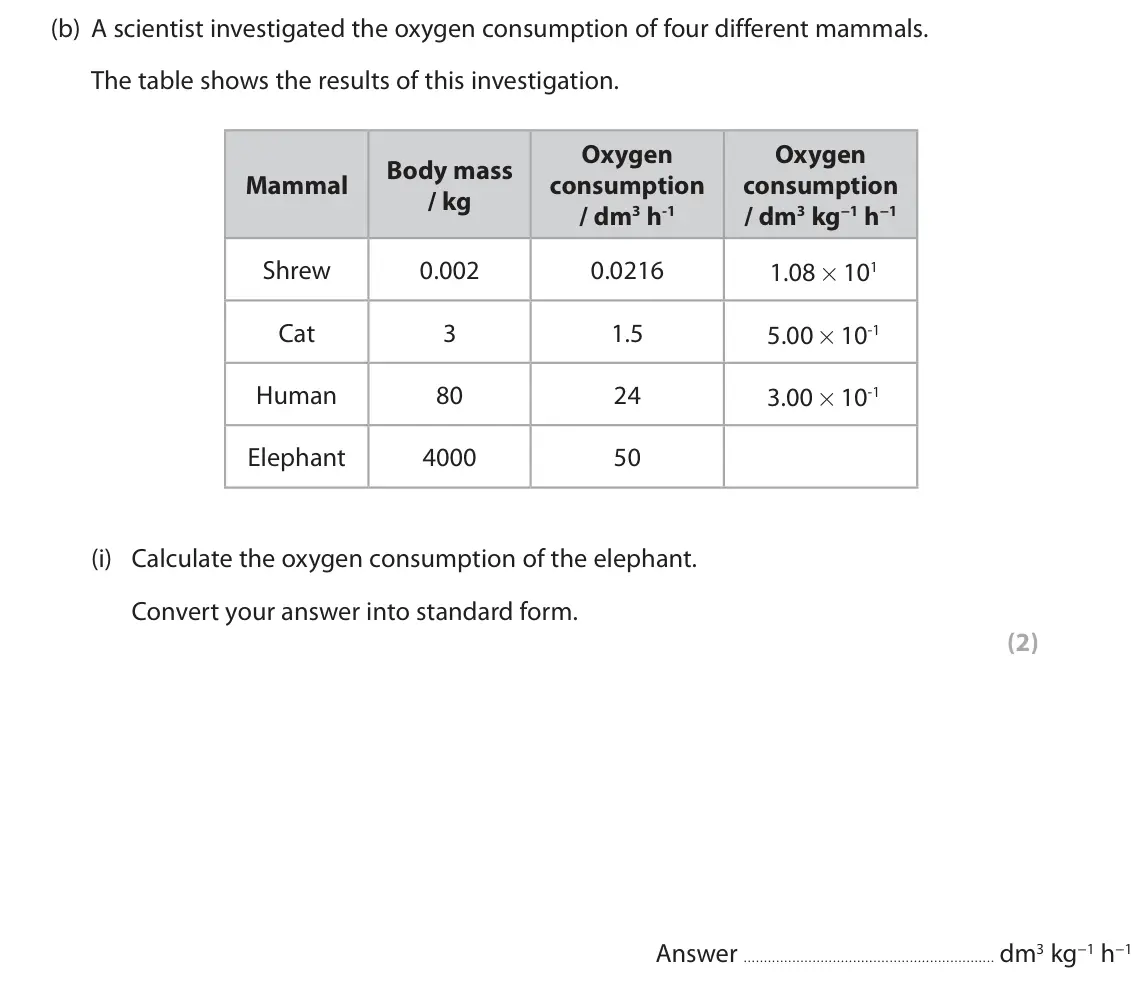
Q8(b)(ii)
The whole paper ↗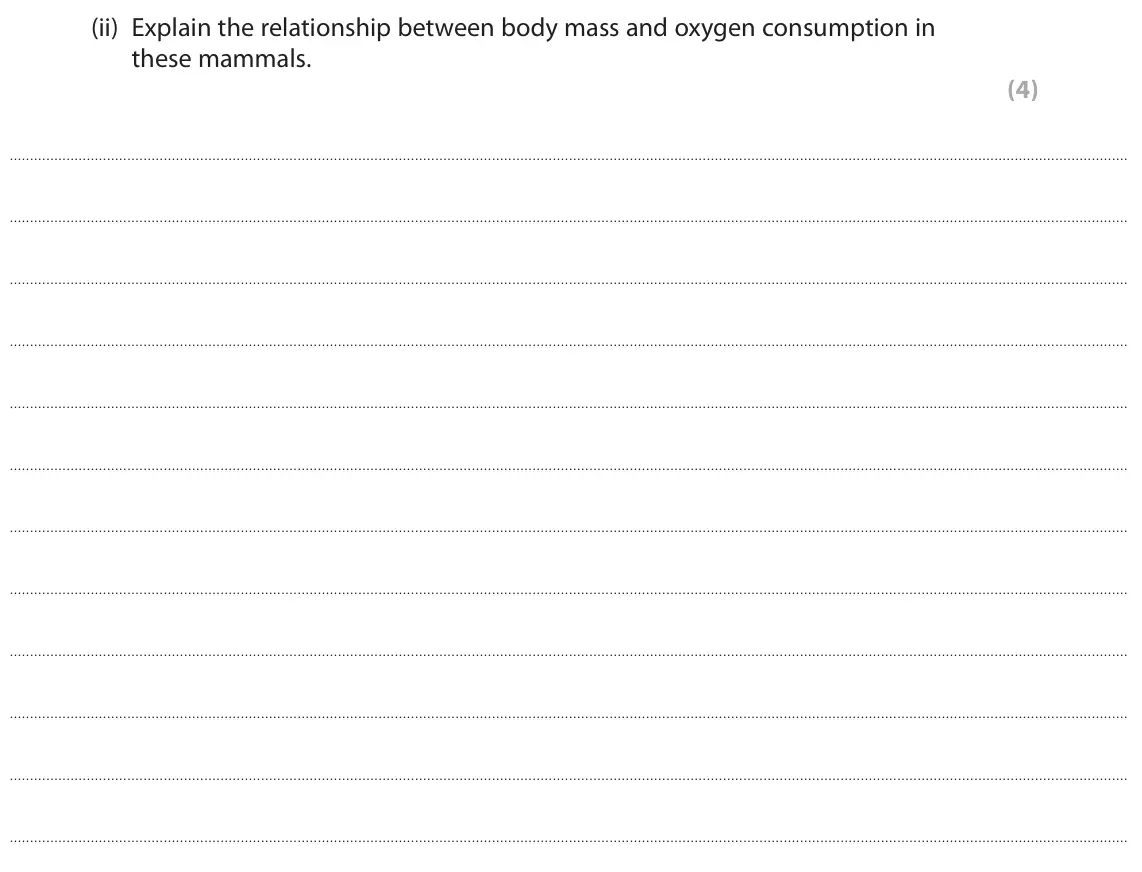
Q7(a)(i)
The whole paper ↗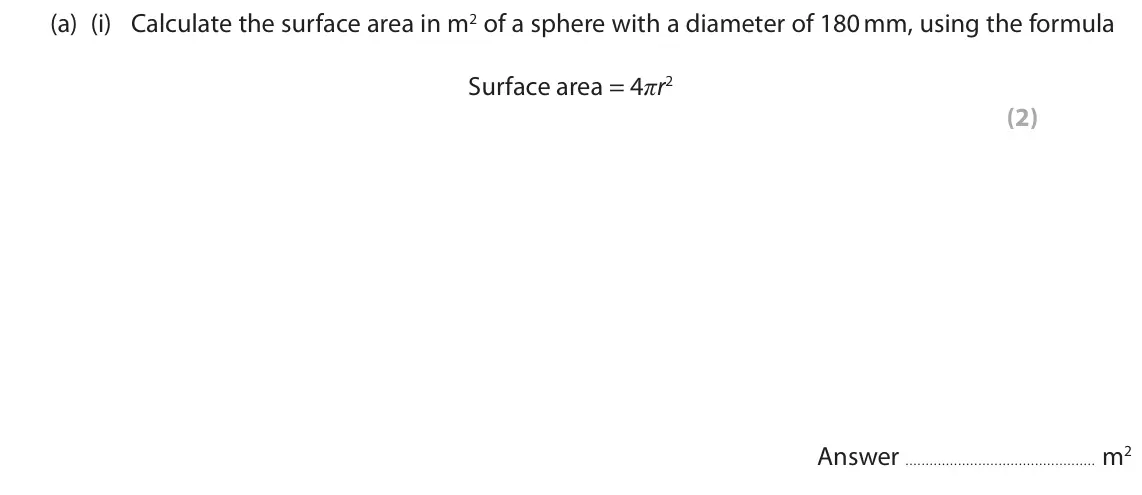
Q7(a)(ii)
The whole paper ↗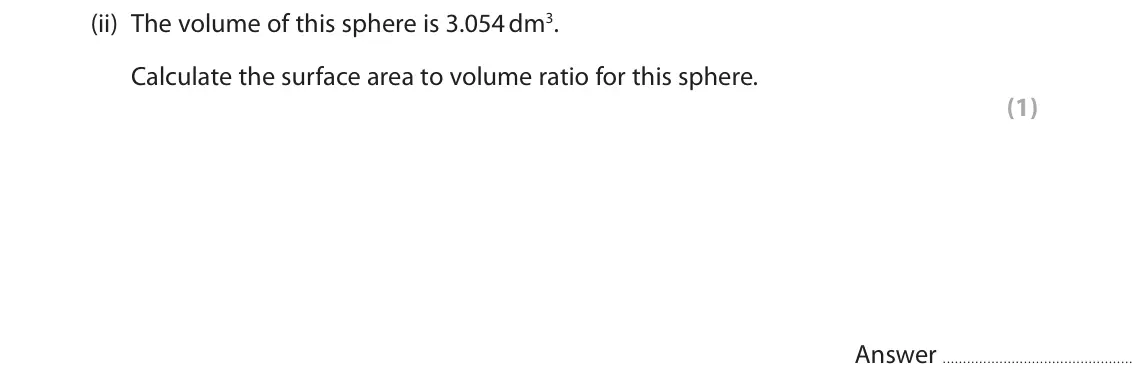
Q7(a)
The whole paper ↗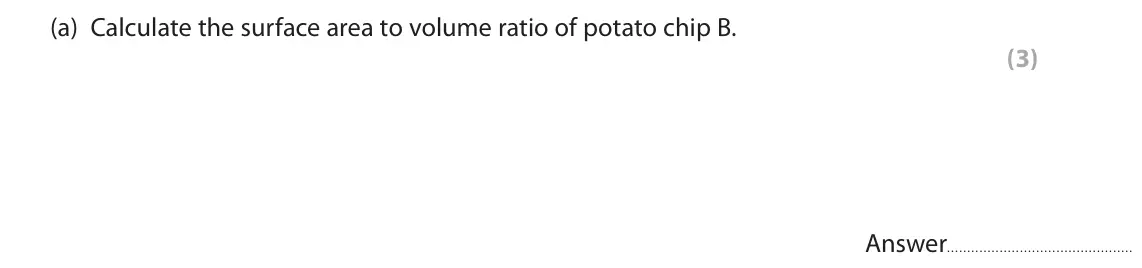
Q7(b)
The whole paper ↗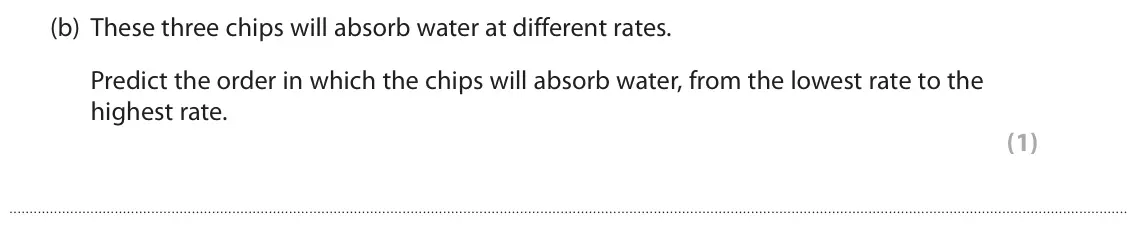
Q7(c)
The whole paper ↗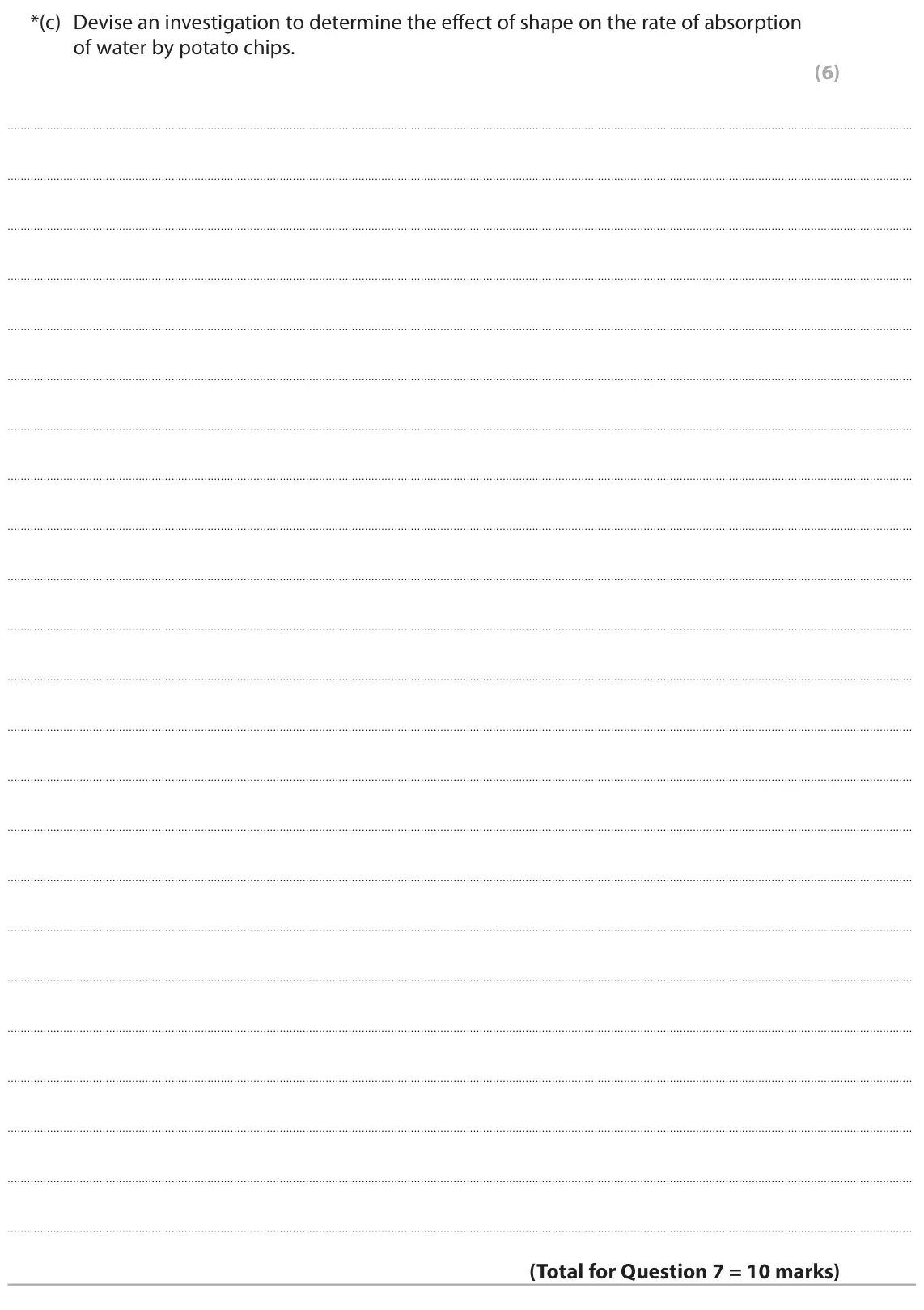
Q2(d)
The whole paper ↗
All 18 questions on Surface area to volume ratio, as a list
- June 2025, AS Paper 2, Q6(b)(i) (3 marks): The surface area of each potato cylinder is 17.3 cm2. Determine the surface area to volume ratio of one of these cylinders. Use the formula: Volume = πr2l Give
- June 2025, AS Paper 2, Q8(a) (3 marks): Explain why larger species of animal need specialised gas exchange surfaces. (3)
- June 2024, Paper 1, Q7(b)(ii) (1 mark): Calculate the length from head to tail : mass ratio for the great tit. Give your answer to one decimal place. (1) Answer
- June 2023, AS Paper 2, Q1(a) (1 mark): As organisms change size their relative dimensions also change. Which of the following statements are true? (1) As organisms become larger 1. the surface area i
- June 2023, AS Paper 2, Q1(b) (3 marks): Explain why larger organisms need a mass transport system but smaller organisms do not. (3)
- June 2022, AS Paper 2, Q1(b)(i) (2 marks): Calculate the volume of a sphere with a diameter of 7.20 µm. Use the formula V = 4 3 πr3 (2) Answer µm3
- June 2022, AS Paper 2, Q1(b)(ii) (3 marks): Explain how a red blood cell with the same diameter as this sphere enables it to carry out its functions in transporting gases in the blood. (3)
- October 2020, Paper 3, Q3(b)(ii) (1 mark): The cardiac output of a human heart at rest is 5.0 dm3 min−1. Give one reason why the cardiac output of a human heart at rest needs to be greater than the cardi
- October 2020, Paper 3, Q7(c) (4 marks): Wood mice are small mammals. They cannot maintain their body temperature and will die if left in the trap for a long period of time. Explain why wood mice canno
- October 2020, AS Paper 2, Q2(c) (1 mark): The size of an animal can affect gas exchange. As animals increase in size, their (1) A surface area decreases and volume increases B surface area to volume rat
- June 2019, Paper 3, Q8(b)(i) (2 marks): Calculate the oxygen consumption of the elephant. Convert your answer into standard form. (2) Answer dm3 kg−1 h−1
- June 2019, Paper 3, Q8(b)(ii) (4 marks): Explain the relationship between body mass and oxygen consumption in these mammals. (4)
- June 2019, AS Paper 2, Q7(a)(i) (2 marks): Calculate the surface area in m2 of a sphere with a diameter of 180 mm, using the formula Surface area = 4ʌr2 (2) Answer m2
- June 2019, AS Paper 2, Q7(a)(ii) (1 mark): The volume of this sphere is 3.054 dm3. Calculate the surface area to volume ratio for this sphere. (1) Answer
- June 2018, AS Paper 2, Q7(a) (3 marks): Calculate the surface area to volume ratio of potato chip B. (3) Answer
- June 2018, AS Paper 2, Q7(b) (1 mark): These three chips will absorb water at different rates. Predict the order in which the chips will absorb water, from the lowest rate to the highest rate. (1)
- June 2018, AS Paper 2, Q7(c) (6 marks): Devise an investigation to determine the effect of shape on the rate of absorption of water by potato chips. (6)
- June 2017, Paper 3, Q2(d) (2 marks): Locusts have a complex gas exchange system because they are multicellular organisms. Explain why single-celled organisms do not have a gas exchange system. (2)
Questions, mark schemes and examiner’s reports are © Pearson Edexcel, from their published past papers. Plumi isn’t affiliated with any exam board. Want whole papers? Every Edexcel A-Level Biology B paper.
Rather write your answers by hand on iPad? Plumi marks them against the same mark schemes.