 plumi
Transfer of materials between the circulatory system and cells: Edexcel A‑Level Biology B questions
Every Edexcel A-Level Biology B exam question on 4.6 Transfer of materials between the circulatory system and cells, 2016–2025, with its mark scheme and examiner’s report.
Find questions1,826
Calculations
Q1(b)
The whole paper ↗
Q6(b)(i)
The whole paper ↗
Q1(b)(i)
The whole paper ↗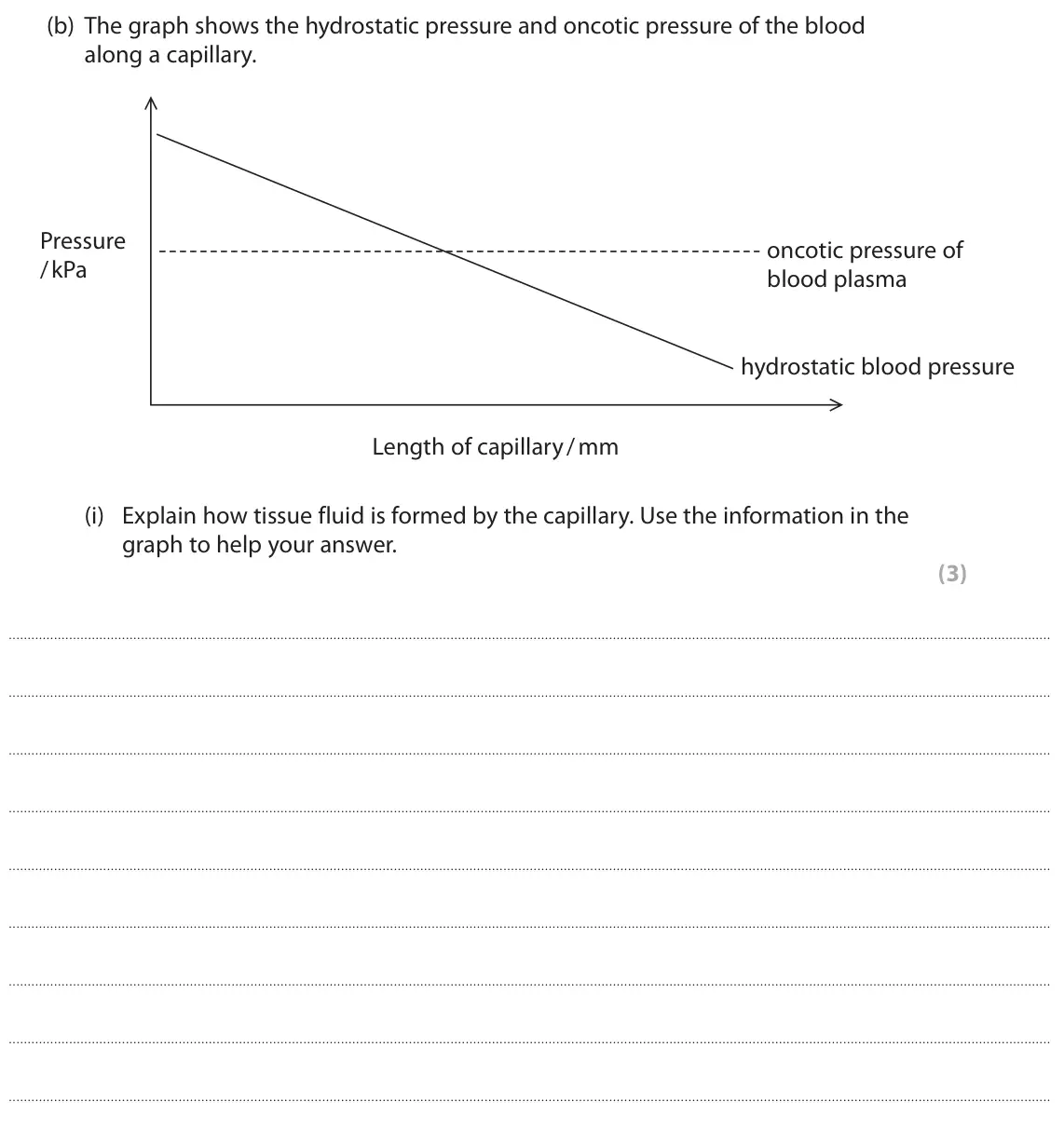
Q1(b)(ii)
The whole paper ↗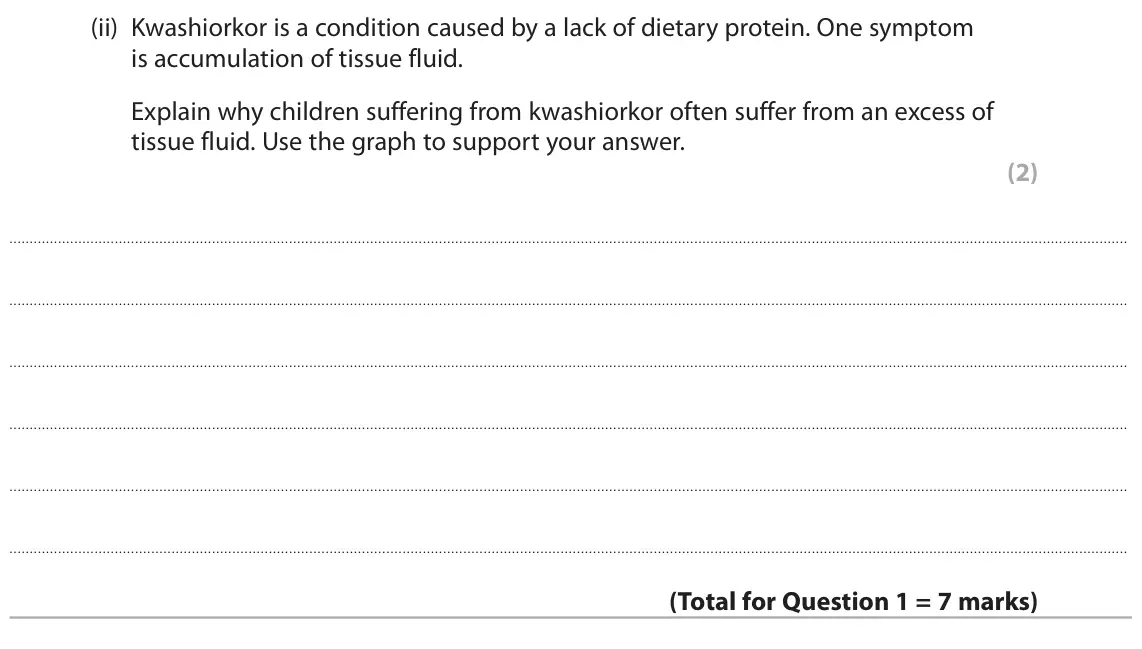
Q2(a)
The whole paper ↗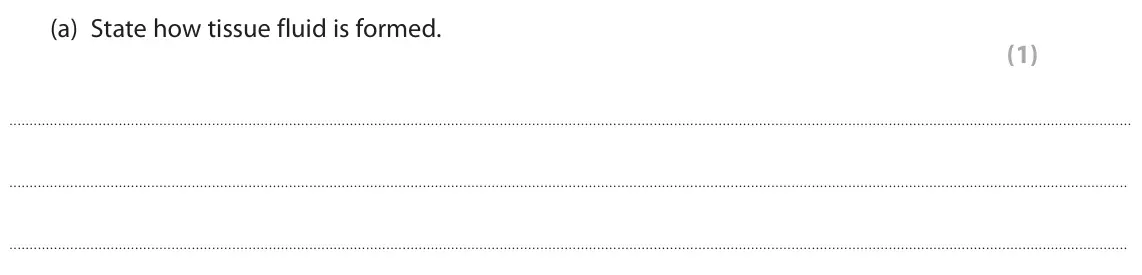
Q2(b)
The whole paper ↗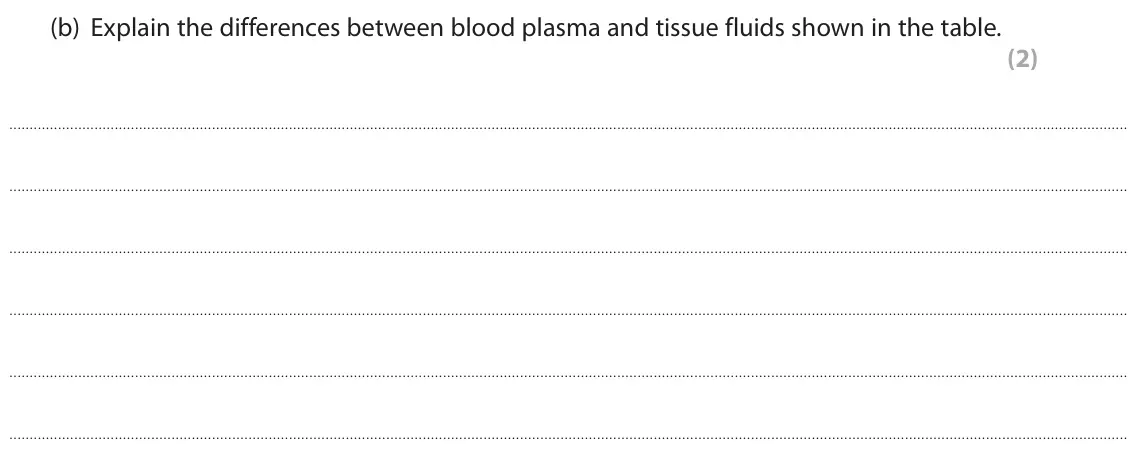
Q2(c)
The whole paper ↗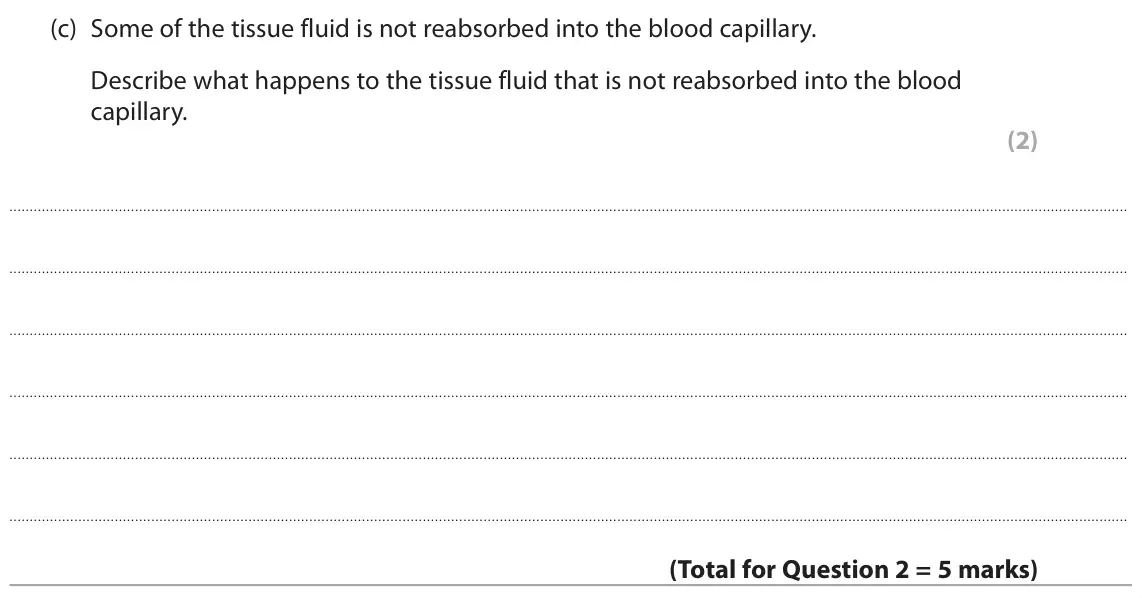
Q2(b)
The whole paper ↗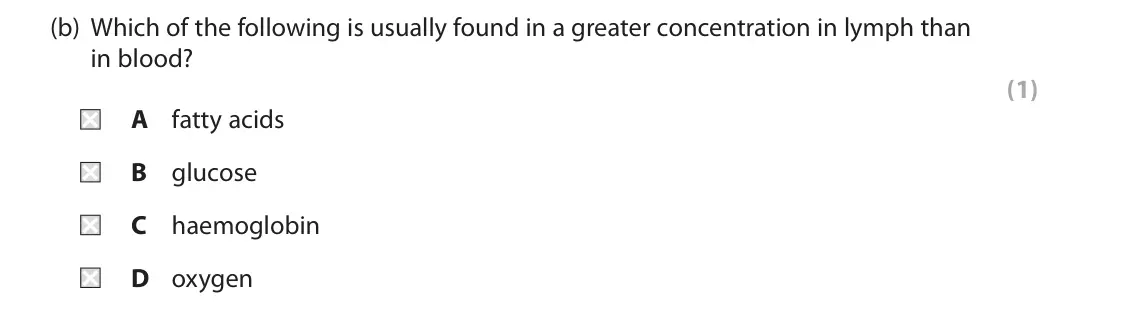
Q8(a)(i)
The whole paper ↗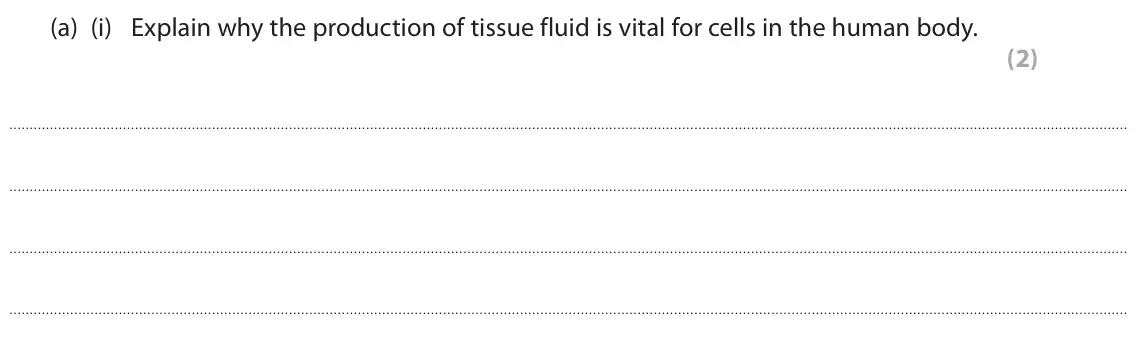
Q8(a)(ii)
The whole paper ↗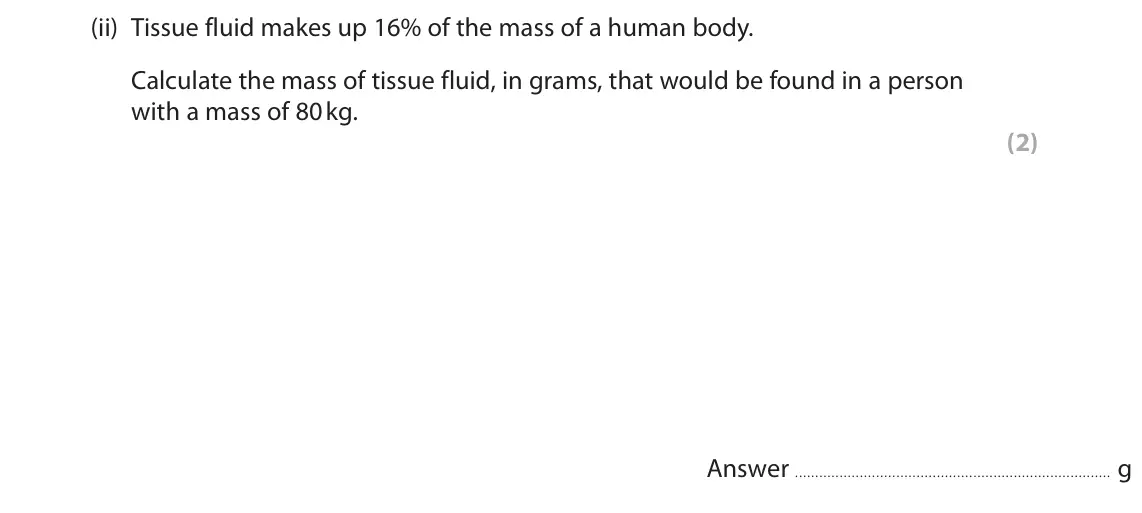
Q8(b)(i)
The whole paper ↗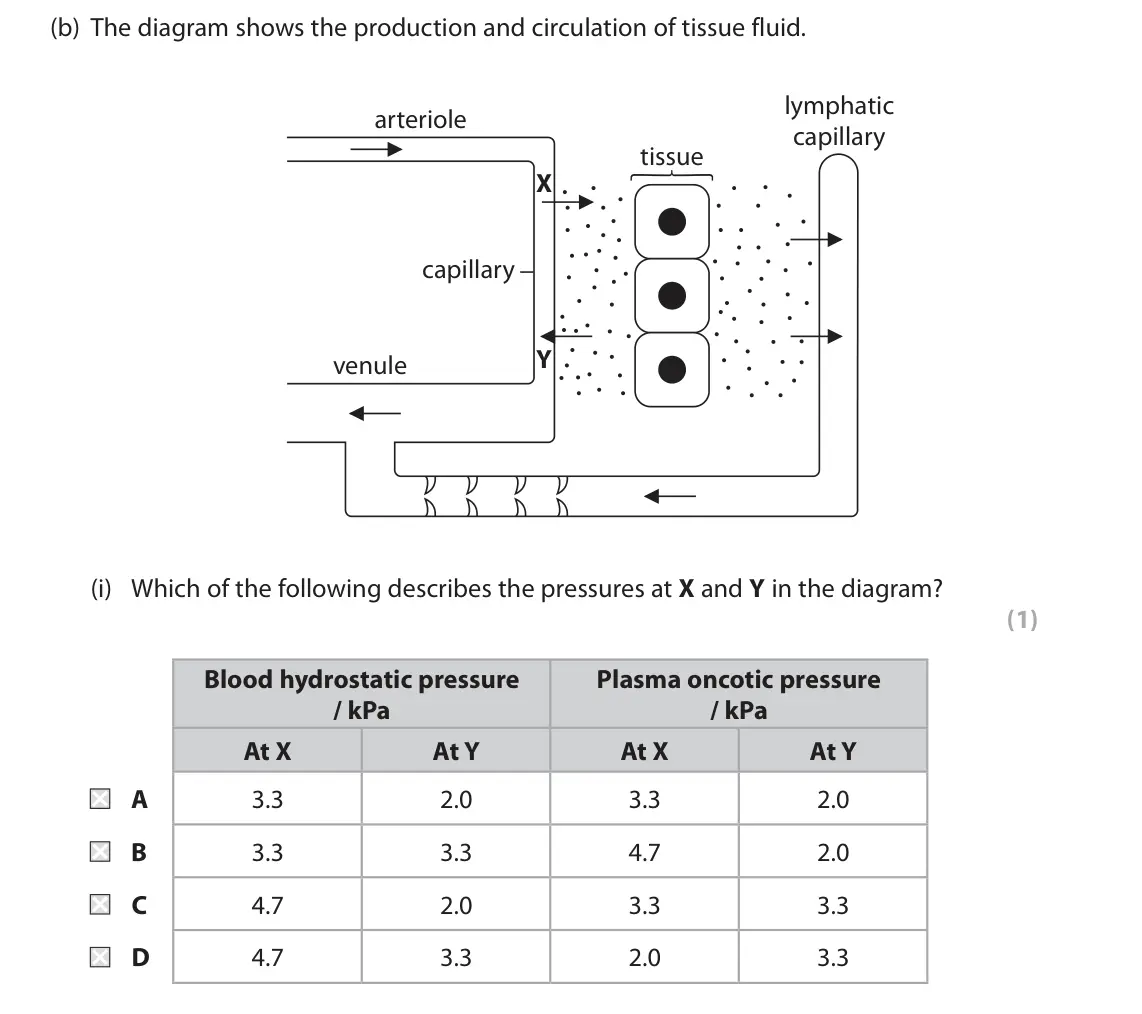
Q8(b)(ii)
The whole paper ↗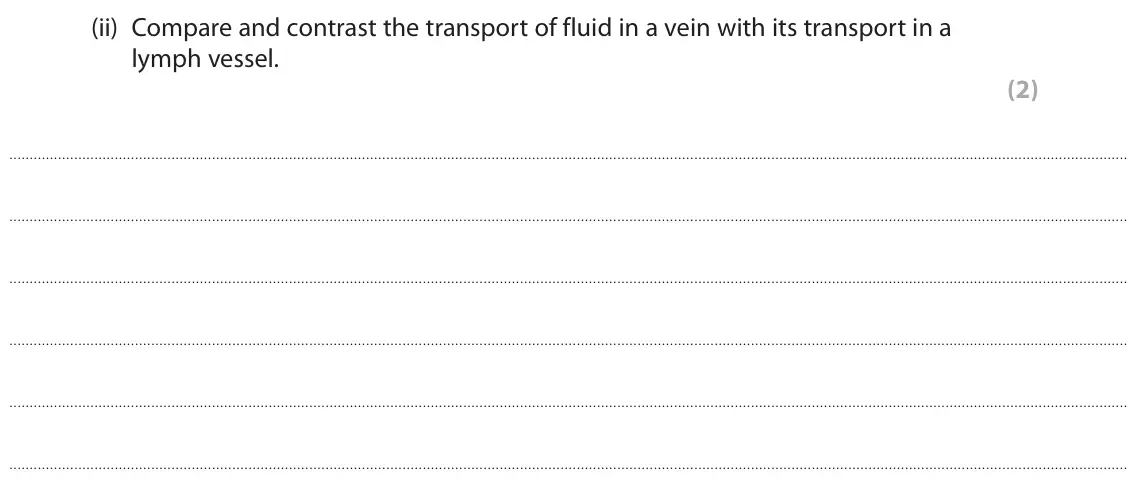
Q8(c)
The whole paper ↗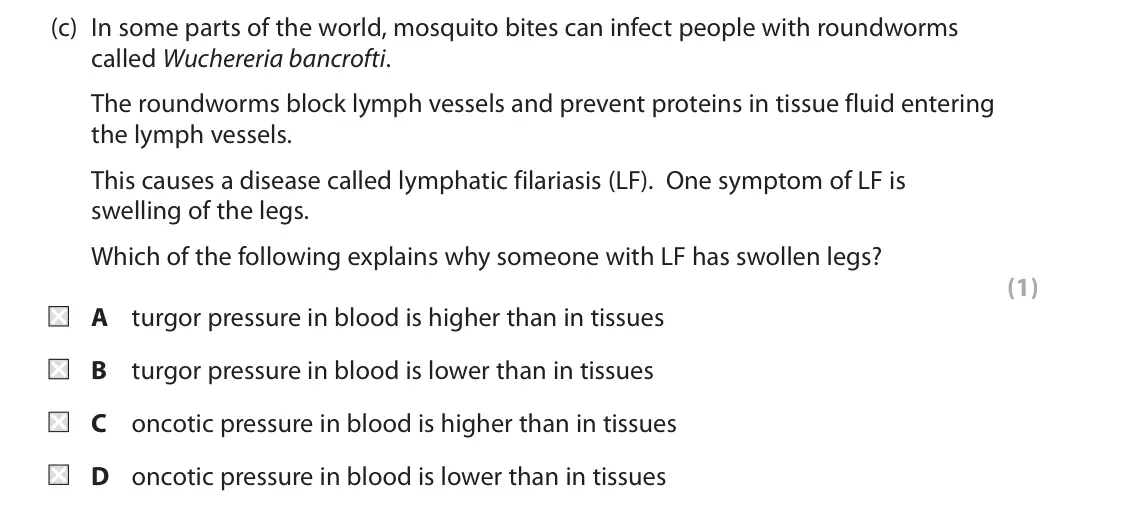
Q8(d)
The whole paper ↗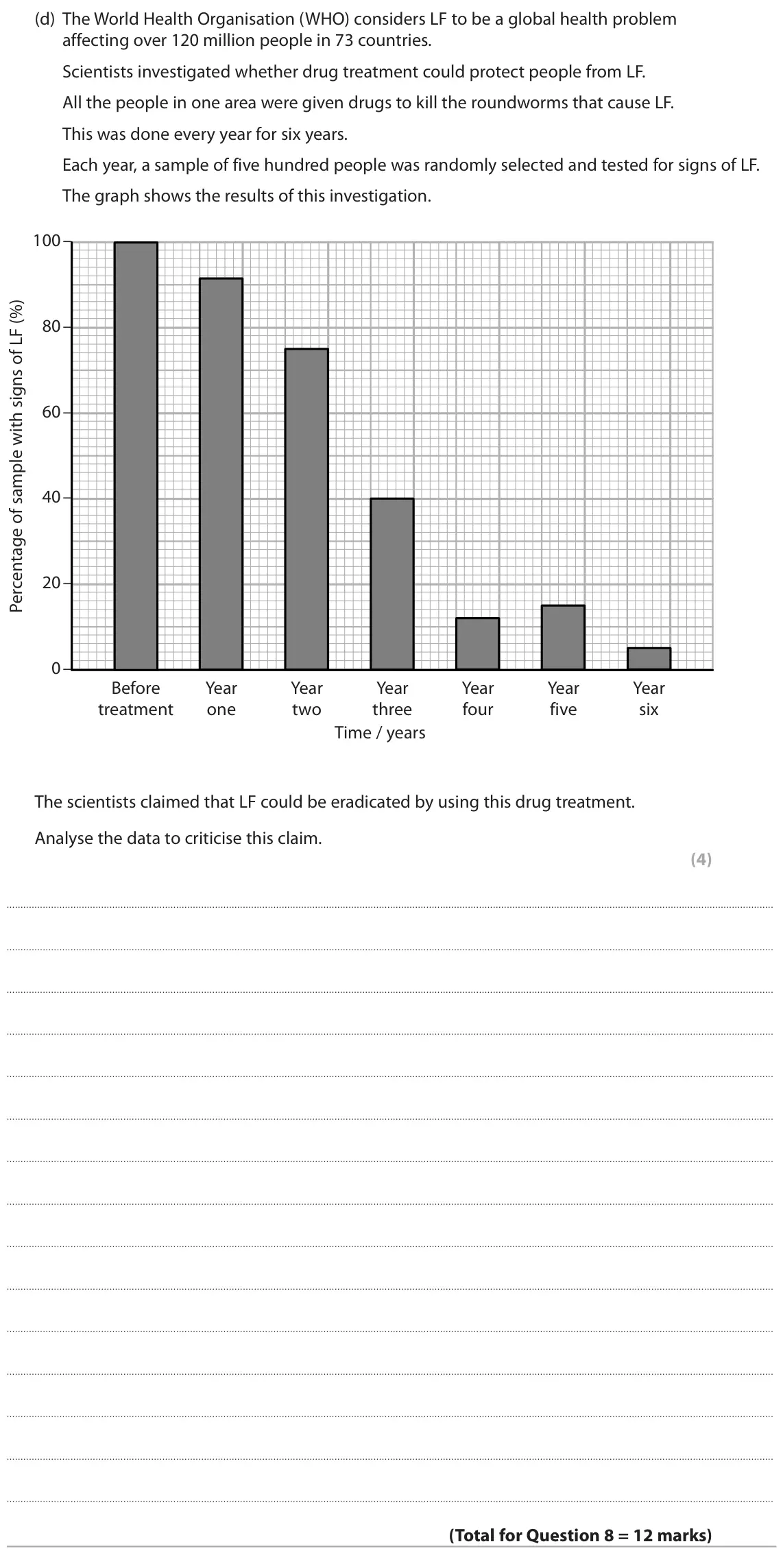
Q4(b)(i)
The whole paper ↗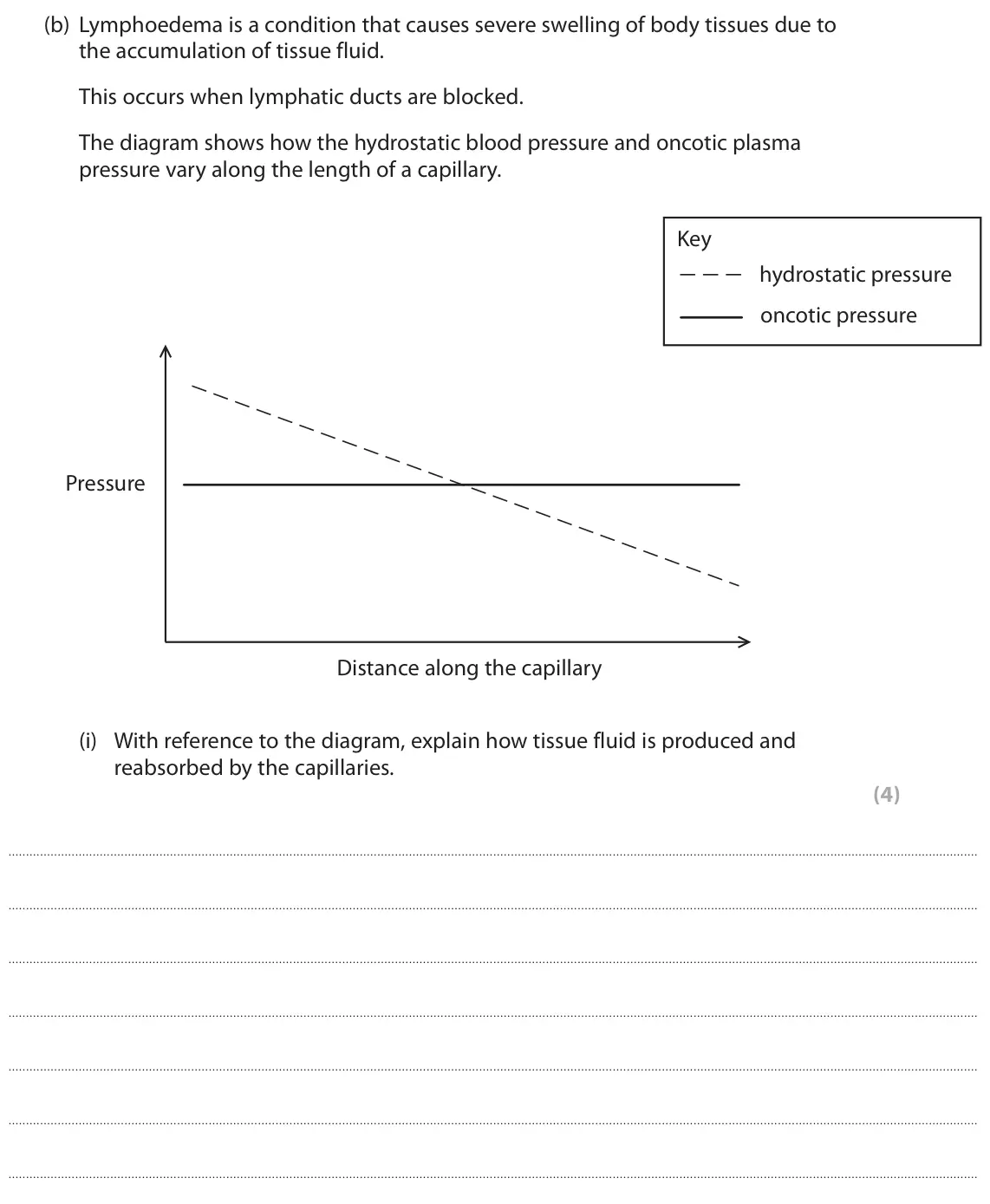
Q4(b)(ii)
The whole paper ↗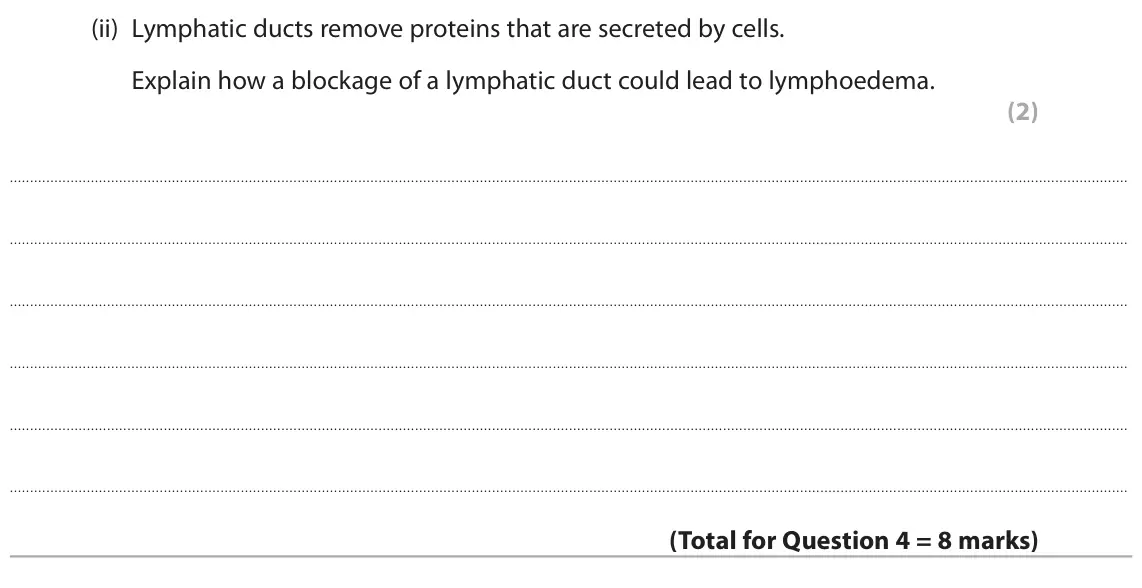
All 16 questions on Transfer of materials between the circulatory system and cells, as a list
- June 2024, Paper 1, Q1(b) (2 marks): Nutrients and oxygen pass into cells from tissue fluid. Explain how tissue fluid is formed. (2)
- June 2022, Paper 2, Q6(b)(i) (3 marks): Explain how tissue fluid is returned to capillaries. (3)
- November 2021, Paper 2, Q1(b)(i) (3 marks): Explain how tissue fluid is formed by the capillary. Use the information in the graph to help your answer. (3)
- November 2021, Paper 2, Q1(b)(ii) (2 marks): Kwashiorkor is a condition caused by a lack of dietary protein. One symptom is accumulation of tissue fluid. Explain why children suffering from kwashiorkor oft
- October 2020, Paper 1, Q2(a) (1 mark): State how tissue fluid is formed. (1)
- October 2020, Paper 1, Q2(b) (2 marks): Explain the differences between blood plasma and tissue fluids shown in the table. (2)
- October 2020, Paper 1, Q2(c) (2 marks): Some of the tissue fluid is not reabsorbed into the blood capillary. Describe what happens to the tissue fluid that is not reabsorbed into the blood capillary.
- October 2020, AS Paper 2, Q2(b) (1 mark): Which of the following is usually found in a greater concentration in lymph than in blood? (1) A fatty acids B glucose C haemoglobin D oxygen
- June 2017, AS Paper 2, Q8(a)(i) (2 marks): Explain why the production of tissue fluid is vital for cells in the human body. (2)
- June 2017, AS Paper 2, Q8(a)(ii) (2 marks): Tissue fluid makes up 16% of the mass of a human body. Calculate the mass of tissue fluid, in grams, that would be found in a person with a mass of 80 kg. (2) A
- June 2017, AS Paper 2, Q8(b)(i) (1 mark): Which of the following describes the pressures at X and Y in the diagram? (1) Blood hydrostatic pressure Plasma oncotic pressure / kPa / kPa At X At Y At X At Y
- June 2017, AS Paper 2, Q8(b)(ii) (2 marks): Compare and contrast the transport of fluid in a vein with its transport in a lymph vessel. (2)
- June 2017, AS Paper 2, Q8(c) (1 mark): In some parts of the world, mosquito bites can infect people with roundworms called Wuchereria bancrofti. The roundworms block lymph vessels and prevent protein
- June 2017, AS Paper 2, Q8(d) (4 marks): The World Health Organisation (WHO) considers LF to be a global health problem affecting over 120 million people in 73 countries. Scientists investigated whethe
- June 2016, AS Paper 2, Q4(b)(i) (4 marks): With reference to the diagram, explain how tissue fluid is produced and reabsorbed by the capillaries. (4)
- June 2016, AS Paper 2, Q4(b)(ii) (2 marks): Lymphatic ducts remove proteins that are secreted by cells. Explain how a blockage of a lymphatic duct could lead to lymphoedema. (2)
Questions, mark schemes and examiner’s reports are © Pearson Edexcel, from their published past papers. Plumi isn’t affiliated with any exam board. Want whole papers? Every Edexcel A-Level Biology B paper.
Rather write your answers by hand on iPad? Plumi marks them against the same mark schemes.