 plumi
Transport of gases in the blood: Edexcel A‑Level Biology B questions
Every Edexcel A-Level Biology B exam question on 4.5 Transport of gases in the blood, 2016–2025, with its mark scheme and examiner’s report.
Find questions1,826
Calculations
Q4(b)(i)
The whole paper ↗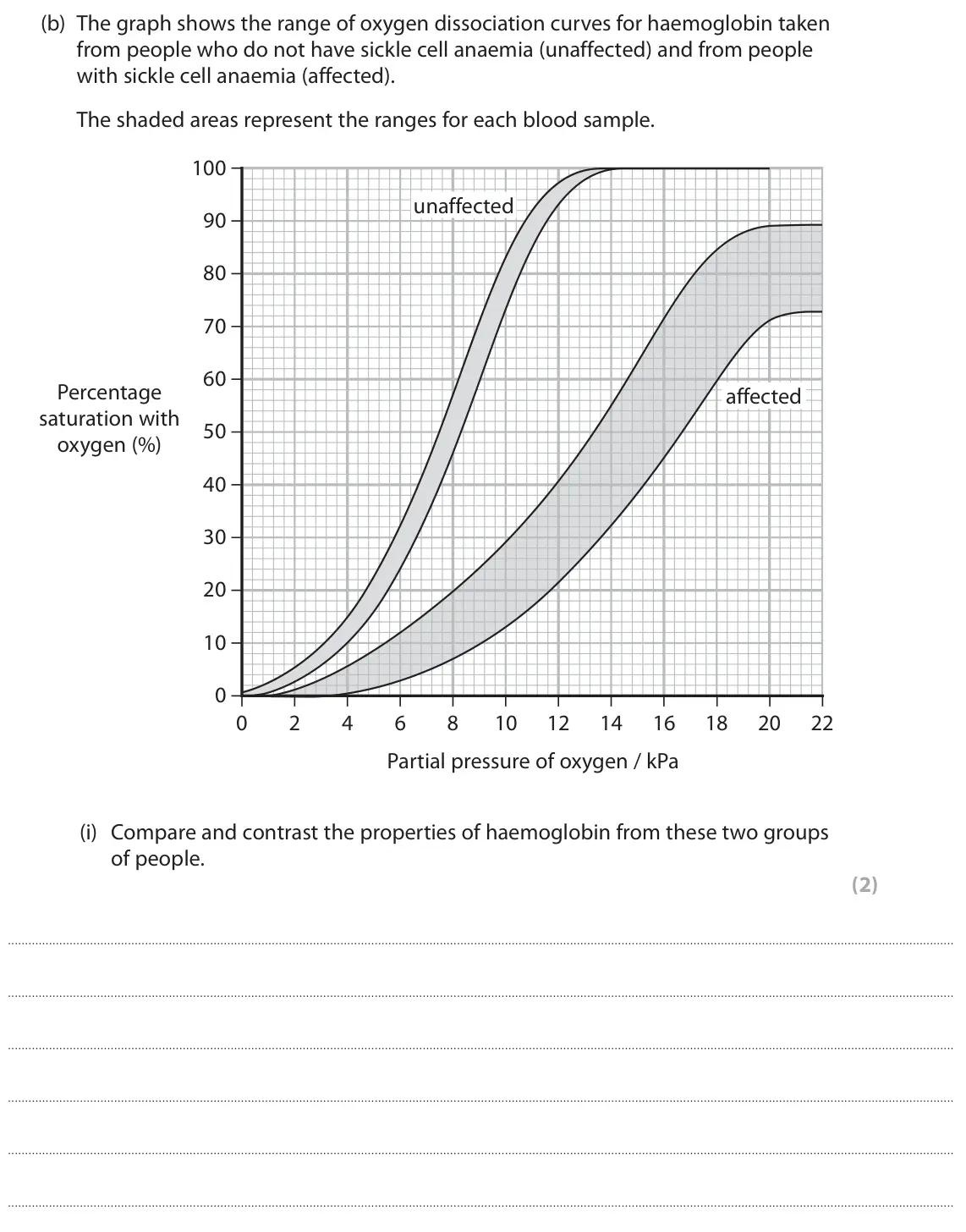
Q4(b)(iii)
The whole paper ↗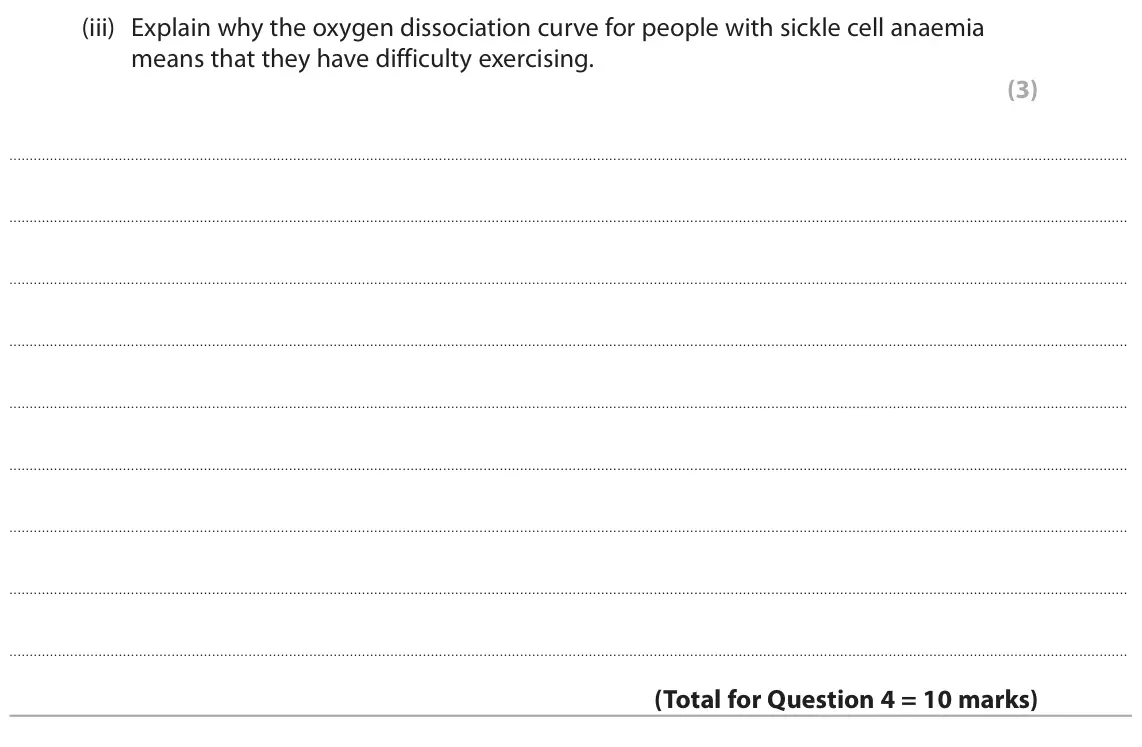
Q5(b)(i)
The whole paper ↗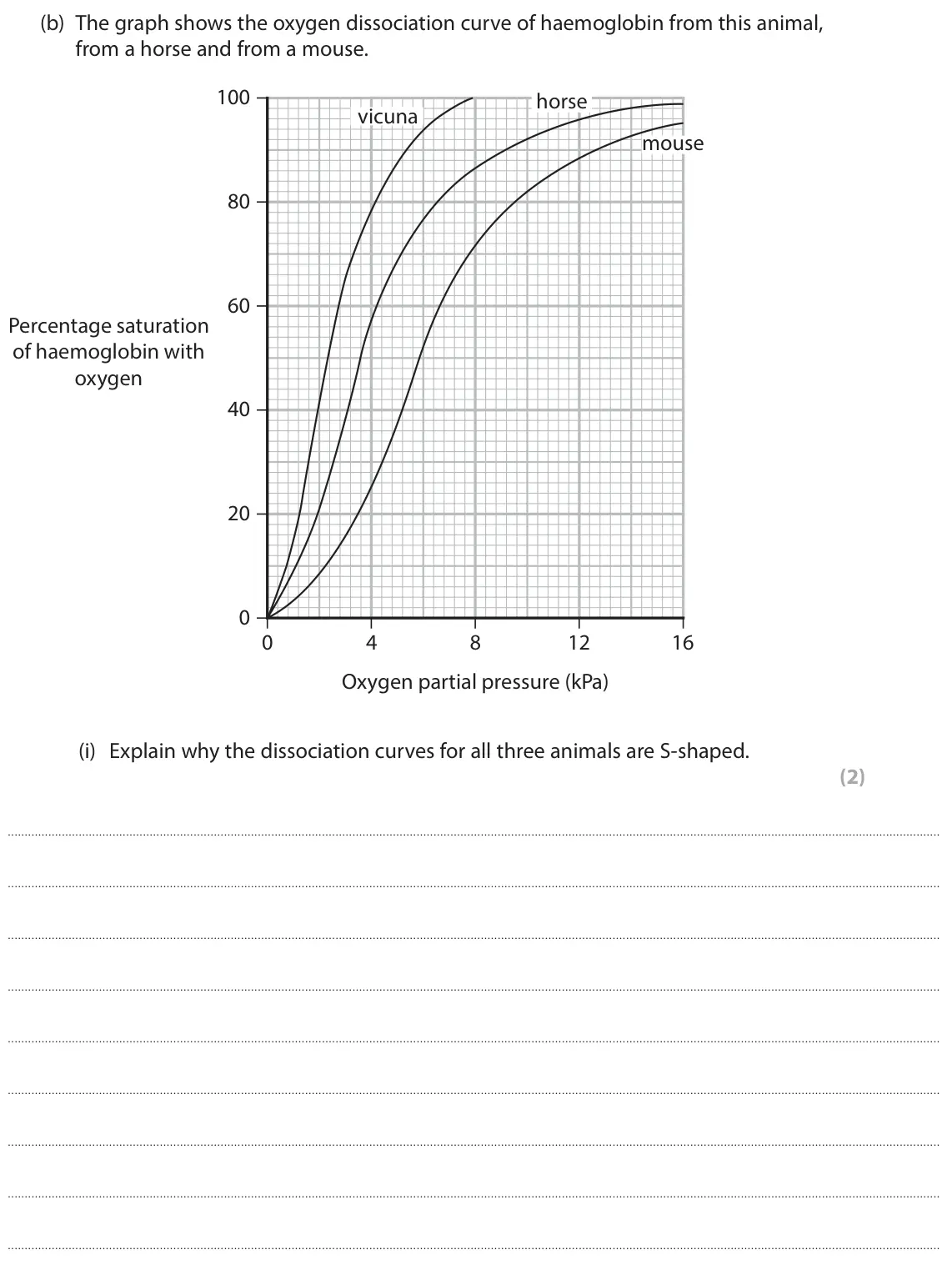
Q5(b)(ii)
The whole paper ↗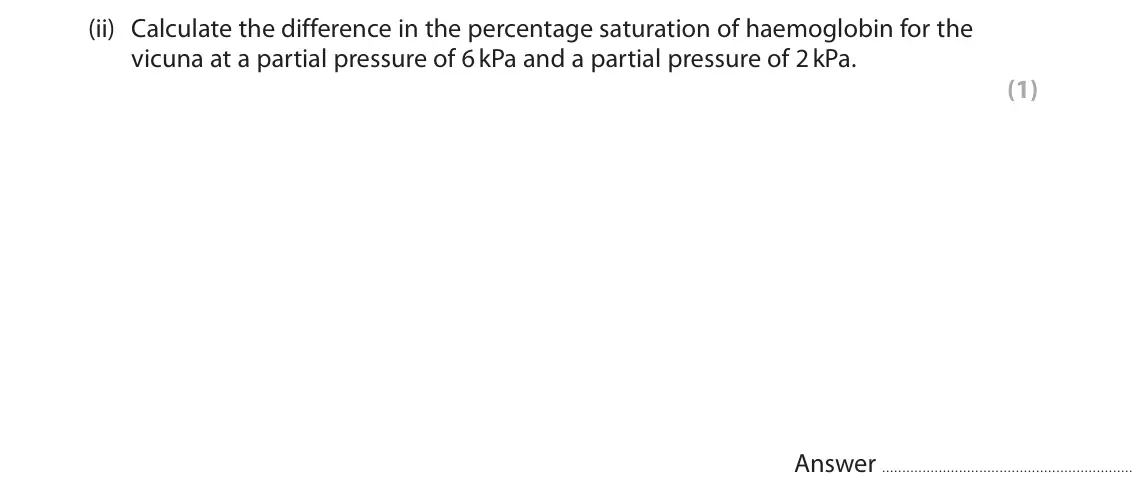
Q5(b)(iii)
The whole paper ↗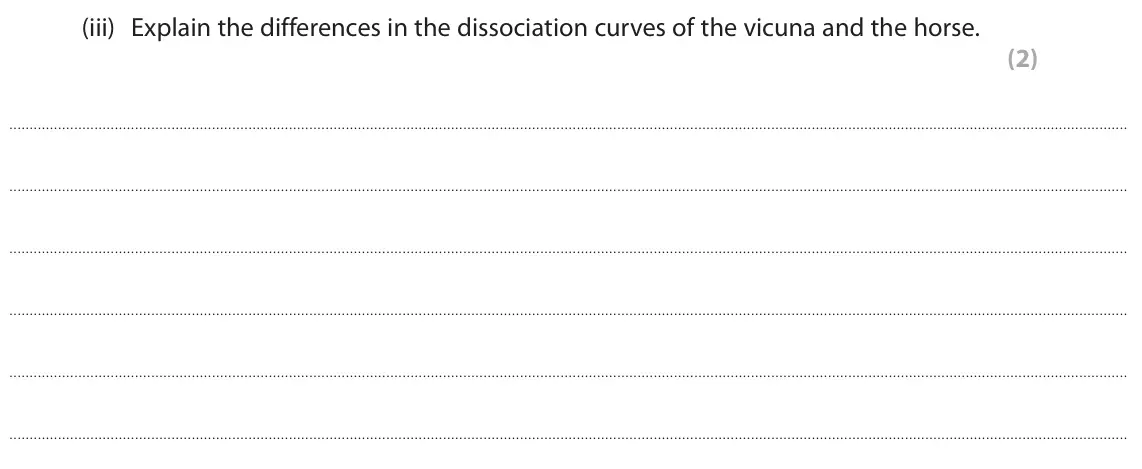
Q5(c)
The whole paper ↗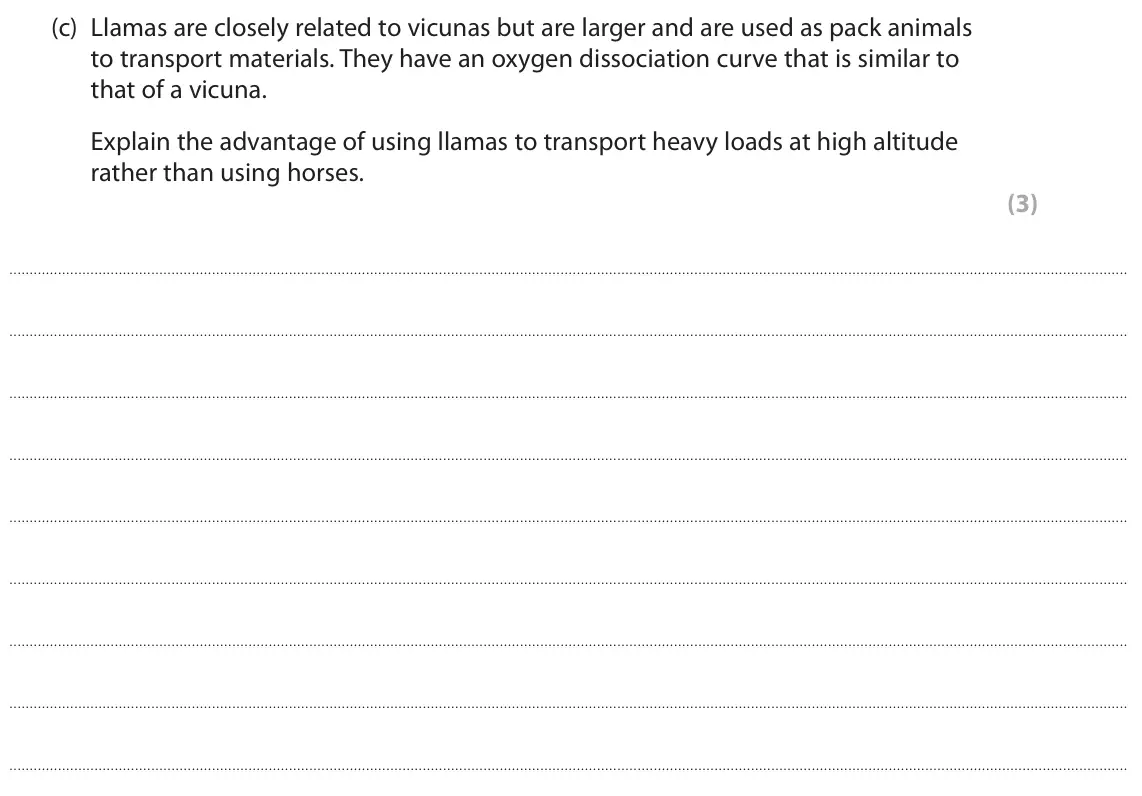
Q5(d)
The whole paper ↗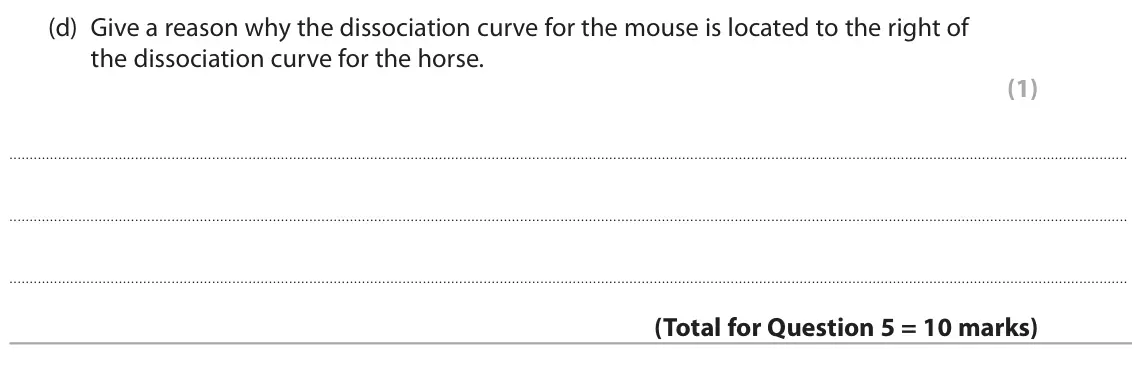
Q9(a)(ii)
The whole paper ↗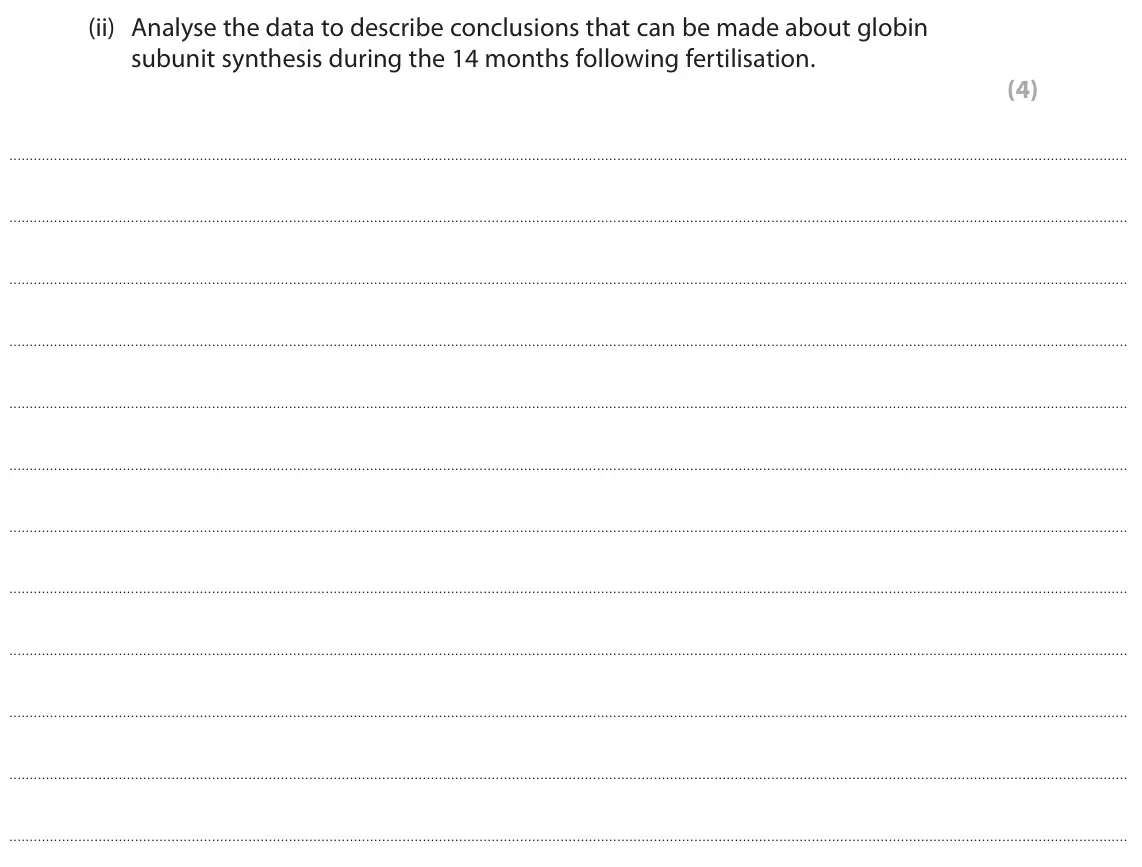
Q9(a)(iii)
The whole paper ↗
Q6(a)
The whole paper ↗
Q6(b)
The whole paper ↗
Q8(a)(i)
The whole paper ↗
Q8(a)(ii)
The whole paper ↗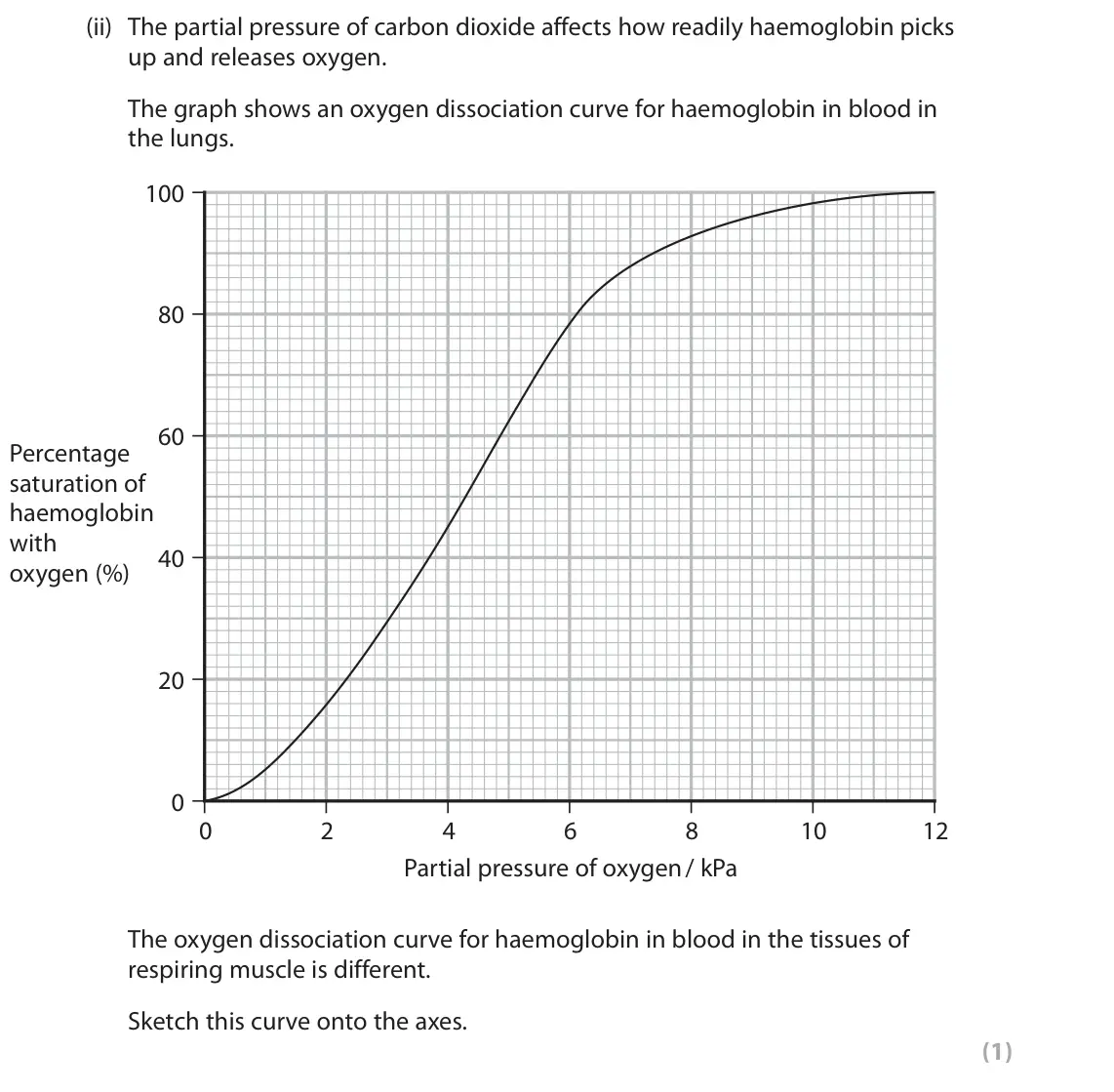
Q8(a)(iii)
The whole paper ↗
Q5(a)
The whole paper ↗
Q5(b)
The whole paper ↗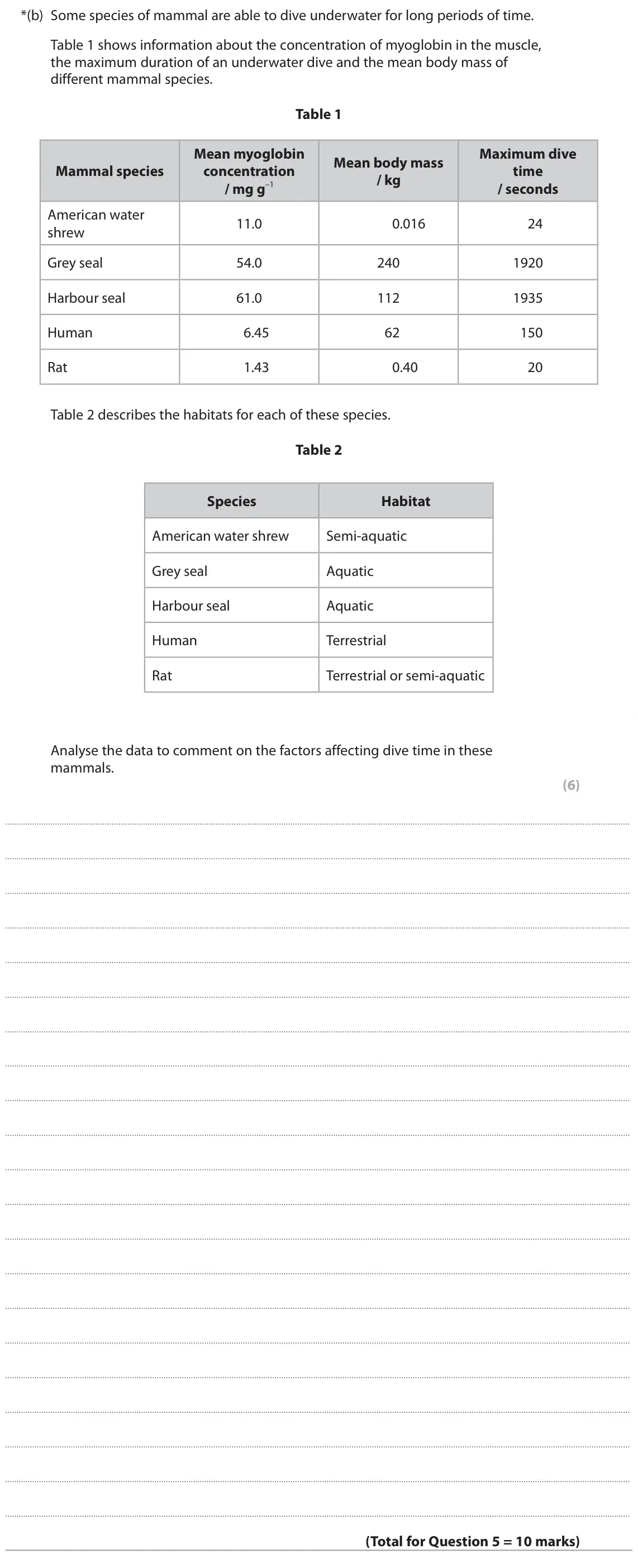
Q8(a)(i)
The whole paper ↗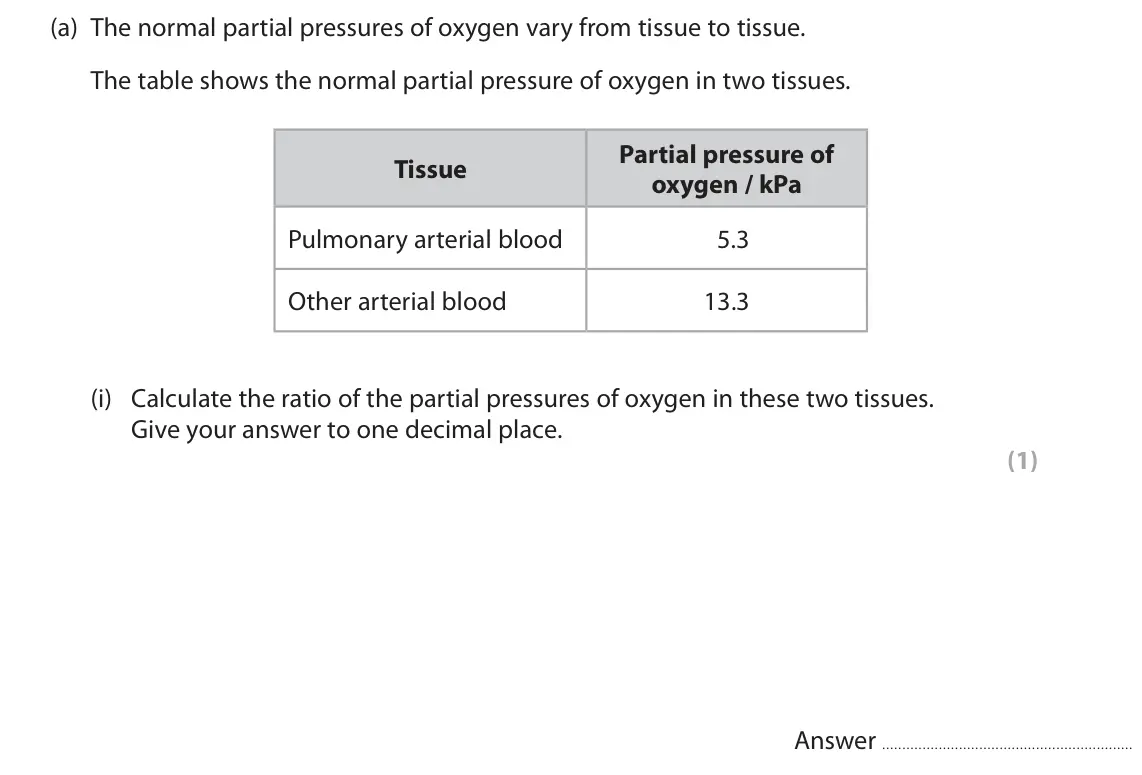
Q8(a)(ii)
The whole paper ↗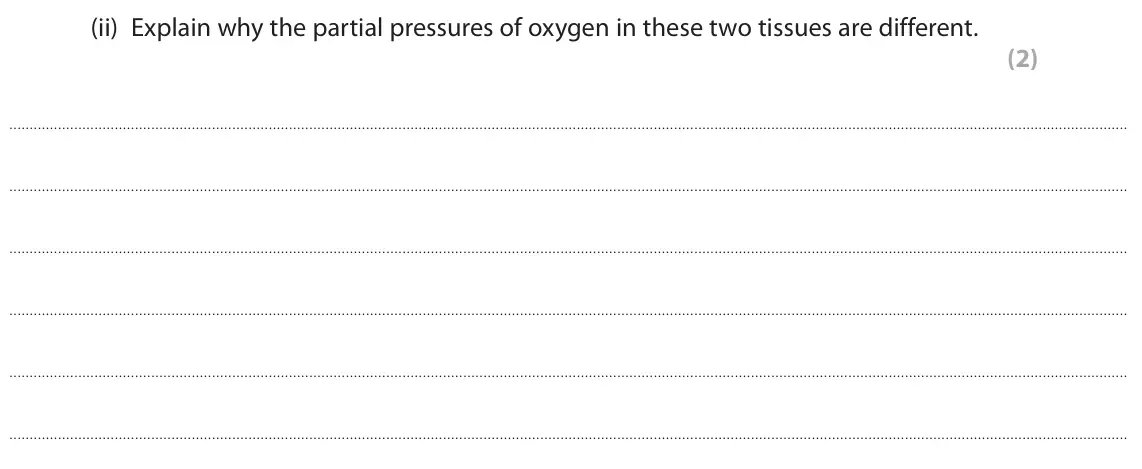
Q8(c)(i)
The whole paper ↗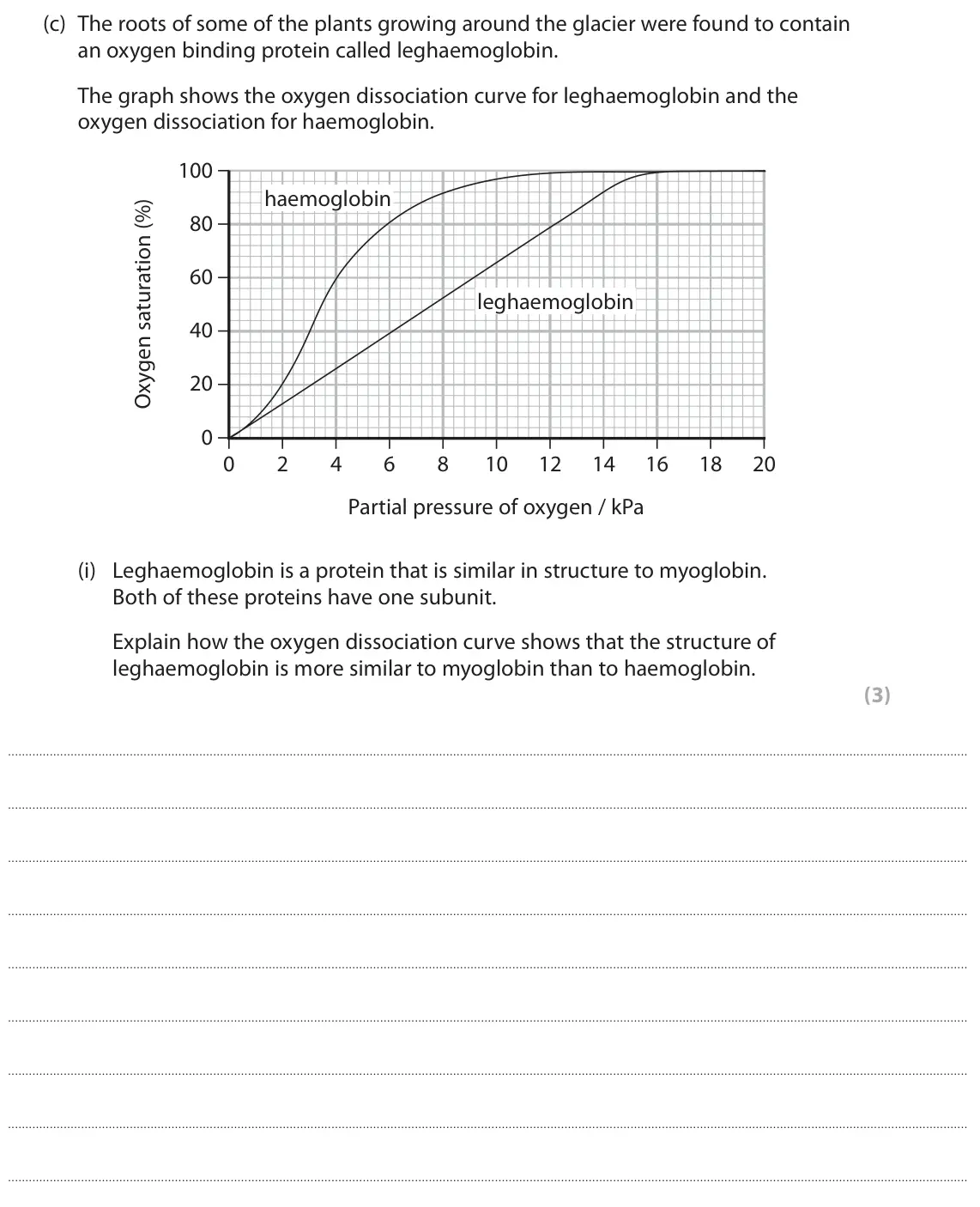
Q8(c)(ii)
The whole paper ↗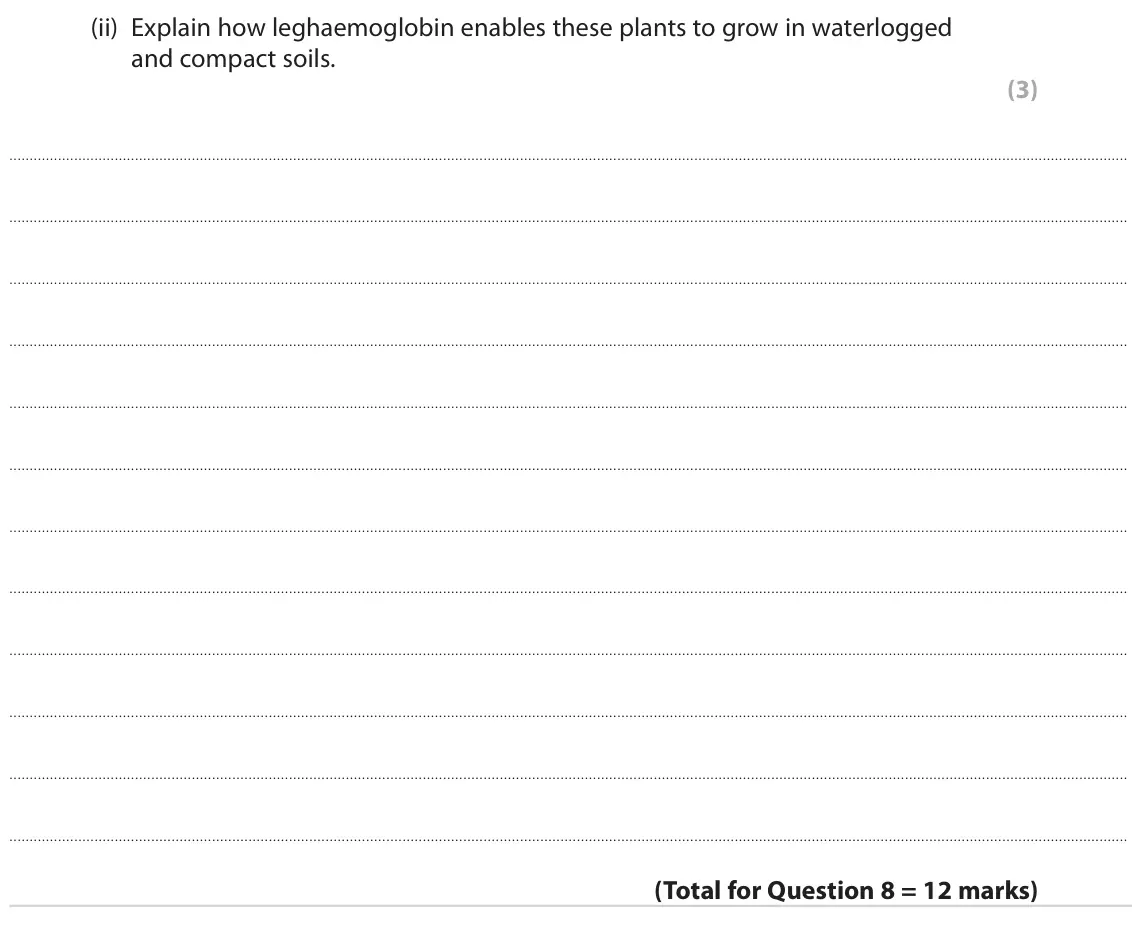
All 46 questions on Transport of gases in the blood, as a list
- June 2025, Paper 2, Q4(b)(i) (2 marks): Compare and contrast the properties of haemoglobin from these two groups of people. (2)
- June 2025, Paper 2, Q4(b)(iii) (3 marks): Explain why the oxygen dissociation curve for people with sickle cell anaemia means that they have difficulty exercising. (3)
- June 2025, AS Paper 2, Q5(b)(i) (2 marks): Explain why the dissociation curves for all three animals are S‑shaped. (2)
- June 2025, AS Paper 2, Q5(b)(ii) (1 mark): Calculate the difference in the percentage saturation of haemoglobin for the vicuna at a partial pressure of 6 kPa and a partial pressure of 2 kPa. (1) Answer
- June 2025, AS Paper 2, Q5(b)(iii) (2 marks): Explain the differences in the dissociation curves of the vicuna and the horse. (2)
- June 2025, AS Paper 2, Q5(c) (3 marks): Llamas are closely related to vicunas but are larger and are used as pack animals to transport materials. They have an oxygen dissociation curve that is similar
- June 2025, AS Paper 2, Q5(d) (1 mark): Give a reason why the dissociation curve for the mouse is located to the right of the dissociation curve for the horse. (1)
- June 2024, Paper 1, Q9(a)(ii) (4 marks): Analyse the data to describe conclusions that can be made about globin subunit synthesis during the 14 months following fertilisation. (4)
- June 2024, Paper 1, Q9(a)(iii) (2 marks): Calculate the rate of decrease in percentage of gamma globin subunit synthesis from 7.6 to 10 months after fertilisation. Give your answer to two decimal places
- June 2024, Paper 2, Q6(a) (3 marks): Explain the shape of the haemoglobin dissociation curve without the drug. (3)
- June 2024, Paper 2, Q6(b) (3 marks): The partial pressure of oxygen in the alveoli is approximately 14 kPa. Explain why giving a patient the drug is a more effective method of treating tissue hypox
- June 2023, Paper 3, Q8(a)(i) (3 marks): Explain how the structure of haemoglobin enables it to combine with oxygen in the blood vessels of the lungs. (3)
- June 2023, Paper 3, Q8(a)(ii) (1 mark): The partial pressure of carbon dioxide affects how readily haemoglobin picks up and releases oxygen. The graph shows an oxygen dissociation curve for haemoglobi
- June 2023, Paper 3, Q8(a)(iii) (2 marks): Explain the advantage of this change in the position of the oxygen dissociation curve. (2)
- June 2023, AS Paper 2, Q5(a) (4 marks): Compare and contrast the structures and roles of haemoglobin and myoglobin. (4)
- June 2023, AS Paper 2, Q5(b) (6 marks): Some species of mammal are able to dive underwater for long periods of time. Table 1 shows information about the concentration of myoglobin in the muscle, the m
- June 2022, Paper 1, Q8(a)(i) (1 mark): Calculate the ratio of the partial pressures of oxygen in these two tissues. Give your answer to one decimal place. (1) Answer
- June 2022, Paper 1, Q8(a)(ii) (2 marks): Explain why the partial pressures of oxygen in these two tissues are different. (2)
- June 2022, Paper 2, Q8(c)(i) (3 marks): Leghaemoglobin is a protein that is similar in structure to myoglobin. Both of these proteins have one subunit. Explain how the oxygen dissociation curve shows
- June 2022, Paper 2, Q8(c)(ii) (3 marks): Explain how leghaemoglobin enables these plants to grow in waterlogged and compact soils. (3)
- June 2022, AS Paper 2, Q4(a) (2 marks): Explain why all the women chosen for the study were non-smokers. (2)
- June 2022, AS Paper 2, Q4(b) (6 marks): Cigarette smoke contains the gas carbon monoxide. The affinity of haemoglobin for carbon monoxide is 200 times greater than its affinity for oxygen. When carbon
- November 2021, Paper 1, Q9(a) (4 marks): The graphs give some information about dives by Weddell seals. 40 30 Percentage of dives (%) 20 10 0 Length of dive / mins 25 20 15 Percentage of dives (%) 10 5
- November 2021, Paper 1, Q9(b)(i) (1 mark): The haemoglobin of Weddell seals is adapted to carry higher levels of oxygen than the haemoglobin of humans, at each partial pressure of oxygen. Which row of th
- November 2021, Paper 1, Q9(b)(ii) (6 marks): The table shows how much oxygen is stored in different parts of the body of humans and Weddell seals. Total oxygen stored / a.u. kg–1 body tissue Part of body h
- November 2021, Paper 1, Q9(c) (3 marks): An investigation studied the change in the concentration of oxygen in the blood and muscles of a Weddell seal during a dive. The graph shows the results of this
- November 2021, AS Paper 2, Q7(a)(i) (1 mark): The curve moves to the right when more carbon dioxide is present. This move to the right is due to the (1) A Bohr effect B chloride shift C dissociation curve D
- November 2021, AS Paper 2, Q7(a)(ii) (2 marks): Explain why the curves are S-shaped. (2)
- November 2021, AS Paper 2, Q7(a)(iii) (2 marks): Calculate the difference between the percentage change in saturation of haemoglobin with oxygen as the partial pressure of oxygen changes from 8 kPa to 2 kPa fo
- November 2021, AS Paper 2, Q7(a)(iv) (3 marks): Analyse the data to explain the advantage to the mammal of the curve moving to the right. (3)
- November 2021, AS Paper 2, Q7(b) (2 marks): Mammals that live at high altitudes are in an environment with a lower partial pressure of oxygen. Explain the position of the haemoglobin dissociation curve fo
- October 2020, Paper 2, Q8(a)(i) (3 marks): Calculate the volume of oxygen bound to haemoglobin at a partial pressure of oxygen of 6 kPa in 100 cm3 blood. The concentration of haemoglobin is 15 g per dm3
- October 2020, Paper 2, Q8(a)(ii) (4 marks): Explain why the oxygen dissociation curves for haemoglobin and myoglobin are different. (4)
- October 2020, Paper 2, Q8(b) (4 marks): In an investigation, the oxygen dissociation of haemoglobin from Tibetan people and European people was compared. The Tibetan people were living at high altitud
- June 2019, Paper 3, Q11(c)(ii) (9 marks): The graph shows the effect of pH on the oxygen dissociation curves of haemoglobin for adult frog blood and tadpole blood. 100 pH 7.3 pH 6.9 80 Key Tadpole Adult
- June 2018, AS Paper 2, Q4(a) (3 marks): Explain the shape of the haemoglobin dissociation curve. (3)
- June 2018, AS Paper 2, Q4(b) (3 marks): Calculate how much more oxygen is released as the partial pressure falls from 10 kPa to 5 kPa in the mouse than in the cat. (3) Answer
- June 2018, AS Paper 2, Q4(c) (3 marks): Explain why the dissociation curve for mouse haemoglobin is to the right-hand side of the dissociation curve for elephant haemoglobin. (3)
- June 2018, AS Paper 2, Q4(d) (1 mark): Some species of horse live at high altitudes where the partial pressure of oxygen is very low. Draw a curve on the graph to show the oxygen dissociation curve o
- June 2017, Paper 2, Q10(b) (1 mark): Northern elephant seals have a high concentration of haemoglobin in their blood. The graph shows the oxygen dissociation curves for myoglobin, adult haemoglobin
- June 2017, Paper 2, Q10(c)(i) (3 marks): Calculate the total mass of haemoglobin in a Northern elephant seal. (3) Answer
- June 2017, Paper 2, Q10(c)(ii) (6 marks): Analyse the data to explain how marine mammals are adapted for diving. (6)
- June 2017, AS Paper 1, Q8(c)(ii) (2 marks): With reference to the table, explain why people with HPFH are usually unaware that they have this condition. (2)
- June 2016, AS Paper 2, Q7(d)(i) (1 mark): In the alveolar capillaries, the partial pressure of oxygen is 12 kPa at a temperature of 38 °C and haemoglobin is fully saturated with oxygen. In active muscle
- June 2016, AS Paper 2, Q7(d)(ii) (2 marks): When 1g of haemoglobin is fully saturated it carries 1.3 cm3 of oxygen. Calculate the volume of oxygen released by 1 g of haemoglobin to this active muscle tiss
- June 2016, AS Paper 2, Q7(d)(iii) (3 marks): Scientists extracted the genes for mammoth haemoglobin and used them to produce mammoth haemoglobin. The oxygen dissociation curve for mammoth haemoglobin at 38
Questions, mark schemes and examiner’s reports are © Pearson Edexcel, from their published past papers. Plumi isn’t affiliated with any exam board. Want whole papers? Every Edexcel A-Level Biology B paper.
Rather write your answers by hand on iPad? Plumi marks them against the same mark schemes.