 plumi
Osmoregulation and temperature regulation: Edexcel A‑Level Biology B questions
Every Edexcel A-Level Biology B exam question on 9.9 Osmoregulation and temperature regulation, 2016–2025, with its mark scheme and examiner’s report.
Find questions1,826
Calculations
Q7(c)(i)
The whole paper ↗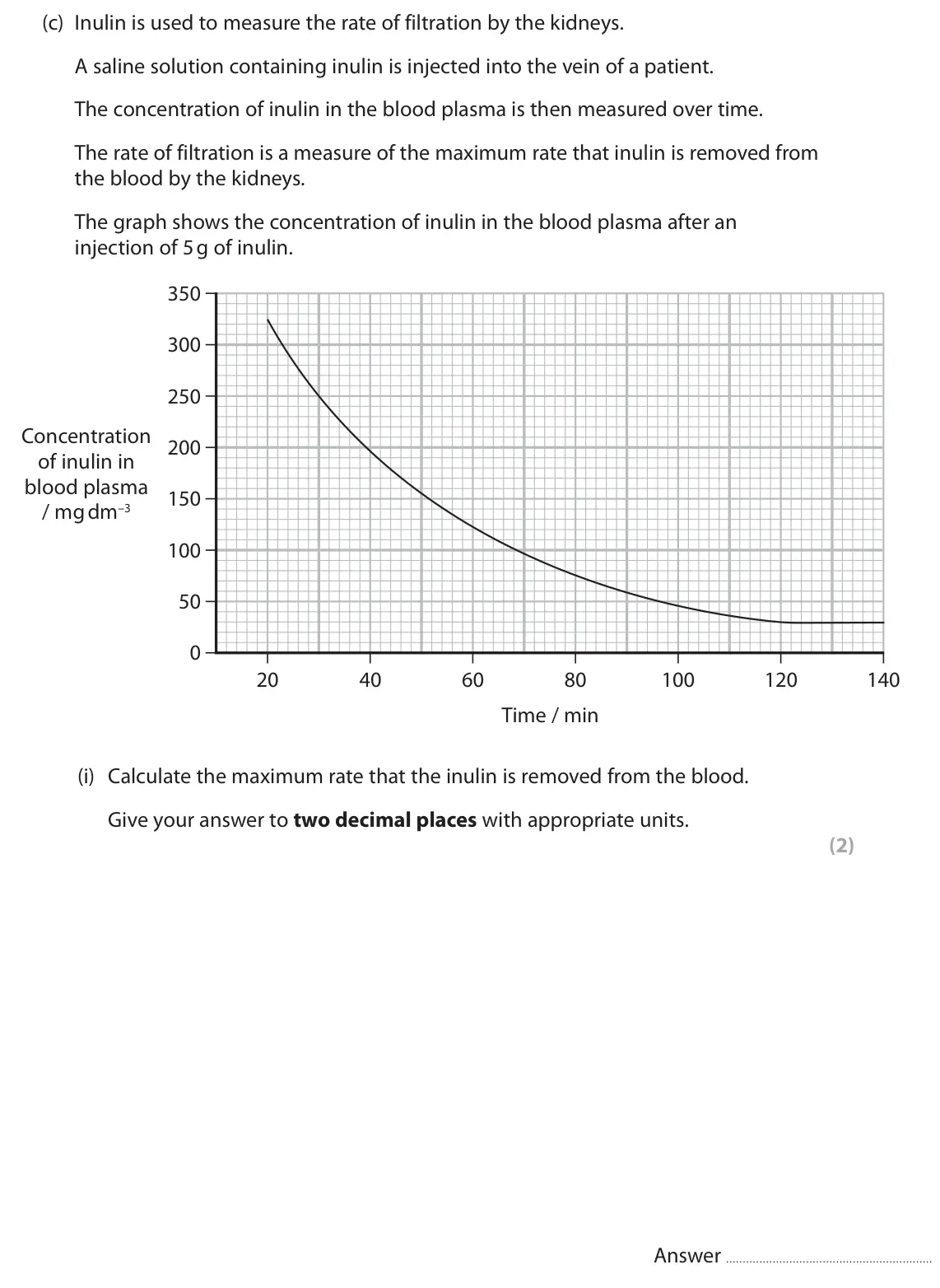
Q7(c)(ii)
The whole paper ↗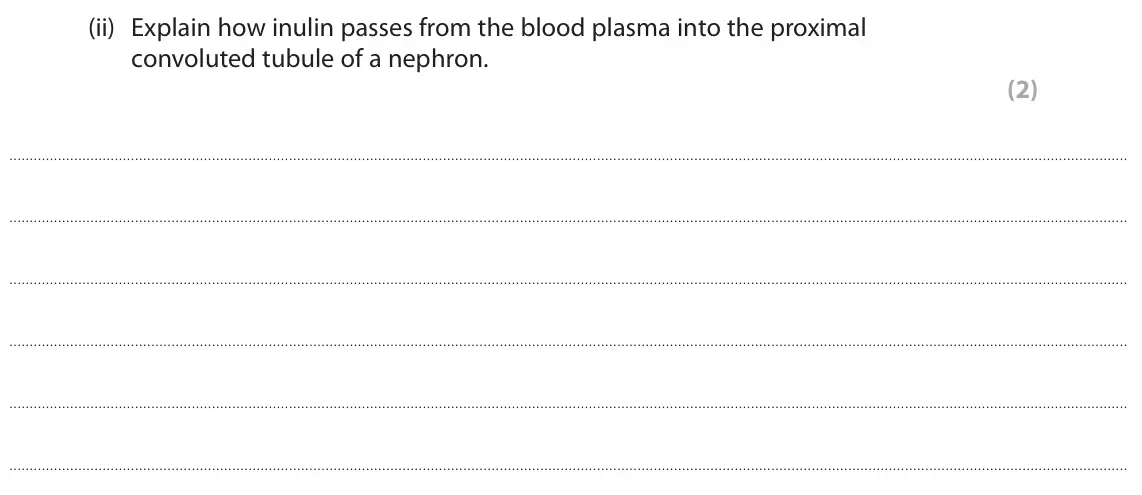
Q7(c)(iii)
The whole paper ↗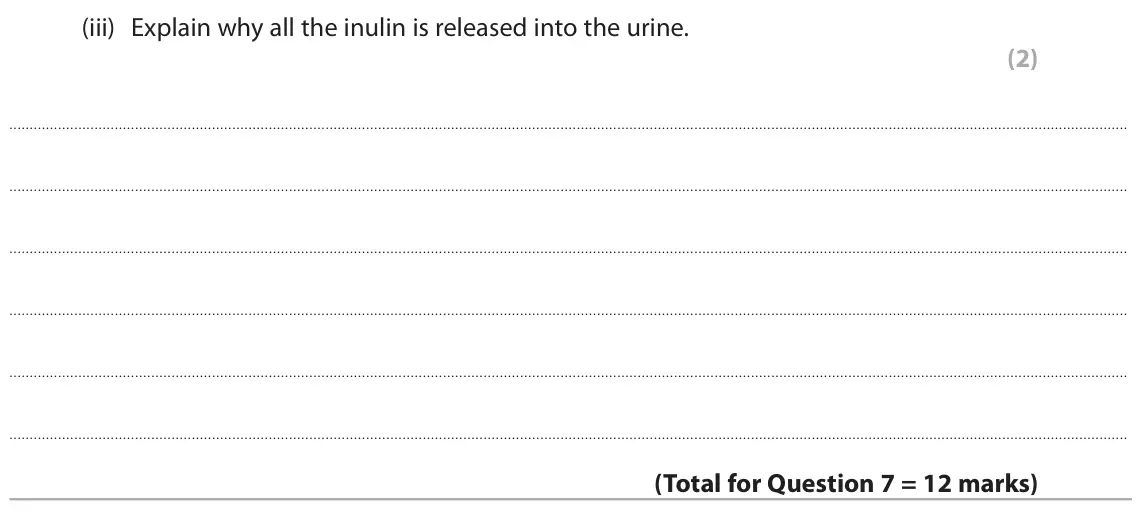
Q7(b)(i)
The whole paper ↗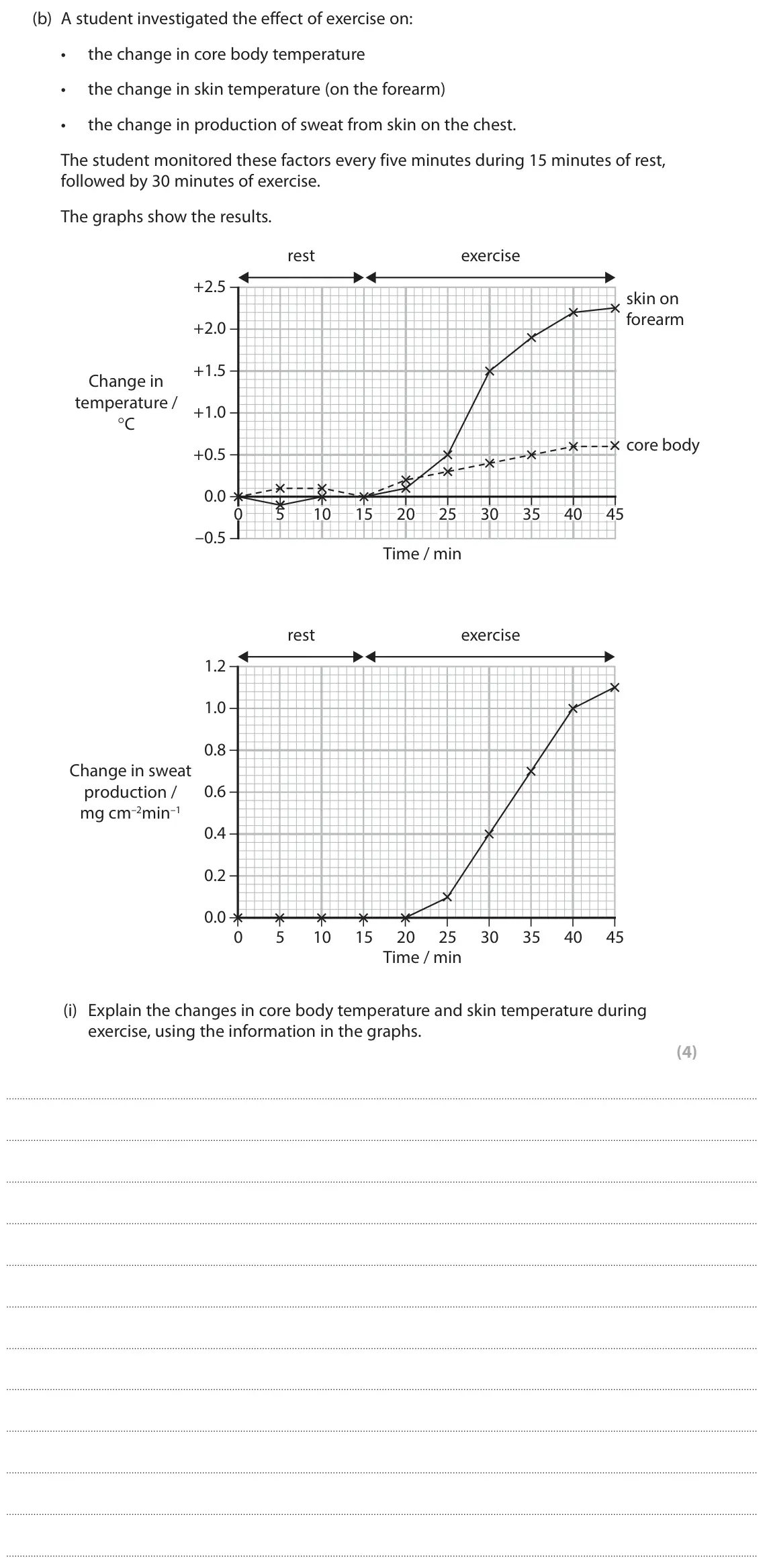
Q7(b)(ii)
The whole paper ↗
Q7(c)
The whole paper ↗
Q2(a)(i)
The whole paper ↗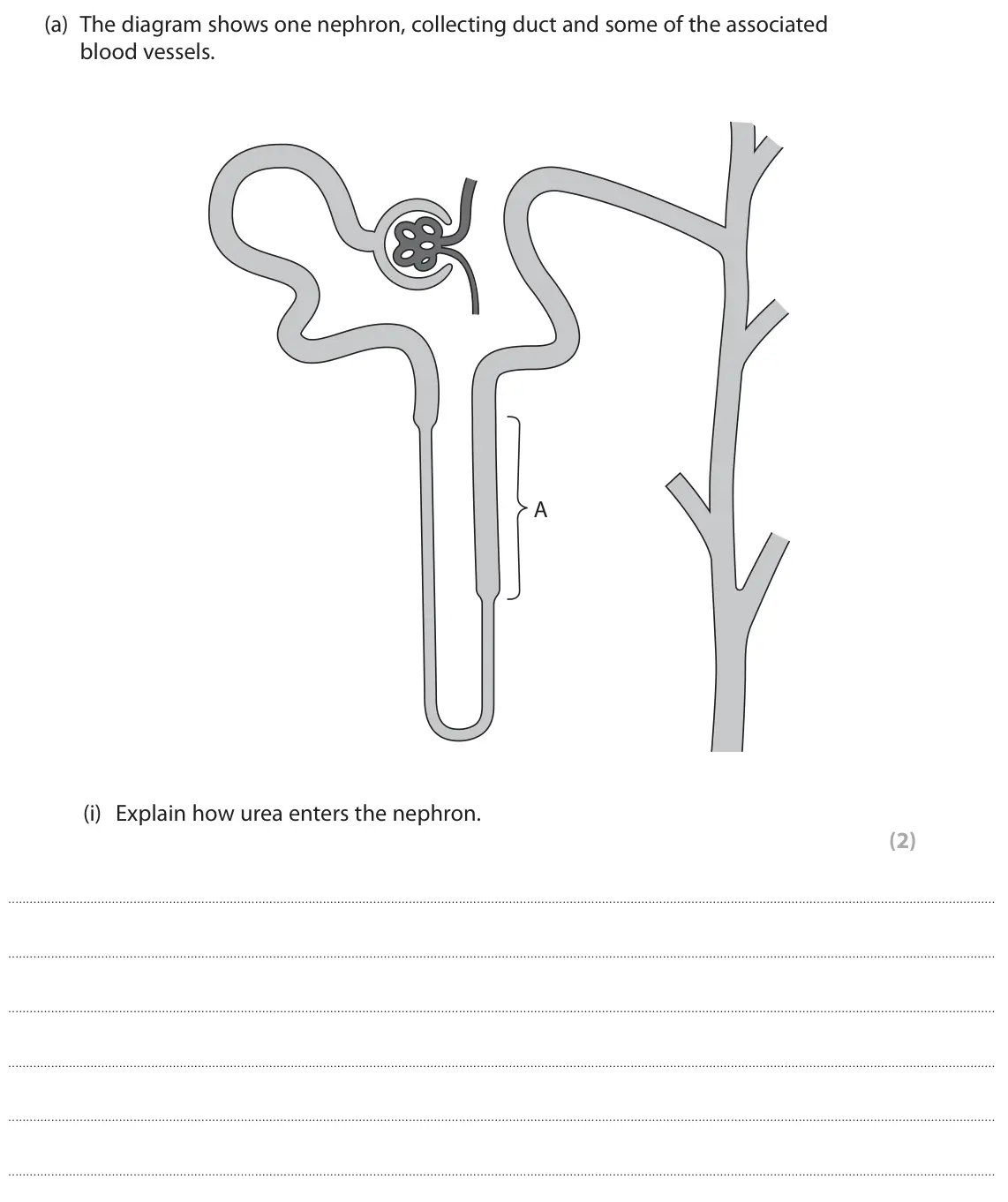
Q2(a)(ii)
The whole paper ↗
Q2(b)(i)
The whole paper ↗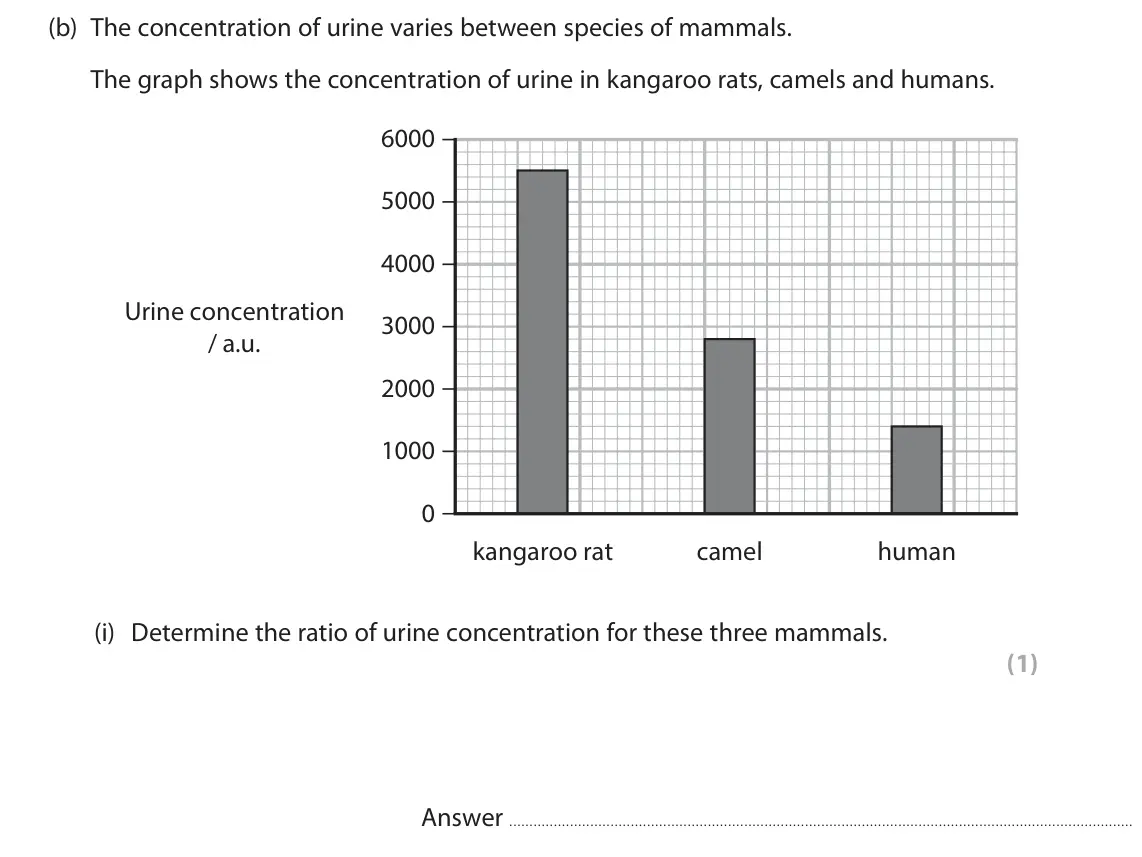
Q2(b)(ii)
The whole paper ↗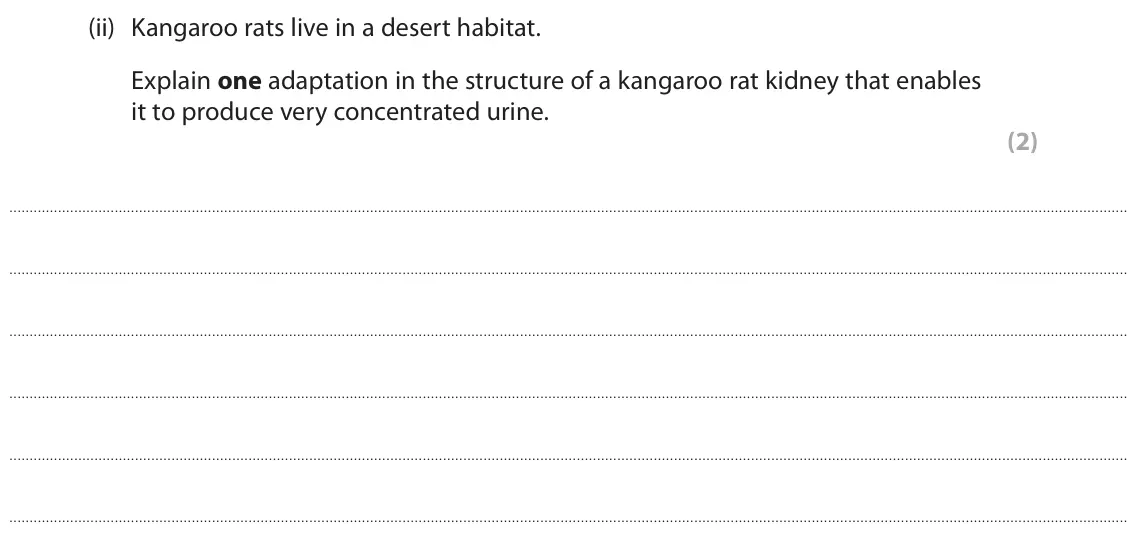
Q2(b)(iii)
The whole paper ↗
Q6(a)
The whole paper ↗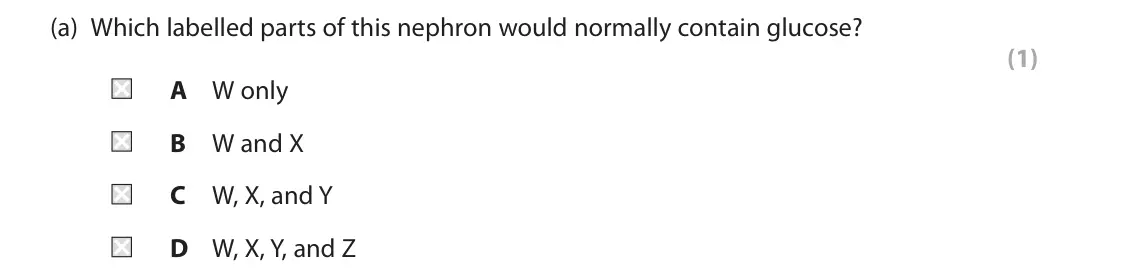
Q6(b)(ii)
The whole paper ↗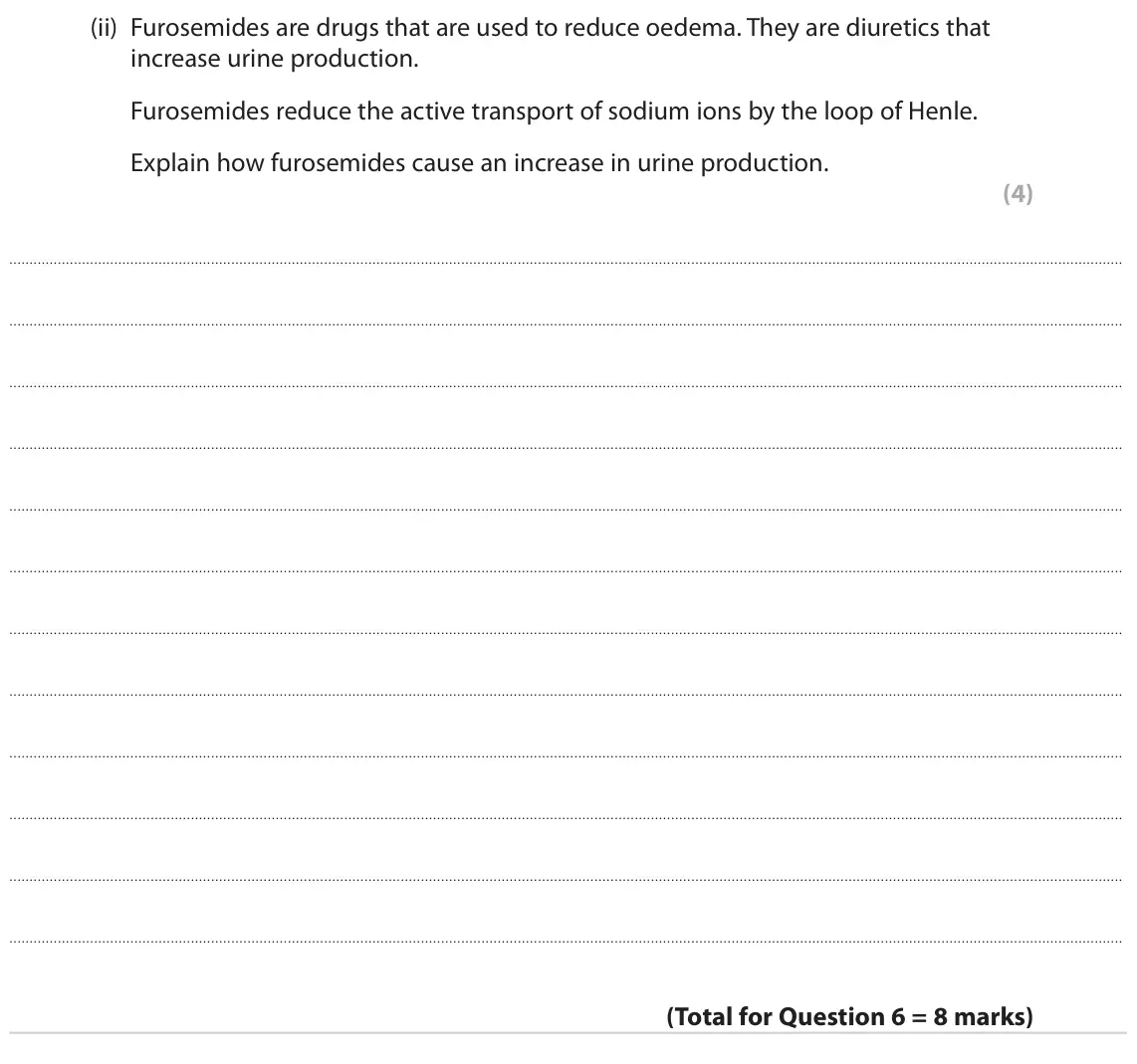
Q6(b)(ii)
The whole paper ↗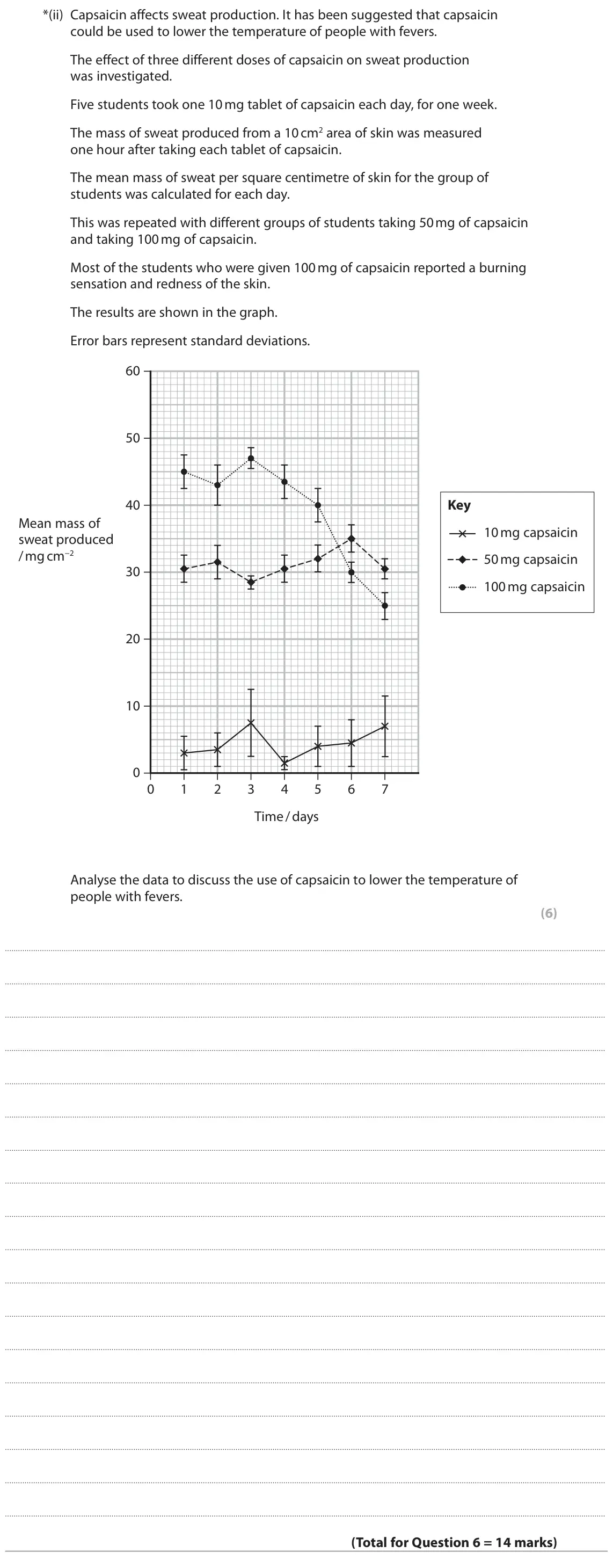
Q7(c)(ii)
The whole paper ↗
Q3(a)
The whole paper ↗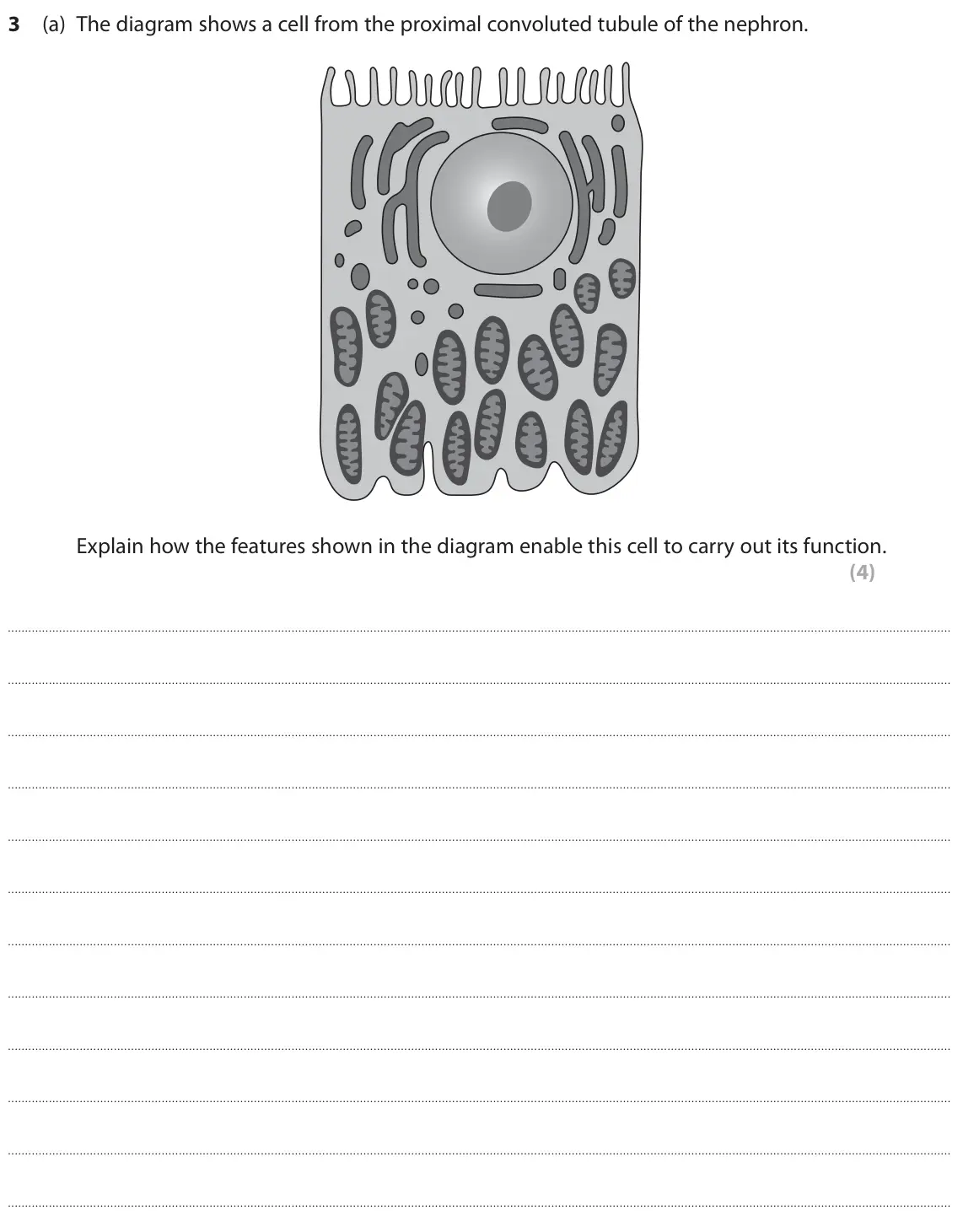
Q3(b)(ii)
The whole paper ↗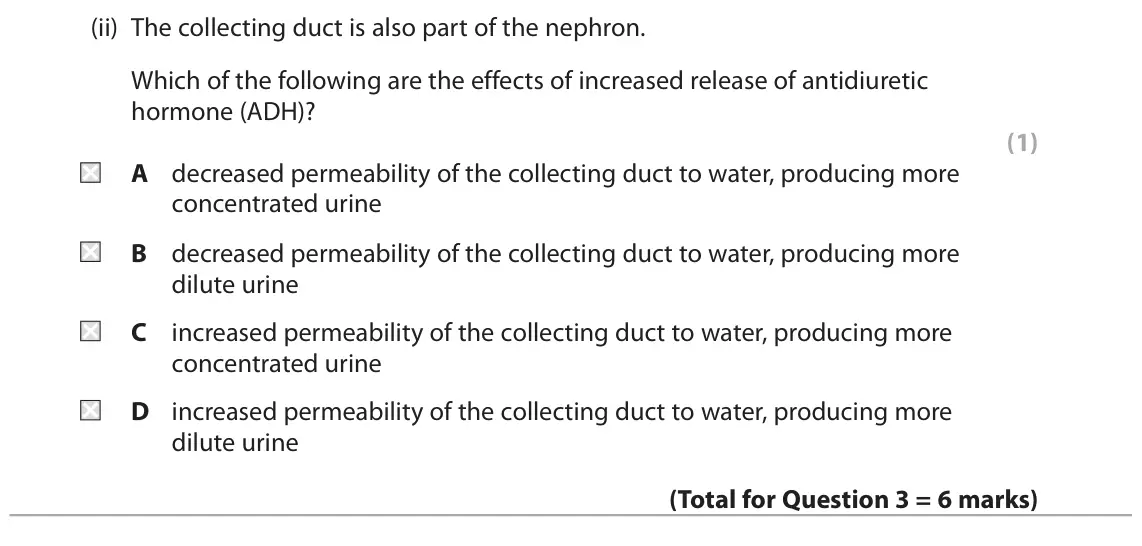
Q7(c)
The whole paper ↗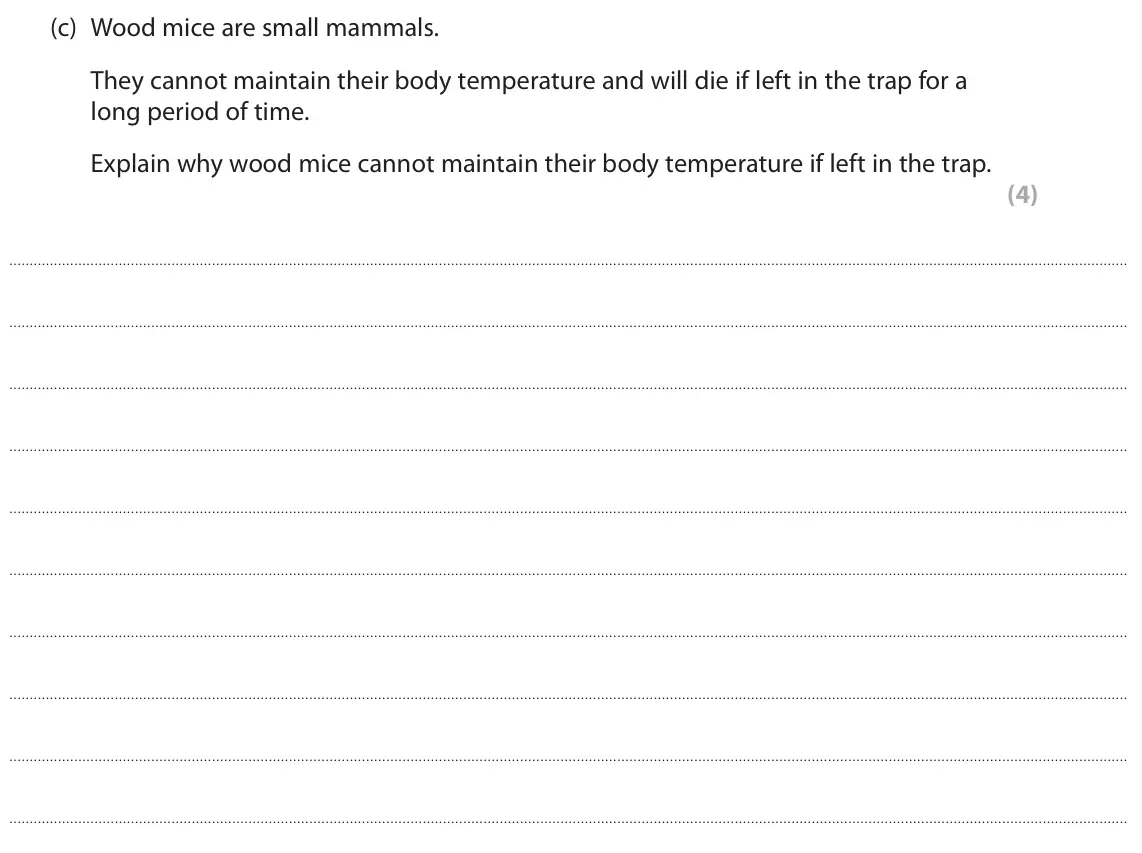
Q2(a)(i)
The whole paper ↗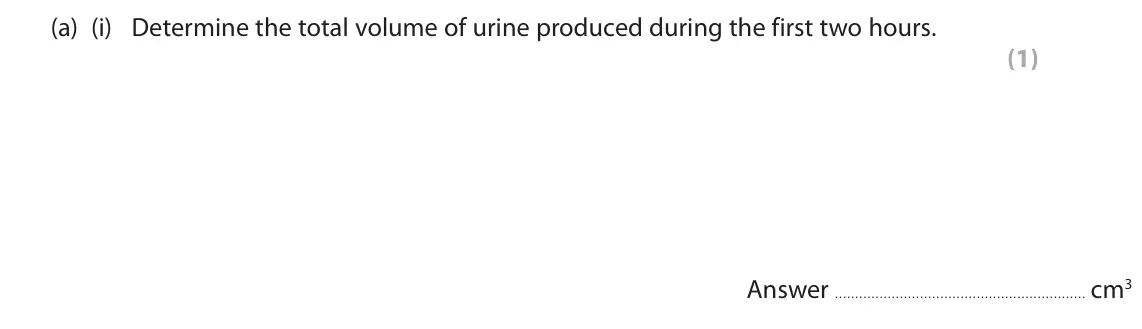
Q2(a)(ii)
The whole paper ↗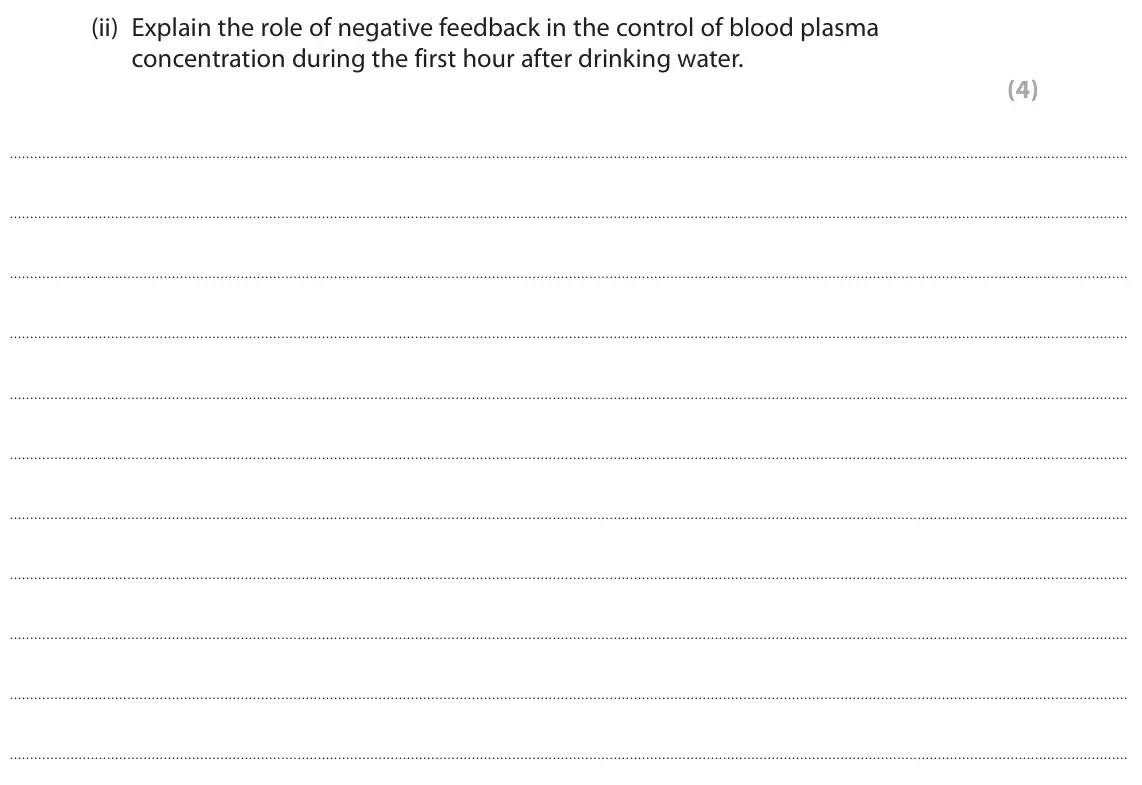
All 31 questions on Osmoregulation and temperature regulation, as a list
- June 2025, Paper 2, Q7(c)(i) (2 marks): Calculate the maximum rate that the inulin is removed from the blood. Give your answer to two decimal places with appropriate units. (2) Answer
- June 2025, Paper 2, Q7(c)(ii) (2 marks): Explain how inulin passes from the blood plasma into the proximal convoluted tubule of a nephron. (2)
- June 2025, Paper 2, Q7(c)(iii) (2 marks): Explain why all the inulin is released into the urine. (2)
- June 2024, Paper 2, Q7(b)(i) (4 marks): Explain the changes in core body temperature and skin temperature during exercise, using the information in the graphs. (4)
- June 2024, Paper 2, Q7(b)(ii) (1 mark): Mammals are endotherms. Give one method that ectotherms, such as reptiles, can use to thermoregulate. (1)
- June 2024, Paper 2, Q7(c) (3 marks): The hypothalamus plays a role in osmoregulation. Describe how stimulation of the hypothalamus leads to the production of concentrated urine. (3)
- June 2024, Paper 3, Q2(a)(i) (2 marks): Explain how urea enters the nephron. (2)
- June 2024, Paper 3, Q2(a)(ii) (3 marks): In the region labelled A, sodium ions are actively pumped out of the nephron into the surrounding fluid. Explain how this movement of ions results in the format
- June 2024, Paper 3, Q2(b)(i) (1 mark): Determine the ratio of urine concentration for these three mammals. (1) Answer
- June 2024, Paper 3, Q2(b)(ii) (2 marks): Kangaroo rats live in a desert habitat. Explain one adaptation in the structure of a kangaroo rat kidney that enables it to produce very concentrated urine. (2)
- June 2024, Paper 3, Q2(b)(iii) (1 mark): Kangaroo rats are endotherms. Give one behavioural adaptation that you would expect to see in kangaroo rats that helps them to conserve water in a hot desert. (
- June 2022, Paper 2, Q6(a) (1 mark): Which labelled parts of this nephron would normally contain glucose? (1) A W only B W and X C W, X, and Y D W, X, Y, and Z
- June 2022, Paper 2, Q6(b)(ii) (4 marks): Furosemides are drugs that are used to reduce oedema. They are diuretics that increase urine production. Furosemides reduce the active transport of sodium ions
- November 2021, Paper 2, Q6(b)(ii) (6 marks): Capsaicin affects sweat production. It has been suggested that capsaicin could be used to lower the temperature of people with fevers. The effect of three diffe
- November 2021, Paper 3, Q7(c)(ii) (4 marks): Explain how, on a very hot day, the brain ensures that the water potential of the blood remains constant. (4)
- October 2020, Paper 2, Q3(a) (4 marks): The diagram shows a cell from the proximal convoluted tubule of the nephron. Explain how the features shown in the diagram enable this cell to carry out its fun
- October 2020, Paper 2, Q3(b)(ii) (1 mark): The collecting duct is also part of the nephron. Which of the following are the effects of increased release of antidiuretic hormone (ADH)? (1) A decreased perm
- October 2020, Paper 3, Q7(c) (4 marks): Wood mice are small mammals. They cannot maintain their body temperature and will die if left in the trap for a long period of time. Explain why wood mice canno
- June 2019, Paper 3, Q2(a)(i) (1 mark): Determine the total volume of urine produced during the first two hours. (1) Answer cm3
- June 2019, Paper 3, Q2(a)(ii) (4 marks): Explain the role of negative feedback in the control of blood plasma concentration during the first hour after drinking water. (4)
- June 2019, Paper 3, Q2(b) (1 mark): The next day the student drank one dm3 of dilute salt solution with the same water potential as blood plasma. The student waited half an hour and collected the
- June 2018, Paper 2, Q8(a) (1 mark): Which row of the table names the parts of the kidney labelled in the diagram? (1) W X Y A cortex medulla pelvis B cortex pelvis medulla C medulla pelvis cortex
- June 2018, Paper 2, Q8(b) (3 marks): The table shows information about substances found in the blood and in the filtrate in the renal (Bowman’s) capsule. Relative Ratio of concentration in the filt
- June 2018, Paper 2, Q8(c) (6 marks): The renal (Bowman’s) capsule is part of each nephron found in the kidney. The graph shows the concentration ratios of three solutes in different parts of the ne
- June 2017, Paper 3, Q4(a) (2 marks): Describe how urea is produced in mammals. (2)
- June 2017, Paper 3, Q4(b) (1 mark): Bowman’s capsule (renal capsule) in the kidney is involved in the excretion of urea in mammals. Name the cluster of blood capillaries enclosed by Bowman’s capsu
- June 2017, Paper 3, Q4(c)(i) (1 mark): Name the process by which this filtrate is produced in Bowman’s capsule. (1)
- June 2017, Paper 3, Q4(c)(ii) (3 marks): Analyse the data to explain the difference between the protein and the other molecules or ions in the filtrate in Bowman’s capsule. (3)
- June 2017, Paper 3, Q4(c)(iii) (3 marks): Urea and chloride ions both become more concentrated as they pass from Bowman’s capsule to the urine in the bladder. Calculate how many more times urea becomes
- June 2017, Paper 3, Q4(c)(iv) (2 marks): Analyse the data to explain the glucose concentration in the bladder. (2)
- June 2017, Paper 3, Q4(c)(v) (5 marks): Explain how the loop of Henlé is involved in the production of concentrated urine. (5) .
Questions, mark schemes and examiner’s reports are © Pearson Edexcel, from their published past papers. Plumi isn’t affiliated with any exam board. Want whole papers? Every Edexcel A-Level Biology B paper.
Rather write your answers by hand on iPad? Plumi marks them against the same mark schemes.