 plumi
Catalysts: AQA A‑Level Chemistry questions
AQA A-Level Chemistry past-paper questions on 3.1.5.5 Catalysts, 2008–2025, with mark schemes and examiner’s reports where available.
Paper
All papers
Exam
All years
Calculations
Q04.4
The whole paper ↗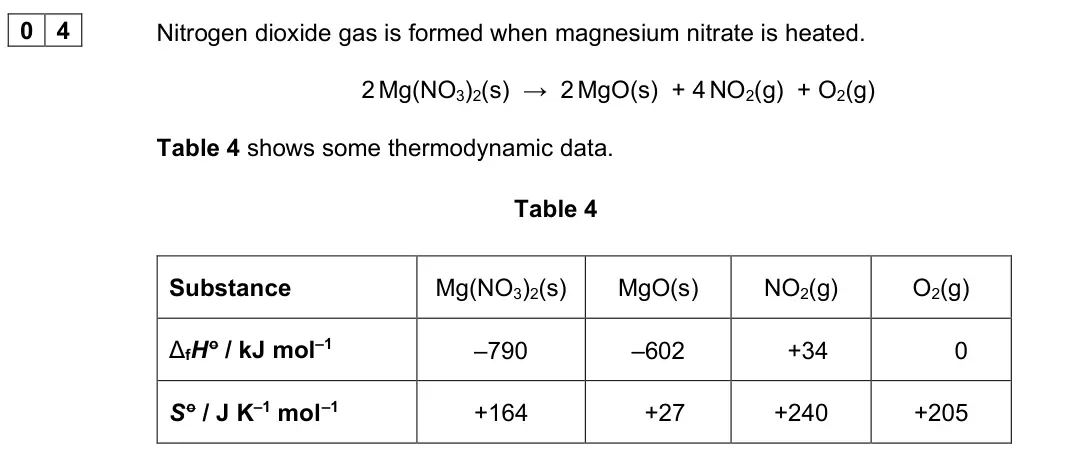
Q02.1
The whole paper ↗
Q05.3
The whole paper ↗
Q01.1
The whole paper ↗
Q03.4
The whole paper ↗Q03.6
The whole paper ↗Q4(a)(iii)
The whole paper ↗
Q7(a)(ii)
The whole paper ↗Q8(c)(ii)
The whole paper ↗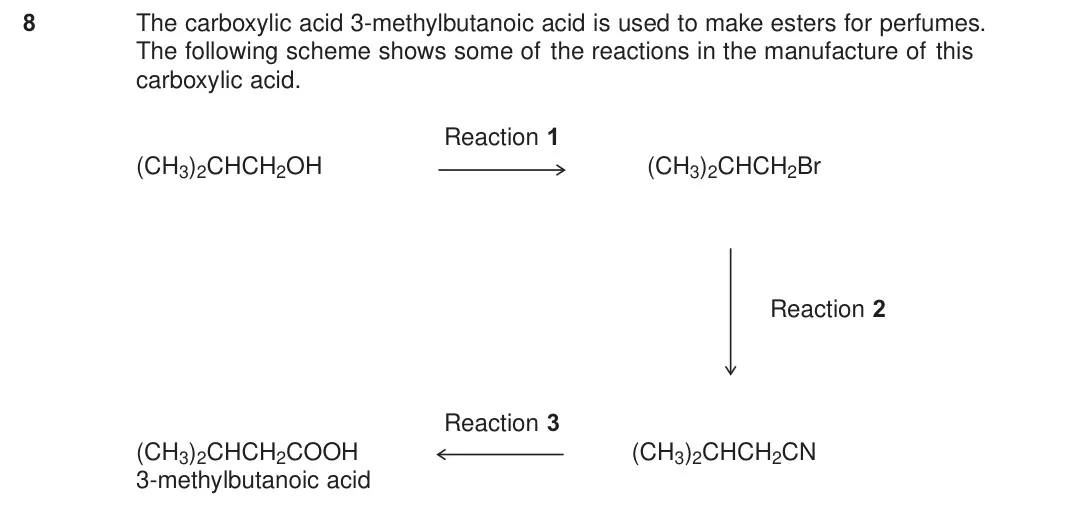
Q2(b)(i)
The whole paper ↗
Q2(b)(ii)
The whole paper ↗Q1(e)(i)
The whole paper ↗
Q1(e)(ii)
The whole paper ↗Q3(d)(i)
The whole paper ↗
Q3(b)
The whole paper ↗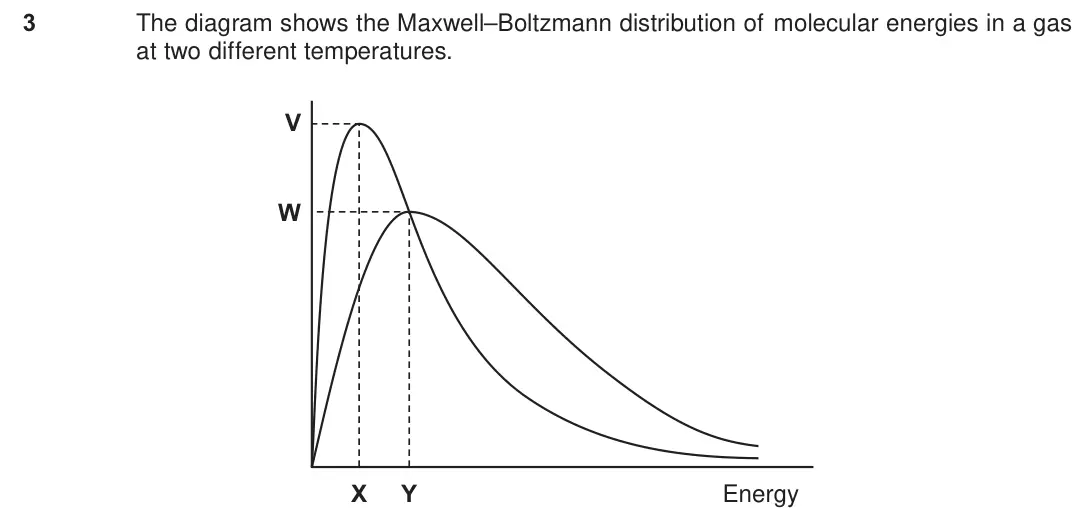
All 30 questions on Catalysts, as a list
- June 2025, Paper 1, Q04.4 (1 mark): An alloy of platinum and rhodium is used as a catalyst in the reaction. What type of catalyst is this? [1 mark] Tick ( ) one box. Autocatalyst Heterogeneous cat
- June 2025, Paper 3, Q09 (1 mark): Which statement about the use of a catalyst in a reaction is correct? [1 mark] A The activation energy of the reverse reaction increases. B The equilibrium cons
- June 2025, AS Paper 2, Q02.1 (2 marks): Describe how a catalyst increases the rate of a reaction. [2 marks]
- June 2024, Paper 3, Q16 (1 mark): Which statement explains why the rate of a reaction increases when a catalyst is added at a constant temperature? [1 mark] A The collision frequency increases b
- June 2024, AS Paper 2, Q10 (1 mark): Which statement explains why the rate of a reaction increases when a catalyst is added to a reaction mixture at a constant temperature? [1 mark] A The collision
- June 2023, Paper 3, Q12 (1 mark): The rate of reaction is greater when a catalyst is used, without changing the temperature. Which statement explains why the rate of reaction is greater with a c
- November 2021, AS Paper 2, Q20 (1 mark): Which statement about the use of a catalyst in a reversible reaction is correct? [1 mark] A The activation energy for the reverse reaction is increased. B The e
- June 2019, AS Paper 2, Q05.3 (6 marks): Methanol is made by the reaction of carbon monoxide with hydrogen. CO + 2 H2 ⇌ CH3OH ∆H = –91 kJ mol–1 The reaction uses a copper-based catalyst, a pressure of
- June 2018, AS Paper 2, Q01.1 (2 marks): Explain, in general terms, how a catalyst increases the rate of a reaction. [2 marks]
- June 2016, AS Paper 2, Q03.4 (2 marks): Explain, in general terms, how a catalyst works. [2 marks]
- June 2016, AS Paper 2, Q03.6 (2 marks): Platinum, palladium and rhodium are metals used inside catalytic converters. A very thin layer of the metals is used on a honeycomb ceramic support. Explain why
- June 2015, CHEM2 (old spec), Q4(a)(iii) (2 marks): A nickel catalyst is used in the first stage. Explain why the catalyst is more effective when coated onto an unreactive honeycomb. [2 marks]
- June 2015, CHEM2 (old spec), Q7(a)(ii) (1 mark): Deduce the role of the bacteria in this reaction. [1 mark]
- June 2014, CHEM2 (old spec), Q8(c)(ii) (2 marks): Explain how a catalyst increases the rate of a reaction. [2 marks]
- January 2013, CHEM2 (old spec), Q2(b)(i) (3 marks): State the meaning of the term catalyst. Explain, in general terms, how catalysts work. Meaning of the term catalyst How catalysts work
- January 2013, CHEM2 (old spec), Q2(b)(ii) (1 mark): State the effect, if any, of a catalyst on the time taken to reach equilibrium. (1 mark)
- June 2012, CHEM2 (old spec), Q1(e)(i) (1 mark): Write an equation for the overall reaction. (1 mark)
- June 2012, CHEM2 (old spec), Q1(e)(ii) (1 mark): Give one reason, other than the increase in rate of reaction, why the student was able to deduce that hydrogen bromide behaves as a catalyst in this two-step re
- June 2012, CHEM2 (old spec), Q3(d)(i) (1 mark): State the meaning of the term catalyst. (1 mark)
- January 2012, CHEM2 (old spec), Q3(b) (1 mark): State the effect, if any, of a solid catalyst on the shape of either of these distributions. (1 mark)
- June 2011, CHEM2 (old spec), Q1(b) (2 marks): Explain how a catalyst increases the rate of a reaction.
- June 2011, CHEM2 (old spec), Q1(c)(iv) (1 mark): State how, if at all, the area under the molecular energy distribution curve changes as a catalyst is introduced without changing the temperature or the total n
- January 2011, CHEM2 (old spec), Q2(b)(i) (1 mark): Use the data in the table to deduce which is the most effective catalyst for this decomposition. (1 mark)
- January 2011, CHEM2 (old spec), Q2(b)(ii) (2 marks): Explain how a catalyst increases the rate of a reaction.
- June 2010, CHEM2 (old spec), Q1(a)(i) (2 marks): Draw on the diagram a curve to illustrate the reaction profile for this equilibrium reaction with a catalyst. (2 marks)
- June 2010, CHEM2 (old spec), Q1(b)(i) (1 mark): State the effect of a catalyst on the rate of attainment of this equilibrium. (1 mark)
- January 2010, CHEM5 (old spec), Q1(a) (2 marks): State how a catalyst speeds up a chemical reaction. (2 marks)
- January 2010, CHEM2 (old spec), Q5(a)(iv) (2 marks): State how a catalyst increases the rate of a reaction. (2 mar
- June 2009, CHEM2 (old spec), Q4(c)(i) (1 mark): 4 (c) (i) State what is meant by the term catalyst. (1 mark)
- June 2008, CHM2 (2008 spec), Q5(d) (2 marks): 5 (d) Explain why a catalyst increases the rate of a reaction. (2 marks)
Questions, mark schemes and examiner’s reports are © AQA, from their published past papers. Plumi isn’t affiliated with any exam board. Want whole papers? AQA A-Level Chemistry past papers.
The Plumi iPad app also offers exam-style questions with AI feedback on your handwritten working.