 plumi
The nature of waves: WJEC A‑Level Physics questions
Every WJEC A-Level Physics exam question on 2.4 The nature of waves, 2016–2025, with its mark scheme and examiner’s report.
Find questions1,173
Calculations
Q4(a)(i)
The whole paper ↗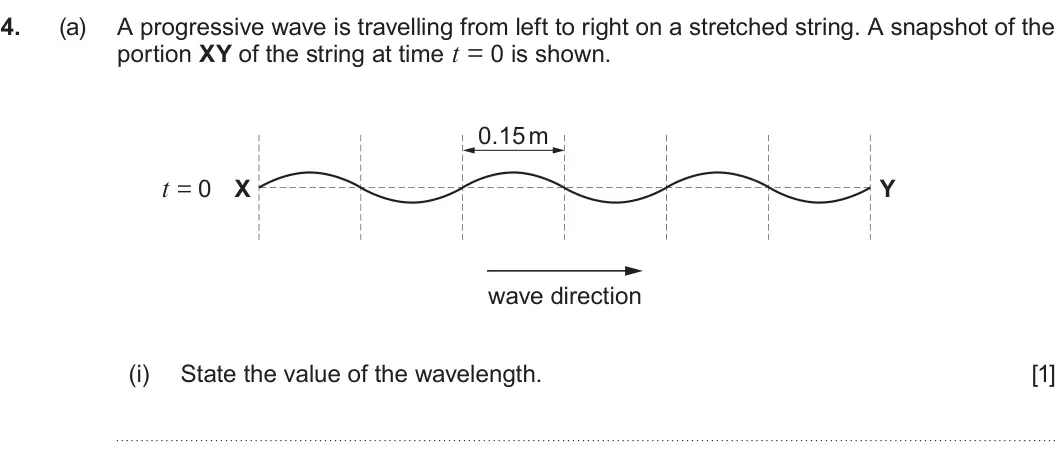
Q4(a)(ii)
The whole paper ↗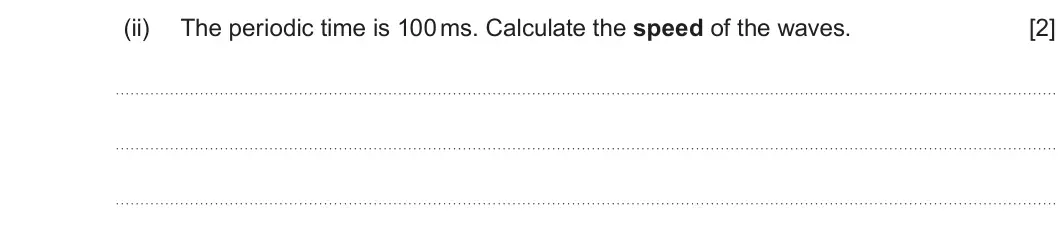
Q4(a)(iii)
The whole paper ↗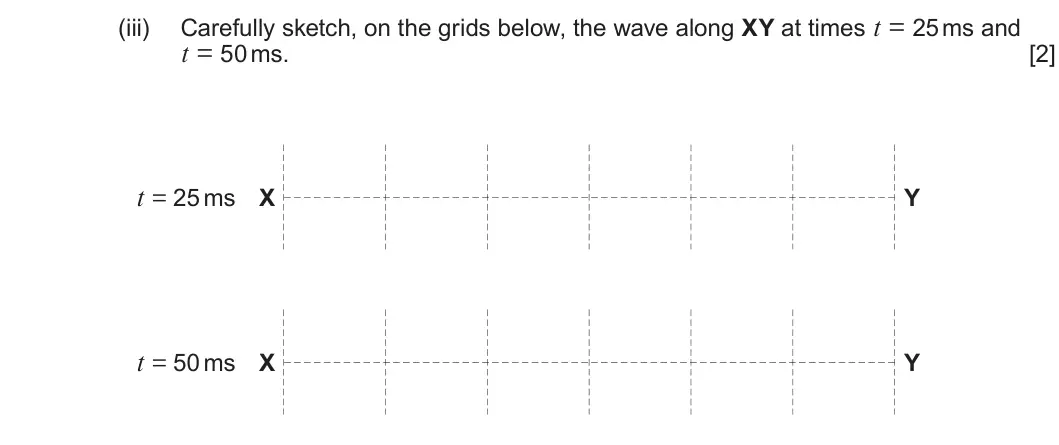
Q3(a)(i)
The whole paper ↗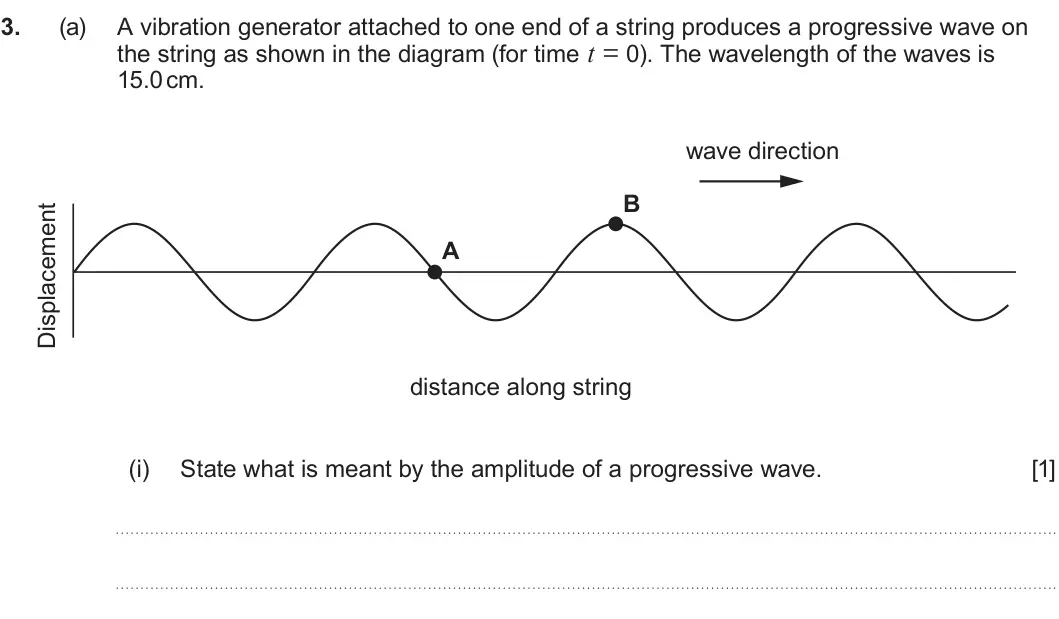
Q3(a)(ii)
The whole paper ↗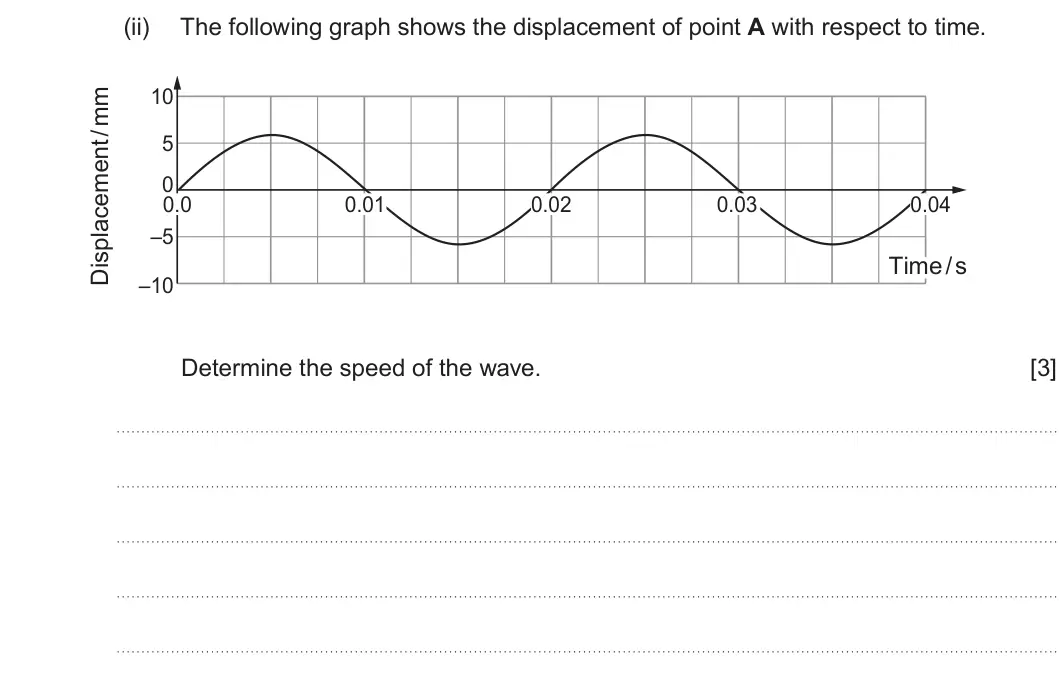
Q3(a)(iii)
The whole paper ↗
Q6(h)
The whole paper ↗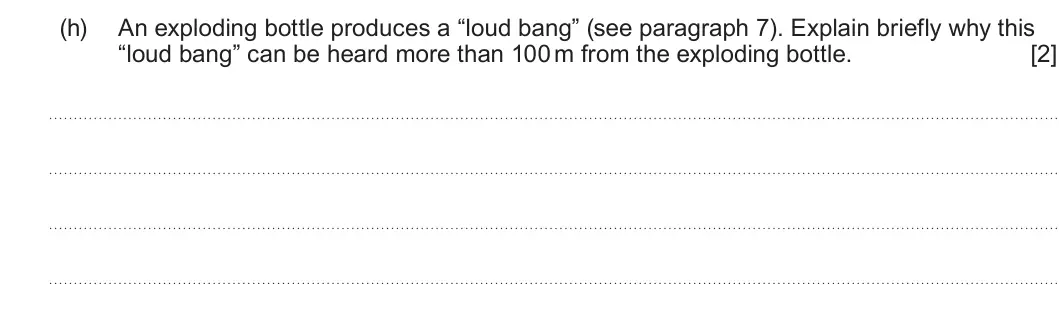
Q5(a)(i)
The whole paper ↗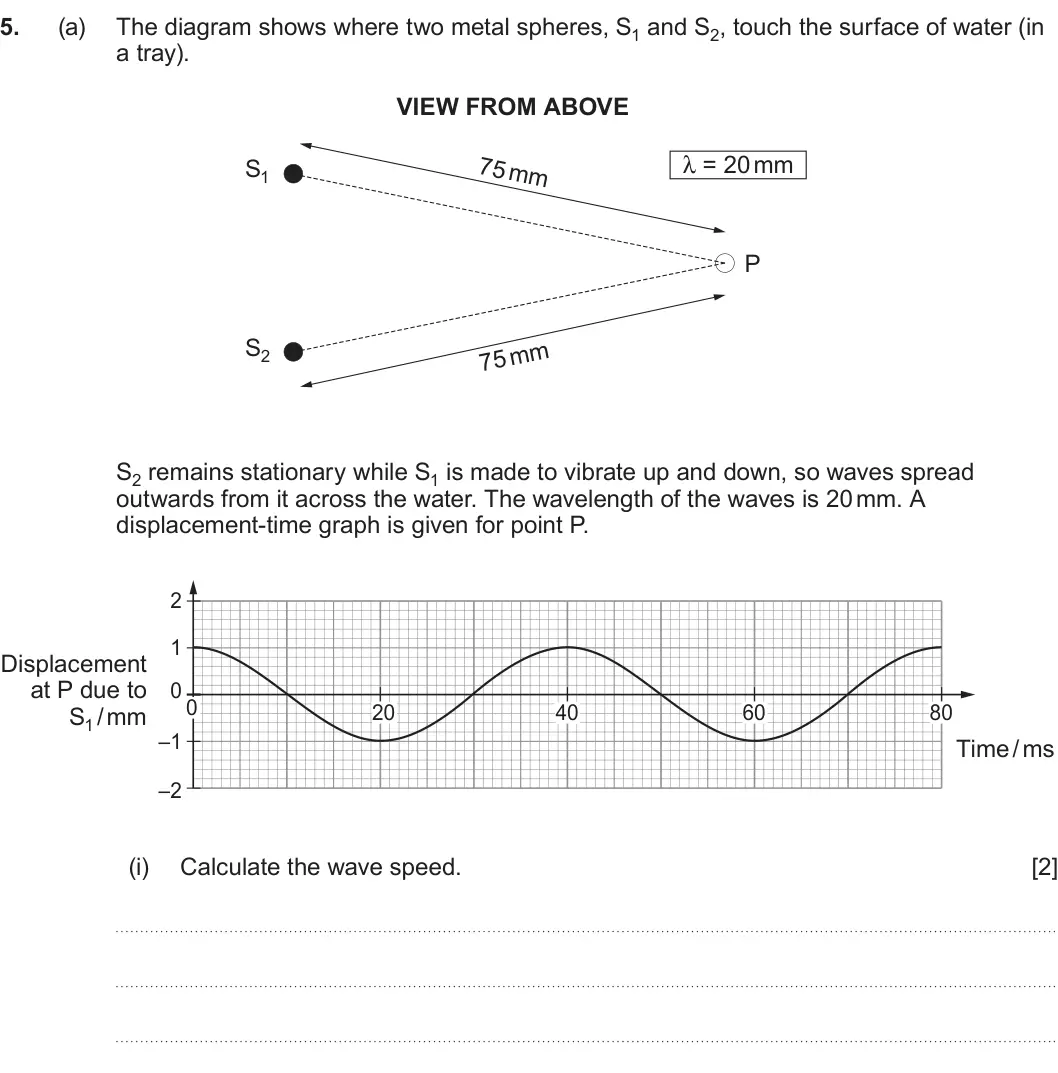
Q6(c)
The whole paper ↗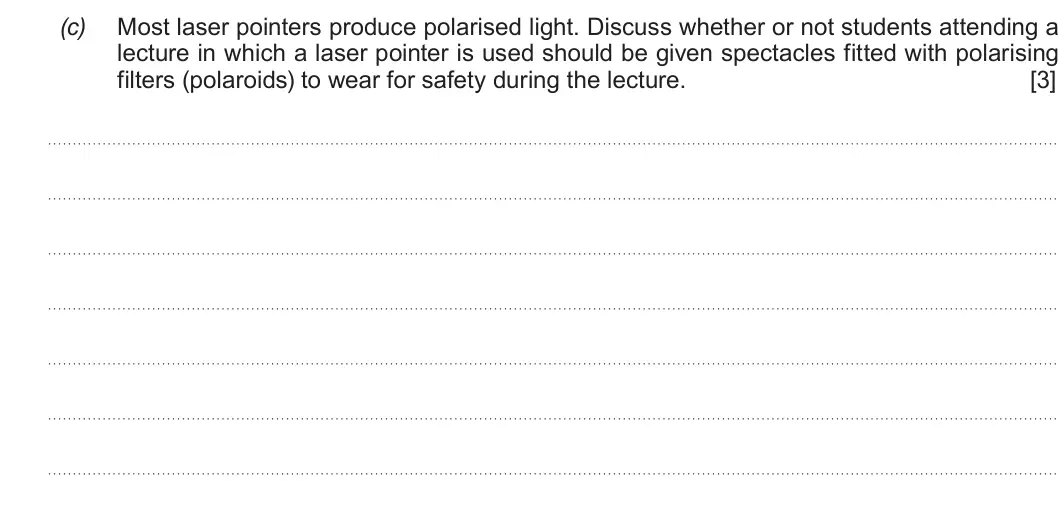
Q4(a)
The whole paper ↗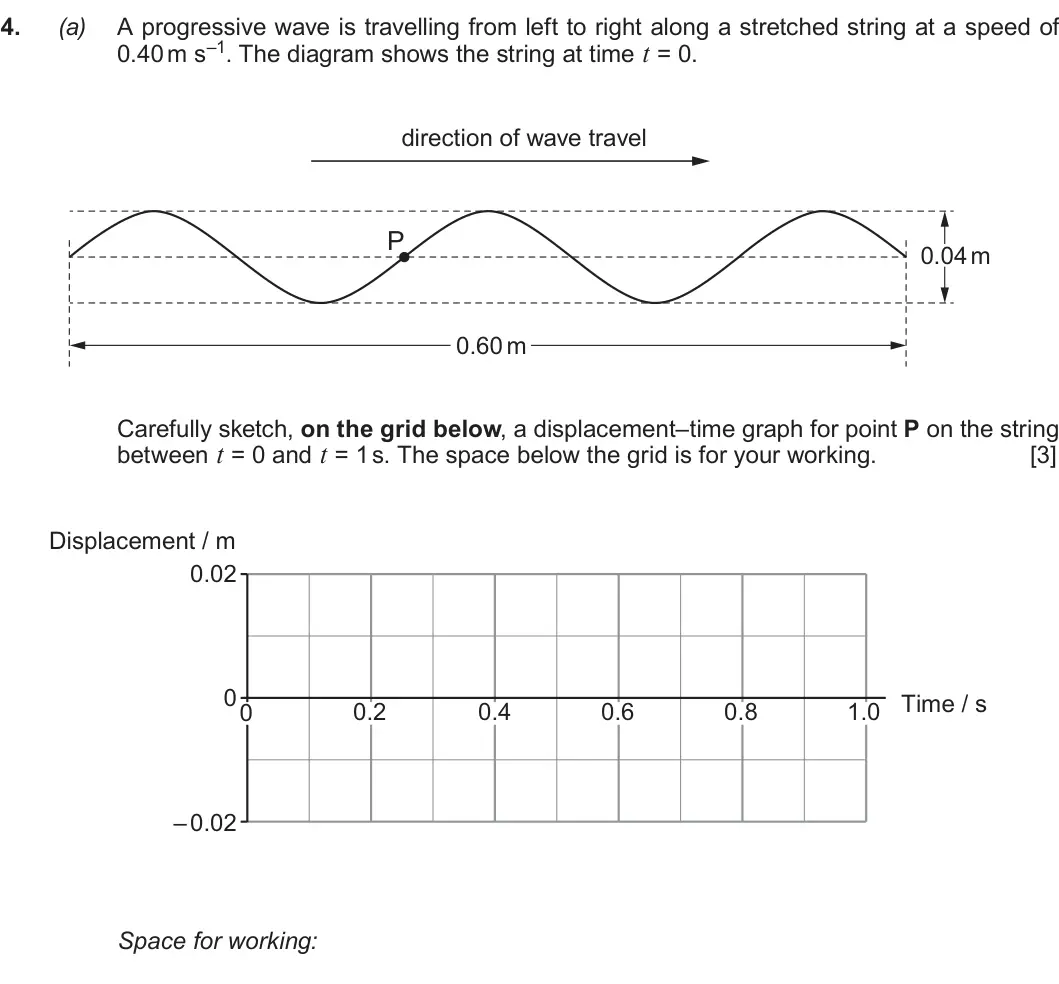
Q4(a)(i)
The whole paper ↗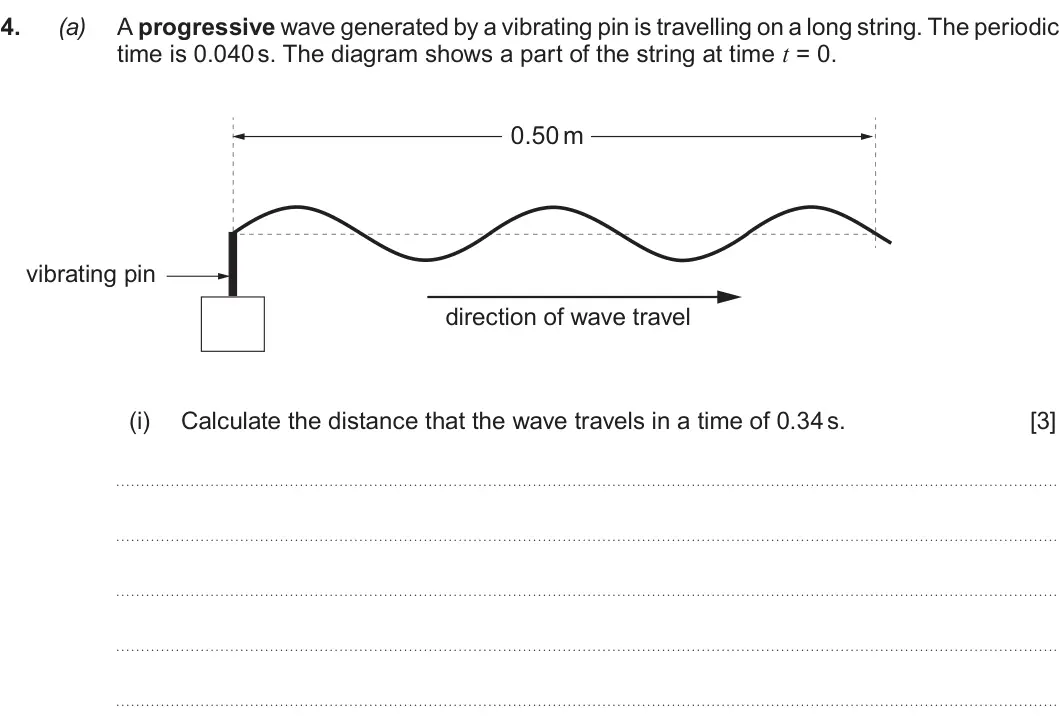
Q4(a)(ii)
The whole paper ↗
Q6(b)(i)
The whole paper ↗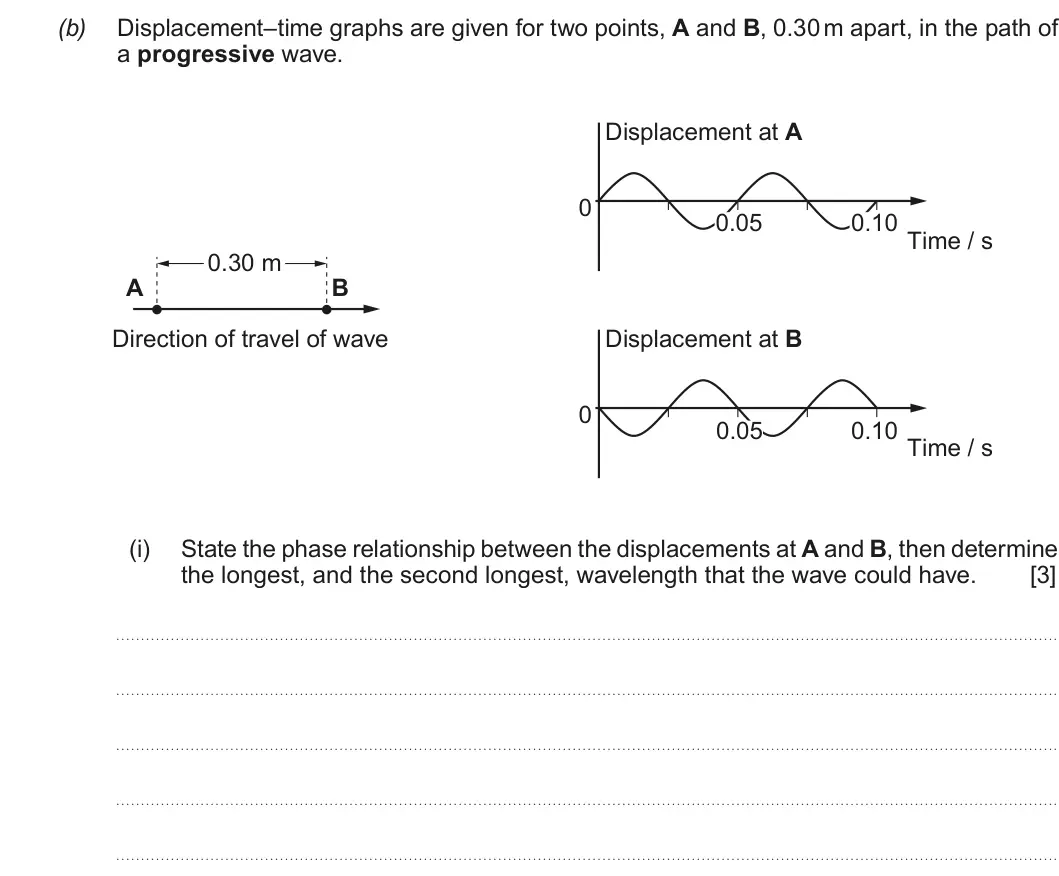
Q6(b)(ii)
The whole paper ↗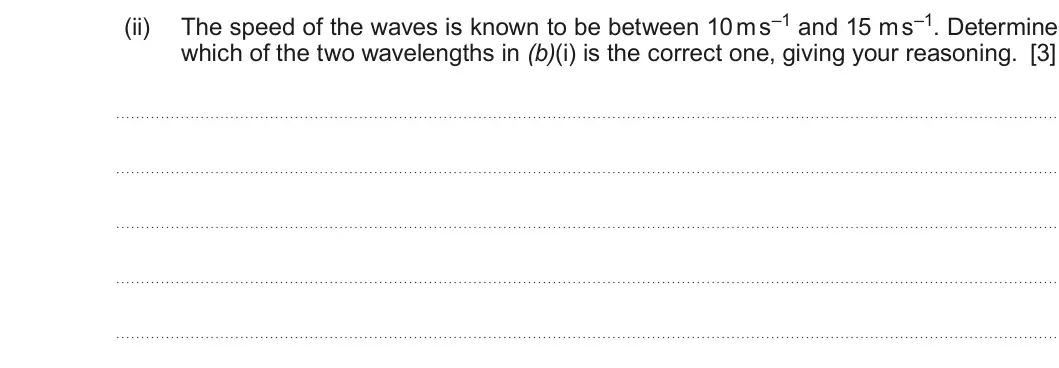
All 16 questions on The nature of waves, as a list
- Summer 2024, AS Unit 2, Q4(a)(i) (1 mark): State the value of the wavelength. [1]
- Summer 2024, AS Unit 2, Q4(a)(ii) (2 marks): The periodic time is 100 ms. Calculate the speed of the waves. [2]
- Summer 2024, AS Unit 2, Q4(a)(iii) (2 marks): t = 50 ms. [2] t = 25 ms X Y t = 50 ms X Y
- Summer 2024, AS Unit 2, Q6 (6 marks): State what is meant by ‘unpolarised light’ and describe carefully how you would determine, using a polarising filter (polaroid), whether a light source is givin
- Summer 2023, AS Unit 2, Q3(a)(i) (1 mark): State what is meant by the amplitude of a progressive wave. [1]
- Summer 2023, AS Unit 2, Q3(a)(ii) (3 marks): The following graph shows the displacement of point A with respect to time. 10 5 0 0.0 0.01 0.02 0.03 0.04 –5 Time / s Time / s –10 Determine the speed of the w
- Summer 2023, AS Unit 2, Q3(a)(iii) (2 marks): Sketch the displacement-time graph of point B on the grid in (a)(ii). [2]
- Summer 2022, Unit 3, Q6(h) (2 marks): Read through the following article carefully. How do you produce really low temperatures and can you then do some cool stuff with it? Paragraph Pressure / 105 P
- Summer 2022, AS Unit 2, Q3 (6 marks): Explain what is meant by a progressive wave, and explain the difference between a longitudinal and a transverse progressive wave, giving one example of each of
- Summer 2022, AS Unit 2, Q5(a)(i) (2 marks): Calculate the wave speed. [2]
- Summer 2019, AS Unit 2, Q6(c) (3 marks): Most laser pointers produce polarised light. Discuss whether or not students attending a lecture in which a laser pointer is used should be given spectacles fit
- Summer 2018, AS Unit 2, Q4(a) (3 marks): A progressive wave is travelling from left to right along a stretched string at a speed of 0.40 m s–1. The diagram shows the string at time t = 0 direction of w
- Summer 2017, AS Unit 2, Q4(a)(i) (3 marks): Calculate the distance that the wave travels in a time of 0.34 s. [3]
- Summer 2017, AS Unit 2, Q4(a)(ii) (1 mark): Carefully sketch on the diagram above the same part of the string at time t = 0.34 s. (The periodic time is 0.040 s.) [1]
- Summer 2016, AS Unit 2, Q6(b)(i) (3 marks): State the phase relationship between the displacements at A and B, then determine the longest, and the second longest, wavelength that the wave could have. [3]
- Summer 2016, AS Unit 2, Q6(b)(ii) (3 marks): which of the two wavelengths in (b)(i) is the correct one, giving your reasoning. [3]
Questions, mark schemes and examiner’s reports are © WJEC CBAC Ltd, from their published past papers. Plumi isn’t affiliated with any exam board. Want whole papers? Every WJEC A-Level Physics paper.
Rather write your answers by hand on iPad? Plumi marks them against the same mark schemes.