 plumi
Lasers: WJEC A‑Level Physics questions
Every WJEC A-Level Physics exam question on 2.8 Lasers, 2016–2025, with its mark scheme and examiner’s report.
Find questions1,173
Calculations
Q6(b)(i)
The whole paper ↗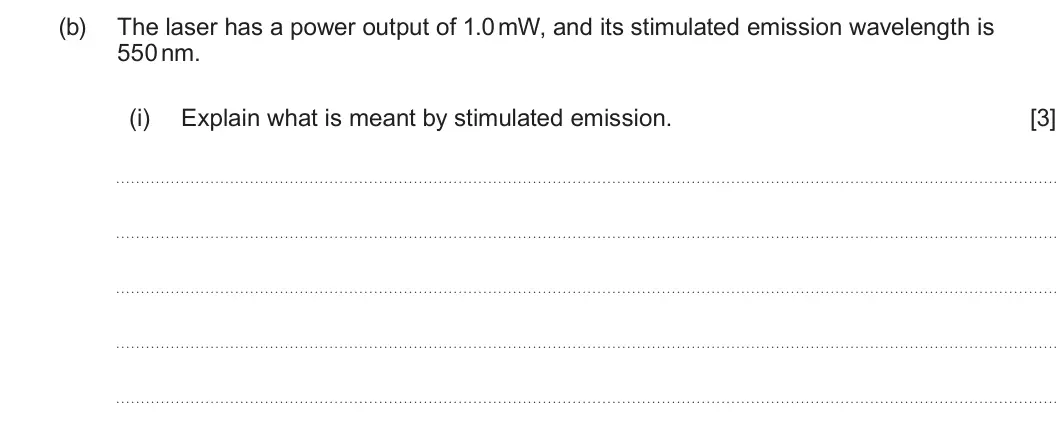
Q9(a)(i)
The whole paper ↗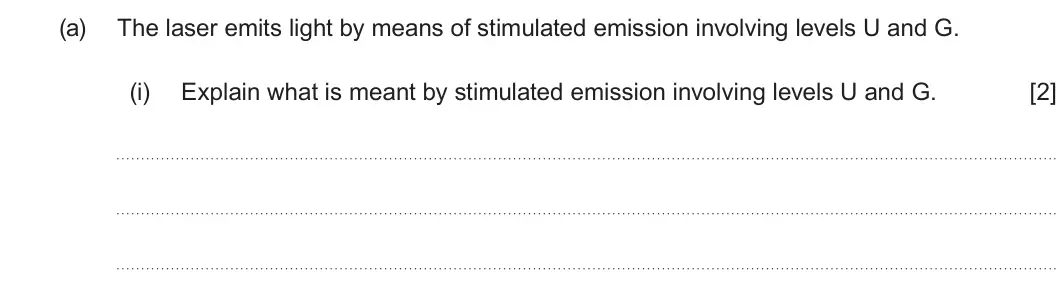
Q9(a)(ii)
The whole paper ↗
Q9(b)
The whole paper ↗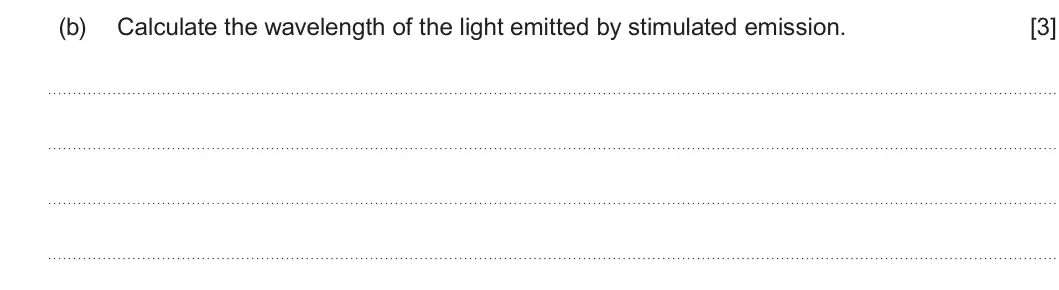
Q8(a)
The whole paper ↗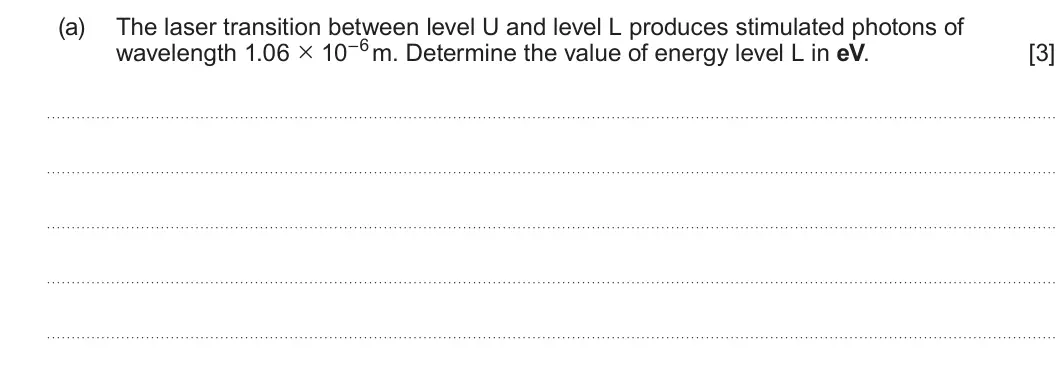
Q8(b)
The whole paper ↗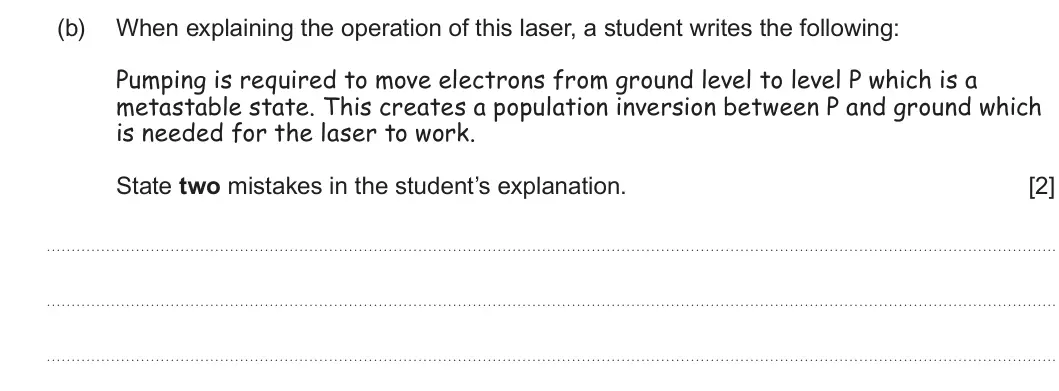
Q8(c)
The whole paper ↗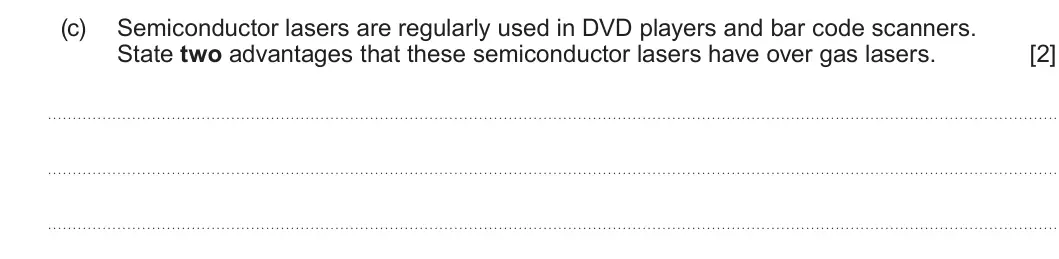
Q8(d)
The whole paper ↗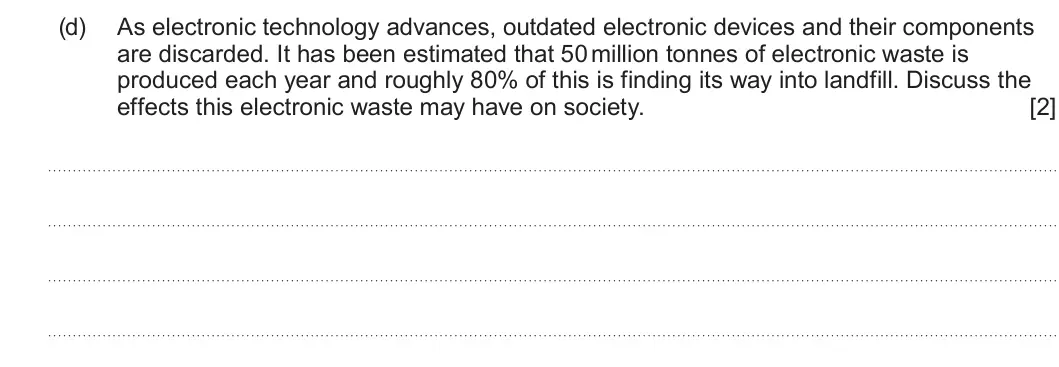
Q7(a)(i)
The whole paper ↗
Q7(a)(ii)
The whole paper ↗
Q7(a)(iii)
The whole paper ↗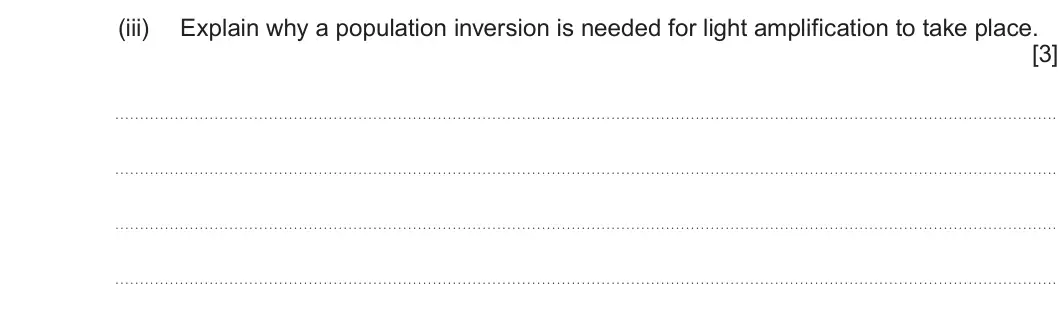
Q7(b)
The whole paper ↗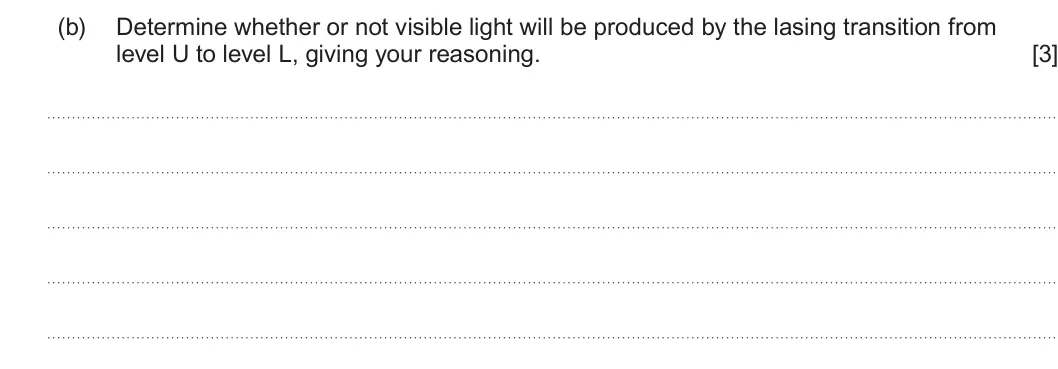
Q6(b)(i)
The whole paper ↗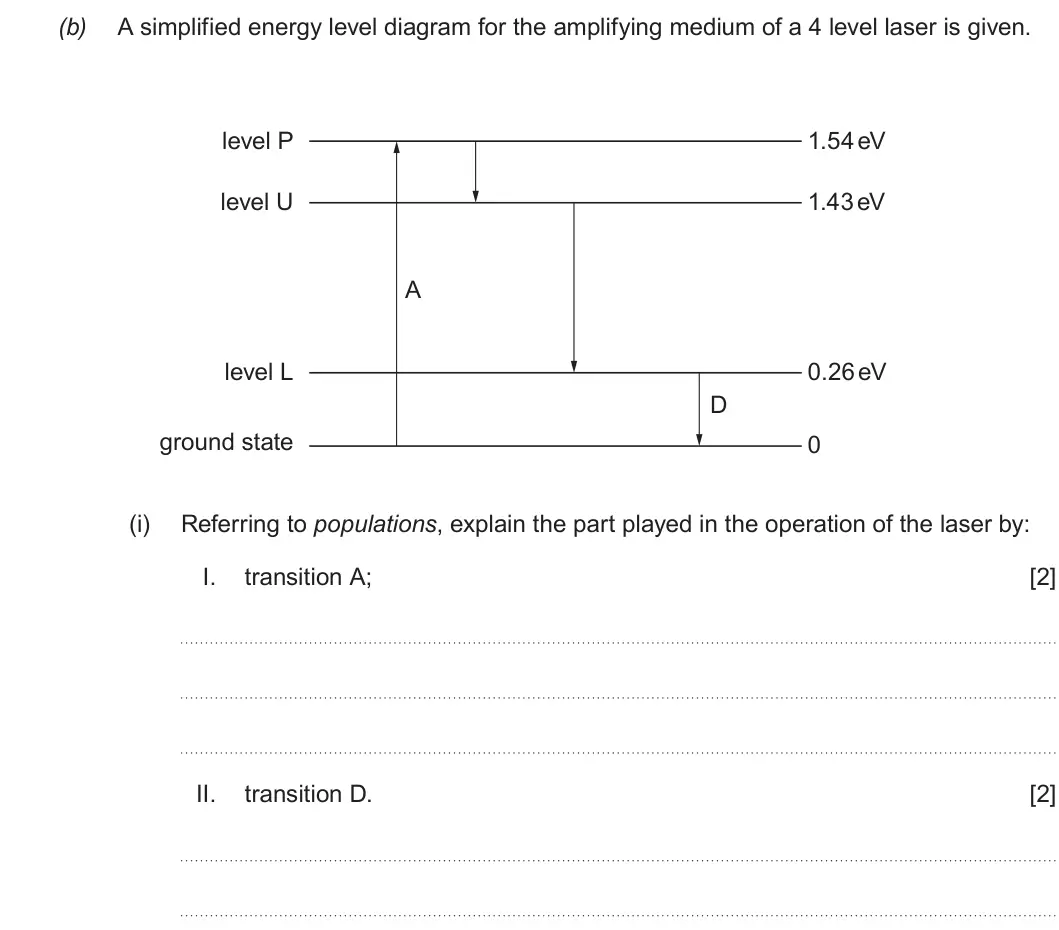
Q6(b)(ii)
The whole paper ↗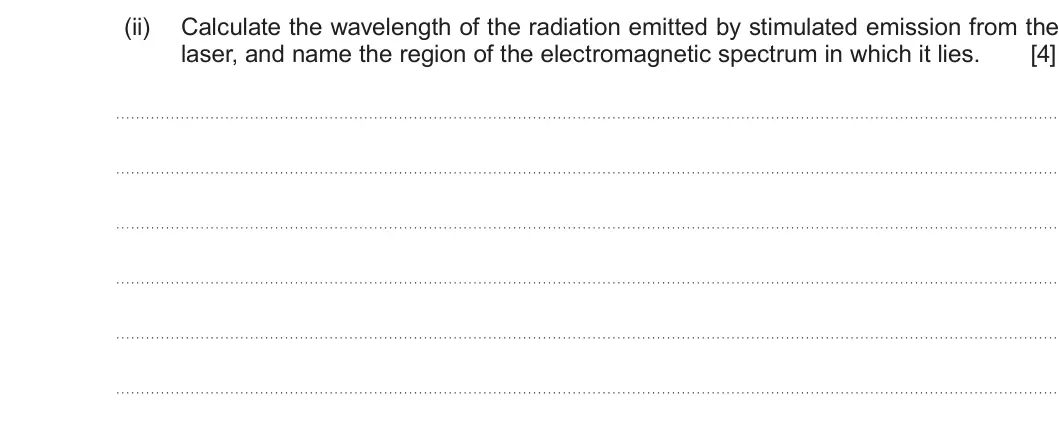
Q3(a)(i)
The whole paper ↗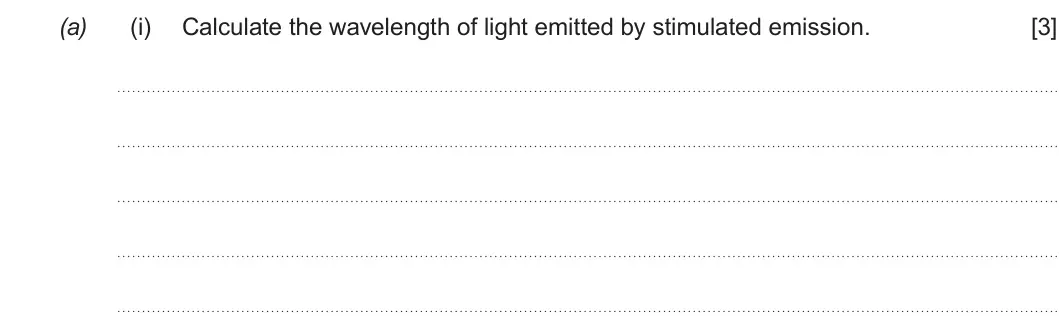
Q3(a)(ii)
The whole paper ↗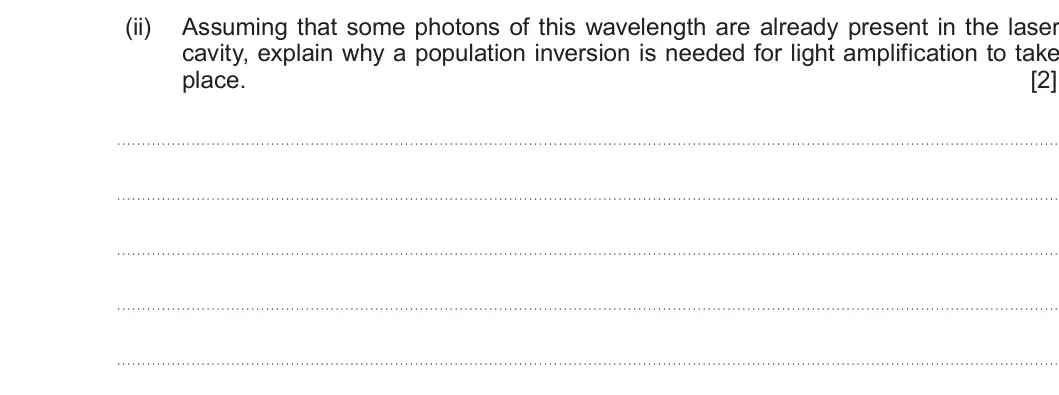
Q7(a)
The whole paper ↗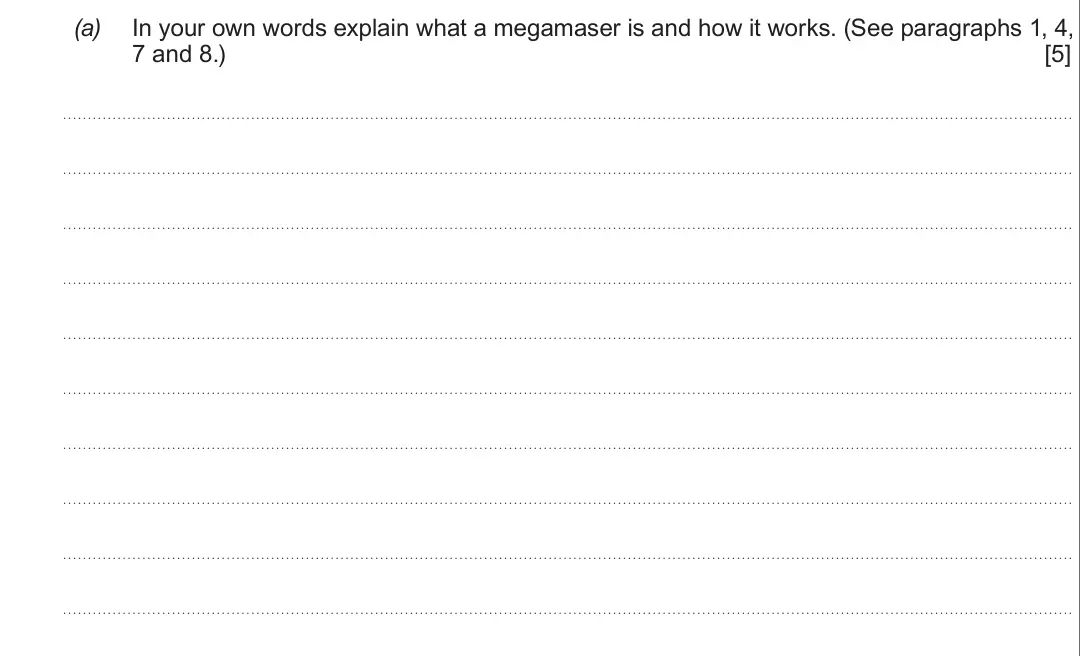
Q7(b)
The whole paper ↗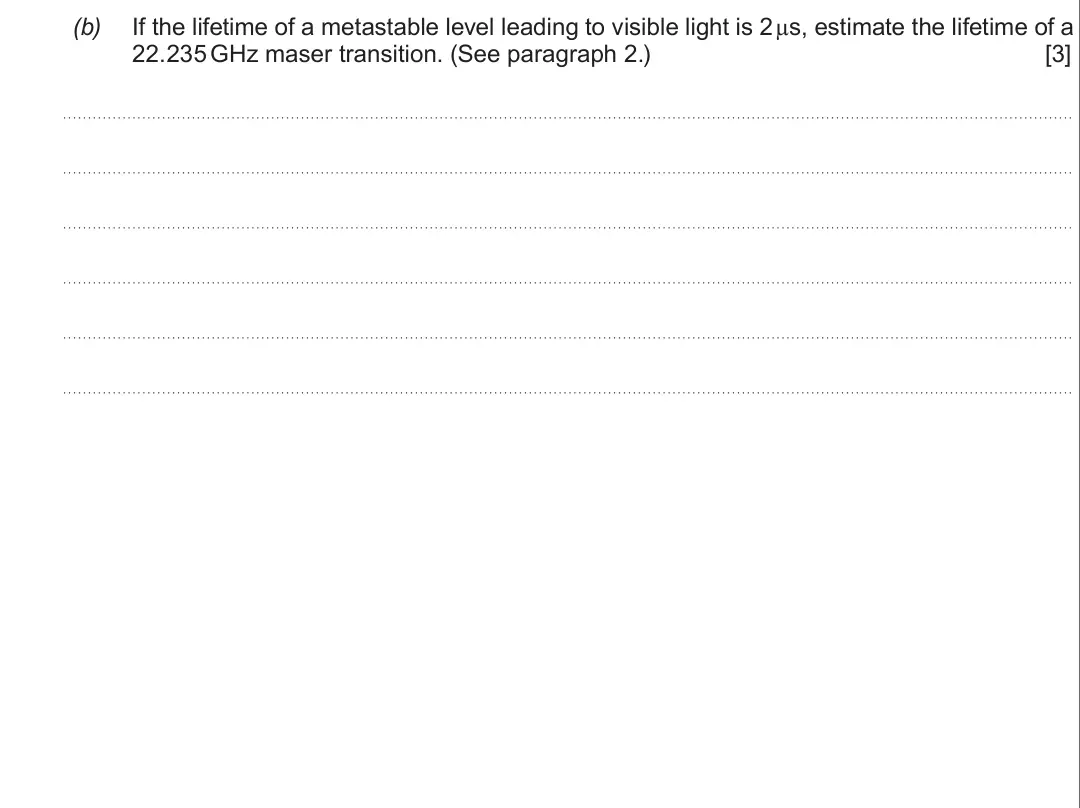
Q8(a)(i)
The whole paper ↗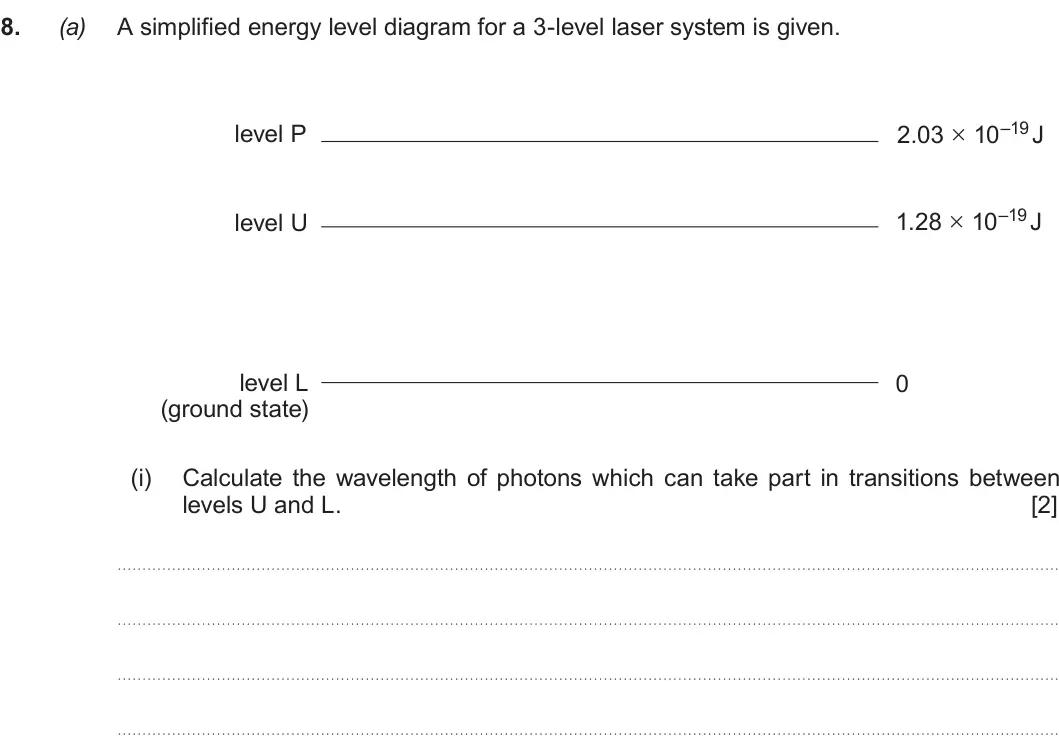
Q8(a)(ii)
The whole paper ↗
All 26 questions on Lasers, as a list
- Summer 2025, AS Unit 2, Q6(b)(i) (3 marks): Explain what is meant by stimulated emission. [3]
- Summer 2024, AS Unit 2, Q9(a)(i) (2 marks): Explain what is meant by stimulated emission involving levels U and G. [2]
- Summer 2024, AS Unit 2, Q9(a)(ii) (1 mark): State why there must be more electrons in U than in G for light amplification to occur. [1]
- Summer 2024, AS Unit 2, Q9(b) (3 marks): Calculate the wavelength of the light emitted by stimulated emission. [3]
- Summer 2023, AS Unit 2, Q8(a) (3 marks): The laser transition between level U and level L produces stimulated photons of wavelength 1.06 × 10⁻⁶ m. Determine the value of energy level L in eV. [3]
- Summer 2023, AS Unit 2, Q8(b) (2 marks): When explaining the operation of this laser, a student writes the following: Pumping is required to move electrons from ground level to level P which is a metas
- Summer 2023, AS Unit 2, Q8(c) (2 marks): Semiconductor lasers are regularly used in DVD players and bar code scanners. State two advantages that these semiconductor lasers have over gas lasers. [2]
- Summer 2023, AS Unit 2, Q8(d) (2 marks): As electronic technology advances, outdated electronic devices and their components are discarded. It has been estimated that 50 million tonnes of electronic wa
- Summer 2022, AS Unit 2, Q7(a)(i) (1 mark): The laser is pumped to create a population inversion between level U and level L. State what is meant by a population inversion for this laser. [1]
- Summer 2022, AS Unit 2, Q7(a)(ii) (1 mark): Draw three arrows on the diagram to show the transitions required for this population inversion to be sustained. [1]
- Summer 2022, AS Unit 2, Q7(a)(iii) (3 marks): Explain why a population inversion is needed for light amplification to take place. [3]
- Summer 2022, AS Unit 2, Q7(b) (3 marks): Determine whether or not visible light will be produced by the lasing transition from level U to level L, giving your reasoning. [3]
- Summer 2019, AS Unit 2, Q6(b)(i) (4 marks): Referring to populations, explain the part played in the operation of the laser by: I. transition A; [2] II. transition D. [2]
- Summer 2019, AS Unit 2, Q6(b)(ii) (4 marks): Calculate the wavelength of the radiation emitted by stimulated emission from the laser, and name the region of the electromagnetic spectrum in which it lies. [
- Summer 2018, AS Unit 2, Q3(a)(i) (3 marks): Calculate the wavelength of light emitted by stimulated emission. [3]
- Summer 2018, AS Unit 2, Q3(a)(ii) (2 marks): Assuming that some photons of this wavelength are already present in the laser cavity, explain why a population inversion is needed for light amplification to t
- Summer 2017, Unit 3, Q7(a) (5 marks): In your own words explain what a megamaser is and how it works. (See paragraphs 1, 4, 7 and 8.) [5]
- Summer 2017, Unit 3, Q7(b) (3 marks): If the lifetime of a metastable level leading to visible light is 2 μs, estimate the lifetime of a 22.235 GHz maser transition. (See paragraph 2.) [3]
- Summer 2017, AS Unit 2, Q8(a)(i) (2 marks): Calculate the wavelength of photons which can take part in transitions between levels U and L. [2]
- Summer 2017, AS Unit 2, Q8(a)(ii) (4 marks): Describe the processes of absorption and stimulated emission involving levels U and L. [4] absorption: stimulated emission:
- Summer 2017, AS Unit 2, Q8(a)(iii) (1 mark): If the relative populations of levels P, U and L are 0.2%, 54.0% and 45.8%, state with a reason whether absorption or stimulated emission is the more likely eve
- Summer 2017, AS Unit 2, Q8(a)(iv) (2 marks): The laser is pumped by promoting electrons from the ground state to level P. Explain why electrons must spend only a very short time in level P, but a relativel
- Summer 2017, AS Unit 2, Q8(b) (4 marks): It has been suggested that energy should be carried across the country as high power light beams from lasers. Discuss whether or not this might be a good altern
- Summer 2016, AS Unit 2, Q1(a)(i) (3 marks): Calculate the wavelength of radiation emitted in the transition from level U to level L. [3]
- Summer 2016, AS Unit 2, Q1(a)(ii) (3 marks): Explain how stimulated emission enables amplification of infra-red radiation of this wavelength. [3]
- Summer 2016, AS Unit 2, Q1(b) (2 marks): Explain the advantage of a four-level laser system over a three-level system. [2]
Questions, mark schemes and examiner’s reports are © WJEC CBAC Ltd, from their published past papers. Plumi isn’t affiliated with any exam board. Want whole papers? Every WJEC A-Level Physics paper.
Rather write your answers by hand on iPad? Plumi marks them against the same mark schemes.