 plumi
D.C. circuits: WJEC A‑Level Physics questions
Every WJEC A-Level Physics exam question on 2.3 D.C. circuits, 2016–2025, with its mark scheme and examiner’s report.
Find questions1,173
Calculations
Q3(a)
The whole paper ↗
Q3(b)(i)
The whole paper ↗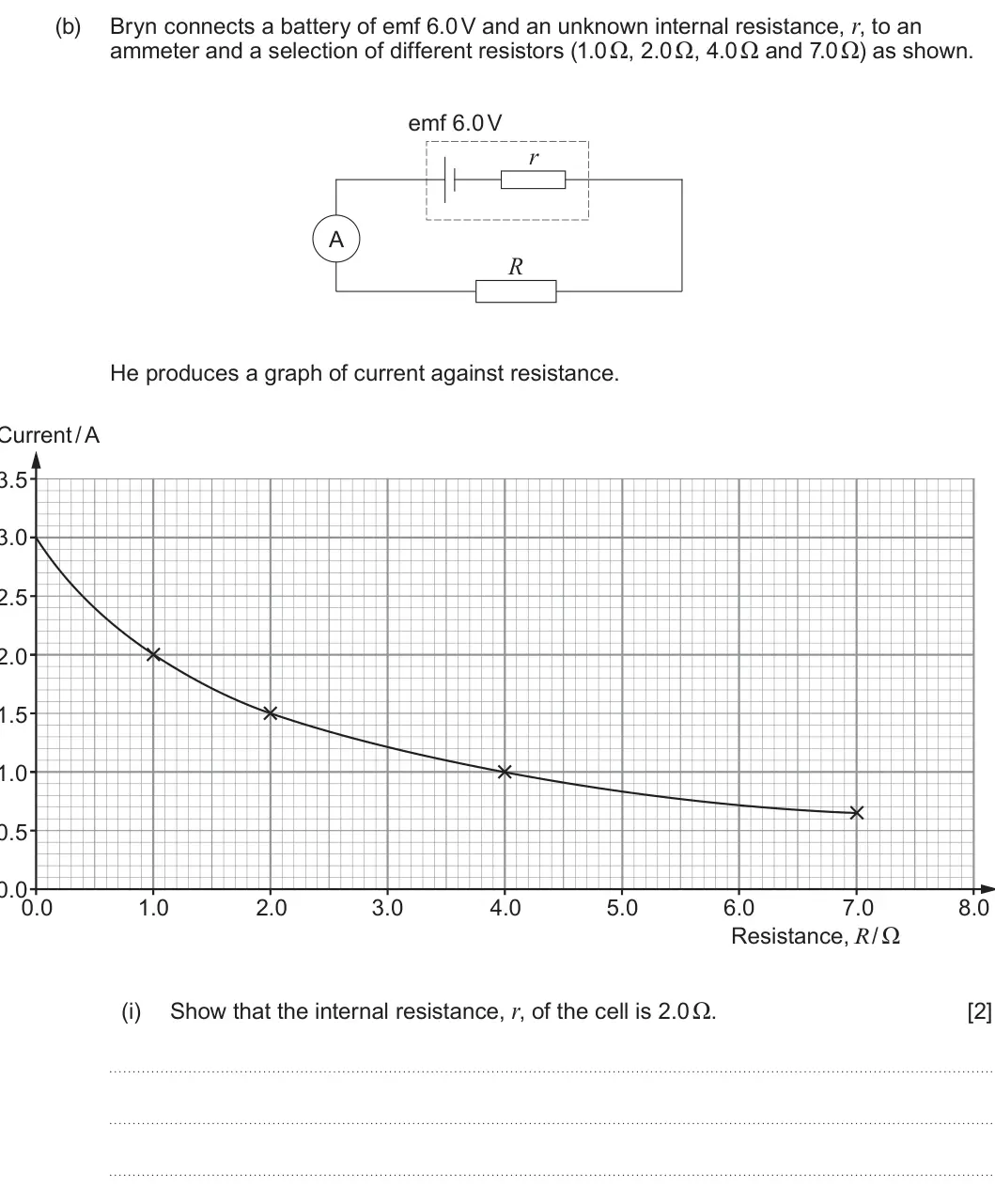
Q3(b)(ii)
The whole paper ↗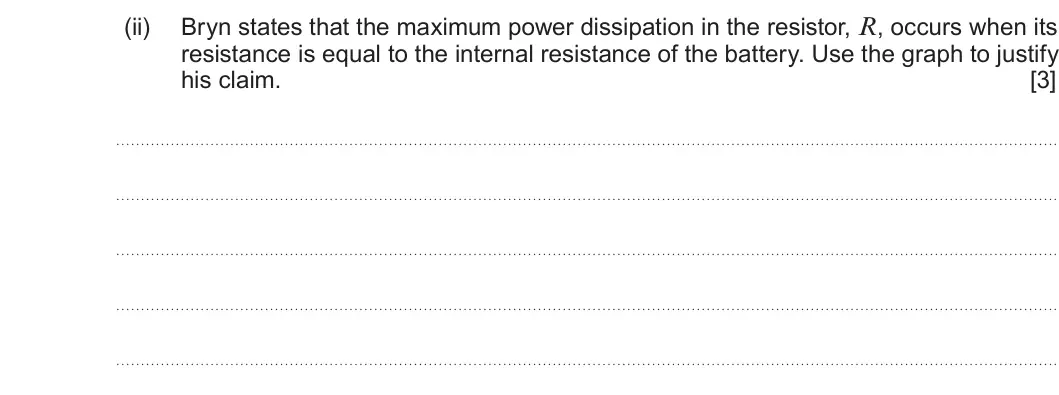
Q2(a)(i)
The whole paper ↗
Q2(a)(ii)
The whole paper ↗
Q2(b)(i)
The whole paper ↗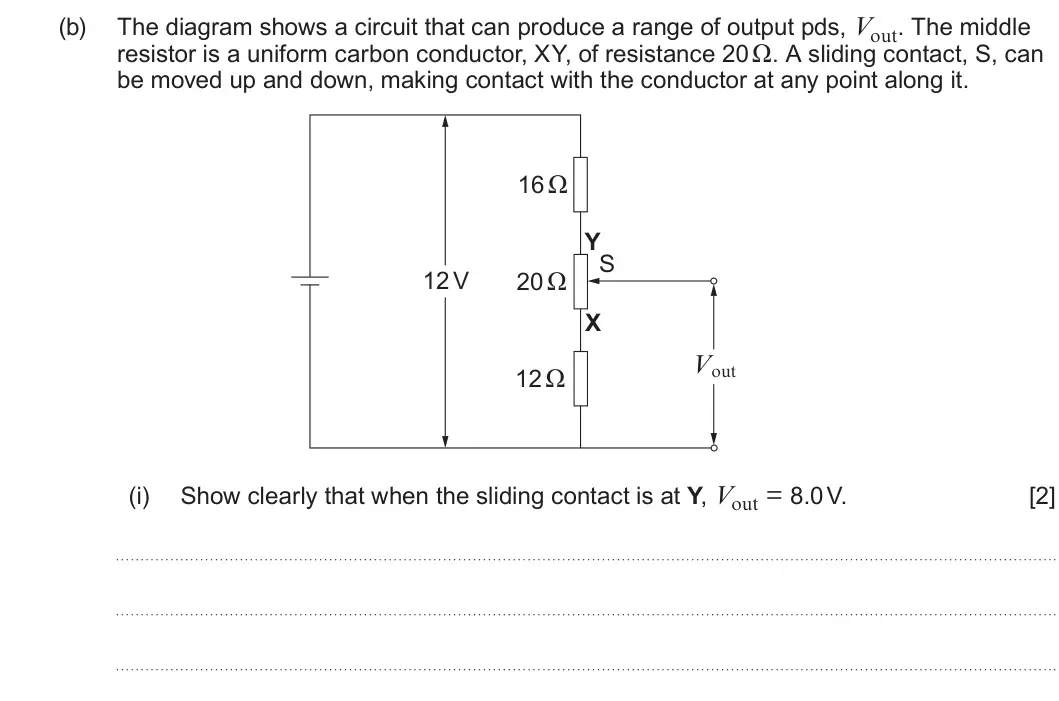
Q2(b)(ii)
The whole paper ↗
Q2(c)
The whole paper ↗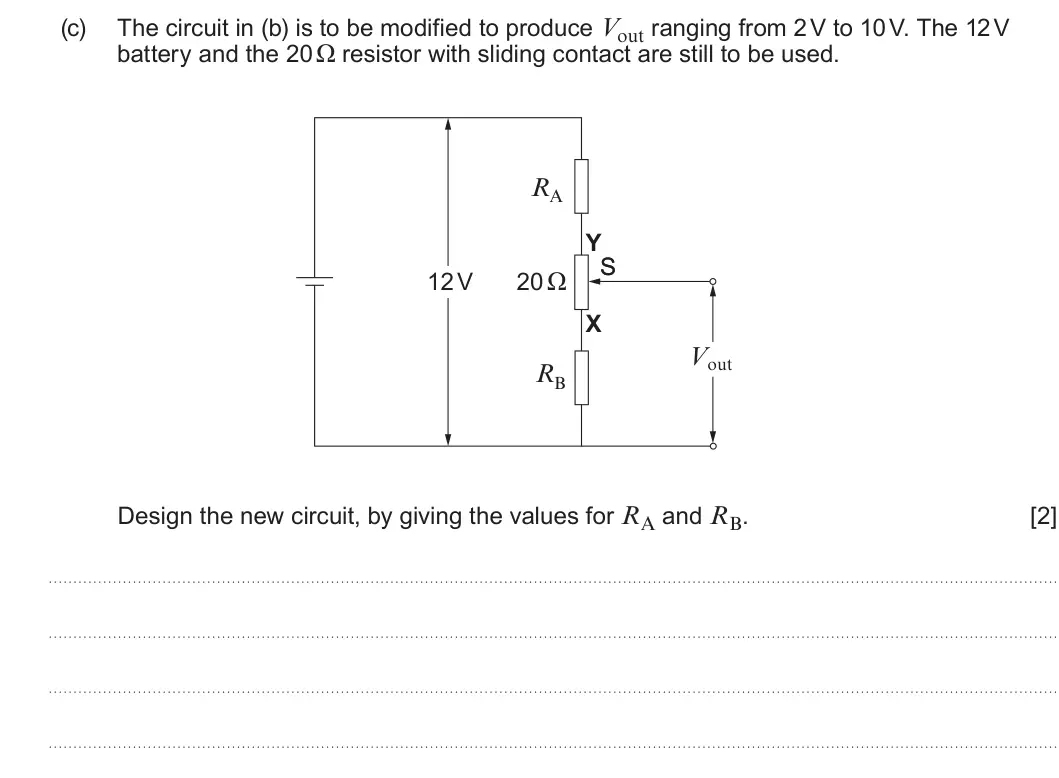
Q3(a)(i)
The whole paper ↗
Q3(a)(ii)
The whole paper ↗
Q3(b)(i)
The whole paper ↗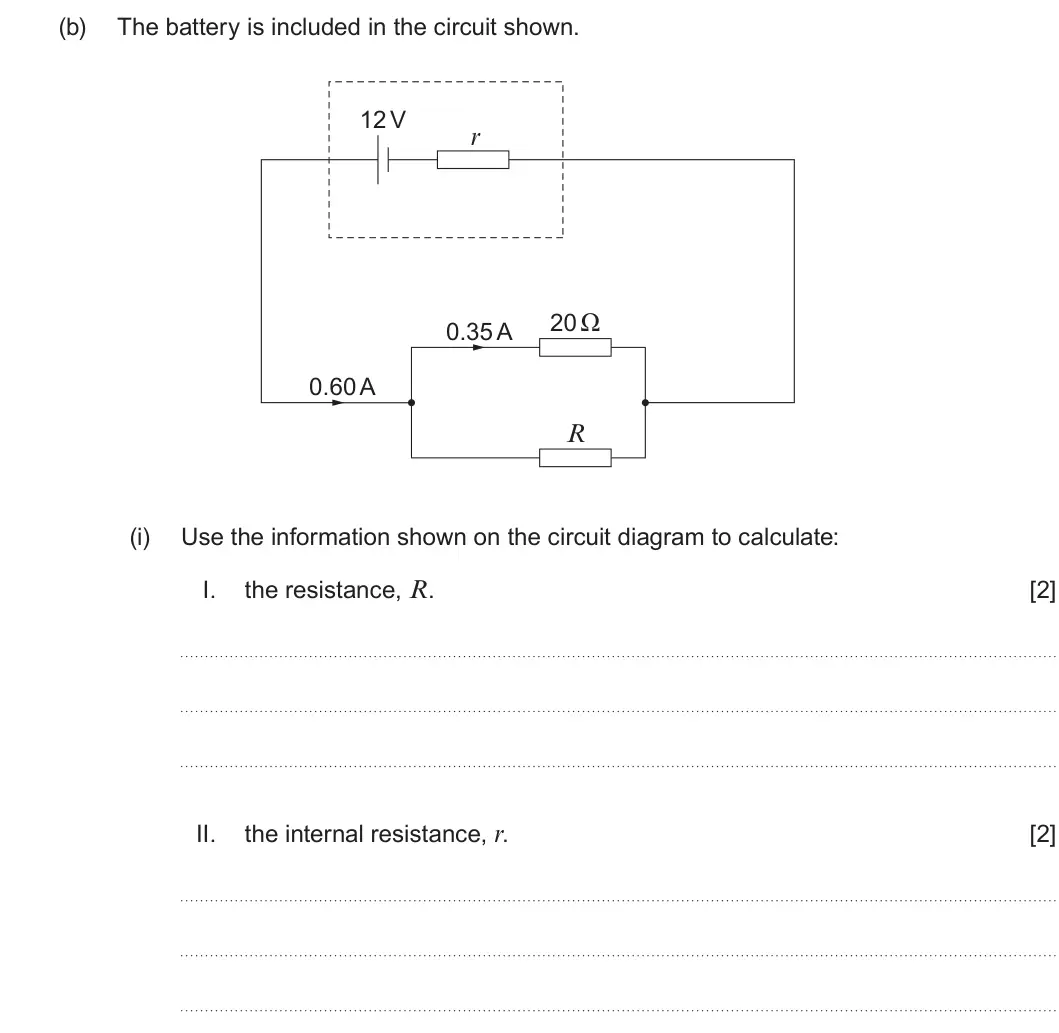
Q3(b)(iii)
The whole paper ↗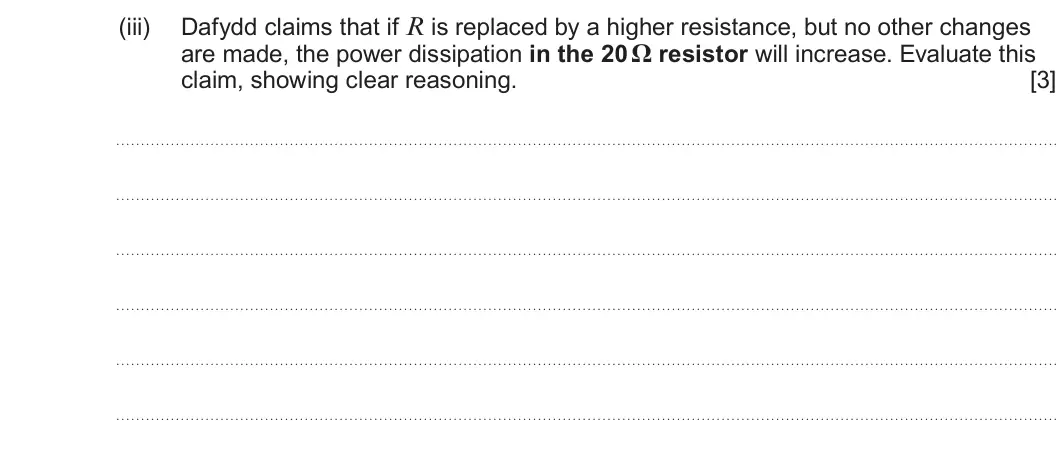
Q2(a)
The whole paper ↗
Q2(b)(i)
The whole paper ↗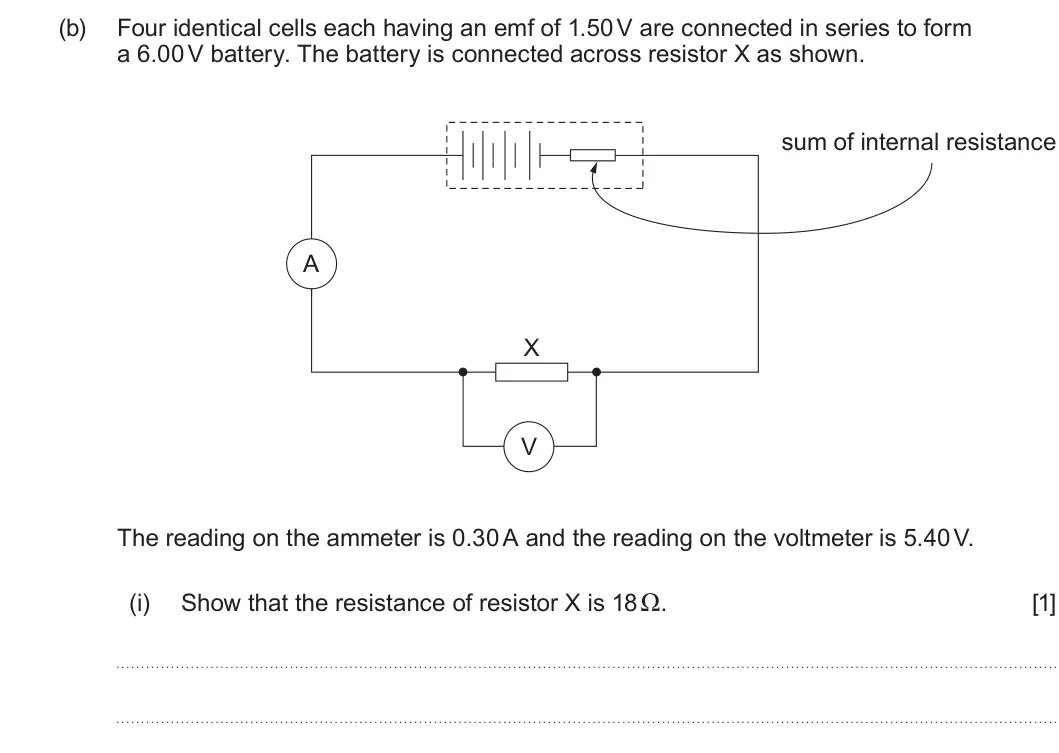
Q2(b)(ii)
The whole paper ↗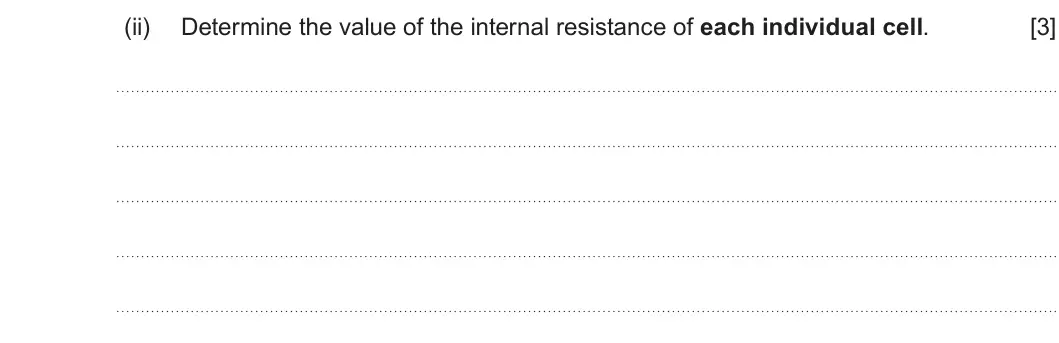
Q2(b)(iii)
The whole paper ↗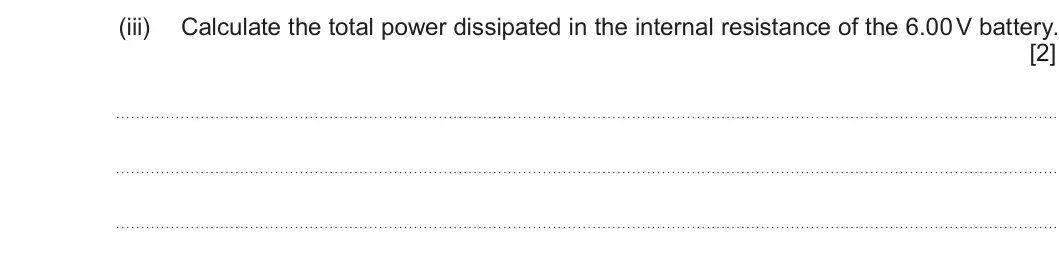
Q2(b)(iv)
The whole paper ↗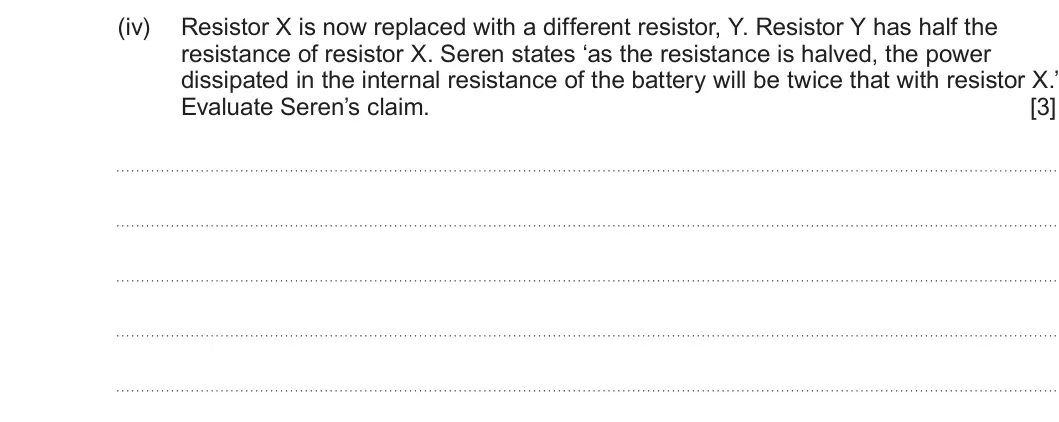
Q1(a)
The whole paper ↗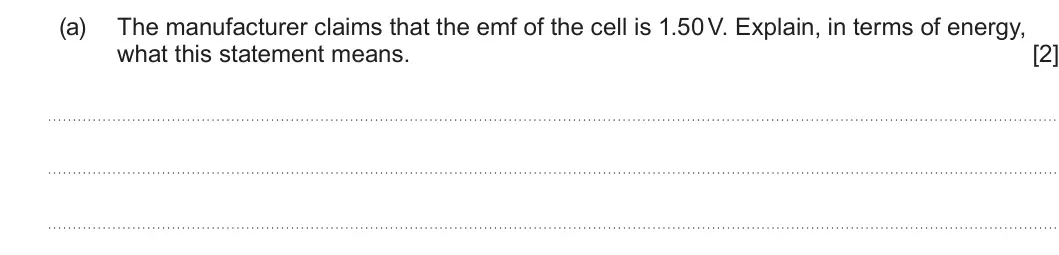
Q1(b)(i)
The whole paper ↗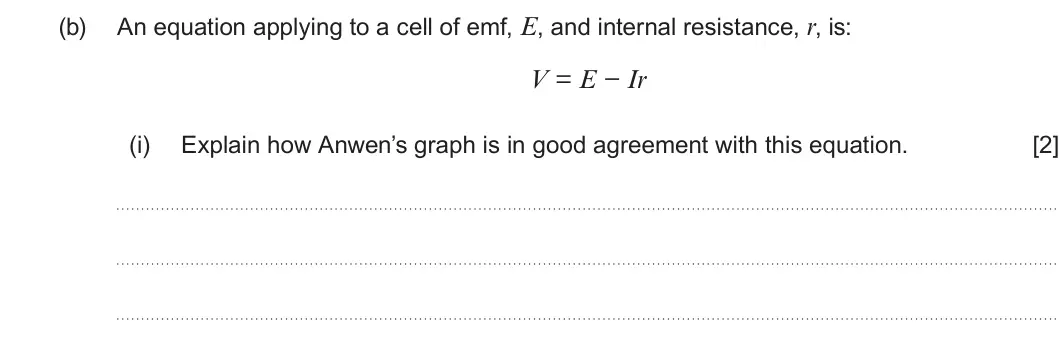
Q1(b)(ii)
The whole paper ↗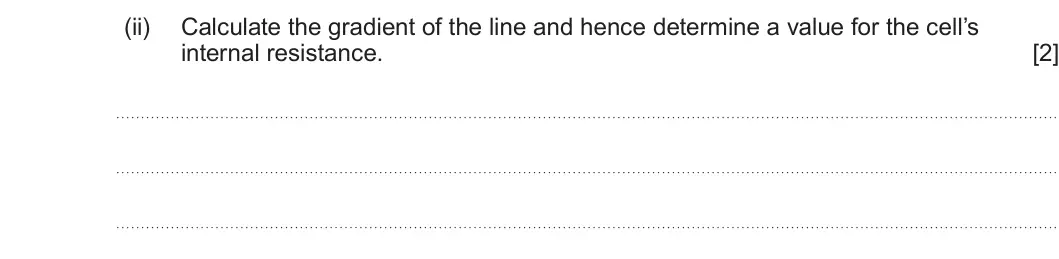
All 45 questions on D.C. circuits, as a list
- Summer 2025, AS Unit 2, Q3(a) (2 marks): Define the emf of a cell. [2]
- Summer 2025, AS Unit 2, Q3(b)(i) (2 marks): [2]
- Summer 2025, AS Unit 2, Q3(b)(ii) (3 marks): Bryn states that the maximum power dissipation in the resistor, R, occurs when its resistance is equal to the internal resistance of the battery. Use the graph
- Summer 2024, AS Unit 2, Q2(a)(i) (1 mark): the currents (only); [1]
- Summer 2024, AS Unit 2, Q2(a)(ii) (1 mark): the potential differences (only). [1]
- Summer 2024, AS Unit 2, Q2(b)(i) (2 marks): Show clearly that when the sliding contact is at Y, Vout = 8.0 V. [2]
- Summer 2024, AS Unit 2, Q2(b)(ii) (1 mark): Determine the value of Vout when the sliding contact is at X. [1]
- Summer 2024, AS Unit 2, Q2(c) (2 marks): The circuit in (b) is to be modified to produce Vout ranging from 2 V to 10 V. The 12 V battery and the 20 Ω resistor with sliding contact are still to be used.
- Summer 2024, AS Unit 2, Q3(a)(i) (2 marks): Explain what this statement means. [2]
- Summer 2024, AS Unit 2, Q3(a)(ii) (1 mark): State why it is usually a disadvantage for a battery to have an internal resistance. [1]
- Summer 2024, AS Unit 2, Q3(b)(i) (4 marks): Use the information shown on the circuit diagram to calculate: I. the resistance, R. [2] II. the internal resistance, r. [2]
- Summer 2024, AS Unit 2, Q3(b)(iii) (3 marks): Dafydd claims that if R is replaced by a higher resistance, but no other changes are made, the power dissipation in the 20 Ω resistor will increase. Evaluate th
- Summer 2023, AS Unit 2, Q2(a) (2 marks): Define the emf of a cell. [2]
- Summer 2023, AS Unit 2, Q2(b)(i) (1 mark): [1]
- Summer 2023, AS Unit 2, Q2(b)(ii) (3 marks): Determine the value of the internal resistance of each individual cell. [3]
- Summer 2023, AS Unit 2, Q2(b)(iii) (2 marks): Calculate the total power dissipated in the internal resistance of the 6.00 V battery. [2]
- Summer 2023, AS Unit 2, Q2(b)(iv) (3 marks): Resistor X is now replaced with a different resistor, Y. Resistor Y has half the resistance of resistor X. Seren states ‘as the resistance is halved, the power
- Summer 2022, AS Unit 2, Q1(a) (2 marks): The manufacturer claims that the emf of the cell is 1.50 V. Explain, in terms of energy, what this statement means. [2]
- Summer 2022, AS Unit 2, Q1(b)(i) (2 marks): Explain how Anwen’s graph is in good agreement with this equation. [2]
- Summer 2022, AS Unit 2, Q1(b)(ii) (2 marks): Calculate the gradient of the line and hence determine a value for the cell’s internal resistance. [2]
- Summer 2022, AS Unit 2, Q1(b)(iii) (1 mark): Evaluate the manufacturer’s claim that the emf is 1.50 V. [1]
- Summer 2022, AS Unit 2, Q1(c)(i) (1 mark): Use the graph to determine the greatest current the cell can supply. [1]
- Summer 2022, AS Unit 2, Q1(c)(ii) (1 mark): State the resistance of the variable resistor when the current is at its maximum. [1]
- Summer 2022, AS Unit 2, Q2(b)(i) (3 marks): Explain, in clear steps, why the current, x, is 0.30 A. [3]
- Summer 2022, AS Unit 2, Q2(b)(ii) (3 marks): Calculate the pd across the supply. [3]
- Summer 2022, AS Unit 2, Q2(b)(iii) (3 marks): fifth that dissipated by the 40 Ω resistor. [3]
- Summer 2019, AS Unit 2, Q2(a) (1 mark): A battery does not store charge. State what a battery does do in relation to charge in an electric circuit. [1]
- Summer 2019, AS Unit 2, Q2(b)(i) (3 marks): Show clearly that the current is approximately 3 A. [The space is for a diagram if required.] [3]
- Summer 2019, AS Unit 2, Q2(b)(ii) (2 marks): Calculate the rate (in watts) at which: I. energy is dissipated by the electromagnet; [1] II. the battery’s chemical energy is being used. [1]
- Summer 2019, AS Unit 2, Q2(b)(iii) (2 marks): The answer to (b)(ii)II. is expected to be greater than the answer to (b)(ii)I. Explain where the missing energy goes. [2]
- Summer 2019, AS Unit 2, Q2(c) (2 marks): A student wishes to maximise the current through the electromagnet. She has a spare cell of emf 1.50 V and internal resistance 0.50 Ω. Evaluate whether or not s
- Summer 2018, AS Unit 2, Q1(a)(i) (2 marks): State in terms of work or energy what is meant by the emf of a battery. [2]
- Summer 2018, AS Unit 2, Q1(a)(ii) (2 marks): [2]
- Summer 2018, AS Unit 2, Q1(a)(iii) (5 marks): When the resistors are connected in parallel as shown below, the voltmeter reads 3.35 V. Diagram 2 r 3.30 Ω 3.30 Ω V (I) Without further calculation explain why
- Summer 2018, AS Unit 2, Q2(a) (3 marks): The resistance, Rth, of the thermistor in the circuit varies with temperature as shown in the graph. 9 Rth / kΩ 8 7 6 Rth 5 6.00 V 4 V 1.00 kΩ 3 2 1 0 0 10 20 3
- Summer 2018, AS Unit 2, Q2(b) (2 marks): The set-up can be used as a thermometer, with the thermistor used as a temperature probe. David suggests that there must be a simple rule of the type “an increa
- Summer 2017, AS Unit 2, Q3(a) (2 marks): Requirement A: an output pd, Vout, of 3.0 V when unloaded (switch open). [2]
- Summer 2017, AS Unit 2, Q3(b) (2 marks): Requirement B: a power dissipation of less than 0.50 W in R1 when unloaded (switch open). [2]
- Summer 2017, AS Unit 2, Q3(c) (4 marks): Requirement C: a decrease of less than 0.40 V in Vout when the switch is closed. [4]
- Summer 2016, AS Unit 2, Q5(b)(i) (1 mark): State the expected reading on the voltmeter when the switch is open. [1]
- Summer 2016, AS Unit 2, Q5(b)(ii) (3 marks): With the switch closed the voltmeter reads 1.38 V. Show in clear steps that the cell’s internal resistance, r, is approximately 0.3 Ω. [3]
- Summer 2016, AS Unit 2, Q5(b)(iii) (2 marks): 750 J of the cell’s energy is dissipated in total while the switch is closed. Calculate the time for which the switch is closed. [2]
- Summer 2016, AS Unit 2, Q5(b)(iv) (2 marks): Calculate the voltmeter reading when the 1.50 Ω resistor is replaced by a 0.75 Ω resistor, and the switch is closed. [2]
- Summer 2016, AS Unit 2, Q5(c)(i) (2 marks): Calculate the voltmeter reading when the resistance of the LDR is 850 Ω and the switch is closed. [2]
- Summer 2016, AS Unit 2, Q5(c)(ii) (2 marks): Explain, in clear steps, whether the voltmeter reading will increase or decrease when the intensity of light is increased. [2]
Questions, mark schemes and examiner’s reports are © WJEC CBAC Ltd, from their published past papers. Plumi isn’t affiliated with any exam board. Want whole papers? Every WJEC A-Level Physics paper.
Rather write your answers by hand on iPad? Plumi marks them against the same mark schemes.