 plumi
Resistance: WJEC A‑Level Physics questions
Every WJEC A-Level Physics exam question on 2.2 Resistance, 2016–2025, with its mark scheme and examiner’s report.
Find questions1,173
Calculations
Q1(b)(i)
The whole paper ↗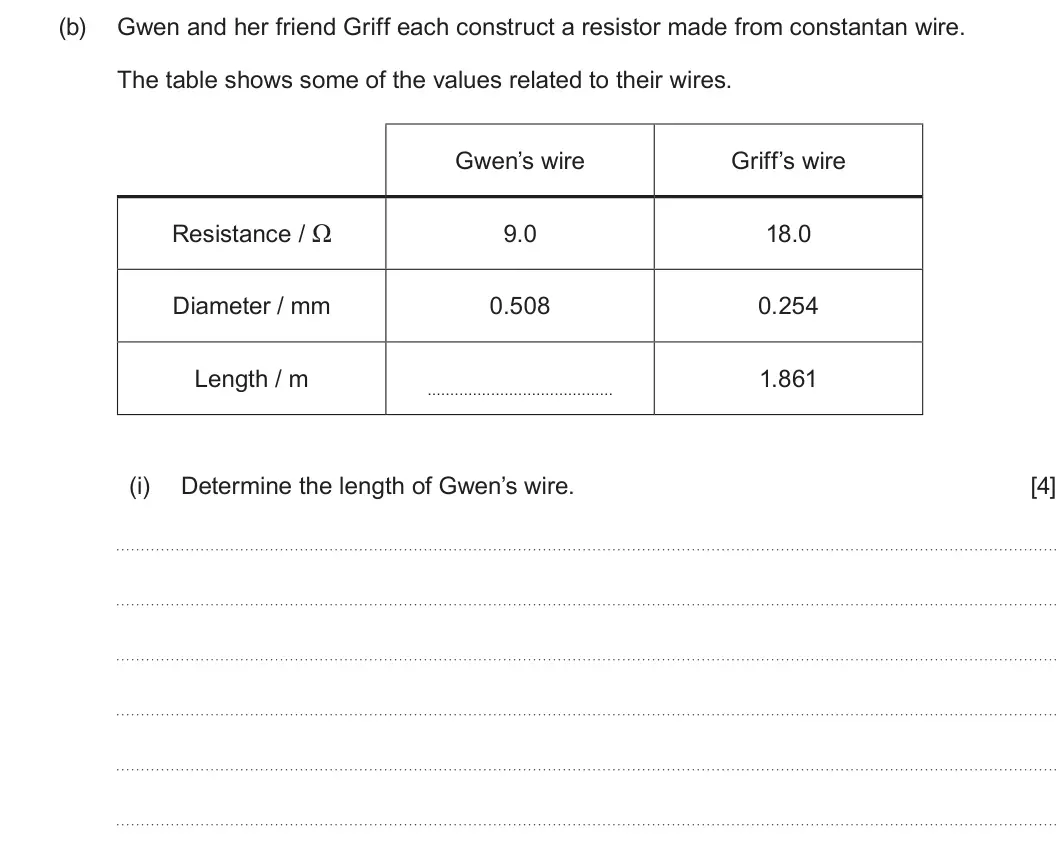
Q2(a)
The whole paper ↗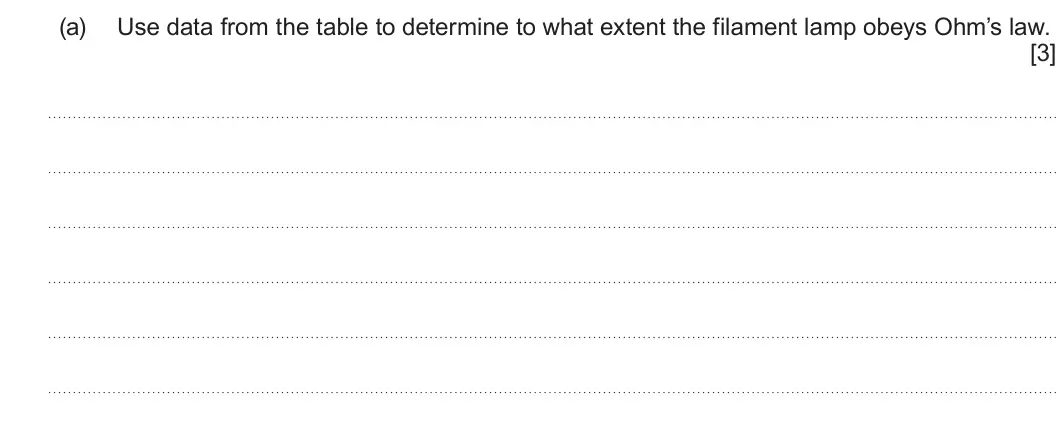
Q2(b)
The whole paper ↗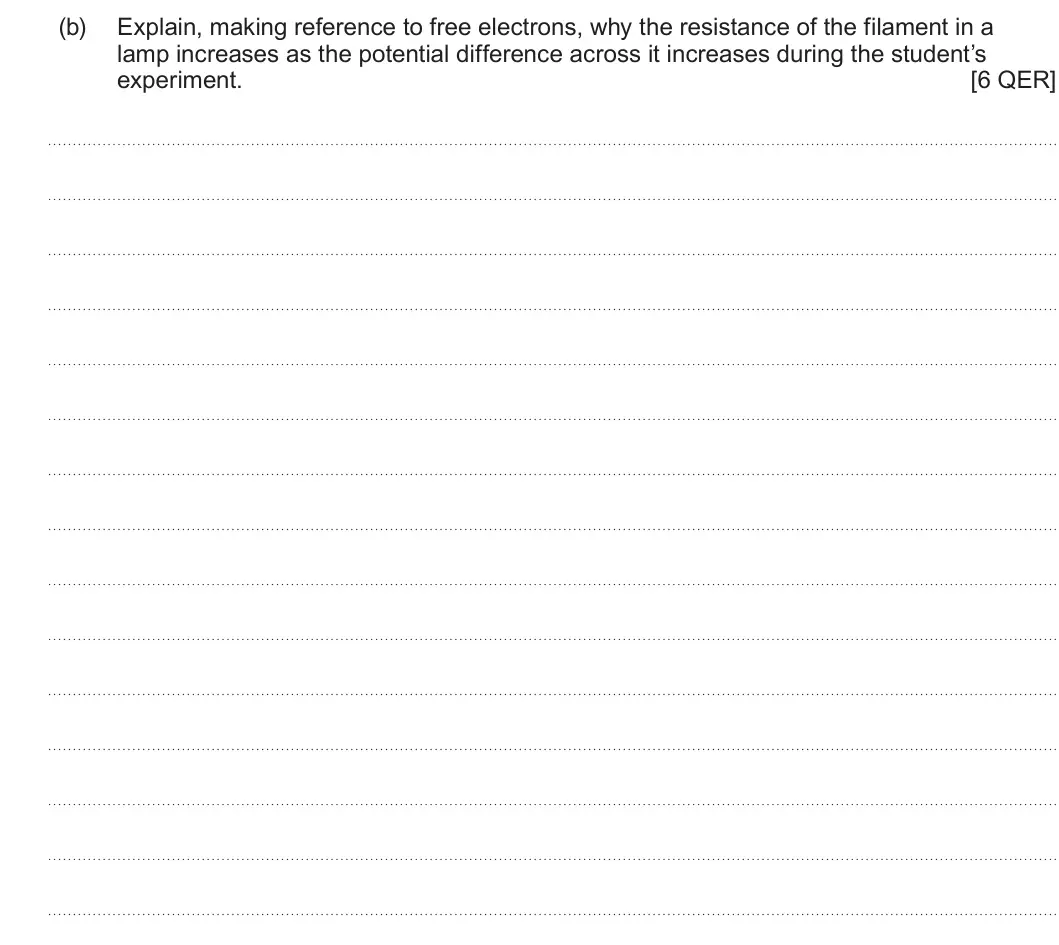
Q2(c)
The whole paper ↗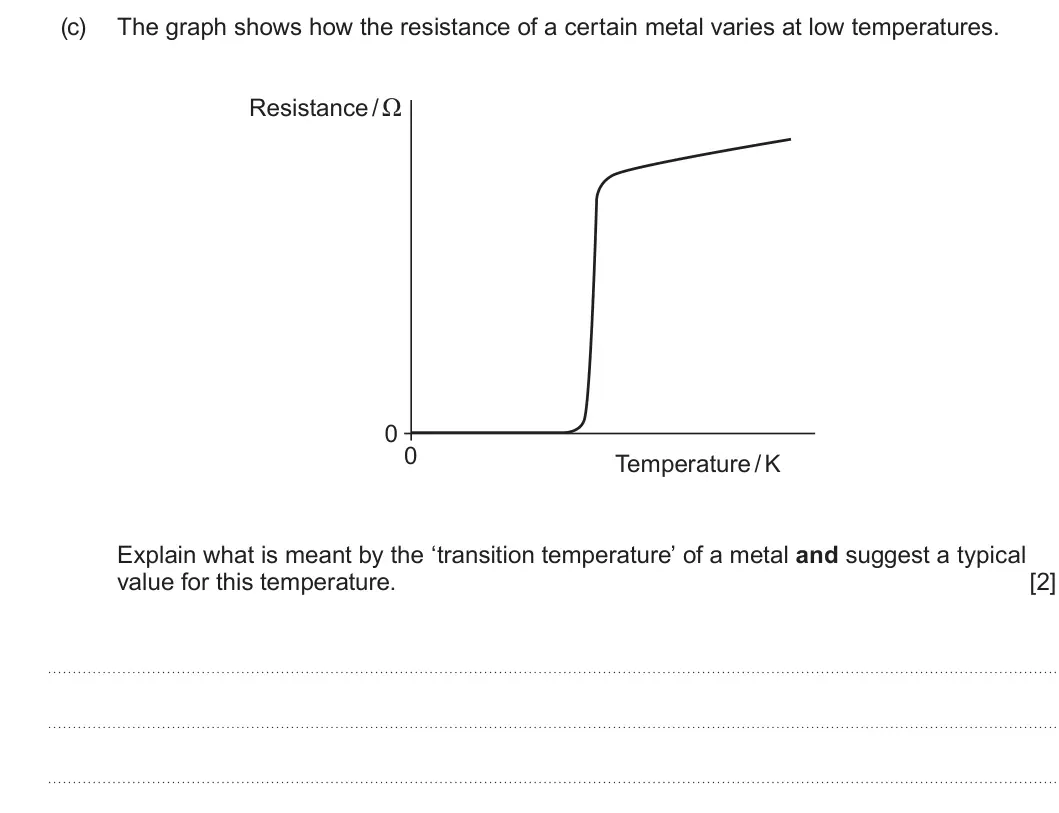
Q2(d)
The whole paper ↗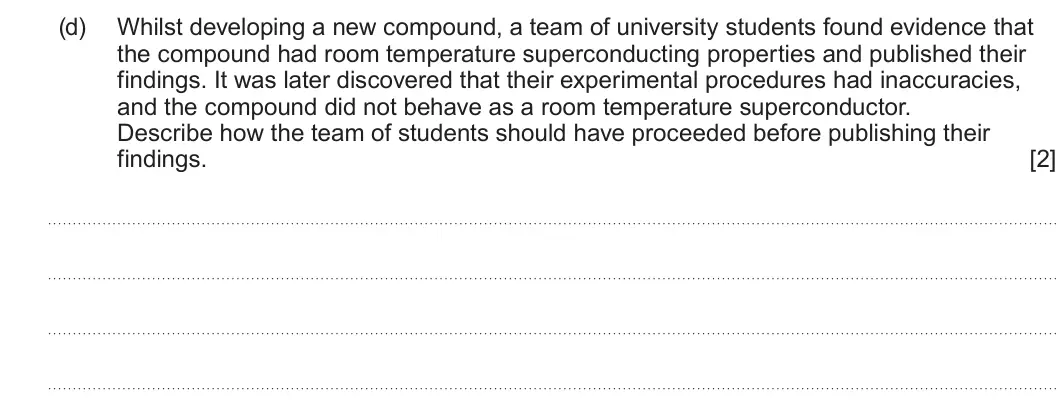
Q6(b)(iii)
The whole paper ↗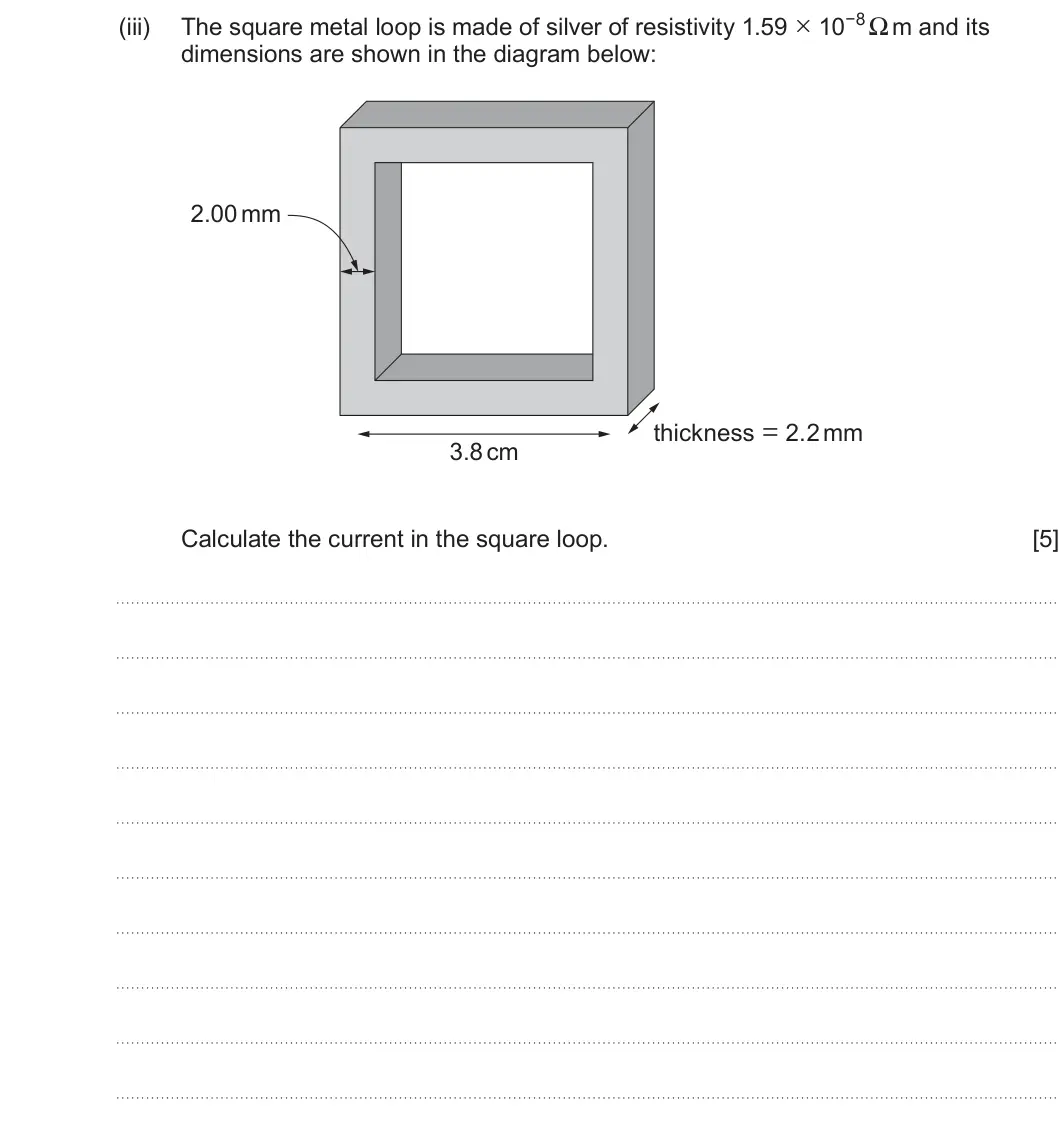
Q1(a)
The whole paper ↗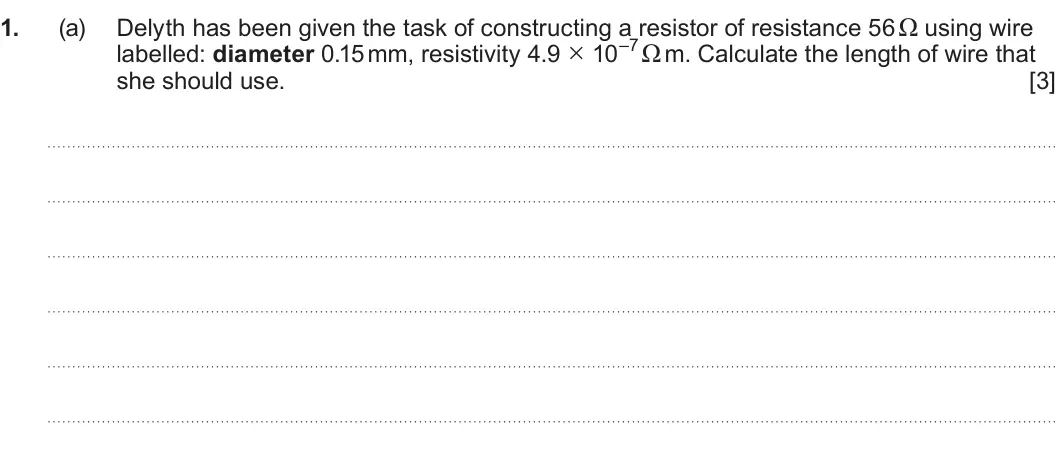
Q1(b)
The whole paper ↗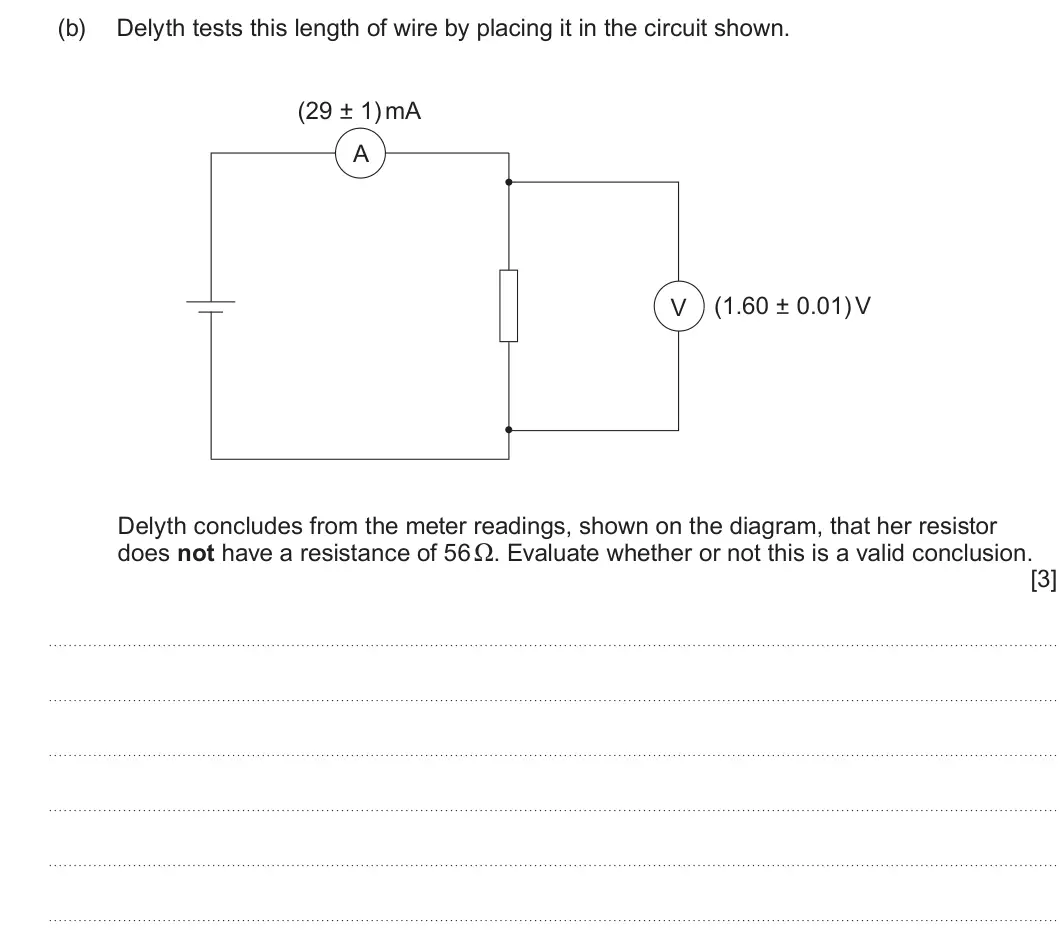
Q3(b)(ii)
The whole paper ↗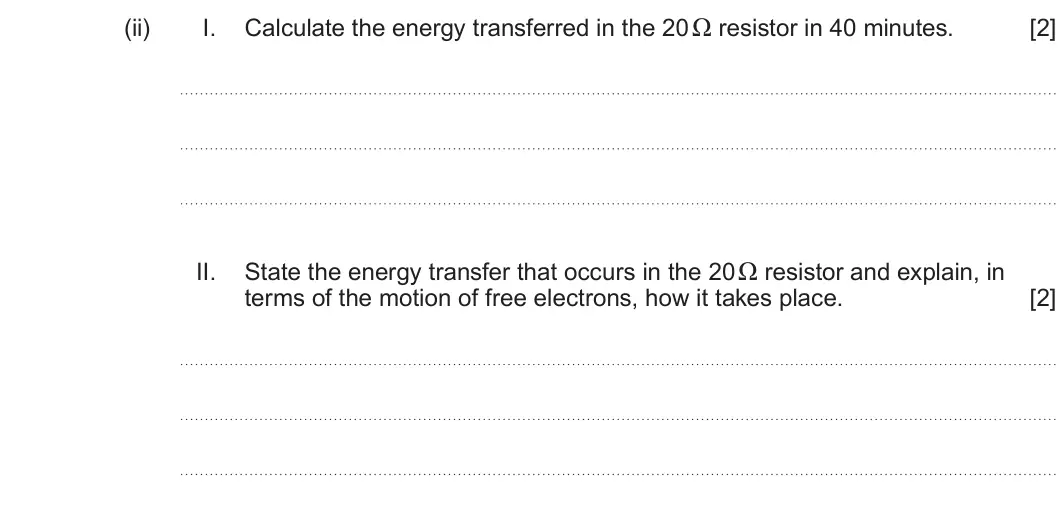
Q1(a)(i)
The whole paper ↗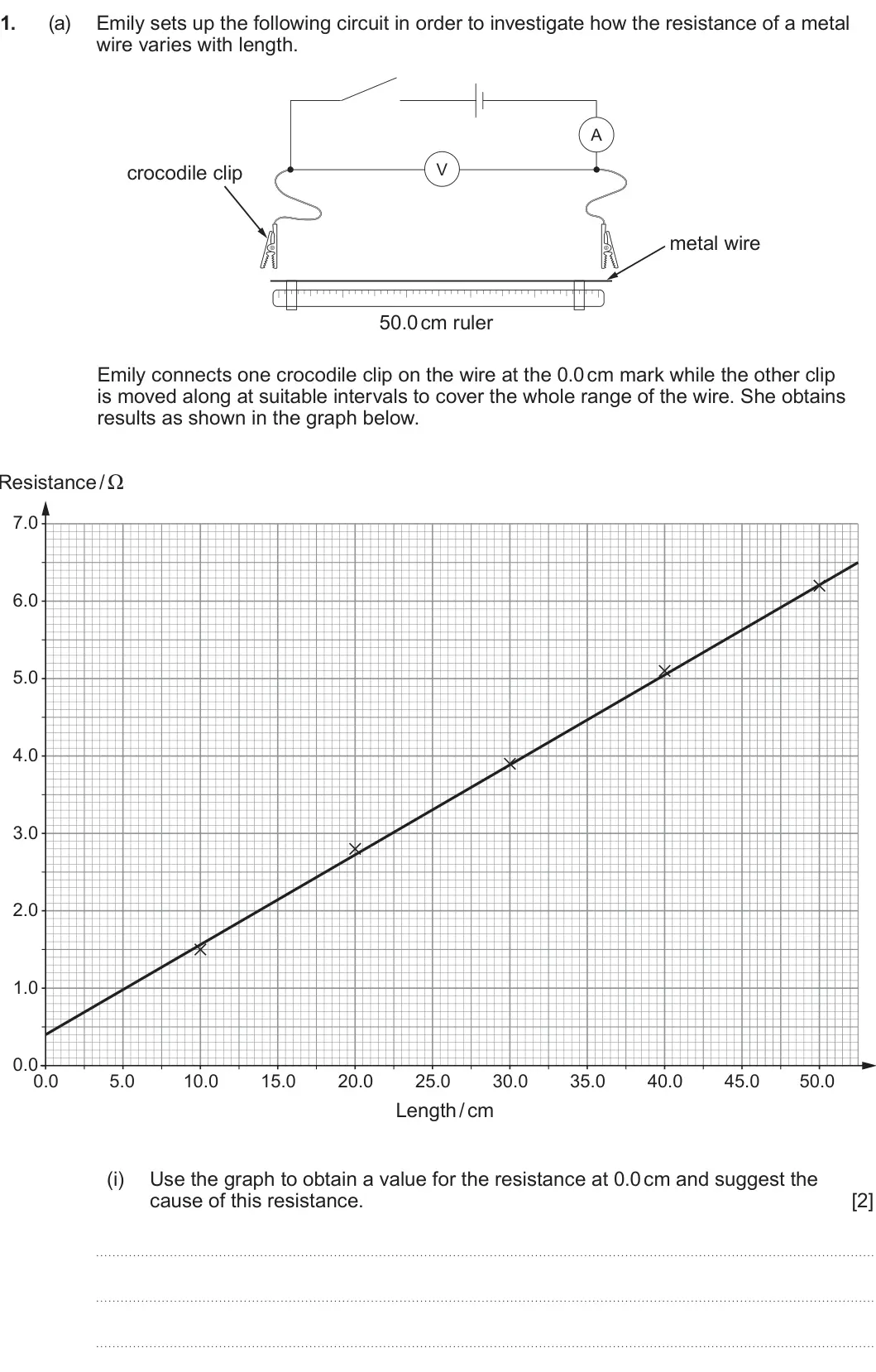
Q1(a)(ii)
The whole paper ↗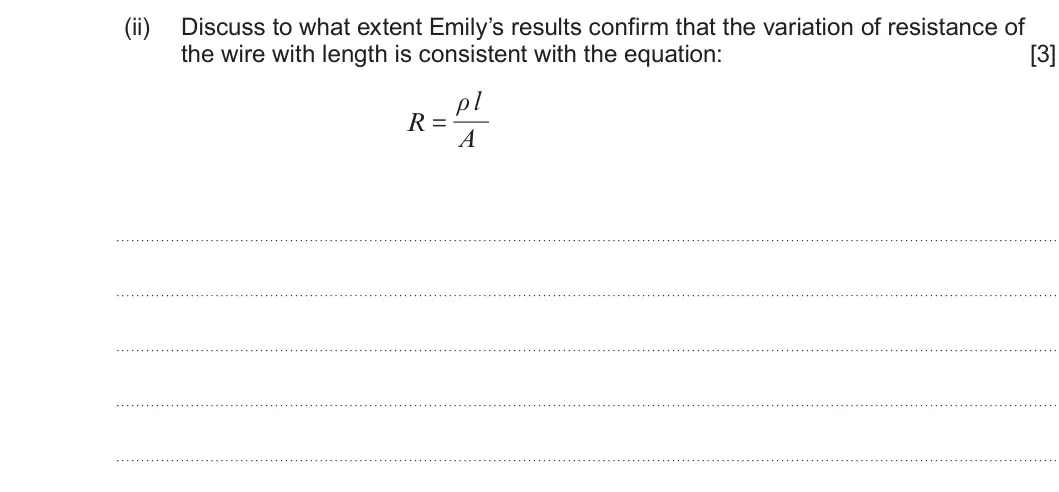
Q1(a)(iii)
The whole paper ↗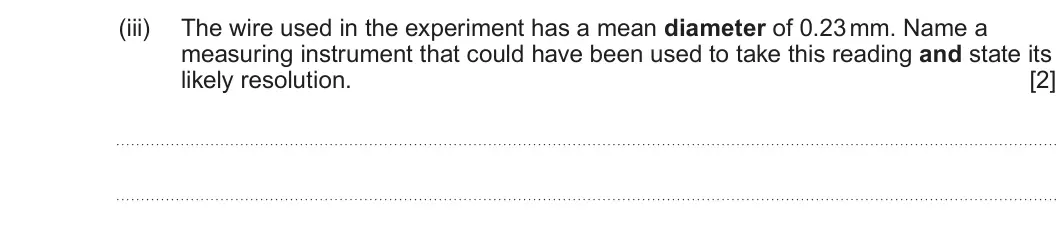
Q1(a)(iv)
The whole paper ↗
Q1(b)
The whole paper ↗
Q1(a)(i)
The whole paper ↗
Q1(a)(ii)
The whole paper ↗
Q1(b)(i)
The whole paper ↗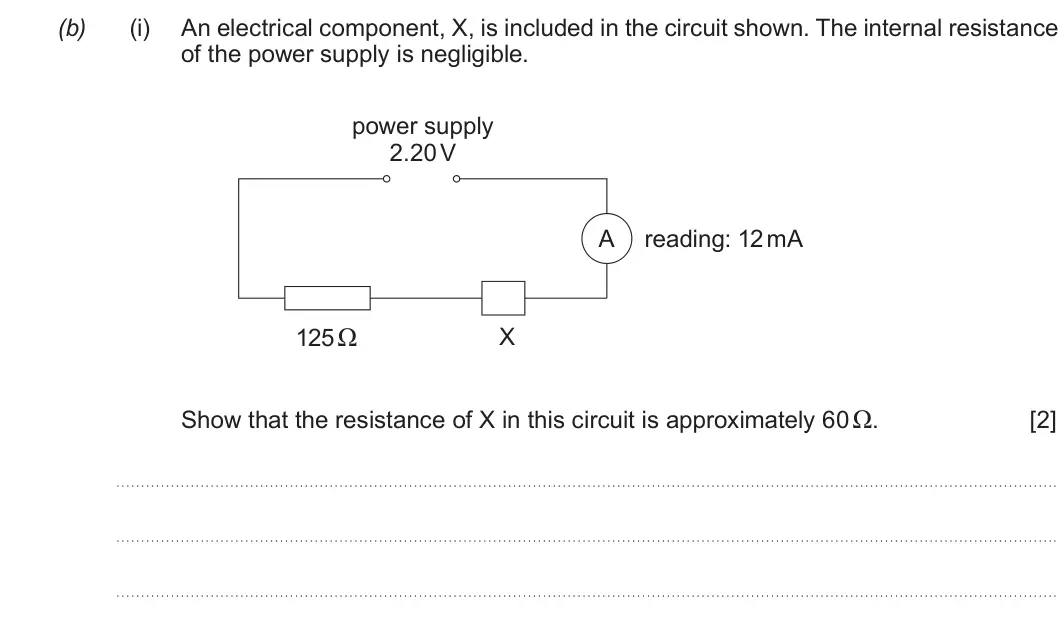
Q1(b)(ii)
The whole paper ↗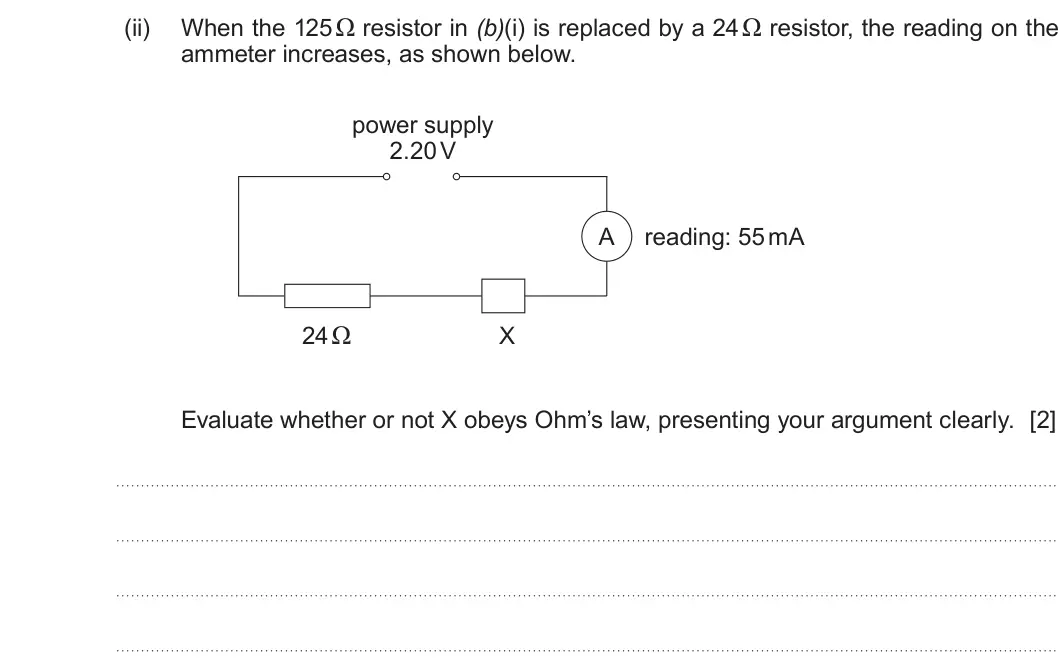
Q1(b)(iii)
The whole paper ↗
Q1(c)(i)
The whole paper ↗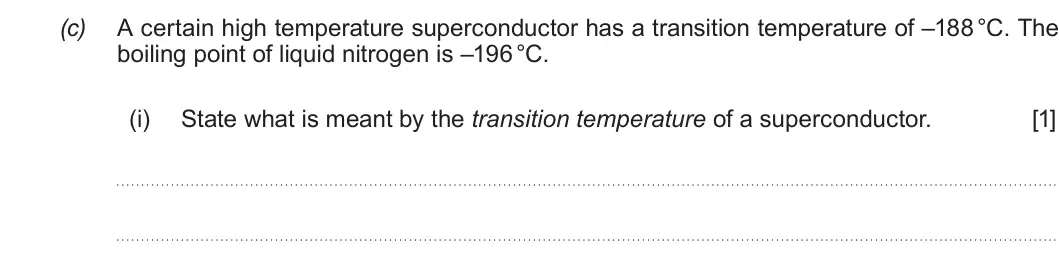
All 42 questions on Resistance, as a list
- Summer 2025, AS Unit 2, Q1(b)(i) (4 marks): Determine the length of Gwen’s wire. [4]
- Summer 2025, AS Unit 2, Q2(a) (3 marks): Use data from the table to determine to what extent the filament lamp obeys Ohm’s law. [3]
- Summer 2025, AS Unit 2, Q2(b) (6 marks): Explain, making reference to free electrons, why the resistance of the filament in a lamp increases as the potential difference across it increases during the s
- Summer 2025, AS Unit 2, Q2(c) (2 marks): The graph shows how the resistance of a certain metal varies at low temperatures. Resistance / Ω 0 0 Temperature / K Explain what is meant by the ‘transition te
- Summer 2025, AS Unit 2, Q2(d) (2 marks): Whilst developing a new compound, a team of university students found evidence that the compound had room temperature superconducting properties and published t
- Summer 2024, Unit 4, Q6(b)(iii) (5 marks): dimensions are shown in the diagram below: 2.00 mm thickness = 2.2 mm 3.8 cm Calculate the current in the square loop. [5]
- Summer 2024, AS Unit 2, Q1(a) (3 marks): labelled: diameter 0.15 mm, resistivity 4.9 × 10⁻⁷Ω m. Calculate the length of wire that she should use. [3]
- Summer 2024, AS Unit 2, Q1(b) (3 marks): Delyth tests this length of wire by placing it in the circuit shown. (29 + 1) mA A (1.60 + 0.01) V V Delyth concludes from the meter readings, shown on the diag
- Summer 2024, AS Unit 2, Q3(b)(ii) (4 marks): I. [2] State the energy transfer that occurs in the 20 Ω resistor and explain, in II. terms of the motion of free electrons, how it takes place. [2]
- Summer 2023, AS Unit 2, Q1(a)(i) (2 marks): Use the graph to obtain a value for the resistance at 0.0 cm and suggest the cause of this resistance. [2]
- Summer 2023, AS Unit 2, Q1(a)(ii) (3 marks): Discuss to what extent Emily’s results confirm that the variation of resistance of the wire with length is consistent with the equation: [3] ρl R = A
- Summer 2023, AS Unit 2, Q1(a)(iii) (2 marks): The wire used in the experiment has a mean diameter of 0.23 mm. Name a measuring instrument that could have been used to take this reading and state its likely
- Summer 2023, AS Unit 2, Q1(a)(iv) (4 marks): Use the graph and the mean diameter to determine the resistivity of the metal of the wire. [4]
- Summer 2023, AS Unit 2, Q1(b) (2 marks): Emily used a 1.5 V cell in her experiment as she was concerned about the size of the electrical current in the wire. Suggest her reasons for using the 1.5 V cel
- Summer 2019, AS Unit 2, Q1(a)(i) (1 mark): State Ohm’s law. [1]
- Summer 2019, AS Unit 2, Q1(a)(ii) (1 mark): What can be said about the resistance of a conductor that obeys Ohm’s law? [1]
- Summer 2019, AS Unit 2, Q1(b)(i) (2 marks): An electrical component, X, is included in the circuit shown. The internal resistance of the power supply is negligible. power supply 2.20 V A reading: 12 mA 12
- Summer 2019, AS Unit 2, Q1(b)(ii) (2 marks): ammeter increases, as shown below. power supply 2.20 V A reading: 55 mA 24 Ω X Evaluate whether or not X obeys Ohm’s law, presenting your argument clearly. [2]
- Summer 2019, AS Unit 2, Q1(b)(iii) (1 mark): State, giving a reason, whether or not X could be a filament lamp. [1]
- Summer 2019, AS Unit 2, Q1(c)(i) (1 mark): State what is meant by the transition temperature of a superconductor. [1]
- Summer 2019, AS Unit 2, Q1(c)(ii) (2 marks): Give one possible use for a high temperature superconductor and state why it would be an advantage for the transition temperature to be above the boiling point
- Summer 2019, AS Unit 2, Q3(a) (2 marks): Bearing in mind the range of temperatures, suggest how the student heated the coil, and how he could have extended the range of temperatures down to just above
- Summer 2019, AS Unit 2, Q3(b)(i) (3 marks): Explain how the readings plotted support the equation. [3]
- Summer 2019, AS Unit 2, Q3(b)(ii) (4 marks): Determine from the graph the values, with units, of: I. R0; [1] α. II. [3]
- Summer 2018, Unit 4, Q5(b) (3 marks): The aluminium wire has a circular cross-section of diameter 3.0 mm and the length of the wire through which the current flows is 91 cm. Show that the mean curre
- Summer 2018, Unit 4, Q5(c) (5 marks): Iestyn claims that changing the shape of the coat hanger from Shape 1 to Shape 2 in 16 ms in the magnetic field will increase its temperature by less than 1 °C.
- Summer 2018, AS Unit 2, Q1(b)(i) (2 marks): the resistance of the coil; [2]
- Summer 2018, AS Unit 2, Q1(b)(ii) (1 mark): the energy dissipated per hour, giving your answer in megajoules (MJ). [1]
- Summer 2018, AS Unit 2, Q1(c) (3 marks): have to be burned in a gas-fired electricity power station. For each megajoule of heat from a domestic gas fire or boiler, approximately 0.03 m3 of gas is burne
- Summer 2018, AS Unit 2, Q2(c) (2 marks): Explain why the current through the thermistor must be very low, in order for it to work properly as a probe to measure the temperature of its surroundings. [2]
- Summer 2017, AS Unit 2, Q1(a) (3 marks): Calculate the drift velocity of free electrons in the strip when there is a current of 8.0 A as shown. The free electron concentration, n, in the metal is 8.5 ×
- Summer 2017, AS Unit 2, Q1(b) (3 marks): The resistance of the strip is 0.15 Ω from end to end. Calculate the energy transferred from electrical potential to thermal in the strip in a time of 20 s, for
- Summer 2017, AS Unit 2, Q2(a)(i) (3 marks): Calculate the resistivity of the metal of the wire. [3]
- Summer 2017, AS Unit 2, Q2(a)(ii) (3 marks): Calculate the absolute uncertainty in the resistivity giving your value to an appropriate number of significant figures. [3]
- Summer 2017, AS Unit 2, Q2(b) (2 marks): Suggest one way in which the student could reduce the uncertainty in her value for the resistivity, using the same reel of wire and the same instruments as befo
- Summer 2016, AS Unit 2, Q5(a) (2 marks): Define the potential difference between two points in an electric circuit. [2]
- Summer 2016, AS Unit 2, Q7(a)(i) (2 marks): Draw the circuit diagram for an investigation of how the current through a filament lamp varies with the applied potential difference. [2]
- Summer 2016, AS Unit 2, Q7(a)(ii) (1 mark): The lamp is labelled “3 V, 0.16 A”. The ammeter to be used is a multimeter with a 0 – 200 mA range and a 0 – 10 A range. State which range should be selected, a
- Summer 2016, AS Unit 2, Q7(a)(iii) (2 marks): The lamp has already been investigated by a student, Sion, who plotted the graph reproduced below. State two ways in which his investigation (not his graph plot
- Summer 2016, AS Unit 2, Q7(b)(i) (3 marks): Use the graph to calculate the ratio: [3] Resistance of lamp at 0.50 V
- Summer 2016, AS Unit 2, Q7(b)(ii) (6 marks): Explain, in terms of free electrons, why the temperature and the resistance of a metal wire increase when the potential difference across the wire is increased.
- Summer 2016, AS Unit 2, Q7(c) (3 marks): A scientist claims to have made a material which is superconducting at room temperature. He publishes his procedure. Several research teams try to follow the sa
Questions, mark schemes and examiner’s reports are © WJEC CBAC Ltd, from their published past papers. Plumi isn’t affiliated with any exam board. Want whole papers? Every WJEC A-Level Physics paper.
Rather write your answers by hand on iPad? Plumi marks them against the same mark schemes.