 plumi
Organic synthesis and analysis: WJEC A‑Level Chemistry questions
Every WJEC A-Level Chemistry exam question on 4.8 Organic synthesis and analysis, 2016–2025, with its mark scheme and examiner’s report.
Find questions1,204
Calculations
Q1(b)
The whole paper ↗
Q5(b)(iv)
The whole paper ↗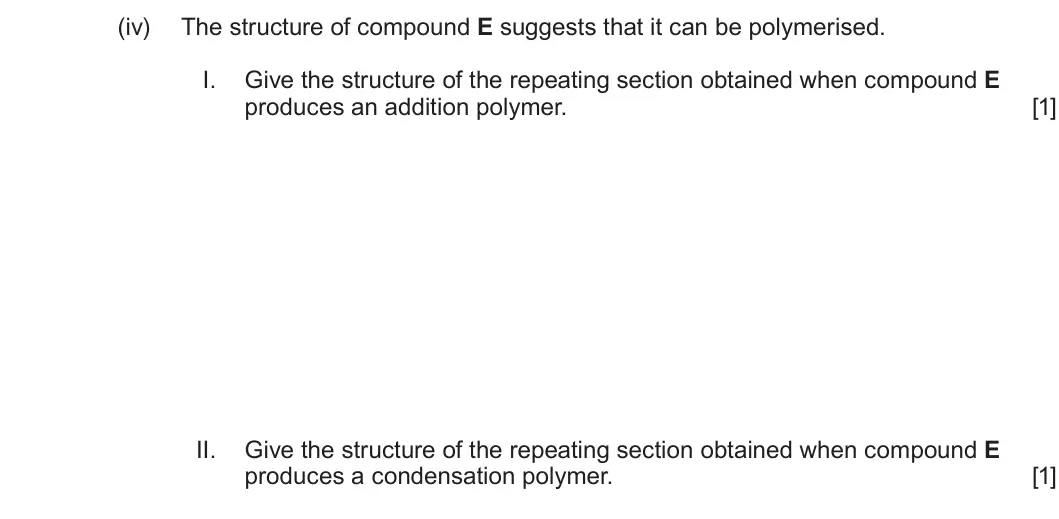
Q7(a)
The whole paper ↗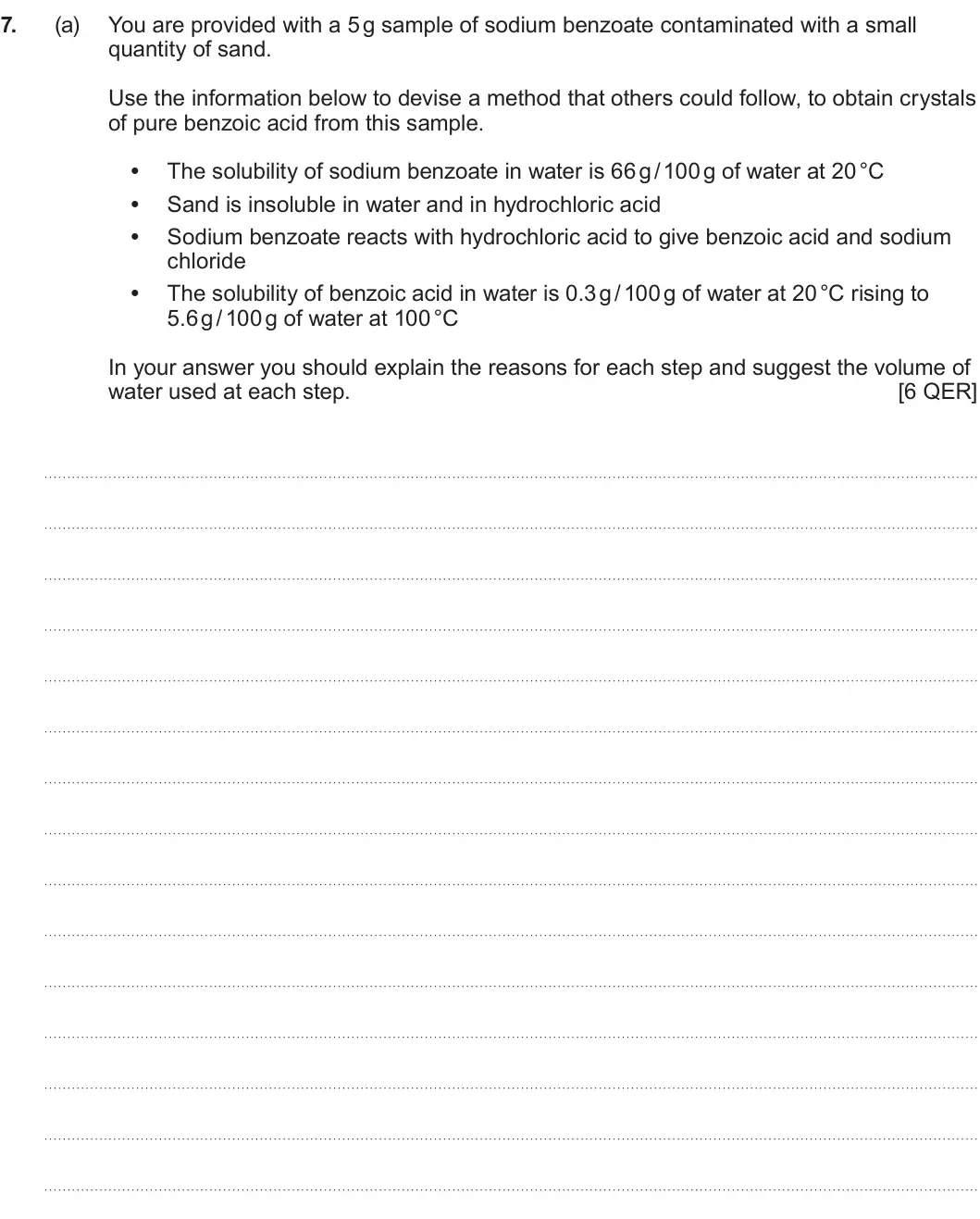
Q7(b)(ii)
The whole paper ↗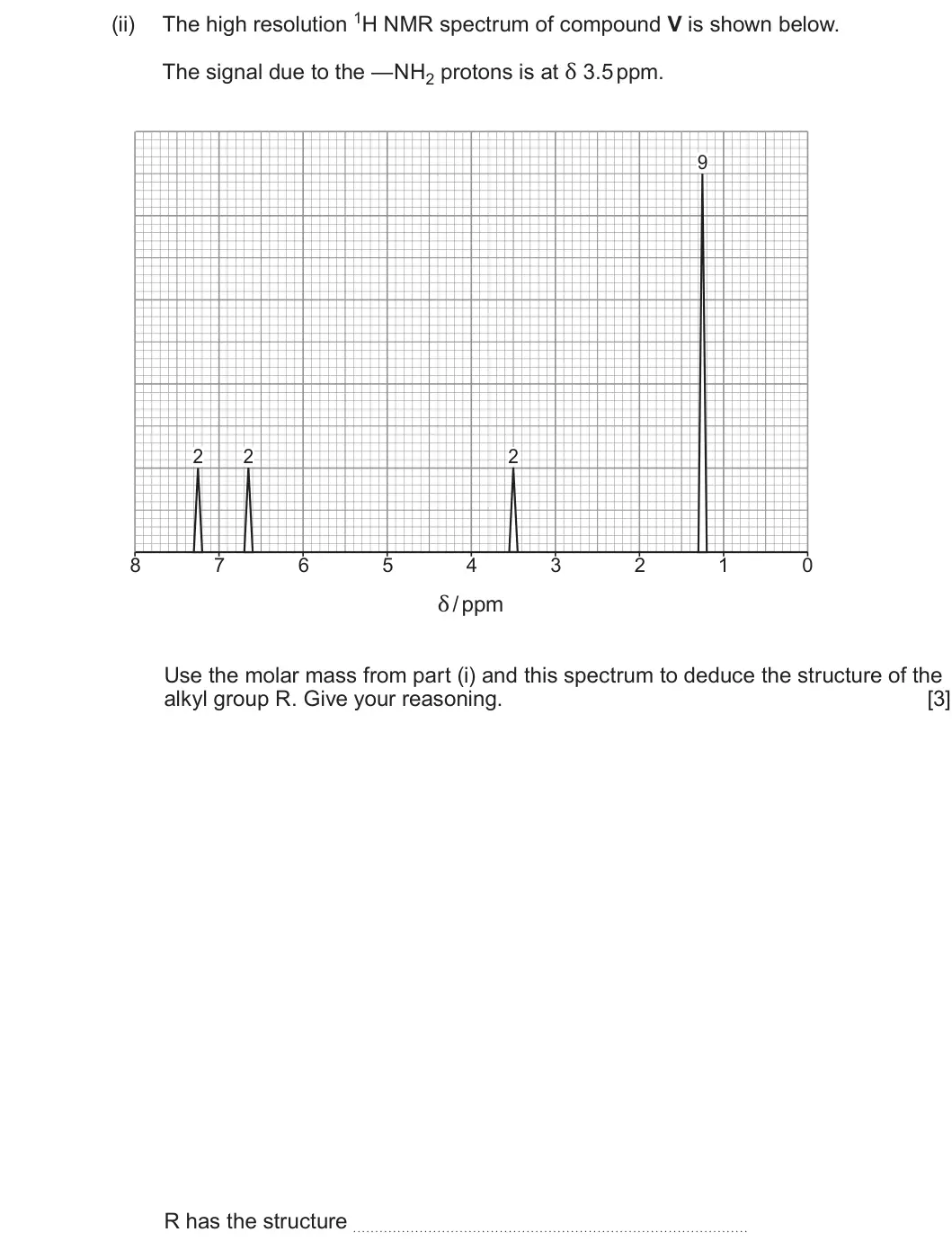
Q8(b)(i)
The whole paper ↗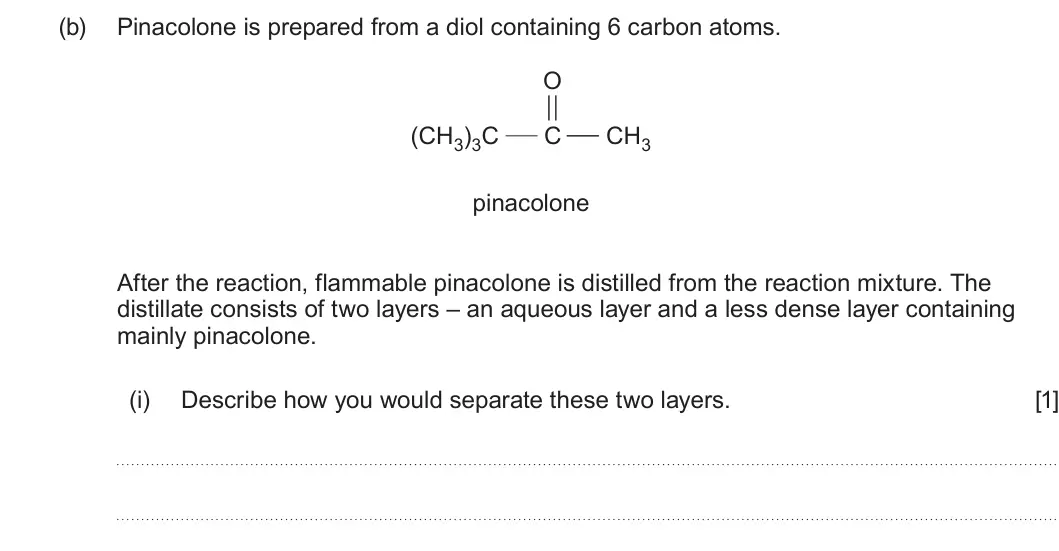
Q8(b)(iii)
The whole paper ↗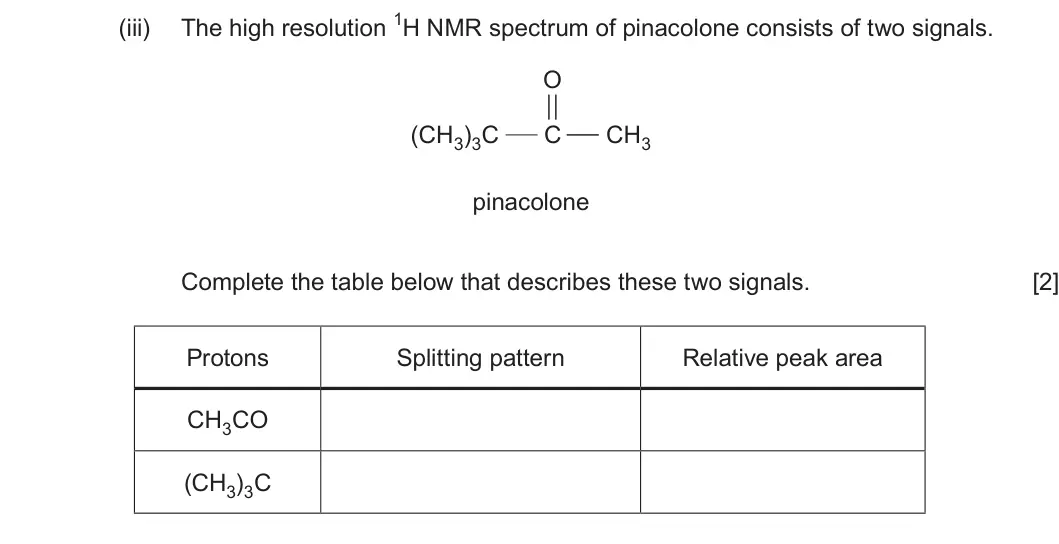
Q8(b)(iv)
The whole paper ↗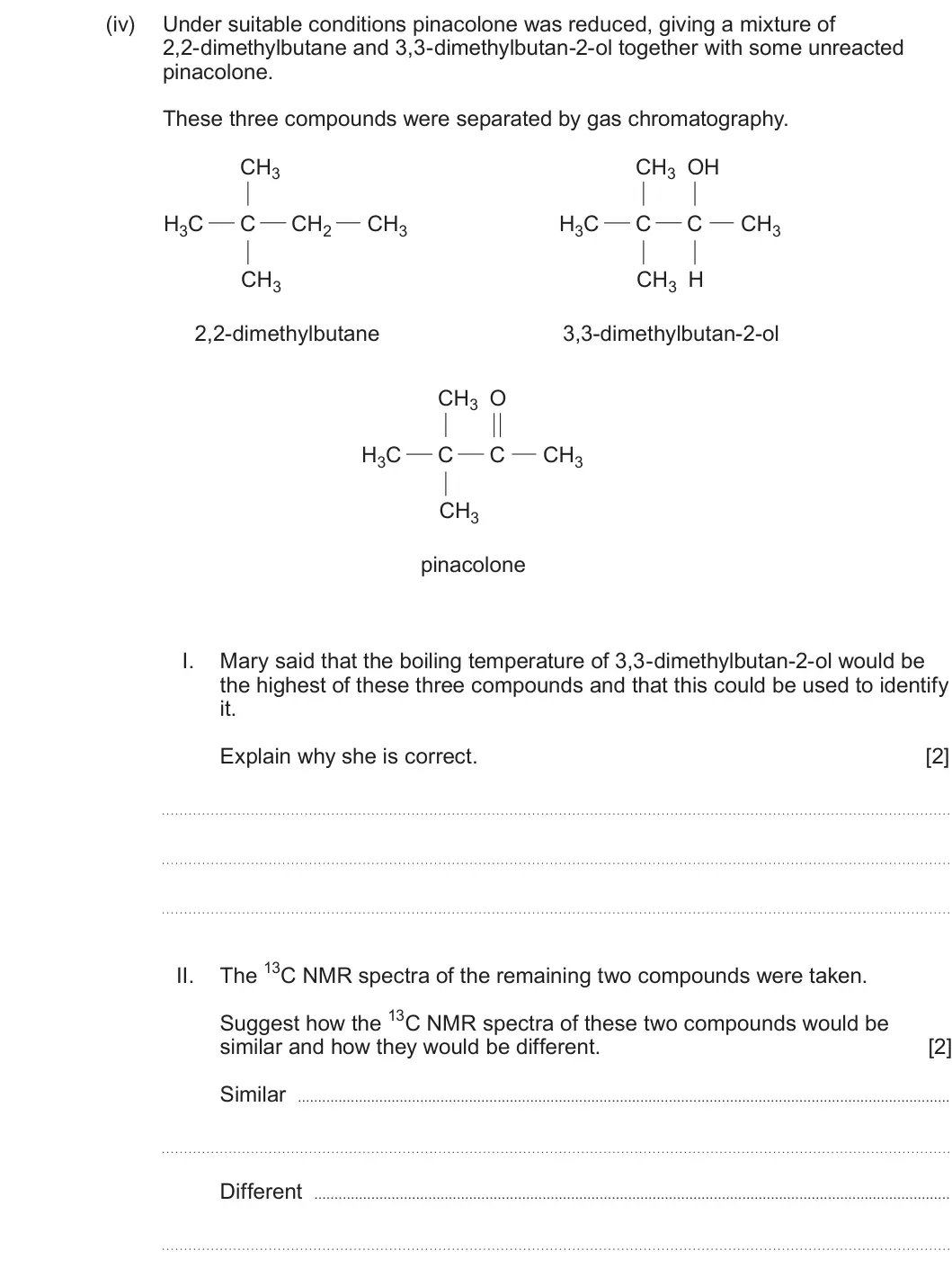
Q11(a)(iv)
The whole paper ↗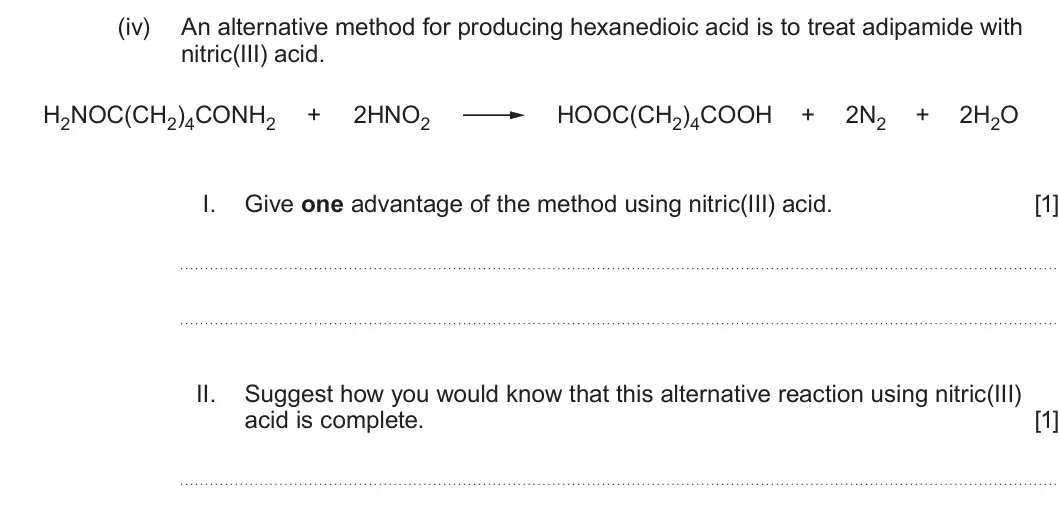
Q11(b)(iii)
The whole paper ↗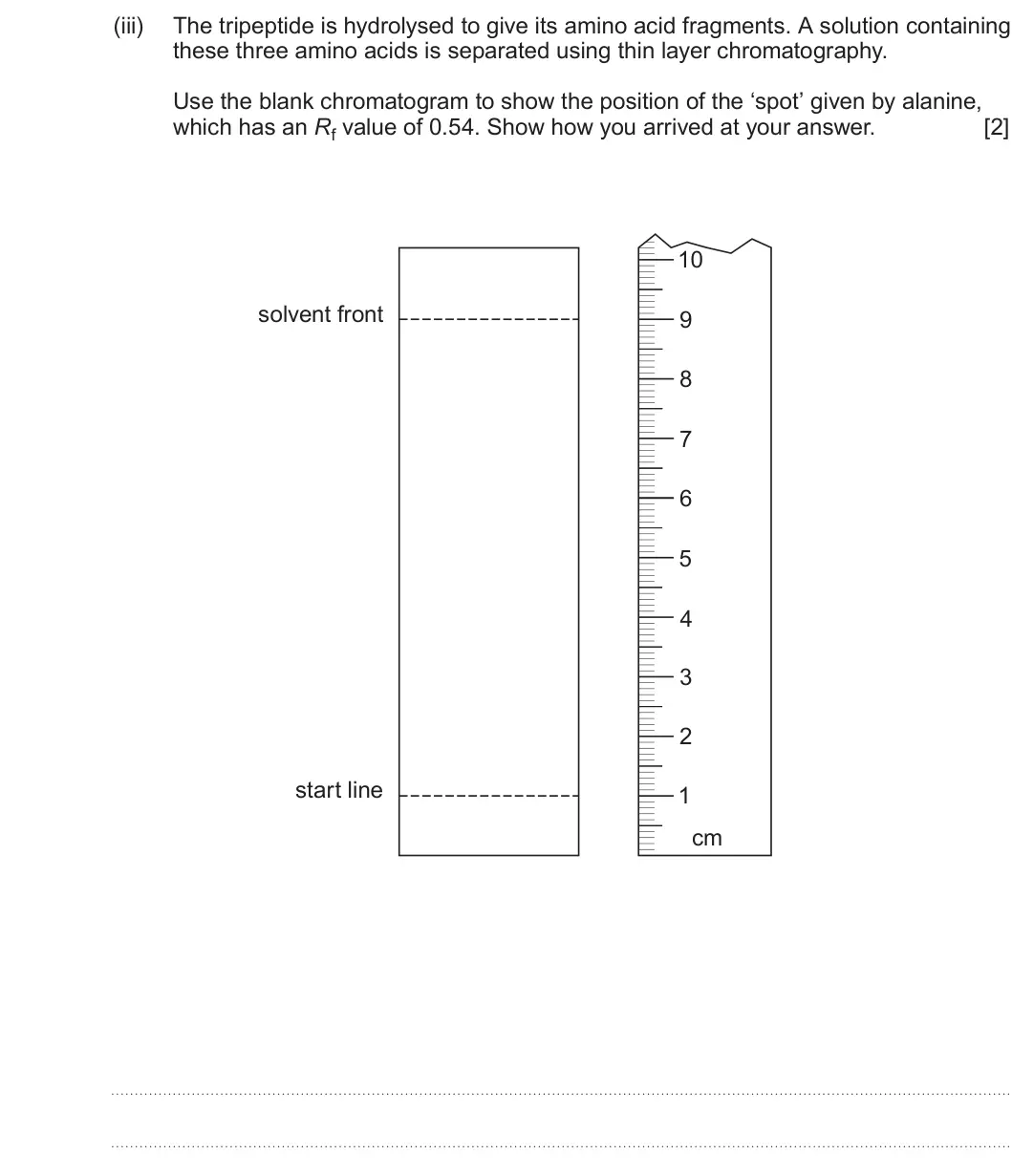
Q9(a)(iii)
The whole paper ↗
Q9(b)(ii)
The whole paper ↗
Q9(c)(iv)
The whole paper ↗
Q9(d)
The whole paper ↗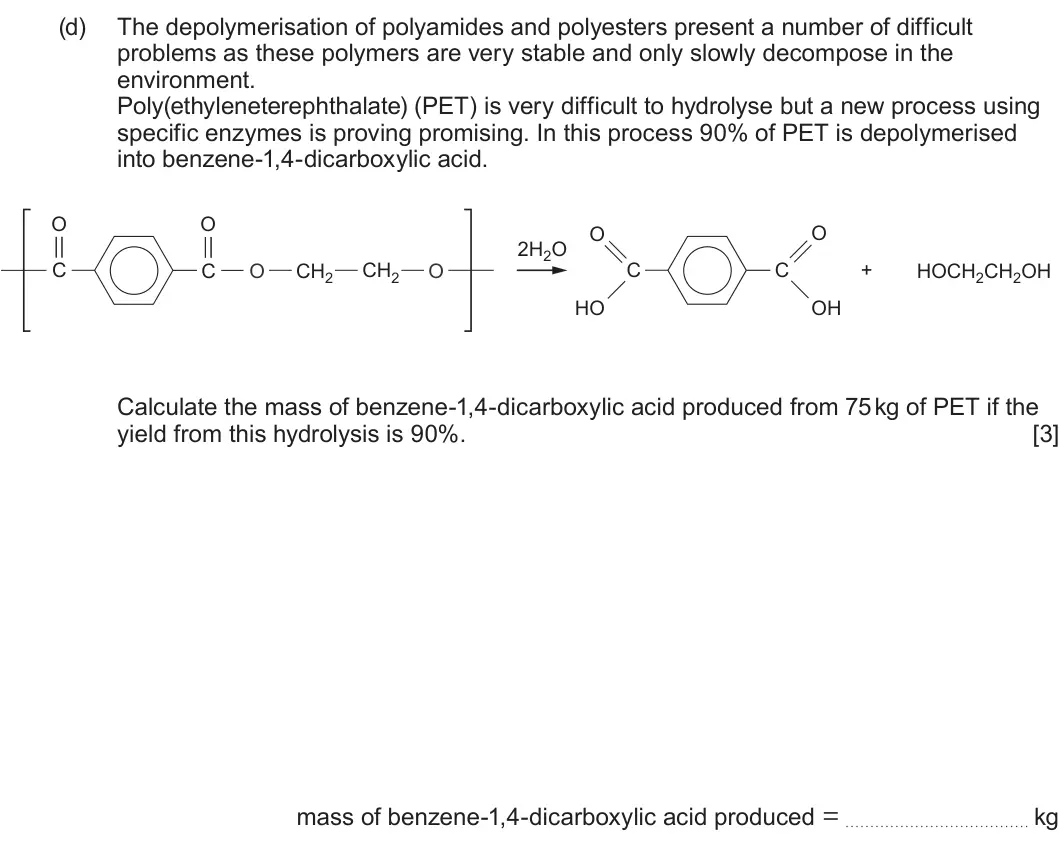
Q11(c)(i)
The whole paper ↗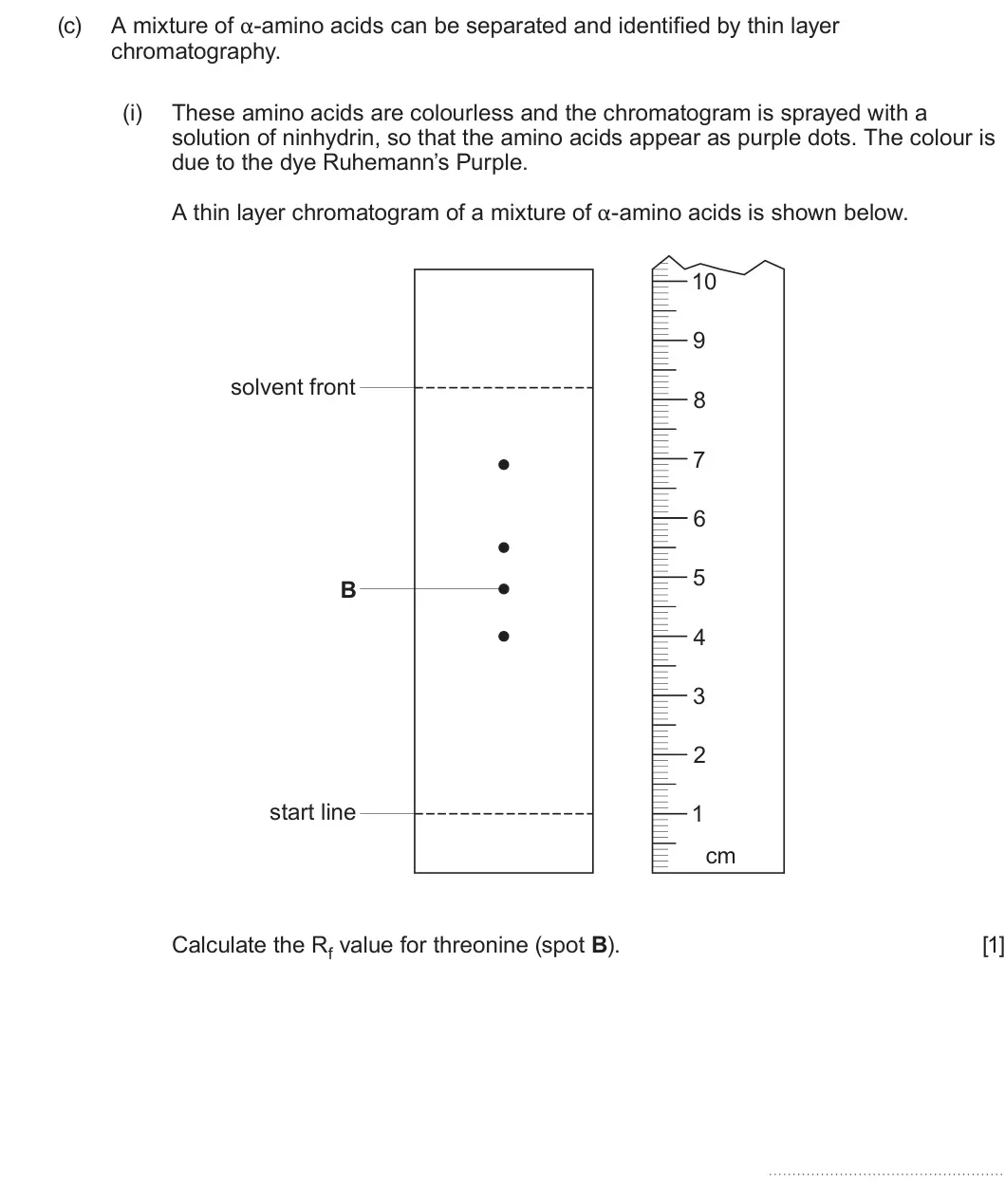
Q12(b)(v)
The whole paper ↗
Q12(b)(vi)
The whole paper ↗
Q12(c)(ii)
The whole paper ↗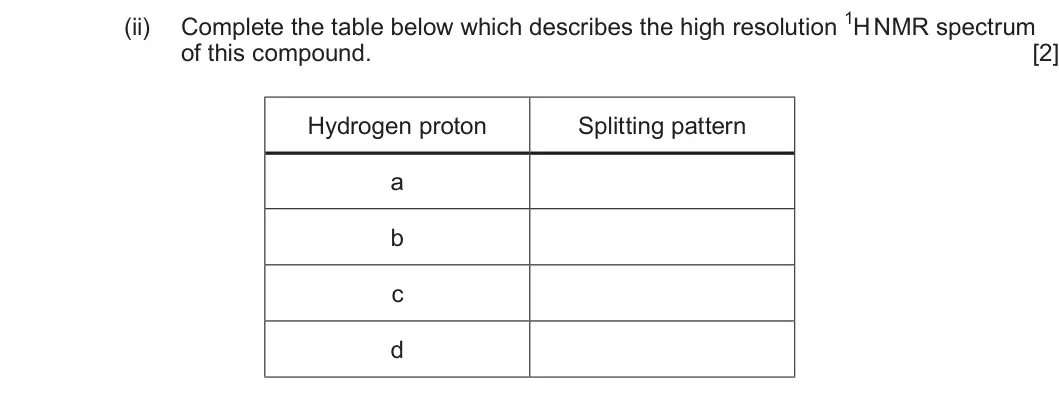
Q7(b)
The whole paper ↗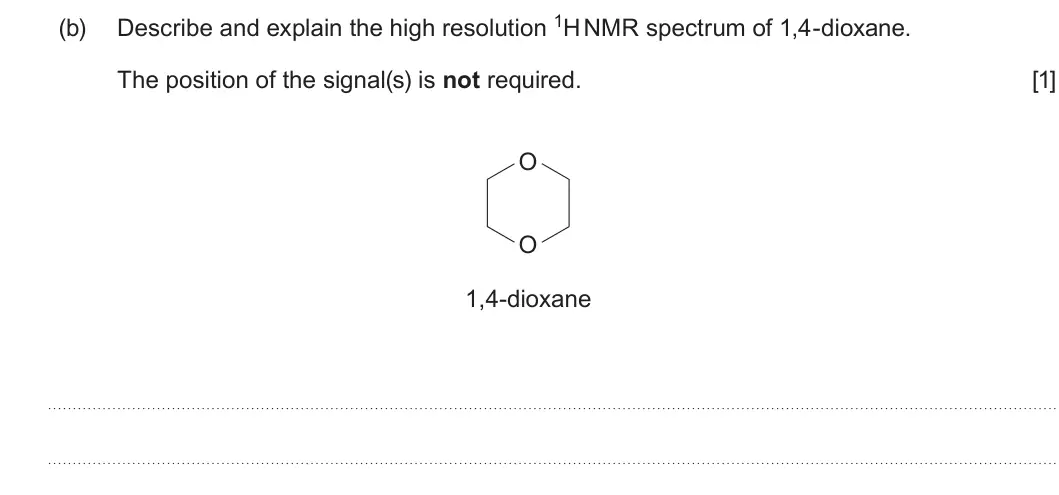
Q8(b)
The whole paper ↗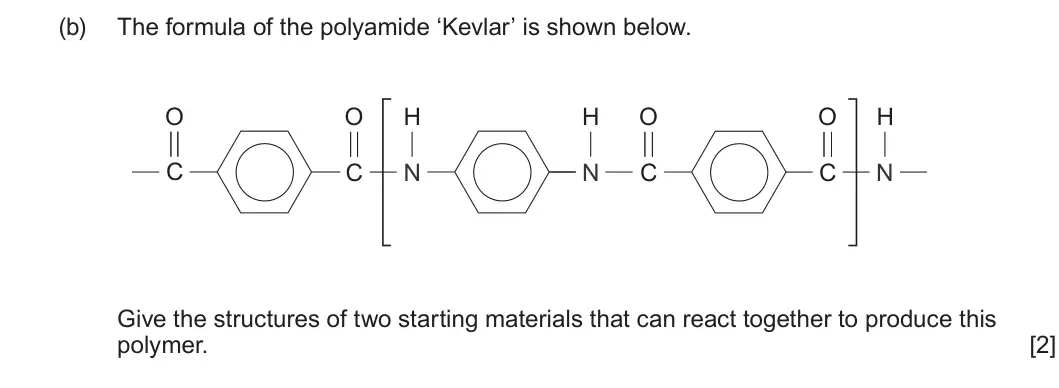
Q8(c)(i)
The whole paper ↗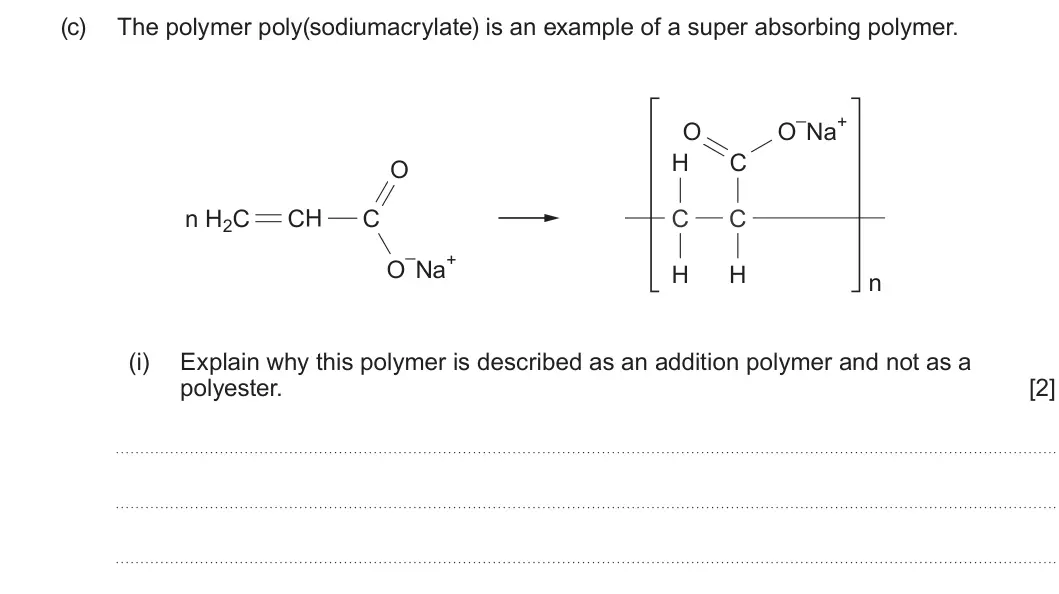
All 44 questions on Organic synthesis and analysis, as a list
- Summer 2025, Unit 4, Q1(b) (1 mark): The final stage in the production of TNT is its purification. Pure TNT has a melting temperature of 80 °C. State how this melting temperature will be affected i
- Summer 2025, Unit 4, Q5(b)(iv) (2 marks): The structure of compound E suggests that it can be polymerised. I. Give the structure of the repeating section obtained when compound E produces an addition po
- Summer 2025, Unit 4, Q7(a) (6 marks): You are provided with a 5 g sample of sodium benzoate contaminated with a small quantity of sand. Use the information below to devise a method that others could
- Summer 2025, Unit 4, Q7(b)(ii) (3 marks): 9 2 2 2 δ / ppm 8 7 6 5 4 3 2 1 0 Use the molar mass from part (i) and this spectrum to deduce the structure of the alkyl group R. Give your reasoning. [3] R ha
- Summer 2024, Unit 4, Q8(b)(i) (1 mark): Describe how you would separate these two layers. [1]
- Summer 2024, Unit 4, Q8(b)(iii) (2 marks): O (CH3)3C C CH3 pinacolone Complete the table below that describes these two signals. [2] Protons Splitting pattern Relative peak area CH3CO (CH3)3C
- Summer 2024, Unit 4, Q8(b)(iv) (4 marks): Under suitable conditions pinacolone was reduced, giving a mixture of 2,2-dimethylbutane and 3,3-dimethylbutan-2-ol together with some unreacted pinacolone. The
- Summer 2024, Unit 4, Q11(a)(iv) (2 marks): An alternative method for producing hexanedioic acid is to treat adipamide with nitric(III) acid. H2NOC(CH2)4CONH2 + 2HNO2 HOOC(CH2)4COOH + 2N2 + 2H2O I. Give o
- Summer 2024, Unit 4, Q11(b)(iii) (2 marks): The tripeptide is hydrolysed to give its amino acid fragments. A solution containing these three amino acids is separated using thin layer chromatography. Use t
- Summer 2023, Unit 4, Q9(a)(iii) (2 marks): the peak area ratio of 6:1. Use this information and the relative molecular mass of the RCOCl, obtained in part (ii), to find the structure of the acid chloride
- Summer 2023, Unit 4, Q9(b)(ii) (1 mark): Benzene-1,4-dicarbonyl dichloride reacts with benzene-1,4-diamine to give a polyamide. Show the repeating unit for this polyamide. [1]
- Summer 2023, Unit 4, Q9(c)(iv) (1 mark): Draw the skeletal formula of the 5-carbon containing dicarboxylic acid used to produce Nylon 4,5. [1]
- Summer 2023, Unit 4, Q9(d) (3 marks): The depolymerisation of polyamides and polyesters present a number of difficult problems as these polymers are very stable and only slowly decompose in the envi
- Summer 2023, Unit 4, Q11(c)(i) (1 mark): These amino acids are colourless and the chromatogram is sprayed with a solution of ninhydrin, so that the amino acids appear as purple dots. The colour is due
- Summer 2023, Unit 4, Q12(b)(v) (1 mark): Addition polymerisation of methyl 2-methylpropenoate gives ‘Perspex’. Give the repeating unit of this polymer. [1]
- Summer 2023, Unit 4, Q12(b)(vi) (1 mark): Explain why the polymerisation in part (v) is described as addition polymerisation and not condensation polymerisation. [1]
- Summer 2023, Unit 4, Q12(c)(ii) (2 marks): of this compound. [2] Hydrogen proton Splitting pattern a b c d
- Summer 2022, Unit 4, Q7(b) (1 mark): The position of the signal(s) is not required. [1] O O 1,4-dioxane
- Summer 2022, Unit 4, Q8(b) (2 marks): The formula of the polyamide ‘Kevlar’ is shown below. O O H H O O H C C N N C C N Give the structures of two starting materials that can react together to produ
- Summer 2022, Unit 4, Q8(c)(i) (2 marks): Explain why this polymer is described as an addition polymer and not as a polyester. [2]
- Summer 2022, Unit 4, Q9(a)(iii) (1 mark): Suggest and explain a practical problem that might occur at the end of stage 1, before proceeding to stage 2 [1]
- Summer 2022, Unit 4, Q10(a) (6 marks): Compound G contains only carbon, hydrogen and oxygen. It has a molar mass of 72 g mol–1 of which 50.0% is carbon. The compound reacts positively with Tollens’ r
- Summer 2022, Unit 4, Q11(a)(i) (1 mark): Using a particular solvent tyrosine has an Rf value of 0.67. On the chromatogram below show the spot given by tyrosine. [1] 10 9 solvent front 8 7 6 5 4 3 2 sta
- Summer 2019, Unit 4, Q3 (2 marks): Complete the table below, which describes the 1H NMR spectrum of 3 1,1,2,2,3-pentachloropropane. [2] a b Cl H H Cl C C C H Cl Cl Cl Proton(s) Splitting pattern
- Summer 2019, Unit 4, Q5 (1 mark): A student produced the following chromatogram of a mixture of four amino acids. The student forgot to mark the position of the solvent front. D C B A start line
- Summer 2019, Unit 4, Q9(b)(iii) (2 marks): The densities of biodiesel and propane-1,2,3-triol are shown in the table. These two liquids are immiscible (insoluble in each other). Density / g cm–3 Liquid b
- Summer 2019, Unit 4, Q12(a)(i) (1 mark): Draw a circle around an ester linkage in the repeating unit. [1]
- Summer 2019, Unit 4, Q12(a)(ii) (2 marks): Polyesters such as compound P can be hydrolysed by heating with aqueous sodium hydroxide. Complete the balanced equation for this hydrolysis. [2] O O C C CH2 CH
- Summer 2019, Unit 4, Q12(a)(iii) (1 mark): The formation of polyester P is an example of condensation polymerisation. State how this type of polymerisation differs from addition polymerisation. Refer to
- Summer 2019, Unit 4, Q12(a)(iv) (3 marks): One of the raw materials used to make polyester P is methylbenzene. Under suitable conditions methylbenzene can be converted to a mixture of dimethylbenzene iso
- Summer 2019, Unit 4, Q12(a)(v) (5 marks): The isomer of dimethylbenzene used to produce polyester P is 1,4-dimethylbenzene. In industry this isomer is oxidised by air to produce benzene-1,4-dicarboxylic
- Summer 2018, Unit 4, Q7(d) (5 marks): Alternative reagents can be used for this identification. One of them is hydroxylamine, NH2OH, which produces a white crystalline solid when it reacts with an a
- Summer 2018, Unit 4, Q8(c)(iii) (2 marks): The boiling temperatures of the organic products formed after each stage are shown below. Compound Boiling temperature / °C 1,1,1-trifluoro-2-chloroethane 7 1,1
- Summer 2018, Unit 4, Q9(a) (6 marks): A solid compound is believed to be the herbicide 2,4-dichlorophenoxyethanoic acid (2,4-D). Cl O O CH2 C OH Cl The following results were obtained when this comp
- Summer 2018, Unit 4, Q10(e)(i) (1 mark): State the name of the dicarboxylic acid that reacts with ethane-1,2-diol to give polyester E. [1]
- Summer 2018, Unit 4, Q10(e)(ii) (3 marks): polyester E. [3] Protons Splitting pattern Relative peak area —CH2—CH2— —CH— —CH3
- Summer 2017, Unit 4, Q9(c)(iii) (2 marks): The ester BA is obtained from compound T by reacting it with sodium carbonate solution. It is then removed from the mixture by extracting it with the solvent et
- Summer 2017, Unit 4, Q10(b)(ii) (3 marks): resolution NMR spectrum. Explain your reasoning. Reference to the position of the signals is not required. [3]
- Summer 2017, Unit 4, Q11(a)(ii) (2 marks): The following procedure was suggested to obtain 2-hydroxy-2-methylpropanenitrile. mix the reactants, extract the dry the keep below 15 °C reaction product ethox
- Summer 2017, Unit 4, Q11(a)(iv) (1 mark): The dehydration of 2-hydroxy-2-methylpropanenitrile produces 2-methylpropenenitrile, H2C=C(CH3)CN. This compound can undergo addition polymerisation giving poly
- Summer 2017, Unit 4, Q11(b) (2 marks): There is considerable interest in biodegradable polymers. One of these is the polyester ‘polyhydroxyvalerate’ (PHV), which is produced from starch or glucose by
- Summer 2017, Unit 4, Q11(c) (1 mark): State one difference between condensation polymerisation and addition polymerisation. [1]
- Summer 2017, Unit 4, Q12(a) (6 marks): Queen bees secrete a pheromone, compound W, which is used for a number of purposes, both inside and outside the hive. Compound W • is a straight chain aliphatic
- Summer 2017, Unit 4, Q13(a)(i) (4 marks): A student suggested that the compound might be one of the following. compound L BrCH2 CH CH CH2 2 compound M CH3 CH C CH2 2 Br compound N H3C CH3 C C H Br Discu
Questions, mark schemes and examiner’s reports are © WJEC CBAC Ltd, from their published past papers. Plumi isn’t affiliated with any exam board. Want whole papers? Every WJEC A-Level Chemistry paper.
Rather write your answers by hand on iPad? Plumi marks them against the same mark schemes.