 plumi
Carboxylic acids and their derivatives: WJEC A‑Level Chemistry questions
Every WJEC A-Level Chemistry exam question on 4.5 Carboxylic acids and their derivatives, 2016–2025, with its mark scheme and examiner’s report.
Find questions1,204
Calculations
Q5(b)(i)
The whole paper ↗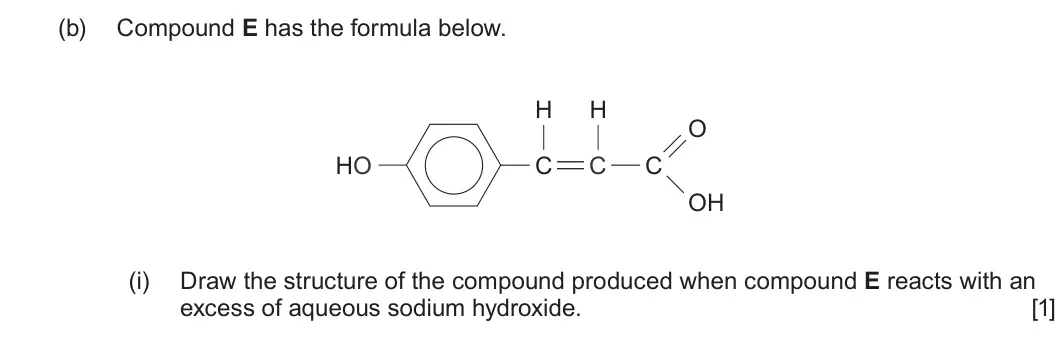
Q6(c)(ii)
The whole paper ↗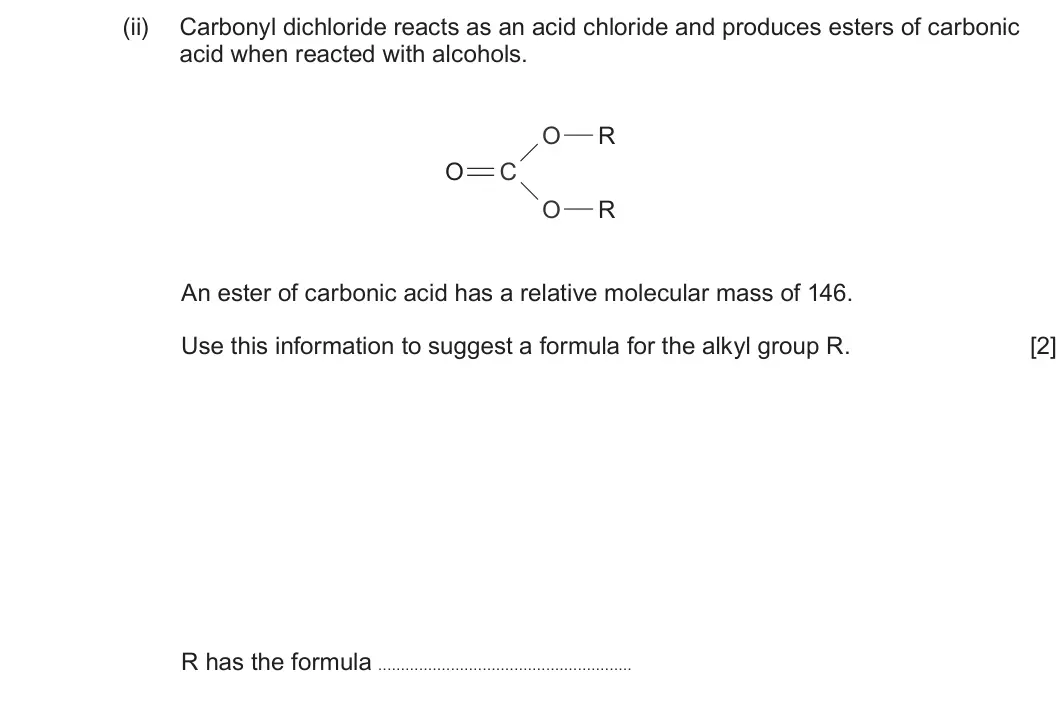
Q7(c)
The whole paper ↗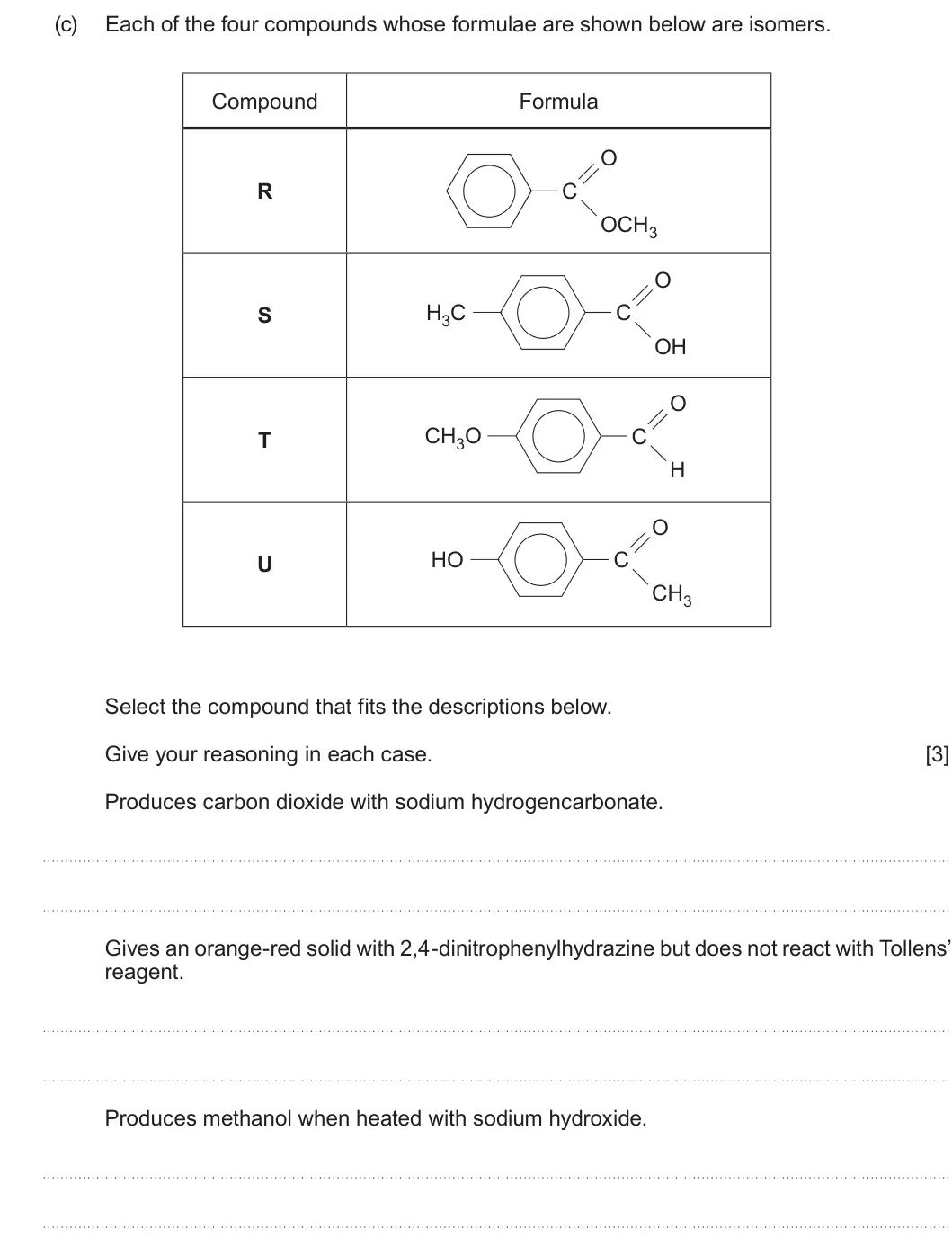
Q8(c)(iv)
The whole paper ↗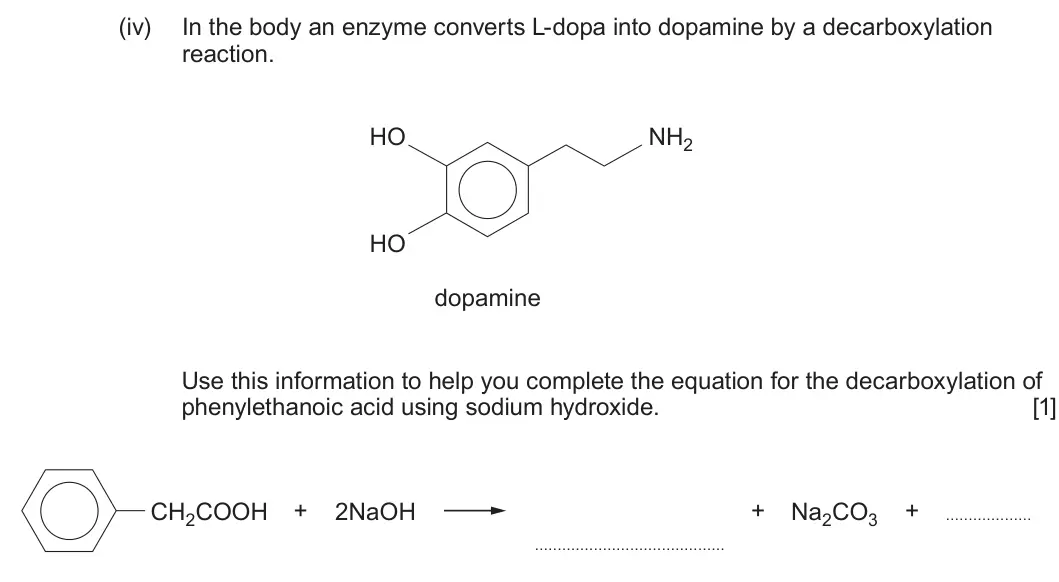
Q9(a)(i)
The whole paper ↗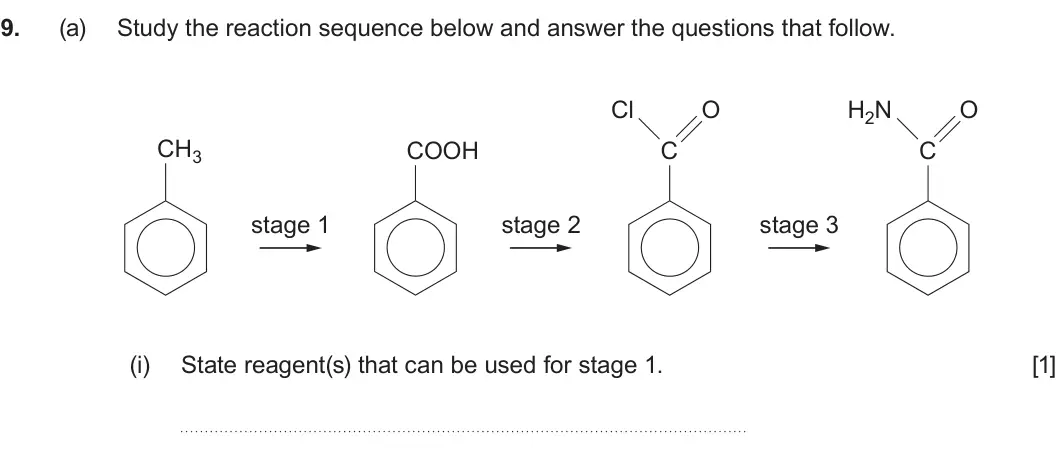
Q9(a)(ii)
The whole paper ↗
Q9(a)(iii)
The whole paper ↗
Q9(a)(iv)
The whole paper ↗
Q9(a)(v)
The whole paper ↗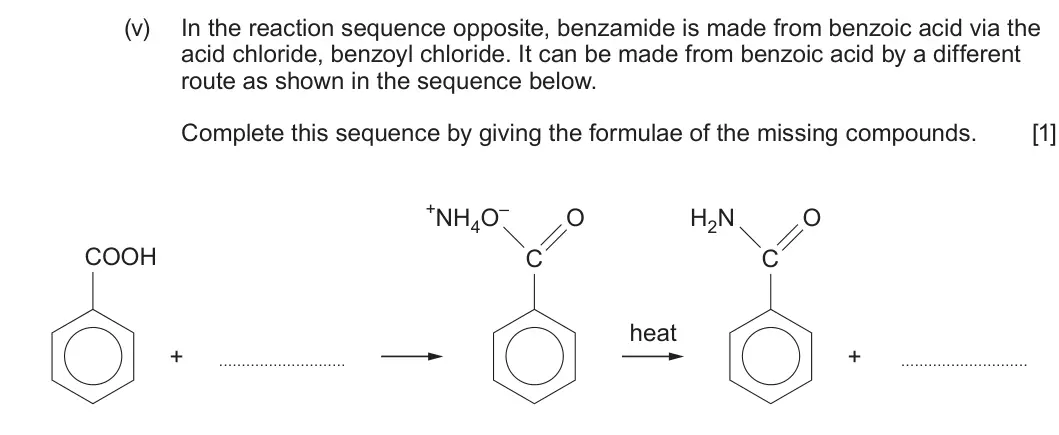
Q7(d)(ii)
The whole paper ↗
Q9(a)(i)
The whole paper ↗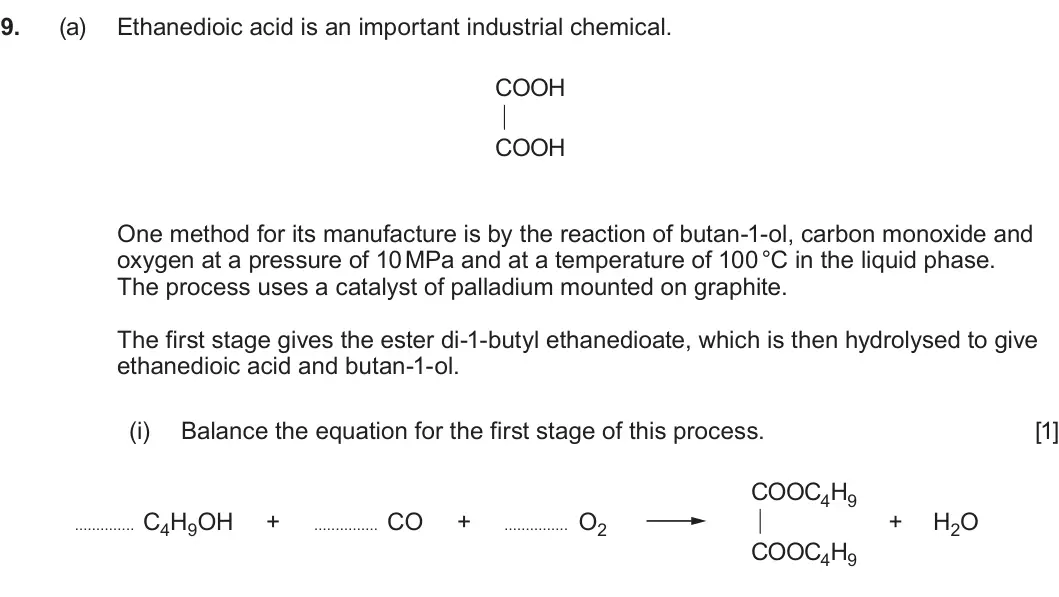
Q9(e)
The whole paper ↗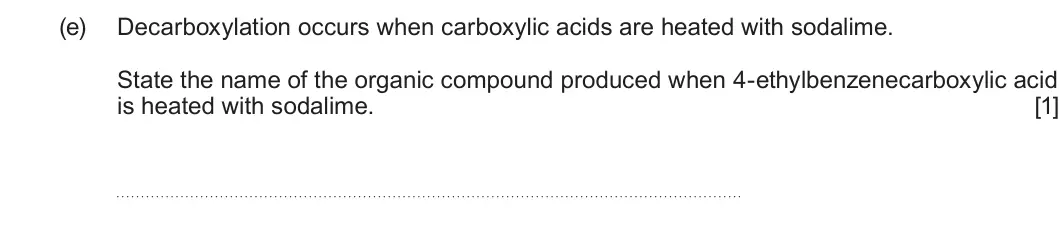
Q11(a)(i)
The whole paper ↗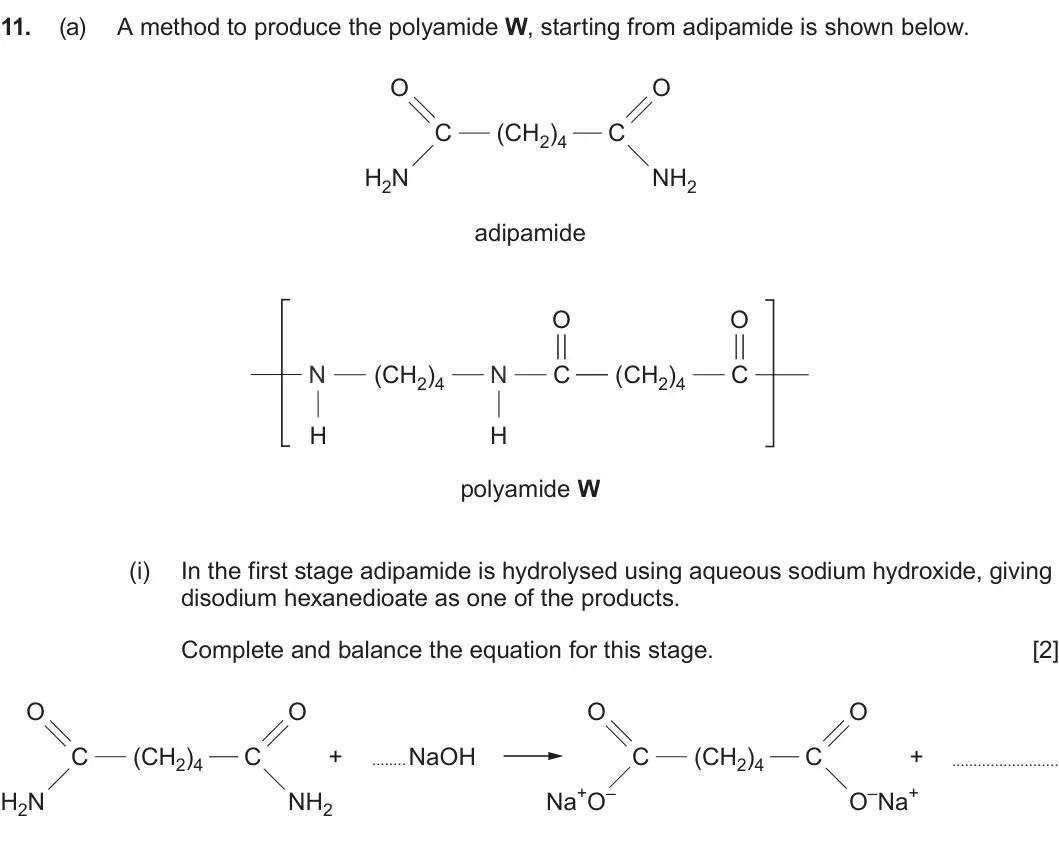
Q7(a)
The whole paper ↗
Q7(b)
The whole paper ↗
Q8(a)(ii)
The whole paper ↗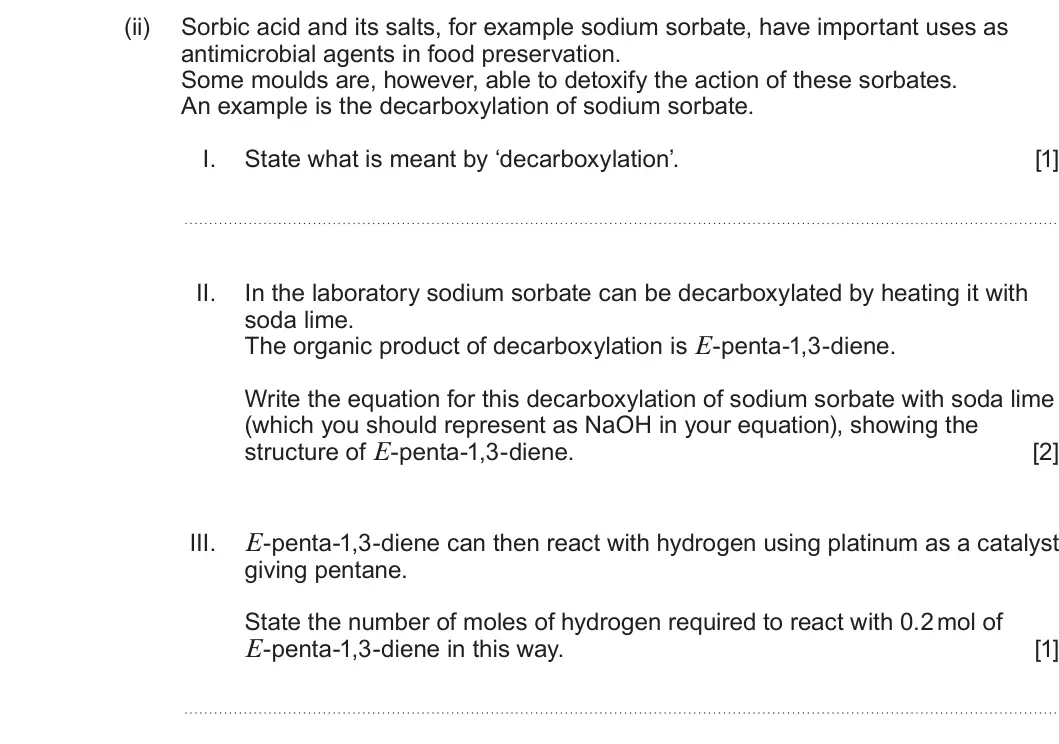
Q9(a)(i)
The whole paper ↗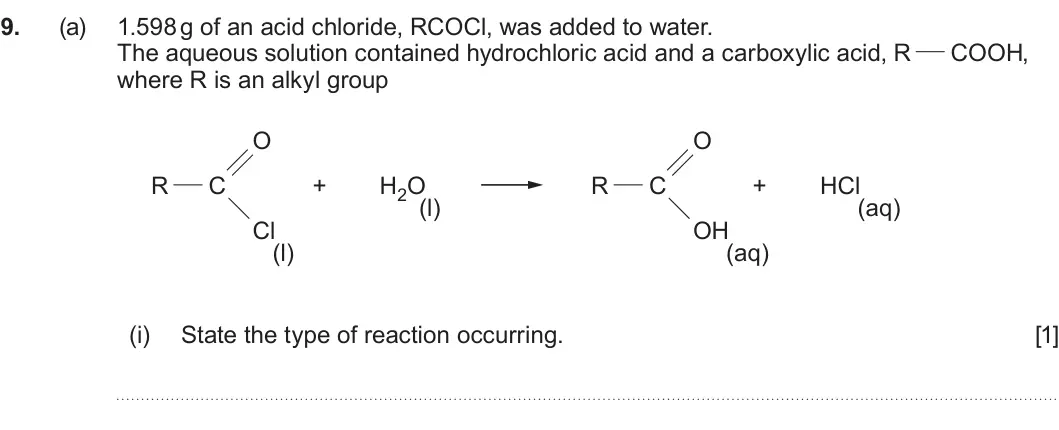
Q9(b)(i)
The whole paper ↗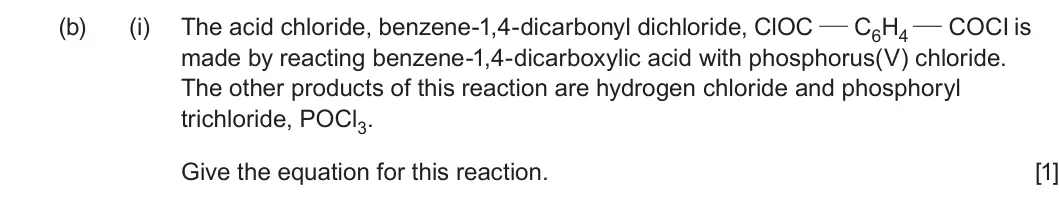
Q9(c)(i)
The whole paper ↗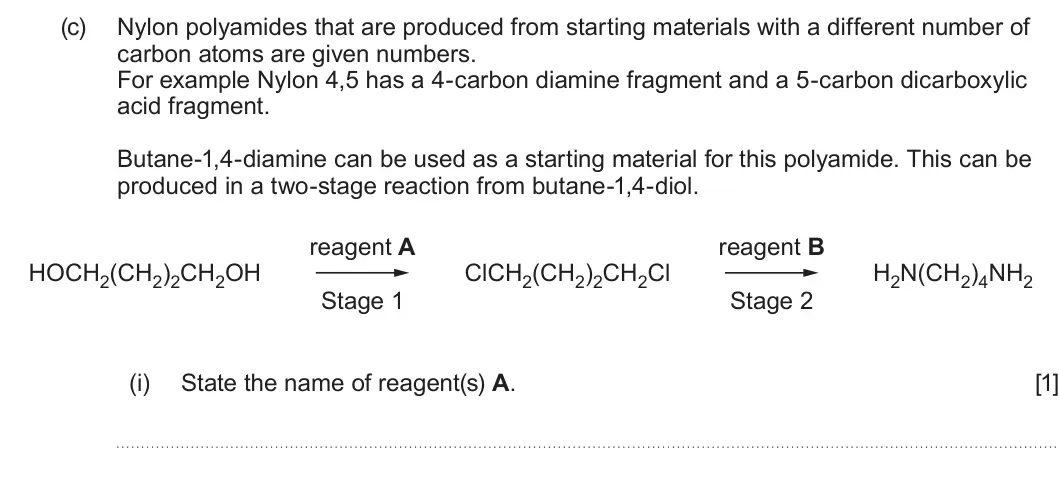
Q9(c)(ii)
The whole paper ↗
All 49 questions on Carboxylic acids and their derivatives, as a list
- Summer 2025, Unit 4, Q5(b)(i) (1 mark): Draw the structure of the compound produced when compound E reacts with an excess of aqueous sodium hydroxide. [1]
- Summer 2025, Unit 4, Q6(c)(ii) (2 marks): Carbonyl dichloride reacts as an acid chloride and produces esters of carbonic acid when reacted with alcohols. O R O C O R An ester of carbonic acid has a rela
- Summer 2025, Unit 4, Q7(c) (3 marks): Each of the four compounds whose formulae are shown below are isomers. Compound Formula O R C OCH3 O H3C C S OH O CH3O C T H O HO C U CH3 Select the compound th
- Summer 2025, Unit 4, Q8(c)(iv) (1 mark): In the body an enzyme converts L-dopa into dopamine by a decarboxylation reaction. HO NH2 HO dopamine Use this information to help you complete the equation for
- Summer 2025, Unit 4, Q9(a)(i) (1 mark): State reagent(s) that can be used for stage 1 [1]
- Summer 2025, Unit 4, Q9(a)(ii) (1 mark): State the type of reaction occurring in stage 1 [1]
- Summer 2025, Unit 4, Q9(a)(iii) (1 mark): One way of carrying out stage 2 is to react benzoic acid with phosphorus(V) chloride. Explain why the yield of benzoyl chloride, C6H5COCl, will be lower if mois
- Summer 2025, Unit 4, Q9(a)(iv) (1 mark): In stage 3 benzamide is produced from benzoyl chloride by its reaction with ammonia. Suggest the structure of the compound produced if benzoyl chloride reacts w
- Summer 2025, Unit 4, Q9(a)(v) (1 mark): In the reaction sequence opposite, benzamide is made from benzoic acid via the acid chloride, benzoyl chloride. It can be made from benzoic acid by a different
- Summer 2024, Unit 4, Q7(d)(ii) (1 mark): State what is seen when compound J reacts with sodium hydrogencarbonate solution. [1]
- Summer 2024, Unit 4, Q9(a)(i) (1 mark): Balance the equation for the first stage of this process. [1] COOC4H9 C4H9OH + CO + O2 + H2O COOC4H9
- Summer 2024, Unit 4, Q9(e) (1 mark): Decarboxylation occurs when carboxylic acids are heated with sodalime. State the name of the organic compound produced when 4-ethylbenzenecarboxylic acid is hea
- Summer 2024, Unit 4, Q11(a)(i) (2 marks): In the first stage adipamide is hydrolysed using aqueous sodium hydroxide, giving disodium hexanedioate as one of the products. Complete and balance the equatio
- Summer 2023, Unit 4, Q7(a) (1 mark): Reagent F is . [1]
- Summer 2023, Unit 4, Q7(b) (1 mark): Give the structure of Compound G. [1]
- Summer 2023, Unit 4, Q8(a)(ii) (4 marks): Sorbic acid and its salts, for example sodium sorbate, have important uses as antimicrobial agents in food preservation. Some moulds are, however, able to detox
- Summer 2023, Unit 4, Q9(a)(i) (1 mark): State the type of reaction occurring. [1]
- Summer 2023, Unit 4, Q9(b)(i) (1 mark): The acid chloride, benzene-1,4-dicarbonyl dichloride, ClOC C6H4 COCI is made by reacting benzene-1,4-dicarboxylic acid with phosphorus(V) chloride. The other pr
- Summer 2023, Unit 4, Q9(c)(i) (1 mark): State the name of reagent(s) A. [1]
- Summer 2023, Unit 4, Q9(c)(ii) (1 mark): State the name of reagent(s) B. [1]
- Summer 2023, Unit 4, Q9(c)(iii) (1 mark): State the type of mechanism occurring in Stage 2 [1]
- Summer 2022, Unit 4, Q3 (1 mark): Complete the equation for the reaction shown below. [1] O Cl C + H2O + Cl
- Summer 2022, Unit 4, Q7(a)(i) (1 mark): Give the structure of an isomer that gives bubbles of carbon dioxide when tested with aqueous sodium hydrogencarbonate. [1]
- Summer 2022, Unit 4, Q9(f)(ii) (1 mark): The reaction in part (i) is carried out in the presence of aqueous sodium hydroxide, which removes HCl as it is formed. Explain why this method would not be sui
- Summer 2022, Unit 4, Q10(c)(i) (3 marks): When this compound is warmed with excess aqueous sodium hydroxide, only the amide group reacts. I. Give the structure of the organic product. [1] II. State the
- Summer 2022, Unit 4, Q12(a)(ii) (1 mark): Compound A is an ester that is made by reacting together 2-ethylhexanol and the appropriate acid, in the presence of a catalyst. Give the molecular formula of t
- Summer 2022, Unit 4, Q12(b)(iii) (2 marks): Oils such as palm oil can be refined and used to make soaps such as sodium oleate. Complete the equation below, which represents the alkaline hydrolysis of the
- Summer 2019, Unit 4, Q2 (1 mark): Alkanes are produced when carboxylic acids are strongly heated with sodalime. State the name of a carboxylic acid that will produce propane, when heated in this
- Summer 2019, Unit 4, Q4 (1 mark): Using the letters provided, place these three compounds in order of increasing acidity. [1] COOH (CH3)3N OH OH A B C least most acidic acidic
- Summer 2019, Unit 4, Q8(e) (1 mark): Hydroxyethanoic acid, CH2(OH)COOH, can also be prepared by reacting chloroethanoic acid with aqueous sodium hydroxide. Explain why the reaction mixture needs to
- Summer 2019, Unit 4, Q10(c)(i) (1 mark): When ethanoic acid is heated with urea, NH2CONH2, the products are ethanamide, carbon dioxide and ammonia. Give the equation for this reaction. [1]
- Summer 2019, Unit 4, Q10(c)(ii) (1 mark): Suggest why an amide can act as a base. [1]
- Summer 2019, Unit 4, Q11(b) (1 mark): 2,3-Dihydroxybenzaldehyde has the same molecular formula as 2-hydroxybenzenecarboxylic acid. O H C OH OH Suggest a simple reaction that will give a positive res
- Summer 2019, Unit 4, Q12(b)(i) (1 mark): A laboratory experiment to demonstrate the formation of a polyamide uses decanedioyl dichloride. Cl Cl C (CH2)8 C O O State the name of a reagent used to produc
- Summer 2019, Unit 4, Q12(b)(iii) (1 mark): Suggest how the decanedioyl dichloride had become contaminated with decanedioic acid. [1]
- Summer 2018, Unit 4, Q2 (1 mark): Decarboxylation occurs when a carboxylic acid is heated with sodalime. State the name of the carboxylic acid that will produce propane when strongly heated with
- Summer 2018, Unit 4, Q3 (2 marks): Ammonia is produced when an amide is heated with aqueous sodium hydroxide. O O O O C R C C R C + 2NaOH + 2NH3 +Na−O O−Na+ NH2 H2N amide T In an experiment 3.90
- Summer 2018, Unit 4, Q6(e)(ii) (1 mark): State the name of the reducing agent used in the second stage of the reduction. [1]
- Summer 2018, Unit 4, Q9(b)(i) (1 mark): Give the equation for the hydrolysis of methyl ethanoate. [1]
- Summer 2018, Unit 4, Q9(b)(ii) (3 marks): The hydrolysis reaction can be used in a quantitative way to find the relative molecular mass of an ester. A known mass of an ester is refluxed with a known vol
- Summer 2018, Unit 4, Q9(b)(iii) (2 marks): Esters of ethanoic acid with the formula CH3COOC5H11 are used to give fruity flavours to confectionery. I. The material used for this flavouring is often a mixt
- Summer 2018, Unit 4, Q10(c) (1 mark): Hippuric acid, so called because it is found in the urine of horses, can be made by reacting aminoethanoic acid and benzoyl chloride. C6H5 H C O NH2 N O H H C C
- Summer 2017, Unit 4, Q3 (1 mark): Complete the equation for the reaction of sodium 2-hydroxybenzoate with soda lime (NaOH), which, on strong heating, can give phenol as one of the products. [1]
- Summer 2017, Unit 4, Q6 (1 mark): Give the systematic name of a compound of formula C5H10O2 that gives propan-1-ol as one of the products when it is warmed with aqueous sodium hydroxide. [1]
- Summer 2017, Unit 4, Q9(a)(i) (1 mark): One method of preparing DEET is by the following reaction sequence. O O COOH C C (C2H5)2NH reagent C Cl N(C2H5)2 Identify reagent C that can be used to convert
- Summer 2017, Unit 4, Q9(b)(i) (1 mark): State the oxidising agent used. [1]
- Summer 2017, Unit 4, Q9(b)(ii) (1 mark): Explain why it is necessary to acidify the product of this oxidation. [1]
- Summer 2017, Unit 4, Q10(b)(iii) (1 mark): Give the displayed formula of the organic compound formed when 5-amino-2-hydroxybenzoic acid reacts with aqueous sodium hydroxide in a 1:1 molar ratio. [1]
- Summer 2017, Unit 4, Q13(c)(iii) (1 mark): State the name of reagent G. [1]
Questions, mark schemes and examiner’s reports are © WJEC CBAC Ltd, from their published past papers. Plumi isn’t affiliated with any exam board. Want whole papers? Every WJEC A-Level Chemistry paper.
Rather write your answers by hand on iPad? Plumi marks them against the same mark schemes.