 plumi
Aromaticity: WJEC A‑Level Chemistry questions
Every WJEC A-Level Chemistry exam question on 4.2 Aromaticity, 2016–2025, with its mark scheme and examiner’s report.
Find questions1,204
Calculations
Q1(a)
The whole paper ↗
Q4(b)
The whole paper ↗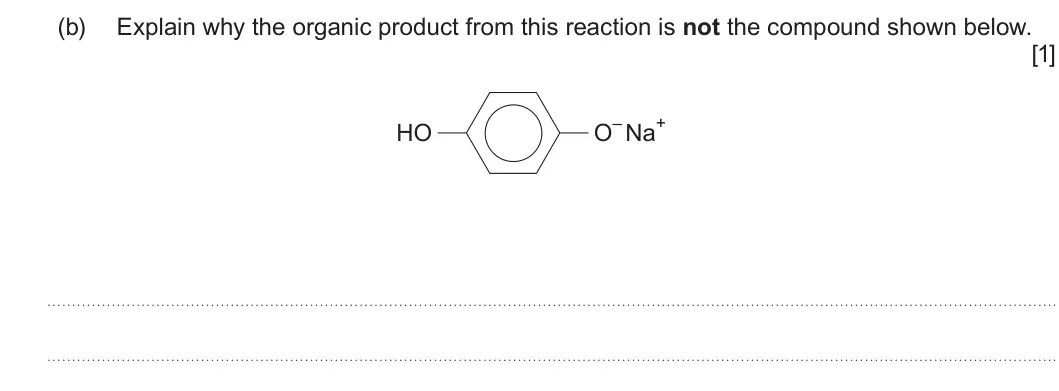
Q7(a)(i)
The whole paper ↗
Q7(a)(ii)
The whole paper ↗
Q10(a)
The whole paper ↗
Q8(a)(i)
The whole paper ↗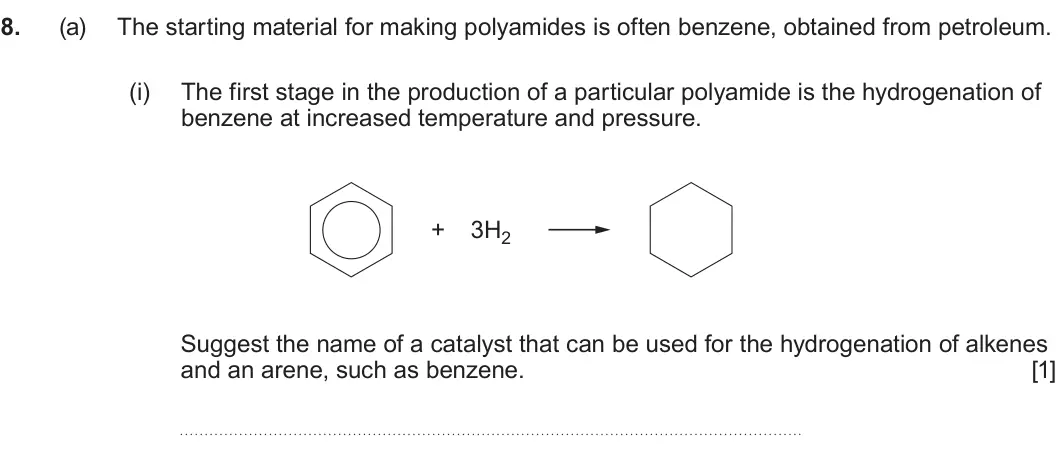
Q9(a)(i)
The whole paper ↗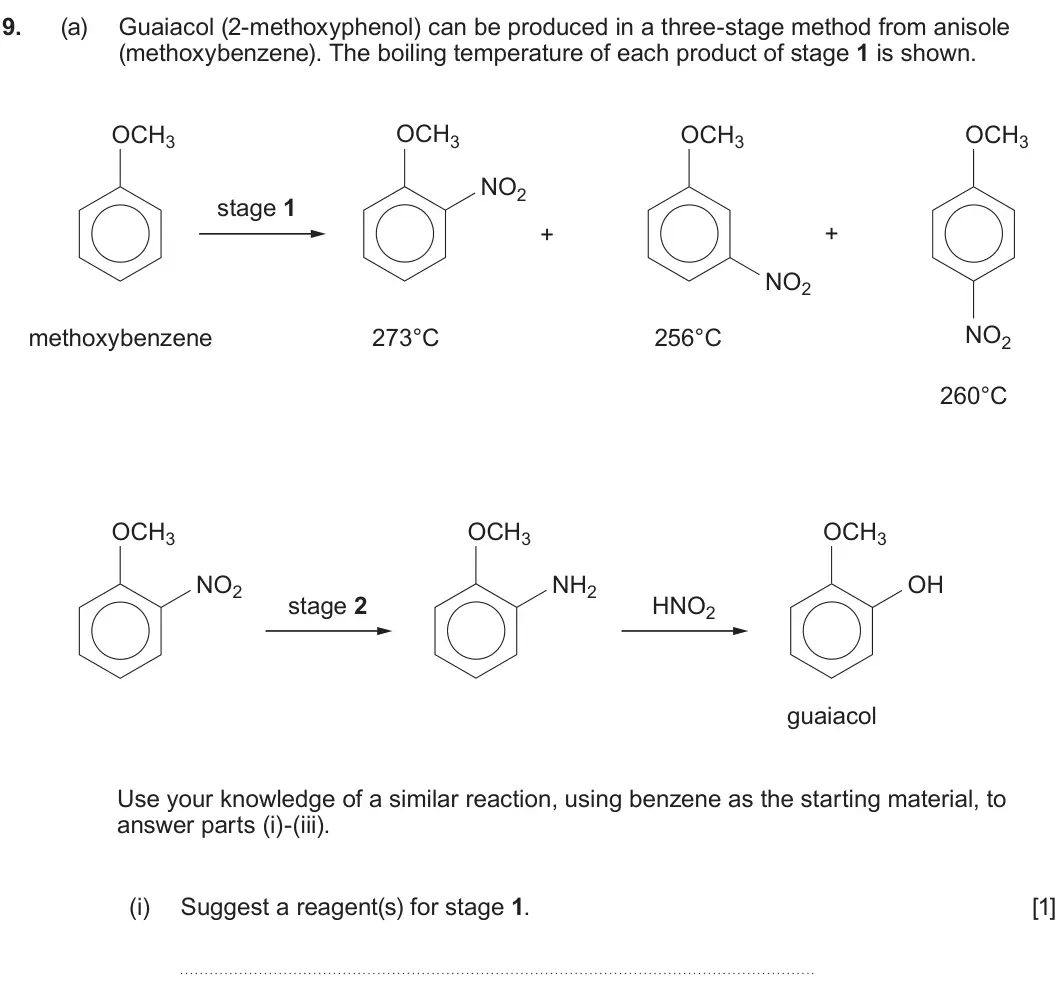
Q9(c)
The whole paper ↗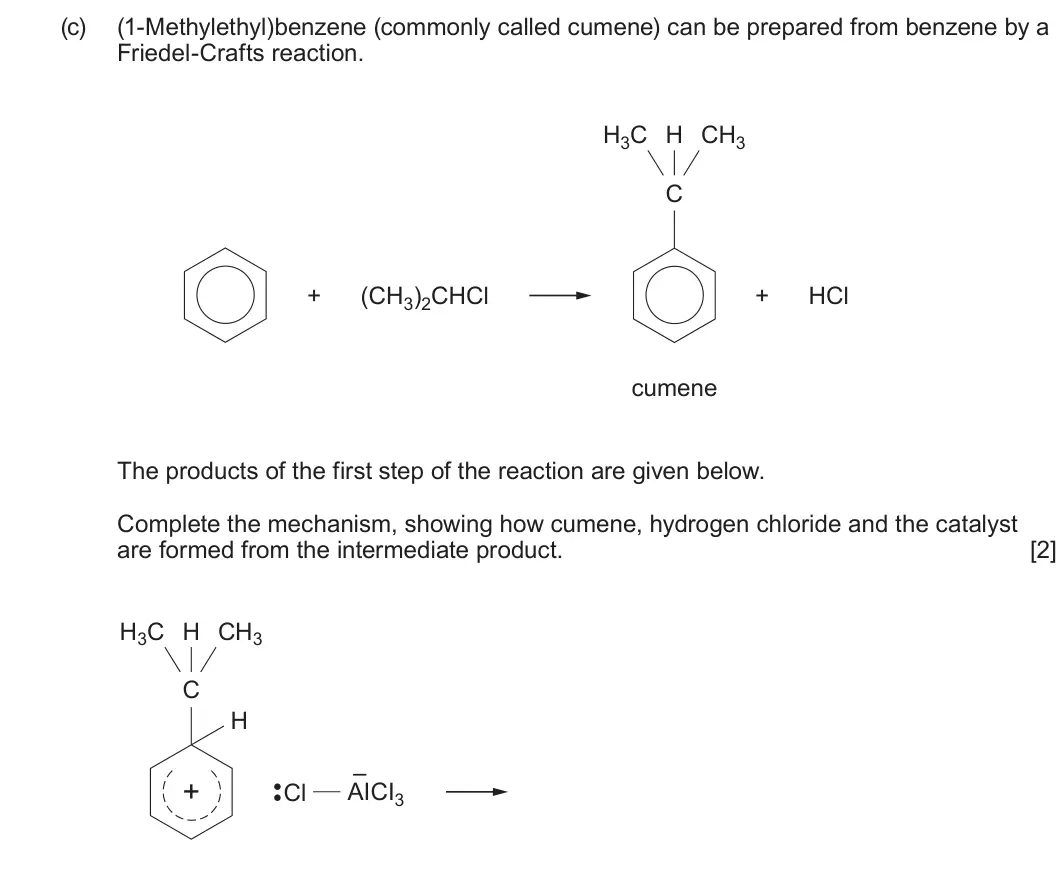
Q11(a)(i)
The whole paper ↗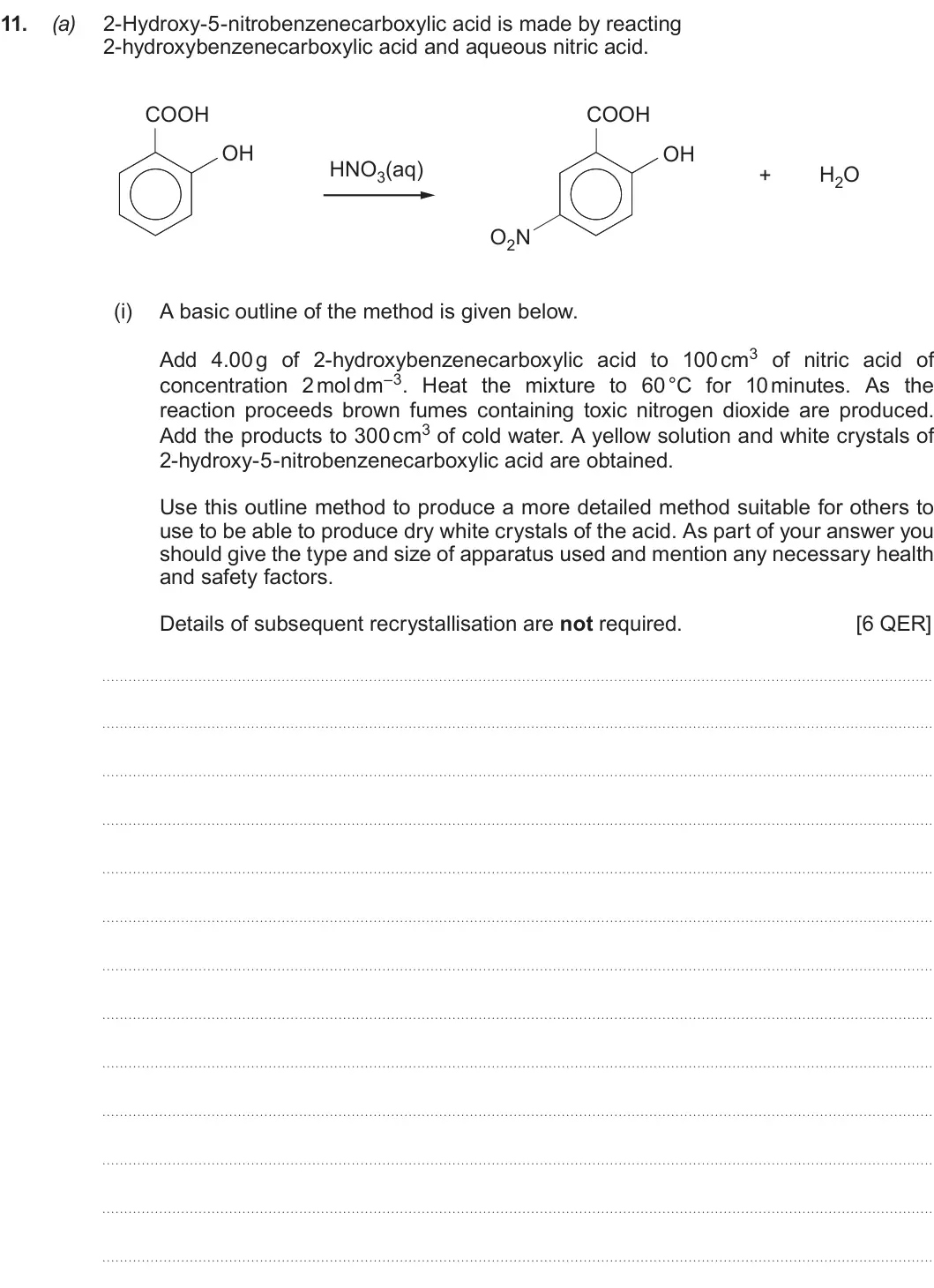
Q11(a)(iii)
The whole paper ↗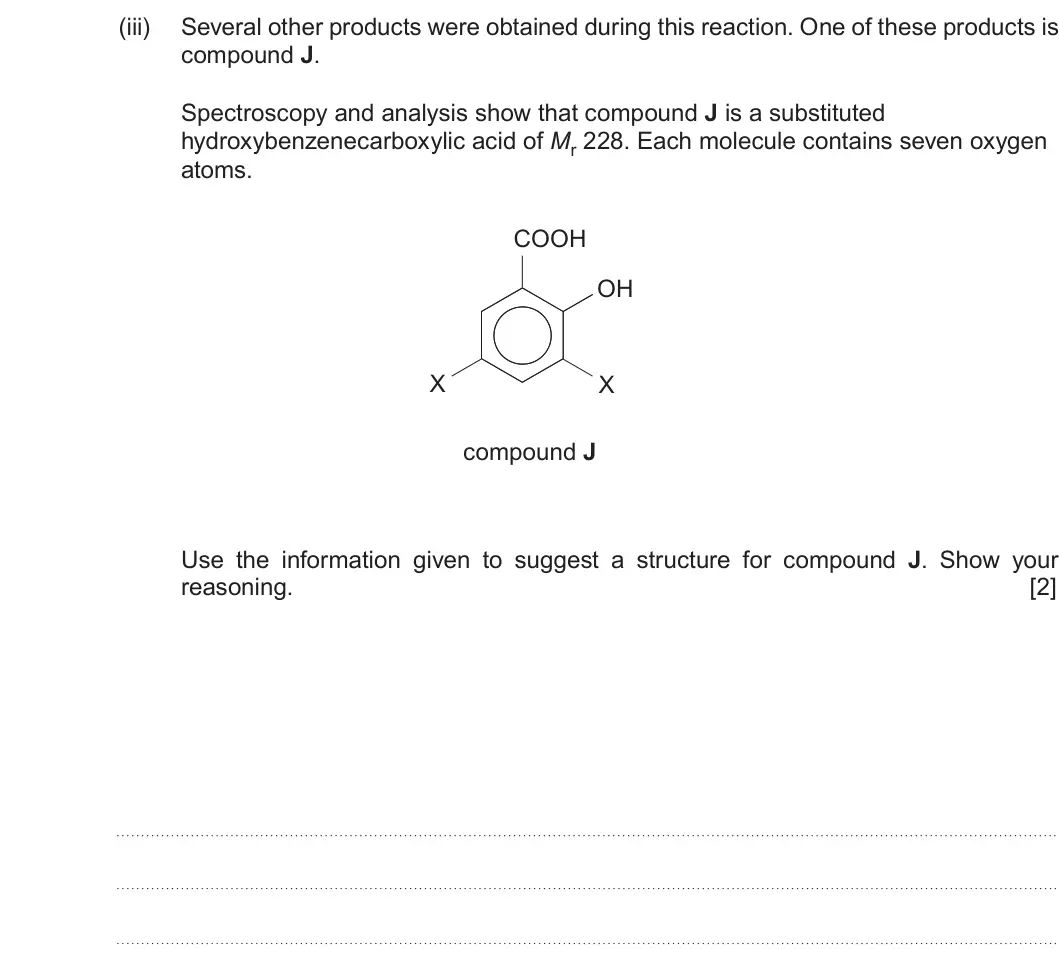
Q11(a)(iv)
The whole paper ↗
Q7(a)(i)
The whole paper ↗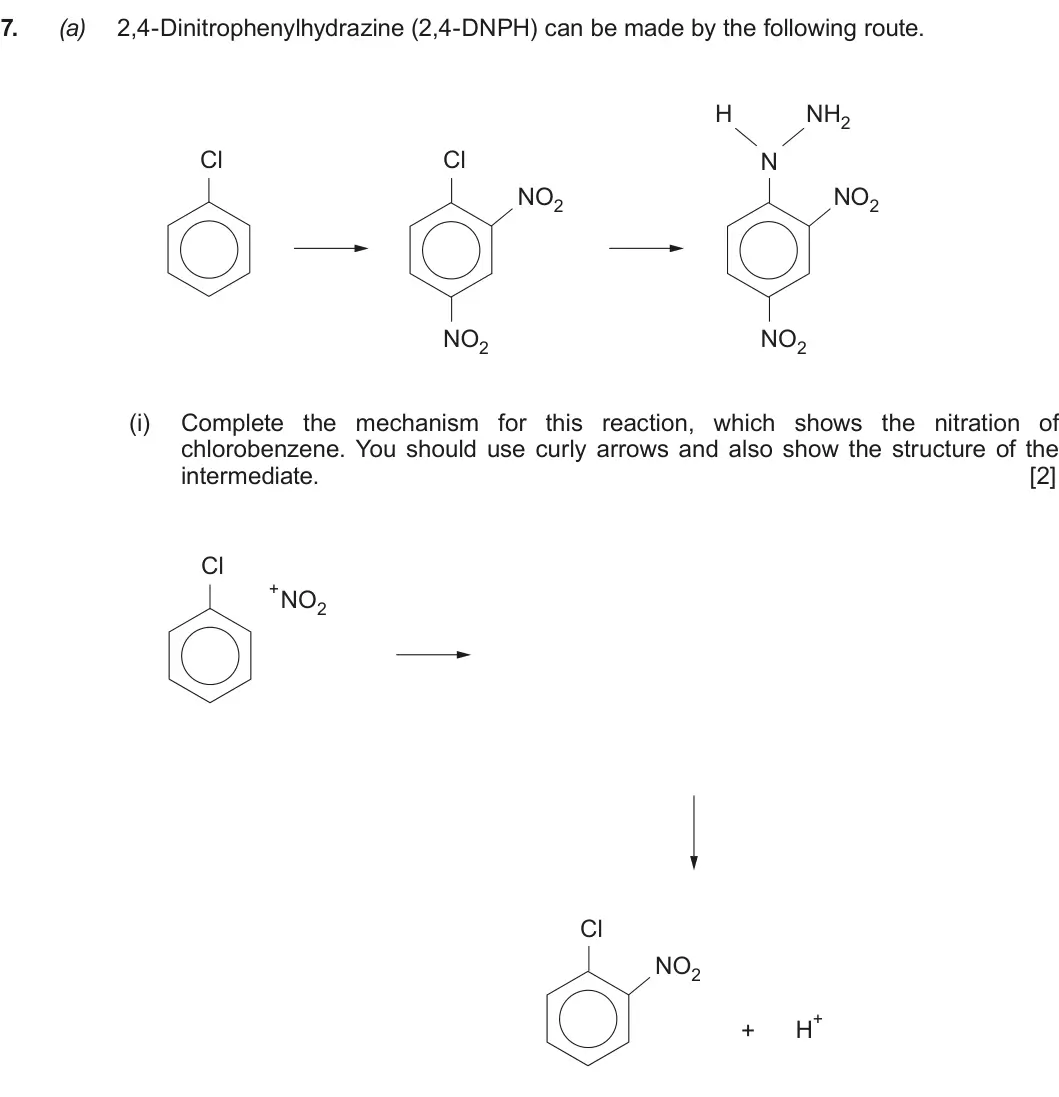
Q7(a)(ii)
The whole paper ↗
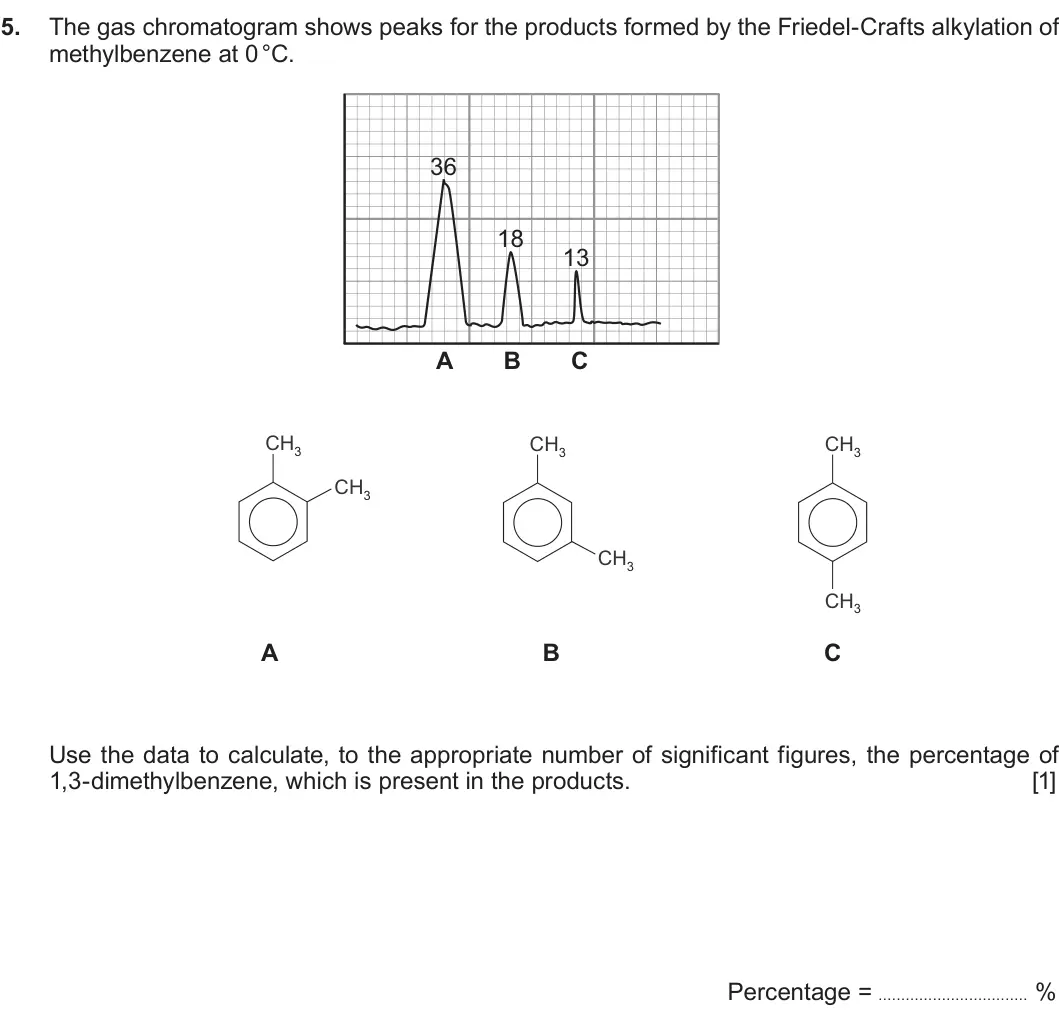
Q12(c)(i)
The whole paper ↗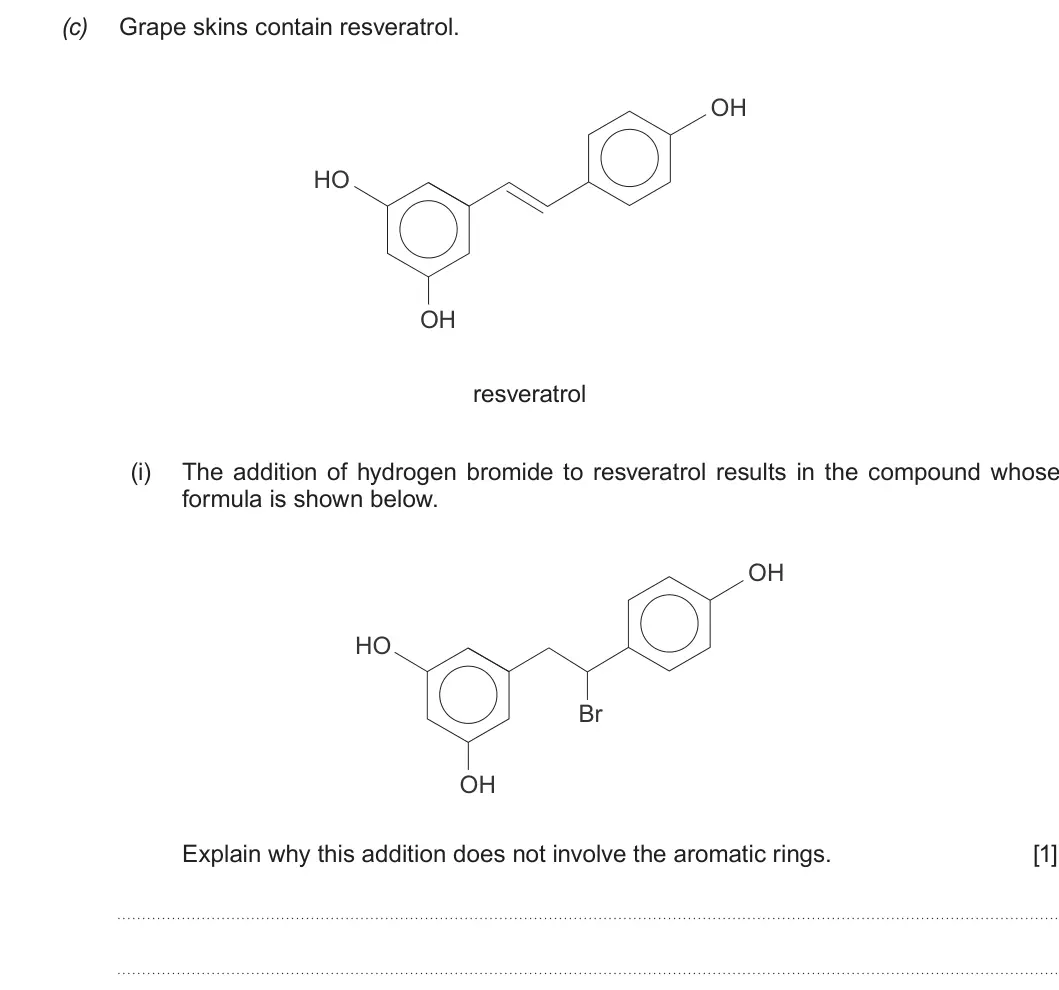
Q13(b)
The whole paper ↗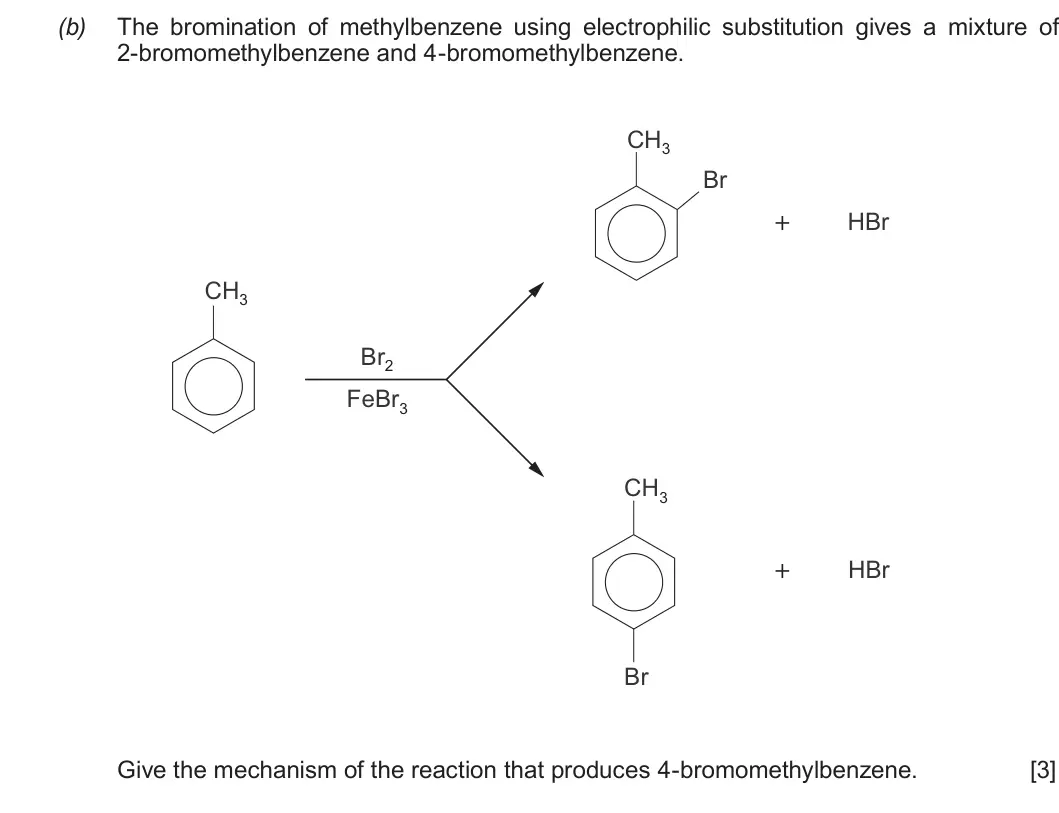
All 16 questions on Aromaticity, as a list
- Summer 2025, Unit 4, Q1(a) (1 mark): The first stage in its production is the nitration of toluene (methylbenzene). State the reagent(s) used to nitrate aromatic hydrocarbons such as benzene and to
- Summer 2025, Unit 4, Q4(b) (1 mark): Explain why the organic product from this reaction is not the compound shown below. [1] O– Na+ HO
- Summer 2024, Unit 4, Q7(a)(i) (1 mark): State the reagent(s) used for this reaction. [1]
- Summer 2024, Unit 4, Q7(a)(ii) (1 mark): State the formula of the nitrogen-containing electrophile that takes part in this reaction. [1]
- Summer 2023, Unit 4, Q10(a) (6 marks): Benzene reacts with bromine in the presence of a catalyst. Give the mechanism for this reaction and explain how the Br Br bond becomes polarised during the reac
- Summer 2022, Unit 4, Q8(a)(i) (1 mark): The first stage in the production of a particular polyamide is the hydrogenation of benzene at increased temperature and pressure. + 3H2 Suggest the name of a c
- Summer 2022, Unit 4, Q9(a)(i) (1 mark): Suggest a reagent(s) for stage 1 [1]
- Summer 2022, Unit 4, Q9(c) (2 marks): (1-Methylethyl)benzene (commonly called cumene) can be prepared from benzene by a Friedel-Crafts reaction. H3C H CH3 C + (CH3)2CHCl + HCl cumene The products of
- Summer 2019, Unit 4, Q11(a)(i) (6 marks): A basic outline of the method is given below. Add 4.00 g of 2-hydroxybenzenecarboxylic acid to 100 cm3 of nitric acid of concentration 2 mol dm–3. Heat the mixt
- Summer 2019, Unit 4, Q11(a)(iii) (2 marks): Several other products were obtained during this reaction. One of these products is compound J. Spectroscopy and analysis show that compound J is a substituted
- Summer 2019, Unit 4, Q11(a)(iv) (1 mark): The yield of 2-hydroxy-5-nitrobenzenecarboxylic acid in this experiment is low. Suggest how the experiment could be modified to increase the yield of the requir
- Summer 2018, Unit 4, Q7(a)(i) (2 marks): Complete the mechanism for this reaction, which shows the nitration of chlorobenzene. You should use curly arrows and also show the structure of the intermediat
- Summer 2018, Unit 4, Q7(a)(ii) (1 mark): State the type of mechanism occurring in this nitration. [1]
- Summer 2017, Unit 4, Q5 (1 mark): The gas chromatogram shows peaks for the products formed by the Friedel-Crafts alkylation of methylbenzene at 0 °C. 36 18 13 A B C CH3 CH3 CH3 CH3 CH3 CH3 A B C
- Summer 2017, Unit 4, Q12(c)(i) (1 mark): The addition of hydrogen bromide to resveratrol results in the compound whose formula is shown below. OH HO Br OH Explain why this addition does not involve the
- Summer 2017, Unit 4, Q13(b) (3 marks): The bromination of methylbenzene using electrophilic substitution gives a mixture of 2-bromomethylbenzene and 4-bromomethylbenzene. CH3 Br + HBr CH3 Br2 FeBr3 C
Questions, mark schemes and examiner’s reports are © WJEC CBAC Ltd, from their published past papers. Plumi isn’t affiliated with any exam board. Want whole papers? Every WJEC A-Level Chemistry paper.
Rather write your answers by hand on iPad? Plumi marks them against the same mark schemes.