 plumi
Enthalpy changes for solids and solutions: WJEC A‑Level Chemistry questions
Every WJEC A-Level Chemistry exam question on 3.6 Enthalpy changes for solids and solutions, 2016–2025, with its mark scheme and examiner’s report.
Find questions1,204
Calculations
Q1(a)
The whole paper ↗
Q1(b)
The whole paper ↗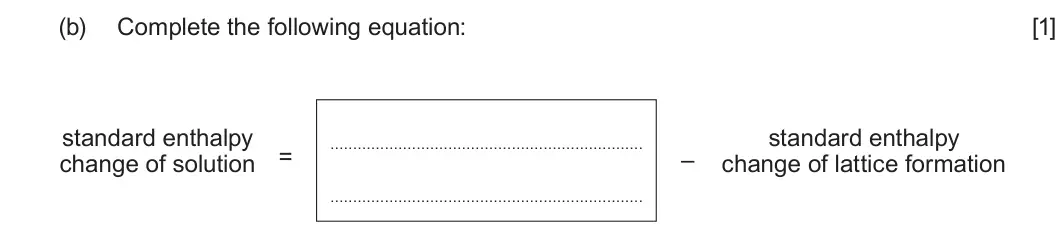
Q8(b)(i)
The whole paper ↗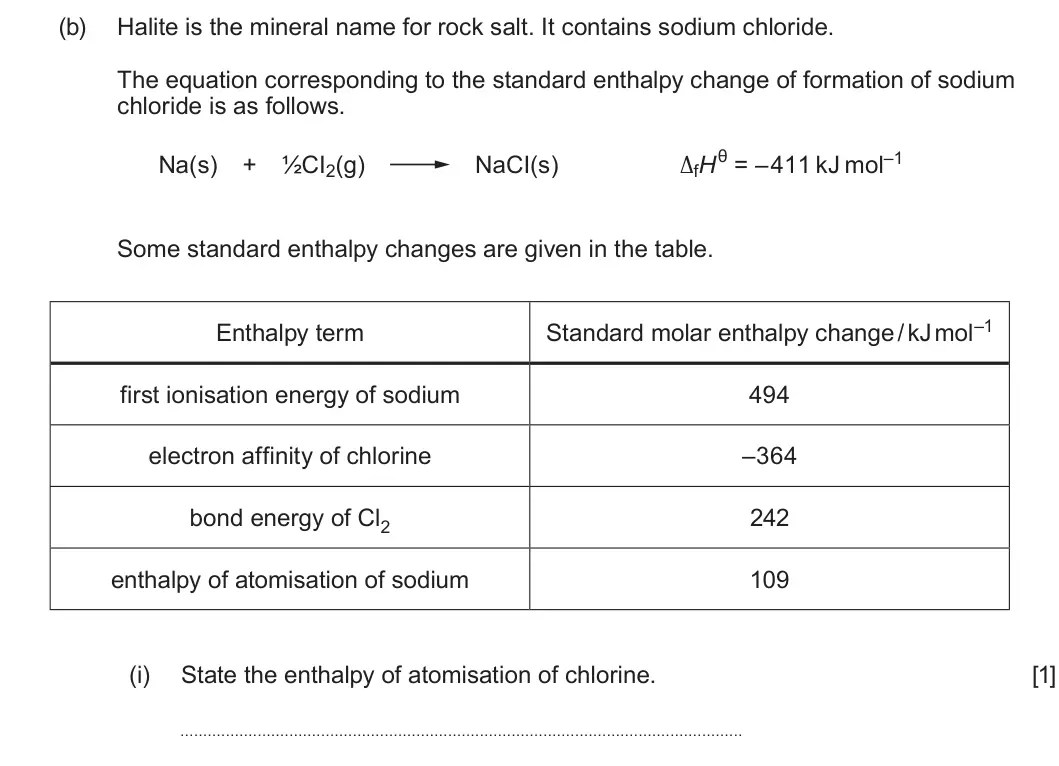
Q8(b)(ii)
The whole paper ↗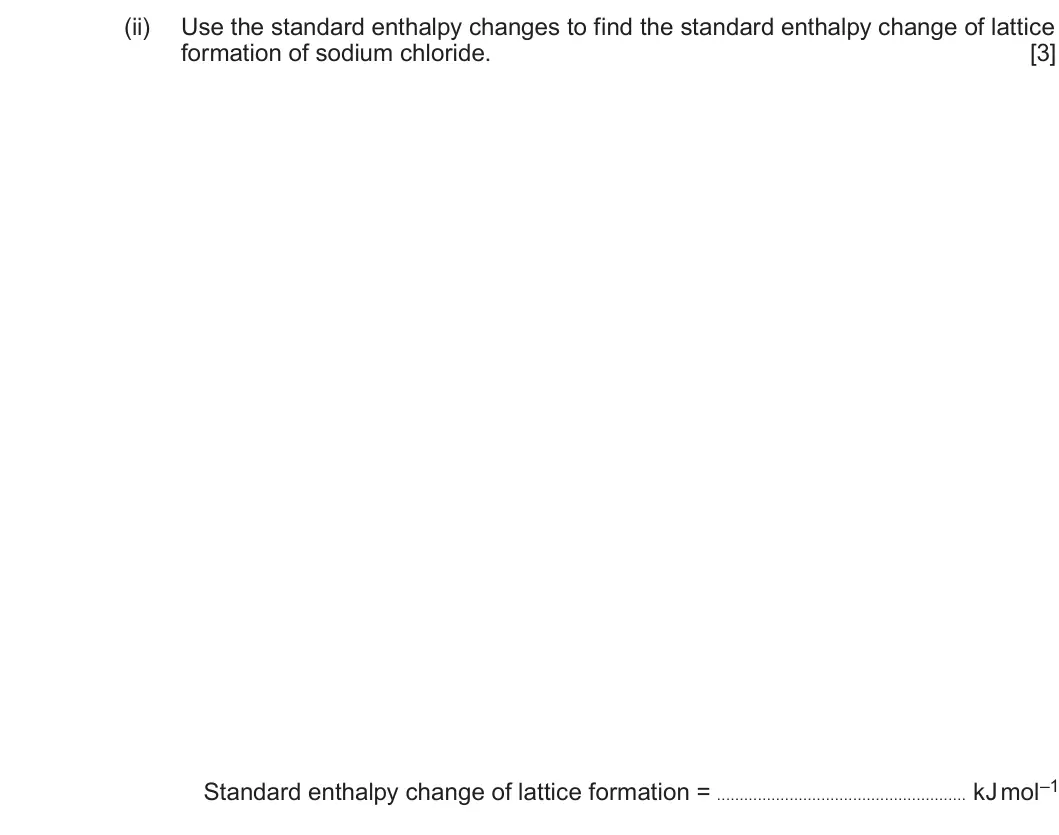
Q9(a)(i)
The whole paper ↗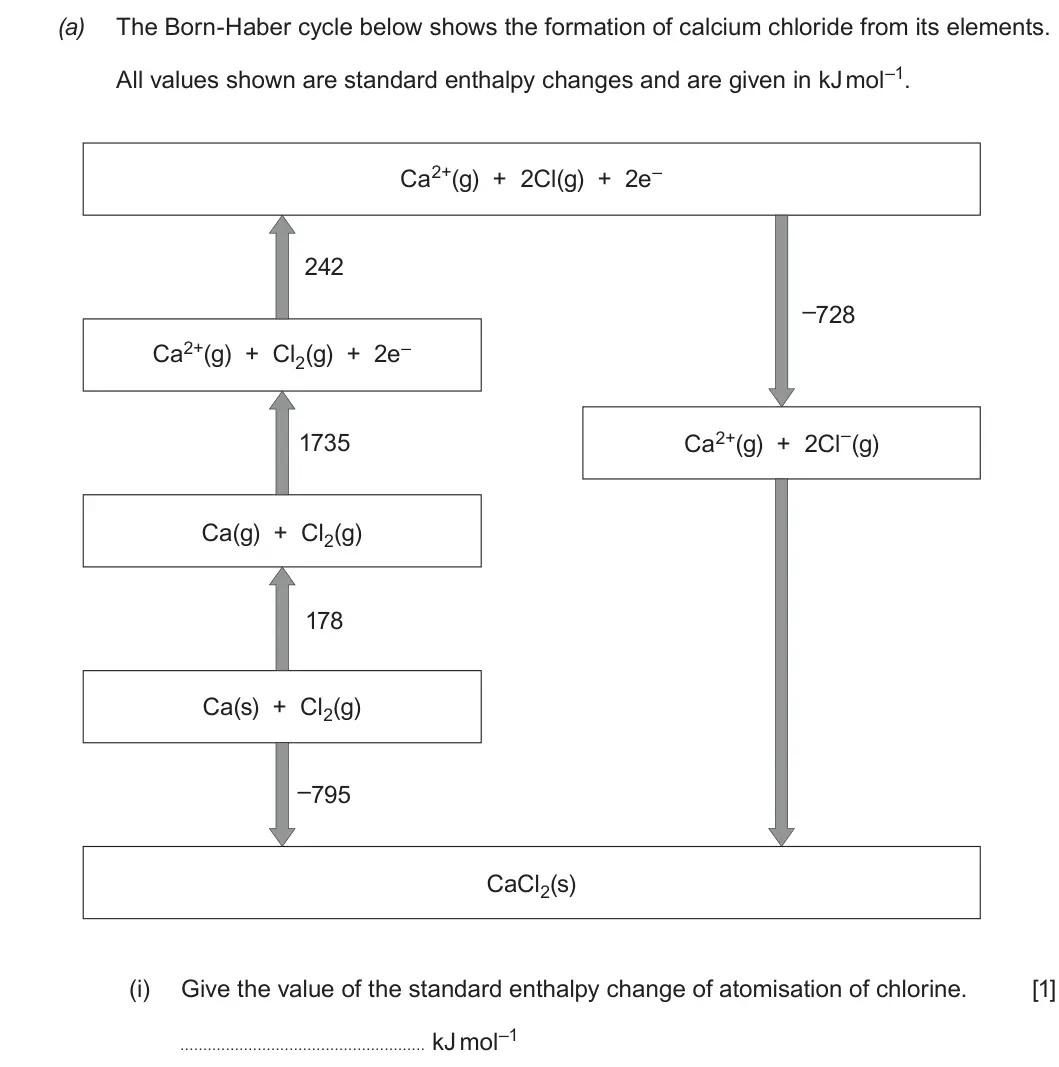
Q9(a)(ii)
The whole paper ↗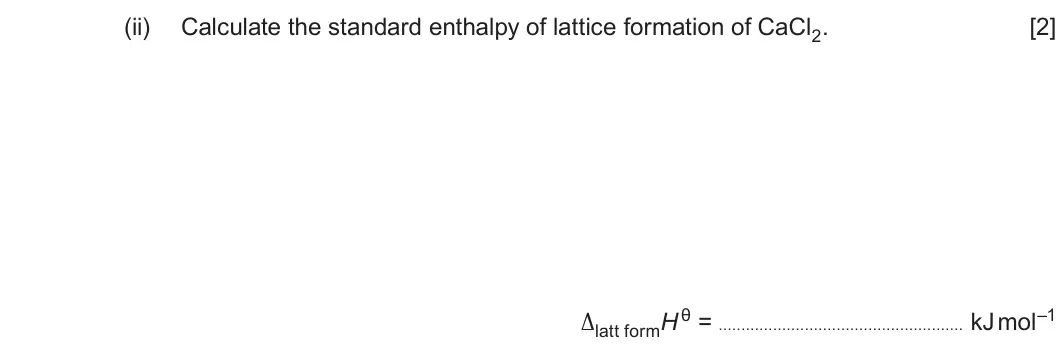
Q9(a)(iii)
The whole paper ↗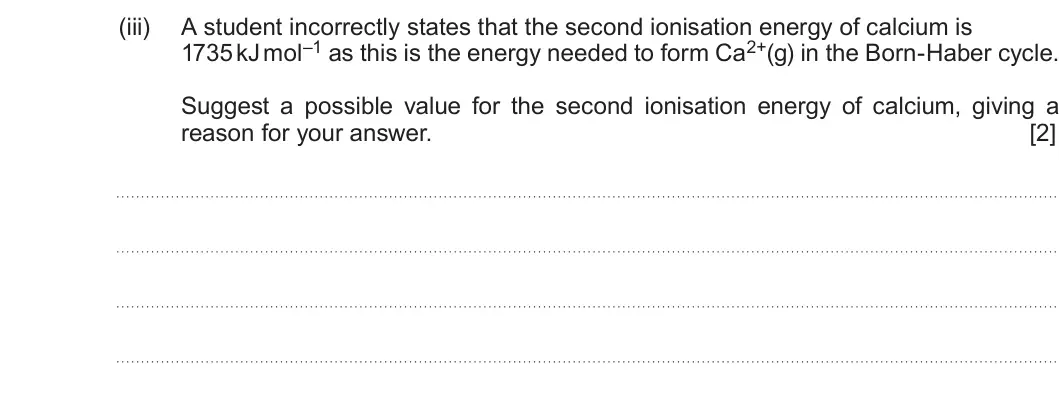
All 9 questions on Enthalpy changes for solids and solutions, as a list
- Summer 2024, Unit 3, Q1(a) (1 mark): Write an equation, including state symbols, that represents the enthalpy change of lattice formation of solid magnesium chloride. [1]
- Summer 2024, Unit 3, Q1(b) (1 mark): Complete the following equation: [1] standard enthalpy standard enthalpy = – change of solution change of lattice formation
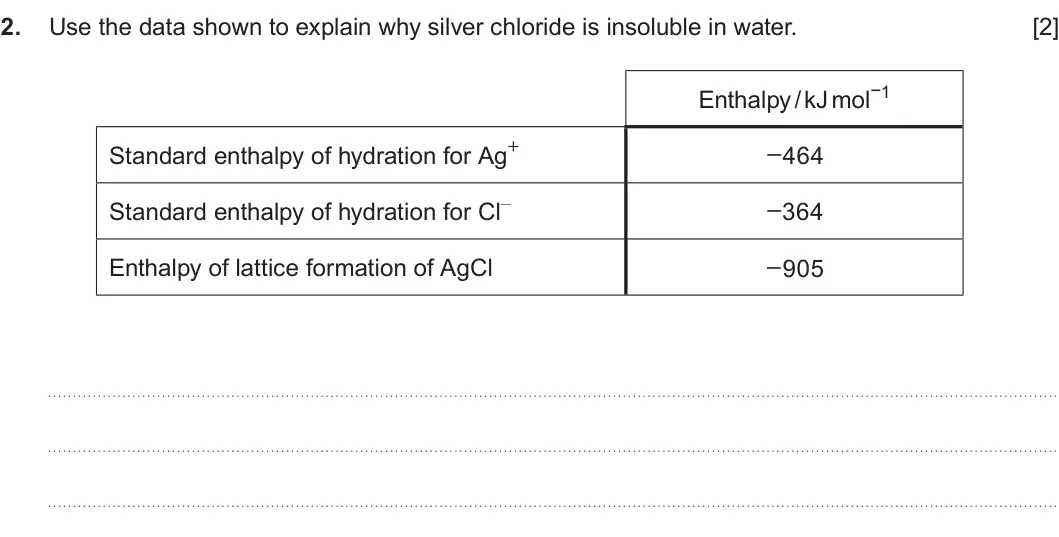
- Summer 2023, Unit 3, Q2 (2 marks): Use the data shown to explain why silver chloride is insoluble in water. [2] Enthalpy / kJ mol−1 Standard enthalpy of hydration for Ag+ −464 Standard enthalpy o
- Summer 2022, Unit 3, Q8(b)(i) (1 mark): State the enthalpy of atomisation of chlorine. [1]
- Summer 2022, Unit 3, Q8(b)(ii) (3 marks): Use the standard enthalpy changes to find the standard enthalpy change of lattice formation of sodium chloride. [3] Standard enthalpy change of lattice formatio
- Summer 2019, Unit 3, Q9(a)(i) (1 mark): Give the value of the standard enthalpy change of atomisation of chlorine. [1] kJ mol–1
- Summer 2019, Unit 3, Q9(a)(ii) (2 marks): Calculate the standard enthalpy of lattice formation of CaCl2. [2] Δlatt formH θ = kJ mol–1
- Summer 2019, Unit 3, Q9(a)(iii) (2 marks): A student incorrectly states that the second ionisation energy of calcium is 1735 kJ mol–1 as this is the energy needed to form Ca2+(g) in the Born-Haber cycle.
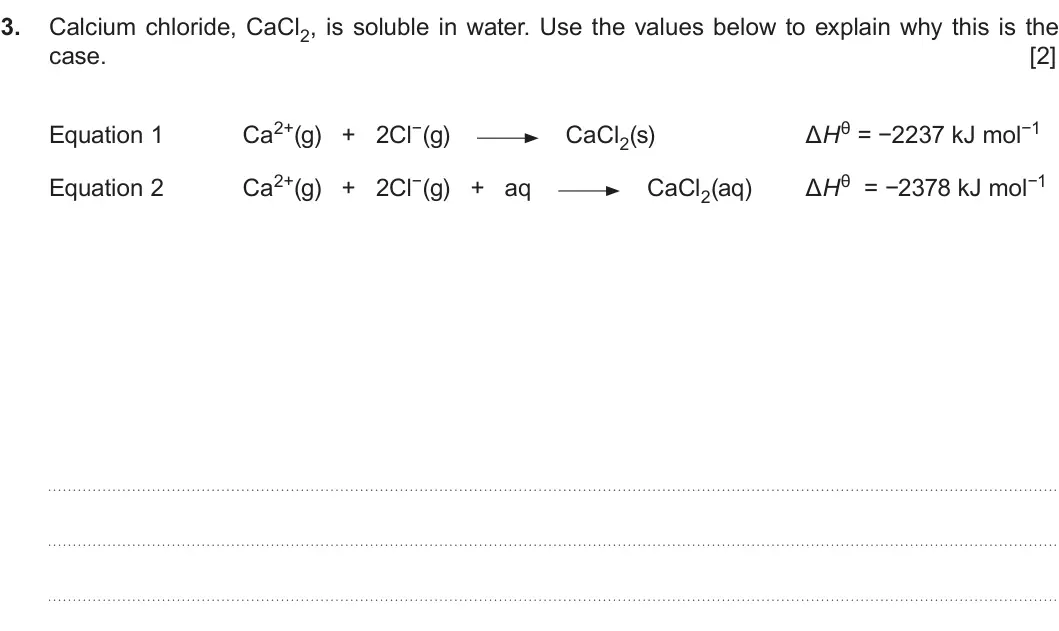
- Summer 2017, Unit 3, Q3 (2 marks): Calcium chloride, CaCl2, is soluble in water. Use the values below to explain why this is the case. [2] Ca2+(g) + 2Cl−(g) ΔHθ = −2237 kJ mol−1 Equation 1 CaCl2(
Questions, mark schemes and examiner’s reports are © WJEC CBAC Ltd, from their published past papers. Plumi isn’t affiliated with any exam board. Want whole papers? Every WJEC A-Level Chemistry paper.
Rather write your answers by hand on iPad? Plumi marks them against the same mark schemes.