 plumi
Genetic information is copied and passed on to daughter cells: WJEC A‑Level Biology questions
Every WJEC A-Level Biology exam question on 1.6 Genetic information is copied and passed on to daughter cells, 2016–2025, with its mark scheme and examiner’s report.
Find questions1,223
Calculations
Q5(a)(ii)
The whole paper ↗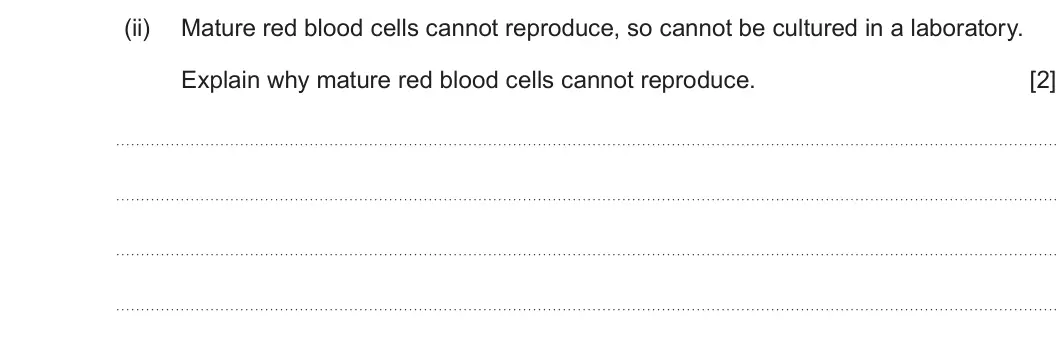
Q1(a)(i)
The whole paper ↗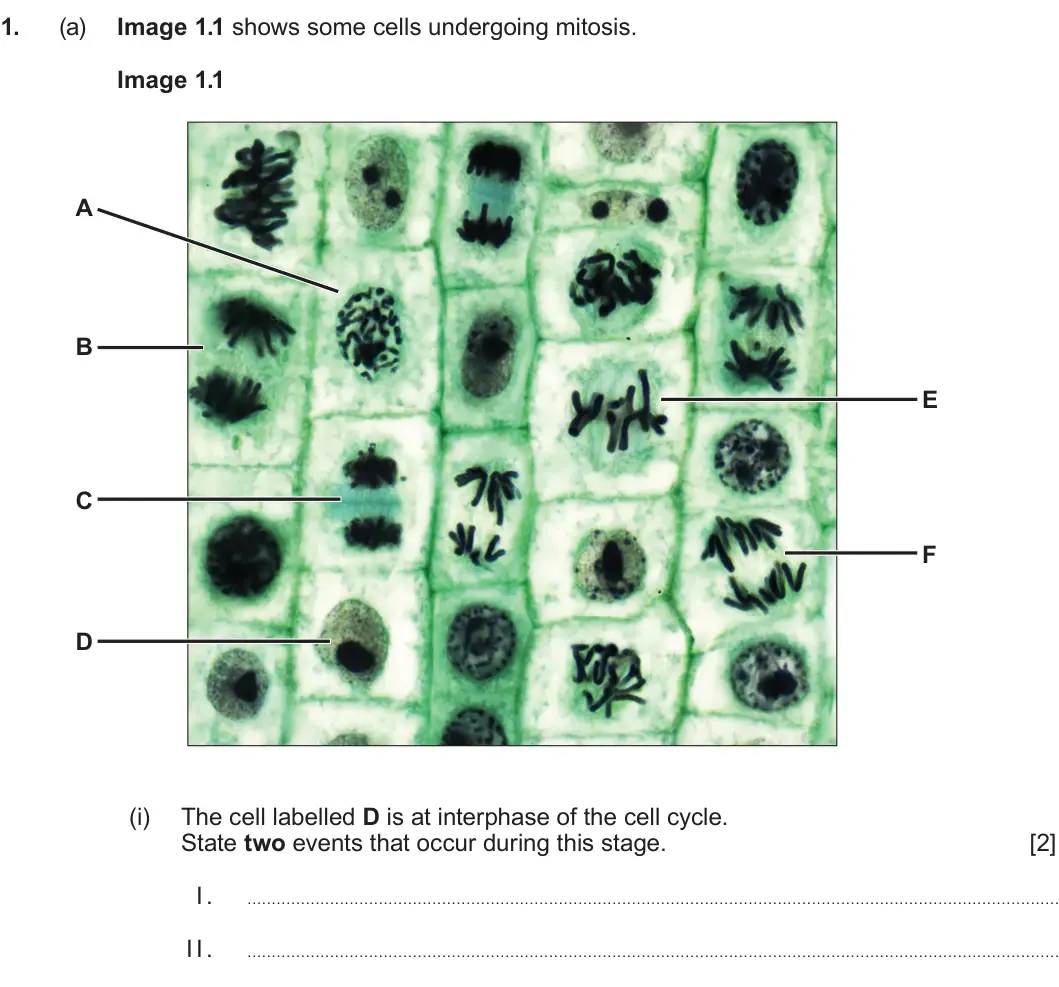
Q1(a)(ii)
The whole paper ↗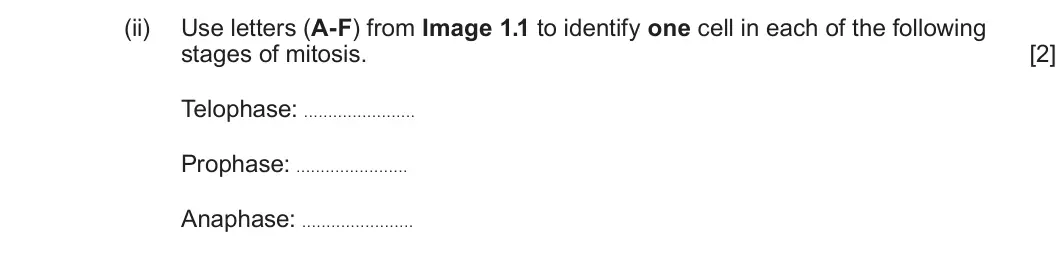
Q1(a)(iii)
The whole paper ↗
Q1(b)
The whole paper ↗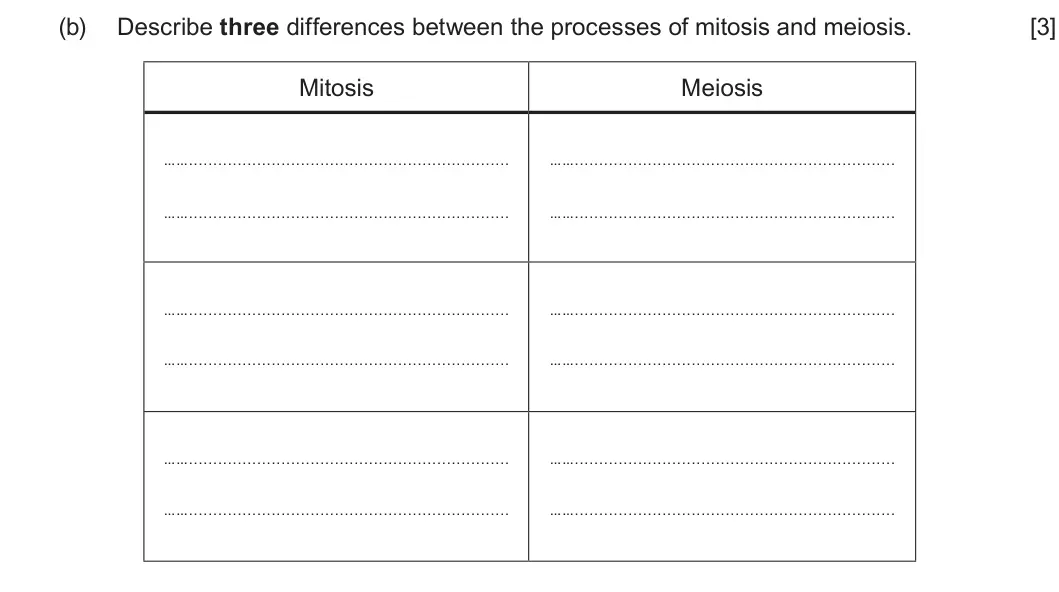
Q1(c)(i)
The whole paper ↗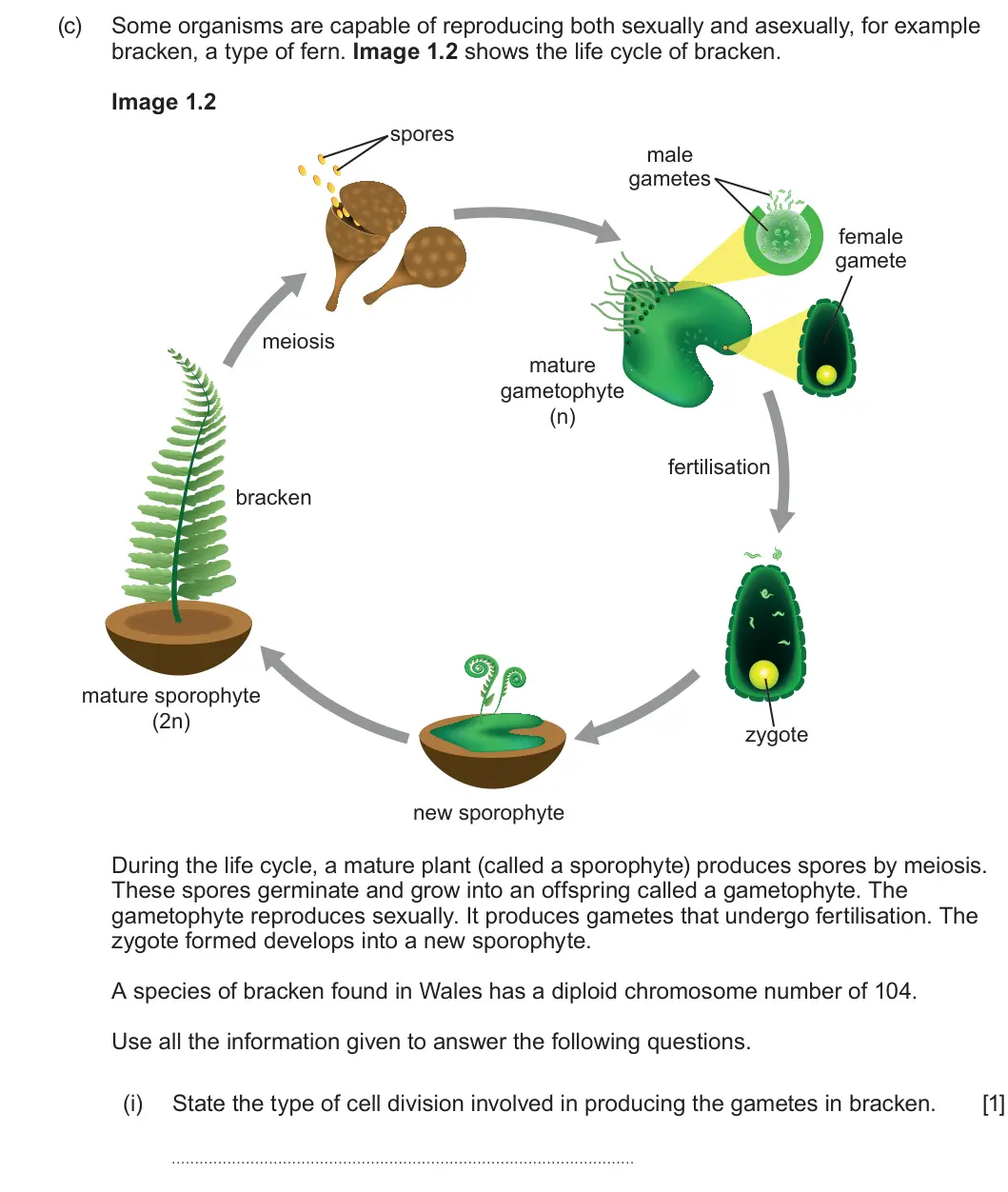
Q1(c)(ii)
The whole paper ↗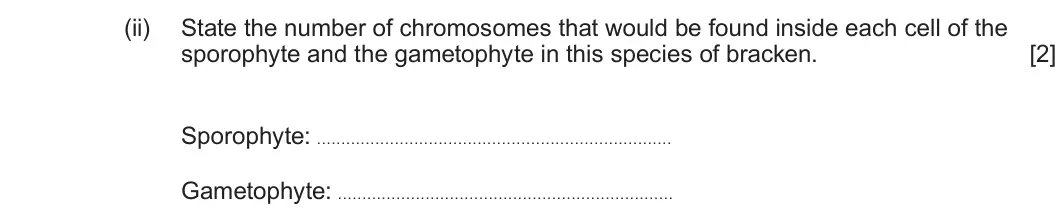
Q6(a)(i)
The whole paper ↗
Q6(a)(ii)
The whole paper ↗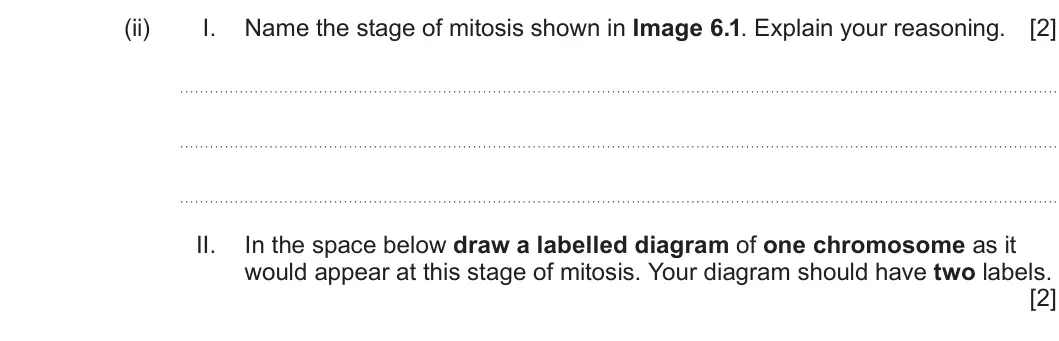
Q6(b)(ii)
The whole paper ↗
Q6(c)
The whole paper ↗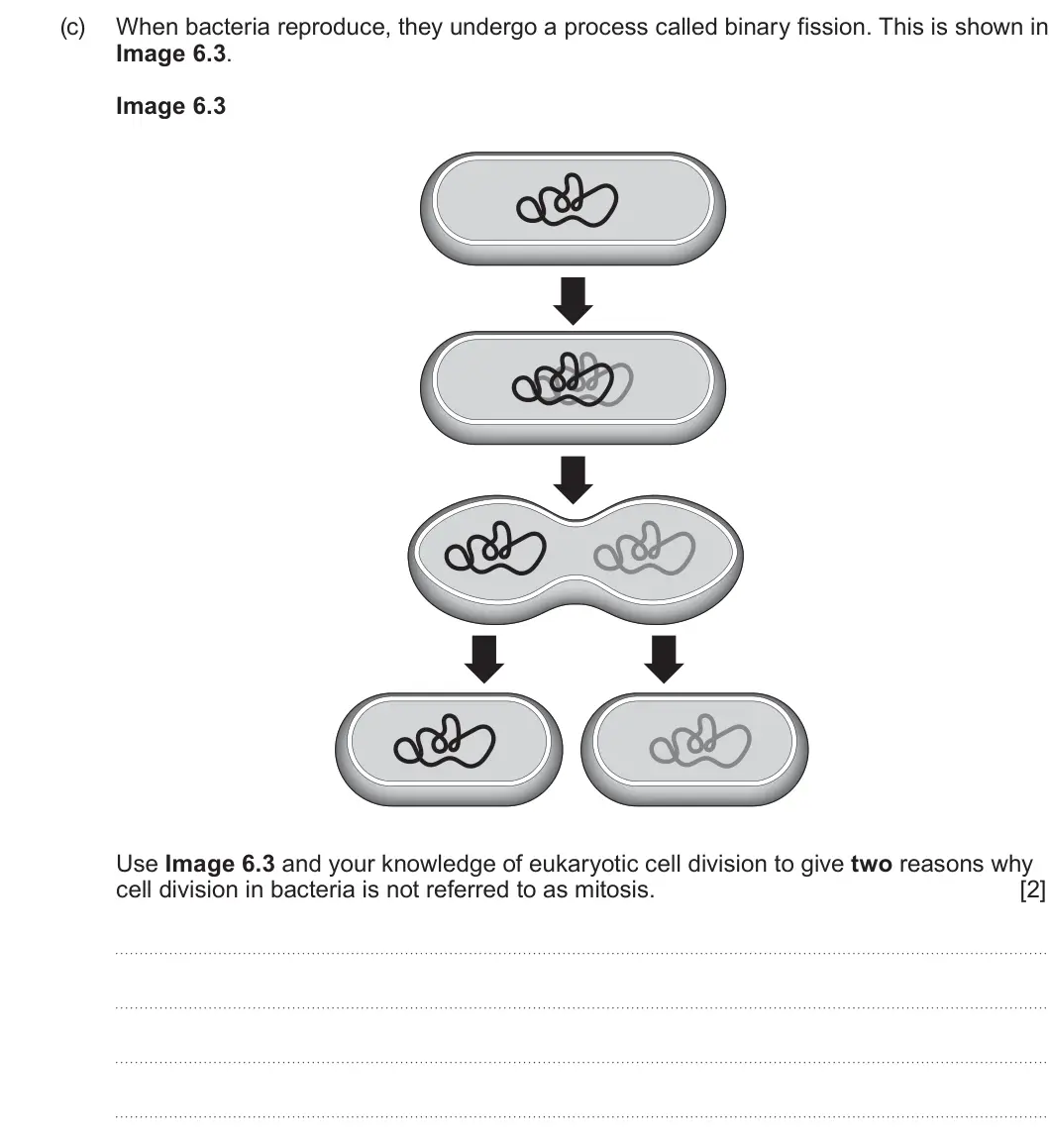
Q2(a)(i)
The whole paper ↗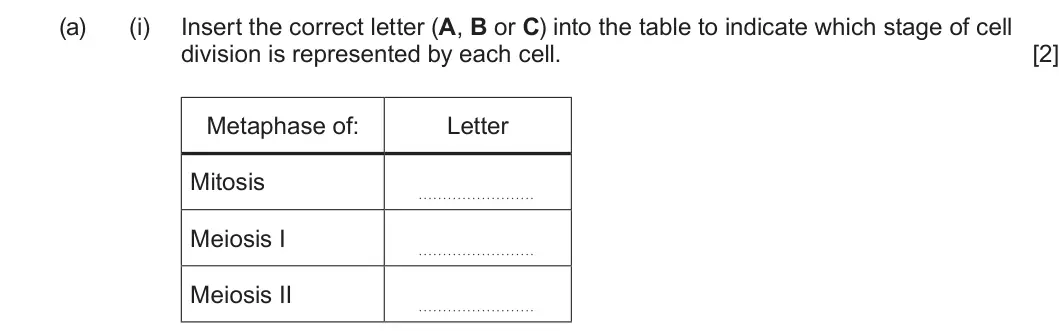
Q2(a)(ii)
The whole paper ↗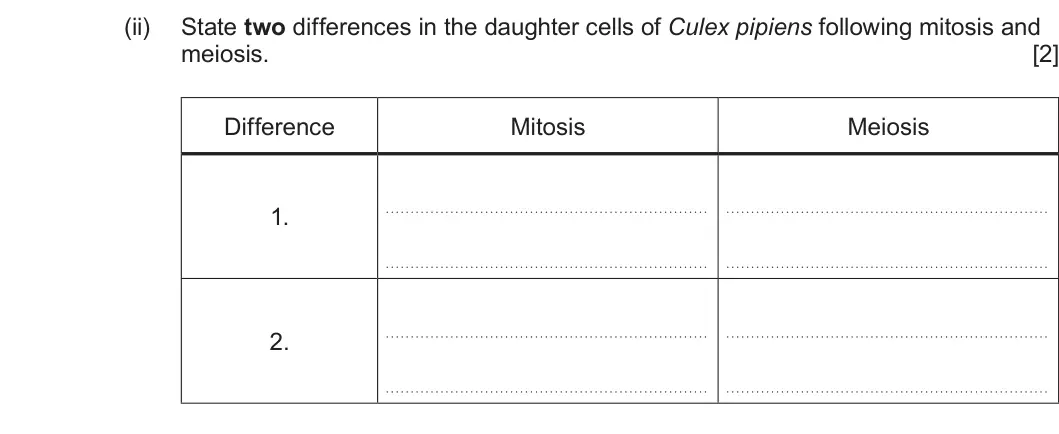
Q2(b)(i)
The whole paper ↗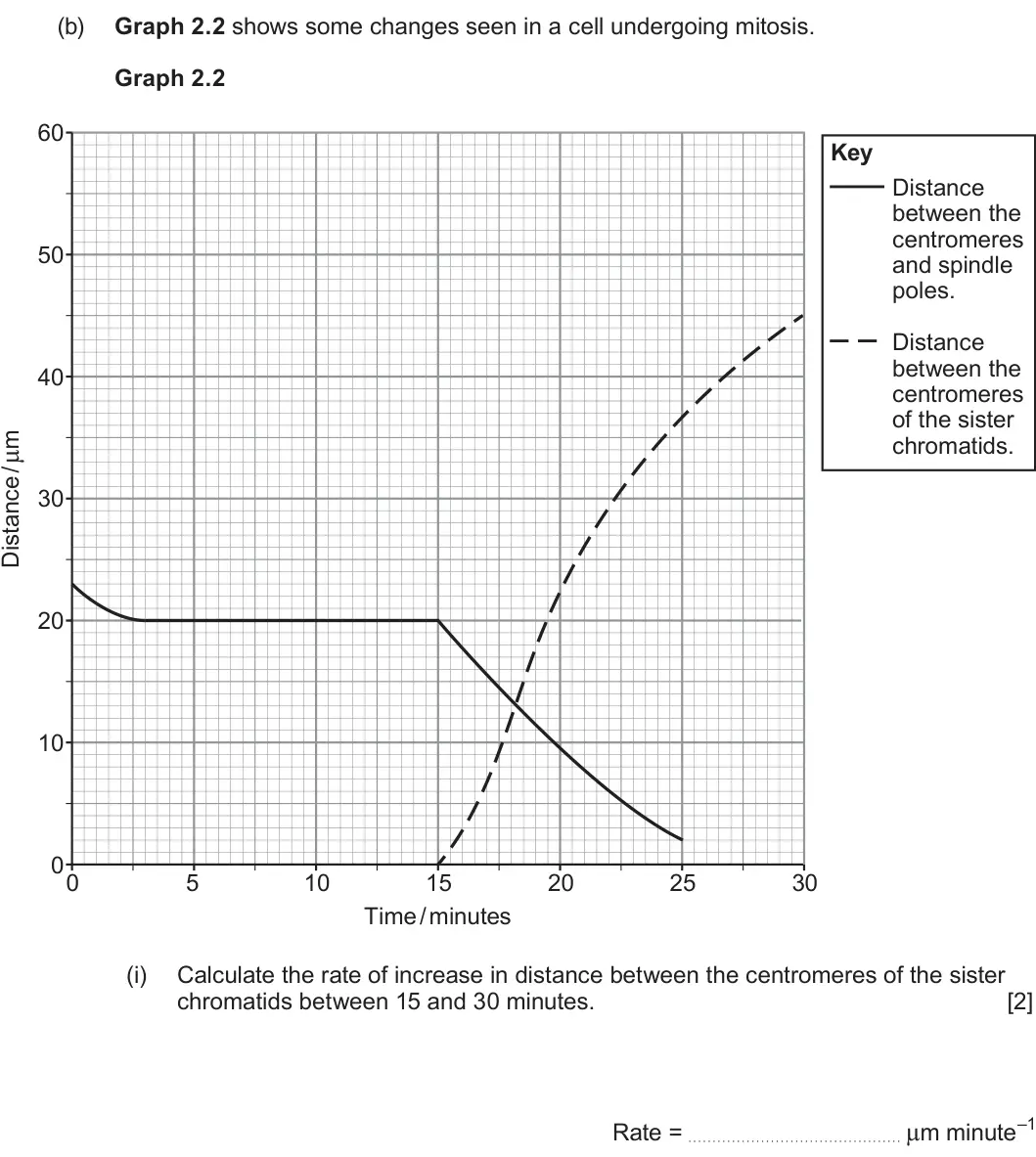
Q2(b)(ii)
The whole paper ↗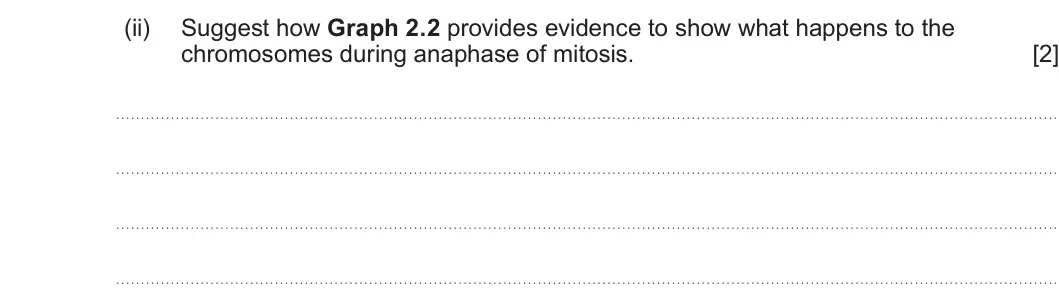
Q2(c)(i)
The whole paper ↗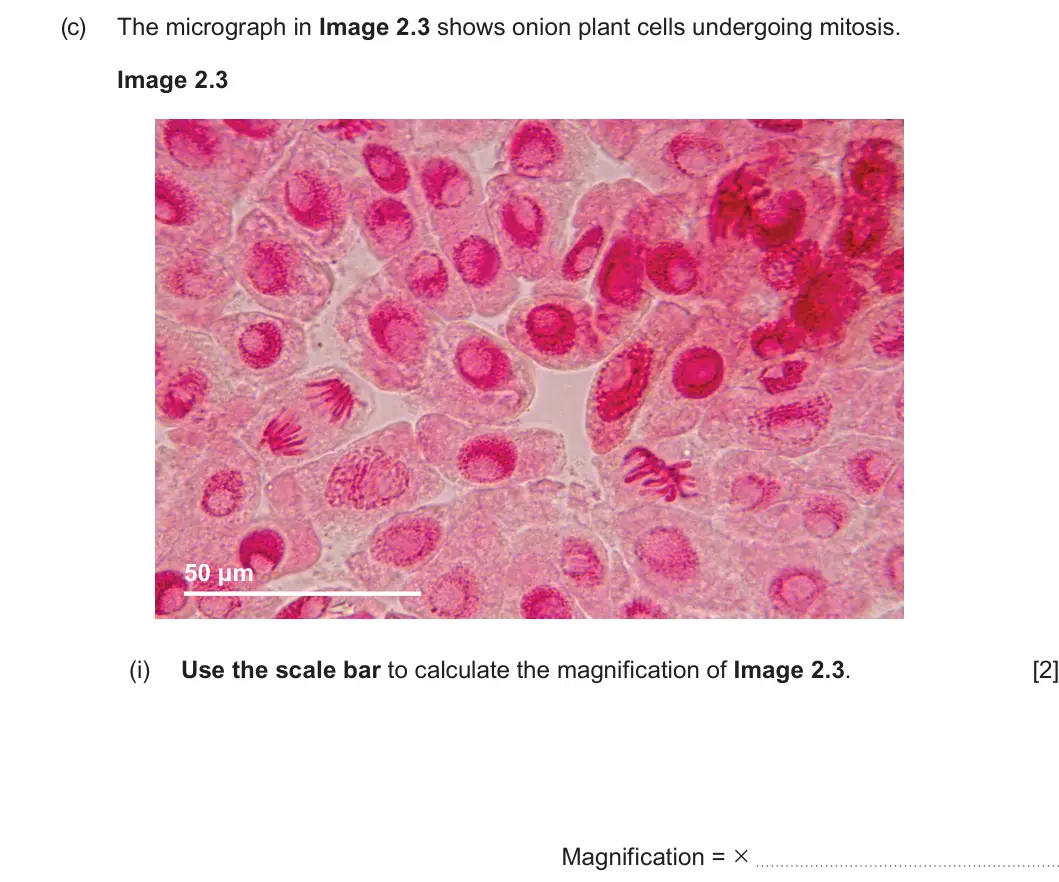
Q2(c)(ii)
The whole paper ↗
Q2(c)(iii)
The whole paper ↗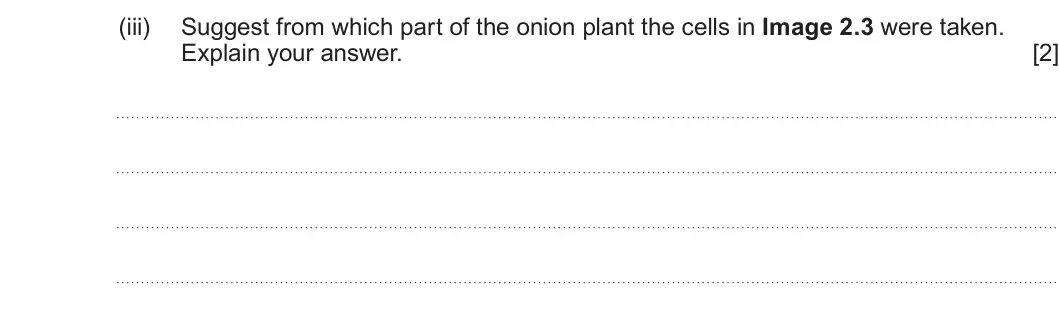
Q4(a)(i)
The whole paper ↗
All 37 questions on Genetic information is copied and passed on to daughter cells, as a list
- Summer 2025, Unit 4, Q5(a)(ii) (2 marks): Mature red blood cells cannot reproduce, so cannot be cultured in a laboratory. Explain why mature red blood cells cannot reproduce. [2]
- Summer 2025, AS Unit 1, Q1(a)(i) (2 marks): The cell labelled D is at interphase of the cell cycle. State two events that occur during this stage. [2] I. . . . . . . . . . . . . . . . . . . . . . . . . .
- Summer 2025, AS Unit 1, Q1(a)(ii) (2 marks): Use letters (A-F) from Image 1.1 to identify one cell in each of the following stages of mitosis. [2] Telophase: . . . . . . . . . . . . . . . . . . . . . . . P
- Summer 2025, AS Unit 1, Q1(a)(iii) (1 mark): Starting with the letter D, place the letters from Image 1.1 in the correct order during the cell cycle. [1] D . . . . . . . . . . . . . . . . . . . . . . . . .
- Summer 2025, AS Unit 1, Q1(b) (3 marks): Describe three differences between the processes of mitosis and meiosis. [3] Mitosis Meiosis …… . . . . . . . . . . . . . . . . . . . . . . . . . . . . . . . .
- Summer 2025, AS Unit 1, Q1(c)(i) (1 mark): State the type of cell division involved in producing the gametes in bracken. [1] . . . . . . . . . . . . . . . . . . . . . . . . . . . . . . . . . . . . . . .
- Summer 2025, AS Unit 1, Q1(c)(ii) (2 marks): State the number of chromosomes that would be found inside each cell of the sporophyte and the gametophyte in this species of bracken. [2] Sporophyte: . . . . .
- Summer 2024, AS Unit 1, Q6(a)(i) (1 mark): On Image 6.1, name the origin of the spindle fibres, labelled X. [1]
- Summer 2024, AS Unit 1, Q6(a)(ii) (4 marks): I. Name the stage of mitosis shown in Image 6.1. Explain your reasoning. [2] II. In the space below draw a labelled diagram of one chromosome as it would appear
- Summer 2024, AS Unit 1, Q6(b)(ii) (3 marks): Colchicine is a chemical which prevents the polymerisation of tubulin to form microtubules. Suggest how this would affect the growth of organisms. Explain your
- Summer 2024, AS Unit 1, Q6(c) (2 marks): When bacteria reproduce, they undergo a process called binary fission. This is shown in Image 6.3. Image 6.3 Use Image 6.3 and your knowledge of eukaryotic cell
- Summer 2023, AS Unit 1, Q2(a)(i) (2 marks): Insert the correct letter (A, B or C) into the table to indicate which stage of cell division is represented by each cell. [2] Metaphase of: Letter Mitosis Meio
- Summer 2023, AS Unit 1, Q2(a)(ii) (2 marks): State two differences in the daughter cells of Culex pipiens following mitosis and meiosis. [2] Difference Mitosis Meiosis 1 2.
- Summer 2023, AS Unit 1, Q2(b)(i) (2 marks): Calculate the rate of increase in distance between the centromeres of the sister chromatids between 15 and 30 minutes. [2] Rate = μm minute–1
- Summer 2023, AS Unit 1, Q2(b)(ii) (2 marks): Suggest how Graph 2.2 provides evidence to show what happens to the chromosomes during anaphase of mitosis. [2]
- Summer 2023, AS Unit 1, Q2(c)(i) (2 marks): Use the scale bar to calculate the magnification of Image 2.3. [2] Magnification = ×
- Summer 2023, AS Unit 1, Q2(c)(ii) (1 mark): On Image 2.3 label: [1] A one cell in anaphase B one cell in metaphase
- Summer 2023, AS Unit 1, Q2(c)(iii) (2 marks): Suggest from which part of the onion plant the cells in Image 2.3 were taken. Explain your answer. [2]
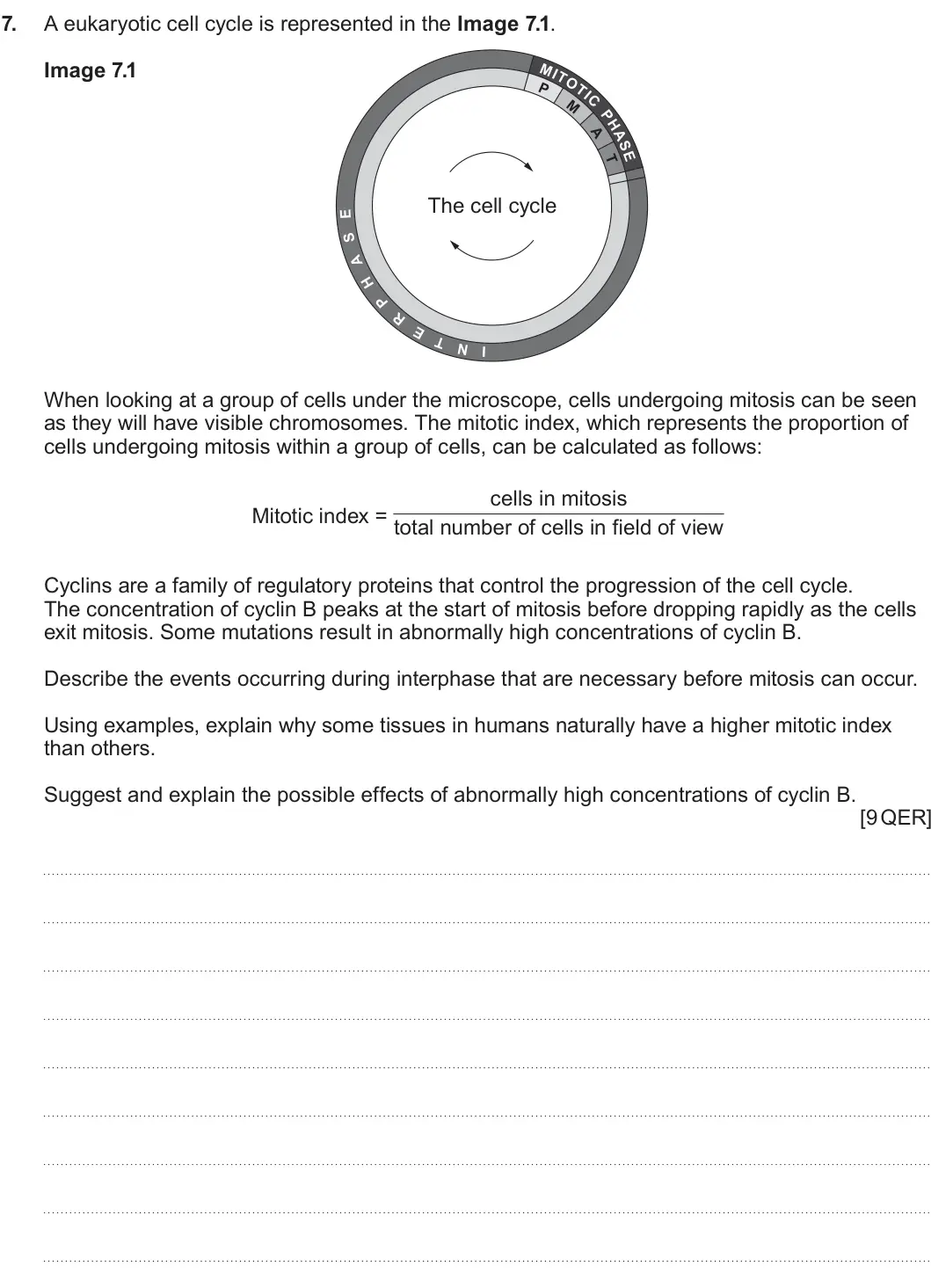
- Summer 2022, AS Unit 1, Q7 (9 marks): A eukaryotic cell cycle is represented in the Image 7.1. Image 7.1 The cell cycle When looking at a group of cells under the microscope, cells undergoing mitosi
- Summer 2019, Unit 4, Q4(a)(i) (3 marks): Proto-oncogene
- Summer 2019, Unit 4, Q4(a)(iii): Stem cell
- Summer 2019, AS Unit 1, Q1(a)(i) (1 mark): State the haploid number of chromosomes in this species. [1]
- Summer 2019, AS Unit 1, Q1(a)(ii) (1 mark): State the evidence from the diagram that the cell is undergoing mitosis and not meiosis. [1]
- Summer 2019, AS Unit 1, Q1(a)(iii) (1 mark): When the tissues from the plant were removed they were stained before being viewed under the microscope. Explain how this makes the chromosomes visible. [1]
- Summer 2019, AS Unit 1, Q1(b)(i) (1 mark): State which organ of the plant could have been used to obtain the photomicrographs above. [1]
- Summer 2019, AS Unit 1, Q1(b)(ii) (1 mark): Place the photomicrographs in the correct order. Some letters have been done for you. [1] C A F D
- Summer 2019, AS Unit 1, Q1(b)(iii) (2 marks): Use your knowledge of cell division to describe two differences between the stages labelled E and F. [2]
- Summer 2019, AS Unit 1, Q1(b)(iv) (3 marks): With reference to photomicrographs B and G, state how meiosis contributes to genetic variation in the species and explain why this is important. [3]
- Summer 2018, AS Unit 1, Q3(a) (2 marks): Identify the cells that belong to this species of spider mite. [2]
- Summer 2018, AS Unit 1, Q3(b)(i) (2 marks): Complete the diagram to state which stages are haploid or diploid. [2]
- Summer 2018, AS Unit 1, Q3(b)(ii) (2 marks): What conclusions can be made about the formation of male and female gametes in spider mites? [2]
- Summer 2018, AS Unit 1, Q3(c)(i) (3 marks): A sample of tissue from the leg muscle of a young spider mite was analysed. The mass of DNA in some of the cells was 6.8 arbitrary units (au), whilst in other c
- Summer 2018, AS Unit 1, Q3(c)(ii) (2 marks): The table below shows the percentage of cells, with either 3.4 au or 6.8 au of DNA, in the leg muscle of a young spider mite and an older spider mite. Percentag
- Summer 2017, AS Unit 1, Q7 (9 marks): Cells can be grown under laboratory conditions and used in the development of drugs to treat cancer. The graph below shows a model of the general changes in cel
- Summer 2016, AS Unit 1, Q1(a)(i) (2 marks): Name the stages shown in A and B. [2] Stage A: Stage B:
- Summer 2016, AS Unit 1, Q1(a)(ii) (1 mark): Name the structures, labelled X, that can be seen in the photomicrograph. [1]
- Summer 2016, AS Unit 1, Q1(b) (3 marks): A biotechnology company that supplies HeLa cells to laboratories states that the number of HeLa cells double every 19 hours. They suggest that the starting cult
Questions, mark schemes and examiner’s reports are © WJEC CBAC Ltd, from their published past papers. Plumi isn’t affiliated with any exam board. Want whole papers? Every WJEC A-Level Biology paper.
Rather write your answers by hand on iPad? Plumi marks them against the same mark schemes.