 plumi
Cell membranes and transport: WJEC A‑Level Biology questions
Every WJEC A-Level Biology exam question on 1.3 Cell membranes and transport, 2016–2025, with its mark scheme and examiner’s report.
Find questions1,223
Calculations
Q4(a)
The whole paper ↗
Q4(b)
The whole paper ↗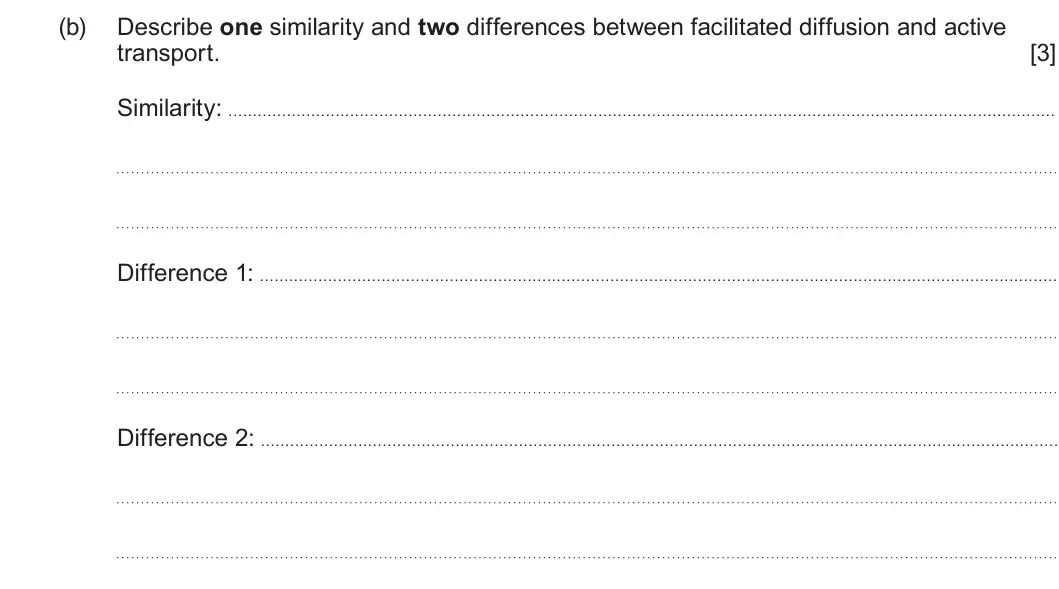
Q4(c)(i)
The whole paper ↗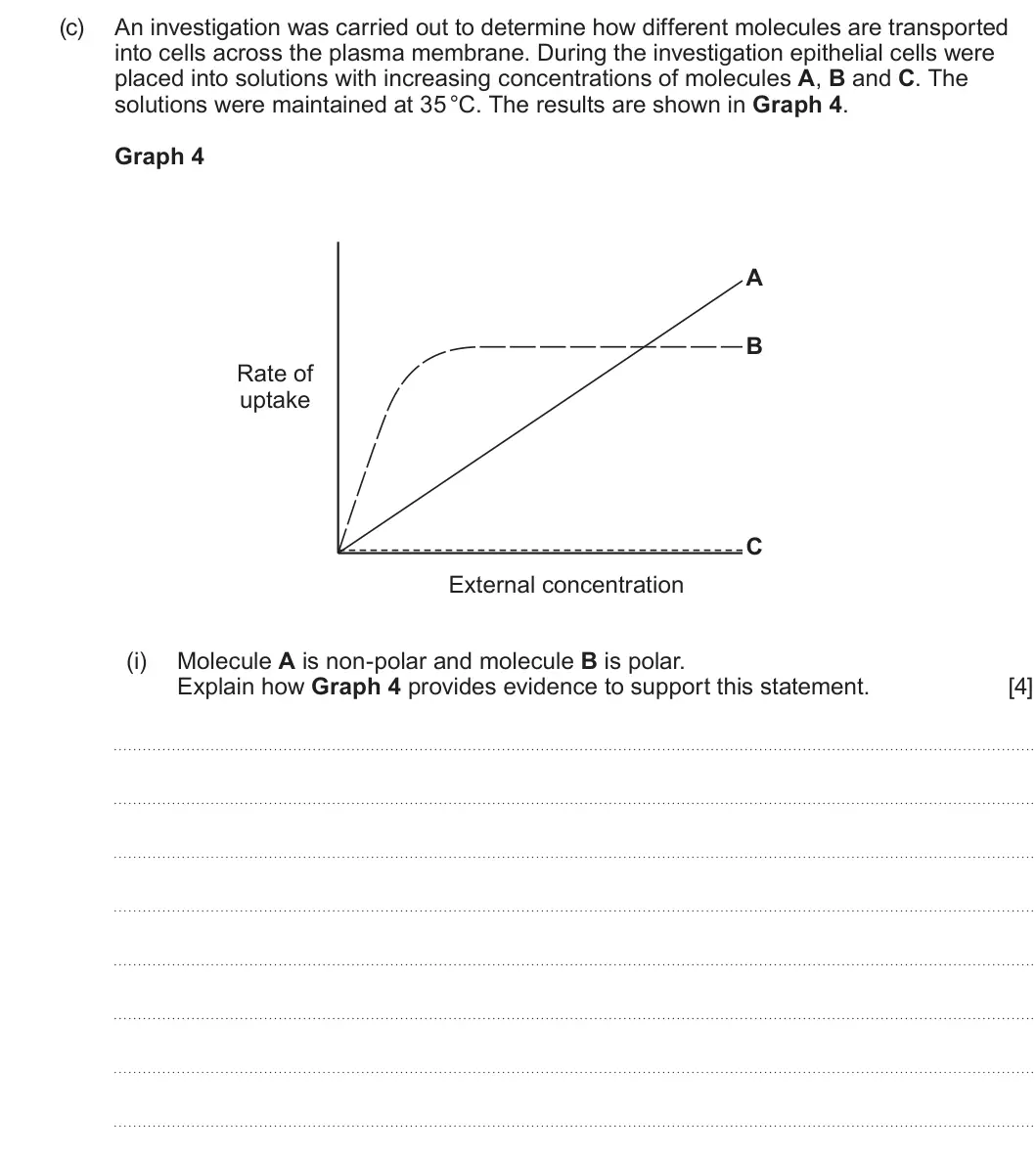
Q4(c)(ii)
The whole paper ↗
Q4(c)(iii)
The whole paper ↗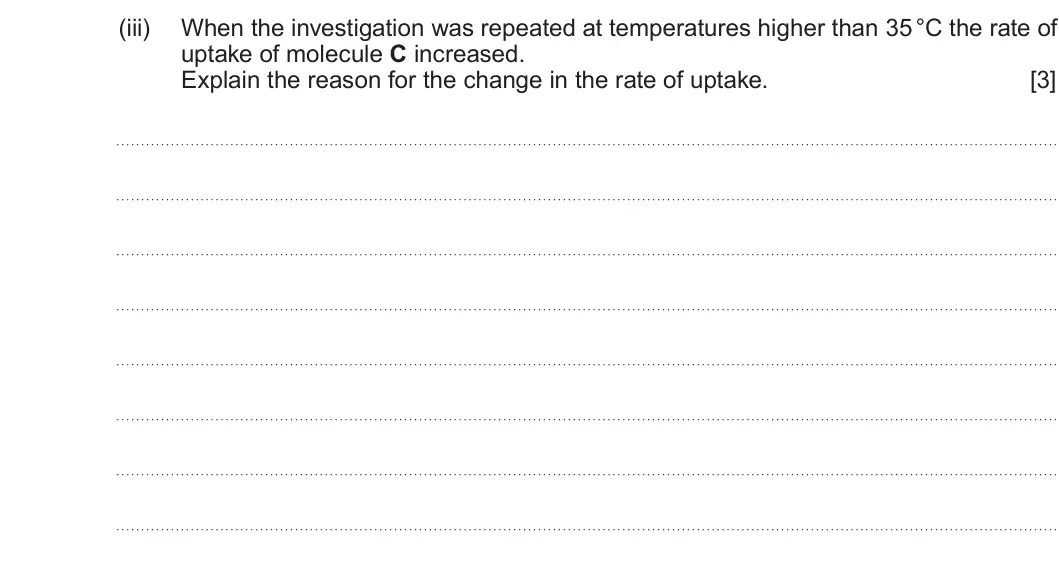
Q6(b)(i)
The whole paper ↗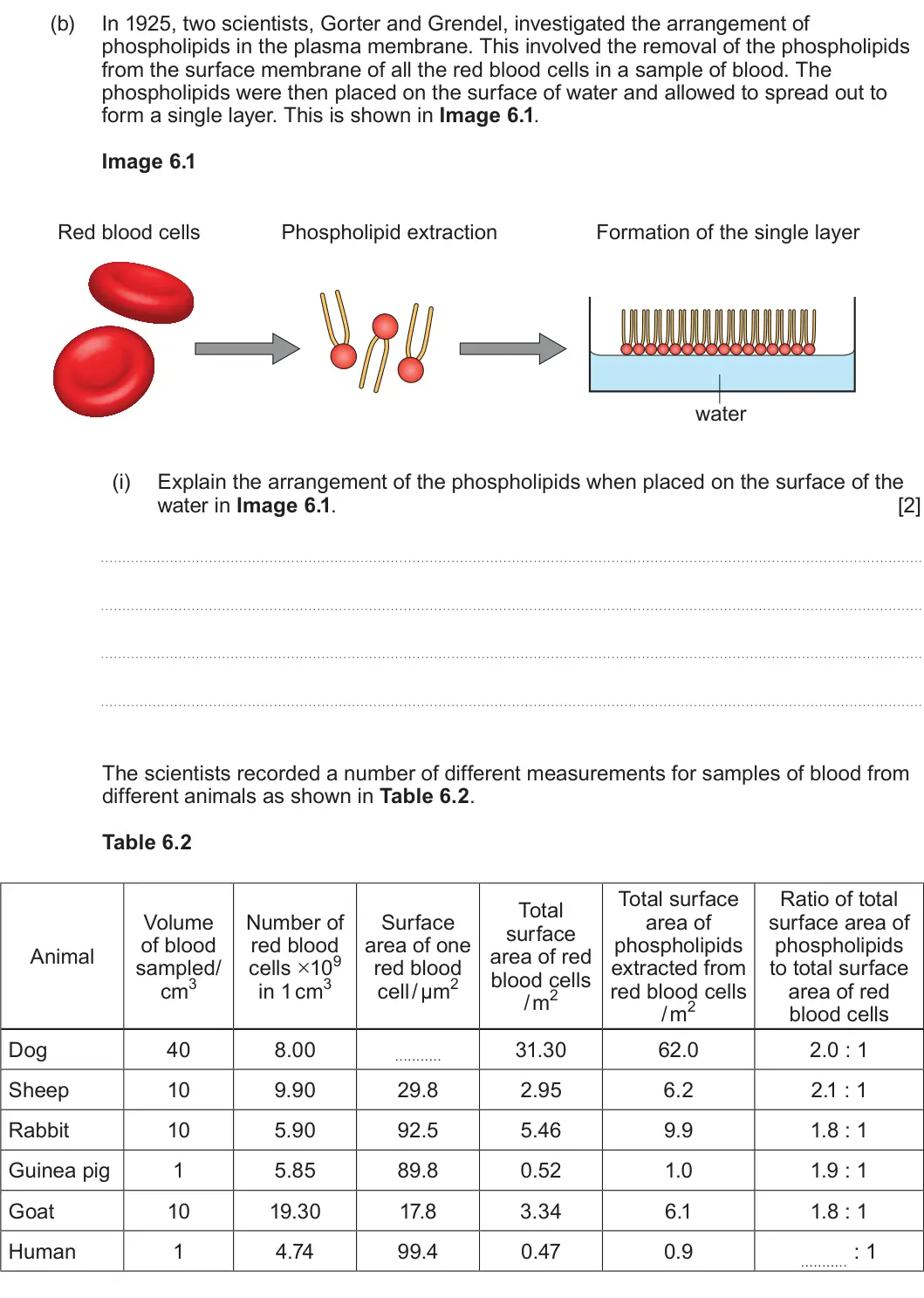
Q6(b)(ii)
The whole paper ↗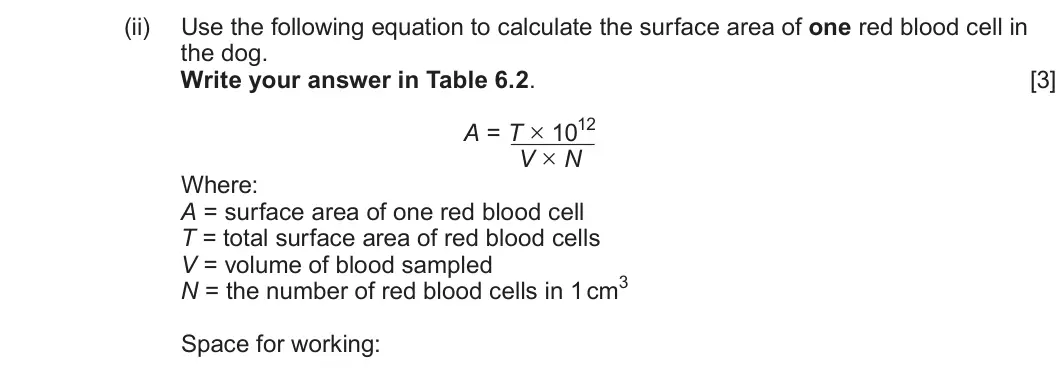
Q6(b)(iii)
The whole paper ↗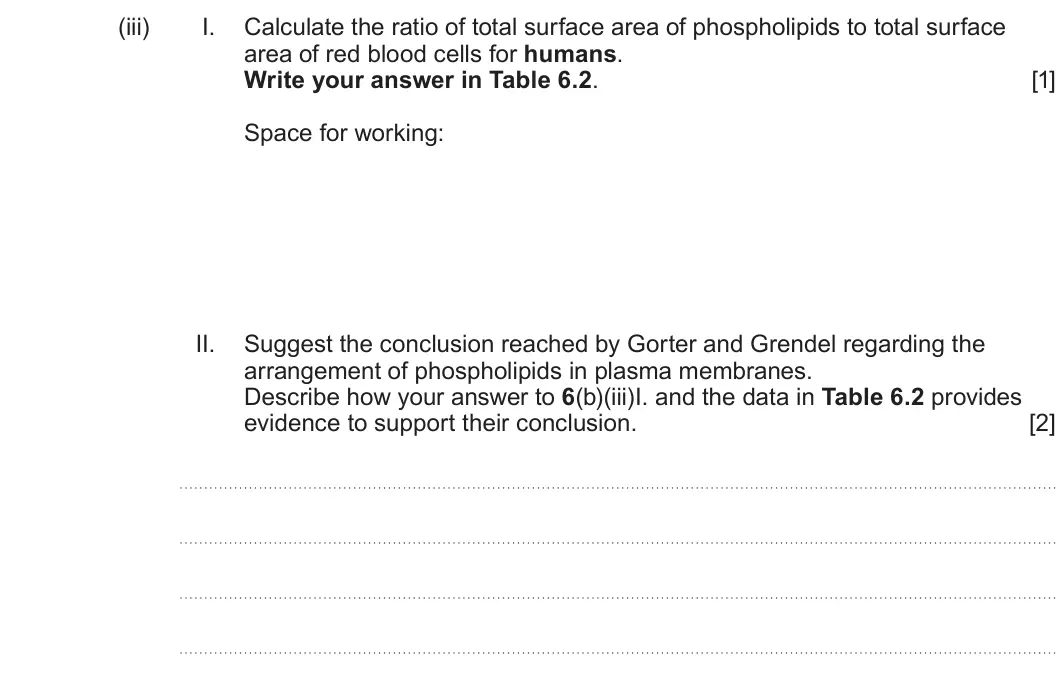
Q1(c)(i)
The whole paper ↗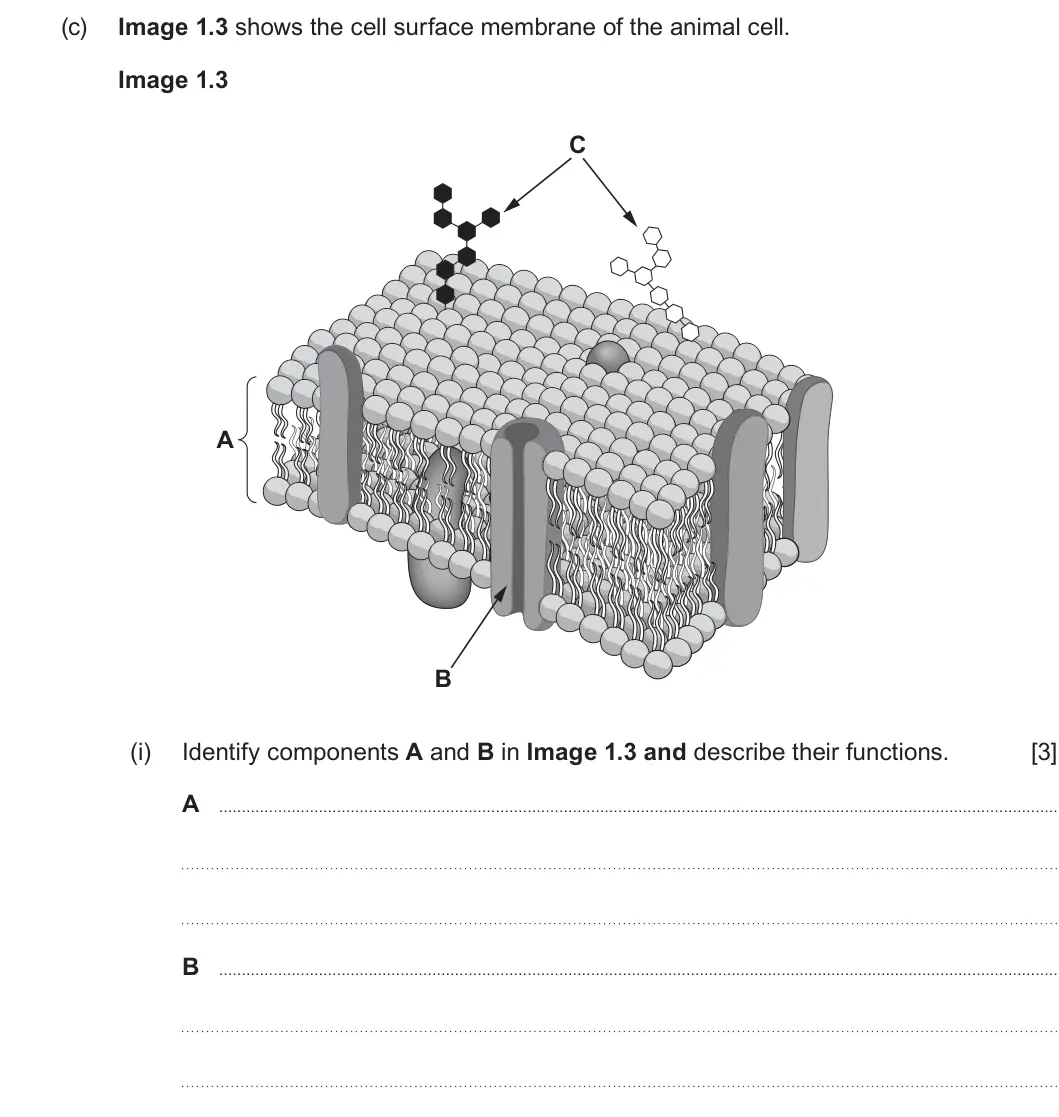
Q1(c)(ii)
The whole paper ↗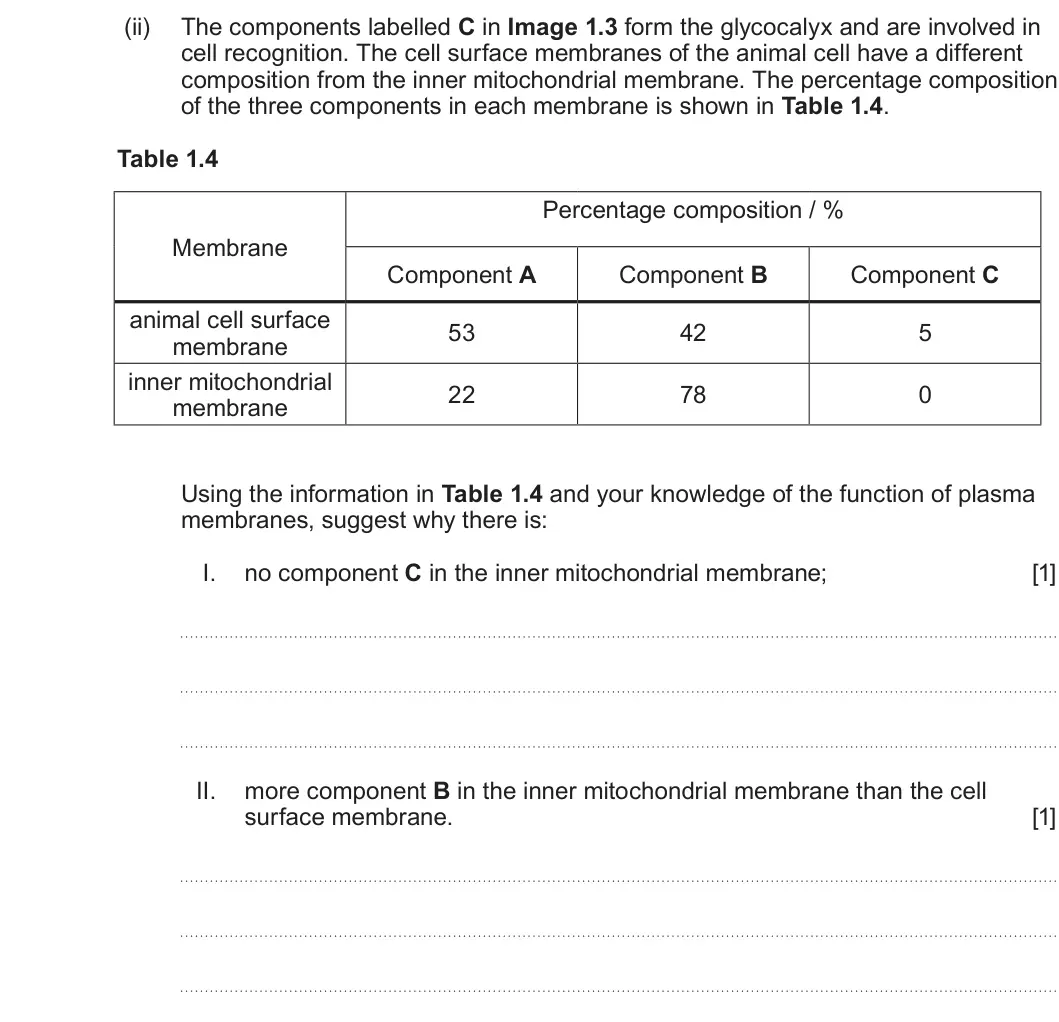
Q5(b)(ii)
The whole paper ↗
Q1(a)(iii)
The whole paper ↗
Q3(a)(i)
The whole paper ↗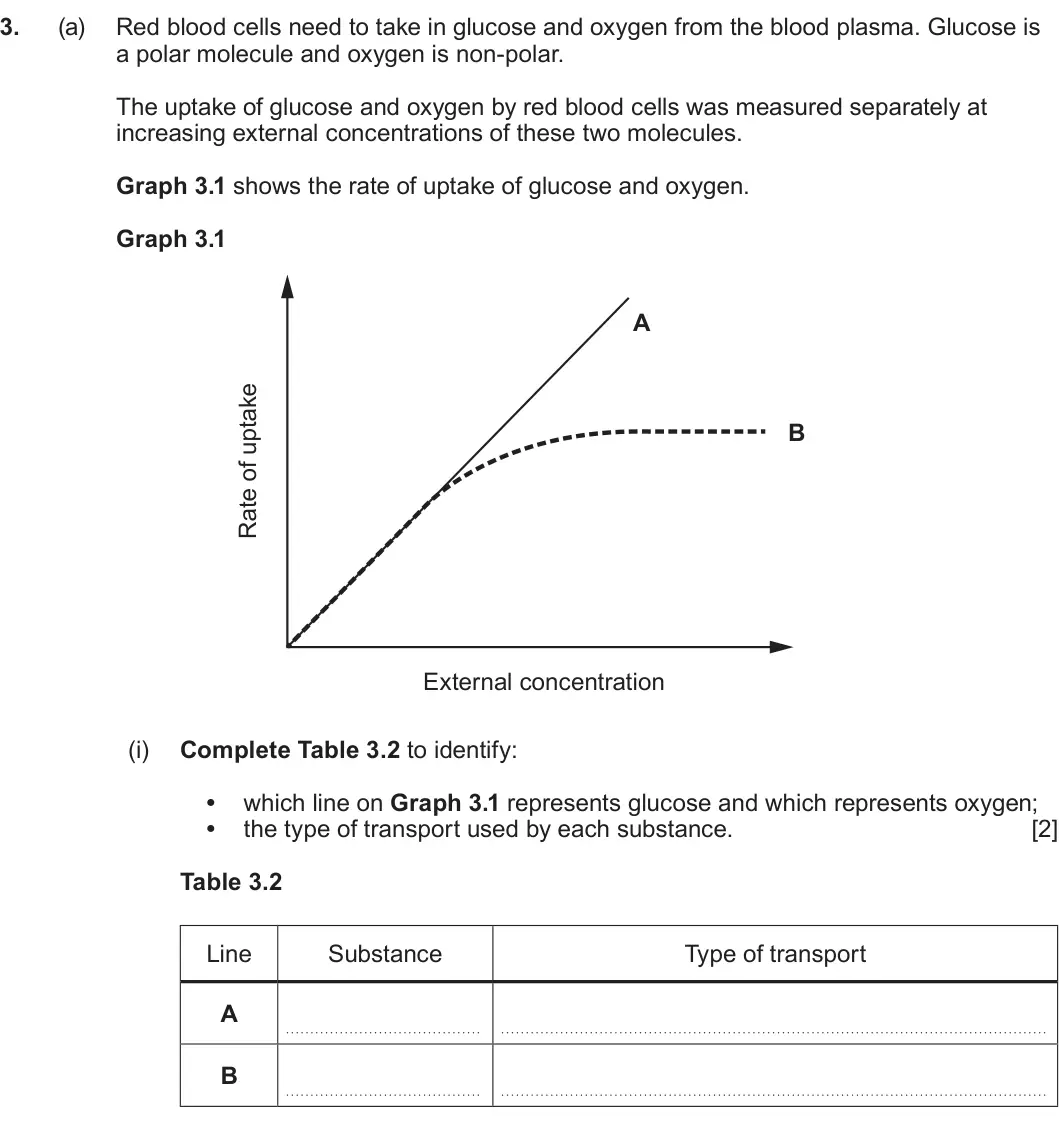
Q3(a)(ii)
The whole paper ↗
Q6(a)(i)
The whole paper ↗
Q6(a)(ii)
The whole paper ↗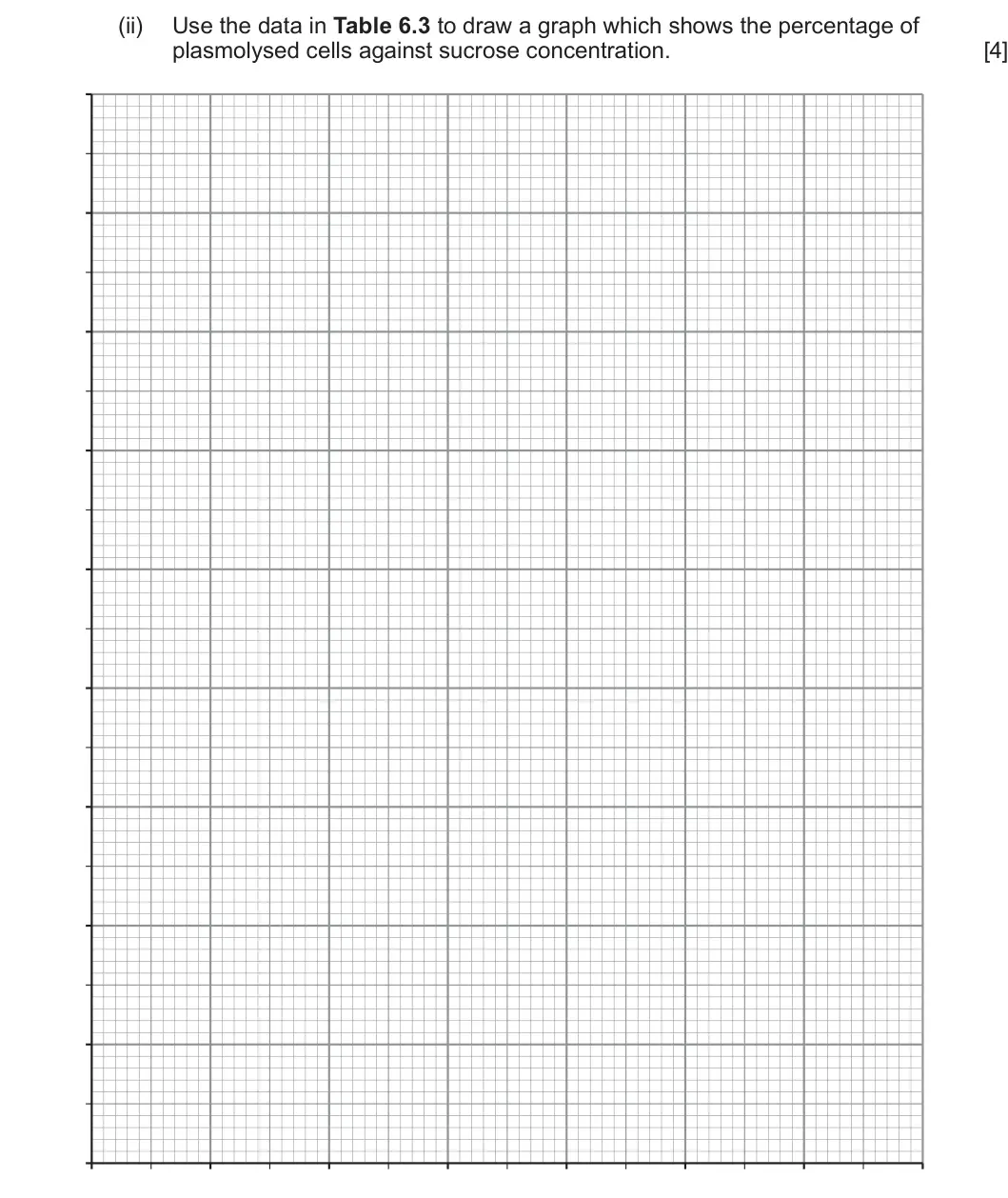
Q6(a)(iii)
The whole paper ↗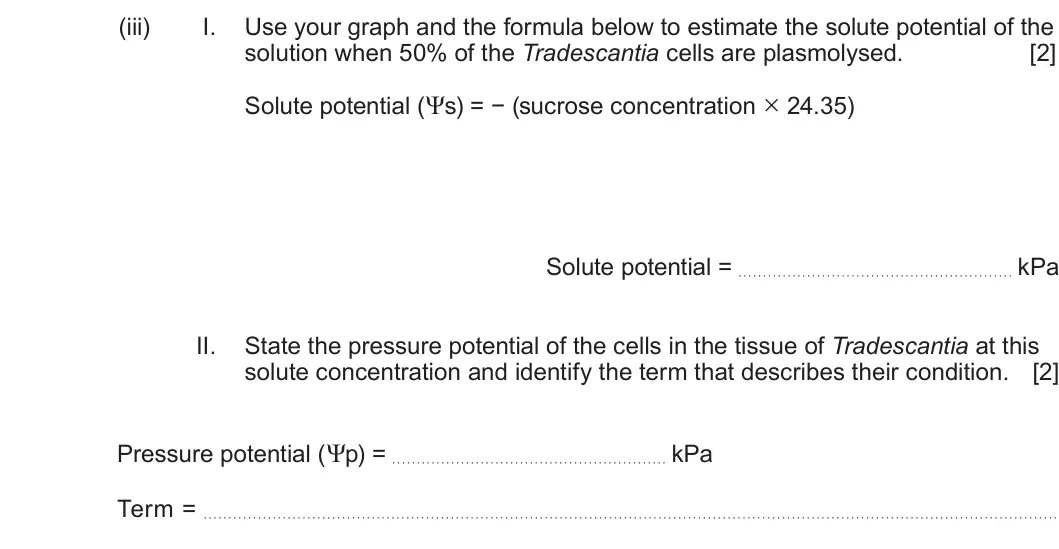
Q6(b)
The whole paper ↗
Q4(a)(i)
The whole paper ↗
All 50 questions on Cell membranes and transport, as a list
- Summer 2025, AS Unit 1, Q4(a) (1 mark): Plasma membranes are described as being selectively permeable. Explain what is meant by the term selectively permeable. [1]
- Summer 2025, AS Unit 1, Q4(b) (3 marks): Describe one similarity and two differences between facilitated diffusion and active transport. [3] Similarity: . . . . . . . . . . . . . . . . . . . . . . . .
- Summer 2025, AS Unit 1, Q4(c)(i) (4 marks): Molecule A is non-polar and molecule B is polar. Explain how Graph 4 provides evidence to support this statement. [4]
- Summer 2025, AS Unit 1, Q4(c)(ii) (1 mark): Suggest an explanation for the result shown by molecule C. [1]
- Summer 2025, AS Unit 1, Q4(c)(iii) (3 marks): When the investigation was repeated at temperatures higher than 35 °C the rate of uptake of molecule C increased. Explain the reason for the change in the rate
- Summer 2025, AS Unit 1, Q6(b)(i) (2 marks): Explain the arrangement of the phospholipids when placed on the surface of the water in Image 6.1. [2] The scientists recorded a number of different measurement
- Summer 2025, AS Unit 1, Q6(b)(ii) (3 marks): Use the following equation to calculate the surface area of one red blood cell in the dog. Write your answer in Table 6.2. [3] A = T × 1012 V × N Where: A = sur
- Summer 2025, AS Unit 1, Q6(b)(iii) (3 marks): I. Calculate the ratio of total surface area of phospholipids to total surface area of red blood cells for humans. Write your answer in Table 6.2. [1] Space for
- Summer 2024, AS Unit 1, Q1(c)(i) (3 marks): Identify components A and B in Image 1.3 and describe their functions. [3] A B
- Summer 2024, AS Unit 1, Q1(c)(ii) (2 marks): The components labelled C in Image 1.3 form the glycocalyx and are involved in cell recognition. The cell surface membranes of the animal cell have a different
- Summer 2024, AS Unit 1, Q5(b)(ii) (2 marks): With reference to Image 5.2, state the names of the processes occurring at A and B. Explain the effect each process has on the total surface area of the infecte
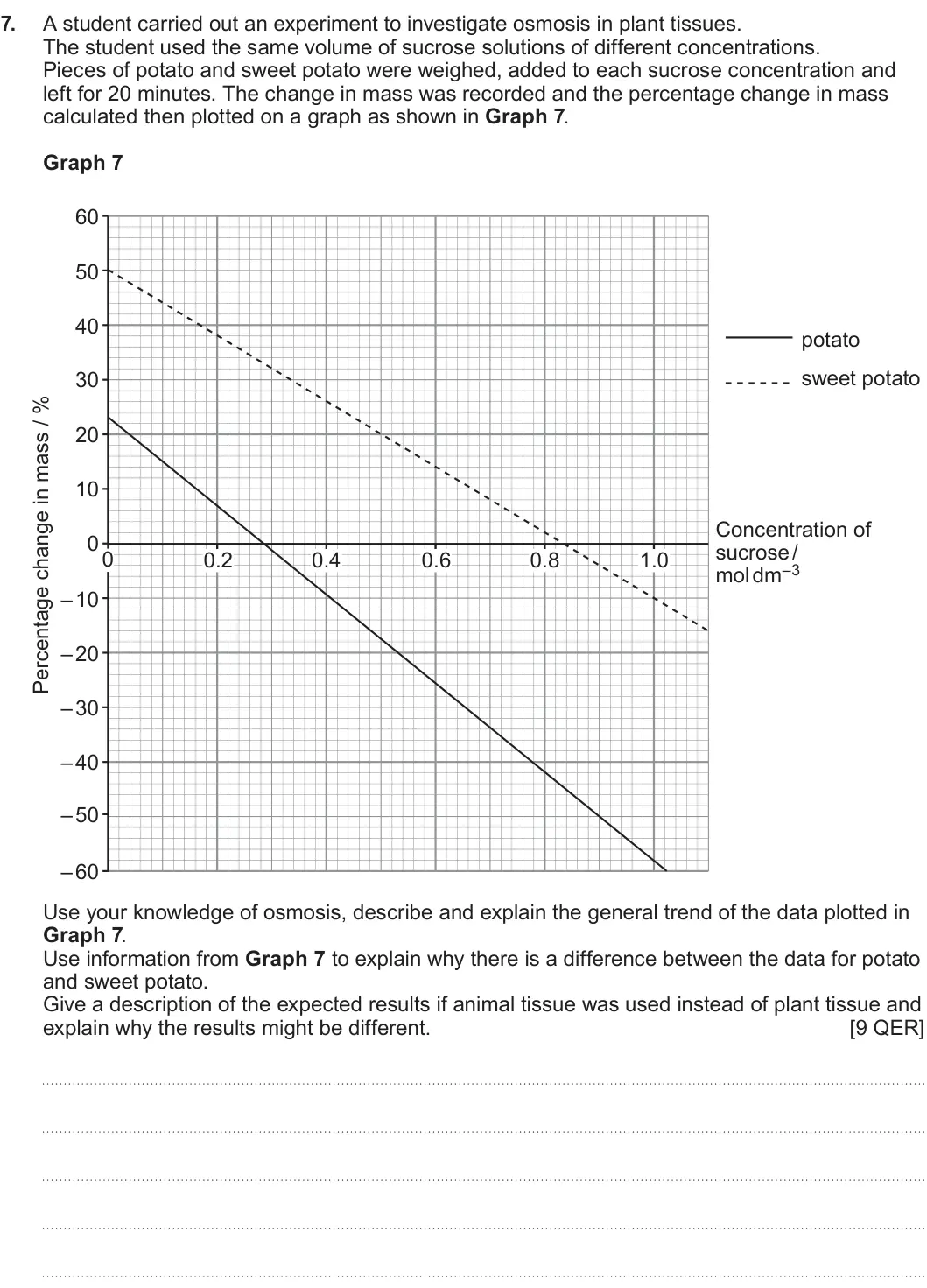
- Summer 2024, AS Unit 1, Q7 (9 marks): A student carried out an experiment to investigate osmosis in plant tissues. The student used the same volume of sucrose solutions of different concentrations.
- Summer 2023, AS Unit 1, Q1(a)(iii) (3 marks): The cytoplasm of bacterial cells is hypertonic to saliva and tears. Suggest how the destruction of the cell wall of bacteria by lysozyme results in the death of
- Summer 2023, AS Unit 1, Q3(a)(i) (2 marks): Complete Table 3.2 to identify: • which line on Graph 3.1 represents glucose and which represents oxygen; • the type of transport used by each substance. [2] Ta
- Summer 2023, AS Unit 1, Q3(a)(ii) (4 marks): Explain the difference in the shape of lines A and B shown on Graph 3.1. [4]
- Summer 2023, AS Unit 1, Q6(a)(i) (2 marks): [2]
- Summer 2023, AS Unit 1, Q6(a)(ii) (4 marks): Use the data in Table 6.3 to draw a graph which shows the percentage of plasmolysed cells against sucrose concentration. [4]
- Summer 2023, AS Unit 1, Q6(a)(iii) (4 marks): I. Use your graph and the formula below to estimate the solute potential of the solution when 50% of the Tradescantia cells are plasmolysed. [2] Solute potentia
- Summer 2023, AS Unit 1, Q6(b) (2 marks): Suggest how the experiment could be altered to improve: • confidence in the results • the accuracy of the estimated solute potential in Tradescantia cells. [2]
- Summer 2022, AS Unit 1, Q4(a)(i) (2 marks): State which temperature provided the most reliable results and use your knowledge of cell structure to explain why this might be the case. [2]
- Summer 2022, AS Unit 1, Q4(a)(ii) (3 marks): Plot the mean results from Table 4.1 on Graph 4.2. [3] Graph 4.2 100 80 60 40 20 0 0 20 40 60 80 Temperature / °C
- Summer 2022, AS Unit 1, Q4(a)(iii) (1 mark): Explain why the students’ prediction was not entirely correct. [1]
- Summer 2022, AS Unit 1, Q4(a)(iv) (2 marks): Use your knowledge of cell membrane structure to explain the shape of Graph 4.2. [2]
- Summer 2022, AS Unit 1, Q4(b)(i) (3 marks): Another group of students investigated how the type of surrounding solution affected the permeability of membranes in beetroot. They tested water, acid
- Summer 2022, AS Unit 1, Q4(b)(ii) (3 marks): The students also noted that the beetroot in the water had increased in size. Explain this observation. [3]
- Summer 2022, AS Unit 1, Q5(a)(i) (1 mark): State the name of the process by which the vesicles empty their contents out of the milk-producing cell. [1]
- Summer 2022, AS Unit 1, Q5(a)(iii) (1 mark): Use Image 5.1 to suggest how the cell avoids a continual increase in the area of its cell surface membrane. [1]
- Summer 2019, Unit 3, Q5(b)(ii) (3 marks): If there is decreased salinity in the surrounding water (e.g. in an estuary) Austrominius are able to carry out active transport to remove sodium ions from thei
- Summer 2019, Unit 3, Q6(b)(ii) (2 marks): Part of the protein is hydrophobic. Identify which letter (A-E) was used to label a region of the protein that would have hydrophobic properties. Explain your a
- Summer 2019, AS Unit 1, Q2(b)(i) (4 marks): Use your knowledge of osmosis to explain why contractile vacuoles are necessary for the survival of the Amoeba. [4]
- Summer 2019, AS Unit 1, Q2(c) (4 marks): Although Chlorella lives in the same habitat as Amoeba, it does not possess a contractile vacuole. Describe and explain how the structure of the cell wall of Ch
- Summer 2018, AS Unit 1, Q5(a) (2 marks): Explain why it was necessary for the student to calculate the percentage change in mass. [2]
- Summer 2018, AS Unit 1, Q5(b)(i) (3 marks): Plot the student’s results shown in the table on the grid below. [3] Mean change in mass / % Time / minutes
- Summer 2018, AS Unit 1, Q5(b)(ii) (4 marks): Describe and explain the changes in mass of the worms during the experiment. [4]
- Summer 2018, AS Unit 1, Q5(c) (2 marks): The student decided to repeat the experiment. She collected ten fresh worms, weighed them and placed them in a fish tank containing undiluted seawater. Explain
- Summer 2018, AS Unit 1, Q5(d)(i) (2 marks): Describe how the results for Golfingia differ from those of Nereis. [2]
- Summer 2018, AS Unit 1, Q5(d)(ii) (2 marks): Golfingia can actively pump ions from its cells into the surrounding water. Explain the change in mass of Golfingia between 45 and 75 minutes. [2]
- Summer 2017, Unit 4, Q2(a)(ii) (2 marks): Explain why the mitochondria burst after calcium ions enter them. [2]
- Summer 2017, AS Unit 1, Q5(a) (4 marks): Compare Davson-Danielli’s model shown in the diagram to the currently accepted fluid mosaic model of the plasma membrane. [4] Fluidity of the plasma membrane is
- Summer 2017, AS Unit 1, Q5(b)(i) (3 marks): With reference to the graphs, describe the relationship between fatty acid chain length and the temperature at which the phospholipid bilayer becomes fluid. Exp
- Summer 2017, AS Unit 1, Q5(b)(ii) (4 marks): Suggest why the presence of unsaturated fatty acids in the phospholipid would increase fluidity of the membrane. [4] Cholesterol is a non-polar substance that i
- Summer 2017, AS Unit 1, Q5(b)(iii) (1 mark): Suggest the position of cholesterol molecules within the plasma membrane. [1]
- Summer 2017, AS Unit 1, Q6(b)(i) (3 marks): With reference to the data, explain the relative concentrations in the surrounding solution and the root tissue after four days. [3]
- Summer 2017, AS Unit 1, Q6(b)(ii) (4 marks): Explain why the growth of a barley seedling may be reduced if the solution did not have air bubbled through it. [4]
- Summer 2016, AS Unit 1, Q2(b)(i) (1 mark): State the name of the process occurring between stages 1 and 2 [1]
- Summer 2016, AS Unit 1, Q5(a) (4 marks): Use the information provided to describe how oxygen and sodium ions cross the membrane. [4]
- Summer 2016, AS Unit 1, Q5(b) (4 marks): The data below shows the percentage ion composition of different aquatic habitats and of the blood plasma of two different fish. Percentage ion composition Fish
- Summer 2016, AS Unit 1, Q5(c)(i) (3 marks): Specialised cells, labelled X on the diagram, are located in the epithelium of the gills. They are important in maintaining the ion composition of the blood pla
- Summer 2016, AS Unit 1, Q5(c)(ii) (2 marks): Salmon spend the majority of their lives in sea water. In order to reproduce salmon must migrate into fresh water rivers. During these migrations these speciali
- Summer 2016, AS Unit 1, Q5(d) (4 marks): Acidification of fresh-water lakes, due to acid rain, has been linked to the death of fish such as carp. Scientists concluded that one of the causes of death in
Questions, mark schemes and examiner’s reports are © WJEC CBAC Ltd, from their published past papers. Plumi isn’t affiliated with any exam board. Want whole papers? Every WJEC A-Level Biology paper.
Rather write your answers by hand on iPad? Plumi marks them against the same mark schemes.