 plumi
Biological reactions are regulated by enzymes: WJEC A‑Level Biology questions
Every WJEC A-Level Biology exam question on 1.4 Biological reactions are regulated by enzymes, 2016–2025, with its mark scheme and examiner’s report.
Find questions1,223
Calculations
Q6(c)(ii)
The whole paper ↗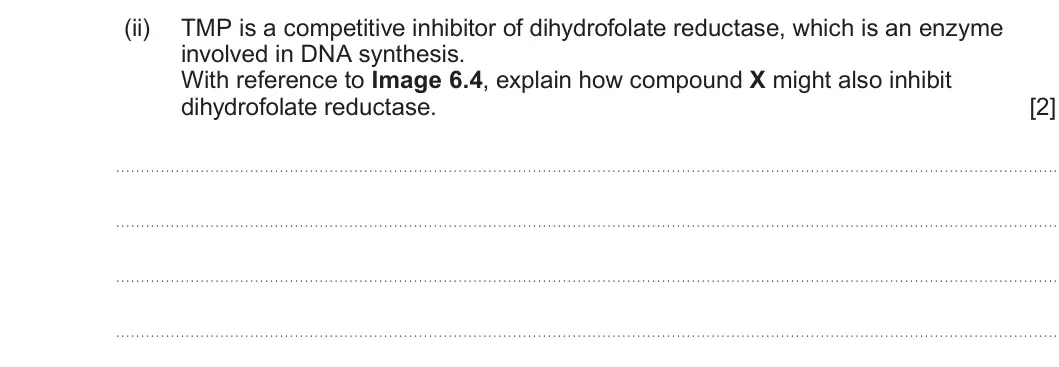
Q3(b)(i)
The whole paper ↗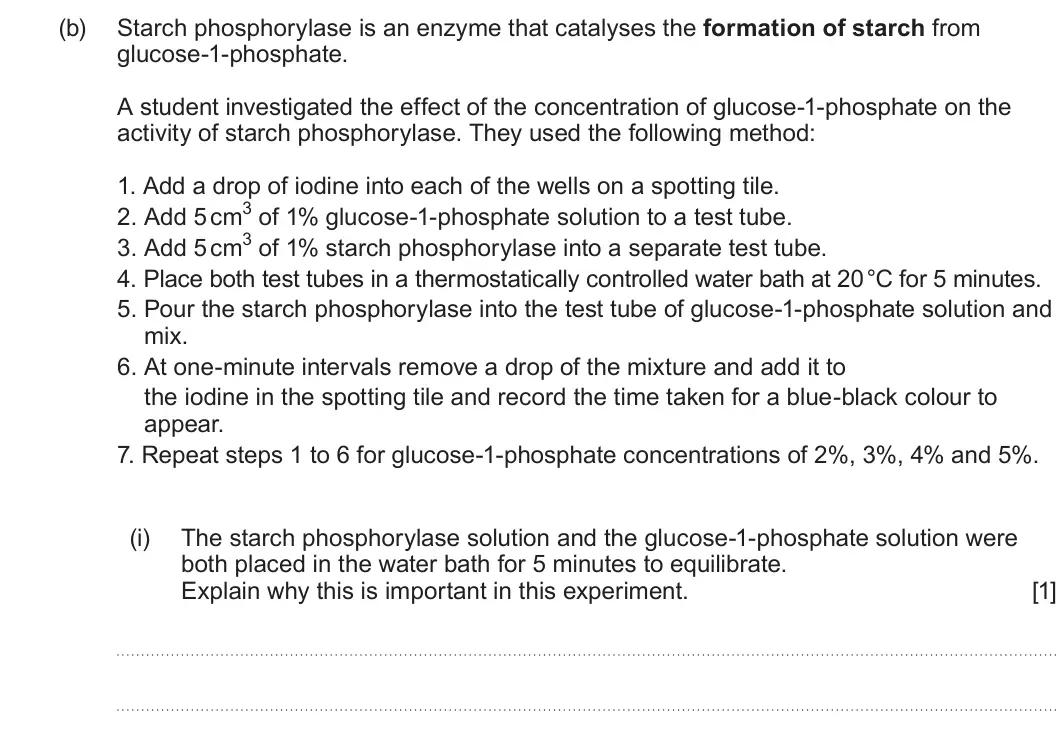
Q3(b)(ii)
The whole paper ↗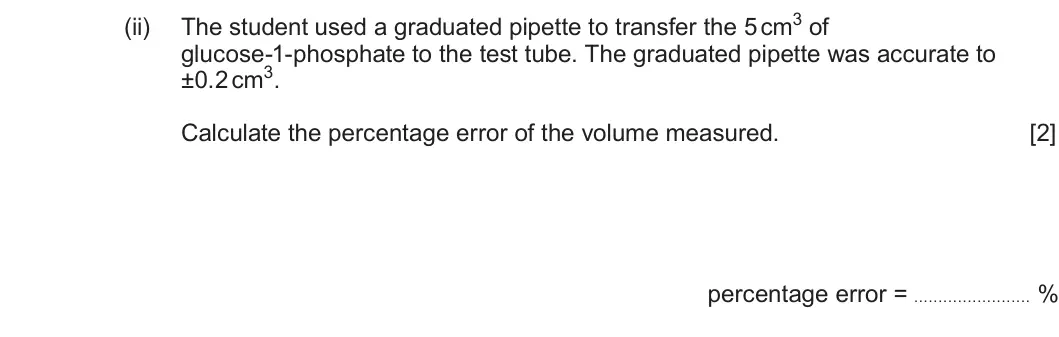
Q3(b)(iii)
The whole paper ↗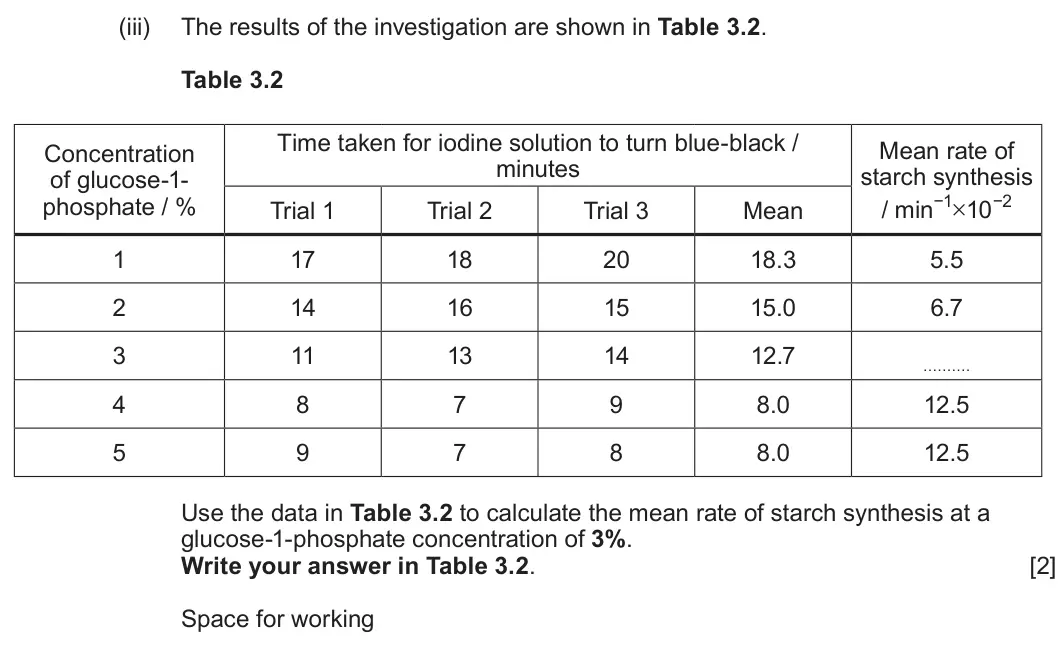
Q3(b)(iv)
The whole paper ↗
Q3(b)(v)
The whole paper ↗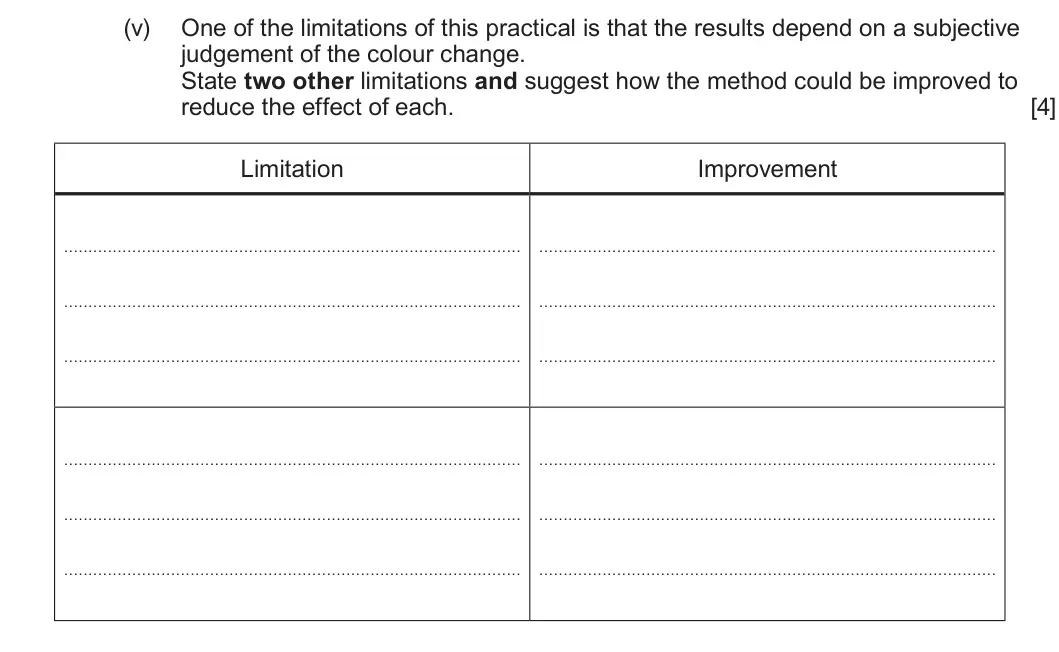
Q5(b)
The whole paper ↗
Q5(c)
The whole paper ↗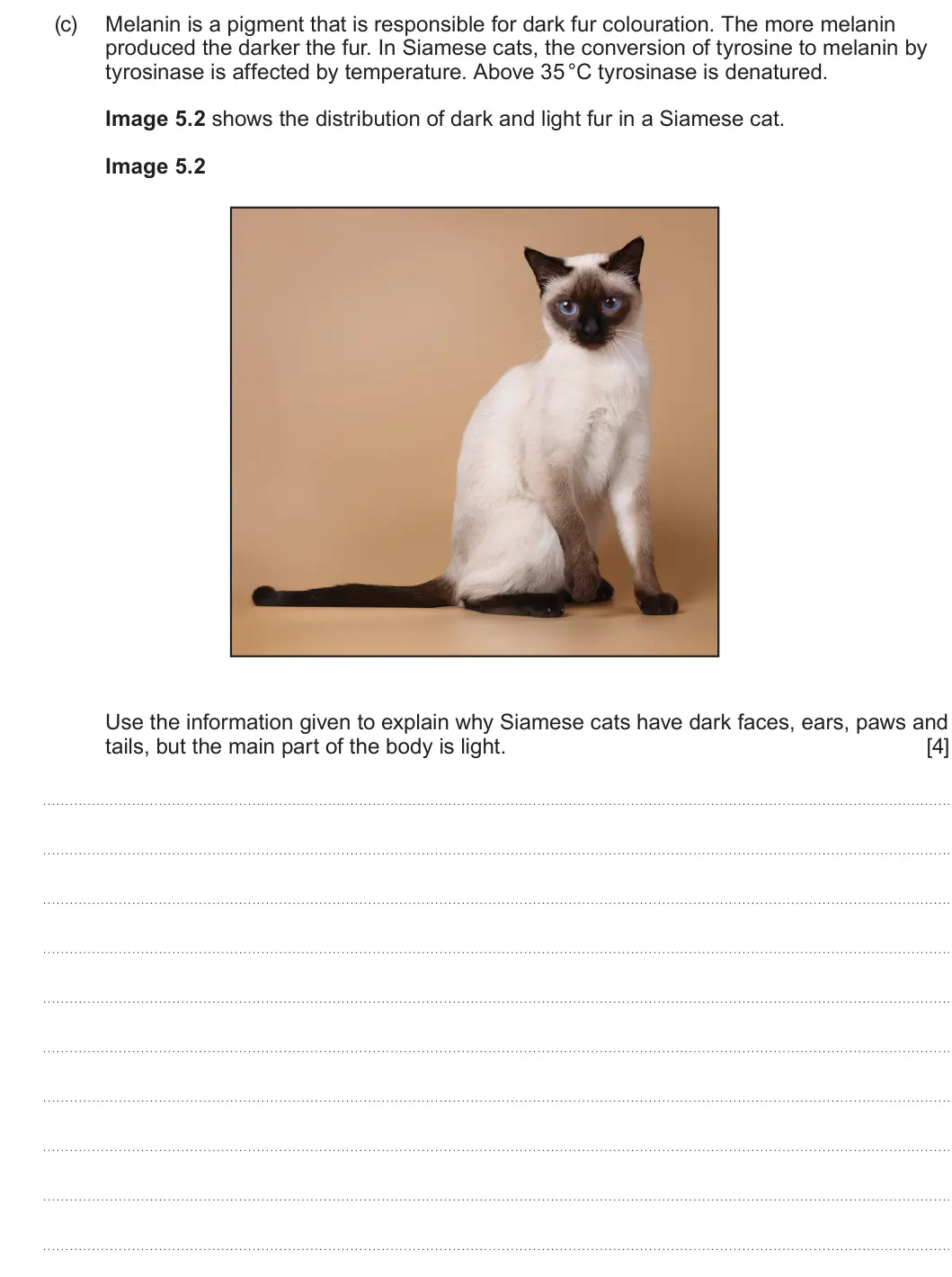
Q1(b)(iii)
The whole paper ↗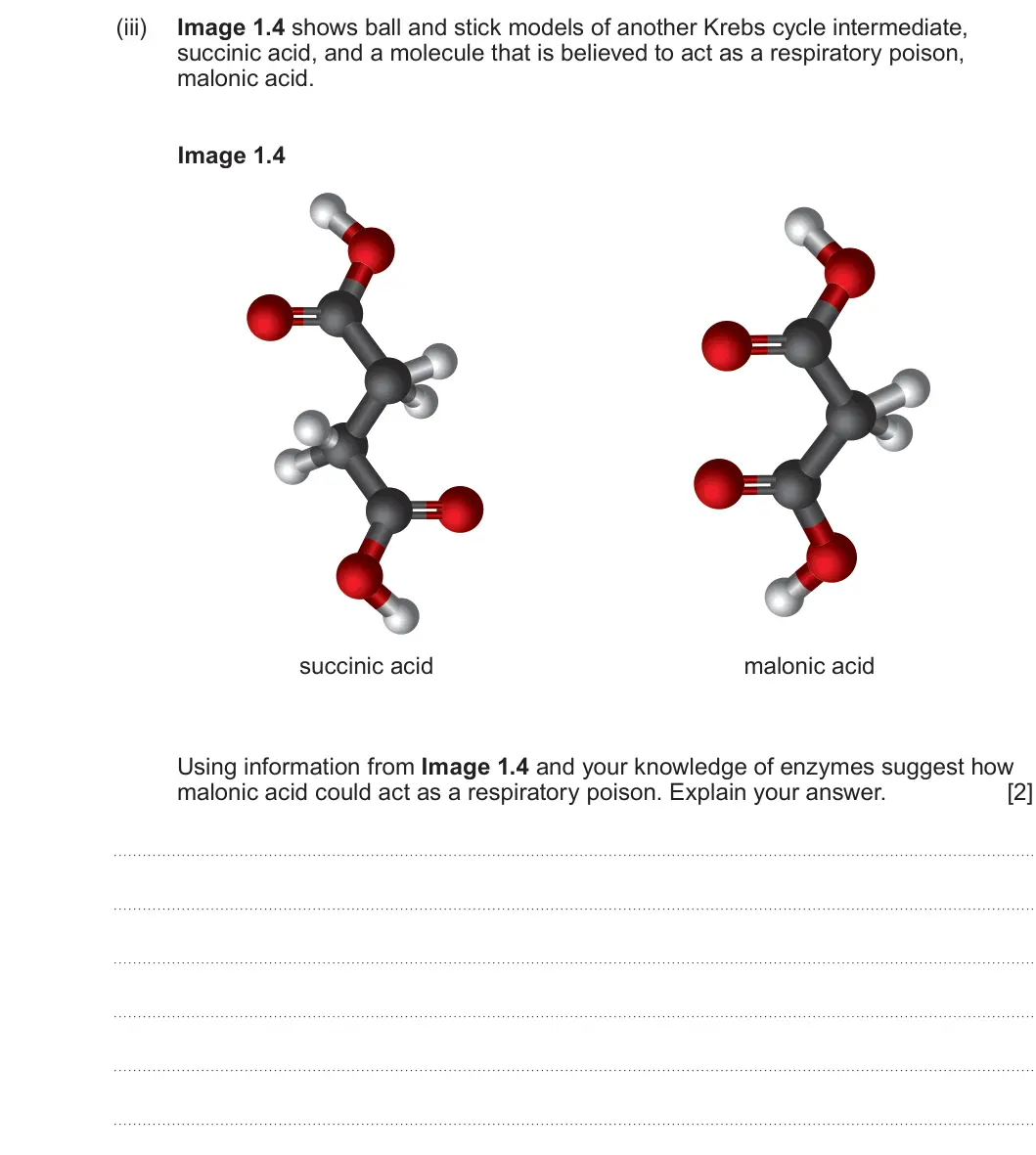
Q3(a)
The whole paper ↗
Q3(b)(i)
The whole paper ↗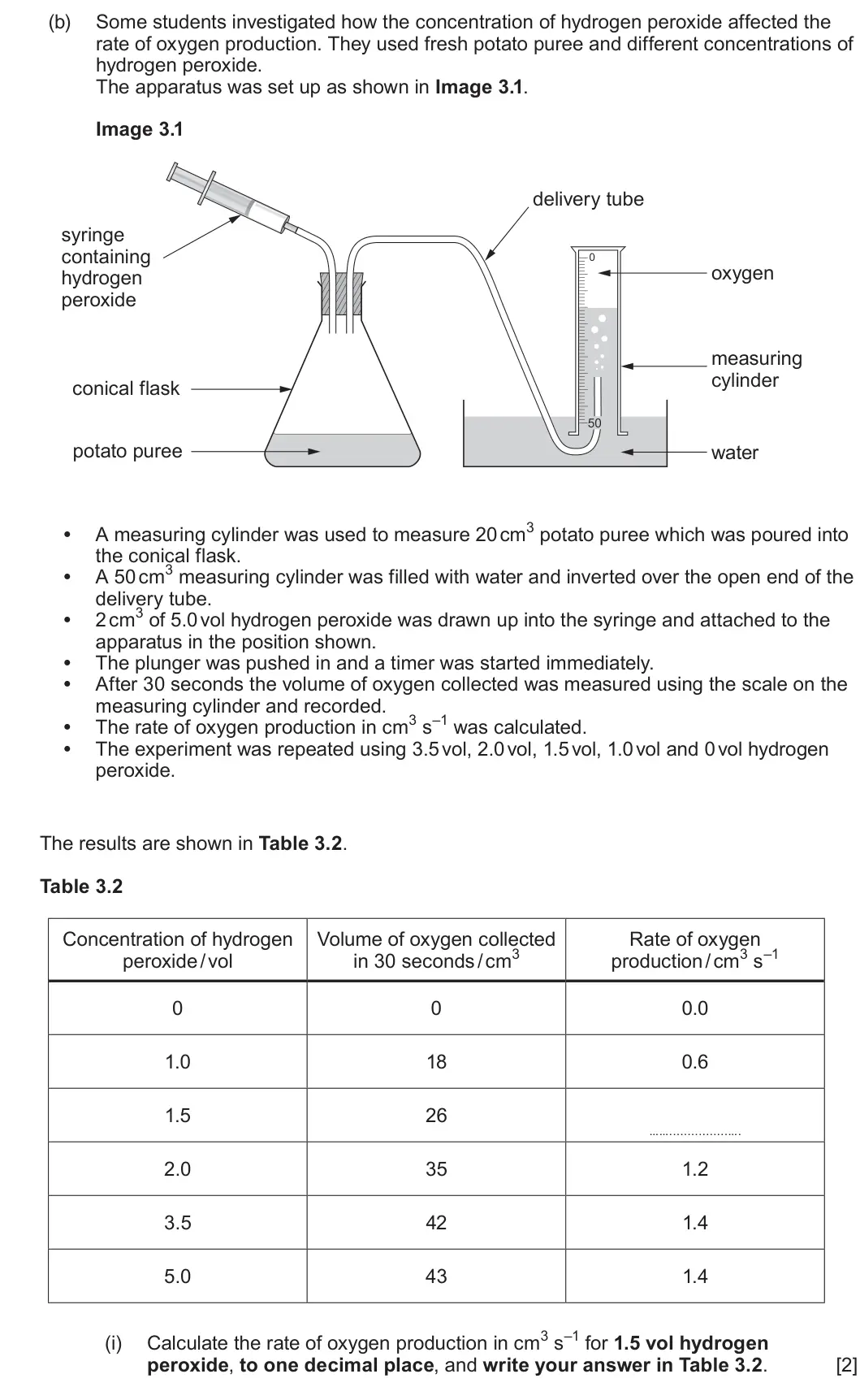
Q3(b)(ii)
The whole paper ↗
Q3(b)(iii)
The whole paper ↗
Q3(b)(iv)
The whole paper ↗
Q3(b)(v)
The whole paper ↗
Q1(a)(iv)
The whole paper ↗
Q1(b)(i)
The whole paper ↗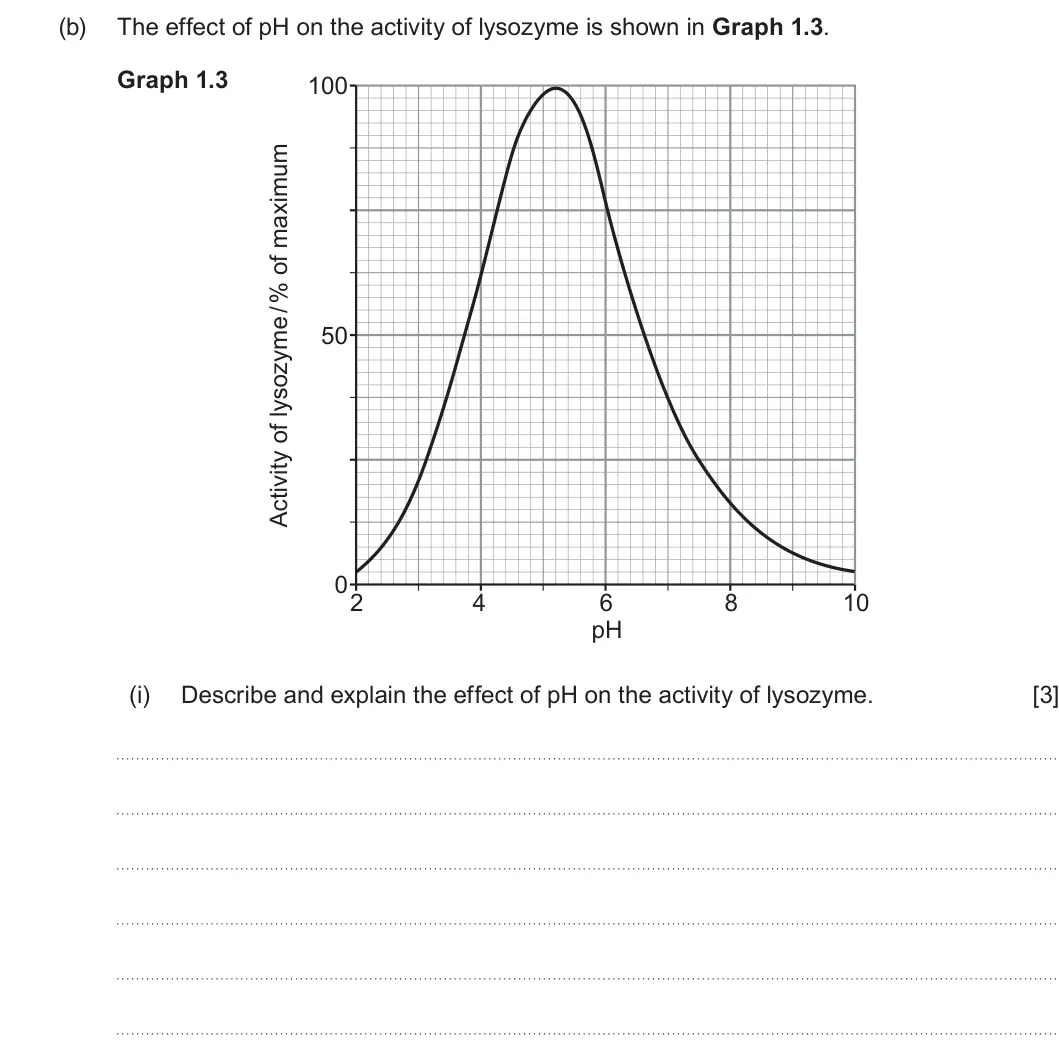
Q1(b)(ii)
The whole paper ↗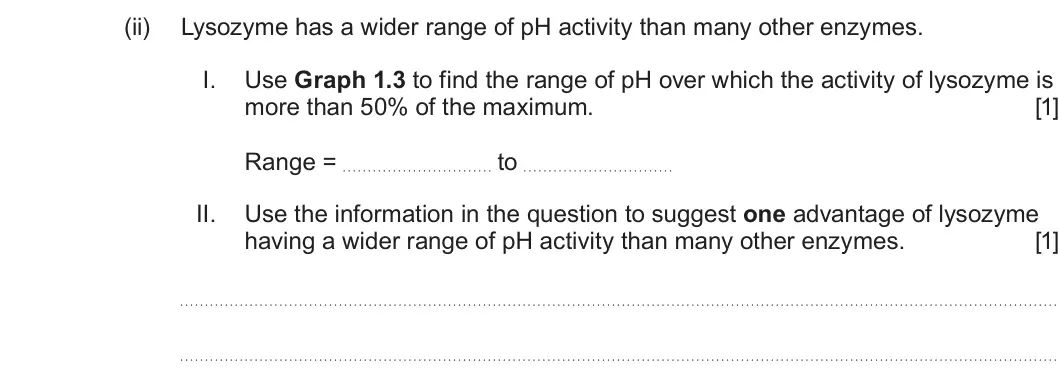
Q5(c)(i)
The whole paper ↗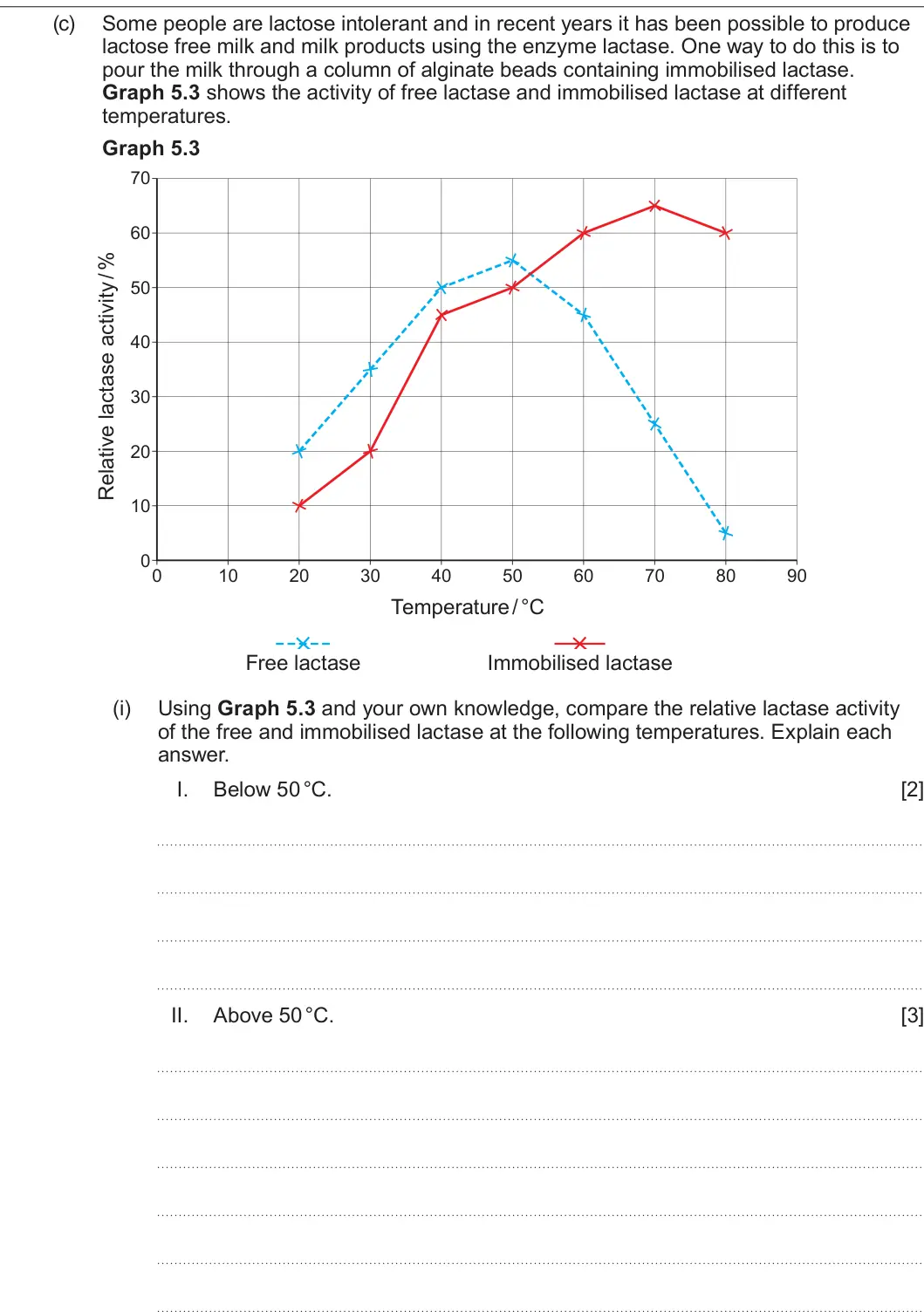
Q6(c)
The whole paper ↗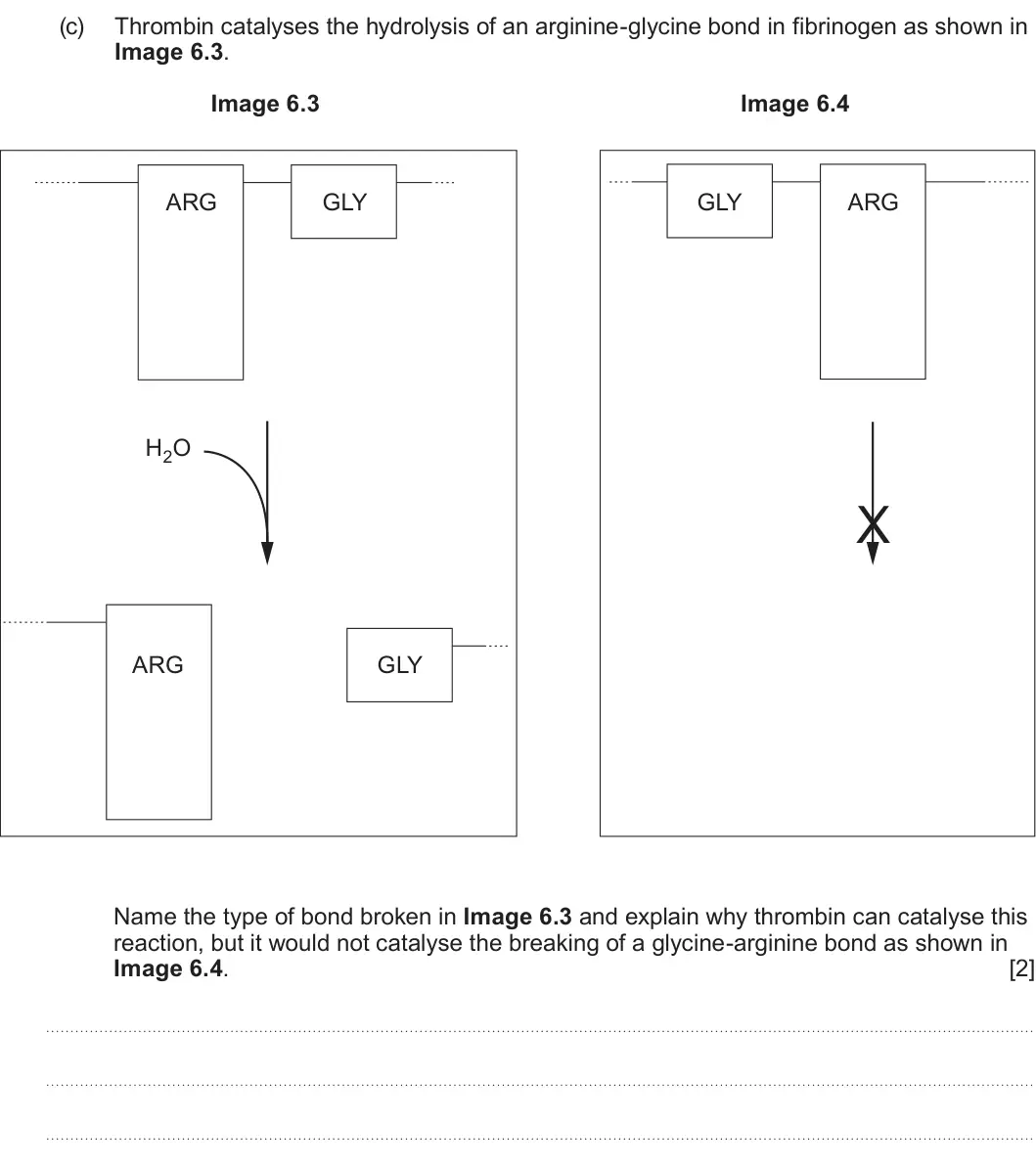
All 53 questions on Biological reactions are regulated by enzymes, as a list
- Summer 2025, Unit 3, Q6(c)(ii) (2 marks): TMP is a competitive inhibitor of dihydrofolate reductase, which is an enzyme involved in DNA synthesis. With reference to Image 6.4, explain how compound X mig
- Summer 2025, AS Unit 1, Q3(b)(i) (1 mark): The starch phosphorylase solution and the glucose-1-phosphate solution were both placed in the water bath for 5 minutes to equilibrate. Explain why this is impo
- Summer 2025, AS Unit 1, Q3(b)(ii) (2 marks): glucose-1-phosphate to the test tube. The graduated pipette was accurate to ±0.2 cm3. Calculate the percentage error of the volume measured. [2] percentage erro
- Summer 2025, AS Unit 1, Q3(b)(iii) (2 marks): The results of the investigation are shown in Table 3.2. Table 3.2 Time taken for iodine solution to turn blue-black / Mean rate of Concentration minutes starch
- Summer 2025, AS Unit 1, Q3(b)(iv) (3 marks): Describe and explain the effect of glucose-1-phosphate concentration on the mean rate of starch synthesis during this investigation. [3]
- Summer 2025, AS Unit 1, Q3(b)(v) (4 marks): One of the limitations of this practical is that the results depend on a subjective judgement of the colour change. State two other limitations and suggest how
- Summer 2025, AS Unit 1, Q5(b) (3 marks): The enzyme tyrosinase converts tyrosine into melanin. Explain why only tyrosinase can catalyse this reaction. [3]
- Summer 2025, AS Unit 1, Q5(c) (4 marks): Melanin is a pigment that is responsible for dark fur colouration. The more melanin produced the darker the fur. In Siamese cats, the conversion of tyrosine to
- Summer 2024, Unit 3, Q1(b)(iii) (2 marks): Image 1.4 shows ball and stick models of another Krebs cycle intermediate, succinic acid, and a molecule that is believed to act as a respiratory poison, maloni
- Summer 2024, AS Unit 1, Q3(a) (2 marks): Hydrogen peroxide decomposes slowly without catalase. Explain how catalase speeds up the decomposition and suggest why this is so important in living cells. [2]
- Summer 2024, AS Unit 1, Q3(b)(i) (2 marks): Some students investigated how the concentration of hydrogen peroxide affected the rate of oxygen production. They used fresh potato puree and different concent
- Summer 2024, AS Unit 1, Q3(b)(ii) (4 marks): Use the data from Table 3.2 to complete Graph 3.3 to show the rate of oxygen production against the concentration of hydrogen peroxide. [4] Graph 3.3 0 0
- Summer 2024, AS Unit 1, Q3(b)(iii) (3 marks): Describe and explain the trend shown in Graph 3.3. [3]
- Summer 2024, AS Unit 1, Q3(b)(iv) (2 marks): Suggest two ways in which the validity of the data could be improved. [2]
- Summer 2024, AS Unit 1, Q3(b)(v) (1 mark): Copper sulfate is a non-competitive inhibitor of catalase. On Graph 3.3, draw a labelled line to show how the result would be different if the experiment was re
- Summer 2023, AS Unit 1, Q1(a)(iv) (1 mark): Lysozyme works by an induced fit mechanism. Explain what this means. [1]
- Summer 2023, AS Unit 1, Q1(b)(i) (3 marks): Describe and explain the effect of pH on the activity of lysozyme. [3]
- Summer 2023, AS Unit 1, Q1(b)(ii) (2 marks): Lysozyme has a wider range of pH activity than many other enzymes. I. Use Graph 1.3 to find the range of pH over which the activity of lysozyme is more than 50%
- Summer 2022, AS Unit 1, Q5(c)(i) (5 marks): Using Graph 5.3 and your own knowledge, compare the relative lactase activity of the free and immobilised lactase at the following temperatures. Expl
- Summer 2022, AS Unit 1, Q6(c) (2 marks): Thrombin catalyses the hydrolysis of an arginine-glycine bond in fibrinogen as shown in Image 6.3. Image 6.3 Image 6.4 ARG GLY GLY ARG H2O X ARG GLY Name the ty
- Summer 2022, AS Unit 1, Q6(d)(i) (4 marks): Using your knowledge of enzymes, identify and explain the type of inhibition shown by hirudin and suggest how hirudin enables the leech to feed effectively. [4]
- Summer 2022, AS Unit 1, Q6(d)(ii) (1 mark): Leeches for medical use are farmed in South Wales as a source of hirudin. Suggest a use for hirudin in medicine. [1]
- Summer 2019, AS Unit 1, Q3(a)(i) (4 marks): Using your knowledge of enzymes, explain why: I. it was necessary for a buffer to be added to the solutions; [2] II. all test tubes were placed in a thermostati
- Summer 2019, AS Unit 1, Q3(a)(ii) (1 mark): Calculate the mean time taken for the 4% milk powder suspension to become transparent. Write your answer in the table. [1]
- Summer 2019, AS Unit 1, Q3(a)(iii) (4 marks): Plot the mean data on the graph paper provided. Range bars should also be added to the graph. [4] 120 110 100 90 80 70 60 50 40 0 1 2 3 4 5 Concentration of mil
- Summer 2019, AS Unit 1, Q3(b)(i) (1 mark): Estimate the percentage concentration of casein in these two suspensions. [1] X: Y:
- Summer 2019, AS Unit 1, Q3(b)(ii) (2 marks): The student had more confidence in the estimate for suspension X than the estimate for suspension Y. Use the graph to explain the reason for this statement. [2]
- Summer 2019, AS Unit 1, Q3(b)(iii) (2 marks): Suggest two sources of inaccuracy in this experiment. [2]
- Summer 2019, AS Unit 1, Q5(b)(i) (3 marks): Using your knowledge of enzymes explain why this biosensor will only detect the presence of glucose. [3]
- Summer 2019, AS Unit 1, Q5(b)(ii) (2 marks): With reference to the information given, explain how the biosensor could be used to give a measurement of the glucose concentration. [2]
- Summer 2019, AS Unit 1, Q5(c) (4 marks): Arabinose is a monosaccharide that can also be used as a sweetener. The diagram below shows the structural formula of arabinose. H O OH OH H OH H H H H OH Arabi
- Summer 2018, Unit 3, Q6(b)(i) (2 marks): Suggest why the shaded regions are similar in all organisms. [2]
- Summer 2018, Unit 3, Q6(b)(ii) (2 marks): Suggest why cytochrome c detaches from the cytochrome oxidase molecule when the electrons it carries are removed. [2]
- Summer 2018, AS Unit 1, Q6(a)(i) (1 mark): State what is represented by the region labelled T. [1]
- Summer 2018, AS Unit 1, Q6(a)(ii) (1 mark): Draw a curve on the diagram to show the change in energy level when alcohol dehydrogenase is present. [1]
- Summer 2018, AS Unit 1, Q6(b) (3 marks): Describe how alcohol dehydrogenase can catalyse the conversion of ethanol into ethanal. [3]
- Summer 2018, AS Unit 1, Q6(c)(i) (2 marks): Calculate the rate of reaction at Q. [2] rate = mg s–1
- Summer 2018, AS Unit 1, Q6(c)(ii) (4 marks): What conclusions can be drawn that would account for the difference in rate at P and at Q? [4]
- Summer 2018, AS Unit 1, Q6(d) (5 marks): Ethylene glycol is a colourless, odourless, sweet liquid, commonly found in antifreeze. It is highly toxic if ingested because once inside the body ethylene gly
- Summer 2017, AS Unit 1, Q4(a) (1 mark): State the term given to enzymes which work within specific compartments inside cells. [1] Triacetin is a colourless triglyceride and can be hydrolysed by bacter
- Summer 2017, AS Unit 1, Q4(b)(i) (2 marks): Identify the independent and dependent variables in this investigation. [2] independent dependent
- Summer 2017, AS Unit 1, Q4(b)(ii) (1 mark): Explain why the solutions were left in the water bath for 5 minutes before combining and mixing. [1]
- Summer 2017, AS Unit 1, Q4(b)(iii) (3 marks): Explain why it would be inappropriate to use a buffer solution in this experiment. [3] The results of the investigation are shown below. 90 80 70 60 50 40 30 20
- Summer 2017, AS Unit 1, Q4(c)(i) (3 marks): digestion per second at 40°C. Give your answer in standard form. [3] Rate = g s–1
- Summer 2017, AS Unit 1, Q4(c)(ii) (1 mark): Suggest one source of inaccuracy in this experimental method. [1]
- Summer 2017, AS Unit 1, Q4(c)(iii) (4 marks): It was not possible to determine the optimum temperature for this enzyme in this experiment. Explain why and suggest how the design might be improved. [4]
- Summer 2016, AS Unit 1, Q4(a)(iv) (2 marks): A student was provided with two beakers, one containing sucrose and the other containing sucrase. Describe one biochemical test that the student could have carr
- Summer 2016, AS Unit 1, Q4(b)(i) (2 marks): State two additional variables that the student should control to ensure that the results recorded would be repeatable. [2]
- Summer 2016, AS Unit 1, Q4(b)(ii) (4 marks): The results are shown in the table below. Absorbance of light (au) pH of sucrose and sucrase solution trial 1 trial 2 trial 3 mean 3 0.84 0.63 0.76 0.74 4 0.89
- Summer 2016, AS Unit 1, Q4(b)(iii) (3 marks): What conclusions can be drawn from the data regarding the hypothesis being tested? [3]
- Summer 2016, AS Unit 1, Q4(b)(iv) (2 marks): The student was also provided with the calibration curve below in order to calculate the concentration of glucose produced during the investigation. The colour
- Summer 2016, AS Unit 1, Q4(c) (2 marks): With reference to the data explain how, and why, you would modify the method to determine the optimum pH more accurately. [2]
- Summer 2016, AS Unit 1, Q6 (9 marks): Pyrophosphatase is an enzyme found inside the nucleus of cells and is involved in DNA replication. The enzyme catalyses the conversion of a molecule of pyrophos
Questions, mark schemes and examiner’s reports are © WJEC CBAC Ltd, from their published past papers. Plumi isn’t affiliated with any exam board. Want whole papers? Every WJEC A-Level Biology paper.
Rather write your answers by hand on iPad? Plumi marks them against the same mark schemes.