 plumi
Cell structure and organisation: WJEC A‑Level Biology questions
Every WJEC A-Level Biology exam question on 1.2 Cell structure and organisation, 2016–2025, with its mark scheme and examiner’s report.
Find questions1,223
Calculations
Q4(e)(i)
The whole paper ↗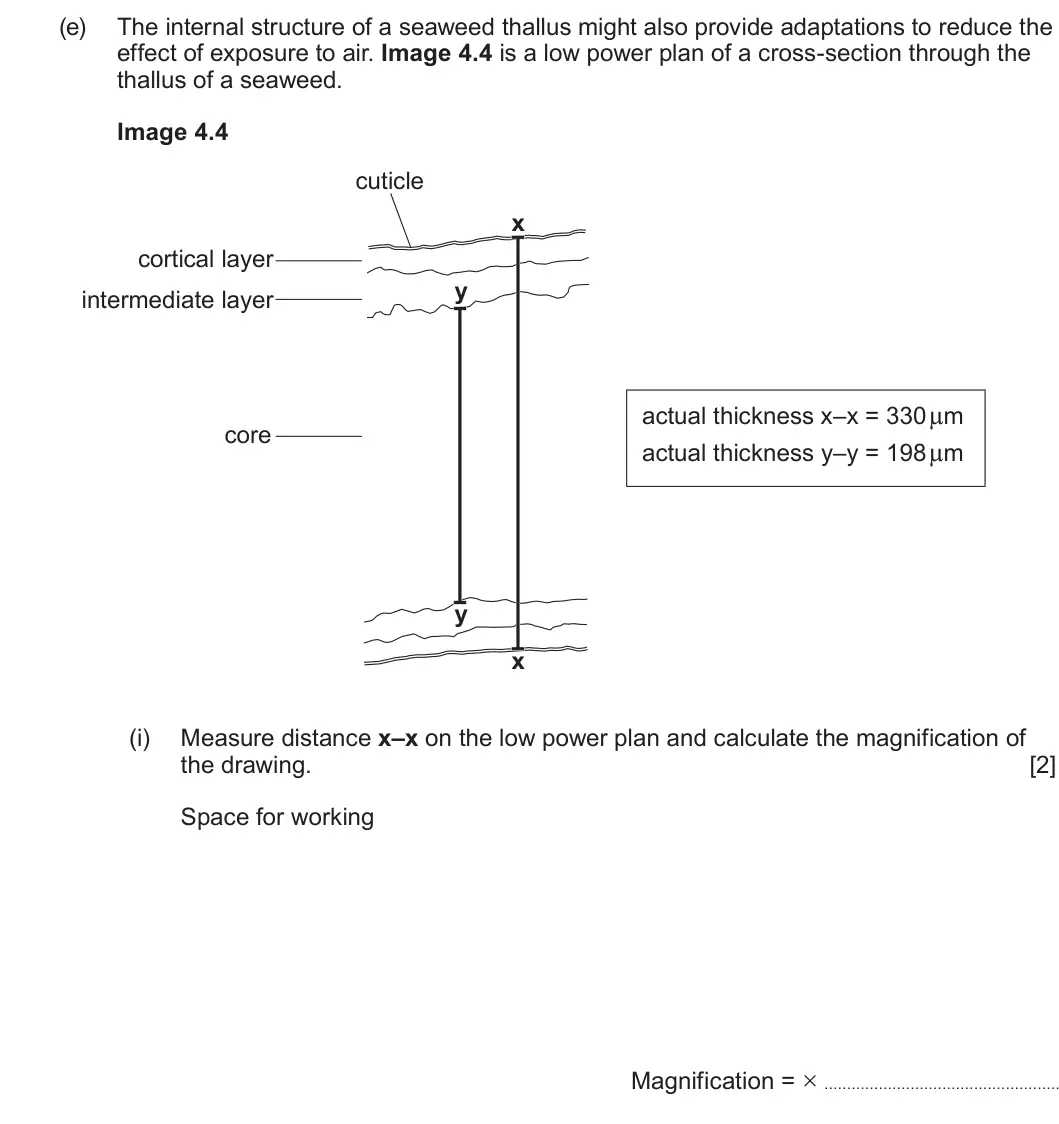
Q2(a)(i)
The whole paper ↗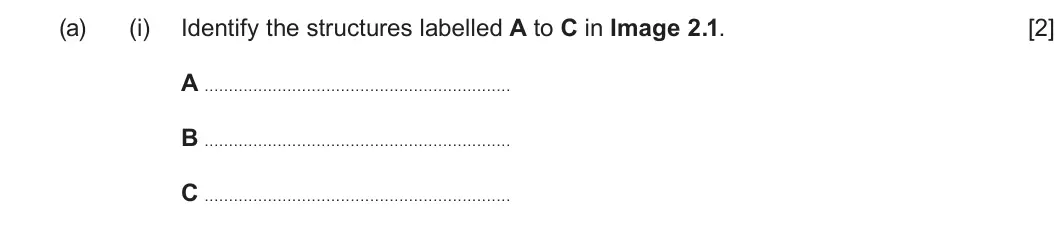
Q2(a)(ii)
The whole paper ↗
Q2(c)(i)
The whole paper ↗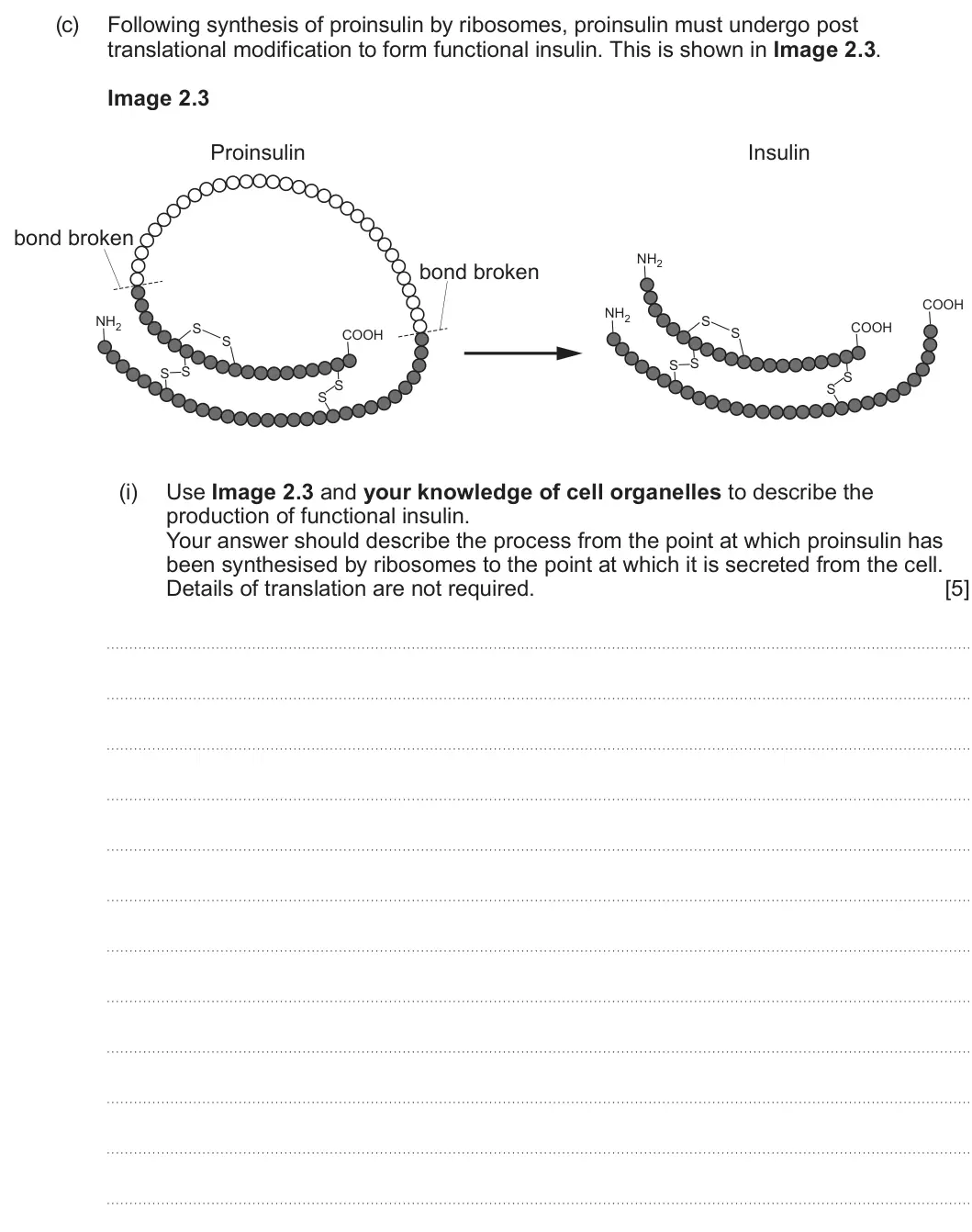
Q2(c)(ii)
The whole paper ↗
Q1(a)(ii)
The whole paper ↗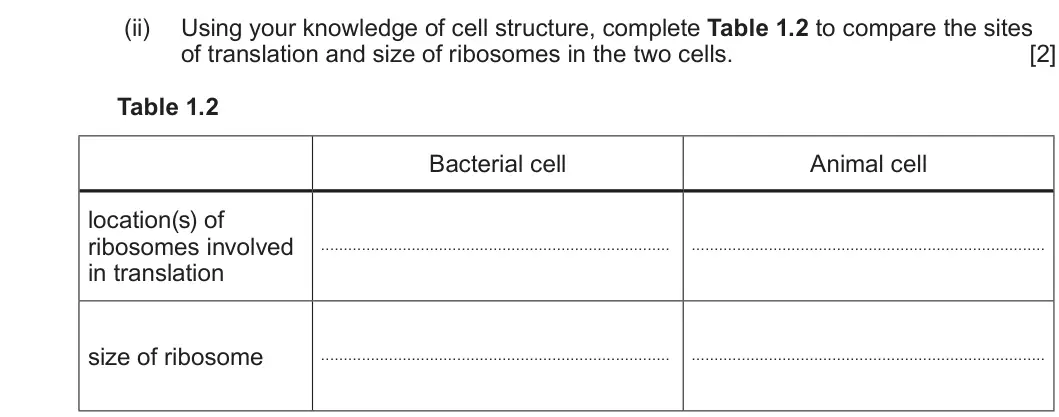
Q1(b)
The whole paper ↗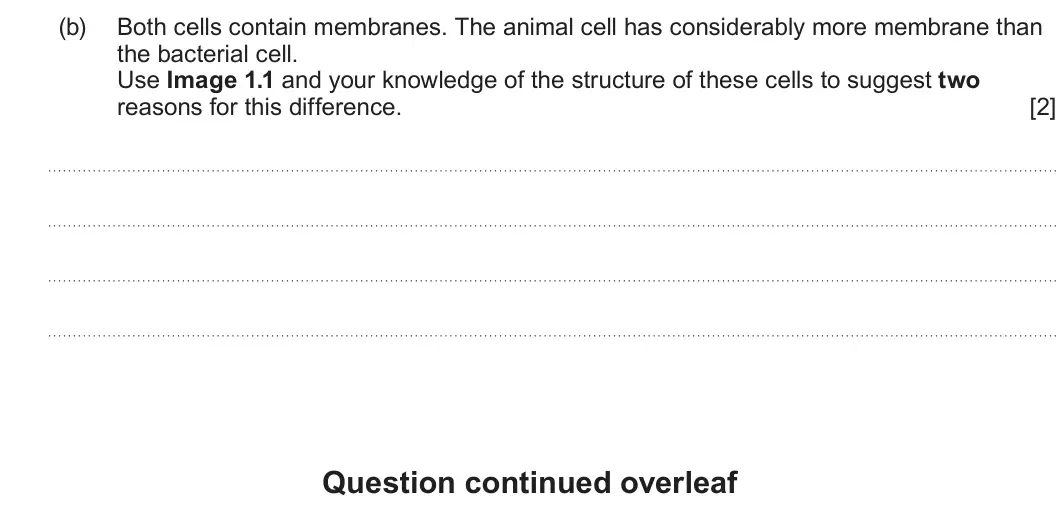
Q5(a)(ii)
The whole paper ↗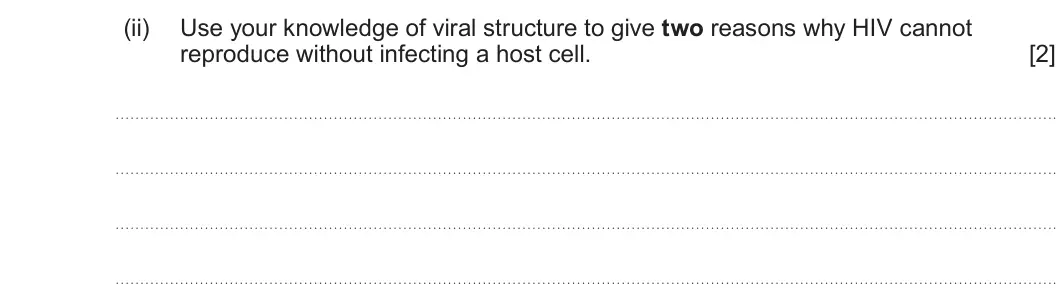
Q5(b)(i)
The whole paper ↗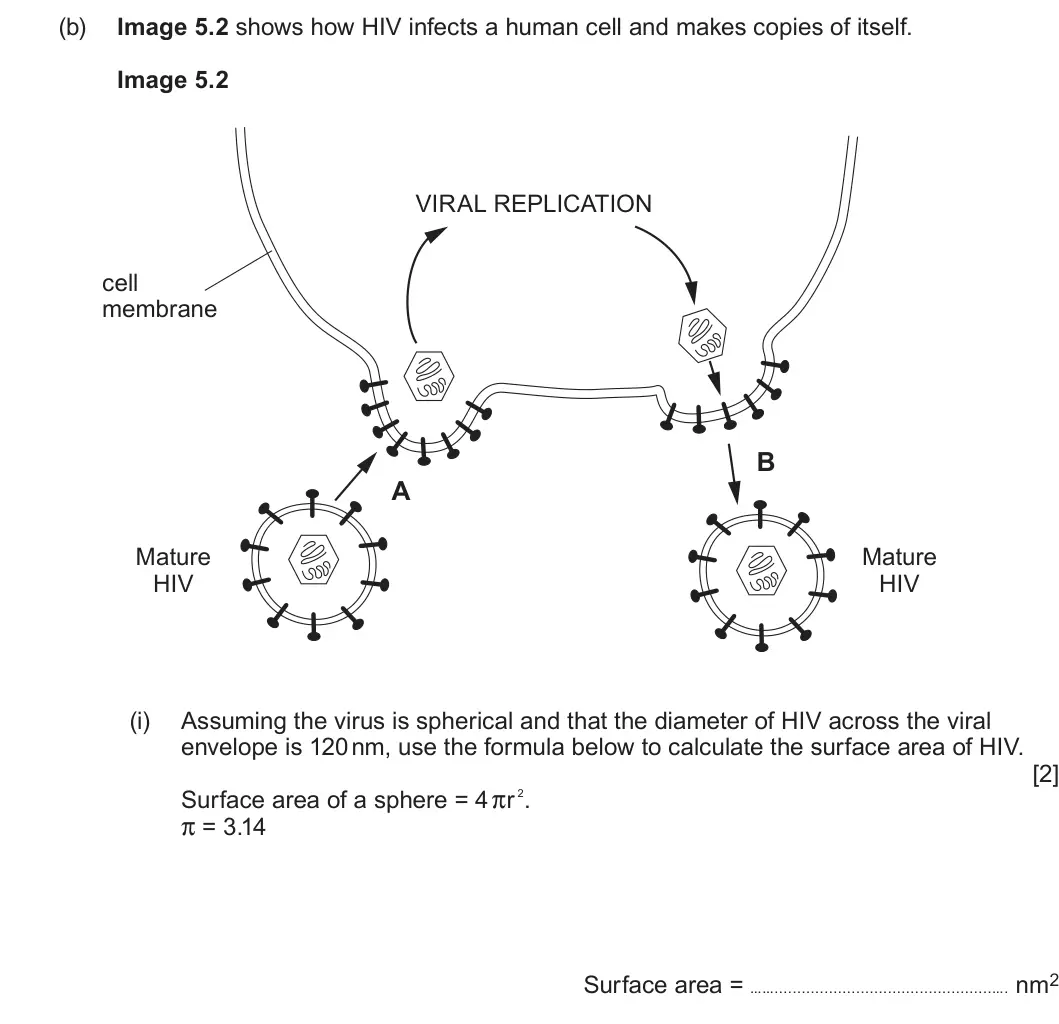
Q3(b)(i)
The whole paper ↗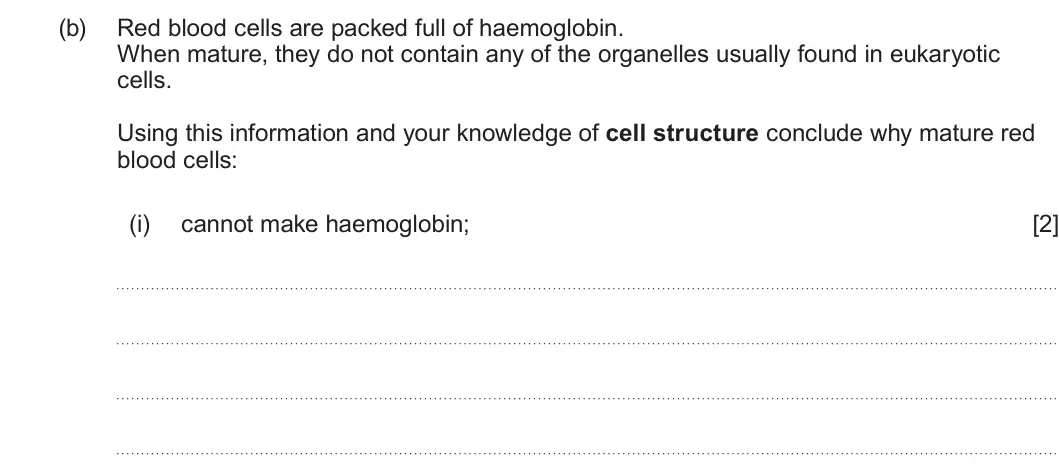
Q3(b)(ii)
The whole paper ↗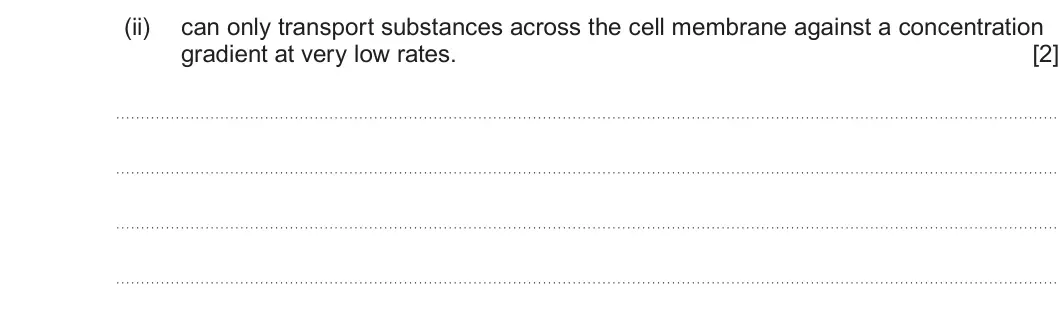
Q1(a)
The whole paper ↗
Q1(b)(i)
The whole paper ↗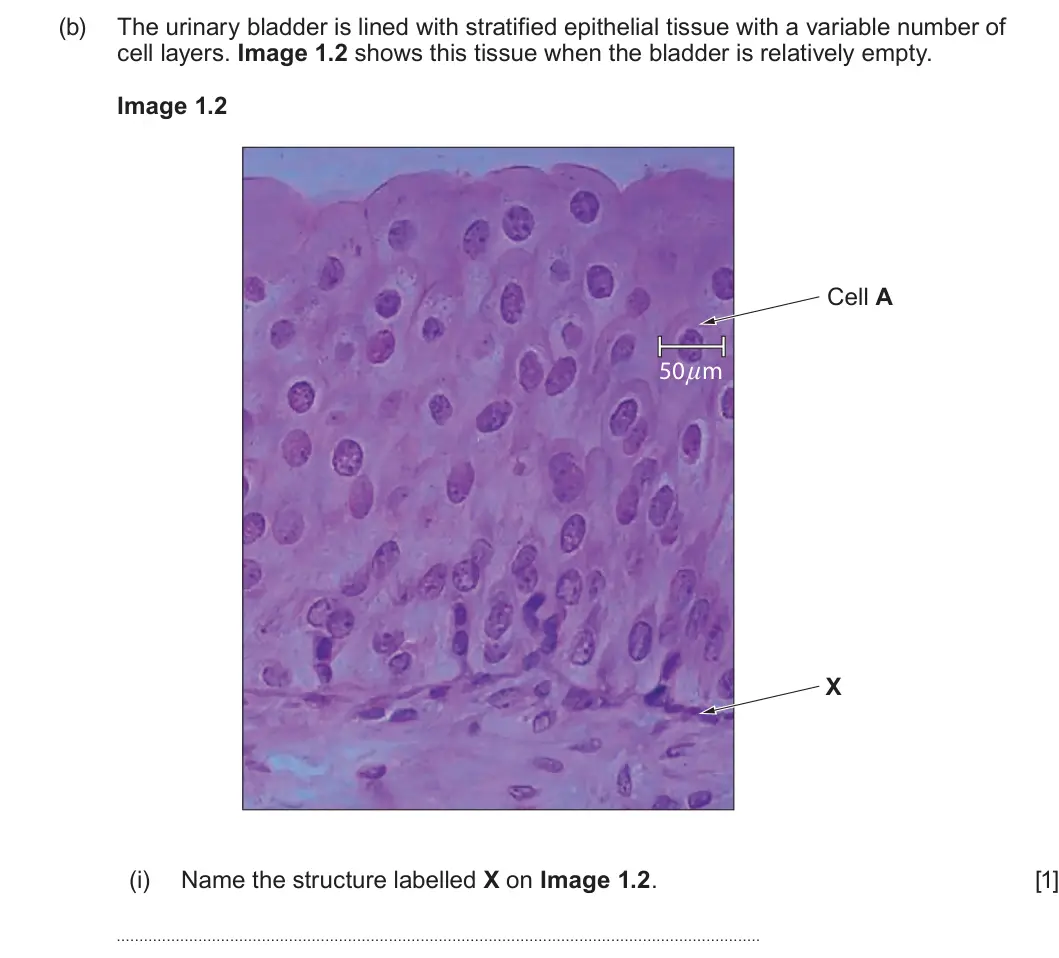
Q1(b)(ii)
The whole paper ↗
Q1(b)(iii)
The whole paper ↗
Q1(b)(iv)
The whole paper ↗
Q1(c)(i)
The whole paper ↗
Q1(c)(ii)
The whole paper ↗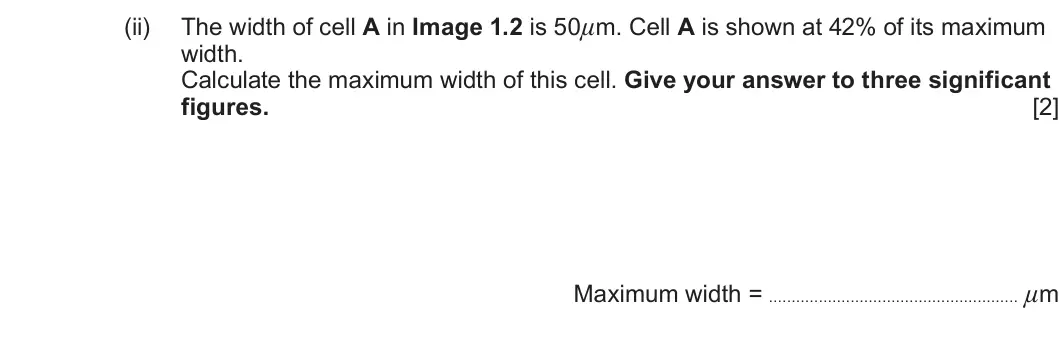
Q1(c)(iii)
The whole paper ↗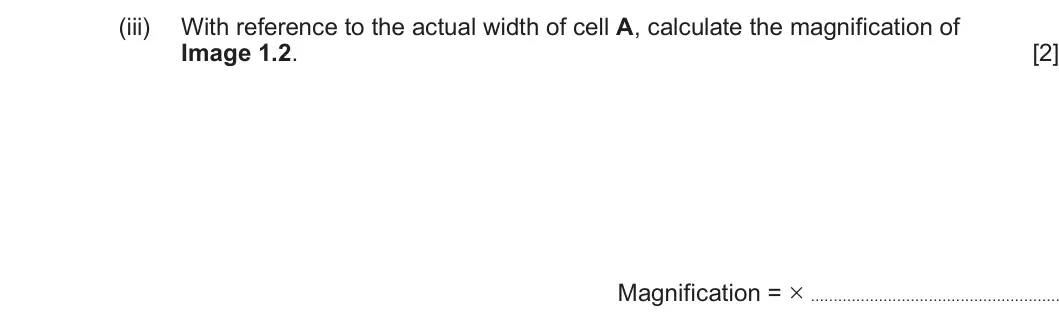
Q5(a)(ii)
The whole paper ↗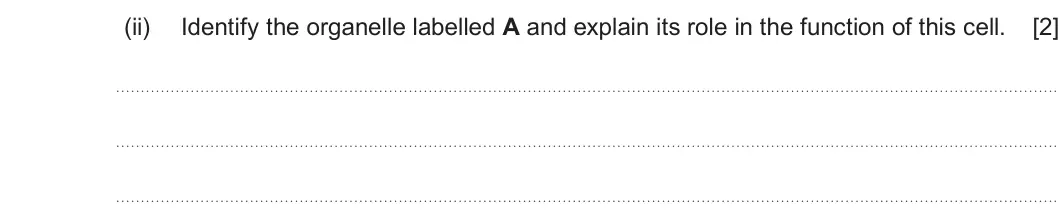
All 41 questions on Cell structure and organisation, as a list
- Summer 2025, Unit 3, Q4(e)(i) (2 marks): Measure distance x–x on the low power plan and calculate the magnification of the drawing. [2] Space for working Magnification = ×
- Summer 2025, AS Unit 1, Q2(a)(i) (2 marks): Identify the structures labelled A to C in Image 2.1. [2] A . . . . . . . . . . . . . . . . . . . . . . . . . . . . . . . . . . . . . . . . . . . . . . . . . .
- Summer 2025, AS Unit 1, Q2(a)(ii) (1 mark): The two structures labelled D are both the same type of organelle. Explain why the two structures differ in appearance. [1]
- Summer 2025, AS Unit 1, Q2(c)(i) (5 marks): Use Image 2.3 and your knowledge of cell organelles to describe the production of functional insulin. Your answer should describe the process from the point at
- Summer 2025, AS Unit 1, Q2(c)(ii) (3 marks): Explain the role of organelle D on Image 2.1 in the production and secretion of insulin. [3]
- Summer 2024, AS Unit 1, Q1(a)(ii) (2 marks): Using your knowledge of cell structure, complete Table 1.2 to compare the sites of translation and size of ribosomes in the two cells. [2] Table 1.2 Bacterial c
- Summer 2024, AS Unit 1, Q1(b) (2 marks): Both cells contain membranes. The animal cell has considerably more membrane than the bacterial cell. Use Image 1.1 and your knowledge of the structure of these
- Summer 2024, AS Unit 1, Q5(a)(ii) (2 marks): Use your knowledge of viral structure to give two reasons why HIV cannot reproduce without infecting a host cell. [2]
- Summer 2024, AS Unit 1, Q5(b)(i) (2 marks): Assuming the virus is spherical and that the diameter of HIV across the viral envelope is 120 nm, use the formula below to calculate the surface area of HIV. [2
- Summer 2023, AS Unit 1, Q3(b)(i) (2 marks): cannot make haemoglobin; [2]
- Summer 2023, AS Unit 1, Q3(b)(ii) (2 marks): can only transport substances across the cell membrane against a concentration gradient at very low rates. [2]
- Summer 2022, AS Unit 1, Q1(a) (1 mark): Explain how the shape of the cells is adapted to their function within the tissue. [1]
- Summer 2022, AS Unit 1, Q1(b)(i) (1 mark): Name the structure labelled X on Image 1.2. [1]
- Summer 2022, AS Unit 1, Q1(b)(ii) (1 mark): State why the cells in Image 1.2 are referred to as a “tissue”. [1]
- Summer 2022, AS Unit 1, Q1(b)(iii) (1 mark): Explain why some of the cells appear not to have a nucleus in Image 1.2. [1]
- Summer 2022, AS Unit 1, Q1(b)(iv) (1 mark): With reference to Image 1.1 and Image 1.2, describe the main difference between the two types of epithelial tissue. [1]
- Summer 2022, AS Unit 1, Q1(c)(i) (1 mark): When the bladder is full, the cells become wider and flatter. Suggest how this property of the epithelial tissue allows the bladder to perform its function. [1]
- Summer 2022, AS Unit 1, Q1(c)(ii) (2 marks): The width of cell A in Image 1.2 is 50µm. Cell A is shown at 42% of its maximum width. Calculate the maximum width of this cell. Give your answer to three signi
- Summer 2022, AS Unit 1, Q1(c)(iii) (2 marks): With reference to the actual width of cell A, calculate the magnification of Image 1.2. [2] Magnification = ×
- Summer 2022, AS Unit 1, Q5(a)(ii) (2 marks): Identify the organelle labelled A and explain its role in the function of this cell. [2]
- Summer 2022, AS Unit 1, Q6(a)(ii) (2 marks): Explain the role of the rough endoplasmic reticulum in the production of fibrinogen. [2]
- Summer 2022, AS Unit 1, Q6(a)(iii) (2 marks): Suggest the role of the Golgi body in the production of fibrinogen. [2]
- Summer 2019, AS Unit 1, Q2(a) (1 mark): Name organelles A and B. [1] organelle A: organelle B:
- Summer 2019, AS Unit 1, Q2(b)(ii) (4 marks): Identify two other organelles which must be present in large numbers in the Amoeba in order for this process to occur. Explain your answer for each organelle. [
- Summer 2019, AS Unit 1, Q2(d) (2 marks): Bacteria, such as Cyanophyceae also inhabit fresh water ponds. Describe two differences between the structure of Chlorella and Cyanophyceae. [2]
- Summer 2018, Unit 4, Q7(a)(i) (2 marks): Name the type of tissue at A and the cells which form it. [2]
- Summer 2018, Unit 4, Q7(b)(i) (1 mark): Describe the functions of osteoclasts and osteoblasts. [1]
- Summer 2018, AS Unit 1, Q1(a) (2 marks): Identify the structures labelled A, B, C, D. [2] A: B: C: D:
- Summer 2018, AS Unit 1, Q1(b)(i) (3 marks): With reference to the structures labelled C, D and E, describe the sequence of events that lead to the production of digestive enzymes in this cell. [3]
- Summer 2018, AS Unit 1, Q1(b)(ii) (3 marks): With reference to the structures B, F and G, describe the sequence of events that lead to the secretion of digestive enzymes from this cell. [3]
- Summer 2018, AS Unit 1, Q1(b)(iii) (2 marks): Explain the role of organelle A in the production and secretion of digestive enzymes. [2]
- Summer 2017, AS Unit 1, Q1(a)(i) (2 marks): Name the structures labelled S and suggest their function in the human respiratory system. [2]
- Summer 2017, AS Unit 1, Q1(a)(ii) (1 mark): Explain why Image 1 is referred to as a tissue rather than an organ. [1] The photo electron micrograph below shows two mitochondria found in this tissue. T 250n
- Summer 2017, AS Unit 1, Q1(b)(i) (1 mark): One reason for the different appearance of the mitochondria is that they have been cut in different planes. Suggest one other reason that could account for the
- Summer 2017, AS Unit 1, Q1(b)(ii) (3 marks): Calculate the actual size of mitochondrion T along the line shown on the image. Give your answer in micrometres. [3] Length of organelle = µm
- Summer 2017, AS Unit 1, Q1(b)(iii) (2 marks): State and explain one way in which mitochondria are adapted to perform their function. [2]
- Summer 2016, AS Unit 1, Q1(a)(iii) (2 marks): Explain why some stain would be seen in other parts of the cell. [2]
- Summer 2016, AS Unit 1, Q2(b)(iv) (2 marks): Explain why the virus is unable to synthesise its own capsid. [2]
- Summer 2016, AS Unit 1, Q3(a) (2 marks): Identify the organelles labelled A and B. [2] A: B:
- Summer 2016, AS Unit 1, Q3(b) (2 marks): The actual width of the cell between points X – Y was 32.3 µm. Calculate the magnification that was used to take the photomicrograph. [2] magnification =
- Summer 2016, AS Unit 1, Q3(d) (3 marks): Below is a photomicrograph of the bacteria Nostoc, which also inhabits fresh water ponds and ditches. They were once thought to belong to the same group of orga
Questions, mark schemes and examiner’s reports are © WJEC CBAC Ltd, from their published past papers. Plumi isn’t affiliated with any exam board. Want whole papers? Every WJEC A-Level Biology paper.
Rather write your answers by hand on iPad? Plumi marks them against the same mark schemes.