 plumi
Chemical elements are joined together to form biological compounds: WJEC A‑Level Biology questions
Every WJEC A-Level Biology exam question on 1.1 Chemical elements are joined together to form biological compounds, 2016–2025, with its mark scheme and examiner’s report.
Find questions1,223
Calculations
Q2(b)(i)
The whole paper ↗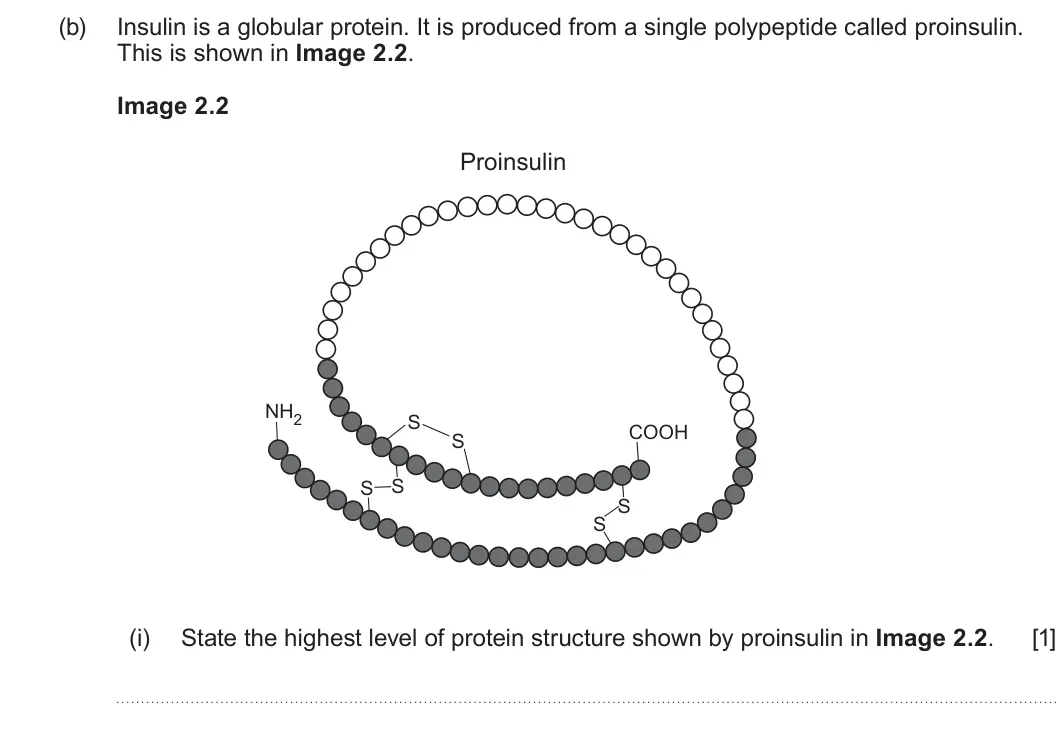
Q3(a)
The whole paper ↗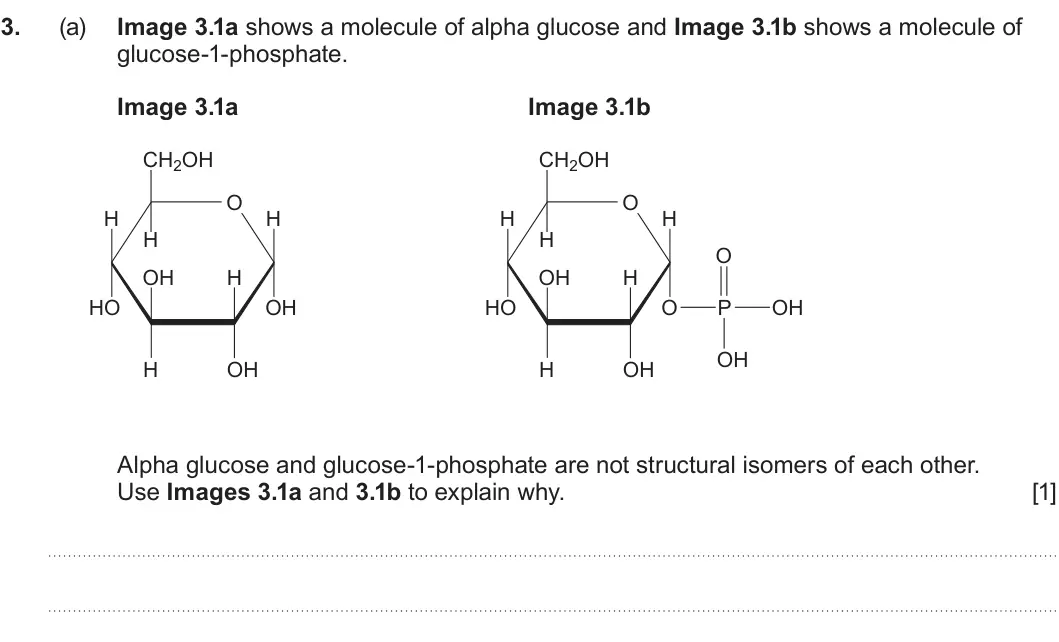
Q3(c)
The whole paper ↗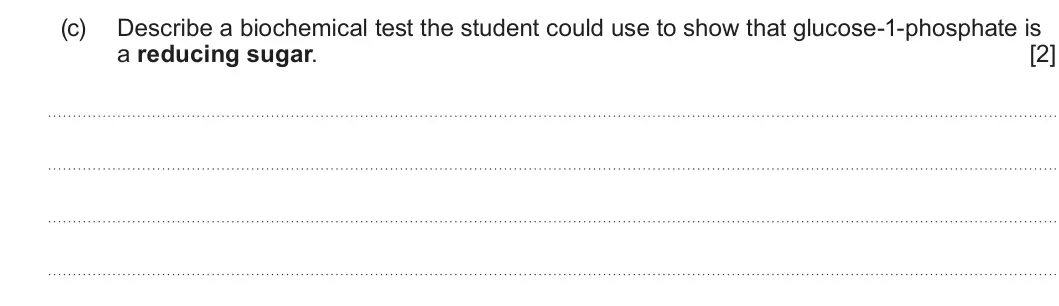
Q5(a)(i)
The whole paper ↗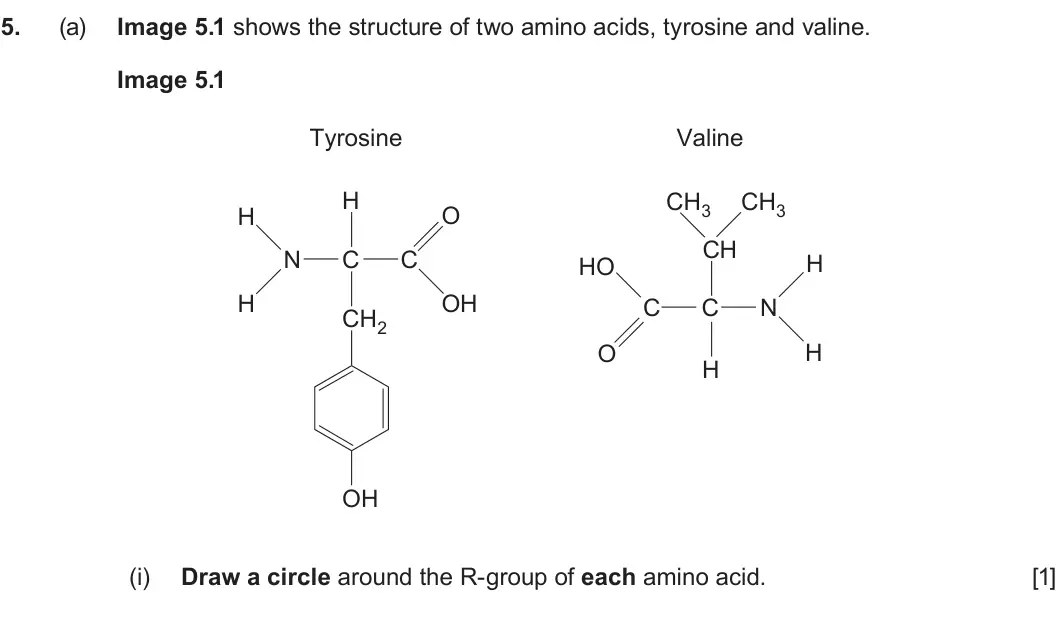
Q5(a)(ii)
The whole paper ↗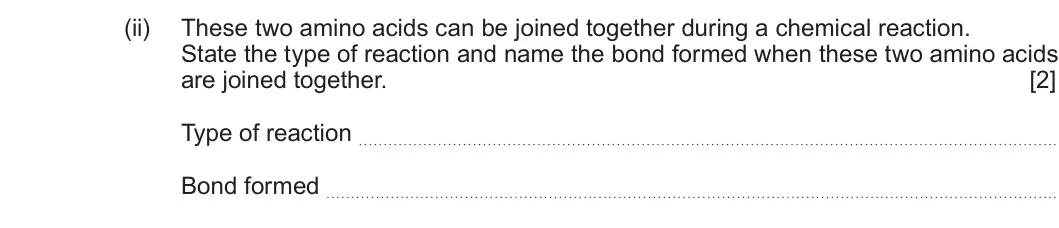
Q6(a)
The whole paper ↗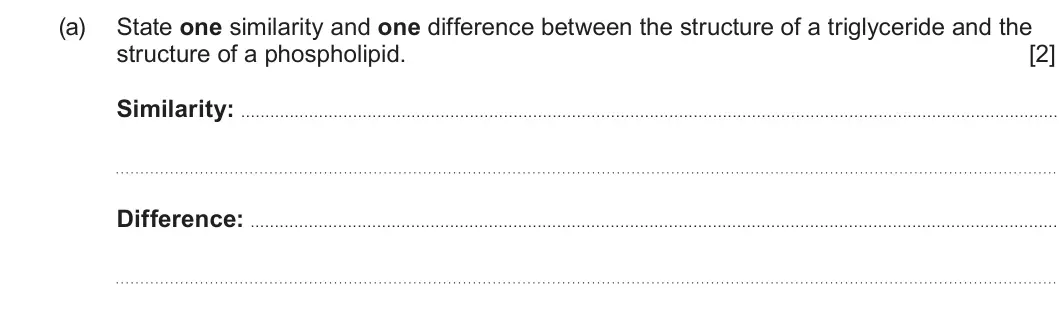
Q2(a)(iii)
The whole paper ↗
Q4(a)(i)
The whole paper ↗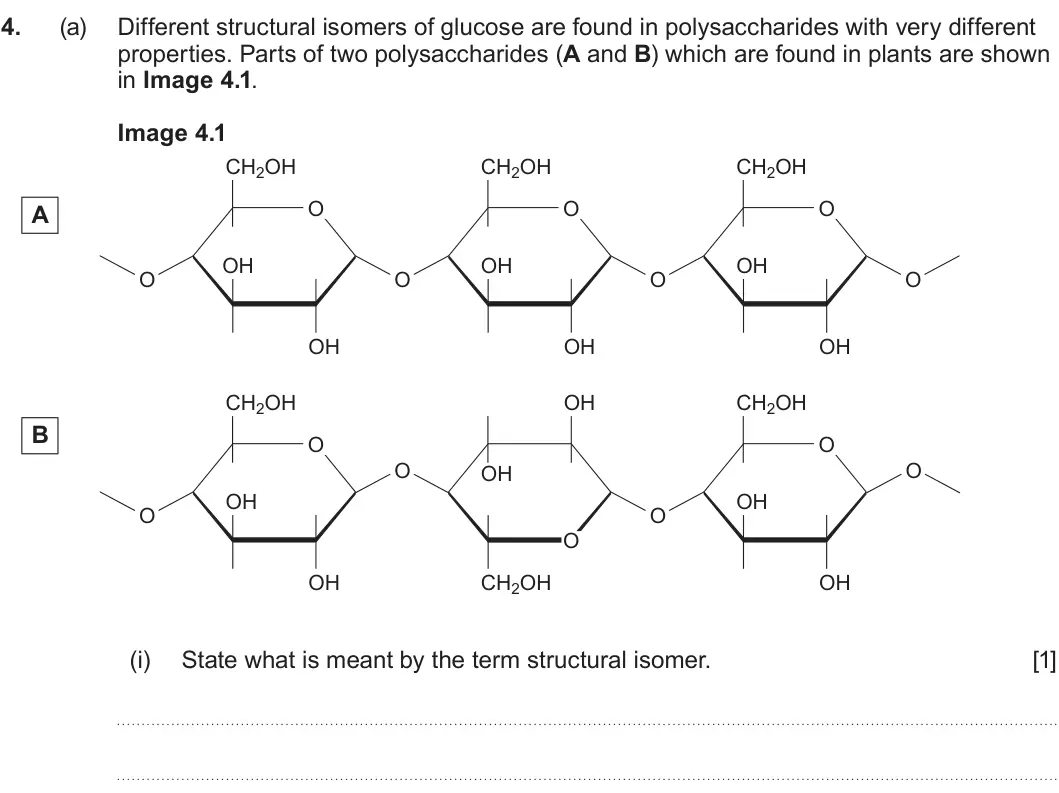
Q4(a)(ii)
The whole paper ↗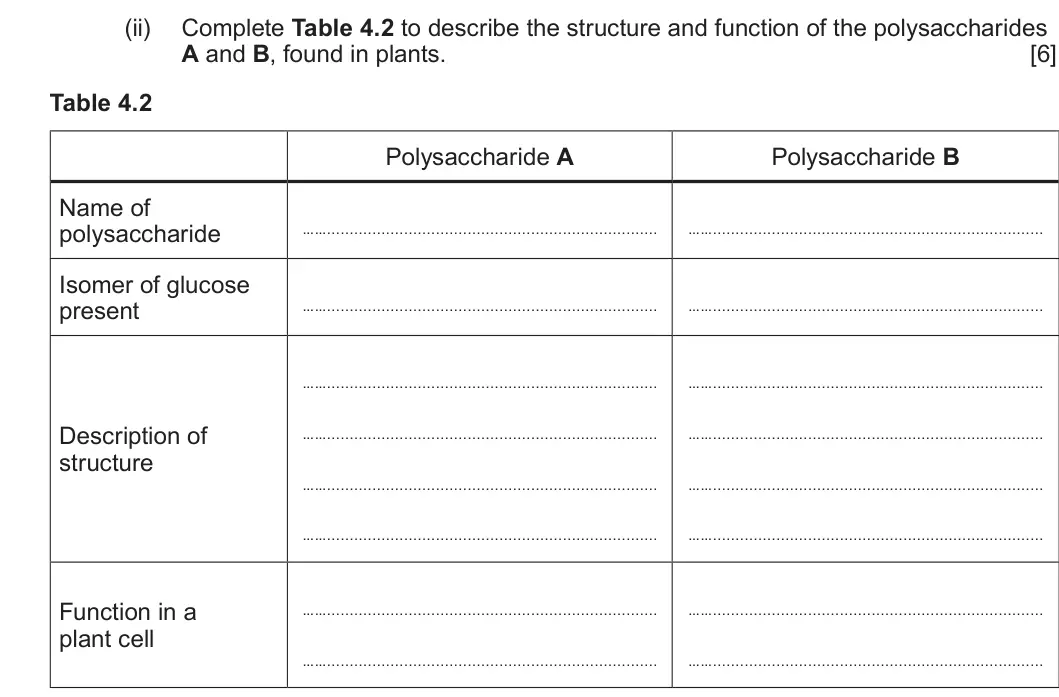
Q4(a)(iii)
The whole paper ↗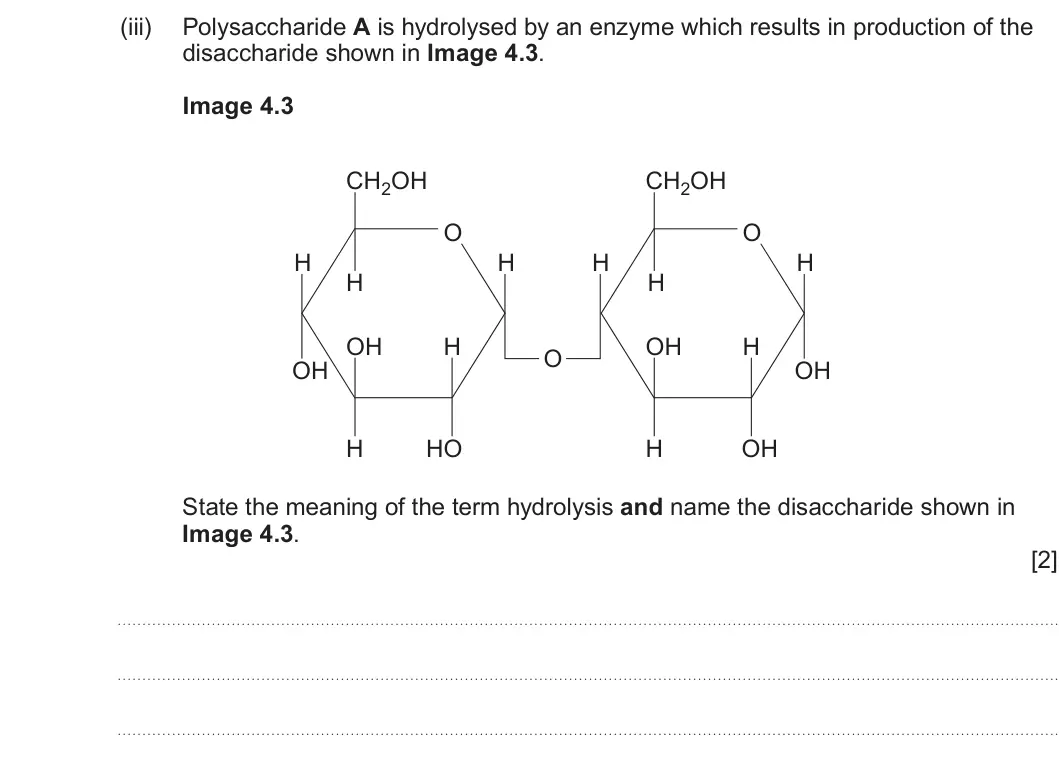
Q4(b)
The whole paper ↗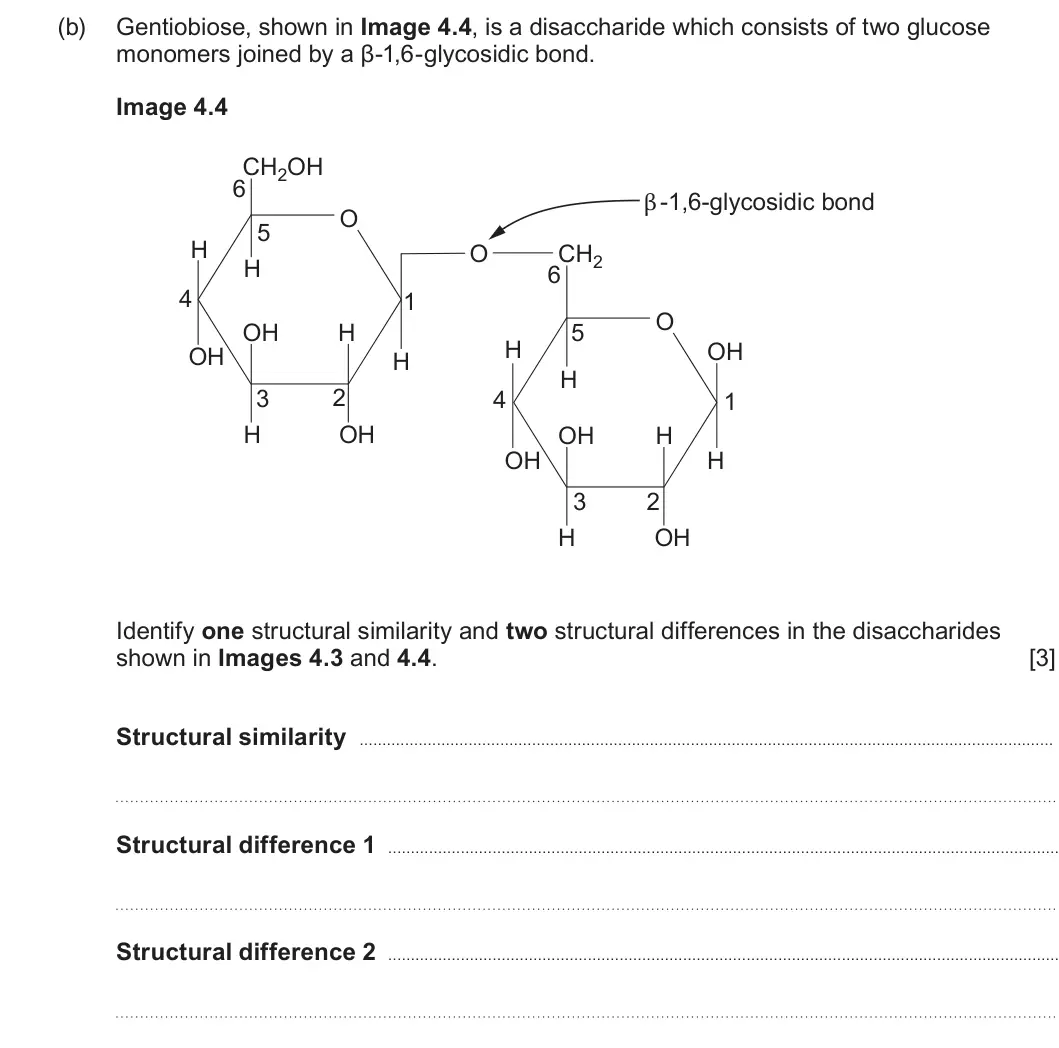
Q4(c)(i)
The whole paper ↗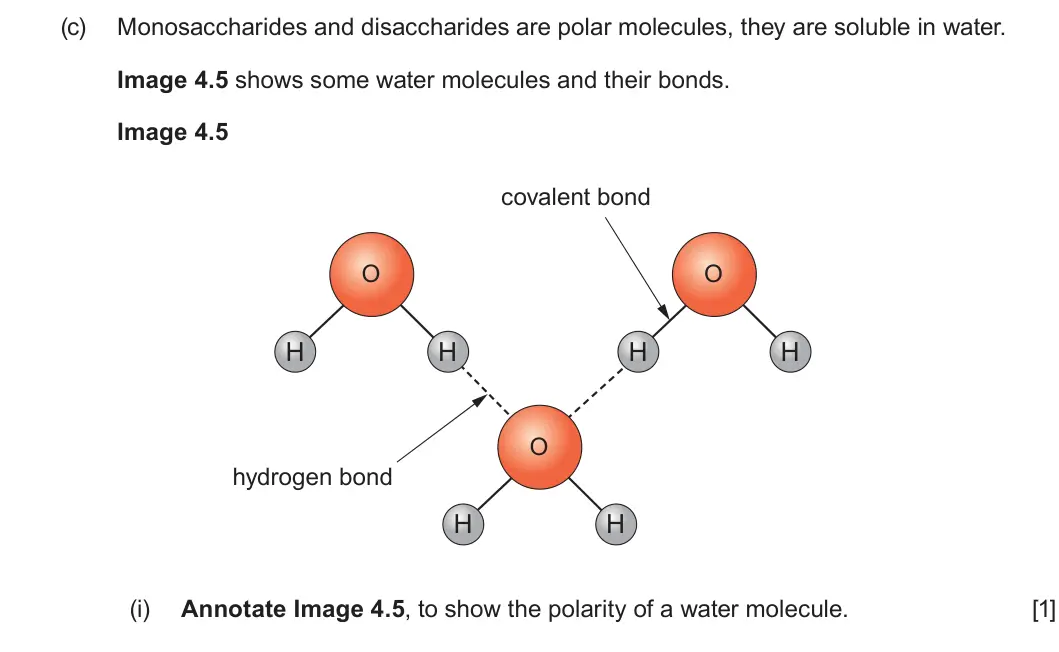
Q4(c)(ii)
The whole paper ↗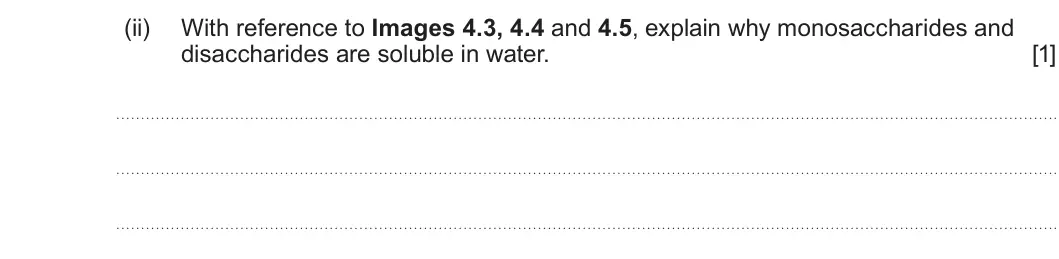
Q4(c)(iii)
The whole paper ↗
Q6(b)(i)
The whole paper ↗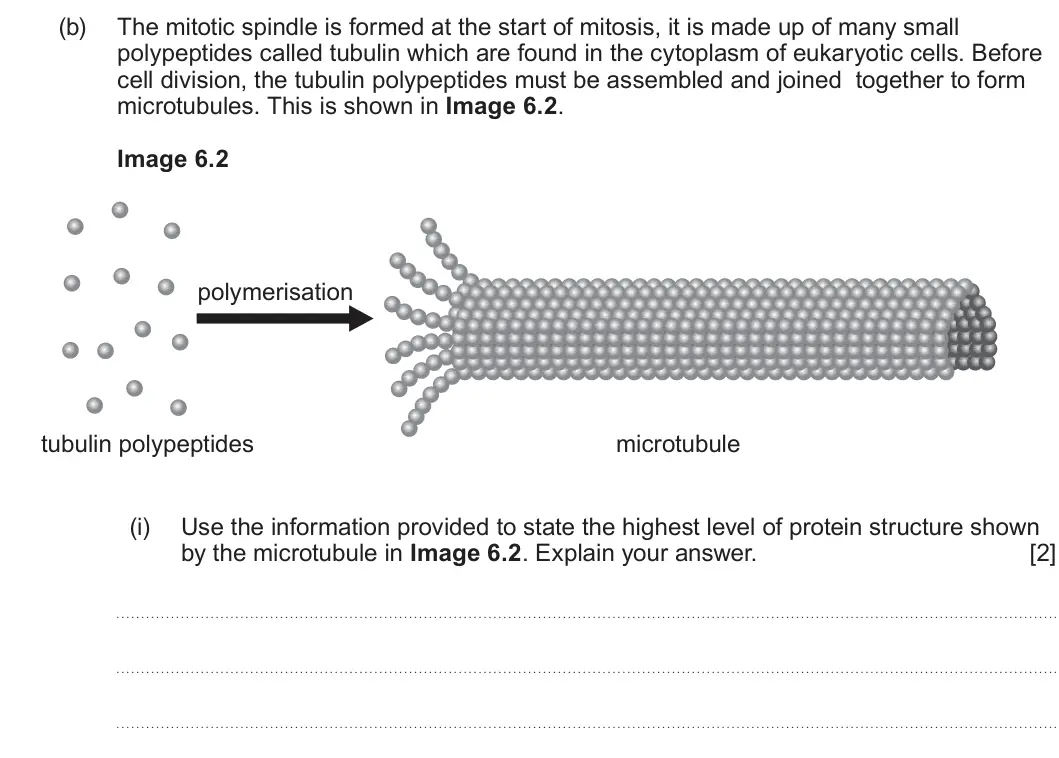
Q1(a)(i)
The whole paper ↗
Q1(a)(ii)
The whole paper ↗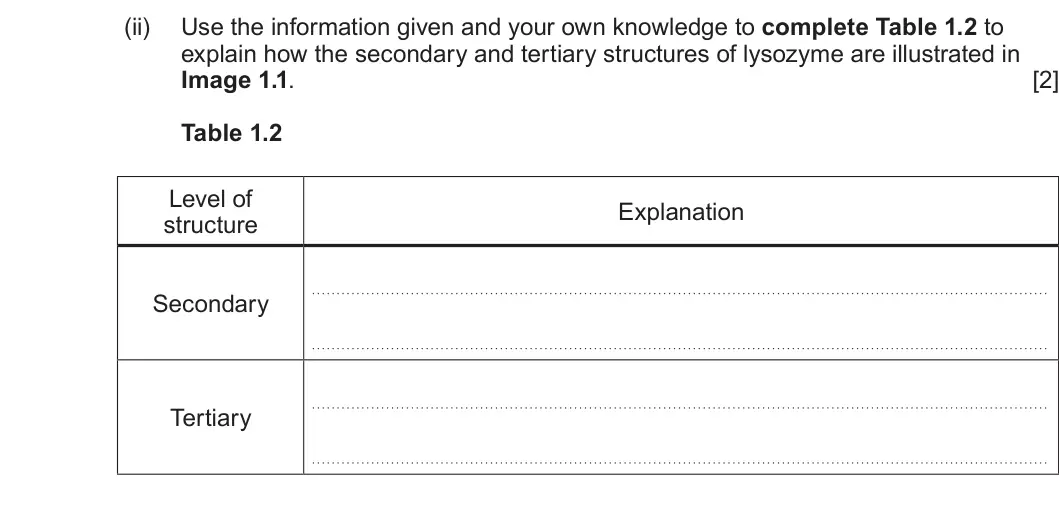
Q4(a)(i)
The whole paper ↗
Q4(a)(ii)
The whole paper ↗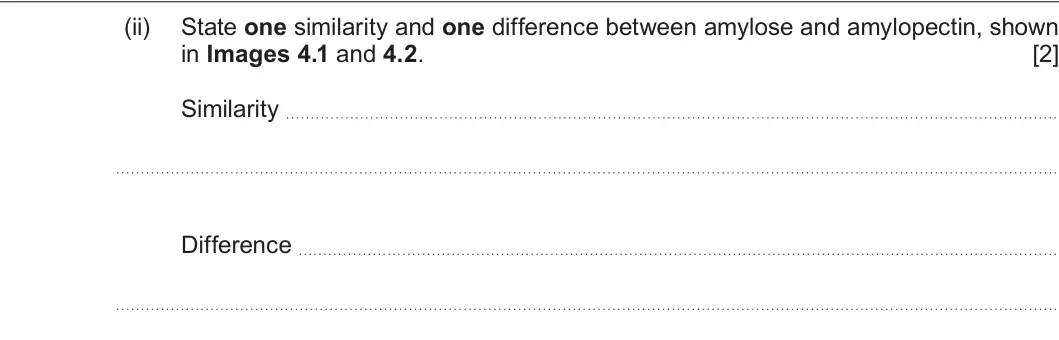
Q4(b)(i)
The whole paper ↗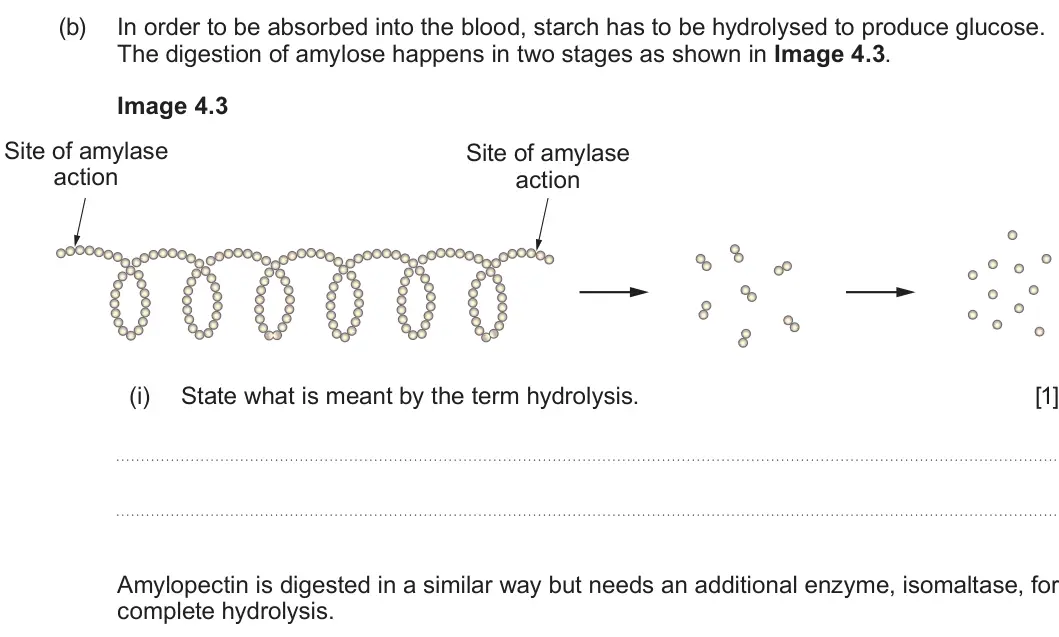
All 54 questions on Chemical elements are joined together to form biological compounds, as a list
- Summer 2025, AS Unit 1, Q2(b)(i) (1 mark): State the highest level of protein structure shown by proinsulin in Image 2.2. [1]
- Summer 2025, AS Unit 1, Q3(a) (1 mark): Image 3.1a shows a molecule of alpha glucose and Image 3.1b shows a molecule of glucose-1-phosphate. Image 3.1a Image 3.1b CH2OH CH2OH O O H H H H H H O OH OH H
- Summer 2025, AS Unit 1, Q3(c) (2 marks): Describe a biochemical test the student could use to show that glucose-1-phosphate is a reducing sugar. [2]
- Summer 2025, AS Unit 1, Q5(a)(i) (1 mark): Draw a circle around the R-group of each amino acid. [1]
- Summer 2025, AS Unit 1, Q5(a)(ii) (2 marks): These two amino acids can be joined together during a chemical reaction. State the type of reaction and name the bond formed when these two amino acids are join
- Summer 2025, AS Unit 1, Q6(a) (2 marks): State one similarity and one difference between the structure of a triglyceride and the structure of a phospholipid. [2] Similarity: . . . . . . . . . . . . . .
- Summer 2024, AS Unit 1, Q2(a)(iii) (1 mark): Name two inorganic ions needed by plant cells in order to synthesise the molecules shown in Image 2.1. [1]
- Summer 2024, AS Unit 1, Q4(a)(i) (1 mark): State what is meant by the term structural isomer. [1]
- Summer 2024, AS Unit 1, Q4(a)(ii) (6 marks): Complete Table 4.2 to describe the structure and function of the polysaccharides A and B, found in plants. [6] Table 4.2 Polysaccharide A Polysaccharide B Name
- Summer 2024, AS Unit 1, Q4(a)(iii) (2 marks): Polysaccharide A is hydrolysed by an enzyme which results in production of the disaccharide shown in Image 4.3. Image 4.3 CH2OH CH2OH O O H H H H H H OH H OH H
- Summer 2024, AS Unit 1, Q4(b) (3 marks): Gentiobiose, shown in Image 4.4, is a disaccharide which consists of two glucose monomers joined by a β-1,6-glycosidic bond. Image 4.4 CH2OH 6 β -1,6-glycosidic
- Summer 2024, AS Unit 1, Q4(c)(i) (1 mark): Annotate Image 4.5, to show the polarity of a water molecule. [1]
- Summer 2024, AS Unit 1, Q4(c)(ii) (1 mark): With reference to Images 4.3, 4.4 and 4.5, explain why monosaccharides and disaccharides are soluble in water. [1]
- Summer 2024, AS Unit 1, Q4(c)(iii) (2 marks): State why it is important to plants that sugars are soluble. [2]
- Summer 2024, AS Unit 1, Q6(b)(i) (2 marks): Use the information provided to state the highest level of protein structure shown by the microtubule in Image 6.2. Explain your answer. [2]
- Summer 2023, AS Unit 1, Q1(a)(i) (1 mark): State what is meant by primary structure. [1]
- Summer 2023, AS Unit 1, Q1(a)(ii) (2 marks): Use the information given and your own knowledge to complete Table 1.2 to explain how the secondary and tertiary structures of lysozyme are illustrated in Image
- Summer 2023, AS Unit 1, Q4(a)(i) (1 mark): State the general name given to bonds X and Y. [1]
- Summer 2023, AS Unit 1, Q4(a)(ii) (2 marks): State one similarity and one difference between amylose and amylopectin, shown in Images 4.1 and 4.2. [2] Similarity Difference
- Summer 2023, AS Unit 1, Q4(b)(i) (1 mark): State what is meant by the term hydrolysis. [1] Amylopectin is digested in a similar way but needs an additional enzyme, isomaltase, for complete hydrolysis.
- Summer 2023, AS Unit 1, Q4(b)(ii) (3 marks): Explain the roles of the three enzymes involved in the complete hydrolysis of starch. [3]
- Summer 2023, AS Unit 1, Q4(b)(iii) (2 marks): One variety of corn used in animal feed has a lower amylose : amylopectin ratio than other varieties. With reference to Images 4.2 and 4.3, suggest why this low
- Summer 2023, AS Unit 1, Q4(b)(iv) (2 marks): Describe a chemical test that could be used to show that starch is no longer present at the end of hydrolysis. [2]
- Summer 2022, AS Unit 1, Q2(a)(i) (2 marks): Structures A and B are both types of fatty acids. Identify both types and explain the difference in their shapes. [2]
- Summer 2022, AS Unit 1, Q2(a)(ii) (2 marks): Image 2.2 shows two examples of phospholipid bilayers. Membrane 1 has phospholipids containing only type A fatty acids and membrane 2 has phospholipids containi
- Summer 2022, AS Unit 1, Q2(b)(i) (2 marks): Fatty acids are also found as part of triglycerides. State how triglycerides differ from phospholipids in their structure and in their function in cells. [2]
- Summer 2022, AS Unit 1, Q2(b)(ii) (1 mark): State how the relative proportions of type A and B fatty acids in the diet can affect human health. [1]
- Summer 2022, AS Unit 1, Q5(b)(i) (2 marks): Complete Image 5.2 to show the digestion of lactose. [2]
- Summer 2022, AS Unit 1, Q5(b)(ii) (2 marks): State: I. the type of reaction; [1] II. the names of the products of digestion of lactose. [1]
- Summer 2022, AS Unit 1, Q5(c)(ii) (1 mark): Lactose is a reducing sugar. Explain why it is not possible to use Benedict’s reagent to monitor the progress of the digestion of lactose by lactase. [1]
- Summer 2022, AS Unit 1, Q6(a)(i) (1 mark): Name the highest level of protein structure shown by fibrinogen. [1]
- Summer 2022, AS Unit 1, Q6(b) (3 marks): Thrombin is an enzyme which is secreted into blood plasma when tissues are damaged. It catalyses the conversion of fibrinogen, in plasma, into the insoluble, fi
- Summer 2019, AS Unit 1, Q4(a) (1 mark): Define quaternary structure. [1]
- Summer 2019, AS Unit 1, Q4(e)(i) (1 mark): Draw a circle around the R-groups of these two amino acids. [1] The R-group of glutamic acid is polar whereas the R-group of valine is non-polar. This affects t
- Summer 2019, AS Unit 1, Q4(e)(ii) (3 marks): Valine interacts with phenylalanine and leucine in the beta-globin molecule. Phenylalanine and leucine both have non-polar R-groups. Explain how the properties
- Summer 2019, AS Unit 1, Q5(a)(i) (2 marks): Complete the diagram above to show how this molecule would be broken down into two monosaccharides. [2]
- Summer 2019, AS Unit 1, Q5(a)(ii) (1 mark): State the type of reaction that occurs when this molecule is broken down into two monosaccharides. [1]
- Summer 2019, AS Unit 1, Q5(a)(iii) (2 marks): Describe a biochemical test that could be used to determine the presence of a reducing sugar such as melibiose. [2]
- Summer 2019, AS Unit 1, Q6 (9 marks): The following extracts are adapted from articles published on the Internet. 6 Hidden ocean found on Saturn’s icy moon, Enceladus, could potentially support life
- Summer 2018, Unit 4, Q7(a)(ii) (1 mark): Bones are continually being remodelled for growth and repair, with calcium ions being both deposited and removed from the bone matrix. What is the name of the b
- Summer 2018, AS Unit 1, Q4(a)(i) (2 marks): Complete the diagram, to show the products formed when these amino acid molecules are joined by a condensation reaction. [2] H H CH3 O O H H N C C N C C H OH H
- Summer 2018, AS Unit 1, Q4(a)(ii) (1 mark): State the bond formed. [1]
- Summer 2018, AS Unit 1, Q4(b)(i) (1 mark): State the highest level of protein structure exhibited by the β-bungarotoxin. [1]
- Summer 2018, AS Unit 1, Q4(b)(ii) (2 marks): Name the structure labelled X and state how this structure is maintained. [2]
- Summer 2018, AS Unit 1, Q7 (9 marks): The diagram below shows the generalised structure of a seed. embryo plant cotyledon seed coat The cotyledon contains many organic molecules including starch and
- Summer 2017, Unit 4, Q7(b)(i) (3 marks): Label the diagram below to identify the regions of the antibody. [3] A B variable region C constant region D
- Summer 2017, Unit 4, Q7(b)(ii) (2 marks): Define the term antigen, and explain the meaning of an antigen-antibody complex. [2]
- Summer 2017, Unit 4, Q8(a)(i) (2 marks): Identify the main proteins found within each of the regions using ticks (√) to complete the following table. [2] Actin Myosin Troponin Tropomyosin A Band I Band
- Summer 2017, AS Unit 1, Q5(b)(iv) (2 marks): State how a diet high in animal products and cholesterol can lead to a person developing heart disease. [2]
- Summer 2017, AS Unit 1, Q6(a) (3 marks): Describe the role of magnesium, calcium, and phosphate ions in plant cells and tissues. [3] To investigate the uptake of mineral ions by plants, barley seedling
- Summer 2016, AS Unit 1, Q3(c) (4 marks): During the day the concentration of solutes in the pond water changes due to evaporation. However, the length of the spirogyra cells remain almost constant. Wha
- Summer 2016, AS Unit 1, Q4(a)(i) (2 marks): Complete the diagram to show the hydrolysis of sucrose including the products formed. [2] CH2OH CH2OH O O OH HO CH2OH HO O OH OH
- Summer 2016, AS Unit 1, Q4(a)(ii) (1 mark): State the name of the bond broken during the reaction. [1]
- Summer 2016, AS Unit 1, Q4(a)(iii) (1 mark): Explain why glucose and fructose are referred to as structural isomers. [1]
Questions, mark schemes and examiner’s reports are © WJEC CBAC Ltd, from their published past papers. Plumi isn’t affiliated with any exam board. Want whole papers? Every WJEC A-Level Biology paper.
Rather write your answers by hand on iPad? Plumi marks them against the same mark schemes.