Skip to content

CAIE A‑Level Chemistry questions by topic

Every question from the CAIE AS & A Level Chemistry (9701) papers Cambridge International publishes, June 2024 and the specimen papers, part by part. Cambridge keeps its other papers on its School Support Hub, for schools. Filter by topic or paper, open the mark scheme under any question, and download a set as a PDF.

Find questions312
Topics Pick as many as you like. Open one to choose its sub-topics.

Year 1 · AS

Year 2 · A‑Level only

Calculations

312 questions

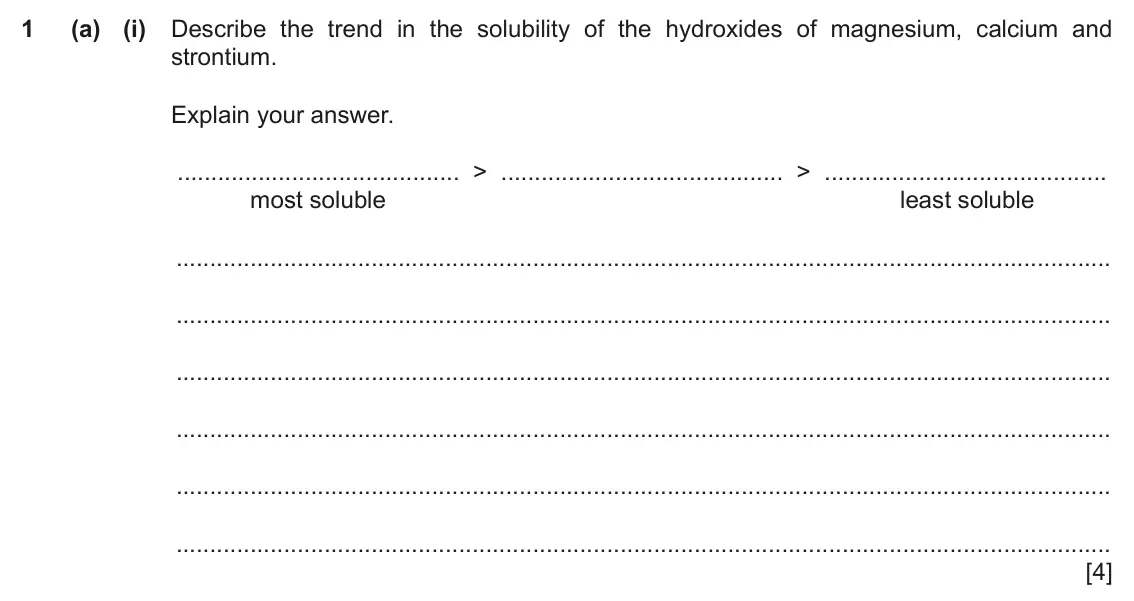
  1. Q1(a)(i)

    June 2024 · Paper 4

    4 marks
    The whole paper ↗
    June 2024 Paper 4, question 1(a)(i): Describe the trend in the solubility of the hydroxides of magnesium, calcium and strontium. Explain your answer. > > most soluble least soluble [4]
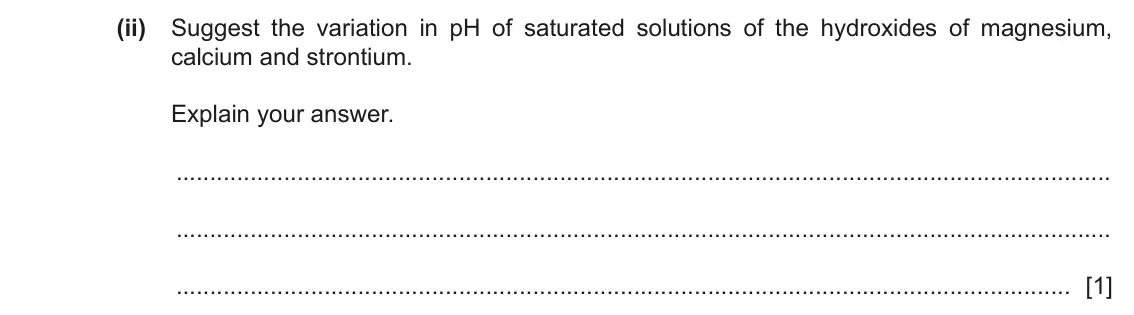
  2. Q1(a)(ii)

    June 2024 · Paper 4

    1 mark
    The whole paper ↗
    June 2024 Paper 4, question 1(a)(ii): Suggest the variation in pH of saturated solutions of the hydroxides of magnesium, calcium and strontium. Explain your answer. [1]
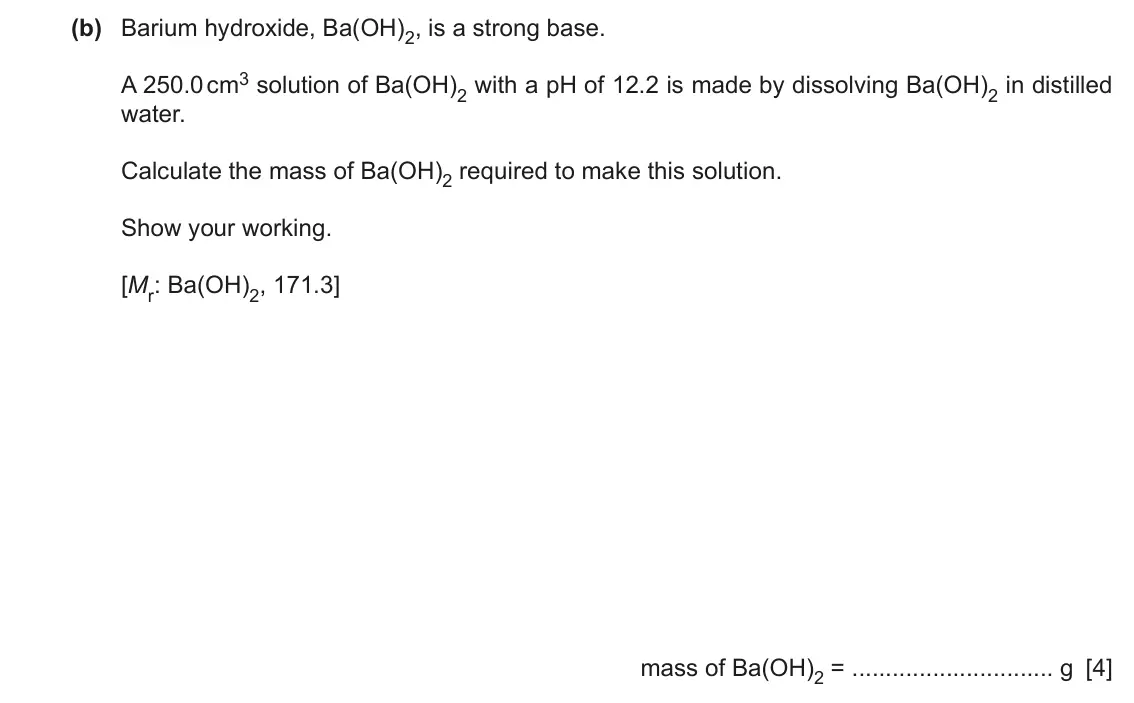
  3. Q1(b)

    June 2024 · Paper 4

    4 marks
    The whole paper ↗
    June 2024 Paper 4, question 1(b): Barium hydroxide, Ba(OH)2, is a strong base. A 250.0 cm3 solution of Ba(OH)2 with a pH of 12.2 is made by dissolving Ba(OH)2 in distilled water. Calculate the m
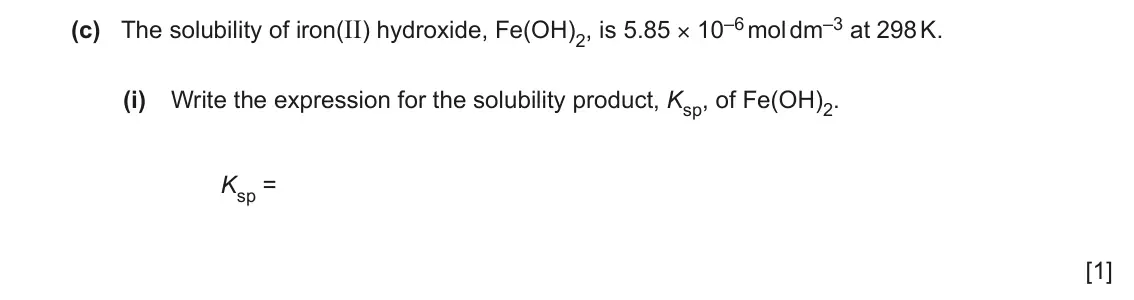
  4. Q1(c)(i)

    June 2024 · Paper 4

    1 mark
    The whole paper ↗
    June 2024 Paper 4, question 1(c)(i): Write the expression for the solubility product, Ksp, of Fe(OH)2. Ksp = [1]
  5. Q1(c)(ii)

    June 2024 · Paper 4

    2 marks
    The whole paper ↗
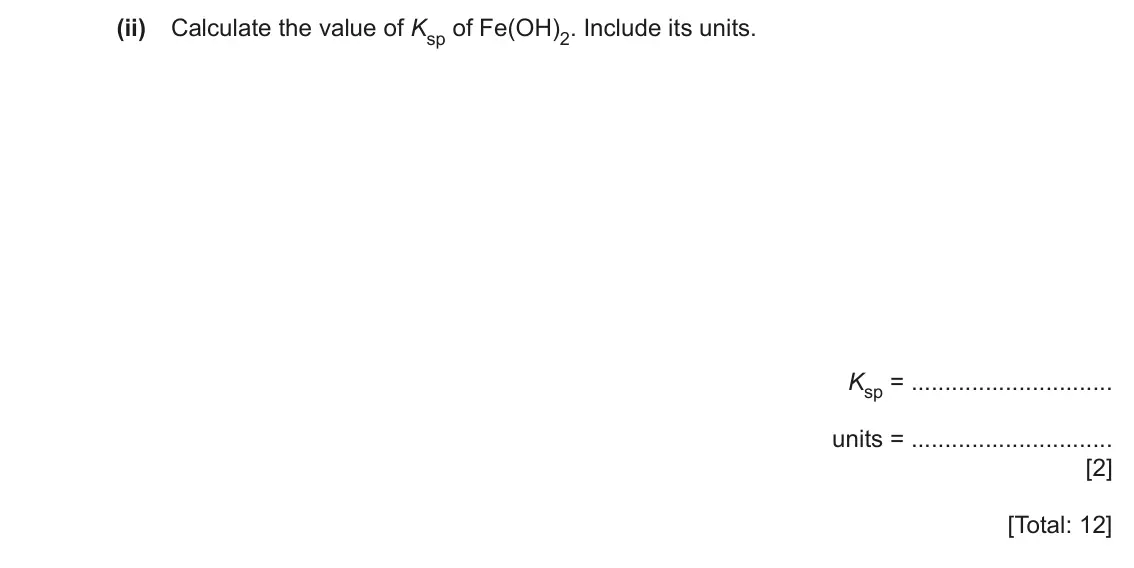
    June 2024 Paper 4, question 1(c)(ii): Calculate the value of Ksp of Fe(OH)2. Include its units. Ksp = units = [2] [Total: 12]
  6. Q2(a)(i)

    June 2024 · Paper 4

    1 mark
    The whole paper ↗
    June 2024 Paper 4, question 2(a)(i): Define transition element. [1]
  7. Q2(a)(ii)

    June 2024 · Paper 4

    1 mark
    The whole paper ↗
    June 2024 Paper 4, question 2(a)(ii): Explain why transition elements can form complex ions. [1]
  8. Q2(b)(i)

    June 2024 · Paper 4

    1 mark
    The whole paper ↗
    June 2024 Paper 4, question 2(b)(i): Define degenerate d orbitals. [1]
  9. Q2(b)(ii)

    June 2024 · Paper 4

    1 mark
    The whole paper ↗
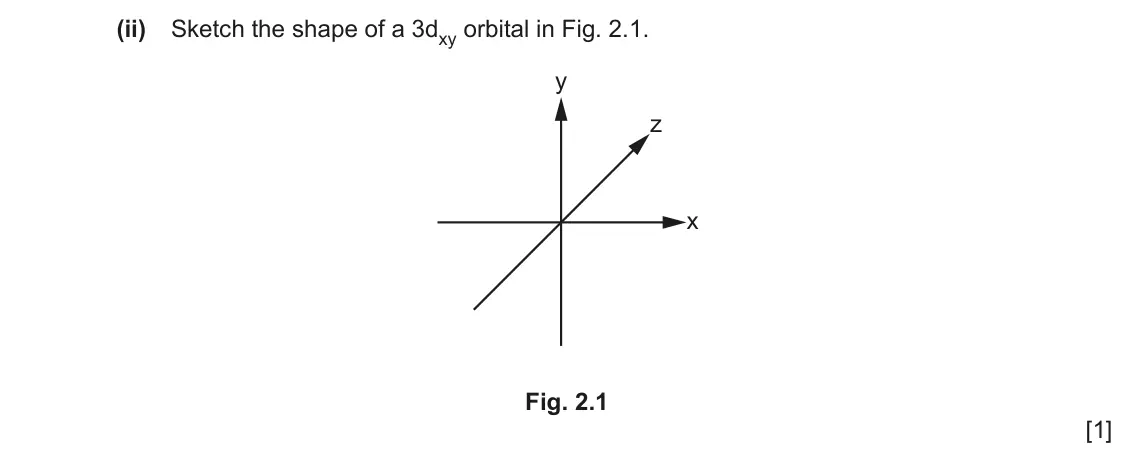
    June 2024 Paper 4, question 2(b)(ii): Sketch the shape of a 3dxy orbital in Fig. 2.1. y z x Fig. 2.1 [1]
  10. Q2(c)

    June 2024 · Paper 4

    2 marks
    The whole paper ↗
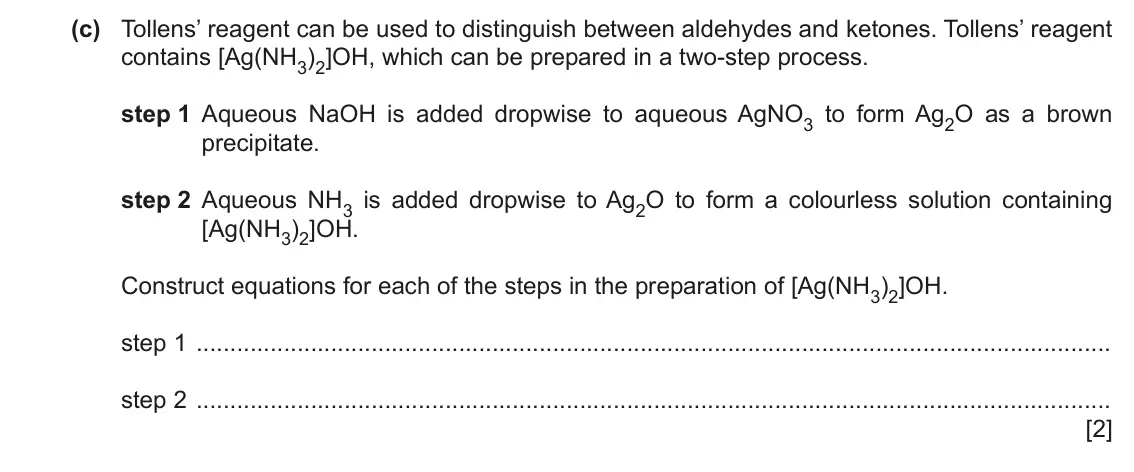
    June 2024 Paper 4, question 2(c): Tollens’ reagent can be used to distinguish between aldehydes and ketones. Tollens’ reagent contains [Ag(NH3)2]OH, which can be prepared in a two-step process.
  11. Q2(d)

    June 2024 · Paper 4

    2 marks
    The whole paper ↗
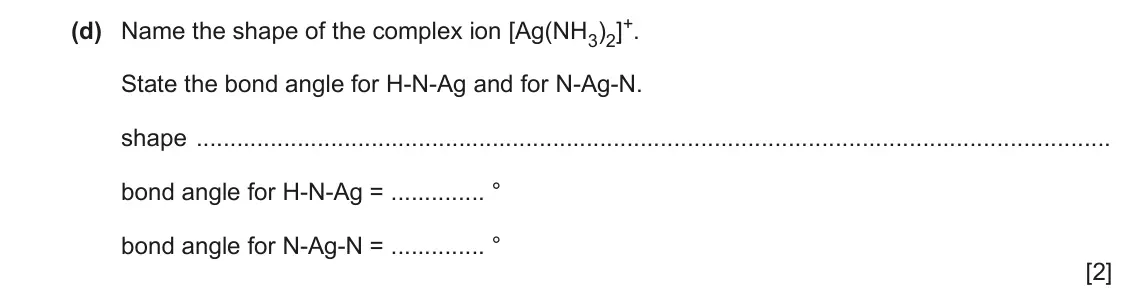
    June 2024 Paper 4, question 2(d): Name the shape of the complex ion [Ag(NH3)2]+. State the bond angle for H-N-Ag and for N-Ag-N. shape bond angle for H-N-Ag = ° bond angle for N-Ag-N = ° [2]
  12. Q2(e)

    June 2024 · Paper 4

    2 marks
    The whole paper ↗
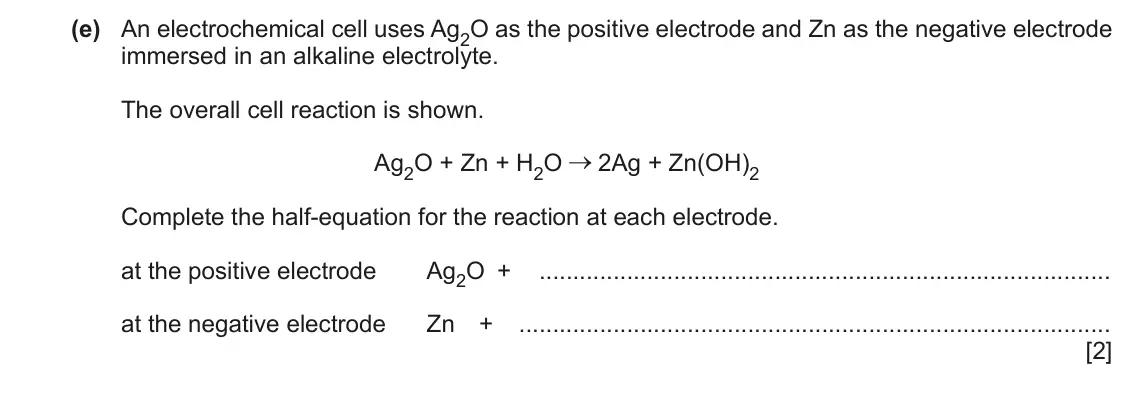
    June 2024 Paper 4, question 2(e): An electrochemical cell uses Ag2O as the positive electrode and Zn as the negative electrode immersed in an alkaline electrolyte. The overall cell reaction is s
  13. Q2(f)

    June 2024 · Paper 4

    2 marks
    The whole paper ↗
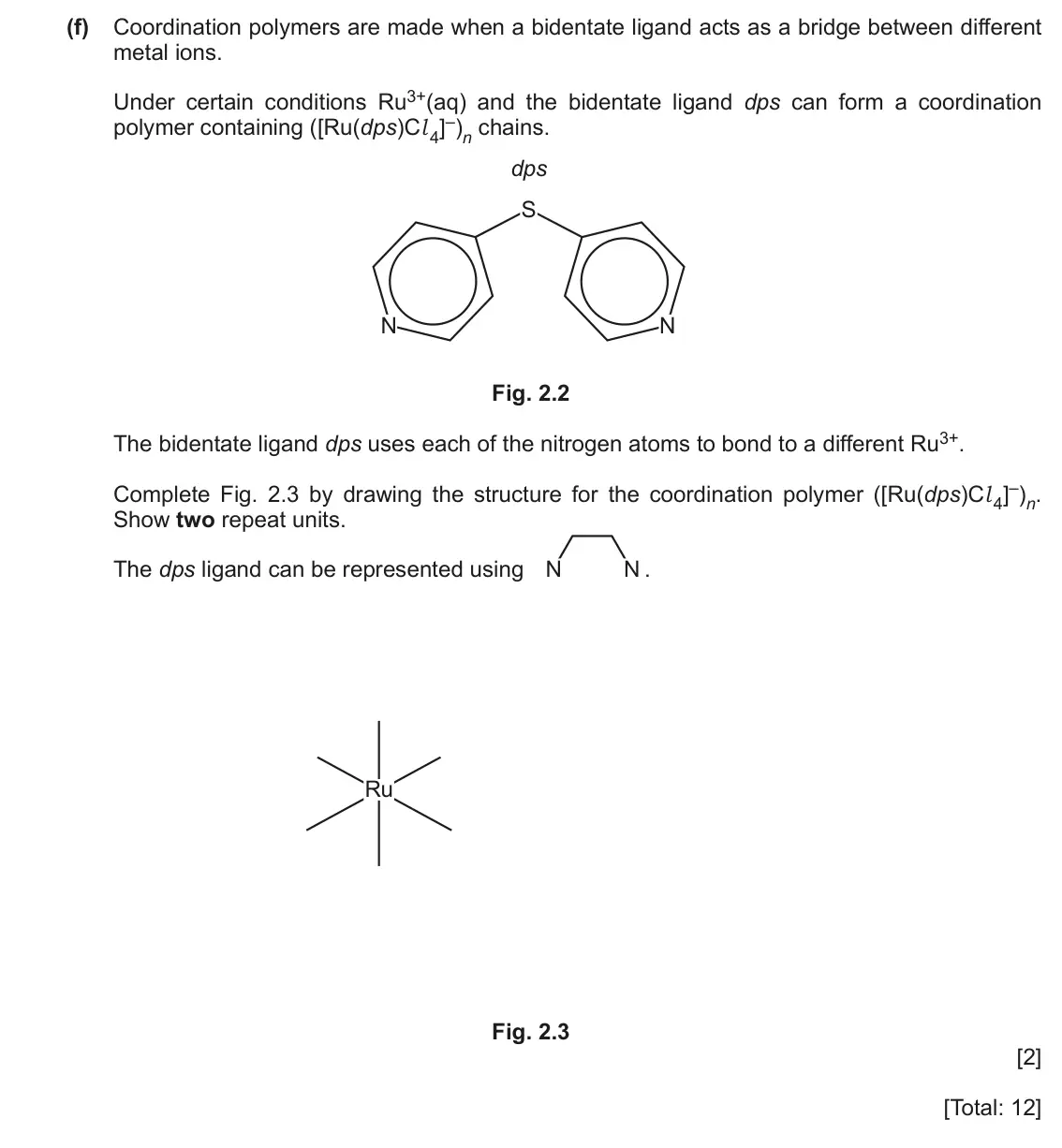
    June 2024 Paper 4, question 2(f): Coordination polymers are made when a bidentate ligand acts as a bridge between different metal ions. Under certain conditions Ru3+(aq) and the bidentate ligand
  14. Q3(a)

    June 2024 · Paper 4

    1 mark
    The whole paper ↗
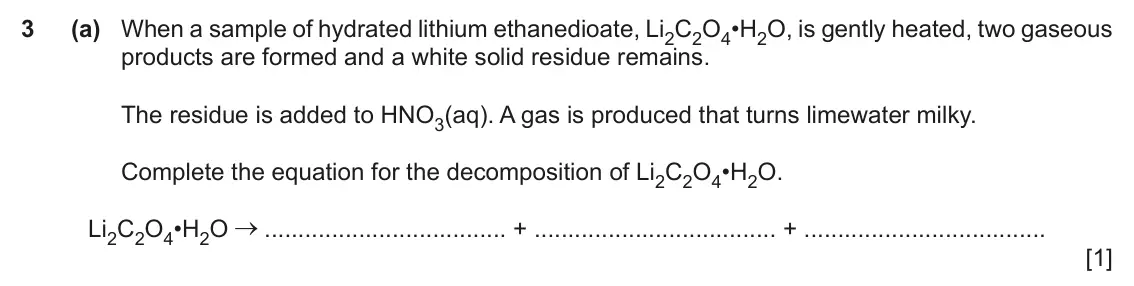
    June 2024 Paper 4, question 3(a): When a sample of hydrated lithium ethanedioate, Li2C2O4•H2O, is gently heated, two gaseous products are formed and a white solid residue remains. The residue is
  15. Q3(b)

    June 2024 · Paper 4

    2 marks
    The whole paper ↗
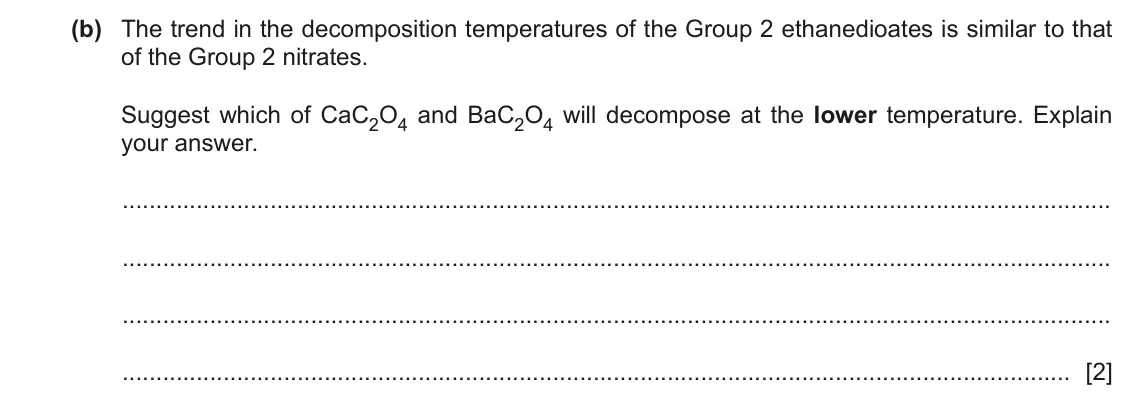
    June 2024 Paper 4, question 3(b): The trend in the decomposition temperatures of the Group 2 ethanedioates is similar to that of the Group 2 nitrates. Suggest which of CaC2O4 and BaC2O4 will dec
  16. Q3(c)

    June 2024 · Paper 4

    3 marks
    The whole paper ↗
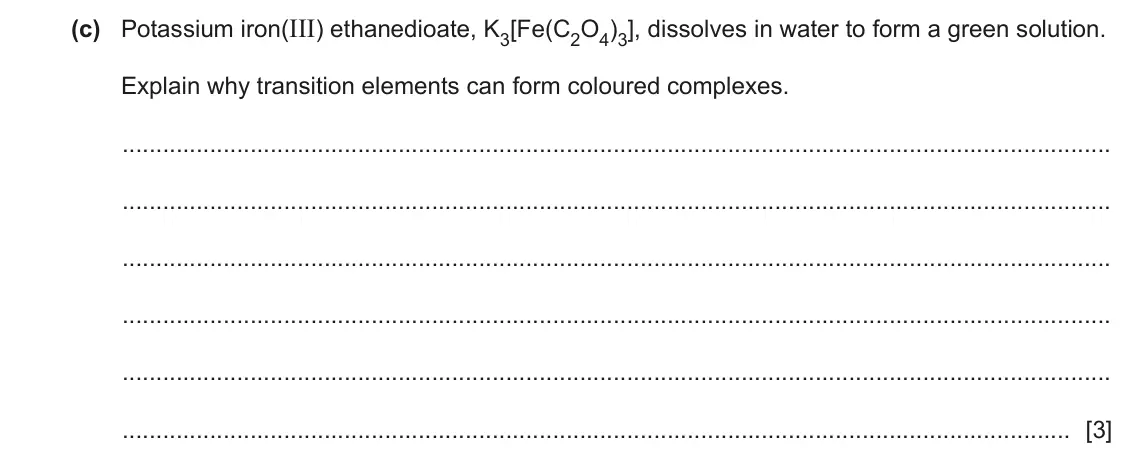
    June 2024 Paper 4, question 3(c): Potassium iron(III) ethanedioate, K3[Fe(C2O4)3], dissolves in water to form a green solution. Explain why transition elements can form coloured complexes. [3]
  17. Q3(d)

    June 2024 · Paper 4

    1 mark
    The whole paper ↗
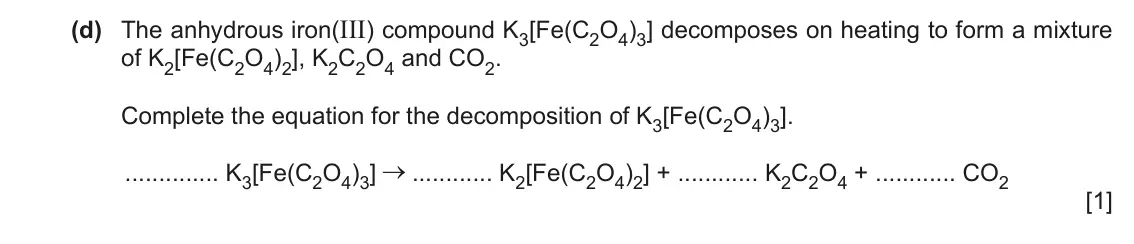
    June 2024 Paper 4, question 3(d): The anhydrous iron(III) compound K3[Fe(C2O4)3] decomposes on heating to form a mixture of K2[Fe(C2O4)2], K2C2O4 and CO2. Complete the equation for the decomposi
  18. Q3(e)

    June 2024 · Paper 4

    2 marks
    The whole paper ↗
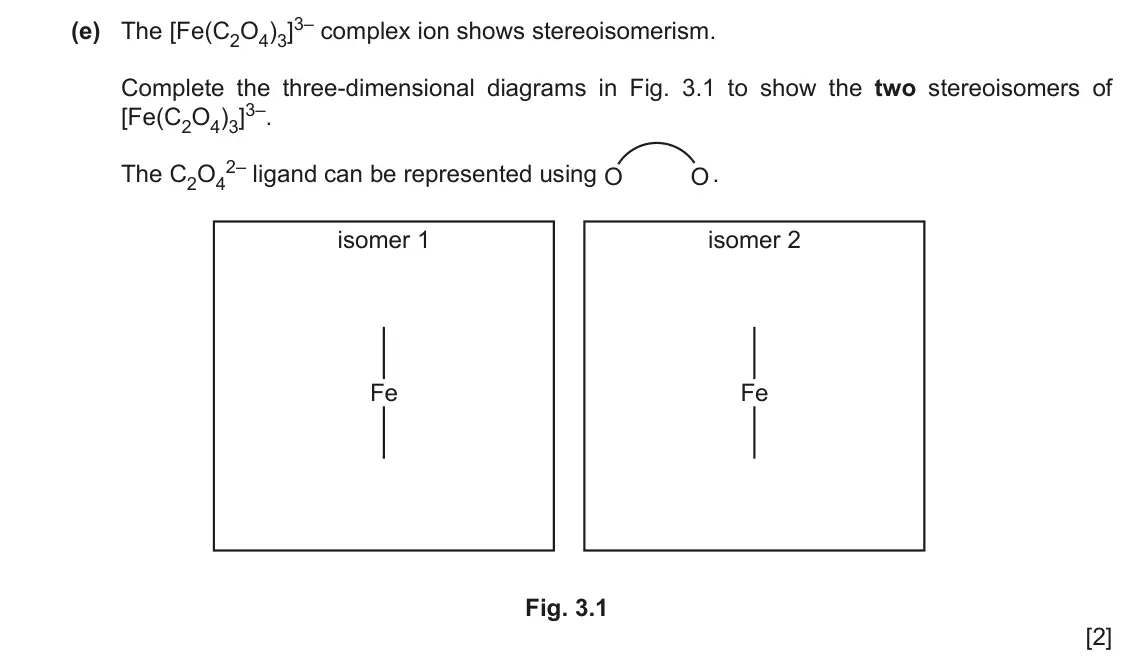
    June 2024 Paper 4, question 3(e): The [Fe(C2O4)3]3– complex ion shows stereoisomerism. Complete the three-dimensional diagrams in Fig. 3.1 to show the two stereoisomers of [Fe(C2O4)3]3–. The C2O
  19. Q3(f)

    June 2024 · Paper 4

    2 marks
    The whole paper ↗
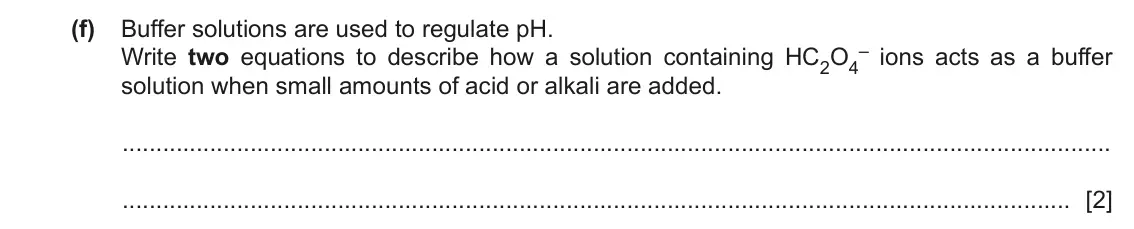
    June 2024 Paper 4, question 3(f): Buffer solutions are used to regulate pH. Write two equations to describe how a solution containing HC2O4 – ions acts as a buffer solution when small amounts of
  20. Q3(g)

    June 2024 · Paper 4

    2 marks
    The whole paper ↗
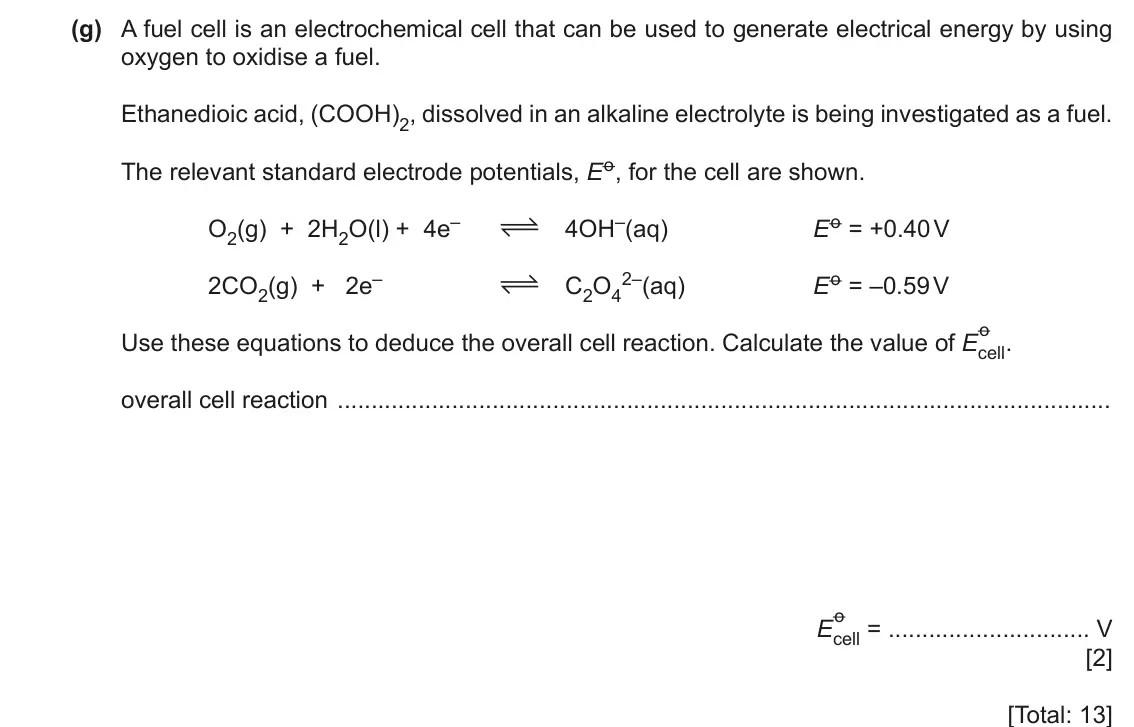
    June 2024 Paper 4, question 3(g): A fuel cell is an electrochemical cell that can be used to generate electrical energy by using oxygen to oxidise a fuel. Ethanedioic acid, (COOH)2, dissolved in

Questions, mark schemes and examiner’s reports are © Cambridge University Press & Assessment, from their published past papers. Plumi isn’t affiliated with any exam board. Want whole papers? Every CAIE A-Level Chemistry paper.

Rather write your answers by hand on iPad? Plumi marks them against the same mark schemes.