 plumi
Chemical bonds, ionic, covalent and metallic: AQA GCSE Chemistry questions
Every AQA GCSE Chemistry exam question on 4.2.1 Chemical bonds, ionic, covalent and metallic, 2018–2025, with its mark scheme and examiner’s report.
Find questions1,744
Calculations
Q02.1
The whole paper ↗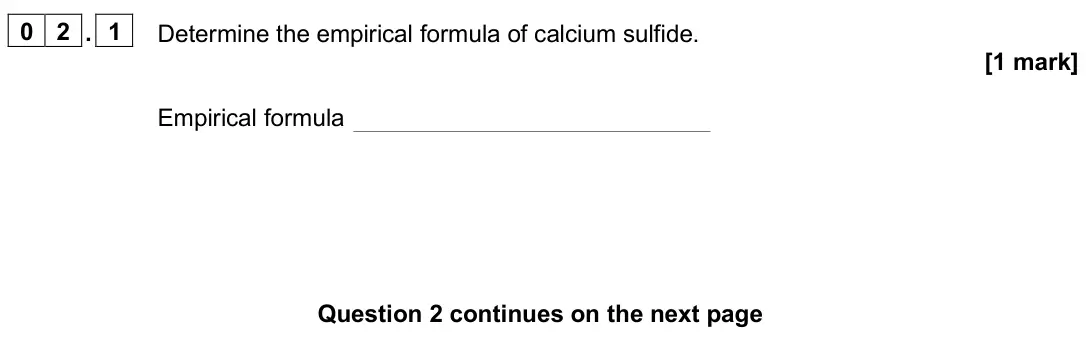
Q02.2
The whole paper ↗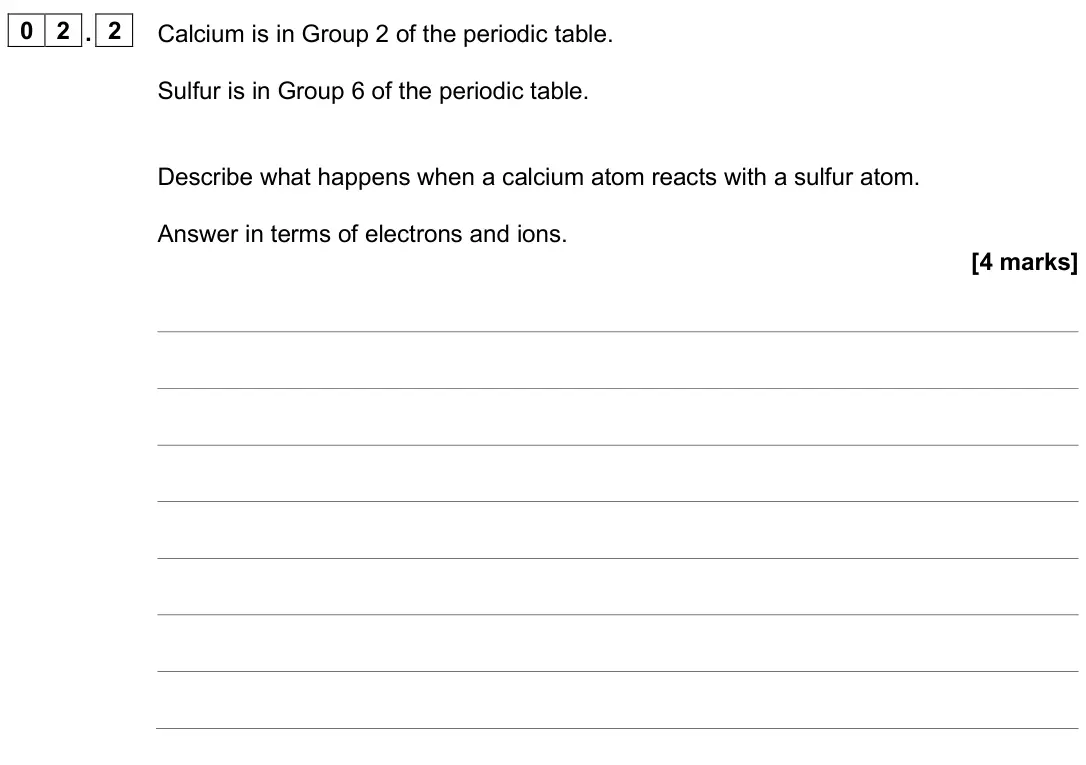
Q02.3
The whole paper ↗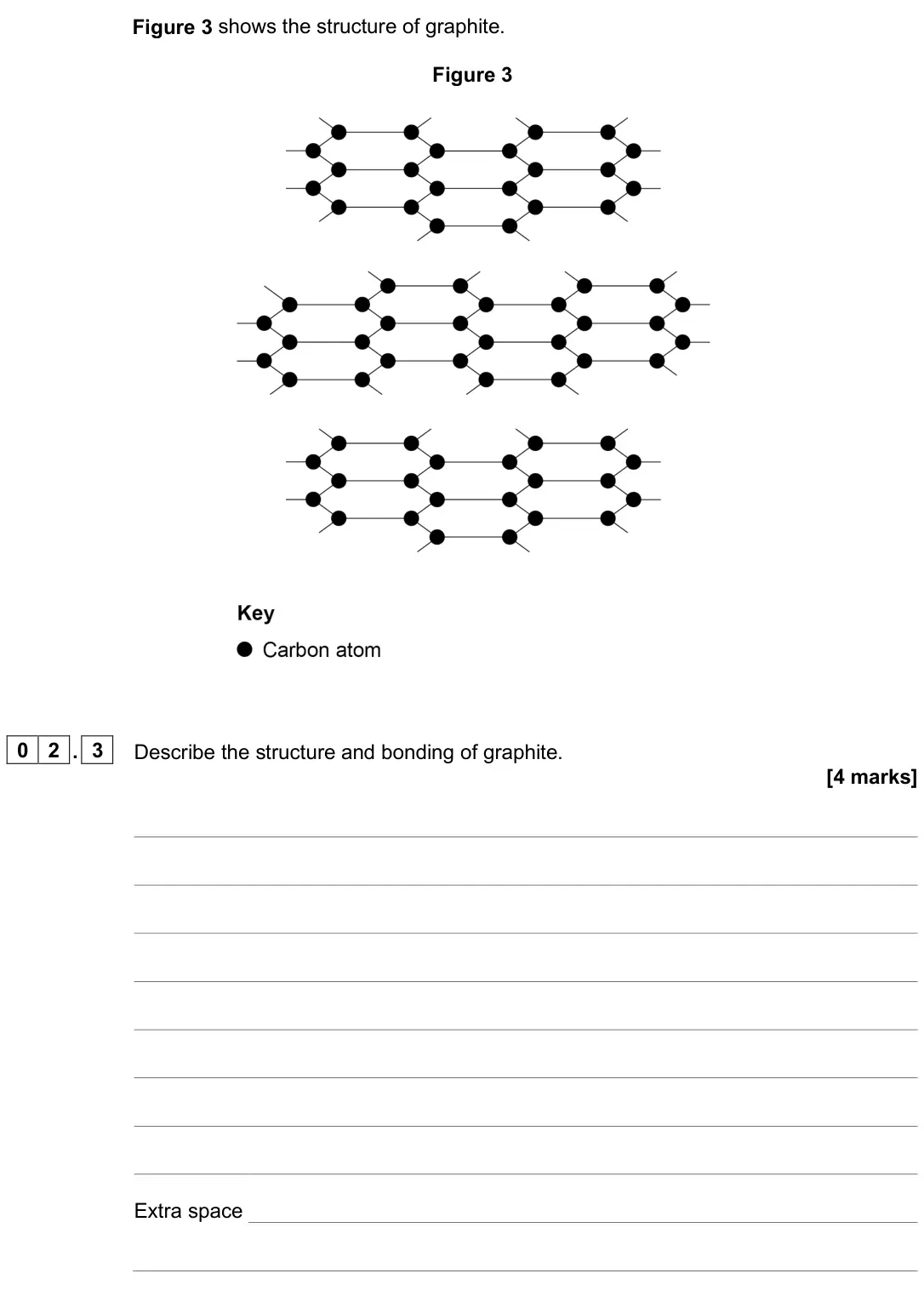
Q06.1
The whole paper ↗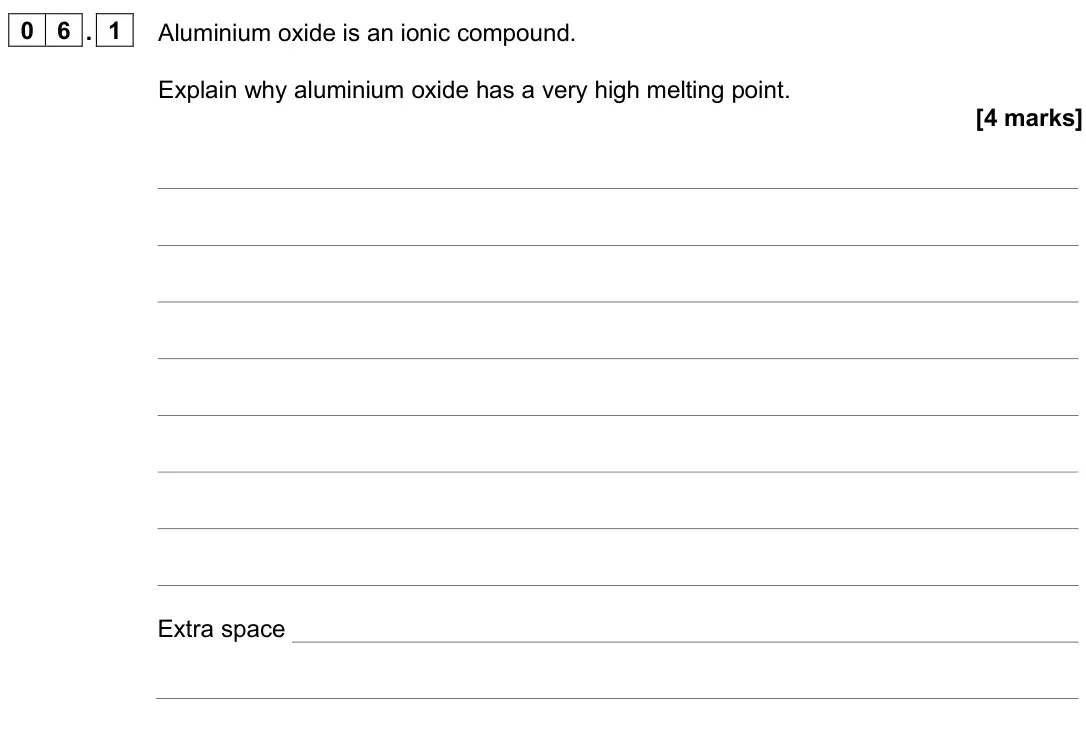
Q07.2
The whole paper ↗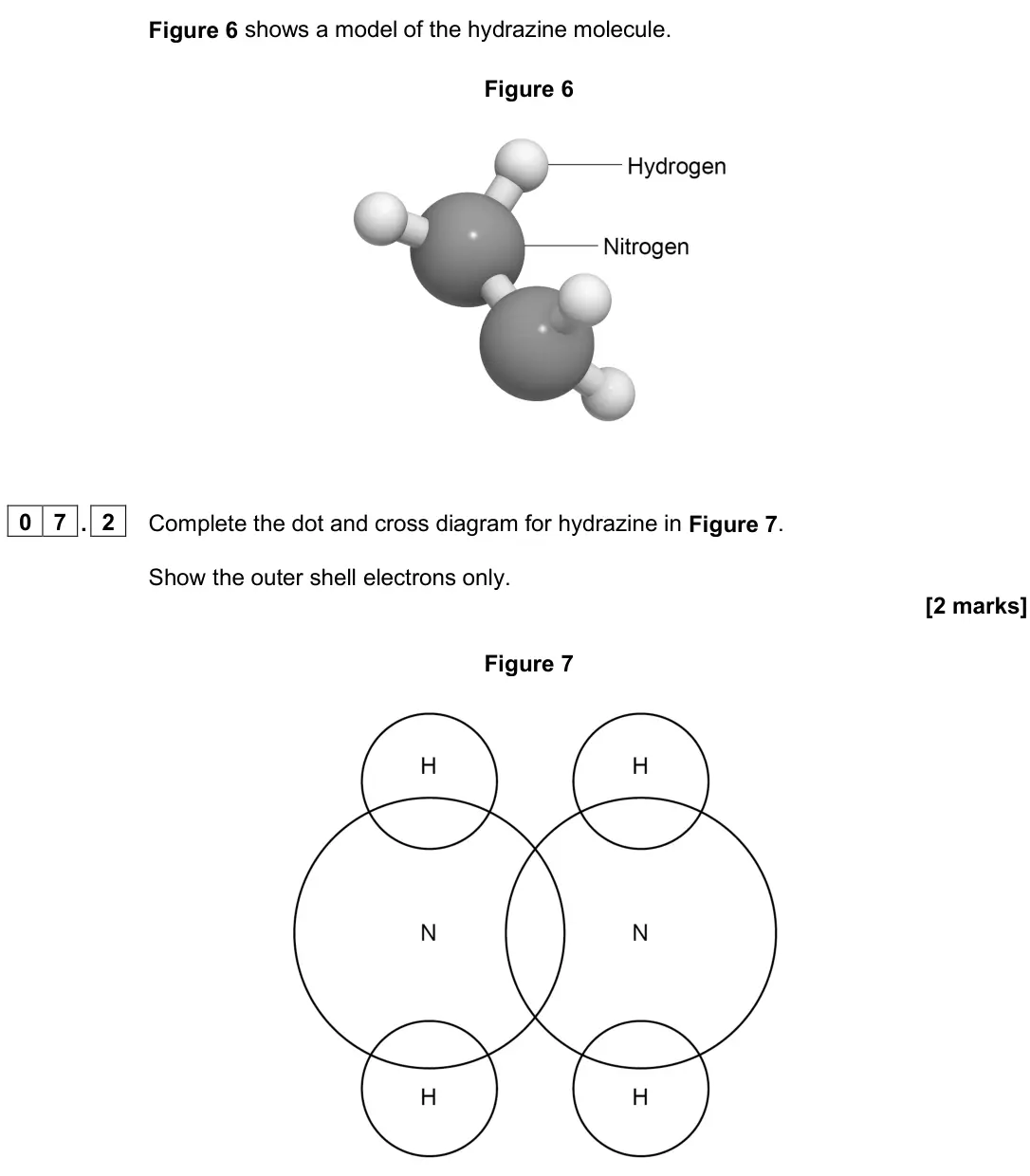
Q07.3
The whole paper ↗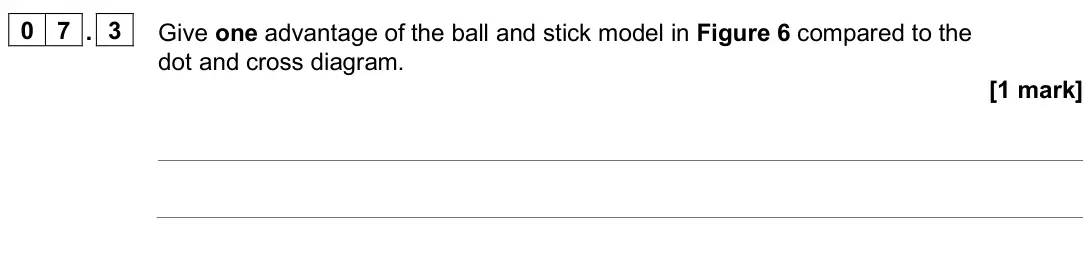
Q05.2
The whole paper ↗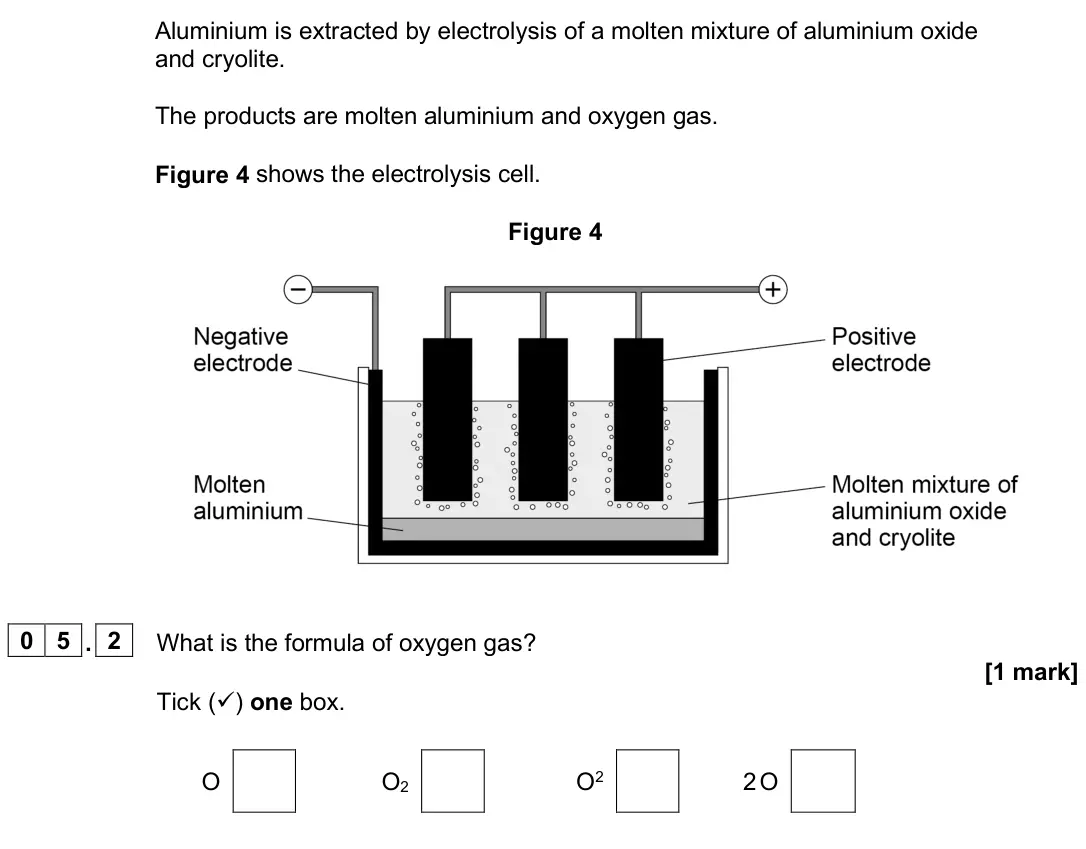
Q09.1
The whole paper ↗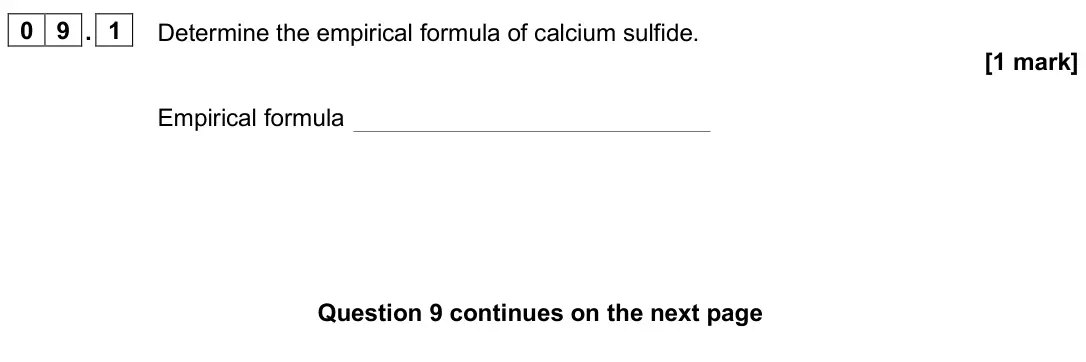
Q09.2
The whole paper ↗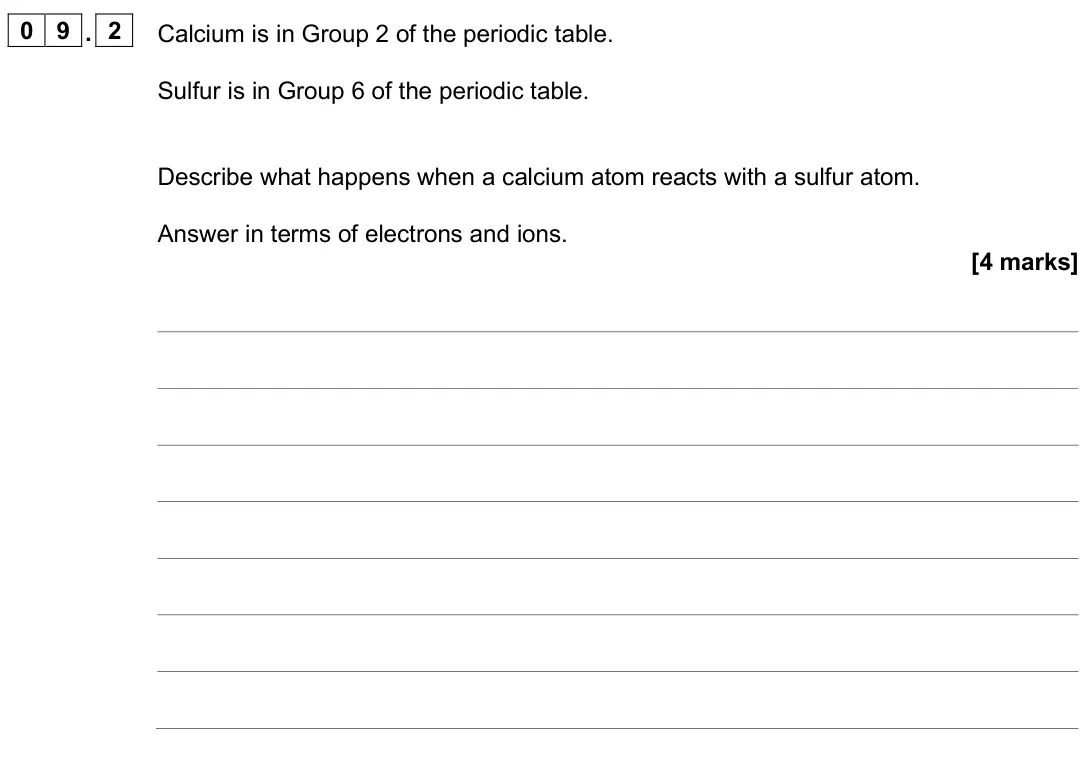
Q09.3
The whole paper ↗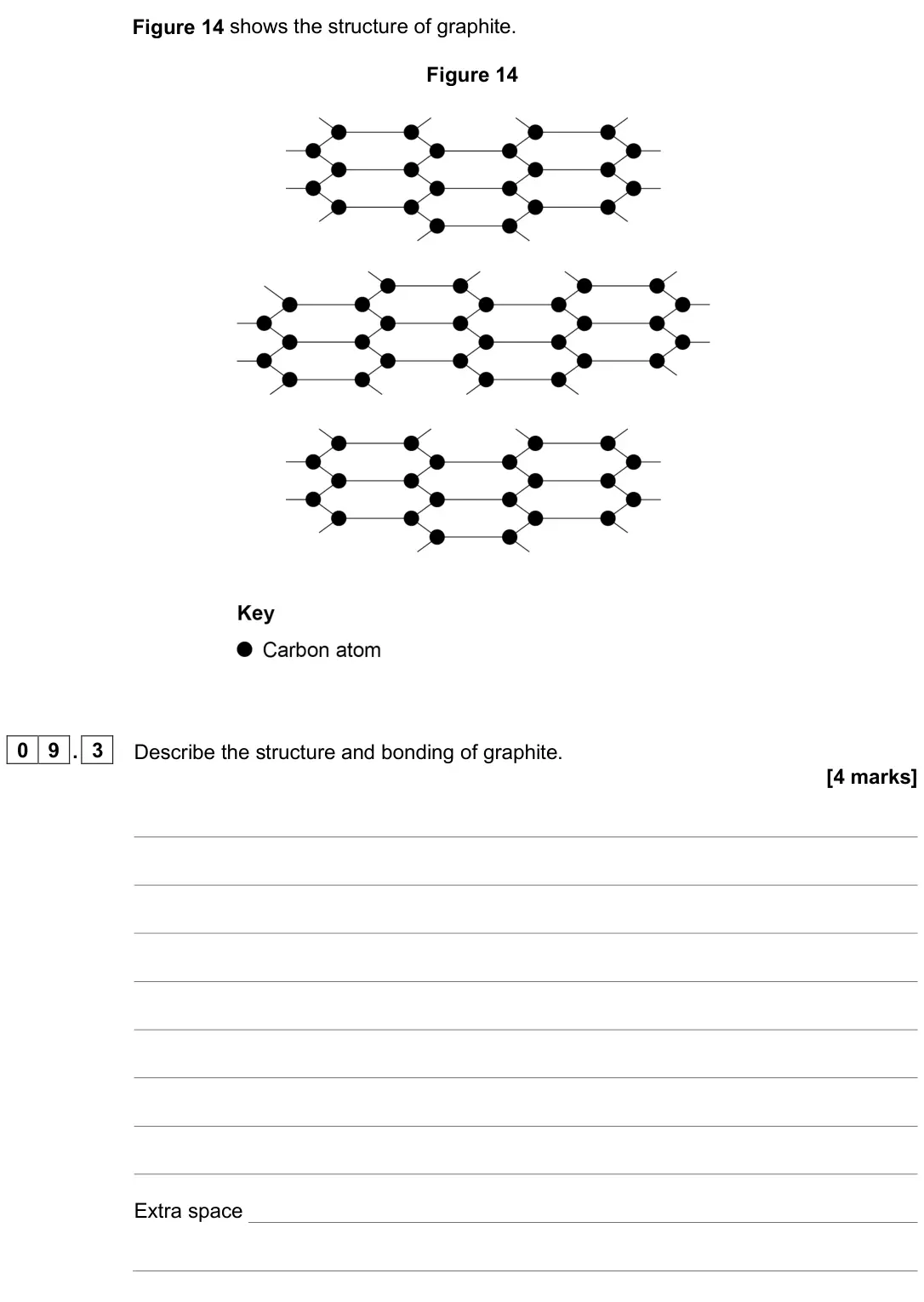
Q02.5
The whole paper ↗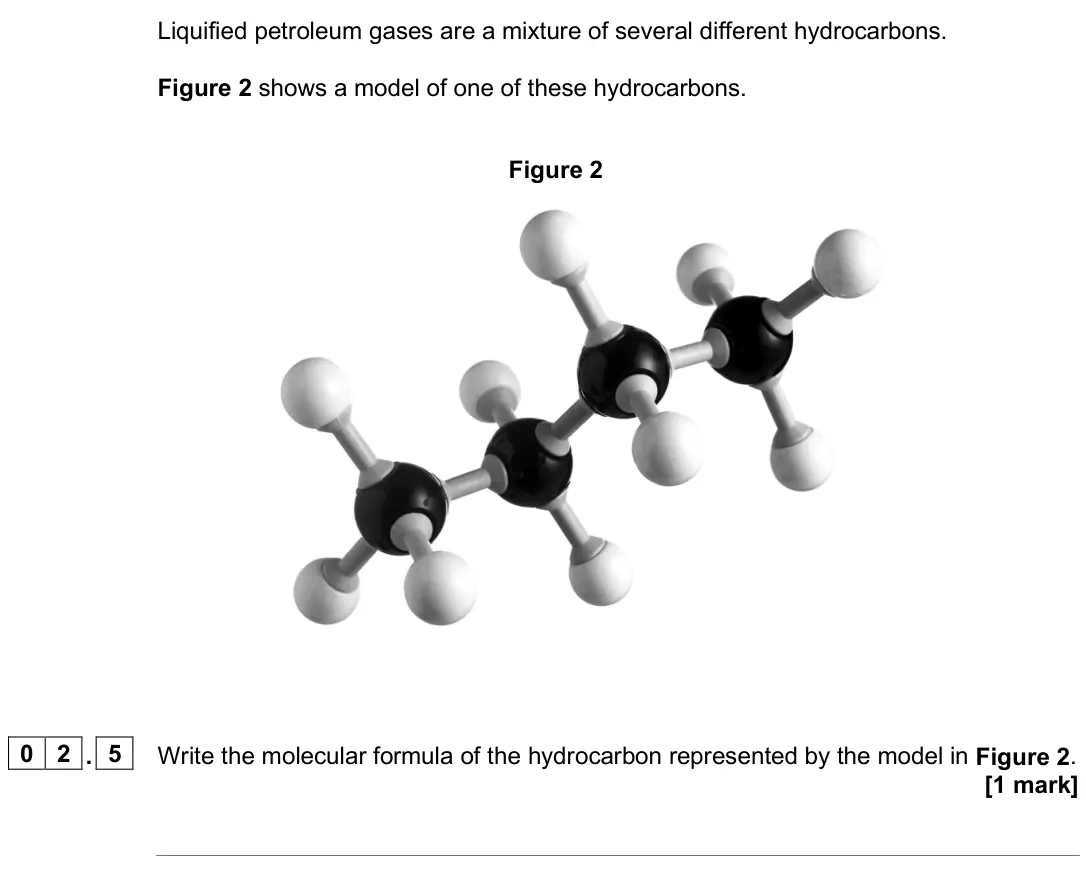
Q06.3
The whole paper ↗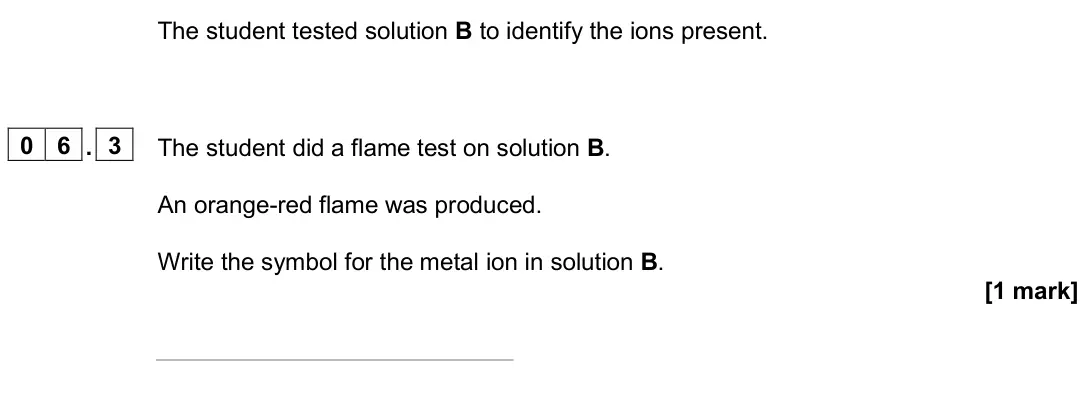
Q06.4
The whole paper ↗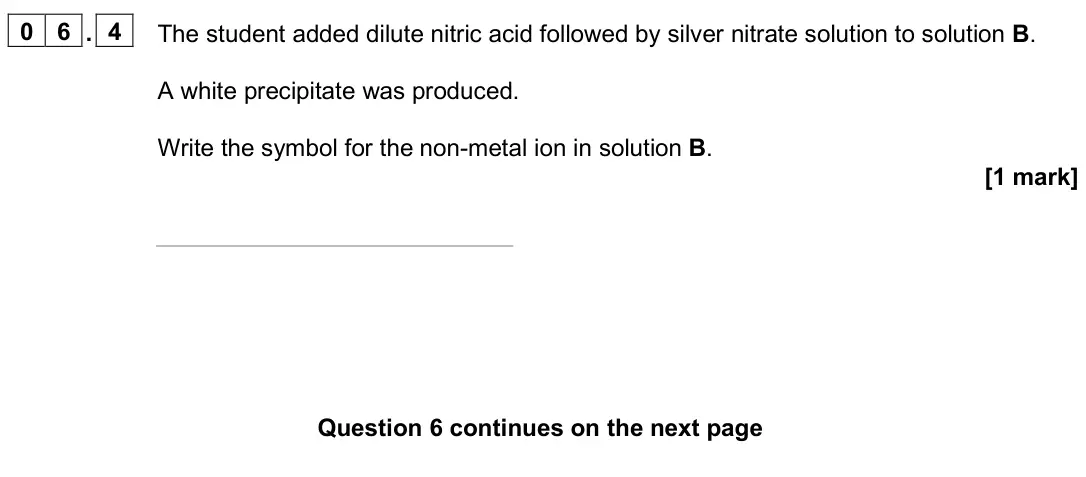
Q09.5
The whole paper ↗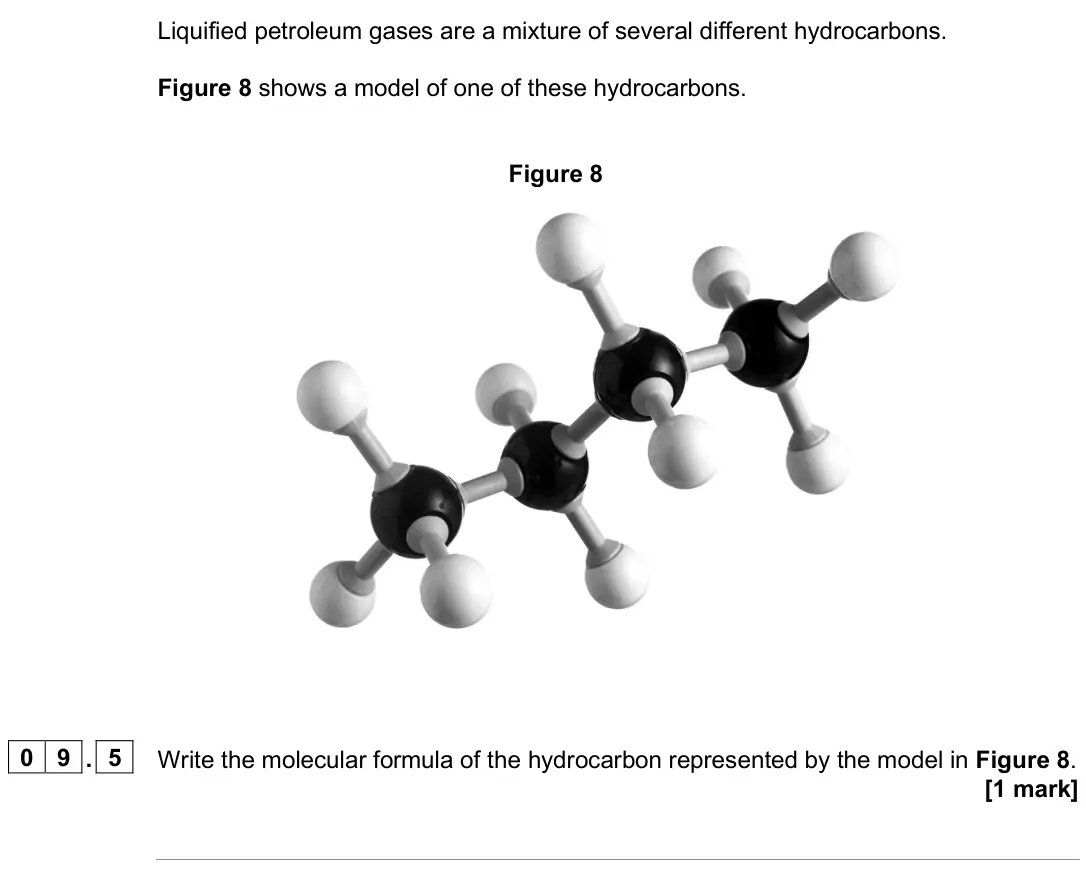
Q05.1
The whole paper ↗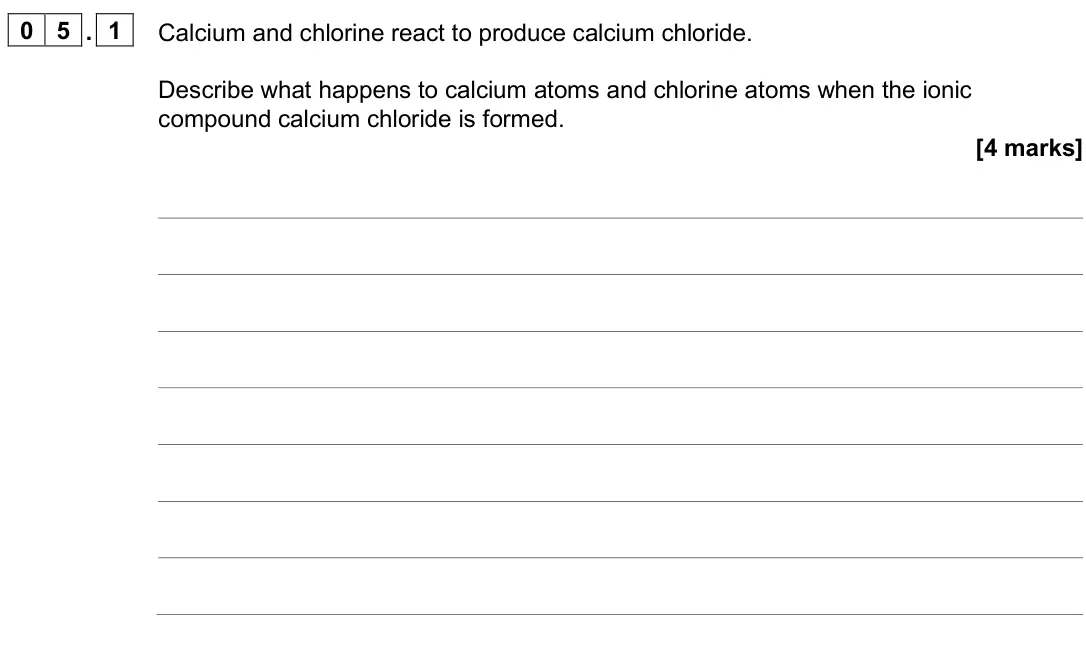
Q07.1
The whole paper ↗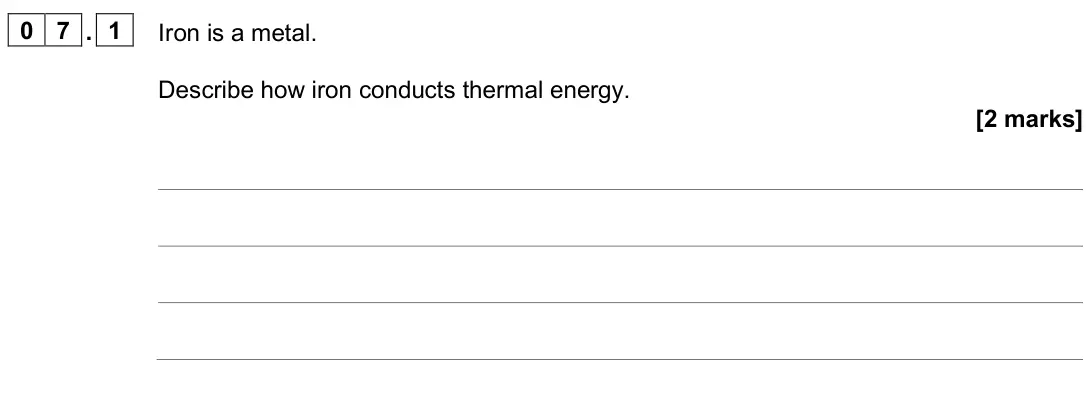
Q08.1
The whole paper ↗
Q09.5
The whole paper ↗
Q01.5
The whole paper ↗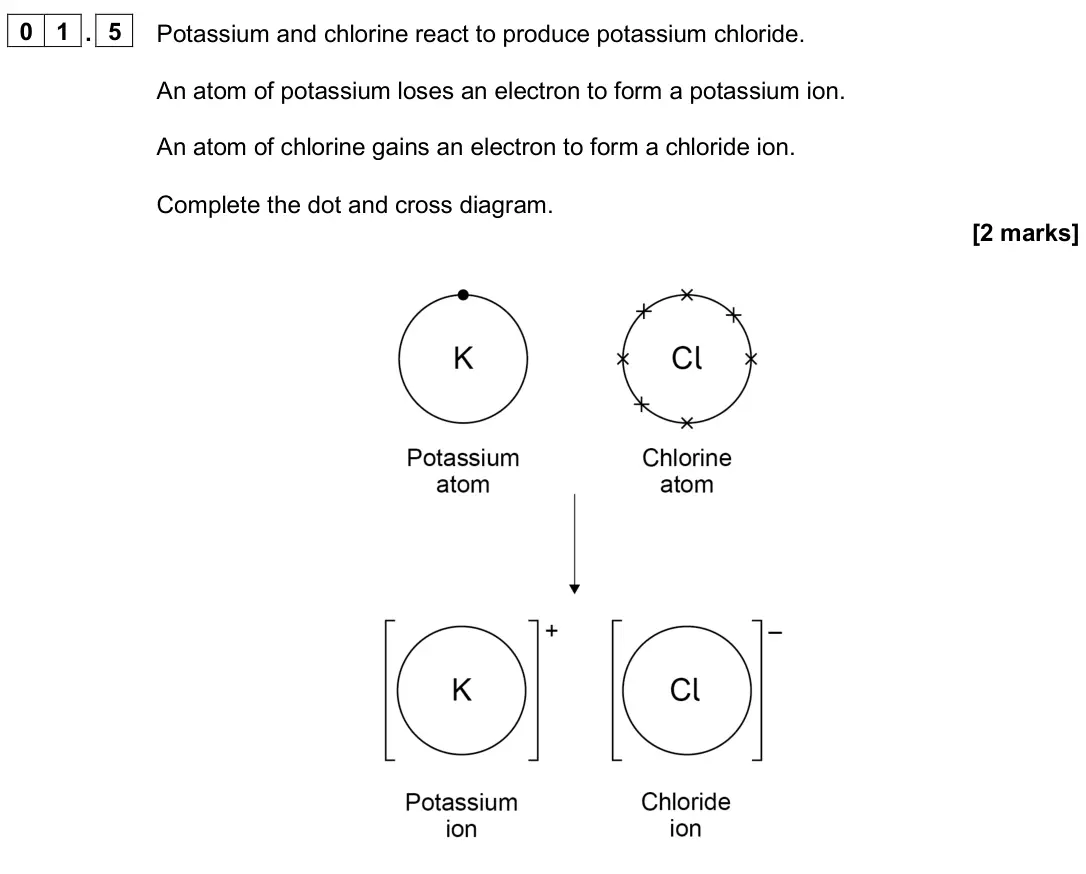
Q05.4
The whole paper ↗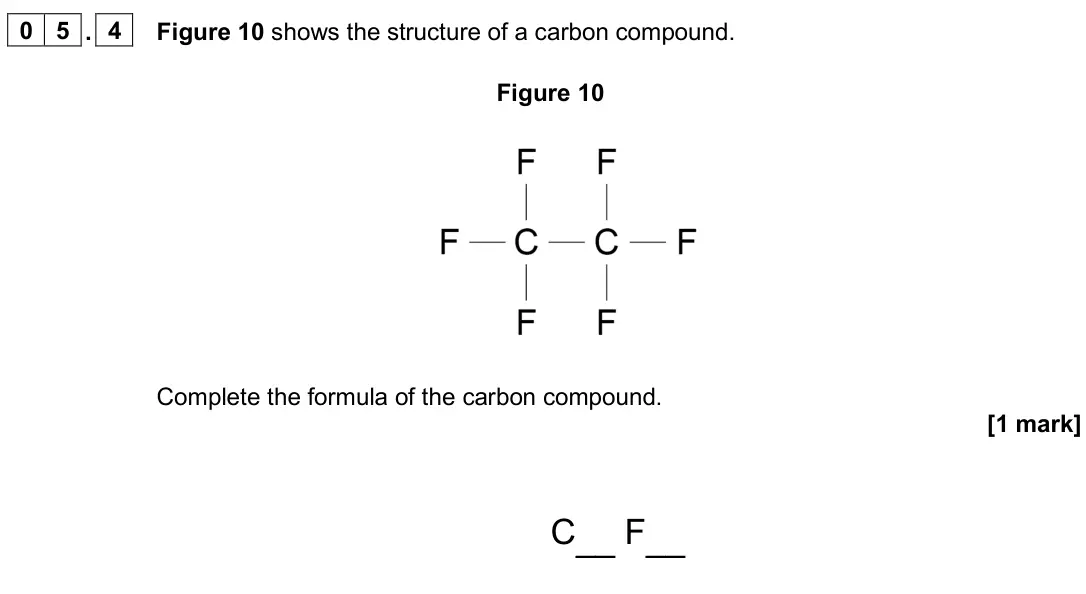
All 73 questions on Chemical bonds, ionic, covalent and metallic, as a list
- June 2025, Paper 1 Higher, Q02.1 (1 mark): Determine the empirical formula of calcium sulfide. [1 mark] Empirical formula
- June 2025, Paper 1 Higher, Q02.2 (4 marks): Calcium is in Group 2 of the periodic table. Sulfur is in Group 6 of the periodic table. Describe what happens when a calcium atom reacts with a sulfur atom. An
- June 2025, Paper 1 Higher, Q02.3 (4 marks): Describe the structure and bonding of graphite. [4 marks]
- June 2025, Paper 1 Higher, Q06.1 (4 marks): Aluminium oxide is an ionic compound. Explain why aluminium oxide has a very high melting point. [4 marks]
- June 2025, Paper 1 Higher, Q07.2 (2 marks): Complete the dot and cross diagram for hydrazine in Figure 7. Show the outer shell electrons only. [2 marks] Figure 7
- June 2025, Paper 1 Higher, Q07.3 (1 mark): Give one advantage of the ball and stick model in Figure 6 compared to the dot and cross diagram. [1 mark]
- June 2025, Paper 1 Foundation, Q05.2 (1 mark): What is the formula of oxygen gas? [1 mark] Tick () one box. O O2 O2 2 O
- June 2025, Paper 1 Foundation, Q09.1 (1 mark): Determine the empirical formula of calcium sulfide. [1 mark] Empirical formula
- June 2025, Paper 1 Foundation, Q09.2 (4 marks): Calcium is in Group 2 of the periodic table. Sulfur is in Group 6 of the periodic table. Describe what happens when a calcium atom reacts with a sulfur atom. An
- June 2025, Paper 1 Foundation, Q09.3 (4 marks): Describe the structure and bonding of graphite. [4 marks]
- June 2025, Paper 2 Higher, Q02.5 (1 mark): Write the molecular formula of the hydrocarbon represented by the model in Figure 2. [1 mark]
- June 2025, Paper 2 Higher, Q06.3 (1 mark): The student did a flame test on solution B. An orange-red flame was produced. Write the symbol for the metal ion in solution B. [1 mark]
- June 2025, Paper 2 Higher, Q06.4 (1 mark): The student added dilute nitric acid followed by silver nitrate solution to solution B. A white precipitate was produced. Write the symbol for the non-metal ion
- June 2025, Paper 2 Foundation, Q09.5 (1 mark): Write the molecular formula of the hydrocarbon represented by the model in Figure 8. [1 mark]
- June 2024, Paper 1 Higher, Q05.1 (4 marks): Calcium and chlorine react to produce calcium chloride. Describe what happens to calcium atoms and chlorine atoms when the ionic compound calcium chloride is fo
- June 2024, Paper 1 Higher, Q07.1 (2 marks): Iron is a metal. Describe how iron conducts thermal energy. [2 marks]
- June 2024, Paper 1 Higher, Q08.1 (3 marks): Explain why propane has a low boiling point. [3 marks]
- June 2024, Paper 1 Higher, Q09.5 (3 marks): A calcium atom is larger than a magnesium atom. Explain why calcium reacts more vigorously than magnesium with hydrochloric acid of the same concentration. [3 m
- June 2024, Paper 1 Foundation, Q01.5 (2 marks): Potassium and chlorine react to produce potassium chloride. An atom of potassium loses an electron to form a potassium ion. An atom of chlorine gains an electro
- June 2024, Paper 1 Foundation, Q05.4 (1 mark): Figure 10 shows the structure of a carbon compound. Figure 10 Complete the formula of the carbon compound. [1 mark] C__ F__
- June 2023, Paper 1 Higher, Q04.4 (2 marks): Draw a dot and cross diagram for a molecule of hydrogen chloride (HCl). Show the outer shell electrons only. [2 marks]
- June 2023, Paper 1 Higher, Q05.7 (1 mark): Which element has atoms that have the same electronic structure as the chloride ion? Use the periodic table. [1 mark]
- June 2023, Paper 1 Higher, Q06.2 (3 marks): Describe how metals conduct electricity. [3 marks]
- June 2023, Paper 1 Higher, Q08.1 (2 marks): Argon has the atomic number 18 Explain why argon does not form compounds. Answer in terms of electrons. [2 marks]
- June 2023, Paper 1 Higher, Q08.2 (1 mark): Phosphorus (P) is the element below nitrogen in the periodic table. Predict the formula of the compound formed between phosphorus and hydrogen. [1 mark] Formula
- June 2023, Paper 1 Foundation, Q07.1 (2 marks): Figure 8 represents part of the structure of solid sodium chloride. Figure 8 Complete Figure 8. [2 marks]
- June 2022, Paper 1 Higher, Q01.5 (3 marks): Aluminium is a metal. Describe how metals conduct electricity. Answer in terms of electrons. [3 marks]
- June 2022, Paper 1 Higher, Q01.6 (1 mark): Name the type of bonding in compounds formed between metals and non-metals. [1 mark]
- June 2022, Paper 1 Higher, Q01.7 (4 marks): Magnesium oxide is a compound formed from the metal magnesium and the non-metal oxygen. Describe what happens when a magnesium atom reacts with an oxygen atom.
- June 2022, Paper 1 Higher, Q07.5 (1 mark): Complete Figure 9 to show the outer shell electrons in a molecule of Si2H6 [1 mark] Figure 9
- June 2022, Paper 1 Foundation, Q06.2 (1 mark): Which diagram represents poly(ethene)? [1 mark] Tick () one box. A B C D
- June 2022, Paper 1 Foundation, Q06.5 (1 mark): Figure 11 shows a model of a molecule. Figure 11 Complete the molecular formula of the molecule. [1 mark] Molecular formula = C__ H__
- June 2022, Paper 1 Foundation, Q09.5 (3 marks): Aluminium is a metal. Describe how metals conduct electricity. Answer in terms of electrons. [3 marks]
- June 2022, Paper 1 Foundation, Q09.6 (1 mark): Name the type of bonding in compounds formed between metals and non-metals. [1 mark]
- June 2022, Paper 1 Foundation, Q09.7 (4 marks): Magnesium oxide is a compound formed from the metal magnesium and the non-metal oxygen. Describe what happens when a magnesium atom reacts with an oxygen atom.
- November 2021, Paper 1 Higher, Q01.3 (1 mark): Complete Figure 2 to show a propanone molecule. Use a line to represent each single bond. Use Figure 1. [1 mark] Figure 2
- November 2021, Paper 1 Higher, Q01.4 (1 mark): Determine the molecular formula of propanone. Use Figure 1. [1 mark] Molecular formula =
- November 2021, Paper 1 Higher, Q02.4 (1 mark): What is the most likely formula of a gallium ion? [1 mark] Tick () one box. Ga+ Ga– Ga3+ Ga3–
- November 2021, Paper 1 Higher, Q04.4 (4 marks): Draw a dot and cross diagram to show what happens when atoms of sodium and oxygen react to produce sodium oxide. [4 marks] Diagram
- November 2021, Paper 1 Higher, Q04.6 (3 marks): Explain why sodium oxide has a high melting point. [3 marks]
- November 2021, Paper 1 Foundation, Q01.6 (1 mark): Figure 1 represents part of the structure of an oxide of a metal. Figure 1 Determine the empirical formula of this oxide. [1 mark] Empirical formula = XO___
- November 2021, Paper 1 Foundation, Q03.3 (1 mark): What is the type of bonding in sodium? [1 mark] Tick () one box. Covalent Ionic Metallic Table 3 shows observations made when lithium, potassium and rubidium r
- November 2021, Paper 1 Foundation, Q03.8 (3 marks): Sodium fluoride is an ionic compound. Figure 5 shows dot and cross diagrams for a sodium atom and a fluorine atom. Complete Figure 5 to show what happens when a
- November 2021, Paper 1 Foundation, Q08.3 (1 mark): Complete Figure 14 to show a propanone molecule. Use a line to represent each single bond. Use Figure 13. [1 mark] Figure 14
- November 2021, Paper 1 Foundation, Q08.4 (1 mark): Determine the molecular formula of propanone. Use Figure 13. [1 mark] Molecular formula =
- November 2021, Paper 1 Foundation, Q09.4 (1 mark): What is the most likely formula of a gallium ion? [1 mark] Tick () one box. Ga+ Ga– Ga3+ Ga3–
- November 2020, Paper 1 Higher, Q01.1 (2 marks): Which two substances have intermolecular forces between particles? [2 marks] Tick () two boxes. Diamond Magnesium Poly(ethene) Sodium chloride Water
- November 2020, Paper 1 Higher, Q01.2 (6 marks): Table 1 shows the structures of three compounds. Table 1 Compound Structure Carbon dioxide Magnesium oxide Silicon dioxide Diagrams not to scale Compare the str
- November 2020, Paper 1 Foundation, Q05.1 (2 marks): Aluminium is a metal. Draw one line from each property of aluminium to the correct reason for that property. [2 marks] Property Reason Conducts electricity High
- November 2020, Paper 1 Foundation, Q06.1 (1 mark): Complete the molecular formula of citric acid. Use Figure 7. [1 mark] C6H __ O __
- November 2020, Paper 1 Foundation, Q06.2 (1 mark): What type of bonding is shown in Figure 7? [1 mark] Tick () one box. Covalent Ionic Metallic
- November 2020, Paper 1 Foundation, Q06.3 (2 marks): Figure 8 shows two representations of one molecule of citric acid, A and B. Figure 8 A B Give two advantages of representation A compared with representation B.
- November 2020, Paper 1 Foundation, Q08.1 (2 marks): Which two substances have intermolecular forces between particles? [2 marks] Tick () two boxes. Diamond Magnesium Poly(ethene) Sodium chloride Water
- November 2020, Paper 1 Foundation, Q08.2 (6 marks): Table 5 shows the structures of three compounds. Table 5 Compound Structure Carbon dioxide Magnesium oxide Silicon dioxide Diagrams not to scale Compare the str
- June 2019, Paper 1 Higher, Q05.1 (2 marks): Complete the dot and cross diagram for the ammonia molecule shown in Figure 6. Show only the electrons in the outer shell of each atom. [2 marks] Figure 6
- June 2019, Paper 1 Higher, Q05.2 (1 mark): Give one limitation of using a dot and cross diagram to represent an ammonia molecule. [1 mark]
- June 2019, Paper 1 Foundation, Q02.1 (1 mark): What is the correct formula of hydrogen peroxide? [1 mark] Tick () one box. H2O2 HO2 H2O2 H2O2
- June 2019, Paper 1 Foundation, Q02.2 (1 mark): Which type of bonding is shown in Figure 2? [1 mark] Tick () one box. Covalent Ionic Metallic
- June 2019, Paper 1 Foundation, Q02.7 (2 marks): Hydrogen and oxygen form water. A hydrogen atom contains one electron. An oxygen atom contains six electrons in the outer shell. Complete Figure 4 to show a dot
- June 2018, Paper 1 Higher, Q02.1 (1 mark): Iron pyrites is an ionic compound. Figure 1 shows a structure for iron pyrites. Figure 1 Determine the formula of iron pyrites. Use Figure 1. [1 mark]
- June 2018, Paper 1 Higher, Q07.3 (3 marks): Chlorine reacts with hydrogen to form hydrogen chloride. Explain why hydrogen chloride is a gas at room temperature. Answer in terms of structure and bonding. [
- June 2018, Paper 1 Foundation, Q09.1 (1 mark): Iron pyrites is an ionic compound. Figure 12 shows a structure for iron pyrites. Figure 12 Determine the formula of iron pyrites. Use Figure 12. [1 mark]
- Specimen, Paper 1 Higher, Q03.1 (5 marks): Potassium forms an ionic compound with sulfur. Describe what happens when two atoms of potassium react with one atom of sulfur. Give your answer in terms of ele
- Specimen, Paper 1 Higher, Q03.2 (1 mark): The structure of potassium sulfide can be represented using the ball and stick mode in Figure 2. The ball and stick model is not a true representation of the st
- Specimen, Paper 1 Higher, Q03.3 (2 marks): Sulfur can also form covalent bonds. Complete the dot and cross diagram to show the covalent bonding in a molecule of hydrogen sulfide. Show the outer shell ele
- Specimen, Paper 1 Higher, Q03.4 (2 marks): Figure 1 0 3 Figure 1 shows the outer electrons in an atom of the Group 1 element potassium and in an atom of the Group 6 element sulfur. 3 . 4 Calculate the re
- Specimen, Paper 1 Higher, Q09.2 (2 marks): When ethene reacts with bromine, energy is required to break covalent bonds in the molecules. Explain how a covalent bond holds two atoms together. [2 marks] Fi
- Specimen, Paper 1 Foundation, Q01.1 (4 marks): Draw one line from each statement to the diagram which shows the structure. [4 mark 3
- Specimen, Paper 1 Foundation, Q09.1 (5 marks): Potassium forms an ionic compound with sulfur. Describe what happens when two atoms of potassium react with one atom of sulfu Give your answer in terms of elect
- Specimen, Paper 1 Foundation, Q09.2 (1 mark): The structure of potassium sulfide can be represented using the ball and stick model in Figure 12. The ball and stick model is not a true representation of the
- Specimen, Paper 1 Foundation, Q09.3 (2 marks): Sulfur can also form covalent bonds. Complete the dot and cross diagram to show the covalent bonding in a molecule of hydrogen sulfide. Show the outer shell ele
- Specimen, Paper 1 Foundation, Q09.4 (2 marks): Calculate the relative formula mass (Mr) of aluminium sulfate Al2(SO4)3 Relative atomic masses (Ar): oxygen = 16; aluminium = 27; sulfur = 32 [2 marks] Relative
- Specimen, Paper 2 Foundation, Q06.3: A molecule of methanol has five single covalent bonds. Draw the missing bonds in Figure 6 to complete the displayed formula for methanol. [1 mar Figure 6 H H C
Questions, mark schemes and examiner’s reports are © AQA, from their published past papers. Plumi isn’t affiliated with any exam board. Want whole papers? Every AQA GCSE Chemistry paper.
Rather write your answers by hand on iPad? Plumi marks them against the same mark schemes.