 plumi
Orbits and the wider universe: WJEC A‑Level Physics questions
Every WJEC A-Level Physics exam question on 4.3 Orbits and the wider universe, 2016–2025, with its mark scheme and examiner’s report.
Find questions1,173
Calculations
Q7(d)(i)
The whole paper ↗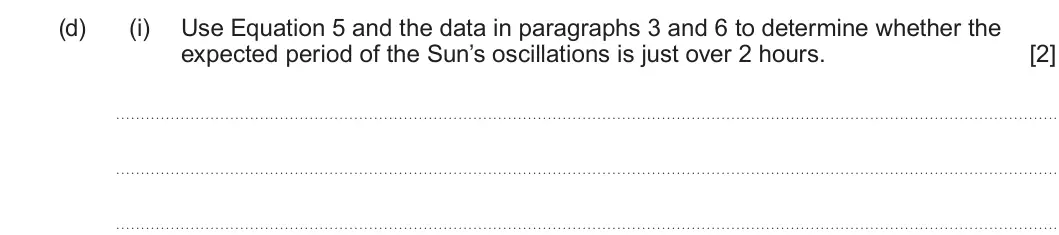
Q7(d)(ii)
The whole paper ↗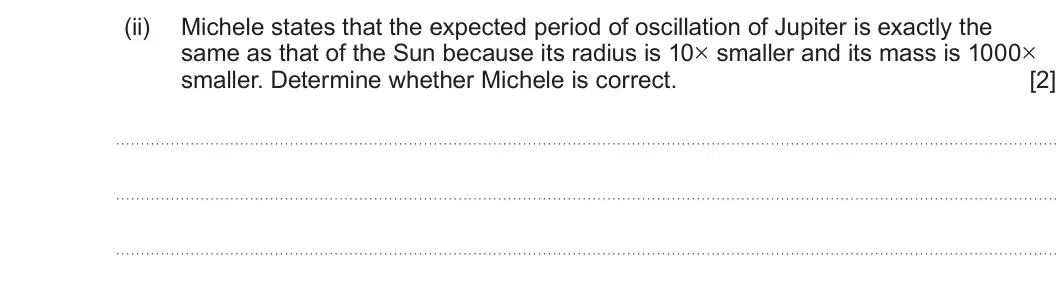
Q2(d)
The whole paper ↗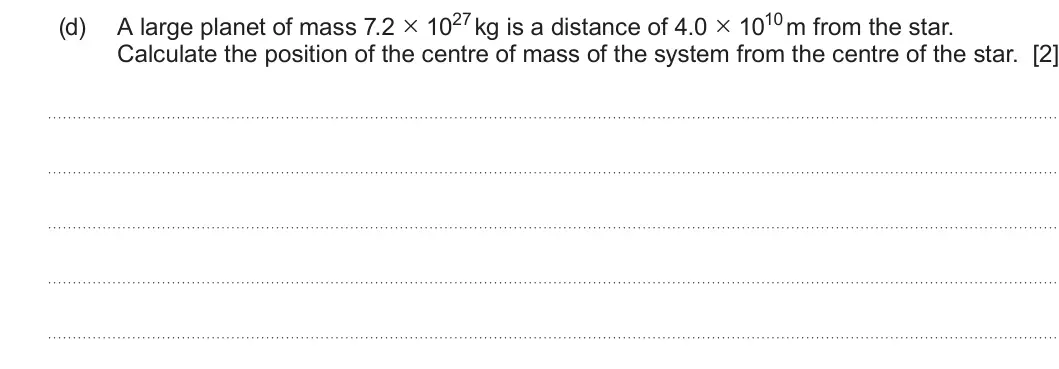
Q2(e)(i)
The whole paper ↗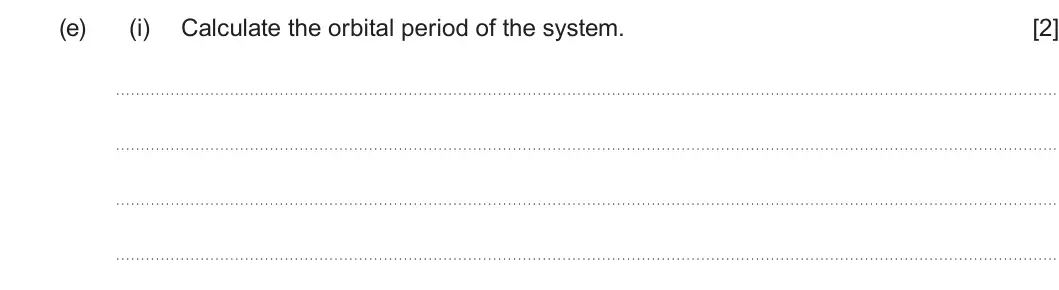
Q2(e)(ii)
The whole paper ↗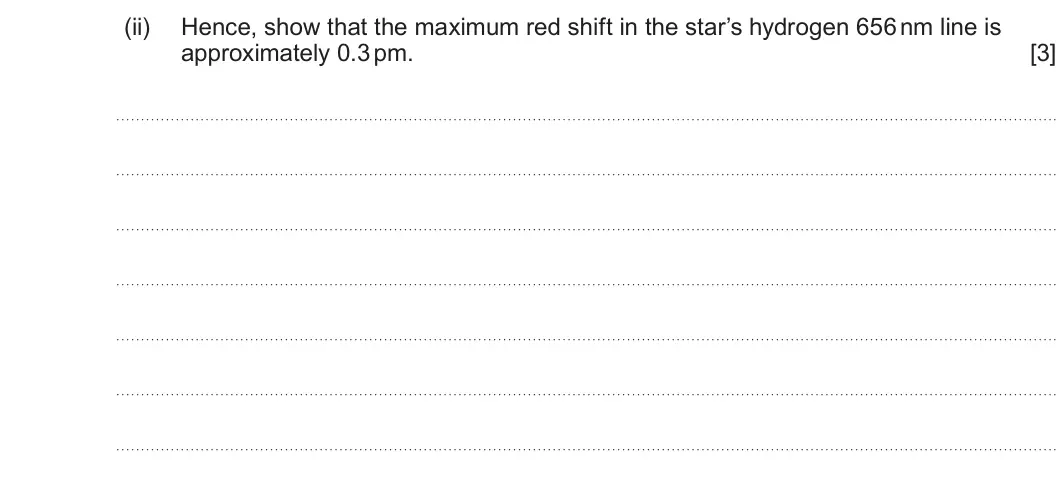
Q2(f)
The whole paper ↗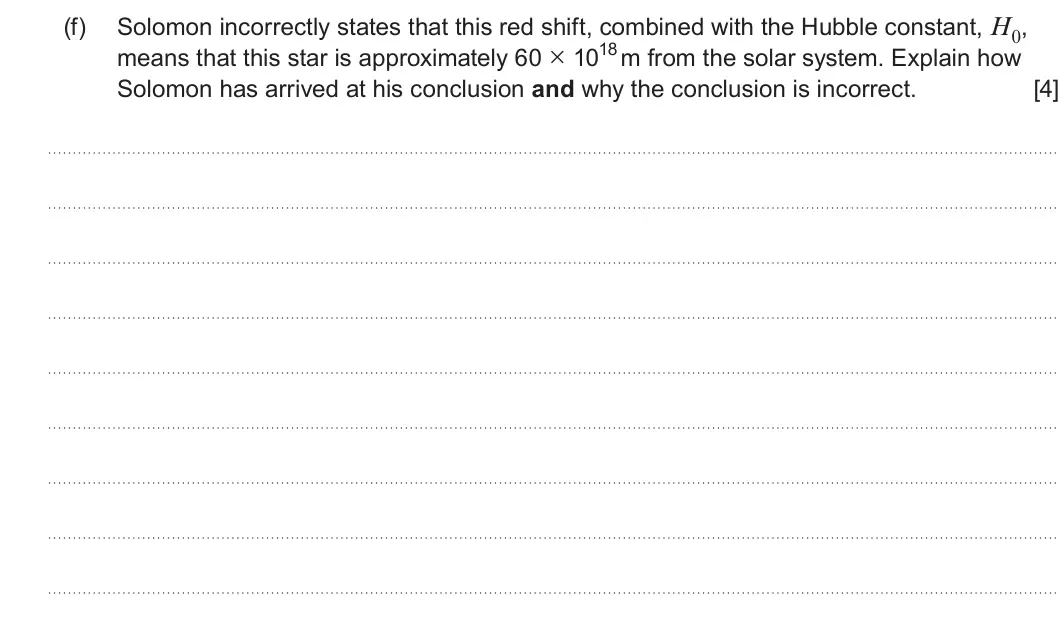
Q2(g)
The whole paper ↗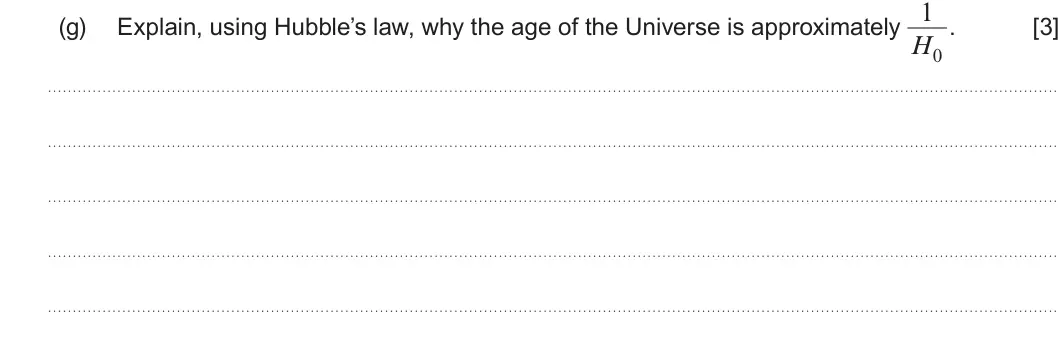
Q3(a)
The whole paper ↗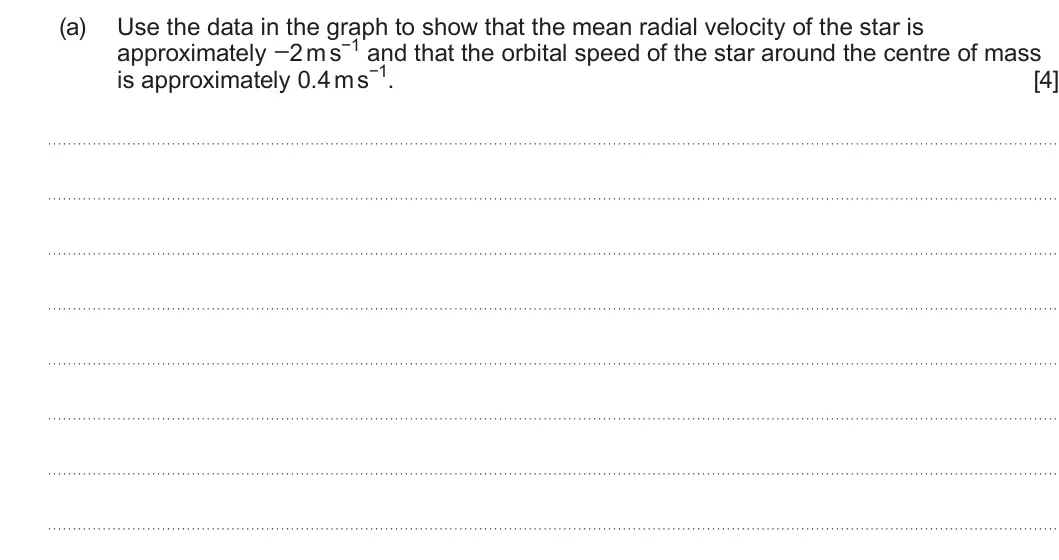
Q3(b)
The whole paper ↗
Q3(c)
The whole paper ↗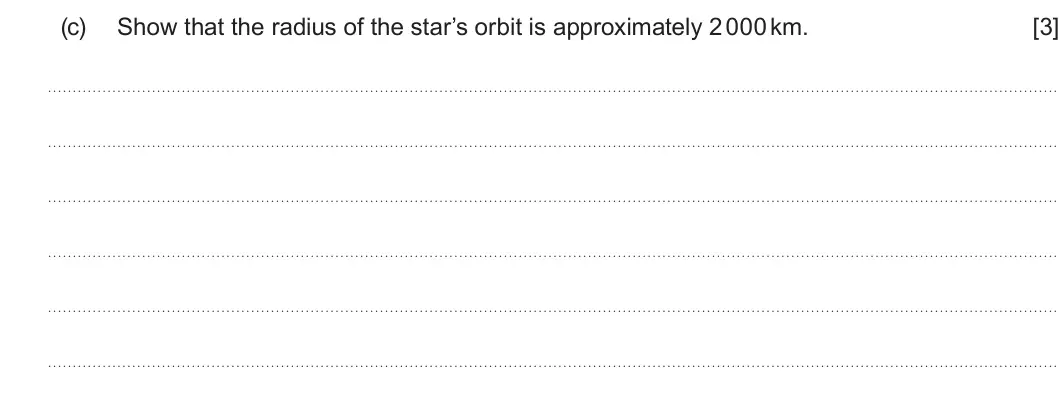
Q3(d)(i)
The whole paper ↗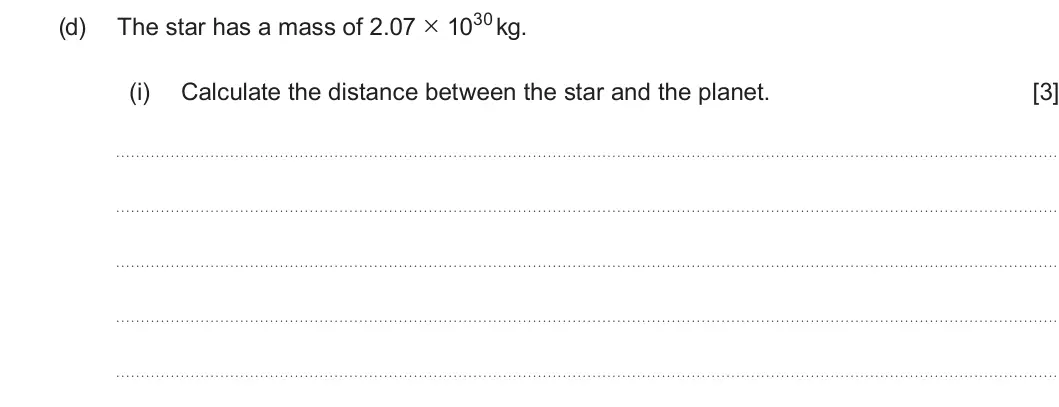
Q3(d)(ii)
The whole paper ↗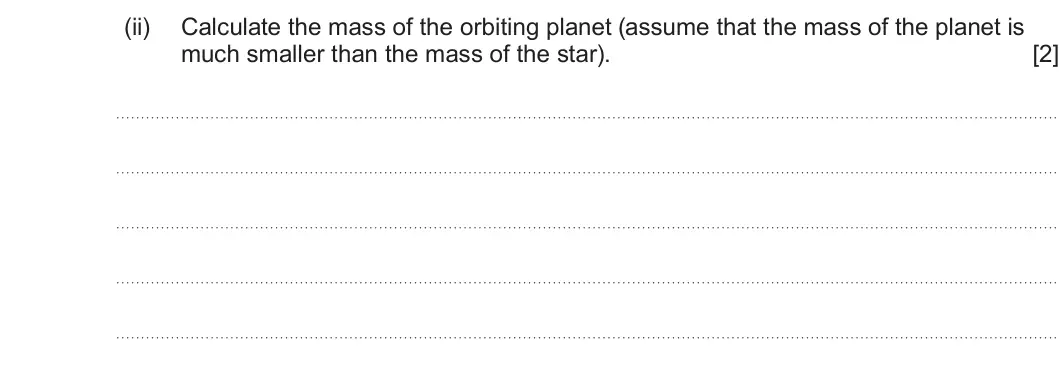
Q3(e)
The whole paper ↗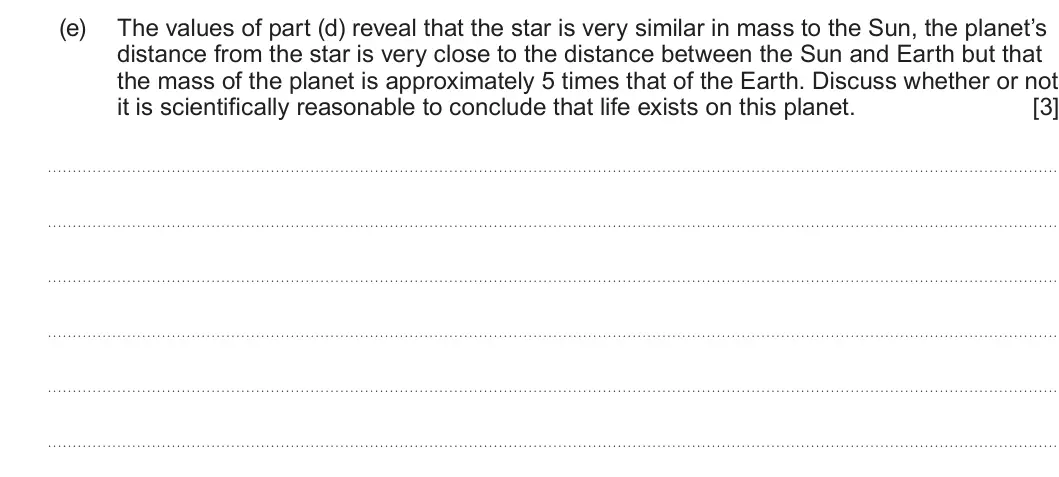
Q7(b)(i)
The whole paper ↗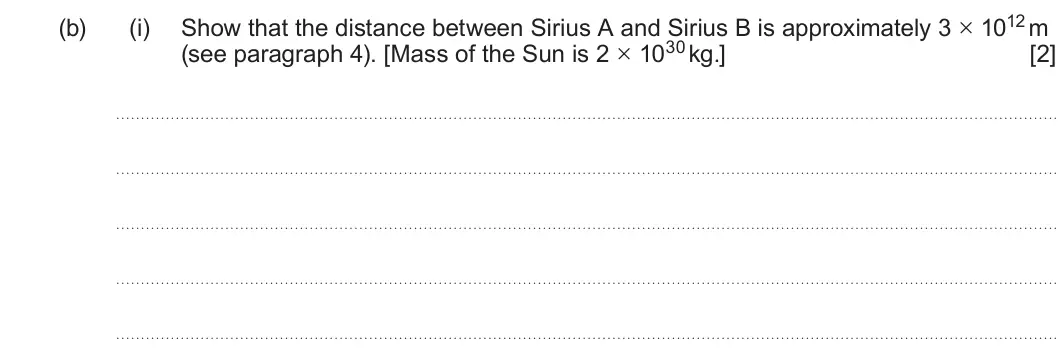
Q7(b)(ii)
The whole paper ↗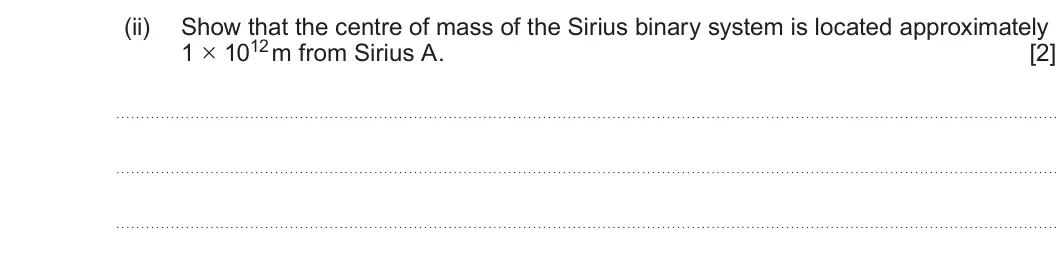
Q7(d)
The whole paper ↗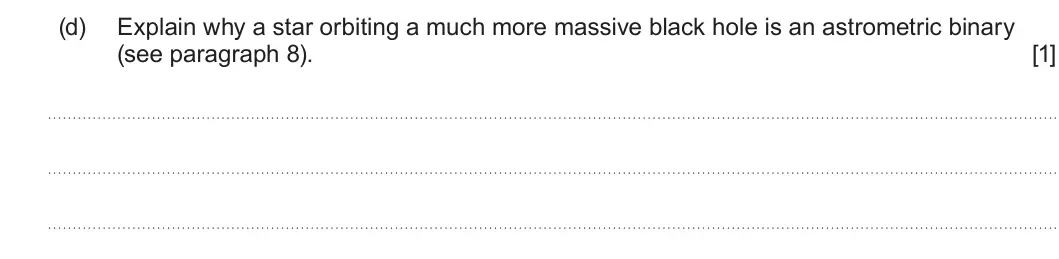
Q2(a)
The whole paper ↗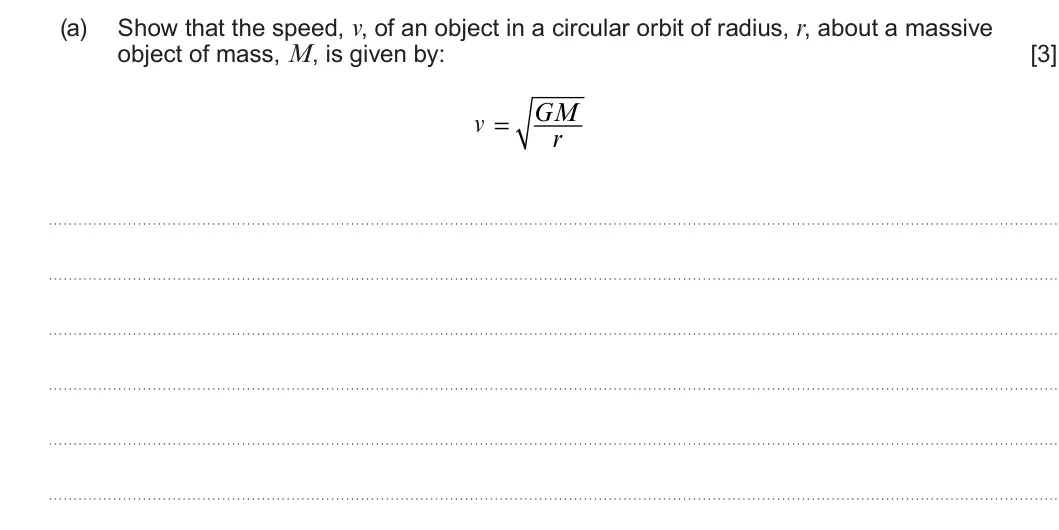
Q2(b)
The whole paper ↗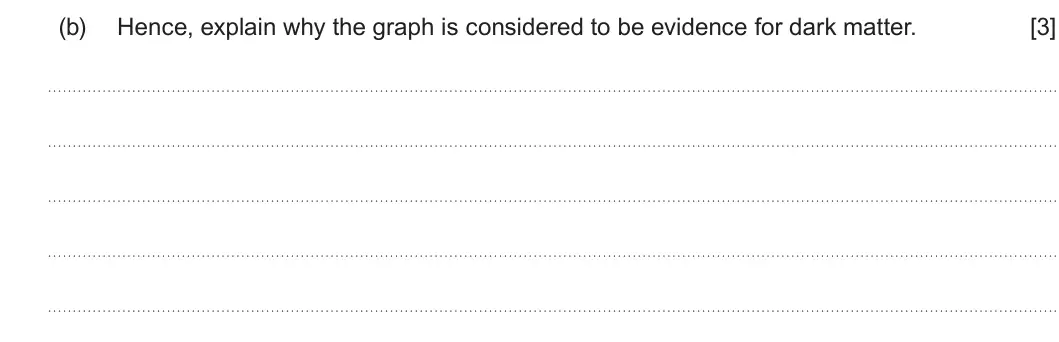
Q2(c)
The whole paper ↗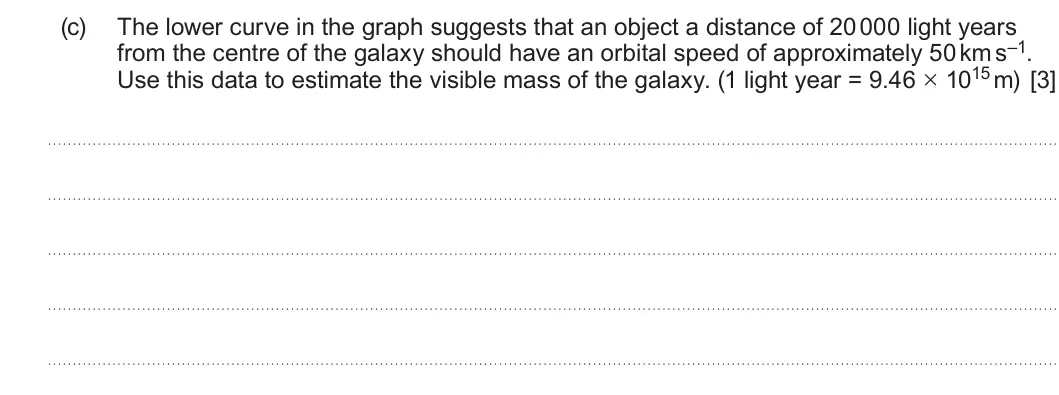
All 54 questions on Orbits and the wider universe, as a list
- Summer 2025, Unit 3, Q7(d)(i) (2 marks): Read through the following article carefully. Paragraph Are Cepheid variables giant stars or giant musical instruments? Stars called Cepheid variables vary in b
- Summer 2025, Unit 3, Q7(d)(ii) (2 marks): Read through the following article carefully. Paragraph Are Cepheid variables giant stars or giant musical instruments? Stars called Cepheid variables vary in b
- Summer 2025, Unit 4, Q2(d) (2 marks): Calculate the position of the centre of mass of the system from the centre of the star. [2]
- Summer 2025, Unit 4, Q2(e)(i) (2 marks): Calculate the orbital period of the system. [2]
- Summer 2025, Unit 4, Q2(e)(ii) (3 marks): Hence, show that the maximum red shift in the star’s hydrogen 656 nm line is approximately 0.3 pm. [3]
- Summer 2025, Unit 4, Q2(f) (4 marks): Solomon incorrectly states that this red shift, combined with the Hubble constant, H0, means that this star is approximately 60 × 1018 m from the solar system.
- Summer 2025, Unit 4, Q2(g) (3 marks): . [3] H0
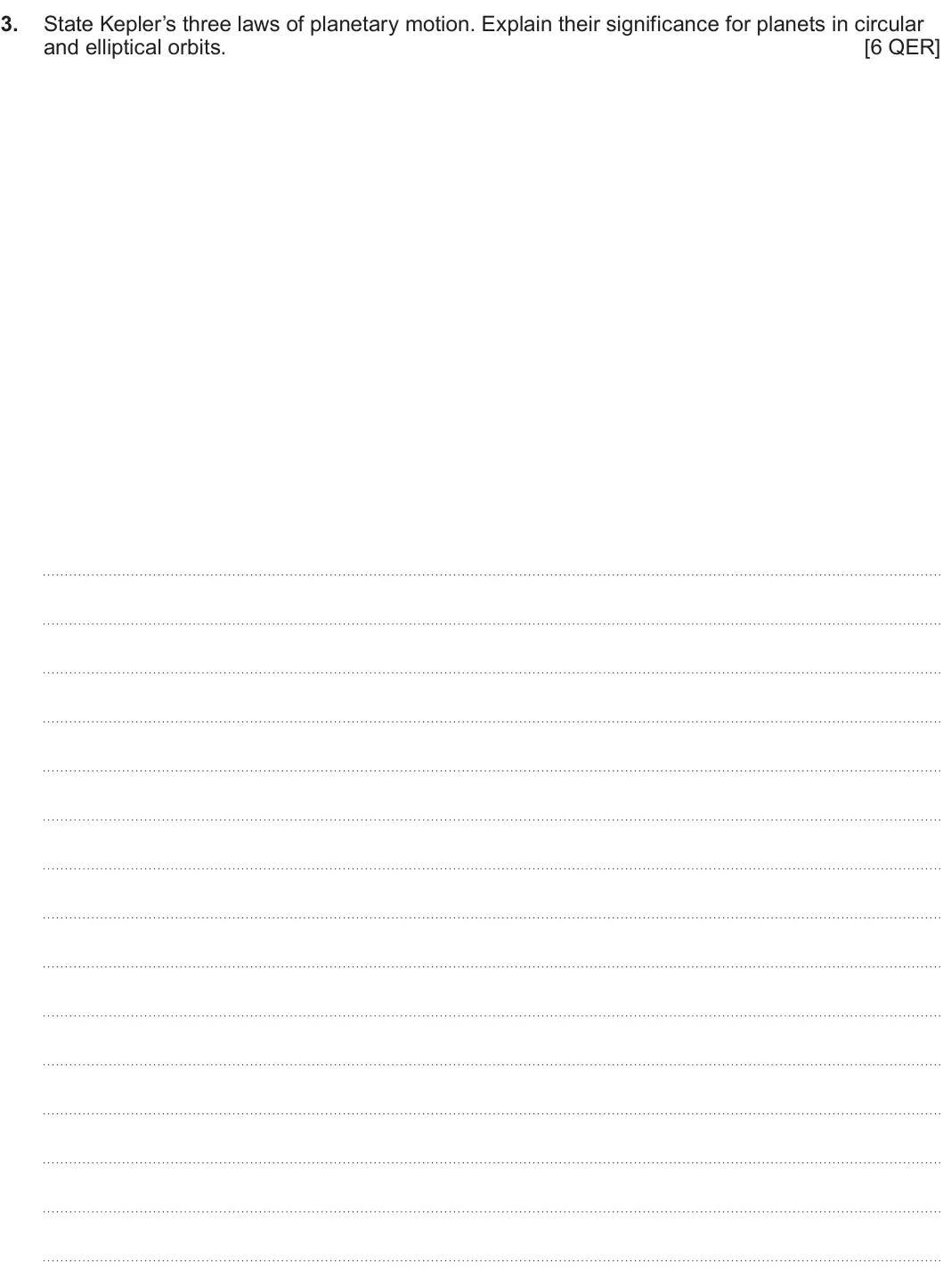
- Summer 2025, Unit 4, Q3 (6 marks): State Kepler’s three laws of planetary motion. Explain their significance for planets in circular and elliptical orbits. [6 QER]
- Summer 2024, Unit 4, Q3(a) (4 marks): Use the data in the graph to show that the mean radial velocity of the star is approximately −2 m s−1 and that the orbital speed of the star around the centre o
- Summer 2024, Unit 4, Q3(b) (1 mark): Explain briefly whether the light is blue-shifted or red-shifted. [1]
- Summer 2024, Unit 4, Q3(c) (3 marks): Show that the radius of the star’s orbit is approximately 2 000 km. [3]
- Summer 2024, Unit 4, Q3(d)(i) (3 marks): Calculate the distance between the star and the planet. [3]
- Summer 2024, Unit 4, Q3(d)(ii) (2 marks): Calculate the mass of the orbiting planet (assume that the mass of the planet is much smaller than the mass of the star). [2]
- Summer 2024, Unit 4, Q3(e) (3 marks): The values of part (d) reveal that the star is very similar in mass to the Sun, the planet’s distance from the star is very close to the distance between the Su
- Summer 2023, Unit 3, Q7(b)(i) (2 marks): Read through the following article carefully. Paragraph A summary of binary stars First of all, we call two stars orbiting their common centre of mass a “binary
- Summer 2023, Unit 3, Q7(b)(ii) (2 marks): Read through the following article carefully. Paragraph A summary of binary stars First of all, we call two stars orbiting their common centre of mass a “binary
- Summer 2023, Unit 3, Q7(d) (1 mark): Read through the following article carefully. Paragraph A summary of binary stars First of all, we call two stars orbiting their common centre of mass a “binary
- Summer 2023, Unit 4, Q2(a) (3 marks): Show that the speed, v, of an object in a circular orbit of radius, r, about a massive object of mass, M, is given by: [3] GM ν= v r
- Summer 2023, Unit 4, Q2(b) (3 marks): Hence, explain why the graph is considered to be evidence for dark matter. [3]
- Summer 2023, Unit 4, Q2(c) (3 marks): The lower curve in the graph suggests that an object a distance of 20 000 light years from the centre of the galaxy should have an orbital speed of approximatel
- Summer 2023, Unit 4, Q2(d) (3 marks): The observed data at 30 000 light years from the galactic centre were obtained using microwaves of wavelength 21 cm. Calculate the approximate wavelength shift
- Summer 2023, Unit 4, Q2(e) (2 marks): Use the Hubble equation to calculate the distance, from Earth, for a galaxy to have the same recessional speed as that of part (d). [2]
- Summer 2023, Unit 4, Q3(a)(i) (2 marks): Show that the gravitational force exerted by one planet on another is approximately 1.3 × 10²⁰ N. [2]
- Summer 2023, Unit 4, Q3(a)(ii) (4 marks): Hence, explain why the resultant gravitational force experienced by any of the planets is approximately 2 × 10²⁰ N towards the centre of the triangle. [4]
- Summer 2023, Unit 4, Q3(b)(i) (2 marks): By adding to the diagram, show that the distance between the star and any of the planets is given by: [2] 4.5 × 10¹⁰ 2 × cos30°
- Summer 2023, Unit 4, Q3(b)(ii) (2 marks): Rhodri states that the force calculated in part (a)(ii) is negligible compared with the gravitational force exerted on a planet by the star. Determine whether o
- Summer 2023, Unit 4, Q3(d) (3 marks): The three planets, whilst orbiting the star, stay in an equilateral triangle. Delyth claims that these planets cannot be detected by the periodic Doppler shift
- Summer 2022, Unit 3, Q4(c) (2 marks): The gravitational force on the satellite is given by where m is the mass of the R2 satellite, ME is the mass of the Earth and R is the radius of the orbit. Show
- Summer 2022, Unit 3, Q4(d) (3 marks): Determine the height of the satellite above the surface of the Earth. [3]
- Summer 2022, Unit 3, Q4(e) (3 marks): satellite would be able to orbit the Moon with a period of 105 minutes. [3]
- Summer 2022, Unit 4, Q5(a)(i) (4 marks): Derive the expression for the critical density of a flat universe. [4] 2 ρc = 3H0 8πG
- Summer 2022, Unit 4, Q5(a)(ii) (2 marks): Use this equation to show that the critical density of the universe corresponds to approximately 5 hydrogen atoms per m3. [2]
- Summer 2022, Unit 4, Q5(b)(i) (1 mark): State or calculate the position of the centre of mass of the two-star system. [1]
- Summer 2022, Unit 4, Q5(b)(ii) (2 marks): Calculate the period of orbit of the stars about their centre of mass. [2]
- Summer 2022, Unit 4, Q5(b)(iii) (3 marks): Calculate the maximum red shift (or blue shift) of the hydrogen 434 nm line due to the orbital motion of the stars. [3] eye telescope Not drawn to scale
- Summer 2022, Unit 4, Q5(d)(i) (1 mark): Explain why the resultant force on the black hole is always zero. [1]
- Summer 2022, Unit 4, Q5(d)(ii) (2 marks): Explain why the gravitational force acting on either of the orbiting stars is five times greater in this three-star system than the two-star system of part (b).
- Summer 2022, Unit 4, Q5(d)(iii) (3 marks): Joseff claims that the stars in the three-star system will provide a red shift that is five times larger than that of the two-star system of part (b). Evaluate
- Summer 2022, Unit 4, Q5(e) (2 marks): A recent theoretical publication suggests that the decay of the Higgs Boson will give direct evidence for dark matter. Suggest what needs to be done for this th
- Summer 2019, Unit 4, Q3(a)(i) (3 marks): [3]
- Summer 2019, Unit 4, Q3(a)(ii) (3 marks): centripetal motion. Show that, for any object in a circular orbit about the Earth: T 2 = 4π2 r3 GME where T = the period of orbit, r = the radius of orbit, G =
- Summer 2019, Unit 4, Q3(b) (3 marks): The radius of the geostationary orbit above the Earth’s equator is 42 000 km and the Earth-Moon distance is 380 000 km. Use Kepler’s 3rd law to calculate the pe
- Summer 2019, Unit 4, Q3(c) (3 marks): Estimate the minimum possible orbital period for a satellite orbiting the Earth, stating any assumption that you make (the radius of the Earth is 6 370 km). [3]
- Summer 2018, Unit 4, Q3(a) (2 marks): Explain why the age of the Universe can be approximated as H constant. [2] 0
- Summer 2018, Unit 4, Q3(b) (3 marks): Hubble’s law to show that the expected redshift for a supernova at a distance of 1 Mpc for a wavelength of 486.1 nm is approximately 0.11 nm. [3]
- Summer 2018, Unit 4, Q3(c) (5 marks): The spiral galaxy shown is rotating anticlockwise and is viewed by the Hubble Space Telescope. A Images not to scale Hubble Space Rotating spiral Telescope gala
- Summer 2018, Unit 4, Q3(d) (6 marks): Explain how spiral galaxies provide evidence for the existence of dark matter and how this evidence has been gathered. [6 QER]
- Summer 2017, Unit 3, Q7(c) (2 marks): law to calculate the distance of the galaxy in Mpc. (N.B. use the value of H in paragraph 0 10 There is no need to change the units.) [2]
- Summer 2017, Unit 3, Q7(d) (3 marks): What does the author mean by “We can also measure the centripetal acceleration, a, of maser clouds by observing how the Doppler shift velocity changes over time
- Summer 2017, Unit 4, Q3(a)(i) (2 marks): Show that the radius of orbit of the star around the centre of mass of the system is 513 km. [2]
- Summer 2017, Unit 4, Q3(a)(ii) (3 marks): The period of orbit of the planet is 130 days. Calculate the orbital velocity of the star. [3]
- Summer 2017, Unit 4, Q3(a)(iii) (2 marks): The velocity calculated in part (a)(ii) is small. Explain why small velocities are difficult to measure using red shift. [2]
- Summer 2017, Unit 4, Q3(b)(i) (2 marks): Calculate the gravitational force between the star and the planet. [2]
- Summer 2017, Unit 4, Q3(c)(ii) (2 marks): In fact the planet has a slightly elliptical orbit. Explain how conservation of energy applies to this elliptical orbit. [2]
Questions, mark schemes and examiner’s reports are © WJEC CBAC Ltd, from their published past papers. Plumi isn’t affiliated with any exam board. Want whole papers? Every WJEC A-Level Physics paper.
Rather write your answers by hand on iPad? Plumi marks them against the same mark schemes.