 plumi
Magnetic fields: WJEC A‑Level Physics questions
Every WJEC A-Level Physics exam question on 4.4 Magnetic fields, 2016–2025, with its mark scheme and examiner’s report.
Find questions1,173
Calculations
Q4(a)(i)
The whole paper ↗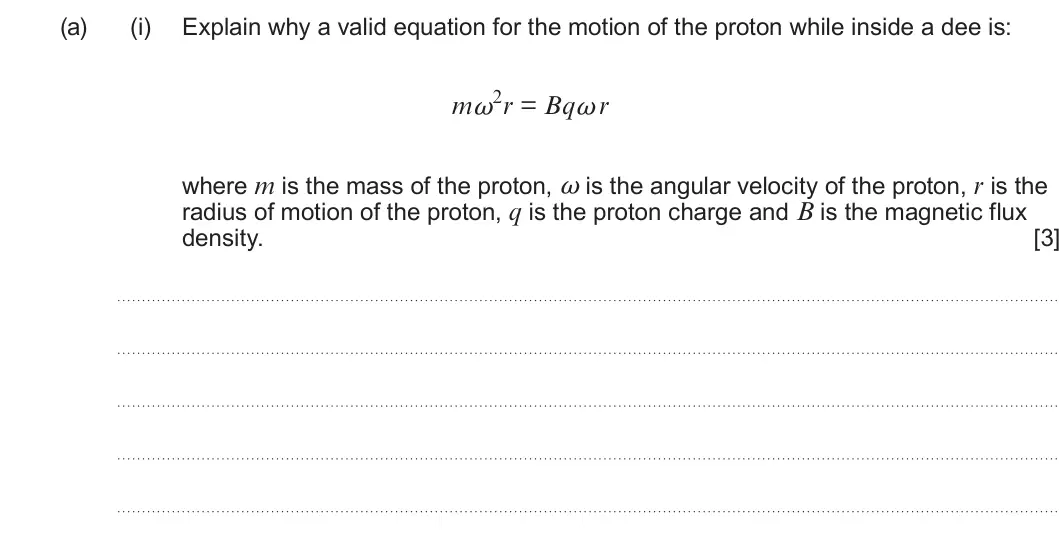
Q4(a)(ii)
The whole paper ↗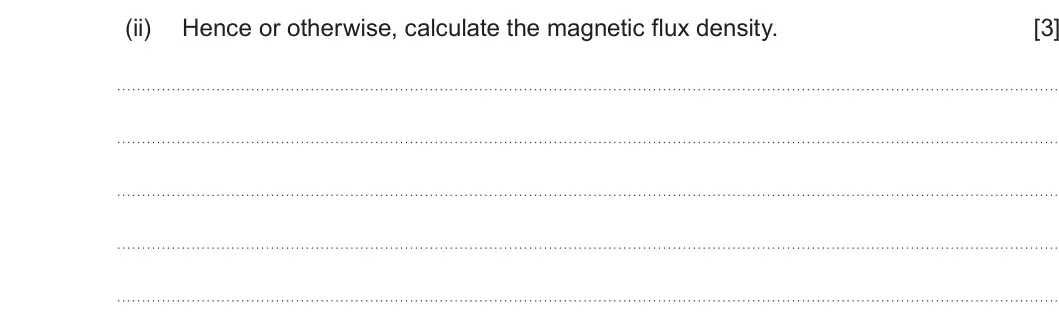
Q4(b)
The whole paper ↗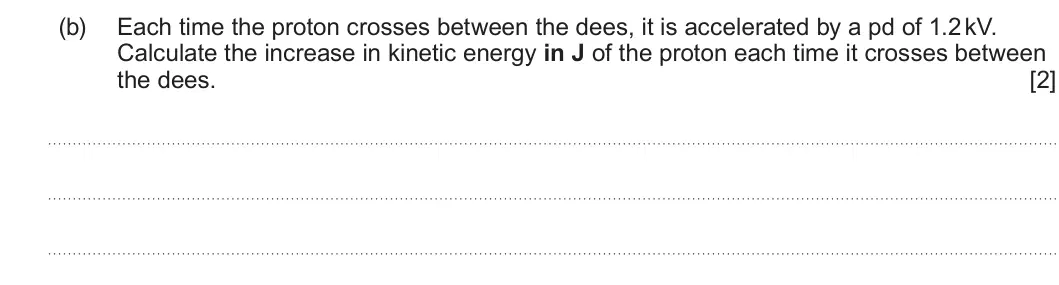
Q4(c)(i)
The whole paper ↗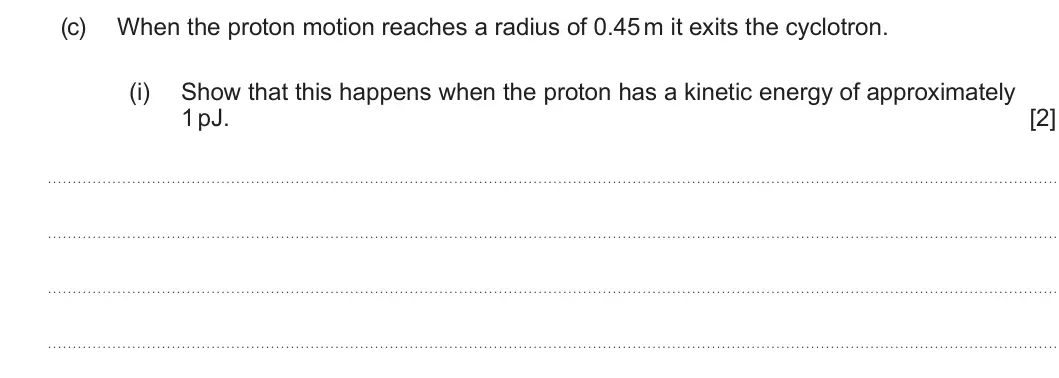
Q4(c)(ii)
The whole paper ↗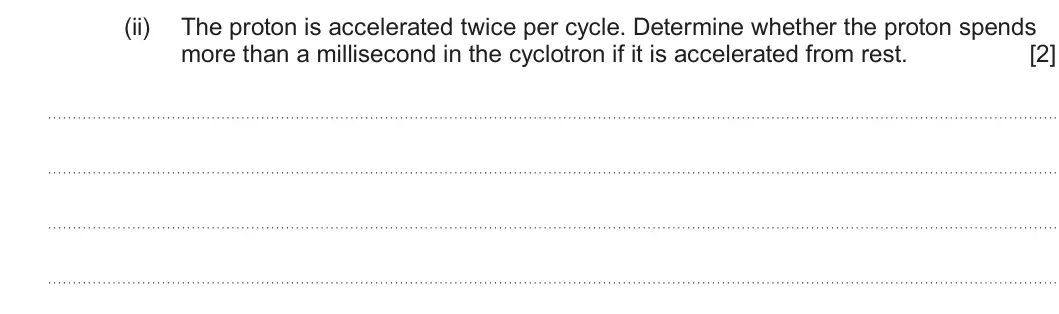
Q4(d)
The whole paper ↗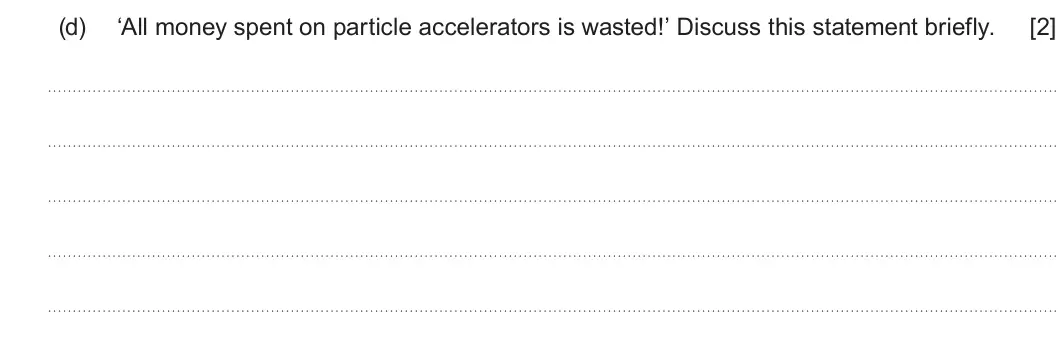
Q5(a)
The whole paper ↗
Q5(b)
The whole paper ↗
Q5(c)
The whole paper ↗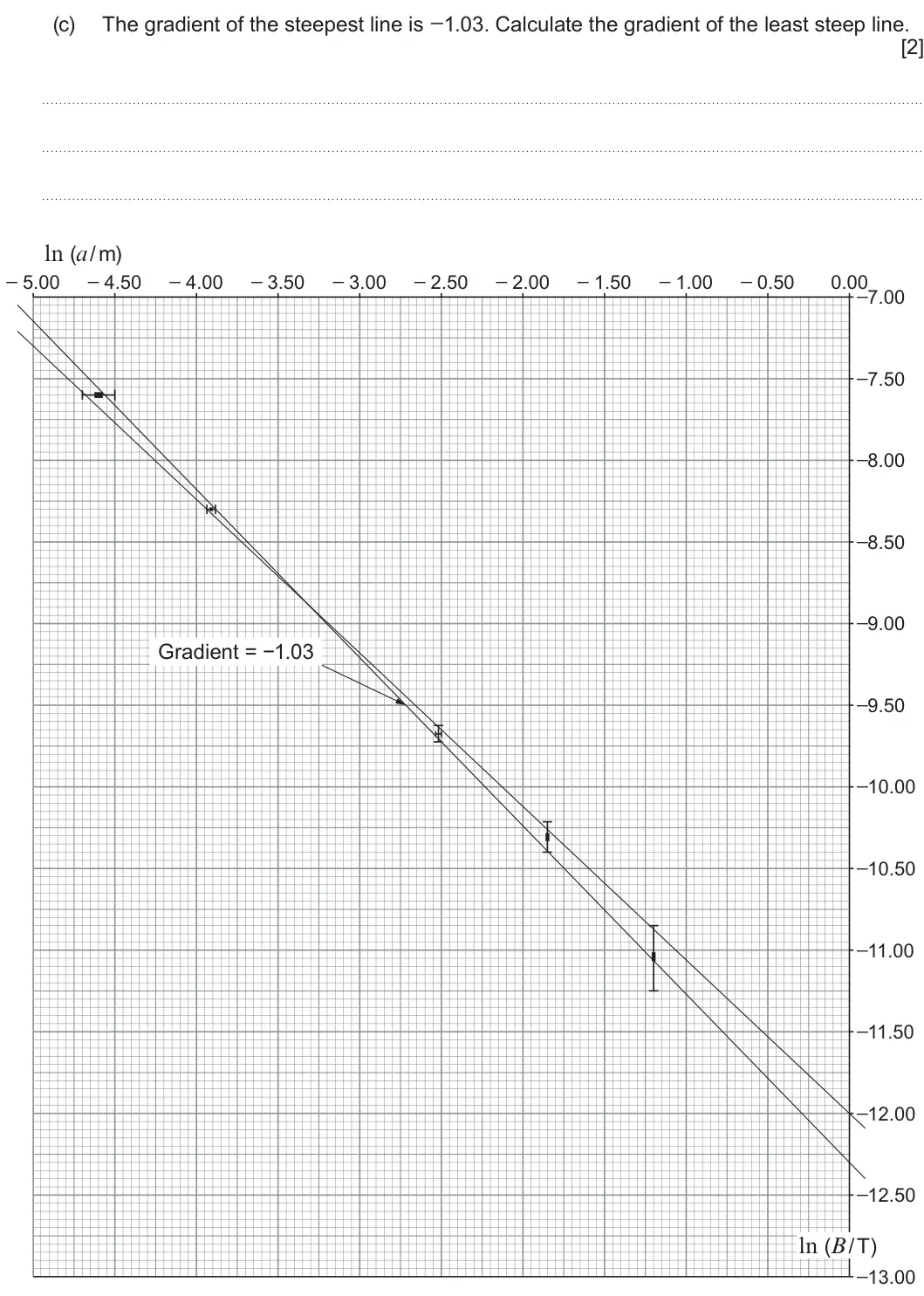
Q5(d)
The whole paper ↗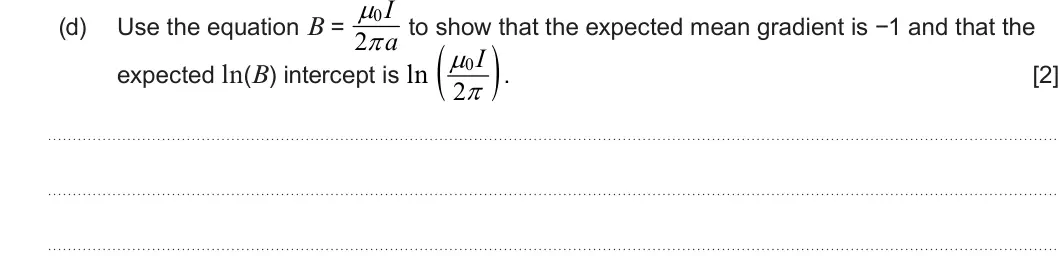
Q5(e)
The whole paper ↗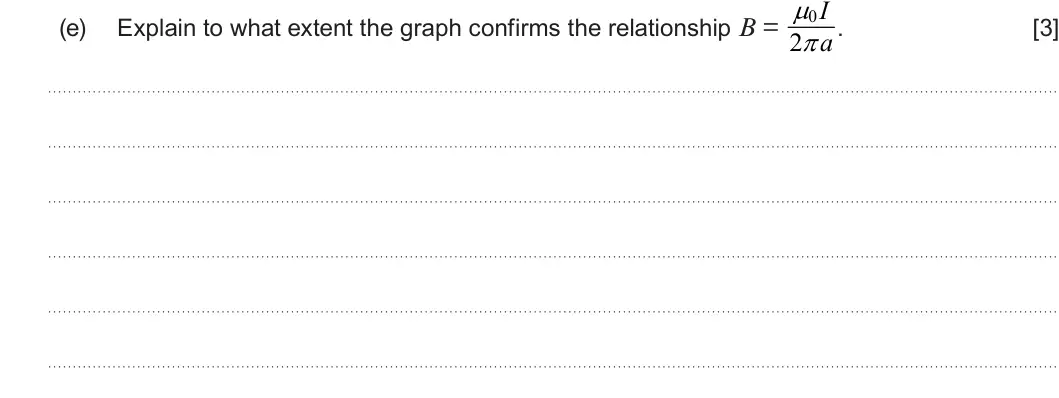
Q5(f)
The whole paper ↗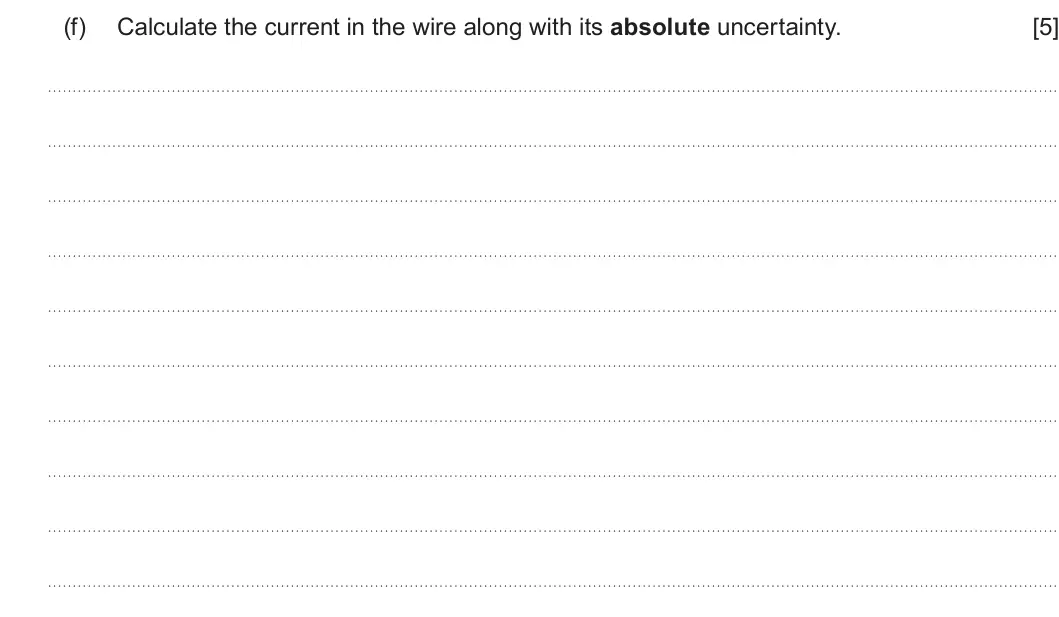
Q5(g)
The whole paper ↗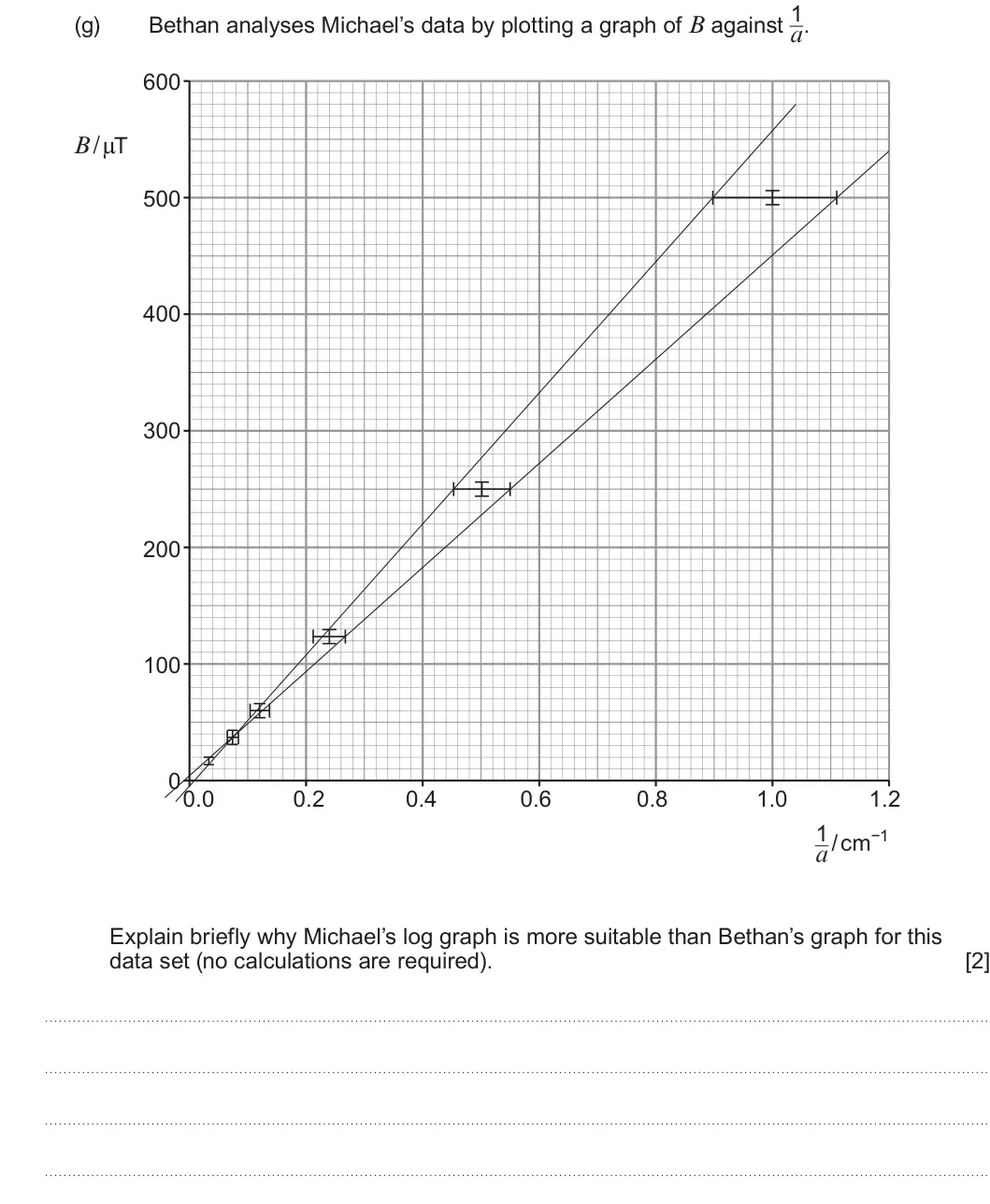
Q4(a)(i)
The whole paper ↗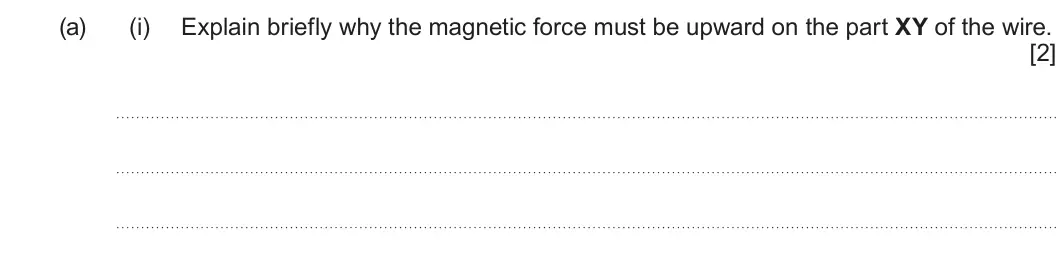
Q4(a)(ii)
The whole paper ↗
Q4(a)(iii)
The whole paper ↗
Q4(b)(i)
The whole paper ↗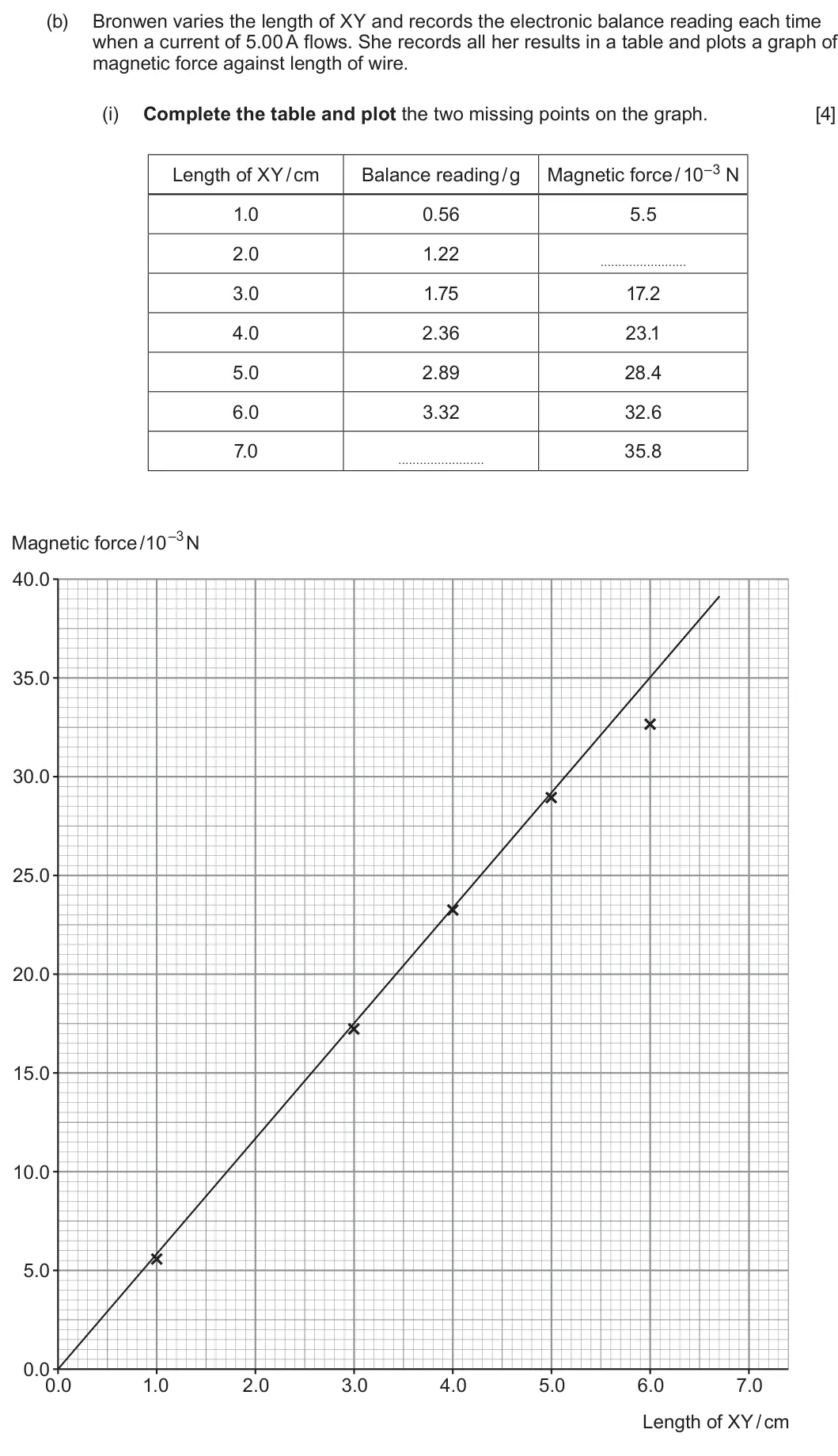
Q4(b)(ii)
The whole paper ↗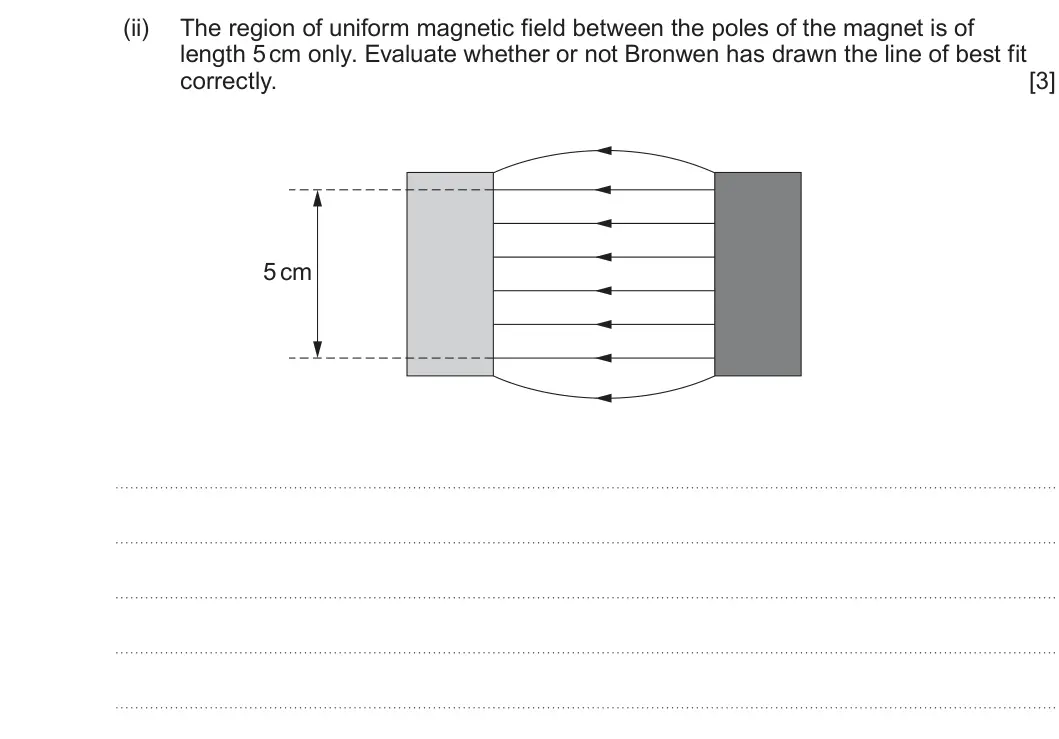
Q4(b)(iii)
The whole paper ↗
Q5(b)
The whole paper ↗
All 41 questions on Magnetic fields, as a list
- Summer 2025, Unit 4, Q4(a)(i) (3 marks): Explain why a valid equation for the motion of the proton while inside a dee is: mω2r = Bqω r where m is the mass of the proton, ω is the angular velocity of th
- Summer 2025, Unit 4, Q4(a)(ii) (3 marks): Hence or otherwise, calculate the magnetic flux density. [3]
- Summer 2025, Unit 4, Q4(b) (2 marks): Each time the proton crosses between the dees, it is accelerated by a pd of 1.2 kV. Calculate the increase in kinetic energy in J of the proton each time it cro
- Summer 2025, Unit 4, Q4(c)(i) (2 marks): Show that this happens when the proton has a kinetic energy of approximately 1 pJ. [2]
- Summer 2025, Unit 4, Q4(c)(ii) (2 marks): The proton is accelerated twice per cycle. Determine whether the proton spends more than a millisecond in the cyclotron if it is accelerated from rest. [2]
- Summer 2025, Unit 4, Q4(d) (2 marks): ‘All money spent on particle accelerators is wasted!’ Discuss this statement briefly. [2]
- Summer 2024, Unit 4, Q5(a) (1 mark): is plotted using the corrected B -field. Measured Corrected a / m ln (a / m) ln (B / T) B -field / T B -field, B / T 0.010 0.000 529 0.000 499 −4.61 −7.60 0.020
- Summer 2024, Unit 4, Q5(b) (3 marks): Complete the table above and plot the missing point on the graph opposite (no error bars are required). [3]
- Summer 2024, Unit 4, Q5(c) (2 marks): The gradient of the steepest line is −1.03. Calculate the gradient of the least steep line. [2] ln (a / m) _ 5.00 _ 4.50 _ 4.00 _ 3.50 _ 3.00 _ 2.50 _ 2.00 _ 1.
- Summer 2024, Unit 4, Q5(d) (2 marks): to show that the expected mean gradient is −1 and that the 2 a expected ln(B) intercept is ln I 0 . [2] 2
- Summer 2024, Unit 4, Q5(e) (3 marks): . [3] 2 a
- Summer 2024, Unit 4, Q5(f) (5 marks): Calculate the current in the wire along with its absolute uncertainty. [5]
- Summer 2024, Unit 4, Q5(g) (2 marks): a. 600 B /μT 500 400 300 200 100 0 0.0 0.2 0.4 0.6 0.8 1.0 1.2 1 a / cm−1 Explain briefly why Michael’s log graph is more suitable than Bethan’s graph for this
- Summer 2023, Unit 4, Q4(a)(i) (2 marks): Explain briefly why the magnetic force must be upward on the part XY of the wire. [2]
- Summer 2023, Unit 4, Q4(a)(ii) (2 marks): On the diagram, indicate which is the North pole of the magnet, and state below which rule you used to obtain your answer. [2]
- Summer 2023, Unit 4, Q4(a)(iii) (1 mark): Explain why the vertical parts of the wire have no effect on the reading displayed by the electronic balance. [1]
- Summer 2023, Unit 4, Q4(b)(i) (4 marks): Complete the table and plot the two missing points on the graph. [4] Magnetic force / 10–3 N Length of XY / cm Balance reading / g 1.0 0.56 5.5 2.0 1.22 3.0 1.7
- Summer 2023, Unit 4, Q4(b)(ii) (3 marks): The region of uniform magnetic field between the poles of the magnet is of length 5 cm only. Evaluate whether or not Bronwen has drawn the line of best fit corr
- Summer 2023, Unit 4, Q4(b)(iii) (5 marks): Determine the magnetic flux density, B, of the uniform magnetic field between the poles of the magnet and quote it to an appropriate number of significant figur
- Summer 2023, Unit 4, Q5(b) (6 marks): Explain how a Hall voltage arises in a Hall probe, how it is measured and how this can be used to measure the magnetic flux density. A diagram should be include
- Summer 2022, Unit 4, Q1(a)(i) (3 marks): Lindsey calculates that a current of 3.57 A will produce a magnetic flux density of 0.121 T inside the long solenoid shown. Determine whether or not she is corr
- Summer 2022, Unit 4, Q1(a)(ii) (1 mark): State how the magnetic flux density inside the solenoid can be increased greatly without changing the current or the number of turns per unit length. [1]
- Summer 2022, Unit 4, Q6(a)(i) (4 marks): By considering the forces acting on free electrons passing through the wafer, explain why a Hall voltage is measured on the voltmeter shown. [4]
- Summer 2022, Unit 4, Q6(a)(ii) (3 marks): given by: VH = Bvd where B is the magnetic flux density, d is the width of the wafer and v is the drift velocity. [3]
- Summer 2022, Unit 4, Q6(a)(iii) (2 marks): Catrin states that her measured Hall voltage of 68.0 nV is consistent with a drift velocity of approximately 0.07mms–1. Determine whether, or not, she is correc
- Summer 2022, Unit 4, Q6(a)(iv) (3 marks): Calculate the number of free electrons per unit volume for the metal. [3]
- Summer 2022, Unit 4, Q6(b) (2 marks): After repeating the same experiment on a different metal, Catrin obtains a value of (5.85 ± 0.19) × 1028 m–3, for the number of free electrons per unit volume.
- Summer 2019, Unit 4, Q4(a) (3 marks): The current in a long wire is 290 A and is too great to be measured by an ammeter. Explain how you could use a Hall probe, calibrated in tesla (T), to determine
- Summer 2019, Unit 4, Q4(b) (4 marks): Another long wire carrying the same large current is placed parallel to the original wire as shown. Calculate the force per unit length on each wire also statin
- Summer 2019, Unit 4, Q4(c)(i) (4 marks): Tirion claims that an electron halfway between the wires, travelling at a speed of 2.9 × 10⁷ m s–1 parallel to the wires will perform perfect circular motion be
- Summer 2019, Unit 4, Q4(c)(ii) (2 marks): Sketch the motion of the electron. [2] 290 A 5.0 cm 290 A
- Summer 2019, Unit 4, Q4(d) (5 marks): Suppose that an electron travels in a region with a magnetic field and an electric field due to two parallel metal plates as shown below. Deduce whether or not
- Summer 2018, Unit 4, Q4(a) (4 marks): Calculate the mean value of the gradient along with its percentage uncertainty. [4]
- Summer 2018, Unit 4, Q4(b) (3 marks): Calculate the number of turns in the solenoid along with its absolute uncertainty. The percentage uncertainty in the length of the solenoid is 0.4 %. [3]
- Summer 2018, Unit 4, Q4(c)(i) (4 marks): The solenoid manufacturer states that there are exactly 5 000 turns in the solenoid. Evaluate the accuracy of your value obtained in part (b) and whether or not
- Summer 2018, Unit 4, Q4(c)(ii) (2 marks): Suggest a reason for the disagreement between the manufacturer’s stated value (5 000 turns) and your value calculated in part (b). Suggest how the experimental
- Summer 2017, Unit 4, Q4(a)(i) (3 marks): Explain why the reading on the balance is negative for the direction of current and magnetic field shown in the diagram. [3] The student’s results are plotted o
- Summer 2017, Unit 4, Q4(a)(ii) (3 marks): and its percentage uncertainty. [3]
- Summer 2017, Unit 4, Q4(a)(iii) (4 marks): The length of wire in the uniform magnetic field is (8.0 ± 0.5) cm. Determine a value for the magnetic field strength and its absolute uncertainty, stating both
- Summer 2017, Unit 4, Q4(b)(i) (3 marks): Explain how the Hall voltage arises in the Hall probe shown. [3]
- Summer 2017, Unit 4, Q4(b)(ii) (6 marks): Discuss the effectiveness of the experiment in part (a) for confirming the relationship F=BIℓ and measuring the magnetic field strength, compared with using the
Questions, mark schemes and examiner’s reports are © WJEC CBAC Ltd, from their published past papers. Plumi isn’t affiliated with any exam board. Want whole papers? Every WJEC A-Level Physics paper.
Rather write your answers by hand on iPad? Plumi marks them against the same mark schemes.