 plumi
Energy and the environment: WJEC A‑Level Physics questions
Every WJEC A-Level Physics exam question on 4.D Energy and the environment, 2016–2025, with its mark scheme and examiner’s report.
Find questions1,173
Calculations
Q10(a)
The whole paper ↗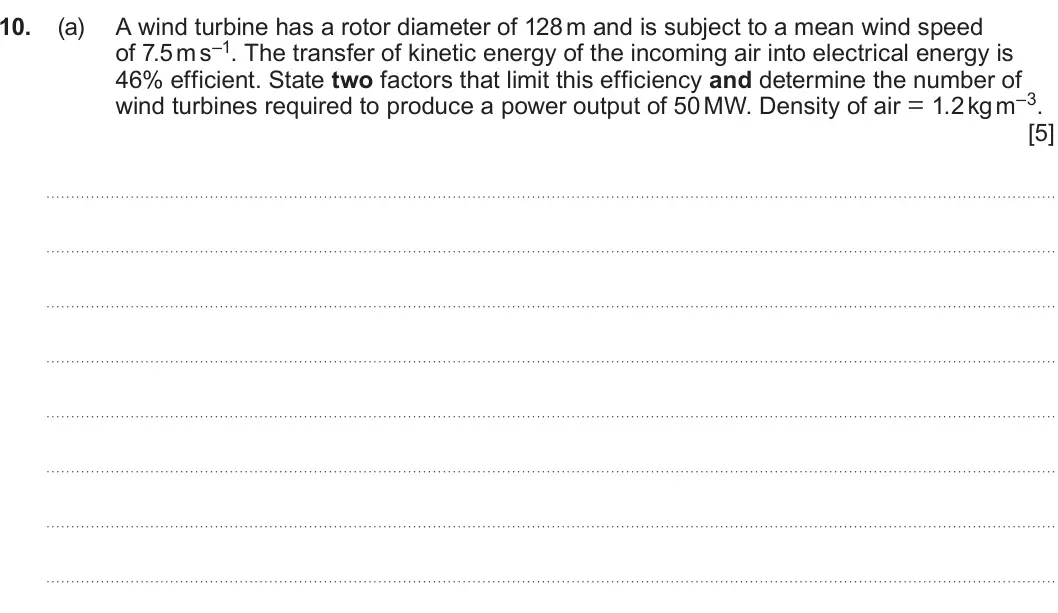
Q10(b)
The whole paper ↗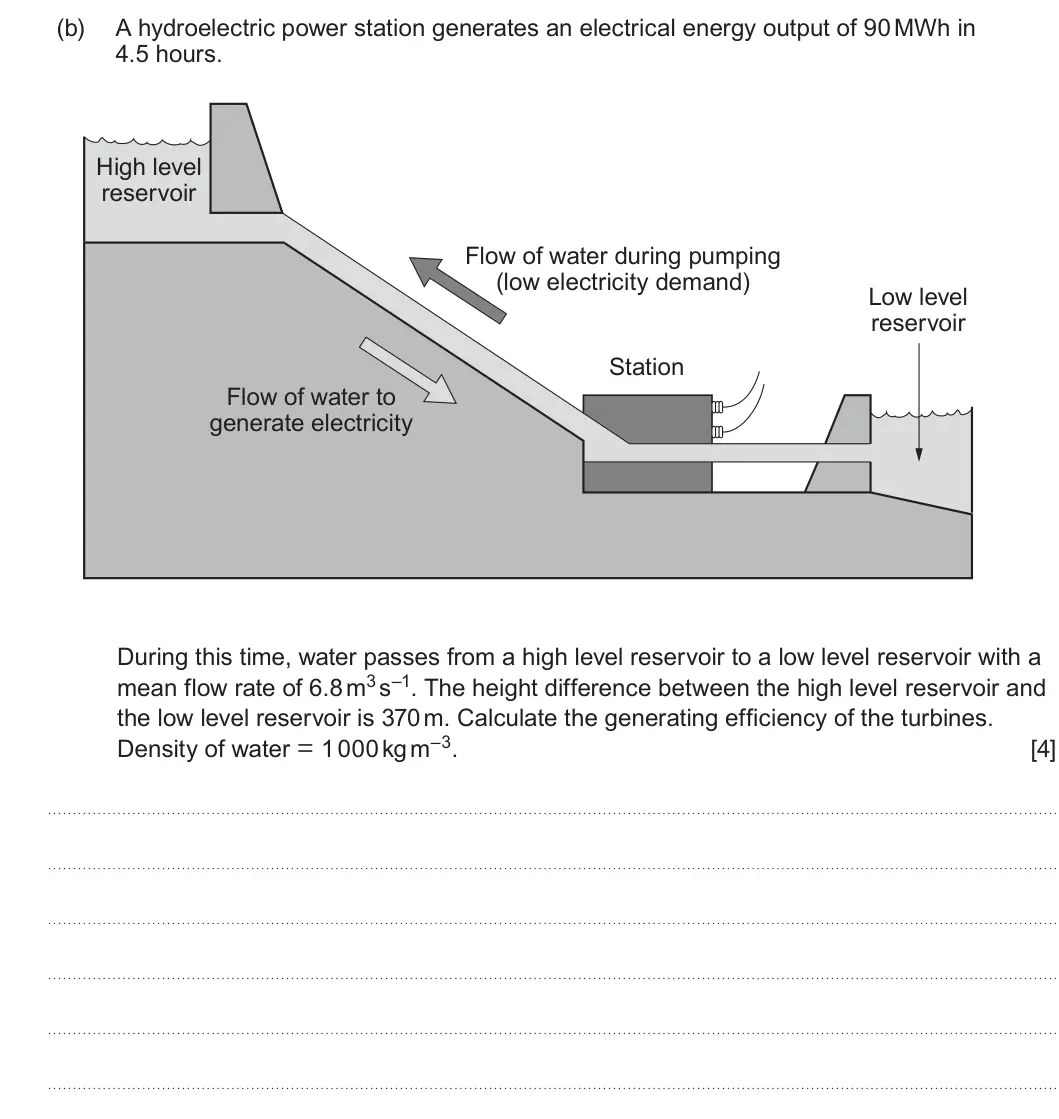
Q10(c)
The whole paper ↗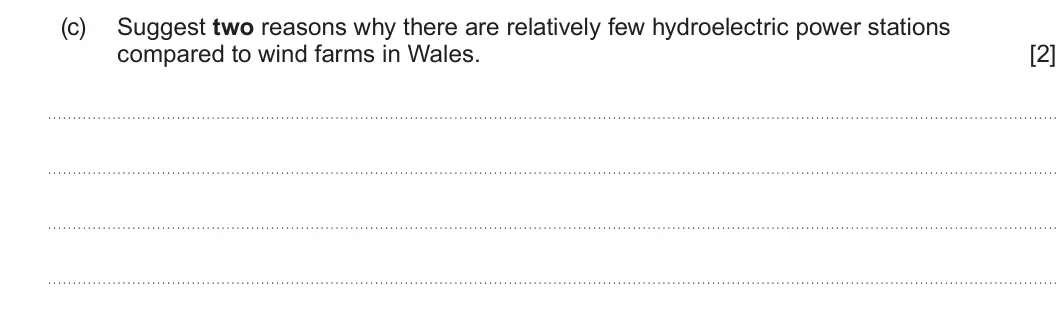
Q10(d)(i)
The whole paper ↗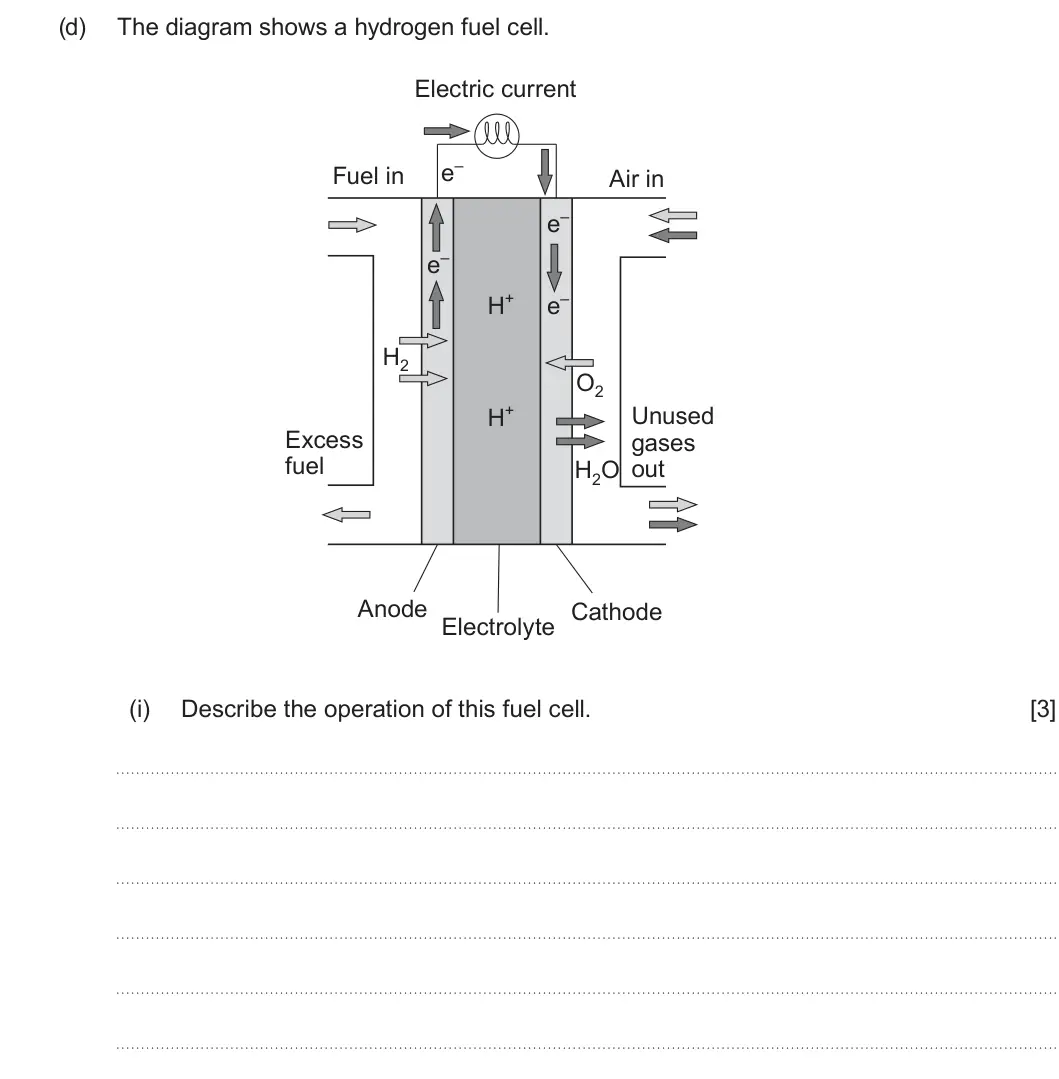
Q10(d)(ii)
The whole paper ↗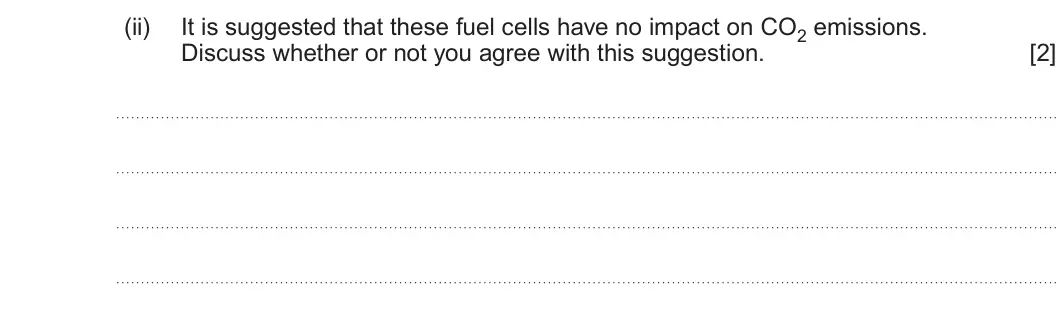
Q10(e)(i)
The whole paper ↗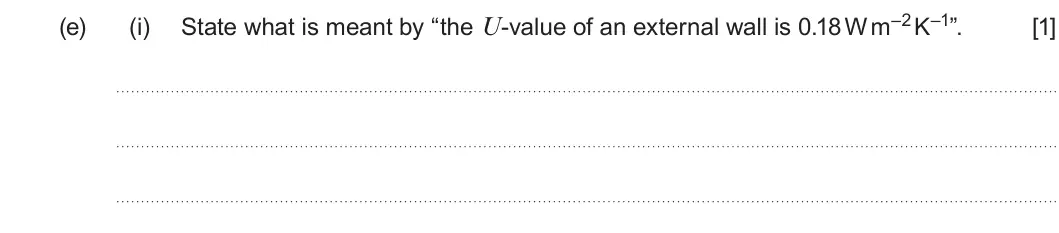
Q10(e)(ii)
The whole paper ↗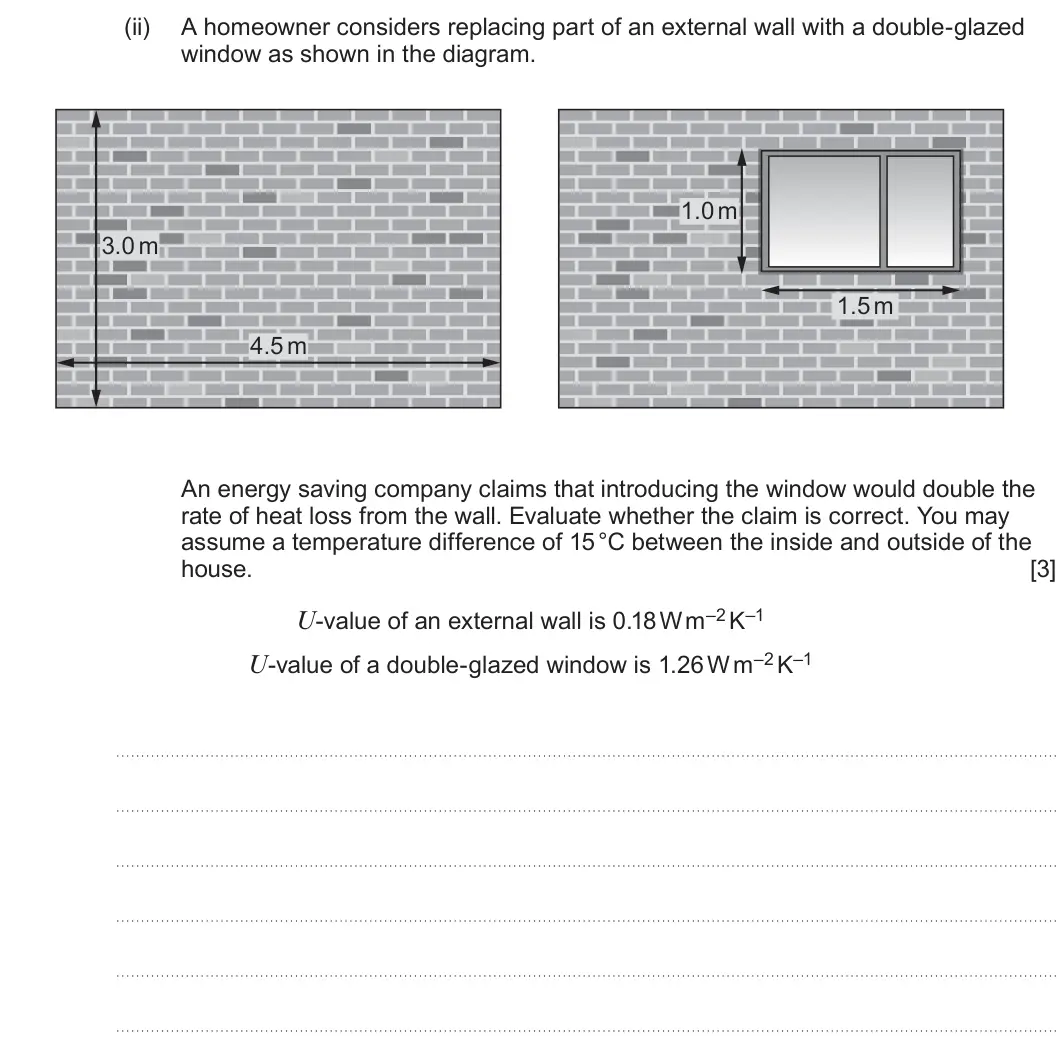
Q10(a)(i)
The whole paper ↗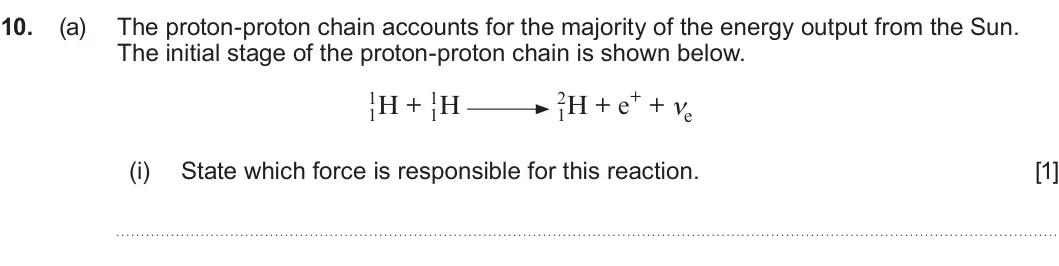
Q10(a)(ii)
The whole paper ↗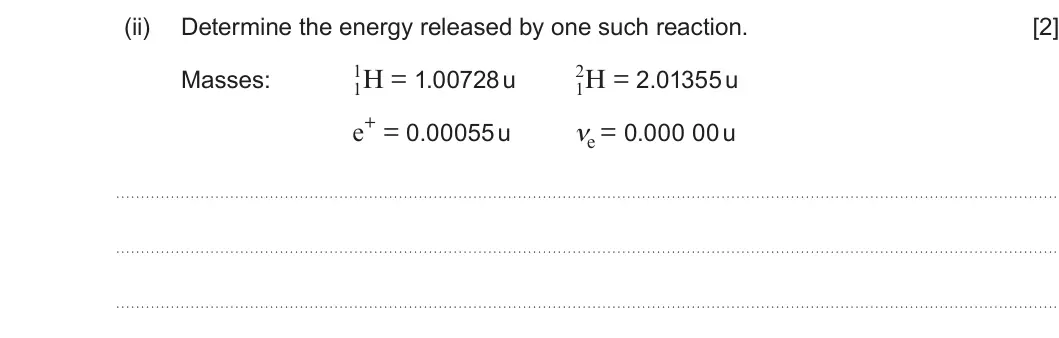
Q10(b)(i)
The whole paper ↗
Q10(b)(ii)
The whole paper ↗
Q10(b)(iii)
The whole paper ↗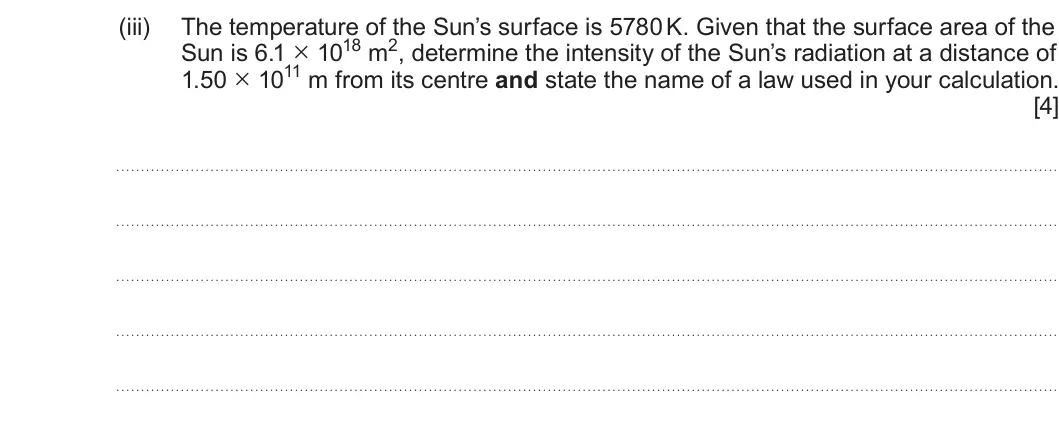
Q10(c)
The whole paper ↗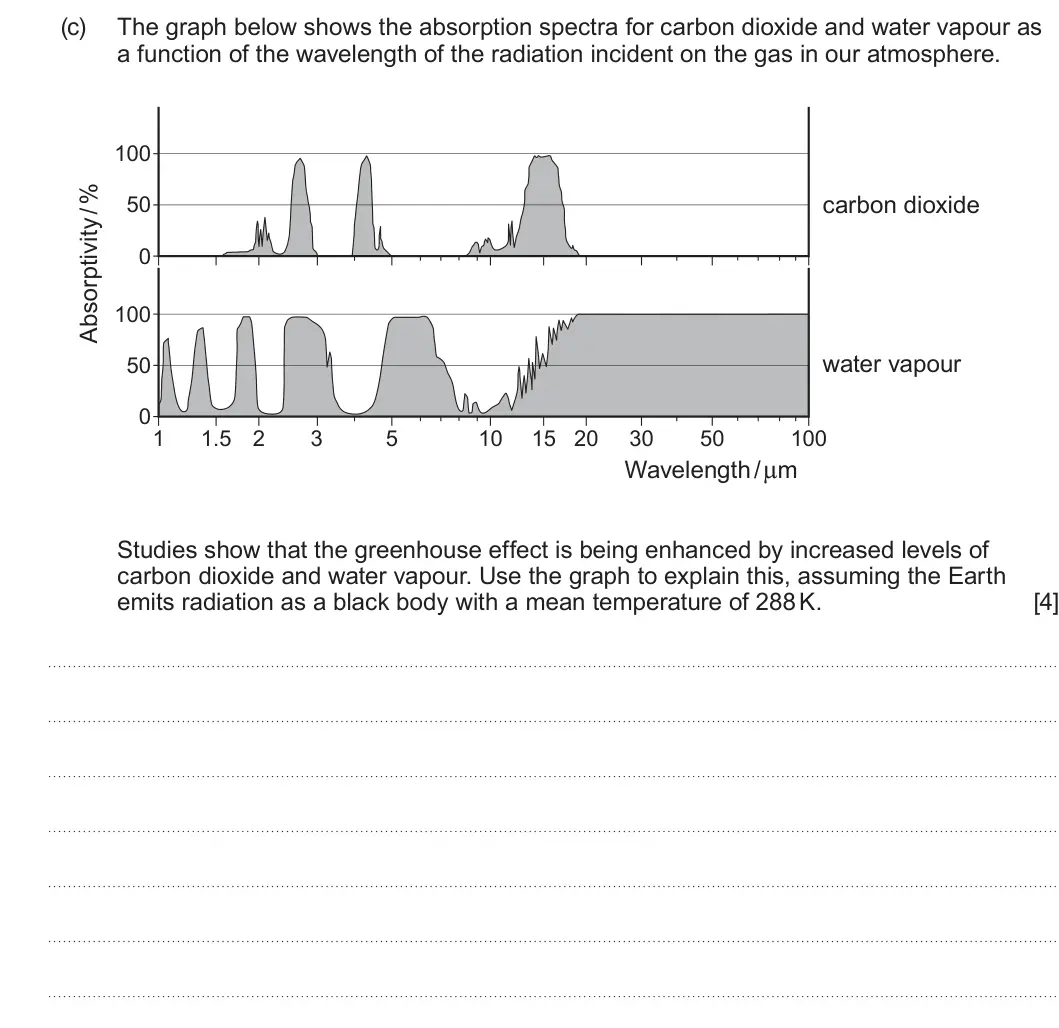
Q10(d)(i)
The whole paper ↗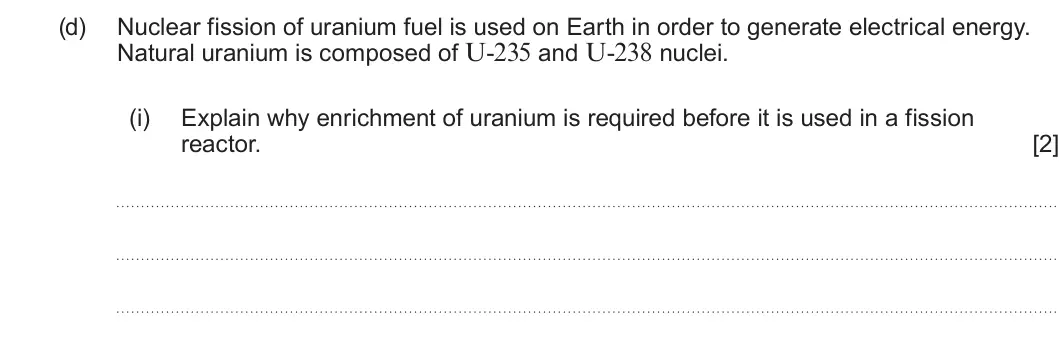
Q10(d)(ii)
The whole paper ↗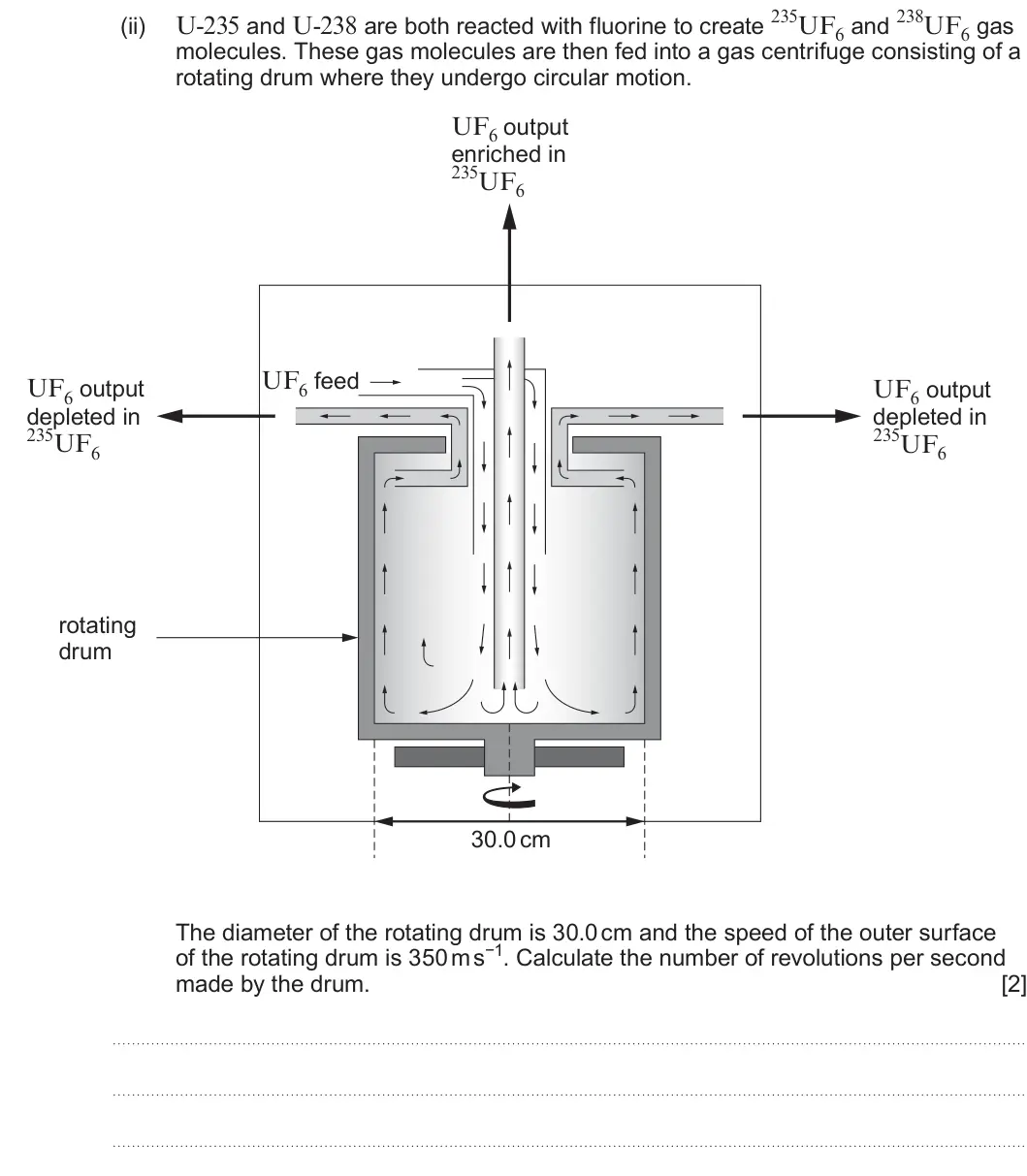
Q10(d)(iii)
The whole paper ↗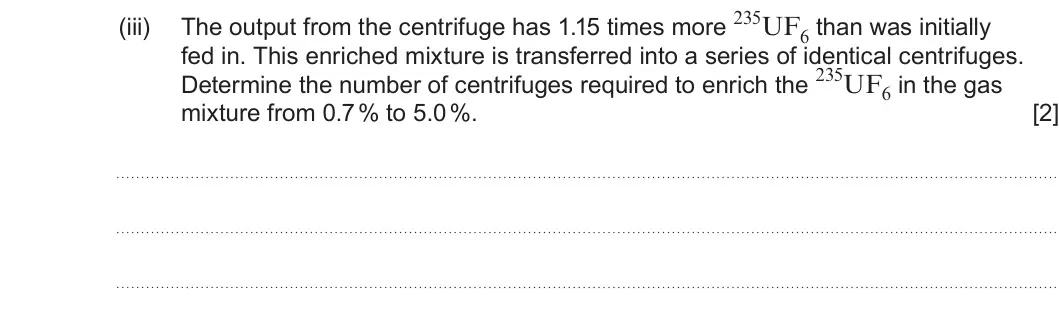
Q10(a)(i)
The whole paper ↗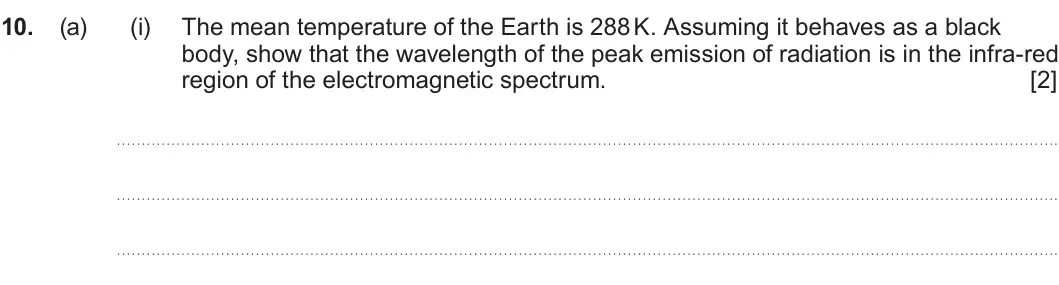
Q10(a)(ii)
The whole paper ↗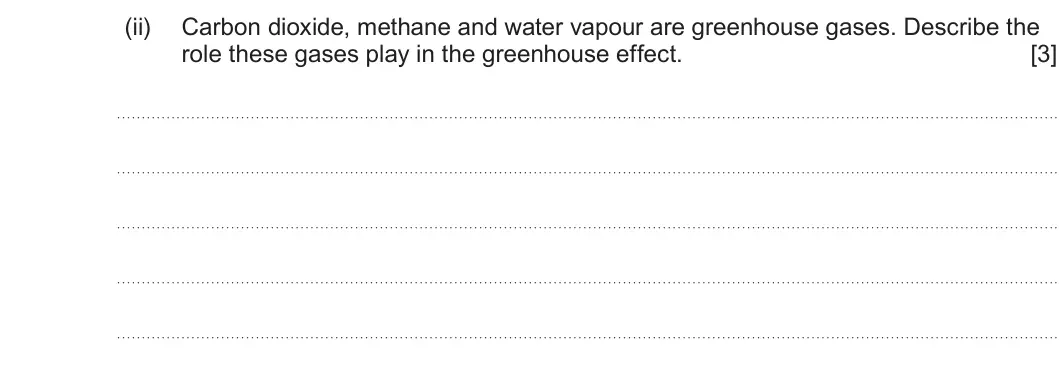
Q10(b)(i)
The whole paper ↗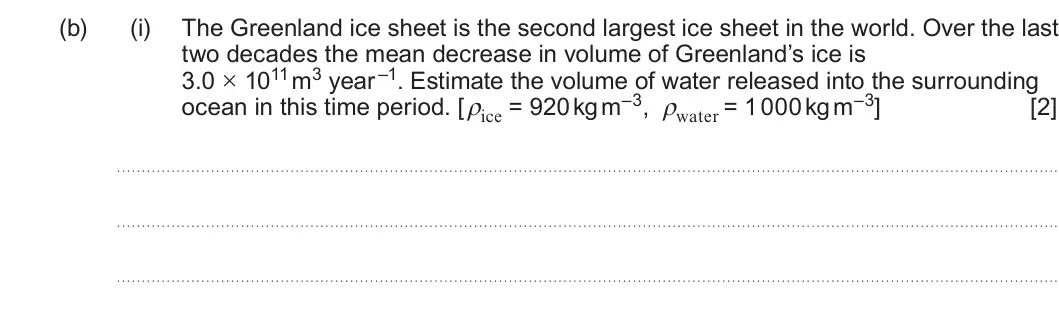
Q10(b)(ii)
The whole paper ↗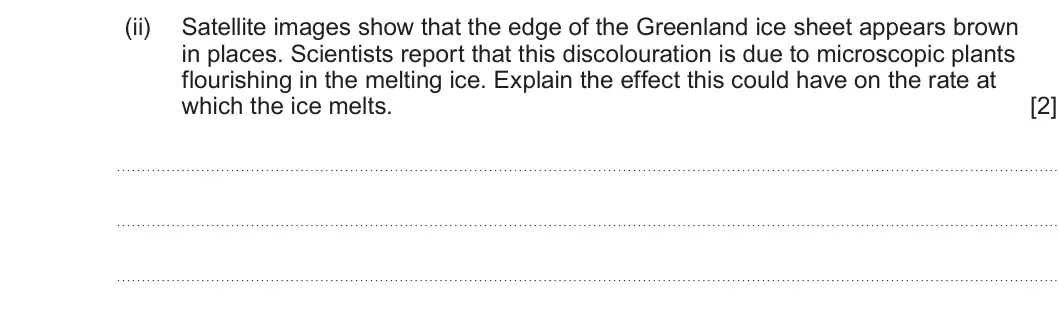
All 48 questions on Energy and the environment, as a list
- Summer 2025, Unit 4, Q10(a) (5 marks): A wind turbine has a rotor diameter of 128 m and is subject to a mean wind speed of 7.5 m s–1. The transfer of kinetic energy of the incoming air into electrica
- Summer 2025, Unit 4, Q10(b) (4 marks): A hydroelectric power station generates an electrical energy output of 90 MWh in 4.5 hours. High level reservoir Flow of water during pumping (low electricity d
- Summer 2025, Unit 4, Q10(c) (2 marks): Suggest two reasons why there are relatively few hydroelectric power stations compared to wind farms in Wales. [2]
- Summer 2025, Unit 4, Q10(d)(i) (3 marks): Describe the operation of this fuel cell. [3]
- Summer 2025, Unit 4, Q10(d)(ii) (2 marks): It is suggested that these fuel cells have no impact on CO2 emissions. Discuss whether or not you agree with this suggestion. [2]
- Summer 2025, Unit 4, Q10(e)(i) (1 mark): [1]
- Summer 2025, Unit 4, Q10(e)(ii) (3 marks): A homeowner considers replacing part of an external wall with a double-glazed window as shown in the diagram. 1.0 m 3.0 m 1.5 m 4.5 m An energy saving company c
- Summer 2024, Unit 4, Q10(a)(i) (1 mark): State which force is responsible for this reaction. [1]
- Summer 2024, Unit 4, Q10(a)(ii) (2 marks): Determine the energy released by one such reaction. [2] 1 2 1H = 1.00728 u 1H = 2.01355 u Masses: e+ = 0.00055 u νe = 0.000 00 u
- Summer 2024, Unit 4, Q10(b)(i) (2 marks): Define the ‘solar constant’. [2]
- Summer 2024, Unit 4, Q10(b)(ii) (1 mark): Suggest why the solar constant is not considered to be a constant by the scientific community. [1]
- Summer 2024, Unit 4, Q10(b)(iii) (4 marks): The temperature of the Sun’s surface is 5780 K. Given that the surface area of the Sun is 6.1 × 10¹⁸ m2, determine the intensity of the Sun’s radiation at a dis
- Summer 2024, Unit 4, Q10(c) (4 marks): The graph below shows the absorption spectra for carbon dioxide and water vapour as a function of the wavelength of the radiation incident on the gas in our atm
- Summer 2024, Unit 4, Q10(d)(i) (2 marks): Explain why enrichment of uranium is required before it is used in a fission reactor. [2]
- Summer 2024, Unit 4, Q10(d)(ii) (2 marks): molecules. These gas molecules are then fed into a gas centrifuge consisting of a rotating drum where they undergo circular motion. UF6 output enriched in 235UF
- Summer 2024, Unit 4, Q10(d)(iii) (2 marks): fed in. This enriched mixture is transferred into a series of identical centrifuges. Determine the number of centrifuges required to enrich the 235UF6 in the ga
- Summer 2023, Unit 4, Q10(a)(i) (2 marks): The mean temperature of the Earth is 288 K. Assuming it behaves as a black body, show that the wavelength of the peak emission of radiation is in the infra-red
- Summer 2023, Unit 4, Q10(a)(ii) (3 marks): Carbon dioxide, methane and water vapour are greenhouse gases. Describe the role these gases play in the greenhouse effect. [3]
- Summer 2023, Unit 4, Q10(b)(i) (2 marks): The Greenland ice sheet is the second largest ice sheet in the world. Over the last two decades the mean decrease in volume of Greenland’s ice is 3.0 × 10¹¹ m3
- Summer 2023, Unit 4, Q10(b)(ii) (2 marks): Satellite images show that the edge of the Greenland ice sheet appears brown in places. Scientists report that this discolouration is due to microscopic plants
- Summer 2023, Unit 4, Q10(c)(i) (2 marks): Compare the contribution of solar photovoltaic (Solar PV) with hydroelectric power since 2010 and suggest a reason for this difference. [2]
- Summer 2023, Unit 4, Q10(c)(ii) (4 marks): A solar panel provides electrical power for a load resistor. The graph below shows the current-potential difference characteristics of a solar panel operating u
- Summer 2023, Unit 4, Q10(d) (5 marks): concrete of thickness 120 mm. If the top surface of the concrete is 19 °C and the lower surface is 5 °C, show that the rate of heat flow through the concrete is
- Summer 2019, Unit 4, Q9(a)(i) (1 mark): State Archimedes’ principle. [1]
- Summer 2019, Unit 4, Q9(a)(ii) (2 marks): A student lowers a block of ice into a displacement can containing salt water. As shown in the diagram, 80 cm3 of displaced salt water is collected in the measu
- Summer 2019, Unit 4, Q9(a)(iii) (3 marks): determine the volume of the block of ice above the surface. [3]
- Summer 2019, Unit 4, Q9(a)(iv) (4 marks): The Greenland ice sheet is a vast body of ice covering roughly 80 % of the surface of Greenland. It is estimated that Greenland’s melting ice is releasing 2.2 ×
- Summer 2019, Unit 4, Q9(b)(i) (2 marks): Use an appropriate equation to show that the unit of the coefficient of thermal conductivity, K, is W m–1 K–1. [2]
- Summer 2019, Unit 4, Q9(b)(ii) (2 marks): The recommended thickness of loft insulation has changed over time. In 1985, a 100 mm layer of fibre glass loft insulation (K = 0.041 W m–1 K–1) was used to cov
- Summer 2019, Unit 4, Q9(b)(iii) (4 marks): A present day loft insulation manufacturer recommends a loft insulation thickness of 270 mm. They suggest the house could achieve this modern standard by adding
- Summer 2019, Unit 4, Q9(b)(iv) (2 marks): Starting from the lower surface at 20 °C, sketch a graph of temperature against distance through the loft insulation on the axis provided. [2] Temperature / °C
- Summer 2018, Unit 4, Q9(a)(i) (3 marks): the name given to the law you use, show that the power radiated by the Sun (Solar Luminosity) is approximately 4 × 1026 W. [3]
- Summer 2018, Unit 4, Q9(a)(ii) (2 marks): The main energy production mechanism in the sun is the proton-proton cycle. This consists of several fusion reactions, the net effect of which is to combine a n
- Summer 2018, Unit 4, Q9(a)(iii) (2 marks): The energy released in the reaction is 26.7 MeV. Use this information and the answer to (a)(i) to determine the mean rate of production of helium nuclei in the
- Summer 2018, Unit 4, Q9(b) (2 marks): Due to absorption in the atmosphere, the maximum intensity of the Sun’s radiation received at the Earth’s surface in the UK is about 750 W m–2. Show that this c
- Summer 2018, Unit 4, Q9(c)(i) (3 marks): Engineers designing this panel require that it produces at least 15 % of the maximum input power. Determine whether or not the panel meets this requirement when
- Summer 2018, Unit 4, Q9(c)(ii) (3 marks): Determine the number of panels of this type needed to power a 1 kW electric kettle, and explain why, in reality, the actual number of panels needed will be grea
- Summer 2018, Unit 4, Q9(d)(i) (3 marks): Explain in terms of energy and the interaction of particles why a high temperature is necessary. [3]
- Summer 2018, Unit 4, Q9(d)(ii) (2 marks): For a particular nuclear fusion reaction to be successful the value of its triple product must be ≥ 2.6 × 1028 s K m–3. Plasma of volume 75 m3 contains 2.2 × 10
- Summer 2017, Unit 4, Q9(a)(i) (2 marks): 1.5 × 10¹¹ m from the Sun show that the intensity of the radiation reaching the Earth’s outer atmosphere is approximately 1 400 W m–2 . [2]
- Summer 2017, Unit 4, Q9(a)(ii) (2 marks): The mean annual power available at the Earth’s surface in the UK is only about 20% of the answer to part (a)(i). By the middle of 2015 solar photovoltaic (PV) i
- Summer 2017, Unit 4, Q9(a)(iii) (1 mark): Give a reason why the amount of electrical energy produced by a solar farm in Portugal is likely to be greater than that from a solar farm of the same size in t
- Summer 2017, Unit 4, Q9(b)(i) (1 mark): State Wien’s law. [1]
- Summer 2017, Unit 4, Q9(b)(ii) (2 marks): Assuming a mean temperature of 290 K for the Earth and that it emits radiation from its surface as a black body, show that the peak wavelength of the radiation
- Summer 2017, Unit 4, Q9(b)(iii) (6 marks): The graphs below show greenhouse gas absorption spectra for water vapour and carbon dioxide as a function of the wavelength of the radiation incident on the gas
- Summer 2017, Unit 4, Q9(c)(i) (2 marks): Define the term U-value and state one factor which affects the U-value of a material. [2]
- Summer 2017, Unit 4, Q9(c)(ii) (2 marks): A room in a large office block is maintained at a constant temperature of 21 °C. The room has one of its walls, measuring 5.0 m × 3.0 m, exposed to the outside.
- Summer 2017, Unit 4, Q9(c)(iii) (2 marks): The heating system in the room can provide a maximum output of 1 kW. Determine the lowest outside temperature for which the double glazing can maintain an inter
Questions, mark schemes and examiner’s reports are © WJEC CBAC Ltd, from their published past papers. Plumi isn’t affiliated with any exam board. Want whole papers? Every WJEC A-Level Physics paper.
Rather write your answers by hand on iPad? Plumi marks them against the same mark schemes.